

BLOG
Why Avoiding Conflict Can Destroy a Relationship | Adam Lane Smith : #183
You may have entered adulthood without ever seeing what healthy conflict looks like. But avoiding conflict isn’t the answer. In fact, healthy conflict can be one of the main ways couples build trust. Adam breaks down the practical relationship skills many people never learned growing up.


If you grew up in a broken or dysfunctional family, you may have entered adulthood without ever seeing what healthy conflict looks like.
But avoiding conflict isn’t the answer. In fact, healthy conflict can be one of the main ways couples build trust, deepen intimacy, and discover whether they can actually build a life together.
Our guest, Adam Lane Smith, is a former licensed marriage and family therapist, bestselling author, and attachment specialist whose work has attracted more than 1.3 million followers across social media. In this conversation, Adam breaks down the practical relationship skills many people never learned growing up.
In this episode, you’ll learn:
Why people from broken families often struggle in relationships
How healthy couples handle conflict differently
Why avoiding conflict can actually weaken trust
What conflict reveals about whether someone is marriage material
How to communicate, repair, and build trust after things go wrong
If conflict makes you shut down, blow up, people-please, or wonder whether you’re capable of building the healthy marriage you never saw growing up, this episode is for you.
Resources mentioned in this episode:
👉 Join the waitlist for our new healing program for young adults impacted by their parents’ divorce or family dysfunction:
RestoredMinistry.com/program
👉 Get the free guide: 10 Tips to Help Someone Whose Parents Are Separating or Divorcing:
RestoredMinistry.com/10Tips
👉 Learn more from Adam Lane Smith, including his Secure Circle, relationship resources, programs, and coaching:
AdamLaneSmith.com


Enjoy the show?
To be notified when new episodes go live, subscribe below.
As a bonus, you'll receive the first chapters from our book, It's Not Your Fault: A Practical Guide to Navigating the Pain and Problems from Your Parents' Divorce.
TRANSCRIPT
Transcript produced by artificial intelligence. Please pardon any errors!
Joey Pontarelli (00:00)
Attachment Adam. So good to have you on the show, man. Welcome.
Adam Lane (00:02)
I am glad to be here, Joey. How you doing today?
Joey Pontarelli (00:04)
Doing well. I'm really excited for this conversation. I I thought we'd break our conversation kind of into two parts. first, really taking a look at the struggles that young people who come from broken families face in relationships. We've all heard the statistics that if you come from a divorced family, you know, you're two to three times more likely to get divorced. From research I've seen, 25 years of research, it says that the biggest struggle for people who come from broken families is in relationships. So I really would like to deconstruct and break down like, why is that?
And give us a deeper understanding of that. And then from there, from that starting point, I thought we can get into what's the solution? Like how do we actually build love that lasts? And so my my first question for you really is getting to that yeah, that that point of like why why are relationships such a struggle for people who come from broken families?
Adam Lane (00:49)
You know, I have learned through the years of doing this that I can deliver a very dry academic explanation or I can try to teach with a a pale imitation of what our Lord did. So I'm gonna begin with what Lord Jesus did. He taught through stories. I want you to imagine that you're a young child. You grow up not in a house, you grow up in a cobbled together building of plywood, two by fours just leaned on each other.
That is constantly collapsing in on you that you have to endlessly try to prop back up. Your parents sort of halfway through your childhood give up and just leave the pile in rubble. And you have to live the rest of your childhood hiding under little piles of plywood as you can. Now you can see beautiful houses far off in the distance. So you know that houses exist, but you have no idea what they look like on the inside. You have no idea how they're built.
You've never seen a functioning ceiling that was actually level and not collapsing on your head. You have no clue. Now you turn 18 and your parents say, Cool, go build your own home. And you wander off into the forest. Are you going to know how to build a functional house all on your own? Do you think that's likely?
Joey Pontarelli (02:01)
No way.
Adam Lane (02:01)
This is what most people are doing today. The issue is not just you grow up in a family cycle where your family is angry and yelling and yes, maybe drinking.
Yes, there are problems. You might learn negative behaviors, but the vast majority of people can get through those negative behaviors. The vast majority of people can come back to the gospel, learn how to conduct themselves, and at least try to move through. But if you've never seen the inside of a standing home and you don't know how they're built, there are there's almost zero chance you're going to be able to build your own house that isn't just a cobbled together pile of scrap metal and plywood. It's the skills that are missing.
It's how you communicate with each other. There's one skill in particular that I think has been lost over the last hundred years here in the West. It's called repair. After you have a problem with somebody, can you repair? And most people don't even know what I mean when I'm talking about that right now. So the skills that are lost, I believe, is a massive reason that we are seeing that decline in in successful marriages. Is that making sense to you?
Joey Pontarelli (03:03)
It makes a hundred percent sense. And I'm curious, maybe let's go back through the experience a little bit of the young person, you know, who came from a broken family. Like this idea of attachment wounds. May maybe let's start with the i idea of attachment. People might not be familiar with that. So what is attachment and what is attachment science?
Adam Lane (03:20)
Attachment is very simply the way that we connect to each other in a way to get our needs met. We either learn that we can be calm, relaxed, transparent, peaceful, honest. We can ask a lot of questions, we get a lot of answers, and then we build things with other people. It's not perfect. It's peaceful, consistent, and predictable. And that builds what's called secure attachment. Now the research indicates at most one third of adults have received this from their childhood.
Two thirds of adults right now listening to this, probably more actually if they're listening to podcasts about relationships and family divorces, probably more. They are growing up with insecure attachment, which is I'm not allowed to ask questions because it bothers people. I'm not allowed to be transparent because people get angry at me or they misunderstand me. I'm not allowed to ask for my needs to get met because I'm a burden to other people. I can't open up to other people because they'll hurt me or use it against me or lose respect for me. So I have to
Put up a fake front that is always happy and smiling. I have to make other people feel good, or I'll never get anything I need. And I have to play transactional games with other people to try to get my basic needs met for the rest of my life. And that's insecure attachment. That's the skill set of building a very broken house that will collapse on you. And that's where most people are going wrong because two people with that same mismatched skill set going forward with insecure attachment.
That's what people are doing to build their families today. is that is that a clear enough explanation for you?
Joey Pontarelli (04:51)
Yeah, absolutely. And so this idea of like attachment wounds, I know we're kind of circling around this, but for someone who maybe came from a home where mom and dad got divorced, maybe there was an affair, maybe there was a lot of, you know, visible conflict, but maybe there wasn't. Maybe things were a little bit more subtle and one day mom or dad just decided to leave. Talk to me a little bit about what that does to someone's ability to love and ability to like build relationships later in life if they went through that as, you know, a child or a teenager.
Adam Lane (05:17)
So the brain is really, really good at keeping us safe and really, really bad at keeping us happy. That's essentially what we need to know. When someone says attachment wounds, what they usually mean is that in childhood you had experiences that left emotionally painful memories, we believe, in the amygdala, the little almond-shaped part of the brain that retains fight, flight, fawn, and freeze. It's your your it's part of your limbic system that that defends you against scary things.
And we believe the amygdala retains those core memories of what is most frightening, damaging, painful, and harmful. So that when something reminds us of that event, we go into our protective mode instead and then react from a place of safety to get more safety, to make sure we're okay. Now, unfortunately, when we're two years old and we ask Daddy for a cookie and he loses his mind and he starts yelling at us about how don't don't we realize what a hard day he's had.
And how exhausted he is dealing with us and he doesn't have cookies, can't we just leave him alone? The brain doesn't learn, dad was having a bad day. I should probably be mindful of people's stress level. The brain learns I am a bad child who doesn't deserve love or care. So having any needs at all is now tagged as dangerous. Now that young girl, perhaps, goes forward into her marriage and her husband wants to be physically intimate with her, and she is terrified to say, I
I need to be emotionally close to you so that I can be physically close to you. She can't say that because she's afraid he's gonna unload and start screaming at her. Even if he never would, she's afraid he will. So her system says, I should just perform and make him happy, which will work pretty well for the first year or two until either they hit a stressful point in life or they have kids when her drive will crater into the ground and he will no longer feel desired, loved, or respected.
And she never is able to say, if you would just spend ten minutes talking to me, everything would work. That's where we're seeing that breakdown and that disconnect.
Joey Pontarelli (07:21)
So much of what you teach is so simple. Yes, so wise. Like there's so much wisdom packed into it. You remind me of C.S. Lewis on so many levels. He said so much with so little. And and so I love like everything you're breaking down is making so much sense. So I want to go back to something you said about like this skill gap. Like we're missing skills that arguably people from healthy families kind of absorbed osmosis. Like they saw it, they caught it, whether it was, you know.
caught or not, they caught it and they go on and they build these healthy relationships. I've seen that a lot. I know people from really healthy families, they all have really happy, healthy relationships, but you know, not always the case with those Western broken families. So I'm curious, like if you were to maybe narrow into a few of like the skills that are missing most when it comes to a young person from a broken family, what would those few skills be?
Adam Lane (08:07)
So many. My my team and I have I identified hundreds of those skills, but hundreds. Breaking it breaking it hundreds. Hundreds of little micro skills. But if we wanted to break it down into some core ones that people listening right now could could learn and use that would probably game changers. One is what we call solution focused sharing. Quite often people info dump and they just dump their feelings out there in an overwhelming flood that the other person has no idea what to do with. sometimes a wife will hold on to her resentment and sadness and fear.
For six months until she erupts at the worst possible moment, usually about five minutes before bedtime, as the husband's head is easing toward his pillow. Now it's a great time to talk about problems. And then she blows up, and then it's 20 minutes of monologuing to try to convince him to care. But instead, for him, what it feels like is an attack and confirmation that she believes he's a bad husband who doesn't care.
So by the end of that 20 minutes, he's not ready to listen and work. He's actively trying to defend himself from what feels like a betrayal from his wife. Solution focused sharing comes in and says you get two sentences of context about why you're sharing and what you hope to accomplish. You ask their perspective first, then you share your perspective in about three sentences, and then you share what you'd like to do about the problem. Short, concise, and goal focused from the beginning.
Families that do this, you just absorb it and you learn to communicate that way. You don't think about it as a skill set, but families that didn't have to didn't have that think have to think about it. repair, I talked about. I have six kids myself. I just six was just born. you said you're one of six, and that's I hear that. That could be heaven or it could be hell. I'm hoping to make it good with my kids. And so what I do is whenever there's a problem or a conflict, after we resolve it together, there's a whole set of skills there, but after we resolve the conflicts, I go to my kids and say,
Is there anything else from your side we haven't fixed yet? And from my side, we are completely fine. You do not have to walk on eggshells and you do not have to be afraid. All is completely forgiven. And I make sure that we are a hundred percent wrapped up so that nobody's tiptoeing on eggshells for the next three days wondering if they have to make dad happy or not. It's a full complete repair protocol at the end to make sure that we are good. It's full resolution.
Most people have such open ended conversations they don't know where things end and they don't know if they have to tiptoe for a week or not. That's repair, that's an entire process at the end that just tacks on a sentence or two. That's another one. should I give a third?
Joey Pontarelli (10:40)
Please please subscribe. Sure.
Adam Lane (10:42)
So a good third option is practicing curiosity instead of making statements. Families that are more unhealthy are more like a courtroom. You're litigating, you're making statements. You only ask questions if you know the answer. They they always say that a a good lawyer only asks a question if he knows the answer he's getting, so he can control the narrative, right? It's gotcha questions. It's why are you this stupid? Or did you mean to betray me when you did the worst thing in the world possible, right?
It's those horrible questions that get us the narrative we want. That's because we're drawing from our limbic system, fight, flight, fawn, freeze, instead of our prefrontal cortex, our full executive self, the linguistic center of our brain, the empathy parts of our brain, the curiosity based parts of our brain. So regulating our nervous system enough to practice curiosity and asking questions to try to understand. Right. This is so important. I believe.
I I could be wrong, but I believe the prayer of Saint Francis of Assisi, I believe, is in there, May I seek to understand more than I seek to be understood. A healthy, secure dynamic allows for peaceful curiosity on both sides. So when when I work with couples, one of the biggest things I have to teach them is to be curious about each other instead of making assumptions and throwing statements at each other trying to force understanding on the other person. The idea is if I force you to understand me, you'll stop hurting me.
And that's actually not the truth at all. It's usually asking curious questions so people feel loved and cared for. Those are just three of the again of the hundreds of skills we absorb in a healthy, securely attached family that are largely lost right now.
Joey Pontarelli (12:18)
Yeah, I couldn't agree more. And maybe everyone listening right now, especially if in that spot of like, man, relationships just feel so hard for me. I feel like I'm not capable of building a good marriage and healthy family one day. they might be in this place of overwhelm because it's like, man, hundreds of skills, like and I suck at all of what would you say maybe to that person who is perhaps feeling that way right now?
Adam Lane (12:40)
know, there were there was a lot of rules in the Mosaic Law, and they really distilled down to ten commandments that you needed to know. But even ten commandments sounds like a a lot. When I try to teach my kids, they ten things? I have to remember ten things. So our our Lord distilled it down even further, right? Love your God and love your neighbor as yourself. And then he gave us a third one love each other as I've loved you. Like that's that's really the core of it. So
Love, love, love. The spirit of the law is often easier to remember than the actual law itself. If you can remember the spirit of the law, you're very good. God is that way, he is he is more about the spirit than the letter, and and relationships realistically are more about the spirit than the letter as well. So I will say this the spirit of a healthy relationship is one where everybody has responsibility to be calm and safe, meaning
You could bring things to me and I'm not blowing up or running away. So everyone has to take responsibility for their reactions to be able to stay calm and have a productive conversation. You you do this at work, you need to be able to do this at home too. So manage yourself to at least work level at home when you're having a difficult difficult situation. Number one, everyone's responsible. And number two, if you can show the other person that you care about them, things are going to go so much better. Now
Showing them that you care about them also means they have to receive that care and see it. So you have to be externalizing. The hardest thing I have to teach people is there is very little you can do on the inside of yourself. There's very little you can do with the internal work forever and ever and ever. Some exorcists will tell you that they believe hell is a place where people are endlessly turned inward looking at their own sin because there is no way to go outward and be relational anymore.
That that that it the inward focus is hell itself. I think life when it's inwardly focused becomes hell itself. I think that what we need is to remember that we are relational beings first by design. We must be living in our relationships. And that means if you're a husband and you're guessing, you need to stop and ask your wife, listen, I'm guessing here and I'm probably gonna get it wrong. I want to understand from you, cu honestly, curiously, what
would fix this from your perspective before I scurry around trying to fix it. And one of the biggest things I have for wives is, and they're terrified from this, they are so obsessively guessing, micro-guessing every little thing that their husband could possibly need or want or think or feel. Most of them have been punished as little girls for asking questions from one way or another. So now they're afraid to ask their husband if they can sit down and have a clearing the air session with their husband.
Where they interview it, like a podcast. I I host your husband on a podcast, get a piece of paper, write down notes, take like it's a it's a lecture, ask him questions, ask him everything you've ever wanted to know. Set this up with him beforehand that you're gonna do this, and pitch it to him as would you like to have a calm, peaceful wife who understands you and who can meet your needs in the right way? Then can you help me to feel calm and safe by removing all my guessing?
Can we sit down for an hour or two? Let's order in a pizza or we'll have a meal or whatever it is. Chicken wings works great for this. And we will have this conversation where I ask you everything I've always wanted to know, so I'm never guessing again. It would make me feel safe as a wife, and it would give you the wife you've always wanted to have. Can we do this together? That's a relational fix instead of can I figure out how to make my husband happy without asking him a question that makes him mad.
We have to be relational beings and that's the core essence. Be a relational being. Fix your calm your nervous system enough to be a relational being. Those are the two two commandments I will I will strip it down to to.
Joey Pontarelli (16:26)
No, it's so simple. And I think anyone can start there. And on that note, it seems like underneath all these skills is this ability to deal with difficult emotions, this idea that's you know, psychologists throw on of emotional regulation. Because like you said, if you're all wound up and in your fight or flight, you know, sympathetic nervous system, then it's going to be hard to do any of this. And so is that true that that's a foundational skill? And if so,
Maybe talk to me like I'm a fifth grader. what is the nervous system? How do we calm it? How do we learn the skill of like emotional regulation? If your parents divorce and it shattered your world, I have an invite for you. We're building a new healing program for young adults impacted by their parents' divorce or family dysfunction. In the program, you'll start healing those emotional wounds, practice healthier ways to deal with your difficult emotions, and learn how to build the happy, healthy marriage you never saw growing up.
We're intentionally keeping it small so spots will be limited. Join the wait list or view the details now.
Adam Lane (17:22)
I want you to imagine that you live in a little cabin. You live in a nice little cabin, and your your goal is to keep this cabin beautiful and clean. You have a roommate. He looks just like you, but his hair is wild and unkempt. He doesn't bathe. He he's supposed to sleep in the corner, but he gets up every day and he runs screaming and rampaging through that cabin because he is honestly panicking out of his mind. Ripping things off the walls, kicking over chairs, breaking plates.
He makes an absolute mess and you just can't keep your cabin in order. Do you think you're going to get much progress done on your cabin until you learn how to calm him down and get him settled in his happy little corner playing quietly? There are two entities living inside your brain. Let's say it that way. This is not this is not theology, by the way. There's not two humans in you. It's not that that meme of there's two wolves in you, right? But but there's two aspects of yourself.
We know that the brain almost is two different brains connected in the center with qu what's called the corpus callosum. There's also different regions of the brain, the reptile brain, the mammalian brain, the human brain of thinking, reasoning, all of the good things God gave us. The bad news is that when we get scared and stressed, the parts God gave us turn off and we become a screaming, gibbering monkey with a gun who is determined to get safety from whatever's scaring us.
Whether it's an actual saber-toothed tiger trying to break in the window or it's a ham sandwich that has confused us, we are determined to make sure we are safe. And this is that guy running, screaming through your cabin, destroying everything you love. A real marriage has four people in it: two executive humans, and they're two screaming primal monkey selves who are panicking and freaking out. This is why emotional regulation is absolutely mandatory, because if one of you is managing that.
The other one is still running absolute out of control, destroying. If you are both managing your own nervous systems, you can start building a loving, intimate, safe home where emotional safety exists for both of you. It must, must fall on each individual to begin the process of managing their internal self. Your partner, your spouse can come in and help you co-regulate.
Absolutely, and maybe go from sixty percent feeling good to ninety percent feeling good, but they can't be carrying your load and and quieting your angry self for you. Every adult has to be a functioning adult inside that relationship.
Joey Pontarelli (19:51)
So good. So let's say someone recognizes, man, yeah, I'm not really that competent or great at emotional regulation. Like I lose my cool a lot, I get angry or I get kind of numb and lifeless. What what are maybe a few things that they can do to increase that capacity for emotional regulation? I'm curious maybe what your clients have found like the most helpful tips that would that they can maybe use today.
Adam Lane (20:12)
I walk my th my clients through a three prong approach. First, we start using the physical body techniques. Mental techniques, you know, imagining yourself in a happy little meadow that does not work, right? Meditation doesn't work. affirmations don't work. Prayer, I love prayer, but at a certain level, it is difficult to even remember to pray or form a prayer. So the mental aspects, again, inwardly often don't work. Our our brain does not work very well on itself.
Instead, we have to activate our physical body, which takes control away from the emotional right side of our brain by really investing in deep, intense, prolonged physical discomfort, ice exposure, right? I have a a tensing, relaxing, and breathing technique called progressive muscle relaxation that's actually a little more aggressive than that. Very intense cardio workouts, right? Very intense aerobic workouts.
this is runner's high is one version of this. A very bad version of this is self-harm that people use. It's not suicidal-based, it's usually about harming themselves. And the body says, Whoa, something terrible's going on with my body. I shouldn't be focused on my feelings. I should focus on this. I never advocate for that because there's number one, many better versions of it. And number two, we shouldn't be harming ourselves. But that's why people do it, is because it's a sort of instinctive last resort.
To bring down their emotions. I've I've talked with many men who punch themselves in the face because it's the only thing they have left. That's an absolute last resort, but it's an intuitive thing. Your body takes control. So using your body to take control of your mind, learning those techniques, that's absolutely number one. Number two is deprogramming the fear-based cues that activate your amygdala and limbic system. In the first place, you have to go through experiential practices.
You have to, in other words, talk to somebody and they actually listen to you and care about you. When our Lord commands us to love each other as he loved us, Jesus was one of the most conflict prone human beings on the planet in a good way. He wasn't mean or vicious or horrible, but he created conflict. He said, I do not come to bring you peace, I come to bring you a sword. It will divide people. That is conflict. But he commands us to go into conflict in a loving,
Compassionate, empathetic way that invites the other person to be safe in that conflict with us and then to navigate it. When he calls us to be the city on the hill or the light on the stand, the lamp on the stand, it's it's not look at me, I'm so amazing. It's being in relationships where we make conflict safe for other humans. And they think, why did that go well? No one has ever tried to understand me before.
No one has ever listened to me before. I've never felt safe before. What what did you do? And that right there is the essence of loving your neighbor is to make them safe in a conflict where they've never been safe before. This is actually what spouses are commanded to do is being that love of Christ for each other daily, sometimes hourly if you have to, if it's a tough day, but bringing that love to each other so that we can experience that and and untrain the amygdala from fear.
And calm that angry, scared guy in the corner so that he stays quiet and peaceful, coloring his with his little crayons in the corner instead of ripping the cabin apart. We untrained the fear, what people call healing the attachment wounds, quite often. That's okay. But but it's it's a training regimen. We have to do that. That's step number two. And step number three then is fostering an environment that keeps your nervous system calmed and regulated.
I love going to church, going to mass every Sunday. It's very soothing. I have a prayer shrine right beside my bed the moment I get up, so I have a morning ritual. I have a rosary in my pocket right now. I love walks on my property. I love doing archery with my children. I love talking and walking with my wife. I love time with my good friends. My inner circle includes three good priests that I trust, right? Two Catholics and one Anglican, actually, of all things, if you can believe that. But he's a wonderful man.
Who keeps me on track and regulates me. I I believe in him for that. There are there are so many elements of life that we have to then build in so we can stay calmed and regulated. And realistically, the a good religious life or even a good secular life should include those elements. But first we have to manage our body so we're not freaking out and panicking, so that our mind is regulated, and then we have to clean our relationships.
And untrain the fears that we have before we can build a soothing, structured environment that then keeps us in that way. That's the three prong approach.
Joey Pontarelli (24:53)
So good. I love it. And and I know you have a lot of content, I'm sure, on this stuff, so we can point people that direction later. But yeah, when I look back at a at you know, my life after my parents split, I was just in such emotional pain. I had no capacity to like regulate. And then, you know, I fell into all the wrong habits and that caused even more pain. And so I think this skill, like that that was me as a young person, now as you know, a married man with three kids. I I see similar things in the sense of like, yeah, when stress is high and emotions are high.
It doesn't lead to good things. And so having that skill, that ability to calm yourself and allow, you know, the executive parts of your mind to make the calls and not the crazy person in the cabin, is just so, so huge. I I feel like we don't talk about this enough.
Adam Lane (25:39)
We we fall into sin. I I primarily see three main areas we fall into sin. One time we fall into sin is when we are panicking and afraid and scared and our nervous system is out of control. And we know that there's mitigating factors around our ability to consent during this kind of a sin. When we're when we're upset, scared, depressed, angry, all of those things, that's nervous system dysregulation.
And the church does recognize that there there can be mitigating factors around consent, because you're out you're out of your mind in some facets. Still responsible, but out of your mind in some F in some areas. So managing your nervous system does bring the temptation of sin way down. Another way that we that I see sin creeping in is when a person has very, very low biochemistry that's built on secure relationships. Healthy relationships, when you grow up in them,
You are flooded with a bonding hormone called oxytocin, which makes you feel a sense of belonging and connection. It is hugely important for your immune system, for your body's inflammation, for your your nervous system functioning. It is massively important for your sense of of fulfillment and joy and even feeling like you are loved or feeling lonely. And when you have high oxytocin, it releases a chemical called GABA, G A B A, GAMA aminobateric acid. Just remember GABA, that's that's good enough.
GABA suppresses our cortisol and makes us feel less afraid and less scared. GABA is the signal that says I don't have to be afraid because I'm loved. When you have secure relationships, you also have high, usually vasopressin. Vasopressin's a bonding hormone that says other people will help me when I'm afraid. Other people will be there when I am in danger. You bond through conflict, stress, and fear by overcoming it together with someone and it releases that association.
And then they have high serotonin because they're in a rest and digest s parasympathetic nervous system state. Rest, digest, and connect. So serotonin is a sense of fulfillment. It's a sense of all is good. It doesn't make you doped up and and slack. It it it motivates you actually because now you feel good and safe and you can keep achieving. Now when you have this healthy biochemistry, you are very resilient against sin. But people with insecure attachment usually don't have the the relationships that bring oxytocin.
Or vasopressin. So they have very low GABA, so their cortisol is unregulated, and they don't really much enter their parasympathetic rest and digest and connect mode. So their serotonin is often low, which we associate with anxiety and depression. And so what's left is dopamine, endless binges of dopamine to try to conflict with the unregulated cortisol. And now, of course, sin and temptation is there because you are endlessly in fear and pain.
And the only thing that makes it better is quick fixes right now to escape from that pain and sorrow like you're describing. And that creates an endless spiral of of chronic habitual sin again and again and again that has to escalate now because dopamine one hit doesn't equal the next hit. You have to keep escalating to get the same hit and and going up and up and up. And that's that's the second area of temptation for sin that I see quite often. And the third area is under stimulation.
Even healthy loved people still need stimulation in their life of of oxytocin. Yes, of some dopamine novelty. Yes of vasopressin bonding. We know that the greater vasopressin is there, it's correlated with higher protective monogamous instinct in men and women. So the more vasopressin, the more problems you have solved together, the better things become. John C. Calhoun back in the nineteen fifties did the Mouse Utopia experiments and he showed that if you remove all struggle from a a colony of mice and
They lose all monogamous desire, all protective parenting instinct. They abandon their babies. They groom themselves to be as beautiful as possible. And then they just sit there lead leading these hedonistic lives completely divorced from survival instincts. They need structure and conflict and difficulty to overcome it together to maintain their pack cohesion and maintain what we would consider ethical moral conduct. So those are the three areas of sin, but but all
All of those I see are impacted again and again if a child grows up in an insecure home. Your nervous system's dysregulated, you are biochemically weakened against sin and vulnerable, and you're not getting proper stimulation that keeps you fulfilled lifelong. If you can fix those three things in a marriage, my goodness, you have a recipe for a wonderful structure.
Joey Pontarelli (30:03)
Yeah, no, so good, so good. I love how you break it down to individual skills too, 'cause even like one of the questions as I was preparing for this was like, you know, how do we heal attachment wounds? And it sounds like it's in this direction of learning conceptually the skill and then maybe seeing it performed and then performing it yourself and doing it is that basically the structure you teach people?
Adam Lane (30:22)
Yes. so one thing I've learned through my years of doing this is it's not enough for me to teach on my my YouTube channel and just give you know all that information because people hear it and then they go home and do the exact same thing. I was a therapist for many, many years. Same problem, right? You tell people in a controlled, safe setting what to do, they say, Okay, I'm gonna do it, and they go home and it goes horribly. You you you have to tell them, and that's great, because we are you're cognitive as well. We're cognitive beings. We're not just animals, right? We we were given reason. So they have to understand, but then they have to see it performed.
They have to live in the house and look up and say, that's a roof. that's how you put two by fours together. it's a nail. Wow. Right. And they they have to learn those pieces. Usually I have my coaches do role play demonstrations to show people what that looks like. And then you walk them through exact homework with scripts of go to your partner and say this, write it down and read it off. This three sentences and then stop speaking.
And let them tell you what they think and ask them a question. Ask three questions, in fact. And they have to go through the guided practice to have the experience. Then they have to really like, wow, what does this mean? And they have to kind of process it afterward. But it it's it's all to get to that experiential moment. We are experiential beings who live in our relationships. The things you experience is what shapes you ultimately. So if you can cultivate the right experiences, that's how you shape who you are.
Joey Pontarelli (31:45)
Love it. Yeah. I I do think there's a place for talk therapy, but like by and large, like this sounds so much more helpful. So I appreciate you going into that. So one of the things I think that just thinking of the experience of our audience, one of the things that freaks them out is is this idea of conflict. You you already gave some tools for how to maybe navigate some of that. I'd love to go deeper. But one thing that came to mind, Pat Lincioni, the business author, consultant, he has this exceptional line in one of his books. He says that
Trust makes conflict the pursuit of truth. Trust makes conflict the pursuit of truth. So it seems to me that underneath healthy conflict would be trust. So maybe let's start there with trust. How do you how do you build trust? Especially if someone's hurt you, how do you how do you get to that place where you really trust them? If you know someone whose parents are separated or divorced, or maybe they're in the middle of the process right now, you probably want to help, but you're not quite sure what to do or say in order to help them. And if so, you're not alone. It's a really common struggle.
That's why we created our free
Adam Lane (32:44)
Free.
Joey Pontarelli (32:44)
guide, 10 tips to help someone whose parents are separating or divorcing. It offers really practical, tactical things that you can do or say to help them and especially to help them feel less alone, the top things to avoid saying or doing that might cause harm, and then what they need the most from you during this time. But most of all, the guide helps you feel competent and confident in offering help. And so get the free guide at restored ministry.com slash 10 tips or just click on the link in the show notes.
Adam Lane (33:10)
You know, I I like Pat. I had him on my show not that long ago. and he's got a great point. In fact, I will say this, I'll go even a step further. Trust is only built through conflict. There is nowhere else where trust is built. Trust is not built through nice feelings and hypotheticals. Trust is built through proven consistency that we are safe enough to rest in each other and I don't have to defend. If I let's pretend this. Let's pretend let's pretend I'm your wife. let's pretend I'm your wife, Joey, and we've been married five years.
And I've been griping at you and criticizing you all along. All right. I I just keep like griping and complaining about all these things. After the first year, I've been really complaining and you can't seem to figure out what I need. If I come to you and I say, Joey, I just I don't understand why you're not doing these things. It's I I it feels sometimes like you don't care. I don't know what to do. I really want to like fix this.
I don't know how to make you care, Joey. I don't know what to do. And then I go on this rant for 20 minutes about all the ways you have disappointed me in the last week. And it just escalates, my tone goes up, I get more and more upset. On a scale of one to ten, how likely are you to come back peacefully and have a productive conversation with me? Let's assume it's 10 30 at night. You're in your pajamas, you already have the blankets pulled up, your alarm is set for 5 a.m. for work, and this is where I'm starting.
One to ten, what's what's the likelihood of of Joey coming back flawless? Yeah,
Joey Pontarelli (34:32)
Yeah. Like a negative one, let's say.
Adam Lane (34:34)
yeah, yeah. I've I've almost guaranteed that we're in the worst possible circumstance. If if instead I come to you and I have a history of of doing the wrong things, let's say you have negative trust in me so far, and I come to you and I say, Joey, I have realized I have really made a bad way of our relationship. I have approached you in absolutely the wrong ways. And I would like to have a conversation
Tomorrow at seven o'clock, if that works for you, where we can go through that. I have a new idea for what's going to fix it. Can we set it up for tomorrow at seven? True. And I schedule it. I don't ambush you with it. And you go, okay, we could do that. We meet up tomorrow night at seven, prepared and ready. And I say, okay, here's what I have realized from my side very quickly. I am not conducting myself the way I need to be. I've been really criticizing you. I've been really letting my my fear get away from me. And I've made that your problem. And I don't like the way I have been.
I know that our our ability to solve problems then has been really weak as a result. Before I go on, I'd like to hear from you. It's okay if you agree. is this matching what you're seeing and and what are you perceiving from your side so we can nail the problem down and find a way to fix it? And then I give you I I said that and then I give you all that room immediately to start really explaining. Now let's say that you explain haltingly and abruptly, thinking this is a trap, but you do explain to some extent with me, and I receive it and I go, and you see me get a little worked up.
But then I bring it right back down. I say, okay, I'm grateful that you shared that with me. It sucks to hear. But thank you for being honest. We can't fix it until we start dealing with it. So can I ask you some c some questions so I can understand? And I ask you some very key questions that I'm I'm really just clarity. I'm trying to understand like how much? When did this happen? Why did this make you feel that way instead of this way? I th I thought it was this way, but why did you see it this way? And I'm really clarifying. And every time I kind of go up.
You see me take a breath and come back down. I'm not perfect, but I'm regulating. And by the end of it, I say, okay, here's what I think I'm hearing from you. And I reflect back what I what I got. And it's let's say 90% accurate. And you go, yeah, that's that's pretty much true. Okay. Can I share my side with you? And you go, okay. And I say, okay, now that I've heard your side, here's what I think is happening. And I share my perspective. And it it it sucks for you to hear it, but I've heard you out now. I've listened to you.
And my view keeps coming back to here's what you're seeing and what I'm seeing. So it's not good guy, bad guy. It's different perspectives that that are both missing the key point because we didn't understand. And at the end I say, Does that make sense to you? And you say, Yeah, I I think I can understand that. I I hear it. It sucks to hear, but I got it. Okay. Well, Joey, I I think here's one change we could make that would fix this problem. And I present, right? We're gonna we're gonna do like we did tonight and be a lot more patient.
We're gonna ask each other a lot more questions and we're gonna clear all misunderstandings out so that nothing is misunderstood anymore. And if something goes wrong, we're gonna default to assuming it's a misunderstanding first instead of assuming the other person doesn't care. And I say, Can we agree to both try this together? Can we do this? And you go, yeah, I can give that a shot. Cool. Okay, Joey. That's good. Thank you. That's all I needed. This whole talk took us maybe twenty minutes. We're c very contained.
Is there anything else before we close the books on this one today? Are we good? Are we covered? And are you feeling all right? You go, yeah, I I got it. I got it. This this feels pretty good. Cool. Thank you. I appreciate that. Can I have a hug? Thank you. Cool. Let's go on with our day. Do you want to go grab some lunch? If we have that in 20 minutes, after five years of criticism, disconnection, and blah, blah, blah, on a scale of one to ten, how much have you come to trust me just through that conversation?
Joey Pontarelli (38:10)
Way more eight, let's say.
Adam Lane (38:12)
Eight.
Now let's pretend that I go forward and I follow through on my word for the next six months and on. And if I do fall short on some days, I'm grumpy, I'm confused, but I always come back consistently, take ownership and say, I'm sorry, I let that one slip. That one's on me. Here's what I should have said. And we always get it right the second time. Over six months, how much do you trust me on a scale of one to ten then?
Joey Pontarelli (38:33)
Yeah, right at a ten.
Adam Lane (38:34)
Conflict is the only place we can build trust, but most people don't know how to have conflict.
They think it's inevitably doomed, and that's why they run away from it and do anything not to have it, and that's where marriages fall apart. Conflict is good, but only when we do it the way that we are supposed to with love and understanding.
Joey Pontarelli (38:49)
So good. No, I love everything you said. What I've heard some people kind of say back after that is this I feel like maybe I'm being a doormat or people will take advantage of me if I, you know, act in this way. So what would you say to that objection?
Adam Lane (39:03)
There are absolutely some people that will try to treat you like a doormat. There are. They will wipe their feet right on your face. There's about ten percent of people we know who are fundamentally misaligned for relationships. We know that that's that's the statistic right now. the other groups of people might be at a place where they're not comfortable. They're afraid. They are not questioning those things because they're diving into their fear instead. There are a lot of people that will not work with you.
The goal here is not to be a doormat. The goal here is to get your needs met. Notice I opened with my goals. I opened with my targets. This is to build a good marriage for me and for you also. It's for both of us. We have to build a mutually fulfilling relationship. We cannot be complicit in somebody else's sin by allowing them to continue in sinful behaviors. I just produced a video on this recently about a a good spouse must lovingly call out their partner.
on on the things that they are not doing correct. We cannot be complicit in each other's sin. And that includes enabling each other in abuse or whatever it may be. We must call that out. But this is a beginning place to at least start working through problems and build trust so that you can then start addressing those bigger components. It it does not have to be if I do it this way, I'm a doormat. That that is most people actually beginning from a place of being a doormat already and they're afraid that this is one step further in
If your spouse is the kind of person that will weaponize this against you, you need to know that now. And this is the beginning move for a secure relationship. If they start using this against you as a bludgeon, now there's a different conversation to be
Joey Pontarelli (40:32)
Okay. No, that's helpful. So it does happen. It's rare. But I I think the takeaway that I have from what you're saying is like that is such a wise approach and it's worth a shot. And not just once, but multiple times, like you said over over time. So I think that's so wise. So no, so good. are there any other kind of conflict tips that you teach that if someone's like in the midst of an argument where they didn't do the thing where they set it up tomorrow at seven that they can use in order not to blow up their relationship?
And and I'm not just talking about marriage here, I'm talking in dating relationships too, 'cause I remember, you know, I've heard this from a lot of the young people that we serve. It's a real struggle. Like they just have never seen anyone model this for them.
Adam Lane (41:12)
Keep in mind that when your nervous systems are regulated, you can always always call a pause and talk about what's actually happening. If you're both calm, you can stop a conversation in the middle of the conversation and look at the other person and say I just hate how we're talking to each other right now. I don't like the words coming out of my mouth. I don't like that it feels this way, and I wish that we had started this a different way. Do you feel that way?
You can always stop a conversation in the middle and act like a human being with the other human being. That's actually the essence of a loving, safe relationship is the ability to step out of what feels like a defensive posture and quit guarding yourself. It's it's taking your hands off your crotch so they don't kick you and instead putting your hands up so they know that you're not the enemy. Right? Now if they kick you, that's a whole other problem. But the majority of partners are not going to. They're going to be very confused about why you're no longer protecting yourself. They're going to think you this is a new form of attack.
And they're gonna kinda defend themselves because they're nervous, but if you can honestly convey, I hate that we're fighting right now. I really wanted to and don't make yourself the martyr, but you say, I really wanted I really wanted to come in today and fix something with you. And I really feel like I screwed this up. I I should have scheduled this with you. I ambushed you. I shouldn't have said it the way I did. I I just accused you and that's the last thing I wanted to do. If you can stop in the middle and be a human being.
And let them see you be a human being? Sometimes their empathy circuits re-engage because they're no longer in a fight, and they can actually respond to you as if they love you. But most of us are petrified to be that humble. We were taught in childhood that being humble brings humiliation instead of release, safety, kindness, and warmth. But this is again why we are it's it's not a polite suggestion to be the love of Christ to your spouse.
It is mandatory to be the love of Christ. And for those who are secular, there is no point in being in a romantic partnership if you cannot love one another and treat each other with kindness. There's no point. Give up, go live in the woods and have hedgehogs as your friends. Don't ever get in a romantic relationship again, right? There is no purpose in in forming a union where the entire goal is to give each other good feelings until one of us dies. That's not what marriage is.
It is it is meant to help us achieve goals and targets and legacies so far beyond ourself, our meager our own meager two little hands, when we can support each other into becoming the very best versions of each other, that means sitting there sometimes saying, Wow, I screwed up this conversation, didn't I? But that requires you to be calm and regulated enough to remember that you can do that instead of screaming and taking another swing at your spouse.
You have to sit there and be regulated enough. Back to the back to the nervous system.
Joey Pontarelli (44:02)
Yeah, no, it seems to all revolve around the nervous system. That's just so funny. Which makes a lot of sense. So so good. Okay. I think one of the things that for everyone listening who's maybe in the date they're single, they're dating. we've talked so far a lot about maybe skills that they would acquire themselves that would make them capable, give them a capacity to love well. Awesome.
One of the big other big pieces, as you well know, is mate selection, is choosing a spouse. And so I'm curious, like this matters a lot. I I think a lot of times we've overlooked how important this is. what is your maybe your top few tips on what to look for when choosing a spouse and maybe even how to pressure test it a little bit in the relationship?
Adam Lane (44:44)
Conflict as early as possible and as much of it as possible. Loving conflict, though, where you invite them into a challenging conversation, where you ask probing questions you normally wouldn't ask, where you poke a little deeper and you ask the why behind everything. Questions where you bring up the topics that you don't want to bring up until year eight. Do you know how many women I have email me, Joey, and they say, Adam, I've been dating this man for a year when for for eight years sometimes? When do I ask him if he wants to get married someday?
Right, eight years in, and they still haven't determined if he wants marriage or kids. A lot of women date from twenty-one to twenty-nine, the same man for eight years, only to find out he hates marriage and doesn't want kids. And now at twenty-nine she gets broken up with and she says, my gosh, I thought this was this was the man of my dreams. She is almost at that point a divorcee because they've been together eight years. She's now lost that hope and says, I gave him my best years. And now at thirty, thirty-one, thirty-two.
She is frantically looking for a new husband so she can try to have children together with him because she's afraid of time running out. This is a lot of women who are listening right now. This is a lot of women in the dating world. Ultimately what we have to do is have those conversations that we are afraid of having as early and as often as possible, but we have them politely in a friendly, playful way that invites the other person to ask us the questions in return.
The people that want to have a loving, secure relationship with you are not here to talk about movies and sushi and going hiking and little fun, little activities. They're not here to see how it goes for a year. They're not here to just sort of play happy little games and figure things out and never be serious until six months in. They are here to figure out very quickly, are you someone who wants to get married and have kids with me if that's what people are looking for?
And if so, what does it take to build a relationship and are you capable of peaceful, loving conflict? And then they build trust through peaceful, loving conflict conflict, through very intense personal conversations, through what are your beliefs and why? What what challenges are you facing in your life right now and why? And what are you doing about them? Who mentors you? Who keeps you honest when you don't want to be? On your worst day, who do you call and why? Right? Who around you is challenging you? Where are you struggling?
And what's your plan to get through that? These are conflict-based questions you should be asking in the second, third, fourth dates very quickly. You should be moving into that very fast. Don't be afraid of doing that because what you're doing is signaling to the best people that you will make the best spouse. The best spouse has those conversations every day in a good, loving, winsome manner, right? Not in a miserable, awful fighting up process. It's it's having the good, loving, intimate version.
That's what marriage is supposed to be. So demonstrate the kind of wife or husband you will be very quickly early on. That's
Joey Pontarelli (47:37)
What
I say. So good. One of my last questions before we close down. It seems like a lot of this hinges on the ability to have good conversation. You've already thrown a lot of different tips and skills that we need. But I'm curious, is there anything that we haven't discussed yet when it comes to the that ability to have that deep good conversation that you would encourage people to seek out to practice? Because I think so often then what I see.
At least this is what what it was like early in my family, my you know, growing up is that we our conversations were very surface level. They were never very deep. And I think a lot of people are in that space.
Adam Lane (48:07)
Yeah. Again, there's hundreds of skills I could talk about. But what I will say is this actually practicing. You can listen to this podcast and you can take in all ten, fifteen, twenty things I've suggested, and you can say, Wow, that's a great idea. I'll try to remember that. And then you wait till that first date and then you're too petrified to do it. Of course you are. The wall is too high. You haven't practiced anything. You haven't retrained your nervous system. You haven't shown yourself that people like it. You haven't practiced it with your friends, your family, with anybody else.
You haven't practiced anything. You wait until the absolute worst possible moment where the stakes are highest and you're most terrified and your limbic system starts taking over. And then you think you're going to practice that skill for the very first time, but you're going to completely forget it and you're going to default back to screaming, yelling, faking, people pleasing, whatever it is. Practice, practice, practice, practice. Stop thinking about secure attachments. Stop just listening to podcasts and b and reading books and doing it and start doing. We are relational.
beings, we are not thinking beings, we are not intellectual beings. We are beings of action and interaction. Be a relational being by practicing. Everything we've done today, take one of them
Joey Pontarelli (49:18)
I love it.
Yeah, and and if it's helpful for me, for our audience to use me as a guinea pig, I remember from that reality of like surface level conversations in my family, I remember just kind of pushing the envelope a little bit and like asking a deeper question or making a statement that was maybe a little bit vulnerable with my family. And then I did it with my close group of friends and eventually got to the point where even though relationships scared the heck out of me, I did have some of those reps and was able to do that. But the other thing too that I I've heard you talk about and I think is just so helpful is like, yeah, asking the
Questions mirroring what you're hearing the other person say to make sure you understand them and you know all the other tips that you gave. So, but I love it. Like it's not just about learning the concepts, knowledge is cheap, it's all about the doing. And so I love that challenge going forward. I do want to talk a little bit about what you offer though. maybe the first place to start is like you've gotten people incredible results in their relationships. What's maybe a favorite story that stands out of like, yeah, this person was in this bad spot and they got to this better spot thanks to your help.
Adam Lane (50:15)
I had a young couple come in one time, I'll never forget them. They had just found out that the husband was having an emotional affair two weeks prior and the wife was pregnant about halfway through. He didn't know what to do, if he should leave and go with be with the new woman or stay with his wife, and she didn't know what she wanted either. But it turned out both of them had really severe avoidant attachment tendencies. Both of them avoided conflict at every opportunity. Both of them had been fake. Both of them had really lost passion and connection and they had never built trust.
So when we started really confronting those pieces of themselves that they had never allowed to come out, within one month, they had built such an incredible emotional intimacy, trust, and understanding from just being able to accept each other that he was thrilled to be with her again. And she was able to forgive him because both of them had had the same experience of never feeling loved and not even believing that love existed.
Until they finally experienced it in each other. Now in the months ahead, they built an incredible, amazing marriage and welcomed their child, but they they never would have got there unless they had stopped and looked at what they were both doing that contributed to the loss of trust and intimacy. He still had to take responsibility for his choice, but they could fully recognize that the other person had never been playing with a full deck anyway, so they could find real forgiveness for each other and real love. That's probably the biggest thing I'll tell you.
Joey Pontarelli (51:36)
So beautiful. So if people want to work with you guys, like what do you offer and and where can they find it?
Adam Lane (51:42)
Goodness.
Just Google my name, Adam Lane Smith. I'm on every platform pretty much. AdamLaneSmith.com is the central hub. I'm on pretty much every platform. I run my own podcast. I have everything there available everywhere. But if you're looking for a free community to start working on attachment, I have the secure circle where I teach inside there and have a lot of skill trainings. We have the free library of of YouTube videos available on YouTube, hundreds of them by now. I do offer coaching with myself and my certified attachment.
Coaches as well on adamlingsmith.com. I even have some very, very well-researched, I will simply say over the years of doing this, training programs designed to get people specific outcomes they're looking for. If that's rebuilding trust in a marriage, becoming securely feminine or securely masculine to do your role in your relationship, or even just learning to regulate your nervous system. All of that is available on adamlingsmith.com.
Joey Pontarelli (52:31)
You're the man. It's been so good talking with you. I admire the work that you're doing and I f I found it helpful and I'm excited to even go deeper with with my audience. Adam, I just want to give you the last word. What final encouragement, what kind of final hope would you offer to everyone listening, especially to that young person who is really afraid of repeating their parents' story?
Adam Lane (52:50)
You cannot do this alone. And I don't even mean that religiously. I mean if you are going to be in a relationship with another human being, talk with them. Tell them you're afraid. Tell them that you need help figuring out how to not repeat those patterns. Work together every week. Have a meeting as a couple, like a business, every week about how to make sure you're going in the right direction. Always be clear with each other, but work together openly and transparently to get your goals met. If you can do that, that is 95% of the work right there.
It's just working together like teammates and partners. If you can do that, things will usually sort themselves out.
Joey Pontarelli (53:29)
That wraps up this episode. If this podcast has helped you, feel free to subscribe and rate or review the show. You'll avoid missing future episodes and help us reach more people. And in closing, always remember you are not doomed to repeat your family's dysfunction. You can break that cycle and build a better life. And we are here to help. And keep in mind the words of C.S. Lewis who said, You can't go back and change the beginning, but you can start where you are and change the ending.
Breaking the Cycle of Divorce in Your Marriage | Kaseena Birnbaum | 158
With six divorces between her parents and in-laws, Kaseena Birnbaum once assumed she’d rack up divorces too. But when her own marriage hit a breaking point, she chose a different path.
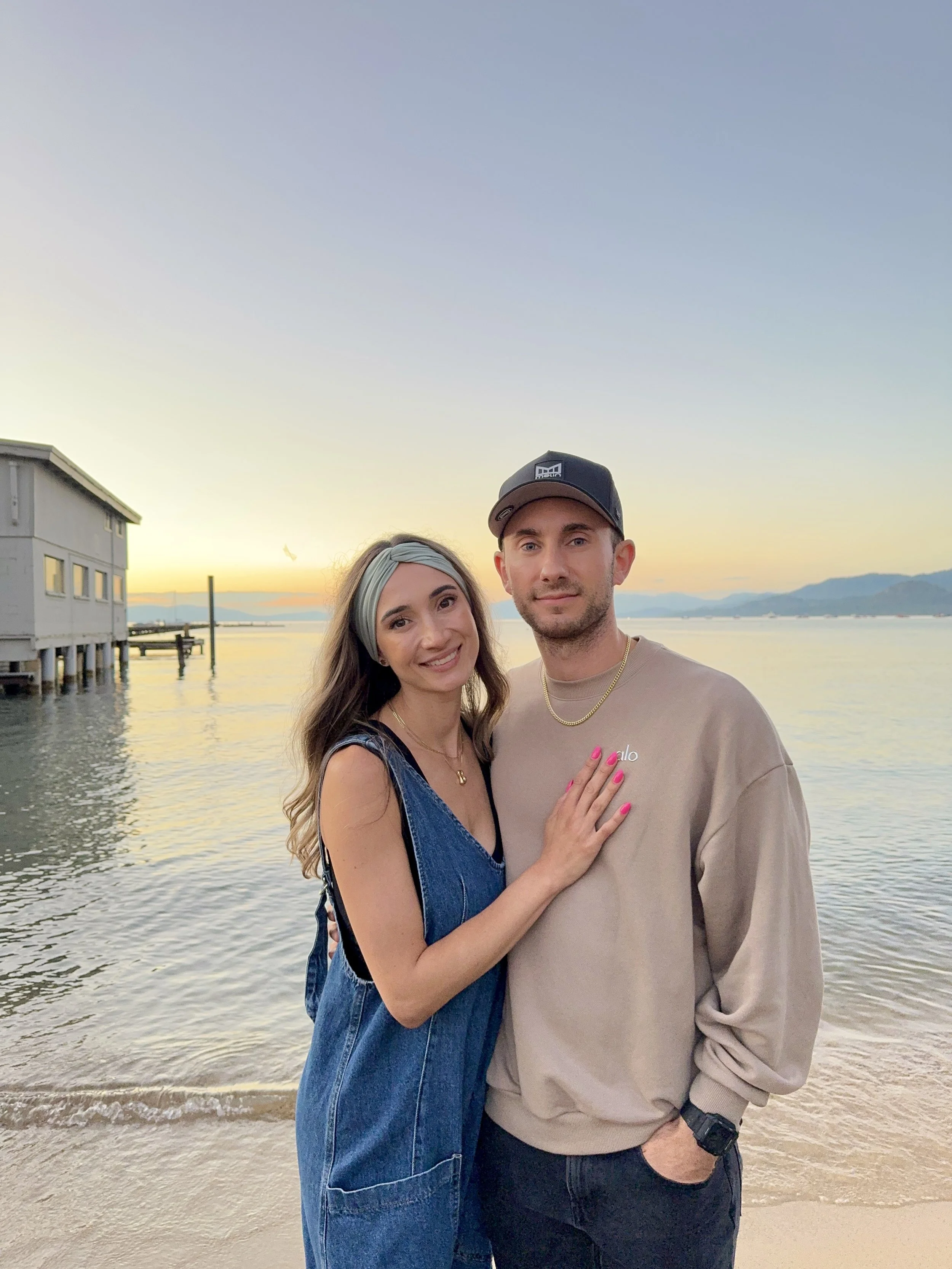
What if divorce didn’t just break your childhood—it rewired how you see love and marriage?
Most people think divorce only affects the couple who splits. But the truth is, when you grow up watching marriage after marriage fall apart, you start to believe that brokenness is normal.
That was Kaseena Birnbaum’s story. With six divorces between her parents and in-laws, she once assumed she’d rack up divorces too. But when her own marriage hit a breaking point, she chose a different path: radical honesty, mentorship, and personal responsibility.
Today, she and her husband are thriving—sober, faith-filled, and raising a strong family.
In this episode, you’ll discover:
Why children of divorce often fear marriage or expect dysfunction
The subtle patterns that keep couples stuck in cycles of brokenness
The turning points that transformed Kaseena’s marriage
How humility, responsibility, and faith can rebuild trust and intimacy
If you’ve ever wondered, “Am I doomed to repeat my parents’ mistakes?”—this episode is for you.
Get Kaseena Birnbaum’s Course, F*** Divorce
Follow Kaseena: Instagram or TikTok
Watch the Trailer: Kenny (3:31 min)
Get Dakota’s FREE Guide, The Biggest Fitness Mistakes to Avoid
Full Disclaimer: If you purchase through the links on this page, your purchase will support Restored at no additional cost to you. Thank you!
To leave feedback, comment below or contact us.

Enjoy the show?
To be notified when new episodes go live, subscribe below.
As a bonus, you'll receive the first chapters from our book, It's Not Your Fault: A Practical Guide to Navigating the Pain and Problems from Your Parents' Divorce.
TRANSCRIPT
Transcript produced by artificial intelligence. Please pardon any errors!
Joey (01:01)
Welcome to the restored podcast. I'm Joey Panarelli. If you come from a divorced or dysfunctional family, this show is for you. We mentor you through all the pain and help you heal so you can avoid repeating your family's dysfunction and instead build strong, healthy relationships. What if your parents divorced didn't just destroy your childhood, but actually redefined your entire view of love and marriage? Most people think that divorce only affects the couple who splits, but the truth is when you grow up watching marriage after marriage fall apart,
you start to believe that brokenness is normal and you start even expecting it for yourself. And this might be why you've been afraid of marriage or why you've settled for unhealthy relationships, thinking that's just the way that it has to be. My guest today is Kaseena Birnbaum. She comes from a combined total of six divorces between her parents and her in-laws and once assumed that she'd rack up divorces too. But when her own marriage hit a breaking point, everything changed through radical honesty, through mentorship and taking responsibility, she and her husband...
turn things around. Today, Kaseena Birnbaum is a marriage coach, speaker, and content creator guiding couples to rebuild trust, heal deep wounds, and build marriages that last. So if you've ever wondered, am I doomed to repeat my parents' mistakes? Can I actually build a healthy marriage after so much dysfunction in my life? This conversation is for
Casina, welcome to the show. Good to have you here.
Kaseena Birnbaum (02:20)
Thank you. I'm so excited to be here. I feel honored for sure.
Joey (02:24)
One of the things that kind of blew me away, I know it's a kind of a sobering point, is how you and your husband come from a combined total of six divorces between your parents, if I got that right. That's a staggering number. What happened and how did that shape you?
Kaseena Birnbaum (02:40)
Yeah, we were just talking about that last night and I was thinking about all the different divorces. So like when you count them, it's like, okay, my parents count as one, even though they both are like different people marrying other people. So my dad was married four times by the time I was like graduating high school. And then my mom, she was entering her second marriage and that one, it just didn't end up working out as well. And so, and then my husband had his parents divorce and then his... ⁓
He had another divorce through his dad as well. it just like, for me, like, I feel like I thought divorce was normal. And I'm like, kind of grew up with this motto of thinking like, if you are changing in a relationship, like you shouldn't stay with that person because you know, like it's easier just to leave because you don't want to be unhappy. And I had just seen that happen so many times where I was like, yeah, like I'm probably gonna get a couple of divorces when I grow up. that's like, that was just my like.
like what I thought. Like I had no idea. I saw two people that were wildly unhappy and I saw it so many times and I was like, man, like, I don't know what it takes to like find the right person, but like you definitely don't want to stay in a relationship that's toxic. And that my mindset was just like, don't, you know, like that's just the way of life.
Joey (03:55)
Yeah, no, totally. And it's so interesting that you had that thought. One of the thought that I had was I am just terrified of this thing called marriage. Like, I just don't really want to go down this path because if I do, like, I'm probably going to end up like my parents. And then later I saw statistics where, if you come from a divorced family, you're like twice as likely to get divorced as someone who, you who doesn't, who comes from an intact family.
And if you also marry someone, I've said this on the podcast before, but if you marry someone who also comes from a Doris family, that goes to almost like three acts from the research that we've seen. So it's pretty intimidating. It's not exactly a consoling thing, but it's so interesting how you said that it was just kind of normal for you.
Kaseena Birnbaum(04:33)
And then I also had that bitter feeling too where I wasn't in a rush. My husband and I, dated and lived together for like three years because I wasn't taught how to go about dating any differently. And so that was just kind of like, well, my mind was like, I'm gonna test out this relationship. We'll do everything that married people do and eventually we'll get married if it makes sense. And I don't think that was the right way to enter into a dating relationship if I would.
could have gone back now, but that was just my mindset. Like I remember one of our mentors had said to us like, you know, you guys are doing everything like a married couple. Why is the back door open? And I was just like, I had like this pit in my stomach. I didn't have butterflies about getting married. I never wanted a big wedding. We actually got married like we eloped in Tahoe because I just, like the idea of like seeing all of the divorces like crumble in front of my eyes. And like I saw the big weddings where they stressed about
You know, they put 30, 40, 50 grand into a wedding and I just saw it crumble right before my eyes and I'm like, screw that. I don't want to pay for a wedding. So I just had this pain in my stomach and I thought, like, I wanted to give it my all and I wanted great results, but I was just like, I was terrified. So I can definitely relate with
Joey (05:54)
Yeah, no, for sure. it's funny, I heard a sad a while ago. I don't don't quote me on this guys, but that the more money that's spent at the wedding, like the higher the divorce rate. So there's some crazy stuff out there. So you were kind of wise not to throw a bunch of money at it. But yeah, no, we, I definitely hear and yeah, eloping was an attractive option for us to we ended up, you know, doing the more like traditional route. But, but I totally get that. And I think a lot of people, you know, are in a similar spot where it
it's pretty discouraging to look around and see that, it's not working for a lot of people. On that note, you now have a beautiful marriage. I admire you guys for what you've built, but it wasn't always that way.
Kaseena Birnbaum (06:34)
It wasn't very beautiful.
Joey (06:35)
Yeah, take us to that low moment that you guys had, like what happened there and then what changed.
Kaseena Birnbaum(06:40)
I feel like there was a lot of little moments I thought about. Like I tried to think about like maybe what our rock bottom was. Like when I create a lot of content, I kind of like revisiting our marriage all the time because it's like you're just constantly trying to connect with someone else. And when you're not in that space anymore, you have to kind of reflect back and constantly go, okay, where was I? How did I feel? Because I don't feel that way. I'm not a completely different person. We're different people. But thinking about our lowest moments.
It was just that feeling of feeling hopeless, like dead in our marriage in the sense where there's just not any connection. There's no vibrancy. The thoughts like really ultimately what it came down to is we weren't leading ourselves. My husband wasn't leading his own actions and his attitudes and his character to grow. And I wasn't leading myself. And so it was like two people that are not taking personal responsibility and not seeking out help, getting new information. Like it's just kind of like if you're stagnant, you're going back.
Like there's no other way to look at it. And so it's like two people going backwards trying to make it work. And I think that that was just the low for us for a while. It wasn't like any rock bottom moment. It was just like a lot of that. And I think until we got new perspective, like we wouldn't have been able to do anything without coaches. Like I feel like sometimes people think like, you're just trying to push coaching or you're trying to sell, sell, sell. It's like, I don't think you can change. If you're really
in a place where you are struggling by yourself. Like you can't do it on your own. You need help. Like, and I needed accountability. needed help. needed someone to tell me like, hey, I understand your emotions and feelings, but this is an area you actually need to grow. Like I needed someone to help me raise up and truly take responsibility and not just be a victim to my situation. Because although my husband was doing everything that I didn't want him to do, you know, we were drinking a lot, smoking a lot of weed.
Like we were just not on a path to success because we just, that was just the way we just liked a lot of leisure because it would be none doubt. And with that being said, like there was not a lot that I liked, but I still had the ability to take responsibility of myself. And I think that's where a lot of people miss the balls. They're like, oh, like I just want to change my spouse and I just want, you know, things to be.
I want them to change before I change or before I put effort. it's like, well, regardless of your relationship works out, you need to change. You're also part of the problem. And so I think that having a coach, would have been the only way I would have been able to take my head out of my butt and truly become available to see what was going on. Because I lived in such a...
What would the word be? like drama filled toxic environment for so long that I couldn't see I can't even know what happy and healthy looked like. It like looked like it was for some people but it was like it's not it's not something that I knew how to recognize.
Joey (09:42)
You didn't know what happy and healthy looked like. That's so good and so true. think for people like us who come from really broken families, it's like that's our normal. That's what we maybe think every family is like, unless we're exposed to, you know, families that are healthy and happy. So really good. We might come back to that. What you said about kind of taking responsibility is a hard thing for so many spouses, for anyone in a relationship. I think
partly because it just requires a lot of humility. And I know you talk a lot about how ego can be such an enemy of your marriage or relationship. How did you maybe cultivate some of that humility? It's not an easy virtue to come by.
Kaseena Birnbaum(10:19)
Yeah, I think I saw what it looked like to not have that trait and it bothered me because I saw the victim mentality and it just it like I like I was like, my god, like I can see it with my own eyes. Like you're not taking responsibility or I could see when things were someone's fault, but they weren't taking responsibility. And so I think it wasn't that I wanted to
be humble, it was just like I was so turned off by the fact that people had more control than they realized. I was like, I could see marriages and that the same problem would be happening over and over and I'm like, but you're also doing this. And so seeing that, just was like, I'm not gonna do that. Like regardless of how much it hurt to change and how much personal responsibility sucks sometimes because you're like, you know, it's like, it's the most uncomfortable. ⁓
gut wrenching feeling to look at yourself and go, you're the problem, you know, like you need to change. And when you do that, like it's, I don't know. just, just like there's no other option when you, when you know the truth, that makes sense.
Joey (11:28)
Totally makes sense and it almost sounds like it's what I hear you saying is like your pride is the price you pay for a healthy marriage ⁓
let that go, which is not easy, but so good. And just to your point about coaching, I'm a big fan of coaching as well. I've benefited from a lot of great mentors from going to therapy. And in some ways, when people come to us with struggling marriages, we often point them to coaches, actually not to therapy. Not that we're opposed to it, but we've found that if you can work with a couple or a coach that has been through what you've been through.
not maybe a therapist who went to school for it, but they're not even married or, they don't have like the same experience. Yeah, I think that's like way better. So I'm tracking with you there. And I know, you know, our audiences too, because yeah, I think I've heard people say that like, in a year from now, you'll be the result of I think, Matthew Kelly, an author said this, he said, in a year from now, you'll be the result of the books you read and the people you spend time with. And one group of people is your coaches, the people you listen to your mentors and
you if we look at athletes and any high performers in any area of life they always have the best coaches, they people who are guiding them and I think like why should it be any different in our relationships if we want great ones.
Kaseena Birnbaum(12:37)
Yeah, I couldn't agree with you more. I like the counseling. actually in high school went to counseling and I didn't get to experience the breakthrough. And it was just kind of like, you just keep going and there's never like a stop. You just go and then I got prescribed ⁓ medication. I was 18 and I was going through a lot emotionally and I went to the doctors and I was like, yeah, like I feel like emotionally, I feel like I'm depressed and all, know, this is the...
This is the result of all the toxicity. It's I'm 18, I'm emotional, I'm a woman, and I'm feeling depressed. I feel like everyone's saying, like, I feel like I have different emotions all the time because my character sucks, right? You know, I don't have a lot of follow through. And the doctor prescribes me three medications. It was like bipolar medication, depression medication, and ADHD medication. So I walk out of there.
I'm and I got three prescriptions and I took a survey within 15 minutes and that was what I walked out with. And I was like, like that was a low point in my life. I wasn't even dating anyone at that time. But I was just like, I feel like I couldn't trust. I feel like I went into victim mentality really easily there because I realized like, I'm not in control. These medications have to help me. And so I ended up getting off all of them and actually
because I knew that I was the problem and I needed a change and I received coaching and mentorship. But that was, don't even know how I got to that subject, but what were we talking about?
Joey (14:08)
No, no, you're totally fine. This is really good. No, just like this idea of coaching potentially being better than therapy and
Kaseena Birnbaum(14:15)
That's exactly it. I just started to not trust like the traditional route as much of medicine and not to say there aren't amazing doctors and you know things out there but I just just to walk in so easily and get help when that was actually one of the worst things that could have happened for me. I needed a coach to help me rise above. I needed someone to really help raise my standard, speak, believe into me, not a doctor who didn't even ask me and doesn't know anything about my life.
but gave me medication that altered my brain and the way it works and somehow makes you addicted to some of these things. And I just, I realized like I had to do other things to get help. It was like, wasn't going to be the traditional way.
Joey (14:54)
Yeah, no, gosh, I'm sorry you went through that. That's rough. And you know, we've heard similar stories and I went through a period in college where my emotions were like all over the place. I felt kind of just super broken. I went to therapy and thankfully had a competent therapist. And I think that's the key. Like if you find a competent one, it can be really great. It can be really helpful. Just like a competent coach, but you know, not bashing therapists out there, but sometimes they're not the most competent and just like.
In every field, any profession, there's people who are really good and competent and there's people who aren't. So you need to be really careful with vetting them, which I know is another topic for another time. man, that is rough. Was there anything else from, I don't know, just growing up at home that was kind of big for you and your story? Anything you wanted to add in terms of any way in which your dysfunction at your home, your parents' divorces, how it impacted you or your relationships? This episode is sponsored by Blackstone Films.
They just released a new documentary called Kenny. It's about an ordinary Denver priest who lived like a true father and transformed families and inspired vocations. He would actually wake up at 430 every day to do an hour of adoration. His parishioners would ask him to pray for them and they actually got those prayers answered. Some even call them miracles. He had to shepherd his people through the Columbine shooting, if you guys remember that.
horrible, horrible event. He ate with the families in his parish every night of the week. He hiked with groups of young adults in the Rocky Mountains on Colorado, and he sat with couples on the brink of divorce, even saving a marriage, which they talk about in the documentary. And so if you want a hopeful model of leadership and fatherhood, something worth watching with maybe your spouse or your small group, watch Kenny. The trailer and the full film are now streaming on formed.org. You could just tap the link in the show notes to watch the full documentary.
or just the trailer. Again, thanks to Black Zone Films for sponsoring this episode and for telling such an inspiring story that I myself watched and really appreciate it.
Kaseena Birnbaum(16:47)
think overall, a lot of the biggest things I shared was just seeing the toxicity, feeling at a low graduating high school and receiving all those medications and then not really knowing what I want to do with my life and feeling like, okay, marriage doesn't look like a good route. Just feeling kind of hopeless in all areas, but I know, always, I have a faith, so I feel like I do now, I did then, I wasn't rooted in a foundation of believing in God then.
but I kind of always had some type of like little bit of hope in my heart, like there's gotta be like something better in life. Like I've always been a really big introvert, so I spent a lot of time alone. So I think it might also be because I've experienced so much toxicity being around other people that like it was like my time to like kind of protect my own self and my peace. And I think overall I just, always kept that little bit of hope that there's probably better out there. And I just grew like a...
massive desire to grow. Like I just I think I just became so fed up with everything that I experienced time and time again and every time I would get like a little nugget of help I would get so much energy from it. I was like, oh this this feels good like you mean there's a way to fix what I've been dealing with for however long and and sometimes I would try to share that with my family and like oh like look what I found look what I learned and I was probably the most excited out of everybody. don't know I just I I
so addicted to growth now because I think I've just seen the breakthroughs that can happen when you're in growth mode and when you're learning and when you're taking responsibility. But overall, I would just say it's just a lot of toxicity, just not a lot of character. And so I just had to change everything about myself. And that allowed me to learn to know myself, to love myself. And I think with that, that changed our entire marriage. And, you know, I think
But we probably should be together, you know, based off statistics like you had mentioned, and we shouldn't have such an amazing marriage. Like we didn't start off with any foundation that was anything solid whatsoever. No faith, toxicity, drugs, alcohol, like anything, everything you can imagine in there. And now we're sober, been sober for over five years. We have a strong faith in God and we're prospering, belly businesses, we're a team. And so I'm just super grateful and.
Joey (19:09)
Yeah. No, it's so good. I love it. And you had a really important point that like, think one of the things that we lose when we come from a family that's very toxic or dysfunctional is that we miss out on the mentorship and the guidance that, our parents are meant to give us. Not that our parents maybe didn't help us or guide us in some ways. I certainly did benefit from, you my mom and my dad in this area or that area, but
By and large, I feel like we miss out on a lot of that. So I think the importance of finding that elsewhere can be overstated. And that's what you did. And if you didn't have those people in your life, your life would be very different. I know for me too, not that I'm this crazy successor by any means, but just I would be in a very bad place right now if it wasn't for, like you said, faith, but also just the people in my life who just love me and affirm me and help me to grow into a better, stronger, healthier person.
Kaseena Birnbaum(19:59)
Absolutely. Yeah, it's I know I can't stress enough. I don't know how to share it without being you know, being a person that doesn't sound like it's like, you know, you're trying to sell a product that you you know, if you're a coach, you obviously want to sell coaching you want to sell whatever it is the business that you're in but like there's just no way like I would be like I just wouldn't be who I am and I like I think there's just no price like like I would pay anything to have that
love and life and security and faith and everything that I have, would pay millions of dollars for it to do it all over again. And like, just wouldn't like, you know, there's just no price point that is too high. And so it's like, what you know, if anyone's on the edge of like trying to find a coach or a mentor, do something to really get help. Like, I think if you want to do it faster, like that to me, that's the only way, but you have to find somebody that has results, like somebody that really gets you and just
really is living that life because I think for me religion I was very like opposed to any of it because I just saw a lot of people that were quote-unquote religious but like there wasn't a lot of character behind it so it's like I was forced to maybe go to church and forced to do certain things religiously but the character wasn't lived out in the way that I thought could be you know and nobody's perfect but I just didn't see it so to me it was very confusing
on that. And so it's like even a coach, like a coach just if you're going to work with somebody needs to be somebody that truly lives the life that you want to live versus you know maybe has a degree or like maybe makes a certain amount of money or status anything like that. It's like you have to be able to read between the lines and figure out the difference of what that looks like.
Joey (21:44)
Yeah, no, I can't agree more. There's a lot of hypocrisy out there and I don't...
you for being turned off to that I am too. So yeah, totally makes sense. There's so much more I know we could talk about there, but I, you know, we've both benefited a lot from it. And when you're on the other side of it, I get that it can be scary and intimidating and a big like investment of time and maybe even money. But, but yeah, I've never regarded it when you find the right person to work with. But back to kind what we were talking about before, before we move on to kind of the solution, the happier part of the conversation, I am curious if there are any like patterns or cycles that you found yourself.
falling into you and Taylor. Did you notice, like, yep, we kind of always go through this cycle of brokenness and low points in our marriage.
Kaseena (22:25)
Um, man, I feel like there's different seasons. like the cycle of like when we, you know, and he, he smoked a lot of weed. I did love it with him, but that was his thing. I liked to drink when I was younger. It was like a fun party college thing that kind of turned into like, I never went to AA and it wasn't like I, you know, woke up in the morning and had drinks, but like the drinking here and there led to a lot of fights. And so I would say like,
That season of our life, we experienced a lot of the same problems because we didn't have the control within ourselves to give them up or realize that that was the problem. was kind of like every movie you watch and everything you see on social media, everything's about alcohol and, you know, things like that. And so it looks so normal that you're like, that can't be why our marriage is struggling. So that was a pattern.
And through our faith, we gained enough strength to make that decision. And that was one of the best things and that broke a lot of those patterns. When we used to fight a lot, a lot of the fighting came from the fact that my husband was wanting to be intimate with me. And because I had so much going on in my heart that I didn't know how to express to him. And I kind of felt like I was protecting myself. So I would shut down my body and not want to be intimate with him.
And that led to major patterns of just us fighting and he, you I wonder why don't you want to lead me and why don't you want to fight for us and why aren't you changing? And it's like, I'm making him feel like crap. I'm rejecting him. I'm not making him feel like the king of our house. I'm not building him up with my words. You know, if he tries to approach me sexually, I change, like my body changes. I'm like, oh no, like not tonight. I'm busy. You know, I've got things going on and that's so easy to do. But when you don't realize like,
how intimacy is, it's like it opens up this bond between the two of you and my husband, like he, like guys need it to really truly open up their heart. Like it's like they want to be desired, they want to be wanted. And if that's not happening, like when the pattern of not being intimate in our marriage led to just a lot ⁓ of like loneliness and a lot of fights and...
That cycle when we broke that was when we decided to get help in that area. And when I decided to get educated around like, my husband's not an animal. He needs intimacy for other reasons to truly open up. And I also do too. Like it's a bond between the two of us as a married couple that we share. And so that unlocked a big one for us. But that pattern, it sucked. was just like, had I known earlier, obviously.
you know, you know anything earlier, you would fix it. But that really solved a lot of our problems.
Joey (25:11)
Yeah, no, gosh, you're in the nail in the head and yeah, so many people I think can relate to what you're saying. I know, yeah, we've been through definitely difficult seasons in our marriage and it's so interesting and we'll talk about this maybe a little bit later, but just how, you know, men in order to be, to offer that emotional like closeness, that emotional intimacy, we need the physical intimacy and the women, you know, in order to receive that, you physical or that emotional intimacy need to offer the physical.
the physical and so it's tricky because like none of us really want to go first. ⁓ But and I know we're going to talk about that but I'm curious like if you were well let's go to that now. So this whole idea of going first. So like let's say a couple is caught in that situation where it's like okay I need this and I need this and they know there's willing to go first. Like what's your advice there because again you kind of have to eat your pride and be like okay I will sacrifice and I will go first. Unpack that.
Kaseena Birnbaum(25:59)
just think like just stay where you are if you don't want to go first. That's like that that was the advice I got. I had amazing coaches and mentors for you know quite some time that really were tough love. Like I think I like really cling to hearing that like even like Tony Robbins like I'm very like give it to me because I just wanted to get truth and even though like it's hard so they they were not they didn't beat around the bush with me they're just like look
Like you have to go first or else you're going to be doing the same thing. Like, you know, if they're not changing, the only thing you could change is yourself. so like, even though like, like I didn't want to have sex with Taylor because he was, you know, not doing the things I wanted him to do. It wasn't loving me in the way that I wanted him to. He wasn't changing. And but I had to change my heart and not look at him like he was disgusting, you know, and not look at him like, my gosh, like you're just sitting there breathing. And I'm like, you know, it's like I genuinely had to make girl heart to like love him more. OK, what is he doing right?
Okay, like that would be something my coach would say is like, what find the things that he's doing right? And you know, and be intimate when you don't want to. And so it's just like this concept of like doing things when I didn't want to do them. And I know that through our relationship with God, that has been instrumental and very helpful to really clinging to our faith because that is it's all about doing things you don't want to do and be having that unconditional love and God loves us regardless of all the things that we do wrong. And so it's like, I'm not God, like I don't have the
ability to judge him for what he's doing and so I have to I have to love him unconditionally as well. So it started with changing my heart and I think if somebody is struggling with that it's like one know that you can change the relationship if you go first like you know it doesn't change if you don't so it's your choice but I think two like you can really actually learn to change your heart even if it's you know been like that for a long time or you know you can always forgive and you can always change your heart at any time you want it's just a matter of making that choice.
Joey (27:54)
So
good. Yeah, and I think it kind of requires some brute force at the beginning. That's what I've learned too. kind of like you're saying, you don't really want to go first, but you the results of, you know, a good marriage, of a healthy marriage, of a happy marriage. And so it's like, no, the result matters more than what I feel like doing. So I'm going to forget my feelings and I'm going to, you know, do what's right and do the thing that's going to help us get the result that we want. But you kind of need to, you kind of have that brute force from time to time.
Kaseena Birnbaum(28:22)
Yeah, absolutely. Yeah, you just kind of do it and you doesn't feel right or like, it's like it feels forced and you're like, oh, I think you're complimenting your spouse and you don't want to and you're like, oh, I like your pants today. And you're like, I don't want to say anything nice to them. But like you just have to start somewhere, know, like it's like that's where it started. And even sometimes now, like, there's something nice, something nice, even though don't want to. Yeah. No, that's yeah.
Joey (28:51)
Okay, real talk. If you've been trying to get in shape so you feel better physically and emotionally but nothing is working, you're not crazy. I've been there myself. I recently read a free guide by Dakota Lane, a certified personal trainer who we've partnered with that's helped about a thousand people and it was really helpful for me personally. In the guide, he breaks down the biggest fitness mistakes that we all make like under eating, over stressing or focusing too much on the scale and he gives really simple practical tips that you could actually use that can implement today.
Kaseena Birnbaum(28:51)
Yeah, definitely true.
Joey (29:20)
And so if you're tired of feeling like you're never gonna get in shape, just click on the link in the show notes and grab the guide today. It's totally free and it might just be the thing you need to start feeling healthier physically and emotionally. No, no, yeah, it's like, you wearing that shirt yesterday? It looks just as good as yesterday. It looks great. It's so That's awesome. What were the main lessons that you would share?
Kaseena Birnbaum(29:38)
That's
Joey (29:47)
with maybe the younger you that's listening now who maybe never saw a good marriage growing up. In other words, what would you say on how you can build a healthy marriage? I know we've touched on a bunch of things so far, but what would you say specifically to your younger self?
Kaseena Birnbaum(30:01)
I like everybody experiences different things. So whoever's listening, it's like, you know, your parents might've been into one thing. You know, everyone has such a different experience if they've gone through divorce. I would just say the one thing I would tell myself is like, don't worry about everything else that's going on and don't worry about what you've gone through because all of it can change. And just like have way more hope than you do right now. Like start, you know, really think about
things positively and what you do want and just know that you have to seek out association and people and whatever it is that you can dream of like relationship wise and just know that if something's really really bad it can also be really really really good. ⁓ It's just you haven't seen it, haven't felt it, you haven't experienced it so what I tell myself is just like don't lose hope and know that this is nothing. This is not what life is.
It's just the life that you've experienced and you're going to one day use it to, you know, do something with it. You know, like I truly believe everything would go through. Like I didn't ever think I would be here, you know, sharing my story, but you know, it's all for a reason. And so, you know, it's part of your story for a reason, but it doesn't have to stay that way.
Joey (31:16)
there.
Hope, that's huge. I remember hearing a quote, I think it was from the author GK Chesterton, he said that hope means hoping when things feel hopeless. Yeah. And so I think that's like so good, we need to hear that. ⁓ What would you say are some of like the most helpful tips that you've learned from mentors or you've put into action in your own marriage when it comes to conflict? Because one of the things that we hear a lot from our audience is that they saw conflict handled very poorly growing up. I'm sure you and I can both relate to that. So yeah, what did you learn about navigating that difficult world of conflict?
Kaseena Birnbaum (31:46)
I would say what I saw was a lot of anger, explosion, like emotions and isolation. So one side would isolate and the other side would blow up. I just saw, yeah, things being expressed, but like the root of the problem wasn't quite being handled. And so what I learned through mentorship was that if you don't grow yourself emotionally, then it'd be really hard. It's really hard to just have like breakthrough in your conversations. And so what that means for
My husband as my mentor would say, okay, like, how was your tone when you communicated that? And I was like, oh, yeah, probably not good. And like, how was your face? I have a lot of attitude. I'm definitely not, my husband sometimes calls me a bull because I just like, I want to like, you know, go all in very tight bay and I have a lot of attitude, but I had to learn to like scale that back and like, okay. And he'll tell me now, but we've learned.
that we are both giving off a certain energy and we're giving off a certain vibe when we communicate. what we do now, what I learned from our mentors at the time is I just ask them like, is it right now a safe time to communicate? Because he could be feeling tired from work, he could be hungry, it could be, there could be so many things going on, he could be feeling frustrated with something else. But if I bring up.
problems in him. Like I might be making the whole thing worse. And so we just learned like tone, tact, and timing. It's like how you say things, what you say, the timing of when you say it. ⁓ Our mentors really helped us again and again and again with figuring out how to create this environment where when we were talking, like we can actually hear each other versus it just be like this fight that we're like, okay, guess what we fought and nothing else.
Joey (33:36)
Yeah, no, you get nowhere. You go in circles. And I love that like kind of tough love that you talked about before. I think that that's such a good reminder. I'm going to definitely use that even on myself. Like, Hey, if you want things to stay the same, you don't have to do anything about it. No one's forcing you. That's great. love that. ⁓ so no, no, really good. And I appreciate you going through all that. One of the things I noticed on your socials, you know, on Tik Tok is that some of your most viral posts.
are encouraging wives to prioritize sex. know we talked about sex a little bit, but I want to go a little bit deeper here. It clearly strikes a chord. And I know there's a lot of men in the comments talking about it. So I'm curious, what's going on? Why do you think there's such a need for content like that? And what's your message maybe to the men and the women who are
Kaseena Birnbaum(34:18)
You know, it's funny, I accidentally had a real go-vote, really viral, I decided I'm gonna share about, you know, a conversation that my husband and I had. I named the video, like, Being a Hoe Changed My Husband Into My Dream Man, because essentially when I started to show up emotionally and intimately, he really started to feel seen and loved and that like truly spoke to his character.
And what I learned from our mentors was that like, you know, they gave us advice to don't go longer than 72 hours without having sex. They're like, just don't do it. Like whatever you do, don't do that. So we started scheduling it and we started like, you know, it was very like rigid at first, but it was like, okay, like this is advice. I'm going to take it and see what happens. And when I started to show up in that area, my husband really started to grow a bigger heart and he started to change. I,
I realized that me using sex as like manipulation or as like something where maybe I wanted to like control things. Like if it wasn't my way, things weren't going the way I wanted, then I would shut down physically. And when I let go in that area and started to show up, regardless of how things were going and be more intimate with him, he truly transformed. And I was like, oh my God, this is the best thing. But I don't think a lot of wives understand that.
like they have a key to the man's heart. They just don't know what that like they don't really understand that they're not utilizing it and it's right there and ⁓ putting it on socials I realized my gosh like guys are yearning to be seen. They want it. They want to feel loved. They want to feel like they want attention from their spouse and yes I understand that you know the wives are hurting and there's probably reasons why they're not wanting to give them attention but I mean at what point do you
why are you in the relationship? like, start to find the good things. And so I think sharing these things on social media, I never wanted to have my PhD about that. Like it was like not what I dreamed of and it actually made me quite uncomfortable to talk about it online, but to realize the responses were wild. Like I just started growing like crazy and a lot of men were asking for help and it just was like, wow, this is a problem. Like it wasn't just our relationship. It's a lot of couples that are struggling in this area and
maybe that could be their breakthrough just like it was for us.
Joey (36:36)
So good. And it would be interesting. I'm not aware of research on the topic, but just how many marriages in America or in the world are like sexless right now? Are you aware of any research on that? imagine it's pretty, a pretty wild number.
Kaseena Birnbaum(36:50)
God, I know divorce is so high still. And I did a poll on my Instagram stories and I asked about fruitful marriages, did you grow up in a marriage that you loved seeing or even did you grow up in divorce? And was like 99 % of people all were either divorced or grew up in a marriage they didn't love. And I'm gonna guess a lot of those were sexless. A lot of those marriages that are not radiating light and love. We weren't radiating anything great when we were intimate.
But yeah, I don't know. I don't know any numbers there. I just know that it's not common. I don't think people talk about it in movies. It's always the guy's the animal. The guy lost sex for this, isn't it? But in movies, they don't make it out to like this special bond that keeps the, it's not the glue to your relationship. Sex is just kind of like, to me, I always felt immoral thinking about sex. I kind of felt like dirty. was like my mentor's pig gives a book. It's called Sheep Music.
and it has a lot of biblical principles in there and it talks about it was like it for me i kind of started reading it because it was talking about things through god and it was like okay like i'm not immoral if i read if i read about this i first when they gave the book to me i wanted to throw it in the trash because i was like i like no i don't want anything to do with this like this is bad
like it just made me uncomfortable. But as I realized and I started to open it and read a few chapters and I was like my husband he's like loved the book obviously he's like this chapter's good and this chapter's good and he's like it's so funny like but I just started to realize like okay like I want him to read the marriage books that I want him to read about communication that I should read this book about intimacy and so if if you need a book about that that's a great like if anyone's listening that's a great book but yeah I remember
feeling super uncomfortable when I started going down that journey. And so to think about how my whole page is starting to become about that, I never thought I'd be here now. But I think a lot of people are struggling with this topic.
Joey (38:51)
Yeah, no, and there's such a deep topic and we could only go so deep into it in this conversation because we only have so much time, but it's I know I think that there's so many layers there and it kind of depends on your background, but I can relate with you when it comes to like.
this shame around sex and sexuality that's definitely a big problem that seems to be pretty pervasive in America, especially in like religious circles. And so anyway, no, think it's really healthy to see like, no, no, like within your marriage, like sex is meant to be amazing. It's meant to be like you said, this glue that bonds you. I have this theory that the condition of your sex life reflects the condition of your marriage.
Yeah, if it's like crappy then your marriage is probably pretty crappy. Like if it's unhealthy and non-vibrant then your marriage is probably dull as well. so, so yeah, no, I'm tracking right with you and I think like it's so good that you're, you've clearly hit a nerve when I was like prepping for this interview. I'm like, people want more of this. And so yeah, any, any final thing you'd say there when it comes to kind of your message to men and women, like what's the takeaway? What should they go and do?
If you come from a divorced or broken family, or maybe you know someone who does, we offer more resources than just this podcast. Those resources include things like a book, free video courses, speaking engagements, a free assessment, online community, and much more. All of our resources are designed to help you heal from the trauma that you've endured and build virtue so you can break that cycle and build a better life. And so if you want to view those resources for yourself or someone that you know, just go to restoredministry.com slash resources or click on the link in the show notes.
Kaseena (40:22)
think, well, seeing the desire, a lot of guys seem to have a lot of hopeless comments as well. It's like, oh, like, you know, she doesn't desire me. It's all like, this is just how women are. And I don't think women want to be this way. Like, I don't think women want to be like, make you feel the way you feel if you're in a position where you're like, you know, wanting to be desired more. I just think we genuinely don't know. think like when my husband, he specifically, he like built skillsets to learn how to communicate over years.
It wasn't like this in the beginning, but he finally, I've had a breakthrough conversation with me where he said like, you are like rejecting me and it makes me feel like I'm not worth it. And I keep trying to come on and I'm the only one that initiates. I'm the only one that like tries and I feel gross. And then makes, you know, it's like guys, then they want to go somewhere else to meet their sexual needs. And it's like, I realized like I wasn't protecting my marriage when I was pushing him away and then making him feel like.
Like I wasn't the one that was going to be the one that completed him in that area. And so when he really opened up, like, and was very vulnerable, I think, like, that was the key to my heart was like, he shared his emotions and his feelings about like, this isn't just about like, you know, the fact that I'm wanting to be physical, like I want emotional connection here too. ⁓
And so we actually just came out, we launched a little like seven day guide for men. I posted it specifically on my TikTok, I haven't launched it on my Instagram yet. But it's like seven days of like application points of things that like my husband did to help me open up my heart. And like if guys really want more results in this area, like they can take action right now. Some guys just wanna complain and that's okay too. But a lot of the guys that are reaching out asking for help, I think like my husband always tells me like,
Give me something to do and I'll do it. Like if you offer to clean the house, I'll like give me a clear direction. Because I don't know what you mean when you say this, this and this. When you say I want you to like want me more, like that doesn't make any sense in my brain. And so it's like I need like specific direction. So in that like seven day guide, it's like a specific video with like, hey, give her a specific compliment on her character. Has nothing to do with her body. Like things that like would really make.
a wife feel noticed because I think that guys are just unaware. Like they have no idea that they're also the ones that are closing off that intimacy. so yeah, I think it's just, it's just me about making things simpler for the wife, the wife understanding how big of a deal it is and the husband understanding how simple it is to make their wife want to desire them more. It's just, it's just, you have to break it down. It's like, if you take the whole marriage book and then get like five action points and be like, okay, what do I do?
Like what do I specifically do because I think guys would do a lot more of it if they just knew what to do. Like my husband always just give me an example, I'll do it. He always says that but if I don't know, you're gonna drive me crazy because I don't know what to do. ⁓
Joey (43:14)
Yeah, no.
So good. No, we, I know we're kind of simple creatures as men, like just tell us, like give us a to-do list of specific things like you said that we need to do and we'll do them. And no, it's so good. I, I remember Dr. Gary Chapman and the five love languages talking about, yeah, just that whole situation that you mentioned where, you know, I remember him telling a, I think it was him who told the story just about
you know, these sexless marriages, these marriages where there wasn't that physical intimacy in the men, you know, the love tank being so empty that they then sought it in an affair and, you know, in porn and like other unhealthy ways of like using their sexuality. And I'm not, you know, saying it's like, you know, it's just on the wives because of you, you know, men are going into this. Like men have personal responsibility here too. But yeah, I think this is a big problem. And, on the flip side too, like you're saying, like it's not all the wives' fault. And I don't hear you saying that, but it's like as men we need to step up, like you're saying.
communicate better and do those things to make our wives feel loved so that we'll be more open to it. So good. I wish we could talk forever. You wrote something really beautiful on social ⁓ about your marriage. You said, I wanted to walk away. The damage felt too deep. The work felt too heavy and I didn't know if we had it in us. Then I remembered the little girl inside me, the one who sat on the stairs listening to arguments, the one who begged in silence for her parents to just try harder, the one who promised she'd do things differently. So I did.
I showed up, we both did, and it didn't just heal our marriage, it healed the parts of me that I didn't even know were broken. If you're in the middle of the hard, you're not alone. Keep going. So good. To a spouse maybe who's listening right now who is in that really tough spot, who maybe wants to quit, what would you add to that?
Kaseena (44:55)
That's so deep. you're touching a chord because it's like that is true and it's like, I just remember feeling like I wish I could change everything as a little girl. It would just be to like be the best version of you.
and don't lose hope. It's like, I think there's always something more we can do. And I think in those moments, if you're thinking about giving up, it's like, there's probably more you can do. Not saying that every marriage should. I'm not saying divorce also is never an option and it shouldn't ever work because I think that there are healthy times where maybe it might be the best option. But majority of the time, I think that there can be a lot more done before before walking away. And so it would just be like truly dig deep and truly get help.
and just like, don't do this on your own. Don't feel like you have to do everything on your own. And that the relationship you're having affects everybody around you. And in fact, if you don't have kids, it's your family around you, it's your community. You know, if you have a faith you're representing to us, it's like, we want to represent God in the best way possible. And so through having a strong, strong marriage, like we can actually attract more people to know and love God through that. And so it's like, it's not just the marriage, justice isn't about you.
It's about everybody that's attached to you guys.
Joey (46:12)
Well, so good. Yeah, I can agree more that exhausts every option and exhaust them again like seriously Yeah, I mean what I've seen from a lot of the marriages I know they're falling apart like one of the problems this isn't always the case is that they never ask for help another problem is that they like tiptoe into getting help and they don't ever
Kaseena (46:20)
Again.
Joey (46:34)
their whole heart into it. And then they're like, well, we tried therapy, but it didn't really work. And again, maybe they had a bad therapist or an incompetent one, but I think that there's so much to be said for fighting for it. And then like you said, I would just echo too, you know, in cases of like abuse or violence, and that's obviously a separate conversation, separate situation, get to safety. But in, you know, the far majority of marriages that ended in divorce, more could have been done. And then there's data to back that up too. I say this a lot in the podcast, so the audience is probably tired of hearing it. But they did research on this and they found that over
little over 70 % of divorces who were in low conflict situations where there wasn't like plates being thrown and violence and threat of death, abuse, things like that. Doesn't mean there weren't problems, but it wasn't those dire situations where we'd say, okay, something needs to change for the safety of the spouse and the kids. Anyway, just, yeah, totally agree with you. And on that note, one of the resources to help maybe someone who's struggling or who just wants to...
you know, make their marriage as healthy and happy as it can be, you have a course. Tell us a little bit about ⁓ who is that course for and what's the transformation you would say that you want people to experience by going through it.
Kaseena (47:40)
Yeah, I think that there's ⁓ really lot of great things that I touch on. It's for me, it's I think, you know, we start with foundational things like values. The course is really for anybody that wants to grow in their marriage. Like it's label, it's titled F Divorce. ⁓ But you don't have to be on the verge of getting a divorce. I think there's a lot of people that are hurting that are yet quite thinking like, I need a divorce, but they still want help. I just like that name because it's catchy. I also feel very strongly about
not getting a divorce, it goes with my brand very well. But I think that there's just different, you know, it's eight modules, there's different things in there that really talk about just the foundation of how to like really get to a better, you know, foundation with your spouse, how to communicate, how to fight fair, how important intimacy is, and just my husband's perspective, he actually is on one of the modules as well, where he just talks about like what it feels like from the husband's perspective, because maybe, you know,
There's a lot of husbands out there that haven't yet learned how to communicate, but I think it's important for the husband and the wife to see, like this can be talked about. And so I think that that is important as well. But really, gosh, there's a lot in there. It's not the longest course, but it's very potent. And I think that going through it multiple times and then also there's resources that I recommend on there that really instrumental like books and things like that, know, reflective questions and I think stuff like that.
shouldn't be done too fast. think people need time to really digest. But overall, it's just about breaking chains. It's about, you know, being a better version of you and being willing to go first. So you have a little bit of everything there, mindset, tools, applications, steps to take. And then I also obviously talk about like how important coaching was for me as well.
Joey (49:25)
And the shortness of it is probably a benefit for a lot of people. I remember Alex Hormozzi saying that it's not the seconds of value, it's how much value per second. And I there's so much truth in that. no, I wish you a ton of success with that. If people want to get it, how do they do that?
Kaseena (49:40)
Right now through my Instagram. So I have on my TikTok my guide for the husbands and I might combine some of my offer, like the different things I offer there, but on my Instagram, you can find it in my bio if you check it out there and it's pretty out there. It says that's divorce. So you'll find it pretty easily.
Joey (49:57)
It's a good hook. It's provocative for sure. I definitely appreciate the work you're doing. We'll put all the links guys in the show notes so you can check that out. If nothing else, you can follow Casina and just get a taste of her content. want to give you the final word and I'm so glad that you came on the show. It's been good talking with you, but I want to give you the final word. You wrote this. said, if you didn't come from a healthy family, make sure a healthy family comes from you. What's your advice to, again, the younger you listening right now who maybe doubts that that's possible for them one day?
Kaseena (50:27)
Well, I think if you've heard this, you already know what I'm like. You know that I'm gonna just tell you that you've already heard the truth and so whether you choose to unhear it or not, you know that there is another way. If you've heard one person that's overcome, then you have no excuse. And that's not my... Like I say that with all of the love in the world, but like once I heard the truth once, it was my choice whether I didn't want to believe it. And so I would just say like if you...
have an open mind and you do believe that one person has overcame, then just know that you can too.
Joey (51:04)
That wraps up this episode. this podcast has helped you, feel free to subscribe and rate or review the show. You'll avoid missing future episodes and help us reach even more people. closing, always remember you are not doomed to repeat your family's dysfunction. You can break that cycle and build a better life. And we are here to help. And keep in mind the words of C.S. Lewis who said, you can't go back and change the beginning, but you can start where you are and change the
#156: “This Is Not the Marriage I Signed Up For” | Heather Khym
Heather thought her family life was normal. But over time, she uncovered two buried traumas that quietly shaped her childhood—and required deep healing.
Heather thought her family life was normal. But over time, she uncovered two buried traumas that quietly shaped her childhood—and required deep healing.
Years later, as a newlywed, another wound came to light: her husband’s secret porn addiction. It shattered her—but it also became the turning point for restoration. Heather now calls it both the worst day and the best day of her life.
In this episode, we dive into:
Why she didn’t leave, and the non-negotiable conditions she set to even consider staying
Her advice for women facing the same gut-wrenching discovery, and for young people who just found out about a parent's addiction or affair
Her biggest lesson for anyone from a dysfunctional family—and the practical steps she recommends to start healing
If you’ve ever found yourself wounded or betrayed, wondering if healing and restoration is possible, this episode is for you.
Listen to the Healing Sexual Brokenness Series
Get Dakota’s FREE Guide, The Biggest Fitness Mistakes to Avoid
Full Disclaimer: If you purchase through the links on this page, your purchase will support Restored at no additional cost to you. Thank you!
To leave feedback, comment below or contact us.
Enjoy the show?
To be notified when new episodes go live, subscribe below.
As a bonus, you'll receive the first chapters from our book, It's Not Your Fault: A Practical Guide to Navigating the Pain and Problems from Your Parents' Divorce.
TRANSCRIPT
Transcript produced by artificial intelligence. Please pardon any errors!
Joey (00:51)
Welcome to the Resort Podcast. I'm Joey Panarelli. If you come from a divorced or a broken family, this show is for you. We help you heal your brokenness, navigate the challenges and build healthy relationships so you can break that cycle and build a better life. My guest today is Heather Kim. She is the co-host of the internationally popular Abiding Together podcast. She and her husband Jake are the co-founders of Life Restoration Ministries in British Columbia, Canada.
She has more than 25 years of experience as a speaker and retreat leader, offering workshops and conferences in the United States and Canada. Heather attended Franciscan University of Steubenville, my alma mater, and she lives with her husband and three teenage children in British Columbia, Canada. Growing up, Heather thought that her family was normal, as all of us do. But over time, she uncovered two buried traumas that quietly shaped her childhood and required deep healing. Years later, as a newlywed, another wound.
to light her husband's secret porn addiction and absolutely shattered their marriage. It shattered her world, but it became a turning point for restoration. Heather now calls it both the worst day of her life and the best day of her life. In this episode, we dive into how she responded to her husband's betrayal and the emotions no one saw coming, why she didn't leave and the non-negotiable conditions that she sat to even consider staying. Her advice for women who are facing the same gut-wrenching discovery
and for young people who maybe just found out that a parent is dealing with an addiction or maybe even an affair. She also shares her biggest lesson for anyone who comes from a dysfunctional family and some practical steps that you can use to start healing. And so if you've ever found yourself wounded or betrayed, wondering if healing and restoration is even possible, this episode is for you. In this episode, we do talk about God and faith. If you don't believe in God, you're totally welcome here. Anyone who has been listening to this show knows that we're not a strictly religious podcast wherever you're at. I'm glad that you're here.
If you don't believe in God, just listen with an open mind. Even if you were to skip the God part, you're still going to benefit a lot from this episode. And with that, here's our conversation.
Heather, so good to have you in the show.
talk about this a little bit later, but I know we were recently together at Dr. Greg Bataro's conference and summit. And I have to say the talk that you gave and Jay gave was the best talk I've ever heard on healing. And I've heard a few, so I just wanted to compliment you on that. And we'll talk about that a little bit later. But like you, you had mentioned in your talk that you just kind of get right at it. We do the same on this podcast. So I want to go kind of back in time and just talk a little bit about life growing up. what was life growing up like and more specifically, what sort of trauma did you sustain growing up?
Heather (03:22)
Yeah, well, I grew up in a faith-filled family. My parents are devout Catholics, and so church and stuff like that was a regular part of our family. ⁓ And from the outside, I think probably we looked like an ideal family, but we're just like any other family. You know, there's a lot of things underneath the surface and not that they were being specifically hidden somewhere, but some was just, you know, life happens. And I find it interesting that often
Even with some friends of mine, I was reflecting recently, I was like, I don't know if I've ever heard their whole story, you know? Like the whole thing, like just in one shot. Like you get snippets here, you're sort of like over the years piecing it together. But there is something about hearing someone's whole story, which I'm not going to tell you my whole story right now. The listeners are like, boy, I'm going to pack a snack here for this one. But I think there is something powerful about hearing someone's whole story because usually there is so much more under the surface than we would ever know. And so, yeah, so for us, there was
a lot of traumatic events that had happened. began when I was three months old. had an older brother who was seven who passed away. And it was a tragic accident that occurred at my dad's work. And because I was three months old, for the longest part of my life, I just thought that affected everybody else in the family but me, you know? And in no way do I want to be like, I'm a victim, you know, and all the things. there is a reality that I think I would often approach things in my story as like, that's not a big deal.
people have it worse than me, you know, and I would almost use that to dismiss any impact, any negative impact that had happened in the story. And over time I realized, you know, it wasn't just the rest of the family that was impacted by that. When you come into a family that is grieving, you know, there is an impact, especially on a baby that's looking to, you know, bond and, you know, all of that stuff. And I was very loved, very well loved by my mom and dad. So it's not that.
But I think just from the very beginning, there wasn't a lot of extra emotional resources available for me. So I grew up just sort of learning very quickly that I need to kind of keep it together. I need to take care of certain things myself because there's only a certain amount of bandwidth. That's not to blame my parents or my siblings. That's just a reality, you know, of what they, the trauma that they were going through. They didn't have extra, you know, to give. And so that was kind of the family I grew up in. was loved.
And also, that set the tone for a lot of other things. had another, I have a brother and a sister, and I had another brother. He was the one that passed away. So the brother and the sister that were alive, they obviously had experienced that as a very traumatic event, which impacted them. so specifically with my older brother, he's five years older than me, that event caused my family to move around a lot. My dad had to find another job because this accident had happened at his job. So my siblings being older, they were moving from school to school and, you know,
was a lot of bullying that happened with my brother and all of that. So he's being impacted and I think we've all heard, you know, the phrase hurt people will hurt people. my brother was hurting and I was the younger sister who ended up catching the brunt of a lot of that, which this became a very quiet but intense experience within the family. So no one else really knew the extent of what was going on, but I was experiencing it. in his
attempt to find control and, you know, to, I think when you experience something that's so far out of your control, but also dealing with his hurt and his anger towards God and, you know, all of those things, like he, got involved in the occult, so just like dark, you know, practices. And whether you believe in that or not, you know, I think there's just something to be said about that sort of mindset when you're focusing on evil and powerful things and just grasping after control and power and how that can
impact other people around you, especially someone who is vulnerable, which was me. And so as a result of that, you know, I ended up living several years just in fear, you know, and that was a tactic that he used for control. And I don't know if he really even knew exactly what he was doing, but it just was what happened. And so he would tell me, you know, just horrible things that were going on, things that would scare me. But then he would also say, you know, if you don't keep this quiet or if you tell anybody.
like I'm going to end your life. And it sounds very dramatic to say that even for me saying that now. I think there was a lot of disconnect for me that happened as a result of all that, cause it's so intense. You know, you're like, what kid has to hear that as a part of their daily life, you know, like growing up. And so I just lived in a lot of fear. I spent a lot of time awake at night, just fearing the dark and what was hiding in the dark, you know, and just all the stories and the things that I was seeing and
amount of rage and anger that he had that I just felt like could be unleashed on me or my family, you know, at any time. And in a sense, you know, me staying quiet was partly protecting myself. Like, I don't want him to get angry. I don't want this, you know, to escalate so I'm going to stay very quiet, not just with my words, but I couldn't give anyone a sign that I was struggling. And I think within a lot of families,
You know, secrets are very powerful things and they're under the surface. And there's a lot of suffering that goes on just because of secrets. And because of the secrets, no one could help me. But I also felt like I was protecting myself and somehow everybody else in the family. And that was a role that I ended up taking on because of all that was I need to be vigilant and watching out for anything bad that might happen. there was two impacts. One, I'm growing up thinking,
I have to be quiet. All my emotions got quiet. became very, just like my inside, my outside was not matched up. ⁓ Struggling, no one knew. then at the same time, I feel like it's my job to protect everybody from the bad things, you know, that are all around me. So I would say those two stories, my brother passing away, which impacted everybody, including me, the not having emotional resource available, learning, you know, just
I got to figure this out and I'm on my own. Those things just took a deep, deep root in my heart and impacted then the choices I made and how I lived after that.
Joey (09:42)
Wow, no, so impactful and thank you for sharing so much and I definitely haven't been through that exactly but I definitely can relate with secrets and with ⁓
you know, being impacted at a young age. There was a story I heard recently from a trauma therapist that we work with that we refer people to, Margaret Vasquez. We were talking a bit about this whole idea of explicit versus implicit memory. So for everyone listening who's maybe not familiar with that lingo, our bodies essentially have memory, even if we can't cognitively recall like a picture or a specific instance of it. so she, Margaret, I think was working with a patient with a client in trauma therapy. And this particular client kept saying that she was having this nightmare, this odd nightmare where
she felt like she was just like in a hole kind of grasping for air, trying to like get out of the hole. Didn't make any sense to her. So Margaret asked her like, you know, when you were a baby or when you were younger before maybe you had like this explicit memory, did anything happen to you? It was no or the, and she was like, no, like honestly, there's nothing that happened to me. So Margaret went back and said, well, there's only family members you can maybe talk to to see if something happened. So her parents weren't around or she wasn't on good speaking terms with them, but she had an aunt.
who she was able to call and so she called the aunt and she's like, hey, did anything ever happen to me that maybe would replicate this sort of dream I'm having? And her aunt was like, well, to be honest with you, we never told you this, but when you were like three months old, this kind of freak accident happened. And she might've been a little bit older than that, but essentially what ended up happening is she actually fell into a well, like a water well, and was stuck at the bottom of this well, like literally in a hole.
kind of grasping to get out and one is unable to get out. And they eventually got her out. ⁓ but again, it was before any sort of explicit memory. So I think all the, powerful lesson that I hear from you and from this story is that like what happened then matters even if we think it didn't. And so I think that's where like, especially this whole journey of healing, ⁓ has to eventually take us is to those places of even the implicit memory.
Heather (11:38)
Yeah. And I think just one practical way of people are like, well, what does that look like as you get older? Like, how does a wound like that, like just your brother passing away, feeling like you need to do it on your own or, whatever, what does that look like? And part of it is, I think it's like, I don't want to burden anybody ever, ever, you know, so I will take care of so many details, so many things that might potentially impact someone else because I just, somewhere deep within, there's this belief that they probably won't be able to handle that.
I don't want to be too much for them. I don't want to put any more burden on them than they might be able to handle. And that's a consistent lens that I still recognize as being healed over time, but I still recognize that's sort of a default that I have to work against and go, no, there is space for me to also have needs and to bring those into certain relationships, especially marriage and family and people who are actually wanting to come alongside and take care of me as well.
Joey (12:36)
Yeah, no, it's such a point. I've even seen when people fall into addictions or just really bad behaviors, bad habits. Sometimes as odd as it might sound, that becomes like a way of protecting others from the mess that's inside of them. It's like instead of taking my messiness out on my family or my friends or my spouse or whatever, I'm going to in some ways take it out of myself. I'm going to damage myself. I'm going to hurt myself even not doing it physically necessarily in this example, but there certainly can be a case of just.
I don't know. Yeah. Like a protection that is virtuous in some ways, but it's the outlets bad, right? The outlets not healthy. And so I love what you said about there being a proper way of doing that. Any thoughts on that before we move on?
Heather (13:15)
No, I just think that's very, true. I think that when we have pain, I think what I used to tell myself was, you know, I'm taking care of it. I don't need to look at that. And somehow if I wasn't looking at it, it wasn't going to impact anybody, including me. And the reality is, that's just not true. It doesn't just go away. We don't just put a lid on it and shove it down and then it's not impacting anybody, whether we see it or don't see it. It is going to come out in some way, or form.
And so, I do believe that people can experience freedom and healing on a very, very deep level. have a ton of hope in that area. so, ⁓ as difficult as it can be to go under the surface or to take the lid off something, when you have the right people accompanying you through it, I do believe that there is real freedom to be found.
Joey (14:00)
I love that. That was one of the things I learned from Dr. Batara when he came on the show. We were just talking a little bit about the subconscious and how, you know, he was quoting, I think jump all the second. He said that all these experiences we go through in life kind of get lodged in our subconscious and then our subconscious more or less, you know, dictates the way that we think, act and feel. And so if you're walking through life and I've been there many times and you're really like, I don't know why I think or feel or act this way. Chances are, like you said, there's some work to be done.
going underneath, going into the subconscious and healing the twins, which is, we're gonna talk about that. One of the things I wanted to talk about was the point you made a little bit ago about like hearing the whole story. I think it's just such a fascinating idea even like with ourselves because so often, you we see ourselves in like these kind of fragmented ways. We think of like the highlights or maybe the...
the low lights, like the horrible parts of us, but we really are like all of that. And that was something that your talk did so well. You and Jake's talk, this one I saw you guys recently did so well, just talked about how, like you're all of that, and you can be loved and you can live a healthy life even though all of those things happen to you. Recently, just to tie this up, I've been thinking more about forgiveness and how I've heard a quote recently that said, it's hard to hate up close. It's hard to hate up close.
So like, if you really feel a lot of anger towards someone, if you actually get to know them and start to have compassion on them, it can be really transformative because it's hard to hate up close. It's hard, know, often, especially in this like social media world, online world, we feel so much anger towards other people, towards other views. But if we actually got to know them, you're like, wow, we're actually not totally different. We see things differently, but we're, we're both human. I think we need to do that with ourselves too.
I think it's, you know, we can even like hate ourselves in so many ways. so kind of, again, going into the subconscious and getting to know ourselves, like that whole self-knowledge, I think is so helpful and important. And so I love that whole point that you said that, you know, kind of knowing our whole story, just like another person is one of the keys to beginning to heal.
Heather (15:55)
Yeah, and getting to know those parts with hope, the hope is that we can approach those parts of our story with compassion and curiosity. I think when we experience deep traumatic events, it is a common thing to dissociate from them. So to just sort of like separate, like you said, fragment it, like put it into a category and almost like tuck it away. Like that was some other part. I don't know. Like maybe we can't make sense of it for me. I know it almost felt like a movie.
almost felt like a movie of somebody else's life that I had this distant recollection of. And I don't know how to describe it other than I went through the majority of my life saying for a lot of years, no, I had a great family. They're the best. Like, they're the best. know, and that was the story. And it wasn't until later I was like, holy smokes, I have to
look at this and you know, interestingly, what really triggered the deep work of that was when I had my own kids and I was looking at my, just happened to glance over, was sitting on the couch in our living room and I glanced over at my daughter who was 12 standing in the kitchen and that's how old I was when a lot of this happened with my brother. It was over the course of a few years, but I was at that age and I looked at her and it just struck me so hard. It was like the lights went on and I thought, my gosh, that's how old I was.
And then I thought, what if that happened to her? I just began, like tears just started to well up in my eyes, just imagining if that happened to her because she was so little, like so innocent, so sweet, you know, she would be terrified. Like I just suddenly could see my own story through a lens that I had never been able to see it before. And it was actually really beautifully helpful.
Joey (17:33)
Okay, real talk, if you've been trying to get in shape so you feel better physically and emotionally but nothing is working, you're not crazy. I've been there myself. I recently read a free guide.
by Dakota Lane, a certified personal trainer who we've partnered with that's helped about a thousand people and it was really helpful for me personally. In the guide, he breaks down the biggest fitness mistakes that we all make like under eating, over stressing or focusing too much on the scale and he gives really simple practical tips that you could actually use that you can implement today. And so if you're tired of feeling like you're never gonna get in shape, just click on the link in the show notes and grab the guide today. It's totally free and it might just be the thing you need to start feeling healthier physically and emotionally. I love that.
So good. I want to get deeper into like your own personal healing, but, ⁓ I want to maybe shift a little bit for a second toward marriage and kind of what happened with you guys. Jake's been on the show. Jake was on the show and episode one 20, for anyone who's not familiar, Jake is, has husband and he told the story about what happened. But for anyone who hasn't heard that episode, what happened a couple of years into marriage for you guys?
Heather (18:32)
Yeah, so we had met at university and I think because we both, I think we've always just been kind of deep people. And there was a certain amount of vulnerability that was always, always there. And I would say to the degree that we knew and understood our own stories, which maybe wasn't a lot, you know, at that point compared to now. And so when we were preparing to be married, I knew that Jake
I knew some of the traumas that he'd experienced when he was young, but to be honest, not a lot of them. And I think it's because he hadn't really uncovered those things himself, what it actually meant. Some things seemed normal to him. And it wasn't until later that he got a language around it was like, wow, that's not normal. You know, what happened to me and my family. And so one of the things that he was struggling with or had historically struggled with was pornography. And so I knew that when we were dating, but it was sort of like, yeah, but I'm not struggling anymore.
some time, occasionally, you know, it's an issue. And I have to also say, like, that was the time when the internet was just starting to be available to everybody was when we were engaged and kind of that, you know, beginning part of our marriage. It was just like a couple of, it seemed like, I don't know, a few years old or something like that. So it wasn't super familiar as it would be now. And so my even understanding of that was like, okay, I'm just going to believe what you're saying. Like, it's not really that big of an issue. I remember saying to him at the time,
know, it's important to me before we get married, before we have kids and all of that, that we really try to heal from things, not bring certain things into this relationship and into our family. And he was like, yeah, totally, like totally on board. You know, I just felt like, gosh, this is so awesome. Like we're just on the same page about everything. And you feel like you've talked about everything and you get married. You're like, wow, like this is amazing. And I remember saying to him one day, ⁓
like a couple years in, said, do you think we're still in the honeymoon phase? You know, people say that. And I remember we were on our way to a movie and I was like, I don't think we are. Like, I feel like we talk about everything. Like there's so much, honestly, like what else could we talk about? So naive, so young. So I was like, my goodness. And it was shortly after that, that ⁓ we were having a conversation in our room and he was talking about how he was helping another guy through
a marriage issue that he was having that kind of revolved around pornography. And he said, yeah, I told him, you know, that he should go talk to this priest because as I mentioned, you know, we're Catholic people, so priests can be kind of like a guide or like ⁓ sometimes even like a counselor in some ways as you go and confess things that are going on to them. And he said, yeah, I told him to go talk to this priest because he's really good with that particular issue. And there was something in me, there was things along the way, I would say, that were like,
I was questioning and sometimes I would ask him and he would just say, it's not an issue. Why are you even saying this to me? He would get kind of defensive. But that day I said, how would you know that? How would you know that? And he just looked at me and there was this extra long pause and I was like, no, I could just feel myself like brace yourself. Like here it comes. And, and that day, ⁓ he just confessed that it was a, still a massive issue, that it was an addiction, that he had been struggling with the entire time. And
And I can say now in hindsight, that was the worst day and that was the best day also, because at least it was real. And it being real is really important to me. Like of all the things that probably are hardest for me, lying would be right at the top of the list. Like I just need honest and I need real. And the news was devastating for a lot of reasons. And I just want to comment on, think in today's world, it's so common.
that to be a struggle for people. It's so incredibly common. I think just because we have, you know, phones in our pocket, it's accessible to us at all times. There's no limits. There's no boundaries. There's anonymity. There's hidden, you know, all of the factors are right there for this to be an issue for people across the board, men, women, you know, across the board. I get that. And then it wasn't the same kind of like, it didn't have the same
Yeah, you know, that's just typically what people struggle with, you know? And the comment that I want to make about that is not that it was more challenging than I think that maybe we've, we just become desensitized to actually how painful of a dynamic that that is and how hard that is on a marriage. Because the reality is it is infidelity. It is a form of infidelity, you know, even though it may not be like a physical thing that's happening.
it is, there is things happening. You know, there is unfaithfulness to the vows, I promise to be true to you, I promise to be faithful to you, you know, I will forsake all others. Like all of those things, whether you're a believer in the faith or not, like those are vows that people make when they get married. that was ultra clear to me at that moment. I was like, this is a break in our vows. And that's what was so shattering about it. I'd been lied to.
deceived on multiple occasions, being looked in the eye and told one thing and something else was going on. I felt duped. And yeah, I think most of all, I just felt betrayed, like just as anyone would if there was any kind of infidelity in a marriage. so yeah, I remember saying something within the first day. I remember saying something like I was choosing to say this because I was so angry and hurt, so angry and hurt. But I remember saying, I just need you to know.
I love you, but this is not the kind of marriage we're going to have. And I wasn't ⁓ threatening, you know, it wasn't like that. It was just, this is the truth. This is not the kind of marriage that we are going to have. This is not what I signed up for. yeah. And then the impact of that, you know, there's a thousand things we could talk about as an impact of that.
Joey (24:30)
Wow, no thanks for sharing and I know, gosh, I can't imagine how difficult a time that had been for you, for both of you. I'm curious, perhaps a lot of people listening are thinking of this question. A lot of women perhaps in that situation would have reacted differently. The world, especially today, even if you've made those vows and you've promised your life to the other person, a lot of people would say, just leave, just go start over, find someone else, not worth it. Why did you stay?
Heather (24:57)
Yeah, it's a great question. I mean, one of the clearest reasons from the gets not the only reason and it's not even necessarily the primary reason, but we had a daughter, she was, I think, three months old at that time or two months old, something like that. And there was a part of me initially that just thought if I had only known before she was here, this would be different. I'd be out the door, you know, but I don't even know if that's true. That was just the thought that I had, you know, at the time, like, this child is gonna make me fight for this.
because I care so deeply about her now. Which was a weird thing for me, actually, because I wasn't a babysitter, I didn't have younger siblings, I had zero experience with kids. I wasn't the type of person that was dreaming of all of these things. I didn't know what that was like, so I didn't even know how to dream about it. But when she arrived, I was wrecked in the best way for her. I just loved her so much, instantly. It took me by surprise how much I loved her.
was the initial thought was like, she deserves for us to fight for this. And so we're that that's what we're going to do, you know, at least that was my decision that that's what I'm going to do. And I was hoping that Jake was up for it. And that was really the second reason why I stayed is because he was, we both were committed to a process. He did not want this to be in his life. like, what a beautiful thing, you know, that he was like, very honest about
Like I remember in the following days just how many tears I cried, but I also remember how many tears he cried. Like hurt people, hurt people. I'm going to say it again. I know that that phrase can sometimes be like, yeah, yeah, yeah, but it's, just so true, you know? And when we understand someone's story, it can give us compassion and give us some understanding. It doesn't mean that, you know, then it excuses all behavior because now there's this reason, you know, as to why it happens.
Jake was hurting too. There was reasons why, you know, and he probably talked about it in the podcast with you or there's other podcasts he's shared about it, like there was things that happened in his childhood, things, you know, he was exposed to pornography at a very young age before he would even know that it was wrong, that that got its hooks in him at a very young age and just like any addiction, you know, if you think about if you were a little kid and you started drinking alcohol, like that's crazy, you know, but somehow for this one,
just sort of like, well, you know, it seems to be so common, so familiar, ⁓ but it's horrible. And it was destroying him interiorly. He hated living a double life. He hated that. Like, it was tearing him up. And it was like, either this is coming out now. And I think that really was the decision that he was sitting with in that moment when I said, how would you know? He said, have a, he goes interiorly, I was like, okay, I have a choice. Either I hide this forever or
it's going to come out right now and we're going to see like if this can like, if I could get out of this, like if I could ever be free from this. so thank God that that was what he really wanted. And so he was willing to do the work. He was willing to expose the depth of what he was going through to some people that could help accompany him. And to be honest, it wasn't me. I did not want to hear all of that. I couldn't hear all of that. I couldn't hear
details. I didn't want to know because I knew there was a lot I would never forget. I was like, there were some things I needed to know for safety reasons, you know, for like our child and like, I'm like, okay, what are we talking about here? But at a certain point, I was like, I can't be the one because, and even in the decisions that get made, was like, Jake, you have to tell me, like, and tell the people that are accompanying you through this, what you can and cannot do.
right now, like to safely get yourself out of this addiction, you know, to start doing the work for it. So it's like, can you have internet in your home? Like, don't, don't make me be the police officer to put restrictions on you to tell you what you can and cannot do. Like you have to be honest and you have to choose it. And thank God he did, you know? So I would say that's probably the biggest factor. If Jake had said, you know, sorry, this is just who I am. Like you're going to have to deal with it. Then no, I would not have stayed.
And that's a painful thing to say. I think when I was younger, I probably would have been more ⁓ naive about dynamics in marriage, you know, and I would say, no, you just got to choose to stay when you make vows, you know, they're for good. Like, there's just not an option, you know, it's not an option. And I do believe that in many circumstances. I believe that vows matter a lot and they're forever. ⁓ But I also think sometimes the decision is made for you.
by circumstances. You know, not everybody is meant to stay in a relationship that is going to be perpetually painful or abusive or, you know, infidelity is happening. So I have a lot more compassion, I think, in all of that now for people.
Joey (29:53)
No. I, you know, and like you said, well, there's definitely a difference between maybe staying in a really like bad, unhealthy, even dangerous situation and staying true to your vows. can still say true to your vows and kind of exit a dangerous, difficult situation. That's not good for me, your kids. So yeah, we've talked about that a bit on the show, but I appreciate you sharing all that. And, ⁓ yeah, definitely so impressed by you, Heather, especially your ability to like look beyond your own pain. Like I'm sure you'd say it was like God's grace, but, that's yeah, that's profound. And, ⁓ yeah, Jake is.
blessed to have you. I'm curious, what's your advice for maybe a woman who finds herself in that situation? I know you touch on some really good principles and lessons, but I'm sure you've had women come to you who say like, this is my situation, this is what's going on. What do you typically
Heather (30:36)
them. mean, it's complicated in that every story is unique and every story is different. Everybody is coming with different beliefs, you know, like I know a typical belief that a lot of women have in that circumstance is, I'm not enough, it's my fault. That wasn't my belief or my experience. But if that is your belief and your experience, well, then I would say, ⁓ yes, so heartbreaking, you know, that somehow you believe you're to blame.
it's not your fault. Your husband's choices, that's not your fault, you know? No matter what. If you make vows, good times and bad, you keep them, no matter what. Now there might be unhealthy behaviors that you both have to work on, but yeah, that's a tragic thing. So I would say, know, then there, yeah, I would say, yeah, please go to counseling. Like, please, you know, seek out someone that can help you uncover what is in your story that has led you to believe.
that it's your fault, that when people don't love you well, that somehow it's your fault, you know? ⁓ So that would be one thing. I think that there are things under the surface, or there's a lot of women also who are ⁓ terribly afraid. I hear this all the time. I feel like I have to stay and I have to keep engaging in sexual activity with my
husband, even though I feel betrayed, because I'm scared he's going to leave. But they also, in a sense, are betraying themselves. Because how do you give yourself fully to a person when you feel like they have, you know, discarded you in a way? Like that all has to be healed and worked through, because it isn't just an action. It isn't just something that's like, ⁓ we have a drive and you just got to satisfy this thing. There's whether you believe in your in a soul or not, like there, there is an exchange of
persons that is happening in that act. And that requires trust. And when you don't trust and trust is shattered, then it becomes like you're saying something with your body that your heart doesn't believe and your mind doesn't believe and your emotions don't believe. And when that occurs, when you're giving something away that is an incongruent with your inner experience, that can actually be very traumatic also. And so it's almost like more trauma.
gets experienced when we're, yeah, I don't want to say deceiving, but in a sense, it's like we're putting something out there that's not real. I think those things have to be dealt with. We went on quite a journey of a lot of different things. You know, it takes time. It's not a quick fix. It's not like, okay, I'll just choose then not to ever do that again. You know, if it was that easy, Jake would have done that a long time before that, you know. So like, what was going to really stick now? And part of it was absolute honesty, total honesty.
Like I said, not necessarily with me. Honesty with me about the most important things, about the big things. About the details, that was somebody else. We both started going to counseling and he entered into some very specific things. For him also, part of the recovery process was fasting. And so I know that your question was around what do you tell women to do, but I just want to say this quickly because...
There is like a process that you both enter into. His willingness or your willingness, they both have to align like to a certain degree, you know? And it's like, well, we're entering into something and we're actually healing and restoring a relationship. So what we had before is no longer. Now we're back at maybe square one or square two, and we have to be very honest about that. And then there's a courtship and there's, you know, other things that start occurring again, like as trust is being built.
But biggest reality was, Jake, the reality is I don't trust you, nor are you worthy of my trust at this point. So that had to be rebuilt in a lot of ways. My job was to stay open, and that was very hard because what I wanted to do was completely shut down. So for women, I would say if your husband is willing to do the work, then you also have to be willing to grow in receptivity again to him, your openness to him.
Because when we're hurt, we just tend to shut down that's anybody, but women in particular, because of how we've been made, our hearts are receptive in a way in a very particular and beautiful way. I think that's a major area for women that needs to be healed in a situation like this. they have to press into. Like it took effort. It took a lot of different things for me to stay open. Choices, watching where my mind was, watching that I wasn't going to manipulate Jake, hold things over him.
rub his face in it, shame him, diminish him. One thing that someone told us early on, which is just so good, he just said, Heather, Jake is not his sin. This isn't who he is. This is something he's struggling with, but he is good. He has dignity, you know, he's a son of God, like that's part of our beliefs, but yeah, he is not his sin. And I was like, that is something that I have to choose to believe and hold with the utmost respect for him.
even though he didn't deserve it in some ways, you know, it wasn't deserved, it was a choice I needed to make and that ended up being very fruitful.
Joey (35:31)
No, nothing short of heroic. It's beautiful and I'm sure there's maybe men listening right now who are on the other side of this too, who there was a guy who reached out to me recently. His wife was sneaking around behind his back with another man and thankfully they cut it off and
confronted and they're in therapy themselves, but it's a difficult thing to go through and it can go either way for anyone who may be listening, thinking of that. But I love the balance you had here. I won't spend too much time on this, but just between like holding boundaries, holding a standard in place and yet having so much compassion and empathy. think sometimes, like you said, there may be our spouses, women, especially who find themselves in this situation, like you had said, where it's like, I'm just afraid of maybe confronting him or kind of calling it out as like, this is wrong. Like we shouldn't have this in our marriage. We shouldn't have this in our relationship. So, so I love that. And I think
that the guidance you gave of like, if there is ongoing infidelity that's unrepented and that is not, there's no desire to change and something needs to change within the relationship. Hopefully as a step toward ultimate healing, toward bringing the marriage and the family back together, but it will be a long road. I can almost guarantee that. So I love that kind of balance between the two because I think sometimes maybe we go too far in either the direction of compassion or kind of having boundaries and calling people onto like a higher standard.
Heather (36:43)
I do think one of our roles as spouses in a marriage is to pursue being the best version of ourselves. That sounds kind of cheesy, but I think there's a truth there, but also to want that for each other. I really believed even in that moment, you know, of all that could just come in crashing down. just thought, no, this isn't who Jake is. No, this is not.
who he is meant to be. This cannot be where this part of this story ends. He's just going to be addicted to this his whole life. I wanted to fight for him in that as well, as well as myself. ⁓ So I think that that's very, important. And thankfully, it was what Jake wanted. It was what he also believed. remember saying something like, Jake, I married a man and I expect nothing less of that. And in that, I was trying to call out who he really is.
That is who he is.
Joey (37:38)
I love that. When it comes to your marriage now, I'm curious, like give us a little bit of a contrast. What's it like now? And you know, what else did you guys do? You mentioned a few things. What else did you do to kind of get to this point in terms of healing and growing and yeah, kind of rebuilding the relationship, as you said. If you've struggled with unwanted sexual behavior like pornography, I highly recommend listening to our podcast series called Healing Sexual Brokenness. In this series, you'll get tactics and resources from experts to overcome that unwanted sexual behavior so you can find freedom.
It's so relevant for people like us who come from broken families and here's why. One expert found that 87 % of people with a sex addiction come from a broken family, almost nine out of 10. And so if you wanna listen, there's two ways to do so. One, on your podcast app, once you've selected our show, just go ahead and search Healing Sexual Brokenness, Healing Sexual Brokenness, and you'll see the episodes from that series. Or you can just click the link in the show notes, which will bring you to restoredministry.com slash sexualbrokenness and you'll see all the episodes in that series as well.
So again, click the link in the show notes or just search healing sexual brokenness in your podcast app.
Heather (38:42)
Yeah, yeah, maybe I'll zoom out a little further than getting into the specifics of just dealing with that issue. I would say that that what happened there, I mean, Jake really was, I mean, just to wrap it up for people, he experienced like a really profound healing in that in that particular area. So the pornography stopped, you know, he struggling with that addiction stopped like over time. I mean, he stopped looking at it like the day he told me that was it. That was the last, know, and I'm like, how could
People are like, how can you believe that? He lied to y'all. How can you believe that that's true? You know, I know it's true. I know it is because I saw the transformation that occurred, but that wasn't really the issue. It was a symptom of other hurt and things that were going on for him. Like why pornography? Well, there's a whole story under that, as I kind of referred to before. Like he has a whole story of reasons why he was looking to that to fulfill deep longings in him.
wasn't about just like, well, this is so exciting, you know, or whatever. There was very deep longings from when he was a young boy that weren't fulfilled, you know, with bonding and attachment and parents and, you know, just all of that stuff. that really has been the bigger journey that both of us have been on, not just for him, but for me also, like I said, like I said at the beginning, you know, like I was starting to uncover my story. We started to have a language for one,
what healthy living looked like. Sometimes all we know is what we know, and there's a lot of dysfunction potentially in there. It's like, have to learn a new way that, wow, no, it isn't normal to live like this, and there is a new way that we can learn. So that's part of it. Then understanding our own stories, and a lot of that came through consistent counseling, like consistent counseling throughout. Also having good friends who also held this as important for them too. It's not like every single person.
were hanging out with was into this, but a few people close to us who are also doing the hard work of trying to become great people and trying to have great marriages and not settling for mediocre. ⁓ I was like, I want to live. I want to live the full life. I want to experience joy. And yeah, there's going to be a ton more sorrow that comes because life is really hard. Like, I really want to live it to the full. And so that's going to take some work. That's going to take, you know, continual growing.
So part of it is looking to people who you can be inspired by, people who have gone through really difficult things, who can give you a framework for like, what does it look like to struggle and to suffer and why do we do it? And what is the hope that we have? why, you know, like having reasons why we can keep pressing forward. So I think that that was a lot of it too, but.
But the deeper work has been like layer after layer over years, like just uncovering new things and not that this is an obsession for us. We're living life and enjoying things and having kids and going out for dinner and doing all the things that people do. But this was a priority for us was to keep working, keep healing and to begin to understand the language of our own heart and a language around healing.
and why things are the way they are. We became very curious about each other's stories. We made space. Like me finally hearing Jake's whole story one day, like I referred to at the beginning, that was so powerful. It really was. Even though I had heard the bits and pieces, there was one day we were in a counseling session and he said, just, yeah, Jake, I just want to invite you just to share with Heather, like from the beginning, what was happening in your story and in your life.
there's something even for the one telling it when you have space to share your whole story things will strike you in a way that maybe they haven't before and i remember him being moved to tears i sat there just yes just so many tears listening to the pain of his story imagining him as a little boy and what a little boy would
desire and want and long for. And it just gave me like a ton of love and compassion for him and same, then he did that for me as well. And to be able to receive that from the other person is healing in and of itself. ⁓ So yeah, think we now, we have a very deep understanding of each other now at this point.
we're still doing the work. Sorry to tell people, you know, they might be like, is it over yet? How many years have you been married? 25 almost, like in a couple of weeks, we'll be 25 years married. And we still have been doing some intense marriage counseling as it goes deeper and we realize how much we still protect ourselves in belief that the other person might hurt us and these are old wounds beyond each other, you know, they just keep popping up. And so, the work for us now is can we learn to not see each other as a threat?
when we're in a vulnerable position, ⁓ in a vulnerable state in our heart. And that's been very, very good, very fruitful.
Joey (43:30)
Beautiful. No, I love it. I like to think of healing as similar to like fitness, physical health. It's something that's ongoing. It's not like you ever wake up and say, all right, did my last workout today. No longer need to eat a healthy meal. Like I'm good. So it's beautiful to hear even you guys who've done a lot of intense work you're staying at, you're continuing with. And I think it's a good lesson for all of us. A few final questions here. I am curious.
Your thoughts, your advice for maybe a young person listening right now, because our audience is young people who come from divorced or dysfunctional families. Maybe they learned, this is a really common one for our audience, that mom or dad was having an affair or has an addiction to porn or whatever else. I'm curious what you say in particular to that young person who maybe just found that out, who's really like struggling with that.
Heather (44:16)
Yeah, I mean, I think one of the most important things is ⁓ you got to find someone to talk to. Like someone who can respectfully hold that space and that heavy weight with you. So sometimes we'll just tell a friend and that's good. Like you can do that too. But I think it is important to find someone who knows how to help you navigate your way through it. That's been so incredibly powerful for me. And it's like a relief.
when you're sitting in the room with a good counselor or someone that you feel like they can bear the weight of this with you. Like that is so powerful so that it doesn't just become a secret that festers, you know? I think when we keep things in the dark, boy, they get so much bigger than they need to. That it's powerful to be able to say it out loud to someone. It's powerful to, I think in the work that, you know, Jake and I do with people to be people who will sit there and hold it with someone. I remember even my therapist saying to me three years ago, she said, Heather,
I am going to hold this for you. Like even when you leave this office, I am holding this with you. You know, you're not in this alone anymore. And that knowledge alone was like life changing for me. So I think that that is really, really important just to bring some wise people into it. And I also just, if you're willing, obviously I'm a believer in God, you know, but, and God is love. So however we can open ourselves up to a love that is bigger than us, a love that
far exceeds any human failure. That is the most healing thing that I've experienced in my life, and that is available to anyone and everyone. There is a love that is faithful and true and good and kind and gentle and respectful, who honors, who will never betray. And for me, that has absolutely changed my entire life. Because then also Jake's failures or even my parents' failures
or whatever, like they don't have the same bearing weight, they can still hurt me, but that's not the only love that is available to me. Love that fails isn't the only love that's available to all of us.
Joey (46:24)
So good. I did want to share on that note some of a couple quotes from the talk that you gave recently when we were at the conference together. You said this, said, we can read self-help books, we can write self-help books, but nothing will heal truly like the presence of Jesus. This is the most transformative thing I've experienced in my life, sitting in the abyss, being loved by Him.
Heather (46:48)
Well said. I'm like, wow, I said that I believe that, you know, I was like, whoever said that I believe that. No, I could. It's moving me to tears right now. It's true. It's a hundred percent true. And it's not a manufactured story that I'm telling myself to feel better because I've experienced it. It's not just a thought in my mind or a belief that I have. I've experienced the safety, the love, the peace, the comfort of him.
of his presence, and, like I'm saying there, in the abyss. So it's like in the midst of the darkness and the pain. Sometimes we think to experience relief, all of that has to be gone. And the reality is, in certain parts of our life, it's not going to stop. You know, there is always going to be things. It might be this particular thing will stop, or this particular thing, you know, gets healed, but there's always going to be circumstances that are painful where we suffer here on this earth.
is the reality in which we live. There's always a sickness, you know, a break in a relationship, some area of unforgiveness or something that will cause us distress. So it's like that relationship with God, having Him be stable for me in the midst of it all, yeah, it is the most transformative thing.
Joey (48:07)
Yeah, no, I love it. I mean, there's so much we can say here. And over close to end of our time, but I think just this whole lesson that we feel like you said that we need to get our act together that we need to kind of come to God polished and in our tuxedos and our best stress and
you know, I think it'd be further from the truth. And yeah, I loved like the lessons from you and other speakers this weekend, just talking about like, no, actually God just wants to like, not just go to those messy dark places. He wants like rush into that. Like I got the image of like a firefighter running into a burning building or, you know, a special operator who's like kicking in a door, going to like the most dangerous places you can imagine, the places where you really wouldn't want to go. That's what God wants to do. And I know there's people listening right now who may be resistant to a relationship with God, but
Um, yeah, I think, like you said, the human level of healing, it's helpful. It's there for a reason. I think it's, it's a beautiful thing. Like you said, talking to people, even if there's no experience of grace or God, like that, that can be helpful and that's a good thing, but you're going to hit a ceiling eventually. And so that's where I love this invitation to, you know, let the ultimate healer into those.
Heather (49:12)
Yeah, and you know, that's been probably the thing that I've encouraged for even my own children a lot. Like, I love my kids with all my heart. I would never want to hurt them. But I know I do. And I have. And I will. You know, it's not intentional, you know, for me, but I just know that I will fail. I will miss things. I won't see it. I won't be as tender with their heart as they need me to be in certain moments because I'm just missing it. I'm distracted. I'm, you know, focused on other things. And so
know, like I've said to them, obviously, I want to be able to repair, like hopefully they can come to me and tell me those things. also, I want them to know a God who does see them when I don't, who can restore all the things in their heart that have been broken, whether it be from me or Jake or anybody else in there.
Joey (49:54)
Love that. Heather, could talk forever. Maybe we'll have you back at another point, but in closing, I'm just curious ⁓ what maybe healing resources you typically recommend. know you have a podcast if you tell us about that and how people can just view all the resources that you offer and any other you'd recommend.
Heather (50:09)
I have a podcast called Abiding Together. It's with ⁓ my two best friends, Michelle Bensinger and sister Miriam James-Hydland. And sister Miriam, in particular, a lot of people might know her. She has a great book on healing called Loved As I Am, just her personal story of healing. so we end up talking about it, and Michelle, you know, she's, I've been friends with Michelle for many, many years, and we all are just deeply committed to the healing work. So it just comes up a lot, like in our talk, in our conversations, it's very vulnerable.
And we really are sharing a lot from the heart. And I think that's helpful sometimes to just hear other people who are journeying what that looks like and we're very different from each other, which I think is good. Jake also has a podcast called Restore the Glory. That's really helpful in just even understanding what healing is. They have a great little series on, it's called The Anatomy of a Wound. And that's like, it's like, does a wound occur? What is a wound? How does that, you know, turn into other things in our life?
I think that's just great in growing and like, ⁓ I'm starting to understand how this works and then also how healing works. So they cover a lot of topics. And then I would just say, you know, there's obviously in a saturated time of the world right now, there's so much. So I would say instead of choosing a million things, just choose one or two things that are that are helpful and be really sit with them. Let them get deep into you and just begin the work, you know.
And if you don't have anyone to help you, I would just say, if you're a praying person, pray that God would provide. But there is a lot to receive, even if it's not, you know, like the perfect counselor or whatever, it might be a number of different people who can offer you pieces, different parts that will then, you know, turn into your own journey of healing and restoration.
Joey (51:53)
Yeah. And you might be surprised who is in your life right now. Who might be able to help you. That's what it has always kind of been the case with me. ⁓ and even, know, when I haven't been able to find maybe a, ⁓ in my past, like a good therapist, there are mentors who are able to kind of step into that role and really guide me. So totally second that. And I love the idea of focusing. We're out of time. ⁓ I want to give you the final word and thank you again for coming on the show. It's been ⁓ great having you here and yeah, always love listening to you and hearing your wisdom and your realness. Like you said, even rawness, it's so, it's so
good and valuable, especially in kind of the fake world that we live in. What final encouragement, what final advice would you offer to everyone listening, especially if they maybe feel broken, they want to heal, but they feel stuck?
Heather (52:32)
I guess just a word of hope. Now, obviously, we've already talked about situations that might be dangerous that people need to get out of, so I'm not talking about that. But I think just in the journey of healing and the struggles of life, I really do believe it will get better. You never know when breakthrough is right around the corner. It is like in the movies sometimes. think movies speak to the bigger story that is real. They're just like echoes in our heart. That's why they move us so deeply, because they're saying something that we know is true.
Like, so many stories look darkest before the dawn. You know, it's those types of things that we've heard over and over again, but there are so many people's lives, real people, that also speak that truth. It will get better. Not everything is going to crush you completely, you know? It is amazing, the spirit of people that is so resilient, and then what God can do in the midst, I think, we have no idea what God can do with broken things. I'm a big believer in that.
that is the kind of God we have. He is at his best when things are broken, when they're dead, when they're shattered. He is the one who can bring life to all of that.
Joey (53:43)
Like I mentioned, I recently got to see Heather and Jake at a conference and just absolutely love them both. They're amazing people and I definitely encourage you to just learn more from them. Listen to their podcasts. You can check out all the links in the show notes to get access to that. They're amazing people and they have a lot to say when it comes to healing and growth. That wraps up this episode. If this podcast has helped you, feel free to subscribe on Apple Podcasts, Spotify or YouTube. You'll avoid missing future episodes and help us reach more people. And if you've already done that, feel free to rate or review the show. We appreciate that feedback and that also helps people find.
In closing, always remember you are not doomed to repeat your family's dysfunction. You can break that cycle and build a better life and we are here to help. And keep in mind the words of CS Lewis who said, you can't go back and change the beginning, but you can start where you are and change the ending.
#155: Am I Doomed to Repeat My Parents’ Divorce? | Dr. Brad Wilcox
Am I doomed to repeat the mistakes I saw in my parents’ marriage? The question I kept asking: How do I avoid that? And more importantly, how do I build a strong marriage?
Am I doomed to repeat the mistakes I saw in my parents’ marriage? That question made me afraid of love—especially when I started dating. At times, it even made me not want to get married at all. And now, even as a married man, that fear still shows up.
If you come from a divorced or deeply dysfunctional family, you probably feel it too.
The question I kept asking: How do I avoid that? How do I not get divorced? And more importantly, how do I build a strong marriage?
That’s what we explore in this episode, plus:
Are children of divorce actually doomed to fail at marriage—or is there real hope?
5 surprising predictors of whether your marriage will last—including one tip that lowers your divorce risk by 25%
The truth behind the “soulmate” myth—and what actually makes couples happy
Why staying single might not be the safe bet you think it is
If you’ve ever felt afraid of love or marriage, this episode is for you.
Buy Dr. Brad’s Book: Get Married: Why Americans Must Defy the Elites, Forge Strong Families, and Save Civilization
Get Dakota’s FREE Guide, The Biggest Fitness Mistakes to Avoid
Full Disclaimer: If you purchase through the links on this page, your purchase will support Restored at no additional cost to you. Thank you!
To leave feedback, comment below or contact us.


Enjoy the show?
To be notified when new episodes go live, subscribe below.
As a bonus, you'll receive the first chapters from our book, It's Not Your Fault: A Practical Guide to Navigating the Pain and Problems from Your Parents' Divorce.
TRANSCRIPT
Transcript produced by artificial intelligence. Please pardon any errors!
Joey (00:40)
Welcome to the Resort Podcast, I'm Joey Panarelli. If you come from a divorce or a broken family, this show is for you. We help you heal your brokenness, navigate all the challenges, and build healthy relationships so you can break that cycle and build a better life. Am I doomed to repeat the mistakes I saw in my parents' marriage? That question made me afraid of love, especially when I started dating, and at times, it even made me not want to get married. And even now as a married man, that fear still shows up from time to
And if you come from a divorce or a deeply dysfunctional family, you probably feel it too. And that question that I kept asking led to other questions like, how do I avoid that? How do I not get divorced? And more importantly, how do I build a strong marriage? That's what we explore in this episode. Plus, are children of divorce actually doomed to fail at marriage or is there real hope? Five surprising predictors of whether your marriage will last, including one tip that lowers your divorce risk by 25%. We talk about why men's full-time work
plays a bigger role in marriage success than most people think, the truth behind the soulmate myth and what actually makes couples happy, and finally why staying single might not actually be the safe bet that you think it is. And so if you've ever felt afraid of love or marriage, this episode is for you. My guest today Dr. Brad Wilcox. He's a brilliant guy. He's a professor of sociology and director of the National Marriage Project at the University of Virginia. He's also a future of freedom fellow and the director of the Get Married Initiative.
at the Institute for Family Studies, and if that wasn't enough, he's also a non-resident senior fellow at the American Enterprise Institute. He's a brilliant guy. He also wrote the book Get Married, Why Americans Should Defy the Elites, Forge Strong Families, and Save Civilization. Dr. Brad studies marital quality, marital stability, and the impact of strong and stable marriages upon men, women, and children. A Connecticut native, he now lives in Charlottesville, Virginia with his wife and family. And with that, here's the conversation.
Dr. Brad, welcome to the show, man. Great to have you. Good to be here, Jerry. I love your book. I'm super excited to dive into it. The real important question is what problem does this book solve and why do you care about that?
Dr. Brad (02:50)
So Joe, I was raised by a single mom and I think my initial impetus in terms of moving to this space was about kind of thinking and writing about the ways in which marriage matters for kids and marriage connects fathers to their children. I was raised by a single mom and so not having a dad in the house, was, you know, a salient part of my own childhood. But as I've been kind of doing this work, I've just been sort of seeing a lot of younger adults are hesitant about marriage. They're concerned about their prospects for dating and mating and marrying. A lot of young women in particular are worried about
you know, their prospects for dating and marriage. And so I wanted to write a book that was geared more towards not just this issue of the importance of marriage for kids, but the importance of marriage for adults. And I kind of give them some confidence that you can kind of get married today and forge a strong and stable marriage over the course of your life.
Joey (03:34)
Love it. Even the title itself, think is a little bit controversial in our day and age, but I love it. It's so clear. It's a clear call to action, like get married. There are real benefits to it. So I'm excited to dive into all that. As you know, we're speaking to a lot of children of divorce, know, teenagers and young adults, maybe even people who have been a little bit older than that, who come from really dysfunctional situations. And the data that I've seen says that children of divorce are less likely to get married. They're less likely to have children. They're more likely to get divorced. But based on the data that you've seen, you know, our children of divorce,
kinda doomed to failed marriages or is there some real hope?
Dr. Brad (04:07)
I mean, there's certainly more likely to face challenges, Joey, and it's important just to be clear about that, honest about that. But there are certainly ways you can kind of minimize your risk of divorce and your risk of marital failure too. And we can kind of talk about, but those, you know, I've articulated in the book a number of ways in which, you know, husbands and wives who do these kinds of things are more likely to be both happily and stably married. And that's worth, think, keeping in mind. And certainly, you know, at my university at UVA, I deal with a lot of students who've come from divorced homes, for instance, and they're looking
for reasons for hope and I try to give them those reasons.
Joey (04:40)
Is there any reason, top of mind, whether it's data-driven or more anecdotal, that you typically offer to your students on this topic who maybe do come from that background and face this fear of like, man, am I doomed to repeat my parents' mistakes?
Dr. Brad (04:52)
In terms of the risk that I've seen, I saw one study that was kind of showing the kids whose parents had gotten divorced were about 80 % more likely themselves to get divorced. But again, there are lots of other factors, Joey, that kind of can offset that kind of risk. And we can talk about that as we go forward.
Joey (05:07)
Sure, no, let's dive in. one of the, think the obvious questions is like, what are the secrets to not getting divorced? And we're going to, you maybe that's kind of like the, minimum required. And then I want to get into more like the deep, like, how do you build a thriving marriage? But let's start there. Like, what can we do? What are those secrets to not getting divorced?
Dr. Brad (05:23)
Yeah,
I think two big points I want to make before I of give you like the, some of the items, the to do items. you want one piece, just kind of to have a vision, right? I think you want to enter into marriage, you know, with a vision for a common future, a lifelong future together with your best friend, you know, and so to have a vision of marriage as this incredible journey you're taking together and you're committed to being together for life. That's gotta be part of, I think a successful marriage. And then the other thing is to be kind of.
invested in institutions and friends are going to be with you and for you, know, so kind of recognizing that we are social animals, Joey. And, you know, basically the point here is you are your friends. You are your friends, right? And so if you just think about who your friends are, I'm not saying that they have to all be married, right? But, you know, they have to be the kinds of people who honor your marriage and your family, who support you, who think that marriage is a good institution. I'm not saying every friend, I'm just saying like, like you're your most important friends, right? And if, you have
a kind of a network of people who are kind of with you and for you as a married person, as a father and as a mother, your odds of kind of successfully walking this journey are just way higher. So those are kind of two big points about kind of the mindset and then the social kind of context. But in terms of more kind of discrete things that I would say about ways one can increase your marital stability and to also increase your marital happiness. What I would talk about a lot is the importance, number one, of fostering a sense of communion in your marriage.
And that can be done with things like regular date nights. For instance, we see that couples who have ⁓ regular date nights are remarkably happy in their marriages and about 25 % less likely to get divorced. But just, one way of just kind of cultivating that sense of communion between the spouses, kind of maintain that friendship, maintain that romance on an ongoing basis. It's particularly important for people who have kids. And think today you can kind of have this temptation to be so invested in your kids, you know, athletics.
travel, soccer or whatever it is, know, or, ⁓ academics or music or, know, something else that your kids are up to and you kind of can put your marriage to the side and that that's a challenge. kind of fostering a sense of communion is really important in your marriage. I also talk about in terms of a we before me mindset when it comes to communion. So when it comes to, for instance, money,
What we see is that couples who share their money are more likely to be happily and stably married compared to couples who have kind of his and hers accounts, kind of just recognizing that ⁓ building up a common financial future, a common financial orientation, a sense that you are really sharing your lives, including your financial lives together. These are all really important, helpful things to do. So that's another piece of the communion story. When it comes to children, ⁓ recognizing that, you know, I think
part of the purpose of marriage is about having and raising kids together. It's a common sort of like focus of your marriage. Obviously, not everyone can have kids, but most people can and do have children in marriage. And then in particular, what I think about when it comes to kids is doing both fun things and hard things with them.
And what I see in my research on marital quality, instance, Joey, is that couples who do not just the fun things, you know, going to baseball games or going on hikes, whatever it might be, you the beach, you know, joy with your kids, but also kind of doing hard things. And for us, Saturday morning is shorter time in the Wilcox household. Always a struggle, you know, I mean, I've been raising kids for a long time. We have a lot of kids never really been an easy time of the week for what, but just see kind of in the research that.
couples who make the effort to do hard things with their kids are more likely to be flourishing in their marriages. And they have a kind of common project together. They get things done. a sense of accomplishment as parents with their kids. I think that's important too. The third C is commitment. Kind of recognizing that we live in a day and age, when people are often afraid to commit or they're getting lots of messages in the culture that discourage them from commitment. Like one thing we've seen, for instance, in the last year and a half is a lot of talk about polyamory. It's just one example of
You know, the way in which people are kind of discouraging that most important commitment, you know, the sexual fidelity between spouses. And yet we see that when you look at the research, Joey, that couples who, um, you know, really stress, not just sexual fidelity, but kind of commitment more generally are more likely to be happily married and stably married. Certainly infidelity is one of the top predictors of divorce. So I think just being attentive to the ways in which you kind of need to put your primary focus on these sort of emotional and the moral and the
financial and spiritual welfare of your spouse and not to be distracted by other people who are in your workplace or in your social world or some other context. And thinking about ways you can kind of really keep working on your marriage is important. My colleague, Dr. Scott Stanley kind of talks about in terms of like a lawn and his idea is like, you know, don't look over the fence at your neighbor's lawn and sort of like lament the fact that your lawn is looking rather brown in comparison to your neighbor's richer and greener lawn.
make an effort to make your lawn look good. That's the point when it comes to commitment and to fidelity in part. So we're going through five C's here. The fourth C is about cash. And what we see in the research is that having a series of income and large shared assets
are linked to more marital stability and more marital quality. Like one reason why college educated Americans generally are less likely to get divorced is they are more likely to have a shared home together and other shared assets together. You should be attentive to the ways in which maybe you are or are not building up common assets as a couple and as a family. But when it comes to kind of the cash story or the money story, I also want to stress too that there's a gendered story here that's not easily talked about in public today, but it's still true.
And the gender story is it's really much more important for the husband to be working consistently on a full-time basis in a marriage. We don't see today that wives working inside or outside the home really matters much in terms of marital quality, stability. But when the husband loses his job or is not working on a full-time basis, the quality of the marriage tends to go down, especially when there are kids in the household, wife's ⁓ trying to help support.
her kids and wants the husband to support her kids financially. And then also we just see that there's a much higher risk of divorce when husbands are not stable employed. And as I look at kind of my friends who've gotten divorced, and I'm 54 now, Joey, and unfortunately, do know a number of guys have gotten divorced, most of whom have gotten divorced unwillingly. As I look at their experiences, I'm not saying every one of them, but a number of those guys are guys who are not consistently employed across the course of their marriages full-time. And I think what may have been happening in
part is that their wives just kind of felt financially vulnerable and insecure. They didn't know where the next kind of dollar was going to come from. They were worried about the future. I that was a kind of a corrosive dynamic of financial insecurity in their marriage. anyways, the point is that I think, you know, we don't sort of stress the importance of male providership much in public, Joey, right now, but it's still the case that we know that marital quality, marital stability, entry into marriage is much more highly predicted by men's employment.
That is by women's employment. So I think that the guys who are listening to this, you know, episode should just be cognizant of that and just, and you know, it's a dynamic economy. Things are happening all the time. You might get fired, you might get laid off. That's fine. But the question is, are you kind of eagerly looking for a new job is I think the question you've got to ask yourself if you are not employed full time as a, ⁓ and, there are some exceptions. I know, but I'm just saying for the average couple, it's important for, you know, the average husband to be.
gainfully employed and to be kind of a financial rock for his family to be, you know, situated upon. The final C is about communities, because back to the point about our social networks and, know, the idea of course is that birds of a feather flock together here. I said before, I'll say it again, you know, you are your friends. And I think we all kind of know that there are different kinds of social networks out there today. And if you hang out with people who kind of don't really honor marriage, who, you know,
use drugs, who drink a lot, who party a lot, whatever. mean, you kind of can fill in the blanks there. Or who just, they're kind of just living for Instagram. They're living for Insta. They're kind of like traveling a lot. They've got the beautiful house. They're spending lots of money on conspicuous consumptions of one sort or another. I think the odds of you kind of failing at marriage are going to be much higher. By contrast, if you're kind of surrounded by people who are clearly making
an effort to, you know, work on their marriages and to honor marriage, even if they're single, then you're more likely to succeed at marriage and family as well. So that's an important point. And I kind of talk about in the book in terms of kind of religion, for most Americans, it's particularly the case that people who are regularly going to church are more likely to be happily married. About 15 percentage points are likely to very happy in a marriage. That's a big, you know, difference in data. And then there are about
30 to 50 % less likely to get divorced if they're regular churchgoers compared to their fellow Americans who are not churchgoing. So these are some of the things that you kind of can do. So you can think about just embracing a way before me mentality, regular date nights, doing productive things with your kids, embracing various kinds of commitment, especially in terms of sexual fidelity, working full-time if you're a guy, and then...
You know, situating yourself within a community that honors and supports marriage. These are the kinds of things that one can do to avoid ending up in divorce court.
Joey (14:54)
Love it. So good. Couple of follow up questions. When it comes to dates with kids, I know that's a big thing and maybe some of our listeners aren't there yet. Some are though. I'm curious what you and Danielle, right, is your wife. What have you guys figured out with kids? It's tricky to have a regular date night when you have kids. Is there some system or something that you've found that works well?
Dr. Brad (15:13)
Yeah,
so think it's going to vary for the couple. And so I spoke to one couple for the book who basically when they had two small boys in their home, they went into, they put the boys down at night, you know, and then they would go down to the basement. The husband in this case was a musician. He would like play music. They might, you know, make a cocktail, whatever. So it was just, that was like, that was pretty cheap option for them, obviously, and easy, right? For us, we've relied pretty regularly on babysitters from UVA. We've had a lot of good, you know, students at UVA who've been kind of trustworthy and reliable in our network at UVA.
But we also have my in-laws moved to Charlottesville about 13 years ago when we had our twins. And so just having them in the mix as well, they've done a good bit of babysitting over the years as well. I think kind of relying on kin can be helpful for some folks. But I do think, you know, figuring out some way to kind of set aside time on a regular basis, at least I'd say twice a month, if not once a week, is really helpful for couples. And
we see too when it comes to dates as well is that novelty is great. So, you know, whether it's dancing, hiking, doing a cooking class, you know, and to be in the spirit of philosophy, we don't do a lot of that novelty stuff and we've got a more routine, but it does seem like the research tells us that trying to kind of mix things up too can be really helpful when it comes to your date nights as well to kind of make them, there's something about novelty that's connected in the brain to romance. And so I think, you know, just trying to recognize the value of
trying new things when it comes to your data. And this is also, I think, what the research would suggest.
Joey (16:43)
Love it. Yeah. I know my brother-in-law, Kevin, he was telling me that sometimes he'll just send the kids down to the basement and let he and his wife like eat together and they kids will watch movies, something like that. I think it's a great thought that it doesn't need to be expensive because I think a lot of times when we think of dates, we think of these, you elaborate meals and expensive restaurants, but I love that thought. And yeah, I, my wife and I were in a good spot. Now we have two kids, a third on the way. When, but years ago we were in a really good spot. She was working.
⁓ as a nurse and so her schedule is irregular, but we had like a reminder come up once a month to plan out the month for a date. We would do those. had ideas. Now I'm trying to like figure out how to systemize this being a business guy. And so I think everything you said, one thing that's been helpful for me is to think in different categories of dates. Like there's casual dates, you know, where maybe you are going out to dinner or you're going to see a movie, something like that. There's, ⁓ maybe more active dates, like adventurous dates where you're
playing pickleball, going on a hike, going kayaking, something like that. There might be relaxing dates where you're just kind of sitting around the house doing things like that. So thinking in those categories has been helpful. And I actually now have a, I'm such a nerd, I have a spreadsheet of different date ideas so I'm not thinking, we're going out tonight, what are we gonna do? I don't know, what do you wanna do?
So I think things like that is really, it can be helpful. So I'm in the middle of it, but I'll have to report back to everyone and see how that goes. But I wanted to ask a question about the cash side of it. I definitely agree that is not encouraged much for men to be strong providers. And so I'm curious if there's like one lesson you have for them, the thought from my perspective, I'm curious what you think about this would be to make sure to develop like high value skills.
I think there's an under emphasis on this that somehow, you you can go to college and maybe just do whatever passion you have and study whatever passion is, and then go on and maybe get a good paying job. That's not the case always. And so I think focusing on something that you can really get paid a lot for is great. And it doesn't mean you have to go do something you hate, but I think that's like really, really key to like get those high value skills that the marketplace is demanding that, that, you know, companies need or organizations need. But I'm curious if there's like one thing you would say to men.
who want to be those providers but maybe don't have those skills or aren't in a position to have a high paying job.
Dr. Brad (18:45)
I think that's exactly right, Joe. I mean, think it's important to understand that you don't have to go to college, you know, don't have to go to graduate school to have a high paying job, you know, or to have some kind of thing you're doing that is, you know, renumerative. I mean, it's obviously, you know, tons of guys are working as plumbers, as electricians, as IT techs, or some other kind of specialty, you know, skill that is, you know, kind of highly renewable. And I think that the unfortunate dynamic that I see playing out among young adults today, particularly among working classing adults that
I see playing out is that for some reason, it's the young woman in the relationship who has that drive to go get that extra skill. It could be like, know, a CNA who's getting, it could be gonna be like, you know, some kind of medical tech thing, certificate that will kind of put her up into the next, you know, kind of level of providing. And the boyfriend's just seems quite content to kind of like, you know, just do whatever.
And that's just, think, toxic for a long-term marriage and family. So think really encouraging our young men, especially guys who are not on that more academic killing it track, so to speak, to recognize that there are plenty of avenues for them to walk down and get a unique skill and make a good salary. But they've got to chase it. They've got to want it. They've got to need it. They've got to understand that this is going to position them.
to be a better husband, a more attractive guy, and a better father. And I don't think we're kind of doing enough to kind of give them, you know, give young guys, you know, adolescents, young men, kind of that message, particularly in many working class and poor communities where guys are especially likely to be not working full-time today and not to be acquiring those unique skills that are going to give them a leg up in the labor force.
Joey (20:30)
I love that. Yeah, one of the lessons that has been helpful for me is Ken Coleman who works with Dave Ramsey's team. He does a lot of coaching on this career side of things and I definitely recommend everyone check out his books and his podcast YouTube channel. And he just says if you want to develop some sort of skill, get into some sort of profession, you need to be around people doing it. And even if that means like volunteering your time.
Like he tells his story, he wanted to become a sports anchor. He was running a small business. I don't know exactly what he was doing at the time, but he was making a good amount of money, but he wanted to go this broadcasting route and he's an exceptional broadcaster. Anyone who's heard Ken Coleman knows that. And he was literally volunteering for free to bring people coffee at the local ESPN studio just to get the foot in the door. And so I think like doing those, those little things can be really wise, but he's a great coach. And one other thing I don't, I haven't read the Harvard study, but I've heard
that sometimes it's misquoted how you become like the five people you spend the most time around. What I heard someone say is it's actually more about your reference group, like who are you comparing yourself to? So if you're walking around comparing yourself to a friend who maybe has a very menial job or who isn't maybe great with money or not very driven, you're probably gonna think that you're doing okay.
But if you compare yourself with people who are very driven, are having some success on that side of things, the likelihood that they will rise you up to their level is pretty darn good. Just like if you spend time and compare yourself to people who are really fit, if you're not, you're probably going to develop the habits that will get you to become more fit.
Dr. Brad (21:52)
Yes, 100%. Yep. Social comparison is an important part of the process. I think, yeah, trying to figure out kind of how you can be hanging out with, in this case, know, men who going to kind of give you a better model and even kind of access to job leads will be helpful.
Joey (22:08)
Okay, no, I like that. And that's the last thing I was going to mention not to go so all in on this. This is something I am passionate about though is I've heard the stat that having done hiring in my past business job, I've heard the stat that like 60 to 70 % of all jobs come from like private personal networks. Like they're never posted publicly on, you know, the different like next door or indeed. It's really about who you know. So I think there's something good about developing those social skills as well. But maybe we're going a little deep there.
The last thing I wanted to touch on and follow up was like the community portion. I love the analogy you use in the book about the sirens call and how it's really easy at certain seasons of your marriage to falter, to be tempted, to maybe want to walk away. So I'm curious whether you go through that analogy or not. I'm curious if you would elaborate a little bit more on that and how having those structures in place is really so key to being on the straight and narrow.
Dr. Brad (22:57)
I
talk in the book about a couple who were in sort of the Southeast and they were both kind of working in different schools and the husband in this case had kind of grown up pretty poor and he did not want his kids to be poor. And so they opened up this little side business in their garage and it was going well, but he was just devoting like tons of hours to the business and it was normal job. Didn't have a lot of time left over for his wife and kids. And so meanwhile, his wife's doing her job and raising the kids more and she meets some guy at her school, you know.
And he's like, I don't know, know, campus security officer, whatever, and strikes up a friendship with him because her husband's so engaged in the business, he's not that attentive to her. And of course that ends in disaster. ⁓ Thankfully, they were able to kind of put things back together and really understand and appreciate how much, you know, they needed to focus on one another and not let the kind of business and money concerns distract the husband from, you know, really focusing on the marriage and the kids.
they were able kind of pull things together, thankfully. But the point here is I think to recognize that, you know, life is challenging and difficult. You know, your marriage is going to ebb and flow ⁓ as things happen. And ⁓ on the one hand, the husband should be, you know, making more of an effort to kind of stay engaged with his wife. But on the other hand, you know, the wife should be also making an effort in this case, not to be cultivating a friendship with kind of an attractive alternative to her husband. And so I think, you know,
That's the main takeaway in my book is that when you are married, your attentions and your affections should be focused on your spouse. mean, can have acquaintances and friends, especially of the same sex, but I think just kind of like making sure you're not kind of becoming too close to an attractive alternative to your spouse. And so I think every couple is gonna have maybe different roles for how they handle this, but I think definitely not drinking with...
you know, someone, ⁓ you know, especially like on a work trip when you're away from your family, you know, who is, you know, an attractive alternative to your marriage would be kind of like one of, you know, the rules of thumb that I would, you know, that I would use. But I think each couple is going to have kind of like their own, you know, agreement about how they're going to handle, you know, attractive alternatives. One of the women that I spoke to for the book, it was Mary, kind of stressed that from her perspective, like, you just need to understand that there are going to be people who come into your life who are attractive to you.
And rather than being surprised by that, just to have kind of like basically a ⁓ for like how you're going to handle that and just recognize it's just, it's good to have some norms that protect you from becoming too close to those people in ways that could threaten your marriage.
Joey (25:31)
Okay, real talk, if you've been trying to get in shape so you feel better physically and emotionally, but nothing is working, you're not crazy. I've been there myself. I recently read a free guide by Dakota Lana certified personal trainer who we've partnered with that's helped about a thousand people. And it was really helpful for me personally in the guide. He breaks down the biggest fitness mistakes that we all make like under eating.
overstressing or focusing too much on the scale and it gives really simple practical tips that you could actually use that you can implement today. And so if you're tired of feeling like you're never going to get in shape, just click on the link in the show notes and grab the guide today. It's totally free and it might just be the thing you need to start feeling healthier physically and emotionally. I think one of the dangers so often and my generation young people today is just believing that marriage is going to be a fairy tale. Having these kind of like unrealistic romantic expectations of marriage.
that don't live up to reality. I was curious if you would, you what is the soulmate myth? Why is that so important? That really struck me and I think it's something that's especially my audience needs to hear.
Dr. Brad (26:29)
There's this book called Eat, Love, and it was really popular probably about a decade ago by Liz Gilbert, also made into a movie that's, I think, pretty evocative. But it's kind of just like this book and this movie that currently really celebrates a much more romantic view of love and marriage. And Liz Gilbert actually is someone who, in the beginning of the book, leaves her first husband because she wasn't ready to become a mother, travels the world, meets her second husband in Bali in this incredibly romantic setting.
He's Brazilian, he's a good cook, he's a good lover, he's like a male feminist, you he's like all these like the perfect different things, you know, and she marries him, right? And she also talks about like the importance of like basically chasing your own happiness in her book and all this kind of stuff. And of course, 10 years after she marries, you know, husband number two, and you know, who she met in Bali, she divorces him.
You know, and, leaves him for someone else and she's now with another person. But the point is, is that I think she was kind of both chasing happiness in relationships and also kind of chasing the feeling of being in love, you know, a more romantic, like intense, you know, connection with someone not recognizing that's not really a strong foundation for lifelong marriage, lifelong love, you know, the feelings are fleeting. They go up and they go down. And so I think the idea with the sort of the soulmate myth is recognizing.
that directly pursuing happiness, directly pursuing that intense emotional connection or romantic connection with someone is a kind of fool's errand. And that people who recognize and realize that marriage is about kind of love understood as kind of prioritizing the good of the other, the good of your marriage, the good of any kids that you have is the real kind of business of marriage. And that's what love really looks like. And then what I find too in the research that I've done is that generally speaking, people who kind of embrace
the more classic idea of love as kind of pursuing the good of the other in the context of being a spouse and a parent are more likely to be happily married. So there's just something about not privileging your own happiness in the moment and your own sense of romance, but trying to just be a good husband, good father, a good wife, good mother. If you do that, generally speaking, you're gonna be happily married and actually more so than the people who are kind of trying to be directly happily married. And that's kind of the paradox of what I call
marital happiness is that by just trying to be a good spouse and parent, you're more likely to succeed when it comes to marriage.
Joey (28:51)
Happiness is a byproduct of that plan.
Dr. Brad (28:53)
Exactly. You can't pursue it directly, but generally speaking, of course there are exceptions. I've been married 29 years and there have been days, months, because I've only been unhappy. But generally speaking, by trying to be good spouses and parents, we enjoy the goods that flow from that effort.
Joey (29:10)
Yeah, no, love that. And that's one thing I try to, you know, speak to our audience about is that like, expect it to get hard, expect seasons and days where you are just, you know, on be married, you'd rather walk away. And it's probably pretty tempting too. But I think if we go into marriage, expecting that, of course, assuming like we're doing our due diligence, like working hard to pick the right spouse and discern that well, but we just need to expect it not to be a fairy tale. And if we, if we do, there's a lot of joy to be found. Like it can be really, really beautiful, but it's not going to be, you know, a fairy tale, but.
One of the things you made me think of and you could you've read more philosophy to the Mies you could probably touch on this. I remember reading an article from Jason Everett where he, I don't remember all the details, I'm a little fuzzy here, but he was talking about kind of the origins of this soulmate idea, how I think it went back to Plato and there was some idea of like the gods creating humans who were like joined together and then they cut him in two.
and then I'm butchering this, but they sent them out into the world and then they essentially had to like spend their lives like trying to find that other part of them that was separated from, you know, eternity or wherever. And that's led to this idea that there's just this one person out there in the world who we have to find. And if we do all our hat, you know, we'll be happy and all of our dreams will come true. ⁓ To your memories, that sound right about the play to origin and if not, that's okay. And I'm curious if there's anything.
Dr. Brad (30:26)
Warbatures like the troubadours, the Arthur and Sir Lancelot. There are lots of romantic motifs, certainly in Western civilization, I'm sure in other cultures as well. And I think it does correspond to something very deep within us, right? That there is this of spark that we have when we meet someone oftentimes, and that's a beautiful and powerful thing. But I think what people don't always recognize and realize is that that spark, those butterflies in your stomach,
A, there's a physiological process happening there that tends to add over time. And yeah, any relationship, long term relationship is going to have its profound challenges. And so not expecting every part of your marriage to be kind of like this peak moment is just so important to ⁓ really appreciating the fullness of married life.
Joey (31:13)
Going to and I'm willing to that article by Jason. I was really interesting read for anyone who wants to check that out. The masters of marriage you wrote about them in the book. You already touched on I think a lot of the lessons that we've kind of learned from them. I'm curious if you'd explain who they are for everyone who doesn't know and if there are any additional lessons that you would add. Yes.
Dr. Brad (31:29)
So
I argue in the book that there are some great psychologists like John Gottman, for instance, who kind of give us a sense of what are the discrete kind of techniques that you can use in your marriage to kind of maximize the quality of your relationship with your spouse and things about communication, conflict, you know, that you can kind of embrace. Like there's this idea that when you're having an argument, know, and frankly, my wife's much better at this than I am, but, you know, you should sort of layer in five positive comments for each negative comment, right? This is John Gottman.
It's one of his, five to one rule, right? So he's got all these cool ideas about how you can be a better spouse and a better partner, all this kind of stuff. But what I point out in the beginning of my chapter on the masters of marriage is it's like, this is not the reason why there's a neighbor just to the northwest of his love lab at the University of Washington where he would monitor all these couples and see how they were doing and drive these lessons for couples. There's this neighbor just to the northwest of his love lab that's like incredibly stable marriages, right?
And there's a neighborhood, I think a couple miles to the south, you know, in Seattle that is like marked by, you know, markedly high rates of family stability and single parenthood. And my point is it's not that like one group of people is like reading his book and kind of mastering his techniques and one group is not right. It's really about the way in which culture and class are implicated to and Merrill success today. And so what we're seeing is that there are basically four groups of folks who are more likely to be masters of marriage and they are.
religious folks, conservative folks, Asian Americans, and what I call strivers or college-educated Americans. And they have a set of cultural and really economic advantages that help them get married, stay married, and oftentimes be reasonably happy married as well. So Asian Americans really tend to come from cultures that prize what I call familism, this kind of idea of putting your family first over your own individual well-being.
and also kind of recognizing that your marriage matters tremendously for your kids' success. So there's a sense among a lot of the Asian parents that I spoke to that like they know that if they can kind of keep things together on home front, their kids are more likely to realize the American dream understood both educationally and financially. Okay, so that's the Asian kind of story quickly. There are religious folks who kind of understand that, you know, marriage is a sacred commitment and you know, family life is a sort of sacred undertaking and that kind of freights
family life and marriage with greater significance and power and willingness and their part to sacrifice for their spouse and their kids. So that helps to understand the religious piece. They're also embedded in networks that are more pro-family. The college folks, they're more likely to earn more money, to own more homes, you know, have like a long-term orientation that gets them out of bad behavior that could, you know, cause trouble in workplace or in personal stuff, right? And the college educated folks are more likely to surround themselves with other folks who are still married too, which is part of their story.
group that kind of came up as a surprise in the research was just conservatives. We thought that when you kind of looked at, you know, religion, ethnicity, education, that would be it. But we found in the research to just even measuring ideology above and beyond those other three factors, Joey, was now a big deal. And so conservative folks, you know, are more likely to get married and be happily married. So for instance, religious conservatives are more likely to be married and they're more likely to be happily married compared to religious liberals. So there's just something about, I think, being
conservative minded and being kind of attentive to conservative signals, particularly like, you know, people like, you know, Ben Shapiro, for instance, you know, whatever you might think about his position on foreign policy or economics, like he's very kind of, you know, clear on the importance of marriage and the importance of embracing the classic virtues to sustain marriage as well. So people who are like listening to Ben Shapiro, for instance, or, you know, not every conservative, obviously, you know, many kind of conservative voices out there are more likely to kind of pick up on the importance of marriage in one way or another.
I think that helps to explain why they're more likely today to be married and then also to be happily married.
Joey (35:21)
of it. And in most of that, maybe not all of it, I kind of hear this theme of like selflessness, like, especially like you mentioned in the Asian Americans that there's kind of like this other focus is not all about me and what I want in life and what I'm getting out of it. And I think that's, that's huge. And that's a much more fulfilling life. talked a bit about Victor Frankel on this show and just, you know, what he learned about meaning and, you know, happiness in life. It just requires that deeper meaning than just
your own gratification. And so I hear you saying that and all that. I wanted to talk a little bit about this whole like kind of epidemic of people who are really lonely, who are single. ⁓ You know, some people do say that it's actually just safer to be single. It's better to, you know, fly solo. There's less risk, there's less effort. You have more license, more freedom. But you said that, you know, going it alone can actually have some consequences. There's some danger, some downsides to that. Why is that?
Dr. Brad (36:14)
think
that people have the sense of kind of keeping their options open, being free of encumbrances, you is way you kind of can enjoy, you know, more Saturday brunches, you know, better restaurants, maybe more travel, whatever it might be, right? And you kind of can see at one level the appeal of that kind of approach to life and living. But what we do see is that for most of us, kind of, we are, as Aristotle said, social animals, and we're more likely to flourish when we have deep and abiding friendships and family relationships.
And so there's just no question that, you know, married men with kids, married fathers, married mothers are almost twice as likely to be very happy with their lives, for instance, Joey, compared to their single and childless peers, both male and female. And I would attribute that in part just to the ways in which having a spouse and having kids reduces your risk of being lonely and of living a life that you don't attach much meaning towards. And then also to even we're looking at a new report that we're doing something on like the importance of physical touch.
So just having opportunities for touch on a daily basis with your wife, your son, your daughter, your husband, et cetera. we are, think, if you have a dog, at least our dog is really touch-oriented, flourishes the more touch she gets, The more attention she gets, physical attention. I think a lot of us are like my dog. We're just happier when we have a decent amount of physical attention and affection.
If we don't get that, then we're going to unknowingly often, I think, not be as happy. And I think we're we're a lie, you know, in our larger culture, they oftentimes just telling people that like, what really matters is work and freedom. And the problem with work and freedom as your primary foci or fun, you know, of life is it really denies you oftentimes the opportunity to truly connect with friends and family and to form a family of your own.
Joey (38:07)
If you come from a divorce or broken family, or maybe you know someone who does, we offer more resources than just this podcast. Those resources include things like a book, free video courses, speaking engagements, a free assessment, online community, and much more. All of our resources are designed to help you heal from the trauma that you've endured and build virtue so you can break that cycle and build a better life. And so if you want to view those resources for yourself or someone that you know, just go to restoredministry.com slash resources or click on the link in the show notes.
Yeah, I see that in kind of younger people that are younger friends that I know, especially more on the secular side that, yeah, they're focused on their careers, they're focused on, not that that's bad by any means, but they're focused on all the other things that are kind of kicking marriage down the road, kicking children down the road. And my message to them is like, I freaking love being a dad. It's so good. It's the challenges for sure, but it's like my favorite part of life and it's brought so much happiness and joy into my life. And I think hopefully if they hear more of that, they'll be able to.
see the benefits to it but everything you said makes so much sense. On the touch side, I'm so interested to hear, when are you guys publishing that? I'm curious and have you seen any cultures where loneliness is lower and touch is high?
Dr. Brad (39:12)
This is just an American study. So Joe, I don't know about the international story, but yeah, we're to have this out probably in the mid to late summer. So it's coming up pretty soon.
Joey (39:20)
Okay, we'll try to grab that and a link to it. I was having a conversation with someone recently about this, like comparing the European cultures, how, you know, when they embrace, they'll maybe kiss each other in the cheeks. In France or some regions of France where they do it literally three times on the cheeks.
Dr. Brad (39:34)
It is true. think that's a beautiful thing, a beautiful custom. For sure. If you try to approximate that would be, I it would be awkward if you start going around, know, kissing them three times. But I think, you know, that's not going to happen here in the States. But I think what we could do is just be a little more, you know, give people a side hug. I think these little things matter.
Joey (39:53)
I agree, I think we're all hungry for it. I'm curious if there are any other benefits of marriage that you learned through the research that especially someone who maybe is like a little bit skeptical of it might be surprised. already mentioned a bunch of things, but anything else you've had?
Dr. Brad (40:04)
I think
that the biggest argument against marriage that I get, because there's just no question that married people are generally happier, healthier, financially better off. they're, you know, like for instance, married people are a little bit heavier than their single peers for obvious reasons, right? They're not in the market anymore, right? But on other health outcomes, they're generally much better off, right? But I think the big question you get from like the smart skeptics is this is just a selection effect, Joey. Like it's just the kind of people who select into marriage.
are just kind of they're better off or they're more socially depth, they're more handsome, they're prettier, you know, whatever. And yeah, and there's there's certainly truth to that argument, right? That's part of the point of my book about the four groups, you know, who are the masters of marriage, they're they're more either affluent, basically educated, and or kind of culturally attuned to the power and importance of marriage, but even kind of, I think
Joey (40:35)
or a luxury of sorts.
Dr. Brad (40:52)
kind of controlling for those factors. would still make the argument that marriage per se is good for people. And just to give you one example, there's a sort of a study of twins in Minnesota, guys, and the guys who were married, twins who were married, were earning about 26 % more than their twin brothers who were not married. So it's kind of, and I can, you know, I can give you a story about what it is about marriage that makes men work harder, smarter, more successfully. But the point is that, you know, they're kind of newer methodological.
innovations that allow us to kind of make stronger causal claims that it's marriage per se that is helping to account for these outcomes, not just a selection effect.
Joey (41:29)
Totally makes sense. tracking with you there. Switching over to kids a little bit more. So a lot of young people today, as you know, are hesitant to have kids, as we've said. They see it as a huge sacrifice. It's kind of a threat to their freedom. But from your research, why might having children in particular, as opposed to just marriage, be really good for them?
Dr. Brad (41:46)
There's this big data set called the General Social Survey. It's been sponsored by the University of Chicago every other year basically since 1972. And if you look at the data from the 70s until about 2000, there were some years when, you know, childless adults were less happy than parents and some years when parents were, you know, happier than childless adults. So it was kind of like a mixed story. Like does, you know, being a parent, you know, seem to be, you know, a happier space or place for
for American adults, not clear, right? But since 2000, especially in recent years, Joey, there's been just a growing gap in the GSS when it comes to kind of the emotional wellbeing of parents versus non-parents. And I think what's happening here is that we're living in an age when people are more distracted by these devices and when other forms of solidarity in terms of like both religion and secular forms of community have kind of weakened, withered.
It's just the case that I think people who've got a spouse and kids are just, they're more social, you know, with their, family members. You're taking the kids to school, you're taking your kids to soccer practice. If you're religious to like church youth group, you know, you're just seeing other people with your kids. You're out the park, whatever. mean, it's just like, it's an engine of sociability now, I'd being a parent. And so what we see in the research is that there is no group again of women and men who are happier than married mothers and married fathers. And I think that's probably because
being a parent gives you just more opportunities for physical touch, for socializing, and for ⁓ being a part of a larger series of networks related to your children in ways that are generally good for us.
Joey (43:25)
So good. You make me think of the happiness advantage book and the research I did at Harvard talking about. Essentially, from what I understood from that research, the strength of your social ties, everything that you're saying, is really the predictor of your satisfaction in life, your happiness.
Dr. Brad (43:39)
And not just happiness too, but like they found in this longitudinal study at Harvard that you're mentioning that people were doing better off like, you know, physically as well. So there's so many about having good friendships and good family relationships, including good marriages that really kind of help people deal with things like, you know, pain and physical limitations as you head into your sixties and seventies and eighties, right? So think about that social support and orientation that is good for us, not just emotionally, but it seems like physically as well.
Joey (44:08)
No, I love that. If I remember right, the author Sean, I can't remember his last name, he actually moved, I think, away from Harvard on the same street as his sister and his parents. And they all live within close proximity because he's like, I'm looking at this data. It says if I have these close connections, especially with my family, it can make me happier. And so he followed his own advice, which I think is an amazing thing. So I know everyone listening, maybe your family situation doesn't allow you to live close to mom or dad. Maybe you have a better relationship with one or the other, but maybe your siblings, or you can at least build a community with close friends.
really get the benefits of those social connections. Anything you'd add there before we close down here?
Dr. Brad (44:42)
think just the big point I would make here is that I think, you know, the temptation for Americans is to kind of focus in on their own desires, to kind of close it on themselves. And yet we know from a lot of research, you know, that kind of living a generous life, making a gift of yourself to others is actually the pathway to a more meaningful and generally more happy life as well. And that's a big part of, I think, the marriage and family story that we're seeing play out today and in my book as well.
Joey (45:07)
Love it. Speaking of the book, how can people get it? How could they follow you online?
Dr. Brad (45:10)
So I'm on Twitter, Brad Wilcox, IFS, and we have a blog called Family Studies at FamilyStudies.org that does a lot of ⁓ kind of, I think, important research and articles on family life, including marriage and parenting. And then they can get the book at Amazon, Brad Wilcox, Get Married, Amazon is the way. It's usually discounted. So that's the best vehicle.
Joey (45:30)
Speaking about the studies, one final question there. Are you aware of any studies that have looked at children of divorce who, like we said, are more likely to get divorced, who then go on and build really beautiful marriages? Are they just doing the things that everyone else is doing who has a happy marriage? Is there anything particular about them kind of breaking that cycle which so often repeats itself?
Dr. Brad (45:49)
I haven't seen anything in particular on that except for, what I do know from the research is that if you are from a divorced home, marrying someone is from a stable married home is going to reduce your risk of divorce above and beyond the things that we've just talked about today. think, you know, just to be personally, I was raised by a single mom and my wife's parents are still married after more than, you know, almost 60 years of marriage. And I think for my wife, you know, certainly kind of
There's no question that if, you know, if we're disagreeing about something or she's upset about something like she's not going to be thinking about divorce as the recourse here. She's seen her parents, you know, navigate a lot, right? And so it's just great to have someone in the marriage who kind of has that template in her head or in his head. But I think if you are both from divorced homes, especially, I would say it's just helpful to have, again, you know, to be intentional about friends who have been steadily married and have navigated challenging.
you know, situations as part of your friendship network to help you kind of navigate the inevitable challenges in married life. I that would be my final takeaway.
Joey (46:52)
If you want more from Dr. Brad, definitely check out his book. have the physical book and the audio book. Highly recommend it. And that wraps up this episode. If this podcast has helped you, feel free to subscribe or follow us on Apple Podcasts, Spotify or YouTube. You'll avoid missing future episodes and help us reach more people. And if you've already done that, feel free to rate or review the show. We appreciate that feedback and that also helps people find the podcast. In closing, always remember you are not doomed to repeat your family's dysfunction. You can break that cycle and build a better life and we are here to help. And keep in mind the words of C.S. Lewis who said, you can't go back.
and change the beginning, but you can start where you are and change the ending.
#150: Attachment Theory: What It Is and Why It Matters | Kirsty Nolan
What is attachment theory? How does your attachment style impact your relationships? As an expert in attachment theory, Kirsty Nolan joins us to discuss all of that

What is attachment theory? How does your attachment style impact your relationships? As an expert in attachment theory, Kirsty Nolan joins us to discuss all of that, plus:
The four attachment styles
What happens when you have a secure attachment early in childhood, but later experience a rupture because of trauma, like your parents’ divorce
Tips on resolving conflict, specifically how to repair after a rupture
If you’re curious about attachment styles or just want a healthy relationship, this episode is for you.
Links & Resources
Listen to Kirsty’s podcast, Attachment Theory in Action
It Doesn't Have to be Catastrophic: Dr. Nima Rahmany
Get help from Kirsty’s organization, Chaddock
Get the Book or FREE chapters: It’s Not Your Fault
Get Dakota’s FREE Guide, The Biggest Fitness Mistakes to Avoid
Full Disclaimer: If you purchase through the links on this page, your purchase will support Restored at no additional cost to you. Thank you!
To leave feedback, comment below or contact us.
Enjoy the show?
To be notified when new episodes go live, subscribe below.
As a bonus, you'll receive the first chapters from our book, It's Not Your Fault: A Practical Guide to Navigating the Pain and Problems from Your Parents' Divorce.
TRANSCRIPT
Transcript produced by artificial intelligence. Please pardon any errors!
Joey (00:00)
What happens when two people with insecure attachments get into a romantic relationship?
Kirsty Nolan (00:05)
Well, there can be good, bad and ugly. What can happen when two people with insecure styles come together is that they are trying to seek something from the other person that the other person cannot give them. There's a lot more people with insecure attachment styles than we do.
Joey (00:21)
So
I'm curious like how that might play out like where you have one parent who's very present and the other one who's not
Kirsty Nolan (00:27)
There is hope for healing. You don't have to end up like your parents if that's what you don't want.
Joey (00:32)
to
do. How do I make sure that I give my child the attention, the love that they need in order to develop this secure attachment?
Kirsty Nolan (00:39)
continue
with unhealthy patterns of behavior because of those attachment styles that we
Joey (00:44)
What would you say are maybe your top tips on kind of healing and moving toward like building a healthy relationship?
Joey Pontarelli (00:54)
Welcome to the restored podcast. I'm Joey Pantarelli. If you come from a divorce or a broken family, this show is for you. We help you heal your brokenness, navigate the challenges, build healthy relationships so you can break that cycle build a better life.
My guest today is Kirstie Nolan. Kirstie is an expert on attachment theory. She's worked with children and families for many years and now serves as a lead trainer at the Knowledge Center.
Kiersey hosts the podcast, Attachment Theory in Action, which has over 2 million downloads. She specializes trauma-informed education, child development, and attachment among other things.
She's trained educators across Illinois and spoken nationally on these topics outside of can find Kirstie spending time with her family or hiking with her dogs.
And if you've ever wondered what is attachment theory, how does your attachment style impact your relationships? You are in the right place.
In this episode, Kirstie breaks down what attachment theory is and how your attachment style impacts your relationships.
We also discussed the four attachment styles, which actually have different names for children and adults.
what happens when you have a secure attachment early in childhood, but then later you experience a of maybe some sort of trauma like your parents' divorce.
Kiersey offers some tips on resolving conflict in relationships, specifically how to after a rupture occurs. she also shares some tips for parents or future parents on how to help their children develop a secure attachment.
If you're curious about attachment styles or maybe you just want a healthy relationship, this episode is for you. With that, here's our conversation.
Joey Pontarelli (02:20)
Kirstie, so good to have you on the show, welcome.
Kirsty Nolan (02:22)
Thank you for having me, I'm very excited to be here.
Joey Pontarelli (02:25)
This has
been a topic we've wanted to cover for a long time. It's a big topic, are the cover know you have a podcast on this and talk a lot about attachment and everything. I think starting out, what some people who maybe aren't familiar with attachment theory might be wondering is like, why is this important? Like, why do we need to know this? So why is it know your attachment style, to know attachment theory?
Kirsty Nolan (02:45)
You know, as I've gone through my career, it has become more more apparent to me how important attachment is. If we really break it down, attachment is about relationships, right? And we are all in relationships of one form or another, whether it be a relationship with ourselves, partner, a spouse.
an intimate relationship with a work colleague, with our parents, somebody that we bump into in the street, right? We're all in some kind of relationship with each other on some attachment
how we form relationships, how we think about relationships, how we show up in relationships. you know, to put it simply, unless you're like completely isolated, you know, I'm thinking of like what Tom Hanks on his little island with the football, like, sorry, that's my British side coming out with a soccer ball, ⁓ you know.
Joey Pontarelli (03:34)
you
Kirsty Nolan (03:41)
Attachment plays a part unless you're living on that island by yourself. Attachment impacts all of us, which is why it's so important that you have a good understanding of your own attachment style and you know, if you're in a close relationship with somebody else that you, you know, prompt them to understand theirs and you understand their attachment style too.
Joey Pontarelli (04:00)
I love that. no, I love the British accent too, by the way. So you can bring in all the British references. We might not fully understand them as Americans, but we have people listening all over the world. So I'm sure they'll appreciate that. But no, this is so good. Because what I hear you saying is that we all bond with people throughout our day on many different levels. Sometimes it's an intimate bond. Sometimes it's more of a shallow passing bond. And knowing how we show up to that bonding process is really helpful.
Kirsty Nolan (04:02)
you
Joey Pontarelli (04:26)
And so I think, especially with our more intimate relationships, which I know our audience is particularly interested in, because I think, yeah, as we'll get into, there can be a lot of problems that come up with that bonding, in that bonding process. So I'm very much an amateur on this. I'm really excited to learn from you alongside my audience, but you kind of mentioned this already a little bit, but if you would, for anyone new to the topic, like how would you explain attachment in a simple way? You already alluded to it, but is there anything else you would add?
Kirsty Nolan (04:52)
Well, first of all, I want to say, like, you know, you had sent over an outline of what we were going to chat about and when I saw, can you explain attachment theory in a simple way, I thought, yeah, no, you can't really do that. It was quite hard. And, you know, I'll say personally,
I've been thinking about attachment probably for close to 15 years in the work that I do and it took me a long time to really wrap my head around this. It's a concept, you know,
It's really hard for somebody who doesn't work in the field to understand it fully and that's okay. You don't necessarily have to understand it at its most complex level, although it is fascinating. You know, really in its simplest terms, attachment is about our relationships, as I've said before. And attachment theory about
understanding how our early relationships, particularly with caregivers, which is typically parents, but how those early relationships shape how we view ourselves, how we view others, how we view the world around us as we grow and progress through life. So it really is, it's foundational to all of our social experiences throughout the rest of our life.
Joey Pontarelli (06:08)
Okay, no, that makes so much sense. And makes sense that there's kind of an elementary understanding of it, but you can go much, much deeper. we'll be somewhere in between the two. I'm excited to learn from you. But I was curious, like on a personal note, is this something that you care about? Why do you, obviously you've put so much time and work into this. Why do you care?
Kirsty Nolan (06:24)
You know, it's funny that you ask that because that's something that I ask people on my podcast is, know, really what got you into the field are you interested in it? And, you know, some people have these like light bulb moments and I'm going to say that wasn't me. I didn't have this sudden like, wow moment. This is what I need to be doing, always been, I've always loved working with kids. I've always.
Joey Pontarelli (06:28)
honest.
Kirsty Nolan (06:48)
being interested how children develop. as I into my late teenage years, I started studying psychology at and became interested in some children will grow up and behave one way and some children will grow up and behave another. I was looking at some pretty...
unpleasant things, you know, looking how some children will turn to crime or violent behaviors and others don't. And so that then started my like, how do we end up here? do we turn into who we end up being? And that just kind of progressed into a deeper love of psychology. And then when I moved to the States and began working for Chadoc, who I work for now.
specialize in attachment and developmental trauma, that was when I kind of was like, okay, now here's the name for it. Like I've been learning about all of this, but here's the name for do we get from early life to where we are now in our relationships. And yeah.
Joey Pontarelli (07:49)
So fascinating, I'm again excited to learn from you. Diving into it a little bit deeper then, can you walk us through the different attachment styles and maybe how each of them show up in a romantic relationship in particular?
Kirsty Nolan (08:01)
Yeah, four different adult attachment styles. and just to provide a little for the listeners, and if they about attachment theory, there's actually a name for the four attachment styles as they appear in children. And there's a name for them as they appear in adults. So it can get a little bit confusing. Sometimes you might hear them, called by the wrong label as such, but
most people will fall into a secure attachment style people who have experienced caregiving that's been predictable for the most part had emotionally responsive caregivers
know, they have learned that adults can be safe and trusted. They will, as they progress through life and become adults, their adult attachment style will remain secure. And
they show up in relationships very much in the same way. They are able to trust their partner, trust that their needs will be met. They're able to communicate in ⁓ mostly healthy way. know, none of us are perfect and we all have our moments, they're able to kind of navigate those relational challenges in a healthy resolution.
would be our secure attachment style. Then we have dismissive attachment style so that would be adult attachment in a child as and so dismissive attachment style really comes from caregiving that wasn't present and so as a child you really learn to
take care of your own needs, to suppress emotions, they don't get your needs met. So, you know, a baby cries, right, when they have a need. Well, if that need doesn't get met through that crying, that baby learns to be quiet and kind of suppress those big emotions that they're Avoiding the relationship, that relational piece, right? Does that make sense? And so as an adult, we become
We're dismissive. We're still avoidant. It's just, it's called dismissive. so we're dismissive of that relationship. would tend to of push away, maybe even avoid relationships entirely, shut down and not be able to express our emotions in a healthy way kind of struggle with trust issues with regards having needs met
Joey Pontarelli (10:17)
Hmm.
Kirsty Nolan (10:23)
understanding that the person is going to be there for them. So they would really struggle with that. Then we have our anxious or preoccupied attachment style. So anxious is what it's called in childhood and in adulthood it's preoccupied.
And this attachment style really comes from experiences of caregiving that are very inconsistent. So some days my up and they are emotionally responsive. They take care of my We have fun. And then other days not responsive. They're not they're angry or they're You know,
I would almost say perhaps, you know, when there's substance use issues or mental health issues whereby a person's kind of demeanor is very inconsistent. You know, some days we have a good day and we can be there and show up and other days we're having a bad day and we can't show up. so caregiving becomes inconsistent and unpredictable.
Joey Pontarelli (11:14)
Mm-hmm.
Kirsty Nolan (11:17)
And so what happens is then the child becomes very anxious about the relationship. you know, who are you today? Are good mom or sad mom? You know, how are you showing up? And they always have to check in, you know, this is like our clingy child that's checking in or doing things that's saying, hey, do you see me? And so as an adult,
you know, they become preoccupied with the relationship. And might be seeing somebody who's very insecure as we from the attachment field, we would talk about, you know, oh, they're insecure in that relationship. They're, they're very needy. they're in like, are we okay? Did I do something wrong? and find it very hard to trust the other aspect of, you know, is our
relationship good right now? Like are you are you seeing somebody else behind my back? Are you talking to somebody behind my back? So they have difficulty trusting in that that respect. then we have our disorganized attachment style
Joey Pontarelli (12:06)
Hmm.
Kirsty Nolan (12:18)
in adults is now known as unresolved and a disorganized attachment style really comes from of caregiving that are often scary, know, typically there may be abuse or neglect happening.
And the individual gets caught in this, you know, they, can't rely on the caregiver to meet their needs, but they also can't rely on themselves because they are in really in their fight, flight, freeze mode, but you know, they're just in survival and so behavior becomes, as the name implies, very disorganized, like just very
Joey Pontarelli (12:51)
Hmm.
Kirsty Nolan (12:52)
behavior out of children with a disorganized attachment style and so unresolved as an adult kind of shows up in the same way you know real struggle with even forming or maintaining relationships potentially staying in harmful relationships
just constant kind of go between of anxious and avoidant, anxious and avoidant. I need a relationship, but I have to avoid a relationship. And then that just all comes out in these problematic But I do wanna say disorganized or unresolved attachment style rare. It's not as common. You know, we hear a lot of...
You know, one of that you had brought up, which I'm going to touch on is, is like myths about attachment and attachment styles. And, know, in our clinical world, we hear the diagnosis of reactive attachment know, kind of.
thrown around a nowadays. kind of become a buzzword and I think that that's very unfair because a diagnosis of that and having a disorganized attachment style is not very common at all. It's more so that
People, I think, are showing up more in those anxious, avoidant, preoccupied, dismissive styles. we like putting labels on things nowadays, don't we?
Joey Pontarelli (14:10)
yes, yes. No,
this is so helpful. Was there anything else you were gonna add? Yeah, definitely.
Kirsty Nolan (14:14)
No, I,
like I said at the start, like there's really no quick way of describing it. This is, it is in depth. once you start getting a feel for it, I guess one of the things I like to tell people
and this might help them think about those different styles is that view attachment in like a quadrant with our four different styles and secure is where we would like to be, where we have low anxiety about relationships, we have low avoidant, meaning that we are happy to into relationships. And then we have our anxious, which is our high anxiety.
low avoidance so we desperately want it or anxious about it. We have our avoidant where we have any anxiety about it and we highly avoid it so we don't want to be around people and then we have our disorganized which is high in both areas so just another way of looking at
Joey Pontarelli (15:09)
Okay, real talk, if you've been trying to get in shape so you feel better physically and emotionally, but nothing is working, you're not crazy. I've been there myself. I recently read a free Dakota Lane, a trainer who we've partnered with about a thousand people. And it was really helpful for me personally.
In the guide, he breaks down the biggest fitness mistakes that we all make like under eating, overstressing, focusing too much on the scale. And he gives really simple practical tips you could actually use that you can implement today.
And so if you're tired of feeling like you're never gonna get in shape, just click on the link in the show notes and grab the guide today. It's totally free it might just be the thing you need start feeling healthier physically emotionally.
Joey Pontarelli (15:47)
That's
helpful, that's helpful to see. So basically the two axes are how anxious are you and then how avoidant are you? High, low, okay, that's really helpful. So many questions, which I know we're going to divert, but so one of the things was when you say child versus adult, are we using typical ages or is there some sort of a cutoff where like this age would be considered a child and this age would be considered an adult?
Kirsty Nolan (15:55)
I'm
Honestly don't know the answer to that.
I'm not too proud to say that. I don't know and it would have to be something I would look up. I'm guessing that there probably is somewhere in the research there is an age cutoff. ⁓ My guess would be 18, but it might be later than that. I suppose with more brain research that comes out and as we see the brain is kind of fully matured by late 20s now, it might be later than that.
But yeah, that's interesting. That's a good question.
Joey Pontarelli (16:39)
Yeah, and thanks for your honesty. I'm just curious about that. The other thing I was thinking was kind of relating to my own story and I'll use myself as like a guinea pig a bit throughout this interview to help people learn. So my mom was super attentive growing up, like very much so like put us children like first and better for us, she was like just a super mom and know, always like taking care of us and just providing the best for us. Dad was a little bit more.
you know, removed, just a very hardworking man. Like I admire him so much for that, but not as much, you know, emotionally in touch as maybe a lot of men were back And I know that's a big generalization, but I think that's what he would say and other men I've talked to at that time. So I'm curious like how that might play out, like where you have one parent who's very present and the other one who's not. And then also the second question would be ⁓ if you maybe had a great experience early on and then.
you know, for me, I was like 10, 11 years old when my parents split and it was pretty dramatic and they eventually got divorced. How that might play out, even though I had this early experience of like a, what I could tell like a really good secure attachment, but that was like kind of fractured a little bit later. So I'm curious how, yeah, both those play out.
Kirsty Nolan (17:45)
it's interesting that you give that example of your own because I had a very similar situation growing up and I would almost exactly describe it how you just described yours that you know my dad was out to work 8 to 6 every day very hard working I knew that he loved me loved my brother but as you said like most men gonna guess you and I are somewhat similar in age so
their generation, being a man wasn't about being emotionally there for your kids so much. That was the mother's role and you went out to work and that's just kind of how things were. And you know, we, as part of my job at Chaddock, I had to complete an adult attachment interview to give me my attachment style, my adult attachment style, we know how important it is for
the work that we do that we have staff who have secure attachment styles. And my result told me that I was secure dismissive, so I think I would have to look back at my full results, but I'm mostly secure, but I have this tendency to move into a dismissive style. me,
that sums up what we just described with our parents that, you know, for the most part we can turn up and be secure in a relationship. sometimes we may suppress some of our emotions because of that lack of responsiveness from our dads. And I'm generalizing to you, but that would be my experience. ⁓ And to me, that made perfect sense, you know? ⁓
Joey Pontarelli (19:16)
Sure. Same, yeah.
Kirsty Nolan (19:22)
just because of my own upbringing. And so think to then speak to your second question, it kind of links to what we're talking Because, so my parents also divorced when I was around 15, 16. It's kind of blurry. It wasn't very fun for anybody, right? And...
Joey Pontarelli (19:39)
No, that's what hurt.
Kirsty Nolan (19:41)
When I was thinking about this question earlier today, way I can answer it complicated. There are a lot of different variables that come into play. Now, if you go into any literature research, it will tell you that one of the most powerful...
know, protective factors is having stable, safe relationship that you can turn to during times of distress, right? So I was able to turn to my mom. I was also able to turn to my dad somewhat during that time. And so I was able to navigate that.
stressful situation somewhat, somewhat successfully. Would I say relationships in life have been perfect? No. And could I, if I really dug down deep and was honest, could I say that some of that stuff shows up? Absolutely. for the most part, I was able to move healthily on. Now.
If you take another situation where, okay, parents are divorcing, but perhaps there's domestic violence in the home as well. That's Perhaps one of the parents is using drugs or alcohol. Perhaps there's infidelity in the home. Perhaps they are also going through a crisis and they don't know if they're gonna have food in the next you start adding in all of those pieces on top of...
a somewhat fragile attachment bond, then it becomes harder for us to progress and move through those stressful situations and come out healthy on the other side. Does that make sense?
Joey Pontarelli (21:10)
100%. I remember, I've quoted this before in the show, but I remember reading a study from Turkey where they looked at high school students who, you and as a, as you kind of expect, the high school students who came from divorced families were more likely to struggle with anxiety, depression, and loneliness. But if those students had a good relationship with one or most both parents, they were far less likely to struggle with those things. so, yeah, I totally agree. Like it makes so much sense. And the trauma therapists that we've had on have said exactly what you said that
⁓ what makes trauma trauma, ⁓ one of our trauma therapists that we send people to, she says what makes trauma trauma is really how it's taken care of and after the fact. And so that makes so much sense how that would play out and attachment as well.
Kirsty Nolan (21:49)
Yeah, yeah, absolutely. And to me, it also speaks volumes to how important other people are. I had a wonderful teacher in my high school who, you know, just...
held space for me and said, if you need me and I'm available, I'm here. If you need a space, you don't need to see me, but here's a space for you. It was that reminder that just because things are chaotic elsewhere, here there's stability and there's predictability, which is what attachment is rooted in, that consistency and predictability and knowledge that if something happens, I've got somebody to turn to.
Joey Pontarelli (22:27)
Beautiful, no, that's so good. And I know we have people listening who maybe have someone in their life who's going through hard time or they've injured trauma and they wanna help them. So that's really helpful to hear that you can just be that person, which I know you guys have more resources of on this whole topic as well. But moving forward, I was curious, do we have general statistics on like many people fall into each of the styles?
Kirsty Nolan (22:46)
There is, I probably should've looked that up too. I know one thing I can say is that, if I'm correct in remembering, is that there are...
Joey Pontarelli (22:48)
Bye.
Kirsty Nolan (22:56)
a lot less people with secure attachment styles than we once thought. So actually there's a lot more people with insecure attachment styles than we thought. so speaks to why it's so important. You know, think particularly in...
like the child welfare system and in the foster care system as to why we need to be identifying people who do have secure attachment styles or predominantly falling into that secure quadrant who are able to then provide that stability for the kids in their care.
Joey Pontarelli (23:29)
I love that. That's so important. That's a big conversation for another time, that ⁓ no, that makes so much sense. And I'm curious, and maybe this is a quick question, like how common is it in your professional experience, if you have incident into this, for maybe young people who come from these families where they've had these adverse experiences of maybe divorce or high conflict at home to develop these ⁓ insecure attachments, is that a pretty common thing?
Kirsty Nolan (23:32)
Yes.
Again, I so individualized. Like it's very hard to make a comment on that as I said, there's so many different variables that come into play. And you know, didn't even mention like our individual differences and like our temperament style and how navigate experiences can all come into play.
I'm sure that there are statistics out there, but I think that...
think that it can be a little bit like fear mongering to label those things because we lose hope then, right? And I think there's this fear that I keep having this saying in my head, this you know, am I gonna turn out like my parents, so many young people are afraid of
one of your points was about you know healing or you know moving towards healing and is hope for healing. It takes some understanding and some some knowledge and self-reflection you don't have to end up like your parents if that's what you don't want to do.
Joey Pontarelli (24:52)
Yeah,
I love that. No, think like victim mentality is a huge problem in our culture. And I understand like why people fall into it. can like our wounds can feel like so powerful. Our emotions can feel so powerful, like they control us. But I love what you're saying here that no, we actually have power these things, even if in the moment it feels like we don't. So we'll maybe go into that a little bit further. But I wanted to hit on quickly the myths and maybe misunderstandings about attachment there. You mentioned one What else would you add?
Kirsty Nolan (25:18)
One of the things I encounter a lot is firstly is like the misuse of the word attached. You know, work with a lot of educators and is particularly with younger children, but it could, I mean, it could also be applied to adolescents and teenagers, but you know, I'll, I'll hear somebody say, ⁓ they're really attached to me. And when we're talking about attachment,
know, if I ask, you what does attachment mean to you? And they'll say, well, yeah, I have this kid who's really attached to me. And as we mentioned before, with the attachment styles, overly dependent on someone and overly...
anxious about that relationship isn't always healthy. And so I try to veer people away from using that terminology keeping the word attached out of what we're talking about and instead, know, I have a child or a student always needs my attention, is always right by my side and those kinds of things when we're describing it. So that would be one of the kind of misunderstandings is that attached
means good because it doesn't always mean good and healthy in the attachment Another one, and I had written this down earlier, is that attachment styles are set in stone and that we can't change. And you kind of mentioned this earlier, you know, think everything that I've learned and read about has taught me that
Joey Pontarelli (26:36)
Hmm.
Kirsty Nolan (26:43)
have a tendency towards one attachment I have a tendency towards secure attachment, but sometimes during times of distress or times when there's relational challenges, I move into that dismissive style. And so the same can be said for someone who
Joey Pontarelli (26:54)
Hmm.
Kirsty Nolan (27:01)
maybe they have the preoccupied or anxious style, right? They're predominantly, or they have this tendency to fall into that quadrant. doesn't mean that they can't take steps to move towards being more secure in their relationships. It takes awareness. it's, again, everything that I've read and when I've talked to people about this, it's you can't fully change it.
Joey Pontarelli (27:15)
Mm-hmm.
Kirsty Nolan (27:25)
but you can be aware of it and that means that you can show up differently.
Joey Pontarelli (27:28)
That's really helpful. And I don't know if this was a perfect analogy. I don't think they're like a one-to-one comparison, a perfect comparison, but it sounds almost like your personality in some ways where it's like, I might have a tendency to be, you know, caloric where I'm just like very hard charging type A, like get things done, like all that. it doesn't mean I have to bulldoze people. Like I can learn to be a little bit more reflective and thoughtful and all of that. Would that be similar?
Kirsty Nolan (27:50)
Yeah,
I think that's a great example. I'm glad you thought of it because I was trying to think of one in my head.
Joey Pontarelli (27:55)
No, you're
good, you're good. You're bringing all the value. I'm here to help facilitate, so I love happens when two people attachments into a romantic relationship?
Kirsty Nolan (27:58)
Boom.
Well, there can be good, bad and ugly, you know, as with most relationships. I think that unfortunately what can happen when two people with insecure styles come together is they trying to seek something from the other person that the other person cannot give them. And happens then
they then start acting in ways.
again, to keep trying to get what they need and it's not getting met. And so the behaviors continue to escalate. And so we end up in this conflict where neither one can meet the needs of the other one. Yet we also can't stop the behaviors that we're doing. know, the thing about attachment styles and insecure attachment styles particularly is that we continue with unhealthy patterns of behavior of those attachment styles that we have.
And so, you know, let me give you an example. Let's say we have an avoidant person and an anxious person in a relationship together. Our anxious person going to be constantly like checking in, you know, hey, did I do something wrong? Did I say something wrong? Should I have done that? Hey, where are you going? Like, why didn't you answer my text message? And the avoidant person who has learned to get their needs met, I have to suppress my emotions and not do that is going to pull away.
Joey Pontarelli (29:23)
Hmm.
Kirsty Nolan (29:24)
they're then causing the anxious person to feel even more insecure, right? And so we're like butting heads with each other and nobody's getting their needs met.
Joey Pontarelli (29:29)
sort of there. Wow.
Wow,
no, no, no, that's fascinating. And so much sense. I remember reading, I forget the book I read on attachment, but it was talking about how there's even like an attraction between anxious or dismissive and what's the right term? Anxious or preoccupied, if an adult's preoccupied. And yeah, why is that? I'm curious, why is there that attraction?
Kirsty Nolan (29:46)
Yes.
Well, you know, it's funny that you bring that up because one of your questions was about recommending podcasts and I did an episode on our podcast, our attachment theory and action podcast Dr. Nima he describes his experience of
this like almost this epiphany of his own childhood and and so on and and how he was showing up in relationships and
was anxious and so was seeking out someone in a relationship who would constantly to that need to be seen, to be heard and so on. And so there was an attraction for him to that particular attachment style. I can't speak for the other person, but he described in our episode, know, unhealthy, it becomes unhealthy.
to me it's fascinating. Like in my world, attachment theory comes up when we work with children and families, right? But as we mentioned at the start, attachment plays this part in all of our lives, all through our adulthood and how we're showing up in our most intimate relationships. there's so much complexity to it. Like you said, it's not just about pushing each other away, but there's this attraction piece and yeah.
Joey Pontarelli (31:03)
For countless teens and young adults, their parents' divorce is actually the most traumatic thing that they've experienced, but so many feel lost and alone in navigating the challenges. I've been there myself. It's really not easy and it shouldn't be this way. My book, It's Not Your Fault, guides them through those challenges by helping them put their pain into words and begin to heal, work through the emotional problems that they face, cope in healthy ways instead of falling into bad habits, improve their relationship with their parents, navigate the holidays and other life events, and build healthy relationships and so much more.
One Amazon review said this, this book is packed full of really practical help. If you come from a broken family or even if you don't, but you love someone that does, this book is so helpful. I can't recommend this enough. By the way, it's a quick read and it doesn't need to be read cover to cover. Since it's in question and answer format, you can just read one of the questions and one of the answers. And so if you want to join the thousands of people who've gotten a copy, just go to restoredministry.com slash books to get the book or download the free chapters. Again, that's restored ministry.
or just click the link in the show notes.
Joey Pontarelli (32:06)
Yeah,
no, there's so much complexity. There's so many layers. That's why, you know, we're only gonna be able to go so deep on this podcast, but I definitely recommend people check out yours and we'll link to that episode that you mentioned as well. No, this is so fascinating. It sounds to me like so much of this is happening on an unconscious level. Like we're kind of acting out of style and any wounds that we have and our personality obviously comes to play all these different things that are upbringing. And so it makes sense that these kind of...
dramas would play out in our relationships and unless there's like awareness and kind of self mastery that's brought to it, can get pretty ugly. what you're saying too about like there's hope you can like learn to love and going back to what you said about that episode that you recorded was, it just makes me think of like this idea of repetition compulsion where we kind of recreate, you know, the familiar experiences that we had in the past. So it almost sounds like he had fallen into that,
I think there's probably parents listening and I'm sorry for jumping around here, who maybe are thinking, know, how do I make sure that I give the attention, the love that need in order to this secure attachment? So can we briefly touch on that? Like any like top tips that you would give to parents listening who are like, just do these things.
Kirsty Nolan (33:14)
Yeah, well of all I want to so use the word which is like a buzzword for me and use the word attention and whenever I talk with parent, a caregiver, a teacher who's working with kids is that
Joey Pontarelli (33:23)
Okay,
Kirsty Nolan (33:28)
The word attention is very tricky because often we fall into the trap of saying, they just want attention. And often we even do this, oh, they just want attention. Like we almost pushed them away. And the saying has flown around the psychology field and relational field for ages, but replacing that word attention with connection is really helpful. so,
You know, when parents, I'm a fairly new parent, she's almost two, and you know what? It's hard. It's so very hard and it's tiring. And you can't always give a child your full attention, right? So my first tip is to parents is give yourself grace. This isn't, our attachment style comes from...
numerous repeated experiences, okay? And you know, if the baby cries for a little bit longer and you can't quite get there right away, it's okay. You know, if your toddler and you can't get there right away, it's okay. What matters most is that you're consistent and predictable in how you show up, okay?
Joey Pontarelli (34:32)
Hmm.
Kirsty Nolan (34:33)
making sure that you're present. when, you know, my toddler is having a hard time, I get down on her level, we pick her up and we, we soothe her and we talk to her in gentle tones. we do that constantly over and over. And so we're, we're emotionally responsive.
So being present, being emotionally responsive, which can also be hard. Being emotionally responsive means accepting that good, bad and ugly. So can handle it when you're happy, I can handle it when you're sad, I can handle it when you're screaming. It's hard, but that's what's gonna create this secure attachment style is being present. And if you can't be present,
allow somebody to step in and be present for you for a minute. You know, it's okay to tap out. It's okay to say, whoa, I need to walk away for a minute so that they get that same consistent response. Does that make sense?
Joey Pontarelli (35:19)
Mm-hmm.
100%.
That's really helpful, thank you. Because I know we have some parents listening and we have people who maybe want to be parents one day, I think it's helpful. what I hear you saying is you don't have to have a perfect grade. You don't have to have this perfect performance as a parent. As long as you of put in the reps and try to do the best you can. But not just do the best you can, you're, like you said, using the word connection, you're connecting with your child in these different struggles, in these different moments. You're there fill their needs in inappropriate ways.
I love that and gosh, there's so much more I could talk to you about.
Kirsty Nolan (35:55)
just wanna say that can be applied to our adult relationships too. You and I began this conversation thinking about how do we support maybe older teens who have gone through hard experiences with their parents. And again, attachment applies to all of us. it's not, you're right, it's not about being perfect or getting a perfect grade in parenting or as a spouse, as a boyfriend, girlfriend.
Joey Pontarelli (35:57)
Sure.
Kirsty Nolan (36:19)
It's just about being real and it's okay to say, I messed up.
what can we do differently? Or I don't know how to respond right now. just, can we sit for a minute and see if we can figure this out together? even I'm really upset right now and I need a few minutes, but then I'm gonna come back to you. And following through with that, that's the biggest piece is that follow through too. We call it in the attachment field, we call it rupture and repair. And so ruptures happen all the time in every situation. It's how we then repair it afterwards.
what's important.
Joey Pontarelli (36:54)
Any tips on that? Because a lot of the people listening right now, if they came from a family where there was a high degrees of dysfunction, they, especially like in the marriage, they probably didn't see that handled super well. So any quick tips on the repair side of it?
Kirsty Nolan (37:06)
yourself time, one of the first things we all need to do is calm down and so when a rupture happens it's okay to say need a minute or I need 20 minutes or I need half a day I need some time to regulate myself and yourself you know what do really want from the situation?
What is your ultimate goal? our kids it's always, to teach them or punish them? so asking yourself again, whether you're with your child or with your spouse, like what is your goal in this situation? what do you need in this situation in order for the repair to happen? And then being ready to listen to the other person's perspective as well.
Joey Pontarelli (37:46)
Which often, yeah, which obviously requires empathy, but often a lot of humility because the ego can like wanna just win you know, prove your point. So I definitely have, you know, wrestled with that in my own relationship, especially in my marriage, because it's like, man, it is, yeah, it's easy to make the other the enemy when they're not. It's just the problem's the enemy or whatever.
Kirsty Nolan (38:05)
Absolutely and and recognizing that Just because you showed up one way in one moment doesn't mean that that is who you are or who you have to be but it does take like you and vulnerability to go there reflect on those pieces and how do we
how do we recognize them, acknowledge them, how do we embrace use them as a way to guide us to show a different way.
Joey Pontarelli (38:31)
So good. On that note, you mentioned before that even if two people who have an insecure attachment are in a relationship together, they're able to build something healthy. What would you say are, I don't know, maybe your top tips on kind of healing and moving toward like building a healthy relationship, even if maybe you didn't see that growing up or you have an insecure attachment.
Kirsty Nolan (38:51)
Well, I think firstly, I will always recommend individual therapy. So not couples therapy initially, individual therapy with somebody who knows about attachment theory and being able to work through your own stuff first so that you know how you are showing up in the and then moving towards some kind of couples therapy.
I mean, if you really want to address it, that is what I would recommend. Some people are able their own research, do their own learning, and that's okay too. sometimes it takes someone outside of yourself, outside of the relationship, to help navigate those to almost be your base.
to go to and someone who can say, yeah, I see what you're going through. I see that you're working through some hard stuff. here for you. Like that's kind of how they're acting in that space. individual couples therapy and then learning, you know, how to be more self reflective. Those would be my tips.
Joey Pontarelli (39:53)
Beautiful, no I love that. Well we're at the end of our time together, but I want to make sure people know about everything that you guys are offering. So yeah, please tell us a bit about what you offer how people can follow you.
Kirsty Nolan (40:02)
Yeah, absolutely. So I actually host the podcast Attachment Theory in Action. And you can find us at AttachmentTheoryinAction.com. And I work for an organization called Chadoc, and we support children and families who have been impacted by developmental trauma and attachment disruptions. so if your listeners know anyone that needs support in those areas, they can find us at Chadoc.com. And
They can also find me on Facebook in the Attachment Theory and Action Network group if they would like to join.
Joey Pontarelli (40:34)
Beautiful. Thank you so much. want to give you the last word. What final maybe encouragement or advice would you offer to everyone listening, know, those teenagers and young adults who come from divorced or dysfunctional families who've really struggled because of that. final word would you give them?
Kirsty Nolan (40:47)
say is What you're going through right now is very hard. If you can find the space be a little vulnerable and embrace some self-reflection and kind of truths yourself, about...
family life and about where you want to be and where you see yourself, definitely hope for healing in the future.
Joey Pontarelli (41:12)
That wraps up this episode of This Podcast Has Helped You. Feel free to subscribe or follow us on Apple Podcasts, Spotify, YouTube, or wherever you listen to avoid missing future episodes and help us reach more people that way. And if you've already done that, feel free to rate or review the show. We really appreciate that that also helps people the podcasts.
closing, always remember you are not doomed to repeat your family's dysfunction. You can break that build a better life and we are here to help.
And keep in mind the words of C.S. Lewis who can't go back change the beginning, you can start where you are change ending.
#146: 1/3 Less Marriages Today Are Making Us Lonely | JP De Gance
At the root of our culture’s many problems is the breakdown of marriages and families. My guest shares sobering statistics, such as that “there are 31% less marriages annually now than in the year 2000” and there are “65% less marriages now than in the year 1970.”

At the root of our culture’s many problems is the breakdown of marriages and families. My guest shares sobering statistics, such as that “there are 31% less marriages annually now than in the year 2000” and there are “65% less marriages now than in the year 1970.”
He says this is hugely contributing to the loneliness crisis today. Thankfully, there is a cure, which we discuss in this episode, plus:
How the lonelinest group of people at church aren’t the old
Encouragement for young people from broken families who fear love and marriage
What a healthy relationship looks like and how to build it, including the 5 stages of healthy relationships
If you’ve been affected by the breakdown of marriages and families, this episode is for you.
Buy JP’s Book: The Church's Strategic Move to Save Faith and Family in America
Get Dakota’s FREE Guide, The Biggest Fitness Mistakes to Avoid
Links & Resources
Full Disclaimer: If you purchase through the links on this page, your purchase will support Restored at no additional cost to you. Thank you!
To leave feedback, comment below or contact us.
Enjoy the show?
To be notified when new episodes go live, subscribe below.
As a bonus, you'll receive the first chapters from our book, It's Not Your Fault: A Practical Guide to Navigating the Pain and Problems from Your Parents' Divorce.
TRANSCRIPT
Transcript produced by artificial intelligence. Please pardon any errors!
JP: [00:00:00] The loneliness challenge is largely a singleness challenge,
right? we wouldn't have an epidemic of loneliness in our country if, we had marriage rates similar to the early two thousands.
Joey: were there any other like shocking or really interesting findings for you when it came to marriage and, and divorce in particular?
JP: So that's one of the ways that we can start to know. How they may treat us later, right? When, when that person's not trying to impress us,
Joey: what are some of the tips and tactics that you guys teach in order to build those healthy relationships?
Don't
JP: place ourselves into a situation where , we don't yet have a deep trust with 'em. But now I have to rely, like, okay, moving in with somebody quickly in a relationship, cohabitate super early.
We're compromising our ability to be free
Joey: I'd never heard it like that sounds super helpful and I love that you're making it so practical and tactical.
how have marriage rates dropped?
JP: there are 31% less marriages annually now than in the year 2000.
Joey: Welcome [00:01:00] to the Restored Podcast. I'm Joey Pan. If you come from a divorce or a broken family, this show is for you. We help you heal your brokenness, navigate the challenges, and build healthy relationships so you can break that cycle. And Build a better Life. My guest today is JP Dickens. JP is the founder and president of Communio and the co-author of the book Endgame, the Church's Strategic Move to Save Faith and Family in America.
JP is also the author of the Nationwide Study on Faith and Relationships. Communio actually raised and spent $20 million over. Three years in three different states seeking to identify the most effective strategies to boost marital health, family stability, and church engagement. And so from 2016 to 2018, they drove down the divorce rate.
Get this by 24% in Jacksonville, Florida today. Communal serves churches across the United States, helping them strengthen marriages and their communities. A husband and father. JP lives in Virginia with his wife and their eight children. At the root of our cultures many problems is the [00:02:00] breakdown of marriages and families.
A lot of us know this, and my guest today, jp, he shares some sobering statistics such as there are 31% less marriages annually now than in the year 2000, and there are actually 65% less marriages now than in the year. 1970. Now, thankfully there is a cure, which we discuss in this episode. Plus, he shares some really fascinating statistics from their 19,000 person study.
He talks about how the loneliest group of people in church aren't actually old people. He also shares some encouragement for young people from broken families who maybe fear, love, and marriage. We talk about. What a healthy relationship looks like and how to build it, including the five stages of all healthy relationships.
And finally, he shares a resource to help build strong marriages, families, and communities. And so if you've been affected in any way by the breakdown of marriages and families, I. This episode is for you. In this episode, we do talk about God and faith, and if you don't believe in God, you're totally welcome here.
Anyone who has been listening to this show for a while [00:03:00] knows that we're not a strictly religious podcast. And so wherever you're at, I'm really glad that you're here. If you don't believe in God, my challenge too would be this. Just listen with an open mind. Even if you skip or take out the God parts, you're still gonna benefit a lot from this episode.
And so with that, here's my conversation with jp. Dick hands.
welcome to the show, man. It's great to have you here,
JP: Joey, great to be here. Thanks for having me.
Joey: I've admired your work from afar and really glad that we're finally speaking. I, I wanna dive right in. You say that there is a crisis happening in our world.
What is that crisis and what are the implications? What are the dangers if we don't solve it?
JP: Yeah, ultimately, I think the enemy for the last, definitely the last couple centuries, but accelerated the 1960s has been a full on attack on the very idea of what is the human person. Right the attack on, marriage and the sexual embrace.
Right. I, I think you, you can see a, a clear line starting in the worst elements of the enlightenment and just you saw rejection and the [00:04:00] ideas of Christian anthropology and marriage and the family starting in the Revolutionary Republic of France. A lot of those ideas were limited in scope in so many ways because of technology.
You began seeing an unraveling of the Christian consensus on marriage and the human person more and more in the 19th century, but, uh, not until really around 1960, you see it start to explode onto a large scale retail level. I. Right. You, you have a lot of those ideas that long pre-exist. The 1960s can get unleashed with the advent of artificial contraception, the disconnection of people, really the separation of, of sex from parenting, sex, from partnering, and you start to see.
Fatherlessness, uh, start to grow. You see infidelity start to grow. You see men and women, uh, less and less being able to, at least in the, in the divorce numbers in this country, less and less staying in lifelong [00:05:00] commitments, right? You have the no fault revolution. That follows that in the 1970s, right? You see a sort of a final, you'd say transformation of marriage law in this country in a, in a certain sense.
And, and so then you start to see, gosh, 25 years after that, you start to see the um, the fruit of the. Of the sexual revolution, right? Those who've grown up most frequently in homes where, where mom and dad weren't able to stay married. You see that woundedness show up in different ways in our society, in our culture.
One of the ways I think you see this is in the phenomenon of religious non affiliation. My study, which is the nationwide study and faith and relationships, links the disintegration of the married home to religious non affiliation. They appear to be in some way related and, um, it doesn't, we're not determinists, right?
It doesn't determine anything, but it does seem like God has made marriage and the family a, a vital ingredient for the transmission of faith. And when it breaks down, it makes it harder, not [00:06:00] impossible for faith to transmit. And, and so you start, start to see that. So when I say, uh, this, uh, you know, you, you talk about.
Attack the enemy, the, you know, shift of our culture. That's what I'm referring to, this couple hundred year march, but then this acceleration beginning about 60 years ago. Wow.
Joey: It's so fascinating. And what I hear you saying is yeah, there's just this whole cascade of things starting with ideas and then I.
Being codified into law and then, you know, kind of becoming commonplace that effectively just deteriorated marriage and family life and led to so many families breaking apart, becoming very dysfunctional. And um, it led to kind of the mess that we're in today where we see people very unhappy, very unhealthy, you know, obviously not, like you said, not practicing any sort of faith and disconnected from meaning and God and kind of falling into despair.
I mean, even we probably. You know, could talk about suicide rates and things like that. So it is really fascinating and with our audience of course, too, we see so many of these just really, um, heavy problems that they carry with because of the breakdown of their [00:07:00] families. And so I'm curious to go a little bit deeper into that survey.
So you studied, what was it, like 19,000? I. People.
JP: Yeah. There was 19,000 completed surveys of folks on Sunday morning. Okay. Those, uh, that would speak about the survey is that it's just folks who are in church on Sunday, Protestant and Catholic, across 13 states, 112 congregations. And what we found was that 80% of everybody sitting in the pews on Sunday morning grew up in a home where mom and dad stayed continuously married.
And, uh, what surprised us, and we were sharing this with some social scientists, we were working with collaborating on the, on the study. What surprised, uh, the sociologists we're working with is that that trend held regardless of age, once you get, you know, age 60 and below. Right. So if you look at, if, if you're a married guy and you're born in 1964, so you're the oldest baby boomer.
Joey: Mm-hmm.
JP: And, um, I'm sorry, you're the youngest baby boomer actually. Or if you're born in 1999, right? And both of you are, [00:08:00] and you're single married guy, born in 1964, single guy born in 1999, and you're in church on Sunday, 81% of both groups peers. Who are in church on Sunday, grew up in a home where mom and dad stayed continuously married.
Right? And so folks want to wonder why there aren't a higher number of people in church on Sunday. It's because there's less, I would argue there's, there's less people born in 1999 who have experienced the health of a married home, right? And we know that if you're less likely to have grown up in a married home, you're less likely to have experienced the love of an earthly father on a day-to-day basis.
Right? Uh. Because vast majority of those who are raised in a home where mom and dad aren't married, the large majority of those are, are being raised by mom. So we think there's this connection and, and I go into it in the, in the study, that it's becomes more challenging for individuals to accept the love of the Heavenly Father if they haven't experienced the love of an earthly father and I, and I think [00:09:00] there's some profound.
Inferences for all of us in both healing and in evangelism, where more frequently we don't always know. I think the research bears us out. We don't always know why we don't go to church or we don't always know why, and we can't give a logical set of explanations why I no longer believe or believe for a while.
Then maybe fell away because a lot of what's operating. These deeply held beliefs are, is operating on a much deeper psychological level, uh, a site In the, in the study, uh, Dr. Paul Vz, who's who had become, has become a friend over the years. He's now retired. He's the founder of the Institute for Psychological Sciences and Divine Mercy University.
He himself, Dr. Vz. Is a former atheist who was a, uh, professor at New York University, NYU, and was a, a chair in their psychology department. And his research identifies frequently within agnosticism and an atheism, a failure to [00:10:00] have healthy attachment to dad. And, uh,
Joey: interesting.
JP: Uh, you know, this has been subjected to peer review.
He's got, uh, some scholarly papers on this. He, he wrote a popular book on this called, uh, faith of the Fatherless. So I, I raise that to note that, you know, I think one of the things that we're seeing in church data is we're seeing the phenomenon of family breakdown and impacting and interacting with faith and makes it so important for us to seek one.
Uh, you know, I have. Those who've known me know that I got into this work because of some major family tragedies in my life. I, my wife and I raised a close family member's, uh, children due to a broken family and Wow. The of marriage. And, uh, we raised them when they were, started raising 'em from the age, age of 10, 11, 14, and 15.
And so just. Being aware of this, of these phenomenon are, are really important and important for us to uncover and seek healing because often consciously we're not [00:11:00] aware of how these wounds are interacting with us and shaping a lot of our, our decisions and, and shaping our lives and, and in invisible, invisible ways.
Joey: Yeah. No, it makes so much sense. And I, I totally understand what you're saying about you. You know, we can see trends, we can see correlation. We can't always like determine causation, but we can speculate. I think like your reasoning makes so much sense to me. And man, I love how data driven you are. It's so impressive.
And I'm curious, like, I think I understood it, but like, what about that 20%, the one in five people? Talk about that a little bit.
JP: Yeah. I love bringing this up, right? Um, it doesn't mean, uh, this is why I say it's a, a vitally important ingredient. It's not determinative. There's actually a lot of people in church on Sunday who came from a home where mom and dad didn't stay married.
Right? Yeah. Hundreds and hundreds of thousands on a day-to-day basis. Right? So this is important for us. We'll have some new research coming out. We're not principally a research organization. We're ministry that serves the local church. To equip the church to share the gospel through the renewal [00:12:00] of healthy relationships, marriage, and the family.
We, we want to come alongside everybody to have healthy relationships. And regardless of knowing that we all hunger for this, we all hunger for connection. We all hunger to know and to be known, to love and to be loved. And we think the local church should be a school of love that equips each of us to be able to do that.
Right? So it just so happens through our work naturally, we, we survey. At a church before we get started, we gather a lot of really useful data, Joey, that allows us to give some good insights back to the churches that we work with. And then when we gather enough of those surveys allows us to do a lot of fun things that you can't do in a 200 person survey at an individual church, and we'll have some new, new data out.
Gosh, later this month we'll have it probably be released in May on faith transmission. One of the big things that, that we see that that's a, a real positive that regardless of the family that you come from, that any parent can do and [00:13:00] should do, is it looks like having regular conversations and open conversations with your kids about faith.
That's super important. So it appears that not just get in a church with your parents as a kid, particularly getting to church with dad, but when dad has open conversations with you up. About Faith Weekly, and there's a huge, it appears to be a very significant lift, faith transmission from parent to child.
And when you, when you do it daily, it's much more frequently. And so knowing that we, as you know, single parents, you know, when we're picking up our child, running them, uh, to different errands or running. Kids to practice or school or what have you. Any parent, we can always just, you know, what, what, you know, Joey, what's God doing in your life today?
You know, what, what, what are you grateful for today that's happened? And just let, let our son or daughter marinate in that question and answer it, and in his own words. These are little things that we as parents can and should do. [00:14:00]
Joey: That's so good. I, I'm so excited today. See the new research to, to see what you guys find.
We'll definitely keep an eye on that. I'm curious, kind of going deeper into the data, whether it's this new study or the previous survey, were there any other like shocking or really interesting findings for you when it came to marriage and, and divorce in particular?
JP: Some good news 'cause I, I think we oftentimes focus on, on bad and that's.
There's good reasons to focus on bat for a variety of reasons. One, I think some people are motivated to run fast for gold medals, but others are motivated to run faster from German Shepherds. So like, I think in some ways, so bad news sometimes motivates people more than than good news. But on the good news.
Right. Uh, 82% of every married churchgoer said that they're very satisfied or completely satisfied in their marriage. So that's great. It's great news, right? We'd say so close to one in five weren't, you know, there. And that's okay. We know from our data that if you came from a family that wasn't intact through.
[00:15:00] Age 18, you're more likely to be struggling. What? It's not determinative. There's lots of people in church on Sunday who came from a home that was divorced or never married that are very happy or completely satisfied in their marriage. One of the, the big ahas to us is we, we added in our last survey the what's called the UCLA Loneliness index.
Okay? For those geeks who follow such things, loneliness has become a big topic. Uh, for folks to, in fact, if you are considered lonely by the public health measurement of it, you're, it's the equivalent. It's the health equivalent of a smoking 15 cigarettes a day, or in other words, it shortens your lifespan by about 15 years.
And there's a long 20 questions survey that's used by, by actually health insurance companies. To, to measure this to, for actuarial purposes, I'd like to help you, uh, you know, measure, you know, if you're a health insurance company, you want people to stay healthy 'cause that means you're collecting premiums without having to make payouts.
So you're trying to understand this [00:16:00] stuff. And so the fascinating, there's a three questions summary of that larger 20 question survey that's been proven to be very predictive of how you answer these three questions from. It largely predicts how you'd answer the full 20 question survey. So we added that.
To our church survey, and we wanted to understand how churchgoers are doing in loneliness and what we, we found was there's this massive, the loneliness challenge is largely a singleness challenge, right? We, we wouldn't have an epidemic of loneliness in our country if, if we had marriage rates similar to the early two thousands.
There's a reason why the epidemic doesn't start. And, uh, it's not first noted until the latter part of the first decade of, of the century. Wow. And so, um, the loneliest people in church on Sunday, uh, were not widows. Uh. We're not the elderly. Okay. What surprised us was that the loneliest group by on average were those that were [00:17:00] unmarried in their thirties.
Okay? That was the loneliest group. They were significantly more likely to be lonely than the loneliest group of widows. Which for those who were interested, the loneliest group of widows, based on the, the survey research were those in their widows widowers in their fifties. Okay. And so the never married and the divorced are substantial in, in their thirties, are substantially more likely to be lonely than those, than those widows.
So that is a big, it's a big deal. And, and at, at the local church level, you know, we talk about that pastorally, like right. There's stuff that we can do, particularly as married people try to be intentional about, I know my wife and I, we, we frequently will invite couples over for dinner. We, we try to go be intentional about inviting some of our friends that are single and divorced over, uh, for dinner.
Awesome. Uh, because we just know one, we've become friends with them. So it's just natural. We're not. We're forming fellowship. We're not conducting ongoing social science experiments, so it's great fellowship, but I've started in diving into this, this research, right? You just start [00:18:00] to realize, right? Uh, married people, my wife and I, we, we have eight kids.
We're a lot of, you know, we've got a lot of shares and plates and what have you on a very practical basis, you know, having a couple of our friends over, it's not very, it's a rounding error for us. And so we try to be intentional about. Opening up our home for Christian hospitality, and that's a great thing to do, you know?
Um, so a lot of ways that at the local church we should be thinking in terms of building heterogeneous community friendships with people at different age groups, uh, marital status, single, widowed, divorced, married, you know, we can, and married people. I, I think there's a gift that we have because, you know, the gift of family life is, you know, my wife and I were frequently making dinner for a number of people and just throwing a few extra isn't.
For us, you know, a huge logistical challenge. Whereas if you're a single person and you want to have my family over, it's 10 of us, it's not gonna happen in all likelihood. So it's also understanding reciprocity is less likely to happen in, right. [00:19:00] So, so oftentimes you ask a couple over, then they ask you over, and, uh, it's important for fellowship not to be seen as transactional in, in terms of reciprocity and friendship that way, right.
There's, I think a lot of things that we can do to inculcate a culture of Christian fellowship in our churches that break down l uh, the phenomenon of loneliness. Right? Um, and, and, and we can all do that, but then it's also, I think, important Joey, that we as at the local church level and then as parents, equip our, our young people for what does healthy relationship look like and to, you know, it's not a great mystery.
We don't have to be fearful. Even if we've experienced great trauma in our background, right? And there's reason to, there's obviously, you know, it's logical to be, to be fearful of that, of that trauma, but actually we've got great agency to overcome that and to know how to overcome it, know what a healthy relationship looks like, and to develop a new rhyme scheme in our life that allows us to enter marriage.[00:20:00]
A, in a healthy way and to discern what a healthy relationship looks like so that, you know, I can know, like this is not, you know, this is not a relationship that will allow me to break a generational cycle. Right. And know that early on and, and to be able to exit it. In a healthy way.
Joey: So good. There's so much that I wanna hit on.
Let's start with the healthy relationship piece. So, yeah, yeah. What do you guys teach in terms of like what a healthy relationship looks like, and then what are some of the tips and tactics that you guys teach in order to build those healthy relationships? Okay. Real talk. If you've been trying to get in shape so you feel better physically and emotionally, but nothing is working, you're not crazy.
I've been there myself. I recently read a free guide by Dakota Elena certified. Personal trainer who we've partnered with, that's helped about a thousand people, and it was really helpful for me personally. In the guide, he breaks some of the biggest fitness mistakes that we all make, like undereating, overstressing, or focusing too much on the scale.
And he gives really simple, practical tips that you could actually use, you can implement today. And so if you're tired of feeling like you're never gonna [00:21:00] get in shape, just click on the link in the show notes and grab the guide today. It's totally free, and it might just be the thing you need to start feeling healthier physically.
Emotionally,
JP: so I'd encourage, so I've co-wrote a book with, with John Van App, who's a, a psychologist and really I co-wrote it with him because he's probably the country's leading expert on healthy relationships around the single life and dating his curriculum, uh, how to avoid falling in love with a jerk.
Or jerk at is the most commonly used curriculum by sailors, airmen, and Marines in the, by the military chaplaincy teaching these habits. Okay. And, uh, uh, so the book is called End Game and, uh, section two of the book goes into these in much more detail. But I'll, I'll touch on these. So if you think about, so John goes into the science of attachment.
Okay. And there's five dimensions of healthy human attachment, okay? Imagine a soundboard, okay? Going from left to right and each knob can go up or down. You got no trust, rely, commit, touch. Okay? And those can go [00:22:00] up and down. Okay? Think about what does. The world tell us that relationships, which knobs should go up first of those five knobs, right?
Typically, what the world will tell you is move, touch right to the top as fast as you can, right? Like, um, why not start with a sexual embrace or a sexual relationship? And now we're doing that, that knob goes up for those who can see what might move my hand up and down, so that knob goes up. But we don't yet really know the person.
We don't yet trust the person. We haven't yet been able to build enough trust that where we can reasonably be expected to rely on 'em. And that reliance. Then is not sufficient to really commit to 'em. And so what then ends up happening is we've moved to a level of, of intimate attachment to somebody where none of those other four dimensions are there.
And when that happens, what what ends up happening psychologically is, is even if the most committed. Sexual anarchist [00:23:00] who believes that, um, sex is just a bodily function and it's just, you know, a little different than sneezing. Okay. Even when you try that, pursue that to its logical conclusion, that person can't really explain why when they see the person that they engaged in that.
Meaningless sexual encounter goes and has sex with somebody else. There's something there where they feel betrayed, even though they don't want to admit that they feel betrayed. It's because we're actually biologically made for attachment. Our body creates chemicals that, that fuel love. And then when there's that betrayal, it, it actually creates a, a feeling of jealousy.
And that's, that's a biochemical response. And so you go, okay, well then what's the right way to order it? Right? Well then the right way to order it is those, think back to those knobs, no, trust, rely, commit, touch. Right? So we, we, we go in steps and, and when you meet somebody, think in terms of, of discernment of a relationship.
As a one [00:24:00] to two year process. Right. We don't want to accelerate it. It's a process of you've gotta learn to know somebody going on a date and, and we, we want to go through a process of getting to know somebody. Okay. And there, there needs to be a level of emotional chastity, right. Just kind of. If we don't need a bear our soul on the very first date, okay?
There's a get to know, uh, a person's likes, dislikes, getting to know what motivates them, what, what their hopes and dreams, what their close friendships are. That's all through the process. That's all that first column that to know. Right. And the more we get to know someone, the better the, you know, the, the more we can trust them, but we never trust them more than we know them.
Okay. And one of the parts of that no process is that we should, how does the person treat those friends that are closest to them? How do they treat? They're closest family members. Right. Okay. What's the nature of those relationships? Okay. That should tell us over time, over a long time horizon. I will not be treated better than that [00:25:00] person treats their closest relationships.
Joey: Hmm.
JP: Okay. So that's one of the ways that we can start to know. How they may treat us later, right? When, when that person's not trying to impress us, when that person's not trying to win us over. Okay? So as how we see that person treat his or her closest relationships, friends, okay? That can help us think into the future, how they may treat us, and then we can move us up, the trust knob, right?
And then, then as we start to trust more, right, we can start to rely on them more. But we never rely on them more than we trust them. Hmm.
Joey: Don't
JP: place ourselves into a situation where , we don't yet have a deep trust with 'em. But now I have to rely, like, okay, moving in with somebody quickly in a relationship, cohabitate super early.
Now I'm, I've maxed out reliance, right? I'm literally tying myself financially to this other person.
Joey: Totally. Okay.
JP: And, and I'm relying on them at a level where the person is saying at the beginning, Hey, the reason we're gonna move in is I'm gonna try to get to know whether or not this person is good [00:26:00] for me when, no, that's, we're outta sequence here.
Okay. We're not able, we're compromising our ability to be free, free to enter into deeper areas of that relationship by compromising my financial independence and my emotional independence. Because I'm physically placing myself in super close proximity to that person at all times where I can't step away and discern what's happening in the relationship, right.
And then commit, right? That commitment never should. Sometimes, uh, particularly active churchgoers can err on the side of becoming very emotionally unchained in the sense that they commit and behave like their spouses when they've just started dating. And, you know, we don't wanna move a level of commitment beyond, as a, as a knob on that sort of soundboard, so to speak.
We don't wanna move that to the top. And so one of the ways I think this manifests itself is when we start to see some red flags in the relationship, in the know and trust space. Some early red flags, we're [00:27:00] overly committed and won't exit the relationship at a time that's probably appropriate, uh, because we're overly committed very early on.
Right. So those are, so those five dimensions, I think really good. John, his book, uh, his, he's got a series called the RAM series that we bring to churches, uh, which is a, a, a small group model, uh, that we help churches deliver. We've got some churches using, he's got a facilitator led program that we get our churches to use for singles, help him teach, you know, healthy dating habits and relationships.
And the cool thing is if you know these, these tips, there's some basic things that we can start to do to. Avoid relationships aren't gonna be healthy for us.
Joey: Totally love that. Thanks for sharing and thanks for going into such depth. I think it makes so much sense. I'd never heard it like that sounds super helpful and I love that you're making it so practical and tactical.
I'm curious, um. I wanna go back to something you said, changing gears a little bit about marriage rates. So you mentioned how marriage rates have fallen, and we certainly see that a lot with our [00:28:00] audience, that there's just a ton of fear around, you know, maybe repeating the cycle of dysfunction and divorce in their own lives, repeating the patterns they saw in their parents' marriage, and they just don't want that.
And as a result, they just. Give up on love, give up on marriage, give up on commitment. And so I'm curious, um, two things. One, how have marriage rates dropped? I'm curious if you know any of the numbers there. And then two, what would you say to those young people who are like, I just, like, I kinda wanna get married.
I have that desire to for love, but I'm really scared.
JP: Yes. First question first. Right. Uh, there are 31% less marriages annually now than in the year 2000. Wow. Okay. There are 65% less marriages now. Then the year 1970. In 1970, the late sixties, something like 90, about 91% of college graduated men, 8 88, 9% of college graduated women, 85 to 7% of high school educated men and women were married before the age of 30.
[00:29:00] Okay. Um, in the late and, and certainly much before that, uh, in the sixties and seventies, and, uh. Today, uh, it's plummeted for both groups. Um, the college educated is hovering around 70%, which is objectively a major reduction, but it's, it's, uh, far, far worse, uh, for those who don't have a college education.
And so what we know about those folks in. The non-college educated orbit, they're more likely, uh, to have suffered from, come from a home where mom and dad didn't stay married. And there is reasonably right, the, it's not irrational. Folks who struggle, who came from a non-intact home are more likely to, uh, struggle in their marriages and, and to end up divorced.
That said, it's actually, that leads to the fear and paralysis and what we see. Is that there's actually, there's intentional steps that we can take to both heal and there's intentional steps that we can take to have a great marriage and a great [00:30:00] relationship. So what oftentimes happens is there's this idea that a great marriage is just sort of like a bolt of lightning.
It's sort of sort random chance. I hear pastors and preachers say that talk in this way, half of all marriages end in divorce and sort of reinforce this. Coin flip sort of fortune, you know, favors the brave kind of mentalities, which is I, I believe, is reckless and foolish. And so if you're a preacher or a pastor and you, you've repeated these lines, uh, I think you're, you're doing your people a disservice even though it's well intended.
Okay? The reality is, is, is the divorce rates actually never hit 50%. 50% of all divorces have never ended in divorce. And I would refer you to a, a book written by Shanti Feldon, uh, called the, the Good News About Marriage. And the, the best source for that is that in the early eighties at the peak of the divorce revolution, the trend in divorce was so high that scholars began to say in the early eighties that half of all marriages will end in divorce.
And it was implied on. The trend [00:31:00] continued to grow and it, it didn't continue to grow. Okay? First time, we're probably looking at somewhere around between 35 and, and 38% of all first time marriages will end in divorce, which, which may not seem like a significant difference, but the big differences is talking about well over six.
You know, the vast majority of first time marriages will last a lifetime. Okay.
Joey: Wow.
JP: That's if we don't know anything and don't do anything. That's just everybody. And then, then there's things that you can do to increase your aunt substantially. Okay? And, uh, you know, it turns out if, if, if you go to church regularly, okay?
If you pray regularly, okay, as a couple, that has a huge, uh, medicinal impact and a great impact. Pray as a couple. Has a, has a huge impact on a, on the health of a, of a relationship. There's also skills, uh, for those are, there's going to church and, and prayer. These are examples of spiritual skills, but there's also human skills to have a good relationship.
There's five interpersonal, five intrapersonal skills [00:32:00] that are known and knowable that we, when we work with churches, we help them build out. An ongoing ministry to help singles and marrieds practice these skills and, and be good at them. Okay. And then for, for the singles, we can ask ourselves questions, right?
There's questions in the discernment process, right? Does this person make me a better version of myself or am I a worse version of myself? Okay. Does this person in matters of faith, do they help me grow in my faith or make it harder for me in my walk? My faith walk. How does the person get along with his or her parents right now?
I say that knowing a lot of people listening might come from a home, right? Who do come from a home where mom and dad didn't stay married. The question is, is you know, to the extent that it's appropriate, does the person treat each parent with, with honor? Even when, uh, there's been some woundedness, right?
So that is an interesting and an important, right? We can know how [00:33:00] that person will treat us over time by understanding how anybody treats their closest relationships.
Joey: If you come from a divorce or broken family, or maybe you know someone who does, we offer more resources than just this podcast. Those resources include things like a book, free video courses, speaking engagements, a free assessment online community, and much more.
All of our resources are designed. Help you heal from the trauma that you've endured and build virtue so you can break that cycle and build a better life. And so if you wanna view those resources for yourself or someone that you know, just go to restored ministry.com/resources or click on the link in the show notes.
JP: And so, so this is in our own lives. This is why healing is so important, right? It doesn't mean, right. There's, there's forgiveness, but then there's also obviously setting up healthy boundaries, which is important, right? So do we, can we get ourselves to a place where there's forgiveness and there is a, a treatment of our parents with a level of honor?
That is biblically morally [00:34:00] asked of us doesn't mean we think that mom and dad were right in all the things that they did right and, and in the hurts that they caused. But in the role of mom and dad, are we able to get to a, a place of enough healing where, where we're able to pray for them and to honor them for giving us life.
If we can do that, and if the person that we're dating or in a journey and discerning whether or not they're a good spouse, uh, that's a really helpful data point, right? For somebody as we're discerning a spouse, right? And so there's things that we, that we can do in that regard. And then of course, avoiding riskier steps like cohabitation.
What it does is it prevents us from being able to. Actually better know someone beforehand, even though it, you, you think it's going to cause you to quickly get to know somebody. Actually, it hinders our freedom. It's because one of the parts of being able to know is you have to be able to step back and, and process.
Right. And [00:35:00] when we're physically in the same dwelling, it makes it. It's harder for us to be able to step back and really, and really reflect on what we're learning about that person. Okay. And, and that's a, an important part of, of our discernment process. Right. So, so anyways, I say, you know, some good news, uh, for all of the listeners is that the skills to have a healthy relationship, both spiritually and, and on the human side are known and knowable.
We can practice them and become good at them, can discern and make an in an informed choice that will allow us to enter marriage well. Right. And then. And the vast majority, the happiest people in America are married people and married people with kids. Okay. And married people with kids who go to church.
When you add up all those things, they're, they tend to be, on average, the happiest. Brad Wilcox's. New, new research shows that actually, you know, things like that. The secular world tells us, right. A good sex life, right? The people who report having the most frequent sex are married. Churchgoers, okay. On average are, have [00:36:00] sex more frequently than their secular counterparts.
Right? So like any way that you have, slice it. Okay. There's a lot of good news and good reasons to be intentional about pursuing marriage. Just it's, it's not a great, it's not a great mystery. How you can live marriage. Well, and I think that's a, we have agency and that's what I would encourage your listeners.
Joey: I love it. No, and it sounds like just the resources you're offering at community as well as your book and game has more specific tactics and principles that they can employ, which I love. And, um, quickly, one question. Um, you, you mentioned there was a group of people who came from families where the parents weren't continuously married yet they were not necessarily struggling or they were very happy, satisfied in their marriages.
Did they basically just do everything that you said or were there any other like hallmark data points? I. That's like, okay, this is why they're different.
JP: Oh, so our survey wasn't longitudinal, so we couldn't go back in time to ask 'em and we didn't ask. We've got, in the new set of data that we've collected, we have asked some additional questions [00:37:00] on faith practice that could allow us to answer that question better.
But we do know, look, people who pray together as a couple do better together as a couple, right? People who, who go and worship together as a couple do better together as a couple. Okay. That, that's known and knowable. Okay. And that's from the general social survey, which is a federally run survey every other year.
Okay. That has a battery of questions that any, anybody can dive into the book, get married by. Brad Wilcox goes into, goes into that and unpacks some of this stuff. And he goes, he interviews individuals who've come from homes where mom and dad weren't married or didn't stay married. Have been successful in their own marriage.
So I think there's, you know, knowledge is power and then, you know, sometimes we just make people, we can, especially in the church, make folks think that, you know, there's one of the things that I see as this phenomenon of, of sort of, there's just this one person out there for me. And, and so there's, you know, however many billion people on the planet.
So I guess if [00:38:00] there's this one person, hopefully that person's not in like, you know, outer Mongolia or something like, hopefully, you know, closer to my zip code. And, um, you know, I, I tell people, and this, none of this is intended to be at anything determinative on, on my views on God's sovereignty. And, and man's free will.
But, but I will say my wife could have married any number of other guys and been happy and thrived in her marriage. And I could have probably married any number as hard as it is to, to imagine, could imagine married any number of other people and been happy and thrived in my marriage. So sometimes we, we can make this perfect, the enemy of something great.
Okay. Nobody's perfect. No relationship is perfect. There's a lot of great relationships out there, and we can have a great relationship that leads to marriage. Right? And once I think we let our, let go of this idea of, of perfection and the perfect one that's out there, right? Uh, I was deficient in a variety of areas.
My life, and thanks be to God. I, I met my wife and she helped me grow in areas that I was weak in. And, and she would tell you, I, I helped her [00:39:00] reciprocally and we're better as, as a result, complementarity is a great thing.
Joey: Amen. No, so good. I could go on forever with you, but I wanna, I. Kind of bring us to the end here.
And one of the things I wanted to say, I love that point you made of like, knowledge is power and like learning these skills and then, you know, learning how to do them, learning the knowledge and then putting them to action is so key. And I would say what's been helpful for me and just the, you know, countless young people that we've served is the mentorship component.
Just being around people like you had mentioned before, who are living out the life that you wanna live. Like they have good marriages, they have, you know, good families, healthy families. That's just been, I mean, I'm, I'm sure you're not surprised by this, but that's just been such a clear trend even in these like dozens of interviews I've done with young people, you know, or even middle aged people from broken families who end up having really healthy marriages.
They all say, yeah, there was this one family I would spend a lot of time around and they were just, were like really inspirational and they kind of taught me by their example for me too. There were. Two families who are just really inspirational and they, I learned from their example by their modeling, like, oh, this is how you build a good marriage.
This is how you [00:40:00] disagree in a respectful way. This is how you, you know, show affection and all those things. Yeah. So, so I think there's just such a powerful lesson there, but I wanted to feel free to comment on any, any of that. But I'd love to hear more about communal, what you offer and any cool stories of transformation before we close down here.
JP: I can't agree with that anymore. Right. Uh, and this is why the church needs to be and can be such a powerful school of love and the school of love, right? It's living li one of the reasons we call ourselves communo. The word in Latin means community, right? We learn to love by example. And as, as married couples, we should be inviting folks into our lives, uh, just to be friends.
To let them into the messiness of our life and see the, the, the rhythms of marriage and family life. And I think if you're a person who has experienced trauma and challenge in your own life, seek out friendships in, in your church who are, uh, men and women who you, you look at and go, there's something, there's something there that I'd, I'd love to, I'd love to [00:41:00] emulate.
There's something there that I'd like to learn more about and, and seek conversations with them. Uh, seek friendships with them. Uh, so, so we, as a ministry, we operate, no, no individual or couple can ever come to a commun communal program because our customer, so to speak, is always the local church. So we've worked with more than 300 churches in 30 states across America from, uh, Montana to Florida, uh, California and Washington state, all the way, you know, out to Connecticut and Massachusetts.
So, and we work in Protestant churches, evangelical churches. Uh, we've worked in Catholic parishes. You have to be Trinitarian churches that hold to a Christian worldview on what is biblical marriage, a biblical worldview on what is marriage. And um, and so we coach churches provide a suite of services. We know that a lot of folks who work in the church don't have the time to go get a Master's of Divinity.
And frankly, there aren't. A lot of great programs out there that you can go and seek that make it practical how to do ministry well for singles and marriage. So [00:42:00] we've done the homework to bring that to the local church. Our work, uh, grew out of a, a successful initiative that lowered the divorce rate in Jacksonville, Florida by 24% in three years.
In 2016 to 2018, uh, produced nearly $70 million of of taxpayer savings, and, uh, worked with 93 churches across Duval County, and we took what we in that three year span, we moved 58. Those churches moved 58,912 people through four hour or longer relationship skills ministry. We invited people in who weren't members of those churches, into those churches into ministry.
Uh, when that project ended, we didn't yet have a, a business model of how to serve churches and scale that. So from 2019 to 2022, we really were refining that and we've begun to now scale that in churches across the country. I was just out in, in Arizona with the leadership of the Southern Baptist Convention.
We're working with on a statewide level with Baptist churches across Arizona, work at in large Catholic diocese, and we're equipping these [00:43:00] local churches to share the gospel. And I say that right, Jesus. Shared the gospel first. He performed signs and wonders. And those signs and wonders were not card tricks, they weren't magic tricks.
He solved real people's problems. And, um, the real problem that we have in this 21st century moment is the isolation and the loneliness that comes from broken relationships, broken marriages. And so there's a great. Place that the local church can enter into and equip people to love and be loved Well, and, and that's what we do in the, in the local church building community, right?
Uh, through fun, engaging events, things that people want to go to, young people want to go to, and while they're there and having fun and forming friendships, they're actually, uh, growing in their ability to have great relationships at, at great. Great marriages, God's blessed incredibly. I, I'm humbled by the provision that God's provided, uh, this ministry and excited by what's coming, uh, coming down the pike.
If folks who are listening wanna get involved, see how Communo can [00:44:00] come to your church, go to communo do org. You can sign up for, we've got free ministry tips. Uh, I've shared some data on this. There is a, a study that's downloadable that you can get. I heard you. That's a good place to start. Download the study.
Read it, share it with your church's leadership, share it with your small group, and there are 10 takeaways at the end of that. And then if you think it makes sense that we can bring us in, we can, uh, one of our church engagement officers can meet with your church's leadership and we can explore a potential partnership, uh, with, with, with your church.
Joey: That wraps up this episode. If this podcast has helped you, feel free to subscribe or follow us on Apple Podcasts, Spotify, or YouTube. You'll avoid missing future episodes and actually help us reach more people by doing that. And if you've already done that, feel free to rate or review the show. That feedback is super valuable.
We appreciate that and that also helps people find us as well. In closing, always remember you are not doomed to repeat your family's dysfunction. You can break that cycle and build a better life, and we are here to [00:45:00] help. And keep in mind the words of CS Lewis who said you can't go back and change the beginning.
But you can start where you are and change the ending.
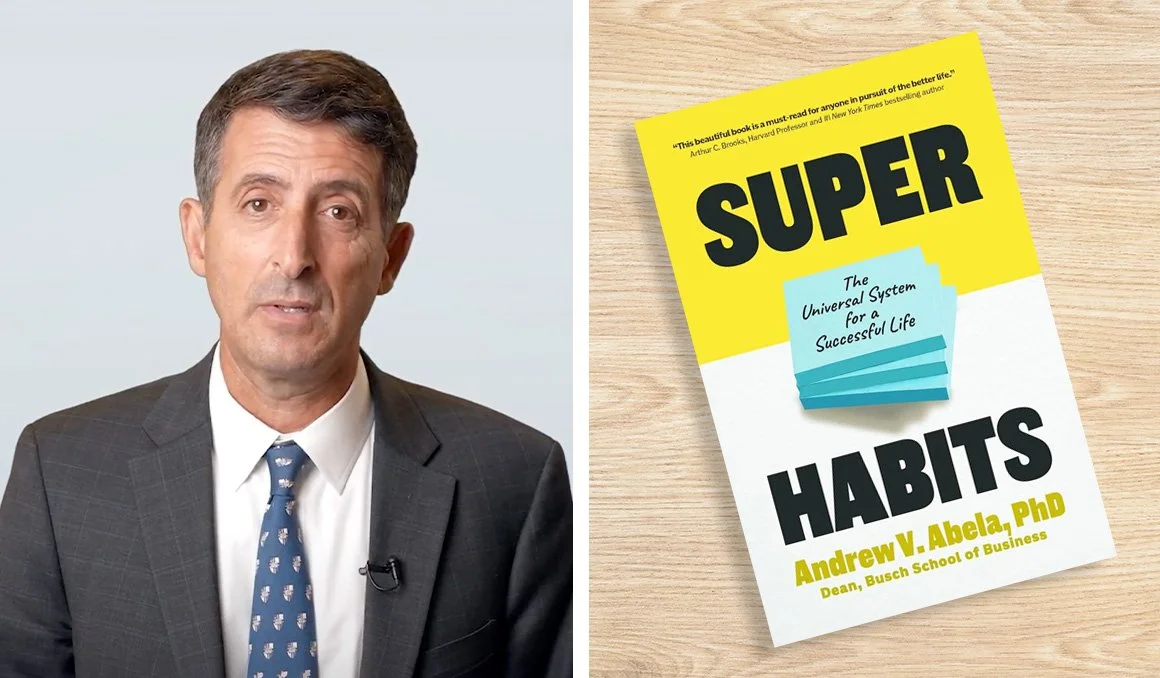
#144: The Secret to Not Repeating Your Family’s Dysfunction | Dr. Andrew Abela
So many of us from divorced or broken families fear repeating our parents' mistakes. If you want to avoid that, one of the keys is building virtue.

So many of us from divorced or broken families fear repeating our parents' mistakes.
If you want to avoid that, one of the keys is building virtue.
But what is virtue? How do you build it? And what virtues might you acquire?
My guest today wrote Superhabits, an amazing new book on virtue. He answers those questions, plus:
How to override the unconscious bad habits we inherited in our families
One habit that could save your marriage before it starts and what virtues to look for in a potential spouse
Why virtue, not just therapy, is the key to healing family wounds
If you’re struggling with bad habits or you want to build good habits, this episode is for you.
Buy Book Super Habits by Dr. Andrew Abela
Links & Resources
Full Disclaimer: If you purchase through the links on this page, your purchase will support Restored at no additional cost to you. Thank you!
To leave feedback, comment below or contact us.
Enjoy the show?
To be notified when new episodes go live, subscribe below.
As a bonus, you'll receive the first chapters from our book, It's Not Your Fault: A Practical Guide to Navigating the Pain and Problems from Your Parents' Divorce.
TRANSCRIPT
Transcript produced by artificial intelligence. Please pardon any errors!
Dr. Andrew: [00:00:00] We're usually talking about diet habits, sleep habits, exercise habits, you know, eating, sleeping, moving, the kinds of things we have in common with the animals. But the virtues are the habits of our mind and our soul, you know, so making your bed or brushing your teeth or wearing a seatbelt. These are all habits.
They're good habits, but they're not virtues. Why? Here's the difference. Virtues we know from research make you happier.
Joey: What virtues have been the most helpful for you in particular, maybe the couples you've seen around you when it comes to building a beautiful marriage, especially for the people listening who didn't see that growing up?
Dr. Andrew: Your eating habits are not going to save your marriage or break your marriage, but your habit of honesty will.
Joey: If someone maybe is feeling overwhelmed, this is maybe new to them. Where should they start? What encouragement would you give to them?
Dr. Andrew: It's kind of the code for having a successful life. But most people seem to have lost that code.
Joey: Welcome to The Restored Podcast. I'm Joey Panarelli. If you come from a divorce or a broken family, this [00:01:00] show is for you. We help you heal your brokenness, navigate the challenges, and build healthy relationships so you can break that cycle and build a better life. My guest today is Dr. Andrew Abella. He's the founding dean of the Bush School of Business and ordinary professor of marketing at the Catholic University of America in Washington, D.
C. He's actually a faculty affiliate at the Harvard University Human Flourishing Program and a contributor at Forbes. com. Dr. Abella also provides consulting and training in internal communications to Fortune 100. Corporations prior to his academic career, he spent several years in the business world as brand manager at Procter and Gamble as management consultant with McKinsey and company and managing director of the marketing leadership council of the corporate executive board.
He and his wife Kathleen have six children, three of whom so far have graduated from Catholic you. So many of us today come from divorced and broken families, and we fear repeating our parents mistakes. We don't want to repeat that in our own lives. And so if you want to avoid that, one of the keys is [00:02:00] building virtue.
But what is virtue? How do you build it? And what virtues might you want to acquire? Dr. Abella actually wrote a book on virtues, on habits, called Super Habits. And so he answers all those questions and more in this interview. We talk about what virtues to look for in a potential spouse, how long it might take to develop a habit.
And he shares the four stages of a habit, which is super helpful to know. And then finally, he talks about why virtue, not just therapy is the key to healing family wounds. And so if you come from a broken family and you're struggling with bad habits, or you just want to build good habits in your life, this episode is for you.
And with that, here's our conversation. Dr. Bella, so good to have you on the show. Thanks for being here.
Dr. Andrew: Great to be with
Joey: you. I've really been looking forward to this since I heard you speak last year. And I think this book is so timely for so many reasons, but especially for this audience. So, as you know, everyone listening here comes from a broken family, a divorced family, and I think one of the chief fears is that we might end up repeating that [00:03:00] cycle of dysfunction, repeating that cycle of divorce in our own lives.
And the studies and the stories that we see around us so often support that. And so one of the things that we believe here at Resort is that if you want to break that cycle, you need to heal the brokenness, heal the emotional wounds, heal the trauma, but also build virtue. So you can go on and build those healthy relationships, a strong marriage and you know, a good functional family.
And so I'm really excited to talk with you about this book and how it might help our audience starting out. I'm curious, why did you write this book and what's your hope for everyone who reads it?
Dr. Andrew: So I had been reading about and studying virtue for many years. And when we started the business school that I have the privilege to run, the Bush School of Business, we talked about wanting to make sure we were helping form our students in virtue.
But the more I learned about it, the more I realized how so many people, if they know anything at all about virtue, they, how would I say, they don't understand it. Even people who have been reading about it, even familiar with the word and so on, they think of virtue as just. Goodness, you know, a [00:04:00] virtuous person, which kind of sounds like a goody two shoes, you know, without having a grasp of the idea that a virtue is a habit of excellence at the heart of a sort of successful flourishing life.
And a habit that anyone can acquire, not something you're born with. So it's a really good news story. It's kind of the code for having a successful life, but most people seem to have lost that code, you know? And so I wanted to find a way to bring it back into the conversation.
Joey: I love that. And one of the things I love about the book is how practical and tactical you made it, I think, and the other books and content I've consumed on virtue.
I think sometimes we get too theoretical. You know, we get kind of stuck in the clouds. Um, that was intentional. Obviously. Can you say more about like, why did you make this so practical and tactical, especially as an academic?
Dr. Andrew: Yeah. And I had to relearn how to write, you know, to not write in an academic style.
And part of the problem, I think that the real good news about virtue hasn't been so available is people who [00:05:00] write about it tend to be academics and they write in an academic style. And it's almost like you need a degree in medieval philosophy in order to understand the terminology because they use words like passions and essence and things that we recognize those words, but we don't understand the meanings that they originally had, you know?
And so basically the book is in part a work of translation, kind of re translating into contemporary English what was translated a couple of hundred years ago and never updated, you know? So, for example, we all say patience is a virtue. If you ask people, that's one of the first ones they would come up with.
Patience is a Latin transliteration of the Latin word, sorry, an English transliteration of the Latin word, paciencia. But it's not, the meaning of paciencia is not what we think of as patience. Which is like, don't be impatient, you know. What paciencia means is, Endurance through long sorrow, what we now call resilience, you know, now resilience is a virtue.
That's something that can be [00:06:00] cultivated, is useful, is important. Patience as in like not being impatient. It's like, yeah, whatever, but that's not. Fun, not nearly as important as, as resilience. And so there were a lot of these little tweaks where the word we're using is not quite meaning, or doesn't at all mean what, what it should mean, what it used to mean.
And so I had to kind of retranslate to show why this stuff is so important.
Joey: I love that. I remember Father Mike Schmitz, the, you know, famous for everyone listening, he's a really popular priest who has a podcast and puts out videos and he says, uh, about love in particular. He says, we've reduced love to romance and romance to sex.
So in a similar vein, we've kind of taken a word that can mean so many different things. And we made it mean one particular thing. So I think you're certainly onto something there. And speaking of the practicality component, I think part of the reason Atomic Habits, which, you know, a lot of our listeners are familiar with, was so popular was because James Clear made it so accessible, made it so practical.
So I'm really excited for this book. Speaking of that book, I'm sure people listening [00:07:00] are maybe wondering, how is your book different than Atomic Habits?
Dr. Andrew: So my book builds directly on Atomic Habits. And so, in fact, I chose the name, the title Super Habits almost to kind of to point to that. So Atomic Habits, he does a really good job of showing you how to develop habits.
But leaves it up to you to figure out which habits. Super habits tells you which habits are going to have the biggest impact. Because when we're left to ourselves, when we talk about habits, we're usually talking about habits of, you know, diet habits, sleep habits, exercise habits. You know, eating, sleeping, moving.
The kinds of things we have in common with the animals. But the virtues are the habits of our mind and our soul, you know. And so, things like resilience, or courage, or diligence, or, uh, you name it, we can go through a whole bunch, right, honesty, and so on. These are all the habits of the things that make us distinctively human, rather than just like the animals.
Now, of course, [00:08:00] eating, sleeping, moving, these are all important things in our lives. They're foundational to our lives. If we don't eat, we die, you know. But they're not the highest things. They're not the highest. They're not the things that make us truly human. Your eating habits are not going to save your marriage or break your marriage, right?
But your habit of honesty will one way or another. So what I'm trying to do with the book is say, okay Habits are good, great to develop habits Take some thought to which are the most important habits because working on a single one of the super habits right now could literally change Your life, you know
Joey: Wow.
And is there a systematic way to identify which habit should come first for a particular person?
Dr. Andrew: Yes, there's two ways. The simple and more, well, okay, three, three ways, simple and more thorough ways. As you read through the book, I tried to put them in the order, kind of a foundational order. So the first one you hit and you go, gosh, this one's a real struggle for me.
That's probably a good place to start. A second way, more [00:09:00] focused, is to ask yourself, What's my biggest struggle right now? Is it with my emotions? Is it with making decisions? Is it with relationships? And the book has, in the back of it, you've seen it, a big fold out poster, which lays out the whole framework of the virtues.
And using that, you can figure out, based on what you're struggling with, What's the one virtue that would make a really big difference right now? What's the one super habit where if you cultivated it would really make the thing that you struggle with so much easier. And I'll come back to that in a moment.
The third thing, probably the easiest, is we just launched a few weeks ago a new version of the app that comes with the book. And the new version is called Grow Virtue. The app's called Grow Virtue. It's available in the App Store for iPhone. Not yet for Android, hopefully soon, but there's also at the back of the book, there's a QR code.
And so the basic version of the app is free [00:10:00] and there's a diagnostic where you go through and it rates you on all of the virtues, some 40 some of them. And it tells you which ones you're really strong in and which ones you're not so strong in. When people do strengths tests, the conclusion from that is, okay, now you know your strengths, now play to your strengths.
Well, there is benefit once you know which virtues you're strongest in to making sure you're using them as much as possible, certainly. But the real benefit comes from finding the virtue or the super habits that is weakest. Because that is going to be the weakest link in your character. But figure out which that one is and just work on developing that.
Start practicing that until it becomes a habit. And then it just becomes stronger. You know, you're often told, you know, play to your strengths and just kind of cover for your weaknesses. If you're a manager, hire for your weaknesses. You know, hire other. If you're not very detail oriented, hire an assistant who's detail oriented.
You know? Well, that just doesn't work for the virtues because if you're not very [00:11:00] honest, you can't hire someone to like, be honest for you. Get what I'm saying? So if you're not very resilient, you can't hire someone to provide you with resilience. So, so you have to find the weakest link. And so the app is the quickest way to do that.
But the point I wanted to come back to is the really good news. So if particularly thinking about your audience. Those of us who struggle to not repeat patterns that we inherited, right? The tendency to repeat comes from, because that's what we know. And that's what we have been habituated to, right? Those are the habits that we have inherited.
Joey: We mimic.
Dr. Andrew: Exactly. Um, but if we want to try something different, we have to be aware of something different, aware of a new set of habits. And so what, what is attractive about the book is that it lays out not just some habits, but a comprehensive set of all of the habits that you need to be a successful human being.
There's a total of 50, five, zero. Uh, which I got from St. Thomas Aquinas. We can talk [00:12:00] about Aquinas later if you like. So you have a, in a sense, a roadmap, the terrain map for all of the habits you would need to be a flourishing human being. And the exciting thing is any human being can acquire any one of them.
Through simple daily practice. So you're not labored. You're not cursed with what you inherited. It's different from something like IQ or height, you know, or even preferences like introversion, extroversion, like your height, you can't change your IQ. It's unclear that one could change, you know, um.
Introversion, extroversion, we tend to have stuck with those over decades, but the, the virtues, the super habits are eminently changeable just through regular practice. So when somebody says, well, I'm just a very disorganized person. No, you're not. You just haven't yet cultivated the habit of orderliness, the virtue of orderliness.
You can do that with a little bit of practice every day. After a while. It will become part of you, and you will no [00:13:00] longer be a disorganized person, you will be an organized person. And the best thing of all is, it will be easy for you to be organized. Once you have the habit, it becomes easier. You know, which is I think just really encouraging, really good news.
If somebody came from a household where people lied a lot, And you were raised always kind of fudging the truth and just telling people what you think they want to hear and so on. And you think, well, that's just who I am, right? There's not, there's no hope for me there. Not true. Not true. Through daily, like just practicing, for example, a really good place to start if somebody struggles with telling the honest truth is oftentimes the place where many people go is when you're asked something that you think you should know.
So what time is this? Or what about that? And you'll make up something rather than say, I don't know. That's a good place to practice. Start practicing saying, I don't know, but I'll find out. It's an easy one. It's an easy one because you're not saying, I lied. You're just saying, I don't know, but I'll find out, you know, and you start to do that.
That becomes a habit [00:14:00] that gets easier and then you can carve off another little piece and another little piece as each one of them comes habit, they become part of you. They become easier and slowly. Slowly, you're changing your character
Marker
---
Joey: if you come from a divorce or broken family, or maybe you know someone who does.
We offer more resources than just this podcast. Those resources include things like a book, free video courses, speaking engagements, a free assessment online community, and much more. All of our resources are designed. To help you heal from the trauma that you've endured and build virtue so you can break that cycle and build a better life.
And so if you want to view those resources for yourself or someone that you know, just go to restoredministry. com slash resources or click on the link in the show notes. I love that. I love the reframe, too, of kind of looking at habits as virtue as almost as a skill. I know it's distinctive from a skill, but what you were saying before is that, you know, it's not that you're a disorganized person, like that's inherent in your character that you could never change, but it's just that you don't know how to be Organize.
I remember listening to Alex Hormozy, a big, uh, business [00:15:00] influencer on Instagram, YouTube. And one of the things he said is like, when it comes to a business, especially don't say that you don't know how to run Facebook ads, don't say that you don't know how to hire well, or don't, don't say you can't hire anyone.
Don't say that you, Facebook ads don't work for your business. He said, say that you don't know how to make them work for your business. You don't know how to do this thing because then it just becomes a deficiency of skill and you could solve a deficiency of skill by practicing. So I know virtues maybe aren't exactly synonymous with skills, but there's a lot of overlap there, so I like that frame, but please, yeah,
Dr. Andrew: there is, there is, um, and here's the way they are different.
The way they are the same is, as you said, that through practice, you can develop any of the virtues. The way they are different, and this is really encouraging, the big difference between virtues as habits and skills as habits is we already have the virtues within us. They just have to be Activate it.
Okay. They're like mental muscles. So I was, um, [00:16:00] I posted something on this recently. I was talking to a teacher at the height school where it's a school for boys in Potomac, Maryland, where my boys went. And this teacher also runs the climbing team for that school. And he was saying to me. We were talking about this and he said, you know, every time I take out a new crop of boys climbing the next day, invariably they come up to me and go, sir, muscles I didn't even know I had are aching me, you know, and I'm sure everyone's had that experience.
Well, the virtues are mental muscles you didn't even know you had. And just like any other, like physical muscles, you have to start to move them and use them and then they get stronger. But it's not a matter of saying, well, I don't know, like, yes, you can learn how, but the moment you start practicing, it comes to you naturally because they are already in you naturally.
So you just have to exercise them. Do you see the difference? They're not foreign to you in any way, they are part of what it means to be human, you just have to exercise them.
Joey: As if they're dormant in your system. Yeah, that makes so [00:17:00] much sense. Exactly. I appreciate that, and I was thinking too about kind of identifying where you're weak.
There's some people have more self awareness than others, I've realized, and so the people who have a higher degree of self awareness probably know, yeah, you know, pride and lust and whatever other virtue or advice is. The struggle for me, I need to work on that. But one of the things that was helpful for me thinking back is, uh, one listening to the feedback that my mentors in my life have given me on like, Hey, you're kind of weak here.
You're not very good at this thing, or you don't have that virtue. That's one. The other thing is just often reflecting back on my life, like the things that I've struggled with gives a good signal, a good clue of, okay, this is where you should focus. But I love the assessment. I love the, the app, especially.
I'm really excited to try that. I tried the previous version, so I'm really excited to try this new version. We'll make sure to. link to all that in the show notes for you guys as well, but so much good stuff here. I think feel free to comment on anything there, but I wanted to ask maybe a basic question I should have asked at the beginning, which is for anyone who isn't aware, what are we talking about when we say virtue?
What is virtue?
Dr. Andrew: So it's a, it's a habit of excellence. We say a habit of excellence that makes, or are there a good habits that makes [00:18:00] you good? So, and the word habit is critical as we've just said, you know, it's not a human characteristic that you were born with. It's something that anyone can develop, but it's something that we already have the tendency for.
This is it. The muscle is already there. It just needs to be. Just needs to be exercised. But the word virtue is really problematic. Because most people when they hear the word virtue, they think maybe virtue signaling. Like just pretending to be good, you know. Or as I said before, goody two shoes, you know.
But that's why I, in the book I use the phrase super habit. A virtue is a super habit. How is a super habit different from any other habits, any regular habits? So, so making your bed or brushing your teeth or wearing a seat belt, these are all habits. They're good habits, but they're not virtues. They're not super habits.
Why? Here's the difference. Super habits, virtues, we know from research, make you happier as you grow in them. And in many cases make you healthier as well, which is really quite stunning. For example, there's research on gratitude as you grow in gratitude. So for example, [00:19:00] using a gratitude journal, write down every day, things you're grateful for that happened that day.
For example, that's how you can grow in gratitude. One way of doing it as you grow in gratitude. We know this from research, not only do you become happier, but there are reductions in mental and physical pain. So if you were, if you struggle with depression or anxiety. Growing gratitude. It goes down. If you struggle with chronic pain, back pain, pain tends to go down as you grow in gratitude.
Wow. Wow. Why does the researchers can't tell us why we can guess we're made to be that way. And so when we grow the way we're meant to be. Everything works better for us, you know, so, so that's one way in which super habits are different or two ways making your bed doesn't make you happier. I mean, yes, maybe momentarily, you know, but growing in any, any virtue and in super habit gives you a more of a lasting happiness makes you healthier.
The other big difference between regular habits and super habits is regular habits. So the habit of [00:20:00] brushing your teeth makes you good at brushing your teeth, but the habit of courage, which is the habit of moving forward even though you're feeling fear, right? Courage is not having no fear. Courage is the habit of moving forward even when fear is present.
If you develop courage on the football field, you can then use it in an interview or when giving a speech. or in having a difficult conversation with a loved one, you know, because the super habits tend to have a much wider scope than regular habits. So those are three big differences. And the fourth one would be they are natural to us.
As I said before. Brushing your teeth is something you have to learn. It's foreign to us as human beings. You know, there was a time when people didn't brush their teeth, but the habits, the super habits of virtues have always been inherent in us.
Joey: I love that. And you mentioned there's 50, the book goes through them, especially the handout.
Is there anywhere online that people can maybe look at a list or see the extensive list? Cause I'm sure people are curious about that. We can link to it as well.
Dr. Andrew: Yep. Um, I have a, I maintain a sub stack and it's. Superhabits. [00:21:00] substack. com. It's Superhabit singular, unlike the book, which is Superhabits plural, because someone else grabbed the plural one and is not using it.
So, we should get off it. But anyway, it's there. Um, and so, yeah, if they go there. There's a number of, of posts about individual super habits. There's one, I can send you the link afterwards, which is called Super Habits 101, which shows you the circle diagram and gives you a kind of just overview of the super habits.
Joey: Beautiful. Thank you. We'll definitely link to that. And I know a few Navy SEALs. So if we need to send them over to that guy's house, have him give up that subset, maybe we can make that happen. But no, I was curious, are there any rough guidelines, I know there's not an exact number on how long. Or how many repetitions a habit takes to acquire
Dr. Andrew: the research is all over the map.
And I think it really depends on the person and the habits, you know, um, so I've heard as little as 11 days, as many as 90, but it could take you a year, you know, so, but you can see progress [00:22:00] after a few days, including starting to feel happier, which is, that's what's so encouraging. I use the phrase in the book, beginning is winning.
So merely starting to work on a single virtue, a single super habit, already is improving your life.
Joey: I love that. And I'm curious too, what's, you already mentioned a few, but I'm curious if you have any hacks or tips for someone who maybe has a tendency to get stuck. Maybe they appreciate the knowledge.
They like listening to books, they like reading books, they like listening to podcasts, but then putting it into action can be hard. And I've heard you say elsewhere to start in the simplest form possible. You basically just mentioned that too, like instead of, you know, lying to say, I don't know. Um, I think I've heard you also say to just pick one.
Don't pick many things because that will prevent action as well. Any other tips that you would offer for someone who maybe, again, they're fine with the knowledge. Learning is not the problem. It's putting into action.
Dr. Andrew: Yeah. So those are, those are really important. The very simplest thing, anything that you is going to allow you to have a win is the place to begin because.
That simplest [00:23:00] thing will then become natural for you and is a foundation, a rung for the next thing, the next simple thing that you could add on. But the other thing might be to, to actually choose a virtue that is going to help you with getting stuff done, such as I already mentioned the virtue of orderliness.
Another virtue, the virtue of foresight, which is the virtue of having and pursuing goals. If you have the right set of goals, then that's going to help you as well. Another thought is this, um, some people, especially if you came from an abusive household where emotional outbursts weren't tolerated, you know, and you had to, you had to repress your anger, your sadness, you know.
You can be emotionally almost dead, you know, and when you have that emotional or dry, should we say, when you have that emotional dryness, that's often a cause of lack of motivation because emotions provide motion, right? They motivate, um, and what Aquinas, this is fascinating [00:24:00] considering he wrote this 750 years ago, the point he makes, and this is all under the heading of self discipline.
So self discipline or temperance is the cardinal virtue for dealing with our desires. And it has many other smaller virtues associated with it, which we could talk about. But the general message is you don't grow in self discipline by willpowering your desires into submission, like pounding them into submission.
You know, so if you have, pick a really simple one for food, you know, with desire for food, you don't grow in abstemiousness, the habit of having a right relationship with food. By just repressing the desire to eat. What you do is you redirect it so that when it's time for feasting, you feast. And when it's time for fasting, you fast.
And at all other times you just eat reasonable amounts of food that you like, you know, an even better example is the virtue of diligence. So when people think of, I need to become more diligent, I need to get my homework done on time. I need to study harder. I [00:25:00] need to just pay attention, you know, and just sort of willpower myself into being more diligent.
Aquinas does not say that's how you grow in diligence. He points out that the way to grow in diligence is to grow in love for your subject. So diligence is a form of self discipline. That's focused on the desire to know things. And so what you do is you're redirecting your desire to know things towards the things that you need to know.
So redirect it towards your homework instead of social media. You know, because if you're wasting the desire to know things on social media, you won't have enough left for your homework. You see what I'm saying? And so if your desires have been repressed, that's often a cause for why you're not motivated to do anything because you just don't feel any desire.
So that, I mean, probably would involve therapy, but what you want to do is rediscover your desires and help tutor them, coax them, guide them into the right directions.
Joey: I love that. We'll have to do an entire show on that one itself, because I can [00:26:00] imagine people listening who may be thinking, Well, my desires aren't my desires.
I don't know if I can necessarily change them. But what you're saying is you can direct them. You can shift them in different directions. Do you have an example, maybe in your own life or the life of one of your students who saw that come about, who was able to bring that about where they desired maybe things that weren't great for them and then through whatever actions they were able to desire something better.
Dr. Andrew: Well, one really famous one is in the book where I tell the story, um, early on in the book, um, about a teenager who was a big strong guy, uh, came from a very difficult home. Parents always fighting father, cheating on mom. And so he's always very angry and never had good things. And so whenever he saw clothes that he wanted, he would steal them.
Whenever somebody annoyed him, he would get into a fight and he would usually win because he's a very big, strong guy, but he's always getting in trouble. His mom frequently had to go to the police station to get him out, you know, because he got trouble again. And one time mom came to pick him up and just burst into tears and said, could you [00:27:00] like.
Stop doing this to me. This is like, could you get your act together? And so, and he sort of realized, okay, I'm, my mom is having a horrible life because my dad is so bad to her and I'm just making it worse. But my stupid stuff I'm doing, but he had these desires to kind of get even, you know, and just to be violent.
And what he did was he, fortunately, he had a couple of really good coaches in his high school. So he started to play football and joined the wrestling team as well. And so the violence in him, the desire to pound someone, he just redirected into football and wrestling and it totally worked. It totally worked.
Um, he ended up one season in the NFL, just one season as far as he got, but then he, he had a really successful wrestling career. And then a really successful Hollywood career and audience will know him as Dwayne The Rock Johnson. Right. So, uh, went from, you know, a path to complete disaster totally turned his life because he refocused those [00:28:00] desires, you know?
So I he's in the chapter on the restraints, the super habit of restraint, which is. Which is restraining petty desires that you might have and kind of redirecting them in more productive ways. I have another chapter on another virtue that I call gentle firmness. Uh, which is a word that I made up, so no one's ever heard of it before.
Um, but I made it up because the, again, the English words fail us. The Latin word is Mansuetudo. There is an English word called Mansuetude, which no one has ever heard of, so that's useless. Um, The common translation is meekness, but meekness, who wants to be meek? It just sounds like weakness, you know, to be a doormat, right?
That's not what Mansoor Tudor is. It's that virtue is the ability to use your anger in productive ways. So every, almost all virtues are the mean between two excesses or two extremes, too much or too little, right? And so, so courage is for dealing with fear, and [00:29:00] too much attention to fear is cowardice.
That's the one, one vice, opposing courage. Too little concern with fear is, is rashness, right? That's the opposite. So, and courage is in between those. Meekness, the correct understanding, or gentle firmness as I call it, is for dealing with anger. Too little control of your anger and you explode, right? And that's, doesn't help anybody.
But too much pressure on your anger and you repress it and that's also very harmful, right? Also leads to all kinds of problems. Whereas gentle firmness is you feel your anger as Energy and you use it to so it's basically gentle firmness is the habit for dealing with when things aren't going the way they should And so you use your anger to try to fix that and in the book I tell the story of Hugh Thompson who was a helicopter pilot in the Vietnam War And was flying as a spotter while the melee massacre was going on.
That's a horrible incident in American history where American soldiers end up killing a bunch of [00:30:00] innocent civilians. And he landed and he basically put a stop to it. Wow. And you can imagine, and he was provoked, right? He landed in front of a bunch of troops were heading towards some civilians who were hiding in a bunker.
He landed in between them and said, Hey guys, stop. I want to help these civilians out of here. And one of the soldiers said, Oh yeah, we can help them out with a grenade, you know? And he's like, no, no, it's okay. Look, I got this. So he remained, he was furious. We know from writings of his colleagues on the plane with him, he was absolutely furious.
But he kept calm, so the gentleness and the firmness can visualize, I like to say, a velvet glove over a steel fist, so your anger makes you firm, you know, with determination, but you also have this calmness over it all. So that's, again, it's a desire, in this case, it's a desire for things to be right. They aren't right, so you are angry, but you channel that anger to do good instead of to blow things up, you know?
Joey: I love that. You make me think of, uh, Jocko Willink, the [00:31:00] retired Navy SEAL who writes leadership books. And a couple things he talks about is just one, you know, being cool in the face of like chaos in the face of, you know, combat. And it was amazing to me reading his books, how I don't, maybe I'm a little bit off here, but it sounds like they were exhibiting this virtue where literally there's bullets flying over those explosions and they're on the radio.
As calm as can be saying, you know, you know, we have these enemy fighters moving towards this building. We need an airstrike here. And they just had that ability. That's one thought. The other thought was I've often seen this in like special operators. I haven't gotten to know many of them, but there's a few high F I had the blessing to like, no, and these men like are incredibly dangerous.
Powerful men, but the way in which they use their strength for good and not to hurt people for the wrong reason is, is incredible. So I love your example of like the middle between the two extremes, too much or too little. I think that's so true. And I think sometimes people think like when they hear the word gentleness, they think it means just Weakness, but I like that balance with [00:32:00] that new word that you made up.
So I am excited to see your name next to that on Google whenever I search that. No, so good. There's so much more I want to talk to you about. I, um, I want to veer towards relationships because this is like the biggest area of struggle. The research is very clear that if you come from a divorce family, this is the area of your life that's most impacted your future relationships, especially your future marriage.
So I'm curious, let's talk a little bit about marriage. How long have
Dr. Andrew: you been married? 27 years.
Joey: Beautiful. Okay. I'm 20 years behind you, only about seven years here. So I'm still, so I consider myself a baby husband, but learning a lot every day. Um, one of the things I remember learning, you would know, uh, John Maxwell, he, I think popularized the idea that like the leader is like the lid on the organization.
I like to think of. You know, each spouse at the lid on their marriage, your marriage will only be as healthy and happy as each of you are. And so what I've seen, especially in the beautiful marriages I've been blessed to know is like the more virtuous the spouses, the happier the marriage always, always.
And so I'm curious here, what virtues have been the most helpful for you in particular, maybe [00:33:00] the couples you've seen around you when it comes to building a beautiful marriage, especially for the people listening who didn't see that growing up.
Marker
---
Joey: For countless teens and young adults, their parents divorce is actually the most traumatic thing that they've experienced.
But so many feel lost and alone in navigating the challenges. I've been there myself. It's really not easy and it shouldn't be this way. My book, It's Not Your Fault, guides them through those challenges by helping them put their pain into words and begin to heal, work through the emotional problems that they face, cope in healthy ways instead of falling into bad habits, improve their relationship with their parents, navigate the holidays and other life events.
and build healthy relationships and so much more. One Amazon review said this, this book is packed full of really practical help. If you come from a broken family, or even if you don't, but you love someone that does, this book is so helpful. I can't recommend this enough. By the way, it's a quick read and it doesn't need to be read cover to cover since it's in question and answer format.
You can just read one of the questions and one of the answers. And so if you want to join the thousands of people who've gotten a copy, just go to [00:34:00] restored ministry. com slash. Books, uh, to get the book or download the free chapters again, that's restored ministry. com slash books, or just click the link in the show notes.
Dr. Andrew: Gosh, yeah, there's a lot. Um, but I would bucket them, many of them under the virtue of justice. There's a whole bunch of virtues. And so honesty is one of them. So they're all, all these verses are related to what do I owe to somebody else? You know, and I think, um, I think honesty is just so key. Like the fact that I know that I can always trust my wife and she can always trust me.
I travel a lot for speaking for business and so on, fundraising, et cetera, that she never has to worry that where is he tonight? What is he doing? You know, just like, yeah, we're completely honest with each other. And I, I say completely one time in the first year of our marriage, She came home and said, how do I look in this dress?
That's the one time when you shouldn't be honest. Or rather you could be a little more creative. [00:35:00] I learned that lesson very early on. It wasn't a good fit for her and uh, anyway, there might have been a nicer way of saying it. So anyway, um, so that's one. But also I think virtues related to courage are important as well.
Because sometimes you need to say something to your spouse and, you know, especially if they inherited habits of anger, you know, so sometimes we can be a little bit hesitant. So I don't bring that up. That's going to cause an explosion, you know, it's like, well, let the explosion happen, you know, and try to again, try to bring some gentle firmness to the, to the occasion, I think would be another.
My wife would say we do a class for our graduating students together at the Bush school, our seniors, and we do it on relationships and marriage. And she would say. And this isn't one of the 50 virtues, but it's a, it's an aspect of the [00:36:00] virtue of charity or love, right, which is just kindness, just kindness goes such a long way to, to making relationships work, you know, because it just brings, in fact, um, I go back to justice, friendliness or friendship is also related to the virtue of justice in the sense that we owe others that we come into contact with.
Some level of friendliness, you know, doesn't mean that every morning when I get on the subway car, I have to go and introduce myself to everybody there. They would think I was weird, you know, but if you're hanging out with somebody or working with somebody, then trying to act in a friendly manner. Just makes life more manageable.
And that's absolutely true. I think with spouses.
Joey: So good. Remember, I think it was jump hold a second when he was a priest, when he wrote love and responsibility where he said the number one thing missing in marriages today is tenderness, which seems to fit under if I'm Understanding, right? Maybe kindness.
Would you put it anywhere else?
Dr. Andrew: Yeah. No, I think so. I think so. Yeah.
Joey: Yeah. And how true is that? My goodness. Like even in my own marriage, [00:37:00] but even the marriages around me, the marriages, especially that fall apart, like there's such a lack of tenderness.
Dr. Andrew: Yeah. And it's just the little things accumulated over time.
Yeah.
Joey: No, no, I couldn't agree more. Anything in particular you would add for someone listening right now who says, you know, I want a virtuous spouse. I want a spouse who has good habits. Obviously they could take the list that you just said and say, that's what I'm going to look for. Anything you would add to give that person advice to find a good spouse?
Dr. Andrew: Well, the first bit of advice at the risk of being obvious is be that person yourself, right? So be the kind of person you want to marry and then like attracts like in that sense. And then second, gosh, it's, it's almost hard for me to say because 27 years ago, I wasn't thinking this way when I met my wife, so it was more instinctive assessment, you know, but even just having that measure, so I have two sons and four daughters, daughters love to watch Pride and prejudice.
I don't know how many times we've seen. I love it too. I've read the book three times, I think myself, [00:38:00] but what is so attractive about the heroines in Jane Austen is their virtue, you know, they are honest, they are courageous, they are, you know, just, you kind of go down the list and as you know, we live in a very superficial society.
So we tend to look at looks, you know, but I think The right measure is virtue. You know, you marry someone who is virtuous or at least striving to be so because we're all of us. No one's there. We're all of us striving, you know, but at least are you sharing the same vision of what a virtuous person is?
You know, do we agree on what our virtues and what aren't? So, for example, if somebody thought that tolerance was a virtue, I wouldn't agree with them. It's not among the list of 50 and it's not something. That is, yeah, it's going to easily be abused, you know, so, so it doesn't count as a virtue. Virtue can't be abused, you know.
Joey: So good. I love that. And one final thing when it comes to relationships and marriage, I'm curious about conflicts because that's such a sticky, dangerous, fearful topic [00:39:00] for our audience because Again, so many of us growing up, we saw such a poor example of resolving conflict. Often there was no resolution and probably got really loud and then mom or dad walked away.
And that's the example that was set. Um, anything in particular you would say here on how to kind of relearn how to navigate conflict, especially if it's scary for a young person.
Dr. Andrew: Yeah. Yeah. And I should, maybe I should have said this at the beginning of the podcast. I'm a professor of marketing. Not a therapist, not a psychiatrist, right?
Just, just be very, I run a business school just to be very clear. This is all kind of, yeah. Okay. Just to be clear, the
Joey: wisdom is there. You have the wisdom
Dr. Andrew: I mentioned before about temperance or self discipline focusing on our desires, um, courage and its related virtues focuses on our fears in the same way we can redirect our desires into more healthy areas.
We can use the energy from our fear by reframing it as a challenge. [00:40:00] So if I'm afraid of the blow up, that's going to come, if I broach a difficult conversation, I can think about that as a challenge. Okay. I know the blow up's coming. It's going to be painful, but I'm going to observe it, experience it. So in the same way that your special forces friends are able to sit there and talk quietly while bullets are flying, they weren't born that way.
They learned that they practiced it right then through it became a habit. In the same way, anybody can learn to receive a blast of anger, right? Or to experience a bunch of fear in anticipation of a blast of anger and start to get used to it calmly. And then what happens to the other person is when their anger is received with calm and patience and listening.
That anger starts to subside and eventually we get to kind of what is the, what is the root cause, you know, and then we can start to have a constructive dialogue around that. It takes a lot of practice, but that's, I think is necessary. I think the religious [00:41:00] benefit here for us going into marriage was when we got married, we knew it was forever that there was no, there was no exit strategy for either of us.
And that really helps because it's like when things are really bad, you know, There's no alternative. We just have to fix this, you know, and there were times in 27 years when it was hard, but issues that had to be worked out. And if there was an exit door, maybe one of us might've said, I'm out of here, you know, but because there wasn't, you try and you figure out how to solve it.
And now I would say, I would say I am sure of, and my wife says the same thing. We are both happier than we've ever been. Our marriage is stronger than it's ever been. And so glad to have gone through those difficult patches because they just eventually brought us closer together.
Joey: Yeah, I love that.
There's a study I saw recently, I can't recall the name, where they looked at people who were struggling within marriage, and then some got divorced, some stayed married, continued to struggle and work on it, and then they went ahead so many years, maybe five or ten years, to look at their happiness level in life, and they found that the ones [00:42:00] who didn't get divorced, who stayed married, you know, assuming there wasn't extreme cases of like abuse, things like that, ended up being happier than the ones who chose to get divorced.
So I think there's something really instructive, even if we take the religious component of it out of it and just say, no, there's actually something really good about sticking it out, you know, again, assuming you're safe and there's not abuse. But I, yeah, I've seen that even in my own marriage with just.
Understanding that it's going to be messy, and I think this applies to any sort of virtue building. I mean, any skill you're learning, too, on a simpler level, it's like, my daughter's three and a half right now, you know, I'm teaching her many things. Like, one of the phrases we like to throw around around here is like, you're not competent at that yet.
Like, you're learning, and that's okay. Like, everything's, you're, you're in training. You know, if she's wondering, like, why can't I have the scissors, or why can't I do this or that, it's like, well, you're not competent yet, you will be, why can't I, you know, climb the edge of the stairs by myself, you're not competent yet, but then as she gets more competent, she can see herself growing, but it's messy with kids, it's messy in our own lives, it's messy within marriage, and I think that It is an important reminder because as I sometimes tell the young [00:43:00] people that we mentor to is, you're probably going to screw it up in some way, right?
You maybe are going to go a little too far this way, a little too far that way in terms of access or deficit. And that's okay. That's part of the process. But if you kind of are directionally moving toward where you need to be, that's a more important thing. Would you say anything about the kind of the messy nature of acquiring the virtues?
Dr. Andrew: Well, the challenge idea is every time you, you face a challenge and you work through it. You're actually developing one or more virtues. And so, so the, the idea of facing challenges, facing fears and treating the fears as challenges, it's how we grow, you know, nobody grows by sitting down and avoiding all risks, you know, or all challenges we grow by engaging with them, sometimes losing, sometimes winning, if we have time, there's a helpful four part, four step sequence for when thinking about how we grow in virtue.
Which I have labeled again, because the original words, the meanings aren't very clear to people, but when you start out [00:44:00] at the level of a vice where you have a bad habit, not a good habit, say lying, we can label that as unconsciously incompetent. So you don't have the competence as you say, but you don't even know you don't have the competence.
You just think that lying is a good strategy. So why wouldn't I do that? At some point you realize this is hurting my relationships is hurting my success or whatever So then you start struggling to try to not to you try to tell truth more often and you become consciously incompetent So you know that you're not good at it, but at least you know, and you're trying and you try, but you tend to fail more often than not.
You slip into the old ways of doing things, but you keep trying, keep trying. Eventually you cross the line and you become consciously competent where you're now doing it right. You know you're doing it right, but it's still an effort. It's still a struggle. You're tempted to tell the lie whenever it's more convenient, but you more often than not, you tell the truth.
That's still not at the level of virtue. Virtue is the next step, which is unconsciously competent. You now have absorbed that habit, and you [00:45:00] don't even have to think about it. You're no longer saying, should I tell the truth? I must remember to tell the truth. It's just not even a question in your mind.
You're just, you're honest now, because it's become part of you. That's what it means to be truly virtuous. And this is the shocking good news. It's that it's easier to be virtuous than to not. Like the more, I had this discussion with a bunch of my freshman students last night. In class, who is more moral, the person who has to struggle to tell the truth or who tells it easily?
They're like, Oh, the struggle is more moral. Uh uh. The more moral one is the one who has so perfected it that it's easy. So the end result of all this striving is life gets easier. It gets easier to do the good thing, to do the right thing, to have a happy life. What good news, I think.
Joey: Amen. No, so good. I love it.
There's so much more I want to talk to you about. Let's close it down there. Thank you so much for being here. If people want to buy the book and learn more from you, how could they do that?
Dr. Andrew: So the, the Substack, superhabit. substack. com is a good place to go. They can [00:46:00] follow me on LinkedIn and I respond to whatever questions or comments people put there.
And Sophia Press is the publisher of the book Superhabits. It's also available on Amazon, Barnes Noble, or wherever else.
Joey: Great. And we'll link to all that in the, in the show notes. I, again, thank you, Dr. Bala. I've learned a lot from you from afar. It's great to speak with you in person. I'm excited to continue working through the book and just to practice this stuff in my own life.
So thank you. I really appreciate it. I want to give you the final word. If someone maybe is feeling overwhelmed, this is maybe new to them, where should they start? What encouragement, what advice would you give to them there?
Dr. Andrew: I would, so the very first chapter in the book is the virtue of restraint. It's a really good beginner virtue because if, if we tend to give into impulses very easily, then it's hard to ever get control of our lives and we can be tempted to surrender.
It's like I, I give into like temptation to eat, to impulse shop, to say rude things to people, just, I'm just driven by my impulses. But it's one way you can make really good progress really quickly. [00:47:00] Just by picking one aspect of your life. You know, let's say every time I go on Amazon I'm tempted to buy something that's on sale.
What if I start to practice the habit of just putting it into a wish list instead and then I'll go back and look at it tomorrow. Tiny little change like that builds the muscle of restraint which you can then use throughout of your life. So beginning is winning. Just pick one really tiny thing like that and just start doing it every day.
Joey: I'm super impressed with Dr. Abel, and I'm really excited for anyone who decides to read or listen to his book, Super Habits. You could find the link to that book in the show notes. That wraps up this episode. If this podcast has helped you, feel free to subscribe or follow us on Apple Podcasts, Spotify, or YouTube.
You'll avoid missing future episodes by doing that, and you'll help us reach more people. And if you've already done that, feel free to rate or review the show. We appreciate that feedback, and that also helps us reach more people. In closing, always remember you are not doomed to repeat your family's dysfunction.
You can break that cycle and build a better life, and we're here to help. And keep in mind the words of C. S. Lewis who said, You can't go [00:48:00] back and change the beginning, but you can start where you are and change the ending.
#139: Dating or Marrying Someone from an Intact vs Broken Family | Paul & Maggie Kim
So many of us from broken families end up dating or marrying someone from an intact family. But that presents challenges, which we discuss in this episode with an amazing married couple.

So many of us from broken families end up dating or marrying someone from an intact family. But that presents challenges, which we discuss in this episode with an amazing married couple where one spouse comes from a broken family and the other is from an intact family. We also discuss questions like:
What did you fear about marriage? Maggie opens up about her fear of someone cheating on her.
How have you handled conflict and how has marriage brought you joy?
How do you choose the right person who won’t change after the wedding?
If you’re from a broken family dating or marrying someone from an intact family, or vice versa, this episode is for you..
Get Paul J. Kim’s Course: A Catholic Guide to Adulting
Get 10% off with the code: RESTORED. If the code doesn’t work, please reach out to Paul’s team at pjkmusic.com.
Dakota Lane Fitness: Schedule a FREE Consult
Get Dakota’s FREE Guide: The Biggest Fitness Mistakes to Avoid
Get the Book or FREE chapters: It’s Not Your Fault
Links & Resources
Full Disclaimer: If you purchase through the links on this page, your purchase will support Restored at no additional cost to you. Thank you!
To leave feedback, comment below or contact us.
Enjoy the show?
To be notified when new episodes go live, subscribe below.
As a bonus, you'll receive the first chapters from our book, It's Not Your Fault: A Practical Guide to Navigating the Pain and Problems from Your Parents' Divorce.
TRANSCRIPT
Transcript produced by artificial intelligence. Please pardon any errors!
Joey: ~One of the struggles that our audience has is that they've expressed this fear to us where they end up marrying someone they think is solid. They think is good, but then they change ~[00:00:00]
Paul: when we got married, we had to learn how to argue. Well, you know, arguments are not a sign that a marriage is in trouble.
It's the inability to resolve the conflict. That is the sign of trouble.
Maggie: It's only through arguing. In a healthy way and resolving conflict that we get to truly grow in intimacy and to learn more about each other.
Joey: I remember Father Mike Schmitz saying that in our culture, we've reduced love to romance and romance to sex.
Paul: Love is a decision. It's willing the good of the other. Happiness isn't an end in itself. And that's what most of Western culture is doing. They want to arrive at happiness like it's a destination.
Joey: How has marriage brought you guys joy?
Maggie: Marriage for me has been so healing. Knowing that I can be my most vulnerable, ugly self and this man chooses to love me every day, ~chooses to be committed to ~
Joey: Welcome to The Restored Podcast. I'm Joey Panerelli. If you come from a divorced or broken family, this show is for you. We help you heal your brokenness, navigate the challenges, and And build [00:01:00] healthy relationships so you can break that cycle and build a better life.
Today, I'm joined by Paul and Maggie Kim. Paul is one of America's top Catholic youth speakers, reaching audiences of all ages across 50 States and 16 countries for over two decades. He's the creator of the online course, a Catholic guide to adulting, a founder of the triumph men's conference, a musical artist.
And his videos have over 10 million views. With a bachelor's in philosophy, a master's in marriage and family therapy, and experience as a therapist, missionary, and youth minister, he impacts over 40, 000 people worldwide every year. Maggie is a Catholic convert since 2013 and a registered nurse who has a passion for fertility awareness and all things motherhood.
In her free time, she enjoys the thrillers, desserts, and movie nights with coffee. Paul and Maggie live in Austin, Texas with their children. So many of us who come from broken families end up dating or marrying someone from an intact family, but that presents a lot of challenges, which we discuss in this episode with an amazing married couple, where one spouse comes from a broken family and the other is from an intact family.
We [00:02:00] also discuss questions like, was it difficult for you to open up to Paul about the problems in your family? What did you fear about marriage? Maggie opens up about her fear of someone cheating on her. How have you handled conflict and how has your marriage brought you joy? How do you choose the right person to Who won't change after the wedding.
And finally, you'll hear about a resource for young adults as a new year's resolution or any time of the year. And so if you come from a broken family and you're dating someone or marrying someone from an intact family or vice versa, this episode is for you. In this episode, we do talk about God and faith.
And if you don't believe in God, you're totally welcome here. Anyone listening for a while It's not a strictly religious podcast. So wherever you're at, I'm glad you're here. If you don't believe in God, my challenge to you is this. Just listen with an open mind. Even if you need to skip or take out the God parts, you're still going to benefit a lot from this episode.
And with that, here's the conversation, Paul, Maggie, great to have you on the show. Thanks for being here.
Paul: Thank you.
Maggie: Thanks for having us.
Joey: As we usually do, we'll just dive right in. Uh, Maggie, when you came on the show previously, that was episode, uh, 64, for anyone who wants to go revisit that. You, you shared [00:03:00] really openly about how your parents divorce had affected you.
But Paul, I'd like a little bit of context on your family, if that's okay. What was your family like growing up?
Paul: Uh, I do not come from a family of parents who divorced, thankfully. But, you know, like everyone's background, my family was, You know, far from being perfect, right? Unless, uh, your parents names are St.
Joseph and the Blessed Mother, chances are it's going to have some problems, right? And so, yeah, I mean, born to Korean immigrants, just like Maggie was, and being born in Southern California, being raised Korean, growing up in America, having sort of like this bicultural expectation, which was very fascinating, very difficult to kind of navigate.
As I'm comparing myself to my peers and I'm seeing how my parents are raising me. And I'm like, why? And now as a, as a grown man, obviously I think I have a better appreciation for culture, for diversity, for things that frankly are good in every culture. And also identifying things that are not so good [00:04:00] and having a deeper appreciation from where I come from.
I mean, thanks be to God, my, my parents, they, they tried their best, like every parent is trying. I think as you get older, you come to realize that parenting isn't as easy as you thought it would be. Um, we have six kids now, and you know, when I give talks at parishes and events and things like this, when I'm talking about marriage and family, I always tell them, you know, the ever trending phrases that parents universally say.
When you become my age, you'll understand what it's like or what I'm saying. You know, my parents just sounded more Korean than, you know, Midwestern. But at the end of the day, yeah, there there's a truth to that. And so while, you know, I grew up. With some levels of resentment and frustration with my parents and maybe their, their shortcomings, failures, et cetera, I also see that one, they were trying their best and two.
I also see like the [00:05:00] things that they did well and the things that they wanted for me and my siblings. And, and so all that to say. I think the ever present challenge for parents, at least those who, who really want to be intentional is, you know, I'd like to do this better for my kids. And with the full realization that you bring along with you the wounds and the struggles and, and the brokenness that you experienced.
And so there's almost like this unspoken reality that when you become an adult, when you become a parent, when you become a spouse, You're also unpacking all of this stuff simultaneously. And it's, it's very difficult. It's very challenging. And not only that, but because we get so very busy in our culture, you know, working, raising the kids, doing all the things on the to do list, the noble task of really delving in and trying to heal from like certain issues or face the problems that you know, are kind of a feature of youth, you A feature of imperfect families to set the time and have the [00:06:00] wherewithal to be like, I need to work on this and I'm going to work on it is also another challenge.
And I don't know, depending on, you know, I think thankfully in 2024, I mean, despite all the rampant mental illness, which I'm convinced is a part of our, our culture, I'm not going to get too into that right now. But what I will say is the silver lining is people are aware that this is a resource. And I think people are more apt to maybe take advantage of this sort of thing.
And I think it's, I think it's very important, obviously I'm biased, but being a Catholic, you know, ensuring that the therapist has some sort of level of faith. Because even in psychology, the world of psychology, morally speaking, it can kind of be all over the place. Because like any other study, it's, uh, it was a huge spectrum of beliefs in that field.
Also,
Joey: thanks for sharing about your family. And I couldn't agree more with like the, just the messiness of our culture. And I think, I know you guys would agree, like so much of it does send back to the breakdown of the family. And so it's so important. I think like you guys are a beautiful example of this, that we, [00:07:00] you know, Try to heal our brokenness, seek healing to build virtue.
So we can go on and what I hear you saying, Paul build, you know, healthier relationships, beautiful families, strong families, holy families. And so I'm excited to dive into that deeper. I want to get your advice on some things as well that I know our audience cares deeply about. Um, but I was curious, I know all of our female listeners will want me to ask this question.
Like, tell us a little bit about your love story. If you can give us a quick version of that, uh, Maggie, I assume that Paul's. Dashing good looks were the thing that drew you to him, but I'm curious, like, it was his dashing good
Maggie: looks and his corny dad jokes.
Yeah. So we actually met at a wedding. Um, a friend of ours was getting married and, um, he had asked Paul to be the MC at his reception. And so he, yeah, he was on the stage, cracking jokes and performing music and just kind of charming the crowd. And I was. It's definitely charmed. And I was like, I hope this guy talks to me by the end of the night.
Um, and
Paul: I did, [00:08:00]
Joey: did you notice her earlier? Had you known like who she was?
Paul: You know, what's funny is at the wedding ceremony, she actually sat in the pew right in front of me. And, um, yeah, she, she walked right in front of, she sat down and I was like, Oh, she's kind of cute, you know, trying to be focused on,
Paul and Maggie: I only
Paul: got a side view.
I didn't see like the full, your full face. So, you know, profile pictures can be a little misleading, right?
But, um, she sat down and then, you know, the wedding ceremony started. Later on at the reception, I noticed her again and she had a beautiful smile and yes, she was laughing at my jokes. So I thought what a woman of great intellect and taste to acknowledge greatness. No kidding. I'm kidding. And so You know, I approached her and introduced myself and then later on, um, my pickup line, if you will, it wasn't really a pickup line.
It was just an [00:09:00] intro was, um, I noticed she had like tattoos on her shoulder. So in my mind, I'm like, this, this is going to go one of two ways. Either she's like a crazed party girl, which I'm too old for, or like, you know, I, or there'll be an interesting story. And so like, I asked what's the story behind your tattoo.
And that was kind of the intro.
Paul and Maggie: And
Paul: so, you know, I. Tried to hang out with her, get to know her, dance with her, and she was kind of like, acting so demure, so cutesy, and running off, you know, and playing hard to get, but little did I know that there was like an ex boyfriend of hers that was there, um, and so there was like all this drama.
Like, it was like a storm cloud that was brewing around me to the point where later on, a friend of mine who was mutual friends with all of the ex, also the ex boyfriend and some of his friends, apparently there was such a commotion for them seeing this rando, like, try to get with the ex girlfriend that one of the guys was like, should we jump him?
Should we jump him in the back? [00:10:00] So I am glad that I didn't get. sucker punched in the bathroom that night. Needless to say, um, you know, I asked for her number before the night ended. And it was interesting because on the way out, my faith was very important to me at that time. So as I was walking her out to the parking lot, I asked her what church to go to.
And she said like mosaic or something like this. And I'm like, that doesn't sound Catholic. And, uh, this might be a bit of an issue moving forward, you know? And once again, I have lots of friends who are Protestant and obviously like, I think there's a lot in common that we have with all Christian believers, which I think is great and important.
And I feel like, yeah, there needs to be a lot more dialogue because half the time when I post anything remotely Catholic, you know, all the people come out of the woods and with pitchforks saying, you know, you Catholics, you worship idols, you worship Mary, goat sacrificing, you know, that's not Save yourself.
You don't need Jesus. Blah, blah, blah. You know? And it's like, no, no, [00:11:00] no, it's not it at all. And so, um, anyways, our, our relationship began and, you know, we're having some really great dates and then naturally the conversation of faith comes up and she tried to break up with me a couple of times because, you know, I'm Catholic and.
Her bias was just so strong, but we had great conversations and, um, I was starting out my ministry at the time and she was coming with me to presentations and churches and prayer events. And, and honestly, God was kind of doing the heavy lifting, showing her that maybe her presumptions about Catholicism were.
Misinformed. And, and I think that opened up the door to just allowing also Maggie to experience the beauty of our faith and very long story short, she joined our CIA, became Catholic right before we got married. And, and, uh, now we've been married 11 years and we've just been blessed with our, our six little baby.
Yeah. Well, at the time of this recording, it'll be like almost half a year ago. And, and so, um, or at the time of. When people hear this in the future, [00:12:00] so we're blessed. Beautiful.
Joey: I love it. Maggie, anything you'd add about the story?
Maggie: I mean, yeah, that's kind of like the short version of it. I think, you know, along with the hurdle of figuring out how are we going to practice our faith as a married couple?
And as a family, there was also. just a lot of fears and wounds that would come up. And I think, you know, Paul mentioned that I had broken up with him a couple of times or tried to break up with him. Um, and it was the religion aspect was, you know, a part of that, but I think it was also me trying to for lack of better words, like take control of the situation and leave the relationship before it got too hard, before it got too scary.
And, you know, like just the fears of like, how will this work? Like, how will this marriage last if we do end up getting married? So a lot of those questions were also coming up for me and the way that I dealt with it was by trying to run away. And thank, thank God that [00:13:00] this guy wouldn't let me. And yeah, we learned how to deal with those fears.
Joey: Beautiful. And we've heard that a lot. I think it's a trend for people like us who come from divorced, broken families, where I remember hearing the story of a woman who I think she was engaged three times. So like good guys, like these weren't bad guys, but she had just such an intense fear of love marriage, like her marriage ending, like her parents had that she broke it off each time.
So that kind of element of self sabotage. So that's beautiful. We, as we're able to work through that, I want to go deeper on the fear theme. So Maggie had shared previously as well. In addition to what you just shared, yeah, you feared marriage. And I can certainly relate to that coming from the film that I did.
If you like me come from a broken family, you've probably experienced a lot of difficult emotions and it's easy to deal with them in unhealthy ways. But one healthy habit that's helped me. working out consistently and eating how my body was made to be fed. It keeps my body healthy and the endorphins help me feel happier and better navigate tough emotions.
But I know it's not easy to start exercising or to be more consistent with it. You might be thinking, I don't know what I'm doing. I have no time. I'm too unmotivated. That's why I trust and recommend [00:14:00] Dakota Lane. He's a nationally certified fitness. And nutrition coach who's helped a thousand plus clients from beginners to even pro athletes as a devout Catholic.
He creates personalized fitness and nutrition plans with 24 seven support and one on one coaching. And since it's online, you can literally work with Dakota anywhere in the world. One client said Dakota changed my life. His program is worth every penny. If you've struggled to change yourself for the better Dakota is your man.
To see what Dakota offers, go to dakota Lane fitness.com. Dakota is actually giving away for free his PDF Guide, the Biggest Fitness Mistakes to Avoid. You can download that@dakotalanefitness.com slash restored. Again, that's dakota lane fitness.com/restored. Or just click the link in the show notes. And so I'm curious, like, was there anything else in particular that you were afraid of when it came to marriage?
Maggie: Yeah, I think something in particular was this idea that I had been taught my whole life that men will always be unfaithful at some point. You know, that was the case for my parents marriage and [00:15:00] in a lot of, you know, my friends parents marriages. And yeah, it was just kind of like, it seemed like it was the norm, like if you watched.
Movies or TV shows or like, you know, a book, like a typical story. And there's seems to be infidelity involved at some point. And so that was a real fear of mine going into marriage. And it was something that I was just told growing up, but this is like just typical, a typical man's behavior that men have quote unquote needs.
And that they aren't capable of committing to one person. Like this was the message that I was told growing up by friends and family. So that was really ingrained in my head and in my heart. And I honestly, before meeting Paul, I never even like came across the idea of like chastity and purity and, You know, fidelity in marriage.
So that was, yeah, something that was hard to get over.
Joey: Totally makes sense to me. I mean, if that's like what you thought the future held for you, it was kind of your fate [00:16:00] then yeah. Why would you want to go down that path? But thankfully, like you said, there's another option. Paul, I'm curious from your point of view.
Was it difficult to kind of understand where Maggie was coming from with a lot of the brokenness within her family? And if so, you know, and her fears and struggles in particular, it was difficult to understand those and, uh, what maybe helped you understand and like help her walk through those?
Paul: Um, it wasn't so much during our dating.
That it seems like a particular issue for us. I think it's when we got married and you know, naturally marriage is beautiful and it's a gift, but there's quite a learning curve, right? Where, you know, we hadn't moved in together prior to marriage, right? The good old fashioned way.
Paul and Maggie: And
Paul: on a complete side note, there are studies that basically completely secular studies that show that the divorce rate goes up.
If they move in together prior to marriage, and it's very fascinating why that might be, but we wanted to ensure that obviously that we weren't doing things to weaken the foundation of our, of our future and present relationship. But, um, when we got married, we [00:17:00] realized, yeah, like most couples do, we had to learn how to argue well, because the reality is, even though you're on cloud nine and you get to live with this person you love, and you just got married.
It's like, wow, not only do we have to figure out what way the toilet paper is going, we also have to figure out, like, where is this anger coming from? Why is this person like flipping out about something that seemed inconsequential? But, you know, the reality is behind every trigger is a story. And that story often was a part of, you know, This person's life, my wife's life way before I even showed up and vice versa.
And so we had to learn that there were like wounds and there were, there were issues that stemmed from the brokenness that we now needed to unpack as a couple. And, um, you know, naturally in the moment, especially that first year. You know, it was kind of rough figuring out how to do [00:18:00] this. Well, trying not to take things personally, wondering like in moments of heated, like emotion, like, Oh my gosh, like, I don't know how to navigate this.
And then, you know, once the calm is there and, and there's more, uh, reason that sets in for both of us and we're empathetic and we're listening, it's like, Oh, that makes perfect sense. Why you felt that way. But here, this is the truth of the matter. And so we need to work this out. And, um, so I think that's a process pretty universally for every couple, but Maggie coming from her background and her family history, yeah, it made sense why she, you know, found certain situations or conversations difficult.
And, um, I'd like to think over the past 11 years, you know, we're not perfect, but we've gotten a lot better at being able to. Not only understand each other, but also to better argue because, you know, arguments are not a sign that a marriage is in trouble. It's the inability to resolve the conflict that is the sign of trouble.
And, um, the irony of [00:19:00] course is most couples get married. Like as a Catholic, the joke is, you know, if a person has a call to be a priest, he is in seminary for seven to nine, 10 years. formation on the daily, you know, and for the most important vocation of his life before ordination and married couples, you know, in their preparation for the most important vocation of their life, it's like four meetings with the pastor and one like lousy retreat.
And it's like, good luck. And it's like, I don't know how, yeah, I don't know how, uh, equipped a lot of couples are, and it just, it's a roll of the dice depending on what you were taught as a kid, how your parents modeled it for you, what you've done to like proactively go out and learn about. How do I deal with these issues in my life and in other people's lives?
Have I done the hard work of like identifying, wow, these are areas in my life where I really need growth and I need to stop medicating, self medicating, or running away, or whatever. And so this is why, you know, [00:20:00] like love and The emotions behind romance, they're very powerful drivers, obviously, for human beings to want to get married and procreate.
And I mean, this is how God designed us, right? It's how he designed humans, but sometimes the rose colored glasses, right? They prevent people from understanding what is the preparation that I actually need to make in order to make the marriage work beyond the wedding day. Because in our Western culture, it's like, Oh, it's about the dress.
I say yes to the dress. I'm like, Oh, the wedding's going to be amazing. And oh my God, honeymoon equally amazing. And then it's like, yeah, here comes real life coming at you fast. Yeah. And so like, obviously as people of faith, it's the understanding that Marriage as a vocation is meant to accomplish one particular thing.
And that is to help one look more like Christ. And the way Christ looked was best described in Ephesians when St. Paul wrote that husbands love your [00:21:00] wife, like Christ loved his bride, the church. And the way he did that is he died, died to self, he endured suffering and torment and incredible adversity. In order to not only save his bride, but to heal her, restore her.
And I don't want anyone thinking, oh, well, naturally that's the chauvinistic patriarchal way of thinking like you're at the savior, but no, that's not what I'm saying, but Christ indeed showed us men and women as a model, what sacrificial love looks like. And at the end of the day, if people are not aware that marriage takes sacrifice and love, which is not a feeling.
That's gas. Love is a decision. It's willing the good of the other. And it, you know, once again, that that's the real stuff.
Joey: No, so good. I love that. And I remember father Mike Schmitz saying that in our culture, we've reduced, uh, love to romance and romance to sex. And so I think like [00:22:00] you're saying that there's such this expectation that love and marriage in particular is just meant for your own happiness.
And I love what you're saying. Like, That's actually not the purpose of marriage. Like there's happiness within marriage and that's beautiful. It's good. Like I've experienced that myself in my own marriage, but it's not the purpose. Like the purpose, like you said, is to make you the best version of yourself, to make you holy and, and of course to have children from them.
So, so good. And yeah, feel free to jump in, but I love the two, the two takeaways I had from you when it came to like dealing with the conflict, we'll get into that maybe a little bit more later too, is like having a curiosity about your spouse. Like I think so often, especially if you've been dating for a while, it's easy to think like, You know, I know more or less everything about this person.
And then you get married and you know, you realize like, actually, there's a lot more I need to learn. And so that curiosity, I think is big. And then the empathy, of course, as well, some of the lessons I pulled from that, but you were going to say something.
Paul: Yeah. You know, it was interesting. I came across a quote recently from St.
Thomas Aquinas, who is one of the most influential philosophers and theologians of Christianity. And one of his quotes, it is happiness is secured [00:23:00] through virtue. It is not an end in itself, but a by product of the pursuit of the good. So I'm gonna say that one more time. He says, quote, happiness is secured through virtue.
It is not an end in itself, but a by product of the pursuit of good. Of the good. Uh, St. Thomas was all about figuring out, you know, especially giving props to the ancient Greek philosophers who were also asking these profound questions of what is happiness? What is the pursuit that truly fulfills human beings?
Um, how does one attain this ultimate happiness or this greatest good? Right. And even the Greek philosophers, you know, while they didn't have. Faith in Christ or an understanding of theology. They just based on pure human reason, kind of came up with the fact that it's through this practice of virtue and according to the catechism of the Catholic church, virtue is the habitual and firm disposition towards the good.
I love that. Cause virtue, it's not a feeling, right. You know, as St. Thomas Aquinas was saying, [00:24:00] happiness is in an end in itself. And that's what most of Western culture is doing. They're trying to figure out like they want to arrive at happiness. Like it's a destination. Like I just want to be happy, but they don't understand that happiness isn't just like a momentary fleeting moment of emotion.
And that's. Why I think so many people are disillusioned, even with sex, and even with like, the hookup culture, is that they're chasing this happiness, but they realize they have it momentarily, and then it's gone. It's like trying to catch water in your hand. And they equate happiness with sex, or love with sex, and then the sex is, is done, or maybe it gets old, or people just like use each other, and lust never satisfies.
And then they're just like disillusioned. They're disillusioned with all of it. Whereas St. Thomas is like, Hey, happiness is secured through virtue. And by practicing this firm disposition towards the good, as I try to be a better person, as I try to be more loving, more sacrificial, more self controlled, as I learned not to give into my base desires, as I [00:25:00] learned to be devoted, as I learned to make my life a gift to others, you realize, wait.
The very thing I was hungry for, the by product, right? This happiness is what I actually achieve. And, and so even in marriage, it's kind of like that. If you just want to be happy and, you know, sadly with a lot of couples who end up getting divorced, you know, what do they say? They say, I wasn't, I'm not happy anymore.
I'm not happy. And understandably, that's how they feel. The question is like, did they put in the work? Were they chasing the by product or were they actually doing the work? The difficult task of practicing that virtue and not giving up so as to then arrive at the very thing they wanted this whole time.
Because if we're just chasing the byproduct, namely happiness, which is fleeting, then it's just that it's fleeting. And so without really this kind of mature understanding of what love is and what commitment looks like. [00:26:00] And also just kind of this greater and this deeper motivation too of, of not giving up.
Because honestly, like without the grace of God and the grace of the sacrament that comes through marriage, like I don't, I don't particularly know how people do it. To be quite honest, like it's not within our human ability to like do marriage. Well, like without the grace of God, like forget about it.
Like it's, it's too hard. It really like, what's the point without the grace of God? So go I, but whereas when we have a foundation, a starting point, when we have an ideal, when we have a Lord and savior and God who shows us the way. And who is there not only to encourage us, but he's there with us, even in the suffering and the struggle, then like everything changes.
And even in those moments of difficulty, we find within ourselves, like the strength and the grace and the ability to forgive, to see the best in one another, to [00:27:00] remember, like, Hey, we made a commitment. And this isn't trivial. This isn't based on my feelings. This is like a lifelong thing. And I need to keep my mind and my heart focused on Christ so that I can indeed fulfill the vows that I made at the altar that day.
And, um, you may have heard this story, but in Croatia, there's like this particular town that has like a nearly 0 percent divorce rate and a particular ritual that they do at every marriage in that town is they pick a crucifix and when they exchange vows at the altar, they, they put the crucifix in their hands and they exchanged the vows.
Grasping the crucified Lord who laid down his life so that his bride, his spouse could live. This couple is now clutching that crucifix, that reminder of what Christ sacrificed for us while exchanging these vows to their beloved so that indeed in good times in bad and sickness and health, it is till death do they part.
And so, you know, the tradition continues where after the [00:28:00] wedding and the ceremony, they, they hang the crucifix up. in a prominent place in their home so that indeed in good times they can kneel before the lord and thank him and praise him for all the gifts and when they're having like a crap hits the fan fight they can also kneel before that crucifix and say lord if you don't help me we're gonna kill each other that's true i mean
Joey: no it's it's a marriage is a tall order and now i love everything you said So good.
So many things I could comment on, but I wanted to, um, ask a question I know is on a lot of the minds of our listeners going back a little bit. Um, Maggie, I'm curious if there was any sort of fear or hesitation to kind of let Paul in and let him see the reality of your family. Um, I know I felt this when my wife and I were dating, I kind of wanted to shield her from the brokenness and the dysfunction.
And I would even like on a practical level, maybe not tell her things that were going on. Cause I was like, I just, Don't want you to
Paul and Maggie: know
Joey: that that's at least the heroic, heroic version of the story. I was probably just too scared to tell her, but, but yeah, I had that experience. If you, you [00:29:00] know, kind of struggle with that and if there was anything that helped you then open up and show him the truth.
Maggie: You know, I, it's funny, I wish I had been a little bit more like you in that sense and been a little bit more wise about it because I think I did. Kind of have this tendency to just unload and share, you know, just really hard things are really terrible things that I had witnessed or, um, even like as I was, um, dating Paul and preparing for marriage, I was also kind of going through my own journey of healing and seeking therapy and processing a lot of what had happened in my childhood.
And naturally I'm coming to my. You know, boyfriend or fiance at the time and sharing a lot of these things. Um, and then even, you know, as we got married, a lot of that just kept unfolding and I had to be really careful and I had to learn to not share everything to every, you know, every detail and to really also protect.
I guess like the reputation of my parents too, um, because [00:30:00] there, there were moments where I did share things like this had happened to me when I was this age, or I remember witnessing this thing. And then while I'm kind of learning to heal and forgive them through the processing of like what had happened, Paul is like now experiencing it for the first time through, through my eyes.
And so I think we had to kind of find that balance of, Like sharing, but knowing how much to share so that he can also, you know, love my parents and, and see the best in them and not just see them through this lens of hurt and woundedness. So, yeah, so I think I kind of had like a little bit opposite of what you went through, um, where I had to learn how to like, relook back a little bit.
Joey: Totally makes sense how there's like kind of two ends of the spectrum and I maybe didn't share enough. And like you said, maybe there was some oversharing on your end, but yeah, I think if I had to choose though, there's something I think better about having the open communication, but I totally get the struggles that could come from that.
So, um, so no, that, I think that's helpful. And I, No, that our listeners could probably relate to both [00:31:00] experience, different listeners to different experiences. There's so much we could say about that, but I really want to get to like, kind of this lightning round of asking you guys advice. Um, so is that okay if we transition to that?
Sweet. Okay. So you can be as brief as thorough as you want. Um, one of the struggles that our audience has is that. That they've expressed this fear to us where they end up marrying someone they think is solid. They think is good, but then they change, they become not the person that you married. A lot of them have witnessed that in their own parents marriages.
And so I'm curious, like what's your advice for like really vetting the person and making sure that, um, you know, they are virtuous and they are the right fit for
Maggie: you. Um, man. Yeah, that's a good question. I think that's why the dating process and the engagement process is so important. And it's important to really ask the hard questions during that discernment period.
And yeah, I, I think, I think it was important for us to not just make a decision based off of our feelings at the time, but really diving into like, [00:32:00] what are your core beliefs? What, what is like, what is going to be the foundation of our family? What is that going to look like? And, you know, leaning on our faith and That helped a lot with, um, just discerning, like, is this the man that I want to marry?
I don't know. Do you have anything to add to that?
Paul: Yeah, I think I agree with everything she just said. And just, yeah, there, there are a couple like non negotiables for me. And that was like, one, I want to be able to raise our future family in the faith. Right. Particularly like I wanted us going to the same church and I wanted our relationship to be Christ centered.
I wanted to obviously know that we were in agreement with values. worldview, like obviously there, there has to be like a level of alignment with worldview. Otherwise it's going to be a pretty difficult road ahead, not only worldview, but just values in general. And so, you know, naturally there have been some like relationships dating wise, where there are some things that we aligned on, but then there were obvious red flags or things that we didn't align on.
And so the [00:33:00] reality is like, once those feelings and emotions fade, which they will, it's not going to be like a flamethrower of romance, like all the time in marriage, it feels that way sometimes when you're dating and it can really blind you from asking the more important questions of like, is this a person who I'm comfortable, like entrusting my future kids to, you know, like a question I've heard that, which is a really good discernment point for people who are dating, but If I had a future daughter for the ladies out there, would I be comfortable with her dating a guy like this?
And same thing for the guys. If I had a future son, would I be comfortable with him dating a girl like this? And um, it's a good question, you know, cause it's, it's one thing to just like each other or be able to just, you know, get along for the most part, have meals together, do fun things. feel romantic, but like for the marathon, which marriage is, it's like, you got to make sure that you're really aligned and not only your beliefs, but your expectations.
And obviously expectations can change beliefs can change as well in [00:34:00] different ways, but there just has to be a foundation. That's bigger than just like how you feel towards each other. There has to be a common mission, right? There's this really controversial Bible verse. Where St. Paul writes, um, wives, be submissive, be obedient, be submissive to your husband,
And most, uh, the most eye rolls that happen from women in the congregation probably happen on that Sunday. But if you actually take apart the, the Greek word of submit. It's not what most Western women are thinking. It's submissio, which means to come under the mission of to submit. Doesn't mean like he gets to tell me whatever the heck I need to do.
It's like, no, because I love, and I believe in this man. And I realized that he has a vision and a mission for our family and our future family. Like I am willing to partner with him in that mission. And that's, that's vastly different than this kind of skewed vision of [00:35:00] like, Oh no, it's just a domineering thing.
It's a power struggle and this, that, and the other. I mean, no way. Like the joke is like, you know, scripturally speaking, men are called the head of the household. Right. But But women are, are the neck, they can turn the head this way. And that way I can close off the air supply. They can, you know, very, very influential.
So this is a partnership. You know, the head needs the neck. The neck needs the head.
Joey: No, 100%. If you come from a divorced or broken family, and maybe, you know, someone who does, we offer more resources than just this podcast. Those resources include things like a book, free video courses, speaking engagements, a free assessment, online community, and much more.
All of our resources are designed to help you heal from the trauma that you've endured and build virtue so you can break that cycle and build a better life. And so if you want to view those resources for yourself or someone that you know, just go to restoredministry. com slash resources or click on the link in the show notes.
Maggie: [00:36:00] Another practical thing that I wanted to bring up is the importance of addressing conflict in the relationship prior to marriage. And I, you know, whenever I would talk to, like, younger women who are dating or engaged and they'll say something like, Oh, I never fight with him. Like we just get along so well.
We never fight. We never argue while that sounds really nice. A part of me is also like, okay, but it's going to happen. Like it will happen in marriage. And what is that going to look like? How do you guys, how do you guys communicate? How do you guys resolve things like that is such a, it's a skill that needs to be practiced.
And you know, going into marriage, I viewed arguments and quote unquote fighting as. It's something that was really bad and a really bad sign and maybe like, I made a huge mistake and I really needed to flip my mindset and, and view arguments as a natural thing that occurs in marriage and see the good in it because it's only through arguing.[00:37:00]
in a healthy way and resolving conflict that we get to truly grow in intimacy and to learn more about each other. Um, and to, to do better, like the next time to anticipate what the other person needs and how they feel loved and. Yeah. So I going back to, you know, before marriage, when you're discerning if this is the right person for you, I would really highly encourage people to, uh, not just like look for a fight or pick a fight, but to really like go through that process of like, okay, we need to talk about some hard things or we need to address things that might be an issue and, and just, yeah.
And learn how to argue in a healthy way.
Paul: Yeah. Like the elephant in the room or. The inevitable conflict that the couple might very well see, but maybe out of discomfort, they don't want to like touch that with a 10 foot pole, right?
Maggie: They sweep it under the rug. Yeah. But
Paul: naturally you're, you're going to have to face that.
And so better for you to face that and learn how to grow through it [00:38:00] before you get married, then not deal with it, get married, realize that you guys have like overestimated your ability to do this, that now you're in a crisis. And so, once again, it's not to say that, like, you have to go through some, like, knock down, drag out fight in order to know that you're marriage worthy, but, like Maggie was saying, to not avoid the, um, the uncomfortable conversations.
Because like, yeah, in my experience when I was growing up to conflict was very difficult because there wasn't a whole lot of space, like growing up as a kid to be able to like verbalize my frustrations or disagreements with my parents. There was really no room in the culture that my parents grew up in, you know, they were just mirroring and modeling what they had experienced.
And so like, as a kid, conflict meant like, I just have to shut up and listen. I'm the one who's wrong every time. And so through different life experiences, through different formation, through different opportunities, living in community [00:39:00] with other people, like I had to learn rather quickly, you know, actually, like I have one of two choices.
Either I can be passive aggressive because I didn't really deal with the problem or address it, or I can just like straight up, like. Get into world war three with this person, right? I can go full on. Like I'm going to schedule an MMA match with you. Neither are necessarily helpful. Right. And so, and so even in marriage, it's, you know, like I said earlier in this, in this interview, like conflict, isn't a sign that your marriage is in trouble or your relationship, it's the inability to do so.
And so, yeah, there's a purely secular. Resource out there. That still is pretty good. Um, the Gottman Institute, Dr. John Gottman is like one of the foremost experts on marriage counseling. And he has like, basically pretty profound studies on being able to indicate whether a couple based on like one, one hour session are going to last or get divorced.
And the great indicator for him, you know, based on these couples he journeyed with for like decades was the [00:40:00] inability or the ability to In a healthy way, resolve conflict, and also the existence of what he called the four deadly horsemen in a marriage or a relationship. And based on the existence of those four deadly horsemen, he was able to indeed with over 90 percent accuracy, figure out if a couple was going to make it or not.
And so it was pretty wild, but once again, like resources like that, helping couples to like avoid certain pitfalls, uh, the four deadly horsemen, by the way, are criticism, defensiveness, stonewalling, and contempt. And so like realizing that all of us, we, we might subscribe to one of these horsemen. And so in the context of an argument or disagreement, like if one person starts getting really critical, because maybe that was their upbringing and they were criticized all the time.
It just like as a defense mechanism to start criticizing, criticizing. And that's just not going to go well. Same thing with defensiveness. Like maybe they're just like, they're so overwhelmed in the conflict. They're like, I never did that. I didn't do that. You know, you're just, you're making up crazy stuff or stonewalling where a person gets so [00:41:00] emotionally flooded that they they're physically present, but they, they have left the conversation.
You know, they're just not engaging anymore. It's like a fight or flight thing. Right. And then contempt, which is kind of one of the most dangerous ones where just like all respect is gone for the other person. And so like, these are very easy things to turn to in the moment of conflict and during an argument and most couples.
They really, once again, unless you've done the work or you've had the practice or someone has mirrored or modeled this for you, or you've gone to counseling, or you've like not only read the books, but you've sought to put this into practice. This does not come naturally. It does not come easy. And so, like, you know, we just enrolled some of our kids in Brazilian jujitsu, right?
Everyone starts as a white belt and when you're like, I haven't really done it for an extended period of time either, but like, when you're a white belt, you're just kind of drowning the whole time. You're getting choked out left and right. You don't know what the heck you're doing and naturally, you know, through the [00:42:00] progression of showing up day in and day out and rolling and inspiring with these people, learning new techniques, you develop your skills to the point where you stick around long enough.
You're going to move up in belt class and you'll get it become a black belt. Eventually. And I think the, the simple analogy applies to marriage where like, when you get married, you just, you're like that white belt where you're like, what the heck are we even doing? Like, I know this is not the right move and I'm just using the move anyways, you know, I'm pretty sure I shouldn't have said that, but it feels good right now to do and.
You
Paul and Maggie: know, you get,
Paul: you do the work, go to marriage counseling, if you need it, you read some books, you get some counseling, you know, you do this hard noble work and then you're like a blue belt. You're like, Oh yeah, I'm not going to fall into that trap that we're going to get choked out real quick if we do that.
Or, you know, or like, Oh, we've been in this situation before and I know what happened last time. And so instead of progressing and trying to just, Put all of my, my strength into it when really it's just a technique thing where I need to [00:43:00] take a different route instead of like exhausting myself and the other person.
Why don't we choose a different method? Right. And that can only be learned through experience. And so simple analogy, but yeah, very relevant. 11 years. I don't know what. Belt. We are
Paul and Maggie: not
Paul: a master at this yet, but
Joey: we sometimes just lose the belt. Like, I don't, we go backwards, but other times we're like, okay, I feel like we're getting the hang of this.
No, no, I think that's. There's a lot of lessons in everything you just said, like the aspect of patience with each other. Again, kind of going back to the curiosity piece, I think like asking questions in the midst of conflict is such a good thing to do, because otherwise you're making statements which feel like accusations.
I think, you know, I've heard the tactic of like, you can always speak from your own experience, like, you know, when this happens, like, I feel this way instead of saying you, like, You know, you just, um, so I think that's good too. Another, uh, I think Gottman taught this, we learned it from a therapist, but, uh, calling a time out.
We've heard that as helpful [00:44:00] where if things just get too heated, you know, have a preset time, whether it's 15 minutes or even 24 hours, somewhere in between usually, um, where you just kind of take a breather. And then you come back to it and that's another, I think, helpful tactic, uh, repeating back, like what you hear the person saying, uh, or what you think they're saying.
Like in the military, they do this in briefings, actually, it's called the read back and I've used it in the business world. And it's so helpful of like, Hey, like give me a read back. Like, what did you hear me saying? Like, what do you understand? And yeah, all those, I think tactics can be really, really helpful.
But, um, but yeah, I think it's the emotions can certainly. I get really, really hyped. So really good, really good advice, really good feedback. Thank you for going through all that. I, um, know we're running out of time here. So I just want to ask, um, I guess one more question that I want to hear about your course, Paul, how has marriage brought you guys joy and made you guys better?
Cause I know sometimes I'm guilty of maybe talking about trying to prepare people for like, Hey, it's going to be hard. It's not going to be a fairytale. And I think there's such an important point to that, but I also want to kind of balance it with like, no, there's actually a lot of goodness and joy. So I'm just curious if you want to share a story of Like, how has it made you better?
How has it brought you joy?
Maggie: I think obviously coming from a broken [00:45:00] family background, marriage for me has been so healing knowing that I can be my most vulnerable, ugly self, and this man chooses to love me every day, chooses to be committed to me and to our family. Um, that is so healing for me. And so that.
has brought me joy, just knowing that we are in this together, that through a lot of trial and error and a lot of, um, just learning about each other, learning just, you know, our, our own personal wounds, but also learning how to navigate life together. We have both grown so much. And yeah, I think just knowing that, like, I have.
This companion, this, my husband who is with me day in and day out through thick or thin till death do us part. Like, yeah, that has just brought me a lot of joy and healing.
Paul: Yeah. I find a lot of joy knowing that she is my only fan.[00:46:00]
Paul and Maggie: I couldn't
Joey: have said it
Paul and Maggie: better. It's relevant to this
Paul: conversation. I mean, you know, I'm like sharing my
Paul and Maggie: heart right now, going real deep. Can I throw that in there? Yeah,
Paul: it's good. Yeah, it's very good. I mean, seriously, like, I mean, I throw that in as a complete, like, tongue in cheek joke, but like, It's true.
Like our culture has like things so backwards and it's just so miserable and nihilistic and so unsatisfied to the point where like, I heard this crazy, like stab at the majority. Apparently of only fan subscribers are married men. That's terrible
Maggie: mom.
Paul: That's absolutely damning statistical evidence that like families in our culture are not in good shape, you know, marriages.
And so, you know, while I'm, I'm just being sarcastic and joking a bit, but, but truly like the way God made it [00:47:00] in the beginning, it was not. So, you know, the joy of knowing that, like, not only do we have one another, we have God on our side to give us indeed the strength to fulfill this beautiful, noble and difficult task.
And the joy is like, like Maggie was sharing. Like I have this friendship and Maggie that I have with no one else. And it is very beautiful. And, you know, scripturally, you know, it would say that people knew each other, understanding that it wasn't just like, they, they would describe the sexual act between couples as knowing one another.
And yes, there is a very intimate and beautiful and, um, exclusive knowledge that a husband and a wife get to experience with each other. But it's far more than just the sexual act. It's, it's indicative of like the whole, indicative of the whole relationship. Yeah. You know, the Marilyn Bray sex is just really just the icing at the top of the cake.
The cake is very big. And, you know, as we had mentioned earlier, like father Mike said, you know, people equate love with sex [00:48:00] and to, uh, to give a nod to another, uh, legendary priest, his name is father Benedict Rochelle. He passed away not too long ago. He was, he founded the CFR as a friars. And he was like a spiritual father to me for, you know, A season of my life.
And he had such a great sense of humor. So wise. But he said, he said in his Jersey accent, sex comes easy. Love is hard. That's true, man. Any, any fool with hormones can have sex. I mean, any fool. But like love, love, wow, that is not, is not for the faint of heart. Like love is willing the good of the other, and that requires all the virtues, um, to really make that work.
And so the joy I think has been knowing that like Maggie has my heart. I can entrust myself to her. I'm safe with her. I too can, you know, share my insecurities. I can be honest and real. But just knowing that I, you know, like Adam in the garden, right. There was like this original solitude, this longing that St.
Jean Paul II talked about in theology of [00:49:00] the body, where, while he was like really cool with all these like pets and exotic animals, there was still a longing to have a helpmate, a helper. You know, and then when he sees, you know, Eve, he says, flesh of my flesh, bone of my bone, he realizes that he had met his equal, that he had met, you know, and I want to be really careful to say the one who completes him because now the one who ultimately completes us as God, but in this life as not only a gift, but a consolation, like, yeah, this woman I have.
I can have and hold and, and to jury with. And the joy has been that as having this like very unique and beautiful friendship that I can rely on. And so, yeah, it's a beautiful journey. It's all worth it. It's, it's a lot of fun. You know, we laugh a lot. And. We share a lot of great memes with each other, probably the best, you know, I love it.
No,
Joey: so good. Well, thank you guys. And, uh, yeah, it's just been so good kind of watching you from afar. You know, I love [00:50:00] the content you put out and it's cool to see your beautiful family before we close on the conversation that I want to make sure that, um, people know about your course, because I think if they want more advice, like we're talking about here, you've built that, you deliver that through your course.
So tell us a little bit, what is it? How does it help people? How do they get it?
Paul: Yeah, absolutely. So a few years ago, I created a course called the Catholic guide to adulting and adulting being that, you know, kind of pop cultural reference of all things having to be an adult and put my big boy pants, my big girl shoes on.
And it's true, like after college. You know, the young adult experience, it's rough because there's a lot of things being thrown at you. Everything from faith and finances to dating and discernment and my mental health and these issues that are coming up and these interpersonal conflicts that I keep facing at work and romantically and with my parents and siblings and ah, and it's a lot.
And so I was like, dude, I remember that feeling very well as a young adult. So what if there was a resource that could help people almost like a one [00:51:00] stop shop where they don't have to like Google search everything and try to vet these sources. But what if there was a one stop shop where they had. You know, a reputable guide where I'm not just pulling from my own wise thoughts, but I'm pulling from scripture.
I'm pulling from our faith traditions as Catholics. I'm pulling from the wisdom of the saints and frankly, just like the sage knowledge that I've also picked up through the years from wonderful counselors and pastors and friends. And that's why I created a Catholic guide to adulting. And so it's an online course where people can go at their own pace and basically tackle all of these topics that really matter to young adults, whether you're single, whether you're in college, whether you're a working professional, whether you're newly married, whether you've been in all of these things for a while, there's something for everybody because ultimately the end game of adulting well is to be.
a saint and to be like Christ. But once again, it's not just like a fluffy devotional that says nice things, but it's a really nitty gritty practical guide and [00:52:00] tool that I believe is changing lives and helping people to live their best life and avoid a lot of the pitfalls that frankly their peers are falling into.
So if people want to learn more about this course, they can just go to catholicadulting. com. Once again, that's catholicadulting. com. And for the listeners of the restored podcast, if you type restored, as you're checking out, you can get a little 10 percent discount just to say, thanks for listening. And, um, yeah, I hope people really benefit from it.
We have members from several different countries, um, several hundred people from all around the world who are benefiting already. And so I hope that your listeners will benefit too.
Joey: Love that. Thank you so much for the discount. And yeah, no, you have so much wisdom. And I love the fact that it's like packaged and something that people can work through at their own pace and maybe even do as a couple.
I think that sounds awesome as well, especially if maybe one of them is from a broken family. One of them is not kind of like your story, like mine and my wife's story as well. So, so good. Um, thank you for that. And I know what's your other website. I know you do speaking engagements and lots [00:53:00] of other things as well.
Paul: Yeah, sure. So I've been speaking full time for the past 14 years and Praise God. The ministry is taking me all around the world and I'm super grateful for it. Uh, if they want to find out more about my ministry, they can go to pjkmusic. com or just Google search, Paul J Kim, J period Kim, and they'll find my website.
And I'm obviously on social media. I'm most active on Instagram, but they can just look up Paul J Kim. I'm there. And Maggie's on Instagram too.
Maggie: What is it? I don't even remember. Maggie Kim, 49, I think.
Joey: I think that's it. Okay, cool. Yeah, we'll make sure to link to all this in the show notes, but that sounds about right to me.
And you guys know, I love, again, watching you guys from afar, because I think we need more examples of, yeah, just beautiful marriages and showing like the real side of it, how it can be a struggle, but then also how beautiful it can be. And I think you guys do such a good job of that and you're real about it too.
So that's why I wanted to have you on. So Thank you guys for being here. Um, I want to give you guys the final word, like what final advice encouragement would you offer? Especially to maybe the younger you guys, like when [00:54:00] you were a couple, again, one of you come from a broken family, the other one coming from an intact family.
What final advice, encouragement would you offer?
Maggie: I hope that your listeners leave this podcast with hope. I think for me, like I lived a lot of my life feeling hopeless about love and marriage and what that would look like for me in the future. And just, yeah, just from my experience, I hope that people view marriage in a hopeful way.
It doesn't mean that it's going to be easy. Um, marriage is tough. It's gotta be tough. Um, we have to choose to die to ourselves every day and to be committed to each other, but there's nothing. Anything that's hard in life, it's worth it. It's worth working towards it. So yeah, I just, I hope that I can express that there's so much goodness and growth and virtue and joy that comes from seeking marriage and working towards it.
Paul: Yeah. Amen. What I will say too, just kind of based on that is [00:55:00] regardless of your family of origin or how your parents marriage was, you can have the marriage and the family you always wanted. It's going to take work. It's going to take you deciding that certain traits, certain brokenness, certain problems that your family is influenced by, you have to make a decision that it stops with you.
But if you have the courage to do that, you can really change an entire generation and generations to come. And while that might sound a little dramatic, it is absolutely true. Because now we have kids and we're burdened with the beautiful task of trying to do it better than our parents did. And it's a battle and it's a fight worth engaging in.
And that battle is often interior. It's like, Hey, I have these things I'm working on. I have this area of woundedness that like I need to really unpack and bring before the Lord. And I want to be the best husband and dad. That I can possibly be and not just to feel good about myself, but for the sake of my bride and [00:56:00] my children.
And it's all worth it. It really, really is. It's a beautiful journey. So don't let anyone ever tell you that marriage isn't worth it and kids are too expensive. God will provide. And so that's what I, what I have to say about that.
Joey: Again, definitely check out Paul's course, a Catholic guide to adulting. If you use the code restored again, restored past tense, you'll get 10 percent off that course that wraps up this episode of this podcast has helped you.
Feel free to subscribe or follow on apple podcasts, Spotify, YouTube, or whatever podcast app you use. Not only is it the best way to avoid missing future episodes, but the more subscribers we have, the more the apps will suggest our show to people who are looking for help. And it only takes a few seconds.
If you've already done that, feel free to rate or review the show. We appreciate that feedback. And that also helps people find the podcasts. In closing, always remember you're not doomed to repeat your family's dysfunction. You can break that cycle and build a better life, and we're here to help. And keep in mind the words of C.
S. Lewis who said, You can't go back and change the beginning, but you can start where you are and change the ending.

#136: Relationship Advice for Young People from Broken Families | Jackie & Bobby Angel
The biggest area of struggle for young people from divorced or broken families is in romantic relationships. So, how can you overcome that fear and relearn how to love?

The biggest area of struggle for young people from divorced or broken families is in romantic relationships. Why so much struggle? In short, we were poorly trained in how to love, so we feel incompetent at it and fear repeating our parents’ mistakes.
So, how can you overcome that fear and relearn how to love? My guests answer that question and more:
How do you discern whether a lack of peace in a relationship is because of your brokenness or because the relationship isn’t right?
What topics does a couple need to discuss and agree upon before marriage?
What’s been the most helpful advice you’ve used in handling conflict?
If you’re from a divorced or dysfunctional family and you want to break that cycle and build a beautiful marriage and family, this episode is for you.
Follow Jackie & Bobby
Website: JackieandBobby.com
Instagram: @jackiefrancois
Instagram: @bobby.angel
YouTube: Conversations with Jackie & Bobby
Mentorship with Bobby: Schedule a FREE phone consultation with Bobby
If you need it, tell Bobby you heard him here and ask for a discount for your first month!
Get the Guide: 5 Tips to Navigate the Holidays in a Broken Family
Get the Book or FREE chapters: It’s Not Your Fault
Pretty Good Catholic: How to find, date, and marry someone who shares your faith
How to Find Your Soulmate Without Losing Your Soul
Saving Your Marriage Before It Starts: Seven Questions to Ask Before and After You Marry
Links & Resources
Full Disclaimer: If you purchase through the links on this page, your purchase will support Restored at no additional cost to you. Thank you!
To leave feedback, comment below or contact us.
Enjoy the show?
To be notified when new episodes go live, subscribe below.
As a bonus, you'll receive the first chapters from our book, It's Not Your Fault: A Practical Guide to Navigating the Pain and Problems from Your Parents' Divorce.
TRANSCRIPT
Transcript produced by artificial intelligence. Please pardon any errors!
===
Jackie: So just because someone's perfect on paper doesn't mean they're great for you or they're the person that God's calling you to. Should
Joey: you have a checklist of like qualities you're looking for?
Jackie: I see people make these crazy vanity lists of like, Oh, he has to be six feet tall, make six figures, have a six pack.
I'm like, that's ridiculous. So you have to like the person and be free to be yourself with the person, but you also have to be very attracted to them because there's a lot of love making in marriage.
Joey: What conversations, what topics do you advise couples to have before they. You know, even get engaged.
Jackie: People don't talk about like in marriage, like, Oh, I expect that you're going to cook for me. I expect that you're going to take out the trash.
Joey: What's been the most helpful advice or tactic that you guys have used in
Bobby: your own marriage? I'll say as the introvert, your spouse can't read your mind.
Jackie: Oh,
Bobby: so sometimes you have to be assertive.
Joey: Welcome to the restored podcast. I'm Joey Panarelli. If you come from a divorce or a broken family, this show is for you. We help you heal your brokenness, navigate the challenges and build healthy relationships. You can [00:01:00] break that cycle and build a better life. My guests today are a married couple, Jackie and Bobby Angel.
Jackie and Bobby are Catholic influencers, speakers, and authors who focus on dating, marriage, theology of the body, and so much more, reaching over a million people online. Jackie's been involved in ministry for over 20 years and now homeschools their children. With over 20 years of ministry experience himself, including a decade as a theology teacher, a time as a seminarian, even a time as a firefighter, Bobby is now a trained mentor and teacher.
From the Catholic Psych Institute. You'll hear more about that in the show and together they share their wisdom through speaking engagements, videos, and their podcasts. Now onto the topic of today, the biggest area of struggle for young people who come from divorce and broken families is in romantic relationships.
A 25 year long study from UC Berkeley found that fact, it was all summarized by the way, in a book called the unexpected legacy of divorce, which we'll link to in the show notes. If you want to check that out, why so much struggle in relationships in short, those of us who come from broken families were poorly trained in how to love.
And so we feel [00:02:00] incompetent, might actually be incompetent at it. And we fear repeating our parents mistakes, and so often end up repeating those mistakes in our own relationships, in our lives. And so the question becomes, how can you overcome that fear and relearn how to love? And my guests answer that question so much more.
What are your top three tips to navigate the dating world right now? It's really messy out there. How do you discern whether a lack of peace in your relationship is because of your own brokenness or maybe because the relationship isn't right? What topics does a couple need to discuss and agree upon before marriage and perhaps even before engagement?
What's been the most helpful advice that you've used in handling conflict? And finally, a really neat way that you can do daily mentorship. with Bobby. And so if you come from a divorce or a dysfunctional family and you want to break that cycle and build a beautiful marriage and family now or someday in the future, this episode is for you.
Now, before we dive in, I just want to let you know that in this episode, we do talk about God and faith. And if you don't believe in God, you're totally welcome here. Anyone who's been listening for a while knows that this is not a strictly religious podcast. And so wherever you're at, I'm really glad that you're here.
My challenge for you is this, just listen with an open mind. Even if you're to [00:03:00] skip the God parts, you're still going to get a lot out of this episode. And with that, here's our conversation. Bobby, Jackie, so good to have you guys. Welcome.
Jackie: Thank you. Thanks for having us.
Joey: Yeah, great to be here. I'm excited to talk with you guys.
A lot of questions, so we'll, we'll dive in, but before we get to those questions, get your advice on some things, I have to ask you, otherwise all of our female audience members will kill me. How'd you guys meet? What's your love story?
Jackie: The quickest version is we met at the Theology of the Body Institute.
The first time we met, he was in seminary. I was just like, you know, any, you know, normal girl who sees a very good looking man who's in seminary. You're like, Oh Lord, come on, why do you take all the good looking ones? Um, so what was good about that? It just allowed us to be friends. And a year and a half later, we remet at another theology of the body Institute course in Pennsylvania.
Cause I'm from California. He's from Florida. And, um, At this point, he had been praying, um, just really feeling called out of seminary to marriage and [00:04:00] we jokingly, well, he jokingly says that
Bobby: not so jokingly. Mother Teresa said when you pray, be specific. So I prayed for a sign that was loud and blonde
Jackie: that
Bobby: I could not miss.
Yeah,
Jackie: and it was just very apparent. It was just so good. Interesting how like that week was way different than the first week. It just, it was very apparent, like, whoa, there's something here. And so after that week, you know, he went to a spiritual director. He went to his bishop and he kind of he told his bishop, you know, Bishop, I found the girl I think I want to marry.
And his bishop goes, Well, Bob, we all thought you were a crapshoot for the priesthood anyways.
Well, I think Bobby was just so open with he wasn't. Under any, you know, false pretenses or pretending like, like, Oh, this is like, I don't have any sexual desire or like, I don't have any, you know, I think he was just very open and honest with his spiritual director, his bishop. Like, I don't know if I can do this celibacy.
Like, I feel called to be here at this moment. But so they all kind of knew, like, We're not, we're not counting on, [00:05:00]
Bobby: we're not, we're not surprised.
Jackie: We're not shocked, you know? So, uh, that's kind of the short story. And he, he moved to California a few months later and then proposed a few months later and it was pretty, you know, people say, you know, when you know, and when you're single, you hate that when people say that, but it's kind of true, I feel like, especially when you're in your later twenties, you know yourself really well, it was really like, it was strange.
Like when that week we remet, it was like, Whoa, what? Whoa. Like this is the person. It was very, very quick.
Bobby: Yeah. And that was most of, after most of my twenties, hitting my head against the wall, treating God like a magic eight ball, just tell me what you want me to do. And like when I finally got to a point of surrender.
And letting it all go. It was as if God could finally say, finally, we can get to work and things fell into place very quickly. And yeah, moved out to California. I worked at an all boys school for about 10 years. And now we're in Texas. We've got five crazy kids
Jackie: under [00:06:00] the age of 10. We homeschool. We're crazy.
Bobby: And, uh, yeah, we're happy to be here.
Joey: Yeah, no, I love crazy people. This is awesome. I'm glad we're talking. And, uh, I, uh, no, I'm sure there's a lot we could talk about your story, but it's funny. I know a couple couples who have a similar story where one of the guys was in seminary and then, you know, went down a different path and just turned out of that and then ended up building a beautiful marriage.
So. I'm grateful that, uh, God led you down the path. It is so interesting how he leaves a sound like a path sometimes and it says, just kidding. Like go this way. But there's a purpose for that too. Oh
Jackie: yeah. I'm so grateful for the formation that Bobby had in those years. I kind of wish like every Catholic man had to go through, you know, those kinds of years of formation.
Like Bobby had to take a whole semester on, Like active listening. I'm like, that has been very helpful for marriage. Like
Bobby: it was, it was awful.
Jackie: Every husband, every husband should have to take a course called active listening. Um, and, and really like, I just earned being a nun. And in my heart, I was like, Lord, I could be a nun, but I'm not called to be a nun.
Like I need a guy who could be a priest and is not called to be a priest because I knew like, I'm at this [00:07:00] place in my faith. Like, I don't want to drag along. The guy I'm going to marry, like, we need to be on the same page, and, you know, we need to, I want someone who we're going to run the race to heaven together, and I'm not going to be dragging him along, because I didn't want that for my life, you know, so I'm just grateful for the years he had the friends he made and who are a lot of the reprise now and
Bobby: some who baptized our kids
Jackie: somewhere.
The godfathers of our Children. And yeah, I'm just so I'm grateful for those those years.
Joey: Love it. No, nothing is wasted. I love that. I want to transition into talking about dating. Um, so the biggest area of struggle, uh, speaking of dating, the biggest area of struggle, uh, for people from broken families, our audience, uh, is in romantic relationships.
It's been a lot of research to show that as well. Um, basically we were poorly trained in how to love, and so we feel incompetent at it and we fear, you know, repeating our parents mistakes. And so I'm curious, I'll start with an easy question. How can someone overcome that fear and relearn how to love?
Jackie: Yeah. I mean, it makes sense that that fear comes from, again, if your parents are divorced, [00:08:00] there, there's a fear like, is, is it even possible, you know, and my parents are not divorced, but I come from a family that's very messed up. I mean, you know, like I did not have a good witness of a Catholic marriage.
And so I started praying when I had my conversion at 18, I was like, Lord, you need to start bringing some good marriages in my life to know that it is possible. Like, what does it even look like to have And God did. He started bringing mentors into my life of what it looked like. Um, so I think for me, I would say like the first step is our own healing is our own healing and really acknowledging what are those areas that like, where are the fears?
Um, am I afraid of being abandoned? Um, am I afraid of being rejected? And like, even in our marriage, like. There is a fear of being cheated on because that was an example for me, you know, like I, and so even that own insecurity in my heart, I have to work on of, um, making sure that I don't make Bobby an idol.
Like also the two of us meeting at theology of the body, we both knew only God can satisfy every [00:09:00] desire of our hearts. Like another human being can't do that. Um, so that was very freeing. Like Bobby's not God. I'm not God, even though he's the man of my dreams. He's the love of my life. He's my best friend.
He's not God. And it would be very unfair to make him God and to make him have to be perfect because he's not, and I'm not. Um, so I think obviously the first step for anyone, no matter what background you come from is like allowing the Lord, acknowledging the woundedness and allowing the Lord to heal you and how you see relationships.
But yeah, Bobby, what would you, what would you say?
Bobby: Yeah, I think one of the hardest first steps is to acknowledge where you've been hurt and where there have been deficiencies. Where there should have been love like where you needed love in a certain way you needed stability or security and it wasn't there because otherwise we're just constantly reacting and the parts of us get really agitated get really can be really controlling or clingy we don't want to be abandoned we don't want to be out of control and so it's also one of the hardest steps to actually sit [00:10:00] with myself to sit in silence to come to acknowledge okay how have I been hurt and how am I you What am I afraid of reliving because otherwise we are just kind of reacting to life instead of I know I'm operating out of a place of self knowledge and it's a painful journey.
You know, we do everything we can to avoid sitting with ourselves. We run from silence. We just endlessly distract ourselves. We scroll because it's really hard and painful to sit with these ways that we haven't been loved to rightly.
Jackie: Yeah. And then, and I would say like the best thing you can do for your vocation, no matter what your vocation is, whether that's celibacy or marriage, the best thing you can do is to be as healthy and Holy now and healthy in all the ways.
Right. Like healthy, physically, spiritually, emotionally, and. It's just one day at a time, you know, we're all on a journey and just everything one day at a time, but to, to not waste your single years, but to really allow the Lord. Cause when I was single, I was like, Lord, I might die tomorrow. I mean, I guess I'm kind of like memento [00:11:00] mori.
I just thought of death every day. I was like, maybe I'll die tomorrow. So I want to be as healthy and holy as I can today. And, um, yeah. Um, not knowing what tomorrow would bring, not knowing when my spouse would come, if that's what I was called to, you know, because I was fully open to the possibility that I might be called to celibacy or that I might die just for, for me, just like I was, I was like, I want to be as joyful as I can now and allow the Lord to heal me in those places of my heart, the, the wounds that I have for my mom, my dad, my siblings, like, uh, allow the Lord to heal me in those places.
So I can be free and live joyfully and not just be. Um, enslaved by my sin or even enslaved by my insecurities and my my woundedness
Bobby: or enslaved by fear because I know there's also the cases of those trying to avoid relationships at all costs. You know, because I've been so hurt by them. I've been so hurt by this example of marriage.
I want nothing to do with marriage. If I've been abused, I want nothing to do with acknowledging my sexuality. [00:12:00] Even in the Catholic sphere, people that choose celibacy more out of a fear of marriage. Then genuinely feeling called to the priest or called to be a sister. There's a sense of I just am so afraid of marriage.
I would rather hear or hear. I can't be hurt in the same way. I can't or just the fear of divorce repeating the cycle. I'd rather just opt out altogether.
Jackie: I like how he asked. This is an easy question.
Bobby: What once you use an
Jackie: easy question that you guys are going to take 20 minutes to answer.
Bobby: Once you pull the string on Jackie and Bobby, you don't know
Jackie: how long an
Bobby: answer when it's going to stop.
Jackie: It's like a really long worship song. It's going to go 15 minutes.
Joey: Yeah, no, this is so good. And you guys hit on so many great topics, which we'll go into a little bit deeper later. But you mentioned the word reacting, which I think is so true. Like one of the things that we believe here at Restored is that after sin, like sin's the worst thing in the world.
It's the cause of all the unhappiness in the world. But after sin, the thing that holds us back the most from becoming, yeah, the best version of ourselves is our untreated brokenness. And so I love that [00:13:00] focus of like, kind of getting your own house in order before you try to. Um, love because it's going to prevent you from loving.
Well, and I've seen that certainly, uh, in my own life. And so I love, um, Bobby, that you said you kind of need to diagnose your brokenness, you need to put words to it all, which can be deceptively hard. And once you've kind of come to that point, then you're better able to, you know, have that self awareness, move on to kind of self mastery, and then finally like move to the stage of like self love, where you're giving yourself self gift, um, which is, is the goal.
I, in my opinion, that's the meaning of life. So I love that. And then the other word you mentioned, reacting, um, I think, yeah, like you said, a lot of us have this fear of re enacting what we, we saw growing up. And so I think that's really the only way, if you're afraid of that, everyone listening, like working on yourself, growing, like growing in virtue of healing is, is always a good investment.
I would love to spend more time there, but I wanted to ask you guys, The dating world is obviously just so messy right now for everyone. I'm so glad like I'm not in it anymore. I feel for my friends who are. Um, so I'm just curious, like what are your top three tips? What would you say on navigating that dating [00:14:00] world right now?
And any books, resources, podcasts that you recommend?
Jackie: Yeah. Um, yeah, it is a total poop show. Um, but actually the book that we just got, the, um, um, Oh my gosh, I'm blanking. The single Catholic book. I, there was some really good advice in there of your funnel. Like you got to start with a wide funnel. Like you just got to start meeting a lot of people because it used to be, you literally could meet somebody in your town that shared the same values that you had and You were attracted to, and you know, you really had chemistry with it.
It used to be because so many more people had the same values that we did. It was much easier to find some of it now, just the statistic alone of the chances of just someone being a really good, like a good Catholic, or even having the same values as you is going to be pretty slim and then not just same values, but then you're, you have chemistry with them.
You have a friendship with them. You're attracted to them. I mean, right. It's like pretty daunting. So I just think your funnel needs to [00:15:00] be wider. Sometimes, um, I mean, I just, I'm online and I see people make these crazy, just, Vanity lists of like, Oh, he has to be six feet tall, make six figures, have a six pack.
I'm like, that's ridiculous. Like
Bobby: it's too many sixes.
Jackie: Yeah. Yeah. Yeah. Six, six, six. If that doesn't tell you something right there, um, you're, you know, I would say have obviously very high standards. Like I tell women all the time, don't settle, like, don't not, not, not to settle down, but like I say, don't settle for.
Like, don't grasp at, you know, because you're lonely or afraid. Wait on God's timing. But it doesn't mean you shouldn't be proactive and it doesn't mean you can't go on dating sites. So I would say your funnel needs to start being wide and you start meeting people. And I'm always about Catholic match or Catholic sites because Literally, we keep meeting.
I keep having friends who are like, I'm so embarrassed to say this, but we met on Catholic match and I'm like, why are you embarrassed? And like, they're literally getting married and sometimes it's after years of sifting through all the [00:16:00] really awkward people or whatever, but I'm like, Hey, it could be you get on.
And that guy just left seminary. And actually I had a friend that that happened to, he literally just left seminary, got on and she got on and they are married. Um, but this keeps happening to friends. So. Yup. Your funnel needs to be, you just need to meet people, and you can't, I heard this one comedian say, like, women, you need to leave the house unless you want to marry your Uber Eats guy.
Like, you want to get married, but if you don't leave the house, how are you going to meet people? Like, I literally traveled around the world for my ministry. For the first 10 years of my ministry, I traveled around the world. I met thousands upon thousands of Catholic men, and it still took me 10 years to meet Bobby Angel.
And I met amazing Catholic men, good men, holy men, but I was like, they're not Bobby. And so finally when I met Bobby, I was like, ah, there he is, you know? So your funnel needs to be wide. Um, very good Catholic, right? Isn't that what it's called? Very good Catholic.
Bobby: [00:17:00] The book, the book is right out there. Is it really?
The problem is if we go get it, a kid is going to see it and come.
Jackie: Or pretty good Catholic. Pretty good Catholic. That's what it's called. Pretty good Catholic.
Joey: Pretty Catholic. Cool. We'll put the link in the show notes so everyone can check it out. But yeah. Yeah.
Jackie: Cause it's all about being single. And she gives, she has advice from like a Catholic matchmaker and she, it's actually very good.
I highly recommend it. And just to help you when you're dating this, this poop show dating what it is right now. So yeah, Bobby, what would you say?
Bobby: I don't have much advice. What you said at the beginning, like you're just so thankful to be married and be done with it. I said something similar to a college talk we gave a year ago.
Jackie: Yeah.
Bobby: And I just like, ah, I don't know, man. Good luck.
Jackie: Cause I love talking about, I love talking to single people about dating and Bobby's like, I've already arrived. I don't need to stop. And not
Bobby: that I, Not that I don't care. It's just such gratitude to be on this side of the fence. Yeah. Because it is such a new landscape with all the different apps and, [00:18:00] and just, like, it was already a hookup culture 10, 15 years ago, but now it's just all the more we're atomized.
We're just trained to objectify one another to like,
Jackie: Atomized?
Bobby: Yeah. Like we're just kind of Broken apart. Okay. .
Jackie: Wow. I've never heard you say. Okay. Okay.
Bobby: Alright. See, I wanna talk philosophy. Jackie can talk dating all day long. . I can. Yeah. Yeah. We're not trained to like. Engage one another as humans. We're trained to look at each other as body parts to swipe left or right.
And I mean, it's, it's difficult. So even when, even in a time where to be proactive and to be assertive, like I'd like to take you on a date could be perceived as, well, I don't want to be a creeper.
Jackie: Yeah.
Bobby: It's like, Oh, like we're in a tough place in culture right now. And so,
Jackie: but I've always got guys ask girls on dates and girls say yes.
Like, unless you're afraid they're going to murder you, like say yes, practice going on dates. Just it's a good practice. So I had to put my money where my mouth was because I was speaking about this when I was single [00:19:00] and literally God was like, all right, I'm gonna make you practice this. And I'm not even kidding within 24 hours.
And this had never happened in my life. So don't think this happened before. Like four guys asked me on a date. I'm like, did they see my talk or something? But they didn't. And I was like, Okay, I'm gonna just do it. I'm just gonna go on a first date. And so I had to practice going on dates. And then I had to practice if I didn't want to see them again, I had to practice which apparently I didn't because I'm married to Bobby.
Um, I had to practice not ghosting them and how to reject in a healthy way and say, you know, if they asked me on another date, My guy friend was like, just say thank you so much, but I won't be going on any further dates with you. Like, that's all you need. It does. And we all are so, man, we're so wounded. We get so sad when we're rejected, but the truth is, it's not.
If we were really healthy, we wouldn't get sad at being rejected. We would just be like, okay, I guess I'm not the person and there is somebody else for them and that's okay. And there's somebody else for me and that's okay.
Bobby: Well, and even with the sting of rejection, at least the gratitude of [00:20:00] there being upfront with you.
Jackie: Yeah,
Bobby: they're not ghosting you. If you're in this case where it's painful, you can acknowledge that
Jackie: they're not dragging you along and leading you on,
Bobby: but also to not throw a hissy fit. Like you see guys that just decide
to like start a verbal barrage and like making the girl to be the enemy when it's like, listen, she's trying to shoot straight with you.
There's no reason to turn into a toddler. But again, there's, there's parts of us that are wounded and hurt and we, we react and lash out if we're not in a place of self control and self mastery or
Jackie: integration. Yeah,
If you're from a divorced or broken family, the holidays can be so stressful and challenging. You know that pressure issues between parents being reminded of your family's brokenness, especially if you've been living out of the house or at school and just feeling a bit lost and alone and navigating it all.
Thankfully, you're not alone. Our free guide, five tips to navigate the holidays in a broken family offers really practical advice that you won't hear anywhere else. A worksheet to plan out your time with your parents, super helpful, and even a copy paste template you can edit for communicating [00:21:00] with your parents through messages or even a call.
Most of all, the guide helps you feel less alone and more in control. When the holidays hit, you can get the free guide at restored ministry. com slash holidays, or just click the link in the show notes.
Joey: I couldn't agree more. So, so basically the takeaway is put out a wide net, marry an ex seminarian and then make sure Yeah, sure.
No, no, but I think it's important. Like we want to find people who are like well formed and virtuous. Like we're talking, which we'll get into in a little bit, but yeah,
Jackie: I think we might talk about this, but kind of the two things that how, you know, somebody is the person you're called to marry. Like I just say like, number one, you have to have a good friendship and a virtuous friendship.
And then number two, you want to, you should want to pounce them. I mean, like if you, cause there's people, there's people are like, I want to pounce but y'all don't have anything to talk about. You don't have. A faith life together, friendship, you don't have a friendship and then there's people you have a friendship with and you're like, I'm not attracted to you, you know?
And so you have to have both because you're going to be married [00:22:00] to, you need to have a virtuous friendship. You're going to be with them 24 seven, right? So you have to like the person and be free to be yourself with the person, but y'all have to be very attracted to them because there's a lot of love making in marriage and uh, that would be very difficult if you were not attracted to the person.
Joey: No, I've heard stories where. There's struggles there. And it's definitely, I think it's a major area where you need to focus on like that attraction and the, yeah, the sexual attraction is like an important part of marriage. So I love that advice. I wanted to, um, go back in time a little bit, Jackie, you, a while ago wrote a great article called the devil wants you to settle in your relationships full of great advice.
One nuance I wanted your advice on for our audience is they struggle a lot with fear and anxiety in relationships so much. So that Bobby mentions before. They might end up giving up on love altogether or even leaving like otherwise good relationships because they're just afraid and they're really wounded.
And so basically means that a lack of peace doesn't automatically mean that the relationship isn't meant to be. It might mean that, but it doesn't automatically mean that, um, but it's not always the route. And so [00:23:00] definitely makes a lot harder to discern, you know, Is this lack of peace, the relationship, this person I'm with, or maybe my past?
So any advice for discerning that? Yeah.
Jackie: Cause I talk about in that article, like having that pit in your stomach and that situational anxiety, like when you're in the wrong job or you're in the wrong relationship, you have that pit in your stomach. Yeah. But for, so the people who maybe just have anxiety all the time, like, what do you do with that?
And I think. Again, it's very helpful kind of going back to the, is there a friendship there with this person kind of just knowing like outside of how you're feeling like, okay, do we have a friendship? Am I free to be myself? Even though maybe I still have anxiety, like is this, this particular person, is there peace with this person that just like I have with my friends of the same sex, like how are you with your girlfriends or your best guy friends?
You can be completely you and you don't have to put up. You know, a fake self, you don't have to put up mask. You can be completely you and they still love you. And that's how it's going to be with your spouse. It's this person's going to see [00:24:00] you completely naked, both physically and emotionally, spiritual, everything, and they're going to still love you.
So is there a friendship there? Just like. you would have with your, your best guy friends or best girlfriends. I think you can tell that even if you have anxiety, there's still going to be an acknowledgement. Like, wow, I can be myself. I can be free in this relationship. Um, and then also, am I attracted to this person?
Is there a romance there? Um, so. Yeah, because I asked Dr. Bataro this question, because I was getting this question a lot. And back in, back in my day, when I was in psychology, I mean, the statistic was that 20 percent of people had generalized general anxiety. And I, I kind of have a feeling that statistic has gone up, you know, so for maybe, 80 percent of people or 70 percent of people, they might have situational anxiety when they're in the wrong relationship, the wrong job.
But those people who have generalized anxiety all the time, and it really affects their day to day life. I asked Bataro, I said, you know, how do those people discern? He's like, well, you would still have a piece about the [00:25:00] person, even though you still have the same thing, there still would still be like, I still have a.
Really deep friendship with this person. I think we make it so complicated. And the problem is we always are trying to make the shoe fit. When we have the wrong person, we're like, I just want to make it fit. And we kind of know inherently like, no, we, I feel like I did that in so many other relationships.
You're like, oh, but there were signs like I, this person's name I saw on the street side. We just try to make the wrong shoe fit. So often, I think that's where it becomes really difficult. And then when we find the person we're. Actually supposed to be with, it's like, Oh, like this, I really do have a friendship with this person.
But Bobby, what would you, what would you say to that and add?
Bobby: Yeah, everything Jackie said, uh, just, just rewind and listen to it again. I mean, I, I think two of, we can have a part of us that Just is tempted to self sabotage and afraid of the [00:26:00] thing that we want the most and what if it what if it falls through because how I've been wounded by divorce or how I've been rejected.
So sometimes there is that in a generalized anxiety sense. That temptation to to self sabotage and maybe it's because a part of us thinks that I don't deserve this I don't deserve this relationship. I don't deserve the love of this person I mean my spiritual director told me when I was tempted I had a moment of like this is too good to be true Like when Jackie and I just really started to click in he's like don't refuse the gift like recognize what God is allowing to happen And what you've been praying for, it's finally happening.
And to know, like, there's a part of you that is really quick to be self critical and think I don't deserve this. This is, you know, don't get my hopes up. And it's like, no, no, no, just receive the gift.
Jackie: And on the opposite spectrum is that when you are with the wrong person. It's good to like talk to your family and your friends because you know, there are moments like I was with the wrong person and my friends like, yeah, we don't like this guy.
And, and, and then when Bobby, like Bobby was engaged [00:27:00] prior to, and the girl that he was with his own family was like, you're not yourself. And his friends were like, you're not Bobby. Like you're not you when you're with this girl. Like you, Are not as fun. You're not as happy. And so it's also good to have our people outside of the relationship help to see maybe some blind spots that we can't see
Bobby: even to risk the friendship because sometimes we've pushed away the voices of accountability in our lives because we don't want to be seen.
We're not proud of what we're doing or the behaviors we're doing or we don't want to be told So I, I had friends put the friendship on the line and be like, you may not want to hear this, but we don't think this girl, like it's, it's, it's right. It's healthy and you know, it's, it's stung. But at the same time, the part of me is like, like craving for like a smack in the face.
Like, you know, we, we know there's a better option here for everyone. And yeah, like sometimes we need the friends. To tear the roof off and lower us to Jesus because we're just so [00:28:00] broken, we're so paralyzed with our own fear or our own addictions, whatever, like we need the help of friends and family to bring us to Jesus to intervene.
So if you're listening and there's someone in your life that you've have felt the nudge to reach out to talk to like that, you know, might be the Holy Spirit.
Jackie: Yeah, please, for the love of God, do it. I've, I've just had women reach out to me who were months away from a marriage and even just them reaching out to me on Instagram and I'm like, Oh my gosh, you are just saying so many red flags.
And they're like, no, but I can't imagine life without this person and blah, blah, blah. I'm like, I'm just repeating back to you, what you just said to me. And you know, it might take a while for them to kind of But it's like you wouldn't have reached out to me if you, you know, you didn't kind of know at a deeper level, like this wasn't right.
So yeah, marriage, I'm all about like, but again, better 14 broken engagements than one broken marriage. And again, if this, if you guys know this, you know, this from experience, you know, what a broken marriage can do and how [00:29:00] it affects generations, like how it affects you. And it affects, and so we know. So I, I don't want that to scare you on finding the right person, but I think, listen to what, like what Bobby said, like when you're with the wrong person, That there's, there's a way that it feels and your friends and family can see it.
But when you're with the right person, don't self sabotage. And also there will be people around you who will see like, no, this person's amazing and really good for you. And you can be yourself and you know, you don't need to second guess that you're attracted to them. And there's a beautiful friendship there.
So
Joey: no, I love that. There's so much more we could say. I was just thinking back, uh, one of my relationships, I thankfully, like all my serious relationships with the team. These great girls, like they were awesome women, but didn't always mean they were right for me. And I remember, um, in one situation, one of my buddies, after the girl had broken up with me, he was like, Oh yeah, I saw that.
I was like, I wish she would have said something to me. So the lesson I took away from that is you can't always wait for your friends to come to you with this stuff. You sometimes need to seek it out. In fact, that's what I would [00:30:00] advise is like, Ask your friends. Like you guys are saying, ask your family.
Hey, what do you think about this? Do you see any red flags and yellow flags? Like what's going on here? Um, and I know Jason Everett has a bunch of great stuff that if you guys are wondering, like what you're talking about, seems maybe a little bit elusive in the sense of like, it's not only based on feelings.
That's not what we're saying here. There are objective markers. And I know I've heard you guys preach about this too. And so Jason Everett's book, uh, how to find your soulmate without losing your soul is great for women helping you discern if like the man is right for you. And then his dating blueprint for the guys as well.
We'll link to those in the show notes. They can help. Provide some like, you know, objective framework, not that you shouldn't pay attention to your emotions too. I think the tricky thing with this audience is like, they might have a lot of peace and other areas over the life, but when it comes to love and relationships, because there's just so much baggage and brokenness there, it can be freaky.
Like in my case, um, I remember once I got to like that point in my life where I was started to seriously date, I was terrified. I felt so incompetent. I didn't really know what I was doing. Um, and I almost like. Like Bobby, you said before, I almost just like backed away from it. So I think this advice is, is good [00:31:00] advice.
And what are you guys are saying is really helpful for now. Anything you'd add before we move over to marriage?
Jackie: Well, I like what you said about someone could be great on paper. Oh man. Like there, there was a guy that I was like going on days of like perfect on paper, like literally stellar on paper. And then just there, the French, like, I'm like, I don't want to spend 24 seven with this person.
And like, I think I would. Die if I just, you know, I, it's just, there were things that, again, but on paper, an amazing guy, amazing Catholic. Um, and, and so just cause someone's perfect on paper, it doesn't mean they're great for you or they're the person that God's calling you to. So I think that was a very good distinction.
And sometimes we can be in love with the idea of a person instead of actually the person. And so I definitely know we, we prayer blocked a friend of ours.
Bobby: A few.
Jackie: Our friend, our friend told us they were engaged. And I was like, I had this massive pit in my stomach. I was like, Baba, we need a prayer block this ASAP.
Like, this is not. This is, these two are not meant to be married. And so [00:32:00] we literally prayer block, like we literally just pray. This is how we got to your baby. Jesus, please break this couple up, but it lets your will be done. Wink, wink, but I know what your will like. And literally five months later, they, they broke it off.
Thank God. It just, I just knew this man was in love with the idea of this woman and not in love with her. And I was like, she deserves better. She deserves a guy who actually is in love with her and not just the idea of her. Um, and on paper they looked perfect together. Wow. But again, I kind of knew a little bit more of the inner workings of the relationship and the stuff.
So I kind of knew a little more, but yeah, we probably blocked a couple, a couple of people.
Joey: You guys are good friends and I'm sure they're doing better because of it. Thank God. I,
Jackie: Oh, amen. I think the girl met her husband like six months later and he's amazing. So,
Joey: so good. So good. And that's Chuck. I love the distinction you made.
Like one of the things that is sometimes debated is like, should you have a checklist of like qualities you're looking for? And I think it's a good thing, but I think like you said before, too, it's so important to distinguish between like the non negotiables and the kind of [00:33:00] more preferences, vanity items maybe.
But yeah, but it's so important to remember you don't marry a checklist. Like you marry a person. And, and so I think it's really important, even if, like you said, they line up like, yeah, we believe the same things where, you know, we believe the same things about God, about like parenting and morality and all these things, but there's just something there that's not matching up.
There's not, you're not suited to each other. It's not good chemistry, things like that. The two things I noticed in some of my relationships, um, one, when the relationship wasn't meant to be, there was often like a heaviness around it. That's the best way I can explain it. Like there were like almost like constantly like problems to be solved in it.
Um, that was one item. And the second one, like it kind of lacked like some sort of like smoothness or naturalness. And I know that might sound kind of vague, but like basically it wasn't like you mentioned with like my best friends or, you know, female friends who I get along with really well, there was just kind of this mismatch and constant butting heads.
And obviously relationships are hard. Like we need to learn how to love, but. I think if it's that early on in the dating relationship and you're already having struggles, it's a kind of a scary sign of what's to come. So I know we need to move on to marriage [00:34:00] advice, but any final thoughts on this?
Jackie: For me, it was massively important that I married, like, again, in our, in a friendship.
I love Like someone who has a good sense of humor, like to be able to laugh through life is like massively important to me. Now, my best friend, she's like, I could care less about a sense of humor. He needs to have a job. Like, but for me, I'm like, if he does, if we don't have the same sense of humor, I will die.
Like I will die. So the fact that I was like, okay, he has to like the same stupid humor. Like I like watch the office parks and rec. Like I love. And so when Bobby was so self deprecating could make me laugh, it was like, immediately I love this man. Like just even as a friend, it was. When we were friends, I was like, Oh my gosh, this, I love his humor.
Like that to me is one of the most attractive besides like being holy. The humor is like one of those attractive things to me. So I think again, you have to know yourself and know like, this is a person I want to spend with every day. And Bobby makes me laugh, like even when we're in fights and I want to punch him in the face, there'll be times he makes me laugh.
And I'm like, ah, I'm so mad at you, but you're [00:35:00] so, you know, so you have to have joy in marriage and. Someone who, again, you're on a team, especially when there's kids in the mix, like you're on this team together, you're working together and, um, to have that joy, to really have that joy in marriage is huge.
Joey: I love that.
And on that note, I'm curious, like what conversations, what topics do you advise couples to have before they, you know, even get engaged, but especially before they get married to maybe try to vet if this person is right for them.
Jackie: I've talked a lot. I know I have things, so I want you to,
Bobby: I want you to keep talking.
Jackie: What do you think people need to talk about, Bobby?
Bobby: The stuff that you don't want to talk about, like finances, our approach to kids. And because, again, the, the nature of this particular conversation and forum, like family history, like family of origin stuff. Like what's going on in your family tree, like all that stuff, even if it's a lot of it's in our blind spots where we've worked really hard to shove it into the subconscious.
Like we don't talk about Bruno, but [00:36:00] this is the stuff that is going to come out in one way, shape or form.
Joey: Yeah.
Bobby: So like there's the, the matters of faith. And, and the type of people we want to be. And there's also the nitty gritty of, of, yeah, finances like saving and spending. Communication is, is a thing that makes and breaks relationships.
Like you can't over communicate, you know, this, this is especially our, our relationship around conflict.
Jackie: Yeah,
Bobby: and, and the sense of like, most of us, it's either like loud and we just, it's shouting at each other and, but we're not really resolving anything or we don't fight at all. We just push it under the rug and neither extreme is really helpful.
If we can't have empathy and step into one another's shoes and what are we really. Upset about or talking about what is she trying to communicate to me and vice versa these are the stuff that the more you can iron out ahead of time and it's it's a school of love as Pope John Paul the second said so it's not [00:37:00] overnight you master this stuff where 11 years married.
I mean, we hashed out a lot in
Jackie: engagement. That was probably engagement was our hardest time. Cause we were like, we need to talk about all these things. You need to talk about expectations. What your roles in the house, like, tell me about, like, what do you expect that I'm going to do as a wife? What do you expect?
I'm going to do as a husband, like even like taking the try. It's like, cause we have these, we have these expectations that people don't talk about, like in marriage, like, Oh, I expect that you're going to cook for me. I expect that you're going to take out the trash. I expect you're going to mow the lawn.
So
Bobby: based on the family of origin, it's like, my dad always did this or my mom did this. And so there's. Sometimes a nonverbal expectation.
Jackie: It's
Bobby: like, Oh, that's not how we did it in my family.
Jackie: Right. So you talk about that. You need to talk about your sexual history. Like, does somebody struggle with porn? Is there addiction?
Is there like, what's that? You need to talk about the very difficult thing. Talk about children. Are you on the same page with, you know, the, if you're Catholic, like the teachings of the church, when it comes to contraception, I mean, I literally, I know this is ridiculous, but like on a first date, I'd be like, If I didn't already know that they were very Catholic, I'd be [00:38:00] like, what do you think about NFP?
Like, I'm like, sorry, my time is precious here. I wasted my time. Like, cause I know again, I could be a nun, but I'm not calling you. Um, so you have to talk, I am shocked that certain couples like literally don't talk about things. They get married. One of the most common, I remember in psychology, they were like, the most common years of divorce are year one, year seven and year 20 and year one is like, yeah, cause y'all, y'all didn't talk about stuff and then you, you're married and you're with somebody every day and these things come out.
Like I tell single people all the time, marriage doesn't solve your problems. It exposes them. Right? Like you, you think like, Oh, I marry this person. It's going to solve all my problems. All your ish comes to the light. Okay. And so it's going to come, it's going to come out cause you're with this person all the time.
And so I feel like the more you can talk about stuff in engagement, the better and the beautiful thing is what you said about the heaviness in the wrong relationship with Bobby. Every time we got in an argument when we were [00:39:00] engaged and then we apologized made up. It was like, Okay. Ah, okay. This guy's not going to leave me.
Like he loves me for me. Whereas like in other relationships, there would be an argument and it felt like, uh, like I, you know, it felt like, I don't know if this is the person, like the, the way, the way this person handled it, or like, I feel like they, they might not really love me. Um, but with Bobby was so different.
I was like, man, he actually loves me and he's not going to leave me. And like, we're in this. So. I'm, I'm all for you talk about all that tough stuff. So yeah, children, expectations, finances, your family of origin, your sexual history. I mean, there are definitely books like we had an engagement that was like 101 questions to ask before you get married.
And you know, I, on that whole article, the devil wants you to settle. Like I go through a list of questions to ask yourself, like red flags and then things that are a little less red flags, but like you still need to ask yourself. So
Bobby: also. Let it, you know, let these conversations come organically.
Jackie: Yeah. You don't need to do it [00:40:00] all.
Bobby: Once you know, okay, this is serious.
Jackie: Yeah.
Bobby: We want to be exclusive here and we're not just dating to date. I see a future here. There's a, there's a comfort. There's an, there's an ease. You could start to get into some of this stuff. And, and let it kind of come as trust builds and we can continue to grow in vulnerability with each other.
And we, we love each other more the deeper we go, like that's another great sign of this is the person I want to, I want to be with
Joey: all the type a people just heard, okay, I need to schedule eight hours on a Saturday with my girlfriend.
Jackie: Although we did, we were, I remember we were like at a pond. I don't know if we were engaged or dating at one point, but we literally did go through that book of like 101 questions to ask for your marriage.
So we did. We sat for a day. I know, but we did. We had a couple hour day and we like went through some of these questions just because you just want to, you know, you want to make sure you're on the same page with this stuff. So
[00:41:00]
Joey: no, it's so important. So important. And yeah, I definitely. I've heard Father Mike talk about the [00:42:00] things that you just mentioned, like get on the same page when it comes to parenting, like how many kids you want to have, things like that, like obviously openness to life, of course, but get on the same page when it comes to, you know, faith, Bobby mentioned that, um, when it comes to money, you guys mentioned that, and then when it comes to, um, uh, in laws, like family, Situation too.
That's super important. And I know father Mike kind of adds the intimacy component, which Jackie already said super well. So those five points have always been kind of helpful for me and my wife and I were able to talk through those. I know the focus inventory, like if you're Catholic and getting married through a Catholic parish, Catholic church, um, the focus inventory is an assessment if you're not familiar with it.
It just kind of spurs conversation for you and hopefully your mentor couple or priest to just talk through some of these things too. But I would say it's kind of late in the game if you're just doing it then. So start sooner if you can. So thank you guys for that. Such good advice. And then one book I wanted to recommend too, it's by an evangelical couple, um, how to save your marriage before it starts.
Uh, a lot of good questions in there as well. Doctors, Les and Leslie Parrott, men, women, couple who, uh, write books on relationships and marriage. And I've learned a lot from them as well. Um, so yeah, Thank you guys for that. Um, so many more questions I want to go [00:43:00] through. I know we're running out of time, but I'm curious, Bobby, you mentioned conflict, like how important it is to learn how to handle that.
Well, make it healthy. Uh, what's been the most helpful advice or tactic that you guys have used in your own marriage? Because as you guys know, this is a major struggle for the people that we serve from broken families because so often they just saw conflict handle so poorly.
Bobby: You know, Jackie's always says she's sorry.
Um,
Jackie: I was like, I'm waiting for the joke to come. He's like, just, uh, avoid, avoid, just run.
Bobby: Yeah, if I wait long enough, she'll always apologize. So, um, yeah, I think kind of what I said at the very beginning of the episode, which was acknowledge. How have I seen? Like, what's the first blueprint I was given of conflict?
So how did my parents fight or not fight? Because that's my baseline of. Conflict equals arguing or conflict equals
Jackie: throwing something at or yeah, it's violence, violence. And so
Bobby: like, what am I working with and how might I need to rehabilitate that? [00:44:00] And for me, that was kind of a no conflict model. So any conflict or disagreement was like, This is ending.
This is awful. Like this is, you know, Defcon five. It's like, no, no, no, it's just, we need to communicate. We didn't have a disagreement. And so I, so I don't need to run away. I can turn towards it and recognize what parts of me are in fight or flight right now and realize. She loves me. This relationship is secure.
So even when it comes to attachment styles, there's a lot of literature and resources out there that can inform you of like, oh, I'm, I'm totally that I'm totally anxious or I'm totally avoidant. And I try to, I want to grow in relationship, but I'm also tempted to keep a person at an arm's length because what if they hurt me?
So the more we can grow in self knowledge and what is my norm for communicating and engaging conflict, it's going to help you stretch and realize, okay, I have room to grow here. And just because we're having conflict, it doesn't mean the relationship is over or it's in danger. In fact, the repair is and coming back together is [00:45:00] makes the relationship even stronger than if we never had like a disagreement at all.
Jackie: Yeah. And I, and I think obviously like we have our, I think we have our formula now for when we, you know, one of us does something and it's hurtful. Um, most of the time it's Bob, but we kind of, the two of us kind of not do the silent treatment, but we, we both are, we kind of, we take our time kind of questioning what's really going on here.
So like in my head, I'm like, why is he mad or why am I mad? Yeah. And is it really the thing, or is there something deeper than the thing? So, for instance, there was a time that I was mad at him, and, like, I'm thinking, am I mad at him, or am I actually mad because there's an insecurity in me? And there was that, there was a time that it was like, it was, it was me.
It was like, I was mad about something that he didn't even do. It was just that I was in, my own insecurity was, Run in the ship, you know, and [00:46:00] so I was getting jealous and I was, I was like, this wasn't even his fault. And then there were times, there have been times that you bring something to someone, you say, Hey, I feel like I felt this way.
So this is kind of like I've my friends who did net the national evangelization team. They have their conflict resolution. Like they would say, Hey, I felt this way when you did this. Not be like, ah, you always do this. But like, Hey, I felt this way. Cause they can't, no one can say, Oh, you didn't feel that way.
It's like, no, this is how I felt. I felt angry. I felt sad. I felt rejected when you did this, I didn't feel seen. Like, so there was a time when Bobby mowed the lawn and I made a comment that, you know, and it hurt him. And, and he was like, Hey, I felt this way when you said this. And so for us, we. Talk about it.
And we use the phrase in the future, because you can't change what just happened, but we say in the future, it would really help me if, when, so for instance, in the leaf thing, like in the future, when I mow the lawn, it would be really [00:47:00] helpful if you just said, And then you can criticize the job.
Joey: We missed a whole patch.
Well,
Jackie: like literally Bobby was like, all, I just want you to affirm what I just did for the last hour and then you can give me feedback, but I want to hear, thank you, you know? And so we always kind of say, Hey, or even if we're not in a, an argument, but like, say, I feel like I'm drowning with kids and housework.
I just say to Bobby, Hey, it would really help me. If you did this. It would really help me in the future. If you did this, like we, we want to love each other. We want to help each other. We're on the same team. And so again, you can't change the past. You can't change what you said. And also we don't ever say, I'm sorry.
You felt that way. Cause that's a very narcissistic response, right? That's like, don't ever say, I'm sorry. You feel that way. I say, no, I am sorry. I did that. I mean, personally for me, like. Even if I don't necessarily, like, there have been times, like, in a friendship, I'm like, I don't, you know, sometimes you [00:48:00] don't even think, like, did I do something wrong?
Like, I, I, I, in those cases, if you don't actually feel like you did something wrong, be like, I am so sorry. If I knew that that's how you would have, that you felt, I would have never done that. You know, cause like again, I care for my friend, I care for my spouse and I don't ever want them to feel that way.
And like, even if I didn't think it was that big of a deal, like I would have never done that had I known that it would make you feel like that. Like, I am so sorry.
Bobby: I'll say as the introvert, your spouse can't read your mind. So sometimes you have to be assertive
Jackie: in
Bobby: what you need, which is tough. Like, Especially if you have a part that wants to be a servant to the point of like, I have to be a martyr.
I have to overextend myself, but then you end up kind of frustrated and resentful because no one's checking in. It's like, well, you've got to vocalize. What do you need? Like I could really use help with the kids. I could use an afternoon just out of the house. Like say, don't be afraid to say what you need.
Jackie: Yeah. Your spouse cannot read your mind. You always ask for help. Ask for [00:49:00] Yeah. So that's like our thing. It's like in the future. So like with an argument, it's like in the future, it would be helpful if you responded like that. Like if I did this, this is how I wish it would have gone. This is how it could go better, you know, like when I do this, this is how, whatever.
And then it would really help me if you did this, you know, to help lighten the load of whatever we're, You know, I need, I need a day retreat. I need a silent retreat.
Joey: No, I hear you guys. This is so good. I love how tactical you guys get. This is really helpful. I have another question for you, but I wanted to mention some for our audience, what we've kind of heard, uh, Catholic author Layla Miller put this into words really well.
She said that For children of divorce and people come from broken families, we often have this belief subconsciously that conflict leads to permanent separation. And so like you said before, it's like really important to expose that stuff to light to understand like, okay, this is going to maybe drive my behavior and the way I feel about conflict.
I really need to like, talk about that, bring that to mentorship therapy, wherever. Um, so, so I love that as well. And then the other thing that's been really helpful for [00:50:00] me personally is, um, business author, speaker, Pat Lincione. He talks about how trust makes conflict the pursuit of truth. And I love that line.
Like trust makes conflicted pursuit of truth. So if you can have, you know, a base level trust. Um, then any sort of conflict is just a matter of like, how do we as a team come to the best possible solution in this particular situation? Not like a, just a battle of egos. And so those have been really helpful for me and everything you guys said I'm learning from you.
So I want your advice. My wife and I were kind of butt heads on this a little bit, if I'm honest. Um, I'm the type who, when I apologize, Jackie, like you mentioned, if it was something I did with good intention and then it ended up like hurting her or ended up overlooking something else, I, you know, will sometimes like want to explain like, well, actually, here's what I was trying to do.
And it ended up, you know, hurting you or it wasn't, you weren't happy with it, but she doesn't want to hear that in the moment. And so I'm curious, like if you guys had to navigate that and what's your advice, like, is there a place for an explanation or does that just sound like an excuse to me? It's like an explanation, but to her, it kind of sounds like an excuse.
And so without oversharing or [00:51:00] anything, I think this is something that I've heard other couples struggle with as well. That when's there a place for saying like, actually, like you're just misunderstanding me versus, Hey, I'm just sorry in the future. Like you said, Jackie, I'll do it differently.
Jackie: We had an argument probably within the last year and a half that kind of, we were just kind of.
Missing each other's intentions, I think. And so Bobby came to me with something and I was like, okay, that's, this is, this is what I was doing or saying. And, and we kind of had to hash it out. So I don't mind, I mean, personally, I don't mind if we kind of hash out like. What were you actually thinking? Like, what was I thinking?
Like it was just really, we were missing each other and I think it just depends on your spouse. Like, yeah, I mean, I would say that's hard because if she doesn't in the moment want to hear an explanation, um, yeah, I, I would say maybe on your end, like you're saying, okay, what, instead of me doing this, what would you What would you have hoped that I would have done, or what would you like me to do in the future?
Because I, like, I didn't mean this to hurt you, and I would have [00:52:00] never done it if I knew it was going to hurt you, but what would you, what would you like me to do in the And not do it like, what would you like me to do in
Bobby: the future? Tone matters. Can you write up a Google doc right now? I think
Jackie: so, to ask, yeah, to ask your spouse, like, so in the future, if this happens, like what, how, how would you want me to respond or like, what would be the best way for you, for me to love you?
Like, how can I love you? Better. And so for some couples, like effort, Bobby and I, like, I remember we were sitting in our bathroom, just hashing it out. Like, well, this is what I thought. And I meant, and this is what I thought. And I meant like, okay, in the future, because then we can't change the past. We can't change what just happened, but I'm going to be more attentive to your needs.
And I'm going to make sure I voice my needs, you know? So it's like, so we kind of had to hash it out a little bit, because in my mind, I was like, I didn't do anything wrong. But. So we were kind of hashing it out because I had to understand where he was coming from and I had, you know, so like we had to really work [00:53:00] through like, okay, so in the future, we need to make sure we do this.
We need to make sure we voice our needs and we're attentive to each other's needs and we don't let things slide, you know,
Bobby: well, it's a note to that. Sometimes one of us we want to be right. And the other person just wants to be heard, you know, so you're fighting for clarity. Like what I was doing, I was after a good, I was actually trying to help and serve and wanting that validation and the other just wants to be heard for their perspective and their point of view.
And so to come to a place where, okay, can we step into each other's shoes? And see what we're seeking and then a light might require like for the male, for instance, who often wants to be right to recognize, let me subordinate that to, to realize how is my spouse feeling? How is she doing? What did my actions as good intention as they were?
What is that causing in her and understand that first? And then the hope of circling back. And once that piece is established to say, like, [00:54:00] here's what I was trying to do. I can understand how it led to this. I want to make sure in the future it's handled differently, not, not to the extreme though. It's like, you're just becoming, uh, you're letting yourself be walked over perpetually, you know, cause that, that's not the point either.
It's to honor the other. And John Paul, the second talked a lot about tenderness and being able to be tender with one another is to step into the other shoes and to experience their world, to be able to read his or her body language. I can tell when my wife is exhausted. I can tell when she is, you know, Overwhelmed with the kids and it's like, so what can I do assertively, uh, to serve?
Jackie: Yeah. So like if in that moment your wife just wants to be heard, she doesn't want an explanation necessarily. Yeah. To be like, okay, I see that at this point she just wants some, she just wants to be heard and that's okay. Like,
Joey: yeah,
Jackie: like I'm sorry. And yeah, I, I maybe at a, apart from that to say like, yes, I'm, I'm so sorry.
Like I, my intention was to help and I obviously that didn't. So in the [00:55:00] future, this is how I can help. You know,
Joey: no, I love that. No, I try to be the guinea pig for the audience. That's why I threw that out there. Um, but this is so helpful. And I know, um, what we've kind of landed on, especially in our best moments was just that, that, you know, I can just apologize and kind of eat my pride in the moment.
And then at a later time when the emotions kind of quelled, then we can have that conversation of like, well, actually I was trying to do this and I was trying to help. And I understand that, you know, it didn't come across that way. So I love that advice. Thank you guys. Um, I know we're, we're almost out of time here.
So I want to transition into mentorship. Bobby, um, if people want to continue to gain from your wisdom and, um, work with you potentially to heal and to kind of get guidance through some of the challenges they're dealing with, especially due to all the brokenness from their families. Uh, tell us a little bit about mentorship.
Uh, you're a trained mentor with Catholic Psych who we've had Dr. Pitara on the show. So what, what exactly is mentorship and any cool stories of transformation that you've seen?
Bobby: Yeah. Yeah. Dr. Greg invited me to be part of the Guinea pig cohort in training people to do mentorship. As he calls it, [00:56:00] which has one foot in therapy and counseling and the best of psychology and the other foot in authentic Catholic anthropology.
And what do we mean by a flourishing human person? So we're not boxing with like one hand tied behind our back. It's, I have a vision of man and woman is God created them to be. And also the different tools in, in ministry, in psychology to help people get to that healing. And I've been blessed to do it now for a year alongside Jackie and I's speaking and media ministry.
And, uh, there's now a growing army of those of us who've graduated the program, who are hungry to help people. And walk with them and help them process because one of the sayings that we're reminded of frequently is that we're hurt in relationship and we're also healed in relationship. So we're hurt in the situations of childhood where there has been divorce, abuse, abandonment, et cetera, but what it takes.
Is right relationship a corrective [00:57:00] emotional experience, as it's so called, where I can be in a place where I am loved and I am received and I can rewrite that script and God can heal in a moment, you know, there's miracles for sure, like physical healing, psychological healings. But there's usually a process.
It's usually a process of walking with another person. It's not just one podcast episode, one YouTube video. It's there can be real insight and eureka moments, but it's usually walking with another person that I experienced God's love and healing. Uh, so yeah, I've been, I've been blessed to, to walk with many people and you know, stories of just self loathing or, or addiction.
Rocky marriages just had to take it slow and look at what's the underlying hurt. What have you been running away from? What do you refuse to acknowledge? And what you said earlier about trust, like as trust builds and you can reveal a little bit more of yourself and a little bit more of yourself and a little bit more, it's like understand like the parts of you that don't think I'm worthy of love or are so [00:58:00] afraid of repeating the script of my parents that I'm sabotaging everything and to let that click to let, to bring that into the light and let God do the rest.
It's been a real gift to have the ministry that Jackie and I have come out of to grow in this deeper, deeper way. I never thought I would be in mental health, like the mental health field. It kind of found me, but it also just really fits with my youth ministry background.
Jackie: It was beautiful. It's like you're not going to a therapist's office once a week, you know, every couple of weeks or once a month.
It's like a Monday through Friday, every day, like a 15 minute voice memo kind of back and forth. And Bobby responds within 24 hours. Like, so it's like every day you're, you're kind of, because I know for me, like, I forget what happened last week. And so, but if it's daily, I'm like, I know what happened today and how I felt today.
And, you know, it's like two days ago, I was really annoyed by something today. I'm like, I'm totally over it, you know, but it's just like for it to go daily. And then also what I love about mentorship, it can be around the world. So Bobby could [00:59:00] work with someone in the military. Who's literally stationed somewhere who they can't be at a therapist office once a week, you know, and people from.
Different countries, different time zones, and this kind of particular way of doing it is so beautiful because They could be in a halfway around the world and still, yeah, I've gotten, I've
Bobby: gotten to, to work with people in the UK and, and, uh, Australia, uh, Columbia, Costa Rica, and it's just like, praise God, like technology brings about a whole lot of not great stuff, you know, but also the gift of forums like this and new avenues of healing.
And so I'm very, very thankful for what Catholic Psych is doing. And like I said, it's, there's a whole graduated class of us open for business and ready to. To walk with anyone in your audience who needs the listening ear. I just need someone to help them process their stuff with.
Joey: I love that. Thanks for going through it.
And no, I'm, I'm a big fan. Um, for those of you listening, who don't know, we've just begun a partnership with Catholic psych. And so we, um, you know, I've been in conversation a while about this. And so we've [01:00:00] vetted it. We love what you guys are doing. And if you guys want 10 percent off your first month, you can just put in the code restored 24, all caps restored 24, and I'll get you 10 percent off your first month.
Um, and yeah, just super. Happy about just all the ways in which you guys are helping people. And I wanted to say this, I was talking to a software engineer, a woman in her twenties recently who did a year of mentorship and she was, I was wondering like, yeah, what'd you get out of it? Was it a good deal? She was like, yeah, I did the math and compared it to therapy.
Um, I think it's better than therapy, but she compared the math in terms of the price for therapy, the price for. Mentorship and the time you get and she's like, yeah, it actually wasn't even close. I got way more out of mentorship than I did out of therapy because I know that's a big concern for a lot of people.
So if you want to check that out, go to catholic psych dot com slash apply catholic psych dot com slash apply. We'll link to that in the show notes guys and you can do a free console. It's like a thing. It's a 30 minute phone call where you can just ask your questions and learn more and get all the details and.
You're not committed to anything. So definitely check that out. Thank you both so much for being here. Uh, two final questions. One, where can people find you online? How could they follow you? And then two, what [01:01:00] final advice and encouragement do you guys have for everyone listening, maybe is discouraged and struggled in relationships because of, you know, what they've been through in their own family.
Jackie: Um, so first you can find us, I mean, I'm on Instagram probably more than anything else, um, that's at Jackie Francois looks like Franco is, and then at Bobby's at Bobby it's. Dot angel, right? Bobby dot angel. And then we also have a podcast called conversations with Jackie and Bobby, where, because we love again, human formation.
So we also love talking about psychology and just people's testimonies, like miracles, kind of stuff like that. And
Bobby: yeah, our website is Jackie and Bobby dot com where it's got different Links to videos, blogs, and other resources. And then on YouTube, we've worked with Ascension Presents for a long time, which is where maybe people are familiar with us by our videos alongside Father Mike Schmitz and the CFRs and just talked a whole lot about relationships over the last Many years my my final [01:02:00] advice is is be not afraid something John Paul the second said over and over and over again because I think he knew like how easily fear paralyzes us and and those core fears and those fears of repeating the pain of my parents and the family I was I grew up in.
And Christ makes all things new. Be not afraid.
Jackie: My final thing would just be like, be patient with yourself. We're all on the journey. None of us are perfect. Like be, you know, give, give yourself grace and, and just be patient. Like you don't have to be perfect before coming into a relationship. As, as long as you're walking, you're, you're walking towards the goal.
You know, it's, we're just making movements even for me as a, as a mom with five kids, even in my own prayer life, you know, I used to read a ton. And I got it. you know, coffee shops and read theology of the body, like tons of it. And now I am a mom of five kids and I'm like, I have very little time. So my little, I'm like just little by little, right?
Poco a poco, like just little by little, like baby steps and just baby steps in your spiritual life, baby steps and like working [01:03:00] out like babysitting, like just move. A step at a time forward. So be patient with yourself and just make little steps every day.
Joey: Jackie and Bobby are amazing. I definitely encourage you guys to check out their content and especially check out catholicpsych.
com slash Bobby to see if maybe working with Bobby as a mentor is the right fit for you. He actually offers 30 minute free phone consults, and so you can go on his webpage, read about it. Maybe watch some videos. And if you want to talk with him, you can actually sign up to do a free consult to see if it's right for a few.
And he also said that if you tell him you listened to this podcast and you asked for a discount, he'd be willing to work with you for the first month to see if there's a way that he can discount his services. So again, I definitely encourage you guys to take him up on that generous offer and see if that's right for a few.
Again, go to catholicpsych. com slash Bobby, or just click the link in the show notes. If this podcast has helped you, feel free to subscribe or follow on your podcast app, whether that's Apple Podcasts, Spotify, or whatever other app you use like YouTube. Not only is that the best way to avoid missing future episodes, but the more subscribers we have, the more that the [01:04:00] apps will suggest our show to people who are looking for help.
And it only takes a few seconds. And if you've already done that, feel free to rate or review the show. We definitely appreciate it. That feedback and that also helps us to reach more people for other people to find us as well. In closing, always remember, you are not doomed to repeat your family's dysfunction.
You can break that cycle and build a better life. And we're here to help. And keep in mind the words of C. S. Lewis who said, You can't go back and change the beginning, but you can start where you are and change the ending.

#125: Is Marriage Doomed to Fail? | Michael & Rachel Villanueva
For people like us from divorced and broken families, love and marriage can be extra scary. After my parents separated, I swore, “If this is where marriage leads, I want nothing to do with it.”


For people like us from divorced and broken families, love and marriage can be extra scary. After my parents separated, I swore, “If this is where marriage leads, I want nothing to do with it.”
But thankfully, love and marriage aren’t doomed to fail. Marriage isn’t easy, but it can be beautiful and joyful. More importantly, it can help you grow into a better, stronger, and more virtuous person.
Today, we’re joined by a married couple to discuss all of that, plus:
The struggles they’ve faced within their marriage, especially around unmet expectations and brokenness
The joy and beauty that they’ve experienced in their marriage and family
What topics you need to discuss before you get married
Listen to All Things Nueva: Apple, Spotify
Follow Michael & Rachel: Instagram, Facebook, Instagram
Get the Free Guide: 7 Tips to Build Healthy Relationships and a Divorce-Proof Marriage
Impossible Marriages Redeemed - Leila Miller
Links & Resources
Full Disclaimer: If you purchase through the links on this page, your purchase will support Restored at no additional cost to you. Thank you!
To leave feedback, comment below or contact us.

Enjoy the show?
To be notified when new episodes go live, subscribe below.
As a bonus, you'll receive the first chapters from our book, It's Not Your Fault: A Practical Guide to Navigating the Pain and Problems from Your Parents' Divorce.
TRANSCRIPT
Transcript produced by artificial intelligence. Please pardon any errors!
[00:00:00] For people like us who come from broken or divorced families, love and marriage can feel extra scary. I remember when my parents separated, I swore if this is where love and marriage leads, I want nothing to do with it. It terrified me. But thankfully, love and marriage aren't doomed to fail. Marriage isn't easy, but it can be really good and beautiful and joyful.
And more importantly, can help you become this healthier, stronger, more virtuous person. I'm joined today by a married couple to discuss all of that. Plus, we talk about the struggles that they face. Within their marriage, especially around unmet expectations and brokenness, the joy and the beauty that they've experienced in the marriage too.
And don't just talk about the bad and the struggles. We talk about the good too. There's a lot of good that can come from marriage. We also hit on the signs of a healthy marriage and family, how healthy marriages and families differ from broken marriages and families. We touched on how the rupture and repair cycle that often happens within marriage can actually make you stronger.
And finally, talk about what topics you need to discuss with your significant other, your boyfriend, girlfriend, before you get married. Married. And so, if you want love, maybe you feel [00:01:00] afraid or you feel held back in pursuing it, this episode will help you. Stay with us. Welcome to The Restored Podcast, helping you heal and grow from the trauma of your parents divorce, separation, or broken marriage, so you can break that cycle.
I'm your host, Joey Panerelli. This is episode 125. We're so happy that so many of you have found the podcast helpful and even healing. We've heard lots of great feedback on our content, not just this podcast, but other content as well, like our book and speaking engagements. One young woman said this, she heard us speak at a speaking engagement in Denver.
She said, I went to a friend's house this weekend for a girl's game night. The girl I sat next to just got married within the last seven months. She said she watched your marriage talk three times because she thought it was so helpful. Again, we're so happy to hear it's been helpful. [00:02:00] At the end of this episode, we're actually going to give you the recording of that talk and a free guide that just summarizes the talk, the main points on how to build a really healthy relationship and ultimately marriage.
Again, we're so happy to hear it's been helpful. Today's episode is sponsored by Blackstone. In a recent survey by Adobe, 98 percent of Gen Z and 91 percent of Millennials said video is their top content choice. That's not really surprising, but if you run a business or ministry, are you taking advantage of that?
Are you using video content, especially in your marketing? If you're like most of us, you know, you need to create video content, but there's just so many barriers to actually doing it. You don't know how to do it. You don't have the time to learn how to do it. You don't know who to hire, who's trustworthy, who will do an excellent job, and it can kind of leave you feeling overwhelmed to the point where you just give up on it and you Go back to what you know, what's comfortable, but that's where Blackstone Films can help you.
They're a Catholic film and video production company that creates films that make you feel. They can create trailers, promo videos and commercials, social media videos, documentaries, fundraising [00:03:00] videos, and courses. We actually built Produced two courses with them, had an excellent experience with their team.
Whatever you need, Blackstone is obsessed about helping you not just create video content, but get a clear win for your business or your ministry, such as fundraise for your ministry, sell a course, get leads for your business, get students to sign up for your school, promote your event and more.
Blackstone has reached millions around the globe with their videos and they can help you too. So if you want to view their past projects and the services that they offer or schedule, you know, a call, send them an email, you can go to blackstonefilms. com.
I'm joined today by two guests, Michael and Rachel Villanueva. Michael and Rachel were married in July, 2017, after an adventurous and unexpected journey. Both have a passion for sharing God's incredible plan for marriage, family, and human sexuality, having earned their master's from the John Paul II Institute for Studies on Marriage and Family in Washington, D.
C. D. C. Their podcast, All Things [00:04:00] Nueva, has proven to be an effective companion to their speaking and teaching ministry and can be found wherever you listen to podcasts. Once, when they were first getting to know each other, Rachel told Michael that they couldn't be friends since he didn't drink coffee.
Michael now drinks coffee. Uh, they currently reside in Phoenix and have five children, one in heaven and four on earth. So if you couldn't tell in this episode, we're going to talk a bit about God and faith. And if you don't believe in God, you're totally welcome here. Anyone who's been listening to the show for a while knows that we're not a strictly religious podcast wherever you're at.
I'm glad you're here. If you don't believe in God, I just invite you to listen with an open mind. Even if you were to skip or take out the God part, you're still going to benefit from this episode. And with that, here's our conversation. Rachel, Michael, great to have you guys. Thanks for having us. We're super excited to be here.
I'm excited to learn more about your story. I know kind of the last time our friendships left off, we were in college and that was kind of it, um, we caught up a little bit before the recording, but give us, if you would, a quick summary, I guess, of your relationship, how you guys met and how you ended up where you are today.
Well, [00:05:00] it all started one fateful moment at the, at the toaster, actually a toaster in the cafeteria at the college we went to. Yeah. You know, I was just there toasting a bagel and Michael super friendly walked up, said hello. And literally the first thing that went through my mind was, you know, Why is he talking to me?
Like, I just want to eat my bagel and get my coffee. And so, yeah, we just kind of, we knew each other. We had a class together, but from the beginning you could kind of tell we were opposites. I sat in the front of the classroom. He sat in the back. We didn't really talk much after that encounter. Introvert, extrovert.
Yeah. And it wasn't until about a year later that we got to really know each other while we were studying abroad in, in Austria, smaller group of people kind of just drawn to each other. I mean, You're traveling all over, let's be honest, in Europe. It's very easy to fall in love. And that's kind of what happened between us.
But there are some obstacles, some major obstacles right away, um, because Michael was discerning to be a priest. Yes, I was [00:06:00] part of the discernment program at Franciscan and obviously wasn't. planning to fall in love because we had taken a non dating commitment, but the hills were alive with the sound of music.
And, uh, and long story short, like that, that was a semester where, yeah, we were just drawn to each other. We, we fell for each other, but Um, God had different plans or God had a plan for us to kind of go our separate ways after college. Yeah. So we never dated actually, um, we never dated in college. And once we graduated, we kind of cut off all communications and pursued our own paths.
Michael went, um, and became a seminarian for three and a half years here in the Diocese of Phoenix where we're residing now. And I had a couple of different adventures, teaching high school and traveling. And it was really interesting. Because for both of us, it was when we got to a point where we were completely surrendering our lives to God and super excited for what he had in store, that he revealed the other person to us.
And we were kind of brought back together. Kind of [00:07:00] revealed the vocation of marriage in a real way, in terms of our discernment. And we love to reflect back on how. Pursuing God with all of our heart, even in doing so having to sacrifice a lot, you know, and, and even, even each other in a real way that led to a deep freedom and peace.
And from that, the Lord was able to give us, uh, the gift of marriage on each other so that we could, we could really receive it as a gift and not, not, not go into it, grasping for the other person, the other person or for marriage itself as a vocation. So good. Okay. No, beautiful story. And then you guys, um, yeah, I guess reconnected.
How long did you date before engagement? Curious about all that. Well, we reconnected after I discerned out of seminary. Yes, he actually ended up moving to Washington D. C. where I was living without telling me. He moved there. The day he arrived, he called me. He said he was in town, that he wanted to get together.
And in my mind, he's like very close to becoming a deacon in the church. [00:08:00] Um, and so I thought it was something that he needed to rehash from the past. Needless to say, it wasn't. He, you know, God had revealed to him that Um, he was not called to be a priest. And so at first I was very, very shocked and I was very hesitant because there was a lot of hurt and pain from the past.
Um, and so how was I sure that he wasn't going to quote unquote leave again. And so I kind of put a full stop on any type of relationship right away. And I really wanted to be friends for a little while. So we were friends for about three months, hanging out in groups, getting to re know each other. And then we started dating and we dated for three months.
Nine months, we dated for nine months, um, got engaged, we were engaged for seven months and then married in July of two thousand and seventeen. I'm the one that always forgets. So we'll be married seven years. Yeah, this coming year. This year. Beautiful. Okay. Wow, amazing. Thanks for filling us in. And well, we're going to get more into kind [00:09:00] of your marriage and family a little bit later, but I want to start in maybe a less obvious place.
What, to whatever degree you're comfortable sharing, what sort of problems, I guess, have you guys faced within marriage? What sort of challenges? Whatever you're comfortable sharing, you know, there's no problems once you get married, right? It's all perfect. That's, that's the point that we want to make, right?
Is that, you know, we are honored that you asked us to talk about healthy families. But we wanted to make it clear like we're talking about striving to be a healthy marriage and family rather than a perfect marriage and a family. I know for me, kind of because I think of our story and the time that we were apart, I tended to like idolize Michael and who I thought he was.
He was like this perfect person that I couldn't have. And then. When it became a possibility that we could be in a relationship together, I mean, we're both overjoyed and really excited, but I still have this image of he's so perfect. And then when we got married, I mean, very [00:10:00] quickly, you just see that the person that you love and that you, you know, gave your life to is not perfect.
And so there's this real temptation in our world to say, Oh, like did I marry the right person or you're not who I thought you were. And I think there's a little bit of a truth to that, but I think the real thing that we need to recognize was the problem wasn't with Michael because no person is going to be perfect.
The problem really was with me and my expectations of what I thought marriage would be like, um, the idealized version, the idealized version, because the reality is, you know, I mean, we're all on a journey and what marriage is, is inviting another person to walk with you on that journey, that journey towards wholeness and towards healing.
And so when you come up against. You know issues or problems or struggles and trials. It's not like I'm gonna turn away from you It's asking the person to walk alongside with you to love you in those [00:11:00] places Where maybe you didn't even know that you were weak or that you didn't even know that you struggled And so I know for me that's just been a real challenge during the first couple of years Wow.
You went deep really quick, um, to kind of follow suit on that. I think we have some, some good practice, uh, more, it's all practical, but anyway, another one that came up while she was talking was in relationships in general that have a certain level of intimacy, but then especially in the married relationship, there's so many, because of how intimate the relationship is, you are there with your beloved and a lot of times lifeful in that setting.
Your baggage will arise, which will come up and it should, but it's painful. And so I think one of the big struggles was having the person that you love, that you've given your life to witness all of your baggage, all of your, can I say crap? You know, all of all of that coming out in real [00:12:00] life and having to navigate that.
And it's a risk because you're like, we've given our lives to each other, but. Will you still love me? Is this too much? Is this too much? If I show this part of myself, if you've seen me really like yell at the kids or yell at you, is like, is, are you going to walk away? Is this too much for you? It's, it's two sides of the same coin and, and this speaks to The experience of a healthy marriage and a family is that when that happens, are you able to communicate your fears and how much that hurts to have your struggles on display in front of your beloved and to, in real ways to, to fall short in loving your beloved, but then on the other hand of, on the other side of that coin is this deep glory of receiving love, the love of, of your beloved, even when you feel most unlovable.
That truly has been the experience of, of the love of God through my spouse in those situations. Beautiful. Those are such good points. Um, I want to go [00:13:00] back a little bit and talk about the expectations. Rachel, I'm curious, kind of two questions for you. One, what do you think contributed to your idolization of marriage?
And two, what helped you overcome it or maybe like work through the, what's the word, disillusionment when you were like kind of hit in the face with that? For sure. Well, I think expectation wise in college, I came in contact with some really amazing families and they invited actually both myself and Michael into their life and not that I actually had a really good family growing up.
But I think it was, it was just something that was different about seeing another family, how they live, how they love each other and the faith that really just sparked a desire within myself. Like I want that. And I think that's really good. I think that's really important. But the reality is I would walk into their house.
They would host me. It'd be what, like two hours. I would see some messiness and then I'd walk away. Um, and so. There's a sense of like, oh, they have the most perfect life [00:14:00] together and I like, I want that. And then when you get married and you're living with somebody day in and day out, and difficulties hit you, exhaustion hits you, just the struggle of daily life.
You're like, but there's a temptation to say, this doesn't look like the way I thought it would. I didn't sign up for this sort of thing. Yeah, I didn't sign up for this. I wanted it to be better. I wanted to be better. And, and in some ways, I think that's also good to recognize, like, where are we struggling?
Like, is it just the daily life and the reality of like the struggles that are naturally going to come? Or are there places that we're Being called to grow and to be more honest with each other of I expect more of you. I expect more of myself and so we actually need to work to be the family and to be the married couple that we want to be.
This is just not going to be given to us. Um, we have to put some effort into it and that means we need to be really honest with each other. [00:15:00] Um, in a very loving way, caveat, in a very loving way, um, in a, in a place of like safe space. Um, so we've actually created like a safe place within our marriage to bring up difficulties So we know that every week we'll sit down on Sunday nights and we kind of do just a whether we want to or not, a lot of times we don't want to, um, we do a time of prayer to start off.
We pray with each other and then we ask each other some really you know, deep questions such as like, how have you felt loved by me this in this past week? How have you been annoyed by me in this past week? And how can I improve? Um, how did you really try to intentionally love me this week? Um, and it's just this, this area that we know we can meet on each week.
So if something comes up during the week, it may not be the right time to speak about it, but I know I have Sunday night. And this is a place where it's not. To condemn the other person, it's not to shame them, but it's like, you know, things are not the way that I want them to be. They're not the way that I want them to [00:16:00] be and I want us to be better.
Um, so let's grow. And so it's become our, like our safe place to, to have some really difficult conversations. So that's really helped. I love that tactic and Michael definitely opened anything you would add there too, but one thing I was thinking is that when you idolize marriage, which I certainly fell into too, um, in my situation, I went through kind of a pendulum swing on one end of the spectrum after my parents separated and later divorced, I just had this intense fear of, of marriage, of love.
I was like, why in the world would I want to go through that? You know, if this is where marriage leads, I want no part in it. So it kind of was like, not, not interested. And then once I just saw the beauty in it, I was like, man, I want that. But I wanted so much the opposite of what my parents had that I kind of fell into what you described so well, Rachel, thinking like, oh, well, I'm going to make it perfect.
It's going to be incredible. It's going to be like flawless. And then I realized very quickly, like that is a recipe for disaster. And, you know, it creates marriage into this idol. And I think it was C. S. Lewis who said that idols always [00:17:00] break the heart. And so I think there's something like really profound in that we kind of need to go through that death aspect, which is hard.
And it sounds like you kind of went through that just realizing like, man, this is not what I, you know, thought it would be. But I want to give people hope, especially young people listening who maybe are in that spot of like idolizing marriage or running from it. That it actually, that death can actually open a door.
It could bring like new life, kind of like the seasons of, you know, the year, like the winter season. We'll bring spring like there's something actually that's more real, deeper, more beautiful, more joyful than you could imagine when you were kind of just picturing this fairy tale. Sorry, absolutely, absolutely.
I always like to say that the depth to which we experience sorrow and suffering is the depth. To which we are called to experience love. And so, and then that's the real place that we are called to be is in this place of love and joy. Um, and so it's a temptation when we experience heartache and suffering to, to just kind of write it off and I don't even want to go there, but if you kind of flip it and say, I am [00:18:00] called at a deeper level to experience real love here.
I think it can provide a real place of hope. And you should hope because that's what we want. The deepest desire of our heart is a love that's going to last forever. And that's very real. Yeah. I, what you said, Joey reminded me of the, uh, you know, Jesus's parable of the seed that needs to fall to the ground and die so that it can bear abundant fruit.
And. You know, we, we think about that death a lot, but what maybe goes over our head is just the, the great power embedded in, in the seed already for it to bear abundant fruit. If it gives of itself fully to kind of make it practical, what this conversation is bringing up for me is what my counselor and therapist brought up once that I was really.
Especially during a particular time of life, a few years ago, really struggling with being a young father of young kids and seeing some ugliness that was, was coming up in situations of stress [00:19:00] and exhaustion and just not, not knowing how to deal with them. And there was a sense of hopelessness, um, that I was going in there with just like, man, what, what do I do?
Like, I want to be a great dad. I thought I was really good with kids beforehand. And I had a heart and have a heart for them, but just in these situations, I just, wow, like, I don't want to go there, you know, and so I'm, there's a fear and over and over again, my therapist would, would just say, all right, Michael, let's, let's stop right there.
And I want you to imagine, like, imagine all of that ugliness, all of the shortcomings, all of the fear, imagine the place where that is gone, where that's been healed, where that's been worked through. Thank you. Now imagine what's going to fill that place if in terms of healing, in terms of goodness, in terms of what you were truly made for to be in terms of a husband and a father, like imagine the good that that vacuum opens up.
Now, like, what would that look [00:20:00] like? And I just, I just remember that reshifting my whole perspective of not necessarily forgetting about the struggles, but reorienting them. Like, this, I, this needs to be worked on, but there's so much good that, um, is inside of me. That I meant for, and with God's grace and real help, you know, from counselors, spiritual directors, my wife and effort, you know, hard work, what good can, can be truly in its place.
So that, that gave a real sense of hope. Beautiful. No, I love that. I think, um, one of the things I've noticed in my own life is when we go through those sorts of transformations where we truly like turn a corner, we see some real improvement in our lives, like kind of a measurable improvement. Um, not necessarily with numbers, but things we can like recognize that like, wow, I'm a different person now.
Um, I think we kind of forget them over the years. I think it's kind of like we, you know, just go through life. Like it's a grind at times. It's stressful. There's a lot in our minds. There's a lot to do, never enough time to do it. Um, and I think we [00:21:00] can forget those transformations, important to remember for maybe this reason among others that they kind of prove to us that we can further transform because I know for me so often when I'm facing like a problem in my life where I'm like, okay, you know, I realized like there's some virtue needs to be built in this area or I need to, you know, change this or change that.
It can feel, you can feel stuck. It can feel really debilitating. It can feel like, man, I can't really get past that. Um, but remembering that you have done this in the past, I think is really beautiful. And then of course, you know, as both of us would say, like God's grace is going to play a major role in that as well.
But I think, I think that's really, really important, but I know we could talk forever about all of this. I did want to go back to something else you guys said, which I think is really important. And our audience want to hear more about, and that is just this reality of like vulnerability. baggage, messiness, kind of showing up within marriage.
I think that could be a very sobering experience, especially if it starts to happen in like a dating relationship where, you know, Rachel, like you said, you kind of, this kind of like even idolized version of, of Michael in your mind, you, you knew kind of, um, about him, but maybe didn't know the real [00:22:00] him. Um, or at least in.
Get to those steps at that point. And so I'm just curious when it comes to that, like, is there any advice you'd have for people who are maybe in that stage now, like they're kind of struggling with that, like, man, I thought this person was different. Um, now I'm realizing they're not, and I know this looks different in dating.
Cause if it's like a major thing, maybe you should break up. Like there's, there's nothing wrong with that. Um, in marriage. You know, obviously if you've made that commitment, it needs to be worked through. Maybe there is some serious things that need to happen in order to hopefully heal the marriage. But I'm just curious, maybe hit on both of those, the dating side of it and then the marriage side.
If someone's kind of just woken up to the fact they're not the person I thought, that they would be like, what advice would you give them? Yeah, I think let's just start at dating. That's probably the best. Um, like you said, Joey, I mean, when you're dating and you come across this person, maybe who's acting in a way or you find out parts about them that you didn't expect, there can be real red flags, you know, any type of abuse, right?
That's an absolute red flag. Lying can be like a red, a red flag. [00:23:00] Um, we've actually encountered a lot of couples who there's pornography use in the dating relationship. And we do say that's a red flag. Um, I would say, like, in general, when you have these red flags, it's not as if, okay, I need to cut off this relationship right away, unless I would say there's an abuse.
Unless it's extreme. Yeah. Extreme abuse. And then, and then to that. Yeah. Abuse is pretty extreme. But it, it's, it's more of like, Is this person willing to go through the process of healing? Because that's what marriage is in a lot of ways, as it says, it's an ongoing process of healing, of sanctification, of growing in virtue.
And so if you are dating somebody and you realize that they, um, they use pornography. Are this, is this person willing to give it up? You know, are they willing to go through that process of, of really being restored and healed? And if they are, I would say continue on with that relationship. Maybe hit a pause of like, it's not a good idea to enter into engagement or marriage right now, but let's get [00:24:00] the help that we need so that we can move forward.
That's what we're being called to doing. Yeah. I mean, the word that's coming up is accountability to come up with a plan for accountability together. This is a great way to in dating to further discern your call to marriage. Can we work together to help each other grow in these real important ways? The important thing for that is accountability to make this really Pornography, exposure, and then addiction, and then a real long struggle of seeking freedom, you know, is, is, is a huge part of my story maturing as a man.
And, um, even after my conversion in high school, then going through college and seminary and then grad school, and then in the beginnings of our dating, like I said, there was, there was this struggle for freedom. But as we were. Closing in on engagement, just really getting serious about that. I knew that I, one, that I loved her, that I wanted to [00:25:00] love her as much as possible.
And I knew pornography did not fit in that picture at all, even for myself too. But especially with her in this, in this picture. And so I knew, and this came through, you know, prayer advice from trusted people. Advisors, et cetera. I knew that I needed to be honest with her about that struggle in the appropriate ways and very prudent ways, um, in terms of details and things like that.
But and also to tell her of my conviction that. This needed to be rooted out completely. I'm willing to do it, but I need help. Um, and so we, we were able to have that conversation. Thanks be to God. And it wasn't just left at that. At that point, we were able to really work together on an accountability plan.
Every week, every week we committed and a particular time and day. We would, uh, yeah, she committed to being intentional of asking me how I was doing, have I fallen to those [00:26:00] things? And I committed to being completely honest about that. Um, And that was just one facet. I mean, we found necessary then for Michael to have accountability with some really good male friends of his to continue his counseling that it was already ongoing, you know, to seek time to actually pray together.
Um, To pray for his own healing. So all of those things kind of made up our story. And so that's why I say, when you see red flags and dating, it's not, um, it's not automatically, I need to move on. Cause if you're going to do that, you're never going to get married. That's honest. And I'll share the success story too.
I mean, I know this, it could look different, you know, it could be a lifelong struggle even after that accountability, but in our story, thanks be to God, I stand before you. It's virtually for you virtually, uh, eight years, eight years free of pornography. Um, and that, that's in God's grace, accountability of my spouse and.
So, I mean, I [00:27:00] guess then in marriage when, you know, things come up like they always will, it, it really depends on the issue, whether this is just like, are we learning how to parent together, which is a really big deal. Let's be honest. Or is it something like pornography or you're, um, some type of manipulation in, in the marriage where, Hey, this is not okay.
And, and maybe, you know, This is not just, you know, reading some books together and someone works online and having conversations. We need to seek outside help. We need to bring somebody else into this relationship to help us navigate what's going on so that we can truly love and we can truly be loved here.
Well, this happened during engagement, but as to what you said, like, are you comfortable sharing more about, you know, when we got engaged, your journey with anxiety? Sure. I mean, when Michael and I actually started dating, I was not quite sure about him and about She was happy for And about Three hours.
Yeah. And about what, what, what could be because he had kind of said [00:28:00] no in the past. Um, there was a real fear and so I experienced the luxury for the majority of our dating relationship. I was, um, in counseling for anxiety, extreme anxiety because of, no, he was, he was the trigger for something that was deeper within me and that's what I needed to realize and to work through.
Um, yeah. And so I, I pretty much was in counseling the entire time we were in dating and through a little bit of engagement to, to really see what's going on deeper here. Is it, is it Michael himself? Is he the red flag? Is this a no go? Or is there something that has gone wrong in my life in the past? Um, many different times that this is triggering.
Those, those emotions, those feelings, that woundedness that I really need to look into and peer into. Um, and I felt honored being invited into that journey, like as a boyfriend and then fiance, like to be invited into that journey with you in the appropriate ways to pray for you, to [00:29:00] support you, to, I think we even went to a counseling session together, um, work through some of that stuff too.
And that's why with dating advice, especially, it's so tempting to be like, is this person the one? Is this person the one? And then if you come up against struggles or difficulties, like, is this person the one? And my advice is always is like, don't ask that question. Do I want to be with this person today?
Like, do I desire to be with them today? And if I do, then let's keep moving forward. And until I have a very real reason that's not fear based, that I don't want to be with them anymore, then keep going. Like, keep saying yes. Keep, like, keep being vulnerable. Um, Really good stuff. Thanks for breaking down both.
That was a big question, but I love what you guys said. And I think, yeah, I think there, there's a lot of landmines that I think people step on in the dating world and then also within marriage. One of them. Yeah. Like when these things do come to light these struggles that we often maybe just run in the opposite direction.[00:30:00]
And that might not be the right course of action. In some cases it is, in other cases it's not. And so that's where it's so important, like you were just saying, to have people in your life who are speaking in those relationships. And what I always advise young people to do is, like, don't just, like, wait for that to show up.
You know, wait for people to kind of give you feedback. Actively seek it out. And, and ask those hard questions that maybe you don't really want to know the answer to, but asking questions as simple as like, you know, mom or dad, if you can have that conversation, if you can't, you know, your close friends, like, do you see any red flags in this relationship?
And, and those are like really serious things that, um, They're really helpful questions to ask because then you can understand if this person is the right person for you. But I think one of the worst pieces of advice that I had heard was that any Lack of peace in a relationship is a sign that it's not meant to be I think it's like really okay.
It seems like we're on the same page there I think it's really bad advice because especially with um my experience and rachel sounds like your experience but There can be something underneath it all that is causing the [00:31:00] anxiety, the fear, the lack of peace, not necessarily that the person isn't the right one for you.
So definitely, uh, on the same page with you guys there, I feel free to comment on any of that, but I did have one question. I think there is this like delicate line to walk where. It can be easy when one person in the relationship is struggling, whether you're dating or married, but I think it's more prominent in dating to be the savior, to be the one who kind of shows up and just says, well, I'm going to solve all your problems.
I am going to be the source of your healing as opposed to someone who's kind of walking with you, supporting you, loving you through it, but not necessarily the one who is, you know, providing all of that healing. So I'm just curious if you have any quick advice on that. Like, how do you, you already alluded to it a little bit, how there were multiple people involved helping you, but any other advice you'd add in terms of not.
Kind of becoming that savior. I think it, I think in terms of looking ourselves in the mirror and being striving for humility, you know, we, we should try and get to the point where on a daily basis where, yeah, we're, we're not the savior, right. We're not [00:32:00] someone's savior. As a, as her husband, like there have been times where she, you know, we're, we're struggling with something in our marriage or there's something happening that's, that's causing anxiety or fear or sadness or, or hope, but like, we don't know if it's going to be fulfilled that hope and, you know, I'm struggling within myself, but I see my wife struggling and that, that's a whole nother layer and I'm just There are times where I'm like, wow, this is so overwhelming of, you know, I desire, I want to be, I'm made to be her support in this, um, and vice versa.
But, but from my point of view, how can I be a support for her when I have all this turmoil going on myself? And so one that's, that's a, that's a good indication in the midst of the chaos that I can be her savior, but I am in a way her sacrament. And so I need to go to the source of that sacrament. I need to go to Christ and be like, Jesus, I'm on my knees here.
I need you to provide for me, be my stability, be [00:33:00] my pillar, be my strength, so that I can, one, be healthy and whole, but two, turn to my wife and be able to give that strength, provide that strength that you give in our marriage. Yeah, I think it's just in general, it's so important, whether you're in a dating relationship, whether you're married, whether you're single, that you realize you can't fix yourself.
And if you have this idea that I can't fix myself and I need, I need God, I need a relationship with somebody who can come in and love me in the places that I'm struggling to love myself. If I, in my, in that, just that daily life, realize I can't save myself, then when I'm in contact and when I'm in a relationship with another person, I'm not looking to him to save me and I know that I can't save him.
It's, it's always bringing another person into that. And for us, we really believe that that third person is God. And so I can't, that's why when Michael or when Michael fails, I'm not like, Oh, I married the wrong person. It's, Oh God, will you please come into this [00:34:00] place of struggle for us? Will you please come in and will you help heal this marriage?
Um, we need you. I can't heal him. He can't heal himself. We need you. Same thing as when I struggle. Like I know it's, I can't depend solely on him. Like, we need God's grace. Yeah. I'm, I'm getting this, this, the movie that's coming to mind is, it's a, it's a wonderful life and at the beginning, how. Actually, um, his wife, Mary Bailey, but then a bunch of the community, it starts off with them praying for George Bailey.
They can't save him. They're praying to God to help him. And how does he help him? It goes through the story of It's a Wonderful Life. Which you should watch, by the way. Yes. If you haven't. It is a wonderful movie. It is a wonderful movie. No, good, good stuff. And I love, um, I love too how God works through other people, like he's brought amazing mentors into my life who've just helped me grow more than I could ever imagine a dream.
So really, really beautiful. I definitely could talk to you guys forever, but I wanted to, along the lines of, you know, dating and marriage, like what are some of the topics that need to [00:35:00] be discussed before marriage? And feel free to add if you think there are some that definitely need to be discussed even before engagement.
But I'm just curious, like if you'd kind of list off some of the ones, like definitely talk about this, definitely talk about that. Yeah. Sex. Ha ha ha ha ha. Easy. Oh my, maybe not, like, maybe in the beginning of dating. For marriage, right? For marriage, so the engagement, and the enga Keep it deep real quick. I guess I did that kind of tongue, tongue in cheek or like to, but it's, it's true.
Like in, to make the point that you need to talk about the important things, the vulnerable, the things of the heart, things that really take vulnerability. And from our experience of, of accompanying couples, teaching marriage prep, we've seen that. you know, they get up to this day where we talk about the theology of the body.
We talk about, you know, the, the deepest meaning of the relationship between man and woman and God, and then including not all, but including the [00:36:00] sexual relationship and the meaning of it, the divine and human meaning of sexuality, sex itself. And you get to that point and you get to the discussions and in the feedback, they always say, These are topics we've never talked about.
We've never felt comfortable talking about until this point. Uh, yeah, it's amazing. Skirted around the issue. Yeah. It's amazing that people have been at this point in their relationship when they're engaged, um, have not maybe even talked about what their expectations are, where they first learned about sex and how that's kind of formed them.
Um, and it's, It's kind of a taboo topic in some ways, um, but the reality is when you're married, that married life, it's really, it's foundation. It's like definitive expression is this marital sexual love. And if something's wrong in the bedroom, something's wrong in the marriage. I don't, that's very, very true.
Very clear. It's this place where you're called to be completely and totally vulnerable and intimate with your spouse. Um, so I mean, [00:37:00] just going back one second, it's, you know, when you're dating, it's easy to have preliminary discussions about like finances and what our parenting styles will be. But I think a lot of times, even that, There, there are these ideas that we can kind of project in on the future.
What's it going to be like when we have kids, what's it going to be like when we have, you know, this income. But I think it's really important to stay at the level of just this place where you're called to be most intimate with your spouse and say, where are we now with this? Um, what are, yeah, where are we now?
How have we been formed? And yeah, to be able to ask some of those questions that I would say a lot of times engaged couples are really not asking. Yeah. So I mean, I think, okay, this sex is the paradigm. It's the key because why, what, what is it truly? It's a giving of your whole self freely, totally faithfully and fruitfully through your body.
Through the most intimate parts of your body, um, and, and yourself with your [00:38:00] beloved. And, and so that then provides the key to seeing, like, am I called, am I called to marry this person? In terms of, am I called to, am I able, am I comfortable, am I at the point where I can share everything, in the right ways, in the appropriate ways, with her, with my spouse, bank accounts, social media accounts.
My baggage, my woundedness. Yeah. So, say, Dating. Yeah. Maybe you're not talking, you know, specifics about expectations regarding sex yet, taking that paradigm. Like, how can I grow? Am I called to grow? Do I want to grow, uh, you know, invulnerability, sharing myself, the deepest parts, deeper parts of myself with my boyfriend or girlfriend.
Then as you progress along the, the dating engagement, and I mean, it be said, you know, like we do believe that dating. Has an end point. It's as a trajectory you're [00:39:00] discerning. Am I called to give my whole life to this person? And that goes in stages, but yeah, that, that vulnerability, that giving of self, that's what the, that's, that's the paradigm for growing in relationship.
With someone and I call it to grow deeper, more vulnerable with this person and am I at the point where I can receive this other person's vulnerability, their deepest selves and love them in that? Yeah, good stuff. No, I love that. And for those of you who may have never heard of this in the Catholic church, when you're going to get married, you take this thing called the focus inventory.
And it kind of helps to see how much of on the same page you and your potential spouse, future spouses. And I know the topics you guys just hit on are on that inventory. And it's just meant to be a, like a conversation tool where you can kind of delve deeper into those topics. So you guys mentioned sex, you mentioned money, you mentioned parenting.
Um, I know kind of like your family of origin, like your in laws is really important to talk about too. Um, and then communication styles, things like that. Really good. No, all that makes so much sense. And that's, [00:40:00] um, I think there's a lot of beauty in that. And I know with, we were going through marriage prep, we had a mentor, a couple who kind of walked us through it.
So someone who had been married much longer than, you know, we obviously were, and, uh, you know, I think they had like 30 years or something in marriage experience and they were able to kind of guide us through some discussions there and it brought some like, you know, Difficult topics that things that we haven't really discussed one of the thing I would throw in there is I think it is really important to Like you guys modeled so well to be honest about your past I think so often it's easier to not talk about that stuff There is a balance like you mentioned Michael like you don't need to divulge every little graphic detail of maybe, you know Sexual mistakes you made but it is really important So I remember, you know having that conversation with Um, my now wife, when we were just dating before we got engaged, I knew that was important for me to kind of open up to her about those things before, you know, asking her to marry me.
And so that was a really painful day, difficult conversation, but a really good and fruitful one as well. So moving on from there though, because we only have so much time left, I wanted to ask you [00:41:00] guys, um, if you would, to kind of bring us into like the, the joyful, beautiful parts of your marriage. I think, like I mentioned before, So often when we come from broken families, we, you know, run from marriage.
And I think what we need to be shown is that marriage can actually be really beautiful. It can be really joyful. It can be really, really good. And so I think, um, yeah, if you would kind of take us into that, like tell us, share us, take a picture of kind of how the good and the beautiful has existed in your family.
Marriage has helped me to, it's helped me to grow in love of My wife, my children, but also kind of in the healthy way, grow in love of myself to like be able to receive and accept the gift of myself. Why? Because I've seen love in the eyes of the other person looking back at me, even when I feel most unlovable.
Um, but also, I mean, the story that's coming up, it's like I had this. God bless my parents. But I had this kind of deformation of like being able to love myself in, in terms of gift [00:42:00] giving and gift receiving. And, uh, like, I, like, I, I love sports. I love like sports gear and things like that, basketball jerseys and things like that.
And, but I, you know, because of the, the circumstances of life, we, You know, we were forced to live very frugally growing up and that was probably the most prudent thing. But that, that caused this idea of this rebellion against material things. Like, you know, I can't, you know, more of like to the extreme of material things are not important.
It's the spiritual that's important. But these were things that really made me, me like, like, you know, but to get to the point. First year of marriage, you know, my birthday was coming up and I was like, there were things I really like loved and wanted and were excited about it came out with the new NBA basketball jerseys and I was, I was just like, you know, yeah, they were so cool and she could tell, she could tell, like, you know, me looking them up and just researching them and just enjoying them, but when it came to my birthday, she kept asking me like, what do you want?
What do you want? And I was like, ah, [00:43:00] I don't know. I don't know. And I knew, but I was too afraid to ask. I was too afraid to say this, you know, um, it costs too much money or whatever. It's not needed. And she was like, Michael, what about the jerseys you've been looking at? Something like that. And that as small as it may seem was a huge act of like being loved and who I, who I am, my joys.
Receiving healing, interior healing, a shift in vision that I can be delighted in, I can, I can be rejoiced and celebrated in, in a way that I would really receive love. Um, and so, you know, take that and then, I mean, that was already a big thing, but that's kind of an, also an image for, The joyful moments that I've experienced being married to this lady, I would say, I mean, for me, I'm thinking of like the times where I've been so overwhelmed and I'm like, I just need to, I just need like a moment out of the house and sometimes there have been certain times where I'll go out and there's, I get this moment and I'm like, Darn it.[00:44:00]
I want to be back in that craziness. Like I would choose that any day over this moment of loneliness that I'm recording, that I'm experiencing right now. Okay. That doesn't happen all the time sometimes. Um, and I just, it's that idea that I have my people like, and my, like, I'm a part of a family and a family that loves me.
And then it there's a, it's a safe place to fail. It's a place where at the end of the day, Oh gosh, love these little children at the end of the day where it's like, this has been the worst day ever. And I asked the kids like, how was your day? And you're like, it's the best day ever. It just, it put things, it puts everything in perspective to me that, you know, for them, those little, those hiccups that I experienced, those struggles, like the fact that we're just all here together, really trying to love each other for them.
That's, this is the best thing. Um, and it's really helped me kind of. It's, it's really helped me rejoice and this gift, this gift that I've [00:45:00] been given. Yeah. It made me, it made me think of too, like, uh, walking with, with Rachel and like, as her husband, seeing the times where she is struggling with something and then God provides for her in a particular way in terms of friend, I'm thinking in terms of like friendships that, that, that God has kind of just, Provided when she's needed it the most to see her kind of grow through that, that has brought so much joy to my heart.
Um, and then that it's extended to, you know, my kids, our kids, when we, when we see them just growing as people and you see their particular personalities come out. Magdalena, our oldest, she's so caring and she has this, this friend, this great friend, they're, they're thieves, thick as thieves. Um, but I remember this friend, uh, they were, they were young, still really young.
She got upset and I saw right away, she, she started crying and I saw Magdalena's eyes get really big, really concerned. And she ran off trying to find a toy to give to her, to console her. Like those moments where, [00:46:00] Yeah. I'm just inspired by my kids and I can, I'm just led to gratitude and joy. And yeah, those, those are really bright moments of Thanksgiving and gratitude and for the gift of marriage.
Yeah. Life is meant to be shared. That's just no other way around it. You're meant to live, live in communion with others. So good. Thanks for sharing all that. And now I remember, um, the researcher, Brené Brown saying that in the absence of love and belonging, there's always suffering and another way, I guess, to say that it's like, like you said, Rachel, we're made for love, we're made for belonging, like we're made for other people.
And certainly there's challenges that come along with that, but there's so much good and so much beauty. And yeah, just kind of reflecting on how I might answer this question. I was just thinking like, yeah, there's, there's like a lot of challenges within marriage and family life, but there's so much good kids to say the cutest.
Most hilarious thing I remember one morning I was up with my daughter up with Lucy and I was asking her Hey, Lucy, like what do you want for breakfast? And she's like, I want ice cream for breakfast. That's like [00:47:00] I was like that that's a good answer, but it's it's not very common I said to eat eat ice cream for breakfast and she's like she looked at me.
She's like no, it's really common Don't understand. So like, she got me , , um, and like 1,000,001 other cute things. I have like a note on my phone, like Apple note on my phone of just like ridiculously cute things that she said and just like love that, love seeing, you know, her kind of experiencing things for the first time and just how much love like she has for us too is really, really beautiful.
Just like the affection or like you, you guys described with your daughter, she just like, is very empathetic. Like if we go anywhere and a baby's like crying off way in the distance, she's like. She's like, she's like, she's like, baby's sad, baby's sad. Um, so there's a lot of beauty there and it's just really the favorite, my favorite part of the day to spending time with her.
But yeah, when within marriage, I think too, there are a lot of different seasons. I think that's an important thing to mention too, where you're going through like just harder times and there's times where it's like more [00:48:00] joyful and less. challenging and yeah, I think both kind of play on each other. And yeah, I remember just traveling with my wife has been one of the funnest things we haven't been able to do a lot recently, but years ago we, you know, went to Italy and we, um, had like just a beautiful trip there.
And there were certainly some challenges even on the trip. I'm not going to like sugarcoat that, but like those like kind of peaks, the highlight moments were just like. Gosh, this is bliss. This is heavenly. And so I think, um, you know, if you expect your marriage to be like that constantly, you're going to be disappointed.
Um, but there certainly is a lot of that along the way and the harder I think you work at your marriage and making it healthy, uh, the more of those that will, will come about and you can actually kind of engineer them. You can create those two, um, with some creativity. You don't just need to like throw money at things like taking really expensive trips and things like that.
So anyway, a lot of good stuff there, um, that you guys shared. Thank you so much for that. Um, I, uh, man, I want to talk to you guys forever, but I do want to kind of end on this note of just kind of what are some of the signs of a healthy marriage and family? Um, I think this is really important to see because so often in our world we see dysfunctional broken [00:49:00] families and marriages.
And so kind of what would you guys say are some of the signs of a healthy marriage and family? I'm going to start. Can you say, I'm sorry to each other. And that means everybody within the family. And that's something I've learned. I've definitely learned. Michael has modeled that for me to be able to know that you've done something wrong and to ask for forgiveness, um, and to say that, you know, I'm sorry.
And so, um, that's been really important, whether it's between, you know, something that's gone on between Michael and myself or between me and the kids that I've, you know, maybe not handled a situation the way I should have to, to ask for their forgiveness. I think it was sister Miriam James Heidman that said that, you know, in those places of woundedness that the depth or like the woundedness, there's the healing is even more important.
How does that go? Oh, yeah, I know. Like, sometimes we despair in the rupture of relationships, but we can rest assured the repair The repair is even greater. Is always greater than the rupture. Yes. That's a great way to put it. [00:50:00] The repair is always greater than the rupture. And so, yeah, if the reality is that there's going to be struggles, then are you able to, are you able to enter into them?
Are you able to say, I'm sorry? Are you able to ask forgiveness? And so we even have our kids model this, you know, when they do something wrong to be able to admit what they've done wrong and ask, like, do you forgive me? And then for the other child to be saying like, yes, I forgive you, which happens all the time because they're, they're so generous with their love.
Um, and it's just, that's, that's been really helpful for me. Oh my God. I heard a father of the bride say once at a wedding, like, you know, there'll be, there's the three important words, three beautiful words, I love you. But then he's, he talked about in marriage, you know, sometimes the more important words in the moment are other three words, I am sorry, I love you.
And I forgive you. And I think that goes to the fact that the family and marriage is like the whole gift of it is the fact that it's, uh, it's supposed to be the model and the experience of love, [00:51:00] true love, divine love, love that lasts forever. Even when we feel most unlovable, even when we've done things wrong or messed up.
So I, I second that wholeheartedly. Can, can you apologize truly? And can you forgive truly? That's a great sign. Other, other signs I thought of were, we're not talking about, you know, happy go lucky all the time, but there should be a abiding sense of joy that radiates from a healthy, not perfect, healthy family, you know, not, not, All the time, but an abiding sense of joy and gratitude.
And I think that that comes when the family is not turned in on itself, but realizes that they're seeking that source of joy from outside themselves, whether that be, you know, other families or especially ultimately God, like we're all relying on God here, right? We are. And so, um, I think really a joyful family is a faithful family.
Yeah, I mean, let's go there. I mean, because our, our encouragement, [00:52:00] our conviction is that, you know, God is the one who is faithful. I know so many of us have had experiences that have clouded our vision of God, but when those Those vision of those things that have clouded our vision are pulled back even for a second.
We can come to see God as, as the one who loves us, even when we've turned our back from him on him time after time after time. And this is what the cross is. This is, it's not just kind of the, the symbol of Christianity or, or our leader who rose from the dead, defeated death, but someone who went to the end of death, uh, of who went to the end of love and rejection by his own people.
And yet he's still, he never turned his back. He opened himself to them and gave himself to us. Um, and this is the model of love that our marriage is supposed to find its source in and radiate outwards. It's the model. It's the source, which our family is [00:53:00] striving to thrive off on. And bring to others in the messy, imperfect way that, that we're able to.
Love that. And that was one of the things I left out of the focus inventory. It's your relationship with God. It's super important to be on the same page of like what you believe and how you express that belief. So really, really good. And yeah, no, it's such a big question of like, what are the signs of a healthy marriage and family?
So I appreciate you guys like answering it. Some of the things that I even learned from you earlier in the conversation was, um, No, like a healthy marriage, maybe just focusing on that for a second, is able to make conflict healthy. They're able to kind of navigate the difficult waters of conflict and I know there's been a lot of research by the Gottman Institute and everything on that.
If you guys are interested, Dr. John Gottman and his team have been researching this for many, many years. They have a lot of great advice and tools for you to use. Navigate that because that could be a really difficult thing, especially if you come from a broken family, learning how to make that healthy when you've only seen examples of it going horribly wrong.
Other things I, you know, you guys mentioned too, like having a healthy sex life, having like intimacy, having [00:54:00] not something that, you know, is infrequent, but something that, um, is somewhat regular and, and beautiful. Like there's intimacy. There is not something that, you know, is a cause for division or something that's demanded, but it's just like that giving of self.
To each other, you know, going to the finances to just being on the same page, right? Not to say you need to be like millionaires or be have every system figured out. But I think being on the same page, having a budget, things like that is like a really good sign of a healthy marriage and therefore a family.
Um, I know for a lot of reasons, the young people in our audience, they especially need to hear. about boundaries when it comes to family situations. So like in laws and things like that, not done out of spite or done out of, you know, hate or anything, but just making sure it's like, Hey, you know, this is the way that we are going to interact with our family.
Especially if there's a lot of drama and brokenness in one side of the family. What else though? What else would you guys add? And what one, uh, I was thinking of one with the children, like, I think a sign of a healthy family is that the children feel free to fail. Like they're not, they don't feel that they need to have this, like, You know, perfect [00:55:00] track record.
They, they feel truly this freedom that they can try new things that can fail. They have like this level of autonomy. They're not like being, you know, overshadowed by their parent. Who's like punishing them for doing things wrong. And, um, you know, just that, or maybe, you know, coddling them, like there, there's some autonomy, some freedom they're given the kind of room to grow, I think is a really important sign.
So there's so much more we can say, but I'm just curious what else you guys would add. You've done so many good ones. You've met in so many situations, you mentioned being on the same page. And so yeah, that really, that really gets to the communication being on the same page in terms of how we discipline our children in terms of yes, you know, helping them to understand where we're in the boundaries, but something that Rachel's really read about and encouraged me to think about and embraces how is our discipline helping form them as persons, not just control their behavior.
Right. And so, um, and that, that's really the loving approach to discipline, to parenting, but yeah, that, that, that's been [00:56:00] such a place of conflict, then needing to resolve that conflict and get on the same page and then trying, trying to work together. So, yeah, no, I don't, I think you really had something when you said that giving the child a safe place to fail.
I think it really is the family. The family needs to be the safe place where I can fail and where I know I'm going to be loved. That's, I mean, that's huge because if, if I feel like I have to be perfect all the time for my spouse, for my children, and then, you know, minute two of the day that doesn't happen, well, then the whole day is ruined.
Um, and, and so the family, a really sign of a healthy family is like, I know I can fail here and I'm still going to be loved for every member that's involved. And that's the motivation and the source of the strength to then continue to grow. To grow. To grow. To seek help. Yes. And yeah, and I think that to like having a sign of a healthy family is a healthy family is with other healthy families.
Um, in relationship with other healthy [00:57:00] families. It's never good if the family is completely solitary and isolated by themselves. Boundaries. Absolutely. We've been there that needs to be in place. But healthy families gravitate, people gravitate towards healthy families. Yeah. You're talking friendships too, I mean, we've experienced where like a great source of fruitfulness in our marriage is, you know, having friends together, but also, um, having good, He has good male friends, good female friends, and then we're able to, you know, in the timing that works with our marriage, be able to go out for continue to grow as men in relationship with other men, women, etc.
And then we come back energized, able to then kind of report everything that we received and back into the family. And so it isn't, yeah. Like, in some ways, you know, reality is yes, you die to yourself when you enter into marriage, but the reality is you, you're called to die to yourself every day. Um, there, there is something [00:58:00] still within marriage where you're also called to continue to grow as an individual.
Like, I'm not lost because I've married Michael. I'm actually more myself. Because I've married Michael. You shouldn't be coming close to yourself by, I mean. In that marriage, in that family. I'm not lost because I'm a mother. I've had to give up a lot of things, but actually motherhood takes nothing away from who I'm called to be.
And so I think it's being aware of those things and shifting our perspective. Because a lot of times we do think that I have to sacrifice everything if I get married. But that's not the case. I actually become more of who I'm called to be if I get married. And if I enter into being a mother. Those sacrifices, those deaths itself actually lead to a, an emergence of more of who you are.
Love that. And like you said, it makes you more of yourself, which is so beautiful. I, goodness, there's so much I want to say, but I know we're out of time. A couple of final thoughts on this. Um, I think, A healthy [00:59:00] family, one of the signs of a healthy family marriage is that, like, you play together. You pray together and you play together.
I've heard it said, like, the family that prays together and plays together stays together. I think that's so true. Um, I think there is, in the healthiest families, like I've known, there's this sense of, like, peace and joy. Like, yes, there's stress. Yes, it's there's hard times, but it's not like constant.
There's a bit of like surrender and it's like, Hey, you know, we're going to get through whatever comes our way, um, which is I think really, really beautiful. And one of the things I wanted to mention too, if anyone's listening to this and maybe you have a marriage that's not in a healthy place, maybe it is dysfunctional and you're maybe even discouraged by hearing these things.
I just want to say, like, when it comes to our bodies, when we discover any sort of dysfunction, we discover illness or, you know, brokenness within our bodies, it's just a sign that we need help. It's just a sign that we need to go to the doctor. It's a sign that we need to some level of healing, and it's the same in our marriages and our families.
And so just would encourage you all, um, the Alexander house is one of the organizations that we direct marriages to that are struggling. So look them up. The Alexander house. We'll throw the link in the show notes. Um, the [01:00:00] book, impossible marriages redeemed by Layla Miller. Who's been on this show.
Different times. It has really beautiful stories of couples who were struggling, who are in a really rough spot, who were able to, you know, by God's grace and a lot of time, that's an important point. Um, they're able to transform their marriages into something like really beautiful and happy even. And so there's a couple of things I would mention, but just don't be discouraged.
Take courage in the fact that the fact that other people have done it means that you can do it too. But guys, with that, I'm just curious if people want to connect with you, want to follow you online, how could they find you? That's all him. Yeah. The best place is to go to Instagram or Facebook at AllThingsNueva, like our last name, Villanueva.
AllThingsNueva. Yeah. At AllThingsNueva. Yeah. That's the best place. Or AllThingsNueva at gmail. com. There you go. Yeah. If you want to contact us. There you go. Yeah. And I know you guys do speaking engagements and you have your own podcasts and things like that. So if you guys want to reach out to Rachel and Michael, please do.
In closing, I want to give you guys a final word first. Thank you so much for coming on the show. Uh, just. benefit a lot from your wisdom. And [01:01:00] I know our listeners have too. And we'll just, yeah, help thousands and thousands of people for years to come. And so just, yeah, what final encouragement advice would you give to everyone listening to close us down?
You are worthy of being loved. Yeah, I just want everyone to know that you're worthy of being loved. And you're not alone. You're not alone. You have a loving father in heaven. And Whether or not that's where you're at, like I'll be praying for you and we'll be praying for you that, uh, that the love of the father shines through.
We plan to put on more content like this in the future, especially about what a healthy marriage and family looks like. So we all know what to aim at when we're going about building our own marriages and families. So keep an eye out for that in the future. But in the meantime, if you want more practical tips on how to build healthy relationships and a great marriage, we have a free guide for you.
The truth is that all of us want love, but if we're honest, we're not perfect. really sure how to go about building it, and to make matters worse, we're often [01:02:00] discouraged by the prevalence of divorce and fidelity, all the bad things we see in the marriages around us, and we might even fear that our own marriage will end that way, especially if we saw any of that in our parents marriage.
In this practical guide for singles and couples, we offer a roadmap for love based on marriage research, time tested couples and Christianity's wisdom, the guide gives seven really practical tips that you can use to build healthy relationships and even a divorce proof marriage. And so if you want to get the free guide, and there's a bonus talk that comes along with it that I mentioned at the beginning of the episode, just go to restoredministry.
com slash marriage. RestoredMinistry. com slash marriage or just click on the link in the show notes. That wraps up this episode. If you know someone who's struggling because of their parents divorce or broken family, feel free to share this podcast with them. Honestly, they're going to be so grateful that you did it.
I know I would have been grateful if someone had done this for me years ago. And in closing, always remember that you are not alone. We're here to help you feel whole again and break that cycle of dysfunction and divorce in your own life. And keep in mind the words of C. S. Lewis, who said, you can't go back and change the beginning, [01:03:00] but you can start where you are and change the ending.
#118: Resolving Conflict is a Skill | Cody & Katherine
If you’re like me, you never saw conflict resolved peacefully in your family. As a result, you might feel a bit lost about how to resolve conflict in your life, especially in your relationships.

If you’re like me, you never saw conflict resolved peacefully in your family. As a result, you might feel a bit lost about how to resolve conflict in your life, especially in your relationships.
If that’s you, this episode will help. In it, a married couple joins to share tips they’ve learned on resolving conflict, plus:
Why it’s important to let small things go, but how letting too much go can lead to resentment
The four levels of learning any skill
Advice to someone from an intact family who’s dating, engaged, or even married to someone from a broken family
Get FREE Guide: 7 Tips to Build Healthy Relationships & a Divorce-Proof Marriage
Links & Resources
Full Disclaimer: If you purchase through the links on this page, your purchase will support Restored at no additional cost to you. Thank you!
To leave feedback, comment below or contact us.
Enjoy the show?
To be notified when new episodes go live, subscribe below.
As a bonus, you'll receive the first chapters from our book, It's Not Your Fault: A Practical Guide to Navigating the Pain and Problems from Your Parents' Divorce.
TRANSCRIPT
Transcript produced by artificial intelligence. Please pardon any errors!
If you're like me, you probably never saw conflict handled very well in your family. And as a result, you might feel kind of unequipped and even lost when it comes to dealing with conflict in your own life, especially in your intimate relationships. And if that describes you, this episode is going to help you.
I'm joined by a married couple that shares some tips that they've learned and used. That helped them navigate conflict. Plus how not to let fear hold you back in relationships. We talk about the unspoken belief that so many of us from broken families believe that conflict leads to permanent separation.
A term that was coined by my friend, Layla Miller. We also hit on why it's so important within marriage to let the small things go. But if you let everything go, that will actually just lead to resentment towards your spouse. We Touch on the four levels or steps to learn any skill, including the skill of conflict resolution.
And finally, they share some advice to someone from an intact family who's maybe dating engaged or married to someone who comes from a broken family. Stay with us.
Welcome to the restored podcast, helping you heal and grow from the trauma of your parents, divorce, separation, or broken marriage. So you can break the cycle. I'm your host, Joey Panarelli. This is episode 100. Eighteen. We're so thrilled that so many of you have found the podcast helpful and even healing.
We've heard so much great feedback. One listener said this. I recommended your podcast to a friend. A week later, she came back and said, this is my new favorite podcast. Thanks for the work you do. Again, we're so happy to hear that it's been helpful and even healing. We do it for you. Today's episode is sponsored by Dakota Lane Fitness.
If you've ever felt intimidated by working out and eating healthy, or perhaps you've tried workout programs and meal plans that just didn't work for you. This is especially for you. Dakota Lane is a nationally certified fitness and nutrition coach who's helped about a thousand clients worldwide, including moms of 10 kids, CEOs, MLB baseball players, 75 year olds, and people who've never stepped foot in a gym.
Dakota builds customized fitness and nutrition plans with around the clock accountability and one on one coaching for people anywhere in the world and in a safe and approachable environment. But what makes Dakota different than the numerous. Fitness and health coaches out there. Three things. One, he's done it himself.
He's a very healthy, ripped dude. He's also a good, virtuous man who doesn't just care about his body, but the rest of his life as well, uh, to, he studied to become for a priest, actually for a little while. And through that experience in his time at Franciscan university and the Augustan Institute, he developed the belief that to live a fully human life involves not just growing in one area, such as your spiritual life and neglecting the rest of The rest, like your body, we need to care for it all.
And so we can become more virtuous and free to love. And number three is the code of mission is all about leading people to the experience, the highest quality of life through intentional discipline and treating their bodies the way they were made to be treated. And so if you desire that freedom, if you want to transform your body and even your life.
Dakota can help one client said this about Dakota, Dakota lane changed my life. And the best part is that what I once thought was impossible was made so doable and realistic by Dakota. This program is worth every penny. If you have struggled in the past and can't seem to find a way to change yourself for the better, Look no further, Dakota Lane is your man.
And so if you want to see what Dakota offers and the amazing results that his clients have achieved, just go to Dakota lane, fitness. com, Dakota lane, fitness. com. You can even Google that or just click on the link in the show notes. My guests today are Cody and Catherine. Cody, as you'll hear in the conversation, experienced the divorce of his parents at age 14 in college.
He had a reversion to his Catholic faith where he found the support to untangle the pain he experienced. Cody is a joyful newlywed and expectant father. He works as an engineer and he's a self proclaimed armchair, armchair, a philosopher and theologian. Catherine, his wife, uh, is a mother and a missionary as well as a wife.
And after graduating from the University of Missouri with a degree in journalism, she spent three years working in campus ministry, uh, with Focus, the fellowship of Catholic University students, uh, during which she met her husband, Cody. Uh, she continues to work with Focus as a marketing specialist. In her free time, she reads good books with friends, backpacks around Michigan's upper peninsula and dreams up more effective ways to run her household.
Cody were married in July 2023 and are expecting their first child in April 2024, and they have a passion for just self aware communication, playfulness, and intellectual formation, believing that the theology of our bodies reveals much more about how to know and love one another. Now in this conversation, we do talk a bit about God and faith.
If you don't believe in God, I'm so glad you're here. Anyone who knows this podcast knows that we're not a strictly religious podcast. And so wherever you're at, again, I'm glad you're here. My challenge to you is just this, listen with an open mind. Even if you were to skip or take out the God parts, you're still going to benefit a lot from this episode.
And with that, here's our chat. Cody and Catherine, welcome to the show. Good to be here, Joe. Yeah, I'm excited. No, I'm a big fan of you both. And, um, uh, yeah, excited to learn more about your story. I know I've, I've learned a bit here there about it, but yeah, how did you guys meet? Let's just start with a kind of softball question.
Where'd you meet? So I, I worked for a Catholic, uh, campus ministry organization and got sent as part of that organization up to Michigan tech where Cody was a student. Uh, so I was a missionary, uh, serving in that capacity And so I didn't know Cody. Um, I knew his best friend was one of the people who served on my team with me.
I was also on Dating Fast when we first met as part of my service as a missionary. So I think that made me feel very free to hang out with him and see him as a brother figure. No, I like it. Okay. So you guys kind of hit it off that way. I met through other people and uh, kind of built your friendship though.
I'm curious, like, did you guys have this long period of friendship or were you pretty soon interested in each other and wanting to take things to the dating level? I didn't really get to know Catherine very well until probably January, uh, of that like whole academic year. So I was pretty much right or off.
And then it was, uh, She's kind of cute, but unavailable. It's a shame. I'm going to go ask out somebody else. And so I did. So I went on a couple of dates with her and wasn't terribly interested in that. And by then the semester had ended and, uh, Catherine was at the end of her first year on mission, so she was then able to go on dates and, uh, that's right.
One of my friends who was a groomsman later at our wedding pulled me aside. It's like, Hey man, you're going to ask Catherine out? And I said, no, I'm not terribly interested in that. Like, well, you should, she's great. And I know you've said that you would take her out if you could. And then on my end, I had been really interested in discerning religious life.
So looking at other options besides marriage, um, while I was on the dating fast, but I knew that. There were a lot of really awesome men in my life. At that point, I had fellow missionary and teammates, a lot of the male students. I had just built a great friendship with them throughout that first year, um, that I was at Michigan tech.
And so I had told my manager. That, you know, all of the men at Tech, they're really great. If one of them asked me on a date, I would say yes, even Cody Eby. Because I thought he was, he was like the weirdest of all of the weird ones. There is kind of this spectrum of, you know, we've got like the hunters and the outdoorsmen, and then we've got the nerds, because they're most of, The students at Tech are engineers, but I definitely put Cody on the weirder than I would normally date, but I would be open.
Um, and so as the story goes, two hours after the official end of the dating fast, which was marked by a piñata, uh, Cody asked me on a date. Um, yeah, and then we dated for eight months. We were engaged for 16, um, and I've been married now for eight months. Beautiful. Okay. Thanks for sharing. And that makes sense.
Like, yeah, about the dating fast. So anyone who's not familiar, it's just a period of time where you choose not to date because you're, you know, in Catherine's situation, she was a missionary serving college students. So, um, just something that organization has their missionaries do. Well, to whatever degree you're comfortable sharing, what are your families like?
Like, what are your family's backgrounds? Now, obviously Cody, you've come on the show. We'll make sure to link to that in the show notes. But, um, if you would give us a little bit of a recap and then Catherine as well, I'd love to hear a bit about your family. Yeah. So my parents divorced when I was about.
Um, it was a fairly troubled marriage and then post split, it was just me bouncing between households. Um, and then primarily staying with my mother. So there was a lot of, uh, dysfunction. Yeah. And then I come, um, from an intact family. Um, my parents have been married for 30 years and I have three children.
Three brothers, one older and two younger, and grew up in suburban Minnesota. Um, and just had a very different experience, um, from Cody had a very close knit family and we did a lot of family vacations and family dinners together. Uh, and that was definitely a lens that I brought into the relationship that I think affected my ability just to understand family dynamics that were different from what I had.
So it's not also that you had siblings and I didn't. That is true, but I had all boy siblings. It definitely can give you some advantages for sure. It definitely is helpful. I should say, um, no, thank you guys for going into that and explaining. And that is so interesting. The dynamic between an intact family and a, you know, a broken family.
I want to go into that a bit deeper in a little bit. But I am curious, like through this whole like dating phase for you guys, were there certain qualities and virtues that you were looking for in another person? Or was it more that there was just a personal attraction between like the two of you that you began to explore?
Like you didn't have this whole checklist and you're like, yep, Cody checks this and Catherine checks this. Just curious what that was like for you. What were you looking for in each other? Maybe Catherine first. Yeah, absolutely. That's, it's so funny because I think. At one point in my life, I, for sure, had a checklist of all the things that I was looking for in a future husband.
I think at the point that Cody and I started dating, I hadn't even been thinking about that for, for quite a while. Didn't date really at all in college and just, Yeah, I felt very free to give myself in friendship. Um, and so walking into dating, I, I didn't even really know what I wanted or what I expected.
Um, which I think led both to putting pressure on Cody that didn't necessarily need to be there because I was trying to hold him to this ideal. Even though, um, yeah, I hadn't set down expectations and that was something a mentor. had encouraged me while dating to do is actually sit down and ask yourself for me to ask myself, is he actually like checking the boxes you think you have in your head or are your ideals unrealistic?
And that was also something, um, that, uh, a close priest had said to me as well, uh, is just a really, Really know my own heart and my own mind when it came to that. It's interesting because I remember on our second date there was this whole moment near the end of the date where I just I was going in at that point.
I had decided like oh, this has been fun, but I don't want to go on more dates Uh and started explaining all of that to cody. He just started to stop me and be like What, so what are you actually saying? Um, and I realized in all of that crazy rambling that I was going through, that the thing that I was actually wrestling with is just being afraid of, of something new of a dating relationship and dating at a time when, um, I was stepping into a new leadership role on campus and just a lot of things were changing in my life.
Um, yeah. And just his advice, um, to step into that place of fear. Uh, to do it scared and just really enter into all the uncertainty. That was a huge help in, even later in the process of me sorting through kind of what, what were some of those, those boxes I was looking for. That was the moment I went back to in all the times when I thought, Oh, Cody doesn't check this box.
Um, Oh, specifically in the area of faith, right? I was a missionary who was praying every single day, very involved in evangelizing. Um, and Cody's life as a college student looked very different. His, his personal devotion to God looked very different than mine was. And I think I was looking for someone with the exact, the exact flavor of, uh, faith life that I had.
Um, but in realizing that deeper than any of those faith aspects was actually just realizing that I felt very safe with him. I felt safe to be vulnerable, um, and that wasn't Something that I've had much in my life, just because of my own, my own personal woundedness, um, it involves a lot of fear and fear of, um, people pleasing and just wanting to be perfect for everyone.
And so this fact that even if the things I thought I wanted were Like, this perfect Christian man wasn't there. What I actually needed was someone who, who listened to me, who accepted me, who was willing to work through the hard things. And that was feedback we got from friends during that time, is that we had great interpersonal communication.
Um, actually, the, the person during our marriage prep frequently said, Do you, do you guys ever have conflict? Cause you've clearly figured out how to resolve it very quickly. Uh, I think another person was so concerned that we were so good at the, the, the conflict resolution language. Like, do you have normal conversations?
Like you talk to each other. Like friends, right? Like very concerned that we're too good at voicing opinions. We were apparently like a plus stars of I statements. And yeah, it was good. Yeah. Talk us through a little bit of that. Cause I know this conflict is such a difficult thing for typically for people who come from broken families, especially once you get an intimate relationship, you get married, like it can be a really difficult waters because for so many of us, as you both know.
We didn't see that modeled well, but I'm a big believer that you can learn how to navigate that. And it sounds like you did, Cody, and Catherine, you as well. So I'm just curious, like, what is your mode of operating when it comes to conflict? And maybe what advice would you give to someone who's like, I don't really know what I'm doing?
Yeah, I think for me coming from a very classic passive aggressive midwestern family, we just, we didn't, we had a lot of deep discussions growing up, but not a lot of diving into the conflict or saying the things that were really important or were hurtful to us. Um, and I think the thing that really helped me most was in some of those marriage preparation classes.
They just gave us a language that we could use, um, using I statements, um, and explaining how we felt. Uh, Or I think we, we read a book called Hold Me Tight, which is just a, a psychology book about, um, intimate relationships and some of that language of just learning how to, um, to speak about kind of our, our interior, our feelings, um, the things that we're expressing.
That was really huge for me. I love having a framework. I will read Like psychology books until the cows come home. Um, but being able to know that I had someone who was trained the same way that I was to just be able to say, okay, we're going to stop, um, being able to even now call each other out and say, Like, Oh, it sounds like the way that you're speaking to me.
It sounds like something is going deeper. Can we stop? Can we take a moment to just enter into that space and really talk about what we're feeling? Um, and honestly, learning a list of emotion words, uh, like brainstorming, not just happy, sad, angry, but what are maybe some of those more? Like I'm feeling afraid in this particular way, or I'm feeling discouraged.
Um, Yeah, that was really helpful in just me having to stop and identify what I was feeling and I'm, I'm a very slow processor by personality. So sometimes it would take us, our friends joke that sometimes it would take us hours to go and have one conversation because we just needed all that time to process, which is totally okay.
If you're a fast processor, great. Um, sometimes that makes it easier, but if you're slow or need to step away for a moment, take a five minute breather, figure out what you're feeling and then come back to the conversation. Um, that all of those things were very helpful.
I'm married to Treebeard, who believes that, uh, things aren't worth, uh, saying, unless you're willing to take a long time to say it. Which is funny, because the one thing that we did during that year of friendship was watch Lord of the Rings together. So, gladly, we lived that. Um, no, right? It's like, just, just coming from like my own experience, like conflict, uh, in a relationship being something that's like really, you know, It creates a lot of fear in previous relationships, getting to experience that and like the instability of dating.
Right. I think that's like one of the worst things about it for someone who's grown up from a divorce household. Right. Is right. There's all this courage that it takes simply to ask a woman on a date, right? You risk all this rejection, which, uh, for asking Catherine out, I'm thinking I have no chance at this.
There is. No way. She's going to say yes, but it's like the end of the semester and she might even transfer after the year. So as long as I just shoot my shot, I'll know that it's over and I can go hang out with my friends before we all leave town for the summer. And, uh, yeah, it turned out she said yes, which was, uh, Great.
And I'll be at surprising. And then she's like, well, I'd like to go out on a date with you again before you leave. Shall we go out again? Wow. So that went really well. Right. Like, yeah, there's a brave face to, uh, rejection, which is, uh, yeah, it's real. Projection hurts a lot, but then even once like there is, uh, a yes.
And then even a committed to like, let's exclusively date. Like, Boyfriend girlfriend kind of thing. It's still not like a stable relationship, right? Like you're exclusive, but there's ultimately like a freedom of like, ah, you can voluntarily choose to exit this relationship at any time. And that's terrible, right?
As, as somebody who's experienced divorce for like, ah, your parents just. opted to voluntarily separate the relationship at any time. And we're like going through breakups before my relationship with Catherine was, uh, difficult. Even like housemates, like moving out, like, ah, we've lived together for a year and now you've graduated and you're going off to like your new life, your new job.
Everything's great. Like, oh boy, what I just. Sit and cry over like my non romantic friend because it's just hard to deal with like we've grown in friendship now There's a separation that we just bring all these memories of difficulty and separation about that So right, so there's all that going on and to say what what that has to do with conflict is Anytime that like conflict is broached, you're thinking, Oh, is this the end?
Is this it? Has it, has it come to the final hour of hair? This is the impossible conflict that things cannot get solved and we're going to break up and there's nothing we can do about it. And it's just the divorce process all over again. Mom and dad can't get along. And you're to me, it just felt like my brain was just.
Set in stone that like, ah, there is another argument and it is the end and it is definitively the end and Right. I have to take time to think like, okay, we're gonna be okay. It doesn't have to be as doom and gloom as I think it's going to be and I can relax and I say this and I'm trying to be as true to myself as possible, but it's actually hard to remember.
I've been married for eight months and I've kind of like They're able to kind of flush these things down the toilet for the, for the most part, because I think about it all that often, and it's great. It's a good thing. Yeah, and it still takes a lot. The entering into conflict takes courage, and that, that isn't easy.
Um, and so I, I think. That's been something for both of us that's just been really huge is whether we chose to or not We grew in that ability to just to enter in and to face the fear So good now, I love that and now I think this is such an important topic because could it like you said well A dating breakup can feel like a divorce to people like us.
And we need to learn how to get through that obviously and see that it's actually not the same thing, but it can feel like it. And that's a really difficult thing when you're going through it. Um, so I think, yeah, seeing what conflict can look like in a healthy way is really beautiful. So I do want to stay here a little bit more if it's okay with you guys.
I, yeah, I'm curious, like the, Balance that you guys hit or you maybe you've seen in other marriages between directness and tactfulness. Cause I think sometimes those can be a little bit at odds where like you can be very direct and just kind of say what's on your mind and say what you're feeling. And in some relationships that's great.
Like that will work well. And other relationships like, no, no, no, you need to be a bit more tactful. You need to figure out the right way to say it. So just curious the balance between The, those two, not necessarily extremes, but those two kind of modes of communicating for you guys and what you've seen and maybe what advice you would offer to someone who's navigating that too.
Well, I'm definitely very confrontational. It's not necessarily like you can be confrontational and still be kind, right? So like, what does that mean? Is you, you address the thing that bothers you. And to the way that I do it, and it's not necessarily a guarantee. This is going to be like the thing that works well for you, uh, or that it's going to be received well by your spouse or boy girlfriend.
But again, like the, the EFT, the emotionally focused therapy, when you just speak about the way that you feel or that you receive something, right. That's primarily why you're hurt. You've received something, uh, whether it was meant to be received in that way or not. Received something. So here's the way that like, when you told me to do this task in this way, I felt belittled and explain if it was, um, a choice of language or the way it was spoken and, and, and confronting Catherine with that.
And. Giving her the, the chance to kind of answer for herself, not necessarily in like, um, police interrogation. Where were you and why did you do it? But just giving voice to like the, I feel hurt because of this. And then allowing Catherine to kind of play off that. How would you play off? Yeah. And emotionally focused therapy is the, what that book Hold Me Tight by Dr.
Sue Johnson is all about. You should get a sponsorship, Joanne. We're going to plug that one. Well, we might put some other things. There's, there's a lot that's going on. That's been helpful for us. Um, yeah, I think, um, remind me to come back to the point that you were making about playing off the, the confrontation, the thought that I was originally thinking is I tend to be very emotionally attuned.
Again, sometimes that's a good thing. Sometimes that comes from reading a room and trying to make sure that I'm pleasing the people around me. Um, but there were many, many times when we were dating or engaged that I could tell Cody was shutting down. Uh, and I just wanted to keep digging, like, tell me what's wrong.
Explain to me why you're feeling like this. Usually out of a. I just realized that I didn't think about it enough. place of my own fear or insecurity that I needed to correct my behavior so that he would continue to care about me.
his particular mode of operating, um, that he does. Sometimes he just needs five minutes, um, to walk away and to examine his own, his own heart and his own thoughts and figure out what exactly he needs to communicate to me. So yeah, that, that was a big part of just learning that balance between directness and tact is that I didn't, I didn't need to keep asking why things were wrong.
I could trust, um, and I think that's part of it. It was growing in the trust that he would come to me and tell me what was wrong in that. the confrontational style. The direct style. It's not really confrontation. You tell me how you feel and why you feel hurt. Um, I think in responding to that, just the directness, the power of I'm sorry, and I forgive you.
That is something our society, um, Yeah, whether you come from a Christian background or a secular background or anything, how often do people say, I'm sorry? And I, I grew up in the Midwest where you, you say, I'm sorry when you like, you've been there. Yeah. Let me sneak right past you there. Like have actually said that to people as I'm walking through crowds, um, and feeling bad about, you know, they're actually in the way and this is not a me problem, but the power of just Right, whether or not I think I've wronged Cody, um, if he's expressing to me that he's hurt in some way, I need to apologize for that wrong and allow him to say the words, I forgive you.
Again, oftentimes our response to I'm sorry is like, oh, it's okay. No, it's not okay. There has been pain that has been caused and it goes both ways. Um, I, he also hurts me in addition to me hurting him. Um, but yeah, I think just like. Focusing in on that, coming back to a place of connection, that if he expresses, You said this thing in this way, and it hurt me, and this is what I'm experiencing.
Apologizing, returning to a place of connection, and then having a productive conversation of like, Oh, okay, so next time, what do we need to do differently? Was this just a, It's late, and I'm tired, and I'm sorry, and we can just move on? Or is there a pattern here that needs to be, So I can bring an attempt to all of those things.
Good stuff. No, I appreciate you guys going through that. There's so many lessons I just learned from you. Uh, one reminds me of something Layla Miller, the author who's written a lot about, you know, children of divorce and things like that. She said that she identified that people like us from broken families tend to think that conflict leads to permanent separation.
And so the, Logical, I guess, response to that would be to avoid at all costs. And, so, it's really helpful to hear that, no, not only can you actually navigate conflict in a healthy way, which is the goal, for everyone listening, the goal is not to avoid conflict. Usually that's a bad sign in a relationship.
It either means you're saints, or, you know, there's some other big problems underneath the surface that you need to address. Um, but really to make conflict healthy, that's the goal. And so even knowing that like can be mind blowing for people, I guess it's like, wow, conflict can be healthy. Like I never really saw what that looked like that.
That's one lesson. I think the other one too, is that you can get through it and love each other more. Even because of it, I would say, uh, which is kind of wild concept again, like, you know, being married for a bit, you kind of learn these things through trial and error often. Um, but, but yeah, I think for someone, especially who's, who's not at that point yet, it's, this might be pretty mind blowing for them.
So really good stuff. Another thing I wanted to touch on that you guys said was just the importance of trust and all of this. Like if you don't trust someone. It makes conflict really, really challenging. Uh, but if you do, I remember what, uh, the business author Pat Lungione said about trust. He said that, um, trust makes conflict the pursuit of truth.
Trust makes conflict the pursuit of truth, which I found so true. Instead of a battle of egos who are just trying to kind of get the upper hand and win the argument, you're truly debating like what is the best solution and the best course of action. For us as a team, as a couple, as a family, as a marriage.
Um, and so just a few lessons there that I love that you guys went through. Yeah. And I think Joey, you hit on just. That idea that, especially in marriage, it's, it's a little bit different dating and engaged because those are still times when you figure out, is this a person that I want to spend my life with?
But definitely in marriage, it's not about, it's never us versus each other. It's always about, um, I don't know, like, like the marriage itself is this third person and that needs to be preserved above any ego that either Khalid or I have. Um, yeah. And, and maybe defining that as like the love that we have as a married couple needs to be preserved at all costs.
Um, because that, that's more important than what he thinks or I think in any given moment is the fact that we have chosen to commit to each other. I love that. And I remember some, uh, Jordan Peterson said, Cody, you probably remember this of just how, um, when you try to beat your spouse. And if you win, that kind of makes your spouse a loser.
And then it means you're married to a loser. And so it's like, like, you're not really winning in the end. If you like are succeeding at putting your spouse down, which can be difficult to remember in the midst of a conflict, because we get so emotional. I remember our marriage therapist. Um, telling us that when you're angry, when you're emotional, your IQ drops apparently by like 30 points.
And so for those of us with like average IQs, it puts us in the 70 range, which makes us basically like in the range of mental disability. So we're trying to resolve something when we're all like pent up and emotional, especially angry. You're not going to get anywhere with it. And so there's definitely some good tactics that we've learned.
Like one of them, since we're on the conflict topic was calling a time out. And this isn't like a perfect tactic, but we've found it helpful. And for those of you who've never heard of this, basically what you do is prior to any sort of conflict, you just. Agree upon a timeout period, like could be anywhere from 30 minutes to 24 hours.
And then in the midst of a conflict, when things get heated, when you can just say, I need a timeout. And then, you know, the person who calls the timeout would, you know, keep track of the time and then they would resume the conversation as well. And so that's just one little tactic too. But one thing I wanted to mention too, and I'd love to hear any other thoughts you guys have on conflict since we're here.
And I think people find this so valuable is that it's important to remember, like, it's a skill. For some reason, I at least never really thought of it as a skill. I kind of thought of it as like some natural, um, trying to find the right words, like something that's like naturally baked into your character, right?
A natural ability. Maybe, I don't know if that's the right word even, but, um, but basically something you're kind of like born with that you can't really learn. And so knowing that it's a skill, like something you can learn, you can get better at it. Um, I think it is really, really helpful. And on that note, the remembering that there's like different levels of competence.
Um, and the, there's the way I've heard it talked about is there's four levels of competence. There's unconscious competence or unconscious incompetence. I'm sorry. It's the first level. That's like the lowest level. That means like you're not really good at something. You don't really know how bad you are because you don't know what good looks like.
That's unconscious competence. One level up would be. Unconscious incompetence. Sorry. One level up would be, uh, conscious incompetence where like you have a frame of reference now, some sort of anchor, some sort of benchmark. You're like, okay, like I understand that I'm not really good at this, but I'm working to be better at this.
And then when you go one level up, you have, um, Uh, conscious competence, where you've actually gotten good at something, but you have to really focus to be good at it. You have to keep practicing. You have to really like hone that skill. Um, and then from there, you have, uh, unconscious competence, where you don't actually really need to think about it much more, because you've practiced it so much.
That you've gotten to this level, kind of like you mentioned before Cody, where you don't need to think about it. It's just natural. It's kind of baked into your character at that point. Like the virtue has been integrated into who you are. So I found that helpful really with any skill in life, but we can, I guess, apply it to this conflict, uh, skill as well.
No, I mean, I think it's really great way to put it. So the listener doesn't feel discouraged. Right. Um, How do I get from being, like, dating to married and having all this, uh, ability to resolve things and speak clearly to the person that I love? And, uh, I think not just thinking about it as a skill, but thinking about it as, like, another language.
Uh, because first and foremost, like, you can, uh, You can spend all the time you want studying it, but until someone else knows it to speak it with you, you're only playing with, you know, you're missing the other half, right? If the person you're trying to relate to an emulant who doesn't understand the way that you're trying to resolve the conflict or doesn't relate to it.
Have that template either right progress can be made but it's it's slower. It's harder Uh, you're speaking one language and they're trying to point to things and and then dragging around on their end, right? So I think uh, right choosing to read a book together and then we went to marriage counseling before we were married to Kind of help us get through some other Reconcile of both of us having other interior problems that were preventing us from being able to communicate clearly.
Yeah. That's so unique. Go ahead, Joey. And I want to go back into that in a second, but Kathryn, you first, but I love that you guys Even before, you know, you were married. That's so good. But yeah, I think to your point about growing in the competency, um, it was definitely something that we had to grow and we had to learn the same language, but it was also, uh, you're right.
A skill that can be practiced and. If you're not in, in a relationship of some kind, practicing it with roommates or friends, and it can be very small, um, and I think going into those episodes, uh, with, with the benefit of the doubt or assuming that when your roommate doesn't do their dishes, it's not because They were trying to be mean to you and they just really wanted to leave you with a sink full of dirty dishes.
It was maybe they had their own things going on and being able to approach that and say like, Hey roommate, I just noticed that you left your dishes in the sink last night. Just want to check in and make sure everything's okay. Um, make sure you weren't overwhelmed by life. Uh, and just like wanted to, to invite you to do them when you have time or like, if something was going on to do them for them and coming to that place of understanding.
Cause most times When people, uh, yeah, are called out in gentleness, they will respond well. Um, and I, I, I learned that and actually got to practice it a lot, living with three other women. Um, yeah, during my time as a missionary. And so just finding ways in life to practice that skill, whether that's in a dating relationship.
Or just with other people in your life, um, who you have. I, I think it's funny that you, you brought up the thing, um, where there's the saying that you shouldn't, you shouldn't attribute to malice what could be attributed to, uh, incompetence, right? And like, most of the time, people aren't trying to, To really do anything to you, uh, it's, it's a lot of times just out of someone else's own ignorance, right?
Even if they knew something went wrong, they weren't thinking about how it would affect you. Uh, they were too self obsessed. I think one example that just comes to mind recently is we're cleaning out a spare room that we've been using to store all the stuff that we couldn't find a nice new place for in the house.
And, um, this room is like a renovated garage on the side of the house. And we get mice out there. And so as I'm clinging to this box, it's just like full of mouse poop and chewed up stuff. And, uh, so I emptied the box out and I set it aside. Uh, I told my wife, oh, this box is full of mouse poop and stuff. So I'm going to throw out a lot of the.
Uh, fabrics and things that were in there because they're basically ruined now and they all smell and I don't want to wash them. Um, so I put the empty box into the side of the room. And a couple of hours later Kath was like, Ah, there are some loose things in the other room on the other side of the house and they need a box.
And so she goes off to the spare room, grabs the empty box that had all the mouse poop in it, right? Picks it up, takes it to their aunt's house, and puts all, um, I think it was stuff for the baby that's on the way, right? So it's putting all these gifts inside, and I'm like, Catherine, did you just put all of our nice new baby stuff into, like, the rat poop box?
And I got super mad, because I'm like, why would you do that, right? Like, that could have, like, diseases that could be, like, really bad for the baby, and it's just disgusting and gross, and I don't like dealing with all that, because I'm a, I'm not really a germaphobe, but, um Sometimes a little bit. Yeah, it just makes me angry to be sick.
Not that I'm afraid of it. So, whatever the Greek is for germ hater, uh, rather than germ fearful. So, I just get really mad, and it just dawns on me, like, actually, I think if Catherine knew that that was the box, and was in full awareness of that, she wouldn't have chosen to do that. Yeah. So I don't have to be mad at her like she intentionally picked up the poop box and put, you know, nice things inside of it because she just didn't know.
So all I can I should actually stop being mad at her. I should apologize for, for raising my voice like, why did you use this box? And, uh, just kind of move along, okay? Dude, I was mad. I had to go, I had to go, uh, like settle myself. Then I realized, like, I don't know, she just She didn't know what was happening, man.
My wife did not intentionally pick up a poopy box to slight me. Why would she do that? That benefits her in no way whatsoever either. Um, yeah. And perhaps that's something, um, like for someone who might be coming from, Either a broken family or just a family where there was a lot of manipulation, um, that maybe that's a pattern that they saw that there was intentionality behind it.
Um, but just to remember that for the most part, most people are not, trying to manipulate you or harm you in any way. Most people are choosing to live with a desire for your good. Um, especially people who have committed to love you in some way, whether that's friends or family or yeah, someone you're in a relationship with.
So just being attentive to that. No, I love that. Um, I'm curious, like that story, how did you guys resolve that? Or if you don't want to talk about that, any interesting, like recent situation where maybe there was some conflict and you guys were able to resolve it? Well, because I think as much as we're talking principles, it would be cool to kind of tie this together and see, okay, like, what does it look like actually to resolve, you know, a conflict.
So I'm just curious if you have a recent example of something where you maybe butted heads and there is a bit of conflict, but then you guys were able to resolve it. Well, what did that look like? Okay. I mean, with the boxing, of course, right, being the one I just thought of a moment ago, right, it was just like Ah, I realized that it wasn't intentional because why would that be?
Um, and then explaining my wife like I realized that this wasn't intentional because you are Silly enough to do something like that in hell like it was like, yes, I did not intend to do that like I'm so sorry for raising my voice at you and being upset with you. That was unnecessary. Will you please forgive me?
And we're very careful to use it like that. Will you forgive me? I forgive you language, right? Yeah. To roll it back further, you, you raised your voice and were like, and said something along the lines of, Did you use the, you weren't particularly PC about calling it the mouse poop box, but you did ask if I used that box.
And I was like, I didn't realize it was the box. I'll go change it out. And probably I, I did roll my eyes and wander back to the other room to grab a different box and then proceed to bend over and sort it probably being a little upset with you. Um, At, you know, like, this didn't seem like a big issue, but it clearly was, um, and then in that Cody taking, you know, a minute to reflect on his actions, realizing that it wasn't intentional, and therefore was in need of apology.
Um, and after that. Yeah, just like forgiving him and moving on because there are a lot of things, uh, I think that's one of the things I'm realizing about marriage is you could stay upset at your spouse pretty much every minute of every day because there's a lot that they do that's very annoying. Uh, and just realizing that if we choose to live in that place, we become bitter, upset, angry people.
And those aren't necessarily patterns that we want in our life. So choosing to move on. And I think the box has been thrown away. It probably should. Okay. Cool. No, I love that. And, and I think it's good to know that that's kind of a natural part of marriage. That's like, you know, kind of butting heads, rubbing up against each other the wrong way.
Maybe taking a little bit of a breather space, coming back together, resolving things like that. That's beautiful. That's what it can look like. And that's doable, right? As we were talking about, it's a skill, it's a virtue that you can acquire, you can practice, you can learn. You're going to mess up, you're going to go through those different levels of competence.
And then, if you work at it, in the end, you'll be good at it. And so, Yeah. I think this is really, really beautiful and helpful and encouraging, honestly, for, for so many people listening a couple, um, other tactics that come to mind too. I think it's so important within marriage to just learn to let the small things go.
Cause Catherine, like you just said, it's like there, you can nitpick anything and everything. And maybe depending on your personality, some people are so chilled. They like, don't really care. Other people are more, maybe, you know, nitpicky by nature. And so I think like, Remembering that, you know, you don't need to voice your opinion about everything.
That's at least my opinion. You can let the little things go. Like, talk about the important things, talk about what bothers you. And maybe this conflicts a little bit with what you guys learned, but this is just something that I learned from another psychologist. Um, and so for me, that's been really helpful, not just in marriage, but in other relationships too.
And the whole idea that, you know, you can't put out every fire if you do, you're going to be like exhausted. You're going to be like, not able to maintain any sort of like health and like peace in your life. And so the idea of like, sometimes you need to let small fires burn, let small fires burn. That's okay.
So I'm just curious if your opinion on it, if you'd want to disagree, feel free, not offended, um, But yeah, curious about that. And, uh, also curious if you guys like repeat back, uh, like in conflict, if you repeat back kind of what you hear the other person saying, and for that's a tactic too, in order to like, make sure you're really understanding what the, where they're going.
Yeah. Just to hit on what you said, Joey, I think part of it might be a personality thing. I totally agree. Letting the small things go. If we get upset about everything, yeah, we tend to be miserable people. I think also attentiveness, um, to who. We are as individuals. I know my particular pattern is I will let everything go, assume the benefit of the doubt and everything.
And then I never deal with conflict. And instead I'm stewing about the dirty dishes that my roommate has left. Um, yeah, then she's miserable for a while. I'm like, honey, what's wrong? And there's just this great big sigh. And. It's going to be like an hour of conversation that has to happen. Yeah. There was one time really recently that it was something, it was like a whole, I was, I was so upset with Cody for like a whole week or a couple of days.
And we like, it started, we started meeting to talk through it. Cause I was like, I'm just upset with you. I'm frustrated. I can't work. I can't work out what's wrong. Um, and then we sat down and again, I'm a slow processor. So it took me. You know, half an hour, an hour to communicate all of those things to him.
And by the time we got, and he listened to so well, you, you really are a great listener and to your point about using feedback where he'll respond and say, I'm hearing you say this, like, are we making sure, like, I'm still tracking with you? And by the time we got to the end of the discussion, I wasn't upset with him about anything.
It was that I needed to buy this particular baby product, and I just hadn't bought it yet, and that was causing me stress. And so he, the way to resolve that was actually, he made me take off my laptop and just like, hop on, The internet and buy what I needed and it was so funny because it's like I was so upset with him for like, I can't remember if it was days or something.
Yeah. There was this part of me that was like the whole, whole Sunday morning, like pre mass, go to church, come back from mass. And it's just like, why are you mad at me? Conversation goes on for at least an hour and a half and it's like, I need to shop. It's like, no, no, no, what's, what have I done? Like nothing.
You've done nothing. I just need to buy this thing. It's like, well, I'm not against you buying that. Like, have I told you that I don't want you to buy that? No, I just need to get it. The budget's tight. There you go.
So what have I done wrong? It's like nothing. So, anyway, being attentive to who I am, willing to take time to work through those things, right, and, and resolve conflict. Um, but realizing that I, by personality, will let things build up, and I found that that's very unhealthy. Um, so, listener, if, if that's you, where you tend to, um, Lump everything together and all of a sudden you're so frustrated at your spouse or your significant other or just a friend That you explode and then realize at the end of the day that it's actually nothing that they've done You've just let all the small things build up.
I encourage you to to take one small step, encourage, and just address whatever that small conflict is at the beginning. That the thing for me was probably he was driving over the speed limit or did something. I'm a backseat driver. So, so when Cody drives, uh, I clearly have control issues. And so if I had just addressed that right away, would we have gotten to a point?
Um, and, and it was good that we ended up. Getting to a point where I addressed the thing that I was actually stressed out about. Um, but had I addressed maybe moments along the way that could have been avoided good stuff. No, I appreciate you guys going through all that and I think that the what i'm learning from you is know yourself That's like the first principle, right?
Which I think is so important, like you said, Kevin, because yeah, if you are a person who lets like everything go, then you're going to just build up resentment. And resentment, what I've seen, can slowly just like poison your relationship. It's kind of like a, you know, an illness, like slowly silently eating away at your body.
And, and that's horrible. So yeah, that's not a good thing too. So I think there is that balance between knowing yourself and then, you know, being able to let small things go, but then also voicing something so it doesn't just build up and become this huge thing. Because yeah, I think so many marriages end up falling apart probably because, you know, they didn't communicate anything or the way in which they communicated didn't resolve anything.
So it was just this big thing under the surface that was just growing to become this mammoth of a, Problem. And then it's just like, well, where do we go from here? And it can, it can feel hopeless though. There is so much hope there. I've seen even horrible, rough marriages come back. Um, and so there is so much hope there, but guys, we've got to wrap up.
I just was curious to just quick questions for you, Cody. I remember you sharing the motto that Catherine, you alluded to earlier of like, just do it scared. I remember, I think you heard it on the podcast at some point. I'm just curious. Okay, well, I didn't come up with that. It was, it was, uh, Rory Vaden, just to set the record straight, is a business author who I learned that from, and so I'm glad I could pass that to you, but I can't take full credit from, but I'm so glad.
So I'm just curious, like, to someone listening right now who is paralyzed by fear, on that motto of do it scared, what would you say to them, especially if they're like holding back in relationships that are like, They could be really good and beautiful and healthy, but they're just afraid. Hell yeah, I don't really know what else to add beyond that, because it is so important to just face that fear, even though it is pretty paralyzing.
I've just experienced it kind of like, the lock up, the tenseness, right, just that, like anxiety enough to make you sweat. And just the willingness to go through with it and, uh, first and foremost, to see that it's like, really not all that bad. And your brain, right, is working very hard to protect you from the worst possible thing that could happen.
The good news is it's working way too hard. And it's probably not going to be that bad. And even if it is bad, right, you're going to feel so good after having just crossed that boundary. Because one, you can, you can look to yourself and say, Hey, look, I did it. Like it's capable. I can rise above the things that fear I feel.
And again, your brain is really good at trying to protect you from catastrophic things, which if you experience divorce or trauma in your life, Your brain is going to be very, very attuned to protecting you from terrible catastrophe. It just works way too hard. I would also say, from a scientific perspective, that is actually what your amygdala, your fear center, has been trained to do.
And right, that's a, if you encountered a black bear in the woods, your brain would tell you to run away. And that is a good fear response, and you want your brain to continue. Yeah. responding that way when we have a pattern either in our family of origins or in other situations, um, where our response to fear has always been to run away.
We've trained our brains to always run away. And the only way to untrain the brain is actually to go back in to acknowledge where we're feeling fear and then choose to take a step backwards. Um, there's a whole, um, Optimal Work is the business organization that's been doing a lot of taking this research on the amygdala and the prefrontal cortex and then applying it in a work setting.
Like, oh, if you get frustrated by a project or you don't want to have conflict with your manager or an employee or something, they're trying to take that science, um, and apply it, yeah, in a work setting. But it's, it's totally true in conflict, in marriage, in relationships. And I think to that point, my advice would just be learning to name the fear that saying out loud, whether you're a spiritual person and that's in prayer, or if it's just you standing in your room saying, I am afraid of, and working through that most of the time for us, for people, as they get to know themselves, it goes back to like, uh, I am afraid of being unloved or unchosen or unwanted or rejected or, or any of the lies that we can believe about ourselves.
And being able to name that fear is important first for us overcoming it. And then as you're in a relationship with someone, there have been numerous times where we were in conflict. And the thing that I actually need to do is say, I am afraid. That you won't love me or you will be upset with me because of X, Y, and Z.
And, and Cody being able to address that fear directly is then very important. Um, yeah, and so entering into that place of, of doing it scared. One, one really beautiful thing about Katherine's analogy of seeing the black bear and feeling afraid and then wanting to run away is what you're, Not supposed to do when encountering a black bear is run away.
You'll actually trigger their fear response, uh, and they'll chase you and possibly maul you. So you're, uh, if you encounter a black bear, uh, call to it. Signal to it that you're there and it'll probably leave you alone. And if it does decide to charge you, Countercharge yelling, running and screaming. I don't think this is legal or wilderness or black advice.
Uh, you do it instead, but it's, it's a, it really beautifully demonstrates that your brain wants you to do a thing that probably isn't helpful, right? Which is to catastrophize or to try to appease or do all these other things that you will think will get you out of the scenario in an easier, painless way.
When the reality is it needs to be addressed. You have to yell at the bear. You have to charge the bear. You have to deal with the bear, not run away from the bear. It's a good job at having a terrible memory of wilderness survival on really pretty, beautiful. The point being that your amygdala in response to actual dangerous situations will teach you to run away.
And that is a natural inborn trait. Um, maybe, maybe wolves. Wolves in the woods, as opposed to black bears, because Kony is right. There you go. Don't run from bears. Changed the analogy a little bit. Don't run from black bears. Even a grizzly bear can run like 40 miles per hour, like you're not, you can do like three.
Like they're going to be on you. Well, you might, you guys might have just saved a life right now. So thank you for all of that. And no, it's a, it's good stuff. And totally understand what you both are saying and um, men really, really helpful. I love to keep talking, but I know we're at the end of our time and just wanted to give you guys the final word.
Catherine, I'll go to you first and Cody if you want to add any advice, I'm curious, like we have people listening right now who they don't come from broken families, but they are maybe dating or engaged or perhaps even, you know, newly married. to someone who comes from a broken family, maybe married for a little bit while.
Um, just curious. Yeah. What advice or what lessons maybe Catherine, you've learned that you would like to pass along to like the younger you that's listening. So I'll give you guys the final word. And again, Cody, feel free to jump in as well. And thanks so much for coming on the show. I'm just really honored.
Absolutely, Jerry. It's been so fun to, to be here and to share our story, um, and share what, what little we can, uh, as we've learned in the first couple months of marriage and our, yeah, our whole preparation for that. Um, I think just recognizing that I, as someone who came from an intact family and had no close friends who really dealt with divorce, um, To be willing to acknowledge my own naivete or my own, like, lack of understanding what was actually coming, um, and I think that came up a lot in the wedding planning process.
I, I think I always just had this image that I was going to marry a man from a large family and we were just, and I was going to get to be a part of his family because that was something that was very important to me, um, and just the whole idea that there would be parents that were, We're not amiable with each other, even in divorce.
I think I always have this picture of like, oh, we still live in the same town and we talk to each other. Um, cause that had been my one experience of divorce with my cousins. Um, but I was just, I was maybe a little blindsided, um, just by some of the relationships navigating, especially wedding planning.
like inviting both mom and dad and wanting them to be there because it was an important day, but then how do we deal with step parents? What role do they play? What does that impact? And even now preparing for our first kid, like what do we, what do we call grandparents? Do they get special names? How does that work?
Um, and so just, you know, Being, I think reminding my younger self that just being honest with those places that I didn't know what was coming Um, and being willing just to yeah to to listen to you in those places Um, but also to be okay with challenging you Um, yeah, I have I have this vision for our family for all families that they would be a place of love of connection of opportunities for growth for both spouses and children and anyone else who gets to witness that family's life.
Um, and so, yeah, just reminding myself to, to listen to you in the things that you needed, especially wedding planning. I think that was a little stressful to do. Um, just having, planning a wedding twice. Um, yeah, we, we ended up postponing our wedding, um, a month or so before it was actually supposed to go through.
So, yes, which a third great episode could be all about that. Um, but just, yeah, navigating those relationships. And also holding on to the ideal, like never being willing to set aside that there is something different that we want for our family. And, and it's been so good even now to continue to remind Cody and myself of that, that we want to do things differently.
We don't want our marriage to end in divorce. We're willing to work at it. We're willing to invest a lot of time and money. I know counseling is expensive and that was something that we committed to and continue to commit. Um, and so being willing to invest, um, in those things that will help us be, yeah, the best Stosses that we can be.
Again, big thanks to Catherine Cody for coming on the show. I'm really excited for you guys. Congrats on your new baby. And, uh, yeah, I know you guys are going to be great parents. So excited to see you grow into that role. If you guys want more content like this, more practical tips on how to navigate conflict and even build a really healthy, beautiful marriage, either now or in the future, we have a free guide for you.
The problem I think that all of us face is that We all desire love, but if we're honest, when most of us aren't sure how to go about building and to make matters worse, we're often discouraged by the prevalence of divorce. And doing maybe fear that our own marriage will end that way, especially if we saw our parents marriage fall apart growing up.
And so in this practical guide for singles and for couples, we have for a roadmap for love, really simple, practical roadmap for love based on marriage research. Time tested couples and Christianity's wisdom. The guide contains seven practical tips to build a healthy relationship and even a divorce proof future marriage.
And so if you want the guide, just go to restored ministry. com slash marriage, or just click on the link in the show notes again, restored ministry. com slash marriage, or just click on the link in the show notes. That wraps up this episode. If you know someone who's struggling from their parents divorce or broken marriage, share this podcast with them.
Honestly, feel free to take 30 seconds now and just shoot him a message, uh, if you'd like. And in closing, always remember, you are not alone. We're here to help you feel whole again and break the cycle of dysfunction and divorce in your own life. And keep in mind the words of C. S. Lewis who said, You can't go back and change the beginning, but you can start where you are and change the ending.

#025: Men, Women, and the Mystery of Love | Dr. Edward Sri
It’s easy to feel discouraged or lost in searching for love. Perhaps you’ve even given up on love altogether, thinking it’s not possible for you. If that’s you - or you just want to know how to build real love and avoid divorce - listen to this episode.
It’s easy to feel discouraged or lost in searching for love. Perhaps you’ve even given up on love altogether, thinking it’s not possible for you. If that’s you - or you just want to know how to build real love and avoid divorce - listen to this episode.
By listening, here’s what you’ll get:
Practical advice on finding and building authentic love - whether you’re single, dating, engaged, or married
The two ways that men and women are attracted to each other and where each can lead
Signs to watch out for to know if your love is authentic or a counterfeit
The answer to the question “What role do emotions play in love, especially in choosing a spouse?”
One of the most important ingredients to build authentic love in marriage
Plus, enter our random giveaway to win the book Men, Women, and the Mystery of Love by Dr. Edward Sri. We’re giving away three. Details at the end of the episode.
Buy the Book
Men, Women, and the Mystery of Love: Practical Insights from John Paul II’s Love and Responsibility

Links & Resources
To leave feedback, comment below or contact us.
Books & Research:
The Unexpected Legacy of Divorce: The 25 Year Landmark Study
[Full Disclaimer: If you purchase through the links above and below, your purchase will support Restored at no additional cost to you. Thank you!]
Follow Dr. Edward Sri
Podcast: All Things Catholic
Instagram: @dr.edwardsri
Facebook: Edward Sri
Twitter: Edward_Sri
Website: EdwardSri.com
Podcast #003: How Craving Wholeness Motivated Her to Heal | Beth Sri
Enjoy the show?
To be notified when new episodes go live, subscribe below.
TRANSCRIPT
Transcript produced by artificial intelligence. Please pardon any errors!
If you've ever felt frustrated or lost in searching for love, or perhaps you've just given up on love altogether thinking it's just not possible for me, then you're gonna wanna listen to this episode. You're gonna walk away with some really practical advice on finding and building authentic love. And that's true.
Whether you're single dating, engaged, or even married, we get into friendship. We talk about why it's so important to build your friendship. Even if you're dating engaged or a married. We talk about the two ways that men and women are attracted to each other and where each of those can lead. We touched on some signs that you could watch out for to know if your love is authentic or maybe a counterfeit.
And we mentioned some pitfalls that can poison your love and ruin your relationship. If you're not careful, we get into emotions. We ask the question, what role do emotion play in love, especially when choosing a spouse. And we give one of the most important ingredients to build authentic love in your marriage.
And like I said, if you're feeling really discouraged when it comes to love and marriage, we have some advice and some encouragement for you. We're also doing another book giveaway. We're gonna give away three copies of the book that we discuss today. So make sure to listen to the end, to hear how to enter that random giveaway.
So if any of that sounds useful to you keep, listen.
Welcome to the restored podcast, helping you cope, heal, and. From the trauma of your parents' divorce or separation. So you can feel whole again. I'm your host, Joey Pelli. Thank you so much for listening. This is episode 25 and we're in the middle of our love and relationship series. The research shows that the biggest effects from our parents' divorce are experience in our romantic relationships.
Why is that? Basically because we don't have a roadmap for love. We've seen a broken model of love and marriage. And so when it's our turn, we feel lost and we struggle in numerous. In our relationships. And so we're bringing you a roadmap, actionable tips and expert advice on how to find and build authentic love.
Now, before I introduce my guests, I just wanna give a quick shout out to those of you. Who've left reviews for the show, especially on apple podcasts and just wanna single out Emily J Luke Emily said this ministry has helped me through a lot. We all feel alone yet. We desire to find a community that understands the pain of being children of divorce.
It doesn't define. Yet it is a part of our story. I cannot recommend this podcast enough, Emily, thank you so much for your review. You're really the reason why we do this. And so I'm so glad it makes me really happy to know that this ministry and this podcast in particular has been helpful for you. To everyone who, who hasn't left a review, I wanna invite you.
Would you leave us a review? And the reason why is it really helps us to know how we're doing in serving you, but also the more reviews we get on apple podcasts, the more people will reach. That's just how the algorithm works. And so if you could leave us a review, we'd really appreciate it. It's just three simple steps.
The first step is of course, opening the apple podcast app and then go into the ReSTOR podcast. Now, if you don't subscribe, just type in restored. Helping children of divorce. Again, it's restored helping children of divorce. Once you're on that page, scroll down to where it says ratings and reviews, and there's two ways to rate the show.
One you can tap to rate where you just click on the stars. And the second type is where you click write a review and the writing a review is. Super helpful for us. And we'd appreciate that in addition to clicking on those stars and it really doesn't need to be long guys. This can take 60 to 90 seconds.
And like I said, it would really help us, not only to know how we're doing and serving you, but also help us to reach more people. My guest today is Dr. Edward Sri. Dr. S is the husband of Beths who you may remember from episode three, Beth shared her story about how her parents' divorce has affected her and how she's found healing.
Dr. Edward Sri is a theologian. He's an author and he is a well known speaker. And each year he actually speaks to tens of thousands of people from around the world. And he's written several bestselling books. I won't get into all of those. He's also a founding leader with Curtis Martin of focus. The fellowship of Catholic university students, where he currently serves as the vice president of formation.
Dr. Edward Sri leads, pilgrimages to Rome and Israel each year. And is the host of the weekly podcasts, all things Catholic. He holds a doctorate from the Pontifical university of St. Thomas Aquinas in Rome, and is an adjunct professor at the Augustin Institute in Denver. He lives with his wife, Beth and their eight children in Littleton, Colorado.
Now, I know we have a lot of listeners who aren't religious and as I've said before, I'm so happy. You're here. Dr. Edward Sri. hree does talk about God and talk about faith because he is a Catholic Christian, but even without those parts in this show, you're still gonna get a lot out of it. So if you can keep an open mind, definitely keep listening.
Dr Edward Sri and the conversation mentions two books written by Pope John Paul. The second, the first is the theology of the body, or as he says, T O B theology of the body is just a collection of meditations given by John Paul. The second in Rome about God's plan for human love, sexuality in our bodies, love and responsibility was kind of the prequel to that book.
And Dr. Edward Sri will explain it more, but basically it's the philosophical foundation and it's a lot more practical than theology of the. So let's not wait any longer. Here's my conversation with Dr. Edward Sri, Dr. S thank you so much for making the time to be with us today. Thanks for having me. I wanted to dive right in and ask you what inspired you to, to write this book in the first place?
Yeah, you know, I was, as many years ago, I was teaching at Benedict in college and, uh, I was asked to teach a class on theology of the body. And I remember getting, you know, getting ready for that class over the winter break. And I, I went back and I read. John Paul II's earlier work, um, that he wrote, uh, in the late 1950s called love and responsibility.
Cause I knew that was the background of Tobi. But man, when I got into reading love and responsibility, I, I remember being down in this little crypt chapel underneath the Abbey St. The AEY there on campus. And, and I would read about maybe. 10 to 12 pages an hour. It was like really slow going because partly because it was so it's so thick philosophically, but also I was just so moved deeply just of like the, the vision jump all the second was casting for what authentic love really is what it looks like.
In marriage, uh, and what it looks like, you know, in, in, in romantic relationships dating and all. And I remember just feeling just like, it was like an examination of conscious. I was looking at this is the standard of love. And I was looking at my own marriage and going, wow. I fall short in so many ways and it was challenging me and inspiring me.
Uh, and I also knew that the young people. That I was gonna be teaching the college students, that they were gonna really be moved. It, it really shed a lot of light on the drama that many young people face in, in, in falling in love, dating and disappointment and hurt and feeling used or whatever. And, uh, and I knew this would actually be so helpful for them.
So my theology of body class, I ended up spending half of the semester on love and responsibility cause the students were just eating it up. Uh, and, and then, um, And I kept, you know, I taught that class a couple times at Benedictine and I started teaching it for young adults and I wrote a series of articles about it, and I got so much feedback on this.
Uh, I eventually decided to put it into a book because I, I knew it would just help people in their dating relationships and, and those that are, are trying to build a strong foundation for their marriages. I love that. And it's been helpful for me and my wife. I just wanna say thank you for, for writing it.
And I know it's helped so many other young people as well, outta curiosity. How many have you sold and given. Oh, gee, I don't know. Uh, I will say this, uh, you know, most books, they sell really strong out of the gates for about a year or two, maybe three at the most. And then they, they all tend to kind of taper off.
And I see that in, in a lot of the books I've written, except this is one of those books that just is steady. You know, we're here over a decade later, you know, and it's like, Every year, they just keep selling. And I, I get emails from people all around the world. Who've told me, like, they've read this book.
It made a difference, whether it's in Ireland, Australia, Austria, or Dubai , you know, so, so many young adult groups, uh, especially have been using this for their young adult ministry. And it it's really transforming, uh, the way they think about dating. Uh, and, and it's not my ideas. It really is that, you know, I'm, I'm so grateful to have.
Learned from JP two. And I, I'm just glad to share what his wisdom with, with, with this next generation. Absolutely. One of the things you do though in the book is just make it so much more practical. I mean, I think John Paul II was practical in many ways, but as you've said, he was such a deep philosophical thinker that we really need someone to boil it down without watering it down.
That's exactly what you've done. Mm. Yeah. Well that that's, you know, I, I, I wanted to do that. He's he is a, a deep thinker, so it, it's not easy. This isn't a book you just pick. And read, you know, while you're sitting by the pool, sipping your, it , you know, you gotta, you really be paying attention and taking notes and, you know, really, you know, working with it.
And, but it, there is such so many gems in it. I wanted to make it accessible so that a high school kid could encounter this and, and it could change the way they think about friendship and relationships with the ultimate sex. So good. And what's your hope you alluded to this already, but what's your hope for each person who reads.
Yeah. I mean, I, I really do hope that they, they encounter this incredible wisdom from J P two. That is so counter-cultural in our day and age, uh, in terms of, we live in a world where, you know, people think about what is love, love is, you know, what, you know, this feeling I get from this other person, they make me feel good.
Uh, I get this rush of emotion. I get sexual pleasure from, from this person. It's really, uh, uh, uh, that's the world's view of love. That's what Hollywood love is. It's you know, you do something for me, , you know, mm-hmm, uh, And that it just doesn't work. And so many young people, they grow up with that. And you know, they're not trying to be bad people, but this is just the vision of love that they've had.
And then when they start getting into a dating relationship, they think it's all gonna be great at first, but as they get into it four months or a year later, They realize it's a dead end and it's because they didn't have the right vision for love. It's so important that, that we get what love really is.
And I don't know of a better book that, that really walks us through that and shows very clearly. These are the dangers. These are the ways we will fall into pitfalls or cul-de-sac and things that are gonna just lead. Disappointment, uh, hurt feeling used, you know, just, you know, dis you know, just kind of completely disillusioned about, will I ever be able to find authentic love?
Is there really such a thing this lasting love? I didn't see it in my parents. I, I don't see it around me and I maybe I've experimented with the hill hookup culture and I swipe left or right. And I, and that, that's what I think love is mm-hmm, , that's, that's the, that's the way so many people in our. Um, grew up today, you know, but yeah.
You know what, what's great about JP two's ideas is he is coming from a Catholic perspective of course, and he does make some illusions to certain Catholic thinkers of the Bible. But the book is really just, I think anybody can relate to it. You know, I mentioned young adult groups that have been using this, this book that, that I wrote men, women in the ministry of love.
I think about Manhattan, the, the man, the, the men, there was a young adult ministry. In New York city, that way back in 2000. Was using this, my book as, as their young adult ministry. And what they did was they would have, you know, a speaker gift talks about the different chapters of the book. And then they would, you know, they made photocopies of some quotes from the book and, and they would make like hundred photocopies and put 'em on a stand on the outside.
It was the middle of Soho with hundreds of young adults, kind of just walking up and down that street late at night. And people would stop and they'd hear and they'd they'd listen and go. What is, oh, they're talking about love and they'd hear what was being said. And they'd be so drawn in and then they'd have this little sheet that they could take home with quotes.
And, and they, they told me about all these conversions people who were Protestant, people that were Buddhist people that were atheists. Would come to a conversion about Chasity about, you know, living dating differently. And some of them even became Catholic, you know, so it was really kind of crazy. And, and so in terms of my hopes, it's like, that's the kind of thing I hope continues to happen, uh, that people can, can really encounter Christ more profoundly in his love through this book.
No, I love that. And I'm glad you mentioned that, that it's not just for people who come from a Catholic or a Christian worldview, it's really. Can speak to anyone because we do have a lot of people listening right now who are not religious. And so, like I always say, and, uh, you know, I touch on at the start of the show is it's for you two.
It's not just for people who come from religious backgrounds. So thank you for, for saying that. It's incredible about what happened in New York. I wanna dive into some of the different topics in the book. The first one is friendship. Why would you say is a strong friendship, so necessary to have a great marriage?
Why isn't it enough? Just to be romantic partners to be lovers. Why is a strong friendship necessary? Yeah, because that, that's what really sustains your relationship day in and day out. Right. You know, you can have a sexual encounter with anyone , you know, you, you can have, uh, romantic feelings toward anyone.
Right. But those, those feelings, those passions, they come and go, right. And, and so if, if you wanna have a lasting relationship, it's gotta be built on the foundation of friendship. Um, and, and our world doesn't even understand really what friendship is. Uh, so I have a. Chapter in the book where I unpack a traditional classical kind of understanding of friendship, it goes all the way back again, this is not Christian, but it goes back to just great thinkers, like Aristotle who talked about like, you know, there's, there's three kinds of friendship and it's important.
You understand these three kinds of friendship. Uh, we've all had experiences of people that we, we thought were our friends. Or we're not friends with them anymore. Maybe they let us down. Maybe they hurt us. Maybe they betrayed us in some dramatic way or maybe, you know, we're our interests change. And so we see each other, but it's kind of awkward now, what's going on there, you know?
And then there's other people in our lives that we know and we trust and, and we might be able to, to share more deeply, you know, in our modern world. That's sad is that the majority of people it's so sad, so many people. Really know what friendship is. Uh, there was a study done a while back, uh, that showed it's like one out of four people don't have a single close friend, like just a person that they can confide in, you know, share personal things with.
Wow. I mean, that's just, just that that's dramatic. Just go to the grocery store and just look around and just count 1, 2, 3, 4, 1, 2, 3, 4, 1 outta four people. Are are really lonely in this world. And I think again, cuz we don't know what friendship is. So what I do in the chapter is I talk about, you know, how, uh, sometimes you have friends that like you, you, because it's what I song calls friendships of pleasure, enjoyment.
Like you enjoy the same music, you enjoy the same sport, you enjoy working out whatever it is. And, and that's what unites you together. It's like you're these shared experiences, but, and those are. But they're, but they're not gonna last the test of time. There's other friendships where it's based on some kind of utility.
Like I get something from you, you get something from me. So maybe those, our favorite coffee shop, you know, we go to our coffee shop and there's, there's somebody at the, the barista there is really nice. And, you know, I pay him money. He gives me my coffee and, and we have a, we, we chat about each other's day, but it's not like that's that, that that's the extent of our relationship though.
So, you know, we are we're, we might be. , but if he were to get a different job or I no longer drank coffee, we're probably not hanging out together anymore. You know, mm-hmm, , uh, similarly, if, if, uh, we don't, you know, maybe you and I let's say we're in college and we listen to the same band and now I changed my taste to music, or we played on the, the soccer team together, but I don't play soccer anymore.
If all that joined us was playing soccer or. Listening to the same band, or you worked at the bar where I got my favorite Guinness or whatever, you know, if that's all that really United us, it's never gonna last. And that's why so many friendships change, you know, especially in our, you know, coming of age years, you know, as we merge into adulthood, large friendships are often changing.
Cuz we move, we have different interests, you know, and, and it's very unstable for a lot of people. But what we really long for is people. I can trust people who really know me as I really am. They're committed to me for who I am, and that's what, that's what we want. Ultimately, in, in, in a friendship, you know, we've all had people that, you know, we know that anyone could say, I love you.
Some people might mean it, but there's only few people that really are, are, are committed to you for who you are. We sh listen to the same music and it's fun to listen to this music with you, not you happen to work at the place where I work. You know, it's actually, I'm committed to you for who you are.
That's what we long for. And that that's, that's kind of the, the, a foundational piece of, of any basic, authentic friendship, very all calls it, virtuous friendship. And it's the basis for what we need for. For moving forward in, in, in marriage. Beautiful. In the book you touched on attraction and you say that there's two main ways that men and women are attracted to each other.
What are they and where do each of them lead? Uh, this is my favorite part of JB two's teachings. Uh, cuz I think it's so, so insightful. I've never read anyone. It gets what's going on in attraction when boy meets girl and bam, there's that initial spark of attraction, you know, you're at a coffee house and you know, there's some young guy there at a coffee house, reading a book, sipping on his coffee and then a beautiful girl walks in with her friends and he's immediately drawn to her beauty.
Uh, he takes a sip, looks down, but they looks up and sees where she is. He reads the line from his book and he looks up again to see where she is now. He's just immediately drawn to this gorgeous woman, but it's not just a physical thing. You see, he's, he's noticed, let's say her warm personality. She's really charming.
She laughs a lot. She's got a great smile. She seems to be really friendly. So it's more than just physical. There. There's something else going on. These are the kinds of attraction that happen all the time between men and women and they get this happens spontaneously. You're at the checkout line and you see someone very handsome, very beautiful walk by bam.
There's an attraction. You, you could be, you know, just you, you, you. You're in a social setting and, and you meet someone that's very interesting and you, you have a great conversation with them and there's this connection. So there's, there's two kinds of attractions that are going on. Often on one hand, the one we often think about is physical attraction.
We're attracted to their good looks, you know, their, their beauty, their, their, their, their physical features, their body. So JBD says there's a physical attraction. He calls it sensuality, but then there's also kind of, uh, uh, an emotional attract. Where we get this rush of feelings. That's not just sexual.
This is something different. This is more of an attraction to the what, what JP two calls the psychological qualities of the other person. So we have physical attraction to the physical features, their body. But we all know that there's oftentimes there's something more than just the body that we can be attracted to.
You know, there's the, the personality we're attracted to their, to, to, to, you know, JB two describes it as the woman's femininity or the man's masculinity, the mystery of the opposite sex, um, and, and their personality and that's that, and that that's more of an emotional attraction. So we have this powerful.
Physical sensual attraction and these powerful, romantic feelings that accompany attraction. Um, and these are good. This is the great thing. JP two says, God made us this way. We're wired this way, but the, the, this attraction is meant to lead us ultimately to the person. Who possesses those qualities. And this is, this is the crucial point for what John Paul second was getting at here is that he's basically saying God, like, you know, God, endows us with these great physical features so that other people will notice us.
you know, mm-hmm , uh, but, but, but my good looks, you know, this person's blonde hair or brown hair, or these, this person's gorgeous legs, whatever it is, you know, mm-hmm, . The there's more to that person than their legs than their blonde hair than their physical features. There's more to the person than their body.
Um, no matter what ed Sherin says, , , you know, I'm in love with your body. You know, I'm in love with the shape of you there. We actually long to be. We want someone to love me, not just my body, you know, and, and now, now God gives us these, the. Good books and all this. Cause we noticed that, you know, but deep down, like I've been married 20 years and, and my wife's Beth is a beautiful woman.
she is just gorgeous, you know? Yeah. But yet I, I, as I fall in love with Beth evermore in 20 years, plus in marriage, it's also knowing her, her character, her virtue, her generosity. I was just saying to her the other night, just like a, we went to a wedding and all these old friends that she was visiting, they were so excited to see her.
And I just said, Beth's. People just love you. I mean, it's because you go out of your way, you love them and you care for them and you've made a difference in their, their, their lives. I love you, honey. That's awesome. Like that's at the essence of who Beth is, you know, and, and it not, not, she has great looks, but this is even, this is deeper and that's what we want to be.
Ultimately, that's what God wants us to be attached to the, the, the person, not just their physical appearance. So the physical appearance. Gets us to be noticed. The question is, will I allow that the physical attraction to lead me more to that person? The person that has the, that good look, the good looks mm-hmm uh, or will I focus just on the physical features and when I do that, but I basically do.
I end up just using them. I use them so I can have a, a sexual fantasy in my head, or I use them so I can have, you know, sexual pleasure with them, you know? Uh, I just want their body, I, I'm not really interested in them. And those, whenever we fall into that, we're, we're, we're far away from love. We are in lust, we're just in using this person, reducing them to an object, a body for my own imagination, my own fantasy, my own physical pleasure.
And I'm just exploiting the person for myself. That's that's, that's the opposite of love. Uh, so that's the key JPG says we're given good. But that it's meant to lead us to the person that has those good looks. We're given these great personalities and psychological qualities. They, they, and we had that emotional response so that it draws us ultimately to the person that has that, that, that personality.
That's beautiful. And so essentially you're saying the person though, they're not just a list of qualities. It does include their body. It's really those qualities that are left over when those good looks fade when you get older and so on. Is that right? Well, I think that's true. I, I think, I think, you know, like I would say like, my wife is still beautiful 20 years in the marriage there's and she's always gonna be beautiful.
Right. But our, all of our physical features are going to fade over time. Um, but, but it's more than that. I, so I think that what you said is right on Joey, that I, I would say it's what you could just say is more than it's. Right now, you know, or, you know, in our first year of marriage or when we're just dating, God wants me to see evermore beyond her good looks.
Hmm. But I mean that the good looks is just like a, something like a magnet to attract me toward her, but he wants me to, to notice and appreciate evermore. Her character, her virtue, who she is. Cause you know, that's her soul , you know? Yeah. Uh, that, that's the essence of who she is, you know, because even when you're not young, right, she, she could lose her good looks in a day in a car accident or something, you know?
Um, but that's not the, but she wouldn't lose who she is. And that's the type of love that we all long for. I think all of us, if we're honest with ourselves, we do want that. And speaking about love, I wanna talk about in the book you touch on the two aspects of love. Talk a little bit about that. And why is it so crucial to know the difference between those two aspects of love?
Yeah. You know, JB two talks about how, you know, sometimes when we, we think we're in love, like, you know, today, if you wanna measure, am I in love? What do you, what do you, how do you discern that? Well, I'm in love. If I have feelings mm-hmm I feel happy. I feel good. You know that again, but that's focused on what I get out of.
You. JP two basically says John Paul like says that, that that's, that's an immature love. That's not really love, uh, that, that that's just, you're having a psychological experience. You're reacting to the sexual value of the other person. You see their good luck and you have, you have a sexual attraction, like that's, that's not love.
you're just having a. Real love is forged over time. Uh, and it describes what really exists between two people. Uh, and at the essence of this is what John Paul, second calls, self giving, where I give myself fully as a gift to the Southern person. And here's the essence of it. Um, you know, the catechism describes what love is, uh, quoting the catechism Catholic church.
So. Teaching on what lava does love based on a great thinker from all you know, about 700 years ago, named Thomas Aquinas, who defined love love is to will the good of the other to will the good of the other to see what's best for someone else. That's what love is love. Isn't you make me feel so good.
That, that, what love is you? Give me pleasure. I have fun being with you. That's not love. I mean, that's just the reaction I have, you know, to some psychological experience I'm having with you. And I'm grateful that I have this, but I'm not really committed to you. Mm-hmm real love is to will to go to the other, to see what's best for the other person.
Uh, and so, and, and that oftentimes might mean sacrifice. It might mean denying myself. So in marriage, You know, real love isn't oh honey. I, I, I just love being with you and it's so fun. I'm being with you on date night. I mean, that's a moment of love, but real love is tested when you know, she's sick and she needs me to care for her, or she wants to do one thing.
I wanna do the other and you have to. Compromise and come together or a baby's crying at three in the morning and we gotta go take care of a baby. You know, you don't have a lot of powerful feelings in those moments. you you're setting aside your feelings to serve, to sacrifice, you know, the Christian tradition when we, you know, when we say what is love it's it's God, God is love.
First John chapter four, verse eight. And this God we believe became man in Jesus Christ and showed us what love is. All throughout Christ's life. He's constantly sacrificing, serving, laying down his life, his interest, his comfort, his pleasure to serve the good of others. And we see that most, especially on the cross.
When he dies on the cross for our sins, Jesus, doesn't get a lot on good Friday. It's not like he's on the cross saying, oh, this feels so good. Thank you, humanity. You make me feel so good. No real love can hurt sometimes. Uh, and, and at the heart of what marriage is going to be is being conformed to that kind of love a sacrificial love.
Uh, marriage is really a school of love. It's not like we think of marriage like, oh, it's so great. We're gonna be together all the time, but it is great. But it's also really hard. where you're being pushed constantly. Cause you bring in your selfishness, your spouse brings in their selfishness and, and that's just a recipe for a lot of friction, tension and daily, countless opportunities.
To set aside your own interest, your own preference, your own pleasure, your own comfort to serve the good of the other. But when I do that, I, I I'm actually, my heart is expanding. I'm I'm growing in love. I'm, uh, my life is so much better when, when I lay down my life and make it a gift for someone. So let's say someone's in a relationship right now and they're trying to figure out, okay, is this relationship built on authentic love or is it maybe a counterfeit?
Is there an easy way for them to figure that out? Yeah. If they go to my website, I sell a love thermometer, and you can just use it. And it tells you if it's real love or not. I'm just kidding. like, wow, this be cool though. Fantastic. This be cool. You just kinda swipe your forehead and go, oh, I'm in love.
This is genuine. That would be great. no. The, uh, you know, I, what John Paul second would say and, and, and others, uh, I, I think the key to discerning it is, um, I, I think it comes down to do I live virtuously for the sake of this other person? Or am I living to serve myself? Do I look at this other person in terms of what they do for me, they're gonna fulfill.
My deepest desires, they're gonna fulfill my emotional needs. They're gonna give me the sexual pleasure that I want. They're gonna say the right things and always be nice to me. That's a, that's like looking inward whenever I'm looking inward, what do I get out of the relationship? That's a sign of a very immature love.
A self-centered love. It's not a real love. Doesn't mean it's all bad. It just means your love is tainted by a lot of selfishness and, and, and God wants. To heal that in you, um, a sign that you're growing in this more authentic, genuine love is when. You know, you, you actually sacrifice what you want. , you know, that's what I remember a priest used to prepare couples for marriage that I know a priest.
I know his, he would sit the couple down on, on the first day of marriage preparation class and he'd say, okay, I know you think, you know what marriage is, but you don't. Here's what the definition of marriage really is. Marriage is never getting to do what you want.
somewhat, but, but there's truth to that, right? Yeah. You know, cause you are being called again constantly to, to, to just be so generous, to be so unselfish. And another friend of mine. I remember when he got married, I asked him, oh, what the, like being married, he'd been married three months. He said, and he just shook his head, looked down really, really.
Frustrated. I said, oh no, what's wrong. It goes, Ted. I never realized how selfish I was until I got married. Mm. And, and, and that's what marriage is doing. Marriage is helping you not be selfish. And what happens a lot of young people will enter into marriage and then it gets hard. There's conflict. There's tension.
There's hurt feelings. and then they're not getting a lot out of it. And so they start thinking, wow, maybe I married to one person, maybe this isn't the right thing. And it's that, that those questions are going on. That's a sign of a selfish love. It's about what I get out of it. It's actually right there in those, in those moments where things are hard, it's difficult.
And that, that Jesus is inviting us. I think , I think he's inviting us right there to, to, to grow in love, to deepen our love. Because our love is really a commitment to the person, not to the feelings they get outta them. On the flip side, what are some of the things that can poison our love? You already mentioned a few of them, but in a few sentences, what are some things that can actually poison our loves that can cause our relationships and our marriages to fail, um, for dating relationships.
One of the biggest things. It's gonna be, uh, your emotions. If you, if you lead with your emotions and you focus on feelings, uh, cuz feelings are blind. Uh, we tend to idealize the other person when we are emotionally attracted to them. Uh, and so our, our heart goes ahead of us and we, you know, you have a conversation with somebody for 20 minutes and you just think, wow, this person has five and a half outta my.
10 qualities that I'm looking for in a future spouse and your, your heart, you could start imagining maybe this is the one I'll get married to. And it's like, whoa, where does that mean? I just met this person. It's only been 20 minutes, you know? And, and John bald second says we do that because our heart desires so much to find that Mr.
Right, that this is right. That will, will exaggerate their qualities, you know, to like, because we, we hope, oh, this could be the one we fill in all the gaps. Cause we we're idealizing that person. But when we idealize. We're not, we're not in love with the real person. We're just in love with the ideal we created.
And eventually we're gonna have to deal with the real person. Who's not as perfect as we thought. Yeah. And, and they'll end up hurting us and frustrating us. So I think that's one of the biggest things with really good people that when they fall into dating relationships, They have to be really on guard about the idealization to recognize, you know, no, I, I wanna be asking questions.
Does this person have virtue? How do they treat their family? How do they treat their roommate? How do they treat their people at the office? You know, do I see them, you know, living a virtuous life, you know, in general, that's reality, not like how does he treating me on date night? , you know, mm-hmm, very good.
And given. What would you say the role of emotions is, uh, in, in love in choosing a spouse? Like there, there is a proper place for it. Uh, I, I know you talk about this in the book, but, uh, but when it comes to, to love, what role do those emotions play and especially in choosing a spouse, You know, emotions aren't bad.
You know, like if I say to my wife, Hey honey, I love you. I'm committed to you. I would die for you, but I have no feelings for you. You know, that that would be a really bad relationship. , you know, what, what are, what are emotions do they. They kind of bring us into the sphere of the other person. Like I, I I'm entering into their world.
I'm connecting with, you know, what's happening on the inside of their life. And that that's a good thing. Yeah. It's just that we can be so swept away by it. So when it comes to choosing a spouse, honestly, the role, the emotions should not play a. Honestly, it it's really, it's a decision. Love is a decision.
So it's your mind? Your mind is going. Is this the kind of person that I can, I should marry? Am I ready to marry someone? Is this the kind of person are they, do they have the character? You know, they're gonna spend tens of thousands of hours with my children. You know, I, I mean, it's, they really aren't.
These are really our questions of the mind. It doesn't mean that the emotions aren't present, cause the emotions unite us with that person. Like we enter into their life, you know, heart to heart. So they're good, but that's. It's not part of the decision making, uh, cuz decisions are made from the head guiding your will.
Like you, you, you just, you know, you, you, you look out and you say, okay, what company am I gonna invest in? And then you choose, you don't go. But I have feelings for this company. So I'll, even though it's, you know, losing a hundred points a day, I'll go invest in it. You know, you don't make decisions based on feelings.
Uh, again, the emotions are, they're a great joy when you experience them in dating and in marriage. But that's not where you're making your decision, you know, you're, you're ultimately thinking through the, the, you know, your life, this other person's life. Do you think you fit together? And then if you do, then your will chooses, I will be married and your emotions go along and will support and, you know, be excited and encouraged or be joy and you know, all of that with it.
Um, but the decision is not made in the emotional sphere. That's really good. And there's a quote that we've mentioned on this show before that CS Lewis has, and he just, El alluded to the fact that you can never rely on an emotion to last in its intensity or even to last at all for really any period of time.
So. Really, really good stuff. Let's talk about marriage for a second here. Before closing out this conversation, you mentioned you been married for 20 years. Uh, what would you say from your experience, uh, being married, but also from all the study and the teaching that you've done? What, what's the secret?
If you were to boil it down to one or two things, what are the ingredients to building a great marriage to building love that? You marry great woman like my wife, and then that'll cover up everything else. , you know, I wanna, I wanna encourage your, your listeners, like my, my wife and I, we talk about marriage a lot on my podcast.
So my podcast is all things Catholic with Edwards three, if you, you. You, you, you just searched for it on apple podcast. You just put Edward Sri, my name you'll find me. You can't put three because if you just put three, you end up finding an Indian Hindu guru. And that's not me but, but I do a podcast every Tuesday and, uh, I, I, Beth comes on.
I don't know, once every. Couple months or so, but when she comes on, we talk about marriage. We talk openly about the struggles of marriage, the joy of marriage. And we we've done things on this. Like what makes a great marriage? Uh, my ratings go dramatically up. Every time I have Beth on they, everyone just loves her
But, uh, but I'll, but I'll say, you know, some things we, we, we talked about is, is what we've talked about here is, you know, we always tell people that when you're going to marriage, you have to be ready for the hard, the difficult. You don't realize no one can really prepare you for how demanding and hard marriage is mm-hmm and that might not happen in your first year.
It might not happen in, you know, three years, five years, seven years, maybe it's 10 years. I don't know when it happens, but everyone will face it. Your marriage hits a wall and, and those are the best that those are oftentimes the biggest times of growth, uh, in a marriage. And so whenever that happens to you, don't press panic.
And when you're thinking, what is going on, why are we fighting? Why is there this tension? How come my spouse doesn't understand me? Just know that every couple goes through that. This is the part of like, your love is being tested. Uh, and a lot of people freak out at that moment. Uh, but God wants to take the initial love.
You bring your marriage, which. Beautiful. It's good. He just wants to make it more beautiful. He wants to make it even better. Uh, but it'll only come through kind of the trials, the daily circumstances and difficulties that come up in vari life to see those challenges, not as just annoyances. This is so frustrating and these are.
Difficulties. I have to bear, you know, no, no, no. You see them as those are the places that I'm being invited to grow in love. I'm being invited to, to be more generous, to be more patient, to be more kind, to be more sacrificial. And what we would say is Catholics is to be more like Christ. Uh that's. I that's what marriage is is doing for me.
It's the school of. Calling me to love at a much deeper level than I could on my own in closing out. What advice would you give to someone who's listening right now? Who's maybe hearing this for the first time and they feel overwhelmed and they feel discouraged since they're not really living up to, to everything that you mentioned.
Uh, what encouragement, what advice would you give to them? Yeah, I would say. Being not afraid. , you know, that, you know, none of us have, has it all worked out. It's not like Beth and I went to our marriages and we, we just, we were nailing all this. We had our own struggles, our own difficulties that we brought into our marriages.
So there is a high bar you don't ever wanna lower the bar of marriage, but you don't wanna be overwhelmed in thinking you can't ever get there. Uh, so my advice would be, first of all, don't, don't be discouraged. Secondly. You know, I, I, as a Christian, I would say turn to God and ask God to help you to heal your heart, you know, to, to, to help you to grow in love.
The third thing I would say, if you're single practice love, even if you're not dating someone, you can practice this with your roommate, with your friends, with your coworkers, um, where you can practice getting out of yourself. You know, if, if you play video games, five hours, a. You're not getting outta yourself, you know, you're not, and you hope you be married someday.
That that's the worst thing you could do for marriage. Prep is just watch Netflix five hours a day, or play on your phone five hours a day, or play video games five hours a day. Yeah. Get out of yourself, serve others in a sacrificial way. And when you do that, you're, you're training yourself for marriage.
Thanks so much. This has been, this has been a blast joy. I really appreciate being with you. Yeah. Appreciate it. And how can people follow you? You mentioned the podcast. Is there any other place that they could follow you? Yeah, find me on, on Facebook, Instagram on Twitter, Edward three. So Edward Sri. And also they can go to my website, uh, which is just my name again, Edwards three, Edward sri.com.
I've got a lot of free videos and my podcast is there as well. So you can, you can find me on my website too. Dr. Three. Thank you so much for your time. Uh, we love Beth by the way, we had her on this podcast, as you know, so thank you so much for what you're both doing and for your time today. Okay. Thanks Joey.
God. If you want more of that, go ahead and pick up the book for yourself or someone else. We really were unable to scratch the surface and the book again is called men, women, and the mystery of love. And if you go to restored ministry.com/ 25, again, that's restored. ministry.com/two five. Just click on the book link there and you can check out on Amazon.
We'll also have a link there. If you wanna buy them in bulk, you can do that and get a discount off of Dr. C's site. And of course you could always just go to amazon.com and. Search for men, women and the mystery of love. Like I mentioned, at the beginning of the show, we're doing a random book giveaway.
We're giving away three copies of the book, men, women, and the mystery of love that we discussed today. And you can enter that giveaway by just joining our email list. Just go to restored. ministry.com/two five. Again, that's restored ministry.com/two five. Just scroll down to the form. You're just gonna put in your name, your email, and just answer a quick question.
Once you do that, we're just gonna send an email out and we'll announce the three winners by September 1st. And if you're already on our email list, then you're already entered for this random give. And if you buy the book now, or you already have the book, you can still enter the email list for the random giveaway.
And if you win, you could always give it away to someone else that you know who could use it. The resources mentioned during the show notes@restoredministry.com slash two five. Again, that's restored ministry.com/ 25. Thank you so much for listening. If this has been useful, please subscribe and share this podcast with someone, you know, who could use it.
Any reviews you guys could leave us would just be really, really helpful. Thank you so much in advance and always remember. You are not alone. We're here to help you feel whole again and become the person that you were born to be.
You may have entered adulthood without ever seeing what healthy conflict looks like. But avoiding conflict isn’t the answer. In fact, healthy conflict can be one of the main ways couples build trust. Adam breaks down the practical relationship skills many people never learned growing up.