

BLOG
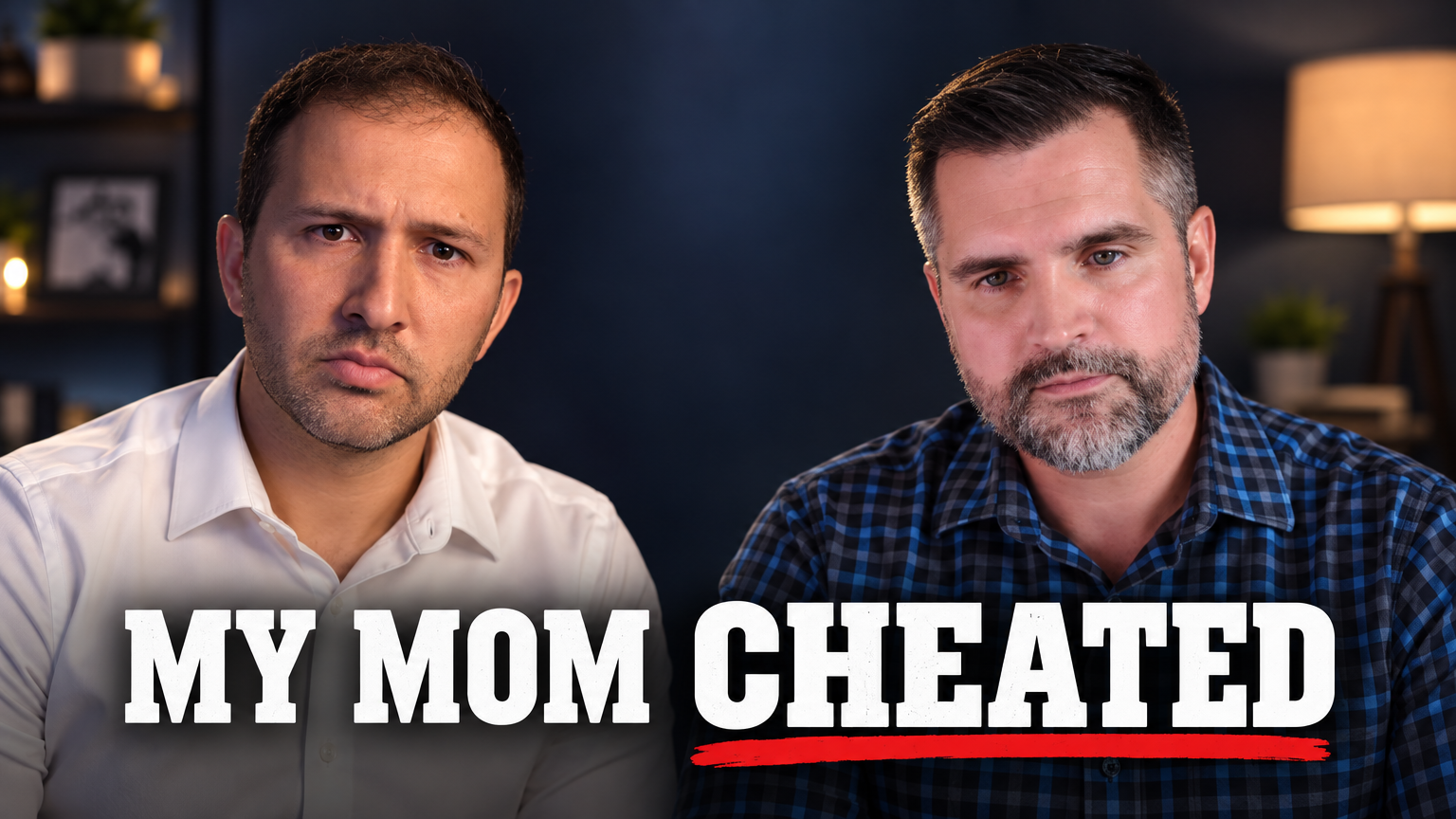
His Mom Cheated. Here’s How He Forgave Her and His Stepdad | Michael Comstock #185
Confident people still feel fear. The difference is how they respond to it. Fear, anxiety, and discomfort don’t necessarily mean you’re weak, unprepared, or on the wrong path. In fact, trying to suppress those emotions can make them even stronger.


When Michael Comstock was 17, he discovered that his mom was having an affair. The betrayal didn’t just affect his parents’ marriage—it shattered his sense of safety, trust, and family.
Years later, Michael realized the fallout was still affecting him. He struggled to trust women, sabotaged relationships, feared marriage, and wondered if he was doomed to repeat his parents’ story.
In this episode, we talk about:
Why a parent’s affair can feel like a betrayal of the children too
How divorce wounds can surface years later in dating and relationships
Why Michael felt guilty building a relationship with his stepfather
What helped him forgive his mom and stepfather without excusing what happened
How he went from fearing marriage to becoming a husband and father
If your parent cheated, if you struggle with anger or trust because of what happened in your family, or if you’re afraid you’ll repeat your parents’ mistakes, this episode is for you.
Resources:
If your parents’ divorce or family dysfunction has hurt you and you want to build a healthier future, learn more about Restored’s healing program for young adults:
https://restoredministry.com/program
You can also anonymously share your story with Restored:
https://restoredministry.com/story


Enjoy the show?
To be notified when new episodes go live, subscribe below.
As a bonus, you'll receive the first chapters from our book, It's Not Your Fault: A Practical Guide to Navigating the Pain and Problems from Your Parents' Divorce.
TRANSCRIPT
Transcript produced by artificial intelligence. Please pardon any errors!
Joey (00:00)
Michael, so good to have you on the show, man. I've been looking forward to this.
Michael (00:02)
Hey Joey. Thanks for having me. It's great to be here.
Joey (00:04)
Yeah, no, it's it's been so cool to know you for so long and to see you transform and your story, you know, evolve. I know that things were not easy for you growing up and eventually got to the point, like so many people listening right now, where you learned that an affair had torn your family apart. And so if you would take me back to that Friday night when you were seventeen, what happened? Yeah.
Michael (00:25)
Absolutely. So it was really just like any other night, any other day in high school. I was a junior. I was at home by myself. My mom and dad were somewhere. They were out of the house. But randomly my sister and brother in law showed up. My sister is about twelve years older than me. So I was seventeen at the time. I was kind of living in my own bubble. I was oblivious to to anything going on. But my sister came over because she had some just some suspicions that my mom was acting funny.
And just some comments, I guess, that she was making that just seemed a little fishy. So they came over to kind of do some some digging. And, you know, what happened was they went downstairs and they went on my mom's work computer and found some emails that had been deleted. Basically found an email exchange between her and another man. And I was kind of outside the room. I was kind of peeking in. Once they realized the nature of the conversations
And how sensitive they were. My brother in law was like trying to get me out of the room. Once it once it hit me, once once I realized like this is not a normal conversation and it it's like it kinda hit me like a ten of ton of bricks. I remember I basically collapsed. I basically passed out on the ground right right there at the bottom of the stairs. It was kinda like one of those like out of body experiences where it just felt like time just stood still, like froze. And I just I guess I was a I was just in complete shock, right?
like type A trauma right then and there. And I just remember hearing screaming and the screaming was coming from me. But like I wasn't really I just I was so disembodied from like what was actually happening. But so then later that night, you know, my sister took me in that night. I stayed the night at her house. I remember crying myself to sleep. And it's also probably important to note that I was on the wrestling team
You know, and I had wrestled I think this was my eighth year of wrestling. So it was you know, I was pretty good at the time. the next morning I had a big tournament, so it was kind of getting close to the state tournament and I had high hopes of going far into the tournament, but because of what had happened that night and the current state I was in, I remember just calling the coach and basically calling in sick and saying, like, I can't I can't go. And that actually turned out to be the very last I would
I would never wrestle again after that. So that was really yeah, that it ended my season and then I remember like next year when I wrestling came around the corner, you know, my coaches were trying to get me to go out and I think just the connection to that night just really ruined that sport for me. So yeah. So that was really kind of that night, how it how it unfolded.
Joey (03:09)
So it totally hit you out of the blue, like you would know even though your sister had some in inkling that something was going on, you didn't have any at all. Is that right?
Michael (03:17)
Absolutely.
Yeah, completely blindsided. Completely blindsided. You know, my parents were very involved in the community, very involved with my high school. The house I grew up in, that was the house all my friends, you know, came over to hang out. so you know, if you were to ask, you know, my friends growing up, you know, my parents were the last parents they would think of, like something like this would happen. And at that point they had been married, you know, close to thirty seven, thirty eight years, so a long time.
Joey (03:44)
Men, so so devastating. And one of the things, Michael, we've heard a lot from people who've been in similar situations to you where, you know, mom or dad cheat on the other, is that obviously the other spouse feels betrayed, but the kids do too. It feels like very much so a betrayal, like you're cheating on the kid as well. d did you feel that? Did you have that experience?
Michael (04:04)
I did. I did. I felt so I had a very close relationship with my mom, you know, before all this happened. And the betrayal was felt not just by me, but by my brother, by my sister, by everyone in the family. And you know, our family was very, very close. We used to have these Sunday Sunday night gatherings. We would when my brother, my sister, their families would come over to my parents, we would have pizza, play cards, watch TV, watch movies, and took family vacations growing up. So
In a sense, it was like we had such a good family. We had such a good thing going. Why did you do this? Why did you do this to us? why did you introduce this this man into our lives that we didn't ask for? Why and why did you really intentionally break up the family, break up what we had? So it did s it did seem like a huge betrayal.
Joey (04:55)
and I I could see why. I definitely think anyone in your shoes would feel the exact same way. Those are incredible questions that you asked to whatever degree you're comfortable sharing. Have you had a chance to find any answers to those really difficult questions?
Michael (05:09)
Somewhat. you know, in the in the direct aftermath of, you know, that night, the months the months following, you know, I kept a lot of that hidden inside me. I never, you know, I never reached out to anybody. I never even spoke about it with my own brother and sister. It was something I just kept private. You know, looking back at their marriage and just, you know, looking back and finding out like what I observed. Like, yeah, there's definitely things that my dad probably could have done better as a husband.
I think there was maybe a lack of quality time there. And perhaps that was you know, my mom's number one love language, and maybe he just wasn't quite meeting that need. The way I understand it was that this man that was introduced, that this man that that my mom was having the affair with was a childhood friend of hers. And they grew up in the same same area, same town as as children. Somehow they reconnected later in life, and then one thing led to another. And so
Maybe my mom wasn't completely happy in the marriage leading up to this, but when she reconnected with this man, that was obviously the catalyst for for getting that ball rolling and, you know, everything else following after that.
Joey (06:17)
Yeah, man. So devastating. You said that after, you know, all this happened, you tried to keep your family together, you tried to reconcile even your parents. I'm curious, yeah, talk me through that a little bit. Like why did you feel a level of responsibility to keep the family together and help your parents?
Michael (06:35)
Yeah, I think it was because I had such a strong bond with my mother, a very strong relationship. And once I kind of came to grips of of what happened, I felt like, okay, this is just like a little bump in the road. This is something that we're gonna, you know, get through together. And my mom and my dad, I think they sh they went on a like a retreat, a marriage retreat afterwards to try to reconcile. So I was like, okay, like things are you know, she's aware of what she did. This was a mistake. And my dad at that point, like giving him all the credit here, like he
He wasn't like, like I'm out. Like he tried to do everything he could to reconcile with my mom and and he was really committed to that. And he was obviously devastated, of course, but he was he was still in the fight and he was willing to do whatever it took to work. So I give him a lot of credit for that. But I just felt like, you know, my my mom loved me and if she truly loved me, then then she was going to keep the family together. Like she was going to make it work with my dad and and we were gonna go back to how things were.
And I just never once imagined you know, it's funny, like you look back and when I was in high school and I would I would have friends or Sikhs, other kids that their parents were divorced and I just always thought to myself that there's no way that's ever going to happen to my parents. And I remember thinking that a lot. And then when it actually does happen, something like this, it it definitely, you know, it shook my world, obviously. But I felt like I had control over the situation and when in reality I didn't it.
Joey (07:59)
Was there a particular moment when you realized that you didn't have control, you couldn't fix it, this wasn't something that you could do?
Michael (08:07)
It took me a long time to get there. I think it was kind of a slow progression of things. Sure. I think it you know, one of those moments was like when my dad officially moved out, got his own apartment. So then I felt like, okay, that's that's not good. You know, that's more of like a permanent decision. And then obviously I think when I finally came to that resolute that that realization that, you know, this isn't just like a a temporary thing was like when they started like planning. So my mom and dad, I grew up Catholic, I am
Devout Catholic, so they they received an annulment from the church. And then when they started planning their own their own wedding, you know, getting remarried, I think is when I came to the realization like this is going to be a part of my life forever. And my dad's not coming back. This man is going to be a part of my life forever.
Joey (08:55)
both parents get remarried or was it just your mom?
Michael (08:57)
So my dad did eventually as well. I think he he got married afterwards, after my mom got remarried. And it was pretty quick. I I believe they got married when I was a freshman in college. And you know, and just to touch on that too, like a lot of that was happening when I when I moved away for the first time. So, like in a in a way it was a blessing to kind of start start my own life and move out of the house, start college. I was really away from like the marriage preparations and all of that. I didn't even go to the wedding.
And I remember one person I was working with, they thought it was she didn't understand why I didn't go. And I remember being upset, like, you have no idea, you know, what this was like. And there was no at that time there was no there was no way I was going to attend the wedding. I was completely against it. I was, you know, completely against this man, you know. And honestly, I was against my mom too at that time.
Joey (09:47)
Yeah, I mean, it's understandable, you know, given that yeah, you experienced so much pain in that relationship that you would be like, I don't want anything to to do with it. it's beautiful to hear that your relationship now is in a different spot, which we're gonna get to soon. but you mentioned so you know your dad moved out, eventually your mom marries the man who she had the affair with, and you know, then he's a part of your life more permanently. He's living in your house, even though you were in college at the time you you spent time around him.
Yeah, talk me through that. What was that like for you even after the wedding?
Michael (10:20)
Yeah, I remember the first official time I met him, he came over to the house and we were downstairs and I remember like he was trying to find ways to kind of warm up to me, establish a connection. He knew that I was really into the Lord of the Rings movies at the time. Nice. So he was like asking me questions about that. And I was never I mean, I'm not gonna lie, I I had a lot of pent up anger at him, maybe maybe even like hatred, you know, at that point. But I never let it
show. Like I never was outwardly aggressive towards him or my mom. I was more cold and distant. And I was really just not interested in any of his advances, like tr to try to establish a relationship with me. I remember he would always invite me. We would go out to Starbucks and we would have these coffee dates where he would, you know, try to start a conversation, connect with me, buy me a coffee. And I went and I very reluctantly. So that was really kind of our
the beginning stages of him trying to get to know me, which like looking back on it I I appreciated. but I also struggled tremendously during those early days of like feeling like I was betraying my father too. And I'm sure we'll get into that, but
Joey (11:34)
Yeah, no, that makes so much sense. Like I can't imagine. I think what I've seen, you know, gosh, there's been so many people who unfortunately have shared a similar story where it's like mom or dad cheated, came to light, blew up our family, really, really messy thing. But what I've seen oft often happen is that the affair kind of fizzes out, they go the separate way. And so there's like this, like you said, the anger and the hatred there, which totally makes sense to me by the way. I don't think it's weird to feel at all. is directed maybe at this kind of person who's
far out there, you don't really interact with or see. But in this situation, it's like, no, you're like faced with him on a constant basis. so I can imagine how difficult that would be. I want to go into that about you said mentioning like it felt like a betrayal to your father. So yeah, talk me through that a little bit. You you you felt like even building that relationship with him was like betraying death
Michael (12:24)
Yeah, absolutely. Like every single time, you know, just seeing what my dad went through during all that. And then my dad ended up going down a pretty dark path and getting into a very deep depression himself. And I remember going over to his apartment to hang out with him and we would like watch a show or something and you could tell like he was just, you know, super, super depressed. And then I remember like I would leave his apartment and just seeing the sadness in his eyes. And then I would just as soon as I got back to my car
just immediately break down and uncontrollable crying. And that was probably the first time in my life where I've felt like I'm feeling somebody else's pain so deeply, so intimately. And my dad, like so many kids at that age, like, you know, they're our heroes. And, you know, we look up to we look up to them. And my dad was is such a good dad. He still is a great dad. Like he was so involved in my sports growing up. And he was my coach. He was my Boy Scout leader. He was always there for me.
So for him to like leave the house and like and when it's completely out of your control and like this wasn't your decision to make and having to see him in the state was like so brutal, so brutal. And so so that was super hard. and even like today, you know, honestly, like it it's taken me a really long time to not feel that those feelings of betrayal, like we're at a family function, birthday party, and okay, they're they're both in the same room and you know, if I'm talking to my my now stepfather, you know
I feel like a little tinge of guilt. Like my dad's over there. I should you know, I'm on I don't want my dad to think that I'm on h I'm on my stepdad's side and this constant like tug of war, which is very exhausting. So it was it was this constant just feeling of like I I can't I felt guilty being in the same room as my stepdad, talking with my stepdad, especially if my dad w would ask me like where am I? And you know, if I told him like I'm I can't I can't go over to your house because I'm with him, like it was just it was terrible. So,
It took a long time for that to heal, but it finally did.
Joey (14:25)
If your parents divorce, it hurts you and you do not want to repeat their story, I have an invite for you. It's so common for young adults to feel hurt by their parents' divorce or family dysfunction. It's so common to turn to bad habits to numb your pain or struggle with emotions like loneliness, anger, anxiety, and depression due to the brokenness in your family. It's so common to want love and even marriage, but fear repeating your parents' story.
Now, if you can relate, we're building a new healing program for young adults from broken families. In the program, you'll start healing your family wounds, practice healthier ways to deal with your difficult emotions, and learn how to build the happy, healthy marriage you never saw growing up. We're intentionally keeping it small so spots will be limited. Join the wait list or view the details now. I'm not excited to get to that. Yeah. No, I can't imagine like how how difficult that must have felt. At one point I remember kind of
Maybe stepping a little bit of a different direction. You had told me actually that listening to, you know, this podcast, like the stories on it and everything kind of made you realize like the brokenness that you were carrying with you. May maybe more so than i ever before. And I'm curious, like before so before hearing that, before finding the podcast, did you think you were like okay or where were you at with with all of that? What was it like? And what was it like? Yeah, I'm curious, realizing that maybe I'm not as okay as I think I am.
Michael (15:50)
Yeah, that's you know, I right after right after the affair happened and then the divorce became final, the remarriage, when I was kinda going through this at the beginning of college, you know, I continued to get good grades, I stay away from drugs. I was drinking but not I wasn't drinking to escape the the pain of the divorce. So I was like doing o at least what I thought I was doing okay in some of in some of the things, but in other things they started kind of
coming out later. And I started developing, you know, worse habits and unhealthy coping mechanisms. Alcohol later became a problem. I started having several broken relationships, fleeting relationships. And I started kind of thinking to myself, like maybe in my late twenties, like, you know, why am I still single? You know, why why am I not able to have hold down a like a healthy relationship, you know, with a woman? And then I started
I pieced together like, okay, there's probably something there with what happened to my parents and how I interact in relationships and how I go about that. So that seemed pretty obvious. So I started kind of digging deeper and deeper and deeper. And then at some point f you know, several few years ago I discovered I discovered this podcast. And this was the true like aha moment, the real eye opener for me when learning about all the statistics and the consequences of a situation like this and how and how it can affect
know, an adult child of divorce and that's when I started like, Okay, I'm not alone, like this is not this is not me being crazy. There's maybe a reason why a lot of these things have happened in my life stemming from that moment, stemming from that trauma. So and I'm still learning, of course, but this was like honestly the first step for that.
Joey (17:35)
No, I think that I'm I'm and I'm really glad that we were able to play that role in your life. And sorry, this wasn't me fishing for compliments by any means, but really just understanding that I think a lot of us have this experience where it it kind of makes sense. You're going through life and you've been through some stuff. Life is not n life's not easy for anyone. But especially when you go through something so grueling like you went through, you kinda get used to it to some extent. And you're walking around and you're thinking like, Well, I guess I'm okay. Like you don't maybe even think about it much.
And then you have experiences like you mentioned where maybe there's some bad habits or maybe there's just a lot of like emotions that we don't quite know what to deal with, or maybe there's like you said, relationships that start feeling maybe way harder than they feel like they should feel or failing. I I've been through that all myself. And it kind of makes you scratch your head a little bit and like, yeah, is something wrong with me? And then yeah, there's there's a lot of freedom in finding out. No, actually you're it's kind of typical. It kinda is expected, but thankfully you don't have to stay there.
But yeah, everything you mentioned, whatever, you know, whether it's the struggles, you know, the habits, the emotions, the relationships. And so I'm curious, was there a realization that was maybe like the hardest for you? And maybe realization's not the right word, but was there a moment where kind of all of the the weight of like, yeah, the relationships or the habits or anything like that and this connection that you drew to your broken family hit you to a point where it felt maybe like despair? 'Cause I know sometimes people have that experience too. Was that a part of your story or maybe not?
Michael (19:01)
Well, I mean I've I've absolutely felt despair, you know, in my life and and also, you know, anxiety. There's been period seasons of depression as well after, you know, failed relationships. I think some of the despair, you know, h probably occurred just realizing like having, you know, a broken relationship after broken relationship and just, you know, coming to the point where like I don't know if marriage maybe is in the cards for me. Maybe I am doomed to repeat.
my parents' mistakes. Maybe there's something wrong with me. And I've had all of those thoughts at one point or another that that I'm almost like too damaged, too far gone. And who would want to be with me, you know, with my with my past? And so a lot of shame, a lot of guilt, you know, I I mentioned that I'm a Catholic and just like going to confession for the same sins over and over. Like you get to a point where it is hard to kind of keep hope and keep faith and you see your friends getting married and having kids and
You know, they post their happy pictures on social media. So it does get to you and you s you start to really just realize like, yeah, maybe maybe I'm you know, I I when I was younger I wanna get married, I wanna have kids, but maybe that's just not not the plan. And so it does creep up on you.
Joey (20:13)
And I think a lot of people are in that exact spot right now where they feel that despair. I'm excited to learn kind of what the in-between the transformation was for you, but just to give people a little bit of a taste, your life's very different now. So if you would paint a little bit of a picture of that, like how is life different now and then we'll go backward and kind of fill in the missing spot.
Michael (20:30)
Sure, absolutely. Yeah, I'd love to talk about like, you know, 'cause it was a huge shift of of mindset before and after, but my life is very different today than I ever imagined. So I'm, you know, married to an amazing woman. we've been married for just over two years now. We met online. We now have two beautiful boys, four months and a year and a half. So, you know, life is crazy. They're they're just like two little tornadoes. well, one's a tornado, one's going to be another tornado. So it's just it's wild.
But I absolutely love it. I love being d being a dad. There was a lot of maturity and growth that I had to experience in in the in our marriage, like especially in the early parts, like probably the first year, year and a half, where I really went through a lot of growing pains and I felt like there were there were still so many wounds in my life that kinda lay dormant until I was like living with a you know, in marriage and and learning to live together and do different personalities and working through a lot of those like, you know, inner demons that I think I I had not
still healed. But you know, marriage for me has been ultimately extremely healing. And yeah, and I'm just just super thankful for it.
Joey (21:38)
I love this. Let's stay here a bit. So that's a big jump to go from I don't know if I'm capable of building a healthy marriage and family to now being in it and yeah, like you, I don't do it perfectly, but we're trying and I'm a dad of three kids and
We've been married eight years now and man, it's like the hardest thing you've ever done and it's like the most amazing thing you've ever done. So I totally I totally get that. But yeah, talk to me a little bit about that shift that occurred. Like what was maybe let's start in the place of like healing, what was the most healing thing that got you to the point where you were even thinking it was possible for for you to build a happy and healthy marriage?
Michael (22:14)
Well, before I was like super, super against marriage. After after the divorce happened, I was very jaded towards the towards the institution, towards the sacrament. So at that point I actually I had no desire to get married. I felt like, okay, this happened to my dad, why would I why would I, you know, take that chance, take that risk? And it was, you know, not worth it. So I really built this steel wall around my heart. I would not let anyone get close to me. So none of my relationships were
They were just very superficial. And my thought was like, I'm gonna hurt them before they have a chance to hurt me. And I constantly sabotaged relationship after relationship because of that reason. And I think kind of going back to your earlier question, I think that's what made me realize like something's wrong here. Why am I sabotaging ruining a good relationship? But anyway, I still at the same time just had a had a this vendetta, I feel like, against against you know, women in general. I was very angry.
a lot of the time I would lash out. But then I at some point, probably in my late twenties, I'm thirty seven now, early thirties, I I did have a huge mindset shift where, okay, you know, marriage is hard, yes. And there's a lot of marriages that that are not successful. You know, divorce is very common in our society. So I just thought like, okay, well doesn't that make marriage even more special? Doesn't that make it even more sacred when you can actually have a good marriage and a holy marriage and
I just thought like, okay, yeah, it's it's hard, but it's meant to be hard. And I almost saw it like as a challenge. Like, okay, well, maybe I'm still called to be married, but if I do get married, I want to make sure that I'm gonna be the best husband that I possibly can. And I'm not gonna repeat the same mistakes that my mom or my dad made. And like I'm gonna rewrite that story for my own family. And so in a way, it became this new just motivating factor for me that I had, you know.
I I could do things differently. And I wanted that for myself. And also just like looking back on it too, and like I think our society paints this picture that, you know, you're single or, you know, you hear a lot about, you know, married couples, no kids. You can do whatever you want, you can travel, you have all this freedom. But at the end of the day, like I was very, very lonely. And I was really unhappy, to be honest. And I maybe
portrayed this picture to others like, I'm single where all my other friends are married and I could do what I want when I want, but I was very selfish and I still have work to do in that department and I still have selfishness inside me that I'm working on. But I didn't want to live my life like that for myself. I wanted it to live for others.
Joey (25:00)
So good. And it sounds like you found so much more meaning and joy in that than you did just focusing on yourself.
Michael (25:05)
Exactly. Absolutely. And in this vocation, you know, marriage, being a father, like it is the ultimate like dying to yourself and learning about that every single day.
Joey (25:15)
Yeah. And there's something beautiful and powerful in that in that we we also receive a ton too. I've you know, it's kind of a contradiction. It's like you have to sacrifice a ton, but there there's a lot of beauty and joy that comes out of it. It's it's kinda baffling.
Michael (25:29)
It is. It is. And you know, I wouldn't I'm I'm so blessed. Yeah, and you know, my wife has been extremely patient with me as I work through a lot of that. And, you know, she's been great. She's she's now tuning into the podcast so she can learn how, you know, what we kind of go through and how we operate sometimes and some of the the stuff that we bring into marriage. And I think it's just super helpful for yeah, for spouses just to learn about about it as well and how they can maybe like, okay, understand us a little bit better.
Why we do the things that we do.
Joey (26:00)
Yeah, no, couldn't agree more. You mentioned kind of having this anger jaded view towards women. I'm curious, yeah, maybe what was what were some of maybe the beliefs or assumptions, the ways in which you, yeah, looked at women because of what you experienced in your family?
Michael (26:16)
felt that women couldn't be trusted because of the the the nature of the affair and and you know my mom cheating all my dad so I just had this like this vendetta like you know women can't be trusted and you know they're gonna hurt you and I would say that love is very transactional. It can be taken away from you in a moment. And so to me it was just very scary to put your heart out there, to give someone your heart, to give someone your trust.
And at that point it was just a risk that, you know, I wasn't willing to take at that time. And it was much safer on the shores of, you know, like I said earlier, like s the selfishness and not getting too deep with somebody. So it it took me a long time to realize like, okay, and I think part of that was like my it was my mom. And it was my mom who I trusted fully and I loved with all my heart. And for her to do that, like it just shook my whole like belief in like what a relationship means, what a relationship is.
I felt like before that happened I was like living in this like bubble. I was very naive about how the world worked. Yeah. You know, we we had a very kind of not closed family, but like, you know, everything was pretty smooth. And then, you know, when that happened I felt like, okay, my innocence has has been lost now, you know, for the first time. Kind of see things through the veil a little bit, like how, you know, there's some bad stuff out there.
Joey (27:35)
Yeah, no a hundred percent. And I think your experience of like having this like deep wound from and anger toward women makes sense to me. I think there's this one psychologist I was talking to at one point and he was sharing that yeah, he's noticed this like trend of like there's kind of like these masculine wounds when fathers maybe do things or men do things that hurt us, and then there's these feminine wounds when mothers or women do things that hurt us and they they both have different effects.
Like they're they're not the same. And so it makes sense so much to me that you would go through that experience and then feel like, Well, women can't be trusted. Love is transactional, you know, I need to protect myself and maybe, you know, hurt them before they hurt me, sort of thing. It it just it makes sense. Like it it's not an odd thing to to me at all. Now, obviously not the healthiest thing, which is why you've, you know, found healing and transformed, which is beautiful and you're still on that path like me. But but it makes so much sense. I I'm curious if you've like have you
Given this idea of like these feminine wounds, much thought, like mother wounds.
Michael (28:34)
Yeah, I have. I've looked into, you know, the father wounds. I feel like you hear, you know, a lot about that. And then so some of the the mother wounds as well. not too deep, but it would definitely explain, yeah, some of the behaviors that I would display later for sure.
Joey (28:49)
Yeah. No, no, totally. And no, it's fascinating. I w I wanna eventually w I wanna put more content on on that topic 'cause I think that's something that yeah, I like you said, I've heard way more about like father wounds and mother ones and I think they're both like very real and I think they again they have very real effects and different ones and and so I remember interviewing Jay Stringer, the
Therapist who wrote the book Unwanted. people listening might recognize that. He it's all about finding freedom from unwanted sexual behavior. And yeah, it's really fascinating how they were able to predict the type of trauma someone endured based on the type of sexual fantasies and porn searches that they engaged in. And a lot of times it it came back to mom or dad wounding them, trauma, you know, in the family. And it's it's so wild. So it's literally like this this pattern like that emerged.
Almost like science, like a physics. It's really, really wild. Fascinating. And so so I think there's something to that. And so I think the encouragement here to everyone listening is like there's there's so much hope. It it can be kind of scary, but there's so much hope in like what you've done, Michael, where you just understand yourself on a deeper level. Like know thyself. Like n the knowledge of like, okay, these are this is what I've been through, these are my tendencies in relationships, like all of that can lead you to a place then you
you know, kind of own yourself more, you have more self possession, and then you're able to transform, grow, and then also love better, which is the whole point of this whole thing in my opinion. And so I think it's really beautiful. And I think so some people might look at this and think, well, there's not much value in kind of digging into these uncomfortable topics, which it they tr certainly can be. But I think there's a lot of hope in that you can transform in your life. It's a beautiful example of that.
Michael (30:28)
Absolutely. Yeah.
Joey (30:30)
I'm curious, you know, you mentioned a few things already, but what else helped you heal, especially heal
Maybe again that like feminine or mother wound and maybe a broken view of relationships and marriage. If you'd like to share your story with us, we'd love to share it. You can do that in three easy steps. But first, some of the benefits of sharing your story, reflecting on your story and sharing it with someone who can receive it with empathy is actually healing on a neurobiological level and makes your brain healthier according to neurobiologists. Writing your story is also healing. Studies have shown that people who write about emotionally significant events in their lives are less depressed, they're less anxious, they're healthier.
And they're happier. And finally, it can be really helpful to someone who's maybe on the same path that you're on, but a bit far behind you to just hear your advice and to hear your story since they're going through things that you've been through. And so if you want to share your story, just go to restored ministry.com. You can fill out the form on that page that will guide you in telling a short version of your story. And then we'll take that and turn it into an anonymous blog article. Again, if you want to share your story now, you can do so at restored ministry dot com slash story or just by clicking the link in the show notes.
Michael (31:33)
Yeah, absolutely. So, you know, first and foremost, it was it was God. You know, for me, God's grace to give me the forgiveness to forgive my mom and my stepfather was number one. And I'd love to talk about forgiveness here in a little bit too, but I also wanna say that, you know, that was number one for me was healing, was just being able to forgive. And I believe that for total forgiveness to happen it, you know, this was a it's a grace that's given, you know.
human strength alone, you know, can only go so far. So just having God give me that supernatural grace to forgive my mom and my stepdad. Besides that though, thanks. exercise. extra exercise to me was a lifesaver. Just getting in the gym, lifting weights, going for a run, getting that sweat going. Like really enjoyed the podcast. You know, your your friend Dakota Lane, you know, he talks about the physical benefits of of exercise, mental the mental benefits, the emotional benefits. And to me, exercise is just it's amazing. And I
continue to to exercise as like a form of like therapy even for me just to clear my head. I went for a run earlier today, you know, just to get ready for this.
Joey (32:40)
Love it.
Michael (32:40)
the therapy in itself too can be can be very helpful. One thing I wish I did at the very beginning was to talk to somebody, just not hold everything in. I didn't like I said, I didn't even talk to my family about what I was going through, what my what was going on in my head. And I think that was like a huge detriment to to my own healing at that time. So
Whether it's a therapist, a friend, a coach, a a counselor, you just gotta talk to somebody. And I also at some point just took it upon myself to learn more about learn about relationships, self improvement. I'm a big movie fan. I love movies and shows. So like seeing how forgiveness can play out in media, I think can be very helpful and then see kind of how how it can be portrayed. And so I always gravitate. I love movies that show like forgiveness is like a big theme.
you know, where there's like this great injustice that's been done, but then, you know, the person finds a way to like mend that and come back together. I think is just beautiful. So so you know, healing is not it's not linear, it's it's different for everybody, but those are some of the things that that were part of my healing journey.
Joey (33:44)
Okay. No, I I love that. And I want to talk about forgiveness, but since you brought up like movies and shows, I'm curious if there's any like on the top of your head that were examples of like that forgiveness that you you mentioned.
Michael (33:55)
Yeah, there's you know, there's a there's a good book out there, movie, I think, you know, very popular called The Shack. And it's a it's a great story about forgiveness, about a father. It's been a long time since I've read it, but I think his his daughter gets gets kidnapped and murdered. And he goes to the shack to basically get away and pray and like but he he's on this journey to like being able like, how can I f you know, forgive forgive this murderer, you know, of of his daughters. so that one resonates.
I also think about like just like the real life stories of people too. So, you know, you think about, you know, from a from like Christian perspective, like Maria Garetti, you know, forgiving, you know, her murderer or like, you know, Pope John Paul the second forgiving, you know, his would be assassin in prison. So like seeing seeing some of those like real life examples play out is pretty inspiring to me. Yeah. I know there's other movies out there that there's actually this one movie that came out recently, it's like the new Knives Out movie called
Joey (34:54)
It's like what the priest
Michael (34:56)
Yes, yes. And there's like a very str like it's a really good movie. Like I thought it was really well done and there's a big theme of forgiveness in that movie as well that definitely recommend people check out.
Joey (35:07)
Beautiful. No, no, I love that. I'm curious then on this topic of forgiveness, so how did you do that? Like you you get to the spot where you're able to forgive your mom and your your stepdad now and get to a spot where you have, you know, a better relationship now than you did with them. How did you go from that that anger, that betrayal you felt, which all of us can understand, to forgiveness? And and was there maybe a particular moment that was a big jump from to the before state to the afterstate?
Michael (35:33)
Yeah. It took a very long time for that for that process to really happen for me. So there was one situation. It was really an incident that happened about three or four years ago. My niece was having her bridal shower, and this was like outside in this park, like in this little building. And long story short, so everyone was there. My stepdad, my mom, my dad, my stepmom. There was a there was an incident where my my dad
basically got into a physical fight, an altercation with my stepdad at that party. And it was pretty bad. And they were fighting outside. And it was it started kind of like I brought my dad and my mom out to talk to them because there was like some drama. And I basically told them that, no, I'm here for my niece. I don't want to deal with this today. And then w everything happened so quickly, but one person thought, like my mom pushed somebody or my stepmom pushed somebody and then
All of a sudden my dad and my s my stepdad were g getting after it and they had to be pulled apart. It was very ugly, very ugly scene. I was very upset as well. My dad and my stepmom ended up leaving, going home, and then, you know, obviously the whole night, the whole day was was really ruined, marred by that, by that just terrible, terrible event. So which is funny because it turns out that this event was there was there's some good that really came out of this event.
Which is hard to think about when when it that was going on. But my dad would later tell me that in that moment, like all of his anger left him. And obviously like he he didn't it was not the right way to go about it, but my dad was holding on to a lot of anger as well, you know, towards my stepdad. And he told me afterwards, like he no longer felt angry towards him. Wow. It was gone. He was able to forgive my stepfather after that as well. And I feel like when I heard that from my dad, like he was able to forgive him.
That almost gave me permission in a way to forgive my stepfather fully as well. And I feel like it was that moment when I truly was able to I told him I f like I f I forgave him before, but this was the moment in my heart where I felt like this was the full conversion happening. And I think it was because of my dad being able to do it. I'm thinking, like, if my dad can forgive him, then who am I not to? And ever since then, you know, there was been
Because before that there was so much tension, Joey, you could cut it with a knife. You know, you could just be in the same room and it was just so uncomfortable and awkward. What's funny is that I you know, I wouldn't call them friends now, but they're able to sit down on the same couch. They can come over, watch a football game with me, they can be civil, talk to each other, share a laugh. And it's amazing how far they've come, how far my dad has come, you know, from from where he was before. But something happened that day, you know, in that terrible moment that
That I believe God used to bring that forgiveness from my father, that to release that anger that my dad was holding on to. And so something beautiful came out of something terrible.
Joey (38:33)
And you're the on an emotional level, let it go, not saying it didn't matter, not saying it didn't happen, but you were truly kind of releasing him of of that debt.
Michael (38:42)
Absolutely. Yeah. And that's that's a great definition of, you know, what what forgiveness truly is, just releasing him of of that debt. You know. I think it's important, you know, for for everyone to know too, like, you know, forgiveness it it doesn't doesn't mean that your your feelings vanish or your anger vanishes. You know, it's it doesn't excuse the behavior. It doesn't excuse what he did or what my mom did, but it is it is releasing that debt, that moral debt. And I will say it's it is so liberating, it's so freeing.
There's you could just feel the effects mentally, spiritually, physically. You're you're unburdening yourself. You just feel lighter. It is just an amazing feeling. Like and and and I would say too, like forgiveness, it it doesn't it doesn't happen right away and it's okay. And if you are a believer and you can tell God, like, hey, I I can't forgive him right now or I can't forgive her right now. That's okay. Like tell God that. And he will listen and he will work with you on that. And no, just because you can't forgive right away doesn't make you a bad person. Sometimes it could take years.
Yeah. That's okay.
Joey (39:42)
So good. So good. No, the the term that came to mind is like you kind of give up payback in a sense with forgiveness. Not to say that justice may not play a role, but you give up like the vengeance piece and yeah, there's a lot of freedom in that. And like you on the flip side, there's a lot of people have been ruined by that by not giving that up. And so yeah, so so wise so so good and man, I admire you for that. And so I'm curious, like how did you go from where you were to where you are today in your relationship with your mom and your stepdad?
Michael (40:11)
Yeah, my relationship with my stepdad and my mom has changed a lot over the years, you know, from the beginning of the affair. You know, I think I mentioned at the beginning, my stepdad was trying to connect with me, so he would schedule, you know, times for us to go to Starbucks and talk. And at that point I was very I was still very dismissive, I was very quiet, very standoffish. One thing that really bothered me in the early days was when my nieces and nephews, they were still young at that time, they would call
my stepfather grandpa. And I remember the first time I heard that, I it it just I felt like this pang of betrayal. Like, no, like my dad is your grandpa, not my not not this man. And it would just it would just make me cringe every time I would hear that. And I'll get I'll get back to that here in a second. But you know, I think it was just a slow process of of my stepdad, you know, continuing to make the effort to get to know me. And then just the healing journey, you know, that I mentioned
along the way, you know, realizing that he is he is human, of course, the forgiveness played a huge part. But, you know, I and then over time, you know, I just realized like, you know, this is a good man. This is a good man that made a very terrible mistake. My mom made a terrible mistake. You know, but she's my mom. And I think when I came to the realization and when I finally gave up the the notion that I had to pick between my stepdad and my dad and like this constant inner battle that it that it was okay to let this man in my life.
And to acknowledge that my dad is always going to be my dad. You know, and my dad is honestly the strongest man I know from everything that he's been through in his life. But it's not betraying my father by getting along with my stepfather and to laugh at a joke that he tells or going to get a Starbucks coffee with him. So it was a very gradual process and you know, and I am really happy now that I that I truly do have a great relationship with my stepdad.
And my mom. And I think it c it came a lot sooner for my mom to reestablish that that relationship with her, because she was my mom. and we had a very close relationship before. But you know, with my stepdad, you know, he's he's done a lot for me over the years. And yeah, it's just kind of funny how how it happened, you know, and I'm I guess living proof that you can rebuild, you can have a healthy you can even have a healthy relationship with someone that that broke your parents apart, that broke your your your parents' marriage apart. And
Now, you know, if you look at today, my my own kids will call him grandpa. And ten years ago, fifteen years ago, that would have, you know, repulsed me. And now it's and it's normal. I go to my when my stepdad comes over, I'll be like, Hey, grandpa's here. You know, they'll come running up to him. and they'll say the same thing with my dad, you know, and everything is okay now. And so today, Keith and I, my stepfather, we we get together often, we go over to their house, he comes over, watches the ball games with me.
we still go out for Starbucks every now and then. So I think it just took a lot of like inner healing, a lot of time, a lot of conversations, of course. But I think everything happened for a reason. And I'm and I'm really happy that I was able to have the relationship I do with him because I know it's not always the case. And I'm very blessed that I do have that kind of relationship with him. And I've learned a lot from him, to be honest. So so I just I'm just wanna say like it is possible to rebuild that, to heal from that, and you know.
for everyone to get along. Just this past past week, my dad and my stepfather and I, we all and my brother in law, we all got together for a drink, you know, at a at a local place here in town. And there was no tension, there was no drama. It was just the past was the past and and all moving forward. You know, my dad's never gonna be best friends with my stepfather, but they at least can talk about things and they can have conversation and be civil and you know there there's certain things they get along
With in particular, like politics or sports. So it's it is nice. But yeah, that's what I really wanted to kind of say about that.
Joey (44:09)
No, so good and yeah, what a tough thing to do to work through all that, you know, brokenness and anger and unforgiveness to get to the spot where you are today. But it sounds like there's a lot more peace and you're you're all in a better spot. If someone listening right now is maybe in the spot that you were in, you threw out a few lessons which I think are super valuable. but like let's say they're in that spot where they don't have a good relationship with mom or dad or a step parent, but they wanna maybe take that first step toward
mending that toward improving that. What what might you say is like the first step that they could could consider? Maybe it looks different in different situations, but I'm curious from your point of view, like what would be one of the first steps that they could do today to begin mending that relationship?
Michael (44:52)
Yeah, certainly I wouldn't force it 'cause then I think, you know, if you that puts a lot of pressure on yourself if you're if you try to force yourself to have a relationship and by no means, you know, you're obligated to to do that, you know. Yeah, everybody's situation, everybody's circumstances are so different from one family to the next. But, you know, I would sp I would say, you know, first of all, spend a lot of time, you know, if you're religious in prayer, I think forgiveness would probably need to come first before anything else. And again
I think I mentioned that like forgiveness is not something that is gonna maybe happen right away. it may take time. But I I feel like it's very difficult to move forward and have a healthy relationship if you don't release that person of that burden, of that offense that they committed against you and your family. And forgiveness looks different again for everybody else as well. But I would I would say like focus on that first, pray about the forgiveness and ask for that grace, that that strength.
release that person and and again it's you know forgiveness is I feel like you're just kind of releasing them of that debt, I think is how I've kind of heard it termed and I'll say it again like when you do that, when you're actually able to release that person of that debt, it's it's an extremely freeing feeling. And I think only then is when you can actually like move forward and and establish a a relationship. And I think when I found out my stepfather was willing like he was really wanting a relationship with me. He was invested in my life. He was interested in me.
And then seeing how he treats other people like he wasn't this monster that that I thought he was, that I thought this person could be. And it just it just really reminded me of the kind of the human condition that we're all capable of great good or and also great evil. And all of our hearts are divided. We all we're all sinners. And so it it kind of makes you also look in the mirror, you know, as well and see how I can improve as a person. But I feel like we're all kind of in this, you know.
This thing called life together. We're all trying to figure it out. We all make mistakes. You know, no one's better than the other person. And it definitely again, I think it happened for a reason and I think it expanded my ability to to be able to forgive somebody. You know, and I've taken that with me in in other situations where someone has done me wrong and I feel like I'm able to kind of forgive a little bit more easily because of what happened. Because of that life sc scenario.
Joey (47:17)
So good, man. No, I think that yeah, it I look up to you. I admire you for for all of that. Yeah, I wanna just in closing down the conversation. I'm curious if you were to go, you know, back in time or maybe speak to the younger you listening right now who just discovered that, you know, one of their parents is cheating on the other. What would you maybe tell them to do and what would you warn them to to not do in that situation?
Michael (47:42)
I would probably tell my younger version that first of all like seek like seek companionship. Seek someone like that you can speak to about it. To to have that outlet of of what's going on inside your head because, you know, you're gonna be filled with so many different emotions and so many different thoughts and I don't think it's very good to keep that all inside and like letting that fester. And so I think, you know, I wish I had spoken to just anyone about it, my family, my brother, my sister, my friends.
I was embarrassed by it. And that's something I too I I forgot to mention that I was very embarrassed that my parents were divorced and I carried it like a like a black mark, you know, like when I would be out in public in high school and like I could just feel like, you know, I'm one of those kids and, you know, like I'm my parents failed, you know, failed me and it just and I d still like trying to process like where did that where does that embarrassment come from? But like it was it was there. And so I just wish I had spoken more, you know
to people that loved me and cared about me and that I truly wasn't alone, knowing that I wasn't alone. And so that would be my probably my biggest advice just in that stance. And then, you know, to not not do would be just, you know, not just not lose hope. Like this is something that's truly something terrible that happened to you, happened to your family. but this is also not your fault. And, you know, if you blame yourself, you know, don't blame yourself, because this is not your fault. And I would also recommend just don't get in the middle of it.
For so many years, I was caught in the middle between my mom and my dad, sending messages back and forth. And you're like I said, you're constantly playing this tug of war and it was exhausting. Yeah. And because they wouldn't talk to each other. And so I would say at all costs, try to avoid being caught in the middle. No, they're grown adults. They need to talk to one another. They need to have those conversations. And I think placing, you know, putting the kids in the middle of something like this is very unfair to the kids. And that's what happened to me and my siblings.
Joey (49:41)
And no again, really wise. You're your wise dude.
Michael (49:45)
No I
Joey (49:46)
Yeah, no, no, for sure, for sure. No, I think I I man, I would have died to hear this conversation when I was like a freshman in high school. So a lot of a lot of good stuff, man. Yeah. So I appreciate you coming on, sharing so openly, so vulnerably, so that you know the younger versions of us could could benefit from it. So really, really appreciate it. And I I wanna give you the final word. What final advice, encouragement would you offer, especially to that, you know, seventeen year old Michael listening.
yeah, if you can maybe sit beside him on the floor, like what what was the what's the final thing that you would say?
Michael (50:14)
I would say that, you know, it's gonna be okay. Like it's gonna be okay. You're gonna get through this. It's gonna be tough, but you're gonna get through this. And that even though this was something that was terrible, you didn't ask for this, that God is gonna bring purpose and redemption to this pain, to the suffering. And he's gonna bring you through it.
Joey (50:35)
That wraps up this episode. By the way, if you want to share your story with us, we'd love to hear it. If you want, we can post your story as an anonymous blog article on our website. Just go to restored ministry.com/slash story or click the link in the show notes to share your story. And if this podcast has helped you, feel free to subscribe and rate or review the show. You'll avoid missing future episodes and help us reach more people. In closing, always remember you are not doomed to repeat your family's dysfunction. You can break that cycle.
and build a better life and we are here to help. And keep in mind the words of C. S. Lewis who said, You can't go back and change the beginning, but you can start where you are and change the ending.
How Confident People Handle Fear Differently | Trevor Ragan: #184
Confident people still feel fear. The difference is how they respond to it. Fear, anxiety, and discomfort don’t necessarily mean you’re weak, unprepared, or on the wrong path. In fact, trying to suppress those emotions can make them even stronger.
Confident people still feel fear. The difference is how they respond to it.
In this episode, Trevor Ragan explains why fear, anxiety, and discomfort don’t necessarily mean you’re weak, unprepared, or on the wrong path. In fact, trying to suppress those emotions can make them even stronger.
Trevor is the founder of The Learner Lab and has spent nearly a decade studying learning, performance, resilience, and difficult emotions. He’s worked with professional and Olympic athletes, Major League Baseball teams, and leaders at the United Nations.
In this episode, you’ll learn:
How confident people handle fear differently
Why trying to eliminate fear can backfire
How to move forward even when you don’t feel ready
Why confidence isn’t the absence of difficult emotions
How to build skills you may not have learned growing up
If fear keeps you from taking risks, having difficult conversations, pursuing relationships, or building the life you want, this episode is for you.
More resources:
Join our 6-week healing program
https://restoredministry.com/program
Free guide: 10 Tips to Help Someone Whose Parents Are Separating or Divorcing
https://restoredministry.com/10tips
Learn more about Trevor:
https://thelearnerlab.com
Enjoy the show?
To be notified when new episodes go live, subscribe below.
As a bonus, you'll receive the first chapters from our book, It's Not Your Fault: A Practical Guide to Navigating the Pain and Problems from Your Parents' Divorce.
TRANSCRIPT
Transcript produced by artificial intelligence. Please pardon any errors!
Joey Pontarelli (00:00)
Trevor, so good to have you on the show, man. Welcome. Thank you.
Trevor Ragan (00:02)
Thank you. I'm really excited about this.
Joey Pontarelli (00:04)
The story of Duke going to Duke is fascinating. So you got into Duke, it was your dream school. And then after doing that really difficult thing of getting into Duke, you didn't speak for an entire year in class because you were afraid that maybe people would realize you didn't belong. I'd love for you to take me back there. What was what was happening inside of you when you wanted to speak up in class, but you stayed quiet?
Trevor Ragan (00:25)
For me it was like I grew up in the middle of nowhere in Wyoming. So then going to Duke itself was like a big leap. I think there was only like one other person from the whole state at the school. And it was just like a different place than I had grown up. And so like people had more money than me. They had bigger vocabularies than me. They dressed better than me. And so there was a lot like stacking up of like, wow, I wanted to come here for a lot of reasons, and now I'm here and I just feel like I don't really belong. And
I think something funny and I and probably everyone listening can relate, which is we have those feelings in different contexts and situations, but more times than not we think we're the only one feeling like that when the truth is a lot of other people do. And so like especially after I started making friends and when people start being honest and opening up, like everyone when they go to school feels a little bit uncomfortable, but sometimes we feel like we're alone when we feel like that. so I think
There was a lot that made me feel like that. I think I'm naturally introverted, like shy person. And so the combo of all that is I'm sitting in class and like again, I'm being challenged. Like these these classes are more difficult than the ones I was taking in high school in Wyoming. And again, it's like, yeah, probably everyone else felt a little uncomfortable and they were challenged too. But I went internal, I
kinda just shut down. It's just like I don't like how this makes me feel. I'm going to play it safe. I don't want to ask a dumb question. I don't want to give the wrong answer. And so if I just sit here and don't talk, that's the safe the safe bet. So people don't realize I don't belong here.
Joey Pontarelli (02:01)
Yeah, no, it makes so much sense. And this whole idea of playing it safe when you're afraid, I think resonates so much with so many people, especially our audience. So many of us who come from broken families feel often controlled by fear. We're we're afraid to maybe ask the girl out. We're afraid to, you know, go for that career. We're afraid to whatever it might be. it's much more comfortable to just play it safe. I'm curious, why do we why do we kind of default to that as humans? Why why do we play it so safe?
Trevor Ragan (02:28)
So I think there's a lot here. And this is a topic I've been working on for almost a decade now. And like when I attack a topic like this, I go and try to find the researchers, I interview them and really try to understand like the nuance. I would say a few things. One is humans don't like to feel uncomfortable. And that doesn't mean that when we feel uncomfortable we're doing something wrong. Like that's a very universal thing. It in different scenarios we can overcome discomfort and stress and difficult emotions. But overall
Humans don't like feeling like that. And that's extremely normal. I think where we go wrong is usually it's how we interpret the difficult emotions that steer us in the wrong path. And so a common like domino effect, and this is I think one that everyone can relate to, and whether it's we're talking about learning, sports, school, dealing with a like a real setback in life, it's something happens, it creates an emotional response, like
Like this makes me stressed or anxious or nervous or afraid. And then sort of our default perception of those difficult emotions is it's bad to feel like this. Therefore, when I do feel this, that means I'm on the wrong path. I'm doing something wrong. Something's wrong with me. So you kind of see that like the downstream thoughts about our emotions are trickling down from this kind of broad mindset that.
All difficult emotions are bad, stress is bad, fear is bad, difficult emotions are bad. And then again, how I paint them and how I look at them is well, if it's bad to be nervous, then if I'm nervous, I'm doing something wrong and something's wrong with me. And the problem with that approach is it usually makes us feel worse. And like the it creates this whole other spiral that we could talk about. But if we go back to like, okay, if we think that it's bad to feel bad, well
There's a lot of things that you can do to avoid difficult emotions. One, don't do the thing. So, like, yeah, if you avoid the thing that's creating the discomfort, that's one way to not feel uncomfortable. Other times we might do something and we're we're like trying it and it's not going well, that creates discomfort and then we stop before we can figure the thing out.
So again, when this comes to learning or just life, if we avoid all discomfort or any time that the discomfort pops up, we just turn away. Obviously, that tactic is really good if we're talking about danger. Like dangerous situations can make you afraid and they can make you stressed and uncomfortable. And avoiding them or when they pop up, like turning the other way is great. But a lot of these situations we're talking about don't involve danger and this.
kind of broad approach, avoiding all discomfort, spills over and can rob us of great experiences that could help us grow, learn, or just like have a better life. And so you just kind of have to get into the weeds of just like understanding the system, kind of why we do these things, and then understanding how to like fight back a little bit is usually our best.
Joey Pontarelli (05:34)
Okay. No, that makes so much sense. And yeah, as you're saying that, anything in life that I've maybe been most proud of or felt most accomplished in attaining was always, almost always on the other side of fear. It was it was on the other side of doing something difficult, something hard. And so I'm curious, you mentioned talking to researchers and you know going deep into this topic of like fear and pushing through it. what does science have to say about this in addition to what you already shared? I think
Trevor Ragan (06:00)
the the the one clear result of a lot of the research around this that okay if we're talking about like what to do with the difficult emotions so we can handle the situation better. People, I guess we can just like take it from the top. A researcher from Harvard Business School kind of created a a question that asked people like, I think the scenario was like, okay, if you're presented a challenge in life that stresses you out, what's the best advice to give yourself? And
They collected all the responses and like I think it was like eighty-five percent of the responses said something like, Calm down, relax, be fearless, don't worry. And like there's like a bunch of ways of saying that, but by far and away, like that was the most popular type of response. And if you made it like a a category or label for those type of responses, it's basically like don't feel how you feel. It's like and that approach makes sense on paper. So like if we're working under the assumption that
All difficult emotions are bad. Well, when you feel them, what do you think the best response is? Get rid of them. Don't feel them. And that will be better. And okay, so that that's maybe the most popular response. But then when you get into the research, you realize in many ways that's kind of the exactly wrong approach. And so, like a lot of these studies aren't just about learning and performance, they're just like about life. And again, one of the patterns that pops up in these studies is.
One of the worst strategies to dealing with difficult emotions is to try to suppress them. So like they'll put people into stressful situations and then give them instructions telling them to like suppress those feelings. But then they can monitor like their brain activity and how they respond. And when people try to suppress like their brain activates even more. It's like the more you fight it and suppress it, the stronger the feeling gets. And then if you want to take it back to learning.
When you're actively trying to suppress, like the the memory centers of your brain shut down a little. So not only does suppression usually make you feel worse, it also like you're not gonna remember as much from the experience as you normally would. But then you go back to like when we say things like calm down, relax, be fearless, don't be afraid, we're coming from a good place. But the message under the message is don't feel how you feel. And so when we give ourselves those instructions or give other people those instructions,
We're essentially telling them to suppress, and that usually backfires. And so the research shows, okay, if suppression isn't the move, what is the move? And there's a lot of different tactics, but the big, the broad idea is called reappraisal, which is kind of just a fancy way of saying, change how you interpret the situation or change how you interpret the feelings themselves. Rather than trying to suppress them, try to reinterpret them, try to rethink them.
think differently about the emotions. Like that's usually gonna be a better
Joey Pontarelli (08:55)
Okay. No, that makes sense. Are you familiar with optimal work? It's from a Harvard professor. It's like a program to help people in work especially to perform at a really high level. So it would align a lot with what the work that you do. And one of the things they teach in that course is and in their program is like the idea of reframing, which is what I kinda hear you saying. Same idea. Yeah. Same idea. So you see a challenge and instead of seeing that as a challenge that you maybe shrink away from or try to, you know, shove your feelings down when you're maybe intimidated or afraid, you
see the opportunity through it, which sounds kind of like just mind games, but it's not. Yeah.
Trevor Ragan (09:29)
And so like the reframing research is good and that more looks at like the situation itself. Okay. And there's a lot of good research that supports it. This is a little different in reinterpreting the feeling. So the shift we're the the shift we're trying to make is moving away from all stress is bad, all difficult emotions are bad. Which again is kind of like our default lens. But we're not trying to shift all the way to
we were wrong. Stress is great and it's fun to be uncomfortable. Like that obviously that's not where we want to get to what we want the reframe that we're after when we're talking about emotions is sort of understanding and accepting them in a way. Understanding that difficult emotions are normal and human and expected. And that there's no good and bad emotions. Obviously, some are more fun to feel than others, but they're all there for a reason. And when we feel a difficult emotion,
More times than not, it doesn't mean we're doing something wrong or that we're weak or on the wrong path. It means we're a human. Like that's a human response to like a lot of these situations that stretch us a bit. And so this formula that I sort of created that that's a reminder for me that really helps. Caring plus uncertainty equals discomfort. So okay, this formula this formula seems simple, and I think we can learn a lot from it. Caring plus uncertainty equals discomfort.
First, that formula shows you how to never be uncomfortable in life. It's actually really simple. Don't care about anything at all and and just avoid all uncertainty and you're gonna feel awesome most of the time. Okay. Great. But if our goal is to connect and learn, create, be a good friend, parent, partner, you have to do things that involve uncertainty in life. Like that is a rule.
Like you have to do things that involve uncertainty. And they don't have to be big things, but just raising your hand and asking a question, asking someone out on a date, applying for a job, applying to get into a school. Like those are all examples of like venturing into this zone of uncertainty. And we're human, which means more times than not, if we're doing those things, we're gonna care, which means we're gonna feel all sorts of difficult emotions. So I think the annoying thing about this research is it clearly shows that you can't do meaningful work.
And feel perfect all the time. If you're gonna do things that matter that you care about, you're gonna feel difficult emotions. The great thing about the research is it shows that those difficult emotions don't always have to mess us up. And we achieve that not by removing them, but by kind of changing the way we think about them. So let's give some real world real world examples using this little equation that we just came up with. So let's say we'll go back, you you gave the example of like asking someone on a date.
So, okay, we're like out in the wild, we see someone, like we want to like approach them and like maybe try to like ask them on a date. That's uncomfortable. And there's probably not many people in the world who would feel perfect in that situation. Why? It's the equation. You probably care how this goes. Like if there's someone you want to ask out, you probably care about what their response is. And then think about the uncertainty. You don't know what they're gonna say or how they're gonna respond. So it's the perfect example of.
This is probably gonna make you uncomfortable. Now, there's not much you can do to feel perfect in that scenario. And I want to make the case that shouldn't even be the goal. Rather than trying to change how you feel, let's just change how we think about how we feel. So one interpretation is, this is making me uncomfortable. I better not do this. This means it's not gonna go well, or like I'm not prepared. And like, again, like
I'm interpreting the nerves as a sign of weakness or a sign that I'm doing something wrong or can't handle the situation. Another interpretation could be, yeah, of course I feel nervous right now. I care and there's uncertainty. That doesn't mean that this person's gonna say no, and this doesn't mean I'm like doing something wrong. This is how humans feel when they experience uncertainty and they care about what happens. So you see, with this different mindset, I'm not shaming myself as much.
I still feel the same, but I'm avoiding sort of the doubling down spiral effect of thinking it's bad to feel bad and then going internal and like exaggerating how I feel. And so you could even take it to like doing work. So like you probably give presentations and you you speak in front of others and I do that a lot too. I get nervous before almost every presentation. In the past, in the past, I
I thought that that was a sign of weakness or that I wasn't prepared or didn't belong. And now I've given over a thousand presentations. I still get nervous, but now I know because I understand this science that the nerves are because I care and because every talk is different. We don't know how it's gonna go. So then you kind of just go back to this like fork in the road of how I feel before a presentation is the same as I used to feel, but now I kind of frame it as, yeah, I care.
about how this goes. Yeah. Of course I'm gonna feel. And then compare that to the alternative, which is uh-oh, I'm nervous, I don't belong, I'm not good enough, I'm not ready. It's the same initial feeling, but that different interpretation sends me in different directions as far as how I deal with the situation. And I want to underline that. Like that's what we're really after here. It's we're not saying we want people to be stressed all the time or afraid all the time. Of course not.
We wanna like work through the situations in our life that create the difficult emotions. But the argument is we're in a better position to work through those situations when we're like understanding and accepting the difficult emotions versus fighting, suppressing, denying, making them worse. So like again, we wanna like deal with the emotion, deal with the situation, but we're probably gonna do that better when we're just taking the approach of reappraisal.
And understanding that the difficult emotions aren't fun, but very normal, especially in situations like this.
Joey Pontarelli (15:44)
And to like you said, to be expected too. That that was helpful. And I know not everyone can maybe relate to us talking about like the public speaking thing, because not everyone does that. But you can apply this to any area of life. Like you said, relationships work, the list goes on. But one of the things, one of the shifts that was really helpful for me, and I hope this will be helpful for others, is just kind of expecting it. And that's what I
Hear you saying too. It's like it's it's not this odd thing. It's something that is natural, it's normal, it's going to happen. And I think the more we, you know, like you said, push against it, fight against it, trying to tell ourselves to like chill out, maybe the worse we'll feel, or at least we'll kind of shame ourselves into thinking that we shouldn't actually feel that way.
Trevor Ragan (16:19)
Like imagine let's say we're parents and our kid is in high school and they're going through like a difficult breakup. It would be really easy for us to be like, Hey, you're fine because we know like with our perspective, like the high school breakup doesn't matter in the scheme of things. Very small speed bump. But but in their world at that time, it is a big deal and it hurts really bad. And if you could scan their brain, the pain centers are
really active. And so for us to say, it's no big deal, you're fine, is kind of denying how they actually feel. So again, the question is what would be better? You don't need to give like a 90 minute PowerPoint about emotional intelligence, but twenty-five seconds of kind of going back to that formula, twenty-five seconds of a little bit of that. You could say something like, Hey, how you're feeling right now is the worst. It's not fun to feel like this. It hurts really bad. But how you're feeling right now, it doesn't mean that you did something wrong or
that you're weak or that you're doing something wrong. This is what it feels like when you lose something you really care about. And I'm sorry you have to feel like this, but this is this is normal. Then you could kind of zoom them out and say, I promise as time goes by, things are going to feel better. But my case would be those 25 seconds where you're giving a little bit of permission to feel and you're explaining that it's normal. It's not fun, but it's normal when you face a loss or like when you lose something you care about versus the alternative, which is
It's no big deal, you're fine. You should just toughen up where we're like sort of denying or like leading them to suppression. And so what does that take? Twenty seconds? And that's just kind of embedding some of these lessons in that important conversation.
Joey Pontarelli (18:01)
Yeah, no, it makes so much sense. So, Trevor, imagine someone's listening right now and they haven't quite built that muscle of acting even when they feel the discomfort. Where would you advise that they start to begin building that muscle? Not not just of action, but also of the reappraisal that you're talking about. Yeah. If your parents divorce and it's shattered your world, I have an invite for you. We're building a new healing program for young adults impacted by their parents' divorce or family dysfunction.
In the program, you'll start healing those emotional wounds, practice healthier ways to deal with your difficult emotions, and learn how to build the happy, healthy marriage you never saw growing up. We're intentionally keeping it small so spots will be limited. Join the wait list or view the details now.
Trevor Ragan (18:46)
For almost anything that I dive into, all these topics and all this research about like learning and performance and leadership, one of the best bets for all of it is to treat it as a skill. Like this in and of itself is a skill. And okay, let's work backwards from that. When we're building a skill, it's good to start small. So we're not saying like, okay, go find the thing that makes you the most uncomfortable and then just do it tomorrow. It's like if you treat it as a skill, it's like, okay, I gotta
Get some practice here and and get some reps. And even if it's small, that can still be valuable. So maybe it's even as small as in a group setting, I feel uncomfortable, but I'm going to raise my hand anyways. I wish I heard this advice when I was in school. or okay, there's certain conversations that I know I need to have, they're gonna be difficult, they're making me uncomfortable, and rather than putting them off, I'm just gonna like do it. And
When you treat it as a skill of getting these reps of like feeling kind of weird, but I do the thing anyways, feeling kind of weird, but I did it anyways, you just get better at this skill and then you're more likely to use it. But I think what I w will make clear for everyone listening is no one's perfect with any of this stuff. Like I lose battles to my difficult emotions all the time, all the time. But the cool thing is when you're just aware of this system and this research.
You're going to win a few more battles. And I I don't even like that I use the word battle. It doesn't need to be like a war. You're not fighting your emotions. You're not beating them or overcoming them. You're just like kind of changing the way you think about them. And that is something that you can do more often. And it's really helpful, not just for learning, but just for life. Like like my parents got divorced when I was in high school. I wish I knew this. Like, because there's so many times when
those things happen and there's a big life shakeup and we experience this like wave of difficult emotions and then we just start thinking that we did something wrong or something's wrong with us or we're all alone. And like even in those big moments, just being aware of some of this research can be actually really helpful as far as how you like navigate that. It doesn't make it necessarily easier and it doesn't really make you feel better, but it just helps you like navigate it and stop like shaming yourself every time you feel a difficult emotion.
Joey Pontarelli (21:03)
Yeah, no, so good. And I think that's where this conversation kind of naturally goes with this bigger question, which you've been hitting on a lot of like emotion, not just fear, fear just being one of the emotions. Sure. Yeah. was there a particular moment where you started seeing maybe emotion as not this like bad thing that's kind of baggage you have to carry around where you actually saw No, it's actually can be useful, it can be helpful, there's some good in it. So
Trevor Ragan (21:28)
Honestly, like I can pinpoint the exact moment. So how old was I? I think I was like late twenties, maybe like er very early thirties, and I was like going through a difficult breakup. Like it was a a messy breakup. I was really hurting. I like was living in Denver at the time and like got up at five AM and like just drove to Omaha and was like so mad and so hurt. And I'm in all these difficult emotions and I did what most
guys would do in their late 20s, which is like, you just kind of like, you like want to fight them and then like then you just want to get rid of them. And so you're like trying to numb them. You're calling your best friend and like blaming your ex. It's like all her fault and she's the worst. And so there's all these tactics of basically try to stop feeling how you feel. And I used all of them on this like 10-hour drive to Omaha. Okay. So I get to Omaha, like whatever. None of those
strategies necessarily make made me a better person or like learn from the experience, but of course some of them made me feel better for the moment. Okay. So I spent a few days in Omaha doing some work stuff and then I have to drive back to Denver. And on the drive back, I'm still like hurting and stressing and freaking out, and shaming myself for feeling it and trying to put all the blame on her to make me feel better. I remembered a book that one of my sisters had
like gifted me like a few months before and it was called Rising Strong by Brene Brown. And I knew about Brene at the time. Like, she's like a a researcher. She talks about vulnerability. And I was, again, in my late twenties and a dude. And I was like, not for me. So that book just kind of like sat on my shelf unread. But I remembered like the title and I could remember my sister telling me a little bit about it. And I bought the audiobook on that drive.
and listen to it from the drive home from Omaha to Denver. And I think something with books, you've probably experienced it too. It's like the right message but at the right time, like really like has an i an impact. And that was like the perfect e example. It's like a whole book about how you would like bounce back from a big setback in life. But
A big part of her message, and there's more to it, but she started talking about like difficult emotions and how you have to be more open to them and willing to feel them to like actually process them and like understand and learn from a situation. And like looking back, I was like 29, 30, maybe. That was like the first time in my life that someone said it's okay to feel bad if I really think about it. Cause like I grew up in the in the sports world where it's like if you're nervous, it's like, nah.
Be fearless or if you're hurting, it's like don't be weak, just be tough. So like all the messaging that I'd received before that day was basically don't feel be tough, be happy, stay positive. And this was like the first time someone's like, Yeah, it's like not fun to feel like this, but it's normal. And in fact, not only is it normal, it's kind of necessary. You have to like kind of process this and be willing to feel it to actually navigate the situation and learn the most from it. And like
connect and and like actually like figure your figure it out. And so I like listened to the book and I would just keep pausing and like reflecting. And that drive was amazing for me. Like not only was she like the first person to tell me it's okay to feel bad, but then you start to pause and you're like, wait, like I played a big role in this relationship going south. It wasn't just her, like I played a role too. And
Basically by the end of the drive, like I had gathered all these insights about the relationship. And it wasn't me just taking all the blame, but it was me just understanding that I played a role. And looking back, it's like there's no way I would have piled up those lessons from the experience if I stuck with my original approach, which is just like refuse to feel, put all the blame on her and just try to like numb it and suppress it and fight it. The only way
that I got the lessons was being willing to feel a bit uncomfortable. And so like that moment of like listening to that book and like that was the like the again the first time I was exposed to that that idea. And then where my brain went was like, wow, is there something more to this? Is like, does does the science support it? And so that kind of started my journey of like, let's find the researchers, let's talk to them. Like this seems like an approach that doesn't work
just for breakups. Like this is a good way to navigate all difficult situations. And so like that was like the the start of the rabbit hole that I jumped down.
Joey Pontarelli (26:11)
So good. No. And thanks for sharing that, you know, c vulnerable story. And I think so many people can relate with you when it comes to the the relationship side of things. But I think that the whole point that you said that, you know, feeling bad like isn't bad i is really powerful. I remember there was a young woman who you know in her twenties who shared with me that after her parents got divorced, you know, it was a really dysfunctional thing leading up to it. They eventually split up and she said that everyone like at school
her you know her teachers, her friends kind of knew about it. They knew that was happening. It was kind of a public thing. And everyone kind of acted like it wasn't a big deal. And she was really going through a lot. Like she felt a ton of emotional pain going through this. And so she kind of got to this point where she's like, Man, maybe something's wrong with me for feeling bad about this thing. And so I think I think there the one th quote that came to mind is from Victor Franco who said, you know, an abnormal response
To an abnormal situation and normal behavior. In other words, basically what you're saying, Chubbers, like if there's something that goes on that makes you feel bad, it makes sense that you feel bad given the thing that you went through. Mm-hmm.
Trevor Ragan (27:18)
And just like allowing it to be that versus piling on, trying to suppress it, trying to fight it. And again, I'm not shaming anyone. It's like I tried all those things myself and then like the how the people treated like that person when her parents went through like the divorce, it it kind of makes sense of like no one likes to feel uncomfortable and no one likes to like like we don't just don't know how to navigate it. And so like we don't have anything else other than like try to ignore it, minimize it, and
Again, all of these strategies are kind of fall under that umbrella of like suppressing and denying. And I think a big idea is like there is actually a better, more effective strategy. It's a little more uncomfortable. Like it doesn't change how we feel, but it can just help us like navigate it a little bit better.
Joey Pontarelli (28:06)
Love it. What what about someone listening right now who's thinking, well, Trevor, this all sounds like fine and good, but I just get so overwhelmed by my emotions. Like I can't even seem to like sift my way through them. Like I feel bad, but it feels so heavy. I don't really know what what to do with that. What would your advice be to them? If you know someone whose parents are separated or divorced, or maybe they're in the middle of the process right now, you probably want to help, but you're not quite sure what to do or say in order to help them. And if so, you're not alone. It's a really common struggle. That's why we created our free guide.
10 tips to help someone whose parents are separating or divorcing. It offers really practical, tactical things that you can do or say to help them and especially to help them feel less alone, the top things to avoid saying or doing that might cause harm, and then what they need the most from you during this time. But most of all, the guide helps you feel competent and confident in offering help. And so get the free guide at restoredministry.com slash 10 tips, restored ministry.com slash 10 tips, either the number or the letters, or just click on the link in the show notes.
Trevor Ragan (29:03)
I think for me, none of this is like a race. So it's not just like, I feel weird, reappraisal, I'm good. It's like this could take days or weeks to like navigate through. And I think again, starting small and just being like kind to yourself. And a another strategy that I've been trying to use a lot is like just kind of changing the scoreboard and how I judge myself. Where in the past I was really judging myself about how I felt in a situation.
Was I nervous? Was I afraid? Was I this? Was I that? And like that's how I like scored myself and judged myself. And now I spend less time thinking about how I feel and more time thinking about like actions. So it's like, okay, I felt this way or that way or nervous, afraid, anxious, whatever it may be, but I did this small thing and like I'm counting that versus judging myself for how I feel. And so sometimes that can help us navigate where it's like, okay.
I felt really scared and really bad, but I did this one thing that was like a little step in the right direction. And like I should like celebrate that and like that should count for something versus like, but I still feel bad. And so again, spending less time and energy on like trying to feel perfect all the time, more time and energy on trying to do like the next best thing. And even if it's just like
being more willing to reach out and ask talk to a friend or ask someone for help. Like those are all actions. Those are all wins. And I think as you start to stack those up, you s just start to work your way through. And like again, none of this is a solution to pain. Like when something tough happens, like the truth is like it doesn't mat matter how you like navigate it or how much time passes, it can still hurt. What we're trying to do is like navigate it in a way where we can grow, we can learn and just
Deal with the situation. And more times than not, kind of rethinking the difficult emotions is gonna help us do that better versus just trying to push them down and deny and fight
Joey Pontarelli (31:06)
No, it makes so sense. Are there any other exercises, practices, routines that your maybe you or your audience have found really helpful when it comes to, you know, kind of dealing with difficult emotions or fear? I know some people really like writing, but I'm curious if there's anything like that that you'd recommend to everyone listening.
Trevor Ragan (31:21)
I think there's like there's all sorts of stuff that we could do. Like there's some good research around like breath work and mindfulness and and meditation, writing. But my I think overarching advice for any of these tactics is don't expect them to make you feel perfect. Because I think sometimes people package those strategies as like the solution to stress. And so then what happens is okay, it's like I assume that this exercise or this breath work
is designed to make me feel perfect. And then I'm doing the breath work and I still feel bad. Now what? Now I'm stressing about the stress and stressing that I'm breathing wrong. So it's like all of those things can help me to be more present and regulate a feeling and help me handle the situation. Like that's what they're meant to do. And I think that's what the original research shows. Yet sometimes people paint it out to be like this is the antidote, the solution, the way to remove when they're probably not gonna.
And so whatever tactic that you find most helpful, I'd recommend like experimenting with different things. Again, kind of changing the scoreboard from this tactic is designed to help you navigate this. It's not designed to make you feel perfect. There's pretty much no approach that's gonna make you feel perfect and
Joey Pontarelli (32:37)
moment. Yeah, no, like that. And I think like so much of life is about kind of having a tool belt, so to speak, and then taking out the proper tools given the situation. But not every situation requires a hammer.
Trevor Ragan (32:48)
100%. I interviewed this researcher named George Bonanno and he researches like resilience. And one of my favorite questions to ask researchers is like, what's the biggest gap between what your research says and then how like most people talk about this topic online? And I asked that to him and he just started laughing. He's like, the gap is so big for for resilience. He's like, if you go online, like everyone's making it out to be like this step-by-step, like
The three tools for resilience, the three keys to resilience. And he's like, I've researched this for so long, and I promise you there is not a secret to resilience or a three-step process. And he actually said literally what you just said. He goes, the one thing that I do see in the research is really what we want is just kind of flexibility and the willingness to experiment with different tools in different contexts. Because he's like
Every situation is the same. And maybe the tools that you use to move through this setback in life are effective, but they're not the same tools you need for a different setback, or the tools that I are the most helpful for me aren't the most helpful for you. And so it's not this like color by numbers, like, yep, the key to resilience is do this, this, and this. It's more about this idea of like flexibility, kind of experimenting with different tools and trying new things and working my way through the situation. Like that's real resilience.
But again, it's kind of exactly what you just said. just experimenting with different tools and working our way through a situation.
Joey Pontarelli (34:20)
Yeah, and finding what works for you. No, that's so good. You made me think of it kind of goes back to some of the things you were saying before about how we perceive the world a certain way. Like we might look at people like yourself who like kind of fearlessly go on stage and speak to, you know, hundreds or thousands of people. And we assume like, no, he's just like really brave. He doesn't feel fear. We might think the same about professional athletes, whatever. But I remember hearing I think it was a study on like grit.
And they were looking at, you know, talking with people who are really gritty. They had a lot of like perseverance above the push through hard things. And they asked them in they said, What does it feel like to be gritty? And the I'm kind of paraphrasing, but the the short of it was that it feels super frustrating to be gritty. Like because you're you're going after something that you haven't accomplished yet and you want to accomplish and you're not going to quit until you get it, but you don't have it yet. And so but I think when people think of gritty people
They probably think of people who are just like very tough. But but so what we see on the outside is not always what someone's experiencing on the inside. Yeah.
Trevor Ragan (35:19)
It's the carrying and uncertainty equation again. And a cool part about my job is I just get to work with all sorts of different people. So I've done presentations in prisons, I've done presentations for five year olds, I've done presentations for learning managers at the United Nations, major league baseball teams, Olympic athletes. So I get kind of like a backstage pass to a lot of different industries and a lot of different people. And you nailed it about the pro athletes, like on TV.
They look fearless, but when you actually meet and talk to almost all of them will it will say like, yeah, I'm nervous all the time. Like I I like really care about this and like I feel stressed and I feel anxious and I feel nervous just like anyone else. But they practice this skill of like dealing with those emotions, not fighting and suppressing and get getting rid of them. Like they're taught tools like this. And so
Yeah, it's like sometimes when we see a high performer, we assume they feel perfect. But the truth is, like they're very skilled in what they do and they've practiced and they prepared, but I guarantee if they really admitted it, they don't feel perfect in that moment. And my favorite is the athletes that will admit it, even in like the interviews and stuff. Like some of them are brave enough to admit, like you've seen like some of the interviews during the the last Olympics. Like some of the athletes like, Yeah, I'm nervous all the I'm nervous all the time because I I've
really care about how this goes. I love when they do that because it's just sending a better message to everyone watching. Like, yeah, we're human. Humans feel uncomfortable when they do things that involve uncertainty that they care about.
Joey Pontarelli (36:55)
Yeah, no, so good. I want to shift gears a little bit to this idea of confidence. I'm curious, do you have a similar formula for like confidence? Like what is confidence? Like what makes confidence? Because like we're saying, it's natural to fear uncertain. It's natural to be in a s situation where we don't totally know how what the outcome is going to be. But at the same time, we can prepare, like you said before, and we can feel a level of confidence, maybe because of our preparation. But I'm curious, how do you think about confidence? What what is it made of?
Trevor Ragan (37:20)
It it's tough. It's like to me, it's again, we're it's not I feel perfect. And I used to think it was. Cause then it's like, well, in most of these c scenarios I still don't feel perfect, but I am confident. So it's not just how I feel, it's not just the absence of difficult emotions. It's this feeling that I have done what I can to prepare for the situation the best that I can. So to me like that's that's what it is. But even
in how you get there, it gets messy. Confidence, it's like it's such a tough thing. Like, who was it? There is this a mental training coach for a major league baseball team I was working with. And she has this concept called junk food confidence. And so this is like doing things that we think make us feel confident, but actually don't prepare us at all. So it's like like so she was it it's like a sports example, but I think most people would get it. She's like,
There's a lot of research that shows like batting practice, like what like the major league baseball players do before a game. They get like really slow and easy pitches and it's like really easy to get a hit every time. And a lot of times you can just crank home runs. And the players love batting practice. Why? Because you get up there and you're just hitting home runs every time. It's not that hard at all. And then if you ask them like, well, what's the value of batting practice? They're like makes me feel prepared and confident for the game. But then the research
around it is like crystal clear that it would actually be more beneficial if they spent the same amount of time doing batting practice just looking at live pitches. Like if they had a real pitcher throwing them real like pitches that were game speed, where they didn't know the location, they wouldn't hit as many home runs in batting practice, but they would actually be more prepared for the actual game. And so so it's like again this junk food confidence which is like
We do this thing because it makes us feel good, but it actually doesn't prepare us. And then I'm getting kind of like nerdy here, but the the funny thing is sometimes what we think is the best approach actually isn't. So let's take it away from sports. There's this study that they did where they have people they give them like a bunch of paintings to look at. And one group looks at like six paintings by one painter.
Six by another, six by another. So six at a time, six at a time, six at a time. The other group, they take the same amount of paintings and just mix them up. And so, okay, you go through all these. And then after this little training period, they ask each group. They go, Okay, tomorrow we're going to show you one painting. And it's going to be by one of the people that you saw, but it's not going to be a painting that you saw. But your job is to guess the artist that created the painting. And they asked them, like,
How confident are you that you're like prepared to do this? Okay. So the group that saw six at a time, six at a time, six at a time, they I think their like score landed in like eighty-one percent. Like they felt very prepared and very confident in the task. And the group that saw them mixed up actually like felt less confident, less prepared. But then they ran the experiment on like day two, and the group that looked at a mixed up actually performed way better.
And you could get into the reasons why, but it's just an example of even though the first group felt more confident, they actually performed worse because what really mattered wasn't how they felt, it was how they were prepared. And there there's a lot of research that shows like this idea of like interleaving and mixing something up is harder during the learning stage, but more effective for a transfer. And so a kind of another rabbit hole there.
But so you kind of go back to confidence and you go, wow, there's junk food confidence that there are some scenarios where feeling confident was fine, but it actually didn't even help people perform. And so where I get back to is and is kind of what you said at the very start, which is it's this this feeling that I've done what I can to prepare for this moment. There are no guarantees in life in a lot of these situations, but I feel prepared. And then maybe it's I feel confident in my ability to figure stuff out.
It's like, I don't know how this is gonna shake down. It could be good, could be bad, it could be what I think is gonna happen, or it could be completely unexpected. But I feel confident in my ability to figure things out. Which takes us back to the resilience researcher George Bonanno. He like he studies like really intense stuff, like how people deal with like very intense things, not just learning. And his research shows that actually humans were super resilient. More times than not, if you
throw a human some of the most difficult at challenges, eventually we just like navigate it and work through it. And like that's without talking about any of the stuff. It's just like that doesn't mean we feel good about it. And it doesn't mean it it that it's easy, but just like given time, humans are incredibly resilient and resourceful. And especially when we have people around us to help us and we're not afraid to like reach out. Like when we do that, more times than not, we like work our way through these situations.
Doesn't mean they're easy. Doesn't mean it's like simple. But when he said that, it like kind of it it makes you feel good of like, yeah, this is something that we can do.
Joey Pontarelli (42:43)
Yeah, no, I love that. And it's wild how as humans, like we kind of figure things out even when our back is up against the wall, which is I know a whole maybe another topic for another time. But I want to shift gears to this idea of like maybe doing things like a relations building a relationship, maybe something that you've never quite done before. we talked a little bit about maybe like starting small, but I think what what we see, Trevor, is like the young people that we serve who come from broken families, they're really afraid of repeating like their parents' relationship.
They don't want that. I felt that myself. My parents split when I was like eleven. And so they don't they know they don't want that. they saw love go so poorly. The template they have for a relationship is so broken that they're like, I don't even know where to start. And so in that maybe scenario, how might we apply some of these tools to them saying like, Okay, I want a good marriage or I want a good relationship, but I feel maybe like inadequate. I feel like I'm not prepared for it. I I literally have zero confidence in doing it.
so so where do they start in that particular situation?
Trevor Ragan (43:42)
This might not help in every situation, but something that I tr try to do a lot of is I try to break things into or turn things into and then break it down to a skill. So I think about because I was older when my parents split. So I could kind of like see it crumbling and like I was like there. And you I think it's very normal to like experience something like that and then you
have some doubt in how you navigate a relationship. But if you if we're like, okay, let's turn something into and break it down into a skill. So you see things like, these were some issues that I saw in my parents. And what what I see in my work, and again, I focus on learning, not stuff like this, but I think there's a lot of overlap, is more things are learnable than you think. So more things are skills than you think. A lot of time when you say the word skill, people think of like a sport
Or a formula in math class or riding a bike. But we should broaden our definition. Friendliness is a skill. You can learn to be more friendly. Giving feedback is a skill. You can learn to give better feedback. Receiving feedback is a skill. You can learn to receive feedback better. Dealing with difficult emotions is a skill. You can learn to do that. That's what we just talked about for an hour. And so, like all these things.
Maybe on the surface, we don't usually think of as skills, but then they absolutely are. And when you turn it into a skill, that becomes something that it's like, okay, I can get better at this with a little bit of practice. And so then I kind of go back and think about like navigating something like this. It's like, okay, this was a pattern I saw in my parents. I do not want to repeat that, but like what were some of the root causes there? Could I turn that into a skill? It's like, people weren't willing to have difficult conversations.
Okay, like let what if we treated that as a skill? What if I decided I wanted to be better at having difficult conversations? Like that's something you could do. what if it's people really resisted like opening up and sharing like gratitude and like expressing love? Okay, that's a pattern that I recognize. That's really common. But like what if we treated that as a skill? What if I shrunk that down and was like, I want to get some practice in like expressing like love for the people around me?
Like what if I treated it as a skill and did a little more of that? And so when you do that, things become a little more actionable. And that doesn't mean like you're gonna guarantee any outcome here. But it's just like taking this big thing and then breaking it apart and finding at least something that can like help you like navigate in a better direction. And so it's like just because this is
what happened to my parents. And again, we're only seeing what's on the surface usually as like a younger kid, like and you're like remembering and like there's so much more happening that you don't even know about. But it's like just because that happened doesn't mean that needs to be a pattern that repeats itself. Especially if I'm like thinking about these sort of behaviors as skills and things that I could improve. Because they all are improvable things most of the time.
Joey Pontarelli (46:54)
So good. Yeah. And I I love that frame of like almost every action is a skill, right? Or maybe every action is a skill. And so that idea is so powerful because then it's not that I'm disabled, like you said, where I'm not capable of doing this thing because I'm just so broken that I can't. It's more like, no, no, I just have a skill deficiency. I just don't know how to do it.
Trevor Ragan (47:14)
I I haven't had very many reps yet, but I can get more.
Joey Pontarelli (47:17)
Hundred percent. And then like when you when we learn any skill, and I'd love maybe just to finish the conversation here, it's like obviously practicing, like we're talking about, but maybe more specifically, what else can you do to learn a skill? The one thing that comes to mind for me, it's been super helpful in so many areas of my life, is learning from people who do it really well. Learning from mentors, learning from people who like literally model that thing. What else would you say, especially when it comes to the skill of, you know, getting good at relationships, people can do to learn sure.
Trevor Ragan (47:44)
So it's like you want first you want to broaden that definition. So just realize there's more out there that's learnable than you think. But then you want to kind of like focus in on like one thing at a time, like one small thing at a time. I think all the conversation we had about difficult emotions is such a valuable tool here because when you're practicing something, especially if it's like a new thing, it's not gonna be super easy initially. Like there's gonna be some struggle and setbacks. But
Literally, that's a rule of learning. It doesn't matter if you're a pro athlete or a baby learning to walk. When you learn something new, you're gonna struggle. And so when you struggle, it's gonna create discomfort. And so we need that tool of reappraisal and just reminding ourselves that that's okay. I think another thing that we can do is just this is like I have this printed on my wall behind me, but it's kind it says kinda good. And kinda good is a reminder to me that.
You don't have to be an expert at something for it to matter and make a difference in your life. So sometimes, especially when you're talking about skills and learning, like you hear things like the 10,000-hour rule and like how much time it takes to become an expert. And it's like, sure, maybe there's a little truth to that. But the truth is, you don't have to be an expert for a skill to make a difference. You can learn enough to be dangerous. You can learn to be kind of good.
in a week, a weekend, a month, depending on what the skill is, like you can make some genuine progress. And so that just kind of gives you permission to start and to try. So it's like, okay, like my job is speaking now, but I wouldn't ever talk in college. So like there's a huge gap between where I started and where I am. But it didn't just happen in one day. It was just like little experiences trying to get a little bit better, a little bit better. And then over time, like that led to the big change. But like that's I think how
the best learning works. And so shifting the goal from I have to be the best at this to I just gotta get kind of good at it. And then the cool thing with that approach is you're more likely to start. And if you actually start, you do get better. And then you start to use the skill more and now you're like getting even better. And so that that kind of good framework is is really good. And then I think you nailed it, which is more times than not, there's someone out there who has navigated something like this before.
So usually we're not like the first person to like experience this thing. Like there's a lot of humans out there. And then even bigger than that, there's probably someone who's devoted most of their career to researching the thing that you're dealing with. And maybe having a little curiosity and doing some digging and thinking about like what are people saying about these type of experiences? What is the research saying? Like, is there someone out there who has like spent time studying this and
unpacking the most effective tools to help people do this. It's like usually that's the case. And like that's true for like relationships and heartbreak, but that's also true for like my faucets leaking. It's not the first faucet to ever leak. Someone has the solution. A little YouTubing is probably gonna get you there. And so it's like the same it's the same idea. It's just being willing and a little curious and open-minded to go explore and look for some tools.
Joey Pontarelli (50:56)
I love it. No, it's so good. I remember my T ball coach, he he was amazing. He would always tell us to watch the pros because we could see how you know, to do to hit, to field, to do all these things really well and it served me well. You know, ended up playing ball in college and things like that. So anyway, so good man. if people want to follow you and learn more about what you offer, where could they do that? And what what do you offer if they wanted to Yeah.
Trevor Ragan (51:17)
So my website is thelearnerlab dot com and I have all sorts of videos and articles and podcasts about a variety of different topics. I have a book coming out in May. A big chunk of it is about the difficult emotions. So it was fun to like get to like talk about those. And yeah, the website's the best place.
Joey Pontarelli (51:37)
Okay. Yeah, and they can find the book if they're maybe listening to this at a later date on the website, which is which is great. Awesome. Really appreciate you sharing all your wisdom and being vulnerable and everything. I've learned a lot from you and I'm really grateful for it. I want to give you the last word. what final maybe challenge would you offer to everyone, especially maybe someone who again they came from a family where mom and dad didn't end up working out and they feel fear very strongly and maybe that holds them back from things they want in life, whether it's a relationship or something else.
What's maybe one final encouragement or challenge you would offer to them?
Trevor Ragan (52:09)
I think it's just like be nice to yourself. Most people facing this situation would feel difficult emotions in the same way you are. This doesn't mean that you're doing something wrong or that you're weak. This is something that you're gonna figure out and navigate, but please be like nice to yourself. It's like it's okay to hurt really, really badly when stuff like this happens.
Joey Pontarelli (52:33)
That wraps up this episode of this podcast has helped you. Feel free to subscribe and rate or review the show. You'll avoid missing future episodes and help us reach more people. And in closing, always remember you are not doomed to repeat your family's dysfunction. You can break that cycle and build a better life. And we are here to help. And keep in mind the words of C.S. Lewis, who said, you can't go back and change the beginning, but you can start where you are and change the ending.
Why Avoiding Conflict Can Destroy a Relationship | Adam Lane Smith : #183
You may have entered adulthood without ever seeing what healthy conflict looks like. But avoiding conflict isn’t the answer. In fact, healthy conflict can be one of the main ways couples build trust. Adam breaks down the practical relationship skills many people never learned growing up.
If you grew up in a broken or dysfunctional family, you may have entered adulthood without ever seeing what healthy conflict looks like.
But avoiding conflict isn’t the answer. In fact, healthy conflict can be one of the main ways couples build trust, deepen intimacy, and discover whether they can actually build a life together.
Our guest, Adam Lane Smith, is a former licensed marriage and family therapist, bestselling author, and attachment specialist whose work has attracted more than 1.3 million followers across social media. In this conversation, Adam breaks down the practical relationship skills many people never learned growing up.
In this episode, you’ll learn:
Why people from broken families often struggle in relationships
How healthy couples handle conflict differently
Why avoiding conflict can actually weaken trust
What conflict reveals about whether someone is marriage material
How to communicate, repair, and build trust after things go wrong
If conflict makes you shut down, blow up, people-please, or wonder whether you’re capable of building the healthy marriage you never saw growing up, this episode is for you.
Resources mentioned in this episode:
👉 Join the waitlist for our new healing program for young adults impacted by their parents’ divorce or family dysfunction:
RestoredMinistry.com/program
👉 Get the free guide: 10 Tips to Help Someone Whose Parents Are Separating or Divorcing:
RestoredMinistry.com/10Tips
👉 Learn more from Adam Lane Smith, including his Secure Circle, relationship resources, programs, and coaching:
AdamLaneSmith.com
Enjoy the show?
To be notified when new episodes go live, subscribe below.
As a bonus, you'll receive the first chapters from our book, It's Not Your Fault: A Practical Guide to Navigating the Pain and Problems from Your Parents' Divorce.
TRANSCRIPT
Transcript produced by artificial intelligence. Please pardon any errors!
Joey Pontarelli (00:00)
Attachment Adam. So good to have you on the show, man. Welcome.
Adam Lane (00:02)
I am glad to be here, Joey. How you doing today?
Joey Pontarelli (00:04)
Doing well. I'm really excited for this conversation. I I thought we'd break our conversation kind of into two parts. first, really taking a look at the struggles that young people who come from broken families face in relationships. We've all heard the statistics that if you come from a divorced family, you know, you're two to three times more likely to get divorced. From research I've seen, 25 years of research, it says that the biggest struggle for people who come from broken families is in relationships. So I really would like to deconstruct and break down like, why is that?
And give us a deeper understanding of that. And then from there, from that starting point, I thought we can get into what's the solution? Like how do we actually build love that lasts? And so my my first question for you really is getting to that yeah, that that point of like why why are relationships such a struggle for people who come from broken families?
Adam Lane (00:49)
You know, I have learned through the years of doing this that I can deliver a very dry academic explanation or I can try to teach with a a pale imitation of what our Lord did. So I'm gonna begin with what Lord Jesus did. He taught through stories. I want you to imagine that you're a young child. You grow up not in a house, you grow up in a cobbled together building of plywood, two by fours just leaned on each other.
That is constantly collapsing in on you that you have to endlessly try to prop back up. Your parents sort of halfway through your childhood give up and just leave the pile in rubble. And you have to live the rest of your childhood hiding under little piles of plywood as you can. Now you can see beautiful houses far off in the distance. So you know that houses exist, but you have no idea what they look like on the inside. You have no idea how they're built.
You've never seen a functioning ceiling that was actually level and not collapsing on your head. You have no clue. Now you turn 18 and your parents say, Cool, go build your own home. And you wander off into the forest. Are you going to know how to build a functional house all on your own? Do you think that's likely?
Joey Pontarelli (02:01)
No way.
Adam Lane (02:01)
This is what most people are doing today. The issue is not just you grow up in a family cycle where your family is angry and yelling and yes, maybe drinking.
Yes, there are problems. You might learn negative behaviors, but the vast majority of people can get through those negative behaviors. The vast majority of people can come back to the gospel, learn how to conduct themselves, and at least try to move through. But if you've never seen the inside of a standing home and you don't know how they're built, there are there's almost zero chance you're going to be able to build your own house that isn't just a cobbled together pile of scrap metal and plywood. It's the skills that are missing.
It's how you communicate with each other. There's one skill in particular that I think has been lost over the last hundred years here in the West. It's called repair. After you have a problem with somebody, can you repair? And most people don't even know what I mean when I'm talking about that right now. So the skills that are lost, I believe, is a massive reason that we are seeing that decline in in successful marriages. Is that making sense to you?
Joey Pontarelli (03:03)
It makes a hundred percent sense. And I'm curious, maybe let's go back through the experience a little bit of the young person, you know, who came from a broken family. Like this idea of attachment wounds. May maybe let's start with the i idea of attachment. People might not be familiar with that. So what is attachment and what is attachment science?
Adam Lane (03:20)
Attachment is very simply the way that we connect to each other in a way to get our needs met. We either learn that we can be calm, relaxed, transparent, peaceful, honest. We can ask a lot of questions, we get a lot of answers, and then we build things with other people. It's not perfect. It's peaceful, consistent, and predictable. And that builds what's called secure attachment. Now the research indicates at most one third of adults have received this from their childhood.
Two thirds of adults right now listening to this, probably more actually if they're listening to podcasts about relationships and family divorces, probably more. They are growing up with insecure attachment, which is I'm not allowed to ask questions because it bothers people. I'm not allowed to be transparent because people get angry at me or they misunderstand me. I'm not allowed to ask for my needs to get met because I'm a burden to other people. I can't open up to other people because they'll hurt me or use it against me or lose respect for me. So I have to
Put up a fake front that is always happy and smiling. I have to make other people feel good, or I'll never get anything I need. And I have to play transactional games with other people to try to get my basic needs met for the rest of my life. And that's insecure attachment. That's the skill set of building a very broken house that will collapse on you. And that's where most people are going wrong because two people with that same mismatched skill set going forward with insecure attachment.
That's what people are doing to build their families today. is that is that a clear enough explanation for you?
Joey Pontarelli (04:51)
Yeah, absolutely. And so this idea of like attachment wounds, I know we're kind of circling around this, but for someone who maybe came from a home where mom and dad got divorced, maybe there was an affair, maybe there was a lot of, you know, visible conflict, but maybe there wasn't. Maybe things were a little bit more subtle and one day mom or dad just decided to leave. Talk to me a little bit about what that does to someone's ability to love and ability to like build relationships later in life if they went through that as, you know, a child or a teenager.
Adam Lane (05:17)
So the brain is really, really good at keeping us safe and really, really bad at keeping us happy. That's essentially what we need to know. When someone says attachment wounds, what they usually mean is that in childhood you had experiences that left emotionally painful memories, we believe, in the amygdala, the little almond-shaped part of the brain that retains fight, flight, fawn, and freeze. It's your your it's part of your limbic system that that defends you against scary things.
And we believe the amygdala retains those core memories of what is most frightening, damaging, painful, and harmful. So that when something reminds us of that event, we go into our protective mode instead and then react from a place of safety to get more safety, to make sure we're okay. Now, unfortunately, when we're two years old and we ask Daddy for a cookie and he loses his mind and he starts yelling at us about how don't don't we realize what a hard day he's had.
And how exhausted he is dealing with us and he doesn't have cookies, can't we just leave him alone? The brain doesn't learn, dad was having a bad day. I should probably be mindful of people's stress level. The brain learns I am a bad child who doesn't deserve love or care. So having any needs at all is now tagged as dangerous. Now that young girl, perhaps, goes forward into her marriage and her husband wants to be physically intimate with her, and she is terrified to say, I
I need to be emotionally close to you so that I can be physically close to you. She can't say that because she's afraid he's gonna unload and start screaming at her. Even if he never would, she's afraid he will. So her system says, I should just perform and make him happy, which will work pretty well for the first year or two until either they hit a stressful point in life or they have kids when her drive will crater into the ground and he will no longer feel desired, loved, or respected.
And she never is able to say, if you would just spend ten minutes talking to me, everything would work. That's where we're seeing that breakdown and that disconnect.
Joey Pontarelli (07:21)
So much of what you teach is so simple. Yes, so wise. Like there's so much wisdom packed into it. You remind me of C.S. Lewis on so many levels. He said so much with so little. And and so I love like everything you're breaking down is making so much sense. So I want to go back to something you said about like this skill gap. Like we're missing skills that arguably people from healthy families kind of absorbed osmosis. Like they saw it, they caught it, whether it was, you know.
caught or not, they caught it and they go on and they build these healthy relationships. I've seen that a lot. I know people from really healthy families, they all have really happy, healthy relationships, but you know, not always the case with those Western broken families. So I'm curious, like if you were to maybe narrow into a few of like the skills that are missing most when it comes to a young person from a broken family, what would those few skills be?
Adam Lane (08:07)
So many. My my team and I have I identified hundreds of those skills, but hundreds. Breaking it breaking it hundreds. Hundreds of little micro skills. But if we wanted to break it down into some core ones that people listening right now could could learn and use that would probably game changers. One is what we call solution focused sharing. Quite often people info dump and they just dump their feelings out there in an overwhelming flood that the other person has no idea what to do with. sometimes a wife will hold on to her resentment and sadness and fear.
For six months until she erupts at the worst possible moment, usually about five minutes before bedtime, as the husband's head is easing toward his pillow. Now it's a great time to talk about problems. And then she blows up, and then it's 20 minutes of monologuing to try to convince him to care. But instead, for him, what it feels like is an attack and confirmation that she believes he's a bad husband who doesn't care.
So by the end of that 20 minutes, he's not ready to listen and work. He's actively trying to defend himself from what feels like a betrayal from his wife. Solution focused sharing comes in and says you get two sentences of context about why you're sharing and what you hope to accomplish. You ask their perspective first, then you share your perspective in about three sentences, and then you share what you'd like to do about the problem. Short, concise, and goal focused from the beginning.
Families that do this, you just absorb it and you learn to communicate that way. You don't think about it as a skill set, but families that didn't have to didn't have that think have to think about it. repair, I talked about. I have six kids myself. I just six was just born. you said you're one of six, and that's I hear that. That could be heaven or it could be hell. I'm hoping to make it good with my kids. And so what I do is whenever there's a problem or a conflict, after we resolve it together, there's a whole set of skills there, but after we resolve the conflicts, I go to my kids and say,
Is there anything else from your side we haven't fixed yet? And from my side, we are completely fine. You do not have to walk on eggshells and you do not have to be afraid. All is completely forgiven. And I make sure that we are a hundred percent wrapped up so that nobody's tiptoeing on eggshells for the next three days wondering if they have to make dad happy or not. It's a full complete repair protocol at the end to make sure that we are good. It's full resolution.
Most people have such open ended conversations they don't know where things end and they don't know if they have to tiptoe for a week or not. That's repair, that's an entire process at the end that just tacks on a sentence or two. That's another one. should I give a third?
Joey Pontarelli (10:40)
Please please subscribe. Sure.
Adam Lane (10:42)
So a good third option is practicing curiosity instead of making statements. Families that are more unhealthy are more like a courtroom. You're litigating, you're making statements. You only ask questions if you know the answer. They they always say that a a good lawyer only asks a question if he knows the answer he's getting, so he can control the narrative, right? It's gotcha questions. It's why are you this stupid? Or did you mean to betray me when you did the worst thing in the world possible, right?
It's those horrible questions that get us the narrative we want. That's because we're drawing from our limbic system, fight, flight, fawn, freeze, instead of our prefrontal cortex, our full executive self, the linguistic center of our brain, the empathy parts of our brain, the curiosity based parts of our brain. So regulating our nervous system enough to practice curiosity and asking questions to try to understand. Right. This is so important. I believe.
I I could be wrong, but I believe the prayer of Saint Francis of Assisi, I believe, is in there, May I seek to understand more than I seek to be understood. A healthy, secure dynamic allows for peaceful curiosity on both sides. So when when I work with couples, one of the biggest things I have to teach them is to be curious about each other instead of making assumptions and throwing statements at each other trying to force understanding on the other person. The idea is if I force you to understand me, you'll stop hurting me.
And that's actually not the truth at all. It's usually asking curious questions so people feel loved and cared for. Those are just three of the again of the hundreds of skills we absorb in a healthy, securely attached family that are largely lost right now.
Joey Pontarelli (12:18)
Yeah, I couldn't agree more. And maybe everyone listening right now, especially if in that spot of like, man, relationships just feel so hard for me. I feel like I'm not capable of building a good marriage and healthy family one day. they might be in this place of overwhelm because it's like, man, hundreds of skills, like and I suck at all of what would you say maybe to that person who is perhaps feeling that way right now?
Adam Lane (12:40)
know, there were there was a lot of rules in the Mosaic Law, and they really distilled down to ten commandments that you needed to know. But even ten commandments sounds like a a lot. When I try to teach my kids, they ten things? I have to remember ten things. So our our Lord distilled it down even further, right? Love your God and love your neighbor as yourself. And then he gave us a third one love each other as I've loved you. Like that's that's really the core of it. So
Love, love, love. The spirit of the law is often easier to remember than the actual law itself. If you can remember the spirit of the law, you're very good. God is that way, he is he is more about the spirit than the letter, and and relationships realistically are more about the spirit than the letter as well. So I will say this the spirit of a healthy relationship is one where everybody has responsibility to be calm and safe, meaning
You could bring things to me and I'm not blowing up or running away. So everyone has to take responsibility for their reactions to be able to stay calm and have a productive conversation. You you do this at work, you need to be able to do this at home too. So manage yourself to at least work level at home when you're having a difficult difficult situation. Number one, everyone's responsible. And number two, if you can show the other person that you care about them, things are going to go so much better. Now
Showing them that you care about them also means they have to receive that care and see it. So you have to be externalizing. The hardest thing I have to teach people is there is very little you can do on the inside of yourself. There's very little you can do with the internal work forever and ever and ever. Some exorcists will tell you that they believe hell is a place where people are endlessly turned inward looking at their own sin because there is no way to go outward and be relational anymore.
That that that it the inward focus is hell itself. I think life when it's inwardly focused becomes hell itself. I think that what we need is to remember that we are relational beings first by design. We must be living in our relationships. And that means if you're a husband and you're guessing, you need to stop and ask your wife, listen, I'm guessing here and I'm probably gonna get it wrong. I want to understand from you, cu honestly, curiously, what
would fix this from your perspective before I scurry around trying to fix it. And one of the biggest things I have for wives is, and they're terrified from this, they are so obsessively guessing, micro-guessing every little thing that their husband could possibly need or want or think or feel. Most of them have been punished as little girls for asking questions from one way or another. So now they're afraid to ask their husband if they can sit down and have a clearing the air session with their husband.
Where they interview it, like a podcast. I I host your husband on a podcast, get a piece of paper, write down notes, take like it's a it's a lecture, ask him questions, ask him everything you've ever wanted to know. Set this up with him beforehand that you're gonna do this, and pitch it to him as would you like to have a calm, peaceful wife who understands you and who can meet your needs in the right way? Then can you help me to feel calm and safe by removing all my guessing?
Can we sit down for an hour or two? Let's order in a pizza or we'll have a meal or whatever it is. Chicken wings works great for this. And we will have this conversation where I ask you everything I've always wanted to know, so I'm never guessing again. It would make me feel safe as a wife, and it would give you the wife you've always wanted to have. Can we do this together? That's a relational fix instead of can I figure out how to make my husband happy without asking him a question that makes him mad.
We have to be relational beings and that's the core essence. Be a relational being. Fix your calm your nervous system enough to be a relational being. Those are the two two commandments I will I will strip it down to to.
Joey Pontarelli (16:26)
No, it's so simple. And I think anyone can start there. And on that note, it seems like underneath all these skills is this ability to deal with difficult emotions, this idea that's you know, psychologists throw on of emotional regulation. Because like you said, if you're all wound up and in your fight or flight, you know, sympathetic nervous system, then it's going to be hard to do any of this. And so is that true that that's a foundational skill? And if so,
Maybe talk to me like I'm a fifth grader. what is the nervous system? How do we calm it? How do we learn the skill of like emotional regulation? If your parents divorce and it shattered your world, I have an invite for you. We're building a new healing program for young adults impacted by their parents' divorce or family dysfunction. In the program, you'll start healing those emotional wounds, practice healthier ways to deal with your difficult emotions, and learn how to build the happy, healthy marriage you never saw growing up.
We're intentionally keeping it small so spots will be limited. Join the wait list or view the details now.
Adam Lane (17:22)
I want you to imagine that you live in a little cabin. You live in a nice little cabin, and your your goal is to keep this cabin beautiful and clean. You have a roommate. He looks just like you, but his hair is wild and unkempt. He doesn't bathe. He he's supposed to sleep in the corner, but he gets up every day and he runs screaming and rampaging through that cabin because he is honestly panicking out of his mind. Ripping things off the walls, kicking over chairs, breaking plates.
He makes an absolute mess and you just can't keep your cabin in order. Do you think you're going to get much progress done on your cabin until you learn how to calm him down and get him settled in his happy little corner playing quietly? There are two entities living inside your brain. Let's say it that way. This is not this is not theology, by the way. There's not two humans in you. It's not that that meme of there's two wolves in you, right? But but there's two aspects of yourself.
We know that the brain almost is two different brains connected in the center with qu what's called the corpus callosum. There's also different regions of the brain, the reptile brain, the mammalian brain, the human brain of thinking, reasoning, all of the good things God gave us. The bad news is that when we get scared and stressed, the parts God gave us turn off and we become a screaming, gibbering monkey with a gun who is determined to get safety from whatever's scaring us.
Whether it's an actual saber-toothed tiger trying to break in the window or it's a ham sandwich that has confused us, we are determined to make sure we are safe. And this is that guy running, screaming through your cabin, destroying everything you love. A real marriage has four people in it: two executive humans, and they're two screaming primal monkey selves who are panicking and freaking out. This is why emotional regulation is absolutely mandatory, because if one of you is managing that.
The other one is still running absolute out of control, destroying. If you are both managing your own nervous systems, you can start building a loving, intimate, safe home where emotional safety exists for both of you. It must, must fall on each individual to begin the process of managing their internal self. Your partner, your spouse can come in and help you co-regulate.
Absolutely, and maybe go from sixty percent feeling good to ninety percent feeling good, but they can't be carrying your load and and quieting your angry self for you. Every adult has to be a functioning adult inside that relationship.
Joey Pontarelli (19:51)
So good. So let's say someone recognizes, man, yeah, I'm not really that competent or great at emotional regulation. Like I lose my cool a lot, I get angry or I get kind of numb and lifeless. What what are maybe a few things that they can do to increase that capacity for emotional regulation? I'm curious maybe what your clients have found like the most helpful tips that would that they can maybe use today.
Adam Lane (20:12)
I walk my th my clients through a three prong approach. First, we start using the physical body techniques. Mental techniques, you know, imagining yourself in a happy little meadow that does not work, right? Meditation doesn't work. affirmations don't work. Prayer, I love prayer, but at a certain level, it is difficult to even remember to pray or form a prayer. So the mental aspects, again, inwardly often don't work. Our our brain does not work very well on itself.
Instead, we have to activate our physical body, which takes control away from the emotional right side of our brain by really investing in deep, intense, prolonged physical discomfort, ice exposure, right? I have a a tensing, relaxing, and breathing technique called progressive muscle relaxation that's actually a little more aggressive than that. Very intense cardio workouts, right? Very intense aerobic workouts.
this is runner's high is one version of this. A very bad version of this is self-harm that people use. It's not suicidal-based, it's usually about harming themselves. And the body says, Whoa, something terrible's going on with my body. I shouldn't be focused on my feelings. I should focus on this. I never advocate for that because there's number one, many better versions of it. And number two, we shouldn't be harming ourselves. But that's why people do it, is because it's a sort of instinctive last resort.
To bring down their emotions. I've I've talked with many men who punch themselves in the face because it's the only thing they have left. That's an absolute last resort, but it's an intuitive thing. Your body takes control. So using your body to take control of your mind, learning those techniques, that's absolutely number one. Number two is deprogramming the fear-based cues that activate your amygdala and limbic system. In the first place, you have to go through experiential practices.
You have to, in other words, talk to somebody and they actually listen to you and care about you. When our Lord commands us to love each other as he loved us, Jesus was one of the most conflict prone human beings on the planet in a good way. He wasn't mean or vicious or horrible, but he created conflict. He said, I do not come to bring you peace, I come to bring you a sword. It will divide people. That is conflict. But he commands us to go into conflict in a loving,
Compassionate, empathetic way that invites the other person to be safe in that conflict with us and then to navigate it. When he calls us to be the city on the hill or the light on the stand, the lamp on the stand, it's it's not look at me, I'm so amazing. It's being in relationships where we make conflict safe for other humans. And they think, why did that go well? No one has ever tried to understand me before.
No one has ever listened to me before. I've never felt safe before. What what did you do? And that right there is the essence of loving your neighbor is to make them safe in a conflict where they've never been safe before. This is actually what spouses are commanded to do is being that love of Christ for each other daily, sometimes hourly if you have to, if it's a tough day, but bringing that love to each other so that we can experience that and and untrain the amygdala from fear.
And calm that angry, scared guy in the corner so that he stays quiet and peaceful, coloring his with his little crayons in the corner instead of ripping the cabin apart. We untrained the fear, what people call healing the attachment wounds, quite often. That's okay. But but it's it's a training regimen. We have to do that. That's step number two. And step number three then is fostering an environment that keeps your nervous system calmed and regulated.
I love going to church, going to mass every Sunday. It's very soothing. I have a prayer shrine right beside my bed the moment I get up, so I have a morning ritual. I have a rosary in my pocket right now. I love walks on my property. I love doing archery with my children. I love talking and walking with my wife. I love time with my good friends. My inner circle includes three good priests that I trust, right? Two Catholics and one Anglican, actually, of all things, if you can believe that. But he's a wonderful man.
Who keeps me on track and regulates me. I I believe in him for that. There are there are so many elements of life that we have to then build in so we can stay calmed and regulated. And realistically, the a good religious life or even a good secular life should include those elements. But first we have to manage our body so we're not freaking out and panicking, so that our mind is regulated, and then we have to clean our relationships.
And untrain the fears that we have before we can build a soothing, structured environment that then keeps us in that way. That's the three prong approach.
Joey Pontarelli (24:53)
So good. I love it. And and I know you have a lot of content, I'm sure, on this stuff, so we can point people that direction later. But yeah, when I look back at a at you know, my life after my parents split, I was just in such emotional pain. I had no capacity to like regulate. And then, you know, I fell into all the wrong habits and that caused even more pain. And so I think this skill, like that that was me as a young person, now as you know, a married man with three kids. I I see similar things in the sense of like, yeah, when stress is high and emotions are high.
It doesn't lead to good things. And so having that skill, that ability to calm yourself and allow, you know, the executive parts of your mind to make the calls and not the crazy person in the cabin, is just so, so huge. I I feel like we don't talk about this enough.
Adam Lane (25:39)
We we fall into sin. I I primarily see three main areas we fall into sin. One time we fall into sin is when we are panicking and afraid and scared and our nervous system is out of control. And we know that there's mitigating factors around our ability to consent during this kind of a sin. When we're when we're upset, scared, depressed, angry, all of those things, that's nervous system dysregulation.
And the church does recognize that there there can be mitigating factors around consent, because you're out you're out of your mind in some facets. Still responsible, but out of your mind in some F in some areas. So managing your nervous system does bring the temptation of sin way down. Another way that we that I see sin creeping in is when a person has very, very low biochemistry that's built on secure relationships. Healthy relationships, when you grow up in them,
You are flooded with a bonding hormone called oxytocin, which makes you feel a sense of belonging and connection. It is hugely important for your immune system, for your body's inflammation, for your your nervous system functioning. It is massively important for your sense of of fulfillment and joy and even feeling like you are loved or feeling lonely. And when you have high oxytocin, it releases a chemical called GABA, G A B A, GAMA aminobateric acid. Just remember GABA, that's that's good enough.
GABA suppresses our cortisol and makes us feel less afraid and less scared. GABA is the signal that says I don't have to be afraid because I'm loved. When you have secure relationships, you also have high, usually vasopressin. Vasopressin's a bonding hormone that says other people will help me when I'm afraid. Other people will be there when I am in danger. You bond through conflict, stress, and fear by overcoming it together with someone and it releases that association.
And then they have high serotonin because they're in a rest and digest s parasympathetic nervous system state. Rest, digest, and connect. So serotonin is a sense of fulfillment. It's a sense of all is good. It doesn't make you doped up and and slack. It it it motivates you actually because now you feel good and safe and you can keep achieving. Now when you have this healthy biochemistry, you are very resilient against sin. But people with insecure attachment usually don't have the the relationships that bring oxytocin.
Or vasopressin. So they have very low GABA, so their cortisol is unregulated, and they don't really much enter their parasympathetic rest and digest and connect mode. So their serotonin is often low, which we associate with anxiety and depression. And so what's left is dopamine, endless binges of dopamine to try to conflict with the unregulated cortisol. And now, of course, sin and temptation is there because you are endlessly in fear and pain.
And the only thing that makes it better is quick fixes right now to escape from that pain and sorrow like you're describing. And that creates an endless spiral of of chronic habitual sin again and again and again that has to escalate now because dopamine one hit doesn't equal the next hit. You have to keep escalating to get the same hit and and going up and up and up. And that's that's the second area of temptation for sin that I see quite often. And the third area is under stimulation.
Even healthy loved people still need stimulation in their life of of oxytocin. Yes, of some dopamine novelty. Yes of vasopressin bonding. We know that the greater vasopressin is there, it's correlated with higher protective monogamous instinct in men and women. So the more vasopressin, the more problems you have solved together, the better things become. John C. Calhoun back in the nineteen fifties did the Mouse Utopia experiments and he showed that if you remove all struggle from a a colony of mice and
They lose all monogamous desire, all protective parenting instinct. They abandon their babies. They groom themselves to be as beautiful as possible. And then they just sit there lead leading these hedonistic lives completely divorced from survival instincts. They need structure and conflict and difficulty to overcome it together to maintain their pack cohesion and maintain what we would consider ethical moral conduct. So those are the three areas of sin, but but all
All of those I see are impacted again and again if a child grows up in an insecure home. Your nervous system's dysregulated, you are biochemically weakened against sin and vulnerable, and you're not getting proper stimulation that keeps you fulfilled lifelong. If you can fix those three things in a marriage, my goodness, you have a recipe for a wonderful structure.
Joey Pontarelli (30:03)
Yeah, no, so good, so good. I love how you break it down to individual skills too, 'cause even like one of the questions as I was preparing for this was like, you know, how do we heal attachment wounds? And it sounds like it's in this direction of learning conceptually the skill and then maybe seeing it performed and then performing it yourself and doing it is that basically the structure you teach people?
Adam Lane (30:22)
Yes. so one thing I've learned through my years of doing this is it's not enough for me to teach on my my YouTube channel and just give you know all that information because people hear it and then they go home and do the exact same thing. I was a therapist for many, many years. Same problem, right? You tell people in a controlled, safe setting what to do, they say, Okay, I'm gonna do it, and they go home and it goes horribly. You you you have to tell them, and that's great, because we are you're cognitive as well. We're cognitive beings. We're not just animals, right? We we were given reason. So they have to understand, but then they have to see it performed.
They have to live in the house and look up and say, that's a roof. that's how you put two by fours together. it's a nail. Wow. Right. And they they have to learn those pieces. Usually I have my coaches do role play demonstrations to show people what that looks like. And then you walk them through exact homework with scripts of go to your partner and say this, write it down and read it off. This three sentences and then stop speaking.
And let them tell you what they think and ask them a question. Ask three questions, in fact. And they have to go through the guided practice to have the experience. Then they have to really like, wow, what does this mean? And they have to kind of process it afterward. But it it's it's all to get to that experiential moment. We are experiential beings who live in our relationships. The things you experience is what shapes you ultimately. So if you can cultivate the right experiences, that's how you shape who you are.
Joey Pontarelli (31:45)
Love it. Yeah. I I do think there's a place for talk therapy, but like by and large, like this sounds so much more helpful. So I appreciate you going into that. So one of the things I think that just thinking of the experience of our audience, one of the things that freaks them out is is this idea of conflict. You you already gave some tools for how to maybe navigate some of that. I'd love to go deeper. But one thing that came to mind, Pat Lincioni, the business author, consultant, he has this exceptional line in one of his books. He says that
Trust makes conflict the pursuit of truth. Trust makes conflict the pursuit of truth. So it seems to me that underneath healthy conflict would be trust. So maybe let's start there with trust. How do you how do you build trust? Especially if someone's hurt you, how do you how do you get to that place where you really trust them? If you know someone whose parents are separated or divorced, or maybe they're in the middle of the process right now, you probably want to help, but you're not quite sure what to do or say in order to help them. And if so, you're not alone. It's a really common struggle.
That's why we created our free
Adam Lane (32:44)
Free.
Joey Pontarelli (32:44)
guide, 10 tips to help someone whose parents are separating or divorcing. It offers really practical, tactical things that you can do or say to help them and especially to help them feel less alone, the top things to avoid saying or doing that might cause harm, and then what they need the most from you during this time. But most of all, the guide helps you feel competent and confident in offering help. And so get the free guide at restored ministry.com slash 10 tips or just click on the link in the show notes.
Adam Lane (33:10)
You know, I I like Pat. I had him on my show not that long ago. and he's got a great point. In fact, I will say this, I'll go even a step further. Trust is only built through conflict. There is nowhere else where trust is built. Trust is not built through nice feelings and hypotheticals. Trust is built through proven consistency that we are safe enough to rest in each other and I don't have to defend. If I let's pretend this. Let's pretend let's pretend I'm your wife. let's pretend I'm your wife, Joey, and we've been married five years.
And I've been griping at you and criticizing you all along. All right. I I just keep like griping and complaining about all these things. After the first year, I've been really complaining and you can't seem to figure out what I need. If I come to you and I say, Joey, I just I don't understand why you're not doing these things. It's I I it feels sometimes like you don't care. I don't know what to do. I really want to like fix this.
I don't know how to make you care, Joey. I don't know what to do. And then I go on this rant for 20 minutes about all the ways you have disappointed me in the last week. And it just escalates, my tone goes up, I get more and more upset. On a scale of one to ten, how likely are you to come back peacefully and have a productive conversation with me? Let's assume it's 10 30 at night. You're in your pajamas, you already have the blankets pulled up, your alarm is set for 5 a.m. for work, and this is where I'm starting.
One to ten, what's what's the likelihood of of Joey coming back flawless? Yeah,
Joey Pontarelli (34:32)
Yeah. Like a negative one, let's say.
Adam Lane (34:34)
yeah, yeah. I've I've almost guaranteed that we're in the worst possible circumstance. If if instead I come to you and I have a history of of doing the wrong things, let's say you have negative trust in me so far, and I come to you and I say, Joey, I have realized I have really made a bad way of our relationship. I have approached you in absolutely the wrong ways. And I would like to have a conversation
Tomorrow at seven o'clock, if that works for you, where we can go through that. I have a new idea for what's going to fix it. Can we set it up for tomorrow at seven? True. And I schedule it. I don't ambush you with it. And you go, okay, we could do that. We meet up tomorrow night at seven, prepared and ready. And I say, okay, here's what I have realized from my side very quickly. I am not conducting myself the way I need to be. I've been really criticizing you. I've been really letting my my fear get away from me. And I've made that your problem. And I don't like the way I have been.
I know that our our ability to solve problems then has been really weak as a result. Before I go on, I'd like to hear from you. It's okay if you agree. is this matching what you're seeing and and what are you perceiving from your side so we can nail the problem down and find a way to fix it? And then I give you I I said that and then I give you all that room immediately to start really explaining. Now let's say that you explain haltingly and abruptly, thinking this is a trap, but you do explain to some extent with me, and I receive it and I go, and you see me get a little worked up.
But then I bring it right back down. I say, okay, I'm grateful that you shared that with me. It sucks to hear. But thank you for being honest. We can't fix it until we start dealing with it. So can I ask you some c some questions so I can understand? And I ask you some very key questions that I'm I'm really just clarity. I'm trying to understand like how much? When did this happen? Why did this make you feel that way instead of this way? I th I thought it was this way, but why did you see it this way? And I'm really clarifying. And every time I kind of go up.
You see me take a breath and come back down. I'm not perfect, but I'm regulating. And by the end of it, I say, okay, here's what I think I'm hearing from you. And I reflect back what I what I got. And it's let's say 90% accurate. And you go, yeah, that's that's pretty much true. Okay. Can I share my side with you? And you go, okay. And I say, okay, now that I've heard your side, here's what I think is happening. And I share my perspective. And it it it sucks for you to hear it, but I've heard you out now. I've listened to you.
And my view keeps coming back to here's what you're seeing and what I'm seeing. So it's not good guy, bad guy. It's different perspectives that that are both missing the key point because we didn't understand. And at the end I say, Does that make sense to you? And you say, Yeah, I I think I can understand that. I I hear it. It sucks to hear, but I got it. Okay. Well, Joey, I I think here's one change we could make that would fix this problem. And I present, right? We're gonna we're gonna do like we did tonight and be a lot more patient.
We're gonna ask each other a lot more questions and we're gonna clear all misunderstandings out so that nothing is misunderstood anymore. And if something goes wrong, we're gonna default to assuming it's a misunderstanding first instead of assuming the other person doesn't care. And I say, Can we agree to both try this together? Can we do this? And you go, yeah, I can give that a shot. Cool. Okay, Joey. That's good. Thank you. That's all I needed. This whole talk took us maybe twenty minutes. We're c very contained.
Is there anything else before we close the books on this one today? Are we good? Are we covered? And are you feeling all right? You go, yeah, I I got it. I got it. This this feels pretty good. Cool. Thank you. I appreciate that. Can I have a hug? Thank you. Cool. Let's go on with our day. Do you want to go grab some lunch? If we have that in 20 minutes, after five years of criticism, disconnection, and blah, blah, blah, on a scale of one to ten, how much have you come to trust me just through that conversation?
Joey Pontarelli (38:10)
Way more eight, let's say.
Adam Lane (38:12)
Eight.
Now let's pretend that I go forward and I follow through on my word for the next six months and on. And if I do fall short on some days, I'm grumpy, I'm confused, but I always come back consistently, take ownership and say, I'm sorry, I let that one slip. That one's on me. Here's what I should have said. And we always get it right the second time. Over six months, how much do you trust me on a scale of one to ten then?
Joey Pontarelli (38:33)
Yeah, right at a ten.
Adam Lane (38:34)
Conflict is the only place we can build trust, but most people don't know how to have conflict.
They think it's inevitably doomed, and that's why they run away from it and do anything not to have it, and that's where marriages fall apart. Conflict is good, but only when we do it the way that we are supposed to with love and understanding.
Joey Pontarelli (38:49)
So good. No, I love everything you said. What I've heard some people kind of say back after that is this I feel like maybe I'm being a doormat or people will take advantage of me if I, you know, act in this way. So what would you say to that objection?
Adam Lane (39:03)
There are absolutely some people that will try to treat you like a doormat. There are. They will wipe their feet right on your face. There's about ten percent of people we know who are fundamentally misaligned for relationships. We know that that's that's the statistic right now. the other groups of people might be at a place where they're not comfortable. They're afraid. They are not questioning those things because they're diving into their fear instead. There are a lot of people that will not work with you.
The goal here is not to be a doormat. The goal here is to get your needs met. Notice I opened with my goals. I opened with my targets. This is to build a good marriage for me and for you also. It's for both of us. We have to build a mutually fulfilling relationship. We cannot be complicit in somebody else's sin by allowing them to continue in sinful behaviors. I just produced a video on this recently about a a good spouse must lovingly call out their partner.
on on the things that they are not doing correct. We cannot be complicit in each other's sin. And that includes enabling each other in abuse or whatever it may be. We must call that out. But this is a beginning place to at least start working through problems and build trust so that you can then start addressing those bigger components. It it does not have to be if I do it this way, I'm a doormat. That that is most people actually beginning from a place of being a doormat already and they're afraid that this is one step further in
If your spouse is the kind of person that will weaponize this against you, you need to know that now. And this is the beginning move for a secure relationship. If they start using this against you as a bludgeon, now there's a different conversation to be
Joey Pontarelli (40:32)
Okay. No, that's helpful. So it does happen. It's rare. But I I think the takeaway that I have from what you're saying is like that is such a wise approach and it's worth a shot. And not just once, but multiple times, like you said over over time. So I think that's so wise. So no, so good. are there any other kind of conflict tips that you teach that if someone's like in the midst of an argument where they didn't do the thing where they set it up tomorrow at seven that they can use in order not to blow up their relationship?
And and I'm not just talking about marriage here, I'm talking in dating relationships too, 'cause I remember, you know, I've heard this from a lot of the young people that we serve. It's a real struggle. Like they just have never seen anyone model this for them.
Adam Lane (41:12)
Keep in mind that when your nervous systems are regulated, you can always always call a pause and talk about what's actually happening. If you're both calm, you can stop a conversation in the middle of the conversation and look at the other person and say I just hate how we're talking to each other right now. I don't like the words coming out of my mouth. I don't like that it feels this way, and I wish that we had started this a different way. Do you feel that way?
You can always stop a conversation in the middle and act like a human being with the other human being. That's actually the essence of a loving, safe relationship is the ability to step out of what feels like a defensive posture and quit guarding yourself. It's it's taking your hands off your crotch so they don't kick you and instead putting your hands up so they know that you're not the enemy. Right? Now if they kick you, that's a whole other problem. But the majority of partners are not going to. They're going to be very confused about why you're no longer protecting yourself. They're going to think you this is a new form of attack.
And they're gonna kinda defend themselves because they're nervous, but if you can honestly convey, I hate that we're fighting right now. I really wanted to and don't make yourself the martyr, but you say, I really wanted I really wanted to come in today and fix something with you. And I really feel like I screwed this up. I I should have scheduled this with you. I ambushed you. I shouldn't have said it the way I did. I I just accused you and that's the last thing I wanted to do. If you can stop in the middle and be a human being.
And let them see you be a human being? Sometimes their empathy circuits re-engage because they're no longer in a fight, and they can actually respond to you as if they love you. But most of us are petrified to be that humble. We were taught in childhood that being humble brings humiliation instead of release, safety, kindness, and warmth. But this is again why we are it's it's not a polite suggestion to be the love of Christ to your spouse.
It is mandatory to be the love of Christ. And for those who are secular, there is no point in being in a romantic partnership if you cannot love one another and treat each other with kindness. There's no point. Give up, go live in the woods and have hedgehogs as your friends. Don't ever get in a romantic relationship again, right? There is no purpose in in forming a union where the entire goal is to give each other good feelings until one of us dies. That's not what marriage is.
It is it is meant to help us achieve goals and targets and legacies so far beyond ourself, our meager our own meager two little hands, when we can support each other into becoming the very best versions of each other, that means sitting there sometimes saying, Wow, I screwed up this conversation, didn't I? But that requires you to be calm and regulated enough to remember that you can do that instead of screaming and taking another swing at your spouse.
You have to sit there and be regulated enough. Back to the back to the nervous system.
Joey Pontarelli (44:02)
Yeah, no, it seems to all revolve around the nervous system. That's just so funny. Which makes a lot of sense. So so good. Okay. I think one of the things that for everyone listening who's maybe in the date they're single, they're dating. we've talked so far a lot about maybe skills that they would acquire themselves that would make them capable, give them a capacity to love well. Awesome.
One of the big other big pieces, as you well know, is mate selection, is choosing a spouse. And so I'm curious, like this matters a lot. I I think a lot of times we've overlooked how important this is. what is your maybe your top few tips on what to look for when choosing a spouse and maybe even how to pressure test it a little bit in the relationship?
Adam Lane (44:44)
Conflict as early as possible and as much of it as possible. Loving conflict, though, where you invite them into a challenging conversation, where you ask probing questions you normally wouldn't ask, where you poke a little deeper and you ask the why behind everything. Questions where you bring up the topics that you don't want to bring up until year eight. Do you know how many women I have email me, Joey, and they say, Adam, I've been dating this man for a year when for for eight years sometimes? When do I ask him if he wants to get married someday?
Right, eight years in, and they still haven't determined if he wants marriage or kids. A lot of women date from twenty-one to twenty-nine, the same man for eight years, only to find out he hates marriage and doesn't want kids. And now at twenty-nine she gets broken up with and she says, my gosh, I thought this was this was the man of my dreams. She is almost at that point a divorcee because they've been together eight years. She's now lost that hope and says, I gave him my best years. And now at thirty, thirty-one, thirty-two.
She is frantically looking for a new husband so she can try to have children together with him because she's afraid of time running out. This is a lot of women who are listening right now. This is a lot of women in the dating world. Ultimately what we have to do is have those conversations that we are afraid of having as early and as often as possible, but we have them politely in a friendly, playful way that invites the other person to ask us the questions in return.
The people that want to have a loving, secure relationship with you are not here to talk about movies and sushi and going hiking and little fun, little activities. They're not here to see how it goes for a year. They're not here to just sort of play happy little games and figure things out and never be serious until six months in. They are here to figure out very quickly, are you someone who wants to get married and have kids with me if that's what people are looking for?
And if so, what does it take to build a relationship and are you capable of peaceful, loving conflict? And then they build trust through peaceful, loving conflict conflict, through very intense personal conversations, through what are your beliefs and why? What what challenges are you facing in your life right now and why? And what are you doing about them? Who mentors you? Who keeps you honest when you don't want to be? On your worst day, who do you call and why? Right? Who around you is challenging you? Where are you struggling?
And what's your plan to get through that? These are conflict-based questions you should be asking in the second, third, fourth dates very quickly. You should be moving into that very fast. Don't be afraid of doing that because what you're doing is signaling to the best people that you will make the best spouse. The best spouse has those conversations every day in a good, loving, winsome manner, right? Not in a miserable, awful fighting up process. It's it's having the good, loving, intimate version.
That's what marriage is supposed to be. So demonstrate the kind of wife or husband you will be very quickly early on. That's
Joey Pontarelli (47:37)
What
I say. So good. One of my last questions before we close down. It seems like a lot of this hinges on the ability to have good conversation. You've already thrown a lot of different tips and skills that we need. But I'm curious, is there anything that we haven't discussed yet when it comes to the that ability to have that deep good conversation that you would encourage people to seek out to practice? Because I think so often then what I see.
At least this is what what it was like early in my family, my you know, growing up is that we our conversations were very surface level. They were never very deep. And I think a lot of people are in that space.
Adam Lane (48:07)
Yeah. Again, there's hundreds of skills I could talk about. But what I will say is this actually practicing. You can listen to this podcast and you can take in all ten, fifteen, twenty things I've suggested, and you can say, Wow, that's a great idea. I'll try to remember that. And then you wait till that first date and then you're too petrified to do it. Of course you are. The wall is too high. You haven't practiced anything. You haven't retrained your nervous system. You haven't shown yourself that people like it. You haven't practiced it with your friends, your family, with anybody else.
You haven't practiced anything. You wait until the absolute worst possible moment where the stakes are highest and you're most terrified and your limbic system starts taking over. And then you think you're going to practice that skill for the very first time, but you're going to completely forget it and you're going to default back to screaming, yelling, faking, people pleasing, whatever it is. Practice, practice, practice, practice. Stop thinking about secure attachments. Stop just listening to podcasts and b and reading books and doing it and start doing. We are relational.
beings, we are not thinking beings, we are not intellectual beings. We are beings of action and interaction. Be a relational being by practicing. Everything we've done today, take one of them
Joey Pontarelli (49:18)
I love it.
Yeah, and and if it's helpful for me, for our audience to use me as a guinea pig, I remember from that reality of like surface level conversations in my family, I remember just kind of pushing the envelope a little bit and like asking a deeper question or making a statement that was maybe a little bit vulnerable with my family. And then I did it with my close group of friends and eventually got to the point where even though relationships scared the heck out of me, I did have some of those reps and was able to do that. But the other thing too that I I've heard you talk about and I think is just so helpful is like, yeah, asking the
Questions mirroring what you're hearing the other person say to make sure you understand them and you know all the other tips that you gave. So, but I love it. Like it's not just about learning the concepts, knowledge is cheap, it's all about the doing. And so I love that challenge going forward. I do want to talk a little bit about what you offer though. maybe the first place to start is like you've gotten people incredible results in their relationships. What's maybe a favorite story that stands out of like, yeah, this person was in this bad spot and they got to this better spot thanks to your help.
Adam Lane (50:15)
I had a young couple come in one time, I'll never forget them. They had just found out that the husband was having an emotional affair two weeks prior and the wife was pregnant about halfway through. He didn't know what to do, if he should leave and go with be with the new woman or stay with his wife, and she didn't know what she wanted either. But it turned out both of them had really severe avoidant attachment tendencies. Both of them avoided conflict at every opportunity. Both of them had been fake. Both of them had really lost passion and connection and they had never built trust.
So when we started really confronting those pieces of themselves that they had never allowed to come out, within one month, they had built such an incredible emotional intimacy, trust, and understanding from just being able to accept each other that he was thrilled to be with her again. And she was able to forgive him because both of them had had the same experience of never feeling loved and not even believing that love existed.
Until they finally experienced it in each other. Now in the months ahead, they built an incredible, amazing marriage and welcomed their child, but they they never would have got there unless they had stopped and looked at what they were both doing that contributed to the loss of trust and intimacy. He still had to take responsibility for his choice, but they could fully recognize that the other person had never been playing with a full deck anyway, so they could find real forgiveness for each other and real love. That's probably the biggest thing I'll tell you.
Joey Pontarelli (51:36)
So beautiful. So if people want to work with you guys, like what do you offer and and where can they find it?
Adam Lane (51:42)
Goodness.
Just Google my name, Adam Lane Smith. I'm on every platform pretty much. AdamLaneSmith.com is the central hub. I'm on pretty much every platform. I run my own podcast. I have everything there available everywhere. But if you're looking for a free community to start working on attachment, I have the secure circle where I teach inside there and have a lot of skill trainings. We have the free library of of YouTube videos available on YouTube, hundreds of them by now. I do offer coaching with myself and my certified attachment.
Coaches as well on adamlingsmith.com. I even have some very, very well-researched, I will simply say over the years of doing this, training programs designed to get people specific outcomes they're looking for. If that's rebuilding trust in a marriage, becoming securely feminine or securely masculine to do your role in your relationship, or even just learning to regulate your nervous system. All of that is available on adamlingsmith.com.
Joey Pontarelli (52:31)
You're the man. It's been so good talking with you. I admire the work that you're doing and I f I found it helpful and I'm excited to even go deeper with with my audience. Adam, I just want to give you the last word. What final encouragement, what kind of final hope would you offer to everyone listening, especially to that young person who is really afraid of repeating their parents' story?
Adam Lane (52:50)
You cannot do this alone. And I don't even mean that religiously. I mean if you are going to be in a relationship with another human being, talk with them. Tell them you're afraid. Tell them that you need help figuring out how to not repeat those patterns. Work together every week. Have a meeting as a couple, like a business, every week about how to make sure you're going in the right direction. Always be clear with each other, but work together openly and transparently to get your goals met. If you can do that, that is 95% of the work right there.
It's just working together like teammates and partners. If you can do that, things will usually sort themselves out.
Joey Pontarelli (53:29)
That wraps up this episode. If this podcast has helped you, feel free to subscribe and rate or review the show. You'll avoid missing future episodes and help us reach more people. And in closing, always remember you are not doomed to repeat your family's dysfunction. You can break that cycle and build a better life. And we are here to help. And keep in mind the words of C.S. Lewis who said, You can't go back and change the beginning, but you can start where you are and change the ending.
How to Feel Safe Again After Family Dysfunction | Annie Sarlo: #182
What if you’ve understood your wounds intellectually—but your body is still carrying them? If you’ve done a lot of thinking or talking about your past but still feel anxious, guarded, or stuck, this episode is for you.
What if you’ve understood your wounds intellectually—but your body is still carrying them?
After her parents’ divorce, Annie Sarlo spent years hiding her family’s dysfunction, struggling with anger, anxiety, perfectionism, and difficulty receiving love. Her healing eventually taught her something surprising: we’re wounded in relationship, and we often heal in relationship—but talking alone isn’t always enough.
In this episode, Annie shares:
Why safe relationships can heal wounds caused by broken relationships
How family dysfunction can make receiving love difficult
Why movement, martial arts, breathing, and nature became part of her healing
The path from self-knowledge → self-possession → self-gift
How to find a person or place where you finally feel safe enough to exhale
If you’ve done a lot of thinking or talking about your past but still feel anxious, guarded, or stuck, this episode is for you.
Resources:
👉 Learn more about Annie Sarlo and her whole-person coaching:
https://annisarlo.org
https://sandamianocoaching.com
👉 Join the waitlist for our new healing program for young adults impacted by their parents’ divorce or family dysfunction:
https://restoredministry.com/program
👉 Get the free guide: 10 Tips to Help Someone Whose Parents Are Separating or Divorcing:
https://restoredministry.com/10tips

Enjoy the show?
To be notified when new episodes go live, subscribe below.
As a bonus, you'll receive the first chapters from our book, It's Not Your Fault: A Practical Guide to Navigating the Pain and Problems from Your Parents' Divorce.
TRANSCRIPT
Transcript produced by artificial intelligence. Please pardon any errors!
Joey Pontarelli (00:00)
Annie, welcome to the show. So good to have you.
Annie (00:01)
Thanks, Joey. It's good to be here.
Joey Pontarelli (00:03)
It's so good to reconnect. You've played a big role in in my life and my formation that goes back many years. And so I'm excited to maybe share a little bit about that later. But you have a unique story. So your parents got divorced, like so many of us. That experience wounded you. But thankfully you found deep healing, and now you help others heal too as a coach. I'm really excited to get into that. But before we go there with how you help others, I wanna hone in on your story.
You said that your parents got divorced when you were an adult. So I'm curious, like what happened there? How old were you? To whatever degree you're comfortable sharing.
Annie (00:35)
Yeah, yeah, you know, preparing for this podcast a bit gave me the opportunity to reflect on my story, which I haven't done in years, maybe ten even. and so it's really I'm I'm grateful that you've asked me to come on this because it's given me a chance to again take a peek at my story where I've been. yeah, my parents got divorced when I was
Trying to figure out the date, even I was about 35, so maybe about 15 years ago, was an adult, was you know, full into career into ministry. two younger brothers who were one was a senior in college, another a junior in college, an older sister who has Down syndrome. and as the adult child.
in the family, I felt great sense of responsibility, not for the choice that my parents had made and the lifestyle decision that my dad made to have an affair and he began dating a woman who was very close to in age to me, which was painful. but I felt great responsibility to care for my brothers and my sister who has special needs. and that f weighed
very heavily on me throughout the whole process, from finding out that he was having an affair to my mom filing for divorce and then the dog and pony show that became the court proceedings and you know just the the mess of it. and throughout it, because I was in Catholic ministry, at serving in a family ministry.
I hid a lot of the pain that I was going through. I didn't tell my story. I ch I only shared it with a very small group of people because in many ways I what I realized looking back was I was ashamed that my family wasn't the perfect family, that I didn't have the the perfect life. and then also I just, you know, it was very difficult to process the pain, the the
disappointment
of the divorce. and so I really I felt like at that time I I look when I look back, I I could see myself as a turtle, right? I kind
Joey Pontarelli (02:44)
Mm.
Annie (02:45)
of collapsed into a protective shell and
became more quiet, more reserved about, you know, what was going on in my my family life, my own personal life. And so it was it was a very, very difficult
Joey Pontarelli (02:58)
can only imagine. No, it's so difficult. I'm curious, like the the shame piece is so interesting to me because I I've felt similar things. I remember when my parents were splitting up ha feeling that need to hide as well. Wha what was underneath that maybe desire to like hide? Like what were you afraid of, would would you say if you know,
Annie (03:15)
Yeah.
Joey Pontarelli (03:16)
the news were to get out? What what did you fear?
Annie (03:18)
I was afraid of
was more of like see that there's elements of of some pride in this, but per I's perfectionism, right? I'm a recovering perfectionist. and so just not being perfect. I I should all over myself at times, right? I should have
Joey Pontarelli (03:37)
Yeah.
Annie (03:38)
the perfect family. I should be doing this this way. I should be living you know this
this type of prayer life. I should be living these disciplines in my life. and I wasn't. Right. And so that was compounding guilt. and serving in a in a family ministry. I was believing the lie that, you know, I should have the perfect family or I should present in this, you know, perfect way. just afraid to to reveal the truth, the auth authentic truth that
Look, my family's pretty messed up and they're pretty broken and and it has greatly impacted, you know, my service as a missionary. It's a it impacted my ability to love fully and freely. yeah. Yeah, so it was a
Joey Pontarelli (04:19)
Me too, yeah.
Annie (04:21)
just afraid of revealing the truth, but then also it was afraid of my own emotions, like what was going on in my interior.
because there was so much upheaval on the outside. like I couldn't really even come to terms with the upheaval on the the inside. And so I was afraid of that. Like if I were to start talking about things or if I were to give people a peek into what felt like a mess, what would then happen? Right. And so then I it felt safer to hide and to go into this protective turtle shell and to not
reveal
and I I stayed in that space probably for a a good ten years of just turtling up and not really expressing you know fully and freely what what was going on in my own interior life.
Joey Pontarelli (05:08)
Yeah, no, all that makes so much sense. It's it's complex, but I I can relate so much with you. I it was from like high school on, I was surrounded by really good Catholic families and I remember feeling a bit out of place and
I remember like having this desire of like I better kinda keep a lid on this for a few reasons. One, so I could fit in. Two, was kind of afraid they yeah, I wouldn't
be able to relate to me and see me as kind of like an outsider or something. And yeah, th there were a number of things going on, but I yeah, just remember feeling that strong instinct and it all c kind of came to a head probably the most for me when there was like a situation where the police were involved and I won't go into terrible detail, but having to do with, just the divorce and everything. And I had a friend over
And it was like there was no hiding it at that point.
Annie (05:56)
Mm.
Joey Pontarelli (05:57)
and so I remember just being like really ashamed. I remember she talking to me afterwards. She's like, I had no clue you were even going through any of this. And so it was a little bit of a lesson to me, like, okay, like maybe I need to open up to people. So I'm curious about you, like, was there a particular moment when you kind of maybe turn that corner and saw, like, okay, you know what, maybe maybe I can open up to people and not have all these bad things that I fear happening.
happen.
Annie (06:22)
Yeah, for me, I mean there was also a police moment where it was like, okay, there's there's no way this is I can hide this from my community that I was in and from, you know, I had to to leave and to help address a situation. and so at at those points it became more known within like the immediate circle that where I was was living. but subsequent
to that and years later, it was still something I I hadn't really talked about. know, there was there was addiction and mental illness and you know what felt like bigger things that I wasn't ready to to deal with or address or wasn't hadn't begun my own journey of of healing and and processing it. So then
I kept it bottled up and it was once
I
don't know when like aside from like the the big incidents of the police and and all of that, when I started sharing more, it was I think after of counseling, right, where where I could could just open up more freely my own interior reality in a safe space with one other trusted person. And then when I had the time to process it to grieve.
really to grieve the relationships with parents that were broken with a divorce, but prior to that I looked back at childhood
Joey Pontarelli (07:44)
Sure.
Annie (07:44)
and could see the dysfunction and addiction and mental illness in the family, you know, in my whole childhood and upbringing. So once I had the opportunity to to process and look at that, to grieve relationships that I wanted with parents that I never had, never could have,
Joey Pontarelli (08:01)
Mm.
Annie (08:02)
could forgive them.
And then could step into coming to see who who am I, right? Own my look at my story and realize, okay, this is this is part of my story. It's why I am who I am today, part of it, right? There are these threads that are woven throughout our our lives that make us who we are, right? In a in a sense. so when I I had the time to to process to grieve and then to come into my story.
to own it and then to realize who I am as Annie, then that gave me the courage to speak more freely, right, more confidently.
Joey Pontarelli (08:39)
Mm.
Annie (08:40)
and to see it. This this is part of my story. It's a very painful part. but, you know, and now in my my service as a coach, right, I can bring
my story, my experience, right and informs my perspective when I sit down with with another, right? I can receive them with a greater heart of compassion and and understanding. And having processed and gone through I it gives me the ability also to ask some deeper questions. You
Joey Pontarelli (09:05)
So good. No,
I love that. there's so much you said there that I'd love to unpack. But I am curious, you said like what would you say maybe to the younger you listening right now who's in that situation of feeling like incredible shame and feeling this reaction, this need to like hide their family situation from maybe their friends or school, whoever it is. what would your encouragement be to them?
Annie (09:25)
yeah. I've s I've sat with her a lot, the younger versions of of Annie. and what I've consistently told her, especially the the the turtle, right, or the anxious one. Like, come here, come here, sit, sit right here, come here. I got you. I got you. We got this. You're gonna be okay. Right. It's really painful, but you're safe and you're gonna be okay.
And
that's a even, you know, in moments of anxiety when things come up in the day to day with the influx of emails or whatever, you know, I I say that to myself. It's like, girl, you got this. Come on now. You're it's okay. You're gonna be okay. Right. And I I even rub my chest a little bit 'cause sometimes when I start to feel anxious, I can feel t it gets tense here, right? Gets tight. I was like, no, you're gonna be all right. Things are gonna be okay. You don't come out, right? Come on out.
Joey Pontarelli (10:15)
Mm.
Annie (10:16)
We're safe. You know, and so those are words that I've I've spoken to my younger self, just offering reassurance. And as the adult now looking back, you know, I can say, Okay, we're we're in a good space, we're okay, and we're we're gonna move forward.
Joey Pontarelli (10:32)
that love that. And something even through your story that you're I'm learning from you is that the importance like you said of of finding the safe people you can start even talking to. I think
Annie (10:42)
Mm-hmm.
Joey Pontarelli (10:43)
the place that you started makes so much sense to me and there's so much wisdom in that. And then I you know from what I heard you say in your story, it's like finding those people, whether it's a therapist, maybe a mentor, a coach like you, someone who can kind of
shoulder it a bit with you, not take it from you necessarily, but
Annie (10:58)
Yeah. Right.
Joey Pontarelli (10:59)
who can walk with you. But yeah, I'm I'm curious, like any maybe advice for finding that person who you can open up to, because like we both said in our stories, having those people who we can finally take down the walls, the facade off was big, like huge. So I'm curious anything that you wouldn't advise people look for in finding that like safe person?
Annie (11:20)
Yeah. First, I mean to to find that the person. and how do you find them? really in the the context outside of the professional space, right? Find your counselor, find a coach that can walk with you. but within the like the day-to-day find the friend, the the person who you're doing life with.
Who you can go maybe a little deeper with, maybe share a more of your story with. If you know that they're in a space that they can receive it, that they can hold that space for you. Right. And oftentimes we just need someone to hold space, to sit down with us and just be with us, not even to say anything. And I can think of a very, very dear friend of mine who held that space.
And
she's a quiet person by nature, and so she didn't often say much, but she would just come and sit. And I would cry my eyes out or scream and you know, the sailor language would come out, and
Joey Pontarelli (12:21)
Mm-hmm.
Annie (12:22)
I just needed to express all of the emotions, and she would just
Joey Pontarelli (12:25)
yeah.
Annie (12:25)
sit, you know, and just the the eyeball to eyeball glance that she gave, which was a glance of receiving and knowing.
And without judgment. That did so much for me that in the moments I didn't even realize how much her presence was healing to like my entire being. and how much my whole body would just relax in her presence. Like how is a person carried that much calm and peace with them? Well, that's just testimony of of who, you know, who she is.
But there was just healing, just being in in her presence. and so my encouragement would be to to find that person who you s can feel a like immediate release with, right? There's a there's a calm. and we know it in the depths of our being. Like you can if you become familiar with how your nervous system reacts and you know, where you get tense, the person that you can just let go and and kind of just chill with.
might be the person that you can begin sharing your story with.
Joey Pontarelli (13:25)
Yeah. So good. It's so visceral. And we're gonna get to that. I wanna hear more about like
Annie (13:27)
Mm. Yeah yeah.
Joey Pontarelli (13:28)
the kind of body based healing that you've experienced. I think there's so much wisdom in that. no, such such good advice. And I love the encouragement that it's like it might be someone in your life already. Sometimes we maybe feel this need to go search far and wide to find someone who can be like the perfect companion. One, there's no perfect companion, but
Like you said, there could be one that's very suitable, that we can sit with and and who can help you. And then on the professional side, I could say this, I know maybe you're trying not to toot your own horn, but I think there's so much value in looking to other people you trust for like a referral. Like if you know someone who has been to a good therapist, to ask them.
You know, and sometimes there could be like even shame and hesitation with that. But I think that's really good. Or like you said, a coach, someone who, you know, who you can relate to, who seems to maybe be living the life that you want to live or has gone through things that you've gone through, has some like experience and expertise. I think there's a lot of wisdom and at least taking a step in that direction. And and so I I think there's a lot there. Like, you know, you don't need to commit to
working with them for life, you can just do maybe an initial meeting and see how that goes. And and so and yeah, maybe we could go into into that more later. But I I love what you said. And I wanted to go a little bit deeper into like the way that all of the experiences with your family, the dysfunction, the divorce affected you. And what I've seen, Annie, is that it affects us on so many levels. the way the ones we kinda like to focus on is the way it makes us feel, the way it maybe causes us to act, and then the way it alters
how we love. And so I'd like to kind of push into each of those a little bit. So you can start maybe on the feel level. So like yeah, how did it make you feel? Like what emotions were you going through when all this dysfunction, divorce kind of came up? whether it was before or after during, how did it make you feel?
Joey Pontarelli (15:08)
If your parents divorce and it shattered your world, I have an invite for you. We're building a new healing program for young adults impacted by their parents' divorce or family dysfunction.
in the program you'll start healing those emotional wounds, practice healthier ways to deal with your difficult emotions and learn how to build the happy, healthy marriage you never saw growing up.
We're intentionally keeping it small so spots will be limited. Join the wait list or view the details now.
Annie (15:33)
Yeah, I think I felt all the feels. anger was a big one. I was so angry at my dad for his infidelity and for dating someone close to my age. That was such a sticking point for me. Like, how dare you?
Joey Pontarelli (15:47)
Yeah. Yeah.
Annie (15:50)
and anger for his, you know, abandonment of the family and just the financial mess that it created. So there was there was a lot of
Anger was a was a big one. felt a lot of shame. mostly surrounded like the perfect family image that you know we tried to portray. deep sadness. It was deeply, deeply sad. But that didn't come until later, but just heartbroken, deep, deep deeply sad.
Those yeah, were were primary yeah, some of the the primary emotions that that kind of came up, frustration with, you know, the legal proceedings and just yeah, I felt great responsibility to to assist, not to take sides, which was difficult, but because my mom was in a more vulnerable space, being an addict, having mental illness.
she's an artist and she's just a beautiful artist, a just inc incredible. She didn't have business savvy, she didn't have legal savvy. and so I wanted I felt very responsible to make sure that she was taken care of and not taken advantage of because it it seemed like, you know, my dad was working to destroy her completely and not protect her. And so I s I felt a great, great sense of responsibility and in that compounding frustration.
And stress. Yeah. Mm-hmm.
Joey Pontarelli (17:08)
Yeah. No, that makes so much sense.
Did you feel did you feel anger toward the woman he had been with?
Annie (17:13)
Yeah, yeah, great great anger toward her and the
Yeah, and it's like it even came down to like loathing, and feeling disgust, because of the what seemed like was seductive or
yeah. And just I don't want to get into too too many details. I mean, she's
Joey Pontarelli (17:30)
Totally get that.
Annie (17:31)
everyone's gone through their their processes of healing and and all of that. And you know, I think that they've they've grown incredibly, you know, and through it all. But, you know, that's the how I was perceiving it and what it what what I was feeling. There was there was great anger and great loathing for her and you know, she was
She had come over to the house for Christmas. You know, my dad brought her in as a client, from his business. And, you know, my spidey senses were kinda tingling, but then I didn't want to pass
Joey Pontarelli (17:58)
Yeah.
Annie (17:58)
judgment. But you know, I thought she was a cool lady at the time, beautiful, gorgeous woman, model, and you know, had some admiration for her. It was like, sh this she'd be cool to get to know. Like we're kind of close in age. And then it was like, but y you know,
Joey Pontarelli (18:13)
Yikes.
I think it's such a common experience to feel that anger. I hear that a lot from young people. And yeah. So I was just curious if you could relate to that.
Annie (18:22)
Mm-hmm.
Joey Pontarelli (18:23)
so on on the second level, it's like behavior or actions. What I experienced, without going too much into my story, is like I just felt so much pain that I just sought ways to numb that pain. And so often they were like unhealthy ways, you know, porn and other, you know, unhealthy behavior.
And so I'm curious, like, to whatever degree you're comfortable sharing, like what did that look like for you? Like how did it maybe alter your actions?
Annie (18:45)
Yeah, two ways. I dove deep into work. I was already a kind of a workaholic, used the excuse because I was in ministry and doing good things for the church and doing good things for other families. the organization I was working for was in a point of transition. I was in leadership. It was a very challenging time also for that organization.
And I was in leadership. so it was kind of like a one-two punch for me. The organization was in a very challenging time, and my family was crumbling. So I felt like many foundations for me were just bottoming out. and so I dove headlong into work to numb. And I I worked crazy hours and started studying law and canon law and just was trying to fill my mind with
just distraction. and then I realized that that was becoming unhealthy. I started working out very heavily so I I started lifting weights and really just trying to find an outlet for the anger, right? instead of know I had outburst and was agitated at work and kind of
short-tempered, well very short-tempered. and so I realized okay I need I need to work out. I need to really sweat. and then I needed to be away from people to just be still and be alone. and so I built for myself up in the forest a a hidden space for meditation where I
I transplanted moss and ferns and downed trees and carried logs out and just really built a space of beauty and a place of quiet and stillness where I could go and just camp out and be in nature. and be still. And I st I look back on those years and it it feels like I lived in the forest for those years because I spent so much time there.
just being still and just being in the, you know, in Ohio it's just so green and can be so lush and beautiful. I rerouted a s a stream so that the stream could flow behind where I would sit and meditate so that I could hear the water. and at the time I thought of it as, okay, I need a a project, I need something that I'm working towards.
And I need a major physical outlet. Like I need to lift boulders and I need to lift trees and I need
Joey Pontarelli (21:03)
Yeah.
Annie (21:04)
I need to sweat. And so
what I didn't realize that I was actually building myself a safe oasis where I could just sit in silence and be still and hear the birds and hear the stream behind me, and just being in that space again softened me, and helped me
start to become aware of the tornado that was actually going on inside me, right? After
Joey Pontarelli (21:29)
Mm.
Annie (21:29)
I had the physical outlet, I could then look at the tornado and then start like gently surfing it. Like, and okay, this is a this could actually be it's painful, but you know, if I flip my mindset, you know, this this could actually be positive. And instead of like being
inside
Joey Pontarelli (21:45)
Yeah.
Annie (21:46)
the tornado, let's let's surf it.
Joey Pontarelli (21:47)
Love that. So good. No, I I love the physical piece too, which we're gonna get into shortly. But yeah, and on that note, I just wanted to say like I I can relate so much of like kind of this body of a mind thing. But maybe I'll save that for in a second. But I wanted to push down a double click on something you said. So this idea of like a safe oasis, I think people listening right now are like, man, I could use one of those. That sounds great. So
Annie (22:09)
Yeah, yeah, yeah. Yeah.
Joey Pontarelli (22:12)
Does everyone need one of those? And if so, like any advice for like how to build one? I assume not everyone's gonna turn into a hobbit
and go build it in the woods, but maybe.
Annie (22:20)
yeah, I would say that the way that we're knit together as as human persons, I would make the claim that we we all need it. Everyone needs that safe oasis, a place where you can get away for a minute and just be still. And for busy moms, sometimes that getting away and the safe space is going to the bathroom and locking the door and just like
Now the kids will maybe still be knocking, but sometimes sometimes they know, like when you're in a bathroom, like that's it. sometimes
Joey Pontarelli (22:49)
Really again.
Annie (22:49)
a safe space is coming home after work and you sit in your garage. You sit in your car, I don't know if you do it, I do it. I'm s I like I live alone, I'm single, like I don't need to do this, but I sit in my car for another five minutes and just decompress, right? I just sit and be still before going into the house because that's a transition moment.
Right, from work, garage to now home life. Single, married, what you know, whatever. We're still transitioning. So, but sometimes that space, that oasis is the front seat of my Subaru. sometimes the oasis can be the shower, right? Where it's just right, the but h whatever it is.
And I live in Colorado. Sometimes it's, you know, the high peaks of the Rockies or, you know, out in the mountains. Right.
Joey Pontarelli (23:30)
Ugh so good.
Annie (23:32)
There's the glorious spaces. There are the places that you could build, but in the day-to-day, right? what is the that space?
to just find it, a place where you can just relax, be still, be silent, and sit with yourself.
Joey Pontarelli (23:46)
So good. And I love the nature component. And I I think I love what I hear you saying, like you might not need to build it, you just need to find And think the nature component's so good. I remember yeah, just going through everything that we went through in my family. while I did fall into a lot of unhealthy ways of coping, there were also some really healthy ways. And one of them for me, as simplistic and maybe silly as it sounds, was just like watching the sunset.
Annie (24:11)
Mm-hmm.
Joey Pontarelli (24:11)
there's just some like incredibly profound like calming effect that that had on me. And I'm sure there's science behind it, but man, that was just so good. I love that. I look forward to it. And it had this kind of ability to like pull me out of myself. Like if I went through a day where I was just kind of like stuck in my own head and kind of couldn't see beyond my nose, that had some way of just getting me out of that.
And and so that I I think that there's a lot of wisdom in like maybe it's not in your home, but outside your home or even a place near your home that can be kind of that oasis. And the other thing I just kind of am taking away from what you're saying is that it needs to feel safe. And I think that so often when we go through what we've been through where family life is really dysfunctional, parents get divorced, home doesn't feel safe. In fact, it probably feels, you know, super unsafe.
at least on an emotional level. and we might even be in this situation where we feel like we just don't even have a home or we lost our home. I know that's a very common sentiment among people like us. And so and so yeah, that might not be the place that you could can be your safe like place but you can find that elsewhere. And I don't think maybe it sounds a little woo woo, but I think there's a lot of value in in kind of having that that space where you can like decompress if nothing else.
Annie (25:20)
Yeah, absolutely. Absolutely.
Joey Pontarelli (25:22)
Shifting gears
to of this final piece of like how you were affected. So I'm curious, how did it change the way that everything you went through, how did it change the way that you loved?
Annie (25:31)
Yeah, I can see the development of the ability to love grow in me over time. So I think as something that that I'm working on receiving love is is hard. And it was very, very hard. you know, I would see myself as someone unlovable, or can't let someone in, right? It can't let the can't show vulnerability and it's hard.
can't let people in. so receptivity of love was was hard. and receptivity of love from the other people, from God, even myself, and sometimes that's the hardest to to love myself, love my story. so, you know, I found myself in a walled tower with that was very carefully crafted to to protect.
and then as I I went through my own healing journey and began receiving love from the small smaller trusted circle and began receiving love you know even loving myself then I felt myself okay I can open myself up more to others to receive love and to give.
Right. as a recovering workaholic, giving is so much easier, right? And I'm in a healing profession and that's also so easy to just give and to pour out and but I had to, you know, over time also realize that in the giving I have to also allow others to love me, to do things for me, to and to receive that.
So that was has been a a journey in friendships, in dating relationships, you know, just learning the the give and take of love. But mostly for me it's been in receptivity.
Joey Pontarelli (27:05)
Beautiful. Way harder. Yeah. I I couldn't
Annie (27:07)
Mm-hmm.
Joey Pontarelli (27:08)
agree more. I love the framework that you teach about how self knowledge can actually help us love better. It can make us more able to make a gift of ourselves. Would you teach a little bit on that for a second, of how kind of some of what we're talking about before with like you know, g getting to know yourself, know thyself, like can actually lead to making a greater self gift.
Annie (27:28)
Yeah, sure. So in coaching practice and this is, you know, a lot of it's from the Human Formation Coalition, a really great group of of coaches. so I've learned a lot of the language from them. but you know, we start with, you know, what not just who do I want to be, right? Who am I becoming is a question that I I often look at, but who am I?
Who
who am I fundamentally? How am I knit together? And even why now? Right here, right now, at this time in history. Why me? and who who am I? And so we we look at this the story of who we are. And it and you know, as a coach, we don't get into there's a distinction, you know, between coaching and counseling. And so we don't look at
we don't diagnose or you know, look at the past so much. We look at the past enough to look at the future, right? To set a path forward. but you know, there are assessments that you can take, like Clifton Strengths Finders, Pat Lancioni's working genius, the disc assessment. And these types of assessments help us explore how we're uniquely knit together. Like what are my strengths?
And then coming to know my strengths, then I I get to see the beauty of the unique, the unique Annie, how how I'm knit together with you know, leading with futuristic and strategic thinking. and then as I I get to know who I am, then I can look at my relationships. Well, how how am I showing up in relationships with others? and how am I receiving these relationships? And as I get to know
more of of myself, you know, like, okay, what's what's been my story? What are gonna be my to use an overused term triggers, to learn what my intrinsic needs are. You know, my needs in relationships are gonna be different than yours. But if I can get to know mine, then I can enter into a relationship with you as a friend, right? And to to see, okay, well, where might there be a rub or where might we get along really well?
And then as I right get to get to know myself, can take ownership of it. I can take like in a sense we could call that self-possession. I take ownership of how I'm uniquely get it together. I take ownership of my story, I take ownership of my response to my story and my actions. I was like, okay, this is this is how I've been. I I own it, right? Name it and claim it.
So we move from self-knowledge to to self-possession, to then self-gift, And then I can see, okay, how how am I a gift uniquely to others? How am I a gift in the world today? Right, as I said, right here, right now. Why me
Joey Pontarelli (30:05)
Mm.
Annie (30:06)
now? and then I can aim the the gifts that I've been given. I can give aim the the strengths that I have.
in a direction. Cause oftentimes I don't know about you, but when I look at different painful, traumatic parts of my story, there have been times when I was stuck in that stinking stinking and the the s the squirrels chirping in my head and just like you kind of get stuck in that spiral and then you're not really moving anywhere. You're just stuck in the mud. And the for you know much of the time I I was there and I couldn't think beyond it. Right. And then I start in this
you know, believing lies about myself and I'm not good enough and I'm unlovable
Joey Pontarelli (30:44)
Mm-hmm.
Annie (30:44)
and I should be doing this and I should be doing that, right? And I'm shooting all over myself.
Joey Pontarelli (30:49)
Yeah.
Annie (30:50)
instead of thinking, I could, I could, but maybe I choose not to or I choose to, right? So as we come to know who we are, we c we get to know yeah, know the story, own it, and then
aim it in a direction and the direction that we aim the our lives is for this for others. Right. It's to be a gift to others in the world and to others who you know those of us who have uniquely experienced the trauma of divorce or other traumatic experiences.
Joey Pontarelli (31:23)
Mm.
Annie (31:23)
how can we learn from that and help others
Joey Pontarelli (31:28)
So
Annie (31:29)
in
the space that they may find themselves, you know.
Joey Pontarelli (31:32)
So good, so helpful. Yeah. I and I think it's helpful especially to anyone listening who maybe has some hesitation towards this whole like digging into your story, engaging your story. sometimes I've heard people say like, yeah, it's just kind of like
unproductive navel gazing where nothing ever comes from it. But I think this framework that you articulated so well of going from, you know, self-knowledge to self-possession to self-gift, essentially orders it all towards love, which I think is a thing that we want at the end of the day. Right. We want to love and be loved. And so so yeah, so there's a point to all of it and and it's like working towards something. And I think probably modern psychology misses this hugely where we do get stuck in that like
you know, just looking at the mirror and when you look at the mirror so long you're just not gonna like you said, you're not gonna move anywhere, you're just gonna kinda stay where you are. But if it's all ordered towards something good, then I think there's way more merit to it.
now I want to get to the like kind of happier part. You definitely sprinkled in parts of your story, of course, that were super healing. And I want to just drill down deeper on that. So I'm curious, like if you were to just kind of maybe rattle off what has helped you heal the most? And then maybe we can go a little bit deeper into each of those. And again, I know you said
Annie (32:42)
Mm.
Joey Pontarelli (32:43)
some of them already, but if you kinda summarize again, like what has helped Annie heal the most?
Joey Pontarelli (32:47)
If you know someone whose parents are separated or divorced, or maybe they're in the middle of the process right now, you probably want to help, but you're not quite sure what to do or say in order to help them. And if so, you're not alone. It's a really common struggle.
That's why we created our free guide, 10 tips to help someone whose parents are separating or divorcing.
It offers really practical tactical things that you can do or say to help them and especially to help them feel less alone. The top things to avoid saying or doing that might cause harm and then what they need the most from you during this time. But most of all, the guide helps you feel competent and confident in offering help.
And so get the free guide at restoredministry.com slash 10 tips, restoredministry.com slash 10 tips, either the number or the letters, or just click on the link in the show notes.
Annie (33:27)
gosh. A couple things. off the top. relationships have helped me heal the most. I was wounded by relationship, in relationship, broken relationships, and I believe that healing comes within the context of relationship. healing trauma from relationships, comes within the context of relationship. And that's not easy, right? Because you're gonna rub up against
the trauma, the triggers, the the wounds, our own human weakness, opportunities for growth. but it's it's really been for me within the context of very close friendships, and even some of the dating relationships that I've I've had that have healed my heart tremendously and have given me the capacity to love at a deeper level. So
relationships, number one. I'm a Catholic, right? I'm a I'm a woman of prayer. and so you know, my relationship with with God, my prayer life, my life of silence and meditation has been deeply, deeply healing, right? That's the primary relationship, right, is is a relationship that I have with God, with the higher being, with my creator. and I see reflections of
Of God's love, God's mercy, God's compassion in the relationships I have with my friends. so that whole communion of relationships has been very healing. and then my training in martial arts has been incredibly healing.
Joey Pontarelli (34:50)
Love
Annie (34:50)
didn't realize it at first. So I first started training for self-defense, right? I was
Working in West Virginia and a man who was higher than a kite found himself in my apartment, unwanted. and so I realized that perhaps I needed to learn a little self-defense. anyways, we I scooted him on with colorful words and you know, he got him out of the house, but then that that woke me up and I was like, okay, I need to learn self-defense. But
Joey Pontarelli (35:18)
Wow.
Annie (35:19)
in that, right.
I was still right in this defensive mode, right? This turtling, right? I need to protect myself. Nobody else can protect me. I need to protect me. So that was my motivation. But then as I've trained over the years, and I've been training for I think this is about nine years, what I realized in training martial arts, particularly the Japanese art of Aikido, is that once I bow into the mat.
I leave everything behind. and what what we train is an art of in a sense receptivity, redirecting energy, the person's physical energy coming at you. And to practice well to be a good aikidoka, even in judo, I trained judo to be a good judoka. you actually don't have to have
A muscular force, right? So I don't tense my muscles. Whereas, like you think, okay, like I trained boxing, I trained MMA, right? And so you think like these are like really powerful people and like they punch really hard and just got a lot of grit. That's
Joey Pontarelli (36:22)
Yeah.
Annie (36:23)
all true, but to practice really well, you actually should not have any tension in your muscles. And so in my
Joey Pontarelli (36:29)
Wow. Wow.
Annie (36:30)
training, the the senseis would often tell me, Annie, relax. Annie, and I'd be like, I am relaxed.
He was like, I can feel it in your fingers. Like, how can you feel tension in my fingers?
Joey Pontarelli (36:41)
Yeah.
Annie (36:43)
but I what I realized was like my mind was still tense. Like, even though I would bow in and try to leave everything behind, the squirrels were still, you know, chirping. And and so I had to become even more calm in my mind and in my heart, so that then my body could fully relax, and then I could enter into
the training and the movement. And what Aikido and Judo, these the two Japanese arts, more than the other arts that I've trained, have taught me a whole person integration more than anything else, like my the integration of my mind, my heart and and my my physical body, right? Because we're embodied humans. Everywhere we go, we take our body with us, right? It's and so to become aware of
How my thoughts actually impact my fingers, even, right? Or when I'm becoming tense, or you know, when I'm thinking or when I'm starting to feel anxious, right? I mentioned it, I can feel it in my chest. And so then I need to like relax and open up. and so my martial arts training has taught me so, so much and was able to release, and I didn't realize this until
years later, and you know, the work of Bessel Vanderkook and The Body Keeps a Score, how trauma is actually stored in the body. That how my martial arts training of going and, you know, relaxing on the mat and rolling, you know, in the air, being thrown and, you know, throwing people and that was actually releasing the trauma. It was actually healing in ways that I didn't even realize was happening in my body and the
the breathing exercises that we do, you know, the the slowing down and taking, you know, longer breaths and longer exhales and sometimes these are dismissed as woo-woo or new age or whatever, but there's you know I don't have the data to pull out for you, but they're actually very healing for our bodies and ways to heal trauma in particular.
Joey Pontarelli (38:38)
I think that's so profound. And and like you said, we don't need to maybe pull out all the science of it, but you you mentioned it before, how like our nervous system plays such a key role in all of this. And so for someone who like maybe doesn't know anything about the nervous system, what are some of the basics that are helpful to understand that kind of play into this idea of like, yeah,
creating the ability or learning maybe it's a better word, learning the ability to kind of switch in this re relaxation mode is like really healing on like a physiological level. But yeah, teach if you would a little bit on that.
Annie (39:09)
Hmm,
yeah, I am no expert. this is something that
Joey Pontarelli (39:13)
Need either.
Annie (39:13)
pl actually plan to study at at length over this next year. So I'm
Joey Pontarelli (39:17)
Nice.
Annie (39:17)
new, new to these things. It's something that has piqued my curiosity because of what I realized was actually happening in in me as I trained and then
Joey Pontarelli (39:25)
Yeah. Wow.
Annie (39:27)
became like surface level familiar with Bessel Vanderkock's work. I went to a workshop of his.
And had started doing the exercises.
And so
what are somatic practices. What is this word somatic even, right? this it does sound it sounds woo-woo, right? But somas
Joey Pontarelli (39:40)
Yeah. It sounds weird. It sounds like woo woo like you said. It's like new agey.
Annie (39:45)
right, the body, right? The breath of the Holy Spirit, right? There are ways that we c we can look at this. But you know, like talk about anxiety, which is something that, you know, has impacted me greatly. and we know that to be a nervous system state, right? It's not just a an emotion we feel. It's actually
a nervous system state that impacts our our whole nervous system. And so there are ways that we can trigger or we can communicate to our nervous system safety. Right. Because it you know anxiety is you know when that stirs up, it stirs up right the tension. And so we can communicate safety to our body through different somatic
practices, bodily practices, breath being first a start a starter, right? Because what does that do? You know, like the people are familiar with right box breathing, with you know taking it slow inhale in with a count of four, hold it for four, and then release it for a slow count of four, or extend the breath, the exhale longer. And what does that do? It kind of resets the nervous system.
starts to calm our own physiology, our own bodiliness, just calms us down. where we we enter a state of no longer being so activated, right? and you know it'll signal safety to the vagus nerve. A medical term, scientific term, I really don't know a lot about it, but starting to get to know.
These things, but experiencing it myself, it's like the the body just starts to calm down. And so, you know, I realize that if I try to think my way through the feelings, or even as a coach, having been coached, coaching, or having gone through therapy, there's only so much that talk therapy can do. Because sometimes we stay in our heads,
Joey Pontarelli (41:32)
Totally.
Annie (41:32)
right? But if we can actually integrate
And enter fully into who we are fully as embodied persons, the greater healing can come. Even I I would say even more than talk therapy. And I'm a professional coach. I don't want to like diss the profession, right? Because this is going to keep the lights on. But
we need to to talk it through, but
Joey Pontarelli (41:54)
Yeah, yeah.
Annie (41:55)
then we also need to release in
Joey Pontarelli (41:58)
Yeah.
Annie (41:58)
in our bodies.
and become aware of how things actually, you know, or our whole take up space in our bodies with with
Joey Pontarelli (42:05)
Yeah.
Annie (42:05)
tension or, you know, a lot of people with gut issues or digestive issues. You know, kind of, well let's let's explore that even, right?
Joey Pontarelli (42:13)
Yeah.
Annie (42:13)
go to a doctor for sure, you know, take supplements, do what you need physically, but let's also see, you know, perhaps anxieties showing up in in your gut or
Joey Pontarelli (42:23)
Yeah.
Annie (42:23)
maybe
depression is showing up there too. So to just pay attention. and then, know, there there are some exercises
Joey Pontarelli (42:29)
Okay.
Annie (42:30)
to help help release Aikido being the best of of them all, I think.
Joey Pontarelli (42:35)
Yeah, it's so good. gosh,
there's so much there and you I love everything you're saying and I'm excited to do a deeper dive into this 'cause I I only know the basics as well and like the nervous system. One a book that we've both talked about, I'm not through it yet, but the biology of trauma.
In the biology of trauma, I like the way that the doctor, it's a medical doctor, I forget her name, maybe Dr. Amy something, and we'll link to the book in the show notes. I found it helpful. But she talks about kind of these different states of the nervous system and kind of the one, you know, you mentioned where you maybe are in this fight or flight. I think that's the what sympathetic nervous system. And
Annie (43:09)
Mm-hmm.
Joey Pontarelli (43:09)
then you have the parasympathetic, which is the rest and digest, which is kind of the state we're meant to mostly be in.
and then I forget the other the name for the other one, maybe you recall, but it's this state where we go, like maybe we go into so from the rest and digest into the fight or flight. And then if we have an experience where we're not able to fight, we're not able to flee, we actually go over this line of what she calls a state of like overwhelm, which is essentially my understanding of it, it's like it that's the hallmark of trauma. This overwhelm.
this sense of powerlessness that like, well, I can't fight and I can't flee, which is so often the experience of children of divorce or children of dysfunction. It's like, well, I can't really fight my parents and I can't leave. I'm like dependent on them. and even if you even if you're not, yeah,
Annie (43:53)
And I'm alone. I'm alone. Yeah.
Joey Pontarelli (43:56)
I'm alone. Yeah. So you have this this experience of like fragmentation, this experience of powerlessness, this experience of like overwhelm.
And that's like such a that that's essentially a becomes like a almost lifeless state that you can move into or you move into a state of just like continual numbing, like we talked about in both of our stories. so anyway, that's like my super basic understanding of it all. But you just made me think of that book and I wanted to mention it as a resource if people wanted to go a little bit deeper.
But I I think there there's such value, like you said, in learning different ways in which you can like you mentioned box breathing, a keto, different ways in which you can get yourself maybe out of the fight or flight mode and maybe even out of the state of overwhelm back into that state of rest indigest. Anything you'd add?
Annie (44:38)
Something that's also helpful in the in those moments, like you know, in in feeling alone, if you're able to to ground, like breathe through it, become grounded, right? Place your feet on the ground, become enter into the present moment. And for some, speaking or even singing or humming so that you're able to
Hear your own voice and enter into a space of like audible resonance that then can at times help transcend, right? So to rise above the present situation you're in. And in some traditions, right, where there's chanting and there's singing, singing in common, singing in community.
that's singing in and of itself, using the voice, because sometimes when we're traumatized, right, you can feel like, I'm isolated, I'm alone, nobody's gonna understand me. And in a sense, maybe I feel like I left lost my voice,
Joey Pontarelli (45:30)
Yeah.
Annie (45:30)
right? You become quiet. Well, actually, you know, exercising the use of the voice with singing, singing with other people. That's another somatic, they call it somatic practice. In the Catholic tradition,
Joey Pontarelli (45:42)
So yeah.
Annie (45:42)
you know, there's the
the tradition of the monks chanting and there it's also in Buddhist traditions like where there's there's chanting that's actually healing and of itself as well. So as you were talking that that practice also just popped into my mind.
Joey Pontarelli (45:54)
Yeah. I love it.
Annie (45:56)
so sing, sing, sing in the shower, right? If that's gonna be your your place of oasis, right? These these things
Joey Pontarelli (46:02)
Yeah. I love it.
Annie (46:03)
that sometimes we laugh off. We don't realize, this is actually healing.
Joey Pontarelli (46:06)
Yeah, no, so good. I love that. And no, I think just this whole idea of like using the body to heal is really profound. And I love that your whole coaching is anchored around this, among other things. because I remember hearing this story, a friend of mine, Dave Belkuski, Dave shared this with me. He said that there was a Navy SEAL he was listening to once, and the SEAL said that he went on to become a doctor. And he said in medical school
He would suffer with really intense anxiety. Again, this is after he's been a Navy SEAL special operator in like war, shot at, like had to, you know, do all that stuff. he said he felt so much more anxiety as a medical student and a resident than he did as a SEAL. And his explanation of it is that when he was a special operator, he was moving his body.
Constantly. He was exerting himself. Like you said, he was sweating. You know, the endorphins were pumping through his body. And he just he never felt anxiety, he said when he, you know, not at at at least not at the level that he explained in medical school and as a doctor. so there's something profound about Mike moving your body, and that's I know what you're hitting on here. So so good. I wish we had forever to talk. But any final advice on that? And then I want to ask you a few final questions about your coaching practice about this idea of like kind of body.
over mind and this idea that you can actually use your body to heal.
Annie (47:23)
No other thoughts other than just the encouragement for people to just get out there and move. You know, walking or just, you know, as you're walking. Even who cares what people think, right? Swinging your arms and just trying to fully enter into who you are. Fully as a human, right? We we have our bodies for a reason. Right. Yeah.
Joey Pontarelli (47:42)
So good, I
love that. And any one question before we get into the coaching stuff, I just wanted to ask, like, how is your life better now that you've kind of been on this path of healing and you know, you learned all these tactics and principles? I'm curious, like, paint
Annie (47:53)
No.
Joey Pontarelli (47:54)
a little bit of a picture of how life is better now for you.
Annie (47:57)
geez, life is amazing. I love my life. I just feel so much freedom and joy and fulfillment. I feel like I'm have stepped most fully into to who I am. And perhaps this comes with age, right? I've I've now reached any version 5.0. and 5.0 is my favorite version yet, right?
Joey Pontarelli (48:14)
You don't look it. You don't look it. I
love it.
Annie (48:18)
so you know, I've I'm entering into my wisdom years, right? The youngest of the old people, as they say.
Joey Pontarelli (48:23)
I love it.
Annie (48:24)
but life is so, so good, so good. and that's this is what I I want to share with others, you know, particularly those you don't have to wait until you're 50 to come to the you can experience this in your 20s, 30s, right? And so that's what has compelled me to begin coaching because I want to help others experience.
the joy and the freedom and integration that that I've I've come to, you know, just over the past decade. Yeah.
Joey Pontarelli (48:49)
Okay. And
about your coaching, which I love that you're offering, what do you offer exactly? You know, maybe what are some of the special t areas that you focus on? and how can someone reach out or at least learn about what it might look like to work with you?
Annie (49:03)
yeah. Thanks for that. yeah,
Joey Pontarelli (49:04)
Absolutely.
Annie (49:05)
so I offer whole person coaching. so st we start with who, right? Come to know your story. We look at some strengths assessments, learn how you're uniquely made, knit together. And then because I am trauma informed, I'm internal family systems informed, I'm not a counselor, but because I have these tools in my tool belt, we could look at, you know, the impact of of trauma and and pain.
on life that you know comes from your story. so go through a process of healing and discovery to then a process of forward momentum, right? And so in a sense, what the question I like to ask is who are you becoming? Right? What do you want your life to look like? Right. understand where your your life has been and where you're at now many people feel stuck where they're at in the present, but where do you want to go?
And as a coach, that's what I want to help people discover, the future vision. Right. We'll look at who you are, what you've been uniquely made for. We'll look at the the some of the pain and the in your story and help process healing, bring in some bodily movement into that, but really set a path forward so that you can start going after the life that you've been created for and the life that you want. So that's the kind of like the coaching pathway that I take take people on, you know.
Joey Pontarelli (50:21)
So good. No, I love it. And and I know you told me separately that you are especially adept at helping people who struggle with anxiety, perfectionism, maybe
Annie (50:28)
Mm-hmm. Mm-hmm.
Joey Pontarelli (50:30)
struggles of identity, which I know we don't have time to go into as much. But is there anything
Annie (50:33)
Mm-hmm.
Joey Pontarelli (50:34)
else you would add to kind of like your area of expertise?
Annie (50:37)
Yep. another one that then these are becoming expertise just by who comes to me, right?
Joey Pontarelli (50:43)
Sure. Yeah.
Annie (50:44)
and so many who have been wounded within the Catholic context, wounded within the structures of the church, I help process whatever wounds that that they've experienced within the church, be it identity or be it just from broken humanity.
Right. And so those are some of the the unique yeah, populations or people that I am blessed to walk with, you know. but it's
Joey Pontarelli (51:08)
So good.
Annie (51:08)
really client-led. You know, my my style of coaching is I'll give you a pathway, but you really lead with how you show up in a session and where you want to go, and then I I walk with you, right? I'm kind of like the
The accompanier who will just lock arms with you and and walk the path forward.
Joey Pontarelli (51:26)
So good. No, I love it. And if someone wants to visit your website, what is your website? And do you offer a free assessment? That's okay. If not, I'm just curious.
Annie (51:32)
Mm-hmm.
Yep. Yep. So I'll do a free discovery call just to explore. we explore fit, you know, and kind of talk about goals and all that. so my website is sandamiano coaching.com or annisarlo.org. So two two sites. and yeah, you can click a link there, sign up for a discovery call. We'd love to, you know, just meet whoever
is out there whoever's listening that that I could could help with their own t path of self discovery to eventually self gift.
Joey Pontarelli (52:05)
Awesome. You're amazing. Thank you so much. And like I said at the beginning, you've played a big role in
my own formation and upbringing and I'm really grateful for everything you did behind the scenes and directly to help me, you know, become who I am today. I was headed down a much different path and you played a role in that. So I'm really grateful, Annie. And I want to give you the final word. What final advice or encouragement would you offer to everyone listening, especially that young person listening who is really afraid of maybe repeating their parents' story. What advice or encouragement would you offer them?
Annie (52:33)
You are not alone. and you don't have to to repeat the story, right? We're we're each uniquely knit together. our stories can be different and are designed to be different. So I just offer you encouragement from an older sister to know that that you're not alone and are deeply, deeply loved. I love you and I I thank you for
who you are. and in those moments where you may feel discouraged or isolated, afraid, just know that you have someone who who loves you deeply, even if if I haven't met you, and who's holding you close to my heart.

I Had to Keep It a Secret for a Year
She didn't want to tell me, but…after Dad came home and explained the whole thing, they both asked me to keep it secret from my younger siblings. I had to keep it secret for over a year I think… My dad even blamed me outright for ruining the marriage multiple times.
4-minute read.
This story was written by James at 20 years old. His parents divorced the same year. He gave permission for his story to be shared.
HIS STORY
My parents had a rather miserable 20 or so years of marriage, often arguing and the like. And then, one day, soon after my birthday I think, my mom came home crying. My siblings were in school; I was the only one in the house besides her. She didn't want to tell me, but it turned out my dad cheated on her.
After Dad came home and explained the whole thing, they both asked me to keep it secret from my younger siblings (I'm the oldest). I had to keep it secret for over a year I think, and when my siblings found out, my parents did nothing but argue, scream and fight about the silliest of things. I tried to stop it, but my presence often made things worse. My dad even blamed me outright for ruining the marriage multiple times. And the worst part is that in the end, I failed to save my parents’ marriage.
You might be wondering then: did they divorce? Well, here's your answer. One day, I showed my mom this random video on the dangers of toxic empathy through the lens of a show I liked. I did this just for fun, but the next time Mom and Dad had a blow-up, she took the lesson of this stupid video - of all things - to heart and decided to divorce him. It's going to be finished very soon. That's the answer.
I want it clear: my parents were BOTH to blame for what happened. Dad was obviously deplorable for cheating on Mom, but Mom is no innocent victim. She never had even the slightest charity for him afterwards, even waking him up in the middle of the night about alleged cheating - whether real or imagined. They never bothered to get along, not even for the sake of me and my siblings, only to selfishly "own" the other. It was, as Jason Evert once said, a "domestic dumpster fire."
HOW THE DIVORCE MADE HIM FEEL
It's a torrent of emotions that don't make any sense together. There's anger that my parents were too selfish to work it out. There's sadness that I'm gonna have to deal with all the difficulties that divorced kids are prone to. There's even a little relief that hey, when they divorce, at least the house will hopefully be more peaceful. Even though I'll probably be more miserable than ever.
HOW THE DIVORCE IMPACTED HIM
It's likely gonna stifle my ability to integrate into society, because I can't yet drive and am currently unemployed. It's definitely affected my relationships too, because I have something of a "dislike radar" that rings the alarm whenever I think someone doesn't like me or wants nothing to do with me. The divorce has not actually happened yet, but I imagine I'm gonna be even more depressed and inactive than I am already. I legit don't know.
WHAT ADVICE WOULD YOU GIVE TO SOMEONE WHOSE PARENTS JUST SEPARATED OR DIVORCED?
I would say: it's NOT your fault. Don't blame yourself for the choices of people who probably didn't have your best interests at heart anyway. And speak out about it! Don't be afraid to tell people that yes, divorce is an evil and an abomination that affects so many. Don't be afraid of this wicked culture that tells us blowing up families brings happiness and healing; call it out! Be there for any others who are going through this: family, friends, even strangers if they tell you.
But for the love of God, don't be silent about it. Your voice matters; it's time we heard it.
WHAT DO YOU THINK NEEDS TO BE DONE TO HELP TEENS AND YOUNG ADULTS FROM DIVORCED AND SEPARATED FAMILIES?
We need to remind the youth that marriage is permanent; not merely an ideal that a select chosen few achieve, but the very reality and substance of the institution. “What God hath joined together, let no man put asunder.” This will help them understand both the gravity and beauty of what they are entering.
You have to live with this person, warts and all, for life, and nothing can separate you. Hence, be careful when discerning who to marry; you'll spend the rest of your life with them. If you aren't prepared for suffering, ESPECIALLY from the person you love most, you'll be miserable. But if you ARE prepared? Your crucifixion will be like one of Christ's wounds, and like those Holy Wounds. It is through them that you (and hopefully your spouse) will be healed.
Are you interested in sharing your story with Restored? If so, click the button above. Sharing your story can help you begin healing.
Be assured: Your privacy is very important to us. Your name and story will never be shared unless you give explicit permission.


Narcissistic Parent: How to Heal When Dysfunction Felt Normal | Mickela : #181
Growing up with a narcissistic father meant fear, control, walking on eggshells, protecting her younger siblings, and even parenting her own parents.
When dysfunction is all you know, it can feel normal.
For Mickela, growing up with a narcissistic father meant fear, control, walking on eggshells, protecting her younger siblings, and even parenting her own parents. For years, she didn’t realize how unhealthy her family dynamics were. It wasn’t until she encountered healthy families that she began to see how different love could look.
In this episode, Mickela shares how those relationships helped reshape her understanding of family, love, boundaries, and healing.
We talk about:
Why unhealthy family dynamics can feel normal when you grow up inside them
What it’s like growing up with a narcissistic and controlling parent
How healthy families and mentors can show you a different way to love
How to stop carrying responsibility for everyone around you
Why forgiveness doesn’t always require reconciliation
If you grew up with a narcissistic, abusive, or deeply dysfunctional parent and want to build something healthier, this episode is for you.
Resources Mentioned
Free Guide: 7 Ways to Work Through the Pain of Your Parents’ Divorce
Book: It’s Not Your Fault
Share Your Story with Restored
Enjoy the show?
To be notified when new episodes go live, subscribe below.
As a bonus, you'll receive the first chapters from our book, It's Not Your Fault: A Practical Guide to Navigating the Pain and Problems from Your Parents' Divorce.
TRANSCRIPT
Transcript produced by artificial intelligence. Please pardon any errors!
Joey Pontarelli (00:00)
Michaela, welcome to the show. So good to have you.
forward to this. I know that your upbringing was definitely a a difficult one. You you grew up in an abusive home and so I'm curious to whatever degree you want to share, like what was life like and how did it affect you?
Mickela (00:13)
Yeah, so I think it affected me only in my early teens 'cause growing up I thought that everything that was happening at home was normal. Like that was the norm. Everyone went through that. Basically I grew up with a narcissistic father who also suffered from schizophrenia. So it was very like a different world, I'd say. Like we were brought up into his schizophrenic episodes.
So whatever he was going through, we were brought up into it, if that makes any sense. And yeah, we my dad wouldn't let us go like do anything. It was weird. It was like very strict but very like we weren't allowed to go see friends, we weren't allowed to go out and even just the simple things like climbing a tree 'cause that's too dangerous, you could die. Or so many little things like that were blocked out out of fear. So there was a lot of fear growing up.
And there was also a lot of like religious control in a sense. I don't know if that makes any sense, but a lot of like, you talked back, you're gonna go see a priest. Like s stuff like that. And growing up I thought that was normal. I thought that that was how God was. Like God was if you fail, like I don't love you, that nope, you know. So I'm trying to like squeeze it in 'cause I could talk about it for hours about my childhood, but I
Also, I'm the oldest of six, so I always grew up being like kind of like a mom to my siblings. So whenever my parents would have fights, whenever there would be abuse going on, I would have to like run in, grab the babies, and then we would go hide in a room and just, you know, try to keep things, you know, just that's our safe spot. Right now there's stuff going on, we're gonna stay like that. So it was often scenarios like that growing up. And I think
The worst period of time was during COVID, 'cause then we were secluded at home, right? We were like in our house all the time. For me going to school was like the way I could go out. It was like my free pass to like leave the house. And during COVID my dad went through a psychosis, like a religious a religious psychosis and a covid psychosis and it was just crazy, like
Joey Pontarelli (02:31)
Explain that if you would. What what is that?
Mickela (02:33)
Yeah, so a psychosis is just like just thoughts that keep trotting in your brain and it's like I grew up with my dad telling me that the Pope wanted him to leave my mom. Like stuff like that. So it was I really don't know how to explain it. It's like just such a twisted way of seeing the church and bringing it up to your kids, if that makes any sense. And during COVID my dad worked at a hospital as a janitor, so
He had to face like the whole like mask thing, the whole like asthmat suit and everything to clean rooms. So I think that traumatized him a lot. And that made him like like he quit his job and then we were stuck at home for like twenty nineteen to twenty twenty three, I'd say. So for a whole year it was just the same things over and over again. And at that point I was about seventeen when
After some while we had child services come every once in a while. And at some point they were like, Okay, this has to stop. Like, this is not healthy. Like we were neglected with food. We were neglected in like verbal abuse. A bit of physical abuse as well. And at some point we were sent out into different homes just to like get out of this scenario. To get out of you know, it wasn't officially like a foster family.
It was more like emergency family type s situation. And eventually it became into foster families. So yeah, if that could resume it very simply. But I don't mind diving into whatever.
Joey Pontarelli (04:10)
Yeah, no, I'm sure there's so many layers to this. Well, thank you for sharing so openly and no, I know and there's a lot to your story even more than we're touching on. This idea you brought up of it was kind of all you knew, you thought it was normal. I think it's a really common experience for people like us. At what point did you realize it wasn't normal? Take me to that moment, I'm curious, yeah.
Mickela (04:29)
So when I was twelve, thirteenish, I started going to this youth group. It it was the first time I had ever seen people like in worship and like loving God and I'm just like why? Like one of he actually turned into being my sister's foster dad. And I was at a retreat with that youth group once and I see him, hands up, cry like a grown man bawling his eyes out in worship and I'm like
This is not norm. Like the god I know like what's going on, you know? And I became really close with one of the girls at that youth group and she started wanting to like invite me. Like, you wanna go for a play date? Go for a trip, go for that. And I saw her going out, like, with friends for sleepovers, for, you know, fairs and stuff, and for me it was always like, No, you're not allowed. And I was like, Why? you know? That's when I started realizing something's off with this.
And every time I kept pushing, there would be like a almost a guilt trip. So like, well, you disobeyed or I'd try to think of a good scenario. It's like there would always be a payback. So every time I would go out, there would be like a punishment. Like you weren't here and dad was mad so Dad's not talking to you. So there was always a consequence. And my friends made me realize like that's not normal. And I'm like, What do you mean, your dad doesn't do that? Like your dad doesn't ignore you for two weeks if you like don't show him
I don't know, enough attention or if you don't obey, they're like, No. And I think now I understand that with my dad's mental health, it was out of fear. Like it was he would try to control out of fear. So there wasn't any authority. It was like just scare me. Like he would scare me to the point where I would just like listen to what he told me to do. Yeah. Like one time I think we went to Wonderland, Canada's Wonderland in Toronto. And
Instead of letting me sleep over 'cause we were leaving at four in the morning to go 'cause it's a good seven hour five hour drive from Ottawa. So instead of like letting me sleep there, he drove me at the house at four in the morning. And like the parents my friend's parents they were like, Why? Like it's so weird, you know.
Joey Pontarelli (06:42)
Yeah. Just little things like that, I could see how it'd add up and it'd be like and some bigger of course things, but a lot of those little things would yeah.
Mickela (06:49)
I
would go with friends, my dad would always like stalk me just to make sure I'm okay. To make sure or if he wasn't there, my mom had to be there. Like it was like no freedom, always surveillance, and it was out of fear that something bad would happen. But to an extreme like it was almost like being choked. Like you cut you didn't have anything to say, couldn't do anything. So that's when I started to realize it that it wasn't normal.
And also just being surrounded by other families and seeing like like couples actually show affection to each other or communicate with each other. Like I grew up analyzing a lot. That was like something I had to do. Like, dad's in a bad mood, walking on eggshells, I'm gonna remove myself and make sure nothing bad happened. But I would go to these houses and then I could tell there were you know, little tensions as with couples, whatever, and they're just like, Can we talk? you know, just
And it's out of love and out of compassion for each other. I would see families go to church together and they actually like looked happy to be together. Well, that was very French together.
Joey Pontarelli (07:53)
Ha ha ha.
Mickela (07:55)
They would like it was a life changer for me to just see actual couples sh like just hug each other, talk to each other, have their kids cuddle them on the couch while watching a movie. I'm just like, You guys aren't normal, what is wrong with you guys? And
Actually when I was seventeen and I moved out, one of my that dad that was crying out worship I mentioned earlier, he actually invited me to work with him. He's a plumber. So he invited me to work with him and just be an apprentice for a while. And just seeing a man in a different like aspect of it's like I was sheltered my whole life and now I see this man who's like teaching me how to use tools, teaching me how to fix a toilet, like
It I didn't have a passion for plumbing, but it was just so healing to see like a man just caring and like educating me and guiding me and then eventually I would like I felt so honored he would trust me to like go put a sink, like fix a sink, or go install this toilet, or stuff like that. Yeah. So
Joey Pontarelli (08:59)
There's so much in your story to pull in. So one, just like it was by the contrast of like a healthy family that you realize yours was really unhealthy, which I think is a super common experience. I know I experienced that as well. And and then that experience of being with those other families that being healing totally the same for me. And even like inspiring, like I didn't want to get married when I was younger. And then when I s once I started these seeing these really beautiful married couples, I was like, I want that. That's cool. Like that that would be great. Because I kind of thought all marriages
Eventually, like maybe under the surface we're all bad and unhappy. And then I realized no it's not actually the case. Like yes, marriage can be hard and you go through hard seasons, but it's not you know, you could actually really love each other and actually have a a good, beautiful marriage. Yeah. And yeah, and and just like that experience you had too of having a mentor, like mentors in my life, make it like have been incredibly helpful and healing. And like having that man who, you know, taught you his trade and yeah, was just their
for you it that's amazing. I so beautiful. I was curious a couple of things. One, you mentioned this idea of like being mom to your siblings. Yes. So was that just like a reality for as long as you remember? And take me if you would to the moment where you realize maybe that wasn't quite the way it was supposed to be.
Mickela (10:11)
Yeah, so I guess I think it wasn't until I moved out until all my siblings were sent into different families and I was trying to like fold into like five people 'cause we're I had f I have five younger siblings. I have three sisters, two brothers, and I would try to like make sure everyone's okay, everyone's you know and unfortunately some of my siblings didn't really they weren't as mentored as some of us were. So unfortunately they were they went
through a rough patch of being in the wrong crowd, you know, struggling with alcohol and who knows what. I had to stop keeping in touch because as much as I wanted to help them, as much as I wanted to protect them, I had my own wounds to take care of. And I think taking that step back and saying, okay, I will heal first and then I can be there but also putting a boundary of I'm not their parent and I'm not responsible for them.
I'm responsible to them in the sense like I owe them respect. I owe them love. But I'm not responsible for their outcoming in life. I'm not responsible for their choices. And it's still something I struggle with today. Like I'll see them I'll try to organize like, you know, little coffee dates and stuff, and I see their pain, I see their life situations, and I'm just like, I can't do anything about this, you know? And I think with therapy it helped so much. At first I was against therapy. I was like
Have God, you know, I can deal with this on myself on my own. But it was actually one of my mentors in church that was like, No, like therapy is good and you can have God and therapy. There's no shame in that. So my therapist has helped me with realizing like what my parents made us go through, what I went through because of my parents' choices isn't something that I have to carry and I don't have to be that parent towards my siblings anymore. You know? Like I grew up like basically I took care
of my s like I you know like girlhood and everything, womanhood, I had to teach my sisters about that because I wasn't taught any of it. So I learned on my own and I was like, okay, like this is life. Like I have to talk about it with my siblings, you know? So Wow. Yeah. And now
Joey Pontarelli (12:23)
Yeah, it grew up so fast, yeah.
Mickela (12:25)
Yeah. And I keep touch with them time to time. One of my sisters was adopted with that plymer. So
I see them all the time and they're I really consider them like my second family. Like they're so nice. They have seven kids now. And they still adopted. Like overnight they
Joey Pontarelli (12:43)
Seven like biological children and okay.
Mickela (12:47)
Actually six. They had six kids. They just had their sixth and the oldest I think at the time was like ten or eleven. And they adopted a teenager, like a fourteen year old teenager overnight. So it's I can't imagine just like, you know, you're learning how to cope with a ten year old and then bang you have a teenager with all this history. But like and I've been on like with them through that journey too. And just seeing the compassion and the efforts that they 'cause it's not easy to like foster a kid.
Especially when they're older, like 'cause you have all that baggage. You have all the pain, all the suffering, and then it's just like you're being taken out. You're like, Okay, start here you know.
Joey Pontarelli (13:26)
Yeah, I'm sure it's not easy for anyone involved. yeah, thankfully I didn't have to go through that. but man, I I could have probably at one point, but thankfully I was I was definitely hard headed down a dark path. But thankfully things got corrected. But yeah, my goodness, there's so much there. But I I appreciate you sharing and and that makes sense. Like I I know we've talked about this in person at the retreat that we did, about how there's a necessity at times for us to be that older one more than an older sibling, like to be that parent. Yeah.
And it's it's such a tricky situation 'cause yes, it's not normal for an older sibling to be mom to younger siblings. It's just not. It goes way beyond any responsibility that a kid should ever experience. That being said, it's like, well, what are we gonna do? Like there's a necessity here. Some someone's gotta do this, someone's gotta fill this role, take on these responsibilities, do these things, protect these kids. And if we don't, like who will do it?
You know, it would be nice in an ideal world if someone else would like come in or mom or dad would like step up more. But in such broken situations at times, like we just have to do it. And so I guess I'm curious, like, what's your advice to someone who maybe is in that situation now who maybe they are starting to recognize us, like, yeah, this is not normal, it's not sustainable, I can't do this forever. But maybe they're stuck in it. Like what w yeah, what would your advice be kinda to your younger self in in this regard of playing mom?
Mickela (14:49)
As a kid I found a lot of value in it. Like I felt like I was it was my job. It was my purpose 'cause I didn't see my parents step up, I didn't see my mom show that affectionate side. I think with everything she was going through, it wasn't it wasn't even an option. Like when you're on the survival mode it's not even like something you think of. So I wish like if I could tell some like talk to myself as a kid, go back to myself as a kid, if I could say anything is just like hm
It's profound 'cause like you said, it's like you feel like you have to do it 'cause no one else is doing it. And yet again, you want to be a kid. So honestly, I would just remind myself like you're a kid. You're allowed to feel your emotions, you're allowed to be a kid. Like you don't have to grow up and become this adult. But sometimes with trauma and everything, it's like not even you just skip that whole phase of being a kid. But if
now I struggle with the consequence of that. Like in my relationships with my friends. Like sometimes I'll be with friends and I won't even like if I don't feel like I can help them, I won't connect with them 'cause I'm like, I don't have a purpose in this friendship. But you don't have to be like your value isn't in what you can do for others. It's not in what if you can save someone or not, if you can protect someone or not. And that's what I had to do with my siblings, like recently, because I can't stop them from
making bad choices, you know. I think I'm not sure of the passage in the Bible, but it's like it literally says you can't help like it it doesn't say it specifically, but I know anyways my brain is like fried right now. I'm on coffee, my second coffee, it's gonna come. But it's just you can't help someone that doesn't want to be helped. And I lost so much energy, so much, even with my parents. Like at some point I had to parent my parents as well. And that's a whole
I think from parenting your siblings to parenting your parents it's two different categories 'cause you should never parent your parent. And that's another boundary I had to set. 'Cause often like when I see my mom or something, like it would often be an opportunity for her to vent to just tell me everything that's going on between her and my dad and my siblings and I being the older sister, second mom person that I am, I'd like, my goodness, like what can I do? I have to you know? But that's not healthy and at some point you have to choose you.
Like you have to choose to lift yourself up instead of just drowning with other people's struggles. So yeah. It's a hard question. It's so
Joey Pontarelli (17:24)
Profound It is hard. And every situation I think is a little bit different. But I think there are these principles that kind of apply throughout. And I think one of you articulated really well there is like it's not selfish for you to take care of yourself and to be a kid. And yeah, maybe there's a necessity where you step up a little bit more or even a lot more for your siblings. And like you said, I l I like the line you drew. It's like, yes, maybe out of necessity your siblings need you, but your parents you should never have to do that for your parents.
But yeah, but I I think I think just that truth of like it's okay, like it's not selfish for you to take care of yourself. Cause I I know like kind of speaking of this, you know, going back to this whole theme of like I thought this was normal. Now I know it's not normal. It's like just to give whoever's stuck in this situation a little bit of contrast, it's like, nope, not normal. Not something that happens in healthy families. Like kids are kids, parents are parents. Yeah, yeah, yeah. Exactly. Kids are kids, parents are parents. The parents have the responsibility to take care of the kids, not the other way around.
And yet in so many really broken situations, as you and I are very familiar, everything gets turned upside down. I wonder, what did parenting your parents look like? I a little bit more. I know you said mom opening up, being kind of that emotional confidant therapist, whatever you call it. w wha what else did that look like? 'Cause I think that's again something a lot of people can relate to. So you just found out that your parents are getting divorced or maybe the pain from their split has started to resurface. Either way
You feel alone and you might even be experiencing emotional problems like anxiety, falling into habits that you're not proud of just to numb the pain, and struggling in or feeling afraid of romantic relationships. I've been there, I totally get it. But worst of all, perhaps you fear that one day you might repeat your parents' story. If you can relate, I wrote a free digital guide for you. It's called Seven Ways to Work Through the Pain of Your Parents' Divorce. Inside, I share practical steps that you can take.
To grieve the loss of your family, healthy ways to deal with your pain, and expert tips to heal those wounds. It's what I wish someone would have told me years ago, seasoned by 20 years of experience navigating my parents' split, listening to hundreds of young people from broken families one on one, and helping tens of thousands of us heal and grow. You are not alone and you're not doomed to repeat your parents' story. Download your free guide at restored ministry dot com slash seven ways or click the link in the show notes.
Mickela (19:40)
I guess with my mom it would often just be especially after we all moved out. 'Cause before that we were kind of silenced because of my dad and because of his mental health and everything. So we couldn't say anything or else it would trigger something. So we were quiet all the time. No talking. But it was once my mom started to step up and saying like, Okay, I've been in this suffering for so long and I see my kid like she could see it.
very clearly that something was wrong. And it was by being surrounded by people that she was able to get out of that that hole she was in. But I remember in those like just before we moved out, we had child services come over and everything and I would tell my mom, like, we have to get out of here. Like it's not an option. And often we were told to like pretend like everything was fine whenever they would come. So just like if you 'cause child that's the thing with child services, they always give a warning when they come. Sometimes it'll be a surprise, other times they'll just say
Hey, we're coming in ten minutes. So in that ten minutes there was a whole speech of like you can't say anything, can't talk, can't everything is fine. If you say something, the family's ruined. It's your fault. But specifically near the end, like when I was close to seventeen, I was telling my mom, like, this isn't normal at all. Like and she'd have like mental breakdowns and I totally understand. Like, I can't imagine being under that stress of being in an abusive relationship and then having six kids in your house that are all suffering, like
I have so much compassion for her. But she would often like just mental breakdowns and just mental crashes, which I when you're on survival mode it happens way more often 'cause it's just your your whole system's like compromised, right? So I often felt like I had to tell her what to do. Like you have to step up and talk to child services. You have to talk. Talk, you know? And especially when we moved out there was a lot of court
stuff. There's still a lot of court stuff right now. And for a while I kept telling my mom, like, no, you have to step up and talk. Share your story. Do something. Cause even when they were separated there was still like they lived in different houses but there was still stuff going on between and unfortunately like my younger brothers were exposed to that. 'Cause my younger brothers stayed with my mom. They're eight and ten. And but that's maybe three years ago. But at that point there wasn't like any restraining orders. There wasn't anything between my mom and dad.
So she would go to my dad's house and I would be like, Why are you doing that? Like it's not healthy. At that point I had to kind of guide her. And it it was rough, especially when you're in that position of like having to separate your parents because they're not healthy for each other. Yeah. And I often felt like I had to discipline my mom. And often it felt like I was talking to a teenager. But her background with all like she grew up in an abusive home without a dad.
as well and she married into an abusive marriage. So it's almost like I was dealing with a traumatized teenager, if it makes any sense. She never got the chance to grow and become an adult. So she was very young. She's she still is like that, just very on the defensive mode, ready to like defend herself, protect herself, protect her reasoning. And often it's out of fear of suffering.
Yeah. If I leave dad, I'm gonna lose everything. If I I don't wanna lose dad, but dad is sick. Like stuff like that. Just conversations of what she feared. And then I had to remind her, like, you're surrounded by people. The government has programs. Like as much as I have my opinions about the government, the government does offer like programs for like abused victims. Like and it was something she didn't want to take 'cause she's strong and she has this. She can push through it, but she couldn't.
Joey Pontarelli (23:34)
Yeah, no. My goodness. So you played this role of like negotiator, counselor. Yeah, like you we said mom. this is yeah, that's a lot for anyone to go through with their parent, but especially at such a young age. I admire the compassion you have for your parents. Maybe we'll come back to that a little bit later.
But you mentioned this idea of she came from a broken family and kind of recreated that. How much is that a fear for you? I know for me, I felt that before I was married like so freaking strongly of like, I do not want that. I am afraid of that. Where are you at with that?
Mickela (24:07)
So I guess I could talk about the importance of finding good father figures because or even I guess for guys out there too, like good mother figures. Because the story of you know how they say like you end up finding a future spouse or a future person that is like your parent. Like you like it's just and for me, my first relationship ever, there was this guy. I was seventeen. I was so young.
I say that it's like four years ago. But it was such my goodness. Like the guy wouldn't let me hug my friends 'cause he was jealous. He wouldn't let me like turn my location off my phone. I had to tell him what I was doing all the time, cause and I was like, He loves me. my gosh. And I thought it was love. I thought that being controlled like 'cause that's what I grew up in. I thought, you know, I mattered and he tracked me like that. And
He crossed a lot of like physical boundaries that I had. Like as a Christian, you know, purity was something I valued a lot. And it was very broken growing up. I was exposed to so many things that kind of affected my purity. And it was a boundary that he kept trying to cross. Kept pushing, pushing, pushing. And I was just like, Yeah, as much as I wanted to say no, he would cry to have it. Cry to like, but I just wanna hug you, nah, you know. So I thought that was love. I thought that, you know
I felt comfortable with it 'cause that's what I was brought up in and just crossing boundaries and protecting, controlling. And it wasn't for if it wasn't for my friend that I ended up living with, and my foster family actually, it's really cool, for my youth group, I would probably still be in that relationship. Like she like it ended so bad, but it was very good and it was almost like an awakening for me.
I think God permitted all of that to happen for me to realize like, okay, I have wounds that I have to deal with before I can even consider being in a relationship. And that is true. But I for a while I like for a good four years I didn't date anyone. I didn't even consider like thinking about like no, I was too scared. And I know that I know my weaknesses and I know I know myself. And I know I don't wanna repeat I d I still a fear I have today. But
It was by letting myself be loved by others and being surrounded by good mentors, good families, that I was able to like, hey, so like for my my boyfriend right now, we've been together for almost a year and a half. And I made sure when I started dating him, I was like, I'm telling I'm I'm gonna be close with someone, I'm telling them everything. Just 'cause I was so scared that if I didn't see the red flags, I would just walk
blindly into it like I did in my r other relationship. And I didn't want to do that. So I made sure to surround myself and to just trust. Like I've been through a lot of healing ministries, a lot of therapy, and I'm like, I know now like identifying your wounds, identifying your weaknesses. Like for me it helped me realize like, okay, these are my weaknesses. I have to set like set those boundaries and hopefully
Like, I'll see where goes. That's what my mindset with this relationship was. And if I'm like honest, it still pops up in my mind the fear of like, what if it happens again? What if the same thing that happened to your mom, to your dad, to your grand like on my mom's side, my great grandma married an abusive man, they divorced, and then my grandma got married, had four kids, the guy cheated on her the guy my grandpa he cheated on her, got into drugs, he left. So she grew up
My mom grew up without a dad and later in life she met her dad and he brought like sh he brought her up into drugs into a broken family. But she never met him before. So it's like it's so co not complicated, but it's so deep. And that fear of seeing like my grandfathers on my mom's side being these abusive men and then seeing my dad and I'm like, Okay, I know I have to break this. I know I have to break the cycle and
It's not easy to break the cycle 'cause that means you have to face your wounds. You have to face your fears. And honestly, I think my biggest help with all of that was God. Like there's no way I don't know. I can't see God not helping me to get out of that mindset. Like I even have one of my friends that told me I'm like the black sheep of my family, but in a good way. 'Cause I'm the only one like I have another sister, she's too I guess she's sort in a good Catholic family who's sheltering her. But
Out of all my siblings, like I'm the only one maybe not the only one, two of us have a strong relationship with God and somehow we didn't go down the tracks. So I do have hope that my other sisters will find that too, and that we'll we'll all be able to break that cycle. But it's a genuine fear.
Joey Pontarelli (29:04)
Agree more with you. And the more people I talk to like us, the more I realize like I think this is the number one fear that we all face. It's like we don't want to be become like our parents or at least repeat their stories. Not because we hate them, but because it wasn't good. Like we don't want that too. And so, and yeah, and I think there is always that risk. And I think that's okay to say, like, yeah, it that could be me. Like, I could do that. I have freedom to choose all of that. Or if I don't, you know, proactively you said, heal and grow, then there's that risk that I might kind of.
by nature default to going down that path. Totally. But at the same time, like you said, there's so much hope. And I love there's so many principles from your story that I think are so helpful. Like surrounding yourself with people you want to be like, people who can love you, who can tell you the truth. But also like it's kind of wild, like this whole theme that we're talking about of you don't really know what's healthy until you see it. You kind of assume what you have, like right again, like we talked about before, is normal. And then you see, well, no, that wasn't normal because I see what normal is or I see what healthy is. Maybe it's a better word.
And I realized like, no, no, that this is like very much so w the opposite of what I had. But it's funny, like before you are exposed to that, you wouldn't really know. So it's such a conundrum. But but I think it's beautiful that you've seen that. And even even like kind of like painfully learning that in your relationships where you're like, Well, I thought this was kind of how love was. Like if you really love someone, there's like this possessiveness and then you're realizing, no, there should be actually a lot of freedom and you know, sure there's boundaries and you want, you know, someone's not gonna
disappear and run off and do whatever they want. There's to have to be like boundaries. But but at the same time it's like the stuff you described is like, no, no, no that's like you said red flag. It's so interesting. And and I think like your advice of like having good mentors and surrounding yourself with, you know, a father figure, a mother figure who can love you is good. I I think one of the things people struggle with when they hear that is like, well how do I do that? Like how do I, you know, find that person and so and that not an easy question, but I'm curious if you had any advice. And I know some of them kinda serendipitously by God's grace I would
argue came into your life. but yeah I'm curious if there's any like principles or advice you'd say to someone who's like, yeah, I want that, but I don't know how to go about getting that.
Mickela (31:08)
Like you mentioned, like for me it kind of I think it was a gift from God. Like 'cause I started going to youth group and this random like the the leader of my youth group just came up to me and he's like, We're gonna go for a walk I'm like, Who are you? You know? Like, what? And he's like, Tell me about your life and I was just like, Never have I ever talked about it to anyone and that was the first step for me to just let it out. And it like I still remember that walk we had, like
He took me out of the youth group and we just like went for a walk in the parking lot, like in an open area, you know. And he just made me realize like I didn't have to be alone. I didn't have to keep all of that stuff in and pretend like I'm fine. So I would go to that youth group and I'd be like, Yeah you know. But there's there's people out there with genuine like like I'm sure he hears God speak to him. Like he has such a profound gift with the he has a profound relationship with the Holy Spirit. But I think for me
If if let's let's say I removed the the godly aspect of it. Although it was I know God God did something on that side. For me it was just identifying someone within a group. Like someone I could trust. Someone I don't know. There's just people out there that you have that intuition, especially for people I find well, for myself at least, with my like hyper analysis
like from like my PTSD and everything I grew up in, I developed this like can I trust this person or not way of seeing people. And it was like that that I was able to just Okay, I can talk about this with this person and trust it with them. And then there's some things I'll talk about with my father figures. I think I have like two dads. It's really funny, actually when I started dating my boyfriend I'm like, so you're gonna have to ask permission to three of my dads?
Joey Pontarelli (33:00)
Yeah.
Mickela (33:03)
And same thing with like there's things you can talk about with father figures, but there's also things you can talk about with mother figures 'cause, you know, life. Life being life and but yeah. I think it's important to surround yourself with good people. it's the only way that I would say I even got the chance to talk to get out of my crap 'cause it was I didn't have anyone else. And those people became my second family. I know it's hard because I went recently to
kind of like a foster family gathering with child services around here and there was a meeting for one of my sisters actually who isn't doing so good in life right now and we're trying to support her, we're trying to find a good foundation for her. You know, she was barely graduating high school, barely going through life. And I said, like my only way to get out of this was by finding a good family and then I didn't realize how hard that is until
the speaker, like the the person who was organizing this meeting, was like, Okay and how do you find that? And I was just like, like it's actually so much more challenging than you think it is. Yeah. So I don't have a direct answer for it. I just know that, like my experience, I know it was a gift. I know it was like presented to me. And I could have refused it as well. I know some of my sisters did. They just turned around 'cause being loved hurts. It's like a icky, like recoiling feeling of like
No, I don't want it. And my sisters were actually presented with like the same families we had, like me and my sister have. But they're both from that youth group that we went to. And they refused.
Joey Pontarelli (34:41)
It's vulnerable, right? I think that's like the icky feeling you're mentioning. It's like yeah, it's like
Mickela (34:46)
Your
whole life you put up these walls to protect your heart and to protect your vulnerability to protect you know, you don't want to get hurt again. And then these people that are coming with like arms wide open they're like, I love you and you're like That's weird
Joey Pontarelli (35:02)
That's so true. It's like I remember even in my family a few things that again seeing the contrast between like healthy and unhealthy. I remember like there being a lack of affection, like physical affection and wanting to change that and slowly starting to change that, like with my siblings. I remember there not being like at least this is the way I felt. Maybe my perception was off, but not being able to like compliment someone or
say something that was a little bit more like vulnerable. It was like always like very much surface level, like kind of guarded, safe. And I remember trying to like integrate that into like my family, especially with my siblings, because I'm the second oldest of six. And and it felt so weird. It's like it's like this is so unnatural. But then over time, do more of it and more of it and you kind of just do it in spite of feeling weird about it. It became normal. And it became like normal to hug or say something like a compliment.
be like more direct to then, you know, say something that is like a little bit more vulnerable. It's like, no, now that's like a normal part of how me and my siblings interact, which is cool. But it takes like that transformation is hard because it you have to push through some resistance.
Mickela (36:08)
Yeah, it takes a lot of courage to just become mushy. You know, like to be soft and like genuine and care like and to accept it as well. It's like i I don't know how to explain it, like it's like recoiling. I just I have this idea of like you know when you're using the vacuum with the cord you plug in the wall and you press the button it's like it goes back in the machine? That's how I felt whenever someone would be like giving me a hug or giving me like
any like affection or a compliment I'd like, you know. But with time, like literally with time I was able to just open up and accept it.
Joey Pontarelli (36:44)
So good. No, I love that. And yeah, no, I I definitely have had a similar experience. But I yeah, just kind of going back to the question we were talking about. I think so often, yeah, it's hard to find a family like that. It's hard to find mentors, not easy. But I think there are a few principles in your story, and I could add from my experience too if that's helpful. one, I think you said like God played a role. Yes. And so it's like asking God for that. Not to say like you can he's not like a divine vending machine where you're like, I I want a good healthy family in my life. It's like next day.
They're knocking on your door. It's like not gonna happen like that. But I think like it's pretty powerful if you you know, I I've seen that happen in my life where I ask for things and it's like, yeah, it actually comes about. Pretty cool. God's timing. In his timing, yeah. And in in in the way that he wants, which is sometimes often different than what I think, or in the way, yeah, the way that I need, not always the way that want. so that that's one thing. It's like you can ask God. The second thing I think is you you alluded to this, it's like pay attention to the people already in your circle.
Like you don't need sometimes there's this thought of like, well, I need to travel the world or scour the internet and find like the mentor for me. It's like, well, maybe there's people around you now that could be that role. And when you're doing that, I think another principle is that pay attention to the people you admire, the people you want to be like. And and you it seemed to be a theme in your story. It's like you know, eventually, especially once you got to know them, it's like, My goodness, I want that. Like I want that type of family, I want that type of marriage, I want that type of life. And so I think figuring that out.
I don't know what comes first, if if you like get to know people who have what you want and then you want it, or if you want it and then you find those type of people, I think it may be chicken and egg situation. But I think for some people it's like figuring out what you want. It's like, no, I want that life and then finding the people who are living it. Other times it's like I am just surrounded by good people. They have something I want, I want to go after that. So whatever the case, I think that's really good.
And then I think like just like any relationship, you have to build it gradually. So, you know, obviously your situation was a little bit unique and that there was like a placement component to it. But I think what I've seen with a lot of my mentors that I've grown close to, it's like, you know, you don't go in and just like pour out your heart in the first conversation. No. Right? There is this like gradual building of like what I always loved to do is I would
go to them for advice. People love giving advice. And so I would go to them for advice. And whether it was like sitting down for like a coffee or something like that, we had, you know, a simple conversation, more surface level. And then that maybe led to a second one. And then they kind of more officially took me under their wing. So those are a few principles I think that maybe could be helpful for people. And and especially if you want to spend time around a good family. One thing I always say is like try to be helpful to them. Families family life is hard.
There's a lot of needs that you have that you can't really keep up with as mom and dad. And so if you can be like helpful, whether that's babysitting or helping with a project around a house or even like bringing them food and some s like simple stuff, I think that could also help build the relationship. So what else would you add though? If you'd like to share your story with us, we'd love to hear it. You can do that in three easy steps. But first, some of the benefits of sharing your story, reflecting on your story and sharing it with someone who can receive it with empathy is actually healing on a neurobiological level. It makes your brain
healthier according to neurobiologists. Writing your story is also healing. Studies have shown that people who write about emotionally significant events in their lives are less depressed, they're less anxious, they're healthier, and they're happier. And finally, it can be really helpful to someone who's maybe on the same path that you're on, but a bit far behind you.
to just hear your advice and to hear your story since they're going through things that you've been through. And so if you want to share your story, just go to restored ministry dot com. You can fill out the form on that page that will guide you in telling a short version of your story. And then we'll take that and turn it into an anonymous blog article. Again, if you want to share your story now, you can do so at restored ministry dot com slash story or just by clicking the link in the show notes.
Mickela (40:28)
Yeah, well like you just said, like helping them around. I was actually a nanny with my sister's foster parents for about six months. And they did homeschool with their seven kids. So every day I got to witness the functionality of this family. Like the dad goes to work, comes back and how excited the kids are to see dad come in to be like and the mom taught me how to cook, how to like make meals, how to
you know, just do house tours. It's something I never got to do. I never got to feel like I had a responsibility in my home. So it was so life changing. And another good experience for me was actually a year after I moved out, I directly I don't know if it was kind of like a way for me to run away from reality, but it definitely had benefits in my life. I went with Net Ministries. So Net is short for national evangelization teams. And I did Net Canada.
So basically for a whole year like I traveled across the country to share like the gospel with kids in high school. And every day we would go into a host family. And that was like the first time first of all that I ever traveled. Never really left Ontario or Quebec. So for me that was like life changing. It was like, my gosh. Like especially in the Rockies, seeing the mountains, I was like bawling my eyes out. It's like Yeah, I'm tiny. I'm nothing compared to the world. Literally. but
Being able to be hosted by these families and see like different ways families function, you know? And every day I would be hosted by a different like maybe it's six kids, two kids, no kids, just an old couple. And that was it was draining 'cause after a whole day of like hosting a retreat with like a hundred kids, it's a lot. And you have to go back and you have to present yourself like very like you know, you're being hosted. You're kind of free. So you have to you know but it was such a life like a game changer for me.
'Cause I was like, Okay, there's good families like everywhere. Like Wow. So it was such I think it brought so much growth in my life. Especially being with a team like that too. We were eight strangers and then they put you in the van and they send you on the road and they're just like, Okay, learn how to work. Yeah. Just being able to like to go back on what you mentioned earlier, just like be like grounding yourself into it. Not just like
watching from behind and seeing like okay this is how this family works like actually like get into it and help them and it really changed for me. It really helped.
Joey Pontarelli (43:05)
I think there's another principle in all that. Travel. No. I love travel. And I think I think it can be abused for sure of like kind of like this endless searching and never planting roots and
Mickela (43:15)
Yeah, like I said, like as much as it was good, I know it was also me especially a year after everything happened, I think if I could reconsider like not running away right away, but it was also really good for me.
Joey Pontarelli (43:27)
Yeah, no, I I I agree. I think like, you know, obviously I don't know all the details, but I think there is something to be said of like sometimes you need a breather, sometimes you need to, you know, actually remove yourself to, you know, to grow and heal. And I I felt like that at different points in my life. But never saying like we're abdicating our responsibility or hurting people, but like truly you're in like the right state on life, of course, to do that. And so I think I think that'd actually be a really good thing. So yeah, I'm a big fan of traveling. I you know, have been blessed to do a decent amount of it and
There is something that experience you described of like kind of getting to know yourself more. You know, like just like who is it? Socrates who said, No they self-like like that there's a piece of that, like that self-knowledge that you get by putting yourself in situations that aren't your everyday. And so it's like traveling to a different culture, seeing the mountains, like stuff like that is like really, really good for you and helps you grow. And so I think there's something in that and and just
Like we're saying too, it's like getting outside of your normal everyday life, whether that's like spending time with another family or like you the experience you had too was awesome of like being with other host families. So there's a lot of good I think in in that and I think that could also be really helpful in healing and help you again, especially if you came from like an unhealthy, dysfunctional situation family. you then get the contrast that we've been talking about this whole conversation to realize like, okay, what I had wasn't normal, but I do want
Mickela (44:43)
I think on like that mission year I had, if I could resume it in any way and try to explain it for someone, it's like sometimes you have to be taken out of your comfort zone to just see. 'Cause when you're in the middle of when you're in the midst of this whole cloud you're in, you don't see. And for me, being someone who wasn't allowed to go out, who wasn't allowed to get out of my home or anything, I was terrified. Canada is huge.
And we had to drive through the provinces and like Ontario I think it took us three days to drive out of it. And I'm like, I don't think I've ever driven this far in my life. Like it's just it wasn't until I realized like I have a life outside of my life. Like I'm a person outside of this cloud I was in. And it helped me identify like, okay, this is where I came from, this is where I'm at. Where do I wanna go after this? It took me that time to realize like it's so important to reflect
Not to like be attached to it, but to reflect on where you came from, to be able to like be able to see f your future. Yeah. But stepping out of where I came from was so healing and it was like almost an opener. 'Cause when I was back at home I couldn't see as clearly as when I was driving in a mucky car with a pe i it wasn't that bad, but when it's been like when you're on your like fifth hour in the car with a bunch of people and you're all tired
And you're on your last stretch, you know, you just reflect. I had like reflection is so good. And it really helped me. Not in the sense of like it just made me realize, like, especially within that time frame before I was lo gone for a year traveling. I didn't know where I was going. But I also didn't really think about it. And being taken out of that context, like, yes, there was those families that helped me and loved me, and they're still there today.
But just making a decision for myself, like removing myself, getting out of my comfort zone. It's like the image that comes to mind is like being in a classroom full of like stuff. Or like a like this room, like kind of stuff everywhere. And then I just see like removing myself and seeing the picture. You know, like I couldn't see the picture. I could feel it, I could see the brokenness and everything. But once I was out, I was like, you know what? Like this world is big enough and everything that I carry
And everything I carried before, like it does have a meaning, but it was pointless to carry. It was stepping out of my comfort zone permitted God to like speak to me. 'Cause I was so crowded with those thoughts, with those fears, with just everyday life. Yeah. So I d I don't I wouldn't say like remove yourself and travel like for a whole year if you want to hear God's voice. But
Joey Pontarelli (47:33)
Maybe.
Mickela (47:34)
just in the simple things in life, you know.
Joey Pontarelli (47:37)
Yeah, no, I'd agree. No, I so many different sayings come to mind that I found helpful. One, you know, you you can you can't see the label inside the jar. Like sometimes you like you said, you're too close to a situation where you need to kind of like take a step back to see the wider picture. Like you said, growth happens outside the comfort zone. Yes. That's always been true for me. Whether it's in relationships, physically, like worth work, financially, like it's like there's always gonna be discomfort if you wanna grow. And I remember
seeing this quote that comfort is a slow death. It was just so true. It's like you could be comfortable your whole life and you'll never grow. You're just gonna get weaker and weaker and weaker and slowly decay. It's like, man, I don't want that. but the trait is that you're gonna feel pain and it's gonna be hard and you gotta push through those things and hopefully if you you know have good people in your corner it makes it a lot more bearable. But so good. There's so many good principles and things. I I'm curious like what else in your life has helped you heal?
You had mentioned in the article on our website the idea of like grieving, how that's been helpful. But I'm curious, I want to go into that a little bit if you if you don't mind talking about like what what what does grieving look like for you? What has it looked or felt like? But then what else has helped you heal in addition to what you've already mentioned? You've mentioned a lot.
Mickela (48:49)
I held on to the idea that things would go back to normal. Normal as in my parents are gonna go back together and the family's gonna be reunited and it's gonna be like this picture perfect story.
Joey Pontarelli (49:02)
That would be awesome.
Mickela (49:03)
It would be awesome. I think it's everyone's dream. And I know like if it's in God's will, like it will happen one day maybe. But being attached to that just made me develop this like almost victim mindset. Like
My life is terrible, my family's separated, I don't see anything, I don't see the point of this and for a while I was holding on to it. I still do sometimes grieve it. I grieve my dad. I grieve not having my own dad, you know, not having my own mom, not being able to have conversations about life, about work, about my relationship, about and I'm in the middle of that. I don't have anything to say about like how I overcame it. I'm in the middle of it.
And I'm surrounded by people, like I mentioned like I don't know how many times, but the people I'm surrounded with, I'm able to just talk about it. So it's nice. It's really nice to be with people that are able to listen. But I think acceptance has a huge role. Often without even realizing it, we run away from our problems. And I didn't want to accept that my like my family was broken. Which is weird because I think I mentioned that on the document as well because
Growing up, especially when it got tougher at home, like I wanted my parents to separate. I wanted it to be over. It was so bad and I was like, If this is gonna be like this for the rest of my life, I don't want it.
Joey Pontarelli (50:27)
Which totally makes sense to me.
Mickela (50:28)
Yeah,
it was a lot. And at that point in my life I developed like a lot of depression. And I was in a really dark place and getting out was really good. It helped a lot. I was able to breathe again and everything. But I still still to this day, maybe with time, it helped a lot. But just grieving the mindset of like, I want my mom, I want my dad, I want my parents. And you know, you see like couples like being lovey dovey, it's like
I wish my parents were like that, you know. But learning to not dive into that victim not vic I don't want to say victim mindset. I don't know if it I don't know how to really pronounce it, but not letting myself get swallowed into that grief. Swallowed, not swollen. Swallowed into that my French is kicking in. Yeah,
Joey Pontarelli (51:20)
Yeah, take it.
Mickela (51:21)
not letting myself being swallowed into that grief.
'Cause then that's where I would often catch myself going down this loophole of like, Life is terrible, everything happened to me. Like, yeah. I don't know if it answers your question or though.
Joey Pontarelli (51:33)
No, no, no. I think it makes sense and I I appreciate you being honest about like I don't know if gre if grief is anything we like necessarily figure out or overcome. It's more of like a process you just like walk through.
Mickela (51:45)
I guess a way to explain what I'm feeling is like it's like you're grieving someone that's still alive. Yeah. Like it's so weird.
Joey Pontarelli (51:54)
Like it's a very real loss, but at the same time, like they're still there. It's like you haven't fully lost them, but you lost a part of them or a part of like your life. Part of yeah.
Mickela (52:03)
Yeah, and it's something like that's my current season right now. Just accepting that the relationship I wish I had with my parents probably won't happen. It's it's hard.
Joey Pontarelli (52:14)
Yeah, it's like a punch to the gut. Dang. But I I've had to walk in through a similar journey of like yeah, being not okay with it. That's not maybe the right word, but like you said, I think acceptance is the best word. And kind of surrendering it to to I know not everyone believes in God listening, and that's if wherever you are, we're glad you're here. But I think especially like giving it to God, being like, Okay, I don't have control over this, I'm not God. Like I'm not all powerful and wish I could make this different, can't.
Yeah, I could do maybe the little things, but there's another person involved here, you know, a a especially as it relates to my relationship with my parents. and so I'm gonna do everything in my power to make this healthy and good and and repair things, but I'm not a hundred percent of the equation. So yeah, so I think like when it comes to grieving, what I've learned though is like you said, it it work like we are walking towards acceptance, like you said. And it's kind of like gr grief in my mind, like my simple mind is like it's it's the process to
of accepting life after a loss. So it's like some you lose something, someone dies is the typical example. And then you're trying to like kind of readjust to reality. And it's hard. And there's like sadness along the way. There's a lot of anger. There's, you know, all the things that they talk about with grief.
Totally. And it's all it's all aimed at kind of helping you adjust and then keep moving. not in a way that's like forget it, you know, run sort of thing, but in a way that's like, okay, that happened, it hurt, it was hard. But like you said, I'm no longer stuck in that. Exactly. And I can like move beyond it. And I think that's where a lot of us and that's where it's tricky when we're having these conversations, thinking back. We don't want to give that the impression that like we're selling telling everyone like
Just be pissed off at life and just never, you know, grow. It's like, no, no, we we talk about it so that we can grow and live the life, a good, meaningful life. But yeah, but I I think grief, grief is a tricky thing and there's more that we can say on it. But yeah, feel free to add anything you wanted to that. But I'm I'm curious if there's anything else you would say that's been like extremely helpful when it comes to healing in your own growth in addition to what you've said.
For countless teens and young adults, their parents' divorce is actually the most traumatic thing that they've experienced, but so many feel lost and alone in navigating the challenges. I've been there myself. It's really not easy and it shouldn't be this way. My book, It's Not Your Fault, guides them through those challenges by helping them put their pain into words and begin to heal, work through the emotional problems that they face, cope in healthy ways instead of falling into bad habits, improve their relationship with their parents, navigate the holidays and other life events, and build healthy relationships and so much more.
One Amazon review said this. This book is packed full of really practical help. If you come from a broken family, or even if you don't, but you love someone that does, this book is so helpful. I can't recommend this enough. By the way, it's a quick read and it doesn't need to be read cover to cover. Since it's in question and answer format, you can just read one of the questions and one of the answers. And so if you want to join the thousands of people who've gotten a copy, just go to restored ministry.com slash books to get the book or download the free chapters. Again, that's restored ministry.com
dot com slash books or just click the link in the show notes.
Mickela (55:18)
I think actually was in therapy. My therapist at the time was this little Brazilian lady, super cute. Had like a thick Brazilian accent. And I'm just saying it 'cause okay, I'm very visual and I like elaborating. Just picture it, okay? I'm in my therapy session and this little lady takes out a bunch of like random things on the floor. Puts them on the floor. There's like a printer on the floor. There's a punching bag. Not a punching bag, but you know those l those little balls you use for w weights?
Joey Pontarelli (55:48)
Yeah, like medicine blossom.
Mickela (55:50)
Like a bunch of heavy stuff on the floor and I'm just like, What is this? And she gives me a garbage bag. And she told me that garbage bag r referenced specifically to when I moved out. 'Cause I basically put my life in a garbage bag, right? Like foster kids when they go out, like it's the typical like put your clothes in a garbage bag and that's put everything you want, you don't want to lose and go. So that was like okay. Like that brought me back to that separation moment. And then she's like, so all these things represent
the negative stuff in your life. I was like, okay. That's weird. And she's like, okay, put it in your bag. And then she would make me identify the printer as a specific wound that I had. Because being like with my therapist or everything, she would write down like specific moments, you know? And at the end I had this trash bag. I couldn't even lift it off of the ground. And she for like she'd be like, okay, lift it up. I'm like, I can't She's like, lift it up. I'm like, I can't. I can't lift it up. It's full of junk. It's it's too heavy.
And then she would make me hold it and I was like, What is the point of this? It's going nowhere And then I let go of it and she's like, So why are you still holding on to everything in your life? If you can't lift it up, why do you carry it? It made me realize that it was so helpful and I still reference to that sometimes in my own path in life 'cause there'll there'll be times where I'll like start carrying it again. It's so easy to just like wear the title of being from a broken family and like letting that be my identity.
Yeah. But it just made me realize like what happened to me and what my parents decisions were and what they did to me, it doesn't identify me. And I don't have to carry it just because I went through it. And by reminding me to do that is like I'm developing this ability to love myself and by loving myself I'm able to choose good things for me. And I think that's something I go back to a lot. And
Just think about the garbage bag with all the the trash and the heavy stuff in it and do I want to carry that? Yeah. I don't have to carry it. Why do I carry it? Yeah.
Joey Pontarelli (57:57)
No, it's okay. You can let that stuff go. Wow. Powerful. If you could say anything to your parents, you know, to speak honestly, like what what would you say to them? What would you want them to know? I think
Mickela (58:06)
That I understand. At the time when we were in the midst of it I didn't understand. I didn't understand their own suffering and their own wounds. And I thought it was just absurd. But on my own like journey through healing, I'm discovering like the why, like the reasoning behind their actions. And it made me realize like they were trying their best in their own ability and their own capability. And I actually
If I could say anything for someone who's in a situation like with their parents where they can't talk to them 'cause that is a that is so real. I actually tried to have a conversation with my dad, like last year, and I wanted to tell him like that I forgave him. I was terrified 'cause I hadn't seen him in like two years. Wow. And I also started remembering a lot of stuff that happened as a kid recently. It's like I had this like this cloud
And now like PTSD stuff, you know, I just through therapy I was able to identify s events. And I was like, I don't want to carry this anymore. Like I don't want this anymore. I have to tell him like I know this happened and I forgive you. And that was I think a big mistake going to his house. I was back into my home, like my childhood home. He's still in my our house from where we grew up. And the second and I'm not saying this to like
discourage people like in any way, but I think it was a learning opportunity for me. I walked in and I made sure was with someone else 'cause, you know, I'd rather be there with someone. And he said, It's okay, I forgive you for leaving me. I was like, Okay. Like and that ruined me. It broke me. Cause I came up with this desire to be better. To be, you know, 'cause I want him and I love my dad. But to me that made me realize like
it wasn't an option. And accepting it was so hard. It was a hard pill to swallow, like but at the same time it made me realize like you can forgive someone and love someone at a distance. And it was it's still today the only option that I can do. Hopefully one day it'll change. But I think forgiveness is the key 'cause the human side of me would love to just have a conversation with them and tell them everything.
Tell them what made me angry, what made me sad, how much therapy I have to do, how much, you know. But sometimes that's not an option. 'Cause they don't understand. They don't have the capability of providing that what I'm looking for. And I guess on my walk in my faith, I've been able to find what I'm looking for from my parents and God. Because God is the ultimate parent, He's the ultimate like
For me, in my story, it literally in the darkest times of my life, turning to God was like the only option at times. It was either that or probably like, you know, at the time when I had suicidal thoughts and everything. It was between God and that. So Wow.
Joey Pontarelli (1:01:16)
I admire yeah, the compassion you have for them and I think there's so much wisdom in what you said about it's not always the right move to, you know, approach mom or dad with these things, even though we'd like to tell them a lot. Sometimes it is, but I think like you said.
Mickela (1:01:29)
Like it's an option, like to just sit down. But it I think it takes discernment.
Joey Pontarelli (1:01:35)
A ton, yeah. What we typically advise is you have to use a little bit of like prediction. You have to figure out like how might this go based on how it's gone in the past.
Mickela (1:01:45)
And
you know your parents. Like you know what happened in the past, you know, like the events of everything.
Joey Pontarelli (1:01:50)
Totally. And it it's like if there's like a ninety percent like chance based in your gut, like it's not exact, right? That it's gonna go poorly, it's like maybe maybe this isn't a good bet. It's not a good thing to do. and so that's where I think finding other people who can like step in for, like you said, God and all these other mentors who can kind of be that parent and hear your pain and walk, carry that with you, I think is and and like you said, so well, allow you to like put it down and let it go is I think the alternative, which kinda sucks. It's
Not meant to be that way. It would be great if we can resolve things with the person. Yes. Like you said. But I think there there's a lot of wisdom in that. But yeah, I admire you for I could tell you've grown a lot and you've grown like a heart of like compassion on your for your parents. And I think that's where whether we're there or not, I think all of us I think it's something all of us want to like work towards 'cause there's so much freedom in that too because resentment is so poisoning.
Mickela (1:02:44)
It's imprisoning. It's like Imprisoning. You feel stuck. It feels like it takes over. Your whole heart. I don't know how to ex i it it feels like your heart gets turned into a stone. Yeah. And you can't accept love and you can't give love. It takes a while. Like it's not easy to just get rid of it overnight. You can't just be like, I'm not resenting you anymore.
Joey Pontarelli (1:03:05)
Yeah. No, I agree. And I think like one of the things I've learned about resentment is is really what you described before. A therapist at one point challenged me on this and she said she was like instead of like going to resentment and feeling like a lot of anger and disappointment and you know, resentment's kind of this deep emotion, but instead of like kind of resorting to that immediately, what if you were to kind of like pause that, kind of skip by it to some extent and just go to grieving. Go to the point where it's like, Yeah, man, this sucks.
That was hard. I really wish it wasn't that way. I wish it was different. I really as a kid especially, like I deserved it to be different. There's a matter of justice in this. Like parents owe their kids like a stable home. I owe that to my kids. And the fact that it wasn't that is sure, a a reason for anger, not not diminishing that at all. You can feel that. Totally, I have. But what if you were to just like kind of sit in the sadness of it? Like And for me, that has helped me work through resentment. So
Maybe it doesn't work for everyone, but for me that's been helpful. And you kinda come to this place where you've arrived of like compassion where it's like, Man, I see not saying it was okay, but I see why mom and dad, you know, acted this way or did this thing and it hurt me and that wasn't okay. Never will be. But I get it. And and I'll love them in spite of all of it. And I want the very best for them. And so I think yeah, I think but it resentments hard. It can poison you. It's really bad. Yeah. If you kind of continue on this theme too, if you can go back to Well, first off I just want to say thank you for being here.
And yeah, you shared so beautifully and vulnerably and I admire the kind of soft heart that you had. I I've heard it said, I think it was Peter Creft he said that in our world we have people who have hard hearts and soft heads. But what we want to have, like like we we accept any sort of idea as true, but we wanna have is like a soft heart and and a hard head where we think critically. And so I I see that in you. It's really beautiful. So thank you. And I know everyone listening is better because of this conversation.
If you were to go back to your younger self and give some again advice, final advice or encouragement, what what would you say? And remember that that person, that younger you is listening right now, so what what would you say?
Mickela (1:05:09)
thing that came to mind is like as a kid, I think my escape in all of the myths of the suffering was like dreaming. Like it's I guess it's kind of a coping mechanism, right? We think of you just as a kid you're like inventing stories and like I would often make up plays with my siblings. I was very creative as a kid. And I think with time I lost that creativeness because of you grew up to face reality and you're like, okay, this sucks, you know.
But I think one thing I could tell myself as like a younger version of myself is to never quit dreaming. Like never quit hoping or reaching for better. Like you deserve better and you're allowed to get that betterness. Like it's so weird 'cause often all like growing up I thought like I'm just doomed to like my life is messed up, whatever. But no, you're allowed to be better. You're allowed to do things you never thought you would be able to do. But it starts with you.
So if I could tell myself something it would be to just not give up on hoping for reaching instead of just accepting the drowning and everything.
Joey Pontarelli (1:06:20)
That wraps up this episode. By the way, if you want to share your story with us, we'd love to hear it. If you want, we can post your story as an anonymous blog article on our website. Just go to restored ministry.com/slash story or click the link in the show notes to share your story. And if this podcast has helped you, feel free to subscribe and rate or review the show. You'll avoid missing future episodes and help us reach more people. In closing, always remember you are not doomed to repeat your family's dysfunction. You can break that cycle and build a better life. And we are here to help. And keep in mind the words of C.S. Lewis, who said,
You can't go back and change the beginning, but you can start where you are and change the ending.
The Divorce Mistakes That Hurt Children Most | Erica Komisar | Restored Ministry : #180
Divorce is traumatic for children at every age—but parents can either deepen that wound or help their children heal. Erica Komisar explains how to avoid the most common mistakes during divorce.

Divorce is traumatic for children at every age—but parents can either deepen that wound or help their children heal.
Erica Komisar, licensed clinical social worker and psychoanalyst, joins the Restored Ministry podcast to explain why a “good divorce” requires parents to stop focusing on what feels fair to them and start prioritizing what their children actually need. She shares practical ways to create stability, reduce emotional damage, and protect children from being pulled into adult conflict.
In this episode, you’ll learn:
Why frequent transitions between homes can destabilize children
How to tell children about a divorce without overwhelming them
Why parents must avoid oversharing, badmouthing, and using children as messengers
How a parent’s emotional regulation affects a child’s ability to cope
Why flexibility, sacrifice, and stability matter more than rigid ideas of fairness
If you’re divorced, considering divorce, or trying to help your child adjust to a family breakup, this episode is for you.
Learn more about Erica Komisar, her books, and her work
Get the free guide, “7 Ways to Work Through the Pain of Your Parents’ Divorce”
Get the free guide, “10 Tips to Help Someone Whose Parents Are Separating or Divorcing”
Subscribe to the Restored podcast so you don’t miss future episodes. If the show has helped you, please rate and review it to help us reach more people.
Enjoy the show?
To be notified when new episodes go live, subscribe below.
As a bonus, you'll receive the first chapters from our book, It's Not Your Fault: A Practical Guide to Navigating the Pain and Problems from Your Parents' Divorce.
TRANSCRIPT
Transcript produced by artificial intelligence. Please pardon any errors!
Joey Pontarelli (00:00)
Erica, welcome to the show. So good to have you.
Erica Komisar (00:01)
Thank you for having me.
Joey Pontarelli (00:03)
So many divorced or divorcing parents feel super lost when it comes to how to help their children. And one thing I've noticed too, Erica, is that hearing that divorce is traumatic for children of all ages, it's kind of a hard truth for them to to stomach. And so to the parent listening right now, who might be tempted to maybe even turn off this interview, why might it benefit them to keep listening to what you have to say?
benefit them and their children.
Erica Komisar (00:31)
Divorce is traumatic for all children, and that can't be denied, but there are ways to mitigate the trauma. There are ways to help children to cope with it so they come out of that experience more resilient and capable of having loving relationships. And so so that's really an important and hopeful message that, you know, although it is a challenge for children and not a challenge that we should deny is a challenge.
There are ways to reduce the the negative impact on those children so they come out emotionally healthy.
Joey Pontarelli (01:03)
I couldn't agree more. And and I agree there's I think been somewhat of a trend in the past to maybe not call this a trauma, but I really appreciate your voice on this, saying no, it is a trauma, but there's a lot of hope and that we can, you know, give them the help that they deserve. On that note, I think we do have to har start with the hard truth. Like why is divorce traumatic for children of all ages?
Erica Komisar (01:23)
Well, it's probably one of the biggest losses. First of all, you know, I think the divorce rate is between forty and fifty percent. So that means that at least one in two families face divorce, right? And so what that means is not all those families have children, but of the ones who have children, it means that those children are exposed to one of the greatest losses that they'll ever face in their lives, which is the loss of the nuclear family, the loss of the unit, the loss of the security and safety.
That having a mother and father who love each other and live in the same home provides for children. Children have and need a kind of illusion of permanence. You know, we know that there's no permanence in in the world. Bad things can happen and and there's there's loss that we as adults know is is coming. You know, we don't live forever. And so we know that loss is part of life, but for children, they need
A kind of protection from that as much as possible. So the idea that relationships are permanent and unconditional, and that you have this constancy is really important for children's development. So when parents say we're not gonna live together anymore, we don't love each other anymore, it destroys that.
illusion for children that protects them and helps them to develop in a healthy way. And then they have to reinvent an idea of what security means. So it really interrupts it's a disruptor of children's emotional security.
Joey Pontarelli (02:55)
Couldn't agree more. And having, you know, gone through my parents' divorce and mentored so many young people from divorced families, I I think you said this elsewhere. It truly feels like the death of your family. And I think if we start talking about it there, then we can help them grieve and like you said, move on, move beyond it, close that chapter in their lives. But I think I you're wise to start with, yeah, I I think we have to face that hard truth. But I want to shift gears a little bit. You say that a good divorce is better than a bad divorce.
marriage. So there's obviously a lot to unpack in that statement alone. I wanna start with
Erica Komisar (03:27)
Misinterpreted,
it can be misinterpreted. So, and it often is misinterpreted for that people think that I'm promoting divorce, which I'm not at all. What I'm saying is that the old research, so my book was written because the research had changed about divorce, which is the old research from the eighties, a woman named Judith Wallerstein wrote a sort of a book about how all divorce was damaging to children in ways that meant that you probably shouldn't divorce, you know.
And the newer research talks about how it's actually worse for children to live in a family with intractable conflict, unresolvable con conflict that leads to hostility between parents or even abuse between parents. That children do best when their parents are together and love each other and are affectionate and show their love for one another. That's when children feel the most secure.
With parents who love each other. You know, when little kids go, ew, you kiss mommy, or ew, you hug daddy, that is the best thing in the world for children, right? To see their parents love each other. We know that, but the the the idea that parents then hate each other or are hostile towards one another or are have unresolvable conflict is very damaging for children in a way that two parents living apart
And raising children in a co parenting situation that's more peaceful and civilized is actually found to be better for children than leaving in intractable conflict.
Joey Pontarelli (05:04)
That makes a lot of sense. And I appreciate you saying that you're not just saying ever anyone who wants a divorce, here's a guide you can use and your kids will be okay. That that it's really what you're describing is really the lesser of two really bad options. That's right. That makes so much sense. And so I want to dig in a little bit further if it's okay into this idea of a bad marriage. 'cause I think when people hear that, they might kind of fill in the blanks with, Well, I'm unhappy right now in this my season of my marriage and therefore it's a bad marriage, therefore I should get divorced. What would you say? You defined it already well.
But I'm curious, what would what else would you say are kind of the hallmarks, the signs of a marriage where it might be at the point where a divorce is necessary?
Erica Komisar (05:42)
When you no longer respect one another. You know, the ingredients that help a marriage to have longevity, you know, love is a word that we throw around, but love is it's it's a combination of many other feelings. respect, trust, admiration. I always say that when you stop admiring the person that you're married to, when you stop trusting them, when you stop respecting them, it's very hard to live with the person. And so, yeah, I mean
the word we use love is sort of a a a collage of other f of other feelings. And I would say one of the biggest things that's hard for parents is when they stop respecting and admiring one another.
Joey Pontarelli (06:24)
Okay. And do you think a bad marriage can be rescued?
Erica Komisar (06:28)
You know, the word bad and good, they're childlike terms and they're very binary. I think marriages that are challenging and challenged can be worked on. I do. But, you know, I I think that there is a problem today in that I think as a whole we have a population, maybe three generations of not very resilient people. And I'm gonna say, you know, my generation is responsible for
almost two of those generations now. And, you know, since the sixties, I think the whole family constitution has changed. I think the ability to cope with adversity has diminished because of the way we raise our children. And I've written other books that talk about that. But I think that we're not providing our our very young children with the kind of emotional security they need to cope with difficulty and challenges and adversity and conflict and
We're not around enough to teach them how to deal with conflict effectively. And so I think what ends up happening is a little bit of conflict can tip the balance. Whereas marriage generally has a lot of conflict. There's a lot of conflict. I mean, I use a term which I've used many times before, which is that there is no intimacy without conflict. You can't be intimate with a person unless you can get angry at them safely, unless you can tell them exactly how you feel.
unless they can get angry at you and tell you exactly how they feel because you're not the same person. And you're also, you know, in a traditional marriage, you're not the same gender. So genders are different. And so there is the myth that men and women are exactly the same has harmed marriage because men expect women to be like them and women expect men to be like them.
And there are there are there's a lot of crossover and similarities between men and women, but there's also a great deal of difference in terms of how they nurture what's important to them, how they relate on an intimate level, what they need. And so this kind of gender neutralizing has done a lot of harm to, I think, to marriage, because it's made men and women feel that if the person isn't exactly like them.
And which is a narcissistic fantasy, by the way, that you should marry someone that is a complete and total reflection of you. Of course you want someone who can reflect some who can reflect your differences, who can look at you and say, you know, I see you're sad. That person may not be sad, but they can look at you and say, I see this has made you sad. But today I think there's the expectation that the person is going to be exactly you.
What that's doing is that is condemning a lot of young people to being alone because you're never gonna find somebody exactly like you.
Joey Pontarelli (09:24)
You so good. Yeah. And I do think that's a whole nother topic for another show, but I do think a lot of there's a lot of unrealistic expectations for, like you said, what to look for in a partner. but like I said, another show for another time. One of the things that comes up frequently is this idea, you know, when deciding maybe if you're gonna get divorced or not, is this idea of emotional or psychological abuse. Yeah. it's definitely a tricky thing. I wanted to get your advice on this because with sexual or physical abuse, there's, you know, obviously it's it's a clear there's clear signs. You you can see it pretty clearly.
But how do you discern between abuse and bad behavior when it comes to emotional and psychological?
Erica Komisar (10:00)
That's
good question. I think the word we throw the words trauma and abuse around a lot. And so what I would do is define the difference between big T trauma and little T trauma, and and say that the big T traumas are: is somebody physically hurting you? Is somebody sexually hurting you? And then I think what we call little T traumas, which have never been recognized.
in the divorce court system until recently is emotional abuse. Is someone critical? Does someone undermine you? Does someone demean you or diminish you? And you know, make you small emotionally? And so what we understand is that big T traumas are are more concrete, they're more evident, but little T traumas of emotional abuse are not little at all. They can be more devastating because
The rest of the world may not identify them as trauma and also may not see them because they're done quietly in the privacy of your own home and you don't get a physical bruise from them. And so, you know, I think it's really important to recognize emotional abuse or emotional trauma as important because I think it's probably the main reason that people get divorced, not because of physical or sexual abuse, but because of
emotional abuse. And so yeah, there is a difference, but I think I think the the important thing is to recognize the emotional the criticism, the the demeaning, the diminishing as being important in terms of the destruction of a relationship.
Joey Pontarelli (11:41)
Relationship.
Yeah, absolutely. What I've kind of gathered on this, because I've asked different people their opinion on this, is that it has to do maybe with the seriousness of it, the persistence of it, whether there's any sort of corrective behavior, and also the impact on the person on the receiving end, maybe more of a clear sign. Like if you know one expert said that, you know, if someone's throwing so much criticism at you that you end up
starting to experience signs of depression and different things like that, then that's a pr pretty clear sign that you might be in a situation of emotion.
Erica Komisar (12:15)
But we look for patterns in life. So if in other words, if someone circumstantially is going through a very hard time and they are particularly difficult to live with or they are they, you know, they blow up or they're emotionally dysregulated in a very acute way, you'd say the ability to to to help that person through whatever trauma they're going through is part of marriage. And so the chronicity is a big
factor, looking for patterns, but if the person's character is impaired. And when we say chronicity, we're looking for characterological things. So, you know, people often ask me, what's the difference between therapy and analysis? Because I'm a psychoanalyst and we do both. And I say, well therapy is about dealing with symptoms and dealing with immediate pain. Analysis is about character logical change. It's about, you know, someone who has had
longstanding characterological issues. You know, either they can't regulate their emotions in a in a regular, in a in a constant way, and there's cranicity to it. So yeah, we look for the difference between something that might be symptomatic of a circumstance in that person's life and you wouldn't divorce them if they're they've lost their job and they're they got, you know, circumstantially depressed. And would you leave your spouse? I mean I would hope not. I would hope you would help them through like any illness. But
If they are chronically since when you got together with them or since you married them and there's been a pattern, that's quite a different thing, you know. yeah. I think chronicity has a lot to do with
Joey Pontarelli (13:56)
That's a really helpful distinction and maybe we'll leave it there for now 'cause there's so much else that we can talk about. I wanna shift gears to this idea of like a good divorce. Wha what would you say is a good divorce? A good divor
Erica Komisar (14:07)
Force is one in which two people are the term used to be amicable, but I would say have good open communication, work together, and still have a modicum of respect for one another. You may not be in love with the person anymore, but you still care about them and you still have a modicum of respect for them. And so in that way you can co-parent in a respectful way. Because I think respect is really the word that.
you know, r some respect. If you respected them fully, you might still be married to them. But if you can hold on to a modicum of caring and respect and you go into the co-parenting situation, you know, in a healthier way, and you put your children first, that there's an agreement that no matter what feelings you have towards one another, no matter what has transpired in the marriage, that meant that the marriage didn't work, that these children aren't
divorcing either one of you. They are going to be connected to to both of you forever. And that you want to as a couple, you've made a decision that even divorced, you are going to focus on the health and mental health of these children and put their needs before your own selfish needs.
You know, the concept of fairness should be stricken from your mind when you think of divorce. Because adults go into a divorce situation and into custody situations thinking about what's fair to me as the adult. What's my share? What's my share of the money? What's my share of the children? And they'd end up treating children like inanimate objects or possessions, not like the human beings that they are who have.
developmental needs that have to precede your own sense of fairness. Because the truth is that, you know, what I say to parents is if you can avoid divorcing, this is a Judith Wallerstein moment, if you can avoid divorcing before your youngest is three years of age, I would recommend it highly, unless there is a real physical or sexual abuse situation. If you've had these children together and you cared about each other enough to have them.
Hold on till your youngest is three, because that is a critical period, that zero to three, where tearing that family apart would not be best for anybody and certainly not good for those children. You know, if it's not good for those children to disrupt attachment security, it's not going to be good for you as parents in the long run. So in that case, you put your children first and you wait. You wait till your youngest is three. After that, you have to look at
Who that individual child is, a sensitive child may not be able to be separated from their primary attachment figure, who's usually the mother, not always today, but usually the mother, for long periods of time. And so the idea that you split a baby like a sandwich, like you cut it in half, you get half, and I get half, this whole weird idea of 50-50, which didn't exist, you know, 75 years ago. There was something called the tender years doctrine, which
made it possible for people to divorce, but still the primary attachment figure was considered to be critical to that child, even through the primary school years. So the idea that children need to rest their heads in one home with with one primary guardian, even though both parents should have equal access to them. So let's say it was the mother who the children lived with. The father
could have as much access to the children during the week in a good divorce. So if you want to know what a good divorce is, that the father or whoever is the non-primary attachment figure parent has as much access to that child during the week, picking them, dropping them off at school, picking them up at school, having pretend sleepovers, having dinner with them.
But that when they when it came to overnights, they rested their head on the same pillow during the week, particularly when they were in school. So it didn't disrupt constancy. And then when the weekend came, the father or the non-primary attachment figure took the children, and the children who were older at that point were were doing sleepovers on the weekends with their father. That is still the best way. It's still the best way. Now, when children hit adolescence, it can shift.
So children say, and even in primary school years, you know, a little boy may need his father more and say, I want to live with daddy. And that shouldn't be necessarily fought by the mother. And maybe the idea is maybe it is best that the primary guardianship is daddy and then you get the little boy on weekends. So
the concept and particularly in adolescence that happens a lot where teenagers will say, I want to live with the non-primary attachment parent. Now I want to see what that feels like. And you say, that's fine. You know, w you you need us both and you you haven't lived with your dad during the week in a long time. So let's switch. Now you live with your dad during the week and I get you on weekends. It's it's removing the tension with about fairness from divorce and looking at what children actually need, not what you need.
And that's a really hard thing to do because there's so much pain that disrupts your good judgment. that disrupts your ability to sacrifice and do what's best for your children because you're so focused on your own pain. Yeah.
Joey Pontarelli (19:31)
Which I understand, you know, if you've ever had a toothache or stubbed your toe really bad, it's like all you can think about is that thing. And so I've definitely seen parents where, you know, in other contexts they're great, you know, people, but they're just so hurt and there's so much emotion that they're almost blind to the damage they're doing to their children. Absolutely.
Erica Komisar (19:50)
We call it defensive aggression. I mean th this concept of two two three, which is the most common divorce custody arrangement in in America, is so very damaging to children. It is so s whoever is listening to this, it is so very damaging to children.
Children who grow up and then have reported back to me as patients, as adult patients, say that was one of the things that damaged them the most. That they were thrown around like a sack of potatoes from home to home and never had a sense of constancy and didn't feel stable. So I don't know if anybody who's listening has ever had the experience of like traveling, where you're traveling out of a suitcase and you're going from place to place two days and two days and three days.
I used to call it traveling through Europe on the tour, you know, one night in Amsterdam, two nights in London, you know, three days in Paris. And by the end, you're just like, I want to be home. I want to be home. And so it's this weird idea. So parents could never adjust to that, which is interesting. If you can't adjust to the idea of two days in one place, like a rock star, two days in one place, two days in another, three days, and then two days and two days and three.
Why would you expect your children to be comfortable? Children are more vulnerable, they're more sensitive. And so if you take that paradigm off the table, which the lawyers and the judges love to throw because it's it it it splits the baby in half like a sandwich, and say, actually that's a terrible custody arrangement for children. Absolutely terrible.
Joey Pontarelli (21:25)
No, I couldn't agree more. And on that note, what is nesting and does it have benefits to the children? So you just found out that your parents are getting divorced, or maybe the pain from their split has started to resurface. Either way, you feel alone and you might even be experiencing emotional problems like anxiety, falling into habits that you're not proud of just to numb the pain, and struggling in or feeling afraid of romantic relationships. I've been there, I totally get it.
But worst of all, perhaps you fear that one day you might repeat your parents' story. If you can relate, I wrote a free digital guide for you. It's called Seven Ways to Work Through the Pain of Your Parents' Divorce. Inside, I share practical steps that you can take to grieve the loss of your family, healthy ways to deal with your pain, and expert tips to heal those wounds. It's what I wish someone would have told me years ago, seasoned by 20 years of experience navigating my parents' split.
Listening to hundreds of young people from broken families one on one and helping tens of thousands of us heal and grow. You are not alone and you're not doomed to repeat your parents' story. Download your free guide at restored ministry dot com slash seven ways or click the link in the show notes.
Erica Komisar (22:33)
For young children and when you first divorce, yes. So even if you don't have young children and you are just divorcing for the first year, I like the idea of nesting because it helps with the transition. Nesting basically means that the children stay in the primary home and the parents go to a secondary home. So let's say you buy a pied de terre an apartment that's separate. So, you know, maybe them the mother would stay in the home.
In that way you might be able to do two, two, three, you know, if the children were in the primary home. The children don't move. The problem with that is that it doesn't work past about a year. And the reason I say this is because parents end up having a need for stability. So this is so interesting. Parents go, I can't live out of a suitcase. I can't do this two, two, three thing anymore. And I'm like,
That's the point. So why would you expect your children to do it? yeah. And then what happens is parents also start to have relationships, adult romantic relationships after about a year, if not sooner. And then it becomes very complicated because where do you bring your girlfriend or your boyfriend back to? To the same apartment, and now you're sleeping in a bed that is
the same bed that your ex-husband is sleeping in with his girlfriend, or you're sleeping in the same bed as your ex-wife is sleeping with her boyfriend. So it doesn't really, it's not really practical for very long, but it does work for the first year while everybody's in shock and there's a sense of sort of shock and awe and you need to adjust sort of in transition. But long term it doesn't work. No. Okay. Best
Joey Pontarelli (24:16)
No.
Erica Komisar (24:17)
is for parents to live
Close to each other, nearby in the same town. you know, even walking distance if possible for school age and adolescent children. where they can walk back and forth to each other's homes. And and again, not the two two three arrangement, you know, the idea of either four and three or
five and two, it works much better for children. And again, it can alternate. So maybe when children are older, they switch and they live, you know, and maybe certain children have more sensitivity and you might have two or three children, not just one child. And children don't all have the same need of their of their primary attachment figure. Some have more of a need for their mother or their father than others. And so you have to respect that.
And so if you have three children and one of them just can't do an overnight at your house, don't make a big deal of it. Do pretend overnights. Do a day full of activities and love and spending time together. And when it comes to sleep time, bring them home to the bed that they need to be in and the parent they need to be close to. Again, if you prioritize your child and their needs and their sense of security, you can't go wrong.
Joey Pontarelli (25:34)
No, that's so good. Yeah, just kind of zooming out from this conversation, I'm thinking, My goodness, this is just so complicated and thinking back to, you know, when I had to do a lot of this as a, you know, teenager, young young adult.
Erica Komisar (25:46)
Are afraid
their children they'll lose their children's love. The truth of the matter is they're more likely to be loved by their children when they make sacrifices than when they don't. When they're selfish and self-oriented and narcissistic, their children, whether they are children or adult children, will always have hostility and resentment for those parents. Children know when their parents are being selfish. They have radar for their parents' selfishness. And so
When you can put aside your narcissism, as I say, lend your narcissism to your children. You get it back later. You don't lose it. You're not giving it permanently, you're lending it. Lend them your narcissism and let them be the focus and not you be the focus. Your children love you when you put them first. They don't love you when they get older, when you've put yourself first. And they know it.
Joey Pontarelli (26:42)
Yeah, no, they do for sure. And I wanna go back to this idea though of like the kind of less bad ages to get a divorce. So you mentioned the worst time would probably would be the zero to three. Is there another bad phase in a child's life where a divorce related sandwich?
Erica Komisar (26:58)
So in adolescence it's the second critical period of brain development, but you can say to parents they can't divorce throughout adolescence because adolescence is nine to twenty-five, but there are sensitive periods even in adolescence that make it harder for children. What we call in America middle school years are probably the hardest years for children other than zero to three, because there's so much going on emotionally, physically, they're going through puberty.
There's social drama, what I call the shifting the of tectonic plates socially, you know. they don't feel stable in their identity either, their sexual identity, sometimes their gender identity today, certainly in terms of friendships and who they are and their place in the world. They just don't know where they stand. So everything is moving. So you don't want to take away whatever little stability they have in those middle school years. And middle school is about fifth.
grade till about they go into high school till ninth grade. So you know we say that's middle school years. And then you don't want to divorce just when your children are going to college. Now why is that? Because and that's something that's was very common in the past that parents would say, particularly based on Judith Wallerstein's book, let's stay together. We're gonna stay together till they go to college and then we're gonna divorce the moment they're freshmen and they're out of the house. Yeah. And what that does is it takes away the tether
For them that tethers them to something stable. They need to know as they're traveling out in the world, they're travelers for the first time, exploring themselves out in the world as individuals, separate from their parents. They're trying to individuate, they're trying to figure out who they are. That is the worst time, other than zero to three, to take their stability away. So, what often happens is parents do that, children go to college or leave home and then they break down.
Right away in that freshman year, they break down. And so if you've held it as long as eighteen years, hold it a little longer. Hold it for another couple of years till they're more stable, till they have good friends at college, till they start to get a sense of themselves in the world. and waiting those couple of years will make a huge difference to that child. Still gonna be devastating to them, but not nearly as devastating as the moment they leave for school. You know, because there's also the implication that
not only they don't have a stable home, but that they that in a way their presence out of the home has caused the break. And so that what that does to children is it makes them feel guilty and it makes them drop out of school to come home with the fantasy that they'll bring the parents together again, that their sickness will bring the parents together. So that's another really bad time. So what are the good times, maybe you'd want to ask me. So what are the good times, Eric?
Four four till about ten, that's a little more stable. Freud used to call those the latency years. It meant not that they're latent, but that they are a little more emotionally stable. It's still important to be sensitive and empathic as you're going through this divorce process, but a little more stable. And then in adolescence from about fifteen to seventeen, make sure you leave at least a year between getting divorced and them going to college, you know, a year to a year and a half so they can get used to the idea. So yeah, those are the
the better times. And then, you know, the best time is when your children are over twenty five and and and they've established themselves out in the world and they have their own homes and their own jobs and their own significant others and they're on the verge of getting married and having their own families. That's probably a more stable time.
Joey Pontarelli (30:42)
One of the challenges a lot of parents face is not knowing how to break the news to their children. And so what's the least damaging way to break the news?
Erica Komisar (30:52)
Don't do it on a holiday or a birthday. don't do it on any anniversary that could be remember it matters when you do it. Don't do it before a big exam. Don't do it before a big soccer game. Yeah. Don't do it in a way because they're gonna remember that date forever. You know, there's lots of parents who do it like, you know, on a holiday. They do it right around Christmas holiday, and that Christmas Christmas is ruined for that child like forever, you know. So do it at a time when you're not gonna
when you have time to process it, like a vacation potentially, where you have a whole week to process it, or maybe in a summer break where there's a lot of time to process it because children aren't running off and going to school and lots of time to go and spend time with them and take long walks and talk with them and and make sure if you can do it together. And when you tell them, make sure that you tell them in such a way that they understand that although you are no longer in love with one another, you care about one another.
And you will never fall out of love with them, that although parents, adults, there's an illusion of unconditional love. The truth is adults can fall out of love with one another, but parents never ever ever fall out of love with their children. Because the assumption in children, particularly young children, is that if you can fall out of love with each other, well then you can fall out of love with them because love is no longer permanent. So make sure that you distinguish the difference between romantic love and love for your children. And then, you know.
Do it in a way where you're asking questions of them and meaning, do you have questions of me? So give them some information. We always say when you're giving children information, give just enough information that it's truthful and honest and sensitive, but not too much, don't overwhelm them with information, but ask for questions. You know, do you have questions about that or where you're gonna live or you know, how it's gonna work, or so.
you know, sort of explore with them if they have any questions and say it's okay if you don't right now if you need to think about it and you can come back and ask us any questions that you have. We may have the answers right now and we may not, but if we don't have the answers, we'll tell you and then we'll come back and give you those answers when we have those answers.
Joey Pontarelli (33:07)
I like the advice you gave too in your book that's if you have older kids and younger kids you might need to talk to them separately or have maybe a more detailed conversation with the older kids. On that note, when you know, a lot of the young people that come to us, their parents split because there was an affair, there was infidelity. How much do you share? How much do you not share? Yeah.
Erica Komisar (33:24)
You don't overshare. I mean, that's another, you know, so I have the top, the hit list of things that parents do wrong and and the ones that they do right. one of the things is oversharing. Don't overshare. don't share your pain with them. There are plenty of good places for you to take your pain, and you need to have buckets to put that pain in. You need to have a therapist, you need to have good friends that you can trust, you need to have extended family, you need to have places you can go.
And to talk and communicate and express your feelings and get support and comfort, but that is not coming from your children. So don't overshare with your children. Containment is the word. As parents going through a divorce, it's very important that you can contain your pain and bring it to the proper place, but not leak all over you.
Joey Pontarelli (34:12)
Children. That's really helpful. There's one situation, Eric, I'm thinking of where unfortunately dad is an addict and he's greatly impacting how I think that's a 13 year old daughter views mom. And so one of the questions that came up from mom and the family is like, how much do we counter that? Like obviously it's not wise in that situation to fight fire with fire.
Erica Komisar (34:37)
No it isn't.
Joey Pontarelli (34:37)
But like, what do you what do you do in that situation when maybe one parent's, you know, just spewing
Hate and
Erica Komisar (34:43)
Alien it's
called alienation. It's not only oversharing, it's a little bit of alienation. Alienation isn't just physical alienation, it's emotional alienation. So when you bad talk the other parent, what you're doing is you're you're alienating that child from one of the parents. Remember that child needs both parents and needs to be able to love both parents and needs to be able to make their own decisions about so can you control the other parent? No, but you can you can be your best self.
The the thing about divorce is you can't necessarily control the other partner, but you can be your best self. So what would it mean to be your best self in that situation? It would mean that you ask your child what it's like for them to have their, in this case, their dad speak badly about mom. How is that? That must be so hard. You know, it's you know, divorces are really hard and people are in a lot of pain. And sometimes when they're in pain, they'll share their pain with their children. So
I I wonder what it's like for you to hear your dad talk like that about me. And you just you become a good listener. You know, we we say God gave you two ears and one mouth. You're supposed to listen twice as much as you talk. So the I idea is to be able to listen to to their pain and be empathic and say, that must be hard. I hear you. You know, is there anything I can do? But you do not know, you do not fight fire with fire. Absolutely not.
Joey Pontarelli (36:04)
Yeah. No, that that's helpful 'cause I think it's a real temptation to try to v assign blame and it seems to be a very fruitless thing.
Erica Komisar (36:10)
Contain
think containment. Contain when you have a bad situation, you wanna contain it. You don't want to throw gasoline on the phone.
Joey Pontarelli (36:19)
Yeah. And I think what I've seen over the years is eventually the children kind of become very good at recognizing, okay, this parent's like kind of off the rocker. This one's been very stable and secure. And you do tend toward that parent who's You do. Yeah.
Erica Komisar (36:34)
You do and they do.
Joey Pontarelli (36:36)
So maybe just a waiting game into some respects. So you mentioned that
Erica Komisar (36:40)
Faith and it's not just faith in God, it's faith that your love for your children and your emotional health and security will win out. And it's not a winning and losing, but in this case what you're winning is you're winning your children's love and respect. That's what you're winning.
Joey Pontarelli (36:56)
If you know someone whose parents are separated or divorced, or maybe they're in the middle of the process right now, you probably want to help, but you're not quite sure what to do or say in order to help them. And if so, you're not alone. It's a really common struggle. That's why we created our free guide: 10 tips to help someone whose parents are separating or divorcing. It offers really practical, tactical things that you can do or say to help them, and especially to help them feel less alone, the top things to avoid saying or doing that might cause harm, and then what they need the most from you.
during this time. But most of all, the guide helps you feel competent and confident in offering help. And so get the free guide at restoredministry.com slash ten tips, restored ministry dot com slash ten tips, either the number or the letters, or just click on the link in the show notes. You mentioned that there's kind of a a checklist of items that parents need to avoid. And so I'm curious what were some of the other things we can't go too deep into them, but what are some of the other things that you advise parents to avoid?
Erica Komisar (37:48)
Using your children as a messenger, that's a very common thing. You know, when parents don't communicate well, they tend to use their children as messengers. And you don't want to do that. You don't want to overshare, as I said, pain, but also sexual information, anything. You don't want to share information about affairs or, you know, you want to be your best adult self. And again, the word containment comes to mind.
Yeah, I mean I would say those are the big ones, sort of not splitting the baby, not alienating, being very careful about how you talk about that other parent. That I think the expression was if you don't have something nice to say, don't say anything at all. And so I don't know why we've lost that, other than the golden rule, which is treat others as you would hope to be treated. The most important golden rule is that if you don't have something nice to say, don't say anything at all.
And be a good listener with your children. The most important thing is when your children come back from the other parent, they can often be dysregulated and the transition is very hard. Don't react hysterically to that because parents get into hysterical states and they'll call me and say, my God, my child is and I say it's normal for children to have an emotional reaction, particularly if there's too much transition. Children don't like transition.
They don't like it. This is why two, two, three should be thrown out of courts. And any parent is listening to this who has the ear of their ex say, let's figure out a solution that doesn't, that isn't a disruptor to our children's emotional health. This too many transitions back and forth and back and forth and back. It's too much for children. And so you're more likely going to get a child who is dysregulated and develops symptoms because of that.
And so the better situation is to have a stable custodial home while still having 50-50 decision making, 50-50 access. So again, giving your spouse access to come walk your children to school and pick them up from school and take them to dinner and take them back to their apartment or house for for dinner or doing their homework or but then bringing them home if they want to come home. Now sometimes children will find I want to stay at daddy's and that's okay too.
The idea of flexibility, you know, we say that parents that are inflexible cause children a great deal of damage. Although structure is very important to divorces, if you are inflexible, it's very, very painful for children. And an example of that is, you know, if a parent has a schedule that they're supposed to keep to, but the child says, but
You know, I I wanna stay at daddy's tonight or I would like to stay at mommy's tonight. I'm really tired. For that parent to say, you know what, that's okay. I understand you had a hard day. I'll come get you tomorrow. Instead of saying, This is my day, you're coming to my house, getting on the phone with the ex spouse and saying, This is my time, mine. This is this damages children. you know, we say
A hardwood tree, we just had a big storm up here in Connecticut, a hardwood tree in a big storm is more likely to break than a softwood tree, because softwood bends, right? So we say an ego that is flexible is a healthier ego than a rigid ego. And so the ability to be flexible and do what's best for your children, even flexibility in in arrangements of custody, if your spouse, ex spouse says, I gotta go on a business trip.
For you to say, you know what, I'll take It's okay. Don't worry about it. And maybe when I have to go away, you'll take them when it's not your time. The flexibility and the working teamwork, working relationship. That's what's best for children. When parents get rigid, when they get sort of possessive, these are really bad for these are bad things for children.
Joey Pontarelli (41:43)
Yeah, I couldn't couldn't agree more. You mentioned the idea of emotional regulation. How do you teach young children or even teenagers emotional regulation? Wait, what's maybe like one tip, the best tip that parents can use?
Erica Komisar (41:55)
Be regulated yourself. That's the best tip I I can use is if you can regulate your own emotions. If you don't leak, if you are contained with your emotions, then you can help your child by being calm, by being empathic, by being sensitive, by listening. that's the best way to help your child to regulate their emotions. Usually dysregulated children are children of dysregulated parents.
Joey Pontarelli (42:21)
So good. No, I appreciate that. And just anecdotally, what I've seen with the young people we work with is that probably the most damaging situation, aside from abuse in those extreme situations, is when a parent turns a child into an emotional confidant, the whole spacification idea. So just to double down on what you said, it's just so damaging and it feels good in the moment. The child even feels like they're being helpful, but over the long run we just see it wrecks the relationship.
Erica Komisar (42:46)
Yeah, when children are parentified, you know, it what what often happens too is I'll add another thing, which is the the asymmetry can affect children if one parent moves on emotionally and romantically and the other doesn't. The asymmetry affects children, so that's something to watch out for too. Children feel guilty when their parents are left alone, when they're going to a parent in a step parent's house and
And so it's very important that you disavow them of that and you express that you're okay and that you, you know, you have a full life and you have friends and you are dating and and they don't have to worry about you because children tend to feel guilty and worry about the parent that they're not with.
Joey Pontarelli (43:29)
Especially on holidays, I've noticed with myself or with the young people we serve, it's like you feel so guilty leaving alone or leaving dad alone going to the other side. And so I I really appreciate you you saying that. to a young person listening right now who might want to share this episode, Erica, with their mom or their dad, but might not know how to go about doing that, what would you say? How how might they get that in their into their hands and encourage them to listen?
Erica Komisar (43:52)
I would say to say that it's helped you and that you're hoping it helps them, that this that listening to this podcast has helped you a lot and that you're hoping that it improves the relationship with them and helps them too. And it would mean a lot to you to have them listen to.
Joey Pontarelli (44:06)
Erica, how can people follow you online, get your book and what else do you offer? So
Erica Komisar (44:11)
You
can reach me at www.comisar K O I S A R dot com and you can see all the things I've written and all the podcasts I've been on and and you can also buy my books. There's a a place that you can also get in contact with me if you want to make an appointment. and I'm on Instagram and I'm on, you know, on Twitter and so I guess X. And so yeah, you can also follow me on social media.
Joey Pontarelli (44:37)
Amazing.
It's been so good talking with you. Thank you for the good work that you're doing. And I want to give you the the final word. What final advice or encouragement would you offer to divorce or divorcing parents?
Erica Komisar (44:48)
You know, I would say being your best adult self and even if your partner isn't, that in the long run by just being your best self because you can only control yourself, you can't control another person, and putting your children first, sacrifice goes a long way in terms of emotional health and what can feel painful to you in the short run may be better for your children in the long run.
Joey Pontarelli (45:18)
That wraps up this episode of this podcast has helped you. Feel free to subscribe and rate or review the show. You'll avoid missing future episodes and help us reach more people. And in closing, always remember you are not doomed to repeat your family's dysfunction. You can break that cycle and build a better life. And we are here to help. And keep in mind the words of C.S. Lewis who said, You can't go back and change the beginning, but you can start where you are and change the ending.
Catholic Annulments: Questions Children of Divorce Are Afraid to Ask: Anthony St. Louis-Sanchez, JCL #179
If your parents are divorced and seeking a Catholic annulment, it can feel confusing — and even scary. What is an annulment? Is it just “Catholic divorce”? Does it erase your parents’ marriage?
If your parents are divorced and seeking a Catholic annulment, it can feel confusing — and even scary. What is an annulment? Is it just “Catholic divorce”? Does it erase your parents’ marriage? And the question many children of divorce are afraid to ask: Does this mean I’m illegitimate?
In this episode, I’m joined by Anthony St. Louis-Sanchez, JCL, Director of the Metropolitan Tribunal of Denver, to explain what annulments are, how the process works, and what they do — and do not — mean for the children of divorced parents.
In this episode, we discuss:
What a Catholic annulment actually is
Why an annulment is not the same thing as divorce
Whether an annulment makes children “illegitimate”
How the annulment process works
How to cling to Christ when your family story feels confusing or painful
If you’re a child of divorce who has ever wondered what your parents’ annulment means about your family, your identity, or your worth — this episode is for you.
Free guide: 7 Ways to Work Through the Pain of Your Parents’ Divorce
Book Anthony recommended: When Is Marriage Null? by Paolo Bianchi
Chapter 4 on Annulments (It’s Not Your Fault)
Enjoy the show?
To be notified when new episodes go live, subscribe below.
As a bonus, you'll receive the first chapters from our book, It's Not Your Fault: A Practical Guide to Navigating the Pain and Problems from Your Parents' Divorce.
TRANSCRIPT
Transcript produced by artificial intelligence. Please pardon any errors!
Joey (00:00)
Anthony, welcome to the show. So good to have you here. This is such an important topic for, you know, for Catholics. And so I'm excited to dive in. What I've kind of observed anecdotally when it comes to young people whose parents are divorced, maybe seeking an annulment, is that there's a lot of confusion around this annulment process, around what an annulment is, what it's not. And so I'm hopeful that we can kind of shed light on it to answer, you know, some questions. Because some people some young people will wonder, it's like, man, if my parents get an annulment, does that like make me illegitimate? Does it mean my family
is kind of erased, as my parents, you know, marriage essentially cease to exist. Like the lot lots of questions, lots of confusion. So I'm I'm really excited to dive into that. Before we get to those questions, just for everyone listening, you are an expert in this area. You have a lot of expertise here. And so if you would tell us a little bit about your job as the judge and director of the tribunal in Denver. Yes.
Anthony St. Louis-Sanchez (00:49)
Thank you. I'm the director of the Metropolitan Tribunal of Denver. Before this, I was in Colorado Springs. I worked in the tribunal as an auditor and a judge. I began working in 2007 for the church for the tribunal. Yeah, what is it, 18 years of experience, something like that now? So I have a bachelor's degree in philosophy, I have a master's in theology, and then a license in canon law. So I've held several different positions in the church and the tribunal throughout the years, from auditor to advocate to notary.
assessor and now judge and now in Denver as the director of the tribunal.
Joey (01:25)
Okay, very good. And to anyone listening who's like, What's a tribunal? Maybe could we talk a little bit about like church law and tribunals? Yeah, yeah.
Anthony St. Louis-Sanchez (01:32)
Yeah,
the tribunal is the kind of judicial branch of the church. If you think of the church as sort of like the government, you have the executive branch, the legislative branch, and the judicial branch. Now in the United States, those are separate powers, right? Not one person holds all these, but they're separated between various groups. In the church, however, it's the bishop who holds all three powers. So the bishop is the executive power, the bishop is the legislative power.
And the bishop is the judicial power. the judicial system exists to resolve disputes. You know, Saint Paul gets on the Corinthians case 'cause they're taking their ⁓ disputes within the church and they're going to civil courts and civil judges. And Saint Paul gets on their case and says, you know, why are you doing this? Why are you taking your cases to the unbaptized when you should bring them to the church?
So there was a very early tradition in the church of court of the bishop holding court and hearing cases. One of the primary ways that that's done today is through annulments. So the would be Catholics or anyone who's interested in maybe marrying a Catholic and they want to dispute their marriage.
You know, it looks like a marriage on the surface, but now they bring a petition to the tribunal, the Catholic tribunal, and say what appeared to be a marriage, really was not a marriage for some concrete reason. Okay.
Joey (02:54)
And thank you for for clarifying that and that that's fascinating about kind of the structure of the church being under the bishop. Makes a lot of sense. So you kinda went into it already, but I'm curious, like to anyone wondering again, like what is an annulment exactly? Would do you mind explaining that?
Anthony St. Louis-Sanchez (03:09)
You know, w we think of marriage as a relationship, right? But it's it's deeper than just a relationship. It's it's built on a relation. Now, what is a relation? A relation is an ontological kind of category. You have a relation between your father and your mother, right?
So father-son, there's a relation there. Mother-son or mother-daughter, there's a relation there. And then on the basis of that relation of father-son, you can build a relationship. Okay? And so I think we see this with father and son. It's very clear that there's a a level that's the relationship level, and then there's a level that's the relation level. Even if your relationship with your father completely falls apart and you profess you hate each other and you never talk to each other again, the relationship may have died, but the relationship
is still there. You're still the son of your father. Your father is still your father, right?
No matter what the relationship, what happens to the relationship. The same is true with marriage. So when you show up to church and you pronounce the vows, you give your consent for marriage, that establishes this relation of now husband and wife. And hopefully on that is built a relationship, hopefully a very good, you know, loving relationship. But the church teaches is even if that relationship goes south and and dies and they hate each other and don't want to talk to each other anymore, there's still that relation, they're still related as husband and wife.
And that ultimately comes from scripture. Jesus taught this. He said multiple times in the Gospels that if you marry and then divorce and remarry, you're committing adultery. And so the church has over the centuries reflected upon that and said, okay, well that means that when you get married, there's this ontological relation that happens. And no matter what happens in the relationship, you're still gonna be husband and wife, even if the relationship dies. So what is an annulment?
An annulment is kind of looping around after the fact, after the relationship has died, and examining that relation, that husband-wife relation, and asking, was there anything that interfered with that at the time of the wedding? Is there anything that got in the way so that this relation between husband and wife really never came to fruition? That these were just two people that lived together, that had a relationship together, that built a life together, and then that relationship died. So that's what the annulment process.
process is about is again going back and looking at that more ontological level, the the level of the relation of husband and wife.
Joey (05:35)
Okay, that makes sense. And for anyone maybe unfamiliar with the term ontological, what what's the rough definition of that? It has to do with being
Anthony St. Louis-Sanchez (05:41)
With being
kind of a way of being. So this is more than just a job, right? You could be a plumber and and that's just your job, your j your function. But I'm talking about a deeper kind of level of being, where it's like I'm a husband kind of before anything else. So that's kind of the deepest aspect of of my being is as a husband, as a son, things like that. And then you can build on top of that relationships and
Joey (06:08)
Okay, that makes sense. So it's kind of that layer of identity and especially the deepest identities that we hold and ways of being. That makes a lot of sense. So from what I hear you saying, the annulment process, which we're gonna get into in a second here, is not a Catholic divorce. Sometimes there's confusion around that.
Anthony St. Louis-Sanchez (06:22)
Yep. Yeah, so the church has a long history of opposing civil divorce. Again, going right back to the words of Jesus. You know, Jesus said if you're married and then you divorce and then you remarry, you're committing adultery. The logic there is that divorce really doesn't do anything. Divorce is essentially meaningless. Divorce does not affect that relation of husband and wife. What divorce does is says that the relationship has come to an end.
that for whatever reason we can't live together under the same roof, we can't make this relationship work. And so we're gonna put an end to this relationship. We're gonna stop living together. We're gonna maybe stop sharing finances or or whatnot. But the church has always taught that that does not do anything to affect that relation of husband and wife. So even though the state
Proclaims that it dissolves a marriage with a divorce, that you're no longer husband and wife. The church says that's essentially a fiction. The state has no power to dissolve a marriage, to make a husband and a wife no longer be a husband and a wife. So the annulment process is looking at that deeper level. It's it's looping back around after that divorce, after the relationship has come to an end, and really asking those questions about what happened at the church, what happened when we were giving our
Consent. Were we capable of that? Were we thinking the right things? You know, that kind of thing.
Joey (07:42)
Okay. No, that makes sense. And it's so fascinating what you said about the church's history and kind of opposing civil divorce. I'd like to talk about that a little bit more. So it is fascinating when you read the gospel that Jesus was very stern. I don't know if maybe there's a better word to say about this, you know, saying that in the beginning, you know, this thing, divorce, what it was not so
And Moses basically allowed it because of the hardness of their hearts, you I'm paraphrasing. But talk about that a little bit. Like so this is something like Jesus I remember hearing Doctor Scott Hahn say, like, yeah, the church has kind of tried to soften in some ways what Jesus said, but has had a hard time doing that. So yeah, talk to me about this history.
Anthony St. Louis-Sanchez (08:23)
Yeah.
I mean it it's a bit of a hard teaching. But it's a hard teaching, I guess, in light of our own weaknesses, right? The original plan was that a man and a woman they find each other and they become one. And that becoming one, you know, no one can undo that. And that's the reality of of marriage and what marriage is. But because of our own hardness of our hearts, because of our own sinfulness, because of our own, you know, bad behaviors and and whatnot, many times it's difficult, if not impossible, to maintain
That that kind of relationship. So the church has really struggled with this, I have to admit. I mean that the Jews were struggling with this, you know. Jesus pointed out that in the beginning it was man and woman for life, you know, one union that no one can separate, but because of the hardness of their hearts, you know, divorce became a reality. It it's not the ideal reality, right? But it is the reality even of our own world. I mean, divorce is kind of everywhere. Nevertheless, the church holds marriage as a sacrament. Marriage truly
Truly is a reflection of the relationship between Jesus Christ and the church. And just as God became man, he took on human flesh, he wedded himself to humanity in an irreversible way. You know, God is never gonna wake up tomorrow and say, Well, I'm just done with the human race, I can't take it anymore, right? Let's file for divorce.
Joey (09:44)
Yeah, I hope not.
Anthony St. Louis-Sanchez (09:46)
He probably wants to sometimes, but But God is faithful. God is true, right? And so He's despite our own sinfulness, despite our own weaknesses, He's never gonna leave us. He's never ever gonna abandon us. And so marriage is supposed to be that sign and symbol of this relationship that we have with God, with Jesus Christ. This indissolvable relationship that no matter what we do, you know, God is gonna be faithful to that. And that's what marriage
should be a reflection of. You know, marriage doesn't mean there's gonna be no hard times. There may be hard times. There may be adultery, you know, there may be infidelity within marriage. And these are extremely difficult things to deal with. But if you think, well what would Jesus do?
I mean Jesus did do this. He wedded himself to us, to humanity, and we decided we hated him for that and we nailed him to a cross. And even though we did these horrible things to him, he still loves us and still remains faithful to us. So there's a beautiful calling there. Spouses are called to be that faithful example of Jesus Christ. So if if your spouse falls into adultery,
I mean again this is extremely difficult to deal with and there's probably lots of therapy and and things that need to happen, but the Christian is called to be like Jesus and to forgive and to find a way to reconcile that. So that that's the ideal. That's what scripture holds out as that's what marriage is.
Joey (11:16)
Yeah, no, and I I love people are probably thinking, Well, what about this case and that case? And we can get into all that 'cause I think there's so much wisdom in h how the church does you know, holds the standard high and doesn't falter on the principle. But of course there needs to be prudence given particular situations. So like the case of infidelity that you said, it's like, Well, if the fidelity's ongoing and unrepented, that's one situation. But it's a different situation if the if infidelity was like repented and
ceases. Yeah. That's kind of another situation. So so I know I know there's kind of like all these fine details and even reading a little the very little canon law that I have read, there's even very specific instructions for like what to do in different situations, even though it does require like human interpretation. Yeah.
Anthony St. Louis-Sanchez (12:01)
Yeah, yeah. And you know, like you said, there's so many different situations. You could be in a situation of abuse where you know one spouse is being abusive towards the other. And in those situations, I think it's for the safety of the one being abused to separate themselves from that situation. you know, you have to take care of yourself both physically, mentally, and spiritually, and you can't allow someone to abuse you or beat you up or or whatever. So there's times that it's necessary to separate yourself, to to seek a separation or or possibly a divorce. Anytime it
Catholic though gets a divorce, you have to have the churches thinking about divorce. Divorce doesn't really mean anything other than a separation. It's we're still husband and wife, we still have those obligations, even if we're not living under the same roof, even if we can't communicate in a healthy way together. So Catholics, you know, can get a divorce, but they need to be thinking about it in the in the right way. The divorce is not the end of a relationship, it's maybe the changing of a relationship. But it ultimately we're still husband and wife.
Joey (13:00)
That makes so much sense. It is fascinating to read the catechism and to see how it seems to talk about divorce in like two senses. Like you said, in one sense it could be used as this legal maneuver in order to protect a spouse and her children. Right. In another sense, when used in correctly, a divorce can be used as kind of like a an exit plan to go seek my own quote unquote happiness. Right. Am I right in understanding it in that way? Yeah.
Anthony St. Louis-Sanchez (13:29)
I think
so. I mean Catholics just you you have to be careful that you don't fall into that secular mentality of well, marriage is just too hard for me, I'm giving up on it, I'm gonna go find my happiness somewhere else. I mean to some degree that's legitimate, but you just always have to remember if if you married this person you're still married to them, even if you're not living under the same roof, even if you're separated, even if you're divorced.
Joey (13:52)
No makes sense. And that being said, there is a reason for the annulment process. Like there are legitimate cases, even even if our culture and like our secular way of thinking maybe veer so far from what God originally intended, there is a purpose to it. And so I'm wondering at a high level, yeah, how does the process work? Like if someone, you know, is like I think my marriage wasn't valid, or we can get into all that, what are the steps at a high level?
Anthony St. Louis-Sanchez (14:16)
Yeah,
at a high level I think the first step is always meet with your parish priest. Your pastor can help direct you, figure out, you know Usually there's someone called an advocate who helps someone who's in need of a declaration of nullity, helps them kind of maneuver the process, fill out all the paperwork, but most importantly make an argument. Really that's what we need.
someone to do is to make an argument that my marriage wasn't valid for these reasons. And most people this is kind of beyond them a little bit. So ⁓ we have advocates who can help people do this. Some t it depends, every diocese is different. You know, sometimes the pastor is the advocate.
Sometimes it's the associate pastor or the deacon who's the advocate. Sometimes there's a layperson who's an advocate. Depending on the diocese, maybe they don't even use advocates, but maybe you need to contact the tribunal and and talk to someone there to get the ball rolling. So it d depending on what diocese you're in, what parish, where you're at in the country, that can look different. The initial stage of reaching out to someone in the tribunal can look very different. But I would say it's always a good idea, just go talk to your pastor. Your pastor will have good advice for
you on on where to go and how to get this thing started. But essentially it's contacting the tribunal and getting a bunch of paperwork and filling out a bunch of paperwork and then submitting it to the tribunal. But beyond the paperwork and the bureaucracy, it's you're approaching the church, you're approaching really the bishop, this is the bishop's judicial power to decide these cases, and you're you're asking for a judgment. You're asking that what appears to be a marriage, what appeared to be a marriage to everyone
That the church overturned that presumption.
And declare that the marriage, even though it looked like a marriage on the surface, really was not a marriage at all. And that always requires some sort of evidence or proof. So you have to both articulate a specific reason in canon law and then prove that or provide evidence for that. Evidence is always are usually gonna be witnesses. You could have documents that could be proof, like if there was some sort of maybe psychological disorder, maybe someone was diagnosed
as bipolar or something if if you have those records, the medical records, those that could be evidence. If you entered into the marriage with a prenuptial agreement, you know that entering into the marriage with with a prenuptial agreement itself is highly problematic. It seems like you are likely excluding the indissolubility of marriage because you're planning for an eventual divorce. So that prenuptial agreement could be a document that you submit to the tribunal as part of the proof. But most often proof is going to be witnesses.
So when you're looking for an annulment you need to be asking yourself who could be a witness for me? Witnesses the best witnesses tend to be people who really know you and your former spouse and
know why you wanted to get married and problems within the marriage, all that kind of information. People who work best as witnesses are parents, siblings, close friends, people that you have shared intimate details about your life with. So it's it's necessary to kind of bring these elements forward ⁓ with you when you petition the
Joey (17:23)
church.
Okay. So then you petition the church and and then from there and I I know we're kind of maybe speaking more to the parents at this point or maybe someone who would go through, but I think it's helpful for all the children who are listening to this knowing like, okay, this is what mom or dad would go through if they did go through this route. My mom and dad are actually going through this process right now for for context for everyone. And so then after that, yeah, I'm curious what happens next at a high level. Yes.
Anthony St. Louis-Sanchez (17:45)
Well,
you submit a petition to the tribunal. The tribunal would then look at everything and accept the case if it seems like it has merit to it. So you would probably submit written statements, kind of the story of your marriage in writing, kind of a narrative of that. The tribunal may wish to also interview you, but to ask other questions, to elicit information. They will always reach out to your ex, so and there's a reason for this. ⁓ this is a marriage between the two of you.
You know, if you're arguing that the marriage was invalid, your ex at least has the right to be informed of this, if not to fully participate and and tell his side of the story or her side of the story. So we always need a a good address to send paperwork to your ex. Now they don't have to agree or be cooperative at all. There's a lot of fear sometimes that once I submit all of this, can my ex just derail the process or
Or make it so that I don't get my declaration of nullity? And the answer there is no, they can't really do anything to stop the process, but they can participate in the process. And we always want to hear both sides of the story. If we're only hearing from one party, we understand that we're hearing kind of a lopsided story at that point. So it's always, always beneficial to hear two sides of the story. So w we will always reach out to the ex and elicit their participation. Again, it it really varies.
Sometimes they never respond to us, sometimes they call and yell at us for hours, you know. Sometimes they throw it in the trash. Sometimes they want to be very involved and name their own witnesses and provide their own testimony. So the options are open.
Joey (19:23)
Yeah. Yeah, no, I bet you see a lot and I'm excited to keep going through this. But I'm curious, some young people have told me that maybe there's been times where especially I'm thinking of a situation where
The I think it was a daughter, you know, young adult who was a devout Catholic. The parents I think weren't so much, but there was some reason they still wanted to seek the annulment. And if I remember right, she was kind of concerned that they were going about it for the wrong reasons. And so I know it's a big question, but I'm curious like what's maybe the proper like attitude or approach when it comes to seeking an annulment so that we don't again fall into the secular mindset of like, this is kind of my escape hatch. So you just found out that your parents are getting divorced, or maybe the pain from their sponsor.
Has started to resurface. Either way, you feel alone and you might even be experiencing emotional problems like anxiety, falling into habits that you're not proud of just to numb the pain, and struggling in or feeling afraid of romantic relationships. I've been there, I totally get it. But worst of all, perhaps you fear that one day you might repeat your parents' story. If you can relate, I wrote a free digital guide for you. It's called Seven Ways to Work Through the Pain of Your Parents' Divorce. Inside, I share practical steps that you can take.
To grieve the loss of your family, healthy ways to deal with your pain, and expert tips to heal those wounds. It's what I wish someone would have told me years ago, seasoned by 20 years of experience navigating my parents' split, listening to hundreds of young people from broken families one on one, and helping tens of thousands of us heal and grow. You are not alone and you're not doomed to repeat your parents' story. Download your free guide at restored ministry.com/slash seven ways or click the link in the show notes.
Anthony St. Louis-Sanchez (21:00)
Right, right. And unfortunately many Catholics approach it like that. Like, well, this is just the thing I need to do so that I can get remarried in the church. But the best mindset to approach this with is discernment of, you know, I don't know for sure, but I think my marriage is invalid. Here's my argument, and I'm submitting to the judgment of the church. I really want to hear what the church has to say about my marriage, because that will determine what's possible for me. So many people come to the tribunal with a second marriage already planned.
Or many times it's already happened civilly, and now they want to just get married in the church. Or they already have someone, a fiance in the wings, and they want to get married, you know, as soon as possible. You know, and that's just the reality, that people approach the tribunal. But again, the best mentality though would be to approach the tribunal even before you have someone in mind. Really it should be, can I even be allowed to date? Because right now I'm married, right?
I'm separated and divorced from my spouse, but I'm still still married to that person. I still have to be faithful to that person. Sex outside of marriage is still a mortal sin. So in discerning how God might be calling you to move forward in your life, part of that discernment is the annulment process. Submit to the judgment of the church, you know, put forward your best argument, put forward your best evidence, but then just wait to hear back from the church whether they declare your marriage invalid or not.
If if they declare your marriage invalid, that means you were never really married and now you would be free to marry. Or you were never really married and now you would be free to join the seminary or join religious life. Whereas if they say no, if they give a negative decision and and the church says we can't declare your marriage invalid
Well then that determines what's possible for me in my life moving forward. If if that's the case, if I'm validly married to my spouse, I just can't live with her or him, you know, we can't be in the same room together without fighting. Well, you need to learn to live that way then. You need to live faithful to your marriage vows. That means, you know, no romantic partners other than your spouse who you're divorced from, you know, no going on dates, no living with someone else. But there's a real path to holiness.
There. You know, you can be like Jesus on the cross, being faithful to the commitment that you've made, even if your spouse is not faithful anymore. And there's beautiful holiness in that.
Joey (23:27)
Heroism even. I remember yeah. It's like it's so heroic to see a spouse who, yeah, maybe their spouse abandoned them and they're staying true to the vow they made because they take that promise so seriously, which I admire the heck out of. Not an easy path. And I know like everything we're talking about, Anthony's so countercultural, so unpopular, such a like punch in the gut. It's like, My goodness, this is like so difficult. But but I think yeah, there's obviously a reason
Anthony St. Louis-Sanchez (23:39)
Yeah, me too.
Joey (23:54)
Going back like you said, to to what Jesus said. So in the case of that young woman, I think like the answer it sounds like it would be you gave such a good answer, the church has kind of checks in place to make sure that people aren't doing it for the wrong reason. Is that kind of the gist of it? I don't
Anthony St. Louis-Sanchez (24:08)
Know, it's more of a hope that people would do this for the right reasons. But the reality is the majority of people who come approaching the church for a declaration of nullity are doing so because they are either remarried and want to get remarried in the church or they have a marriage planned. You know, I don't want to criticize anyone for why they approach the tribunal. I just I'm trying to suggest that there's the best way to approach the tribunal, which is in the spirit of discernment of trying to discern how best to move forward in my life and what God might be calling me.
Yeah.
Joey (24:38)
Makes
a lot of sense. I wanna go back to something that we talked about before, which is a really difficult topic, a a hard question to answer, so forgive me. But we have this idea of abuse that we talk about in our culture and we throw that word around a lot. And what I've seen, you know, in in cases of physical or sexual abuse, typically it's like very clear cut. That's what I've observed and on you know.
walking with young adults, for example, who maybe had that in their past when they were at home. When it comes to things like emotional or verbal abuse, it definitely seems to get a little bit trickier. And I've seen kind of two camps. One camp who calls everything abuse. Even any sort of bad behavior counts as abuse, it seems. And then the other end of the spectrum, which is another camp which isn't kind of unwilling to call anything abuse. And obviously I I think neither are helpful until
Where's that line in the middle and kinda what does the church do to decipher these cases of like maybe emotional, verbal or like mental abuse? Yeah.
Anthony St. Louis-Sanchez (25:29)
Certainly
it it calls for discernment. Many times the church is really relying on on the person. You know, the church isn't gonna send out a priest to your house to investigate like what's going on in terms of abuse. It's it's relying on your self reporting and your s your self ⁓ evaluation of that. You know, is this just my husband mouthing off and not treating me kindly? Or is this abuse that I need to separate myself from? Yeah, i i it can be very difficult to kind of discern where you're at.
Because I I would say if it is truly abuse, you I mean,
You're a human being with dignity and you're not you're not expected to just put up with abuse, right? So you can legitimately separate yourself. You don't have to put up with abuse. At the same time, I think your point is well taken that we can't be overly sensitive in calling just anything abuse. Any unkind words or or anything, you know? Because living together that you're you're gonna rub up against each other, you're going to ⁓ irritate one another, there's gonna be short tempers, there's gonna be maybe words spoken in anger.
Right? And this is just normal stuff. You know, this I would say that's not abuse. This is just normal daily living. But if it is constant, if it's berating, if it is really having an effect on you spiritually, emotionally, right? If it's leading to depression, if it's leading to thoughts of self-harm, things like that, I mean that's a different category in my
Joey (26:54)
In my book.
Yeah, totally. And I remember a Catholic psychologist explaining to me there's this idea, like you said, of a personal threshold too, which is where it it's a little difficult to kind of draw a line in the sand as like this is abuse and this is not abuse when it comes to like the emotional, verbal, mental. So definitely tricky, but but that makes sense and that needs to be taken into consideration and account. But yeah, it it's definitely it's a topic I've struggled to kind of wrap my head around and it makes sense that it's a little elusive because it might differ a bit in every situation. But I agree with you and I
I think to be clear to everyone listening, it's like bad behavior needs to be corrected. Boundaries are necessary for a relationship to be healthy, especially when it's a case of, you know, ongoing severe abuse. Like it needs to be sometimes, like you said, a separation might be necessary for the protection of the spouse. And so yeah, so I hope no one's hearing us wrong and saying, like, yeah, just put up with it and you know, deal with it. Like that's not what we're saying. But at the same time we need to be careful that we don't call, you know, everything abuse 'cause I think in one way it does actually a great disservice to people who actually fully
like are being abused. So it's a it's a big topic I'm sure we could get into deeper. But I do wanna maybe go back to the process a little bit further. So I'm just curious, up to this point, we've talked about submitting the petition, we've talked about kind of the church going through ⁓ reviewing that. And then yeah, what kind of ⁓ lead us to the finish line, if you would, of how that all works.
Anthony St. Louis-Sanchez (28:15)
Yeah, so there's some important people in the tribunal we need to talk about. And the first is called the defender of the bond. This is a position within the tribunal where whoever fills that position, whoever is named as defender of the bond, their duty and role is to bring forward anything that can be said for the marriage, that this was in fact a valid marriage. If you think of this in terms of like a court situation, you know, typically you have two different desks, right? You have the like the prosecutor ⁓ and the defense attorney.
This isn't a perfect analogy, but if you think of the defender of the bond as sitting at one of those desks. And it's not the desk that you're sitting at, if you're the one asking for the annulments, right? You're sitting at one of the desks trying to argue with your advocate that what appeared to be a marriage really wasn't a marriage.
And then the opposite argument is coming from the defender of the bond that in fact this was a valid marriage, you know, for X, Y, and Z. So these are the two arguments that are proposed. It's the defender of the bond is arguing for the validity of the marriage, and then the party with their advocate is arguing for the invalidity of the marriage. And then it goes before the judges. So in marriage cases, there have to be three judges. There always has to be a priest involved, and then there can be two lay judges. So in the Archdiocese of Denver, it's Father Giovanni Cappucci as
The judicial vicar, and then we have ⁓ myself and then two other lay judges. So on any given case, three of us, always the priest, and then two lay people, will be on that case to resolve the dispute. And the dispute is: you know, was this a valid marriage or not? So we listen to what the defender of the bond has to say, we listen to what the party and their advocate has to say, and then we have to evaluate all the evidence. And the tribunal has to come to moral certitude. Now
Moral certitude is not absolute certitude, not like scientific certitude, but it's very similar to what you would have in a courtroom, like beyond a reasonable doubt. So we we kind of need to get to that level of beyond a reasonable doubt, that we are sure beyond a reasonable doubt that this marriage was invalid. I said that there's three judges, so it's a vote at the end of the day. ⁓ as long as two judges agree, then
That that holds sway. And so if the two judges, two or three judges determine that the marriage was invalid, then we proclaim that in a a decree or a sentence that ⁓ really lays out the logic and the reasoning and everything behind why we're declaring the marriage invalid.
Or ⁓ on the other hand, if we can't declare the marriage invalid, if there's insufficient evidence, whatever the case may be, then we again issue a decision, but it's a negative decision. It'll again outline all of the different reasons why the tribunal can't declare the marriage invalid. And then we notify the parties and then if anyone's unhappy with that, they can appeal. So there's an appellate level. Any tribunal in the country has an appellate court that they can
Joey (31:11)
And does that immediately go to Rome or is there something else?
Anthony St. Louis-Sanchez (31:14)
It's one of the options, but it's not necessary. So in Denver, if we ⁓ declare a marriage invalid in Denver, but then say the other spouse is unhappy with that, they can appeal to Philadelphia or to Rome. There's two options there. There's a whole like levels of appeal thing. It starts at the trial level, and then there's an appellate level, and then there's an up an appeal of the appeal. If you ever go to that third level, it has to be Rome.
That second level can be Rome but doesn't have to be.
Joey (31:45)
Makes sense. A few kind of questions about numbers. I'm curious. Denver maybe in particular, or the rest of the country, whatever you think, what's the average number of annulments that maybe are started in a year?
Anthony St. Louis-Sanchez (31:56)
So that's that's
a difficult thing to answer. Because there's so many different types of annulments. What I've been talking about is what we call the formal case or the ordinary contentious process. But many people have what we call a lack of form. And so the idea here is if you're a Catholic, if you were either baptized Catholic or received into the Catholic Church in a formal way, then you are bound by canon law. And canon law says that if when you get married, you have to get married before a priest or a deacon, essentially. And if you don't do that, then the church doesn't consider.
Your marriage valid at all. That's what we call a lack of form annulment. So if you were baptized Catholic and you ran off and you got married civilly, you know, however, then the church
really just doesn't see your marriage as valid at all. There's a lot of Catholics who fall into this category and so this is called a lack of form. In Denver, I don't really have the numbers off the top of my head, but I think we do a hundred and fifty to two hundred lack of forms every year. Similar, you know, dioceses that are similar size would probably be similar in numbers. And then ⁓ formal cases, we do upwards of two hundred formal cases a year. And then there's all kinds of other things also that we do and other types of cases, but so I mean if I had to just
Rough estimate in Denver, I would say probably upwards of five hundred annulments a year given. That's lackoform, that's documentary cases, that's the ordinary contentious process. And then we can talk about other dissolution cases that are not annulments, it's kind of a different category.
Joey (33:25)
Okay. Yeah. Yeah. So okay, that makes sense. So not dozens but hundreds and but not thousands. So somewhere in that category. Okay. That makes a lot of sense. And how long, you know, for a young person maybe who's learning about this whole annulment thing for the first time, they're probably wondering, like, how long will mom and dad be going through this? 'Cause I know on the civil side, I know typically what I see is, you know, it could be months or maybe a year that's typical for a divorce. Two years seems to be long. Three years is kind of insane.
And so so that's kinda we s what we see on the civil side, but I'm curious on the church tribunal side. Like not that not that an annulment is a divorce, but the closest thing I can compare their experience to.
Anthony St. Louis-Sanchez (34:03)
Exactly. ⁓ it depends. If if you're looking at a lack of form annulment, it we're talking weeks. If you're talking about the full ordinary contentious process, I would say at least a year. Canon law says it should be about a year in first instance, that's the trial level. And then if it does get appealed, it should be about another six months there. So that's a year and a half if it gets appealed. To be honest, that's a little optimistic in my opinion these days. Cases just because of the volume and the lack of
workers in the tribunal and whatnot. ⁓ it seems like the ordinary contentious process is taking a year to a year and a half on its own. And then if you appeal that, I mean it c it can be a mess. I've seen cases that are just a train wreck where it takes maybe a year and a half the first time around and then it gets appealed to the appellate court and it takes another maybe year there. And then it gets appealed again to Rome and it in Rome it could take three or four or five years. So
I mean this can get really drug out for years and years and years, which is extremely unfortunate and not an ideal situation.
Joey (35:08)
Yeah, no, I'd agree with that. But okay, that's fascinating. And so thank you for laying everything out so clearly. You're such a good communicator. I'm curious there's so many myths, you know, we've tackled maybe some of them so far when it comes to annulments, but I'm curious yeah, what are some of maybe the most popular misconceptions or myths about annulments?
Anthony St. Louis-Sanchez (35:26)
I would say there's two that come up all the time. And one is if I'm Catholic and I get a divorce, then I'm excommunicated. So let's talk about that. That's really not the case. If you are a Catholic and you get a divorce, you're not automatically excommunicated. There is this pervading like idea though, that if you're divorced, you're not, I don't know, some people feel marginal.
When they're Catholic and then they get a divorce. And that's in my opinion, that's unfortunate that that continues to be a part of Catholic culture. I don't know what that is, but but no, that's a myth. If if you're Catholic and you get a divorce, you're not automatically excommunicated. What you know could lead to you not being able to receive communion. That's not the same as excommunication, but
you could find yourself in a position where you're not able to receive communion, but that's because you've chosen to get remarried. So if you're a Catholic and you get divorced and then you get remarried, now you're in an in an objectively sinful situation and you would need to resolve that before you can come to communion. So some people kind of think of that as excommunication, although technically speaking it's not excommunication.
Joey (36:33)
For countless teens and young adults, their parents' divorce is actually the most traumatic thing that they've experienced. But so many feel lost and alone in navigating the challenges. I've been there myself. It's really not easy and it shouldn't be this way. My book, It's Not Your Fault, guides them through those challenges by helping them put their pain into words and begin to heal, work through the emotional problems that they face, cope in healthy ways instead of falling into bad habits, improve their relationship with their parents.
Navigate the holidays and other life events and build healthy relationships and so much more. One Amazon review said this This book is packed full of really practical help. If you come from a broken family, or even if you don't but you love someone that does, this book is so helpful. I can't recommend this enough. By the way, it's a quick read and it doesn't need to be read cover to cover since it's in question and answer format. You can just read one of the questions on one of the questions.
the answers. And so if you want to join the thousands of people who've gotten a copy, just go to restored ministry dot com slash books to get the book or download the free chapters. Again, that's restored ministry dot com slash books or just click the link in the show notes.
Anthony St. Louis-Sanchez (37:36)
So that's one of the big myths that if you're a Catholic and you get divorced, you're excommunicated. The other big one is if you get an annulment, your children become illegitimate. And again, that's just a big myth. It's very clear in canon law that if you were born of a valid or even a putative marriage, a marriage where we weren't sure, we thought it was a valid marriage, but then we looked later after the fact and we determined it was in fact invalid from the very beginning. That's what a putative marriage is.
So if you're born to a putative marriage, you're legitimate in canon law. You could be illegitimate if your parents just weren't married at all and got married or just had you outside of marriage. Then according to canon law, you would be illegitimate. Now, that doesn't really have any bearing anymore. It used to. In the 1917 code, there was an impediment to holy orders. If you were an illegitimate child, that was an impediment to holy orders. So you couldn't become a
Priest, let's say, if you were an illegitimate child. But that was under the nineteen seventeen code and that has now been changed. So even though you can be illegitimate under canon law, there's really no effects anymore. It doesn't really ⁓ matter in any practical sense. So people get all worried about, you know, my children will be illegitimate. Well, no, they won't. If it's just a declaration of nullity, that's not gonna render your children illegitimate.
Joey (39:01)
No, that's helpful to hear, especially to the ⁓ young people listening right now. It's ⁓ yeah, and it says nothing. I remember when we were working on the Impermoter, which for anyone listening, it's like the approval of the church for my book. We talked about this quite a bit and you were so helpful. Thank you again. And and I think I remember you encouraging me saying it's very important that we emphasize that it has
Like you said, no practical consequence, but more importantly, it it says nothing about the dignity of the person, their value, their worth. Exactly. If they have this title of like illegitimacy, which in my opinion, and this is what we ended up communicating through the book, it's like it says way more about your parents than it does about you as a child. What what would you add to that to maybe a young person who's kinda like wrestling with this? Like, I don't want to be illegitimate, that sounds bad.
Anthony St. Louis-Sanchez (39:45)
Just exactly what you said. Like it it just doesn't really ⁓ matter much. I mean, I don't know. It it does. It speaks more to what your parents were doing at the time that you were conceived than says anything about you. It it says nothing about you, it says nothing about your quality as a human being, it says nothing about your dignity as a human being. It's essentially meaningless.
Joey (40:05)
I agree. No, it's helpful to hear. And ⁓ it is a scary term though when you hear it, you're like, gosh, I'm illegitimate what the heck. So okay. That that's helpful. And I'm I'm curious, one question that's kind of come up from parents I've talked to and young people too, is like I've heard this and you correct me if this is wrong, that in order to seek an annulment, it's required that you have a civil divorce. Is that true, first of all? And if so, why is that?
Anthony St. Louis-Sanchez (40:32)
Yeah, that's not technically true. In canon law it says for a tribunal to accept a case, there has to be some assurance that there's no hope of reconciliation. Okay, so the tribunal needs to judge that this isn't just a couple that's having marital difficulties, but that they've gotten to the end of the road and that there's really no hope of restoring a a good married life.
And so how do you judge that? As the tribunal, how do we judge that? What we've done just as a very practical step is we've said a divorce is that signal to us that if they've gotten a civil divorce, that means that this relationship is irretrievably broken. Okay. That there's really no hope of reconciliation.
If there's no divorce, then I think we we have hope, right? If they're just separated and they're maybe trying to work it out, well let's keep keep that up. Let's keep trying to work it out. Let's keep going to marriage counseling. Let's keep doing the work we need to do to see if we can bring this back together and effect some sort of a reconciliation here. So we use civil divorce just as a very practical measuring stick. If you've gotten a divorce, then for the tribunal we say that there's no hope of reconciliation. If there hasn't been that divorce yet, then we're
Joey (41:48)
Okay. I see. So it's not all it's not a requirement per se, but it you you need some sort of measuring stick to say there's no hope. Yep. Which is a tricky man, what a conundrum because like we believe deeply in hope. Like we believe in redemption. Like I've heard so many stories of marriages that were in like horrible cases and horrible situations and over a lot of time. Like I think that's the important thing to emphasize. It's like this did not happen overnight. they found a lot of h help and healing and they were able to slowly rebuild and bring
the marriage and the family back together. But in some cases there was abuse, there was infidelity, there were like long periods of separation. And then over time, you know, through God's grace especially, they were able to come back together, which is so beautiful. So man, what a tricky thing to do is say like, that's at the end of the road. Whereas no, we believe we're very hopeful people.
Anthony St. Louis-Sanchez (42:36)
Yep, yep. And I've even seen a case where they got divorced and then they got their annulments and then years later they got back together and got remarried.
Joey (42:45)
So wow. Okay. Yeah, who knows? Yeah. But it's beautiful. And I think there's something, ⁓ obviously, you know, looking again through the lens of the children like we're talking here, there can be deep wounds through that whole process itself. Yeah. But there is something I think beautiful that you can take away when that happens that wow, even though there were hard times, like they my mom and dad endured and they were able to make it work. Not that that's applicable in every situation, because I know personally now there's families I'm walking with who
are truly in situations where it would be bad. It would be dangerous and not good for mom and dad to be together, unfortunately. Yeah. And so so anyway, so I know it it runs the gamut, but but that's that's helpful there.
Anthony St. Louis-Sanchez (43:24)
Th we gotta bring the kids into this equation too. Sometimes mom and dad's relationship is so toxic to the children that it's it's not fair for the children to be living in this emotion.
Joey (43:34)
Yeah, no, totally. And I I think that's where the secular research is really interesting where and I've talked about this a lot in the show, so I won't dive w go into a ton, but the quick version is that like in cases of high conflict, there is like a very like children seem to do better when there is some sort of protection via a separation. ⁓ again, as that protective measure. And as a church, we would always say the goal
is to heal the marriage, bring the family back together. And I think, you know, you and I I'm sure would agree on this. Like we've been too infiltrated, maybe that's the wrong word. We've been too influenced is a better word, by the culture to think that there's no hope. And yeah, even when there's maybe struggles, like maybe it's better just throw the towel in where it's like, no, this is you know, in absent extreme cases
Marriage has a lot of ups and downs. Like I've you know, experienced some of them myself and it's like, no, you need to be prepared for those hard times and love each other through them and get the help that you need. So so yeah, it's it's a tough thing to hold in b balance, isn't it?
Anthony St. Louis-Sanchez (44:35)
And going back to your
your earlier question about is a divorce necessary. If if we didn't h hold that standard and we just said anyone who has any questions about their marriage, they can come and submit a case to us. That would not be good because you would have these marriages where people are struggling and maybe they're thinking in their minds, is this even a valid marriage? Like maybe it's not a valid marriage. If there is an immediate path to the church to get that resolved, I what I'm saying is that's maybe not what they need. They need to not have that path available right now. They need to be forced to really try to
reconcile without resolving the question of was this a valid marriage or not?
Joey (45:11)
I agree, especially in the cases where there's children involved, like women talking and you know, hopefully even without that, that would still be true. But especially at least from, you know, my perspective, that just does so much harm and damage to the children. So yeah, and and you know, high conflict situations do harm to the children and low conflict situations where mom and dad just decide to part because you know, whatever the reason they might give, that they do
so much damage the children. So one question on that note of like the divorce, so was there a change in canon law or the church, ⁓ in America in particular after the introduction of no fault divorce? And to anyone listening who doesn't know what that means, in the past there was ⁓ I think it was in California it was passed in what, nineteen sixty nine or around seventy, this idea of like no fault divorce where you didn't have to prove wrongdoing and you have to correct me if I'm wrong here at all, in order to get a divorce.
Yeah. th there needed to be some sort of proof of like adultery or abuse or addiction or some sort of you know, misbehavior in order to get a divorce. The introduction of no fault divorce, which ironically happened under Ronald Reagan in California, eventually overtook the entire country, every state adopted it, and now we're in a state where either spouse, no matter the reason, can file for a divorce. And so I'm curious, feel free to correct any of that if it's wrong. And then second thing is did the church change anything in America at least after
the introduction of no fault divorce because it would it would make sense based on what you're saying that that's actually a pretty good measuring stick to like let them hopefully heal the marriage and if there's truly no recourse then the civil court has a way to kind of vet that and then we can maybe trust that a little bit more. So I'm just curious if anything changed after no fault divorce became more popular. If you come from a divorce or broken family or maybe you know someone who does, we offer more resources than just this podcast. Those resources include things like a book.
free video courses, speaking engagements, a free assessment, online community, and much more. All of our resources are designed to help you heal from the trauma that you've endured and build virtue so you can break that cycle and build a better life. And so if you want to view those resources for yourself or someone that you know, just go to restored ministry.com slash resources or click on the link in the show notes.
Anthony St. Louis-Sanchez (47:18)
You know, there's a long complicated history here. I mean it it starts back in the Roman Empire, when there was essentially no fault divorce in the Roman Empire. You you didn't have to have any cause or reason for divorce. So that's what the church was a initially kind of born into, is that sort of no fault divorce environment. But then because of historical circumstances, ⁓ you know, divorce became very rare and regulated by the church. You know, separations
you know, the church did separations for a very long time. Where, you know, if you're having troubles, if you're in an abusive situation and you feel like you need to separate, you wouldn't have gone to the civil courts, you would have come to the church. And the church would have worked out the terms of that separation. You know, i the church would never call it a divorce because that's it's not what the church is doing. It's not dissolving that bond of marriage. It's sim simply separating the the parties for a while
Hopefully they can work it out, right? So for a while the church was kind of doing that. And there became a some tension between the civil civil society and the church and whose jurisdiction is marriage? Right? This was historically a big question and the church declared very firmly that marriage is the church's area, right? Civil courts get out of it, like marriage is our our territory. That was the church's position, you know, for a very long time, but the civil courts have fought back and
you know, the civil courts have ⁓ taken over some jurisdiction on marriage and and divorce themselves. And so there was a bit of a fight. And so this was late eighteen hundreds in the United States there was a plenary council of Baltimore. You may have heard of like the Baltimore Catechism, have you ever
Yeah. The Baltimore Catechism came out of this council of Baltimore. Where back in the eighteen hundreds, late eighteen hundreds, all the bishops in the US gathered for this council and you know, they did several things, one of which was produced as the Baltimore Catechism. Another thing that they did is they made some legislation along merit for marriage. And they said if you're a Catholic and you get divorced and then you get remarried, you're excommunicated. So there wa this is kinda where this idea comes from and that's still pres present today.
Of if you're Catholic and you get divorced, you're excommunicated. But it was connected to divorce and remarriage, then there was an excommunication. Catholics who simply went and approached the civil courts for divorce, they made that a crime and said that the bishop can impose penalties. So the idea was in the late 1800s in the US that the Catholic Church was trying to get Catholics to come to the church rather than to the civil courts for a divorce. But unfortunately, they didn't have much success in that.
And I think bishops learned that they didn't really like adjudicating these separation cases. And over time they were happy to to let the civil courts do that. There's some practical reasons for that. The Catholic Church doesn't have an enforcement mechanism, right? If if you're married to an abusive alcoholic guy who keeps coming around and abusing you and the children, you know, the Catholic Church could make a decree maybe and say you're not allowed to come to the house. But how would she enforce that? Right?
Whereas if you go to the civil court and they p give a restraining order, I mean now this has teeth and you can now call the police and you so there's a an enforcement mechanism. You know, if you're trying to separate finances, the church could decree how that should be done, but the church has no authority to to do anything. Whereas the civil courts do, the civil courts can make orders that, you know, banks have to follow and whatnot and separation of of assets. So the civil authorities have, you know,
Teeth in a s in a way that the church doesn't. And so even today, if a Catholic wanted to come to the church for a separation, I think most bishops would say no because it's sort of meaningless. Like, go to the civil courts. They're they're set up for this. They they can effectuate a separation with legal effects that have
It has teeth to it, right? Yeah, an enforcement mechanism. If the church were to do a separation, we would have to instruct them to go to the civil courts and then reproduce all of this, you know, so that it could have civil effects. And so because of that, just over time the church has kind of gotten out of that business of ⁓ doing separation cases.
Joey (51:35)
Okay. So it sounds like t so maybe let me go back. So it sounds like the introduction of No Fault Divorce didn't really change much in the church in America. Is is that
Anthony St. Louis-Sanchez (51:48)
It probably accelerated
the trend that was already happening of Catholics approaching the civil authorities for divorce.
Joey (51:56)
Okay. Got it. Okay. It's but it's not like any updates are made to canon law or anything like that. Okay. Got it, got it. Okay. No, that makes sense. You brought up this idea of like the church overseeing a separation. I somewhat recently heard of this idea of canonical separation and I I really haven't heard anyone talk about it much at all. What what is a canonical separation and like how does that work briefly? I I know it's probably a big topic we can get into. Yeah.
Anthony St. Louis-Sanchez (52:19)
I
mean it it's basically just what I was talking about, where parties who can't live together for whatever reason would come to the church, to the bishop, for ⁓ a separation rather than going to the civil courts for a divorce or a separation. Again, bishops in my opinion don't really like doing this ⁓ and I think they see that it's it needs to be reproduced by the civil courts if it's gonna have any effect. So even though it's still on the books, you can still apply for a ecclesiastical separation.
Joey (52:47)
Yeah.
Anthony St. Louis-Sanchez (52:49)
But in my experience most bishops will simply direct people to the civil court.
Joey (52:54)
Okay. I I heard of it in a case where ⁓ it was like from what I remember a very devout Catholic family and they were really struggling to figure out what to do given the struggles within the marriage. And they, you know, saw both paths ahead of them as like continuing to work through things or get a divorce as like not great options and they heard of this option and so they pursued that. And so I think that was ⁓ you know, a little bit of backstory 'cause they wanted the wisdom of the church
to help them know whether they should pursue this any further or not. So is there some sort of guidance you can get through that process or is that pretty much the bishop will say, kinda hands off?
Anthony St. Louis-Sanchez (53:33)
It depends on the individual bishop I would say. But I would argue that there is a legitimate space for ecclesiastical separations. Maybe a case like you were just describing. Where it's more the couple maybe wants to submit to the church to discern are there r causes for separation? Because the church doesn't have a a no fault separation system. You you have to find fault. There has to either be adultery or abuse or
you know, unhealthy living circumstances for spouses or children or you know, something like that. Whereas the civil courts they don't really care. As long as one person's asking for it, you know, they'll give the separation or the divorce. So I could imagine a situation where faithful Catholics want to submit their will to the church in discernment of are there even reasons for separation here.
Joey (54:23)
Yeah. So it'll depend on the bishop. That's that's good to know. Thank you for clarifying that. Toward the end of our time I had a few final questions. So one, there's been some people, again, oftentimes these are like young people who are maybe in their twenties or thirties who are like devout Catholics and they just have maybe some concerns about what their parents are going through who have conveyed to me that
There's concern about like the annulment process overall in America. And without going too deep into this, I don't that's not the purpose of this podcast. I apparently there's been maybe insiders at various tribunals, not Denver, to be clear, who have said that maybe certain dioceses in America have like a hundred percent approval rating for like annulments where it's they'll kind of find a way to rush it through. So obviously that's a huge topic to get into. I'm curious, like, what's your take on this? Like, is this happening? And if you can't say, that's okay. But I'm curious.
Anthony St. Louis-Sanchez (55:13)
I think it happens in some places. I don't know how common it is, but certainly there's that impression that in the United States there are many tribunals that make it very easy to get a declaration of nullity. I I guess I would contextualize this within kind of the framework that we've been talking about, going all the way back to Jesus and his comments about, you know, Moses allowed divorce for the hardness of your hearts, or because of the hardness of your hearts. And I sometimes wonder, do we grant so many annulments in the church because of
Of the hardness of people's hearts. Is this a some way a concession for human sinfulness?
Yeah, and I I I don't know. But the annulment process is not just ministry to say divorced people, you know, people who who have been divorced. This is a a ministry of truth. And w we need to keep that in our focus, I think. You know, Jesus says the truth will set you free. There's there's freedom in the truth, right? So you submit yourself to the church to her judgment for that true judgment, not just because this is what I want, you know, give it to me.
But there's great value in in seeking the truth and being open then to to either way. It it might not end in my favor, it might be contrary to what I want, but it's true or it's more true, right?
Joey (56:30)
That makes a lot of sense and I like
That seems to be, like you said before too, the the right attitude. And I think there's been some I've heard some say that there's been too much of a trend, at least in America, toward looking at annulment as like you said, anything but a seeking of the truth, where it's maybe seen as some sort of like therapeutic healing modality almost where that's not really what it was intended. It maybe can have that effect on at the end of the process, but but that's not the primary purpose and that's not something that we should really
I've had
Anthony St. Louis-Sanchez (57:03)
I've heard so
many people say, you know, go through the annulment process 'cause it's healing, right? And I don't want to discount anyone's experience. Some people
Joey (57:10)
Sure,
sure.
Anthony St. Louis-Sanchez (57:11)
really do have experiences of healing and and growth and understanding through the annulment process. But other people just don't. It's just it's kinda like the divorce again. And it's they don't maybe find healing, they find a judicial process that's maybe kind of cold and inf formal and you know, at the end of the day they get this judicial decision. And so s some people walk away this this wasn't healing at all. This was just like a legal process in the church.
You know, i if I'm looking for healing, I don't go to the judge, I go to a therapist. Right. So a lot of different a lot of different feedback and opinions on on what this process is.
Joey (57:48)
Like Yeah, no, and that makes sense. And I could totally see like how, you know, knowing people who've been through this, there could be a dishealing aspect. So I don't want to discount that, especially if there's some sort of like closure. Either way, especially like I've known of cases where, you know
maybe it was denied, like the declaration of nullity. So it's like, nope, your marriage is valid and then at least like there's it can be healing in the a aspect like you said before, where it's like, okay, I have clarity of how I need to live my life now. So so I could totally see that. But I think, you know, therapizing in the sense of like, you know, once you get your annulment like approved, you get the declaration of nullity, then you can move on and heal. And, you know, that's I think a a false dichotomy. So
Anthony St. Louis-Sanchez (58:25)
Yeah.
Prefer to flip that. You know, you go through a divorce, that's traumatic. Like you need to go through some healing there. You you may need some therapy, some counseling. You may just need some time to heal yourself, to heal your heart, whatever. Go through that healing process first. And then if you feel that God is calling you to a new marriage, then start looking at the annulment process. I think we get it so backward sometimes. We come out of this messy divorce, this traumatic and painful, and instead of really looking for healing.
And then it's from that relationship into marriage and then you know. We never ask the question about healing. We need to.
Joey (59:07)
No, absolutely. That's so good. Well gosh, I could talk with you forever and I know we didn't even get into kind of what makes a marriage valid. Maybe let's it can you give us like the quick version of that before we hop off here? Not necessarily a quick answer and then w we can maybe ⁓ let people know where they can go to learn more 'cause there's obviously way more if people are interested where they can
Anthony St. Louis-Sanchez (59:29)
Yeah, exactly. High overview. There's impediments. There's a whole bunch of legal impediments. So if you're impeded, then your marriage would be invalid. ⁓ most people though, they're not impediments that they're worried about. The other big category is consent. So defects of consent. This w runs a whole gamut from like psychological issues through you know what you intended for marriage. If if you like excluded children or you excluded fidelity or you excluded indissolubility.
You know, these would all be issues with consent to to issues of freedom. You know, if you were if you got pregnant and then your dad gets the shotgun out and says you have to get married, you know, that's a a defect of freedom. So there's a big gamut there.
Joey (1:00:12)
Okay. So basically the three kind of high level reasons are lack of form, like you covered before.
Anthony St. Louis-Sanchez (1:00:18)
Lack of form, impediments, and then defects of consent, which is a broad spectrum.
Joey (1:00:23)
Yeah, okay. There's a lot there. Okay. Sounds good. And I think what we'll do is the the chapter in my book that covers this gives a good overview of those kind of more detailed questions if you guys wanna learn more about that. So we'll make that available. You guys can read that for free. So click the link in the show notes if you wanna get that and they'll again walk you through what makes a marriage invalid and what makes it valid if if you guys want more info on that. So Anthony, any final comments on that before we
A couple of final quick questions. maybe with the question being any other resources you would recommend if people want to learn more? A good resource
Anthony St. Louis-Sanchez (1:00:56)
The
resource that I've found for kind of an overview of annulments is called When Is Marriage Null. This is by Paolo Bianchi. I think you can find it on Amazon. I found that to be a very helpful.
Joey (1:01:09)
resource. Okay, we'll link to that in the show notes. And would you say that would be helpful for the children too, or is it more geared towards the more
Anthony St. Louis-Sanchez (1:01:15)
Geared towards someone looking for the anulment.
Joey (1:01:17)
Got yet. Whereas my chapter might be more geared to if you're a young person and you're kind of wondering like what your parents are going through and what this might look like, that might be a good option. So that's good. We have one for both. Yeah, I guess let's just close it down now. Thank you so much for being here. ⁓ I've learned a lot and I am gonna have to re-listen to this too, because it's just there's so much density to it, and you're such an expert. So I appreciate how well you communicated and these are not easy things to talk about too. And yeah, just I wanna iterate again to any
you know, parents listening up to this point that ⁓ you know, we obviously both have a heart for suffering, for people going through difficult times. And, you know, I think you can you can do that, have that heart, have that love while also holding to the truth that we see as ⁓ you know, coming straight from God. So definitely a a big deal. So so yeah, I guess ⁓ thank you. And I want to give you the final word, Anthony. So what final encouragement or advice would you offer to everyone listening, maybe especially to that young person who
Yeah, maybe is a little bit jarred or confused, feeling like maybe they're going through a second divorce with mom or dad doing this annulment process.
Anthony St. Louis-Sanchez (1:02:21)
Well, Joey, thank you so much for having me on. It's really been a pleasure and I love talking about these things. My final final advice would be cling to Christ, you know, cling to Jesus. He knows very well suffering. And so when we suffer in our own lives, we we just need to cling to Jesus to to find that comfort. Even in the suffering of a divorce, right? Jesus is the one who really knows what it's like to commit yourself to someone, to the human race, and then to have them absolutely turn their back on you.
So I think Jesus is our companion in this journey.
Joey (1:02:58)
That wraps up this episode. If this podcast has helped you, feel free to subscribe and rate or review the show. You'll avoid missing future episodes and help us reach more people. And in closing, always remember you are not doomed to repeat your family's dysfunction. You can break that cycle and build a better life. And we are here to help. And keep in mind the words of C.S. Lewis who said, You can't go back and change the beginning, but you can start where you are and change the ending.
If God Loves Me, Why Did He Allow This Pain? | Dr. Daniel Meola: #178
When your parents’ divorce or separation hurts deeply, it can raise painful questions about God: Why didn’t He stop it? And if faith matters so much, why didn’t it save my family?
Pending! Stay tuned.
When your parents’ divorce or separation hurts deeply, it can raise painful questions about God: Where was He when my family fell apart? Why didn’t He stop it? And if faith matters so much, why didn’t it save my family?
In this episode, Joey talks with Dr. Daniel Meola, co-founder of Life-Giving Wounds, about suffering, anger, grief, spiritual bypassing, and the struggle many adult children of divorce face in their relationship with God.
They discuss:
Why divorce can feel like abandonment by God
What to do when faith was used to minimize your pain
Why anger and grief aren’t signs of weak faith
How to avoid getting stuck in victimhood or spiritual bypassing
Why acknowledging your pain may be the first step toward healing
How God can transform wounds into strength, love, and purpose
If you’re an adult child of divorce or separation who has ever asked, “God, where were You when my family fell apart?” this episode is for you.
Learn more about Life-Giving Wounds
Get Joey’s free guide, 7 Ways to Work Through the Pain of Your Parents’ Divorce
Get Joey’s book, It’s Not Your Fault
Get the Book: Searching for and Maintaining Peace: A Small Treatise on Peace of Heart
Enjoy the show?
To be notified when new episodes go live, subscribe below.
As a bonus, you'll receive the first chapters from our book, It's Not Your Fault: A Practical Guide to Navigating the Pain and Problems from Your Parents' Divorce.
TRANSCRIPT
Transcript produced by artificial intelligence. Please pardon any errors!
Joey (00:00)
Doctor Mayola, good to have you back.
Dan Meola (00:01)
Great to be here, Joey. Thanks for all your great work I restore.
Joey (00:04)
Yeah, right back at you. And I I think this is the third time you've been on, which may be the most anyone's been on the show. So it's great to have to have you.
Dan Meola (00:10)
man. All
the pressure of a repeat guest. Hopefully I won't repeat myself, but you can edit it out if I do.
Joey (00:18)
It's
okay. It's okay. We need to be reminded more than we need to be taught. So I think it's ⁓ it's really good. So you've obviously worked extensively with adult children of divorce, and one of the things I know you know so well is that there's often a lot of struggle when it comes to faith, relationship with God. And so I'm curious, based on, you know, all your experience, what are some of the most common struggles that adult children of divorce face in their spiritual life?
Dan Meola (00:43)
Yeah, I mean, there's so many different ways to approach this question. And just yeah, thank you because yeah, I think, you know, for me, I'm a Catholic, a Christian, you know, I consider faith kind of the deepest level of healing. You know, we need good psychological formation, we need good human formation, but you know, we need faith, but so many of us struggle, struggle deeply. And and some of those struggles or maybe the lion's share of those struggles are from the wounds of our parents growing up. And maybe to introduce this topic
Maybe I'll start with a story that just kind of came to mind. ⁓ I remember me and this woman, we run retreats who came in a retreat in Denver and we're doing a one-on-one kind of walking in the foothills of the Rockies. I guess they're not foothills, the mountains of the Rockies. And she just had a ton of anger. And she chiefly was like, I don't know why I'm talking to you. My parents both were believing Christians, went to mass, they were Catholics. Every Sunday
And what difference did the faith make? Their marriage didn't have major problems, and yet they still got divorced. I don't see the point in the faith, and I just find that so hypocritical. Me and all my siblings have fallen away from the Catholic faith. She, this woman, is dabbling in a bunch of different faiths. And she's like, I just don't I don't see the point. Like what difference did the faith make? And I just kind of sighed and I said, Yeah, you know, sometimes when our parents
divorce and separate, it can feel not just like a rejection and abandonment from them, but God too. Like where where are you, God? Especially in the supposedly lives of these two faithful believers. And so I think a lot of us can struggle with feeling abandonment by God. For different reasons. For her, it was what she thought was the hypocrisy of her parents. But also just this question, yeah, what difference does did the faith make? I didn't see it.
Growing up, so sometimes it's just like they just didn't see people dis just didn't experience the difference that faith make or it was a negative thing, you know. Sometimes the faith was used against us. I hear this a lot too. Sometimes the minimize our pain. I don't know if you're familiar with the concept of spiritual bypassing. Do do you know
Joey (02:59)
Yeah, a little bit, but please explain, yeah.
Dan Meola (03:01)
Yeah, it's basically when somebody uses the truths of the faith to bypass your pain. So, you know, Joey, you're be like talking about your parents' divorce and somebody would just say, you know what, you just need to offer it up. Well remember the resurrection, right? And you just feel so minimized and so invisible in the name of the faith. So that that's very common. So again, there can be different reasons for feeling abandoned by God.
But I think a lot of it has to do with being abandoned by the church or Christians and and sometimes even our parents ⁓ and how they approach the faith. And when I shared that with Jess, just acknowledging her feelings of abandonment, she felt for the first time really seen. Really seen. And she just started weeping. And she's like, I wanna believe. I just I don't know where to start. And I think a lot of us too, for whatever reason, if you've fallen away from the faith or have difficulties of faith.
There is still this curiosity, the faith, and there's kind of this like push and pull. And so Jess kind of represents all of us if we're being honest, based on our wounds, the questions we might have. It's kind of this, I want to draw close, but I just don't know how. I didn't see it modeled. I don't know how. So that that can play a factor into it as well. And you know, there's a lot of different remedies, but those are the type of things that I hear very frequently. Yeah, this abandonment.
hypocrisy, what difference did the faith make? There's questions, you know, there's a lot of familial language in scripture, right? Wasn't mean to call God father, my father left me. Wasn't mean to describe that God's like a mother, my mother didn't care for me. So there can be challenges with that. ⁓ church communities and then also the big the big one. What is the meaning with the suffering? Right? I I think that every question of suffering is a question directed at God.
God, where were you? Where were you? I think that's valid. I think that's important. It's important to name that, to ask that question. Where were you, God? So all these different things and and again there, you know, I think in our book we listed like seven or eight, a few of them I'm not even discussing here, cause a lot of difficulties in one's relationship with God. Like even I was talking recently to somebody in our programs, like even the experience of like silence, which as you know is so important for prayer.
can feel very alienating if silence was a negative experience growing up. So like like just like even the building br blocks of ⁓ prayer can feel very threatening and unsafe. So I mean there there's all these different reasons why people may struggle with
Joey (05:38)
That makes so much sense. And it sounds like it's kind of this tangled mess that in order to remedy we need to kind of untangle. And I think w the thing you're doing now, which like putting language to it, is really h helpful as like a starting point. For some reason, for a while I kinda overestimated how important that was. I didn't th or sorry, I underestimated how important that was. I didn't think it was that important, but I think it is really key. And one of the things I wanna highlight that you said is like the hypocrisy piece. I definitely have heard from you know a lot of people and experience with some myself where you have ⁓
You know, parents like you said, who maybe go to church on Sunday and at church they act as angels and then afterward something else. And and we're all capable of that. I'm not pointing fingers at parents alone. But ⁓ but it there's this I remember hearing there's this like saying in German where it's like it goes like ⁓ angel like on the street, demon at home. And so I think like yeah, like you I remember without divulging too much, just conversations even within my family of like if you're not gonna change your behavior.
You know, why go to church? So I think there's some aspect of that too. So yeah, but maybe let's speak to that to someone who's like feeling that. It's like, Yeah, my parents were super hypocritical and because of that, I want nothing to do with faith or God. ⁓ what would you say to someone who maybe feels that way?
Dan Meola (06:51)
One just acknowledge the pain, just how hurtful that is. Yeah. To be treated poorly by somebody who professes a religion that should be one of love, that is one of love. So just one acknowledge the hurt, the pain, and then the confusion. Like it also introduces this confusion about what is really Christianity, right? And and so first just naming that utter and horrible pain and hurt that can be
that can happen in the name of religion and how confusing and unsettling that is. So I I always kinda wanna start there and and you know, if it was somebody calling on the show, just listen to their story in and to grief and to understand where they're coming from. And then yeah, I mean from there to offer them like yeah, I mean the church is full of sinners to acknowledge that like Christ came to heal sinners. And so there's there's a lot of sin in the church.
There's a lot of sin in the church. So also to acknowledge that. But to gently ⁓ introduce them to a more integrated way of the faith, right? Like Christ does call us to incarnate these teachings in our personal lives, right? Like the reason that was so hurtful is like that was sinful. Like what like no no bones and questions asked about it. Like calling evil for what evil is. Even though, you know, also the church teaches, and we have to be careful here, like
We distinguish between the person and his or her acts. You know, like it's important to remember even our parents who have greatly offended and hurt us, like they always retain a dignity in their personhood. But their acts, like we can call those acts evil, sinful, hurtful, unhealthy, you know, w we can name it. So naming that the that truth can set you free. Like that that was a perversion of Christianity and what the teaching was. I'm sorry about that. So naming that, naming that evil. So understanding their story, naming that as an evil.
And to say like, yeah, Christianity is called to be lived. It is called to be practiced in the home in the bedroom, you know? Like unlike the liberal society, right, is always saying, like, well, keep faith out of the bedroom. Well, here's a great example of like, well, what happens when it's not in the bedroom or the home? There's a ton of pain, right? And and so Christianity does teach this integration and kind of so you kind of just sitting with them in that truth and what that means.
What that might mean for their life if they're open to recovering a more integrated way of Christianity that doesn't separate the home life from the public life. That's good. I'd begin there, but every person's different in how to integrate it in what questions are coming up in their heart. I'd begin there. How would you begin?
Joey (09:34)
No, no, that's great. What one thing that comes to mind too is I've heard some people use the analogy of like if you think of, you know, there's been a lot of scandals and abuses when it comes to like school teachers, right? So some some school teachers have done horrible things. Like they don't really live up to the ideal that we think of that we want a school teacher to live up to, someone who guides children, who forms them, who educates them. And so it's little bit more of an intellectual argument, but I think it's important to understand that you wouldn't
then say, well, all teachers are like this bad teacher. All teachers like this teacher who misbehaved. Another analogy you could think of is or you can say is like, imagine you have someone in the Marine Corps who is in at you know, away at war in a foreign country and they do horrible things. They murder, they rape, they do things that like we do not approve of. And that doesn't actually live up to the ideal of like the our Marine Corps, right? We wouldn't then say, well, therefore all Marines are the same and
We should like look down on them. So I understand like I I don't want to skip over the emotional kind of hurt part, but I thought you handled that really well. But I think there's something to be said for that. It's like actually the problem that you have with maybe Christians or Catholics is that your parents actually didn't live up to what they were supposed to live up to. Right. And not saying that in a demeaning or judgmental way, but just in kind of matter-of-factly way, it's like that you've actually experienced something that's less than the ideal. And so with that in mind, I think the other thing I would throw out would be something like.
What if we look to the people who actually lived it out most perfectly? And so for us as Catholics, obviously that's like the Saints. Like, okay, maybe maybe there's a little bit of a contrast there and you can get to know what their lives would be like. But what would you add?
Dan Meola (11:07)
Yeah, no, th that's a great point. And and to find a community ideally that is living it out within the church. Like there there's always pockets of people, even now, not just the saints, sometimes the saints can seem far away in a different generation, but like right now that that are living this out differently in their marriages, in their home, in their church communities. And yeah, to give church ⁓ another chance to be that that home, that place of sanctuary, that it should be spilled out into private life. You know, that
That's a really great point. And and that's also too why, you know, when she approached me, this this woman Jess, about, okay, what do I do? felt this hypocrisy, y you know, I said two things just to start. One, I encourage her to meditate on Christ's passion, just to acknowledge her pain again that Christ too felt abandonment. I didn't say it in that words, I said just, you know, meditate on Christ's passion, see what the Lord speaks to you, is particularly at the moment of ⁓ where he says, My God, my God.
Why have you abandoned me? Because I I think it's really beautiful that moment where Christ feels abandonment in his human nature by God the Father, but a radical prayer. He's always in relationship to God, right? That was the depth of his feelings, his human nature, but his divine nature always knew God loved him, right? There was no doubt. So it's a beautiful moment to to pray about if you're feeling abandoned by God. And then second I said to return to the sacraments and seek out people.
In the church community that you do admire that you think is living this well and get to know them, have a meal with them, go you know, experience their home if you have doubts, right? I i if it's a safe and prudent, you know, after forming a relationship kind of deal. ⁓ and she did that. And that that really that changed her life. She first got to experience that on a retreat. She said I f I felt for the first time I had a place to belong when I was with a lot of peers, and that's another good place to start with peers who have similar wounds.
that are in the church, in your church communities, that that friendship. So like maybe yeah, maybe it seems too much to to approach a priest or even a married couple you don't know. But if you you know, there's a peer, a peer friendship can be a great safe place to to start. Cause we need community. Like God made us for relationship.
That's the other piece. Like like why it's so damaging with the parents too is like w God did make us for relationships and when that relationship is damaged, that redounds not just on the image of God, but just also how we think of ourselves too. And a lot of times we need to recover our own identity, not just God's identity, through concrete embodiment of relationships and friendships in the church and the faith. So that is a good place to start.
Joey (13:53)
as well. I like that. And I like your advice that, you know, even if it's a little intimidating for someone to maybe jump into like a a group of people, the idea of like finding maybe one person you know who's practicing f you know, Christianity Catholicism and
Deepen that friendship, spend more time together, do fun things together, have good conversations, ask questions, like those sort of things I think are maybe a good simple first step. So I love what you were mentioning there. I want to shift gears. There's so much we could cover here. So I want to shift gears a little bit to this idea of struggling with the idea of like God as a father. So you you articulated super well about how, you know, if your experience of a father was really poor, it can be really difficult to relate to God in that way. And so what have you seen helps kind of work through that, overcome that barrier?
Dan Meola (14:38)
Yeah, I mean I mean there's two things well, three things really. One, there's the intellectual truth, the truth will set you free, right? You know, the church has really beautiful ex like teachings, like if you go to the Catechism of the Catholic Church about who God is. It's a really beautiful ⁓ section, but some of the basic truths that while God is imminent and he uses this familial language to describe his nature, he's also transcendent to all of that.
like every image, every metaphor while speaking a truth about God, like he is more. He is more. And so just to remember like God is transcendent even as like, yeah, he's trying to reveal something important to you through this familiar language. Because he is imminent. He is close with you. So just to remember that. And then with the familiar language, I always like to say, yeah, as painful as it can be, perhaps part of the reason God uses it so much in scripture, or matter of fact, I would say this is
Core reason why he used this familiar language so much in scripture is because he knew how much marriages would break down and there'd be pain in families. So rather than like something painful, he had you in mind using this language because he knew there'd be so much hurt and that this needed to be purified. Like our concept of love, marriage, and family, like he knew how important it was because he made us would always be in need of purification because of the woundedness that can follow from it. So it kind of kind of flips the script of like.
This is a painful thing versus this is part of the reason why God chose this language for you. But that's still the intellectual side, right? Faith, we believe, is union with God. And we can accept those truths in our intellect, but not kind of accept them in the heart. And that's where like prayer really matters. And we have to kind of examine the struggles we might have in prayer due to our wounds. I mentioned one about silence, like just acknowledging that.
Silence might be shameful and uncomfortable from our wounds to work through that. That there there is a silence that is safe, that is comforting, that is different than the shame face silence that you maybe had growing up. To also acknowledge that yeah, prayer is gonna be really hard initially when you didn't have that model. And on top of that, prayer is a dialogue with God, the vulnerability that's needed for prayer for somebody who is very guarded because they have been hurt.
the the vulnerability gonna be very hard. It's gonna be very hard in prayer at first. So just like to acknowledge like these are difficulties that you may encounter because of your wounds, but just to persevere, work through them, talk to somebody who has had similar difficulties in prayer, who can kind of be a mentor. A lot of children divorce like being spiritual directors, a priest, a layperson, a nun to help them to be a guide. Cause prayer is a grace, but it there's also work, like a great
prayer life doesn't happen overnight. Like you do have to be intentional and cultivated and learn from the masters, but it's important to see how our wounds can impede that. So maybe if you've had difficulties in praying, it's not necessarily that God doesn't care or you can't do it, but this is another layer to examine gently with the Lord that there might be some wounds here to to overcome and work through. And if you do that and you do eventually develop a consistent daily prayer life.
You will experience all those truths that we talked about earlier as something really in your heart. And it's gonna make life so much more bearable in the suffering and joyful in the good times and give you kind of a whole different lens. That's how I kind of like to describe the healing that the faith offers. Like growing up, we tend to see love and life through the lens of how those who raised us treated us. And that there's good and bad things.
Right in that lens. Faith gives us a new lens that can heal that. And a new presence that helps us understand that in our hearts we are loved, that we are beloved, that we can disappoint the Lord and sin and make mistakes but still be loved. There's so much there.
Joey (18:38)
Yeah,
no, I love that. And you made me think of something I heard Father Mike Schmidt say at one point, he said, In order to be healed, you have to revisit the place of your ruin. Mm-hmm. That was like super good. So it's kinda that's that's what I hear you encouraging people to do. You gotta kinda go into those s it's like, yeah, if the silence is a tricky thing or a difficult thing. And on that note, I think this whole question that you asked just cut so deep for me and
Dan Meola (18:52)
Yes, a hundred percent.
Joey (19:04)
'Cause it's something I asked a lot, especially as like a teenager and I know a lot of people listening and the people you walk with ask it a lot of like, you know, God, where were you? Like if God is good and loving and all powerful, like, why would he let my family fall apart? And so I know it's a big, big question and something we could talk about for hours, but I guess I'm you know, imagine someone's sharing that with you and they just feel like that abandonment. I know you already addressed it to some extent, but I'm curious what else you know you would add to someone kind of struggling with that idea.
So you just found out that your parents are getting divorced or maybe the pain from their split has started to resurface. Either way, you feel alone and you might even be experiencing emotional problems like anxiety, falling into habits that you're not proud of just to numb the pain, and struggling in or feeling afraid of romantic relationships. I've been there, I totally get it.
But worst of all, perhaps you fear that one day you might repeat your parents' story. If you can relate, I wrote a free digital guide for you. It's called Seven Ways to Work Through the Pain of Your Parents' Divorce. Inside, I share practical steps that you can take to grieve the loss of your family, healthy ways to deal with your pain, and expert tips to heal those wounds. It's what I wish someone would have told me years ago, seasoned by 20 years of experience navigating my parents' split.
Listening to hundreds of young people from broken families one on one and helping tens of thousands of us heal and grow. You are not alone and you're not doomed to repeat your parents' story. Download your free guide at restored ministry dot com slash seven ways or click the link in the show notes.
Dan Meola (20:33)
Yeah, it's a huge one. The mystery, you know, the church calls it the mystery of evil. The mysterium iniquitatis. It's interesting. Why do they say that? Because the church gives answers to the suffering, but at the bottom of it, like evil just doesn't make sense. At the bottom of it. And so like there is a mystery, a non-answer to this, because it just doesn't make sense why people would hurt an innocent little child.
Right. Like at the end of the day, like it doesn't make any sense or just hurt another human being made in the image of God. So there's a mysterium iniquitatis to just acknowledge that humbly. But the church and the saints and Christ certainly has said a lot about suffering. And one of the gifts of the faith that we reflect a lot on and why our ministry is named life-giving wounds is that it does give us this
beautiful new understanding of suffering as redemptive suffering, which is part of the answer. Again, there's a mysterium iniquitatis that is just will not be revealed until heaven. But you know, God it's it's a basic teaching of this of the church that God does not will suffering evil. He doesn't will it. Like it comes from our sin, it comes from the the flaws of creatures. Like he doesn't will it. It's not he is love. So then you say well why does this exist?
Well the classic answer is like, well, out of his loving heart, he has allowed it so that we can have free will to love him back. Because we to have freedom say yes could also have the freedom to say no. But it doesn't stop there. So if you stop there with the answer, it can seem God's very passive. Okay, intellectually, I get it. So that we can have free will and love. That's what is called God's passive will vis-a-vis suffering. But he also has an active will. If he
Allows it to be. It is only because He also wills and much more deeply to transform it, all suffering into love in His presence. And we get glimpses of that in our life. When the wounds through all the different healing things that we can do through grieving, through community, through forgiveness, through acceptance, when the wound can become a resource for love for yourself, for others, for your family, for your faith.
And so we get glimpses of how the Lord is doing that transformative work. And and so a lot of people need to understand that's the fullness of the redemptive suffering teaching. Like he doesn't let evil and suffering have the last word. And it's not a one-to-one, like, okay, you hurt him, I'm gonna love you. Like it's not a one-to-one ratio. Like, no, he wants to so thoroughly transform it, not just scabbing over the old pain, but to make it fruitful and just, yeah, again.
And there's kind of a mystery to this too, like this resource for good that far, far exceeds their original evil inflicted. And I see this all the time. Like an example, if this sounds too heady, to bring it back down to earth a little bit. Yeah. ⁓ I love adult children divorced who are preparing for marriage, who are also radically and intentionally seeking healing. Because they don't take anything for granted with love on account of their wounds. And that makes them stronger.
Because a good marriage doesn't just happen. Like you have to be intentional about work. Because you know, it it's not just wounds that are dangerous to marriage. It's also sins. It's also familiarity taking love for granted. Right. There's other reasons why marriage fails. It's not just wounds. They don't do that. So they actually come out stronger than somebody who didn't have wounds because they have that intentionality. So that's one example of like how the Lord can use woundedness for a far greater benefit.
And then you know they because of their intentionality go on, have a strong marriage, have many kids who didn't experience the pain of divorce, help maybe their friends and neighbors that are struggling in marriage, etc. So that's just one small example. I i the Lord is like way more creative than just that. But that is what gives me hope without answering this profound question. Is I have seen that active will of God in my life, in the lives of others, and it's really beautiful.
To get to a point, and this is gonna sound crazy to your listeners, that I I can proclaim now through a lot of work that I do feel like my wounds are one of the greatest gifts I've been given by God in my life. Not on account of their woundedness, not on account of suffering. No, he hates that. He he weeps over that. But on account of what the Lord has done through that to transform me for the better through that. Now that's like a later stage of like healing. Let me just say if you're you're thinking like, well, I you know.
My wounds just suck. Like, okay, like, yeah. And actually I still cry. I still have wounds. Like Father's Day was tough for me. That was just we're recording this a few days after this. Like Father's Day is still tough. My relationship is not I love my dad and we have a relationship and a friendship, but it's it's not where I want. You know, it's there's still there's a woundedness there. And and this is part of redemptive suffering too. It's not like you're all happy and clappy, like, there's all this redemption, like it can coexist.
That purpose, that deeper gift that I'm explaining, it can coexist with grief. And I think this is the beautiful teaching of redemption suffering in the Catholic Church too, is that these realities of grief and love can coexist together.
Joey (25:58)
No, no, there's a lot there and I thank you for going into sharing vulnerably too. I for some reason the story of a guy I I heard of I'm originally from the Chicagoland area and there's a story of I think they were on a boat and or no, they weren't on a boat, they were on a pier and these two kids I think fell into Lake Michigan and for some reason the water was like really cold and choppy and they c kinda got carried out, something freak. And so this guy jumps in to save them and he was able to get out to them
and bring, you know, one back and then the other back. But he had like exerted himself so heavily in this like really cold water, they ended up dying. Super sad story, but it it's kind of a it proves your point to the extent of like through this great suffering and sacrifice, something really good came from it. These kids' lives were spared. They were saved. They can go on and like live and grow and you know who knows what they'll do with their lives. But this whole idea of like, you know, suffering and pain
bringing some sort of good. You could even see it, I think, on a natural level. I know some people maybe don't fully track maybe with the kind of spiritual things that you and I both believe. But but you at least could see that on some natural level. And then that can maybe be like a precursor to understanding like, okay, I could see how this would work on even like a spiritual level. You know, thinking back of course to Jesus' death. It's like, man, that's a pretty evil thing killing God. And one thing I wanted to add when we were talking about like religious hypocrisy, it's like good thing to keep in mind that like
the religious leaders of the time actually killed Jesus. So something to be said for
Dan Meola (27:30)
His own followers. Yeah. His own yeah. He betrayed him. ⁓
Joey (27:34)
Who were like people
who are literally celebrating him days before, you know, saying this guy's the greatest, like literally wanted or chanting for his death. Pretty wild. So anyway, not to go back to that, but this idea of like okay, like God can bring good out of really bad things, I think is like it's a powerful lesson and I think we see it even on a natural level, even if people aren't at the point of like seeing it on a spiritual level.
Dan Meola (27:57)
Yeah, and I think that's an important part of healing because I think one of the greatest things that can weigh us down is we're just like empty handed with this pain. Like we're just so wounded, we're so damaged, we can't do XYZ. And you know, that's real. Those struggles are real. But we want to cultivate hope that yeah, you're not so damaged or beyond repair to be empty handed, right? Like there's something of a like goodness still present working within this suffering.
that can be unlocked. And that's why we we describe evil as a parasitic on the good. Right? The good is always greater. And evil can't exist outside of the good. It's parasitic. And so I like to think of it like there's still some good at work. Let's pray and talk about that and see that both on the natural and you know hopefully if they're open to it the supernatural level as well. And I think, yeah, anyways, I think that's an important part of healing. Of finding that, you know, in the Second World they might say finding a deeper
perspective or purpose, right? That's important. That's important. But we also have to hold in mind, and this again, this is why I love the church and the faith, integration of grief and purpose, you know, grief and fruitfulness from these wounds. Because there's two spiritual dangers, right? One spiritual danger is to kind of just wallow in the self-pity and the grief and to lose hope, purpose that we are made for something more.
draw good from this, right? You could say that's kind of a victim mentality where it's like all is lost and that's okay if you've been there. But we want to just acknowledge that and kind of work towards something that is more integrated for grieving. And then on the flip side, like of that hopelessness, that's why we call victim mentality the hopelessness. We don't want to go in the other direction, which is that spiritual bypassing where it's like, okay, we're just going to be so focused on the good. We don't know
ourselves, you know what I mean? And ⁓ we don't acknowledge our human need to grieve and just like and how good grieving is, but how important it is to let go of those burdens that are burdening your heart. I mean grieving is just it's so profound and something we we begin our book with and I always tell people like on retreats or all our programs, like if you do nothing else, and same for your podcast listeners, like if you take no other takeaway, just know the power of grieving with hope.
But it's both ends. It's grieving, but grieving with hope. But the grieving is important. Here I'm focusing on that because it's a form of love. Right? Like it would be a problem. It is a problem. And it's a sign of trauma when you have an inability to grief. Right? You feel really isolated. That's actually like it's a it's a mark of trauma. And that's a horrible, difficult place to be. And it takes time to thaw out. And I want to acknowledge that.
It takes time to thaw, but part of the healing process, the first step is that thawing out and beginning to grieve. But again, as Christians, we have grieving with hope. So to avoid those kind of spiritual dangers of the victim mentality, hopelessness, but also avoid spiritual bypassing. It's like I don't have any grieving to do here. Because again, grieving is to come back to the faith piece, we believe as Christians and Catholics in the Beatitudes, blessed are those who mourn. What the beatitudes are permanent attitudes of Christian believers, right? So like
We are called to mourn, seriously, again and again and again. And that's so important, but perhaps one of the most important reasons is because it's a form of love for the things or the people that we have lost that are good. So it it's about keeping our humanity intact, of knowing what is good and what is evil and loving. And allowing our hearts to pierce through that frozen tundra in into love, to thaw out and love. So it's the both and that's the great but
Darren is the difficulty. It's like yeah, threading that needle. I like that.
Joey (31:47)
Two
extremes I think it's really helpful, like the nihilism or victim mentality, which we've all sure fallen into. I know I have where ⁓ yeah, we maybe have this feeling, like you said, of powerlessness, of hopelessness, of like waiting for someone to come in and rescue us and do all the work to kind of take us away from the pain that we've experienced or the wounds that we have. And one of the most helpful switches for me there, if this is helpful for anyone, is ⁓ something Dave Ramsey of all people, the financial group.
Dan Meola (32:14)
I know. That's great. Yeah.
Joey (32:15)
Yeah,
yeah, yeah. He said something really well. He's like, You may have been a real victim which I would say children of divorce are true victim. Sure. But he goes on to say, but you were not meant to remain a victim, which I love. I think there's like s a truth in it. And so I think and what you're saying is so good and I want to get into grieving in a second here. Grieving is one of the ways in which we go from being kind of stuck in that place of victimhood, which victimhood exists for a reason. We're just not meant to be stuck in it to that place of being more of a, you know
Dan Meola (32:23)
Yeah, yeah.
Joey (32:45)
Well some people have said, like a victor, someone who is able to, you know, not just survive and get by, but truly like live a meaningful, joyful life, not just be like a sad people, but get to a place of joy. While avoiding, on the other hand, like you said, this idea of like the goal of healing is not a utopia. And I've even been tempted to this at times, and probably even guilty of it at times, of thinking of it in those terms of like, Well, once you're healed, then life will be great. Once you're healed, then you can love.
Dan Meola (33:13)
That's such a lie.
Joey (33:15)
It's such a lie. What like once you're healed then you can and and even this idea of like, you know, perfect healing and so yeah. So I think that I love that you kinda put those at odds and it's like, hey, we want to avoid that, but then we wanna have somewhat of this like middle ground where we can acknowledge that we were victims, but we're not meant to remain victims. We can live a joyful, good, meaningful life. I'm trying to do that right now and I've experienced so much joy in life.
But at the same time there's gonna be sorrow and suffering. So feel free to comment on any of that. And then I wanna jump into get your thoughts more on grieving because I know you talk a lot about this and wanna get into that. But feel free to comment on any of that. No.
Dan Meola (33:47)
Love it. Yeah, well said. I I never heard that Dave Ramsey quote, but very well said. I will just just a word to those who maybe have fallen into victim mentality. You mentioned you have, I have been there that you know, like that can be ⁓ part of grieving. It's just a matter of trying to get more towards a more integrated, wholesome grieving, if that makes sense. Like it's ⁓ to like grieve well, we have to first grieve messily. It's like something I say a lot. And and so like that
maybe a step that may be something you fall into. It it's just it's good to acknowledge that it's good to love yourself. It's just yeah, we don't want to stay there. Right. We we wanna move towards this more integrated what I call like grieving with hope. That that knowledge the both and. Similarly, like I would say another big temptation with grieving and we've all been there like is to isolate ourselves, right? And but we know like studies have shown that isolation actually increases the pain.
It increases the trauma. It ain't it's one of the marks of trauma is to feel isolated and alone. And it it causes loneliness causes so much damage. And again, we've all been there like in our grief, like we want to like corner down and like I remember in high school, I I would go to my room and just like scream into the pillow because I didn't feel like there was anybody else there to listen. Right. So like these are profound things like we all struggle with, but just to recognize again to love yourself.
And and there's a place for like grieving alone that's different than just completely isolating yourself from relationship. And and this is a big thing. Like grief is an invitation to communion. Like we we cannot grieve appropriately or in a healthy way alone. Like there can be times of aloneness, but even that, like that should be ideally with the Lord, you know? So it's okay if you've been there, but just to be aware of there's this
tendency to isolate when we grieve and and that can actually cause more problems and be kind of a dangerous place and and to to see grieving as an invitation to communion and I kinda got that insight from the Beatitude again. Blessed are those who mourn. Like it's plural. I've always found that really fascinating. Blessed are those. It's not just saying like Blessed is Joey who mourns by himself in his studio. Like and again, like that's great. Like that can be part of it. But like
The Lord Yeah, just to be aware of those two big ten well, three big tendencies, the spiritual bypassing, the victim mentality, but also the isolation, because that can really wreck you. And the the Lord invites you to to communion.
Joey (36:27)
Love that. On that note, what are the seven signs of Christian grieving? For countless teens and young adults, their parents' divorce is actually the most traumatic thing that they've experienced, but so many feel lost and alone in navigating the challenges. I've been there myself. It's really not easy and it shouldn't be this way. My book, It's Not Your Fault, guides them through those challenges by helping them put their pain into words and begin to heal, work through the emotional problems that they face.
Cope in healthy ways instead of falling into bad habits, improve their relationship with their parents, navigate the holidays and other life events, and build healthy relationships and so much more. One Amazon review said this This book is packed full of really practical help. If you come from a broken family, or even if you don't but you love someone that does, this book is so helpful. I can't recommend this enough.
By the way, it's a quick read and it doesn't need to be read cover to cover since it's in question and answer format. You can just read one of the questions and one of the answers. And so if you want to join the thousands of people who've gotten a copy, just go to restored ministry dot com slash books to get the book or download the free chapters. Again, that's restored ministry dot com slash books, or just click the link in the show notes.
Dan Meola (37:35)
I mean we've already talked about a few of them. ⁓ one, just to recognize grief is love, that it's something of the good life the Lord promises us. Blessed are those who mourn. Two, ⁓ we talked about this invitation to communion. It is meant to be done with others. ⁓ again there can be alone periods. What's key is that you don't just completely isolate yourself, which is a temptation to do. I got this from a psychologist and I don't even know who it is, so I apologize. I can't give them credit. But
He or she said we need to reveal to heal. Like there's something really good about grieving with specificity. There's something about like doing that specific work with grieving can be healing. And this can be done a lot of ways. I'm a big proponent of like journaling, prayer journaling. But a lot of our alumni conversations with people, that's really important to have that. They come on a retreat for this, seeking this community. It could be done with a counselor, it could be done with the spiritual director, a mentor. But I would say the specificity, you do need some
Just time kind of examining your soul by yourself. Like sometimes it's good hearing other people's stories or listening to a podcast like this, but we need to like kind of chew on it, journal, prayer. ⁓ one thing I like to do is actually poetry. I think I think poetry is a really beautiful way to to lament. ⁓ I love the psalms for that. ⁓ shout out one of my favorite lines in the psalm is Psalm 423. Are you familiar with this line? it's it's talking about
person who believes in Jesus but or well believes in God, sorry, who is going through tremendous suffering and says his tears are his bread day and night. Like, I mean that's just like so poetic. Yeah. Like like he's so sorrowful he's not eating only the only sustenance in his life is from the tears that he's chewing on and eating. So some people find poetry art, you know, different ways to get this specificity.
And and I would say the longer you go in the healing process, the more they'll be revealed. Like I think God is good and gentle to us. Like he knows it's too much sometimes. Like you know, like so he just kind of reveals us little by little. ⁓ and there's new layers. Like ⁓ again, because Father's Day was recent to when we're recording this podcast, like the Lord revealed a new layer to my life about my wounds. It's like, okay, I've I've gotta mourn I gotta name this and mourn this too. So
We need to do this work of specificity to some degree. Now again, y to heal you don't need to like exhaustively do every single one, but there needs to be some specificity and to keep coming back to it from time to time. Another thing that we talk about we have these numbered in our book, but I'm going a little bit out of order. I I think it's I think it's really important for forgiveness, letting go of the anger is that we need to in our grieving and later on forgiveness process is a later step, much later than grieving.
But grieving is a part of it. ⁓ we've got to distinguish between the person is and his or her acts. I said this earlier, but it's it's really important to know that those who have hurt us always retain ⁓ their dignity. And so, yes, be angry at their actions, be angry that they hurt, but it is important, I think, to avoid language. I wish he or she was never born, I wish you were never my dad, or my mom, you know. ⁓ it's okay to like say that and get curious, like, okay, why?
But we do want to cultivate a sense of the dignity of the person while saying, yeah, that was a hateful act, that was a hurtful act, that was a sin, that was, you know, to distinguish between person, his her acts, that was really important for me in the grieving process too, because a lot of us have difficulty navigating anger and love in the grieving process. And what has helped me navigate anger and love is this distinction that okay, I can fiercely love my dad and his personhood, but hate certain
And we see this in scripture, right? ⁓ you know, God says he hates divorce. Malachi, I believe it's two sixteen, I'm sorry, Dan Dan translation if that's wrong. Don't have that off the top of my head. But yet he loves the woman who divorced seven times. The good Samaritan the not the good Samaritan, the Samaritan the woman at the well, the Samaritan woman at the right like how do you hold those two together? It's like, well, yeah, fiercely loved the person of the Samaritan woman, but
Joey (41:46)
Yeah.
Dan Meola (41:54)
He hates certain acts. Divorce is one of them, right? He knows the damage it causes. So that was important for me to navigate anger and love and to kind of set me up for success for forgiveness, which is later on. And I guess this is the last piece that good Christian grieving works towards acceptance. And what is acceptance? Probably the best definition I've heard of acceptance is Father Jacques Philippe. Acceptance is choosing the crosses we did not choose for ourselves.
with the goal of developing interior freedom and bringing faith, hope, and love versus rebelling or resigning ourselves with resentment. And so, you know, Christian grieving should work towards this acceptance of the crosses and and a big piece of that later in the process is forgiveness. And I think you you help yourself let go of the anger and the resentment towards acceptance and give up the rebellion when you can begin to distinguish
the dignity of the offender from his or her act. Wow. And and this is this is why too, just to go really deeply here, I'm just gonna put it out there. Like to have forgiveness, you need to first have grieving. So if you want acceptance, like you want to work towards forgiveness, letting go of that anger. And now what I say let go, like it's okay to feel anger. That's part of the grieving process actually. I I I love anger now. I used to hate it. I used to be uncomfortable with it. But I love it.
But we wanna eventually work towards letting it go through acceptance, through forgiveness. But it's choosing the crosses that we did not choose for ourselves, Father Jacques, Philippe, ⁓ so that we can have interior freedom, so that we can have faith, hope, and love. So there's a purpose. It's not just ⁓ resonation. Resonation, there's no purpose. Resonation is just like, this will happen to me. So be, so be it. You know. Sometimes acceptance is presented as that way, and that's that's actually resonation. And it adds to the original suffering by keeping you trapped in that.
Just like rebellion adds to the original suffering and and the only way out is through acceptance. So I'll stop there. That's a lot.
Joey (43:57)
No, no, th it's really powerful and no, I definitely would encourage people if you're still chewing on some of that to re-listen to the those parts. I love what you said about kind of this three options, if I'm getting them right, of like ⁓ you know, resignation with resentment, reb rebelling, like not taking the cross at all, or resign, like you said, with or and then the middle ground of actually like choosing it with freedom. Yeah. I think that well, there's power in that, and that's really good. That's fine.
Dan Meola (44:21)
Philippe Interior Freedom. Just wanna give a shout out. It's an awesome book. Awesome book.
Joey (44:26)
The I always joke that the the cure to my anxiety, Dan is his other book, ⁓ searching for and maintaining peace of hardness. ⁓ that's a good one. It's like whenever I've been going through like anything, whenever there's like intense like pressure in life and like there's anxiety that comes a reserve result of it, that like I turn to that, I read it, I chew on it, I pray with it and ⁓ it it works, it helps. So ⁓ shout out to them. We'll throw all that in the show notes for you guys if you wanna check those out. But the other thing ⁓ that I could just kind of observed in you talking about
Grief is that it seems like grief is something that you do, but it's also something that just kind of happens to you. is there do you think there's value in like the traditional talking about the traditional ⁓ stages of grieving or do you find that they're not as helpful to people?
Dan Meola (45:11)
The stages can be helpful as as so long as there was a misunderstanding of them in the nineties and early two thousands of of kind of being these linear steps. I don't think that's what Kubler Ross actually intended, 'cause I've kind of gone back and I don't think she ex intended it to be steps linearly, then you're done. So as long as you don't like as long as you see it as like grieving as more cyclical, I think that's healthy because like grieving is not usually a linear process. And
If we're gonna like geek out on psychology for a minute 'cause I love it, I really like sure, so the steps can be helpful, right? But if you but you need to complement that with kind of like understanding it's gonna be cyclical as new layers come up, you know, new wounds of dysfunction comes up, right? It it's gonna be cyclical to some extent. So it's like, I'm I'm just done with grieving. once I hit ⁓ acceptance stage. And that would be a mistake too, like with what I'm saying, like ⁓ part of acceptance is coming back to grieving as well.
And the model that I like is Lewis Tonkin. Are you familiar with his work? Yeah, so I I think it's a nice compliment to the steps. Like I think there are steps or we describe as kind of characteristics of grieving that we want to be working towards. But Tonkin says that there are some losses that are so deep and so great, they never go away. But yet healing is still possible. And what happens with these great losses is like while the grief may stay constant, let's imagine a black dot
And like the heart through the grieving process, through acceptance, through forgiveness, and all these different means that we can have to let go of the anger, etc., our hearts can enlarge around the grief. So I really like that. Like there's there's some grief that this side of heaven is gonna remain, but our hearts can grow around it so that it doesn't have as big of an impact on our life, or doesn't have as big of a hold on our heart, and is integrated in our hearts. So I like that.
understanding of grief. And if you understand it that way, then you understand it's this cyclical process that is part of the good life. And this side of heaven, by the way, we're talking about paralyce, separation. Like nobody comes out unscathed. So like we we all have to do this. We are all gonna experience death of ourselves, but also of loved ones. Right? Th nobody comes out unscathed. So so I like thinking of it, whether you think of it in terms of steps or you you think of it in terms of
characteristics to work towards like we talk about or Lewis Tonkin, like it's it's integration and enlarging our hearts. So it's a cyclical. So grieve is a cyclical practice that I would say is a virtue, right? That's my own language. I don't know who talks about that way, but like it's just maybe Beatitudes a little bit better in the church language. But ⁓ it's just it's something that's just supposed to be part of our life. And the sooner that we embrace that, the happier we will be. Rather than always resisting it as like taboo.
Yeah. To be avoided. And just so much tension is just added when we don't allow ourselves to grieve at times.
Joey (48:08)
No, that's really good. I was challenged ⁓ in the past by a past therapist of mine who kind of challenged me in the way that you're talking right now of saying, like instead of jumping to resentment toward this person who hurt you, what if you were just to allow yourself to feel the sadness warranted by the situation? And it was a profound shift for me. I was like, Yeah, I've kinda kinda like skipping over that and like going more to the anger resentment side of things. And not that, like you said, there's nothing wrong with that. There's a place for that, feeling that, getting curious about it.
But it it was pretty profound for me that I was almost like burying sadness with like resentment. And so I love that, yeah, these things are kind of like the stages and I'm sorry, someone's probably listening wondering five stages of grieving? Like ⁓ would do you mind explaining briefly like what those are? I know we're close to the end of our time together here, but yeah, just the five stages of grieving. I I think it's what starts with typically anger, but it might not it they're not linear. Like you said, it can be in a different order and you can jump back and forth.
Dan Meola (49:06)
Yeah, I mean the best thing is to look up it it's okay, the five stages of grief according to Kubler Ross. So I mean look that up. But I mean the five stages I believe are denial denial, anger, bargaining, depression and acceptance, I think is the the order. Double check this if you're listening to this podcast. Yeah, I and I I think those are definitely parts of the grieving process. Again
Joey (49:13)
So
That's right.
Dan Meola (49:36)
I just think the danger is if you th if you see grieving kind of linearly and it's like it's much more messy than that. It's sick cool. So like yeah, that those those are helpful steps to acknowledge and be part of. But but the other thing too, like I don't necessarily subscribe to that model because like I do think it can be done in a different order. So like you know, I in my own grieving process, like I am pretty sure I started with anger. Like you know, like like again
For other people, they're scared to death of anger, right? And I get it, and maybe denial is more comfortable to them. So like again, I think she highlighted it was really helpful that she highlighted, hey, these are these are normal parts, including depression, I think was interesting. ⁓ to kind of normalize that, like, yeah, we all kind of go through depression at times. Like that that's okay. I think there's a lot of truth and goodness to that. But yeah, I just I feel like there can be different orders. So again, I kind of subscribe a little bit more to Tonkins.
But there's no perfect model, let let's just put this out there. There's no perfect model of grieving. And so when I approach grieving in my own life, I think of the characteristics that I'm working to in my grief. But I mean practically like it it could be like just the other day, it's a prayer and a poem that I was writing to the Lord, grieving something new and that's what it was. And then I shared it with my wife and talked about it. So like where would that fall in the five steps? I guess acceptance. But yeah, I I mean it did take me a long time to get there. But no, I mean there was also though
because it was a new wound, there was anger there too. So like that's that's the problem with these steps is like like if I look at like what I just was doing this week, like there was a little bit of anger, it was a little bit of depression and sadness. And it was a little it was a little bit of acceptance, you know, my prayer and the poem I was writing to the Lord grieving something new that was discovered well Father's Day. So they're helpful, but there's no perfect model of grieving. So
Joey (51:27)
Yeah. No, I appreciate that. It makes me think of the movie Inside Out where they're, you know, sh ⁓ Riley, the main character, has these like simple emotions and then eventually, you know, develops more complex emotions and then her memories become like intertwined with two different emotions all at once. So it's like, Yeah, they were complex for sure. And it's hard to what I had a teacher who would always say that like, ⁓ all models are imperfect, some are helpful.
Dan Meola (51:50)
Yeah.
Joey (51:52)
So it's like don't get married to to that type of a model.
Dan Meola (51:56)
Yeah, and there's some the like the Lord allows some creativity in our grieving in like how we do it. Again, that's why I kinda prefer like characteristics to work towards and like how they all go together. So uniquely individual. And I think that's cool. I think it's great that some people like to grieve with poems. I like I think it's some it's great some people like to jam to like certain types of music. I think it's great the people that pray in front of the Eucharistic adoration at in a church. Like I think that's great. You know, like you know, I I would obviously say as a Catholic, like
Joey (52:06)
Yeah.
Dan Meola (52:25)
you w one of those is more important than the other, but but ⁓ the Lord is so creative in the healing process and creative in the grieving process too, which is is beautiful to see.
Joey (52:37)
I love that. No, I I know someone who's like expresses a lot of pain through writing and there's been a lot of good that's come from that. I know for myself there's something about when I'm going through a hard time, like music is incredibly comforting. And so anyway, without going too deep into that, ⁓ yeah, wow, so so good. Dan, obviously there's way more that can be said. And so if people want to go deeper into your resources, get the book, maybe look at a r coming on a retreat. Tell us a little bit about what you guys offer and how they can take a next step toward
Getting book and doing something with you guys.
Dan Meola (53:08)
Joey.
So yeah, we're a Catholic nonprofit and apostolate called Life Giving Wounds. You can find out more information on lifeguinwounds.org. We run retreats, we run support groups, for anybody 18 and older, for your parents, like if you've experienced your parents' divorce at any age, but you're now addressing it. We we wrote a book which we've been talking a little bit about. It's just called Life Giving Wounds, a Catholic Guide to Healing for Adult Children Divorce Separation, ⁓ published with Ignatius Press. You can find it on Amazon, our website.
them. So yeah, just you know, join us. ⁓ we also even have ⁓ like a free quiz like if you just want to begin to explore kind of how maybe your parents' divorce separation has affected you. Like we've developed kind of a quiz with our psych advisors, kind of like a quick assessment. It's not a formal psychological assessment, but just like a starting point. we got a lot of resources. ⁓ again I I'm a big poetry guy. I think one of the coolest resources I'm kind of a geek
We have a cool poetry section on our website. Yeah. So we we got a lot of different means.
Joey (54:11)
Cool. Okay. Yeah, and I know you guys do with retreats across the country to
Dan Meola (54:14)
Yeah. So like if you just go to our event calendar on our website, we've got ⁓ we ran forty four retreats and support groups last year all across the country, California, Texas, New Jersey, all over. I think the next one coming up is in Austin. So if you're in the Austin area, love to have have you join us.
Joey (54:31)
Sweet man. Well, I appreciate what you do and you're spearheading, you know, so much in this area. So just yeah, admire you for that and thank you for ⁓ and you and your team for the good work you're doing. So returning you on and glad you could come back and ⁓ make your ⁓ third appearance on the show. man. man
Dan Meola (54:49)
It's
all right. ⁓
Joey (54:51)
Right.
You live out to all the hype. No You you were a great man. No, appreciate it. So ⁓ yeah, so definitely encourage everyone to check out Life Giving Moons. We will link to everything that Dan mentioned in the show notes. You can get the book, check out the poetry section, or you know, check out the website at the very least. And so ⁓ yeah, definitely encourage you guys to do that. But Dan, as I usually do, I wanna give you the final word. So I'm just wondering what final encouragement or advice would you offer to to everyone listening, especially, you know, adult children of divorce who
Dan Meola (54:54)
Yeah yeah.
Joey (55:21)
are struggling in their relationship with God, who maybe are afraid of, you know, even opening that door, what what final encouragement or advice would you offer to them?
Dan Meola (55:29)
Yeah, just you're not alone. You're not alone. if you feel abandoned by God, if God feels far, if God feels unsafe, should also mention that because of our childhood experiences, like you're not alone in that. There's others who have felt the same way like you. And just encourage you to to explore that and join us or use Joey's resources or w you know, maybe it's your local parish or church, whatever it is. But just just to know
The Lord loves you and He's gentle, He's tender, He's full of love. And yeah, He wants to help heal you in this deeper way in that the faith can be so good and such an asset for healing from my own life. I would not be who I am or have experienced as much healing enjoying my life without the faith. I do believe it's the deepest level of healing and I hope and pray every listener out there ⁓ gives it a chance to experience that too. God bless.
Joey Pontarelli (56:31)
That wraps up this episode. If this podcast has helped you, feel free to subscribe and rate or review the show. You'll avoid missing episodes and help us reach people. And in closing, always remember you are not doomed repeat your family's dysfunction. can break that cycle and build a better life. And we are here help. And keep in mind the words of C.S. Lewis who said, You can't go back and change the beginning, you can start where you are change ending.
Did They Ever Love Me?
It's quite a long story - but my whole childhood involved a lot of abuse between my parents... it wasn't until my siblings and I started seeking help that child services and law enforcements came in.
3-minute read.
This story was written by Mickela at 21 years old. Her parents divorced when she was 17. She gave permission for her story to be shared.
HER STORY
It's quite a long story - but my whole childhood involved a lot of abuse between my parents - whether it was sexual abuse, verbal abuse, physical abuse... it wasn't until my siblings and I started seeking help that child services and law enforcements came in. When I was 17, my family forcefully had to separate because of the toxic circumstances we were in, which led further into my parents’ separation and then divorce.
HOW THE DIVORCE MADE HER FEEL
Weirdly enough, it was something I always wanted for my parents. Part of me knew that the only way out of this abuse was if either I would leave or my parents would divorce - which only happened later in my life - even after we were all separated into foster homes, my parents would still see each other. It has only been 1 year that they have now officially divorced. It breaks my heart - part of me wanted them to separate, but there is always that little girl inside of me who wishes she could have seen her parents in love, healthy, and be united with her family. At times I even question if I was ever even wanted by them, if they think about me time to time, if it ever crosses their minds about the 6 kids that they had, all 6 being sent into foster homes. Did they ever love me? Was I enough? Through therapy and my walk with Christ, I'm learning that what my parents brought and carried to us does not have to be dragged into my own life - I'm not defined by what I have been through. I must first seek what God says about me!
HOW THE DIVORCE IMPACTED HER
It made me scared to date. Scared that I would end up in a broken marriage, scared that I would repeat those generational cycles I see within both sides of my family - it's a heavy burden to carry. I felt so broken and didn't know where to turn, which then later led me to seek relief through drinking, mutilation and more. I was blessed to be fostered into a family who had a strong relationship with God, and showed me the truth about freedom that I can find within Him. Now that I'm 22, I still carry those wounds, but they don't seem to drag me down like they used to - by surrounding myself with healthy and stable families, I was able to realize that I am in fact not doomed to repeat my parents’ marriage and that there is hope for a brighter future.
WHAT ADVICE WOULD YOU GIVE TO SOMEONE WHOSE PARENTS JUST SEPARARTED OR DIVORCED?
Don't pretend like you're fine. Be honest with yourself, with God, with your friends and family members. Hiding or suppressing those emotions and broken-heartedness will only cause big mental explosions later on - and numbness doesn't lead you anywhere good. Reach out to people who can be role models, role parents, people with whom you feel comfortable being at your 100% honest self. Believe that you can do this, that you don't have to carry this pain alone. Do not fear!
WHAT DO YOU THINK NEEDS TO BE DONE TO HELP TEENS AND YOUNG ADULTS FROM DIVORCED AND SEPARATED FAMILIES?
Oh my goodness! I could write thousands of paragraphs on this topic - it all depends on the circumstances in which the family is going through. One thing that I realized within my church community is how people tend to back away from divorced couples - which shows that people aren't informed on how to react and support single parents, children of broken or separated homes... People need to be informed, especially within church settings. Church is a home for the broken-hearted families, not only for the perfect settings.
Are you interested in sharing your story with Restored? If so, click the button above. Sharing your story can help you begin healing.
Be assured: Your privacy is very important to us. Your name and story will never be shared unless you give explicit permission.
You Can’t Heal Without Safe People or Boundaries | Billy: #177
Billy shares how her parents’ long, painful divorce began after years of intense conflict, manipulation, and isolation. She opens up about coping through overachievement, the safe adults who helped her heal, and the boundaries she’s had to learn with an unsafe parent.
When your family breaks apart, especially through years of fighting, manipulation, or emotional chaos, you can learn to survive by staying busy, shutting down, or pretending it didn’t affect you.
But what happens when that pain starts showing up in your marriage, your parenting, your confidence, or the way you handle conflict?
In this episode, Billy shares how her parents’ long, painful divorce began after years of intense conflict, manipulation, and isolation. She opens up about coping through overachievement, the safe adults who helped her heal, and the boundaries she’s had to learn with an unsafe parent.
We discuss:
Why Billy expected her parents to divorce, even as a child
How she coped by becoming highly involved, successful, and busy
The loneliness of growing up without safe adults nearby
How one pastor’s wife helped her feel truly loved for the first time
Why journaling helped her process, remember, and heal
How her husband helped her learn to handle conflict without fear
What boundaries with a parent can look like as an adult
How Billy is building a healthy family, even though she didn’t come from one
If you’ve ever wondered how to honor your parents without letting them control you, or how to build something healthier than what you came from, this episode is for you.
Resources Mentioned:
Share Your Story with Restored
7 Ways to Work Through the Pain of Your Parents’ Divorce or Separation
Saving Your Marriage Before It Starts by Drs. Les & Leslie Parrott:
Enjoy the show?
To be notified when new episodes go live, subscribe below.
As a bonus, you'll receive the first chapters from our book, It's Not Your Fault: A Practical Guide to Navigating the Pain and Problems from Your Parents' Divorce.
TRANSCRIPT
Transcript produced by artificial intelligence. Please pardon any errors!
speaker-1 (00:00)
Autumn, welcome to the show. So good to have you here. Thank you for having me. I'm excited to talk with you. You've been through so much. You have struggled with things like depression, even struggles with suicide or ideation at least. You have struggled a lot in relationships you've shared, whether it's your relationship with your parents or romantic relationships. But you didn't let that crush you. You worked through so many things. You're in a better spot today. And I'm so excited to see kind how you went from where you were to where you are today. But starting out, I wanted to kind of go back to the beginning. You were 14 years old.
when your parents shared the news that they were getting divorced, but you weren't surprised. Why weren't you surprised and what led your family to that position of your parents getting divorced? I wasn't surprised because the tension in my house was very palpable. My parents were speaking to each other, but weren't hugging, weren't kissing, showing any sorts of affection. And my father was sleeping upstairs in the guest room. And I remember asking my mother why, and she said,
Well, he gets up early on the weekends to, he was training for triathlons at the time. So he gets up early, early on the weekends. I don't want to get woken up. And I just didn't buy that. I think I was a little too old to buy that line. So that was kind of the first inclination. And then I actually met the woman he was cheating with. And so when my mom broke the news to me that my father had committed adultery, I immediately said, it's this woman. And.
I pulled up the picture of her because he introduced us to her and I said, it's her. So I think on some subliminal level, I knew that their relationship was a little more than friendly. I didn't know the real start of the story was when my brother was just born. So this was about 2006. My father had previously committed adultery with his secretary at his workplace. And I did not know about that affair, but my mother forgave him for that affair and they moved on.
there was just a pattern of infidelity in the relationship and my mother and father tried to work things out, but there just didn't seem to be any road to reconciliation. So that was when they decided to divorce. And there was a point at which you realized that the infidelity that you saw, you know, with your dad didn't start with your parents. There were signs of it in previous generations. Yeah, take me to that moment when you kind of realized, this goes deeper than just my parents' marriage. I think
The fact that on the grandparent level there had been cheating as well. My dad's dad cheated on his wife when he was in the military and even left the family for a few, maybe not a year, but a couple months. So my dad had seen that and unfortunately fell into that pattern. But it also was on my mother's side as well. Her grandmother was cheated on repeatedly by her grandfather. And so it kind of ran through both sides. So.
Thankfully, my mom was very open about our past and it wasn't like a shameful thing. was, you know, these people made mistakes, but they're still our ancestors. So I did know about that. And I think that helped me kind of cope a little, little bit knowing that, you know, it's easy to fall into the sin. And my dad did not get the best example growing up. He didn't see a faithful relationship. So without having that example, it was hard for him to replicate it in his own marriage. when did your mom share that news about your grandparents? I'm curious.
⁓ I can't remember a time not knowing. think I was always kind of curious about people I'd never met. And so I just asked all sorts of questions and she was always very open with me and not judgmental, but just letting me into the fact that there were good things about our ancestors and bad things. And these were some of the bad things. Okay. Now that makes a lot of sense. And it sounds like you, yeah, like you said, you were curious and it wasn't this thing where she was kind of like cheering it with you that overwhelmed you. Okay. Yeah. Now that makes sense. I've heard.
kind of the opposite side of the story. That's why I was asking where, you know, parents ended up sharing and dumping, which I know we'll get to a little bit later, but dumping maybe information that kids don't really need to know, at least not at that point in their life. And so I'm glad to hear that at least given this topic, it was done in a way that wasn't overwhelming to you. Yes, that came later, the dumping, unfortunately. We're getting into, but on this note of infidelity, I'm curious, how did
you know, the families, the paths and fidelity with grandparents, and specifically your father's cheating, impact how you viewed men, love, relationships, and especially this idea of like being faithful. It seemed unattainable to me. Most of my friends, it seemed at the time, looking back, I know this wasn't the case, but it seemed like everyone's parents I knew were breaking up, getting divorced, having all sorts of issues. So I just thought that this wasn't possible for me. Like it was, it was in my blood somehow that I couldn't be faithful.
So that was really, really tough to kind of get over that fear and realize that the cycle can stop with me and it doesn't have to be a generational thing that is like in my DNA or something like that. So it sounds like you've wrestled with that a bit. I'm curious. I've dealt with similar questions and I'm curious, was there a specific moment when you kind of came to that realization that, you know, this doesn't have to be me in my story? There's certainly that fear, right? And I hear this with a lot of people, I guess it's like,
we're really afraid of repeating our parents' story. Because we've seen that. We've seen, you know, kind of like with the grandparents that started there, went to your parents, you know, not blaming them, but there's certainly this trend that you see that's hard to ignore. And so, yeah, I'm curious if there was a specific moment where you kind of realized like, no, this doesn't have to be me. I think in preparing to be married to my now husband, a lot of these fears came up, especially in like the engagement and pre-engagement period. I think I had to just honestly take a leap of faith and
recognized that he came, like look at the objective facts. He came from a good whole family where there was no divorce present. That was healing for me to at least have one of us have a whole family. So I saw a good example of marriage from his parents. I had many examples of good marriages around me. So I knew it was theoretically possible, even if it wasn't for my parents. And I think the knowledge that helps me the most actually is that my parents were frankly just incompatible with each other and both had very traumatic upbringings.
And in comparison, my upbringing was more positive, not saying there was nothing bad, but more positive. So I had just better tools to use to resolve conflicts. And that coupled with the good examples that I saw coupled with just God, ⁓ you know, having Catholicism in my life and having the blessed sacrament and confession and just having those, just having the tools to be a good partner, I think helps me take the leap and get married.
No, I love them. I felt similar in a lot of ways, like looking back at my parents. I love my parents and you know, I know they would admit that there were mistakes that they made. I clearly see that, but still love them of course. And in a lot of ways I've come to this place of compassion where it's like, man, they had to do so much with so little. And I feel like, you know, it sounds like we're the same in that we were given so much. had people in our lives, especially for me, and we'll get to this in your story, like mentors and people who kind of stepped into fill those roles, maybe where mom and dad didn't quite live up to what.
I need it. so, so yeah, so it's like looking back at it almost feels unfair. It's like, I, yeah, I've been so blessed. There's been so much good given to you feel the same. think it is kind of unfair to expect a perfect marriage from two people who grew up in very broken homes and in a very, they grew up almost in a cult. That's a whole nother story, but that whole situation was super damaging to them. I, yeah, I just can't imagine. So I try to imagine my parents as the ages that I.
see them as, which is teenagers. There were certain events in their life that didn't let them move past that. So when I think of my mom as a teenager who's struggling and has abusive parents and my dad and his situation with his mom leaning on him emotionally, I mean, it was just a mess on both accounts. So I try to think of them as teenagers and that helps me to have a lot of compassion for them. That's a good tactic. And as you know, before everyone listening, that's one of the effects of trauma. It can literally keep you like stuck.
developmentally in the past, or at least when you're triggered in certain ways, you literally act as like an 11 year old or a 14 year old or whatever age you might be kind of forced back into. And so I think there's a lot of wisdom in what you just said, but I'm curious, was there anything else specifically in your view of maybe men that kind of bled from your dad's behavior into your relationships? thought that every fight would end in the dissolution of the relationship. So I put up and shut up. I let...
one partner kind of take advantage of me because I thought that's what you had to do to be liked and stay in the relationship. So I kind of modeled what my mom had to do to keep the relationship together, if that makes sense. And I couldn't have a voice because my mom didn't have a voice. And at the same time, this resentment of men just was simmering under the surface. You know, they're not faithful. They can't be faithful.
Is it even worth it? Like, is marriage worth it? I don't even want to have kids. You know, it just all felt like too much of a risk because men seemed so, you know, wishy washy and like you couldn't depend on them because I couldn't depend on my dad. So that was kind of the underlying belief under all of that angst. Yeah. And it's true in some situations, like you experienced with your dad and, you know, sadly in our culture, it's like a really common thing for men to be exactly what you described. but I'm really curious. So you ended up with a guy at one point who
really mimicked your dad in so many ways. I remember in the article I read, you said, Freud would be proud. So just kind of recreating that same environment relationship that you had, you know, with your father, but you didn't stay there, which I really admire. I'm curious, like you came to a point where like, I need to break up with this guy. he? And I'm curious what changed in you and maybe take us to that moment when you're like, this has to stop.
I think COVID was a point for a lot of people to figure out what they needed to change in their life. For us, I was under the sad illusion that people who disagreed on very fundamental issues and beliefs could still make it work in a relationship. so we disagreed about very, very many things. At that time, I was still an agnostic, so we should have on paper worked well together. But at a certain point in about April, 2020, I realized our beliefs about
this pandemic and really everything are completely different and they cannot be reconciled. I just had this one little thought in my head of, want to raise my children in the faith. I was agnostic, so that makes no sense. But I think I wanted my children to have a structure, even if I didn't believe in that structure. That was a non-starter with this particular boyfriend. That was it. Breaking point. I'm curious, was there a point ever
in your relationships where you were just like, you mentioned this a little bit before, but you were just like, why even try? Like, I'm not even gonna go down the route of love and marriage. I'm not even gonna, you said you didn't even want kids at one point. Yeah, like tell me a little bit about that experience and how you came around to the point of like, no, I think this might be worth it. After that relationship dissolved, I resigned myself to be a cat lady for like the rest of my life. It was very dramatic. I'm sure you would make a great cat lady out of me. I was 20, I mean.
There was no reason to be this dramatic, but I was ready for it to be over because I was like, that was a year and a half of my life. I can't, and my judgment is so bad. Like I couldn't trust my own judgment. I felt like if I dated that guy and thought that was love, then I need to have a reality check. So I think I was just ready to write it all off and give up because it is a lot of effort to be in a relationship and it's very vulnerable and being in love is very vulnerable.
And so you don't want to get hurt again. And I was tired of being hurt by that point, especially with my parents' situation. And then my now husband comes into my life and I'm like, oh, gosh, okay. Love makes no sense. I love this guy, even though I am so scared of that, that I do love him, but I couldn't stop it. You were scared. What were you scared of exactly? I we're kind of talking about all of this, maybe going back a little bit, but yeah, what scared you the most maybe? The first one that came to mind is rejection. Just not.
getting into a relationship and marriage, which I believed and still believed at that time is permanent and realizing, oh, this person doesn't love you and that you don't love this person. That was my personal nightmare. Cause my parents, that's, that was my parents story. They liked each other, but they probably shouldn't have gotten married. You know, they just weren't compatible. So I feared that. feared that. A hundred percent. My mom shared at one point that this isn't maybe too much, but my mom shared at one point that, um,
Yeah, my dad and her didn't have the healthiest relationship. And I think they both would admit that at some level before they were married. And I think there were even people in their lives like telling them like, no, you're like not a good idea. Don't do this. And for one reason or another, they just kind of pushed ahead, kind of fell their way into marriage. yeah, and then it led to just a really unhealthy place, unfortunately. Yeah, I know that there's so much to say on the relationship end. What about your husband made you believe that like a man
could be different than everything you experienced before and that he could be faithful in particular. He could apologize. Wow. I mean, that was huge. He could say, I'm sorry and mean it. That was a huge thing for me. He was upset when he made me upset. It wasn't all about him. We resolved our conflicts with words. All of that gave me hope that we could make a marriage work.
And he just loved me. Like he, he cared about me. He cared about my family. He would go out of his way to do things for me. He drove an hour and 30 minutes, like every week to visit me. So yeah. And he had, he had good parents. Like that is so key. Cause I was, I was like, I can't be in a relationship with someone else who has divorced parents. know some people can do that, but I just, I needed a guy from a good household and he was that. So that was nice too. Yeah. No, I don't think you should feel.
guilty or anything about that. know sometimes that could be a little triggering for people, but I think it's, you know yourself and you knew that's what you needed. I have friends who both came from, you know, divorced families and they've made it work and they've, from everything I could tell, a really beautiful marriage. Yeah, but I know others where they're like, no, that is absolutely a requirement of mine. So, so yeah, I think that's, that could be really wise. I love that what you said about your husband though. And I think, you know, one of the most important decisions we can make, let me just spend some time here, is um,
on choosing a spouse. so I, you one of the things that I like to say is you can tell kind of where someone's priorities are by how they spend their time and their money. And if they spend their time like and their money just on themselves, uh, that that's, think a red flag, but if they're doing that for others, like you said, your family, for you, I think that's a really good and beautiful thing. I love the fact that your husband is humble. That's a really beautiful quality. think people should look for, because on one level, as you know,
It's the foundation of all the virtues. But it also, like you said, so well, it gives you the ability to apologize, to admit when you're wrong, which I'm sure you've noticed, like it happens a lot within marriage. I certainly have noticed that. So yeah, I'm so curious, like, was there a list of qualities you were adamant about in addition to wanting someone from, you know, a healthy family? If you'd like to share your story with us, we'd love to hear it. You can do that in three easy steps. But first, some of the benefits of sharing your story.
Reflecting on your story and sharing it with someone who can receive it with empathy is actually healing on a neurobiological level and makes your brain healthier according to neurobiologists. Writing your story is also healing. Studies have shown that people who write about emotionally significant events in their lives are less depressed, they're less anxious, they're healthier and they're happier. And finally, it can be really helpful to someone who's maybe on the same path that you're on but a bit far behind you.
to just hear your advice and to hear your story since you're going through things that you've been through. And so if you want to share your story, just go to restoredministry.com. You can fill out the form on that page that will guide you in telling a short version of your story. And then we'll take that and turn it into an anonymous blog article. Again, if you want to share your story now, you can do so at restoredministry.com slash story, or just by clicking the link in the show notes. Your list of requirements gets shorter and shorter as you get older. ⁓ I wanted someone who wanted children, smart, funny.
Ideally, caring gets along with my friends and family. That's very important. He kind of fit all those boxes. Attractive to me doesn't necessarily mean attractive to everybody, but attractive to me. Ambitious. I love music. That was a non-negotiable. I was like, I need someone to love music with me, otherwise they're not going to understand me as a person. Yeah. Love that. No, I like the mix of the objectives. You got to have these and then.
these like more subjective to you, but really important and still non-negotiables. That's really, really good. I did make the list of like the qualities I wanted, but I remember one of the things that really attracted me to my wife was just her selflessness. Kind like your husband, I noticed that she just had a heart for other people. Like she's a nurse and so clearly like her job literally requires her to care for others. She, you know, was involved in like ministry at our college campus. So it was like this kind of obvious thing. Like, yeah, she's clearly like time and money. Like she's...
proof that she's putting it into that. So that was one of the things that really attracted me. What would you say to maybe a woman like you were at the time who maybe doesn't know what she wants to look for in this spouse? Like obviously there's all these different qualities. What are some, yeah, what are maybe some of the big ones in addition to what we mentioned of like someone who's humble, can they admit that they're wrong? Like, yeah, what advice you give on that? I'm curious. think the biggest thing for young women is you want to be with the guy who wants to be with you. It sounds so simple, but I can't think of how many times
If you have to ask yourself, what's he thinking about? Does he really want to hang out with me? Why isn't he answering this text message? He just might not be the one. He might not be actually into you. But I think women, kind of like on some level crave that uncertainty maybe. It's hard to describe, but if a man is not excited to see you, wanting to see you, sad when you leave, happy when you arrive, like you just need to, you need to cut your losses, I think, and walk away.
That's probably one of the big ones. And someone who shares your values. Don't waste your time with a guy who you don't agree with on the fundamentals because in marriage, you don't want to spend your time arguing about the fundamentals. You want that to be something you're aligned on. So whether that's like kids or are we going to homeschool or what church are we going to go to? Those are big issues that you just don't want to about every day.
Right? marriage is hard enough as it is. Like if you add those like big wedges between you, my goodness, I don't know how couples make it there. And if it's okay, I just wanted to throw in, you know, in addition to those things you mentioned, what the researchers say is there's like kind of five big areas of life where you need to be on the same page. And you mentioned God, parenting, you know, how are you going to raise your kids? How many kids are you going to have? Or just an openness to life. Money being another one. A healthy relationship with your in-laws, being able to set boundaries there.
And then intimacy, especially sexual intimacy, you before marriage, but even within marriage, like having boundaries there and having like a plan being on the same page with what that looks like. And yeah, from what I've been told, if you're on the same page in those five areas, your chance of having a happy, know, successful marriage just shoots way up. So I love your advice. It's good. I want to transition a little bit if that's okay. So you had mentioned that you struggled with, you know, depression. There was a lot of anger, some suicidal ideation, but some of the things that
I think two of the things that stuck out to me the most in reading your story was the anger and the addiction. And so if it's okay, I wanted to go into those little bits. Maybe let's start with the anger. You were angry at your parents, at God. What were you angry about and what did you learn to do with that anger? I was angry about everything. Angry that my picture-perfect life had been taken away. We had to sell my childhood home because divorce costs money and it's so expensive.
So we had to sell my childhood home and leave it and move into a very, we were poor for many years is basically what I'm trying to get at. And that was really, really hard, especially in my suburb that is kind of upper middle class, I would say. So I just felt shame and that turned into anger. I was angry at my dad for thinking that he did nothing wrong. I think if we had a conversation today, I don't know how much.
self-reflection has happened, I hope more, but at the time he was convinced he did nothing wrong in the relationship. So that made me angry. I was angry at my mom for filing for divorce, even though on some level I knew it was justified. It was just very complex. And so I was just angry all the time and I didn't really do anything with it until college. So it kind of just simmered and turned into bitterness and resentment and judgmental thoughts of others. And that kind of continued.
for years. So I did not handle it productively at the time. think that's a common experience. I know I experienced that too. I remember when I learned the news that my parents were getting divorced, I just felt so much anger. Like I wanted the people involved to die. And I was a love-neural kid at the time and it was just like so pent up. And then I think over time, I'm curious if you would agree with this, yeah, we just learned to kind of hide it because we know that rocking the boat and adding more drama to an already dramatic situation is not probably going to help.
at least in some situations. Some people do act out and kind of cry for attention in that way. But I think there's a lot of people who care a lot of anger and they just don't know what to do with it. Yeah, I'm curious, any further thoughts on that before we jump over to the addiction? No, I wish I had an answer solution for people, but it is just hard sometimes. Yeah, it is hard. And I think I remember hearing anger is the response to a real or perceived injustice. Yeah. And I think there's something so good there. And I think sometimes it's so confusing for people like us because the way that
people talk about broken families and divorce, they don't really talk about the fact that there's an injustice going on there. They talk about the fact that like, well, it's for the best. There's actually a good thing on some levels. I hate it's for the best so much. Tell me more. Oh my goodness. Every child with a divorce knows that, you know, it's better for your parents. Okay. It's for the best. You know, it's better for you guys. No, it's not. No, it might be better in some ways, but.
there's a real loss. It's almost like a death, you know? So every time I hear it's for the best, just, I nod politely, but I, you know, just move on. Yeah. It's very, not triggering. don't like that word, but just brings back memories to hear that. No, a hundred percent. And I think, you know, sometimes this well intentioned people often I've found as well as people trying to like console your, I don't know, make sense of something that's painful. But, ⁓ yeah, I've, found that that was just so unhelpful and
demeaning in a lot of ways. Yes. you said, you never walk into a funeral and be like, well, it's for the best. It's best. It's like, gosh, that's dark. So no, no, I totally hear you there. And even in the cases, which some people might be thinking of where it's necessary, it's truly necessary because of real abuse and violence, things like that, the danger of death that happens in some situations, it's still a loss, like you said, because it's not the ideal it's supposed to be. Right.
even if it's the better of two really crappy options, it's still something that I think deserve to be grieved. It's a serious loss, like you said. Right. The addiction, so as much as you want to share, what led you to it? How did that start? And what kept you coming back? What need was that filling? So I was exposed to pornography when I was 11. A classmate had said the word lesbian and I had no idea what it meant. And so I went to Google and I found out what lesbian meant very quickly.
What kept me coming back? think, so I was sexually abused when I was younger by my grandfather. So I think that was part of it, trying to reconcile that. And what kept me coming back? I think it was just a coping mechanism for boredom, for rage, for sadness. It made me feel good about myself in the moment. Felt like I was doing something not harmful because society says it's not harmful. So I was.
I was engaging in my sexuality in a very twisted way, but it was the only way I could because of my traumatic background. just, I couldn't even hug people. Like it was, it was bad. So I couldn't hug people, but behind closed doors, there was this horrible addiction that was happening. And after a certain point, you just come back because you're addicted. You don't even have a motivation. It just becomes part of your neural pathways. So that probably happened pretty quickly, but yeah, broken home plus abuse plus, you know.
just trying to find an escape. Yeah, okay, 100%. And I was exposed at the same age and, whoo, no, my heart breaks for you too with the abuse. I'm so sorry for that. I am curious, so you're 11 that lasts into high school, I imagine. And was there a low point that you hit where you were just kind of ready to give up or you hit rock bottom and realized, my goodness, this is controlling my life? Yeah, I think, I always knew I had a problem, but I think...
I had given up on trying to fix it. I basically threw up my hands and said, this addiction is going to be with me for my whole life. So why bother trying to fight it? It was only in meeting my now husband and eventually converting to Catholicism that I realized, this is a sin and I need to get rid of it. So I had no plan though to get rid of it. I had no idea what to do. So I started like calling off sources of my addiction and that helped a little bit. the only thing that, so I would like,
delete apps that were pathways to that addiction. had ⁓ a bunch of notes that had explicit content on them, so I would delete those. So I started pairing back, but as people who are addicted know that there's always a way to get back to what you want to do. So really what solved it was basically a Hail Mary prayer of like, God, can't do this alone. I can't figure this out. Help me. And I was
I would call this a miracle because I have no other explanation for it, but when I converted in 2021, I put down pornography and never picked it up again. So after I had the Plessis Sacrament for the first time, I just stopped watching pornography wholesale. And I know that might not be relatable for some people and might be hard to hear for others because they want that miracle for themselves, but for me it was just grace. It's beautiful. over five years or about five years.
It was a decade. It was a decade of addiction. Okay. So, it lasted, but then you've been free since that time. And you don't have to go into this, but I know yet to anyone listening, I think one of the most tempting things when you find freedom is if you ever were to fall back, it can be extremely demoralizing. Something like, ⁓ I've fallen there. Then I, there's no hope for me, but I just, anyone.
who maybe finds himself in that situation. Like, I just want to say there's so much hope, even in that situation where you've maybe broken free and you fall back, that you can find freedom again. yeah, would you say anything like anything else to someone listening right now who maybe either is stuck in their kind of initial addiction or maybe did have a relapse and feels a lot of shame? I would say that shame is not super helpful in changing your behavior. You know, a little guilt can be good to...
have you come back to Jesus and apologize, but shame just keeps you in that spiral. Seek help. I know for women it's especially hard because we think this is a very male sin. There's a lot of resources for men and women don't get talked about nearly enough with this sin, but Magdala Ministries is wonderful and ⁓ they have small groups for women who are struggling with the same thing. So I highly recommend them. So yeah, there's hope out there. Yeah, I couldn't agree more. Love Magdala.
We'll link to some of the podcast episodes we've done on this topic for both men and women. ⁓ because yeah, it, you know, it's a human problem. Like he said, it's not just a male or female problem. And I think it's one of the things that I learned from J. Stringer. Have you read any of J. Stringer's content? man. It's so good. So he, J. Stringer is a therapist who kind of specializes in this area of sexual compulsion and addiction. And his first book, he studied about 4,000 men and women who struggled with sexual compulsions or addictions we're talking like.
porn use, masturbation, infidelity. And one of the wild things he found was that the type of trauma someone endured could be predicted by their porn searches and sexual fantasies. Wow. And in other words, was like this whole, there was this whole mosaic, there's this whole pattern to it that they realized like, none of this is random. And I think what happens with so many of us who've struggled in this area is that we think like, we're the only one. We think that no one could relate. We think that, you know, there's no hope for us. When in reality it's like,
Actually, it's super common for people from broken families to struggle with this. Dr. Patrick Carnes, I have said this on the podcast before, Dr. Patrick Carnes, another expert in this area of sexual compulsion, he found that 87 % of people with a sex addiction come from a broken family. I believe that. That's nine out of 10. So it's like, if you are dealing with this and your family was really dysfunctional, broken, parents got divorced, it's like, makes sense. And so I think there's like a lot of freedom to, you know, to hearing that, wow, it's actually predictable and it's likely, but.
Thankfully you don't have to stay there and that's where some of those resources that we'll mention or that we'll link to in the show notes can be incredibly helpful. I do believe that freedom is possible. What Jay Stringer basically says is like, our path to freedom is actually through the specific sexual struggles that we have. not sometimes we're gonna like shy away from them. They're bad, they're dirty, they're shameful. But he says, no, you actually need to learn to listen to your lust. He's not suggesting that we fall into lust. That's not what he's saying. But he's saying basically it's just a symptom.
It's just like pinpoints where deeper healing is needed. So not to go on a rant, but I found it really helpful and a lot of people like us have as well. So we'll link to all that in the show notes. Jay came on to talk about that book, but is there anything that you would add to any of that? Yeah, I think I would just treat your addiction with curiosity instead of revulsion. So porn satisfies a need. You just have to figure out what that need is for you. So if it's connection, if it's love, if it's acceptance.
if it's a self-esteem boost. That's all good to know so you can find those good things elsewhere. So just be curious about your addiction. Don't be afraid of it. That's where the devil wants to keep you, I think, is fear and shame. And yeah, that's all I'll say. For countless teens and young adults, their parents' divorce is actually the most traumatic thing that they've experienced, but so many feel lost and alone in navigating the challenges. I've been there myself. It's really not easy and it shouldn't be this way. My book, It's Not Your Fault,
guides them through those challenges by helping them put their pain into words and begin to heal, work through the emotional problems that they face, cope in healthy ways instead of falling into bad habits, improve their relationship with their parents, navigate the holidays and other life events, and build healthy relationships and so much more. One Amazon review said this, this book is packed full of really practical help. If you come from a broken family, or even if you don't, but you love someone that does, this book is so helpful. I can't recommend this enough.
By the way, it's a quick read and it doesn't need to be read cover to cover. Since it's in question and answer format, you can just read one of the questions and one of the answers. And so if you want to join the thousands of people who've gotten a copy, just go to restoredministry.com slash books to get the book or download the free chapters. Again, that's restoredministry.com slash books, or just click the link in the show notes. So good. And one final thing to just kind of mind was just how porn in particular can be a super stimulant. So similar to like a street brawl, it's to the point where
you are going to have to go through a period of withdrawal. And so it's going to be like really difficult and the habit you created, like you said, is going to just want to pull you back again and again. And so that's where I think there's so much wisdom in what you said about like, just don't do it alone. It's just such a fool's errand to try and you'll look up years later and be like, well, haven't made any progress, even though I wanted to save my pride and not ask for help. Was there anything else in terms of like struggles with emotions or habits that you wanted to mention that was part of your story that we haven't?
touched on. I think when you mentioned all the big ones, like the acting out sexually and then the judgment and rage against other people, but that was all kind of part and parcel of what made Autumn. Yeah, Maybe let's go back to the anger for a second there. Was there any other shift in you that helped you deal with the anger toward particular people? Was there anything you learned or a transformational moment that helped you realize that maybe the anger is normal to feel, but what do do with that? I think part of it is just healed by time.
distance from the events helped. I went to college and was away from my parents and wasn't in their house anymore. That was a good healing distance for me. Then seeing my younger brother, this is probably one of the saddest parts of my story, think, but my younger brother is six years younger than me and he couldn't escape the court system. He was having to go back and forth between my mother and my father's house. At the time he was so young, he couldn't understand why I was angry at my father, so he was angry at me for not.
coming to the house with them and hanging out with dad all buddy buddy. Seeing him get older and progressively get more angry at my father for what he had done was devastating. But seeing him feel that rage helped cool my rage, if that makes sense. I had to be his oracle in the desert when he was needing to go to someone who understood. We couldn't both be angry, it wouldn't be productive. So I had to process my emotions, journal it out, talk to friends and family and
So I could be there for him. So I think that helped me turn down the temperature a little bit, was seeing his struggle. It'd be kind of a counterweight to his anger. Okay. That makes some sense. You mentioned writing has been helpful for you. You're a great writer. I think. Yeah, no, no, you are. I was really impressed with your writing ability. Yeah. Talk more about that. How has that helped you heal and kind of process your emotions? I think journaling is really good for some people, myself included, just to get out the things that you probably shouldn't say.
⁓ My mouth gets me in trouble most often. I think journaling is good for me. So I just wrote down every emotion I was feeling just to get it out because if I kept it in, I would just get really depressed. So that was helpful for me is just writing and channeling that energy into something creative that could be painting for you or running or working out really hard or some other mentally stimulating activity to make sure you don't unleash that on your friends. But that journaling was that for me.
Cool, beautiful. Writing has been really helpful for me. A friend of mine told me recently that people who've endured traumatic events in their lives are more likely to get into endurance sports. I don't know all the psychology behind it, but it kind of made sense to me, like you said, that could be a good outlet in a lot of ways. And I've definitely found that moving your body is incredibly helpful as well. Good stuff. You said you kind of escaped the court system and you didn't have to do the visitation similar to at least your younger brother, right?
I remember you saying that you felt really conflicted in that though, that his brothers were going to be with dad, but you out of self-protection just knew you couldn't do that. Why did you feel so conflicted and talk me through where you were at that point? I mean, I still don't know if I made the right choice sometimes. Basically, my older brother has autism, so he's not fully aware of everything that happens. And my younger brother was so much younger.
my dad was bringing his girlfriends to the house and things like that. I, yeah, you already know where this is going. So they were mean to my brothers and I couldn't do anything about it. I was the only one who like saw what my dad was doing. If that makes sense, like saw through all the BS and was watching him to make sure he was on good behavior. And I think he knew that, which is why he accepted me not wanting to come to his house because it served his
you know, his benefits. So I didn't go because I wanted to be a source of positivity for my brothers. And I tried going back and forth a couple of times and it was just incredibly damaging to my mental health. And I was like, I need to be alive for them. So that's more important than me being there in this case. It's still tough though. I mean, I don't know if you have siblings, but this is like really hard, a really hard choice to make, think. So hard, yeah.
No, I remember feeling guilty as well when I got to the point where I didn't have to do that stuff and they still had to and gosh, it's the worst, especially when you know things are unstable, tumultuous and they might be in a situation, which happened, it did happen where it's like, goodness, I wish it was there. You mentioned just this desire to not live anymore, to give up. What happened there? I don't know. I think part of it was like a hormonal thing that's common for women is once you
you know, start your menstrual period, your emotions just kind of are up and down for a few years. So that didn't help because that's exactly what my parents decided to get divorced. Yeah, not good. So I think part of it was hormonal. Part of it was just, I don't know, it felt like death basically. Like, I think this says, it says this in the literature, but sometimes a parent dying is actually better than a divorce because
your parent can die and still be this like paragon of virtue for you. You can still miss them. You can still talk about them lovingly. Whereas divorce, it's just more complex. So it felt like a death on steroids. So I just didn't see a way forward for me to be happy. I thought, well, I'm just gonna end up like them. You know, I'm gonna be this bitter person for the rest of my life and be angry and who's gonna wanna, who's gonna wanna deal with that? So I think all that together just made me not wanna.
do life anymore. I hear you. And was it just your brothers who kind of kept you from going there? Were there other forces as well? Thankfully, I was baptized when I was nine. So I think that was part of part of it. was the Holy Spirit just withholding my hand. But I never had a concrete plan. I was just I was just tired. I was just tired. I didn't I didn't have an active will to die, but I didn't have an active will to live. But I had friends, which is key. I had friends that were
from whole families and people who cared about me and would notice if I was gone. So I couldn't play that game of, no one would care. I knew that was a lie. So for their sake, I stayed alive. It's a heart wrenching place to be. I've sat with people close to me who were like at that point and yeah, you can just tell like, like you said it so perfectly, the look in their eyes, it's like they don't necessarily want to die, but they just don't want to live with the pain they're going through. And it's an understandable place to be. And so it's beautiful that you were able to
pull out of that and I definitely can see the impact of grace and all that. But really beautiful. What did you learn from your friends and their families that were healthy that maybe helped you get to a healthier place and even build your own marriage? I think I've had the luck to have exposure to a lot of wonderful father figures. So it proved to me that there were good men and that they loved their wives and could love their wives. So that was helpful for me believing that could be possible for someone like me. And then
I learned from my friends, this was a harder lesson to learn, but eventually they were like, Autumn, can't trauma dump on us anymore. And I was like, wow. At first I was hurt, I'm so hurt by that. But over time I was like, you know what, they're right. Like me rehashing this over and over again is not making it better. I need to like do something with this pain. So that's how know you have a real friend when they're like, ⁓ enough, we love you, but enough. So that was good for me to learn to not make the divorce and my
trauma from it, my whole personality. Like there were other parts of me that were important and not just that my parents hated each other. So. Totally. No, and I think it's even something I worry a lot about running, hosting this podcast and running this ministry or nonprofit behind it. It's like even the term child of divorce, I've said this before, I like don't really like cause it's just meant to describe an experience you had not become an identity.
And think sometimes we like take it on as an identity. So you said you were able to kind of look beyond that and move through it. I know we're gonna get to this shortly, but I'm curious, like, where did you go with your trauma and your pain, if not to your friends? Journaling continued to help. And then really diving into philosophy and faith helped me. Thinking about thinking, finding good answers to the problem of evil. That was huge for me because the problem of evil was my life.
Why would a good God let this happen to me? And so philosophy and reading C.S. Lewis and reading really good authors like that helped me process mentally and intellectually that evil does not mean there is not a good God, evil does not mean that you deserve it, those kinds of things. So I think philosophy helped a lot for me personally. Beautiful. No, why do you think that worked so well? mean, in addition to like the problem of
pain and evil, like that's huge, obviously, to figure that out or to come to the realization that there can be a good God and still have suffering in our lives. But yeah, why did that help? I'm really curious. I think it broke me out of my like mental prison a little bit. thinking about thinking is good for you. It's like math for your brain. Well, instead of thinking about my pain and how sad I was about myself and how everyone else sucked and all this stuff, I could direct all of that energy into thinking about higher things than myself.
So it took me out of my own mental prison here. So I think that was a good thing for me. Yeah. Okay. Expanded your kind of small world to the bigger world. love that. A mentor challenged me in a similar way. He challenged me to find someone who was lonelier and struggling more than me and just help them, like love them. And that was really kind of eye-opening realizing like, whoop, there are people who are struggling more than me. And ⁓ so I think it
helped me realize that, you know, my pain wasn't the only pain in the world and even admits the pain, can still do good. You can still choose to love and help people. So I can definitely relate with you a lot on that. So we're almost to the end of our time together. I was curious, just want to touch briefly on your relationship with your parents. So you said that you, you know, you got to a point where even given all the hurt and anger that you felt toward your father, you were able to forgive him. What made it motivated you to actually forgive him? A lot of people.
don't go that route, they hold on to the unforgiveness. What motivated you to forgive him and maybe what were some of the practical things you did to actually forgive him? I think forgiveness is more for me, you know, like holding on to that poison. I've heard it said that like unforgiveness is holding on to poison and expecting the other person to die. And it's true. Like it was ruining my life being that resentful and angry all the time. And I was ready to move on. It had been years since the events took place and
I knew my dad and I were probably never gonna agree on what happened. So there was really no point in rehashing it. It would just be like banging my head against the wall. So I could either accept both my parents, frankly, as they were and not expect them to be the perfect parents that I probably would never have. It's kind of sad, but it's also like you have to accept what you were given a little bit and look for father figures elsewhere and in the church and...
in your families and friends because yeah, sometimes you're not going to get what you want. Practically, how did I forgive him? I wrote a letter forgiving him just for me. And over time, I slowly, you know, opened myself up to conversations with him again. Now that took years, so, you know, don't rush yourself if you don't feel ready. But I chose to invite him to my wedding, even though my therapist at the time said it was a terrible idea.
Once my granddaughter, or once my daughter was born, granddaughter, I told him I was pregnant. I allowed him to send me gifts for the baby. I invited him to her baptism. Events that had other people, so it wasn't so intense, like just one-on-one with him, because that always made me nervous, still does. But if there was an event with other people, I figured, how can I include him in my life, even if it's at a healthy distance? So that's basically what I've done. And I think it's...
been fruitful. And I also use it as an evangelization opportunity. He's not Catholic. So I feel like every time we see each other, I'm like, Hey, have you consented the church? So yeah. love them. Like even if there's with those boundaries, like which love requires health boundaries. So I love that. Well, it's been so good talking. You had two final questions. One, how is your life better now? Give us a little bit of a contrast. We kind of went through a lot of the mug and a lot of the hard times you've been through, but tell me the good things about your life. How is your life better now that you've
found a lot of healing and growth. Oh my goodness, my life's completely different. My marriage is wonderful. We have a little house together in the rural countryside. It's wonderful. I have a daughter who's amazing and just inspires me every day to be a child again with her. My relationship with my in-laws is good. My relationship with my mom is pretty good, all things considered. My relationship with my dad's getting better. I'm writing. I have a job I like. It's completely different. I just don't.
hold all that negative emotion in my head anymore. And I take myself lightly a little bit nowadays, which is good. So good. Adam, so good to speak with you. Really grateful for you sharing your story and, being so vulnerable. I know it's going to help a lot of people. I want to give you the final word. What final advice or encouragement would you offer to maybe the younger you listening right now, especially if they fear becoming like their parents, maybe repeating their parents' story in their own life? What final encouragement or advice would you give?
tools out there that can help you not become like your parents. However, your parents are still within you and there are good things about your parents, even if it's hard to see that right now. But you are the good things about your parents. You are. So you can take those good things and maximize them and minimize the bad things. And that's your choice. You know, there's a lot of tools out there. There's ministries like this to help you kind of cope with the trauma from this event in your life.
there's friends you can have, beautiful relationships are possible, just all things are possible with God and with an openness to good things. It won't always be this bad. And if it is this bad for a long time, God's always with you in that as well.
That wraps up this episode. this podcast has helped you, feel free to subscribe and rate or review the show. You'll avoid missing future episodes and help us reach more people too. In closing, always remember you are not doomed to repeat your family's dysfunction. You can break that cycle and build a better life. And we are here to help and keep in mind the words of C.S. Lewis who said, you can't go back and change the beginning, but you can start where you are and change the ending.

Why Affairs Happen, and How to Build a Faithful Marriage | Doug Hinderer : #176
Joey talks with marriage therapist Doug Hinderer about how affairs happen, why betrayal damages a child’s ability to trust, and how young people from broken families can avoid repeating their parents’ mistakes.
When a parent cheats, it doesn’t just wound the marriage. It can wound the children too.
For many young people from broken families, infidelity creates a terrifying fear: What if I get cheated on too? Or worse, what if I become the one who cheats?
In this episode, Joey talks with marriage and family therapist Doug Hinderer about how affairs happen, why betrayal damages a child’s ability to trust, and how young people from broken families can avoid repeating their parents’ mistakes.
They discuss:
Why affairs often begin long before anything physical happens
How infidelity affects children, even years later
Why love feels unsafe after betrayal
The role of forgiveness in healing from a parent’s affair
How to talk about the fear of infidelity in dating or marriage
The three habits that help build a faithful, lasting marriage
Why you are not doomed to repeat your parents’ story
If you’re afraid of being cheated on, afraid of becoming your parents, or unsure if lasting love is even possible after what you witnessed growing up, this episode is for you.
Restored Resources
https://restoredministry.com/resources
It’s Not Your Fault | Restored Book
https://restoredministry.com/books
Happy Marriage for Life | Doug Hinderer
https://www.happymarriageforlife.com/
Marriage Unhindered | Relevant Radio
https://relevantradio.com/listen/our-shows/marriage-unhindered/
How to Forgive | International Forgiveness Institute
https://internationalforgiveness.com/how-to-forgive/
“Impossible” Marriages Redeemed: They Didn’t End the Story in the Middle | Leila Miller
https://www.leilamiller.net/impossiblemarriagesredeemedpdf
“Impossible” Marriages Redeemed | Amazon
https://www.amazon.com/Impossible-Marriages-Redeemed-Didnt-Middle-ebook/dp/B086FS9XCW
Doug Hinderer’s email
doug@relevantradio.com
Enjoy the show?
To be notified when new episodes go live, subscribe below.
As a bonus, you'll receive the first chapters from our book, It's Not Your Fault: A Practical Guide to Navigating the Pain and Problems from Your Parents' Divorce.
TRANSCRIPT
Transcript produced by artificial intelligence. Please pardon any errors!
speaker-1 (00:00)
Autumn, welcome to the show. So good to have you here. Thank you for having me. I'm excited to talk with you. You've been through so much. You have struggled with things like depression, even struggles with suicide or ideation at least. You have struggled a lot in relationships you've shared, whether it's your relationship with your parents or romantic relationships. But you didn't let that crush you. You worked through so many things. You're in a better spot today. And I'm so excited to see kind how you went from where you were to where you are today. But starting out, I wanted to kind of go back to the beginning. You were 14 years old.
when your parents shared the news that they were getting divorced, but you weren't surprised. Why weren't you surprised and what led your family to that position of your parents getting divorced? I wasn't surprised because the tension in my house was very palpable. My parents were speaking to each other, but weren't hugging, weren't kissing, showing any sorts of affection. And my father was sleeping upstairs in the guest room. And I remember asking my mother why, and she said,
Well, he gets up early on the weekends to, he was training for triathlons at the time. So he gets up early, early on the weekends. I don't want to get woken up. And I just didn't buy that. I think I was a little too old to buy that line. So that was kind of the first inclination. And then I actually met the woman he was cheating with. And so when my mom broke the news to me that my father had committed adultery, I immediately said, it's this woman. And.
I pulled up the picture of her because he introduced us to her and I said, it's her. So I think on some subliminal level, I knew that their relationship was a little more than friendly. I didn't know the real start of the story was when my brother was just born. So this was about 2006. My father had previously committed adultery with his secretary at his workplace. And I did not know about that affair, but my mother forgave him for that affair and they moved on.
there was just a pattern of infidelity in the relationship and my mother and father tried to work things out, but there just didn't seem to be any road to reconciliation. So that was when they decided to divorce. And there was a point at which you realized that the infidelity that you saw, you know, with your dad didn't start with your parents. There were signs of it in previous generations. Yeah, take me to that moment when you kind of realized, this goes deeper than just my parents' marriage. I think
The fact that on the grandparent level there had been cheating as well. My dad's dad cheated on his wife when he was in the military and even left the family for a few, maybe not a year, but a couple months. So my dad had seen that and unfortunately fell into that pattern. But it also was on my mother's side as well. Her grandmother was cheated on repeatedly by her grandfather. And so it kind of ran through both sides. So.
Thankfully, my mom was very open about our past and it wasn't like a shameful thing. was, you know, these people made mistakes, but they're still our ancestors. So I did know about that. And I think that helped me kind of cope a little, little bit knowing that, you know, it's easy to fall into the sin. And my dad did not get the best example growing up. He didn't see a faithful relationship. So without having that example, it was hard for him to replicate it in his own marriage. when did your mom share that news about your grandparents? I'm curious.
⁓ I can't remember a time not knowing. think I was always kind of curious about people I'd never met. And so I just asked all sorts of questions and she was always very open with me and not judgmental, but just letting me into the fact that there were good things about our ancestors and bad things. And these were some of the bad things. Okay. Now that makes a lot of sense. And it sounds like you, yeah, like you said, you were curious and it wasn't this thing where she was kind of like cheering it with you that overwhelmed you. Okay. Yeah. Now that makes sense. I've heard.
kind of the opposite side of the story. That's why I was asking where, you know, parents ended up sharing and dumping, which I know we'll get to a little bit later, but dumping maybe information that kids don't really need to know, at least not at that point in their life. And so I'm glad to hear that at least given this topic, it was done in a way that wasn't overwhelming to you. Yes, that came later, the dumping, unfortunately. We're getting into, but on this note of infidelity, I'm curious, how did
you know, the families, the paths and fidelity with grandparents, and specifically your father's cheating, impact how you viewed men, love, relationships, and especially this idea of like being faithful. It seemed unattainable to me. Most of my friends, it seemed at the time, looking back, I know this wasn't the case, but it seemed like everyone's parents I knew were breaking up, getting divorced, having all sorts of issues. So I just thought that this wasn't possible for me. Like it was, it was in my blood somehow that I couldn't be faithful.
So that was really, really tough to kind of get over that fear and realize that the cycle can stop with me and it doesn't have to be a generational thing that is like in my DNA or something like that. So it sounds like you've wrestled with that a bit. I'm curious. I've dealt with similar questions and I'm curious, was there a specific moment when you kind of came to that realization that, you know, this doesn't have to be me in my story? There's certainly that fear, right? And I hear this with a lot of people, I guess it's like,
we're really afraid of repeating our parents' story. Because we've seen that. We've seen, you know, kind of like with the grandparents that started there, went to your parents, you know, not blaming them, but there's certainly this trend that you see that's hard to ignore. And so, yeah, I'm curious if there was a specific moment where you kind of realized like, no, this doesn't have to be me. I think in preparing to be married to my now husband, a lot of these fears came up, especially in like the engagement and pre-engagement period. I think I had to just honestly take a leap of faith and
recognized that he came, like look at the objective facts. He came from a good whole family where there was no divorce present. That was healing for me to at least have one of us have a whole family. So I saw a good example of marriage from his parents. I had many examples of good marriages around me. So I knew it was theoretically possible, even if it wasn't for my parents. And I think the knowledge that helps me the most actually is that my parents were frankly just incompatible with each other and both had very traumatic upbringings.
And in comparison, my upbringing was more positive, not saying there was nothing bad, but more positive. So I had just better tools to use to resolve conflicts. And that coupled with the good examples that I saw coupled with just God, ⁓ you know, having Catholicism in my life and having the blessed sacrament and confession and just having those, just having the tools to be a good partner, I think helps me take the leap and get married.
No, I love them. I felt similar in a lot of ways, like looking back at my parents. I love my parents and you know, I know they would admit that there were mistakes that they made. I clearly see that, but still love them of course. And in a lot of ways I've come to this place of compassion where it's like, man, they had to do so much with so little. And I feel like, you know, it sounds like we're the same in that we were given so much. had people in our lives, especially for me, and we'll get to this in your story, like mentors and people who kind of stepped into fill those roles, maybe where mom and dad didn't quite live up to what.
I need it. so, so yeah, so it's like looking back at it almost feels unfair. It's like, I, yeah, I've been so blessed. There's been so much good given to you feel the same. think it is kind of unfair to expect a perfect marriage from two people who grew up in very broken homes and in a very, they grew up almost in a cult. That's a whole nother story, but that whole situation was super damaging to them. I, yeah, I just can't imagine. So I try to imagine my parents as the ages that I.
see them as, which is teenagers. There were certain events in their life that didn't let them move past that. So when I think of my mom as a teenager who's struggling and has abusive parents and my dad and his situation with his mom leaning on him emotionally, I mean, it was just a mess on both accounts. So I try to think of them as teenagers and that helps me to have a lot of compassion for them. That's a good tactic. And as you know, before everyone listening, that's one of the effects of trauma. It can literally keep you like stuck.
developmentally in the past, or at least when you're triggered in certain ways, you literally act as like an 11 year old or a 14 year old or whatever age you might be kind of forced back into. And so I think there's a lot of wisdom in what you just said, but I'm curious, was there anything else specifically in your view of maybe men that kind of bled from your dad's behavior into your relationships? thought that every fight would end in the dissolution of the relationship. So I put up and shut up. I let...
one partner kind of take advantage of me because I thought that's what you had to do to be liked and stay in the relationship. So I kind of modeled what my mom had to do to keep the relationship together, if that makes sense. And I couldn't have a voice because my mom didn't have a voice. And at the same time, this resentment of men just was simmering under the surface. You know, they're not faithful. They can't be faithful.
Is it even worth it? Like, is marriage worth it? I don't even want to have kids. You know, it just all felt like too much of a risk because men seemed so, you know, wishy washy and like you couldn't depend on them because I couldn't depend on my dad. So that was kind of the underlying belief under all of that angst. Yeah. And it's true in some situations, like you experienced with your dad and, you know, sadly in our culture, it's like a really common thing for men to be exactly what you described. but I'm really curious. So you ended up with a guy at one point who
really mimicked your dad in so many ways. I remember in the article I read, you said, Freud would be proud. So just kind of recreating that same environment relationship that you had, you know, with your father, but you didn't stay there, which I really admire. I'm curious, like you came to a point where like, I need to break up with this guy. he? And I'm curious what changed in you and maybe take us to that moment when you're like, this has to stop.
I think COVID was a point for a lot of people to figure out what they needed to change in their life. For us, I was under the sad illusion that people who disagreed on very fundamental issues and beliefs could still make it work in a relationship. so we disagreed about very, very many things. At that time, I was still an agnostic, so we should have on paper worked well together. But at a certain point in about April, 2020, I realized our beliefs about
this pandemic and really everything are completely different and they cannot be reconciled. I just had this one little thought in my head of, want to raise my children in the faith. I was agnostic, so that makes no sense. But I think I wanted my children to have a structure, even if I didn't believe in that structure. That was a non-starter with this particular boyfriend. That was it. Breaking point. I'm curious, was there a point ever
in your relationships where you were just like, you mentioned this a little bit before, but you were just like, why even try? Like, I'm not even gonna go down the route of love and marriage. I'm not even gonna, you said you didn't even want kids at one point. Yeah, like tell me a little bit about that experience and how you came around to the point of like, no, I think this might be worth it. After that relationship dissolved, I resigned myself to be a cat lady for like the rest of my life. It was very dramatic. I'm sure you would make a great cat lady out of me. I was 20, I mean.
There was no reason to be this dramatic, but I was ready for it to be over because I was like, that was a year and a half of my life. I can't, and my judgment is so bad. Like I couldn't trust my own judgment. I felt like if I dated that guy and thought that was love, then I need to have a reality check. So I think I was just ready to write it all off and give up because it is a lot of effort to be in a relationship and it's very vulnerable and being in love is very vulnerable.
And so you don't want to get hurt again. And I was tired of being hurt by that point, especially with my parents' situation. And then my now husband comes into my life and I'm like, oh, gosh, okay. Love makes no sense. I love this guy, even though I am so scared of that, that I do love him, but I couldn't stop it. You were scared. What were you scared of exactly? I we're kind of talking about all of this, maybe going back a little bit, but yeah, what scared you the most maybe? The first one that came to mind is rejection. Just not.
getting into a relationship and marriage, which I believed and still believed at that time is permanent and realizing, oh, this person doesn't love you and that you don't love this person. That was my personal nightmare. Cause my parents, that's, that was my parents story. They liked each other, but they probably shouldn't have gotten married. You know, they just weren't compatible. So I feared that. feared that. A hundred percent. My mom shared at one point that this isn't maybe too much, but my mom shared at one point that, um,
Yeah, my dad and her didn't have the healthiest relationship. And I think they both would admit that at some level before they were married. And I think there were even people in their lives like telling them like, no, you're like not a good idea. Don't do this. And for one reason or another, they just kind of pushed ahead, kind of fell their way into marriage. yeah, and then it led to just a really unhealthy place, unfortunately. Yeah, I know that there's so much to say on the relationship end. What about your husband made you believe that like a man
could be different than everything you experienced before and that he could be faithful in particular. He could apologize. Wow. I mean, that was huge. He could say, I'm sorry and mean it. That was a huge thing for me. He was upset when he made me upset. It wasn't all about him. We resolved our conflicts with words. All of that gave me hope that we could make a marriage work.
And he just loved me. Like he, he cared about me. He cared about my family. He would go out of his way to do things for me. He drove an hour and 30 minutes, like every week to visit me. So yeah. And he had, he had good parents. Like that is so key. Cause I was, I was like, I can't be in a relationship with someone else who has divorced parents. know some people can do that, but I just, I needed a guy from a good household and he was that. So that was nice too. Yeah. No, I don't think you should feel.
guilty or anything about that. know sometimes that could be a little triggering for people, but I think it's, you know yourself and you knew that's what you needed. I have friends who both came from, you know, divorced families and they've made it work and they've, from everything I could tell, a really beautiful marriage. Yeah, but I know others where they're like, no, that is absolutely a requirement of mine. So, so yeah, I think that's, that could be really wise. I love that what you said about your husband though. And I think, you know, one of the most important decisions we can make, let me just spend some time here, is um,
on choosing a spouse. so I, you one of the things that I like to say is you can tell kind of where someone's priorities are by how they spend their time and their money. And if they spend their time like and their money just on themselves, uh, that that's, think a red flag, but if they're doing that for others, like you said, your family, for you, I think that's a really good and beautiful thing. I love the fact that your husband is humble. That's a really beautiful quality. think people should look for, because on one level, as you know,
It's the foundation of all the virtues. But it also, like you said, so well, it gives you the ability to apologize, to admit when you're wrong, which I'm sure you've noticed, like it happens a lot within marriage. I certainly have noticed that. So yeah, I'm so curious, like, was there a list of qualities you were adamant about in addition to wanting someone from, you know, a healthy family? If you'd like to share your story with us, we'd love to hear it. You can do that in three easy steps. But first, some of the benefits of sharing your story.
Reflecting on your story and sharing it with someone who can receive it with empathy is actually healing on a neurobiological level and makes your brain healthier according to neurobiologists. Writing your story is also healing. Studies have shown that people who write about emotionally significant events in their lives are less depressed, they're less anxious, they're healthier and they're happier. And finally, it can be really helpful to someone who's maybe on the same path that you're on but a bit far behind you.
to just hear your advice and to hear your story since you're going through things that you've been through. And so if you want to share your story, just go to restoredministry.com. You can fill out the form on that page that will guide you in telling a short version of your story. And then we'll take that and turn it into an anonymous blog article. Again, if you want to share your story now, you can do so at restoredministry.com slash story, or just by clicking the link in the show notes. Your list of requirements gets shorter and shorter as you get older. ⁓ I wanted someone who wanted children, smart, funny.
Ideally, caring gets along with my friends and family. That's very important. He kind of fit all those boxes. Attractive to me doesn't necessarily mean attractive to everybody, but attractive to me. Ambitious. I love music. That was a non-negotiable. I was like, I need someone to love music with me, otherwise they're not going to understand me as a person. Yeah. Love that. No, I like the mix of the objectives. You got to have these and then.
these like more subjective to you, but really important and still non-negotiables. That's really, really good. I did make the list of like the qualities I wanted, but I remember one of the things that really attracted me to my wife was just her selflessness. Kind like your husband, I noticed that she just had a heart for other people. Like she's a nurse and so clearly like her job literally requires her to care for others. She, you know, was involved in like ministry at our college campus. So it was like this kind of obvious thing. Like, yeah, she's clearly like time and money. Like she's...
proof that she's putting it into that. So that was one of the things that really attracted me. What would you say to maybe a woman like you were at the time who maybe doesn't know what she wants to look for in this spouse? Like obviously there's all these different qualities. What are some, yeah, what are maybe some of the big ones in addition to what we mentioned of like someone who's humble, can they admit that they're wrong? Like, yeah, what advice you give on that? I'm curious. think the biggest thing for young women is you want to be with the guy who wants to be with you. It sounds so simple, but I can't think of how many times
If you have to ask yourself, what's he thinking about? Does he really want to hang out with me? Why isn't he answering this text message? He just might not be the one. He might not be actually into you. But I think women, kind of like on some level crave that uncertainty maybe. It's hard to describe, but if a man is not excited to see you, wanting to see you, sad when you leave, happy when you arrive, like you just need to, you need to cut your losses, I think, and walk away.
That's probably one of the big ones. And someone who shares your values. Don't waste your time with a guy who you don't agree with on the fundamentals because in marriage, you don't want to spend your time arguing about the fundamentals. You want that to be something you're aligned on. So whether that's like kids or are we going to homeschool or what church are we going to go to? Those are big issues that you just don't want to about every day.
Right? marriage is hard enough as it is. Like if you add those like big wedges between you, my goodness, I don't know how couples make it there. And if it's okay, I just wanted to throw in, you know, in addition to those things you mentioned, what the researchers say is there's like kind of five big areas of life where you need to be on the same page. And you mentioned God, parenting, you know, how are you going to raise your kids? How many kids are you going to have? Or just an openness to life. Money being another one. A healthy relationship with your in-laws, being able to set boundaries there.
And then intimacy, especially sexual intimacy, you before marriage, but even within marriage, like having boundaries there and having like a plan being on the same page with what that looks like. And yeah, from what I've been told, if you're on the same page in those five areas, your chance of having a happy, know, successful marriage just shoots way up. So I love your advice. It's good. I want to transition a little bit if that's okay. So you had mentioned that you struggled with, you know, depression. There was a lot of anger, some suicidal ideation, but some of the things that
I think two of the things that stuck out to me the most in reading your story was the anger and the addiction. And so if it's okay, I wanted to go into those little bits. Maybe let's start with the anger. You were angry at your parents, at God. What were you angry about and what did you learn to do with that anger? I was angry about everything. Angry that my picture-perfect life had been taken away. We had to sell my childhood home because divorce costs money and it's so expensive.
So we had to sell my childhood home and leave it and move into a very, we were poor for many years is basically what I'm trying to get at. And that was really, really hard, especially in my suburb that is kind of upper middle class, I would say. So I just felt shame and that turned into anger. I was angry at my dad for thinking that he did nothing wrong. I think if we had a conversation today, I don't know how much.
self-reflection has happened, I hope more, but at the time he was convinced he did nothing wrong in the relationship. So that made me angry. I was angry at my mom for filing for divorce, even though on some level I knew it was justified. It was just very complex. And so I was just angry all the time and I didn't really do anything with it until college. So it kind of just simmered and turned into bitterness and resentment and judgmental thoughts of others. And that kind of continued.
for years. So I did not handle it productively at the time. think that's a common experience. I know I experienced that too. I remember when I learned the news that my parents were getting divorced, I just felt so much anger. Like I wanted the people involved to die. And I was a love-neural kid at the time and it was just like so pent up. And then I think over time, I'm curious if you would agree with this, yeah, we just learned to kind of hide it because we know that rocking the boat and adding more drama to an already dramatic situation is not probably going to help.
at least in some situations. Some people do act out and kind of cry for attention in that way. But I think there's a lot of people who care a lot of anger and they just don't know what to do with it. Yeah, I'm curious, any further thoughts on that before we jump over to the addiction? No, I wish I had an answer solution for people, but it is just hard sometimes. Yeah, it is hard. And I think I remember hearing anger is the response to a real or perceived injustice. Yeah. And I think there's something so good there. And I think sometimes it's so confusing for people like us because the way that
people talk about broken families and divorce, they don't really talk about the fact that there's an injustice going on there. They talk about the fact that like, well, it's for the best. There's actually a good thing on some levels. I hate it's for the best so much. Tell me more. Oh my goodness. Every child with a divorce knows that, you know, it's better for your parents. Okay. It's for the best. You know, it's better for you guys. No, it's not. No, it might be better in some ways, but.
there's a real loss. It's almost like a death, you know? So every time I hear it's for the best, just, I nod politely, but I, you know, just move on. Yeah. It's very, not triggering. don't like that word, but just brings back memories to hear that. No, a hundred percent. And I think, you know, sometimes this well intentioned people often I've found as well as people trying to like console your, I don't know, make sense of something that's painful. But, ⁓ yeah, I've, found that that was just so unhelpful and
demeaning in a lot of ways. Yes. you said, you never walk into a funeral and be like, well, it's for the best. It's best. It's like, gosh, that's dark. So no, no, I totally hear you there. And even in the cases, which some people might be thinking of where it's necessary, it's truly necessary because of real abuse and violence, things like that, the danger of death that happens in some situations, it's still a loss, like you said, because it's not the ideal it's supposed to be. Right.
even if it's the better of two really crappy options, it's still something that I think deserve to be grieved. It's a serious loss, like you said. Right. The addiction, so as much as you want to share, what led you to it? How did that start? And what kept you coming back? What need was that filling? So I was exposed to pornography when I was 11. A classmate had said the word lesbian and I had no idea what it meant. And so I went to Google and I found out what lesbian meant very quickly.
What kept me coming back? think, so I was sexually abused when I was younger by my grandfather. So I think that was part of it, trying to reconcile that. And what kept me coming back? I think it was just a coping mechanism for boredom, for rage, for sadness. It made me feel good about myself in the moment. Felt like I was doing something not harmful because society says it's not harmful. So I was.
I was engaging in my sexuality in a very twisted way, but it was the only way I could because of my traumatic background. just, I couldn't even hug people. Like it was, it was bad. So I couldn't hug people, but behind closed doors, there was this horrible addiction that was happening. And after a certain point, you just come back because you're addicted. You don't even have a motivation. It just becomes part of your neural pathways. So that probably happened pretty quickly, but yeah, broken home plus abuse plus, you know.
just trying to find an escape. Yeah, okay, 100%. And I was exposed at the same age and, whoo, no, my heart breaks for you too with the abuse. I'm so sorry for that. I am curious, so you're 11 that lasts into high school, I imagine. And was there a low point that you hit where you were just kind of ready to give up or you hit rock bottom and realized, my goodness, this is controlling my life? Yeah, I think, I always knew I had a problem, but I think...
I had given up on trying to fix it. I basically threw up my hands and said, this addiction is going to be with me for my whole life. So why bother trying to fight it? It was only in meeting my now husband and eventually converting to Catholicism that I realized, this is a sin and I need to get rid of it. So I had no plan though to get rid of it. I had no idea what to do. So I started like calling off sources of my addiction and that helped a little bit. the only thing that, so I would like,
delete apps that were pathways to that addiction. had ⁓ a bunch of notes that had explicit content on them, so I would delete those. So I started pairing back, but as people who are addicted know that there's always a way to get back to what you want to do. So really what solved it was basically a Hail Mary prayer of like, God, can't do this alone. I can't figure this out. Help me. And I was
I would call this a miracle because I have no other explanation for it, but when I converted in 2021, I put down pornography and never picked it up again. So after I had the Plessis Sacrament for the first time, I just stopped watching pornography wholesale. And I know that might not be relatable for some people and might be hard to hear for others because they want that miracle for themselves, but for me it was just grace. It's beautiful. over five years or about five years.
It was a decade. It was a decade of addiction. Okay. So, it lasted, but then you've been free since that time. And you don't have to go into this, but I know yet to anyone listening, I think one of the most tempting things when you find freedom is if you ever were to fall back, it can be extremely demoralizing. Something like, ⁓ I've fallen there. Then I, there's no hope for me, but I just, anyone.
who maybe finds himself in that situation. Like, I just want to say there's so much hope, even in that situation where you've maybe broken free and you fall back, that you can find freedom again. yeah, would you say anything like anything else to someone listening right now who maybe either is stuck in their kind of initial addiction or maybe did have a relapse and feels a lot of shame? I would say that shame is not super helpful in changing your behavior. You know, a little guilt can be good to...
have you come back to Jesus and apologize, but shame just keeps you in that spiral. Seek help. I know for women it's especially hard because we think this is a very male sin. There's a lot of resources for men and women don't get talked about nearly enough with this sin, but Magdala Ministries is wonderful and ⁓ they have small groups for women who are struggling with the same thing. So I highly recommend them. So yeah, there's hope out there. Yeah, I couldn't agree more. Love Magdala.
We'll link to some of the podcast episodes we've done on this topic for both men and women. ⁓ because yeah, it, you know, it's a human problem. Like he said, it's not just a male or female problem. And I think it's one of the things that I learned from J. Stringer. Have you read any of J. Stringer's content? man. It's so good. So he, J. Stringer is a therapist who kind of specializes in this area of sexual compulsion and addiction. And his first book, he studied about 4,000 men and women who struggled with sexual compulsions or addictions we're talking like.
porn use, masturbation, infidelity. And one of the wild things he found was that the type of trauma someone endured could be predicted by their porn searches and sexual fantasies. Wow. And in other words, was like this whole, there was this whole mosaic, there's this whole pattern to it that they realized like, none of this is random. And I think what happens with so many of us who've struggled in this area is that we think like, we're the only one. We think that no one could relate. We think that, you know, there's no hope for us. When in reality it's like,
Actually, it's super common for people from broken families to struggle with this. Dr. Patrick Carnes, I have said this on the podcast before, Dr. Patrick Carnes, another expert in this area of sexual compulsion, he found that 87 % of people with a sex addiction come from a broken family. I believe that. That's nine out of 10. So it's like, if you are dealing with this and your family was really dysfunctional, broken, parents got divorced, it's like, makes sense. And so I think there's like a lot of freedom to, you know, to hearing that, wow, it's actually predictable and it's likely, but.
Thankfully you don't have to stay there and that's where some of those resources that we'll mention or that we'll link to in the show notes can be incredibly helpful. I do believe that freedom is possible. What Jay Stringer basically says is like, our path to freedom is actually through the specific sexual struggles that we have. not sometimes we're gonna like shy away from them. They're bad, they're dirty, they're shameful. But he says, no, you actually need to learn to listen to your lust. He's not suggesting that we fall into lust. That's not what he's saying. But he's saying basically it's just a symptom.
It's just like pinpoints where deeper healing is needed. So not to go on a rant, but I found it really helpful and a lot of people like us have as well. So we'll link to all that in the show notes. Jay came on to talk about that book, but is there anything that you would add to any of that? Yeah, I think I would just treat your addiction with curiosity instead of revulsion. So porn satisfies a need. You just have to figure out what that need is for you. So if it's connection, if it's love, if it's acceptance.
if it's a self-esteem boost. That's all good to know so you can find those good things elsewhere. So just be curious about your addiction. Don't be afraid of it. That's where the devil wants to keep you, I think, is fear and shame. And yeah, that's all I'll say. For countless teens and young adults, their parents' divorce is actually the most traumatic thing that they've experienced, but so many feel lost and alone in navigating the challenges. I've been there myself. It's really not easy and it shouldn't be this way. My book, It's Not Your Fault,
guides them through those challenges by helping them put their pain into words and begin to heal, work through the emotional problems that they face, cope in healthy ways instead of falling into bad habits, improve their relationship with their parents, navigate the holidays and other life events, and build healthy relationships and so much more. One Amazon review said this, this book is packed full of really practical help. If you come from a broken family, or even if you don't, but you love someone that does, this book is so helpful. I can't recommend this enough.
By the way, it's a quick read and it doesn't need to be read cover to cover. Since it's in question and answer format, you can just read one of the questions and one of the answers. And so if you want to join the thousands of people who've gotten a copy, just go to restoredministry.com slash books to get the book or download the free chapters. Again, that's restoredministry.com slash books, or just click the link in the show notes. So good. And one final thing to just kind of mind was just how porn in particular can be a super stimulant. So similar to like a street brawl, it's to the point where
you are going to have to go through a period of withdrawal. And so it's going to be like really difficult and the habit you created, like you said, is going to just want to pull you back again and again. And so that's where I think there's so much wisdom in what you said about like, just don't do it alone. It's just such a fool's errand to try and you'll look up years later and be like, well, haven't made any progress, even though I wanted to save my pride and not ask for help. Was there anything else in terms of like struggles with emotions or habits that you wanted to mention that was part of your story that we haven't?
touched on. I think when you mentioned all the big ones, like the acting out sexually and then the judgment and rage against other people, but that was all kind of part and parcel of what made Autumn. Yeah, Maybe let's go back to the anger for a second there. Was there any other shift in you that helped you deal with the anger toward particular people? Was there anything you learned or a transformational moment that helped you realize that maybe the anger is normal to feel, but what do do with that? I think part of it is just healed by time.
distance from the events helped. I went to college and was away from my parents and wasn't in their house anymore. That was a good healing distance for me. Then seeing my younger brother, this is probably one of the saddest parts of my story, think, but my younger brother is six years younger than me and he couldn't escape the court system. He was having to go back and forth between my mother and my father's house. At the time he was so young, he couldn't understand why I was angry at my father, so he was angry at me for not.
coming to the house with them and hanging out with dad all buddy buddy. Seeing him get older and progressively get more angry at my father for what he had done was devastating. But seeing him feel that rage helped cool my rage, if that makes sense. I had to be his oracle in the desert when he was needing to go to someone who understood. We couldn't both be angry, it wouldn't be productive. So I had to process my emotions, journal it out, talk to friends and family and
So I could be there for him. So I think that helped me turn down the temperature a little bit, was seeing his struggle. It'd be kind of a counterweight to his anger. Okay. That makes some sense. You mentioned writing has been helpful for you. You're a great writer. I think. Yeah, no, no, you are. I was really impressed with your writing ability. Yeah. Talk more about that. How has that helped you heal and kind of process your emotions? I think journaling is really good for some people, myself included, just to get out the things that you probably shouldn't say.
⁓ My mouth gets me in trouble most often. I think journaling is good for me. So I just wrote down every emotion I was feeling just to get it out because if I kept it in, I would just get really depressed. So that was helpful for me is just writing and channeling that energy into something creative that could be painting for you or running or working out really hard or some other mentally stimulating activity to make sure you don't unleash that on your friends. But that journaling was that for me.
Cool, beautiful. Writing has been really helpful for me. A friend of mine told me recently that people who've endured traumatic events in their lives are more likely to get into endurance sports. I don't know all the psychology behind it, but it kind of made sense to me, like you said, that could be a good outlet in a lot of ways. And I've definitely found that moving your body is incredibly helpful as well. Good stuff. You said you kind of escaped the court system and you didn't have to do the visitation similar to at least your younger brother, right?
I remember you saying that you felt really conflicted in that though, that his brothers were going to be with dad, but you out of self-protection just knew you couldn't do that. Why did you feel so conflicted and talk me through where you were at that point? I mean, I still don't know if I made the right choice sometimes. Basically, my older brother has autism, so he's not fully aware of everything that happens. And my younger brother was so much younger.
my dad was bringing his girlfriends to the house and things like that. I, yeah, you already know where this is going. So they were mean to my brothers and I couldn't do anything about it. I was the only one who like saw what my dad was doing. If that makes sense, like saw through all the BS and was watching him to make sure he was on good behavior. And I think he knew that, which is why he accepted me not wanting to come to his house because it served his
you know, his benefits. So I didn't go because I wanted to be a source of positivity for my brothers. And I tried going back and forth a couple of times and it was just incredibly damaging to my mental health. And I was like, I need to be alive for them. So that's more important than me being there in this case. It's still tough though. I mean, I don't know if you have siblings, but this is like really hard, a really hard choice to make, think. So hard, yeah.
No, I remember feeling guilty as well when I got to the point where I didn't have to do that stuff and they still had to and gosh, it's the worst, especially when you know things are unstable, tumultuous and they might be in a situation, which happened, it did happen where it's like, goodness, I wish it was there. You mentioned just this desire to not live anymore, to give up. What happened there? I don't know. I think part of it was like a hormonal thing that's common for women is once you
you know, start your menstrual period, your emotions just kind of are up and down for a few years. So that didn't help because that's exactly what my parents decided to get divorced. Yeah, not good. So I think part of it was hormonal. Part of it was just, I don't know, it felt like death basically. Like, I think this says, it says this in the literature, but sometimes a parent dying is actually better than a divorce because
your parent can die and still be this like paragon of virtue for you. You can still miss them. You can still talk about them lovingly. Whereas divorce, it's just more complex. So it felt like a death on steroids. So I just didn't see a way forward for me to be happy. I thought, well, I'm just gonna end up like them. You know, I'm gonna be this bitter person for the rest of my life and be angry and who's gonna wanna, who's gonna wanna deal with that? So I think all that together just made me not wanna.
do life anymore. I hear you. And was it just your brothers who kind of kept you from going there? Were there other forces as well? Thankfully, I was baptized when I was nine. So I think that was part of part of it. was the Holy Spirit just withholding my hand. But I never had a concrete plan. I was just I was just tired. I was just tired. I didn't I didn't have an active will to die, but I didn't have an active will to live. But I had friends, which is key. I had friends that were
from whole families and people who cared about me and would notice if I was gone. So I couldn't play that game of, no one would care. I knew that was a lie. So for their sake, I stayed alive. It's a heart wrenching place to be. I've sat with people close to me who were like at that point and yeah, you can just tell like, like you said it so perfectly, the look in their eyes, it's like they don't necessarily want to die, but they just don't want to live with the pain they're going through. And it's an understandable place to be. And so it's beautiful that you were able to
pull out of that and I definitely can see the impact of grace and all that. But really beautiful. What did you learn from your friends and their families that were healthy that maybe helped you get to a healthier place and even build your own marriage? I think I've had the luck to have exposure to a lot of wonderful father figures. So it proved to me that there were good men and that they loved their wives and could love their wives. So that was helpful for me believing that could be possible for someone like me. And then
I learned from my friends, this was a harder lesson to learn, but eventually they were like, Autumn, can't trauma dump on us anymore. And I was like, wow. At first I was hurt, I'm so hurt by that. But over time I was like, you know what, they're right. Like me rehashing this over and over again is not making it better. I need to like do something with this pain. So that's how know you have a real friend when they're like, ⁓ enough, we love you, but enough. So that was good for me to learn to not make the divorce and my
trauma from it, my whole personality. Like there were other parts of me that were important and not just that my parents hated each other. So. Totally. No, and I think it's even something I worry a lot about running, hosting this podcast and running this ministry or nonprofit behind it. It's like even the term child of divorce, I've said this before, I like don't really like cause it's just meant to describe an experience you had not become an identity.
And think sometimes we like take it on as an identity. So you said you were able to kind of look beyond that and move through it. I know we're gonna get to this shortly, but I'm curious, like, where did you go with your trauma and your pain, if not to your friends? Journaling continued to help. And then really diving into philosophy and faith helped me. Thinking about thinking, finding good answers to the problem of evil. That was huge for me because the problem of evil was my life.
Why would a good God let this happen to me? And so philosophy and reading C.S. Lewis and reading really good authors like that helped me process mentally and intellectually that evil does not mean there is not a good God, evil does not mean that you deserve it, those kinds of things. So I think philosophy helped a lot for me personally. Beautiful. No, why do you think that worked so well? mean, in addition to like the problem of
pain and evil, like that's huge, obviously, to figure that out or to come to the realization that there can be a good God and still have suffering in our lives. But yeah, why did that help? I'm really curious. I think it broke me out of my like mental prison a little bit. thinking about thinking is good for you. It's like math for your brain. Well, instead of thinking about my pain and how sad I was about myself and how everyone else sucked and all this stuff, I could direct all of that energy into thinking about higher things than myself.
So it took me out of my own mental prison here. So I think that was a good thing for me. Yeah. Okay. Expanded your kind of small world to the bigger world. love that. A mentor challenged me in a similar way. He challenged me to find someone who was lonelier and struggling more than me and just help them, like love them. And that was really kind of eye-opening realizing like, whoop, there are people who are struggling more than me. And ⁓ so I think it
helped me realize that, you know, my pain wasn't the only pain in the world and even admits the pain, can still do good. You can still choose to love and help people. So I can definitely relate with you a lot on that. So we're almost to the end of our time together. I was curious, just want to touch briefly on your relationship with your parents. So you said that you, you know, you got to a point where even given all the hurt and anger that you felt toward your father, you were able to forgive him. What made it motivated you to actually forgive him? A lot of people.
don't go that route, they hold on to the unforgiveness. What motivated you to forgive him and maybe what were some of the practical things you did to actually forgive him? I think forgiveness is more for me, you know, like holding on to that poison. I've heard it said that like unforgiveness is holding on to poison and expecting the other person to die. And it's true. Like it was ruining my life being that resentful and angry all the time. And I was ready to move on. It had been years since the events took place and
I knew my dad and I were probably never gonna agree on what happened. So there was really no point in rehashing it. It would just be like banging my head against the wall. So I could either accept both my parents, frankly, as they were and not expect them to be the perfect parents that I probably would never have. It's kind of sad, but it's also like you have to accept what you were given a little bit and look for father figures elsewhere and in the church and...
in your families and friends because yeah, sometimes you're not going to get what you want. Practically, how did I forgive him? I wrote a letter forgiving him just for me. And over time, I slowly, you know, opened myself up to conversations with him again. Now that took years, so, you know, don't rush yourself if you don't feel ready. But I chose to invite him to my wedding, even though my therapist at the time said it was a terrible idea.
Once my granddaughter, or once my daughter was born, granddaughter, I told him I was pregnant. I allowed him to send me gifts for the baby. I invited him to her baptism. Events that had other people, so it wasn't so intense, like just one-on-one with him, because that always made me nervous, still does. But if there was an event with other people, I figured, how can I include him in my life, even if it's at a healthy distance? So that's basically what I've done. And I think it's...
been fruitful. And I also use it as an evangelization opportunity. He's not Catholic. So I feel like every time we see each other, I'm like, Hey, have you consented the church? So yeah. love them. Like even if there's with those boundaries, like which love requires health boundaries. So I love that. Well, it's been so good talking. You had two final questions. One, how is your life better now? Give us a little bit of a contrast. We kind of went through a lot of the mug and a lot of the hard times you've been through, but tell me the good things about your life. How is your life better now that you've
found a lot of healing and growth. Oh my goodness, my life's completely different. My marriage is wonderful. We have a little house together in the rural countryside. It's wonderful. I have a daughter who's amazing and just inspires me every day to be a child again with her. My relationship with my in-laws is good. My relationship with my mom is pretty good, all things considered. My relationship with my dad's getting better. I'm writing. I have a job I like. It's completely different. I just don't.
hold all that negative emotion in my head anymore. And I take myself lightly a little bit nowadays, which is good. So good. Adam, so good to speak with you. Really grateful for you sharing your story and, being so vulnerable. I know it's going to help a lot of people. I want to give you the final word. What final advice or encouragement would you offer to maybe the younger you listening right now, especially if they fear becoming like their parents, maybe repeating their parents' story in their own life? What final encouragement or advice would you give?
tools out there that can help you not become like your parents. However, your parents are still within you and there are good things about your parents, even if it's hard to see that right now. But you are the good things about your parents. You are. So you can take those good things and maximize them and minimize the bad things. And that's your choice. You know, there's a lot of tools out there. There's ministries like this to help you kind of cope with the trauma from this event in your life.
there's friends you can have, beautiful relationships are possible, just all things are possible with God and with an openness to good things. It won't always be this bad. And if it is this bad for a long time, God's always with you in that as well.
That wraps up this episode. this podcast has helped you, feel free to subscribe and rate or review the show. You'll avoid missing future episodes and help us reach more people too. In closing, always remember you are not doomed to repeat your family's dysfunction. You can break that cycle and build a better life. And we are here to help and keep in mind the words of C.S. Lewis who said, you can't go back and change the beginning, but you can start where you are and change the ending.

I Didn’t Know What a Real Relationship Was
I didn't feel loved by my dad. Mom was distant and to this day, don't know exactly why. She wasn't affectionate to her children.

2-minute read.
This story was written by April at 61 years old. Her parents never separated. She gave permission for her story to be shared.
HER STORY
My parents had already been married almost 20 years. When I was born, I had two sisters. 14 and 18 years old. Dad was probably hoping to get a son, but instead he got another daughter. Mom was 42 when I was born, Dad 40. There was already a problem when I came. Dad had been sexually abusive with my 14-year-old sister. My mom caught him exposing himself, I think when she was 12. She told him that she wouldn't allow that to continue, and that when I was born, I was her child and off limits.
HOW THE DYSFUNCTION MADE HER FEEL
I believe I was told about daddy when I was around 10. But even so, I didn't feel loved by my dad. I couldn't sit on his lap and he didn't show me any affection. My mom was a stout Jehovah's Witness, and she raised me as one. If you aren’t aware, the witnesses don't understand what grace is, and you have to earn your way to heaven.
Anyway, my oldest sister moved out by the time I was 3, and moved far away to another state. I was close to the middle sister, she was like a mother to me, and showed me love. Mom was distant and to this day, don't know exactly why. She wasn't affectionate to her children.
HOW THE DYSFUNCTION IMPACTED HER
I was never molested, like my sister, but I didn't seem to know what a real relationship was, and I had 3 divorces. Two with the same man. To make a long story shorter, I found Jesus and I have been married to a wonderful man for 18 years. The only thing is I still struggle with low self-esteem and worth.
Are you interested in sharing your story with Restored? If so, click the button above. Sharing your story can help you begin healing.
Be assured: Your privacy is very important to us. Your name and story will never be shared unless you give explicit permission.

Her Dad Cheated, Her Family Broke, But She Broke the Cycle | Autumn: #175
When your family breaks apart, anger makes sense. But if it has nowhere to go, it can turn into bitterness, depression, addiction, relationship fear, and despair.
Episode link coming soon. Thanks for your patience and support.
Episode link coming soon. Thanks for your patience and support.
When your family breaks apart, anger makes sense. But if it has nowhere to go, it can turn into bitterness, depression, addiction, relationship fear, and despair.
In this episode, Autumn shares how her parents’ divorce, her father’s infidelity, generational dysfunction, and sexual abuse shaped the way she saw men, love, marriage, God, and herself. She opens up about the rage she carried, her struggle with pornography addiction, suicidal thoughts, and the fear that she was doomed to repeat her parents’ mistakes.
But her story does not end there.
Autumn also shares how faith, writing, friendship, therapy, forgiveness, and a healthy marriage helped her heal and build a life that looks completely different from the brokenness she came from.
In this episode, we discuss:
Why anger after divorce is often a response to real loss and injustice
How divorce can feel like a death, even when it was “necessary”
Why fear of repeating your parents’ mistakes is so common
How pornography addiction can be connected to deeper wounds
What Autumn learned to look for in a spouse
How she forgave her father without pretending the hurt didn’t happen
Why your parents’ divorce is part of your story, but not your identity
If you’re from a broken family, angry about what happened, afraid of repeating your parents’ story, or wondering if healthy love is even possible for you, this episode is for you.
Enjoy the show?
To be notified when new episodes go live, subscribe below.
As a bonus, you'll receive the first chapters from our book, It's Not Your Fault: A Practical Guide to Navigating the Pain and Problems from Your Parents' Divorce.
TRANSCRIPT
Transcript produced by artificial intelligence. Please pardon any errors!
speaker-1 (00:00)
Autumn, welcome to the show. So good to have you here. Thank you for having me. I'm excited to talk with you. You've been through so much. You have struggled with things like depression, even struggles with suicide or ideation at least. You have struggled a lot in relationships you've shared, whether it's your relationship with your parents or romantic relationships. But you didn't let that crush you. You worked through so many things. You're in a better spot today. And I'm so excited to see kind how you went from where you were to where you are today. But starting out, I wanted to kind of go back to the beginning. You were 14 years old.
when your parents shared the news that they were getting divorced, but you weren't surprised. Why weren't you surprised and what led your family to that position of your parents getting divorced? I wasn't surprised because the tension in my house was very palpable. My parents were speaking to each other, but weren't hugging, weren't kissing, showing any sorts of affection. And my father was sleeping upstairs in the guest room. And I remember asking my mother why, and she said,
Well, he gets up early on the weekends to, he was training for triathlons at the time. So he gets up early, early on the weekends. I don't want to get woken up. And I just didn't buy that. I think I was a little too old to buy that line. So that was kind of the first inclination. And then I actually met the woman he was cheating with. And so when my mom broke the news to me that my father had committed adultery, I immediately said, it's this woman. And.
I pulled up the picture of her because he introduced us to her and I said, it's her. So I think on some subliminal level, I knew that their relationship was a little more than friendly. I didn't know the real start of the story was when my brother was just born. So this was about 2006. My father had previously committed adultery with his secretary at his workplace. And I did not know about that affair, but my mother forgave him for that affair and they moved on.
there was just a pattern of infidelity in the relationship and my mother and father tried to work things out, but there just didn't seem to be any road to reconciliation. So that was when they decided to divorce. And there was a point at which you realized that the infidelity that you saw, you know, with your dad didn't start with your parents. There were signs of it in previous generations. Yeah, take me to that moment when you kind of realized, this goes deeper than just my parents' marriage. I think
The fact that on the grandparent level there had been cheating as well. My dad's dad cheated on his wife when he was in the military and even left the family for a few, maybe not a year, but a couple months. So my dad had seen that and unfortunately fell into that pattern. But it also was on my mother's side as well. Her grandmother was cheated on repeatedly by her grandfather. And so it kind of ran through both sides. So.
Thankfully, my mom was very open about our past and it wasn't like a shameful thing. was, you know, these people made mistakes, but they're still our ancestors. So I did know about that. And I think that helped me kind of cope a little, little bit knowing that, you know, it's easy to fall into the sin. And my dad did not get the best example growing up. He didn't see a faithful relationship. So without having that example, it was hard for him to replicate it in his own marriage. when did your mom share that news about your grandparents? I'm curious.
⁓ I can't remember a time not knowing. think I was always kind of curious about people I'd never met. And so I just asked all sorts of questions and she was always very open with me and not judgmental, but just letting me into the fact that there were good things about our ancestors and bad things. And these were some of the bad things. Okay. Now that makes a lot of sense. And it sounds like you, yeah, like you said, you were curious and it wasn't this thing where she was kind of like cheering it with you that overwhelmed you. Okay. Yeah. Now that makes sense. I've heard.
kind of the opposite side of the story. That's why I was asking where, you know, parents ended up sharing and dumping, which I know we'll get to a little bit later, but dumping maybe information that kids don't really need to know, at least not at that point in their life. And so I'm glad to hear that at least given this topic, it was done in a way that wasn't overwhelming to you. Yes, that came later, the dumping, unfortunately. We're getting into, but on this note of infidelity, I'm curious, how did
you know, the families, the paths and fidelity with grandparents, and specifically your father's cheating, impact how you viewed men, love, relationships, and especially this idea of like being faithful. It seemed unattainable to me. Most of my friends, it seemed at the time, looking back, I know this wasn't the case, but it seemed like everyone's parents I knew were breaking up, getting divorced, having all sorts of issues. So I just thought that this wasn't possible for me. Like it was, it was in my blood somehow that I couldn't be faithful.
So that was really, really tough to kind of get over that fear and realize that the cycle can stop with me and it doesn't have to be a generational thing that is like in my DNA or something like that. So it sounds like you've wrestled with that a bit. I'm curious. I've dealt with similar questions and I'm curious, was there a specific moment when you kind of came to that realization that, you know, this doesn't have to be me in my story? There's certainly that fear, right? And I hear this with a lot of people, I guess it's like,
we're really afraid of repeating our parents' story. Because we've seen that. We've seen, you know, kind of like with the grandparents that started there, went to your parents, you know, not blaming them, but there's certainly this trend that you see that's hard to ignore. And so, yeah, I'm curious if there was a specific moment where you kind of realized like, no, this doesn't have to be me. I think in preparing to be married to my now husband, a lot of these fears came up, especially in like the engagement and pre-engagement period. I think I had to just honestly take a leap of faith and
recognized that he came, like look at the objective facts. He came from a good whole family where there was no divorce present. That was healing for me to at least have one of us have a whole family. So I saw a good example of marriage from his parents. I had many examples of good marriages around me. So I knew it was theoretically possible, even if it wasn't for my parents. And I think the knowledge that helps me the most actually is that my parents were frankly just incompatible with each other and both had very traumatic upbringings.
And in comparison, my upbringing was more positive, not saying there was nothing bad, but more positive. So I had just better tools to use to resolve conflicts. And that coupled with the good examples that I saw coupled with just God, ⁓ you know, having Catholicism in my life and having the blessed sacrament and confession and just having those, just having the tools to be a good partner, I think helps me take the leap and get married.
No, I love them. I felt similar in a lot of ways, like looking back at my parents. I love my parents and you know, I know they would admit that there were mistakes that they made. I clearly see that, but still love them of course. And in a lot of ways I've come to this place of compassion where it's like, man, they had to do so much with so little. And I feel like, you know, it sounds like we're the same in that we were given so much. had people in our lives, especially for me, and we'll get to this in your story, like mentors and people who kind of stepped into fill those roles, maybe where mom and dad didn't quite live up to what.
I need it. so, so yeah, so it's like looking back at it almost feels unfair. It's like, I, yeah, I've been so blessed. There's been so much good given to you feel the same. think it is kind of unfair to expect a perfect marriage from two people who grew up in very broken homes and in a very, they grew up almost in a cult. That's a whole nother story, but that whole situation was super damaging to them. I, yeah, I just can't imagine. So I try to imagine my parents as the ages that I.
see them as, which is teenagers. There were certain events in their life that didn't let them move past that. So when I think of my mom as a teenager who's struggling and has abusive parents and my dad and his situation with his mom leaning on him emotionally, I mean, it was just a mess on both accounts. So I try to think of them as teenagers and that helps me to have a lot of compassion for them. That's a good tactic. And as you know, before everyone listening, that's one of the effects of trauma. It can literally keep you like stuck.
developmentally in the past, or at least when you're triggered in certain ways, you literally act as like an 11 year old or a 14 year old or whatever age you might be kind of forced back into. And so I think there's a lot of wisdom in what you just said, but I'm curious, was there anything else specifically in your view of maybe men that kind of bled from your dad's behavior into your relationships? thought that every fight would end in the dissolution of the relationship. So I put up and shut up. I let...
one partner kind of take advantage of me because I thought that's what you had to do to be liked and stay in the relationship. So I kind of modeled what my mom had to do to keep the relationship together, if that makes sense. And I couldn't have a voice because my mom didn't have a voice. And at the same time, this resentment of men just was simmering under the surface. You know, they're not faithful. They can't be faithful.
Is it even worth it? Like, is marriage worth it? I don't even want to have kids. You know, it just all felt like too much of a risk because men seemed so, you know, wishy washy and like you couldn't depend on them because I couldn't depend on my dad. So that was kind of the underlying belief under all of that angst. Yeah. And it's true in some situations, like you experienced with your dad and, you know, sadly in our culture, it's like a really common thing for men to be exactly what you described. but I'm really curious. So you ended up with a guy at one point who
really mimicked your dad in so many ways. I remember in the article I read, you said, Freud would be proud. So just kind of recreating that same environment relationship that you had, you know, with your father, but you didn't stay there, which I really admire. I'm curious, like you came to a point where like, I need to break up with this guy. he? And I'm curious what changed in you and maybe take us to that moment when you're like, this has to stop.
I think COVID was a point for a lot of people to figure out what they needed to change in their life. For us, I was under the sad illusion that people who disagreed on very fundamental issues and beliefs could still make it work in a relationship. so we disagreed about very, very many things. At that time, I was still an agnostic, so we should have on paper worked well together. But at a certain point in about April, 2020, I realized our beliefs about
this pandemic and really everything are completely different and they cannot be reconciled. I just had this one little thought in my head of, want to raise my children in the faith. I was agnostic, so that makes no sense. But I think I wanted my children to have a structure, even if I didn't believe in that structure. That was a non-starter with this particular boyfriend. That was it. Breaking point. I'm curious, was there a point ever
in your relationships where you were just like, you mentioned this a little bit before, but you were just like, why even try? Like, I'm not even gonna go down the route of love and marriage. I'm not even gonna, you said you didn't even want kids at one point. Yeah, like tell me a little bit about that experience and how you came around to the point of like, no, I think this might be worth it. After that relationship dissolved, I resigned myself to be a cat lady for like the rest of my life. It was very dramatic. I'm sure you would make a great cat lady out of me. I was 20, I mean.
There was no reason to be this dramatic, but I was ready for it to be over because I was like, that was a year and a half of my life. I can't, and my judgment is so bad. Like I couldn't trust my own judgment. I felt like if I dated that guy and thought that was love, then I need to have a reality check. So I think I was just ready to write it all off and give up because it is a lot of effort to be in a relationship and it's very vulnerable and being in love is very vulnerable.
And so you don't want to get hurt again. And I was tired of being hurt by that point, especially with my parents' situation. And then my now husband comes into my life and I'm like, oh, gosh, okay. Love makes no sense. I love this guy, even though I am so scared of that, that I do love him, but I couldn't stop it. You were scared. What were you scared of exactly? I we're kind of talking about all of this, maybe going back a little bit, but yeah, what scared you the most maybe? The first one that came to mind is rejection. Just not.
getting into a relationship and marriage, which I believed and still believed at that time is permanent and realizing, oh, this person doesn't love you and that you don't love this person. That was my personal nightmare. Cause my parents, that's, that was my parents story. They liked each other, but they probably shouldn't have gotten married. You know, they just weren't compatible. So I feared that. feared that. A hundred percent. My mom shared at one point that this isn't maybe too much, but my mom shared at one point that, um,
Yeah, my dad and her didn't have the healthiest relationship. And I think they both would admit that at some level before they were married. And I think there were even people in their lives like telling them like, no, you're like not a good idea. Don't do this. And for one reason or another, they just kind of pushed ahead, kind of fell their way into marriage. yeah, and then it led to just a really unhealthy place, unfortunately. Yeah, I know that there's so much to say on the relationship end. What about your husband made you believe that like a man
could be different than everything you experienced before and that he could be faithful in particular. He could apologize. Wow. I mean, that was huge. He could say, I'm sorry and mean it. That was a huge thing for me. He was upset when he made me upset. It wasn't all about him. We resolved our conflicts with words. All of that gave me hope that we could make a marriage work.
And he just loved me. Like he, he cared about me. He cared about my family. He would go out of his way to do things for me. He drove an hour and 30 minutes, like every week to visit me. So yeah. And he had, he had good parents. Like that is so key. Cause I was, I was like, I can't be in a relationship with someone else who has divorced parents. know some people can do that, but I just, I needed a guy from a good household and he was that. So that was nice too. Yeah. No, I don't think you should feel.
guilty or anything about that. know sometimes that could be a little triggering for people, but I think it's, you know yourself and you knew that's what you needed. I have friends who both came from, you know, divorced families and they've made it work and they've, from everything I could tell, a really beautiful marriage. Yeah, but I know others where they're like, no, that is absolutely a requirement of mine. So, so yeah, I think that's, that could be really wise. I love that what you said about your husband though. And I think, you know, one of the most important decisions we can make, let me just spend some time here, is um,
on choosing a spouse. so I, you one of the things that I like to say is you can tell kind of where someone's priorities are by how they spend their time and their money. And if they spend their time like and their money just on themselves, uh, that that's, think a red flag, but if they're doing that for others, like you said, your family, for you, I think that's a really good and beautiful thing. I love the fact that your husband is humble. That's a really beautiful quality. think people should look for, because on one level, as you know,
It's the foundation of all the virtues. But it also, like you said, so well, it gives you the ability to apologize, to admit when you're wrong, which I'm sure you've noticed, like it happens a lot within marriage. I certainly have noticed that. So yeah, I'm so curious, like, was there a list of qualities you were adamant about in addition to wanting someone from, you know, a healthy family? If you'd like to share your story with us, we'd love to hear it. You can do that in three easy steps. But first, some of the benefits of sharing your story.
Reflecting on your story and sharing it with someone who can receive it with empathy is actually healing on a neurobiological level and makes your brain healthier according to neurobiologists. Writing your story is also healing. Studies have shown that people who write about emotionally significant events in their lives are less depressed, they're less anxious, they're healthier and they're happier. And finally, it can be really helpful to someone who's maybe on the same path that you're on but a bit far behind you.
to just hear your advice and to hear your story since you're going through things that you've been through. And so if you want to share your story, just go to restoredministry.com. You can fill out the form on that page that will guide you in telling a short version of your story. And then we'll take that and turn it into an anonymous blog article. Again, if you want to share your story now, you can do so at restoredministry.com slash story, or just by clicking the link in the show notes. Your list of requirements gets shorter and shorter as you get older. ⁓ I wanted someone who wanted children, smart, funny.
Ideally, caring gets along with my friends and family. That's very important. He kind of fit all those boxes. Attractive to me doesn't necessarily mean attractive to everybody, but attractive to me. Ambitious. I love music. That was a non-negotiable. I was like, I need someone to love music with me, otherwise they're not going to understand me as a person. Yeah. Love that. No, I like the mix of the objectives. You got to have these and then.
these like more subjective to you, but really important and still non-negotiables. That's really, really good. I did make the list of like the qualities I wanted, but I remember one of the things that really attracted me to my wife was just her selflessness. Kind like your husband, I noticed that she just had a heart for other people. Like she's a nurse and so clearly like her job literally requires her to care for others. She, you know, was involved in like ministry at our college campus. So it was like this kind of obvious thing. Like, yeah, she's clearly like time and money. Like she's...
proof that she's putting it into that. So that was one of the things that really attracted me. What would you say to maybe a woman like you were at the time who maybe doesn't know what she wants to look for in this spouse? Like obviously there's all these different qualities. What are some, yeah, what are maybe some of the big ones in addition to what we mentioned of like someone who's humble, can they admit that they're wrong? Like, yeah, what advice you give on that? I'm curious. think the biggest thing for young women is you want to be with the guy who wants to be with you. It sounds so simple, but I can't think of how many times
If you have to ask yourself, what's he thinking about? Does he really want to hang out with me? Why isn't he answering this text message? He just might not be the one. He might not be actually into you. But I think women, kind of like on some level crave that uncertainty maybe. It's hard to describe, but if a man is not excited to see you, wanting to see you, sad when you leave, happy when you arrive, like you just need to, you need to cut your losses, I think, and walk away.
That's probably one of the big ones. And someone who shares your values. Don't waste your time with a guy who you don't agree with on the fundamentals because in marriage, you don't want to spend your time arguing about the fundamentals. You want that to be something you're aligned on. So whether that's like kids or are we going to homeschool or what church are we going to go to? Those are big issues that you just don't want to about every day.
Right? marriage is hard enough as it is. Like if you add those like big wedges between you, my goodness, I don't know how couples make it there. And if it's okay, I just wanted to throw in, you know, in addition to those things you mentioned, what the researchers say is there's like kind of five big areas of life where you need to be on the same page. And you mentioned God, parenting, you know, how are you going to raise your kids? How many kids are you going to have? Or just an openness to life. Money being another one. A healthy relationship with your in-laws, being able to set boundaries there.
And then intimacy, especially sexual intimacy, you before marriage, but even within marriage, like having boundaries there and having like a plan being on the same page with what that looks like. And yeah, from what I've been told, if you're on the same page in those five areas, your chance of having a happy, know, successful marriage just shoots way up. So I love your advice. It's good. I want to transition a little bit if that's okay. So you had mentioned that you struggled with, you know, depression. There was a lot of anger, some suicidal ideation, but some of the things that
I think two of the things that stuck out to me the most in reading your story was the anger and the addiction. And so if it's okay, I wanted to go into those little bits. Maybe let's start with the anger. You were angry at your parents, at God. What were you angry about and what did you learn to do with that anger? I was angry about everything. Angry that my picture-perfect life had been taken away. We had to sell my childhood home because divorce costs money and it's so expensive.
So we had to sell my childhood home and leave it and move into a very, we were poor for many years is basically what I'm trying to get at. And that was really, really hard, especially in my suburb that is kind of upper middle class, I would say. So I just felt shame and that turned into anger. I was angry at my dad for thinking that he did nothing wrong. I think if we had a conversation today, I don't know how much.
self-reflection has happened, I hope more, but at the time he was convinced he did nothing wrong in the relationship. So that made me angry. I was angry at my mom for filing for divorce, even though on some level I knew it was justified. It was just very complex. And so I was just angry all the time and I didn't really do anything with it until college. So it kind of just simmered and turned into bitterness and resentment and judgmental thoughts of others. And that kind of continued.
for years. So I did not handle it productively at the time. think that's a common experience. I know I experienced that too. I remember when I learned the news that my parents were getting divorced, I just felt so much anger. Like I wanted the people involved to die. And I was a love-neural kid at the time and it was just like so pent up. And then I think over time, I'm curious if you would agree with this, yeah, we just learned to kind of hide it because we know that rocking the boat and adding more drama to an already dramatic situation is not probably going to help.
at least in some situations. Some people do act out and kind of cry for attention in that way. But I think there's a lot of people who care a lot of anger and they just don't know what to do with it. Yeah, I'm curious, any further thoughts on that before we jump over to the addiction? No, I wish I had an answer solution for people, but it is just hard sometimes. Yeah, it is hard. And I think I remember hearing anger is the response to a real or perceived injustice. Yeah. And I think there's something so good there. And I think sometimes it's so confusing for people like us because the way that
people talk about broken families and divorce, they don't really talk about the fact that there's an injustice going on there. They talk about the fact that like, well, it's for the best. There's actually a good thing on some levels. I hate it's for the best so much. Tell me more. Oh my goodness. Every child with a divorce knows that, you know, it's better for your parents. Okay. It's for the best. You know, it's better for you guys. No, it's not. No, it might be better in some ways, but.
there's a real loss. It's almost like a death, you know? So every time I hear it's for the best, just, I nod politely, but I, you know, just move on. Yeah. It's very, not triggering. don't like that word, but just brings back memories to hear that. No, a hundred percent. And I think, you know, sometimes this well intentioned people often I've found as well as people trying to like console your, I don't know, make sense of something that's painful. But, ⁓ yeah, I've, found that that was just so unhelpful and
demeaning in a lot of ways. Yes. you said, you never walk into a funeral and be like, well, it's for the best. It's best. It's like, gosh, that's dark. So no, no, I totally hear you there. And even in the cases, which some people might be thinking of where it's necessary, it's truly necessary because of real abuse and violence, things like that, the danger of death that happens in some situations, it's still a loss, like you said, because it's not the ideal it's supposed to be. Right.
even if it's the better of two really crappy options, it's still something that I think deserve to be grieved. It's a serious loss, like you said. Right. The addiction, so as much as you want to share, what led you to it? How did that start? And what kept you coming back? What need was that filling? So I was exposed to pornography when I was 11. A classmate had said the word lesbian and I had no idea what it meant. And so I went to Google and I found out what lesbian meant very quickly.
What kept me coming back? think, so I was sexually abused when I was younger by my grandfather. So I think that was part of it, trying to reconcile that. And what kept me coming back? I think it was just a coping mechanism for boredom, for rage, for sadness. It made me feel good about myself in the moment. Felt like I was doing something not harmful because society says it's not harmful. So I was.
I was engaging in my sexuality in a very twisted way, but it was the only way I could because of my traumatic background. just, I couldn't even hug people. Like it was, it was bad. So I couldn't hug people, but behind closed doors, there was this horrible addiction that was happening. And after a certain point, you just come back because you're addicted. You don't even have a motivation. It just becomes part of your neural pathways. So that probably happened pretty quickly, but yeah, broken home plus abuse plus, you know.
just trying to find an escape. Yeah, okay, 100%. And I was exposed at the same age and, whoo, no, my heart breaks for you too with the abuse. I'm so sorry for that. I am curious, so you're 11 that lasts into high school, I imagine. And was there a low point that you hit where you were just kind of ready to give up or you hit rock bottom and realized, my goodness, this is controlling my life? Yeah, I think, I always knew I had a problem, but I think...
I had given up on trying to fix it. I basically threw up my hands and said, this addiction is going to be with me for my whole life. So why bother trying to fight it? It was only in meeting my now husband and eventually converting to Catholicism that I realized, this is a sin and I need to get rid of it. So I had no plan though to get rid of it. I had no idea what to do. So I started like calling off sources of my addiction and that helped a little bit. the only thing that, so I would like,
delete apps that were pathways to that addiction. had ⁓ a bunch of notes that had explicit content on them, so I would delete those. So I started pairing back, but as people who are addicted know that there's always a way to get back to what you want to do. So really what solved it was basically a Hail Mary prayer of like, God, can't do this alone. I can't figure this out. Help me. And I was
I would call this a miracle because I have no other explanation for it, but when I converted in 2021, I put down pornography and never picked it up again. So after I had the Plessis Sacrament for the first time, I just stopped watching pornography wholesale. And I know that might not be relatable for some people and might be hard to hear for others because they want that miracle for themselves, but for me it was just grace. It's beautiful. over five years or about five years.
It was a decade. It was a decade of addiction. Okay. So, it lasted, but then you've been free since that time. And you don't have to go into this, but I know yet to anyone listening, I think one of the most tempting things when you find freedom is if you ever were to fall back, it can be extremely demoralizing. Something like, ⁓ I've fallen there. Then I, there's no hope for me, but I just, anyone.
who maybe finds himself in that situation. Like, I just want to say there's so much hope, even in that situation where you've maybe broken free and you fall back, that you can find freedom again. yeah, would you say anything like anything else to someone listening right now who maybe either is stuck in their kind of initial addiction or maybe did have a relapse and feels a lot of shame? I would say that shame is not super helpful in changing your behavior. You know, a little guilt can be good to...
have you come back to Jesus and apologize, but shame just keeps you in that spiral. Seek help. I know for women it's especially hard because we think this is a very male sin. There's a lot of resources for men and women don't get talked about nearly enough with this sin, but Magdala Ministries is wonderful and ⁓ they have small groups for women who are struggling with the same thing. So I highly recommend them. So yeah, there's hope out there. Yeah, I couldn't agree more. Love Magdala.
We'll link to some of the podcast episodes we've done on this topic for both men and women. ⁓ because yeah, it, you know, it's a human problem. Like he said, it's not just a male or female problem. And I think it's one of the things that I learned from J. Stringer. Have you read any of J. Stringer's content? man. It's so good. So he, J. Stringer is a therapist who kind of specializes in this area of sexual compulsion and addiction. And his first book, he studied about 4,000 men and women who struggled with sexual compulsions or addictions we're talking like.
porn use, masturbation, infidelity. And one of the wild things he found was that the type of trauma someone endured could be predicted by their porn searches and sexual fantasies. Wow. And in other words, was like this whole, there was this whole mosaic, there's this whole pattern to it that they realized like, none of this is random. And I think what happens with so many of us who've struggled in this area is that we think like, we're the only one. We think that no one could relate. We think that, you know, there's no hope for us. When in reality it's like,
Actually, it's super common for people from broken families to struggle with this. Dr. Patrick Carnes, I have said this on the podcast before, Dr. Patrick Carnes, another expert in this area of sexual compulsion, he found that 87 % of people with a sex addiction come from a broken family. I believe that. That's nine out of 10. So it's like, if you are dealing with this and your family was really dysfunctional, broken, parents got divorced, it's like, makes sense. And so I think there's like a lot of freedom to, you know, to hearing that, wow, it's actually predictable and it's likely, but.
Thankfully you don't have to stay there and that's where some of those resources that we'll mention or that we'll link to in the show notes can be incredibly helpful. I do believe that freedom is possible. What Jay Stringer basically says is like, our path to freedom is actually through the specific sexual struggles that we have. not sometimes we're gonna like shy away from them. They're bad, they're dirty, they're shameful. But he says, no, you actually need to learn to listen to your lust. He's not suggesting that we fall into lust. That's not what he's saying. But he's saying basically it's just a symptom.
It's just like pinpoints where deeper healing is needed. So not to go on a rant, but I found it really helpful and a lot of people like us have as well. So we'll link to all that in the show notes. Jay came on to talk about that book, but is there anything that you would add to any of that? Yeah, I think I would just treat your addiction with curiosity instead of revulsion. So porn satisfies a need. You just have to figure out what that need is for you. So if it's connection, if it's love, if it's acceptance.
if it's a self-esteem boost. That's all good to know so you can find those good things elsewhere. So just be curious about your addiction. Don't be afraid of it. That's where the devil wants to keep you, I think, is fear and shame. And yeah, that's all I'll say. For countless teens and young adults, their parents' divorce is actually the most traumatic thing that they've experienced, but so many feel lost and alone in navigating the challenges. I've been there myself. It's really not easy and it shouldn't be this way. My book, It's Not Your Fault,
guides them through those challenges by helping them put their pain into words and begin to heal, work through the emotional problems that they face, cope in healthy ways instead of falling into bad habits, improve their relationship with their parents, navigate the holidays and other life events, and build healthy relationships and so much more. One Amazon review said this, this book is packed full of really practical help. If you come from a broken family, or even if you don't, but you love someone that does, this book is so helpful. I can't recommend this enough.
By the way, it's a quick read and it doesn't need to be read cover to cover. Since it's in question and answer format, you can just read one of the questions and one of the answers. And so if you want to join the thousands of people who've gotten a copy, just go to restoredministry.com slash books to get the book or download the free chapters. Again, that's restoredministry.com slash books, or just click the link in the show notes. So good. And one final thing to just kind of mind was just how porn in particular can be a super stimulant. So similar to like a street brawl, it's to the point where
you are going to have to go through a period of withdrawal. And so it's going to be like really difficult and the habit you created, like you said, is going to just want to pull you back again and again. And so that's where I think there's so much wisdom in what you said about like, just don't do it alone. It's just such a fool's errand to try and you'll look up years later and be like, well, haven't made any progress, even though I wanted to save my pride and not ask for help. Was there anything else in terms of like struggles with emotions or habits that you wanted to mention that was part of your story that we haven't?
touched on. I think when you mentioned all the big ones, like the acting out sexually and then the judgment and rage against other people, but that was all kind of part and parcel of what made Autumn. Yeah, Maybe let's go back to the anger for a second there. Was there any other shift in you that helped you deal with the anger toward particular people? Was there anything you learned or a transformational moment that helped you realize that maybe the anger is normal to feel, but what do do with that? I think part of it is just healed by time.
distance from the events helped. I went to college and was away from my parents and wasn't in their house anymore. That was a good healing distance for me. Then seeing my younger brother, this is probably one of the saddest parts of my story, think, but my younger brother is six years younger than me and he couldn't escape the court system. He was having to go back and forth between my mother and my father's house. At the time he was so young, he couldn't understand why I was angry at my father, so he was angry at me for not.
coming to the house with them and hanging out with dad all buddy buddy. Seeing him get older and progressively get more angry at my father for what he had done was devastating. But seeing him feel that rage helped cool my rage, if that makes sense. I had to be his oracle in the desert when he was needing to go to someone who understood. We couldn't both be angry, it wouldn't be productive. So I had to process my emotions, journal it out, talk to friends and family and
So I could be there for him. So I think that helped me turn down the temperature a little bit, was seeing his struggle. It'd be kind of a counterweight to his anger. Okay. That makes some sense. You mentioned writing has been helpful for you. You're a great writer. I think. Yeah, no, no, you are. I was really impressed with your writing ability. Yeah. Talk more about that. How has that helped you heal and kind of process your emotions? I think journaling is really good for some people, myself included, just to get out the things that you probably shouldn't say.
⁓ My mouth gets me in trouble most often. I think journaling is good for me. So I just wrote down every emotion I was feeling just to get it out because if I kept it in, I would just get really depressed. So that was helpful for me is just writing and channeling that energy into something creative that could be painting for you or running or working out really hard or some other mentally stimulating activity to make sure you don't unleash that on your friends. But that journaling was that for me.
Cool, beautiful. Writing has been really helpful for me. A friend of mine told me recently that people who've endured traumatic events in their lives are more likely to get into endurance sports. I don't know all the psychology behind it, but it kind of made sense to me, like you said, that could be a good outlet in a lot of ways. And I've definitely found that moving your body is incredibly helpful as well. Good stuff. You said you kind of escaped the court system and you didn't have to do the visitation similar to at least your younger brother, right?
I remember you saying that you felt really conflicted in that though, that his brothers were going to be with dad, but you out of self-protection just knew you couldn't do that. Why did you feel so conflicted and talk me through where you were at that point? I mean, I still don't know if I made the right choice sometimes. Basically, my older brother has autism, so he's not fully aware of everything that happens. And my younger brother was so much younger.
my dad was bringing his girlfriends to the house and things like that. I, yeah, you already know where this is going. So they were mean to my brothers and I couldn't do anything about it. I was the only one who like saw what my dad was doing. If that makes sense, like saw through all the BS and was watching him to make sure he was on good behavior. And I think he knew that, which is why he accepted me not wanting to come to his house because it served his
you know, his benefits. So I didn't go because I wanted to be a source of positivity for my brothers. And I tried going back and forth a couple of times and it was just incredibly damaging to my mental health. And I was like, I need to be alive for them. So that's more important than me being there in this case. It's still tough though. I mean, I don't know if you have siblings, but this is like really hard, a really hard choice to make, think. So hard, yeah.
No, I remember feeling guilty as well when I got to the point where I didn't have to do that stuff and they still had to and gosh, it's the worst, especially when you know things are unstable, tumultuous and they might be in a situation, which happened, it did happen where it's like, goodness, I wish it was there. You mentioned just this desire to not live anymore, to give up. What happened there? I don't know. I think part of it was like a hormonal thing that's common for women is once you
you know, start your menstrual period, your emotions just kind of are up and down for a few years. So that didn't help because that's exactly what my parents decided to get divorced. Yeah, not good. So I think part of it was hormonal. Part of it was just, I don't know, it felt like death basically. Like, I think this says, it says this in the literature, but sometimes a parent dying is actually better than a divorce because
your parent can die and still be this like paragon of virtue for you. You can still miss them. You can still talk about them lovingly. Whereas divorce, it's just more complex. So it felt like a death on steroids. So I just didn't see a way forward for me to be happy. I thought, well, I'm just gonna end up like them. You know, I'm gonna be this bitter person for the rest of my life and be angry and who's gonna wanna, who's gonna wanna deal with that? So I think all that together just made me not wanna.
do life anymore. I hear you. And was it just your brothers who kind of kept you from going there? Were there other forces as well? Thankfully, I was baptized when I was nine. So I think that was part of part of it. was the Holy Spirit just withholding my hand. But I never had a concrete plan. I was just I was just tired. I was just tired. I didn't I didn't have an active will to die, but I didn't have an active will to live. But I had friends, which is key. I had friends that were
from whole families and people who cared about me and would notice if I was gone. So I couldn't play that game of, no one would care. I knew that was a lie. So for their sake, I stayed alive. It's a heart wrenching place to be. I've sat with people close to me who were like at that point and yeah, you can just tell like, like you said it so perfectly, the look in their eyes, it's like they don't necessarily want to die, but they just don't want to live with the pain they're going through. And it's an understandable place to be. And so it's beautiful that you were able to
pull out of that and I definitely can see the impact of grace and all that. But really beautiful. What did you learn from your friends and their families that were healthy that maybe helped you get to a healthier place and even build your own marriage? I think I've had the luck to have exposure to a lot of wonderful father figures. So it proved to me that there were good men and that they loved their wives and could love their wives. So that was helpful for me believing that could be possible for someone like me. And then
I learned from my friends, this was a harder lesson to learn, but eventually they were like, Autumn, can't trauma dump on us anymore. And I was like, wow. At first I was hurt, I'm so hurt by that. But over time I was like, you know what, they're right. Like me rehashing this over and over again is not making it better. I need to like do something with this pain. So that's how know you have a real friend when they're like, ⁓ enough, we love you, but enough. So that was good for me to learn to not make the divorce and my
trauma from it, my whole personality. Like there were other parts of me that were important and not just that my parents hated each other. So. Totally. No, and I think it's even something I worry a lot about running, hosting this podcast and running this ministry or nonprofit behind it. It's like even the term child of divorce, I've said this before, I like don't really like cause it's just meant to describe an experience you had not become an identity.
And think sometimes we like take it on as an identity. So you said you were able to kind of look beyond that and move through it. I know we're gonna get to this shortly, but I'm curious, like, where did you go with your trauma and your pain, if not to your friends? Journaling continued to help. And then really diving into philosophy and faith helped me. Thinking about thinking, finding good answers to the problem of evil. That was huge for me because the problem of evil was my life.
Why would a good God let this happen to me? And so philosophy and reading C.S. Lewis and reading really good authors like that helped me process mentally and intellectually that evil does not mean there is not a good God, evil does not mean that you deserve it, those kinds of things. So I think philosophy helped a lot for me personally. Beautiful. No, why do you think that worked so well? mean, in addition to like the problem of
pain and evil, like that's huge, obviously, to figure that out or to come to the realization that there can be a good God and still have suffering in our lives. But yeah, why did that help? I'm really curious. I think it broke me out of my like mental prison a little bit. thinking about thinking is good for you. It's like math for your brain. Well, instead of thinking about my pain and how sad I was about myself and how everyone else sucked and all this stuff, I could direct all of that energy into thinking about higher things than myself.
So it took me out of my own mental prison here. So I think that was a good thing for me. Yeah. Okay. Expanded your kind of small world to the bigger world. love that. A mentor challenged me in a similar way. He challenged me to find someone who was lonelier and struggling more than me and just help them, like love them. And that was really kind of eye-opening realizing like, whoop, there are people who are struggling more than me. And ⁓ so I think it
helped me realize that, you know, my pain wasn't the only pain in the world and even admits the pain, can still do good. You can still choose to love and help people. So I can definitely relate with you a lot on that. So we're almost to the end of our time together. I was curious, just want to touch briefly on your relationship with your parents. So you said that you, you know, you got to a point where even given all the hurt and anger that you felt toward your father, you were able to forgive him. What made it motivated you to actually forgive him? A lot of people.
don't go that route, they hold on to the unforgiveness. What motivated you to forgive him and maybe what were some of the practical things you did to actually forgive him? I think forgiveness is more for me, you know, like holding on to that poison. I've heard it said that like unforgiveness is holding on to poison and expecting the other person to die. And it's true. Like it was ruining my life being that resentful and angry all the time. And I was ready to move on. It had been years since the events took place and
I knew my dad and I were probably never gonna agree on what happened. So there was really no point in rehashing it. It would just be like banging my head against the wall. So I could either accept both my parents, frankly, as they were and not expect them to be the perfect parents that I probably would never have. It's kind of sad, but it's also like you have to accept what you were given a little bit and look for father figures elsewhere and in the church and...
in your families and friends because yeah, sometimes you're not going to get what you want. Practically, how did I forgive him? I wrote a letter forgiving him just for me. And over time, I slowly, you know, opened myself up to conversations with him again. Now that took years, so, you know, don't rush yourself if you don't feel ready. But I chose to invite him to my wedding, even though my therapist at the time said it was a terrible idea.
Once my granddaughter, or once my daughter was born, granddaughter, I told him I was pregnant. I allowed him to send me gifts for the baby. I invited him to her baptism. Events that had other people, so it wasn't so intense, like just one-on-one with him, because that always made me nervous, still does. But if there was an event with other people, I figured, how can I include him in my life, even if it's at a healthy distance? So that's basically what I've done. And I think it's...
been fruitful. And I also use it as an evangelization opportunity. He's not Catholic. So I feel like every time we see each other, I'm like, Hey, have you consented the church? So yeah. love them. Like even if there's with those boundaries, like which love requires health boundaries. So I love that. Well, it's been so good talking. You had two final questions. One, how is your life better now? Give us a little bit of a contrast. We kind of went through a lot of the mug and a lot of the hard times you've been through, but tell me the good things about your life. How is your life better now that you've
found a lot of healing and growth. Oh my goodness, my life's completely different. My marriage is wonderful. We have a little house together in the rural countryside. It's wonderful. I have a daughter who's amazing and just inspires me every day to be a child again with her. My relationship with my in-laws is good. My relationship with my mom is pretty good, all things considered. My relationship with my dad's getting better. I'm writing. I have a job I like. It's completely different. I just don't.
hold all that negative emotion in my head anymore. And I take myself lightly a little bit nowadays, which is good. So good. Adam, so good to speak with you. Really grateful for you sharing your story and, being so vulnerable. I know it's going to help a lot of people. I want to give you the final word. What final advice or encouragement would you offer to maybe the younger you listening right now, especially if they fear becoming like their parents, maybe repeating their parents' story in their own life? What final encouragement or advice would you give?
tools out there that can help you not become like your parents. However, your parents are still within you and there are good things about your parents, even if it's hard to see that right now. But you are the good things about your parents. You are. So you can take those good things and maximize them and minimize the bad things. And that's your choice. You know, there's a lot of tools out there. There's ministries like this to help you kind of cope with the trauma from this event in your life.
there's friends you can have, beautiful relationships are possible, just all things are possible with God and with an openness to good things. It won't always be this bad. And if it is this bad for a long time, God's always with you in that as well.
That wraps up this episode. this podcast has helped you, feel free to subscribe and rate or review the show. You'll avoid missing future episodes and help us reach more people too. In closing, always remember you are not doomed to repeat your family's dysfunction. You can break that cycle and build a better life. And we are here to help and keep in mind the words of C.S. Lewis who said, you can't go back and change the beginning, but you can start where you are and change the ending.

I Went Through Fake Love Over and Over Again
I’m my dad's only child, but now I'm 36 and my dad still doesn't want anything to do with me.

2-minute read.
This story was written by Jessica at 36 years old. Her parents never separated. She gave permission for her story to be shared.
HER STORY
I'm my mom's lastborn child. She was married to my older half-sister’s dad. Even when she died one month after my birthday. So my mom committed adultery with my dad. My mom was in the abortion clinic and my father rushed over, threatened her, and stopped her from having an abortion. I’m my dad's only child, but now I'm 36 and my dad still doesn't want anything to do with me. So at times I have thought about why my dad saved me and that I would have been better off up in heaven with Jesus than living this awful life I've been living.
HOW THE DYSFUNCTION MADE HER FEEL
The adultery that my mom committed with my two older half-sisters’ dad (that she was married to) upsets me because she should have never cheated on him with my dad, knowing she never wanted to give me life. And my dad should have never stopped her at the abortion clinic. I’m his only child. I could have been with Jesus rather than living 36 years of pain.
HOW THE DYSFUNCTION IMPACTED HER
Her adultery impacted me. My dad saved me and I ended up being adopted as a baby and then taken out of my adoption home at 7 years old. Then I went into foster care and I was in many different homes and schools my whole life. I went through fake love and rejection over and over again.
ADVICE FOR SOMEONE WHOSE PARENTS JUST SEPARATED OR DIVORCED
You just have to trust Jesus and get to know Him. I struggle a lot of times and it's not easy, but I try my best.
WHAT DO YOU THINK NEEDS TO BE DONE TO HELP TEENS AND YOUNG ADULTS FROM DIVORCED AND SEPARATED FAMILIES?
They need the love of Jesus Christ.
Are you interested in sharing your story with Restored? If so, click the button above. Sharing your story can help you begin healing.
Be assured: Your privacy is very important to us. Your name and story will never be shared unless you give explicit permission.
How To Avoid Falling In Love With A Jerk | Dr. John Van Epp : #174
In this episode, we explore how to build love with both your heart and your head. We talk about repetition compulsion, red flags, rushing trust or physical intimacy, and how to tell whether someone is actually capable of healthy love.
What if the person you fall for isn’t just a choice, but a pattern?
Most people think love is about chemistry, attraction, or finding “the one.” But according to today’s guest, the heart alone is not enough.
If you come from a divorced or dysfunctional family, your wounds can shape who you trust, who you’re attracted to, and what feels “normal” in a relationship. Without realizing it, you might be drawn to someone familiar, not because they’re good for you, but because they feel like the past.
In this episode, we explore how to build love with both your heart and your head. We talk about repetition compulsion, red flags, rushing trust or physical intimacy, and how to tell whether someone is actually capable of healthy love.
My guest is Dr. John Van Epp, relationship expert, counselor, and author of How to Avoid Falling in Love with a Jerk.
If you’ve ever wondered, “Why am I attracted to people who aren’t good for me?” or “How do I avoid repeating my parents’ marriage?” this episode is for you.
Get our book: It’s Not Your Fault
How to Avoid Falling in Love with a Jerk by Dr. John Van Epp
Enjoy the show?
To be notified when new episodes go live, subscribe below.
As a bonus, you'll receive the first chapters from our book, It's Not Your Fault: A Practical Guide to Navigating the Pain and Problems from Your Parents' Divorce.
TRANSCRIPT
Transcript produced by artificial intelligence. Please pardon any errors!
John Van Epp (00:00)
Dr. John, so good to have you on the show. Glad you can make it. So great to be here, Joey. Your book is amazing. I'm excited to dive into it. Before I do, I'm so curious of the why behind the book. Take me, you would, to the moment where you just felt like you had to release this book. You had to put it in people's hands. Something that was becoming very apparent to me was that people that came in for counseling that had relationship problems, many of those struggles, regrets that drove them into counseling, when you looked
historically, if they had just done a few things differently, that they might have really ended up in a completely different type of relationship or maybe even with a different person. I found a lot of people said, if only I knew then what I know now. That was a phrase that just kept repeating, like certain things I didn't see or they said, I wish I would have paid more attention to what I saw. Those were the two regretting comments that I heard.
over and over and over. ⁓ I saw it, but I just didn't make a big deal out of it. I overlooked it. I minimized it. Or I just didn't know what to look for. And now three years in or 13 years in, you know, now I see things that never ever changed. It just kept repeating. And I saw the I saw a little bit of the red flags or I never looked in this direction. I never paid attention to it. And that's really I, you know, next time I'm to pay attention to those things. But it
That's after people have been really wounded and hurt. So I wanted to get them at that kind of critical time to then bring into their awareness, you have agency in how you do a relationship, how you bond to another person, and definitely you have agency in being able to figure out what that person would be like 10 years later in a relationship with you. There is a way to kind of look through that.
know, window to be able to think about what this person is going to be like for you. That is not just something that happens automatically. And even as a Christian, as a believer, this is not something that just the Lord is doing for you. The Lord wants to equip you to be discerning. It's a phenomenal kind of core scripture. And when Paul wrote to the Philippians in the Bible there, it says, I pray that your love may abound more and more.
in all knowledge and discernment. And love of the heart needs to be balanced by discernment of the mind that God has given us. And the head and the heart really are meant to work together. I love that. So the way I see you working is you're preventing the heartache, the pain, the cycle of dysfunction and brokenness that could happen if they don't take your advice. The biggest fear, Dr. John, that my audience feels is repeating their parents' marriage on their own. They are really afraid.
of that script following them into their own marriages. One of the ideas that stuck out in your book so much was the idea of repetition compulsion. For anyone unfamiliar, what is repetition compulsion? When we are growing up, we have experiences and some fill us up and some leave us vacant. Maybe it's a vacancy because we've been hurt. Maybe it's a vacancy because something we needed didn't get met, but-
There is kind of, if you just think of it like, you know, all children growing up from a newborn all the way to being launched by the home, you know, what we share in common is we need to be loved, we need to feel important, we need to be encouraged and validated. There's certain, I would call them human universal needs that we have growing up. So if I reach adulthood and I've got
some real vacancies or I have some real unfinished areas of a parent letting me know that I'm important and significant. You would think I'd be attracted to somebody that makes me feel important and significant, but I tend to go to either somebody that's gonna do that in a pretty demonstrative way or somebody that doesn't do it hoping to change the ending. I didn't get it from that parent.
So I want to find somebody that's kind of like the parent in some ways and finish what was unfinished, change the ending, get that vacancy filled. So people tend to be attracted. That's not the only driver, by the way. That's one driver, but it's not necessarily the driver for everybody. So the person that does that ends up getting involved with a partner that.
just seems to hold back. They don't really, I don't know, they have a hardness to them. So they're trying to soften that partner up to give them the love and the validation that they never got from their home. So they are composed to repeat the kind of the dynamic situation. And it could be, you know, a woman with her mother. It doesn't have to be the opposite sex parent, by the way, if we're talking about heterosexual relationships. So it doesn't really matter. is.
kind of the system, the dynamic that was going on with a parent or caregiver of significance. So it doesn't really matter. It could be a guy with his father. But the point being, because it's unfinished, because it didn't really fully meet the need, they want to recreate it, hoping that they can then change the ending. What sadly happens most times is they recreate it and it just ends up recreating over and over and over the painful dynamic.
that they experienced in childhood. So I'll give you a second, kind of like a swing to the opposite. Now I need to find somebody that really demonstrates love and significance of me, like validation of me in a pretty kind of extreme way. So now I am prone to love bombs, right? Love bomb is where they like go overboard and they just give it like, so repetition compulsion is where I recreate the same kind of deficiency
of what didn't happen for me, hoping to change it. Love bomb is where I find somebody that's like going overboard. Many of the people that do love bombs though have a lot of narcissism, I find. And so that ends up backfiring because now you're getting it, you know, in rather than in pints, you're getting it in gallons, but all of a sudden something about that person bothers you. You have a conflict or something and you notice that.
you know, love bomb people, people that really can turn it on have swings. And a lot of times now they swing to become really a pretty difficult person to be in a relationship with. So now you have your need getting met on the one hand, but as soon as you, you know, do something to upset them, offend them, bother them, you.
you get really shut down, maybe you get violence, maybe you get anger, maybe you get shouting, maybe you get the silent treatment, maybe you get like an absence of any affection and all of a sudden now, now you're back in, you know, kind of the same thing periodically swinging back and forth. So both those can be very problematic. That makes so much sense. I always baffled me growing up like.
Why does a girl who grew up with an abusive father end up with an abusive husband? But it makes so much sense how this kind of unresolved relationship, unresolved aspect of the life, that the needs that they never got filled, they'd be seeking to change the ending to that story by finding someone who looks and feels very similar. There's a bit of uncomfortability with what is healthy then too. I mean, and there's a number of things that go into this, not that complicated too much, like,
If it's a female, she was hurt by her father. He was rough, he was violent, he was abusive, but he was also the template for what masculinity is too. Now a guy that is soft and tender and able to be affectionate and transparent, now he looks wimpy and weak and effeminate. She may not be able to sort all that out in her mind, but there is that as well that's working against her. She has to reconstruct what
feminine and masculine looks like in healthy ways. And that's why I say just getting her act together as a woman doesn't automatically change her templates of what she's looking for and what she thinks of and what she finds attractive. Like she is more attractive maybe to the kind of masculinity in that template that actually was formed by an abuser, by somebody that was violent. So now her
her actual sexual attraction is now impacted as well. And so these are things that I say, hey, it's one thing to work on self and improve self, but you also have to improve what you're looking for and what you're attracted to. That becomes something that is equally important or you will find that the relationship with a unhealthy partner will undo all of your healthy gains as an individual. Wow.
I know if you heard what I just said, but this is, I found this over and over in counseling. I'd counsel somebody that came out of a bad relationship. They'd work on themselves for two years, get involved after two years, they're finally functioning well, feeling good. You know, they're not on any meds. They're doing great. They get involved with somebody. They do the relationship poorly. Don't use good discernment. The person they get involved with is unhealthy. And I watched two years of their personal healthy gains all unravel.
in just a matter of weeks and a few months. Wow, no, that's profound. And I love this focus you have on, you know, kind of the spouse selection idea. And I want to go deeper into all of this. I'll add one other thing that kind of frustrated me. So I told you in the very beginning, I pretty much entered into the divorce world. So I've not been divorced. My wife and I got married. She was 19 and I was 21. So like I told you, we were young. I was going into my senior year of college. So
⁓ What's my point is that I never really lived in that divorce world. Then when I had a counseling practice, obviously I worked with people that were going through divorce sometimes, people that had already been divorced and were on a new relationship. I had some of that. Well, I have this material and so I started doing these Saturday seminars. Well, who shows up? I have 50 people in a Saturday seminar and 40 of them are divorced. ⁓
I'm like, my gosh, when I got into that world, would say Joey went through divorce. He's going through a divorce or he's been through a divorce. He's had a heart and he goes to, you know, a local, a lot of times it's a ministry, a divorce recovery class. So now he's in the divorce group and then comes John and John says, Hey, I want to help you guys who've been divorced, learn a game plan of choosing the next partner and being ready to do it differently. I always say,
You know, we have that been there, done that. Knowing what wrong looks like doesn't automatically teach you what right looks like. Just because I know what wrong looks like. That's why you said the counterfeit is a perfect example. Just knowing one counterfeit doesn't tell you maybe another one or another one. And it definitely doesn't tell you what right. Teach them what right looks like. And then all the counterfeits start to be exposed. So I said, just because you were in a marriage relationship where there maybe was, you know, continual pattern of problems that
You know, you wish you want to have it differently in the future. And they all nod their heads, they get that. But this is what Joey says. Joey says, you know, I'm still kind of working on my pain. The last thing I want is another relationship. You know, I get what you're saying, but I'll take your class later. And Joey skips the class. I heard this over and over. When in pain or when wounded, they want to grieve the past. They want to rebuild the past. They want to get their act together.
And then someday they'll get ready for the next relationship, but not now. They don't want to do it at the same time. They don't want to overlap it. They want to, you know, rehabilitate self first. Okay. And then after six months, it might be a year, might be a year and a half, I go to the group meeting and, Hey, where's Joey? I haven't seen him for a couple of weeks. I don't know. Let's call him up. Hey Joey, man, what's going on? I haven't seen you in group, you know, and divorce. Oh, yeah. I'm not really feeling the need to do it. How come? Well, I met somebody.
So here's Joey, over and over these people that have been in wounded relationships try to heal from the wound, but they don't develop any kind of a different game plan of what to do in the next relationship. And before they ever can even be presented with there's something out there to do it differently, they think having done it wrong or having had the wounds automatically teach them how to do it right.
So they don't feel any need, they don't feel compelled or motivated. And next thing you know, blink their eyes, they're in a new relationship and maybe they have somebody that looks very different, but many of the same kind of like internal gears, kind of the same drive shaft that drove a lot of the problems in the past, that's still going on relationally for them. And next thing you know, maybe it's a different face.
but a lot of the same repeated problems and boom, they're back into the pain again. And that's where, you know, I do my best to try to convince people, hey, no matter how much pain you are in something of the past, this content will not only help you work through the past, while working through the past, it will also give you a completely different trajectory of what you want to do going into the future. That's so good. I wanted to transition into the RAM though.
So this is obviously what you teach. if you would, what is the Ram goes to 30,000 foot view and how maybe more specifically to my audience, like how might this help them avoid repeating, you know, the dysfunction that they saw in their parents' marriage. For countless teens and young adults, their parents' divorce is actually the most traumatic thing that they've experienced, but so many feel lost and alone in navigating the challenges. I've been there myself. It's really not easy and it shouldn't be this way. My book, It's Not Your Fault.
guides them through those challenges by helping them put their pain into words and begin to heal, work through the emotional problems that they face, cope in healthy ways instead of falling into bad habits, improve their relationship with their parents, navigate the holidays and other life events, and build healthy relationships and so much more. One Amazon review said this, this book is packed full of really practical help. If you come from a broken family, or even if you don't, but you love someone that does, this book is so helpful. I can't recommend this enough.
By the way, it's a quick read and it doesn't need to be read cover to cover. Since it's in question and answer format, you can just read one of the questions and one of the answers. And so if you want to join the thousands of people who've gotten a copy, just go to restoredministry.com slash books to get the book or download the free chapters. Again, that's restoredministry.com slash books, or just click the link in the show notes. When I started my counseling practice,
I was trying to talk to people about relationships and it's so confusing to be honest. So I began to put like on a sheet of paper when I'd be talking to them, like scales. And so we would talk about like, you know, where do think you are in knowing this person? Cause this is very bonding. This is part of how we connect, but knowing them and trusting them are very different. So.
Maybe you know them a little bit, but you trust them a lot. So all of a sudden I started to define what I call the universal connections in relationship. So if a relationship is a connection, what are the very specific bonds or connections that comprise a relationship? So I ended up putting it into a graphic.
Probably lot of your listeners and viewers don't remember the old graphic equalizer, but even on my car, I can open up the equalizer still on my little screen for my audio and move levels up and down. you had all kinds of, right? So it's like the equalizer of your relationship bond. You can have one be really strong, pretty intense, and another one be really weak. So you can have mixed feelings. It's like ⁓ the sound.
of the relationship comes out of all these levels and how they are moving up and down. So I do have a picture of it here that maybe your viewers can see. Can you see that okay? Is it blurry? Yeah, it's coming through. We'll show this in the show notes. We'll place it in the show notes so people want to pull it up while you're talking, they could look at it as well. So if I just start over here, just think of it from each one of these. How well I know you. So these can go up and down.
how much I trust you, these can go up and down, how much reliance has to do with, think of it like how you meet needs. So how do I meet your needs? How do you meet my needs? So these are two-way streets. can know you really well, but maybe you don't know me at all. So I can feel like you don't really know me very well, but I sure know you because you talk all the time and you tell me everything, but you never ask me any questions. So you don't really know me. So you can kind of use this to think of it like how I.
understand you and relate to you in a relationship, but I could also turn it around and talk about how you relate to me. So not to get too confusing, but each of these are kind of two-way streets. So how do I meet your needs might be very different than how you meet my needs. Maybe I do everything to meet your needs, but you don't do anything to meet my needs. So the way that I can rely on you to meet my needs is really low, but the way that you rely on me to meet your needs is really high. ⁓ commitment is how...
much of a priority, how invested, how much I kind of like put into this relationship. And then touch, touch could be just, you know, ⁓ a fist bump, affection, friendship, you know, it could be a parent and a child, you know, a hug. ⁓ It could be playful where you're wrestling around. mean, touch is touch, but because in some relationships they're sexual, touch can be sexual. What I found as I kind of came up with these five areas,
Each one of them, you might say, on their own had a whole litany, meaning a whole huge amount of support and research theory, all kinds of things, to say that this is a major source of how we bond or connect or feel close to another person. Trust. You can find whole books and research studies and go to a library and a university and you'll have shelves all on information about
the importance of trust. You can find that on need fulfillment. mean, there's whole theories about how, you know, a relationship is how I do for you and you do for me and need fulfillment. And then can find the same about commitment. I found all of these on their own were kind of positioned as a major source of bond, but nobody had put them all together. So I said, you know what? I get that they're all important on their own, but they're also interactive because they're
parts of a whole and the whole is a relationship. So a relationship is how I know, trust, rely, commit and touch another person. these are operating to create a feeling of connection or bond, okay? Almost like the ingredients of a relationship. They are the ingredients of a relationship. But sometimes when we think of an ingredient,
by the way, we think of like baking a cake and they're all independent, but they all are playing off each other's. If I know somebody a lot and trust them and rely on them and all of a sudden they break my trust and my trust goes down, that's going to interact the other ones. It's dynamic. Yeah. It's very dynamic, very interactive. So we got to keep that in mind when we talk about them. So I had developed this, I was using it in my counseling and when I decided to
develop a game plan for singles, there is an ⁓ application of this to building a new relationship. This application doesn't apply to your marriage necessarily because Joey, you're eight years into a marriage, you said, and that was probably a couple of years prior to that. This is a long-term relationship with your spouse that all these levels, you might say, you're just trying to keep them up. Because life is always like,
taking your attention and your commitment to other places. I got to do this, I got to do that. know, honey, what about me? You know, you're like, okay, we got to get back on bringing this back up and something's going to interrupt this area of your affection or your sex life. And this is going to go down. You'll be like, babe, we got to talk about our sex life because we've kind of like been, you know, missing each other. So you got to figure out. So long-term relationships, these levels are always what I call deflating and we have to have a way. It becomes a great
kind of ⁓ strategy to sit down with that person in a long-term relationship, like a spouse or like your kids even, and say, life is bringing these down, let's figure out a way to bring them back up, okay? That's very different than building a new relationship. And so we're gonna talk about dating. So here, let's move all these levels down. So now this is ⁓ more like ⁓ a short-term relationship now.
the beginnings of a relationship, like how do I get started? So I meet the person and right here, the no, it goes up a little bit. Well, what are we talking about? Well, I call it the three T's. We're talking, that's one thing. So I'm getting to know them by I share things, they share things and conversation. Well, nowadays we text, so we're texting. Maybe we're phone calls with.
kind of like FaceTime, so we're kind of looking at each other. But hopefully we're having some more in-depth conversations. But I think there's a lot of people that the no is pretty low in a dating relationship because if they're texting, they're just kind of texting the here and now. And they're not talking history, they're not talking like the last, they're not talking growing up and family stuff. It's a pretty kind of shallow talking. So let's just keep it real for a minute that the no,
When we say talking, it might not be as in depth of talking as what you'd really want so that the nose stays down even if the talking has been going on for a while. But that's not the only T, togetherness is another one. So you got to be with somebody and see different moods. So you got to see them in a happy mood and angry mood. You got to see them when they're pissed off at you, right? So I kind of joke with singles a lot of times when I'm teaching them.
You know, this is why you need to get somebody pissed off on the first date, right?
speaker-1 (23:24)
Yeah, you guys see how they're going to treat you when they're mad. Well, that doesn't work.
John Van Epp (23:29)
because you can't manufacture that kind of situ... You gotta wait for it. So the third T is time. So moods, situations, that's the togetherness. Talking, that's important. But you can't get around time. It has to happen to naturally, organically bring some of these things to the surface. So if I know them here, the simple kind of rule to follow, we call it the safe zone rule. It's what helps...
protect, we got to guard our hearts in a relationship and we have to also keep our eyes wide open and getting to know this person. So the safe zone rule simply says, when you're building a new relationship, don't let any of the levels get higher than one to the left. So don't get to know somebody here, but trust them way up here. Well, why would you ever do that? Well, because you get to know a few things. We talked about love bombs. Well, that can make me feel
really great and safe and good with the person. So all of a I trust them way up here. We talked about projecting onto them kind of a, wow, you have some of the qualities that idealize, but they are coming from an unhealthy dysfunctional parent and I'm projecting that on you or I'm going to try to finish the ending like we talked about the repetition. So all of a sudden, anytime you trust more than you know,
you create this great vulnerability. Does that make sense? 100%. We can do this as well. Now this would be where maybe I'm a caregiver. So I always step in to take care of somebody. So I get involved with somebody that's not the healthiest person in the world. They've got a lot of needs and they're not really doing a lot for me except giving me an opportunity to do a lot for them. So I don't know them real well. I don't even have the best of opinions of them, but I am like,
wholly invested in meeting needs and caring and giving. so again, what's going on? Anytime a level gets higher, if I keep moving over, higher than any to the left, I am creating a bond that actually is competing with what I know. So it's starting to create a bond of the heart that is shutting down the judgment of the mind. It's shutting it down. Well, look at it. I don't know if you can see the whole board.
because it keeps moving on me. You see the whole board. It's coming through, yeah. Trust and touch are high and that's, I would call that, that's mainstream dating culture today. Interesting. Everybody doesn't get to know very much about somebody, nothing deep, nothing historical, not a whole lot of good content to really construct an accurate understanding of the person. So they don't know the person deeply like that.
but their belief in that person goes way up and they become sexually involved with that person. And the trust and the touch create an intense bond that actually shuts down the getting to know process. So they don't really get to know, they don't even feel they need to get to know those things. They've got kind of the bond, but it's a weak bond in the long run of a relationship. And it creates tremendous vulnerability.
Time goes on, the three T's, they talk, they begin to realize they need to talk more, they run into barriers, they realize it doesn't, know, the conversations don't go the way they'd want them to go, but they're already sleeping with the person and they have this kind of like trust and the reliance now is getting pulled up as well. So the relationship ends up looking like that. And all of a sudden, as this keeps going up, they realize, wow, I don't even.
know who I'm involved with. And so they try to talk to them about something that they want the person to do differently. I wish you would do this for me or that for me, or I wish we could talk about that. And then they get all kinds of defensiveness and anger. And they're like, wow, where did all this come from? Or the person shuts down and withdraws. they're like, now I can't even, I'm trying to like reel them in like a fish. And they're just always swimming away and I can't reel them in. They've shut down on me and they're like, I didn't see this. And I'm now six months in.
And now I'm seeing things, but man, I've been sleeping with them for five of the six months or five and a half. You two weeks in we had sex and it was great. You know, I thought I felt loved. I felt close. This happens over and over and over. So then they get stuck and six months turns into two years and they're finally like, I'm done. I'm out of here. Now they are ⁓ bitter.
Inside, they're a bit cynical, they're jaded, they feel like, you know, I've been taken advantage of, they feel victimized, and now they're gonna go into a new relationship? And you multiply this by multiple relationships, and this is the world of dating that's going on. So we have a world of wounded people, not only from upbringing, because a lot of, you know, families have been broken families and have a lot of baggage. So it's a minority of families that are what I call high functioning.
in this culture that we live in. So you come into that and then you have, we're doing relationships poorly out of the safe zone. we're believing that that is the norm. This is how it's supposed to be done. Trust goes up high, sex happens right away, and everything else is gonna just slowly follow. But what happens is by doing it that way, we get ⁓ fooled.
It shuts down the discernment, I call it the discernment of the mind to judgment. know, the bond of the heart overrides the judgment of the mind and you don't get to know the right stuff. And as a result, the relationship goes on too long. You're not using discernment. And when you finally are done with it, it leaves you with all kinds of baggage that you're gonna bring into your next relationships. So, Roz, yeah, so just to repeat for everyone, I recommend in the show notes, we'll link to the chart.
that Dr. John is referencing so you can see what it looks like and it's basically a spectrum, like a high and low spectrum of no trust, reliance, commitment and touch. And so I'm sure there's so much more to this, but it's profound and it makes so much sense. And so, you know, I think a lot of our audience is probably in that first spot of like getting to know the person that they're with. And like you said, even throughout the relationship, you're always coming back to this and trying to inflate it. You mentioned ⁓ talk and togetherness. What was the third T? So I to make sure I had that.
Okay. So are there any, if there's like one piece of advice that you have for people, maybe in this stage. I'll add one more thing. When you look at this, getting to know if this is, if this is kind of like the ceiling setter. So as no goes up, it should allow these others to determine whether they go up or down, but you don't want any of them to go higher than any to the left. so if no is the furthest to the left.
It is the ceiling setter for everything else. So just think of a drop-down box. What are the content areas to get to know? If no is so important, tell me what to get to know about somebody. There are five areas to get to know, and I put them as a separate chapter in my book. So I have five chapters. Each chapter is on a major area that is important to get to know.
that is not only, I call it windows and mirrors. It's not only important to get to know about yourself, that's part of your own personal growth. But this is how you will learn discernment. You get to know this area about another person, you start mixing these five areas all together and you have a very well-rounded ability to discern what that person is like now, as well as where they're going. And what are the maybe potential pitfalls
that that person needs to deal with. Maybe they have some issues that they're not even dealing with. You will discern those more clearly with these five areas to get to know. So my book has five chapters, one on each of these areas of the RAM. So there is a chapter on know, there's a chapter on trust, a chapter on rely, touch, commit, right? But there is also five additional. So a total of 10 core chapters, five additional on the key areas to get to know.
And what you get to know is what I call using your head. Being able to build a relationship with actual agency. Hey, I'm not gonna let trust just move on its own. I am going to be involved in how much trust I give. I'm gonna be involved in how I meet a need or what I let that person do for me. I'm gonna have boundaries and parameters and I'm gonna have involvement. And so I am going to learn how to quote, run the relationship.
with some involvement with this model. And that's what the five chapters are. That's the heart. I'm going to have some involvement in the way that I bond in my heart and use my head. And that's why I say my book, you know, all of my material related to that book content is basically defining clearly what it means to have the head and the heart work together in a relationship so that they're not in competition, they're not one overriding the other.
They are in concert, they are in harmony, and that's how God made us. He made us a head and a heart to work together, especially in relationships. If you come from a divorced or broken family, or maybe you know someone who does, we offer more resources than just this podcast. Those resources include things like a book, free video courses, speaking engagements, a free assessment, online community, and much more. All of our resources are designed to help you heal from the trauma that you've endured and build virtue so you can break that cycle and build a better life. And so,
If you want to view those resources for yourself or someone that you know, just go to restoredministry.com slash resources or click on the link in the show notes. Beautiful. I love it. And ⁓ I know we don't have time to go into those five additional things, five ways to get to know people, but just to tease it for everyone so they can go more deeper into the book. What are those five ways that we can get to know someone? I never give them out because then they're like, I'll give you, I'll give you a two. So one is family stuff.
speaker-1 (33:44)
know it, I've heard it all, but...
John Van Epp (33:49)
So what I found is that people do tell a few stories about families, but they don't really know how to figure out what that person took out of the family. So I think any of the people you've worked with or the people that have been following you that had some real hardships in their family, they know it's not what happened to you, it's what you did with it. And of course, it's important what happened to you. I'm not saying that that's not valuable, not important, not meaningful, but what you do with it,
I mean, that's the ultimate determiner of who you are and where you're going in life. So how do I figure out not only what happened in this other person's, I mean, if that's so important for me, it's equally important for the person I'm dating. 100%. And getting to know them. So how can I figure out not only what happened to them, but I need to figure out what they're taking out of it because I might not be seeing what they're taking out of it right in this moment in our dating relationship.
But if I get to know the right stuff about them through talk, togetherness over time, I can really discern what they're taking out. And that will be strongly predictive of what they're gonna be like maybe in the future that doesn't show up right in the present. Okay, so family stuff, family background, what they took out of it needs to be way more than just telling a few stories about upbringing your childhood, okay? The second area.
And it's the fifth in my book, I go through them almost like how they are progressive in some ways. So they are like an onion, you have to keep peeling layer after layer after layer. So all five have different layers. You get them to know them on the surface and you go a little deeper, a little deeper. So it's not like one naturally leads the other, but the one that really, I would say, starts to pull it all together is getting to know somebody's conscience. And this is a term that
is interesting. We think of like getting to know their character, but I like the term the conscience. And the conscience is that very kind of like interactive part of your mind that observes you, observes other people. It's like the self observer. It's like, you know, you're not just looking through the window of your eyeballs and seeing the world. There's part of you that is watching yourself. So you walk into a situation and ⁓ somebody says something to you.
and you kind of react to them. You get a little bit like, ⁓ and then they react to you. And now, and all of a sudden there's part of you that steps out and is like, wow, John, looks like you're getting a little bit ticked off at this person. It's like my self observer. That's part of what the conscience does, but the conscience has some guidelines to how I ought to behave. And so it's like, John, you're getting a little bit angry with your boss.
over just what they told you about the weekend and what they watched on the news and you disagree with them and what they watched on the news and do you really want to argue with your boss? So my commentator, my self-observer has a value, an ethic, moral. It has like a code and it's observing me, but it's also pointing out you're kind of breaking your code right now by coming up against your boss in this, you're going to be in an argument.
Do you really want to have this argument with your boss? This is not about work. This is about what was on the news and what's happening in the world. And I don't think this is a good idea. And that's the conscience. Everybody has some form of that. Some people have a really strong observer where they're always like self-conscious. They're always like under the light bulb of, you know, analyzing and watching themselves. And some people have a really weak conscience and they act stupid.
And you're like, didn't you think about you're acting stupid? They don't have any kind of a self-observer. And some people have different kinds of codes. Some people have a code that is like the Christian code, like do unto others as you'd want them to do unto you. And other people have a code, get what you can get. And that's how they live. And so the moral code and the self-observer is part of the way that our minds function.
speaker-1 (37:43)
I didn't
John Van Epp (38:08)
And it is under that umbrella that it's called the conscience. Well, if you think about it, my conscience is pretty important to who I am and how I live life. Whether I'm a big risk taker, whether I am nice to people, whether I'm offensive, whether I apologize, whether I am forgiving of others, whether I am like, know, burn me once, shame on you, burn me twice and you're dead to me. You know, how do I function in life? What's my code? That's my conscience.
All that goes into my conscience. You better believe that's a major determiner, a major predictor of how I'm going to live my life. As I get to know this person and I'm dating them, I need to know how to figure out their conscience. Absolutely. Because their conscience is going to be one of the strongest predictors of how they're going to treat me. And if I'm aligning my life with them, where they go and what they do and how they handle things with their conscience,
I'm gonna be part of it. If they're unforgiving, then I'm gonna have to live with an unforgiving person. Maybe one of my parents is going to do something to them and they're like, I'm not gonna forgive them. Well, that's gonna be awkward. I guess I can't have a relationship with that parent anymore because now you wrote them off. so I can't view that their conscience is just their thing and has nothing to do with me. A relationship joins two people.
more and more into one. It's not just marriage, you become one. All relationships join you to some degree in a connection with that other person. The deeper you go in that relationship, when it's dating and then it's sexual and romantic, the deeper it goes, the more that oneness, that joining, that, think about the threads of the fabric of your life and the threads of the fabric are starting to get interwoven. And so how they function,
is in very many ways going to impact your life. And so the conscience, their family stuff, what they took out of it, what they wanted to change. I'll give you one more thing, the change factor. This is in the beginning of my book and it isn't one of the five, but it is an important area that predicts how those five areas of getting to know those five areas, that's a dropdown box under the note, how they're going to deal with it when there's something they need to improve on. So the change factor is
how motivated and willing and actually engaging are they in making a change in their life when it doesn't sit right with you? I'm not saying that I need to tell my wife, you've been married eight years, it's going to be 47 for me. We've been together a long time. I love it. I just had a birthday and turned 68. I see the big seven oak on the horizon. I'm not real happy with that one, but it's better than the alternative as they always say.
But here's the point is that, you I didn't marry my wife to change her. I actually, literally, as a 19 year old, I thought about this. She changes me and I like it. She makes me somebody different than I would have been on my own. I like what she brings out of me. But with that being said, I will tell you this. There are things that I've said to my wife that I wanted her to change. mean, little things like, you know, please don't do that that way or that bugs me or, know, or, and she said that to me. So.
Just think about what 46 years would be like with somebody that they're always defensive and blocking and they don't ever make a change that is important to you. Well, maybe if it's a little thing, that's one. You can live with it. I can overlook that. You're never gonna really change that about yourself. But there's some significant things that if they don't have the ability to change. So I actually, in the book, I'm not gonna take time to do this, but I say there are four
clear ingredients, all four are essential for somebody to be able to make changes in their life. And you need to be able to evaluate all four of these ingredients to determine the degree of change factor this person has. you need to look at, again, windows and mirrors. I need to look in the mirror and see, I have the change factor in these four areas? Because these four areas work together.
to really produce change. And if I look at major things that I've dealt with in my own life and changed, all four of these ingredients were part of it. So when I look at this person and I want to say, do they have the change factor? Because I want them to have that flexibility and openness to try to change just like I have. I want it to match. I want us both to be, hey, we're in this relationship to become better people than we could be on our own.
and you are open to me to working with the change factor as needed, and I'm open to you to working on change factor as needed. And together, that is going to give us kind of like the system of success in our relationship. It's going to be a system of success because you have that openness and I have that openness. But here are the actual ingredients to measure. It's not just what you say, it's whether you have these ingredients. So anyway, we deal with that in the first few chapters of book because
⁓ I define a jerk or a jerkette, male or female, doesn't matter, anybody, any type of person can be kind of labeled jerk when they really, no matter what they say, they don't have much of the change factor. It's the lack of change factor that you could be very reductionistic. know, whatever problems they have, if they're working through them and coming out on the other side and they're making changes.
They're not a jerk. They're a great person in progress. They're an unfinished human being, but they're working and you can see it going. But you know, it's when they don't have that change factor that sometimes, you know, that one thing that maybe it's a temper or maybe it's a bad attitude or maybe it's a lack of taking you into account when you wish that they would. But all of a sudden, you know, they didn't just do it once or twice. But now, as you look at the last two years, it is a regular reoccurring pattern.
And even though you brought it up to a half a dozen times in a nice way, it never really changes. And if it's a pretty significant issue and it's never changing, then you start to say to yourself, man, what a jerk, you know? And that's because they're missing the change factor. So fascinating, John. There's so much good in your book. I appreciate everything you've communicated here. If people want to dive in deeper and get the book and follow you, how do they do that?
Yeah, the book can get on Amazon. It's just how to avoid falling in love with a jerk. We always added jerkette to the program because I didn't want anybody to think I'm- Jerk is really generic for any human being, okay? It is not a gender-related term, but I think people tend to associate it with guys. So, you know, when the book first got published, I did get some hate mail from guy organizations that were very sensitive to nail bashing. And I'm like, you got to read at least-
the first four pages of the book to realize I'm not doing mail bashing. It's just being used in a very general way. But ⁓ on Amazon, how to avoid falling in love with a jerk. I actually have a website that has Head Meets Heart, which is kind of an online course I can do at home. And maybe we can figure out a discount code that you can put out on your site for anybody that might want to do that course, where it goes through the book content, but they kind of watch videos of myself and Dr. Morgan Cutlip, who's my oldest daughter.
So she's worked with me and kind of followed in my footsteps and is doing a tremendous ministry and work on her own now as well as ⁓ with me. So she's very much established herself in her own right with her own books getting published. But we do the videos together and kind of like talk through the course material that's basically paralleling the book. So reading the book, doing the course, Head Meets Heart, that's on a site called My Love Thinks.
So, Love Thinks is our primary website. My Love Thinks is a website with a blog and a podcast that we did and courses that they can purchase and things like that. Amazing. We'll link to all of that in the show notes. And yeah, we appreciate your offer for the discount code. So, we'll talk after and we'll throw that in the show notes for you guys as well. But Dr. John, so good to have you. We'll have to have your daughter as well. I learned a lot reading your book and I've read a lot of these type of books. So, there's a lot of value in it.
And I would say, yeah, especially if you're someone who, you know, you're afraid of maybe repeating what you saw in your parents' marriage. You know that it's not just about working on yourself that's part of the equation, but it's really important that you pick the right person. I couldn't recommend it more. So definitely go check out the book, How to Avoid Falling in Love with a Jerk. Doug, John, I want to give you the final word. So first off, really glad that you came on the show. I know we're all better for it.
But if you were to move all of our listeners, you know, think of the young men or the young women listening right now with a final word, what final advice or encouragement would you give to them, especially if they're maybe a little bit discouraged, intimidated by this idea of building love when they really didn't see that growing up? Well, I think the final word ⁓ is kind of like a two-prong. ⁓ The first is that relationships don't run themselves. They don't just happen. Love doesn't run itself. Love doesn't, like our relationship with the Lord, for those of you who are
walking with the Lord, it doesn't run itself. I have to carve out time to spend with the Lord. If I don't and I don't read the scriptures, I start to slowly trail away. And that just tells you that I have to have a plan. I have to have an involvement. I have to use what I call my agency in my relationship with God. And if it's true for my relationship with God, it is even more true for my relationship with friends. ⁓
maintain them. I've got to keep them up. I've got to decide who I want to be a friend with and who I think is probably not real great for me. And I've got a sense of boundaries on what we actually do together. my agency is so important in my involvement. But I want you to see that as opportunistic. Man, if everything was fatalism and determinism, if it was all determined for you and you had no involvement, you're just like you got nothing. You're powerless. But you are a powerful
human being is how God made you, how God wants to relate with you because God wants to empower you to be actively running your relationships. So regardless of what has happened in your past, that agency is renewed day by day, today and tomorrow will get renewed again for you to be able to make decisions in your relationships, to be involved in it, to rely on the Lord helping to guide you. There's a
Another verse in Philippians, I told you the prayer of, may your love abound all the more in knowledge and all discernment, right? But there's another one I would give you. It's interesting if you read chapter two verses one all the way to 12 and 13, maybe even 14, right around there. It's a very long passage and a lot of it sounds like it's all about, you know, what Jesus did on the cross. He came and He,
right on the cross and he is a phenomenal kind of passage. Probably some say it's the strongest passage about Jesus being God, you know, that he was in the form of God, but considered, you know, did not consider being equal with God something to be held onto, but put it aside to come to die on the cross. So we have this great passage. You say, well, what's that all about? If you read verses one and two, it starts by saying in your relationships,
with one another, have the same attitude that we saw in Christ Jesus. That whole wonderful passage about Jesus is giving us an example of how we should act in our relationship. This is how God acted in relationship with you. This is an example of how you should act in your relationships. And you get to verse 12 and it says, therefore, let me just give you a conclusion. And it's this really kind of crazy verse that people never really put in context.
of what it's about. says, therefore, work out your own salvation with fear and trembling for it is God who is at work in you both to will and to do of his good pleasure. And you say, ⁓ that's all about my salvation. The whole context is relationships, which is the core of working out our salvation. You could put the word relationship in there rather than salvation and it would make perfect sense in context.
Hey, you work out your relationships with a bit of fear and trembling, right? Be thoughtful, know how to do it, be planful, don't just take it for granted. But the word work is an interesting word. means carry it, you put in effort, dig in, exercise it. And then the word for it is God who works in you is in the language that Paul wrote in when he were way back 2000 years ago, it's
It's the word, ⁓ energase is how you pronounce it, from which we get energized. God's energizing you while you put in your effort and like put kind of like your hand on the steering wheel and your foot on the pedal and you're driving the vehicle, but God's providing the gas, the energy. And he's energizing your willpower, like your motivation and your performance, what you do. Work out your relationships.
for it is God who is energizing you to will and to do of his good pleasure. I would say, listen, regardless of whatever has happened to you or what you have done in the past, the decisions you make today with your agency to work out your relationships with the energizing of God, the decisions you make today can change the whole direction of your tomorrow. Regardless of what happened yesterday, today you have agency.
Today, you can work out your relationships. Today, you can make decisions and involvement with the strength and the Spirit of God differently than anything in the past that happened to you or that you did. And those acts of your obedience to Christ, your engagement in your relationships and seeing, I have an involvement in this. What you do there can change your tomorrow. And every day that it changes, where you end up is a totally different destination.
than where you would if you didn't make the changes.
That wraps up this episode. this podcast has helped you, feel free to subscribe and rate or review the show. You'll avoid missing future episodes and help us reach more people too. In closing, always remember you are not doomed to repeat your family's dysfunction. You can break that cycle and build a better life. And we are here to help and keep in mind the words of C.S. Lewis who said, you can't go back and change the beginning, but you can start where you are and change the ending.
The Ultimate Guide for Adult Children of Divorce
Being an adult child of divorce can be challenging and at times overwhelming, but you don’t have to go through it alone.

19 minute read.
Going through your parents’ divorce is a trauma that few people even get the chance to process today. The truth is that divorce is largely trivialized in our culture, and the effects – though felt deeply – often go unrecognized and therefore untreated. But watching your family fall apart is an incredibly difficult, painful, and often isolating process. That’s why we made this guide.
Adult children of divorce face many serious struggles that result from the effects of their parents’ divorce such as trust issues, anxiety, faulty coping mechanisms, depression, fear of commitment, and identity struggles. This guide will help you heal from the trauma of your parents’ divorce so you can feel whole again, and break the cycle.
In this article we will cover:
What it means to be an adult child of divorce
The long-term effects of parents’ divorce on children
Why children of divorce sometimes repeat the pattern
How to heal from your parents’ divorce
How to build healthy relationships after divorce
Resources for adult children of divorce
No one should have to experience the breakdown of their family. If you are one of the many adult children of divorce suffering the effects of their parents’ divorce, you’re in the right place.
What It Means to Be an Adult Child of Divorce
An adult child of divorce is an adult whose parents are divorced. The parents might have gotten divorced when the person was young, or as an adult. Even if your parents divorced when you were young, the effects are frequently long-lasting even into adulthood. Many adult children of divorce experience serious problems and maladaptive habits because of their parents’ divorce–whether they realize this is the cause or not.
The reason for this is twofold: firstly, because the trauma of your parents’ divorce is often trivialized, many children of divorce never get the opportunity to work through the wounds from this event, or even see it as necessary. Secondly, adult children of divorced parents are missing a key part of healthy relationships: modeling. Instead, what they bring into relationships are all the unhealthy habits that they saw in their home growing up.
The Long-Term Effects of Parents’ Divorce on Children
It is difficult to fully understand all the long-term consequences of parents’ divorce on children since every person has a different experience. However, there are common struggles that an adult child of divorce often faces over the course of their life.
Trust issues:
One of the most common and most challenging struggles adult children of divorce face is difficulty trusting others. Because marriage is upheld as an institution that should last forever, and because it is the foundation of a child’s life, when this falls apart, the child is taught that they can’t trust others to uphold their end of the bargain–so to speak.
Furthermore, unfortunately in divorce there can be lying on the part of the parents, either to protect the child from a more painful truth, or because they don’t want to admit the truth (for example, if one parent is having an affair and trying to hide it from their child).
Their model for relationships is one where at least one parent or both didn’t follow through on their vows, so to trust that others will do what they say becomes very difficult.
Fear of commitment:
Fear of commitment is incredibly widespread in our culture today, and the prevalence of divorce is likely a significant contributing factor. We see it not only in our own relationships or in those of people around us, but also in movies, books, and TV shows.
It is completely understandable that someone with divorced parents would be afraid to commit to another person. They believe that by committing themselves they are only setting themselves up to be hurt when the other person inevitably walks away. They see fights, suffering, and a painful breakup as the inescapable reality that awaits them. This is clearly seen in the declining rates of marriage and rising age of those who finally ‘settle down.’
Anxiety in relationships:
Navigating a dating relationship can be one of the most anxiety-inducing and stressful experiences of an adult with divorced parents’ life. Something that is normally a fun and exciting process, turns into a grueling experience that involves a constant stream of questioning, second-guessing, worst-case scenarios, insecurity, and ineffective communication.
Growing up without a healthy relationship model and a fundamental lack of trust in others can make romantic relationships a challenging at best, and nightmarish at worst experience for adult children of divorce.
Identity struggles:
Another common effect of the parents’ divorce on children is an underlying belief that the person is unlovable, unworthy of affection, or unable to be in a healthy relationship. These faulty identity convictions can stem from a misconception that their parents’ divorce was their fault, that they somehow caused or contributed to their separation. Also seeing a parent can walk away, especially if you are a young child, can make you internalize the idea that you are unloveable and that others will always leave.
Normal insecurities that most people face become heightened in children of divorce and connected to their feelings of being unloveable or unworthy.
Emotional instability:
Adult children of divorce also tend to struggle with regulation of their emotions. This is often due to a trauma response that can be triggered by something seemingly innocuous. For example, if their partner mentions a coworker of the other gender, the child of divorce may immediately assume an affair because that is what happened to their parents and react as if that is the case in this instance as well.
Emotional instability can cause problems in relationships with others, ‘proving’ that they are unworthy of love and incapable of intimate relationships.
Why Children of Divorce Sometimes Repeat the Pattern
One of the reasons Restored exists is to help children of divorce end the cycle. The percentage of marriages that end in divorce is higher if one or both partners have divorced parents. The reality for adult children of divorce is that the family instability they experienced growing up has serious implications for their ability to successfully navigate relationships as adults. Adult children of divorce often have problems related to fear of commitment, relationship patterns, trust issues, and attachment wounds which significantly hijack their relationships over the course of their lives–even if the divorce happened years previously.
Here are a few reasons why children of divorce sometimes repeat the pattern:
Relationship Modeling:
Whether it’s learning to play soccer or owning a successful business, almost every skill in life requires a model to learn from. Relationships are no different. What we see in our parents’ relationship is inevitably the basis for our understanding of how relationships work–whether the relationship was successful or not. Of course, no marriage is perfect and every person brings with them dysfunctional tendencies into their relationship. That being said, this is typically much more the case for adult children of divorce. As their model for what relationships look like is a broken marriage, there are even more problems that adult children of divorced parents may have internalized over the years, such as trust issues, fear of commitment, passive aggression, verbal abuse, stonewalling, etc. Adult children of divorce can bring all of these unhealthy habits into a relationship and sabotage it, unless they are very intentional about healing, communication, and growing.
Conflict Avoidance:
One serious problem that many children of divorced parents often face is conflict avoidance. Sometimes this tendency is something that they learned from a parent, sometimes it is because of the conflict they saw in their parents’ marriage–either way it is unhelpful at best and destructive at worst. Conflict avoidance often looks like suppressing your true feelings, lying about how you really feel, growing resentment, and even disassociation. Conflict avoidance is a significant contributor to adult children of divorce repeating the cycle.
Attachment Wounds:
Something that can be hard for others to understand is attachment wounds that adult children of divorce carry with them. Attachment wounds can look like: having intense anxiety when their partner is not around, intense fear of rejection, constantly looking for reassurance, feeling uncomfortable with intimacy, etc. This is an issue that often stems from watching the breakdown of your family and often being separated from a parent as a result. Attachment wounds can be hard for adult children to identify unless pointed out by a third party, as it is all they know and therefore seen by them as ‘normal.’ It makes navigating relationships feel almost impossible at times and can be overwhelming for the partner who may not fully understand what is going on with their partner.
How to Heal from Your Parents’ Divorce
If you are an adult child of divorce suffering from the family instability you experienced growing up, the most important message we have for you is this: there is hope.
Even if you find yourself in the midst of intense anxiety, trust issues, fear of commitment, attachment wounds, unhealthy relationship patterns, and dysfunctional coping mechanisms, you can feel whole again. Following is a step-by-step guide to healing from your parents’ divorce. If you feel overwhelmed reading through the process, that is normal. You have to take it one small step at a time, and here at Restored we are here to help, support, and cheer you on as you find healing from the trauma of your parents’ divorce.
Acknowledge the wound:
As mentioned earlier, one of the main problems children of divorce face is the normalization of divorce in our culture. Because divorce is so prevalent, it is often difficult for adult children of divorce to see that the family instability and ensuing suffering they experienced truly affected them in a meaningful way. The first step to finding healing from your parents’ divorce, is acknowledging that you were affected.
Whether it’s in a journal, or in the company of a trusted friend or mentor, or with a skilled therapist, or in prayer, take the time to think back on the breakdown of your family. What happened? How did you feel as it was taking place? What things were said or done that have stuck with you since then? What are possible symptoms you experience that could be related to that event.
This process of acknowledging the effects of your parents’ divorce can take time. You may have spent years suppressing everything that happened and your feelings about it so undoing that doesn’t happen overnight. The key is to take the time to reflect on this part of your life–even though it is uncomfortable, time consuming, confusing, and painful. You may even feel that you are causing problems by bringing up the past. Trust the process. This acknowledgement is the launching point for feeling whole again.
Process grief:
Revisiting these wounds and painful memories or experiences will most likely lead to you feeling sad, hopeless, betrayed, or angry. This is completely normal. What you experienced should not have happened. It was heartbreaking and traumatic. Grieving your family is a crucial step in the healing process. Again, this will take time, but allow yourself to feel the uncomfortable and painful feelings and give yourself space to properly grieve the loss of your family. Over time, you will feel better.
Stop blaming yourself:
It is common for children of divorce to blame themselves for the breakdown of their families. This happens for a variety of reasons. In some cases, you may have even been told by your parents that it was your fault. This is not true. You should never take responsibility for your parents’ separation. It might feel easier than admitting that your parents made a mistake that hurt you. It might also help you feel in control in a situation in which you were completely helpless. It might help you make sense of something you are otherwise incapable of understanding. But it’s just not true. It was not your fault, period. Understanding this truth at a deep level is essential to the healing process. Often children from broken families blame their family instability on themselves and hold on to intense guilt for years. This can lead to anxiety in different relationships later on. As you process the problems and pain from your parents’ divorce, make sure you recognize that you played no part in your parents’ decision to separate and that you are unable to ‘fix’ it. This will bring freedom and be an important step in the healing from the trauma of your parents’ divorce.
Learn healthy relationship models:
One of the most beneficial things someone who grew up with family instability can do is find a couple to mentor them, officially or unofficially. This is because the relationship patterns children of divorce learn from parents can be hard to identify as well as hard to change. Seeing a functional, loving couple engage in day-to-day interactions, communicate, and do life together helps give an adult child of divorce a new framework for what is healthy and normal in relationships. If you are not sure where to start, ask a pastor, youth minister, school counselor, or trusted adult friend for advice as to where you can find a couple to spend time with occasionally. This may feel awkward or uncomfortable but it is a incredibly worthwhile investment in your well-being and future relationships.
Build emotional resilience:
For adult children of divorce with attachment wounds, this is essential–but not easy. The challenge that comes with trust issues, fear of commitment, and attachment wounds, is that you become more sensitive. Think of it as a soldier with PTSD, maybe he or she has traumatic memories associated with loud noises. In this case, something as innocuous as a balloon popping could trigger a highly intense stress response. An adult child of divorce who grew up with family instability is the same. An objectively small occurrence–such as their loved one not responding quickly to a text message or phone call–can send them into a spiral of despair, assuming the worst.
Emotional resilience is basically the ability to “bounce back” from events or thought patterns that feel deeply challenging or negative. You build emotional resilience by embracing the negative emotion, while understanding it is not necessarily indicative of reality. You can accept the way you feel without being consumed by your emotions. A helpful strategy is to question the thoughts accompanying your intense negative emotion: is what I’m thinking 100% true? Most of the time it’s an assumption we are making or a conclusion you are jumping to without hard evidence.
How to Build Healthy Relationships After Divorce
Choosing the right partner
Deciding who to marry is the most important decision you will make in life. While there is no ‘perfect’ man or woman, finding a partner suitable for you is essential to a fruitful, joyful life in which you can thrive. While there is no perfect formula to ensuring you are marrying the ‘right’ person, here are some tips that can help you in your decision-making process:
Don’t date alone. This sounds funny, but it is very healthy to introduce your significant other to friends and family members you trust and that know you well. Because these people have your best interest at heart, they may be able to spot something you can’t, or will notice if you aren’t being yourself around them. Bring your s/o around to dinners, double dates, or group hangouts and ask your friends’ and family members’ opinion. While this shouldn’t be your only deciding factor (of course), it is helpful to get a more objective point of view from someone who cares about you deeply.
Find someone who is aligned with your core values. It sounds obvious, but you might be surprised at how many people make major concessions when it comes to their core values with someone they want to marry. It’s hard when you are emotionally involved with someone to end the relationship, and incredibly easy to convince yourself that you will make it work or “compromise.” The best strategy is that if you are not currently in a romantic relationship make a list now of your core values. Such as the faith you want future children to have, where you want to live, how you want to handle finances, etc. If you start dating someone or are already in a relationship, bring it up early. You don’t need to ask the other person how many kids they want on the first date, but don’t let several months go by before broaching important topics.
Challenge your anxiety. It is common for children of divorce to have a lot of anxiety in relationships–even healthy ones. While peace is a great indicator as to whether or not something is right, it can be hard for adult children of divorce who grew up with family instability, trust issues, fear of commitment and attachment wounds to feel peace amidst all the anxiety they experience. For this reason, we recommend journaling, speaking to trusted advisors and praying continually while discerning marriage with someone. Anxiety may not be an indicator that it is the wrong relationship, but careful consideration and solid advice you can trust are great tools to help with this discernment process.
Communication
Any relationship expert will emphasize the importance of communication in a relationship. Again, this can be challenging for an adult child of divorce who saw unhealthy communication patterns growing up. One of the best things you can do is to let your significant other in on the challenges you face and wounds you have from the breakdown of your family. While you don’t want to do this right away, this information will help your significant other to understand and identify your triggers and coping mechanisms (i.e. withdrawal, anxiety, picking a fight, etc.). This will help the two of you to communicate even when you are struggling with unhealthy relationships patterns.
Boundaries
Adult children of divorce often learn early on to navigate tension, keep the peace, or adapt quickly to shifting dynamics—skills that can make it harder to recognize and assert personal limits in adulthood. Establishing healthy boundaries begins with identifying your own needs, values, and emotional capacity, separate from the patterns you may have inherited. It means giving yourself permission to say no without guilt, to communicate clearly and calmly, and to recognize that protecting your well-being is not selfish—it’s essential. Healthy boundaries aren’t walls; they’re guidelines that help create relationships built on mutual respect, consistency, and trust. As you practice, expect discomfort at first—it’s a sign you’re doing something new. Over time, these boundaries become the foundation for more secure, balanced, and fulfilling connections.
Emotional maturity
Emotional maturity is the ability to understand, manage, and express your emotions in a way that is grounded, honest, and respectful—both to yourself and others. For adult children of divorce, this can mean learning to respond thoughtfully instead of reacting from old patterns shaped by conflict, inconsistency, or insecurity. Growth starts with awareness: pause and name what you’re feeling before acting on it. Practice taking responsibility for your emotions rather than blaming others, and communicate your needs clearly without escalating or shutting down. Simple habits—like journaling, reflecting after difficult interactions, and asking “what part of this is mine to own?”—can steadily build emotional resilience. Over time, emotional maturity allows you to create relationships that feel safe, steady, and aligned with who you are now—not just who you had to be growing up.
Resources for Adult Children of Divorce
Restored Podcast: https://restoredministry.com/podcast
The Only Podcast for Children of Divorce & Broken Families. Learn from experts and people like you how to:
Navigate the Challenges
Heal the Trauma
Build Healthy Relationships
It’s Not Your Fault: A Practical Guide for Navigating the Pain and Problems from Your Parents’ Divorce https://restoredministry.com/itsnotyourfault
Find a Coach Submission Form: https://restoredministry.com/coaching
Broken to Whole: Tactics to Heal from Your Parents’ Divorce or Broken Marriage (COURSE): https://restoredministry.com/brokentowhole
7 Tips to Build a Thriving and Divorce-Proof Marriage – FREE guide: https://restoredministry.com/marriagetalk
5 Tips to Navigate the Holidays in a Broken Family – FREE guide: https://restoredministry.com/holidays
Frequently Asked Questions About Children of Divorce
Are children of divorce more likely to divorce?
Research suggests that children of divorce do have a higher likelihood of divorcing compared to those from intact families. This is often linked to learned relationship patterns, beliefs about commitment, and exposure to conflict. However, this is does not mean it is your fate—many people actively build strong, lasting marriages despite their background.
Can adult children of divorce have healthy marriages?
Absolutely. Adult children of divorce can have deeply healthy, stable, and fulfilling marriages. In fact, many become highly intentional partners because they’re aware of what can go wrong. With self-awareness, communication skills, and support, they often create strong, resilient relationships.
How do you heal from your parents’ divorce?
Healing is a process, not a one-time event. It often includes:
Acknowledging and processing emotions (grief, anger, confusion)
Identifying and challenging unhealthy beliefs about love or commitment
Learning new relationship skills (communication, conflict resolution)
Setting boundaries with family when needed
Seeking support through therapy, community, or trusted relationships
Over time, healing allows you to separate your story from your parents’ story.
What are the long-term effects of parents’ divorce?
Long-term effects can vary widely, but may include:
Shifts in how a person views commitment or trust
Increased independence or self-reliance
Heightened sensitivity to conflict
Fear of abandonment or loss
Greater emotional awareness (in some cases)
Not all effects are negative—some individuals develop resilience, adaptability, and strong emotional intelligence.
How does divorce affect children later in life?
As adults, children of divorce may:
Approach relationships cautiously or fear vulnerability
Struggle with trust or stability in partnerships
Feel pressure to “get relationships right”
Be more aware of relationship dynamics—sometimes to their advantage
Experience feelings of depression and anxiety, often without understanding why
Wrestle with suppressed anger which can be misdirected
Avoid committing to a person, place, or even a job
Lack healthy self-care habits
Have faulty and even detrimental coping mechanisms
Experience loneliness
Have misplaced feelings of guilt
These effects depend heavily on the level of conflict, support, and stability they experienced growing up.
Why do children of divorce struggle in relationships?
Struggles often stem from early experiences, such as:
Witnessing conflict or breakdowns in communication
Internalizing beliefs like “relationships don’t last”
Lacking models of healthy conflict resolution
Fear of repeating their parents’ mistakes
These patterns are learned—but they can also be unlearned with awareness and effort.
What problems do adult children of divorce face?
Some common challenges include:
Fear of commitment or, conversely, rushing into commitment
Difficulty trusting partners
Conflict avoidance or heightened reactivity
People-pleasing or overcompensating in relationships
Anxiety around abandonment or rejection
The key is that these are patterns—not permanent traits. With intention and growth, they can be reshaped.
Conclusion
We hope you have found this guide helpful. Being an adult child of divorce can be challenging and at times overwhelming, but you don’t have to go through it alone. Make sure to check out restoredministry.com and follow us on social media so you can get the help and support you need to heal and feel whole again.
Are you interested in sharing your story with Restored? If so, click the button above. Sharing your story can help you begin healing.
Be assured: Your privacy is very important to us. Your name and story will never be shared unless you give explicit permission.

When Not to Listen to Your Parents About Love | 3 Callers from Broken Families #173
In this episode, Celeste shares what it was like to grow up as the “third parent” in a family where divorce was unthinkable — and what that responsibility did to her nervous system, her faith, and her ability to trust.
In this episode, I mentor three people LIVE through the problems they’re facing in their broken families:
One caller asks how to deal with a dad who avoids the reality of his divorce, and whether it’s his place to confront him or let that battle go.
Another asks a question people are afraid to say out loud: Can I actually heal? And if so, how does healing really happen?
And finally, a young woman opens up about starting her first relationship while watching her divorced parents repeat unhealthy patterns, and asks, “Who do I go to for relationship advice when my parents haven’t modeled a healthy relationship themselves?”
If you’ve ever felt torn, stuck, or unsure how to navigate the pain and dysfunction of your broken family, this episode is for you.
View details for Healing Retreat May 1-3 in Philly
Ask a question anonymously on the show
Get Dakota’s FREE Guide, The Biggest Fitness Mistakes to Avoid
Enjoy the show?
To be notified when new episodes go live, subscribe below.
As a bonus, you'll receive the first chapters from our book, It's Not Your Fault: A Practical Guide to Navigating the Pain and Problems from Your Parents' Divorce.
TRANSCRIPT
Transcript produced by artificial intelligence. Please pardon any errors!
speaker-0 (00:00)
Instead of an interview in this episode, I'll mentor three people live right here on the podcast who are facing problems that so many of us from broken families face. One caller asks how to deal with a dad who avoids the reality of his divorce and whether it's his place to confront him or maybe just let that battle go. Another asks a great question that so many of us are afraid to say out loud. Can I actually heal? And if so, how does healing really happen?
And finally, a young woman opens up about starting her first relationship while watching her divorced parents repeat the unhealthy patterns in their relationships. And she asks the question, like, who do I go to for relationship advice when my parents haven't been able to model a healthy relationship for me? And so if you've ever felt torn, stuck, or unsure how to navigate the pain and dysfunction of your broken family, this episode is for you. And with that, here's our first call.
Hey, welcome back. What, what can I help with?
speaker-1 (00:57)
Joey, it's good to see you again. I wanted to talk about my relationship with my dad and just kind of how to navigate living in reality with him. The fact that, yeah, my parents have been separated for five years. Legally, the divorce has been going on for five as well with no resolution quite yet. ⁓ And the previous time we talked, I mentioned my mom talks about it a lot, so I'm very aware on her end. But with my dad, it's the complete opposite. I don't ever hear.
anything about how the divorce is going for him. We don't use the word divorce. It's basically he's living his own life and my mom doesn't exist in it. And I think I just have a hard time navigating between these two extremes. Right one looping me in often and one pretending it's affecting the relationship. So yeah, with my dad, the things for contracts, like the things we talk about is like exercise, culture, reading, travel, work.
speaker-0 (01:50)
kind of surface level.
speaker-1 (01:51)
Yeah, very surface level. if that's the conversations we stick to, it's great. Like him and I get along well, we can engage in conversation. As soon as we go even one step deeper, it's just values are exploding and it doesn't go well, which is part of the reason I don't bring up this divorce in situation with mom and dad or anything familial. However, I'm finding it difficult in how that aligns with my values and how much I
emphasize the importance of having a healthy relationship with my parents, mom and dad. And so I don't want to be avoidant of the situation in the way my dad is being. So I just was curious what your take is on whether I would be in the right place to bring it up if I keep playing along with what my dad's doing. Yeah, I just don't have a lot of leeway or even foresight for that.
speaker-0 (02:40)
Yeah, no, it's a great question. And like I'd said before, it's man, it's so rough what you're going through. And I've been there and everyone listening, you know, has been through some sort of variation with us too. So we get you, you're not alone. I think it's a great question with, you know, a dad who, you know, maybe, yeah, just as ignoring kind of the reality of the problem of like your family falling apart and whatever role he played in it. Yeah, whatever behaviors that, you know, he's putting forth. And so I guess one of the questions is like, if things were to continue the way they are.
Like, why would that bother you? Is it just because he's being oblivious or is there something else to it?
speaker-1 (03:15)
I don't think he's being oblivious. think he, for as long as I've known him in my adult life, he avoids conflict. But I struggle with it because I hear so much from my mom's side of like what's said during the hearings or whatever legal terms actually happen in the court and all that. And yes, I hear like how he's treating my mom and kind of how he sounds like he really doesn't value time my mom spent.
to raise me and my brother. And so, yeah, just having that understanding, it really irritates me to think that he's living a certain lifestyle while not valuing my mom's time and sacrificing career in short and a livelihood for family. And then reach his out. Well, actually, he doesn't really reach out to me. I reach out to him. We have dinner and he's amiable and friendly and encouraging of my career and encouraging of my steps forward in life and whatnot. But inside I'm like, how can you?
Talk to me that way when you're mistreating my mom.
speaker-0 (04:13)
Got it. That makes sense. So you feel this need to stand up for your mom.
speaker-1 (04:17)
Yeah, that's a good way to put it.
speaker-0 (04:18)
Yeah. Which makes sense. Like you're defensive or especially cause you're hearing, know, what she's saying. and I get that. So I guess the question is like, is that your role? And if it is like, how do you go about doing it? ⁓ which, which is, I think a great question. I think one of the questions is important for you to think about. It's okay if you don't have an answer here is like, know, if you said something and if it went as perfectly well as you could imagine it would go, what would that look like? What would be the outcome? Like, what would be the result of that?
Have you thought about that at all?
speaker-1 (04:46)
Yeah, I mean, I daydream. The result of it is my dad taking ownership over his action to initiate the divorce and finalizing it. it's, from what I understand, the delays come from his end. it's both affecting, it's affecting them emotionally, but I'm also seeing it how it's affecting them physically, you know, as they age a little more. So for me, would just be maybe someone finally telling him what it is. I mean, the truth the situation and like, hey, you're not addressing need to finish this. Also, it's hurting everyone in the family.
maybe would lead to kicking him in the behind a little bit.
speaker-0 (05:18)
Everyone needs that from time to time. Okay. No, I totally am tracking with you. And I've been in these situations with my dad too, where we were kind of estranged from each other. Like we weren't talking and you know, where he was doing things I didn't agree with. And so I can share kind of what I did in that situation that we can maybe see if it's applicable here. So I remember at one point, I won't get into the specifics, but my dad was like acting out in a really horrible way during my parents divorce. And remember that even after divorce, and I remember.
feeling like if I were to continue my relationship with him like normal, you know, going out to eat like you had mentioned and seeing him here or there and of having normal conversations about like sports and life and whatever, I felt like I was kind of tacitly approving his behavior, kind of like pretending like it wasn't happening. And at one point, because it got so extreme, like it was pretty extreme, I felt that couldn't go on. And so what I decided to do was to write him a letter. in that letter, I said, you know, dad, I love you. I want a good relationship with you.
Here's what I've been observing that is a major problem for me. And because of that, like I can't keep going as long as you're acting this way. But as soon as I see that you've, you're changing, that you've changed, I'd be more than happy to restart or resume the relationship. I sent him that letter. didn't talk for a year and a half, but eventually his behavior did change. And once it changed, I was happy to start the relationship again, because I want a relationship with my dad.
And I think we all do at some level, even if our parents have hurt like we want a good relationship with them. And so that was my way of doing it. An ultimatum like that is Jocko Willink, the leadership expert Navy SEAL guy. He talks about it a lot and he says that an ultimatum is the last resort. It's something where a situation has gotten so you really have no other option but to do that so maybe it's not quite at that point in your situation, but that's what I had to do in that situation.
So I guess like in your situation, I totally get that the outcome is you want your dad to take ownership. You want the whole drama of this whole divorce legal proceeding, at least the legal proceeding side of it to be over with. And then there's also the side where you like want to kind of correct him for saying things about your mom that you feel aren't true based on what you've observed and everything, which I totally So I guess the one question I would ask is like, how do think he would react to you maybe having a conversation with him one or two, delivering that message in a more passive way, like a letter or an email?
Like what's his reaction?
speaker-1 (07:35)
The letter, I probably wouldn't get a response from him and it would just, I wouldn't know whether he wrote it or not. That's what I imagine. If I were to tell him in person, have had an ultimatum conversation with him before, not relating to my mom, just relating to him and I's relationship. think previously I mentioned if I went one step below or deeper than, know, everyday activities, no, he kept crossing that threshold. So essentially told him like, hey, if conversation leads past this.
type of conversation, I will end the call or like, I'm just going to create more distance. So I have told him this. So based on that data and how that went, my dad would play victim. He would pout about it then not talk to me for a long time.
speaker-0 (08:15)
Okay. So, so like, that's a likely outcome. And I think it's important to say that we hope our parents would act the way that we need them to, the way that maybe it would be virtuous and really wise, I think, to think back to like you just said, you know, what, what's the track record and what's the, and based on that, what's the likelihood. And I even like putting into percentage for myself of like, it's probably like a 5 % chance this goes well, or there's like, or in some, you know, better situations, like, yeah, there's like a 70 % chance that this is going to end.
pretty well. so you can kind of decide how you're going to act based on that. I think that's a reasonable thing to do. so him playing the victim, so again, like I know I said this in our last conversation, not your job to defend your mom in this sense. It's not your job to, know, kind of put your dad in his place. It's not your job to kind of convince him of how damaging the divorce is. Like I get why that's a desire. And I know you know this, I just want to remind you and everyone else listening that it's like, Hey,
This isn't your job. In fact, sometimes I think what can happen with us kids is like, we might even overestimate how much of an impact something we do will have. We think that, man, if I just said this thing or did this thing, it would fix the situation. When in reality, if you could, if you do that perfectly, like flawlessly, might not change much, unfortunately, because people have hard hearts. People don't want to change. People want to play the victim. even if you have the perfect solution, they might not do anything with it.
And so does that mean we should never try? No, I think we should, but I think it's more important to try to be and tactful and try to influence people as opposed to, you know, maybe trying, and then I'm not saying you're saying this, but sometimes our intuition is like that we want to like force people or get them to do what we want them to And so, yeah. So I think like, how do you go forward? So you mentioned a few different goals and all of this. And I would say one, showing him like how damaging it's been for you and you have siblings too, Okay. Yeah. So.
speaker-1 (09:59)
One brother, yeah.
speaker-0 (10:01)
showing him about that, like he can't really argue with your story. So if you haven't already, which it sounds like you might've, ⁓ you could convey like, Hey, here's why this has been so hard for me. And the thing that I would want at this is just for this to be over. That's one angle. And that's, and that's maybe like one battle and like, you don't fight the other battles right now. You just fight one battle at a Maybe that's the top priority battle. You go after that one and that's it.
Where it's more like, you know, do this for mom. He's not going to be motivated by that, unfortunately. Do this for yourself. Who knows. do it for me because this is hard. Maybe. I don't know. It seems like that might be more convincing. I'm a dad and if, you know, my kids told me something, I feel like, you know, I would at least take it to heart and consider it. So that's just one thought. And then, yeah. And then some of the other things where, yeah, just kind of, you know, it sounds like he's.
behaving a certain way that you don't agree with. think that's like, I'd mentioned them, the letter to my dad. think once you voice that and then you maybe cut them off, if it's so extreme or you limit and, you know, do what you've already done, which is saying like, if this happens, this consequence is going to go in place. And they're just doing that until you're nauseous, which is so annoying. I hate it. That's just of boundaries. And it comes to a point where if it continues on long enough, then it's like, okay.
Is it really wise for me to be investing in this relationship when it's maybe draining the life out of you, even if you want a good one? And then I think that's where, you like we were saying, an ultimatum might be appropriate. are a few things, but I would say I'd probably avoid, I know as hard as it is, cause I get that desire in you to like fight for your mom and defend her. I would probably avoid going down that would kind of let her do that. Let the attorneys do that. Let the court system do that.
They'll figure that out. It's not really your role. I remember talking with Father John Burns, who did his PhD on forgiveness. I'm like, what do you do with all the anger and hurt you feel? is there like scientific evidence that forgiveness is actually good for you? We talked about that in one of the episodes. We'll link to that in the show notes for everyone who's listening. Yeah. And one of the things that he says though is like, when it comes to situations of like injustice, typically it's best for a third party to bring about the justice.
Where it's like, if you were harmed, a third party, the police, the justice system will bring about the justice. It's not your role. It's not your job to do that. Now it doesn't mean you can't defend yourself. doesn't mean there might not be a situation where you like advocate for yourself. Different, not talking about that, but typically that third party I think is better. So that's kind of why I'm getting at what I'm getting at with like maybe let your mom fight that battle at her attorney's and all that kind of play out. Is that making sense so far?
speaker-1 (12:30)
Yes, it is. That's very helpful context. And I think just with self-reflection, know justice gets fired up in me pretty quickly.
speaker-0 (12:36)
Yeah, and that's a good thing. And again, it's more about like knowing which battles are yours to fight. then also when you know which battles are you're to fight, making sure you're winning the battle, but losing the war. Right? Where we're like putting everything in this one scenario, this one situation, just being right or convincing this person this or that, but then maybe like throwing everything else out the window, right? We're maybe betting too much. And I'm not saying you're doing that in this situation, but I think it's a helpful thing to kind of.
temper ourselves to think like, okay, I'm, you know, I want to win the war. I want to be prudent about which battles are mind defied. And I think this is probably not one of them. I, I know it's maybe a little bit of tough love, I just, I hear about you and I want to make sure that you're, you know, not spending yourself on something that maybe isn't yours to do.
speaker-1 (13:19)
Mm-hmm. No, that's helpful. And I mean, maybe at heart it's tough love, but it doesn't feel like that. I think it's affirming of what I've been doing, which is not doing what my natural inclination is, which is, you know, defend my mom for the sake of having a relationship with my dad that's more even keeled than previously.
speaker-0 (13:36)
Yeah, no, I get And, and, know, if you think it's appropriate, I know we talked about this idea of like conveying like your hurt and how it would be helpful to just finish this whole legal thing for you and for your brother, perhaps. one other thought is maybe offering like resources to your dad and perhaps you've done something like this, but the idea being that, um, if he's more responsive to emotion, to like stories, the book Primal Loss, which I think we've maybe talked about before, it just, features a 70 stories of.
adult children of divorce, really honestly and kind of it's a grueling book to get through. They just talk honestly about like, here's how my parents' divorce impacted me. Here's all the pain that I felt. Here's all the problems. Here are the problems that I faced. Here are the maybe good things that I didn't pursue or I gave up on in my life, whether it's a marriage or relationship or something because of a lot of the hurt that I experienced at home. so that's Primal Loss is a great book for that. And Leila Miller, we, who put the book together, she was the editor.
We interviewed her on it and we'll throw that link in the show notes if you guys want to check that out before perhaps diving into the book. That's one. The other one is if in the future where it's not ready yet, we finished the research on it, there's a book that we're putting together that's going to feature over a hundred peer reviewed studies. We're just going to summarize like over a hundred peer reviewed studies in like a one page format. So one page will say, this is the study on divorce and children of divorce. You know, here's the link. If you want to go look at it yourself, here are like the five to seven findings.
and things like that. You know, they studied this many people and this is what they found and all that. And that's more of a data-driven way. If he's more of like a numbers guy type that like that, then someone could see that and be like, man, there was a recent study that they did where they looked at children for 30 years. they found all these different things, children of divorce for 30 years, and they found all these different things. So sometimes people are more convinced by data than stories. So kind of knowing where he's at with that might be helpful to give him like this or that. So that book, unfortunately, is not out yet.
But there are some studies like the one I mentioned, which we'll link in the show notes as well, that could be helpful to kind of present as like, it's not just me, here's evidence, or it's not just me, here are other stories that are kind of heart wrenching that maybe would get him to think twice. But that might not just to be honest. And at the end of the day, you can only be responsible for yourself. And the only other book I'd mentioned, which I don't know if it would be appropriate or right for you to.
or smart to give it to him, but is Extreme Ownership by Jocko Willink. Have you read that book, Extreme Ownership? It's a great book. It's for anyone interested, it's written by two Navy SEALs, Jocko Willink and Leif Babin, who fought in the Middle East and their task unit, which is just like a, you know, a team of Navy SEALs was the most decorated task unit of the entire Iraqi operation over there.
And so, ⁓ they just share like leadership principles and the whole leadership principle. And it's not just for like people in business or in leadership positions, it's for all of us. The main thing they say that the characteristic, the virtue that is like most core to being a good leader is taking ownership, extreme ownership of yourself and everything in your environment. And so perhaps, especially if he's a business guy, that might encourage him to take more ownership in his own life. So that could be even a gift and you might not even like relate it to the situation. You might say, you know, here's a book that.
you know, I heard about or I read and I thought this might be helpful when it's a gift for your birthday, for Christmas, whatever.
speaker-1 (16:59)
Mm-hmm. Yeah, that might actually go over well.
speaker-0 (17:01)
Cool, yeah. And you're being more influential, you're being subtle, you're kind of trying to use those kind of diplomatic tactful tactics to get by maybe the heart exterior, which may or may not work. And it's a long game. That's the final thing I'll say is that with all of our parents, I think it's important that we remember that there's nothing we're going to do or say in one instant that's going to change them, change their hearts. It's over time. And by far, for those of us who are religious too, prayer and God's grace is the biggest thing that we can do.
it, you know, he can change them when we can. And we just don't have control over that or the timing of it. So that would be my last encouragement is just to be patient and don't be afraid to put those boundaries up and even take a step back if you need it.
speaker-1 (17:42)
Thank you so much for your time and advice. This is very helpful.
speaker-0 (17:45)
Yeah, no, I'm really glad and please keep me posted on how this plays out, okay?
If you're a young adult who comes from a divorced or broken family, I have a personal invitation for you. The Archdiocese of Philadelphia asked us to host a weekend healing retreat for young adults. That's anyone ages 18 to 39 who comes from a broken family, meaning your parents are divorced or separated.
Or maybe mom and dad stayed together, but they acted divorced. And so if that describes you and perhaps you experienced things like anxiety, habits, maybe that fear of repeating your parents' story, this retreat is for you. You're gonna walk away with really practical ways to heal, healthier ways to deal with your pain, and a real plan to build the kind of love and marriage that you did not see growing up. Everything that we'll be doing on the retreat is based on research, the church's wisdom, and expert...
built exercises. And so if that interests you, the retreat is May 1st through 3rd, that's Friday evening to Sunday morning. Instead of view details or register, just go to restoredministry.com slash affiliate or click the link in the show notes. We are almost out of seats. I think that's less than 10 seats at this recording. And so by the time you hear it, it might be even less. So the retreat center closes registration on Tuesday, April 28th. And so if you want to get in, just make sure to
grab your spot before they run out and before we hit that date. So hey, welcome to the show again. How can I help? How did you Because sometimes I feel like it is not possible to I'd to know from your experience, how did feel? It's a great question. And the first thing I would say is healing to me.
speaker-1 (19:05)
you here.
Maybe I will never
Do you?
speaker-0 (19:21)
is the process of becoming healthy and whole, to becoming functional. So I like to think of it in physical terms. I think of if I were to break my arm, right, I would go to the doctor, you I'd go to the hospital. They would maybe do an x-ray. They'd maybe give you some medicine for the pain. They would probably put a cast on my arm. And they do any number of actions that would help my arm to heal. And then eventually in time, my bone would heal, my, you know, arm would get healthier.
I would get the casts off, I would maybe do some therapy, I would regain strength, regain movement, regain function, and my arm would be healthy and whole again, at least to its fullest capacity. That's how I like to think of healing. The same needs to happen on an emotional level as well because these experiences we go through in our families that are wounding to us, they leave emotional wounds. They leave us feeling abandoned, they leave us feeling neglected, rejected, like all the things. And so when it comes to emotional healing, there's
there's any number of things you can do. And that's, think, the first principle is there's no silver bullet. There's no like, do this one thing and you will be healed. It's more like, do these series of things and you will become healthier and more whole. And so I love the quote, there's no silver bullet, there's only a hundred golden BBs, meaning there's a lot of little things you need to do. So I think starting out, one of the...
quotes that comes to mind is from Adam Young who hosts the awesome podcast, The Place We Find Ourselves. He says that when it comes to experiencing healing, naming how you've been harmed is about 70 % of the battle. So what is he saying? So essentially he means being able to reflect on your story, which he encourages people to do, to engage your story, he says, to think through what has happened in your life, all the people that have impacted you, all the different settings, the plot.
as if it were a story, as if it were a novel or a movie, we need to kind of think back in a constructive way on what happened. And when we do that, it's actually the start of healing because we put into words, oh, dad abandoned me here. He shouldn't have done that. It should have been different. He should have been present and loving and protective. He abandoned me. It should have been different. So we're putting language to it, or we can say, oh, my parents got divorced.
That was traumatic, that was hard, that overwhelmed me. And because of that, I suffered in this way and that way. And so we need to just start by being aware of it, by putting language to it, by putting into words, which sounds so simplistic, but that is the start of healing. from there, or one of the things I wanted to share, that act alone is healing. And that was helpful for me, by the way, you asked like, how have I found healing? That was helpful for me, just starting with like putting things into words.
In therapy, I did that with therapists over the years. I did that with friends. I did that with mentors who weren't technically therapists, in my case, spiritual directors. so what Adam Young says though, he quotes a neurobiologist who says that one measure of brain health is something called neural connectivity. So if you think of your brain as a web of neurons, the more connections between the webs, the healthier your brain is, the healthier you are.
Reflecting on your story, like I was saying, is actually healing on a neurobiological level because it neural connectivity, making your brain healthier, making you healthier. So that's one place to start. The second place that I would recommend that's was helpful for me is just sharing your story with someone else who could receive it with empathy. So you find someone who you trust, you find someone who you can share things with, who's not gonna judge you, who's not gonna dismiss you, who's not going to.
not really show any sort of empathy, but he's actually gonna listen. And that alone, again, according to this neurobiologist, is helpful and healing and makes your brain healthier because it increases neural connectivity. So that's one place to start. I've always found writing incredibly healing. There's a professor at University of Texas at Austin who wrote great books. His name's Professor James Pennbaker. He wrote books on how writing can be healing.
And so that was really helpful for me. I didn't follow his method originally because I didn't know about him, but we've done exercises with him and those are really helpful. They're like 20 minute exercises. You do four days in a row. So that's another healing tactic as well. But I think overall, the thing that's been most helpful and healing for me, in addition to some of these other things I mentioned, is just my mentor relationships. So my relationship with these mentors, whether they were just, usually it was a man, sometimes it was like a teacher or a coach or...
someone in my life who had some other role, but they were able to step into this role of being a mentor for me. in college, especially, had just amazing men come around me and guide me and give me advice and love me and just affirm me as a man. Because especially as a man, I needed to be affirmed in my masculinity. I needed to be told like, you're a man, you're good enough, you have what it takes, you're strong, all those things. Women need something similar. They need a good father figure in their life to love them and tell them they're beautiful and enough and all of that. And then, you know,
Women obviously need women in their life too to kind of show them how to be a full woman, a beautiful woman, a strong woman, all those good things. So anyway, I would say the mentors though have been like the most thing. And part of the reason for that is because when we're wounded, when we go through trauma in life, at the root of that is a deprivation or a distortion of love, a deprivation or distortion of love. And so naturally the antidote to our wounds is experiencing love, authentic love.
especially in these mentor relationships, but it can also be with your friends and other people like that. So those are a few things that have been really helpful in healing. And then, you know, for people who are religious, I would say, I know not everyone's maybe open to this, but it's been helpful for me, is just our relationship with God. Grace is God's life within you, within your soul, and grace helps you to do good and avoid evil. It helps you to heal on so many levels because it kind of helps you to take the things that are out of order within you and put them into right order.
And there's different ways to get grace. That's maybe another topic for another time, but just having that relationship with God can, you know, He gives you His life, He gives you His grace. And that for me has been incredibly helpful in healing, especially when I, you know, would kind of bring to Him all my pain and my brokenness. He was there for me as well. So those are a few things I would say, but it's certainly a big question, something that's worth, you exploring more. And I would say therapy or mentorship though is probably the biggest thing that I would recommend. And yeah, the, ⁓
the partnership that we have with the Catholic Psych, catholicsych.com slash apply. ⁓ you can get like 10 % off if you use the discount code restored 24 restored 24. And that's a great way to find someone who we trust, who's really well trained to walk with you. So is that helpful? So helpful. Awesome. Awesome. Well, it's good to talk with you and, I, yeah, you'll have to let me know how things are going, but it's a great question. Thank you. Okay. Real talk. If you've been trying to get in shape so you feel better physically and emotionally, but nothing is working, you're not.
speaker-1 (25:57)
Yeah, yeah, yeah.
speaker-0 (26:11)
I've been there myself. recently read a free guide by Dakota Lane, a certified personal trainer who we've partnered with that's helped about a thousand people. And it was really helpful for me personally. In the guide, he breaks down the biggest fitness mistakes that we all make like under eating, over stressing, or focusing too much on the scale. And he gives really simple practical tips that you could actually use that you can implement today.
And so if you're tired of feeling like you're never going to get in shape, just click on the link in the show notes and grab the guide today. It's totally free and it might just be the thing you need to start feeling healthier physically and emotionally. Hey, it's really good to be talking with you. How could I help today? Thanks.
speaker-1 (26:46)
So I'm in my late twenties and my parents got divorced in my late teens. They had been married all my life before then. They got remarried to other people about two years after they divorced. kind of throughout their marriages, I noticed kind of a lot of the dysfunctional patterns that they had in their first marriage with each other kind of continuing. A few months ago also, I just started my first relationship. So wondering.
I guess considering that I have concerns about, you know, how my parents are with their own relationships, how should I go about getting advice from them regarding my current relationship?
speaker-0 (27:24)
This is a tricky one. I think there's two ways to answer it. On one end, people have the perspective, like never take advice from someone who hasn't been where you want to go. So don't go to a poor person asking them how to be wealthy. Don't go to someone who's completely out of shape and ask them how to be fit. You want to go to people who've done what you want to do in order to like learn how they did it. So, you know, if you see someone
Anyone, even, you know, I know we're talking about your parents here who has like really unhealthy relationships and you want your romantic relationship now to be healthy. They might not be the best people to learn from. And I don't say that with harshness against them. In fact, they might even say that to you if you were to have like a really honest conversation with them. But, but that's one perspective. So the question becomes then who do you go to? And that's when I think it's really, really key. What I've found really helpful and a lot of people that I've talked with through Resort have found this helpful too.
Find a family that you admire, that you would want to emulate. You want your marriage to be like their marriage, spend time with them. Which sounds simple, but I think there's sometimes some struggles to get to that point. But that's what I would say. And for me, there were two couples, I just loved being with their family, I loved being with them. They really were an inspiration for me, because I really doubted that love could last. Especially after my parents' marriage ended, I was like this, even if marriage and love is good for a time.
I'm like, eventually it's going to fall apart. Like I do not want anything to do with that then. But in time, you know, when I saw these really beautiful couples who they didn't have perfect relationships, but they had really healthy relationships and they really happy relationships, happy marriages. I was like, man, I want that. And just by observing their, their marriage, the way they interacted, the way they disagree, the way that they, you know, would ask questions and just, you know, look at each other and like all the little things. It even kind of created a little bit of an example to follow.
It was almost like a little bit of an apprenticeship in love, which I think is really beautiful. So I think that's like really great. can be hard to find those families because there's not a ton of like really thriving, great, healthy families, depending on what circles you run in. But I found across the board, it's hard to find them. And so do you have anyone in mind who might be able to be kind of that mentor family for you?
speaker-1 (29:39)
I mean a few people. Up until now, while I might ask my parents some things, I do have some cousins that I might go to for advice about certain things. And then also because I'm living in a different city, same as my boyfriend who lives here, we do have like different maybe members at church who we can go to for advice or like things like that.
speaker-0 (30:00)
Great. I love that. And I love that you mentioned church. I think that's a great way to find these sort of mentors. I know for me too, I found them through different relationships. Like I remember some of my professors at school, I got along with them while I looked up to them. They seemed to have really good families. So would try to ask them advice. So I think, yeah, that's great. And one of the things I would advise there, and I'm glad you have people in your corner, but if there's a family who you maybe admire at church or somewhere else, start by getting to know them maybe at church.
you know, say hi to them, you know, ask obviously how they're doing, things like that. And then if you can, you know, there's a couple of ways to approach it. One is to like, maybe ask for you to ask like the mom, the woman to say, you know, Hey, I really admire you and your family. I'd love to get some advice for you. Would you be open to like, you know, sitting down and having coffee sometime? That's it. So you build that relationship with like the, the, the mom. And then maybe over time, you know, you kind of build a relationship with the family where you can go over.
And you can maybe help out with a project around the house. You can maybe babysit the kids or do something like that. Go over for dinner, maybe even bring dinner, something like that, where you kind of just spending time in their presence. And like, honestly, for me, that was just incredibly helpful and healing. I don't think I'd be married today for over seven years now, if it wasn't for those families that I mentioned. I really believe that. And so I think this is like, it can be so, so helpful, at least it was for me. And so that's it. it's, and you know, I think.
Finding out how to be helpful. Families have busy lives. They don't have a lot of time and space for like extra things, but people don't mind giving advice. People like giving advice. And so sitting down with someone like that, I think it'd be really good. And then maybe even, you know, trying to have a meal or something like that with them. and then in time, you know, once you get that level of comfort, perhaps I don't, you you don't have to go down this route. You can maybe even ask the married couple to like mentor you.
to kind of help you guys as a couple. Maybe you meet with them once a month or something like that. And you just bring to them like the reality of your relationships. Like, hey, you know, here's our relationship. Here's where we're strong. Here's where we're weak. You know, this is where we want to go and whatever, you know, this is maybe some of the things that are keeping us from getting, you know, getting married or whatever. And my wife and I did that and it was really helpful. We had a mentor who, you know, knew everything about our relationship and he was able to guide us and even help us kind of.
Um, figure out if we were the right fit to get married. And so I think, I think that's like really, really helpful. Now I know it's like a lot of steps to get to that point. So, you know, I would recommend if there's someone at church who you admire, you look up to, just try to get to know them more, grab coffee and see where it goes. What do you think about that?
speaker-1 (32:27)
I think that sounds helpful because I think up until now the issue that I've been running into is that I have people but I haven't had that level of closeness where I felt comfortable say going to them rather than going to my parents who I felt like were people who knew me quite well.
speaker-0 (32:44)
And there's nothing wrong with that. And that was the second part of the answer, which I want to get to in a second. But first, I totally get that. And I think it is a little bit of a leap because not everyone will be open to it. I don't think you're going to, especially if you're approaching someone at church, they're probably going to be cordial and likely going to be, you know, open to having a coffee and, having a chat. It takes a little bit of vulnerability. And I know for me growing up, vulnerability wasn't something that was like, you know, I could tell you, it seems like you're a vulnerable person, like you're able to open up to people and that's great.
For me, it wasn't like that. I felt like in my family, we kept things kind of safe and on the surface. And so having a conversations where you're kind of like opening your heart up was not a normal thing. Eventually it became more normal because my siblings and I would do it and it, you know, we had friends who kind of influenced that and it was really good, but it wasn't a normal thing. So I actually had to learn how to do that. I had to learn how to, you know, approach people and be like, Hey, I'd love to get your advice. And again, people love giving advice. So when you say that, use that word advice. There's actually research on this from.
Robert Cialdini, who's studied like influence. Um, he says, if you ask people for advice, like you actually will then have more influence over them, which is a really interesting thing. so anyway, people typically are really open to, giving advice. So I think that's a great starting point of like, you know, figuring out a time you can sit down and have coffee to get some advice. And then, you know, kind of like we're doing this conversation, you present, Hey, here's the situation. Here's the problem I'm facing. Um, I'm feeling a little lost and I'd love to get some of your guidance here and then, you know, let them go.
Let them see what they have to say and see if it's helpful. And if it is, then maybe you meet again. And if it's not, then that's okay. At least you had the practice of like opening up a little bit to someone and maybe you find another person who's a better fit for you. So yeah, so that's kind of one end of it is like learning how to be more vulnerable. And I think again, kind of like we were saying before, when it comes to that conversation ⁓ with your mom, you kind of got to risk it. You kind of have to put your neck out there.
And, you know, maybe be rejected. I don't think you'd be rejected in this situation, but maybe be rejected or maybe and not go perfectly like you want it to, but just realize like, Hey, that's just, this is just practice. Like I'm just learning how to do this thing. I'm not going to be perfect at it at first. And that's okay. ⁓ so, so that's kind of what I would say on that front, but I wanted to get to the second part of the answer, which is like approaching your parents for, ⁓ advice too, which I'm not against. I just wanted to give this first part. Is that helpful in any other questions on the first part? No.
speaker-1 (35:04)
think that makes sense with that first part.
speaker-0 (35:07)
Is there anyone you could think of in particular, even beyond just maybe generally like at church who you could maybe approach? And that's okay if not, I'm just curious.
speaker-1 (35:15)
I mean, I think between my family members and church, that's kind of the main ones that come to mind. Beyond that, it might take more looking into or maybe even asking my boyfriend, because I know he has connections and people he knows as well.
speaker-0 (35:28)
Great. I love that. That's really wise. And yeah, like I was saying before too, it might take some time of like getting to know people and that's okay. You know, a lot of times when it comes to like church or school or things, it just means spending more time around them. So it's like, you know, after church, having more conversations, putting yourself out there a little bit, going to other events, things like that. Then you get to know people a little bit more. And through that, maybe you'll find someone who can be a bit of a mentor. So that's that. Okay. The second part of the answer is, you know, the first part is kind of like,
don't necessarily go to your parents for advice because, know, unless you, I'm not saying you're going to end up getting divorced if you go to advice from divorced people, but it's kind of the whole idea of like, you want to go to people who've had success in the area that you're seeking for success. Sorry if that sounded harsh, genuine, that's not what I intended. The second part I'm saying is like, I think you can go to your mom or dad for advice and relationships. I think you need to be, you know, again, if they had kind of like a train wreck of a marriage and there weren't a lot of great examples.
You might learn more from their mistakes than you would from the things that you should be doing, if that makes sense, or the things that they did. And so I think there's, you know, like one of the lessons I've heard from a lot of parents is like, they say like, yeah, I really didn't discern well whether I should have married this person. You know, there were like all these red flags. I kind of kept them to myself. I didn't tell anyone about them. Or if anyone brought them up, I kind of brushed them off. didn't really give them the attention that they deserve. We ended up getting married and now we're divorced.
And so I think there's like some powerful lessons that can come from quote unquote failure or, you know, a bad relationship and unhealthy relationship. And so I think there is something to be said to, you know, going to mom or dad and seeking that advice. ⁓ When it comes, there's another component of it too, that I would say is healthy or is really helpful is that they know you so well. And so they can speak into a little bit at least about maybe how they think, you know, you guys are together.
I remember in some of my relationships in the past, I could tell my mom like didn't quite approve of the girl I was with. Not because she was like, wasn't a good girl, but because I just didn't think that we went well together. And then I remember once I started dating my wife, it was like a totally different tone with my mom. Like I noticed like she was, you know, just talked about her differently. She acted around her differently and it seemed to be like, okay, there's something here. She, she said it with words too, but there was something kind of like even nonverbal that I understood like, okay, she, she thinks this is the right fit.
And so, so I think there's a lot to be said on those two fronts, maybe learning from their mistakes and then also kind of pulling upon the wisdom that they have because they've known you your whole life. He's known you as long as you've had been you and no one else really knows you as long as you've been you. Is that ringing true? Is that helpful?
speaker-1 (38:07)
So I mean, I think kind of what I've been doing a bit already is whenever I do ask for advice or they do give me advice, I feel like I tend to just kind of, I don't know, take it with a grain of salt like filter. Like, what do I think is good from this apart from negative? And I think also they are aware of kind of their own mistakes in a sense. Like my mom will talk about things that she felt like could have gone better with my dad or, you know, like you said, red flags or.
My dad will talk about with his second marriage, things that, you know, he feels like if he hadn't known, maybe then he wouldn't have gone into that marriage.
speaker-0 (38:45)
That's super valuable. I love that. And I think you're wise to take anyone's, including mine, anyone's advice with a grain of salt and kind of filtering it through, you know, what you think is best.
speaker-1 (38:57)
Yes, thank you so much for, you know, taking the time to listen and talk through things.
speaker-0 (39:02)
Absolutely, my pleasure and yeah, definitely feel free to come back and let us know how it went.
speaker-1 (39:06)
sure thing.
speaker-0 (39:10)
That wraps up this episode. you'd like to call and ask a question on the show, just go to restoredministry.com slash ask or click the link in the show notes. How it works at the moment is that once you submit your question, we'll review it. And once my team approves, you'll get a link to schedule a time to do a call with me. We'll jump on that call for 15, 20 minutes. Your face and your name will not be shown. Only your voice will be heard. So you'll be anonymous. And again, you can ask your question by going to restoredministry.com slash ask or just by clicking the link.
Lastly, as you've heard, we wanted to invite you to our weekend retreat in Philly, May 1st to 3rd. Spots are limited, we're actually almost out of spots, but you can go to restoredministry.com slash Philly for details or click the link in the show notes, whether it's for you or someone you know. And if this podcast has helped you, feel free to rate or review the show and make sure to subscribe. You'll avoid missing future episodes and help us reach more people too. And in closing, always remember you are not doomed to repeat your family's dysfunction. You can break that cycle.
and build a better life and we are here to help and keep in mind the words of C.S. Lewis who said, you can't go back and change the beginning, but you can start where you are and change the ending.

You’re the Third Parent: How to Break Free Without Hurting Your Siblings | Celeste: #172
In this episode, Celeste shares what it was like to grow up as the “third parent” in a family where divorce was unthinkable — and what that responsibility did to her nervous system, her faith, and her ability to trust.

At 14 or 15 years old, Celeste learned her parents’ marriage was unraveling.
Affairs.
Addiction.
Secrets.
Her siblings didn’t know.
But she did — because she was the oldest daughter.
And before long, she wasn’t just watching the marriage fall apart… she was managing it.
In this episode, Celeste shares what it was like to grow up as the “third parent” in a family where divorce was unthinkable — and what that responsibility did to her nervous system, her faith, and her ability to trust.
We talk about:
Carrying secrets to protect the family’s image
Panic attacks and anxiety that she didn’t know how to name
The guilt of moving away and “leaving siblings in a burning building”
Why even a “necessary” divorce still deeply wounds children
And why dating now triggers intense anxiety
Celeste’s story is honest, raw, and hopeful. Because while you can survive being the third parent… At some point, you have to stop carrying everyone else.
If you were the responsible one…
If you feel guilty for wanting your own life…
If anxiety follows you into relationships…
Or if you’re afraid you’ll repeat your parents’ marriage…
This episode is for you.
Suicide Hotline: Call or Text 988 (English or Spanish)
Get the Book or FREE chapters: It’s Not Your Fault
Get Dakota’s FREE Guide, The Biggest Fitness Mistakes to Avoid
Enjoy the show?
To be notified when new episodes go live, subscribe below.
As a bonus, you'll receive the first chapters from our book, It's Not Your Fault: A Practical Guide to Navigating the Pain and Problems from Your Parents' Divorce.
TRANSCRIPT
Transcript produced by artificial intelligence. Please pardon any errors!
Joey Pontarelli (00:54)
Welcome to the Restored Podcast. I'm Joey Pannarelli. If you come from a divorced or dysfunctional family, this show is for you. We mentor you through the pain and help you heal so you can avoid repeating your family's dysfunction and instead build strong, healthy relationships. Around 14 or 15 years old, Celeste learned her parents' marriage was falling apart. She'd even seen the signs earlier than that. Affairs and addiction, years of hidden betrayal. Most of her siblings did not know, but she did because she was the oldest daughter.
Now at one point in high school during a car ride, her dad asked her if they should get divorced. Imagine being in high school and being asked whether your parents should get divorced or not. But Celeste didn't just watch the marriage break down, she became the mediator. She became the third parent because she tried to keep her younger siblings in line so they wouldn't trigger anger. She tried to keep secrets so that everyone outside the home wouldn't know how broken things were inside the home. She would talk to her parents into seeing each other's side, trying to be their th-
marriage therapists of sorts. She basically held the family together so no one would fall apart. And at night though, she would have panic attacks and she felt almost constant anxiety, but she didn't even know what to call it at that point. So she couldn't sleep, her chest was tight, her body would shake, she would throw up, and she didn't tell anyone. And so this episode isn't only about your parents getting divorced, but it's also about what happens when a child becomes the emotional adult or the third parent in a dysfunctional home. We hit on a bunch of different topics, like what it felt like for Celeste to carry secrets that her siblings did not know,
The guilt that she still feels and extend for moving away and leaving her siblings in a burning building, an analogy she goes into which is really deep. We talk about why even though she believes the divorce might have been necessary, it still deeply wounded her. And we also hit on why dating now brings so much anxiety for her almost immediately and so many more topics. Celeste grew up in a family where divorce was the ultimate failure, image matters, secrecy mattered, control mattered. And it's the second oldest of eight kids, the oldest daughter.
She carried responsibility that no teenager should have to carry. But thankfully, now she's rebuilding. She's working with a mentor. She's relearning how to set boundaries and have healthy relationships. She's reconstructing her faith. She's rebuilding and deepening her relationship with her family and so much more. And she's honest about how hard it is for her to trust, especially in romantic relationships. And so if you were the responsible one, if you were the one who your parents leaned on, if you left home but still feel like you abandoned your siblings, or maybe if dating feels terrifying,
because you'll afraid you'll marry the wrong person or maybe you'll repeat your parents story. Celeste's story will feel painfully familiar, but also hopeful. And I think one of the takeaways is you can survive being that third parent. You can go through that stage and do some really good and necessary things to help your family. But at some point you have to put that role down and there is a life after that. There's a lot of hope and healing ahead of you.
A few things before we dive in, we do talk about God and faith in this episode. If you don't believe in God, you're totally welcome here. My challenge for you is this, just listen with an open mind. Even if you skip those parts, you're still gonna get something out of this episode. We do also talk about some mature topics like suicide. And so if that's triggering for you or if you have kids around, I either recommend not listening or putting some earphones in. And finally, Celeste just wanted everyone to know that thankfully her siblings are much older now and they're not in harm's way. Even if home life isn't perfectly functional, it's better now.
And so they're not suffering abuse or physical harm in any way. She felt that she needed to clarify that ⁓ based on some of the things we talked about in the episode. But with that, here's our conversation.
I'm really glad we could do this. As I was reading your story on our blog, I was really moved by it. Earlier today when I was preparing for this, it actually made me tear up because you've been through so much. And so I want to dive into all of it. And I think the maybe natural place to start would be your parents' marriage. And so curious, what was the start of the breakdown of your parents' marriage as much as you can remember?
Celeste (04:24)
Thank you, it's good to be here.
Yeah. ⁓ So my parents raised us very evangelical Christian, very conservative. Divorce was the big no-no sin, right? And we kind of carried that energy for a long time. And there were a lot of things that definitely contributed to my parents' marriage breaking down. I think we went into ministry when I was around 11, and we became very isolated from other churches and other families.
Part of this was because of my mom wanting to isolate us a little bit more and stay sheltered. And part of it was for religious reasons. ⁓ I think in that isolation, it became really difficult to actually work through the problems that my parents were having. And instead of reaching out to other people for help when they started experiencing conflict, they really internalized it and kept it a secret from others.
to avoid losing supporters or ministry credit and things like that. When I was 14 or 15, both my parents came to each other and told each other that they'd had either multiple affairs or marriage-long porn addiction. And that really started a huge breakdown in our marriage. Again, this was not being shared with any of our friends or family or churches and not with my other siblings either. This was mostly just shared with me as the oldest daughter.
And so when sometimes in your previous episodes you ask if it was a high conflict or low conflict situation and for the rest of my siblings I would say they definitely probably experienced it as low conflict and didn't know that it was going on. But for me it was pretty high conflict seeing everything that was going on between the two of them and the lack of respect they had for each other especially towards the end.
Joey Pontarelli (06:36)
Okay, no, that makes sense. And that's a really wise distinction because the researchers we quote who talk about high conflict and low conflict, they basically, from what I've gathered from them, they basically say it just matters what the child sees through their eyes. And so I think you could have a situation where it is kind of both one for you and different for your siblings. Did, without going too deep into it, how old were you when all of that came to light and you learned about the problems within your parents' marriage?
Celeste (07:05)
14. It's hard to get a good timeline in these situations. Totally. You can't really get a clear one from either parent. I'm not really sure they know anymore. So yeah, so I was probably about 14 to 16 when all these things started coming to light. Yeah.
Joey Pontarelli (07:19)
So yeah, just beginning of high school and man, what a tender time that it's lot to carry. know your parents tried different things to heal their marriage. What do you think kept them from actually fixing it and how did the kind of like failed attempts impact you?
Celeste (07:24)
Yes.
Obviously all this is from my perspective and I don't know their motives in the situation, what was really going on in their minds. But from my perspective, it seems like they kept doing all the right things to try to fix their marriage. Like, go to counseling. ⁓ do the love dare. Or let's go through this book. Or things like that. And I don't think either of them had a great willingness to change. I think, especially in my mom's case,
the ability to see what was really going on and understand what would be needed to rebuild trust. She just wasn't there. I think they also had different levels of willingness throughout those years to see the counselor. And so they're rarely on the same page with actually wanting to find help. And I think the counselor also sided more with my father, which made it more complicated. So.
whether or not they were right in doing it, I think it definitely pushed my mom away from wanting to pursue further counseling. is great, but if you're not actually going with the intention to change and improve, there's not really a point.
Joey Pontarelli (08:43)
Yeah, I would agree with that. One of the analogies that has always stuck with me is I hurt my shoulder, like, I don't know, a couple of years ago now, and I went to PT. And there were times in which I would like do the exercises and I would go consistently and it would feel better. And there were other times where I just like wouldn't really go or wouldn't do the exercises and I would feel worse. And I think that can be so true like within marriage when you're struggling, it's like, it's great if you like show up.
PT every once in a while. great if you go to the therapist's office like once a month or something. But if you're not actually doing what they tell you to do and like working through like the wounds and trying to build new habits, then you're right. It's just kind of going through the motions. And so what I see with a lot of marriages, and I'm not saying this was necessarily the case with your parents, but it sounds like it could have been, is where like we either don't try it all or we do try, but we don't really put our hearts in it or we try, but we do too little. Like we're, you know, doing like, I don't know, one rep almost the equivalent of that.
And again, I don't want to pass judgment, I think, yeah, I think that could be so true. so then because just looking from the, the lens of like the, marriage that the couple, because they're in such a place of hurt and woundedness and everything, can feel like, ⁓ I've tried everything. I've tried everything. When in reality, it's like, okay, you went to like two counseling sessions. You did this, you read this book and you did this like love dare thing. And that was about the extent of it, but it probably feels like,
You just ran a marathon because you're just so exhausted. Would you agree or disagree?
Celeste (10:12)
think so, yeah. And from my perspective, especially when they were in the midst of it, I don't think either of them had very good mental health. Also, one parent is highly manipulative and one parent is highly apathetic to doing anything to change. And so, it definitely didn't help the situation at all.
Joey Pontarelli (10:30)
dangerous
combo there yeah okay I definitely hear you was there anything else about kind of like watching that as a their kid how that impacted you I know you touched on that but I just want to see if there's anything else you'd say
Celeste (10:41)
Yeah,
I think we'll probably talk about it later, but I am the oldest daughter and so being in the position as more of a third parent and not necessarily as another child. I know, I think it was episode 140 where your brother was on the podcast. That was probably the best episode you guys have released in my opinion. I the That one was super helpful for me because just, I think this, you guys were talking about making the oldest child the extra parent.
and how that really negatively impacts relationships with your parents in the future. Seeing that when you're a kid, you really want to help your parents out and your parents want someone to talk to, but they're not going to talk to their friends because they don't want their friends to know. And they're not going to talk to their spouse because they're arguing with their spouse. So the oldest child is the next solution. I think that was really the position that I had in the situation and trying to make them see eye to eye and trying to keep my little siblings out of it, I think was
was a big part that I had to play in the whole situation. That's how I viewed it.
Joey Pontarelli (11:42)
sense. I want to get to that and I'm excited to talk there because I think a lot of people like us are in that exact situation where they're maybe even more concerned for their siblings than they are for themselves. I know I felt that way and I remember you saying that too. But before we get there, I knew you felt many different feelings, emotions toward your parents. You mentioned anger, outrage in your article. I'm curious, what are you feeling now?
Celeste (12:04)
These days when I'm not at home, I mainly feel disappointment with my parents and some grief and seeing still some major character flaws that are negatively impacting the family. usually only feel like genuinely angry or like really, really, really sad when I go home to visit because I live several states away. And so for that reason, the holidays are usually very emotional times, but yeah, that's generally what I feel now. think
At the end of the day, I can feel angry all the time and bitter, but once you've forgiven them or are working on forgiving them, the only thing left is just sadness and almost pity, like watching people destroy their lives. ⁓
Joey Pontarelli (12:45)
definitely felt that both toward my parents and some seasons and definitely like with a lot of the families that I'm interacting with it's it's just there's a sadness there I could totally agree with you. If you want to share we don't have to go into this too much like how is your relationship with them with your parents now I know you said you live out of state and so it's I'd imagine distant but yeah if you want to go into that.
Celeste (13:06)
so it is pretty distant. think I have, I have a relationship with both my parents still right now. It's very much small talk and sharing, you know, funny pictures or recipes and things like that. I think that's the only level that it can safely be at right now. ⁓ that might change in the future with my mom. That's probably where it's going to be for a long time. With my dad, things are kind of strained right now, but we're figuring some other things out. So it's always complicated, isn't it?
Joey Pontarelli (13:34)
Yeah, no, it definitely can be. I think it's naturally a little bit of a roller coaster where there's seasons where things are better and then there's times when they're not so good. I know I've gone through that ⁓ as well.
Celeste (13:47)
There's just drama that's introduced at various times and that changes everything.
Joey Pontarelli (13:52)
Yeah, but I totally got what you're saying about like the safe topics and I find myself like, like wanting to go into the deeper topics, but having to be careful and tactful and, you know, wise because sometimes it's not the smartest thing to kind of open those.
Celeste (14:05)
And for me, I still have younger siblings who are minors who are living at home. So I don't, I've decided not to go into super deep topics with my parents until my little siblings are no longer at home. That way I know even if my conversation goes poorly, their emotional reactivity is not going to be taken out on my little siblings.
Joey Pontarelli (14:22)
I get that. There's there's wisdom in that. You mentioned that you're the ⁓ second oldest of eight kids, if I got that right. You're the oldest daughter. Yeah. So you touched on this a little bit, but I want to go deeper into like, what was your role like in the family growing up? You said you were the third parent, but yeah, let's get into that a little bit more curious what that was like.
Celeste (14:40)
So I think my parents really wanted to avoid me becoming the third parent. They told me before that they didn't want me to be that position, but actions speak louder than words. And at the end of the day, I had a lot of responsibilities with taking care of siblings. Some of them were given to me and some of them I took upon myself. We were homeschooled and between being homeschooled and the situation at home,
It was a lot of responsibility put on me, sometimes explicitly, sometimes subtly, to keep these secrets in the family so that nobody would share them outside the house or we wouldn't get social services called on us, things like that. And so I really worked hard to keep my siblings in line. One of my parents has, at least at the time, had some anger issues and I would really try to keep my siblings from acting out or being, you know, acting like kids to...
prevent more physical forms of punishment from happening in my household. I love my siblings, but none of could lay low to save their lives. So that was kind of my job. And also in the middle of the divorce, ⁓ everybody was really struggling with depression. And so I felt the need to balance that out. I became insufferably joyful all the time just to try to balance out the depression that everybody was living in. So.
Joey Pontarelli (16:01)
It's heavy stuff to carry. ⁓
Celeste (16:03)
Yeah,
yeah, kids weren't meant to carry that. ⁓ But I hear a lot of the time that wasn't your responsibility. That's your parents responsibility to parent. And it's really tough to tell a kid in that situation that they shouldn't take that responsibility because if they don't do it, nobody's going to do it, even if their parents are responsible to be parents. So yeah.
Joey Pontarelli (16:23)
I would agree with that. It's ⁓ yeah, it's just the, it's a necessity. It's the, yeah, the best of like two really bad options. And I really wish it wasn't that way. But sometimes like when we live through that, we have to do the best we can with the hand that's been dealt to us.
Celeste (16:36)
Yes. So I got asked for parenting advice on a regular basis, sometimes marriage advice because, you know, a 14 year old has a lot of experience with marriage. ⁓ And so actually, when they were thinking about getting divorced, they asked me whether or not they should. ⁓ So I definitely was proud of the role that I had unknowingly. And I was really happy that I could talk people into agreeing with each other or seeing the same way.
and keeping my siblings from getting mad at my parents and keeping my parents from hurting my siblings. And upon reflection that was manipulative of me, but I did the best I could with what I had.
Joey Pontarelli (17:20)
Yeah, no, I mean, I get that and what an impossible position to be put in to give your parents marriage advice and be asked if they should get divorced. It's definitely, wow, it's a lot. You mentioned before the pressure you felt or the need to keep everything a secret from friends, from church people. That's a difficult burden to carry as well. What was that like for you? Why was there so much pressure there and what was that like for you?
Celeste (17:42)
⁓ Part of it was because we were in ministry and we were full-time supported by a bunch of churches and so there's a concern that if my parents got divorced then people would stop supporting us and so that was definitely part of the pressure. I think in the time when I grew up homeschooling was still not super popular and so there was concern that
we'd get taken away if somebody saw us outside during school hours, which sounds silly to say now, but I think part of it was just the fear mongering from my parents. ⁓ and it did contribute to keeping us isolated, whether it was intentional or not intentional. that's what happened. I think also we come from, my grandparents are both pastors and so trying to maintain that really good family image and
trying to keep up the good image of a homeschool girl and oldest daughter and Christian. Yeah, and not really understanding why my siblings couldn't see why they needed to work a little harder to keep up this image.
Joey Pontarelli (18:47)
Yeah, they probably are a little less, yeah, a little less judicious about that. It's so interesting because I remember feeling like similar pressure and I think it came from a place of like embarrassment too for us. It's like, just don't want people to know how broken things are and I don't want them to know that our family is not like their family because eventually we were surrounded by a lot of great families. And so there was that going on as well. But yeah, it is a lot to carry. It feels like you're living a lie to some extent. I mean, I guess, I guess it is.
Celeste (19:15)
Yeah,
but in that moment you don't think you're living a lie. You just think, well this is normal. I just can't tell anyone because they wouldn't understand. Like, I can't tell anyone about my mom's anger issues. They just wouldn't understand that it's just out of love and discipline, you know?
Joey Pontarelli (19:30)
Okay, real talk, if you've been trying to get in shape so you feel better physically and emotionally but nothing is working, you're not crazy. I've been there myself. I recently read a free guide by Dakota Lane, a certified personal trainer who we've partnered with that's helped about a thousand people and it was really helpful for me personally. In the guide, he breaks down the biggest fitness mistakes that we all make like under eating, over stressing, or focusing too much on the scale and he gives really simple practical tips that you could actually use that you can implement today.
And so if you're tired of feeling like you're never gonna get in shape, just click on the link in the show notes and grab the guide today. It's totally free and it might just be the thing you need to start feeling healthier physically and emotionally. Yeah, no, I get that. And I remember a friend of mine coming over and it was during a really tumultuous time in my family. My dad and my mom were separated and the police would often get involved because there was an order of protection and it get broken. And so I remember her being over and the cops show up and I'm like,
and I told her nothing about any of this and it was just so embarrassing. Then of course I would open up to her and be like, here's what's actually going on. I just didn't want to burden my friends with it as well. That was another consideration. like, I don't want, I don't know if I necessarily had situations like this in the past, but I've heard this from a lot of people where you maybe go to friends who haven't really suffered much in life and haven't been through anything like this, of course, and you tell them these things and they don't really know what to say. And sometimes you even get a bad reaction. So I think a of us, yeah, a lot of us kind of learn well.
I'm gonna keep it to myself. I don't wanna burden them with it. I'm embarrassed, all the things we said. Would you find that to be true?
Celeste (21:02)
Definitely. I didn't have any close friends growing up outside of my siblings and we hadn't reached the point yet where we would talk about our parents' issues. I don't think I told anybody about the problems until my parents were already pretty ready to get divorced and about to move out and I was probably 18 at that point. I remember thinking, you're just using this as an excuse.
Like I had told a friend on Sunday, because I was feeling tired and I didn't really want to talk to her very much and I said, I'm sorry, I'm just tired, my parents are going to get a divorce. And I was like, ⁓ like that was one of the first times I'd ever told anybody that this was going to happen. And I felt really guilty because I was just using it as an excuse that I didn't want to talk to her. I was really, really careful not to use my parents' divorce as an excuse for anything, for any negative feelings that I was experiencing.
And I would tell you probably throughout most of the time that any mental health problems I was having was not at all related to my parents' issues. Again, now as an adult I see that it definitely was and I needed to talk to people, but I just didn't.
Joey Pontarelli (22:07)
Why do you think you didn't see the connection between the two?
Celeste (22:10)
As an adult, now looking back, I would say that I was just really wanting to avoid the blame game and seeing how a lot of kids, once they grow up and leave the house, they say all kinds of terrible things about their parents and then they leave them. I didn't want to be that kind of person. And also my parents, you know, consistently played the blame game with each other and I didn't want to be like them at all. I wanted to take responsibility for anything in my life, which ended up in me blaming myself for pretty well everything. And so
I think that's, that's probably.
Joey Pontarelli (22:41)
sense. And what have you landed on now in terms of like that balance between taking ownership versus acknowledging maybe when someone played a role and causing harm?
Celeste (22:50)
You know, I can point to many, many things or character issues in my life that may have resulted from my parents getting divorced, but I might have struggled with them anyway, is part of it. And also, like, even if all of my character flaws came from my parents' marriage struggles or my parents' sin issues, I'm still responsible to change them. And that's one of the toughest truths I think kids of divorce have to have to come to terms with is that, yeah, it's not very fair that you have to...
be the person to do the work to break these cycles, but that's how it is. And I think the faster you can make your peace with that, the faster you can actually.
Joey Pontarelli (23:25)
I would agree with that the way I would like to think about it and you might have heard me say this before is that you might not have caused the problems But you're in charge of the solution Which stinks sometimes? But but but it's real and it's like if you I think the victim mentality victimhood thing comes in when we like you said continue to blame and we're waiting for someone else to solve the things that No one else is gonna solve we are the ones who have to solve it even if we didn't cause them
Celeste (23:50)
Yeah, yeah, definitely. And you just think of what life do I want? And, you know, I want a family and kids someday and I want it to be healthy and happy. And it's not going to happen if I keep martyring myself over the situation. And so it's important to grieve that and really lament that it happened and not just blame it all on yourself. But it is also important to take responsibility to break the cycle in yourself.
Joey Pontarelli (24:20)
Yeah, I'm with you there. I think that's really well said. I want to shift gears a little bit to kind of the emotional struggles that you've wrestled with. I've wrestled with them as well. So you mentioned that you would deal with nighttime panic attacks and anxiety. I'm curious, you know, what triggered the panic attacks and the anxiety from what you could tell.
Celeste (24:39)
So again, as an adult, I can look back and see that the major instability in my parents' relationship was affecting that. And having so much responsibility to take on at a young age really put me in a high state of stress all the time. And panic attacks would just be a natural expression of that. ⁓ at the time, because I was in such a religiously isolated household, I thought I was for sure demon possessed or something.
which is terrifying when you're 14 and don't have any context for mental health. So I didn't talk to anybody about it because I thought it was too big for any adults to handle normally. And so, yeah, I was just always afraid that I would do something that I didn't want to do. This sounds a little silly looking back, but it feels very real and very dark for a kid who's not sharing those thoughts with anybody.
Joey Pontarelli (25:10)
Yeah.
That's too much to carry, especially, yeah, just when there's like a, that spiritual misunderstanding of like what you said is a human experience of like, just really anxious. I'm in like fight or flight mode all the time. I'm like, yeah, the hyper arousal that we sometimes talk about of like just survival mode. It's a tough spot to be in. Okay. And do you remember, was there any particular focus of those panic attacks? Like, was it the kind of fear, the demonic fear, or was it something else or did it just kind of run the gamut of like.
different things that they would be focused on.
Celeste (25:58)
Yeah, I think the majority of the focus that I had would be religious in nature. Whether I was afraid that I had committed too great of a sin or something demonic or a big fear that I would kill myself, which again really goes to show how bad my mental health was at the time. But because I wasn't able to express that, I just kept waffling on it for years. And so it never really changed to
my parents are getting divorced and I'm scared about that. It was mostly still the religious stuff that I was spiraling about. Yeah. looking back at the time, I can see that that was mostly just the expression of the instability that I was already experiencing in the household. And because I thought that this parental's conflict was normal, I wouldn't have known to point to that as the problem.
Joey Pontarelli (26:50)
Yeah, no totally. How could you in the midst of it? It's really difficult to make sense of something when you're going through it, especially as a young person. I can't agree more. I want to talk about anxiety, but first I'm curious. You mentioned suicide. Was that ever a temptation for you? Was that ever seen as like a, like I'm done with this?
Celeste (27:08)
Yes, I think less in the sense that I wanted to die and more in the sense that I didn't want to live the way I was living anymore. Yeah.
Joey Pontarelli (27:16)
Totally makes sense. What would you say to someone maybe who's there right now? Like obviously you're in a better spot now than you were then, which is beautiful. So imagine someone's listening right now and they're like at that spot where they don't wanna take their own life, but they just don't wanna live with the pain.
Celeste (27:23)
Yes.
Yeah,
I would encourage them to talk to somebody about it, even if they're not wanting to go as deep as to say, I want to kill myself right now. ⁓ I really would like them to tell somebody that, but even just being able to express the emotions. I didn't know that anxiety was a thing. I just thought something was completely wrong with my body and I couldn't stop shaking and throwing up. But nothing's wrong with you.
You need to get it out and talk to somebody about it. And there are safe adults. And also, your situation may not going to be changing immediately, especially if you are stuck at home still. But your emotions about the situation can change. And there is something about that and about your mental health that you can always that can always get better. That's what I would encourage my past self with is that
know your whole life isn't going to be stuck in these panic attacks and your whole life isn't going to be spent trying to navigate between your parents and your siblings and there can be a happy future ahead and you just got to hang in there a little bit longer. I don't know if that's great advice if it's coming from a therapeutic perspective but that's what I would have told my past son.
Joey Pontarelli (28:45)
Yes, okay. No, you and I are not therapists. So we're just kind of speaking as ourselves like to the younger version of us and no I love that and we'll link to the suicide hotline as well That's like a great resource because sometimes people are just embarrassed to talk with someone they know and admit that they're thinking about that
Celeste (29:00)
It's really great to find someone who doesn't care or know your family at all to talk about them with it.
Joey Pontarelli (29:05)
Totally, like an outside perspective where there's, yeah, totally agree with that. So that's where that hotline could be good. And then I think ideally you would move ⁓ to someone who not necessarily is like involved in your family life, but someone maybe who's a little bit closer to where you are and not just something like stranger, because it's really good to have people who can walk with you through all that, like a therapist, but we'll at least link to that. And I'd recommend that. And one of the things that, you know, in my darkest times, like I would go back to, and that's just been helpful for other people is like,
Imagine a life if you could snap your fingers and imagine a life in which you weren't living with the pain that you're experiencing now. Would you want to live? And almost always the answer is like, yes, of course. So then the question becomes, how do we get to that place? And that's what you said, it might not happen right away, which is hard. That's not easy. I want to skip over that. But hopefully you and I even are proof that actually you can get through that. You're on your own now. You're not living at home.
Celeste (29:57)
Yeah.
Joey Pontarelli (30:02)
from, you I know there's still struggles in life, but life is better than it was then for you.
Celeste (30:06)
So
good. And it's not perfect. And there's days, you know, where I'm depressed or struggle with anxiety. But my life is so good right now. I just live a very boring normal life. But comparatively to my high school life, it's so good. I wish my high school and early college self would be able to know that it's going to be okay. And it was, it's so good now. Even just a boring normal life is so good.
Joey Pontarelli (30:32)
Yeah, I would echo that and just to kind of add my end of the proof to anyone listening who's maybe struggling in this area. like I was super afraid of relationships, which we're going to talk about a little bit later. I was afraid of marriage. I didn't really see that. I thought it was unattainable for me. Couldn't do it. Now I'm married. I've been married almost eight years now and I have three kids and I absolutely love it. It's great. Marriage is hard. I've said that a lot in the show. There's definitely been seasons where
It's been harder than others, but there's a lot of joy in it too. And being a dad, my gosh, it's so good. I just love it. There's something about having kids. It's hard to understand this when you don't have kids. Probably having siblings would be the closest approximation. Maybe if you have nieces and nephews, you can kind of get that feeling too. But man, something about having kids, it's just like, it's really, really beautiful. So if we got through it, you can too. And that's, think, the message of hope that we'd want to leave you with on that topic at least. Beautiful.
One of the things you said that really stuck out to me was that you said you didn't have a name for your anxiety. I think a lot of people have that same experience. I know I did in high school and even I think the beginning of college. So if you were to explain it without using the term anxiety, I'm curious, like how would you put it into words now, especially imagine that someone who's like experiencing that, but they also don't have the word anxiety. Like what would, what could they relate to? What was going on inside of you?
Celeste (31:53)
I just called it overthinking at the time. Interesting. I was just like, I'm such an over thinker or my parents would tell me I'm such an over thinker when it's like your thoughts are spiraling and you don't even realize that you're spiraling or feeling anxious because you think you're just thinking logically and trying like you owe it to yourself to think through the worst possible scenario and some people don't have a whole like
panic attack where their body just shuts down and starts shaking or they want to throw up. Like that's what happened to me, but that doesn't happen to everybody. Often it's just like that cold, hot feeling that goes all the way through you. Similar to guilt, honestly, or just not being able to stop thinking for any second of any day. I remember that was when it was really bad where just every second of every hour of every day, it was just constantly never being able to turn my brain off. ⁓ That's how I would describe it without actually saying the word anxiety.
Joey Pontarelli (32:52)
Yeah, okay, that's really good. What about like tightness in your chest? I can throw out a few things that I experienced.
Celeste (32:56)
That's
definitely a thing. Other people, like, I think they'll get like a tingling on their fingers and in their mouth and think they're dying because they can't catch their breath, but it's really because they're just breathing too fast. And that's actually a clinical thing. I think that's very common. I see that in other people a lot. Definitely tightness in your chest, like you can't get a full breath. I felt a lot of emotions in my stomach when I wasn't crying or processing when I needed to. And so it just feels like a stomach ache.
or like you constantly feel weighed down. remember there was a period of time where I was just always walking hunched over. There's nothing wrong with me physically. I just, couldn't bear it all.
Joey Pontarelli (33:36)
For countless teens and young adults, their parents' divorce is actually the most traumatic thing that they've experienced, but so many feel lost and alone in navigating the challenges. I've been there myself. It's really not easy and it shouldn't be this way. My book, It's Not Your Fault, guides them through those challenges by helping them put their pain into words and begin to heal, work through the emotional problems that they face, cope in healthy ways instead of falling into bad habits, improve their relationship with their parents, navigate the holidays and other life events, and build healthy relationships and so much more.
One Amazon review said this, this book is packed full of really practical help. If you come from a broken family, or even if you don't, but you love someone that does, this book is so helpful. I can't recommend this enough. By the way, it's a quick read and it doesn't need to be read cover to cover. Since it's in question and answer format, you can just read one of the questions and one of the answers. And so if you want to join the thousands of people who've gotten a copy, just go to www.resortministry.com slash books.
to get the book or download the free chapters. Again, that's restoredministry.com slash books or just click the link in the show notes. I mean, the emotional kind of manifests in the physical. It's wild. And anyone who's read The Body Keeps the Score, there's a lot of science behind it. It's not just a kind of woohoo thing. No, it's so interesting. What I would say on my end, like what I experienced was everything you said. Thankfully, it wasn't, I didn't have the panic attack, so I was definitely lucky. I've been with people who've had them.
at all. And I would think the overthinking thing is so interesting. That's what I would say too. Like my brain almost felt like it was on fire at times. Like I couldn't, like you said, shut it off. And it was like, yeah, just moving really quickly and not being able to sleep, I think is kind of a hallmark to at least what I experienced where you're just like laying there and your body's tired, but your brain just like will not shut off. I also, for me, there was like an aspect of like OCD too. Like there was like a perfectionism in me that kind of got worse when I was more anxious.
Celeste (35:23)
Yeah.
Joey Pontarelli (35:32)
So I don't know if that's a typical experience of people, just thinking through what I was experiencing. And then I think like the way I probably would have told you then in high school was like, I just felt like a total lack of peace. Like I didn't feel calmness. I just, knew that I didn't know exactly what I was experiencing, but I was like, I didn't, I don't feel peace. think I was able to put the word like worry to what I was feeling. ⁓ but, but that was probably the extent of it. I really didn't know much about anxiety or that that was a thing.
Celeste (36:00)
couple turning points when it started getting better. One of them was I was really scared about the fact that I wasn't sleeping through the night and one night I was just like, so what then I'll stay up all night. And actually that's a tool for defeating anxiety is just being like, so what then I'll do it deal with it anyway. I think a little bit of carelessness. I don't know if I just gotten so tired, I didn't care anymore. But I think that helped. ⁓ I did finally open up slightly, maybe not completely to my mom about the situation.
And just sharing it, I think, brought some light to it. And then once my parents actually signed the divorce papers a couple of years later, I think also my anxiety improved a lot. So I'm just not waiting for it to happen anymore. And it's done.
Joey Pontarelli (36:45)
Yeah, there's some level of closure. I can definitely see that. So there's a book I haven't read yet, but I trust the guy who wrote it. It's Dr. John Deloney. If you guys are familiar with Ramsey Solutions, he's like one of their personalities. And he wrote a book called Redefining Anxiety, I think it's this one. No, I'm sorry. There's two books. There's Redefining Anxiety, which is like a booklet. And then there's another one called Building a Non-Anxious Life, which is like a big full-size book. So.
I would recommend that if anyone's kind of in this anxiety trap and you're just wanting peace, which I think is what we all want in the midst of that situation. And again, I think when you're in it, it can feel like, how am I ever going to turn this off? But you can. And one of the things I think that was helpful for me, Sus, was just learning that it wasn't just like in my mind, it's actually like in your body. yeah, that was helpful. For some reason, I thought it was just like a mental thing, but there's physical aspects to it.
Celeste (37:39)
Doing cardio is really helpful for just a basic thing. not a big working out person by any stretch of the imagination, but going for a run or going up like this to your climber at the gym is really helpful when I'm dealing with anxiety or depression because if I'm really depressed, sometimes it'll give me a little bit of a boost and if I'm really anxious, it can burn off all that extra energy and I think it helps me sleep better at night. So that's something that's helped me as well.
Joey Pontarelli (38:05)
Yeah, it's been similar with me in terms of like exercise and yeah, I'm sure there's, know there's a lot of science behind it and probably has something to do with endorphins pumping into your body. But, but yeah, I found like the physical thing that there was this phrase a friend of mine told me in high school and she, said like, this is this idea of like, we have this idea of like mind over matter. But sometimes like we can get stuck in our minds and we can't really solve things like that, especially if we're stuck in an anxiety loop or OCD.
Celeste (38:32)
it's as bad as it is.
Joey Pontarelli (38:33)
Yeah, yeah, so this idea of like body over mind is really powerful. It's like get out of your head get into your body so to speak and move and that will help you ⁓ Change your emotional state and I think I don't know if there's another way like I think I think prayer can do that to some extent But so often when you're sucking an anxiety loop, especially if you're dealing with OCD It's actually not super helpful in the midst of it, which sounds kind of strange But but I think it there's a place for it, of course, but I think you kind of need to break the loop and get into a
place where you're like changing your physical state.
Celeste (39:04)
And you know, from my perspective, God created prayer to help us out and Bible verses, but he also created our bodies and knows what we need. And some people, it's helpful to recite a Bible verse when they're feeling anxious. But when I was so far down my anxiety, ⁓ I needed like therapy and mental help before I could even be in a healthy place to talk about God or have a healthy relationship with him. And that's not
I don't think that's on spiritual or on godly. I think it's just using other tools that God has given us.
Joey Pontarelli (39:35)
I would agree with that. sorry, I kind of made a generalization. I don't think it's never helpful for someone to do those things. Like sometimes prayer does actually bring a lot of peace and yeah, totally. But I think, think in this scenario we're describing is like when you're like at a really high edge of like you're a nine or a 10 or maybe even eight on that scale of like anxiety.
then it's like you need to kind of back down a little bit more before that some of those other things can be helpful if you're in that state. But it's different for everyone and I think if you're lower on the scale, then I think those other things do help right away. So sorry for making that generalization. Good deal. Yeah, hopefully that's helpful to anyone who's dealing with anxiety or panic attacks. You're not alone. We've been through it too and I think it is really helpful putting what you're feeling in towards as a research that says that will help you feel better faster.
Celeste (40:09)
Yeah, I get what you're saying.
Joey Pontarelli (40:24)
And yeah, like you said, so I'll like move your body and do some of the other things that you had mentioned. So, so good. I want to shift a little bit over to, yeah, just the divorce. So I'm curious, initially you agreed with the kind of conclusion your parents came to that they should get divorced. And then later you changed your perspective on that. I'm curious, like what caused you to change?
Celeste (40:50)
So, initially my dad presented all the facts to me ⁓ and I had only been hearing them from my mom's perspective up until that time about all the things that dad had done to contribute to the downfall of their marriage. But I think dad was driving me to some church conference and he just kind of laid out what everything was going on and the things that mom had done that had really contributed to the situation. And I was already at a point as a teenager where I was becoming disillusioned with
both parents anyway. But then during that card ride, he asked me like, Oh, what do you think we should do about it? And when somebody lays it out for you like that, there's really only one option. That's to say, yeah, I think you should get divorced. And so I think I would still say that my parents are better off. I don't know if this is a good thing to say or not, but I think it's probably better off separate. One could say that the best thing would have for them never to have gotten married in the first place, but that's not really an option. And I wouldn't be here.
So I think what changed was a couple years later when I was or maybe only one or two years later. Again, the timeline is a little sketchy. ⁓ When I got to college and I started talking with a older woman ⁓ in a kind of a counseling mentoring situation, ⁓ and she told me to write down every way that my parents divorce had actually affected me. And that's when I stopped blaming all of my anxiety and
family issues on myself and taking full responsibility for all of other people's issues and just honestly and respectfully saying, yeah, this really affected this. And this really contributed to why I think the way I do. I also was looking for resources for adult children of divorce, of which there are not a lot at the time. and I found this one book called Primal Loss and it's the now adult children of divorce speak and it's just people
compiled all of the stories of these adult children of divorce and put them in one place so the kids could actually have a voice. And reading through that made me see that even if divorce was the best option for your family, it still is not good and it really sucks. Even if, like in an abusive situation, there was some abuse with my household and different for different siblings.
Seeing that even with that going on, divorce still sucks and it might be the best option for a family, but it's really going to negatively impact you. And being honest about that, and I think that's what made me change my mind.
Joey Pontarelli (43:28)
Yeah, I love that you found Primal Loss. It's a tough read, but it's a good one.
Celeste (43:33)
I would not recommend going at it in one go.
Joey Pontarelli (43:38)
It's like chewing wood, it's hard. It's gonna take some time.
Celeste (43:40)
Yeah,
you kind of feel like your insides are all hollowed out like a pumpkin at Halloween after reading that, you know?
Joey Pontarelli (43:48)
great
description. Yeah, no, for sure. But I recommend it. We'll link to it in the show notes. There was an episode where the author, the one who compiled it, like edited it, Laila Miller came on the show. And so if you guys are interested in that, you can check it out. And I think if I'm remembering right, she's become a good friend. And so we've had a conversation, but I think she gives the book away for free now for on digital. So if you want, if you can't afford it, you can get the digital one at least for free. And then if you want the physical copy, of course, you can grab it on Amazon. But yeah,
That's a great recommendation. The other thing that you mentioned in your story is that you were at college when the divorce started and finished, I believe, unless I maybe got that wrong, please correct me. I'm curious what that experience was like for you and what I'm getting at there is I actually think it's really common for people to go off to college and their parents to start a divorce because sometimes the parents are like waiting for the kids to go to college or the first one or whatever. So I'm like, I know multiple people where that's happened. And so I'm curious, yeah, what was that experience like being at college, seeing it from afar?
Celeste (44:47)
think it's called gray divorce now because, you know, they have gray hair. But it is a lot more common these days. So I think for me, a lot of the hardships about my parents divorce all happened before they actually did get divorced because I was in that third parent role at home growing up. When I moved out, I had to get out. I was 18. I moved several states away. never seen, I didn't know a soul where I was moving to. I'd never even visited the college I was going to go to.
I just needed to get out and I knew that I was leaving my siblings behind in a rough spot. And in that moment, I didn't even care because I had to get out and I can get into that more later. But I think just witnessing it from afar, feeling like you can't get the whole story and you don't have as many opportunities to connect. And I definitely didn't talk to my family very much for probably the first two years that I moved away. I just needed space and I wish I would have called more.
⁓ Especially I wish I would have called my siblings more during that time, but I needed space to figure out what kind of person I needed to be, what it meant to be a Christian and who God actually was, and how to be healthy again.
Joey Pontarelli (46:01)
I'm excited to dive into this topic because there's such a tension there when we're presented with this option to leave home and be on our own and maybe get the space like you said we need, hopefully the healing that we need to be able to become our own person, like to grow all the things. But then we see our siblings and especially for those, I was number two in my family as well and yeah, our heart's kind of torn. So we're gonna get into that. Before we do, I want to go back to something you said before, because I didn't mean to gloss over it. You mentioned how your parents,
are seemingly better off now. And I wanted to touch on that because I think that sometimes maybe people misunderstand me. I think that's a common experience for parents who get divorced. Because imagine, depending on the scenario, they were maybe in this situation where there's a ton of conflict, maybe not, maybe it was just a little conflict situation, but the marriage was struggling and they didn't put the effort in that was needed, or whatever the case. I don't want to paint with too broad a brush. But I think that when a ⁓ problem
or trigger is like removed from your life, it's kind of natural that your life would get better. And so I've seen that with my parents too. I've seen it with others where it's like, no, there's actually like a step toward like some peace and maybe things improve. Now I will say this, what often happens is that people want to say that it's all happy and all good. And I know you're not saying that, but we got to be careful here because it's like, I now see how my parents are kind of lonely. And
There's a lot of other things that like definitely like breaks my heart for them too. So it's not all just like sunshine and rainbows. It's like that there's some definitely some downsides to that. And then without even mentioning, which is what you covered already so well, I don't feel the need to rehash it, the impact on the kids, which is the hardest part. And so even in those situations, like you said so well, where yes, maybe a divorce is.
necessity because there's abuse or other high conflict stuff going on, it can still have really detrimental effects even if some of the people involved are actually better off, it's still a difficult thing to go through.
Celeste (47:56)
I think, especially seeing its impact on my siblings. And one thing that I find super ironic about divorce when you have kids is that you get divorced so you don't have to spend time with this person and live with them anymore, but you have to communicate almost more than you did before because now you have
kids who have lives and activities that you have to coordinate and you have to figure out who's sitting where and then you bring more spouses into it and then it gets more complicated and divorce isn't going to solve all your problems either, especially if you have children, you're still going to have to see that person on regular basis unless they're in jail or something. So it's not an end-all solution to marriage problems and it might be the best solution in some situations, especially in some abusive situations, but again, it's going to hurt everybody.
Joey Pontarelli (48:41)
Yeah, yeah, totally. No, I've mentioned this before in the show, but the military, ⁓ I've heard the Rangers do this on the army Rangers. They put their people in what's called like a lose lose situation, especially they're like officers because they want them to, this is in training. They want them to learn what it's like to be faced with like two really bad options and then be forced to make a decision. And in so many ways, I think, you know, some, not all divorces, but some divorces are like that. It's like, no, it's like a really, really bad situation.
And I know we didn't really even touch on the religious aspect of like the belief that marriage is for life and the divorce is like breaking that deep, deep bond. and we don't need to necessarily need to hash that out here, but, but that's another thing I just wanted to kind of give a little bit of a footnote to, because it is a super important and big conversation there as well. This episode is sponsored by Blackstone Films. They just released a new documentary called Kenny. It's about an ordinary
Denver priest who lived like a true father and transformed families and inspired vocations. He would actually wake up at 430 every day to do an hour of adoration. His parishioners would ask him to pray for them and they actually got those prayers answered. Some even call them miracles. He had to shepherd his people through the Columbine shooting, if you guys remember that horrible, horrible event. He ate with the families in his parish every night of the week. He hiked with groups of young adults in the Rocky Mountains on Colorado.
and he sat with couples on the brink of divorce, even saving a marriage, which they talk about in the documentary. And so if you want a hopeful model of leadership and fatherhood, something worth watching with maybe your spouse or your small group, watch Kenny. The trailer and the full film are now streaming on formed.org. You could just tap the link in the show notes to watch the full documentary or just the trailer. Again, thanks to Blackstone Films for sponsoring this episode and for telling such an inspiring story that I myself watched and really appreciate it.
Shifting to your siblings now, this one's so near and to my heart, because I love my siblings. And in the same way that you kind of had to become that third parent, I definitely took, switched my younger siblings under my wing and basically became their dad for a season, right? And there was a lot of good that came from that. There was obviously some challenges and some detriment that came from it, but there was a lot of good that came from it. But you mentioned in your story that the hardest part for you,
What was not really the pain that your parents caused you, but rather the pain that caused your siblings and seeing that was just like so grueling. How does your sibling struggle to as much as you want to share? Yeah. And then we can go deeper into this.
Celeste (51:08)
Yeah, and the broadest generalizations. I think all of my siblings have struggled with mental health, especially depression, SI, as a result of the fallout. I think my siblings were pretty blindsided by it. Some of them didn't even know that my parents were struggling in their marriage until the week before my mom moved out. So that was tough for them, I think, because I was moving out.
about the same, I think the same month they got separated. My younger sister stepped up into that third parent role a lot of the time and being my parents' therapists and taking care of my little siblings because my parents were going through it and that's the big thing about divorce is like your kids need emotional care and support but you're going through it yourself and sometimes you don't have a lot of that emotional intelligence to give that or the emotional space to give it and my siblings didn't really receive the help that they needed, I felt. Another
odd thing is that my siblings don't really remember any of our childhoods. I would say I'm probably the sibling that remembers the most, if anything, and like I'll bring up a memory and none of them will remember anything. And so sometimes I wonder if my, if the whole situation was really as bad as I think it was and then I remember that none of my siblings remember anything and I think that's a sign. So also siblings definitely see things differently and have different struggles. I think that's
really important thing for older siblings who move out to remember is that you might have a problem with this parent, but your sibling might have a completely different experience. That parent might be a lifeline to them and the other parent is the one that they're really struggling with. So I think that's kind of kind of how I've noticed the struggle happening. There's also, I think, a complete lack of any respect left for my parents left at home because my siblings are all having to be adults, even at like 14, you know.
Joey Pontarelli (53:01)
Yeah, no, I'm tracking with you there. And no, I think everything he said is like my experience as well. So I'm with you. I'm curious, like, what was the experience you touched on this a little bit before? What was the experience like for you just watching your siblings struggle, watching them go through the things that you mentioned both when you were at home and then at college too, which brings on a different dimension.
Celeste (53:21)
At home, I could... I didn't know how to set boundaries or avoid codependency at that times. I definitely tried to dig them out of their own holes as much as possible when I lived at home still. But when I moved away to college, a lot of my siblings didn't have phones yet or any way of contacting them. So if I wanted to talk to a sibling, I had to call a parent. And so I definitely avoided talking to them for a long time. Even if your sibling hasn't done anything to hurt you.
still even just talking to them just just brings back everything from home and there's guilt that comes along with that so much guilt and not knowing if your siblings are okay or not and then every couple months you get an update this sibling has been making more dark jokes like maybe we should be worried about them or finally this sibling has therapy but none of the other siblings get therapy for some reason and so there are a lot of inconsistencies between how siblings received help and
wanting my siblings to see that there was hope and change like I was finally experiencing, but that's a long road ahead that they had, you know, and they weren't gonna get out anytime soon. So yeah, that's kind of what it was like watching from afar. I still only go home a couple times a year. Sometimes I'll invite my youngest siblings to come stay their spring break with me. And that's always a fun time and that's helpful, but.
I know my younger siblings have said like, ⁓ it's Christmas. That means the older siblings are home. We're to have to have deep conversations. And when you go home as an older sibling, you feel like you got to get all your deep conversations in now because this is the only face to face time you're going to have with them. And also I think I worried a lot. I still worry sometimes how my siblings may resent me for the choice I made to move away when they needed me most.
Joey Pontarelli (54:56)
I love that.
Celeste (55:07)
Because for me, it was bad for years and then I left home. But for them, the bad part really started when I left. so, you know, with parents of divorce, I feel like kids never are 100 % honest with their parents about how they actually feel because they don't want to their parents. And I feel like my siblings probably withhold a little bit of that as well.
But at the end of the day, it's not my job to project what I imagine they might be feeling about me. And having to move on from that is really a challenge.
Joey Pontarelli (55:40)
Let's get into that. But what you said, my goodness, it was hard for you leading up to the divorce or leading up to when you left. And then it was harder for them after you left. Wow. Yeah. So difficult. I think this whole question of like moving out or moving back in after school is a really, again, tough one for people like us because in so many ways, you know, I'm sure you can relate. I just like.
never wanted to abandon my siblings. That was something I felt very strongly about it because I had felt abandoned in so many ways. so going to college like was really hard for me. And then, eventually I did move home for a little bit and I was working and then eventually I moved close to where my now wife, Bridget was living. So I moved there, got an apartment and I was able to live like five minutes from her. So we were able to actually date and not just to the long distancing, but that, was a tough decision as well. So
So anyway, it's a tricky one. And I remember from your article, you said that you really felt helpless to really make an impact or a difference at home. You were obviously doing as much good as you could, but you knew that there was a limit to that. And so you made the decision that you needed to not move back home after college, even though, which was just like, honestly, I think this is the part that made me tear up, even though you were afraid that someone might kill themselves or something really bad would happen. So.
Talk me through that decision, what were you feeling when you were going through, like, what do I do, do I do this, do do that?
Celeste (57:06)
I think the decision not to move back to the state where my family lives is probably the hardest decision I've ever made. And it's not just a one-time decision either. There were times throughout college where I was like, maybe I should just move back to Texas and go to college there. Times after college, multiple times and through different career changes or anytime I changed churches or something like that, I would consider, maybe this is a sign that I need to move back to Texas. Anytime any of my siblings I heard
we're struggling with severe mental health problems, I would think maybe this is my sign to move back home, you know? ⁓ And so it's a decision I have to make on a very regular basis. Really, it's a decision I have to make any time I visit my family. I have to decide whether or not I'm going to move back home. Sometimes when I visit my family, I drive away and I can't drive away fast enough. And other times when I visit, it's really hard and
I start thinking of every way on the drive home that I can possibly change my career, uproot my life, leave my church, and move back to my family. And so, again, that's probably the toughest decision I will ever have to make. And I think only people who have been in a similar position can completely understand.
You get a lot of nice therapy advice that says you have to put your oxygen mask on before you put somebody else's on. But it doesn't feel like that. It feels like you're in the same burning building and you run out without waiting to see if your sibling makes it out. You know? And it feels like you're just leaving your sibling in this burning building and you're not going back in after them. And I don't know if that's a healthy way of thinking about it. It probably is not, but that's how it feels.
And you know, people will also say, ⁓ it's your parents responsibility to parent your siblings and you need to be a sister, but not a parent. And who's going to do it if I don't. And especially seeing how parentified my sisters were after I left home and watching them save my other siblings lives or struggle with it themselves. Yeah, it's really tough. Additionally, I've noticed that the sibling who moves out or speaks up often becomes the black sheep and the parent often
has some negative things to say about them. And sometimes that can really negatively impact your sibling relationships. Thankfully that's not been the case with me. But yeah, that's been really tough. Learning that siblings see things differently. My biggest point of conflict and struggle has been with my mom, but a lot of my siblings has been with my dad. And I didn't understand that as much until just this year when one of my siblings moved in with me. And so having to face, hey,
Sometimes there's not a good parent and a bad parent. Sometimes there's just two people who are really difficult to deal with. And so you just feel so obligated to throw out all that nice advice you receive in therapy and run back and take care of your siblings. And even if you do make the choice to move out and become a healthy person and get a nice foundation and get started, you can never stop thinking about the family you left behind. And that's a tough truth to swallow.
And that's the price you pay, I guess, for being able to be healthy and live and live, period.
Joey Pontarelli (1:00:22)
No, so good. I think the analogy of running out of the building makes a ton of sense. You know, I see what other people say about the oxygen mask and that makes sense too, but I think that is more accurate to what it actually feels like being in the building. And yeah, I think, you know, I definitely have been in that, those situations too, where it's like, things are so dire. If I don't take action right now, like, yeah, it's going to be really bad.
Celeste (1:00:41)
They're all gonna die.
No.
Joey Pontarelli (1:00:47)
I've been in that scenario too. And so it's like, you gotta do something. Like there's a cost of an action too. And yes, the idea would be to have, I don't know, relatives involved or a therapist or a pastor or something. And that's something I think that's good to work towards. I think sometimes we can maybe be so blinded or like our heads down in the, you know, the mess of it all that we don't actually maybe ask for help or know, no, we even know where to ask or who to ask for help.
And so I think that's something that is worth pursuing for sure. But I think when you're in the midst of it, you're not thinking of those things. And so you're just like in survival mode and you like want to take care of everyone and I get that as well. And yeah, no, it's definitely a difficult thing. was like a really grueling, I remember like pulling away for college that like definitely brought tears to my eyes and yeah, and even, you know, leaving afterward to like, not just kind of go in the next chapter of my life, but you know, ever to live at home again in a lot of ways. Yeah, it does kind of feels like you're battling on everyone.
Maybe a bad anger.
Celeste (1:01:43)
point because I had kind of a topsy-turvy college experience where I changed majors a lot of times and changed schools but still did not choose to move back home and I think the moment when I had been away for four years five years six years and my little siblings realized that they didn't have to keep asking me ⁓ are you almost done with college and gonna move home because I just wasn't gonna move home and
Again, upon reflection, probably could have communicated that to them a little bit better. But how do you tell your little baby siblings that, nope, sorry, you're still stuck and I'm still gonna go live my life. That's.
Joey Pontarelli (1:02:22)
Yeah. No, it is really hard. They might not be able to understand that. And yeah, and obviously, you know, we're not saying that there's some scenarios where you can move back home or live near your family and hopefully have good boundaries in place. But sometimes it does necessitate you being taken quite a bit of space, at least for a season. And hopefully getting to a better spot where you can maybe, you know, reenter things, but maybe not to.
Celeste (1:02:44)
And you know, you think about some of these things and it's not safe or good or healthy for you to stay in the place or stay at home. Or least that's how it was for me. So maybe you don't get to see your siblings very often, but you're just a baby adult and you don't even pay for your own phone plan. You don't even have a car. Okay, so just start small. Start with trying to get a job and saving up enough money so you can buy a car and go visit your siblings.
Or you can buy yourself a phone or even maybe in some cases your sibling a phone so you can contact them still. And being able to establish yourself as an adult. So when you have a place to live someday, you can get somewhere that has a spare bedroom. So one of them can come live with you or things like that. And I've heard of older siblings dropping everything and having all of their siblings move in with them and taking care of them in really serious situations. Obviously the state would have to get involved for that.
And I really admire and respect that. And sometimes in my peak of I'm going to save everybody, I just remember thinking like, oh, maybe I could do something like that. And it wasn't practical. And the truth of the matter is things weren't to a level where the state would take my siblings away or give them guardianship to me. The kind of abuse that happened in our household is not something you can put a finger down on. And they had food in the fridge and a roof over their heads. And so it's tough when it's
bad enough that it shouldn't stay the same, but it's not bad enough for anybody to intervene.
Joey Pontarelli (1:04:15)
That's a hard spot to be in. But I think, yeah, what you said makes a lot of sense. And I think like doing the little things to help your siblings, like you said, is so good. And even if that means buying them a phone or doing something like that, it's such a difficult topic. And I think one of the things you wrote, I want to read that now, really hits a nail in the head. It just kind of doubles down on what you just said. You said this, you said, if you're leaving little siblings behind, know that we don't get to choose when our chance for escape comes. We have to take it when it comes.
because you don't know if you'll get the chance to get out and heal again. Unfortunately, it rarely happens at the same time as your sibling's chance. This is awful. You can't change that. You can work hard to heal and establish yourself and thrive so that when your sibling's chance comes, you'll be waiting to help them, whether that's saving a room for them in your apartment or having a car to drive them away or learning how adult life works so you can teach them how to function. Still well said.
anything you would add to that?
Celeste (1:05:15)
Yeah, well, it's taken me like eight years and a lot of therapy to get to this point where I can say that. And there's not days where it's not still hard, but I think I've come to a place of more peace with it. One thing I would add is that it's really important for siblings who are children of divorce to unite and have that sibling loyalty that you can't have with anybody else instead of letting your parents manipulation or
trying to make you choose sides, break you apart. And I think something that me and all of my siblings have, or a lot of my siblings have had to deal with is when one of our parents starts bad mouthing a sibling or a sibling who's moved out of the house. And I think all of my siblings can agree with me. Like your parent can say anything bad that they want about you or they can say anything hurtful or do anything hurtful to you. But when it comes to your sibling, like you're gonna fight for them.
And there's obviously complications within sibling relationships, and it's not necessarily that way with all of my siblings, but with the majority of us, I think like finally we're at a place where we really want to stay in for each other. And regardless of what happens with our parents, they're going to keep screwing our relationships up. And we've noticed some manipulation happening that has intentionally tried to push the siblings apart and we don't want that to happen. And I would say one of my greatest joys in life, and I
I know this sounds cliche to say that, I don't, it's truly from my heart. I think my greatest joy is watching my siblings succeed and become the adults who would have kept us safe as kids. Watching my siblings actually have passions and watching them all come into their own and live and have good lives. Some of them even, you know, still living at home.
and have personalities and some of them, especially the younger ones, call things the way they are a lot more than us older siblings every day. Just seeing each sibling in our family exactly where they needed to be and seeing God take care of them when I didn't know if he would. just that's probably my greatest joy in life. And I really look forward to that as more of my siblings become adults. It's really weird now going home and they're all taller than me.
And that really always really hits it home for me like, whoa, you're a grown person now and you have a personality.
Joey Pontarelli (1:07:34)
Love it. Yeah, no, and it's just heartbreaking to hear that there's, you know, been so many rifts over the years and the complications with your parents. I definitely hope, and I want this for you and for everyone listening, that there may be a day, God willing, and I think God wills it, whether people cooperate is another question. That's so true. Yeah, where there can be healthier relationships between you guys and your parents and hopefully everyone.
as well and I really believe that it's possible that things can get better and improve and but at the same time like you said we really have to be honest and face reality as it is we can't pretend it's not there but I'm hopeful that one day I can get to that better spot.
Celeste (1:08:17)
Yep. And one of my siblings lives with me now and having to accept her graciousness and forgiveness has been really tough because I like being the perfect older sister and I like being able to be there for her and realizing the things, some of the things that I did in the past that negatively contributed to her, but that she's forgiven me for. Or the fact that she has grace for the fact that I moved away. And some of my siblings have said like, oh,
We didn't realize this from your perspective and giving me grace in that. I think you have to learn to listen to your sibling side of the story without being super emotionally reactive. And I think that helps so much when trying to reunify with siblings.
Joey Pontarelli (1:09:01)
So good, such good advice and I think it goes back to what you said before about like, they could have a totally different experience of your family life and of your parents. And so I think that empathy is huge, putting yourself in their shoes for sure. I want to, maybe we'll do a little bit of like a lightning round, because I know we're almost out of time here. Your relationship with God, let's talk about that for a second. So how has your relationship with God suffered because of everything you've been through?
Celeste (1:09:24)
Well, I am a Christian still. Some of my siblings have moved on from the faith, which knowing the example that they were given of Christianity, I understand. But I think it suffered because there were so many things that I was taught were religious in nature or about God or we do this because of God and it was actually because of manipulation from a controlling parent. And so it really sets you back having to weed all that out.
I know there's big feelings right now about the word deconstruction within faith, but I really had to kind of take it apart and rebuild it from the ground up and go back to scripture to understand who God actually says he is and that he's not an apathetic father figure. Or heard that if marriage is an example of Christ's love for the church, what does divorce say about Christ? That Christ is going to leave his church, that he doesn't care about his church, that his church can do something to push him away?
And I think having to defeat those subconscious beliefs about Christ that watching my parents divorce gave me, that has really been tough for my faith.
Joey Pontarelli (1:10:32)
No, can imagine. No, it equally pisses me off that people use faith or God to justify bad behavior or, like you said, manipulation. It's just like, it's so infuriating. And I get why people, you know, come to the conclusion that, I'm just going to reject God or God doesn't exist because it's just like too painful, like you said, to sift through all that. It's a hard spot to be. And gosh, that definitely gets me. But I think there's some beautiful, like you said, about rediscovering who God actually is. go ahead, sorry.
Celeste (1:11:01)
Sorry, I was just going to say that I think manipulative or abusive people are going to use whatever tools they have closest to them to gain control and sometimes the tool closest to them is religion and guilt and it's not religion's fault. I think it's definitely that person's fault. We have to put the credit there. That's my opinion on the situation.
Joey Pontarelli (1:11:20)
Yeah.
Yeah, no really well said and no, definitely I just have a heart for people like you described to you know are far from God and faith because of what they went through and definitely I get it like I get it. How have you found healing and growth? Through everything that you've been through like obviously there might be a long list, but I'm curious What are some of the things that has helped and how's it your relationship with God in a better spot, too?
Celeste (1:11:45)
Yes, it is significantly better now, mostly because, you know, I'm not worried every second of every day that I'm going to go to hell or something horrible. I think seeing Jesus for who He actually is and wants to be known as in Scripture has been super helpful for me. I reread through Exodus, which is one of the early books in the Bible, and it's where God is just initially introducing Himself to humans.
and showing who he actually is and taking care of them and seeing like this is who God is and this is how I can know him. Trying to make my faith more about actively knowing God in a very nitty-gritty daily basis has been super helpful. Instead of just trying to make a big checklist of things that I need to do or ways that I could be better. The church has been really helpful and healing for me. I am very privileged to have been able to choose my own church to go to as an adult. I found a really healthy one which doesn't have leadership that's always
suspicious or untrustworthy. And when I moved out, I knew I had to do different if I wanted a different life than what my parents had. And so I really reached out and searched for good female mentors. The lady who's been mentoring me now has been part of most of my adult life and she's incredible and has shown up for me in ways that my mother can't spiritually and emotionally. And she's just a sweet lady who's very faithful and
also can be very sassy times at times. And she's just incredible. And she grew a relationship with me. And in the space of having a healthy mother relationship, finally, I was able to accept more spiritual growth as well. And not having been able to trust my mother for the spiritual teaching that I need really created a vacuum. But this lady in my life has been able to both fill the relationship need and also
be trustworthy enough to fill a spiritual need as well. So that's been really helpful.
Joey Pontarelli (1:13:44)
I love that and mentorship, it's been so important for me and probably easily like the most healing thing, maybe aside from my relationship with God. And on that topic, I love what you said about like actually getting to know God for who He is. think there's a temptation with humans actually, like when we have people in our lives that we get to know that we hear things about people and or we learn things about them because we can look them up on social or whatever. So we're just like taking in some information, but it's very different to like sit down with the person.
and talk to them and ask them questions to get to know them. I think that's often what we do with God. It's like we learn about Him, but we never get to know the real Him. And I think what you said is really wise, that like one of the best ways you can get to know God is just reading scripture, reading the Bible. And so there's a podcast I'll recommend on that. It's called The Bible in a Year, and it's just a way to read the Bible in a year. And so it's really practical. It takes you maybe like 20 minutes a day. It's something you listen to, so you don't even have to like sit down for 20 minutes, which for a lot of people feels impossible. ⁓
But it's really beautiful. You can learn things you've never learned, even if you've been a person of faith, like you've been a Christian forever. It's wild. I feel like I've had really good formation and I'm reading this now as like a 33 year old and I'm like, wow, like I either totally forgot that or I just did not pay attention to this or that. And so I think there's a lot of good. So we'll link to that podcast if you guys want to check it out. I definitely recommend that. no, anything final you'd add about your relationship with God and then want to shift to romantic relationships.
Celeste (1:15:11)
Just the last thing that's been super helpful both in my relationship with God and with being an adult child divorce is the concept of lament within faith and I think telling God honestly what's not okay, what's going on I think is a very biblical concept you read the Psalms and I always used to skip the sad ones but now I read them and really getting into them and telling God this is not the way it's supposed to go this is not how you wanted things to be
understanding that God didn't want my parents to get divorced or be manipulative or anything any more than I did and being honest with God about the ways you want it to change and resting in Him despite it and Knowing that He's walking with you in it, even when it hasn't changed yet I think there's a big push in the church to be like, okay This is my testimony and this is how everything's fine now. This is how God worked it all for good I don't see that yet and you've got to be honest with yourself and with God with other believers about that and so
Lamenting it and just setting aside time to grieve I think has been super helpful in my spiritual walk with little things and big things like my family
Joey Pontarelli (1:16:16)
So good, I love that. And I know Brene Brown on the secular side, she talks a lot about that. If you guys are familiar with Brene Brown, psychologist, researcher, who talks a lot about shame and grief and things like that. And I think there's something like you said, so good to just being super real, because I don't think it helps anyone to pretend. So really good. All right, the last thing I wanted to talk to you about is romantic relationships. So you said dating is hard, it feels like hell, you mentioned. Why, talk me through that, why has it felt?
Celeste (1:16:45)
Yeah, I am single right now dating is really tough in this day and age to begin with but I think having the anxiety component Almost all the time I can really control and keep my anxiety managed But whenever I start dating or go out with a guy It gets triggered pretty quick and it gets back to that uncontrollable level really easily and I think that's why it feels like hell to me Maybe I was being a little overdramatic when I said that but it honestly does Yeah
Joey Pontarelli (1:17:12)
It's good writing,
Celeste (1:17:14)
And you don't know how early to share that struggle with whoever you're seeing because you don't even know if you're going to go on another date yet. I think most of the people I went to college with are married with kids or getting kids. Like, yes, it's sad to be single sometimes. Sometimes I really struggle with it. But I more struggle with the idea that I might get stuck in something that I chose because I was just lonely one day. And so, yeah, there's there's a tough balance to walk there.
Joey Pontarelli (1:17:41)
Yeah, it's a big, it's a big topic and you know, maybe we'll have to you come back another time to talk through it because it's the number one struggle for people like us and the anxiety you described. I hear it all the time. I experienced it myself and it's so interesting. Like you said, it's not like a generalized anxiety about life necessarily because we can, you know, with enough healing and growth, we can have that in check. We can learn how to like regulate our nervous system to where we're not always like,
on edge like we were talking about before. But then relationships come into the picture and there's just so much like, like you described it really well. There's just this anxiety, this worry, this uneasiness, whatever we're going to call it about love and it's hard. So I'm curious, do you feel like marriage is unattainable for you? Do feel like it's something that you can?
Celeste (1:18:23)
Do. ⁓
Joey Pontarelli (1:18:26)
a lot of the time you said it feels unattainable
Celeste (1:18:28)
It feels unattainable a lot of the time, less now than it did before. Just because I have seen so many people get married now, I'm like, well, if they can get married, surely. I think if I wanted it badly enough, I could be married by now, which might sound a little vain or prideful. But I think the idea of finding somebody who's emotionally intelligent enough to deal with my family and all their ups and downs and believe me when one of my parents is being manipulative.
or being willing to set boundaries with them or understanding what I've been through. I think one person I dated, I mentioned my mom's anger issues to them and he said, like, my mom sometimes yelled at us too. And I just remember going like, you don't understand what I'm saying here. So having somebody trying to find somebody who's emotionally intelligent enough to deal with such a situation and navigate it and still being willing to live our own life, I think.
It seems impossible a lot of the time.
Joey Pontarelli (1:19:28)
No, I get it. get why I can feel that way. What else is holding you back would you say? Is there, you mentioned, you know, maybe being afraid to pick wrong, but what else?
Celeste (1:19:38)
The anxiety in the situation makes me really avoidant of close relationships and it took long enough for me to get close female relationships, let alone like close guy relationships. When all this stuff was happening with my family, it was also the time when all the IVLP and gothic stuff and big Christian leaders were coming out with big sexual sin and assault and things like that. And so that was around the same time I was going through puberty. And so just this idea of men
Like, they might act nice on the outside, but deep down, they're this way. And so, having to find guys who are trustworthy now as an adult has been really healing, but the idea of marrying somebody and trusting them to contribute even just to the housework or want to be a parent, not just a father figure, or trusting somebody with my children in the future, it seems impossible that I will reach a place with a man where I can trust him enough to
be a good father to my kids. I think that's probably the biggest fear I have with it.
Joey Pontarelli (1:20:40)
Yeah, hey, that's honest. I appreciate you sharing that. I'm going to challenge you a little bit here, okay? Okay. Because I've been through what you're going through. Yeah. And I felt the same way and I've talked with lot of people who have and I just want to say, even if marriage feels unattainable for you now, it doesn't have to feel that way always. And I think there is this aspect of it being like this hard and you actually aren't fully prepared for it, at least not yet. I know I wasn't. And it's something that I think eventually over time, you kind of grow into that.
into that role. Just like anything, you're stretched and it's like, wow, okay, now I look back a year and it's like, okay, I'm a better person, husband, father, whatever, than I was a year ago. It works the same. It's the same with our bodies. Like if we train and eat well and sleep and everything, it's like, wow, I'm a healthier person today than I am in the past. So yeah, the fears are super real and I'm not trying to wash over that by any means, but I just, for you and for anyone listening, I just want you guys to know that, yeah, those are super real struggles, barriers, emotions, and.
Celeste (1:21:40)
I was wanting to ask you, I know a big thing for kids with divorce is this fear of becoming like their parents or having marriage behaviors or parenting behaviors that you see that are like something your parents would have done or something you regret. How do you, when you do those, cause they're inevitable, how do you cope with the guilt and restore relationship with your family member after?
Joey Pontarelli (1:22:02)
Yeah. So let's say the situation of like a child, like if you get angry at your kid and you yell at them and it was just like over the top. The key is just the repair. And it sounds kind of simplistic. You hear a lot of psychologists who talk about this stuff, but like there's in every relationship, there's going to be ruptures. And the key is to repair those relationships. What so often happened in our families of origin, in our parents' families, it's like, they just never did the repair part. There was plenty of rupture to go around.
There was not a lot of repair ⁓ if any and then that was the problem and so obviously you want to avoid Doing things that are gonna harm your kids, but you're not gonna be able to do that entirely because you're human You have emotions you had a long day, you know or something really bad maybe happens I remember there was a situation where one of the kids like knocked into the other kid and then there was like a bloody nose and it was just like for some inside me like maybe really angry and so I yelled because I was just like I see this kid bleeding and I'm like, no, like I don't
I'm super protective as a dad and I felt so bad. so like immediately, you know, not immediately I needed to cool down for second. I went to the other kid, my daughter and I was like, Hey, I'm so sorry. I should not have yelled like that. Like I know that was probably scary and it made you feel this and that I'm really, really sorry. I love you so much. And yeah, so you can do that and you don't have to be perfect. You can repair and you can then have a stronger, better relationship because of it. In terms of other qualities that may be come out,
that remind you of your parents, like yeah, for some reason that is inevitable. But I think the key is then, instead of just wallowing in that or getting caught in some unhealthy cycle, it's like, okay, is there a better way to do this? If I have this tendency, can I learn something new? It's like, yeah, you totally can. And I think the most helpful thing there is look at people who are doing it right. It's like if you wanna be a professional athlete, you watch other professional athletes who are doing that sport. You don't watch the high school kid who like,
doesn't know how to dribble. You watch the pros who are so good at what they do. And so that's the key. It's like you want to model after the people who are doing it really well, otherwise you're just going to default to doing it poorly. So those are a few things that have been helpful. And then like you said before, the mentorship piece is kind of a component of that, where you can have someone who can help you kind of work through some of those maybe unhealthy tendencies that you have. And then if you're in a good spot, like with your spouse too, it's really meant to be a team situation. You can kind of call each other on.
where it's like, you know, like my wife can say to me, you hey, like, you you reacted really strongly there. You know, I think like it would be really good for you to talk with Lucy. Then I can, if I'm humble in that moment, can be like, you know, you're totally right. Let me go do that. Or, you know, I can say to her like, hey, you know, I think like this and this is happening and I see you react in this way. And so, you know, I think this would be good for us to talk about or work through. So you have to use like influence tactics and everything like that on yourself and with other people.
But I think ⁓ you don't have to go down that same path, even if you feel some sort of magnetic pull in that direction. You can do it differently. And there's plenty of people who have, and that's what gives me a lot of hope. It's like, even if I screw up and maybe have those tendencies, I can rewire it and learn from people who've done it well. Does that help?
Celeste (1:25:12)
Yeah, that's really helpful. So the key is in the repair, not just necessarily the rupture. Yeah. It's really helpful.
Joey Pontarelli (1:25:20)
And one of the tests of a healthy marriage is that repair doesn't take forever. Because you could have a marriage, and we've been through seasons like this, where it's like it may take days for you to repair, or longer even. But in a healthy marriage, think it's like, yeah, you need time to cool down, maybe it's 30 minutes, maybe it's an hour, maybe it's overnight. But then as soon as you kind of regain like the, you're regulated again, you're in that state of like calm, then you can come back to each other, and it just requires a lot of humility.
And I have a whole talk, we can link to it on building a really healthy marriage, not just from my opinion, but what researchers have to say age-old wisdom and then really beautiful couples have built. And so we'll link to that in the show notes if you guys are interested. It really concisely, within 45 minutes, essentially brain dumps all the things that you could learn by reading all these different books and all these different psychologists and just makes it really practical for you.
We've gotten a lot of good feedback, I don't mean to take my own home, but we've gotten a lot of good feedback on that talk. And so we'll link to that in the show notes if you guys wanna check that out, but that can be a really helpful roadmap. And then going back to what I was saying before, think that content can be helpful with this whole fear that we feel of like, don't wanna repeat what my parents had. And I think there's a lot of hope in it that it's like, no, you don't have to. The fear is super understandable, but my main encouragement to you and everyone listening would be like, do it scared. You don't have to do it now, and maybe now's not the time.
you know, maybe it is going to take a while to find the right person. That's okay. Should not settle for just anyone. I agree. But when the time comes and if that's something you feel called to do, then you're going to have to push through that fear and you can cause you've done it in other areas of your life and you can do it here too. So I don't mean to coach you, but I just wanted to encourage you cause I would say just like marriage and family life and especially having kids, it's just been
greatest joy of my life and I'd hate for you or anyone else to miss out on that because of these these fears and these barriers that are very real and we have to work through I and I get it I get it I've been there yeah of course yeah and I'm just I'm excited to talk with you one day to see like okay I'm in a better spot now and maybe and not another that some people aren't you know called to marriage and that's okay like it's not like the I don't want to pretend like everyone has to go down this route but
Celeste (1:27:20)
Thank you. I appreciate that.
Joey Pontarelli (1:27:36)
But yeah, I think there's a lot of joy to be found. I think if nothing else, I think the tendency I would just like caution all of us, myself included, to be wary of is like that tendency to isolate, that tendency to think that love is not worth the risk because it's hurt us in the past. And there's truth to that. Love is gonna hurt you. Your heart is gonna be broken. You know, the whole C.S. Lewis quote, I'm sure you guys have heard it. And if you wanna make sure of not getting your heart broken, then you need to like lock it away and never love anything. But the danger of that is that your heart would just become hard. And I'm not such...
preaching this to you, but just to all of us, the dangers that our hearts would become hard and unchangeable, and that's actually, in the end, think, more painful. And so, anyway, yeah, I know you know this stuff, and I was asking the specific question about what's held you back, those other things, but maybe I'll throw that final question toward you of what have you learned then when it comes to love, relationships, marriage, what gives you hope?
And what makes you think that like, okay, you know, one day I can do this too.
Celeste (1:28:36)
I think right now I like to call it a supply chain demand issue for why I'm not married yet. ⁓ There's just not a lot of men that I know in my area that are somebody who I'm willing to spend the rest of my life with in that capacity. But I think the things that give me hope in marriage are friends who have gotten married and have really good healthy marriages and their marriages don't make their life harder. They make it better. Obviously there's different challenges, but
men who are genuinely just very good people ⁓ and who I'd be willing to have these couples babysit my kids someday because I trust them and Beautiful Seeing people that I'm relieved that they found this person and I am happy for them. ⁓ I think that's been really healing. I am now at a point where I actually desire to be married which is better than where I was when I moved away from home eight years ago. So get that. All that progress. Yeah, that's where I'm at.
Joey Pontarelli (1:29:36)
love it. That's an honest answer. And speaking of honesty, I think that's one of the qualities to avoid marrying someone who puts on a front of being this good, virtuous person who then later you learn is not that way. That's what we all fear, right? Even people who don't come from broken families, but especially those of us, because that's often what happens with our parents. But I think if there's someone who's humble and they're honest, like, yeah, you know, I do have these struggles or this struggle.
then I think there's a beauty in that, that it makes it at least more likely that they would be honest about other things going forward. So just wanted to mention that. And I think that's really beautiful of that shift toward it, toward marriage and love, because I think there's, it's a journey. I ⁓ went through all that too. But I'm really excited for you to see where it leads. And on the note of finding someone, I totally get that. And that is one of the biggest problems right now I see in the dating world. It's just the right person for you is difficult to find.
We had an, our last episode was on a new platform, a new app that is making that easier. It's not just another dating app. It's like a, I guess you could call it a platform, but it's a way, it's like an experience that's like way more human than, than a lot of the other options out there. So I'll leave it at that. You guys can go back to the previous episode, ⁓ with Emily Wilson, who's SIM and listen to, ⁓ to that and hopefully, you know, make use of what they're offering to potentially meet someone who could be a good fit for you. But.
The last thing I was just gonna ask you is if you can speak honestly to your parents just about everything you've been through, what would you want to say to them? What would you want them to know?
Celeste (1:31:09)
Boy. I think for the most part I have been pretty honest with them about what I want them to know. There's a point which you can't tell them everything, but I would wish that they... I would ask that they would be able to listen to their kids a little bit better. I understand that they've gone through a lot, both of them, and suffered a lot because of the other parent, but I want them to understand that sometimes when you...
victimize yourself too much that it doesn't give space for your kids to deal with their own issues. Yeah, I think I just asked them to listen, especially to my siblings, and see what their needs are right now, and not just write them off when they do share them.
Joey Pontarelli (1:31:53)
Thank you for being here. I'm really glad we did this and yeah, you have a lot of wisdom and your story is really moving and beautiful I would say just the way that where you are now compared to where you where you were It's really beautiful to see I admire you I am want to give you the last word what final encouragement final advice would you give to? That younger you listening right now who yeah, who's going through what you went through. What would you leave them with?
Celeste (1:32:18)
I would tell them it feels really dark right now and you might not be at a place where you have anyone to share this with or are willing to share it with anybody, but it can get better. For me did. Again, your situation might not change very fast, but your emotions can. You can do little things to take a little bit more control in your life. And I know you're afraid that God's just gonna let you slide on away from him, but he's more secure of a parent than that.
and he loves you and he actually wants you even though you can't understand that yet.
Joey Pontarelli (1:32:56)
Just a reminder, Celeste confirmed that her siblings are safe. They're much older now and they're much bigger now. There's no physical harm. There's no abuse that's happening, thankfully. But just in case anyone got the wrong impression, I just wanted to put you at ease. with that, that wraps up this episode. If this podcast has helped you, feel free to subscribe and rate or review the show. You'll avoid missing future episodes and help us reach more people too. In closing, always remember, you are not doomed to repeat your family's dysfunction. You can break that cycle and build a better life. And we're here to help. And keep in mind the words of C.S. Lewis who said,
You can't go back and change the beginning, but you can start where you are and change the ending.
How to Build Healthy Relationships After Growing Up in a Broken Family
Growing up in a broken family changes the way you approach relationships, often in ways you don’t fully realize until later in life.

7-minute read.
Growing up in a broken family changes the way you approach relationships, often in ways you don’t fully realize until later in life. Your parents might have divorced, or your home was emotionally unstable. Maybe there was ongoing dysfunction. Regardless, those experiences shape how you see trust and commitment.
Many people don’t recognize this impact right away. It usually becomes clear when you start dating or trying to build deeper relationships. You might find yourself pulling away when things get serious, overthinking small interactions, or feeling anxious about being abandoned. At the same time, you may genuinely want a strong, healthy relationship but feel unsure how to build one.
If that sounds familiar, you are not alone. This is one of the most common struggles for people from broken families. The good news is that healthy relationships after a broken family are absolutely possible. But they require awareness, intentionality, and a willingness to do things differently than what you may have seen growing up.
How Broken Families Affect Relationships
To understand how to build healthy relationships after a broken family, you first need to understand how your upbringing shaped you.
When parents divorce or a family environment is dysfunctional, a child does not just observe those dynamics. They internalize them. They form beliefs about love, trust, and commitment based on what they experienced, not what is ideal.
For example, if you grew up watching constant conflict, you may associate relationships with tension or instability. If there was emotional distance, you might struggle to open up or depend on others. If love felt conditional, you may feel like you need to earn it.
This is why relationships after parents’ divorce can feel confusing. You are trying to build something healthy without having a clear model of what that looks like.
I’ve talked to countless people who didn’t realize how much their family impacted them until they started dating. One guy shared that every time a relationship started to go well, he would subconsciously create distance. He wasn’t trying to sabotage it, but deep down, he expected it to end. That expectation came from watching his parents’ relationship fall apart.
Another person told me that she constantly felt anxious in relationships, even when nothing was wrong. Her parents’ divorce created a deep fear of abandonment, so she was always scanning for signs that things were about to go wrong.
These patterns are not random. They are learned responses.
Understanding this is important because it shifts the question from “What is wrong with me?” to “What did I learn, and how can I change it?”
Trust Issues from Dysfunctional Families
One of the biggest challenges in dating after a dysfunctional family is trust.
Trust issues from a broken family often develop because trust was either broken or never fully established in the first place. When a child sees betrayal, inconsistency, or emotional instability, it becomes difficult to believe that relationships are safe.
This can show up in different ways.
Some people become overly guarded. They struggle to open up, avoid vulnerability, and keep people at a distance. Others go in the opposite direction. They become overly dependent, seeking constant reassurance because they fear being abandoned.
Both responses come from the same root: a lack of emotional safety.
Attachment wounds in relationships are often formed in childhood. If your early experiences taught you that love is unpredictable or unsafe, your brain adapts to protect you. That protection might look like control, avoidance, or anxiety.
For example, someone with trust issues might overanalyze text messages, assume the worst in ambiguous situations, or feel uneasy when things are going well. It can feel like you are waiting for something to go wrong.
I remember someone telling me, “When things are calm, I get more anxious, not less.” That sounds counterintuitive, but it makes sense if chaos was your normal. Stability can feel unfamiliar, even uncomfortable.
This is where many people get stuck. They assume these patterns are permanent or that they simply aren’t good at relationships.
But trust is not fixed. It can be rebuilt.
How Does a Broken Family Affect Dating?
If you’ve ever wondered how a broken family affects dating, the answer is both practical and emotional.
On a practical level, you may not have learned key relationship skills. You might not know how to communicate effectively, set boundaries, or resolve conflict in a healthy way.
On an emotional level, your internal experience can make dating feel complicated. You may carry fear, insecurity, or confusion into relationships, even when the other person is healthy.
This combination often leads to patterns like:
Choosing partners who reflect familiar dysfunction
Avoiding commitment because it feels risky
Becoming overly attached too quickly
Struggling to communicate needs clearly
Reacting strongly to perceived rejection
These patterns are not signs that you are incapable of a healthy relationship. They are signs that you are operating from past experiences rather than present reality.
Children of divorce often ask, “How do I have healthy relationships if I didn’t grow up seeing one?”
The answer is that you learn.
You learn by observing healthy examples, by practicing new behaviors, and by becoming aware of your own patterns. It is not automatic, but it is very possible.
How to Build Healthy Relationships
Building healthy relationships after a broken family is not about becoming perfect. It is about becoming intentional.
The goal is to replace what you did not learn with what you need now.
1. Build Self-Awareness
The first step is understanding your patterns. Pay attention to how you react in relationships. Do you withdraw when things get serious? Do you become anxious when communication slows down? Do you struggle to trust even when someone is consistent?These reactions often point back to your upbringing.
When you can name the pattern, you can begin to change it.
2. Learn What Healthy Looks Like
If you did not grow up seeing a healthy relationship, you need to intentionally expose yourself to one.
This could come through mentors, strong couples, counseling, or even content that teaches relationship skills. The key is to develop a clear picture of what you are aiming for.
Healthy relationships are marked by:
Consistent communication
Mutual respect
Emotional safety
Clear boundaries
Shared values
Without this clarity, it is easy to normalize unhealthy behavior or miss red flags.
3. Focus on Trust Building
Trust building is essential when you’ve experienced consistent violations of trust from your broken family. Instead of expecting instant trust, focus on building it gradually. Pay attention to consistency over time. Look for actions that match words. At the same time, work on being trustworthy yourself. Follow through on commitments, communicate honestly, and show up consistently. Trust grows through repeated experiences of reliability.
4. Develop Communication Skills
Communication skills are one of the most practical ways to improve relationships. Many people from dysfunctional families either avoid conflict or handle it poorly because they never saw it done well.
Learning to communicate means:
Expressing your thoughts clearly
Sharing your feelings without attacking
Listening without becoming defensive
Addressing issues early instead of letting them build
This takes practice, but it is one of the most impactful skills you can develop.
5. Create Emotional Safety
Emotional safety is the foundation of a healthy relationship. This means both people feel safe to be honest, vulnerable, and themselves without fear of rejection or punishment. If you grew up in a broken family, emotional safety may feel unfamiliar. You might expect criticism, withdrawal, or conflict.
Part of building a healthy relationship is learning to both create and recognize emotional safety. This includes:
Responding calmly instead of reactively
Respecting each other’s emotions
Avoiding manipulation or control
Encouraging openness
6. Establish Relationship Boundaries
Relationship boundaries are often unclear for people from broken families. You might struggle to say no, tolerate unhealthy behavior, or feel responsible for other people’s emotions. Healthy boundaries define what is acceptable and what is not. They protect your well-being and create clarity in the relationship.
Examples include:
Communicating your needs and limits
Not tolerating disrespect
Taking responsibility for your own emotions, not your partner’s
Allowing space for individuality
Boundaries are not about pushing people away. They are about creating a healthy structure for connection.
7. Move Toward Secure Attachment
Secure attachment is the goal in healthy relationships. This means you are able to trust, connect, and remain stable even when challenges arise. If you have attachment wounds from past experiences, moving toward secure attachment takes time. It involves recognizing your triggers, regulating your emotions, and choosing healthier responses. Over time, your nervous system begins to adapt to stability instead of chaos.
How Do I Build Healthy Relationships After Family Dysfunction?
This is one of the most common questions people ask. The answer is not a single step, but a process. You build healthy relationships after family dysfunction by:
Understanding how your past shaped you
Identifying and changing unhealthy patterns
Learning and practicing new relationship skills
Surrounding yourself with healthy examples
Choosing growth over comfort
It is not always easy. There will be moments where old patterns resurface. But progress comes from consistency, not perfection.
You Can Break the Cycle
Growing up in a broken family does not mean you are destined to repeat the same patterns. In fact, many people who do the work go on to build stronger, healthier relationships than they ever experienced growing up. The key difference is awareness. You are not blindly following what you saw. You are choosing something different. Healthy relationships after a broken family are not only possible; they are achievable with the right mindset, tools, and effort. And in many ways, your experience gives you an advantage. You understand what doesn’t work. Now you have the opportunity to build what does.
Are you interested in sharing your story with Restored? If so, click the button above. Sharing your story can help you begin healing.
Be assured: Your privacy is very important to us. Your name and story will never be shared unless you give explicit permission.
You may have entered adulthood without ever seeing what healthy conflict looks like. But avoiding conflict isn’t the answer. In fact, healthy conflict can be one of the main ways couples build trust. Adam breaks down the practical relationship skills many people never learned growing up.