

BLOG

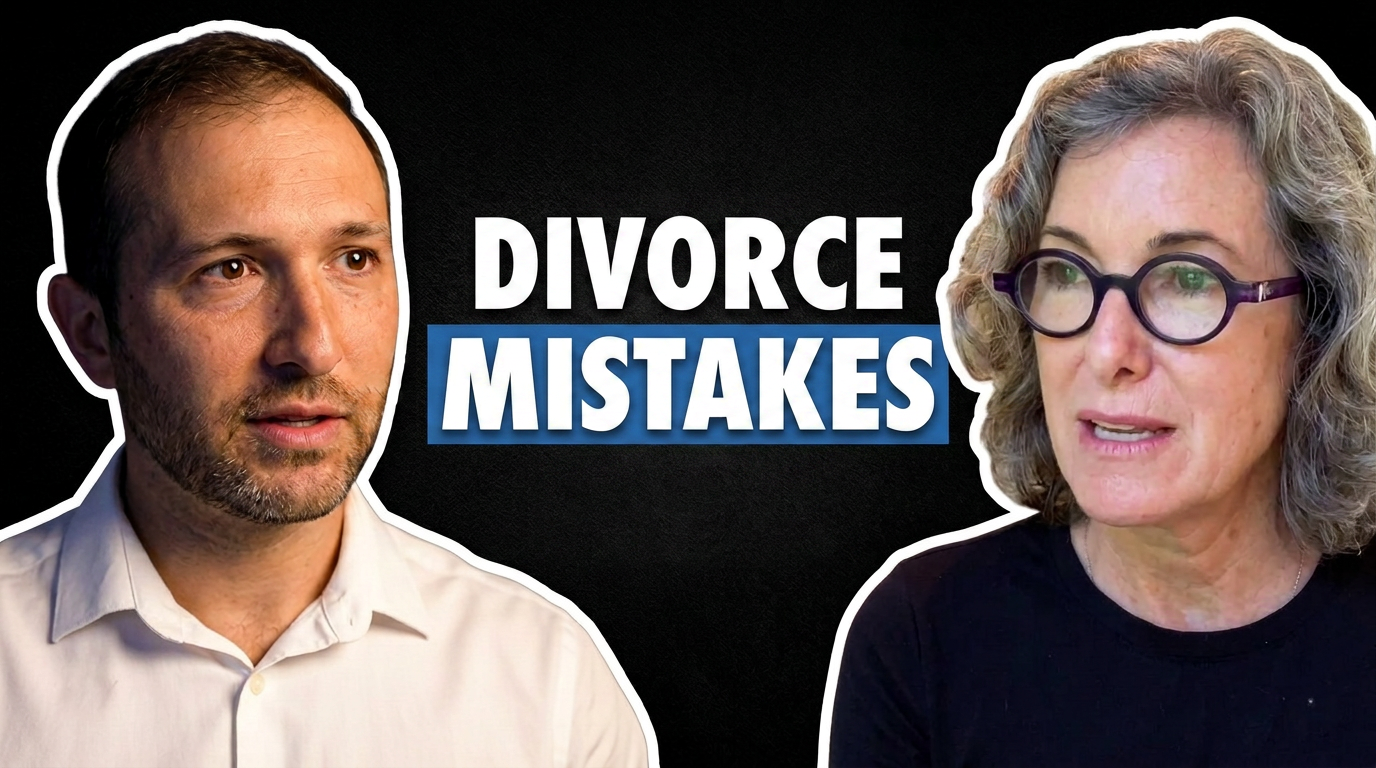
You’re the Third Parent: How to Break Free Without Hurting Your Siblings | Celeste: #172
In this episode, Celeste shares what it was like to grow up as the “third parent” in a family where divorce was unthinkable — and what that responsibility did to her nervous system, her faith, and her ability to trust.



At 14 or 15 years old, Celeste learned her parents’ marriage was unraveling.
Affairs.
Addiction.
Secrets.
Her siblings didn’t know.
But she did — because she was the oldest daughter.
And before long, she wasn’t just watching the marriage fall apart… she was managing it.
In this episode, Celeste shares what it was like to grow up as the “third parent” in a family where divorce was unthinkable — and what that responsibility did to her nervous system, her faith, and her ability to trust.
We talk about:
Carrying secrets to protect the family’s image
Panic attacks and anxiety that she didn’t know how to name
The guilt of moving away and “leaving siblings in a burning building”
Why even a “necessary” divorce still deeply wounds children
And why dating now triggers intense anxiety
Celeste’s story is honest, raw, and hopeful. Because while you can survive being the third parent… At some point, you have to stop carrying everyone else.
If you were the responsible one…
If you feel guilty for wanting your own life…
If anxiety follows you into relationships…
Or if you’re afraid you’ll repeat your parents’ marriage…
This episode is for you.
Suicide Hotline: Call or Text 988 (English or Spanish)
Get the Book or FREE chapters: It’s Not Your Fault
Get Dakota’s FREE Guide, The Biggest Fitness Mistakes to Avoid



Enjoy the show?
To be notified when new episodes go live, subscribe below.
As a bonus, you'll receive the first chapters from our book, It's Not Your Fault: A Practical Guide to Navigating the Pain and Problems from Your Parents' Divorce.
TRANSCRIPT
Transcript produced by artificial intelligence. Please pardon any errors!
Joey Pontarelli (00:54)
Welcome to the Restored Podcast. I'm Joey Pannarelli. If you come from a divorced or dysfunctional family, this show is for you. We mentor you through the pain and help you heal so you can avoid repeating your family's dysfunction and instead build strong, healthy relationships. Around 14 or 15 years old, Celeste learned her parents' marriage was falling apart. She'd even seen the signs earlier than that. Affairs and addiction, years of hidden betrayal. Most of her siblings did not know, but she did because she was the oldest daughter.
Now at one point in high school during a car ride, her dad asked her if they should get divorced. Imagine being in high school and being asked whether your parents should get divorced or not. But Celeste didn't just watch the marriage break down, she became the mediator. She became the third parent because she tried to keep her younger siblings in line so they wouldn't trigger anger. She tried to keep secrets so that everyone outside the home wouldn't know how broken things were inside the home. She would talk to her parents into seeing each other's side, trying to be their th-
marriage therapists of sorts. She basically held the family together so no one would fall apart. And at night though, she would have panic attacks and she felt almost constant anxiety, but she didn't even know what to call it at that point. So she couldn't sleep, her chest was tight, her body would shake, she would throw up, and she didn't tell anyone. And so this episode isn't only about your parents getting divorced, but it's also about what happens when a child becomes the emotional adult or the third parent in a dysfunctional home. We hit on a bunch of different topics, like what it felt like for Celeste to carry secrets that her siblings did not know,
The guilt that she still feels and extend for moving away and leaving her siblings in a burning building, an analogy she goes into which is really deep. We talk about why even though she believes the divorce might have been necessary, it still deeply wounded her. And we also hit on why dating now brings so much anxiety for her almost immediately and so many more topics. Celeste grew up in a family where divorce was the ultimate failure, image matters, secrecy mattered, control mattered. And it's the second oldest of eight kids, the oldest daughter.
She carried responsibility that no teenager should have to carry. But thankfully, now she's rebuilding. She's working with a mentor. She's relearning how to set boundaries and have healthy relationships. She's reconstructing her faith. She's rebuilding and deepening her relationship with her family and so much more. And she's honest about how hard it is for her to trust, especially in romantic relationships. And so if you were the responsible one, if you were the one who your parents leaned on, if you left home but still feel like you abandoned your siblings, or maybe if dating feels terrifying,
because you'll afraid you'll marry the wrong person or maybe you'll repeat your parents story. Celeste's story will feel painfully familiar, but also hopeful. And I think one of the takeaways is you can survive being that third parent. You can go through that stage and do some really good and necessary things to help your family. But at some point you have to put that role down and there is a life after that. There's a lot of hope and healing ahead of you.
A few things before we dive in, we do talk about God and faith in this episode. If you don't believe in God, you're totally welcome here. My challenge for you is this, just listen with an open mind. Even if you skip those parts, you're still gonna get something out of this episode. We do also talk about some mature topics like suicide. And so if that's triggering for you or if you have kids around, I either recommend not listening or putting some earphones in. And finally, Celeste just wanted everyone to know that thankfully her siblings are much older now and they're not in harm's way. Even if home life isn't perfectly functional, it's better now.
And so they're not suffering abuse or physical harm in any way. She felt that she needed to clarify that ⁓ based on some of the things we talked about in the episode. But with that, here's our conversation.
I'm really glad we could do this. As I was reading your story on our blog, I was really moved by it. Earlier today when I was preparing for this, it actually made me tear up because you've been through so much. And so I want to dive into all of it. And I think the maybe natural place to start would be your parents' marriage. And so curious, what was the start of the breakdown of your parents' marriage as much as you can remember?
Celeste (04:24)
Thank you, it's good to be here.
Yeah. ⁓ So my parents raised us very evangelical Christian, very conservative. Divorce was the big no-no sin, right? And we kind of carried that energy for a long time. And there were a lot of things that definitely contributed to my parents' marriage breaking down. I think we went into ministry when I was around 11, and we became very isolated from other churches and other families.
Part of this was because of my mom wanting to isolate us a little bit more and stay sheltered. And part of it was for religious reasons. ⁓ I think in that isolation, it became really difficult to actually work through the problems that my parents were having. And instead of reaching out to other people for help when they started experiencing conflict, they really internalized it and kept it a secret from others.
to avoid losing supporters or ministry credit and things like that. When I was 14 or 15, both my parents came to each other and told each other that they'd had either multiple affairs or marriage-long porn addiction. And that really started a huge breakdown in our marriage. Again, this was not being shared with any of our friends or family or churches and not with my other siblings either. This was mostly just shared with me as the oldest daughter.
And so when sometimes in your previous episodes you ask if it was a high conflict or low conflict situation and for the rest of my siblings I would say they definitely probably experienced it as low conflict and didn't know that it was going on. But for me it was pretty high conflict seeing everything that was going on between the two of them and the lack of respect they had for each other especially towards the end.
Joey Pontarelli (06:36)
Okay, no, that makes sense. And that's a really wise distinction because the researchers we quote who talk about high conflict and low conflict, they basically, from what I've gathered from them, they basically say it just matters what the child sees through their eyes. And so I think you could have a situation where it is kind of both one for you and different for your siblings. Did, without going too deep into it, how old were you when all of that came to light and you learned about the problems within your parents' marriage?
Celeste (07:05)
14. It's hard to get a good timeline in these situations. Totally. You can't really get a clear one from either parent. I'm not really sure they know anymore. So yeah, so I was probably about 14 to 16 when all these things started coming to light. Yeah.
Joey Pontarelli (07:19)
So yeah, just beginning of high school and man, what a tender time that it's lot to carry. know your parents tried different things to heal their marriage. What do you think kept them from actually fixing it and how did the kind of like failed attempts impact you?
Celeste (07:24)
Yes.
Obviously all this is from my perspective and I don't know their motives in the situation, what was really going on in their minds. But from my perspective, it seems like they kept doing all the right things to try to fix their marriage. Like, go to counseling. ⁓ do the love dare. Or let's go through this book. Or things like that. And I don't think either of them had a great willingness to change. I think, especially in my mom's case,
the ability to see what was really going on and understand what would be needed to rebuild trust. She just wasn't there. I think they also had different levels of willingness throughout those years to see the counselor. And so they're rarely on the same page with actually wanting to find help. And I think the counselor also sided more with my father, which made it more complicated. So.
whether or not they were right in doing it, I think it definitely pushed my mom away from wanting to pursue further counseling. is great, but if you're not actually going with the intention to change and improve, there's not really a point.
Joey Pontarelli (08:43)
Yeah, I would agree with that. One of the analogies that has always stuck with me is I hurt my shoulder, like, I don't know, a couple of years ago now, and I went to PT. And there were times in which I would like do the exercises and I would go consistently and it would feel better. And there were other times where I just like wouldn't really go or wouldn't do the exercises and I would feel worse. And I think that can be so true like within marriage when you're struggling, it's like, it's great if you like show up.
PT every once in a while. great if you go to the therapist's office like once a month or something. But if you're not actually doing what they tell you to do and like working through like the wounds and trying to build new habits, then you're right. It's just kind of going through the motions. And so what I see with a lot of marriages, and I'm not saying this was necessarily the case with your parents, but it sounds like it could have been, is where like we either don't try it all or we do try, but we don't really put our hearts in it or we try, but we do too little. Like we're, you know, doing like, I don't know, one rep almost the equivalent of that.
And again, I don't want to pass judgment, I think, yeah, I think that could be so true. so then because just looking from the, the lens of like the, marriage that the couple, because they're in such a place of hurt and woundedness and everything, can feel like, ⁓ I've tried everything. I've tried everything. When in reality, it's like, okay, you went to like two counseling sessions. You did this, you read this book and you did this like love dare thing. And that was about the extent of it, but it probably feels like,
You just ran a marathon because you're just so exhausted. Would you agree or disagree?
Celeste (10:12)
think so, yeah. And from my perspective, especially when they were in the midst of it, I don't think either of them had very good mental health. Also, one parent is highly manipulative and one parent is highly apathetic to doing anything to change. And so, it definitely didn't help the situation at all.
Joey Pontarelli (10:30)
dangerous
combo there yeah okay I definitely hear you was there anything else about kind of like watching that as a their kid how that impacted you I know you touched on that but I just want to see if there's anything else you'd say
Celeste (10:41)
Yeah,
I think we'll probably talk about it later, but I am the oldest daughter and so being in the position as more of a third parent and not necessarily as another child. I know, I think it was episode 140 where your brother was on the podcast. That was probably the best episode you guys have released in my opinion. I the That one was super helpful for me because just, I think this, you guys were talking about making the oldest child the extra parent.
and how that really negatively impacts relationships with your parents in the future. Seeing that when you're a kid, you really want to help your parents out and your parents want someone to talk to, but they're not going to talk to their friends because they don't want their friends to know. And they're not going to talk to their spouse because they're arguing with their spouse. So the oldest child is the next solution. I think that was really the position that I had in the situation and trying to make them see eye to eye and trying to keep my little siblings out of it, I think was
was a big part that I had to play in the whole situation. That's how I viewed it.
Joey Pontarelli (11:42)
sense. I want to get to that and I'm excited to talk there because I think a lot of people like us are in that exact situation where they're maybe even more concerned for their siblings than they are for themselves. I know I felt that way and I remember you saying that too. But before we get there, I knew you felt many different feelings, emotions toward your parents. You mentioned anger, outrage in your article. I'm curious, what are you feeling now?
Celeste (12:04)
These days when I'm not at home, I mainly feel disappointment with my parents and some grief and seeing still some major character flaws that are negatively impacting the family. usually only feel like genuinely angry or like really, really, really sad when I go home to visit because I live several states away. And so for that reason, the holidays are usually very emotional times, but yeah, that's generally what I feel now. think
At the end of the day, I can feel angry all the time and bitter, but once you've forgiven them or are working on forgiving them, the only thing left is just sadness and almost pity, like watching people destroy their lives. ⁓
Joey Pontarelli (12:45)
definitely felt that both toward my parents and some seasons and definitely like with a lot of the families that I'm interacting with it's it's just there's a sadness there I could totally agree with you. If you want to share we don't have to go into this too much like how is your relationship with them with your parents now I know you said you live out of state and so it's I'd imagine distant but yeah if you want to go into that.
Celeste (13:06)
so it is pretty distant. think I have, I have a relationship with both my parents still right now. It's very much small talk and sharing, you know, funny pictures or recipes and things like that. I think that's the only level that it can safely be at right now. ⁓ that might change in the future with my mom. That's probably where it's going to be for a long time. With my dad, things are kind of strained right now, but we're figuring some other things out. So it's always complicated, isn't it?
Joey Pontarelli (13:34)
Yeah, no, it definitely can be. I think it's naturally a little bit of a roller coaster where there's seasons where things are better and then there's times when they're not so good. I know I've gone through that ⁓ as well.
Celeste (13:47)
There's just drama that's introduced at various times and that changes everything.
Joey Pontarelli (13:52)
Yeah, but I totally got what you're saying about like the safe topics and I find myself like, like wanting to go into the deeper topics, but having to be careful and tactful and, you know, wise because sometimes it's not the smartest thing to kind of open those.
Celeste (14:05)
And for me, I still have younger siblings who are minors who are living at home. So I don't, I've decided not to go into super deep topics with my parents until my little siblings are no longer at home. That way I know even if my conversation goes poorly, their emotional reactivity is not going to be taken out on my little siblings.
Joey Pontarelli (14:22)
I get that. There's there's wisdom in that. You mentioned that you're the ⁓ second oldest of eight kids, if I got that right. You're the oldest daughter. Yeah. So you touched on this a little bit, but I want to go deeper into like, what was your role like in the family growing up? You said you were the third parent, but yeah, let's get into that a little bit more curious what that was like.
Celeste (14:40)
So I think my parents really wanted to avoid me becoming the third parent. They told me before that they didn't want me to be that position, but actions speak louder than words. And at the end of the day, I had a lot of responsibilities with taking care of siblings. Some of them were given to me and some of them I took upon myself. We were homeschooled and between being homeschooled and the situation at home,
It was a lot of responsibility put on me, sometimes explicitly, sometimes subtly, to keep these secrets in the family so that nobody would share them outside the house or we wouldn't get social services called on us, things like that. And so I really worked hard to keep my siblings in line. One of my parents has, at least at the time, had some anger issues and I would really try to keep my siblings from acting out or being, you know, acting like kids to...
prevent more physical forms of punishment from happening in my household. I love my siblings, but none of could lay low to save their lives. So that was kind of my job. And also in the middle of the divorce, ⁓ everybody was really struggling with depression. And so I felt the need to balance that out. I became insufferably joyful all the time just to try to balance out the depression that everybody was living in. So.
Joey Pontarelli (16:01)
It's heavy stuff to carry. ⁓
Celeste (16:03)
Yeah,
yeah, kids weren't meant to carry that. ⁓ But I hear a lot of the time that wasn't your responsibility. That's your parents responsibility to parent. And it's really tough to tell a kid in that situation that they shouldn't take that responsibility because if they don't do it, nobody's going to do it, even if their parents are responsible to be parents. So yeah.
Joey Pontarelli (16:23)
I would agree with that. It's ⁓ yeah, it's just the, it's a necessity. It's the, yeah, the best of like two really bad options. And I really wish it wasn't that way. But sometimes like when we live through that, we have to do the best we can with the hand that's been dealt to us.
Celeste (16:36)
Yes. So I got asked for parenting advice on a regular basis, sometimes marriage advice because, you know, a 14 year old has a lot of experience with marriage. ⁓ And so actually, when they were thinking about getting divorced, they asked me whether or not they should. ⁓ So I definitely was proud of the role that I had unknowingly. And I was really happy that I could talk people into agreeing with each other or seeing the same way.
and keeping my siblings from getting mad at my parents and keeping my parents from hurting my siblings. And upon reflection that was manipulative of me, but I did the best I could with what I had.
Joey Pontarelli (17:20)
Yeah, no, I mean, I get that and what an impossible position to be put in to give your parents marriage advice and be asked if they should get divorced. It's definitely, wow, it's a lot. You mentioned before the pressure you felt or the need to keep everything a secret from friends, from church people. That's a difficult burden to carry as well. What was that like for you? Why was there so much pressure there and what was that like for you?
Celeste (17:42)
⁓ Part of it was because we were in ministry and we were full-time supported by a bunch of churches and so there's a concern that if my parents got divorced then people would stop supporting us and so that was definitely part of the pressure. I think in the time when I grew up homeschooling was still not super popular and so there was concern that
we'd get taken away if somebody saw us outside during school hours, which sounds silly to say now, but I think part of it was just the fear mongering from my parents. ⁓ and it did contribute to keeping us isolated, whether it was intentional or not intentional. that's what happened. I think also we come from, my grandparents are both pastors and so trying to maintain that really good family image and
trying to keep up the good image of a homeschool girl and oldest daughter and Christian. Yeah, and not really understanding why my siblings couldn't see why they needed to work a little harder to keep up this image.
Joey Pontarelli (18:47)
Yeah, they probably are a little less, yeah, a little less judicious about that. It's so interesting because I remember feeling like similar pressure and I think it came from a place of like embarrassment too for us. It's like, just don't want people to know how broken things are and I don't want them to know that our family is not like their family because eventually we were surrounded by a lot of great families. And so there was that going on as well. But yeah, it is a lot to carry. It feels like you're living a lie to some extent. I mean, I guess, I guess it is.
Celeste (19:15)
Yeah,
but in that moment you don't think you're living a lie. You just think, well this is normal. I just can't tell anyone because they wouldn't understand. Like, I can't tell anyone about my mom's anger issues. They just wouldn't understand that it's just out of love and discipline, you know?
Joey Pontarelli (19:30)
Okay, real talk, if you've been trying to get in shape so you feel better physically and emotionally but nothing is working, you're not crazy. I've been there myself. I recently read a free guide by Dakota Lane, a certified personal trainer who we've partnered with that's helped about a thousand people and it was really helpful for me personally. In the guide, he breaks down the biggest fitness mistakes that we all make like under eating, over stressing, or focusing too much on the scale and he gives really simple practical tips that you could actually use that you can implement today.
And so if you're tired of feeling like you're never gonna get in shape, just click on the link in the show notes and grab the guide today. It's totally free and it might just be the thing you need to start feeling healthier physically and emotionally. Yeah, no, I get that. And I remember a friend of mine coming over and it was during a really tumultuous time in my family. My dad and my mom were separated and the police would often get involved because there was an order of protection and it get broken. And so I remember her being over and the cops show up and I'm like,
and I told her nothing about any of this and it was just so embarrassing. Then of course I would open up to her and be like, here's what's actually going on. I just didn't want to burden my friends with it as well. That was another consideration. like, I don't want, I don't know if I necessarily had situations like this in the past, but I've heard this from a lot of people where you maybe go to friends who haven't really suffered much in life and haven't been through anything like this, of course, and you tell them these things and they don't really know what to say. And sometimes you even get a bad reaction. So I think a of us, yeah, a lot of us kind of learn well.
I'm gonna keep it to myself. I don't wanna burden them with it. I'm embarrassed, all the things we said. Would you find that to be true?
Celeste (21:02)
Definitely. I didn't have any close friends growing up outside of my siblings and we hadn't reached the point yet where we would talk about our parents' issues. I don't think I told anybody about the problems until my parents were already pretty ready to get divorced and about to move out and I was probably 18 at that point. I remember thinking, you're just using this as an excuse.
Like I had told a friend on Sunday, because I was feeling tired and I didn't really want to talk to her very much and I said, I'm sorry, I'm just tired, my parents are going to get a divorce. And I was like, ⁓ like that was one of the first times I'd ever told anybody that this was going to happen. And I felt really guilty because I was just using it as an excuse that I didn't want to talk to her. I was really, really careful not to use my parents' divorce as an excuse for anything, for any negative feelings that I was experiencing.
And I would tell you probably throughout most of the time that any mental health problems I was having was not at all related to my parents' issues. Again, now as an adult I see that it definitely was and I needed to talk to people, but I just didn't.
Joey Pontarelli (22:07)
Why do you think you didn't see the connection between the two?
Celeste (22:10)
As an adult, now looking back, I would say that I was just really wanting to avoid the blame game and seeing how a lot of kids, once they grow up and leave the house, they say all kinds of terrible things about their parents and then they leave them. I didn't want to be that kind of person. And also my parents, you know, consistently played the blame game with each other and I didn't want to be like them at all. I wanted to take responsibility for anything in my life, which ended up in me blaming myself for pretty well everything. And so
I think that's, that's probably.
Joey Pontarelli (22:41)
sense. And what have you landed on now in terms of like that balance between taking ownership versus acknowledging maybe when someone played a role and causing harm?
Celeste (22:50)
You know, I can point to many, many things or character issues in my life that may have resulted from my parents getting divorced, but I might have struggled with them anyway, is part of it. And also, like, even if all of my character flaws came from my parents' marriage struggles or my parents' sin issues, I'm still responsible to change them. And that's one of the toughest truths I think kids of divorce have to have to come to terms with is that, yeah, it's not very fair that you have to...
be the person to do the work to break these cycles, but that's how it is. And I think the faster you can make your peace with that, the faster you can actually.
Joey Pontarelli (23:25)
I would agree with that the way I would like to think about it and you might have heard me say this before is that you might not have caused the problems But you're in charge of the solution Which stinks sometimes? But but but it's real and it's like if you I think the victim mentality victimhood thing comes in when we like you said continue to blame and we're waiting for someone else to solve the things that No one else is gonna solve we are the ones who have to solve it even if we didn't cause them
Celeste (23:50)
Yeah, yeah, definitely. And you just think of what life do I want? And, you know, I want a family and kids someday and I want it to be healthy and happy. And it's not going to happen if I keep martyring myself over the situation. And so it's important to grieve that and really lament that it happened and not just blame it all on yourself. But it is also important to take responsibility to break the cycle in yourself.
Joey Pontarelli (24:20)
Yeah, I'm with you there. I think that's really well said. I want to shift gears a little bit to kind of the emotional struggles that you've wrestled with. I've wrestled with them as well. So you mentioned that you would deal with nighttime panic attacks and anxiety. I'm curious, you know, what triggered the panic attacks and the anxiety from what you could tell.
Celeste (24:39)
So again, as an adult, I can look back and see that the major instability in my parents' relationship was affecting that. And having so much responsibility to take on at a young age really put me in a high state of stress all the time. And panic attacks would just be a natural expression of that. ⁓ at the time, because I was in such a religiously isolated household, I thought I was for sure demon possessed or something.
which is terrifying when you're 14 and don't have any context for mental health. So I didn't talk to anybody about it because I thought it was too big for any adults to handle normally. And so, yeah, I was just always afraid that I would do something that I didn't want to do. This sounds a little silly looking back, but it feels very real and very dark for a kid who's not sharing those thoughts with anybody.
Joey Pontarelli (25:10)
Yeah.
That's too much to carry, especially, yeah, just when there's like a, that spiritual misunderstanding of like what you said is a human experience of like, just really anxious. I'm in like fight or flight mode all the time. I'm like, yeah, the hyper arousal that we sometimes talk about of like just survival mode. It's a tough spot to be in. Okay. And do you remember, was there any particular focus of those panic attacks? Like, was it the kind of fear, the demonic fear, or was it something else or did it just kind of run the gamut of like.
different things that they would be focused on.
Celeste (25:58)
Yeah, I think the majority of the focus that I had would be religious in nature. Whether I was afraid that I had committed too great of a sin or something demonic or a big fear that I would kill myself, which again really goes to show how bad my mental health was at the time. But because I wasn't able to express that, I just kept waffling on it for years. And so it never really changed to
my parents are getting divorced and I'm scared about that. It was mostly still the religious stuff that I was spiraling about. Yeah. looking back at the time, I can see that that was mostly just the expression of the instability that I was already experiencing in the household. And because I thought that this parental's conflict was normal, I wouldn't have known to point to that as the problem.
Joey Pontarelli (26:50)
Yeah, no totally. How could you in the midst of it? It's really difficult to make sense of something when you're going through it, especially as a young person. I can't agree more. I want to talk about anxiety, but first I'm curious. You mentioned suicide. Was that ever a temptation for you? Was that ever seen as like a, like I'm done with this?
Celeste (27:08)
Yes, I think less in the sense that I wanted to die and more in the sense that I didn't want to live the way I was living anymore. Yeah.
Joey Pontarelli (27:16)
Totally makes sense. What would you say to someone maybe who's there right now? Like obviously you're in a better spot now than you were then, which is beautiful. So imagine someone's listening right now and they're like at that spot where they don't wanna take their own life, but they just don't wanna live with the pain.
Celeste (27:23)
Yes.
Yeah,
I would encourage them to talk to somebody about it, even if they're not wanting to go as deep as to say, I want to kill myself right now. ⁓ I really would like them to tell somebody that, but even just being able to express the emotions. I didn't know that anxiety was a thing. I just thought something was completely wrong with my body and I couldn't stop shaking and throwing up. But nothing's wrong with you.
You need to get it out and talk to somebody about it. And there are safe adults. And also, your situation may not going to be changing immediately, especially if you are stuck at home still. But your emotions about the situation can change. And there is something about that and about your mental health that you can always that can always get better. That's what I would encourage my past self with is that
know your whole life isn't going to be stuck in these panic attacks and your whole life isn't going to be spent trying to navigate between your parents and your siblings and there can be a happy future ahead and you just got to hang in there a little bit longer. I don't know if that's great advice if it's coming from a therapeutic perspective but that's what I would have told my past son.
Joey Pontarelli (28:45)
Yes, okay. No, you and I are not therapists. So we're just kind of speaking as ourselves like to the younger version of us and no I love that and we'll link to the suicide hotline as well That's like a great resource because sometimes people are just embarrassed to talk with someone they know and admit that they're thinking about that
Celeste (29:00)
It's really great to find someone who doesn't care or know your family at all to talk about them with it.
Joey Pontarelli (29:05)
Totally, like an outside perspective where there's, yeah, totally agree with that. So that's where that hotline could be good. And then I think ideally you would move ⁓ to someone who not necessarily is like involved in your family life, but someone maybe who's a little bit closer to where you are and not just something like stranger, because it's really good to have people who can walk with you through all that, like a therapist, but we'll at least link to that. And I'd recommend that. And one of the things that, you know, in my darkest times, like I would go back to, and that's just been helpful for other people is like,
Imagine a life if you could snap your fingers and imagine a life in which you weren't living with the pain that you're experiencing now. Would you want to live? And almost always the answer is like, yes, of course. So then the question becomes, how do we get to that place? And that's what you said, it might not happen right away, which is hard. That's not easy. I want to skip over that. But hopefully you and I even are proof that actually you can get through that. You're on your own now. You're not living at home.
Celeste (29:57)
Yeah.
Joey Pontarelli (30:02)
from, you I know there's still struggles in life, but life is better than it was then for you.
Celeste (30:06)
So
good. And it's not perfect. And there's days, you know, where I'm depressed or struggle with anxiety. But my life is so good right now. I just live a very boring normal life. But comparatively to my high school life, it's so good. I wish my high school and early college self would be able to know that it's going to be okay. And it was, it's so good now. Even just a boring normal life is so good.
Joey Pontarelli (30:32)
Yeah, I would echo that and just to kind of add my end of the proof to anyone listening who's maybe struggling in this area. like I was super afraid of relationships, which we're going to talk about a little bit later. I was afraid of marriage. I didn't really see that. I thought it was unattainable for me. Couldn't do it. Now I'm married. I've been married almost eight years now and I have three kids and I absolutely love it. It's great. Marriage is hard. I've said that a lot in the show. There's definitely been seasons where
It's been harder than others, but there's a lot of joy in it too. And being a dad, my gosh, it's so good. I just love it. There's something about having kids. It's hard to understand this when you don't have kids. Probably having siblings would be the closest approximation. Maybe if you have nieces and nephews, you can kind of get that feeling too. But man, something about having kids, it's just like, it's really, really beautiful. So if we got through it, you can too. And that's, think, the message of hope that we'd want to leave you with on that topic at least. Beautiful.
One of the things you said that really stuck out to me was that you said you didn't have a name for your anxiety. I think a lot of people have that same experience. I know I did in high school and even I think the beginning of college. So if you were to explain it without using the term anxiety, I'm curious, like how would you put it into words now, especially imagine that someone who's like experiencing that, but they also don't have the word anxiety. Like what would, what could they relate to? What was going on inside of you?
Celeste (31:53)
I just called it overthinking at the time. Interesting. I was just like, I'm such an over thinker or my parents would tell me I'm such an over thinker when it's like your thoughts are spiraling and you don't even realize that you're spiraling or feeling anxious because you think you're just thinking logically and trying like you owe it to yourself to think through the worst possible scenario and some people don't have a whole like
panic attack where their body just shuts down and starts shaking or they want to throw up. Like that's what happened to me, but that doesn't happen to everybody. Often it's just like that cold, hot feeling that goes all the way through you. Similar to guilt, honestly, or just not being able to stop thinking for any second of any day. I remember that was when it was really bad where just every second of every hour of every day, it was just constantly never being able to turn my brain off. ⁓ That's how I would describe it without actually saying the word anxiety.
Joey Pontarelli (32:52)
Yeah, okay, that's really good. What about like tightness in your chest? I can throw out a few things that I experienced.
Celeste (32:56)
That's
definitely a thing. Other people, like, I think they'll get like a tingling on their fingers and in their mouth and think they're dying because they can't catch their breath, but it's really because they're just breathing too fast. And that's actually a clinical thing. I think that's very common. I see that in other people a lot. Definitely tightness in your chest, like you can't get a full breath. I felt a lot of emotions in my stomach when I wasn't crying or processing when I needed to. And so it just feels like a stomach ache.
or like you constantly feel weighed down. remember there was a period of time where I was just always walking hunched over. There's nothing wrong with me physically. I just, couldn't bear it all.
Joey Pontarelli (33:36)
For countless teens and young adults, their parents' divorce is actually the most traumatic thing that they've experienced, but so many feel lost and alone in navigating the challenges. I've been there myself. It's really not easy and it shouldn't be this way. My book, It's Not Your Fault, guides them through those challenges by helping them put their pain into words and begin to heal, work through the emotional problems that they face, cope in healthy ways instead of falling into bad habits, improve their relationship with their parents, navigate the holidays and other life events, and build healthy relationships and so much more.
One Amazon review said this, this book is packed full of really practical help. If you come from a broken family, or even if you don't, but you love someone that does, this book is so helpful. I can't recommend this enough. By the way, it's a quick read and it doesn't need to be read cover to cover. Since it's in question and answer format, you can just read one of the questions and one of the answers. And so if you want to join the thousands of people who've gotten a copy, just go to www.resortministry.com slash books.
to get the book or download the free chapters. Again, that's restoredministry.com slash books or just click the link in the show notes. I mean, the emotional kind of manifests in the physical. It's wild. And anyone who's read The Body Keeps the Score, there's a lot of science behind it. It's not just a kind of woohoo thing. No, it's so interesting. What I would say on my end, like what I experienced was everything you said. Thankfully, it wasn't, I didn't have the panic attack, so I was definitely lucky. I've been with people who've had them.
at all. And I would think the overthinking thing is so interesting. That's what I would say too. Like my brain almost felt like it was on fire at times. Like I couldn't, like you said, shut it off. And it was like, yeah, just moving really quickly and not being able to sleep, I think is kind of a hallmark to at least what I experienced where you're just like laying there and your body's tired, but your brain just like will not shut off. I also, for me, there was like an aspect of like OCD too. Like there was like a perfectionism in me that kind of got worse when I was more anxious.
Celeste (35:23)
Yeah.
Joey Pontarelli (35:32)
So I don't know if that's a typical experience of people, just thinking through what I was experiencing. And then I think like the way I probably would have told you then in high school was like, I just felt like a total lack of peace. Like I didn't feel calmness. I just, knew that I didn't know exactly what I was experiencing, but I was like, I didn't, I don't feel peace. think I was able to put the word like worry to what I was feeling. ⁓ but, but that was probably the extent of it. I really didn't know much about anxiety or that that was a thing.
Celeste (36:00)
couple turning points when it started getting better. One of them was I was really scared about the fact that I wasn't sleeping through the night and one night I was just like, so what then I'll stay up all night. And actually that's a tool for defeating anxiety is just being like, so what then I'll do it deal with it anyway. I think a little bit of carelessness. I don't know if I just gotten so tired, I didn't care anymore. But I think that helped. ⁓ I did finally open up slightly, maybe not completely to my mom about the situation.
And just sharing it, I think, brought some light to it. And then once my parents actually signed the divorce papers a couple of years later, I think also my anxiety improved a lot. So I'm just not waiting for it to happen anymore. And it's done.
Joey Pontarelli (36:45)
Yeah, there's some level of closure. I can definitely see that. So there's a book I haven't read yet, but I trust the guy who wrote it. It's Dr. John Deloney. If you guys are familiar with Ramsey Solutions, he's like one of their personalities. And he wrote a book called Redefining Anxiety, I think it's this one. No, I'm sorry. There's two books. There's Redefining Anxiety, which is like a booklet. And then there's another one called Building a Non-Anxious Life, which is like a big full-size book. So.
I would recommend that if anyone's kind of in this anxiety trap and you're just wanting peace, which I think is what we all want in the midst of that situation. And again, I think when you're in it, it can feel like, how am I ever going to turn this off? But you can. And one of the things I think that was helpful for me, Sus, was just learning that it wasn't just like in my mind, it's actually like in your body. yeah, that was helpful. For some reason, I thought it was just like a mental thing, but there's physical aspects to it.
Celeste (37:39)
Doing cardio is really helpful for just a basic thing. not a big working out person by any stretch of the imagination, but going for a run or going up like this to your climber at the gym is really helpful when I'm dealing with anxiety or depression because if I'm really depressed, sometimes it'll give me a little bit of a boost and if I'm really anxious, it can burn off all that extra energy and I think it helps me sleep better at night. So that's something that's helped me as well.
Joey Pontarelli (38:05)
Yeah, it's been similar with me in terms of like exercise and yeah, I'm sure there's, know there's a lot of science behind it and probably has something to do with endorphins pumping into your body. But, but yeah, I found like the physical thing that there was this phrase a friend of mine told me in high school and she, said like, this is this idea of like, we have this idea of like mind over matter. But sometimes like we can get stuck in our minds and we can't really solve things like that, especially if we're stuck in an anxiety loop or OCD.
Celeste (38:32)
it's as bad as it is.
Joey Pontarelli (38:33)
Yeah, yeah, so this idea of like body over mind is really powerful. It's like get out of your head get into your body so to speak and move and that will help you ⁓ Change your emotional state and I think I don't know if there's another way like I think I think prayer can do that to some extent But so often when you're sucking an anxiety loop, especially if you're dealing with OCD It's actually not super helpful in the midst of it, which sounds kind of strange But but I think it there's a place for it, of course, but I think you kind of need to break the loop and get into a
place where you're like changing your physical state.
Celeste (39:04)
And you know, from my perspective, God created prayer to help us out and Bible verses, but he also created our bodies and knows what we need. And some people, it's helpful to recite a Bible verse when they're feeling anxious. But when I was so far down my anxiety, ⁓ I needed like therapy and mental help before I could even be in a healthy place to talk about God or have a healthy relationship with him. And that's not
I don't think that's on spiritual or on godly. I think it's just using other tools that God has given us.
Joey Pontarelli (39:35)
I would agree with that. sorry, I kind of made a generalization. I don't think it's never helpful for someone to do those things. Like sometimes prayer does actually bring a lot of peace and yeah, totally. But I think, think in this scenario we're describing is like when you're like at a really high edge of like you're a nine or a 10 or maybe even eight on that scale of like anxiety.
then it's like you need to kind of back down a little bit more before that some of those other things can be helpful if you're in that state. But it's different for everyone and I think if you're lower on the scale, then I think those other things do help right away. So sorry for making that generalization. Good deal. Yeah, hopefully that's helpful to anyone who's dealing with anxiety or panic attacks. You're not alone. We've been through it too and I think it is really helpful putting what you're feeling in towards as a research that says that will help you feel better faster.
Celeste (40:09)
Yeah, I get what you're saying.
Joey Pontarelli (40:24)
And yeah, like you said, so I'll like move your body and do some of the other things that you had mentioned. So, so good. I want to shift a little bit over to, yeah, just the divorce. So I'm curious, initially you agreed with the kind of conclusion your parents came to that they should get divorced. And then later you changed your perspective on that. I'm curious, like what caused you to change?
Celeste (40:50)
So, initially my dad presented all the facts to me ⁓ and I had only been hearing them from my mom's perspective up until that time about all the things that dad had done to contribute to the downfall of their marriage. But I think dad was driving me to some church conference and he just kind of laid out what everything was going on and the things that mom had done that had really contributed to the situation. And I was already at a point as a teenager where I was becoming disillusioned with
both parents anyway. But then during that card ride, he asked me like, Oh, what do you think we should do about it? And when somebody lays it out for you like that, there's really only one option. That's to say, yeah, I think you should get divorced. And so I think I would still say that my parents are better off. I don't know if this is a good thing to say or not, but I think it's probably better off separate. One could say that the best thing would have for them never to have gotten married in the first place, but that's not really an option. And I wouldn't be here.
So I think what changed was a couple years later when I was or maybe only one or two years later. Again, the timeline is a little sketchy. ⁓ When I got to college and I started talking with a older woman ⁓ in a kind of a counseling mentoring situation, ⁓ and she told me to write down every way that my parents divorce had actually affected me. And that's when I stopped blaming all of my anxiety and
family issues on myself and taking full responsibility for all of other people's issues and just honestly and respectfully saying, yeah, this really affected this. And this really contributed to why I think the way I do. I also was looking for resources for adult children of divorce, of which there are not a lot at the time. and I found this one book called Primal Loss and it's the now adult children of divorce speak and it's just people
compiled all of the stories of these adult children of divorce and put them in one place so the kids could actually have a voice. And reading through that made me see that even if divorce was the best option for your family, it still is not good and it really sucks. Even if, like in an abusive situation, there was some abuse with my household and different for different siblings.
Seeing that even with that going on, divorce still sucks and it might be the best option for a family, but it's really going to negatively impact you. And being honest about that, and I think that's what made me change my mind.
Joey Pontarelli (43:28)
Yeah, I love that you found Primal Loss. It's a tough read, but it's a good one.
Celeste (43:33)
I would not recommend going at it in one go.
Joey Pontarelli (43:38)
It's like chewing wood, it's hard. It's gonna take some time.
Celeste (43:40)
Yeah,
you kind of feel like your insides are all hollowed out like a pumpkin at Halloween after reading that, you know?
Joey Pontarelli (43:48)
great
description. Yeah, no, for sure. But I recommend it. We'll link to it in the show notes. There was an episode where the author, the one who compiled it, like edited it, Laila Miller came on the show. And so if you guys are interested in that, you can check it out. And I think if I'm remembering right, she's become a good friend. And so we've had a conversation, but I think she gives the book away for free now for on digital. So if you want, if you can't afford it, you can get the digital one at least for free. And then if you want the physical copy, of course, you can grab it on Amazon. But yeah,
That's a great recommendation. The other thing that you mentioned in your story is that you were at college when the divorce started and finished, I believe, unless I maybe got that wrong, please correct me. I'm curious what that experience was like for you and what I'm getting at there is I actually think it's really common for people to go off to college and their parents to start a divorce because sometimes the parents are like waiting for the kids to go to college or the first one or whatever. So I'm like, I know multiple people where that's happened. And so I'm curious, yeah, what was that experience like being at college, seeing it from afar?
Celeste (44:47)
think it's called gray divorce now because, you know, they have gray hair. But it is a lot more common these days. So I think for me, a lot of the hardships about my parents divorce all happened before they actually did get divorced because I was in that third parent role at home growing up. When I moved out, I had to get out. I was 18. I moved several states away. never seen, I didn't know a soul where I was moving to. I'd never even visited the college I was going to go to.
I just needed to get out and I knew that I was leaving my siblings behind in a rough spot. And in that moment, I didn't even care because I had to get out and I can get into that more later. But I think just witnessing it from afar, feeling like you can't get the whole story and you don't have as many opportunities to connect. And I definitely didn't talk to my family very much for probably the first two years that I moved away. I just needed space and I wish I would have called more.
⁓ Especially I wish I would have called my siblings more during that time, but I needed space to figure out what kind of person I needed to be, what it meant to be a Christian and who God actually was, and how to be healthy again.
Joey Pontarelli (46:01)
I'm excited to dive into this topic because there's such a tension there when we're presented with this option to leave home and be on our own and maybe get the space like you said we need, hopefully the healing that we need to be able to become our own person, like to grow all the things. But then we see our siblings and especially for those, I was number two in my family as well and yeah, our heart's kind of torn. So we're gonna get into that. Before we do, I want to go back to something you said before, because I didn't mean to gloss over it. You mentioned how your parents,
are seemingly better off now. And I wanted to touch on that because I think that sometimes maybe people misunderstand me. I think that's a common experience for parents who get divorced. Because imagine, depending on the scenario, they were maybe in this situation where there's a ton of conflict, maybe not, maybe it was just a little conflict situation, but the marriage was struggling and they didn't put the effort in that was needed, or whatever the case. I don't want to paint with too broad a brush. But I think that when a ⁓ problem
or trigger is like removed from your life, it's kind of natural that your life would get better. And so I've seen that with my parents too. I've seen it with others where it's like, no, there's actually like a step toward like some peace and maybe things improve. Now I will say this, what often happens is that people want to say that it's all happy and all good. And I know you're not saying that, but we got to be careful here because it's like, I now see how my parents are kind of lonely. And
There's a lot of other things that like definitely like breaks my heart for them too. So it's not all just like sunshine and rainbows. It's like that there's some definitely some downsides to that. And then without even mentioning, which is what you covered already so well, I don't feel the need to rehash it, the impact on the kids, which is the hardest part. And so even in those situations, like you said so well, where yes, maybe a divorce is.
necessity because there's abuse or other high conflict stuff going on, it can still have really detrimental effects even if some of the people involved are actually better off, it's still a difficult thing to go through.
Celeste (47:56)
I think, especially seeing its impact on my siblings. And one thing that I find super ironic about divorce when you have kids is that you get divorced so you don't have to spend time with this person and live with them anymore, but you have to communicate almost more than you did before because now you have
kids who have lives and activities that you have to coordinate and you have to figure out who's sitting where and then you bring more spouses into it and then it gets more complicated and divorce isn't going to solve all your problems either, especially if you have children, you're still going to have to see that person on regular basis unless they're in jail or something. So it's not an end-all solution to marriage problems and it might be the best solution in some situations, especially in some abusive situations, but again, it's going to hurt everybody.
Joey Pontarelli (48:41)
Yeah, yeah, totally. No, I've mentioned this before in the show, but the military, ⁓ I've heard the Rangers do this on the army Rangers. They put their people in what's called like a lose lose situation, especially they're like officers because they want them to, this is in training. They want them to learn what it's like to be faced with like two really bad options and then be forced to make a decision. And in so many ways, I think, you know, some, not all divorces, but some divorces are like that. It's like, no, it's like a really, really bad situation.
And I know we didn't really even touch on the religious aspect of like the belief that marriage is for life and the divorce is like breaking that deep, deep bond. and we don't need to necessarily need to hash that out here, but, but that's another thing I just wanted to kind of give a little bit of a footnote to, because it is a super important and big conversation there as well. This episode is sponsored by Blackstone Films. They just released a new documentary called Kenny. It's about an ordinary
Denver priest who lived like a true father and transformed families and inspired vocations. He would actually wake up at 430 every day to do an hour of adoration. His parishioners would ask him to pray for them and they actually got those prayers answered. Some even call them miracles. He had to shepherd his people through the Columbine shooting, if you guys remember that horrible, horrible event. He ate with the families in his parish every night of the week. He hiked with groups of young adults in the Rocky Mountains on Colorado.
and he sat with couples on the brink of divorce, even saving a marriage, which they talk about in the documentary. And so if you want a hopeful model of leadership and fatherhood, something worth watching with maybe your spouse or your small group, watch Kenny. The trailer and the full film are now streaming on formed.org. You could just tap the link in the show notes to watch the full documentary or just the trailer. Again, thanks to Blackstone Films for sponsoring this episode and for telling such an inspiring story that I myself watched and really appreciate it.
Shifting to your siblings now, this one's so near and to my heart, because I love my siblings. And in the same way that you kind of had to become that third parent, I definitely took, switched my younger siblings under my wing and basically became their dad for a season, right? And there was a lot of good that came from that. There was obviously some challenges and some detriment that came from it, but there was a lot of good that came from it. But you mentioned in your story that the hardest part for you,
What was not really the pain that your parents caused you, but rather the pain that caused your siblings and seeing that was just like so grueling. How does your sibling struggle to as much as you want to share? Yeah. And then we can go deeper into this.
Celeste (51:08)
Yeah, and the broadest generalizations. I think all of my siblings have struggled with mental health, especially depression, SI, as a result of the fallout. I think my siblings were pretty blindsided by it. Some of them didn't even know that my parents were struggling in their marriage until the week before my mom moved out. So that was tough for them, I think, because I was moving out.
about the same, I think the same month they got separated. My younger sister stepped up into that third parent role a lot of the time and being my parents' therapists and taking care of my little siblings because my parents were going through it and that's the big thing about divorce is like your kids need emotional care and support but you're going through it yourself and sometimes you don't have a lot of that emotional intelligence to give that or the emotional space to give it and my siblings didn't really receive the help that they needed, I felt. Another
odd thing is that my siblings don't really remember any of our childhoods. I would say I'm probably the sibling that remembers the most, if anything, and like I'll bring up a memory and none of them will remember anything. And so sometimes I wonder if my, if the whole situation was really as bad as I think it was and then I remember that none of my siblings remember anything and I think that's a sign. So also siblings definitely see things differently and have different struggles. I think that's
really important thing for older siblings who move out to remember is that you might have a problem with this parent, but your sibling might have a completely different experience. That parent might be a lifeline to them and the other parent is the one that they're really struggling with. So I think that's kind of kind of how I've noticed the struggle happening. There's also, I think, a complete lack of any respect left for my parents left at home because my siblings are all having to be adults, even at like 14, you know.
Joey Pontarelli (53:01)
Yeah, no, I'm tracking with you there. And no, I think everything he said is like my experience as well. So I'm with you. I'm curious, like, what was the experience you touched on this a little bit before? What was the experience like for you just watching your siblings struggle, watching them go through the things that you mentioned both when you were at home and then at college too, which brings on a different dimension.
Celeste (53:21)
At home, I could... I didn't know how to set boundaries or avoid codependency at that times. I definitely tried to dig them out of their own holes as much as possible when I lived at home still. But when I moved away to college, a lot of my siblings didn't have phones yet or any way of contacting them. So if I wanted to talk to a sibling, I had to call a parent. And so I definitely avoided talking to them for a long time. Even if your sibling hasn't done anything to hurt you.
still even just talking to them just just brings back everything from home and there's guilt that comes along with that so much guilt and not knowing if your siblings are okay or not and then every couple months you get an update this sibling has been making more dark jokes like maybe we should be worried about them or finally this sibling has therapy but none of the other siblings get therapy for some reason and so there are a lot of inconsistencies between how siblings received help and
wanting my siblings to see that there was hope and change like I was finally experiencing, but that's a long road ahead that they had, you know, and they weren't gonna get out anytime soon. So yeah, that's kind of what it was like watching from afar. I still only go home a couple times a year. Sometimes I'll invite my youngest siblings to come stay their spring break with me. And that's always a fun time and that's helpful, but.
I know my younger siblings have said like, ⁓ it's Christmas. That means the older siblings are home. We're to have to have deep conversations. And when you go home as an older sibling, you feel like you got to get all your deep conversations in now because this is the only face to face time you're going to have with them. And also I think I worried a lot. I still worry sometimes how my siblings may resent me for the choice I made to move away when they needed me most.
Joey Pontarelli (54:56)
I love that.
Celeste (55:07)
Because for me, it was bad for years and then I left home. But for them, the bad part really started when I left. so, you know, with parents of divorce, I feel like kids never are 100 % honest with their parents about how they actually feel because they don't want to their parents. And I feel like my siblings probably withhold a little bit of that as well.
But at the end of the day, it's not my job to project what I imagine they might be feeling about me. And having to move on from that is really a challenge.
Joey Pontarelli (55:40)
Let's get into that. But what you said, my goodness, it was hard for you leading up to the divorce or leading up to when you left. And then it was harder for them after you left. Wow. Yeah. So difficult. I think this whole question of like moving out or moving back in after school is a really, again, tough one for people like us because in so many ways, you know, I'm sure you can relate. I just like.
never wanted to abandon my siblings. That was something I felt very strongly about it because I had felt abandoned in so many ways. so going to college like was really hard for me. And then, eventually I did move home for a little bit and I was working and then eventually I moved close to where my now wife, Bridget was living. So I moved there, got an apartment and I was able to live like five minutes from her. So we were able to actually date and not just to the long distancing, but that, was a tough decision as well. So
So anyway, it's a tricky one. And I remember from your article, you said that you really felt helpless to really make an impact or a difference at home. You were obviously doing as much good as you could, but you knew that there was a limit to that. And so you made the decision that you needed to not move back home after college, even though, which was just like, honestly, I think this is the part that made me tear up, even though you were afraid that someone might kill themselves or something really bad would happen. So.
Talk me through that decision, what were you feeling when you were going through, like, what do I do, do I do this, do do that?
Celeste (57:06)
I think the decision not to move back to the state where my family lives is probably the hardest decision I've ever made. And it's not just a one-time decision either. There were times throughout college where I was like, maybe I should just move back to Texas and go to college there. Times after college, multiple times and through different career changes or anytime I changed churches or something like that, I would consider, maybe this is a sign that I need to move back to Texas. Anytime any of my siblings I heard
we're struggling with severe mental health problems, I would think maybe this is my sign to move back home, you know? ⁓ And so it's a decision I have to make on a very regular basis. Really, it's a decision I have to make any time I visit my family. I have to decide whether or not I'm going to move back home. Sometimes when I visit my family, I drive away and I can't drive away fast enough. And other times when I visit, it's really hard and
I start thinking of every way on the drive home that I can possibly change my career, uproot my life, leave my church, and move back to my family. And so, again, that's probably the toughest decision I will ever have to make. And I think only people who have been in a similar position can completely understand.
You get a lot of nice therapy advice that says you have to put your oxygen mask on before you put somebody else's on. But it doesn't feel like that. It feels like you're in the same burning building and you run out without waiting to see if your sibling makes it out. You know? And it feels like you're just leaving your sibling in this burning building and you're not going back in after them. And I don't know if that's a healthy way of thinking about it. It probably is not, but that's how it feels.
And you know, people will also say, ⁓ it's your parents responsibility to parent your siblings and you need to be a sister, but not a parent. And who's going to do it if I don't. And especially seeing how parentified my sisters were after I left home and watching them save my other siblings lives or struggle with it themselves. Yeah, it's really tough. Additionally, I've noticed that the sibling who moves out or speaks up often becomes the black sheep and the parent often
has some negative things to say about them. And sometimes that can really negatively impact your sibling relationships. Thankfully that's not been the case with me. But yeah, that's been really tough. Learning that siblings see things differently. My biggest point of conflict and struggle has been with my mom, but a lot of my siblings has been with my dad. And I didn't understand that as much until just this year when one of my siblings moved in with me. And so having to face, hey,
Sometimes there's not a good parent and a bad parent. Sometimes there's just two people who are really difficult to deal with. And so you just feel so obligated to throw out all that nice advice you receive in therapy and run back and take care of your siblings. And even if you do make the choice to move out and become a healthy person and get a nice foundation and get started, you can never stop thinking about the family you left behind. And that's a tough truth to swallow.
And that's the price you pay, I guess, for being able to be healthy and live and live, period.
Joey Pontarelli (1:00:22)
No, so good. I think the analogy of running out of the building makes a ton of sense. You know, I see what other people say about the oxygen mask and that makes sense too, but I think that is more accurate to what it actually feels like being in the building. And yeah, I think, you know, I definitely have been in that, those situations too, where it's like, things are so dire. If I don't take action right now, like, yeah, it's going to be really bad.
Celeste (1:00:41)
They're all gonna die.
No.
Joey Pontarelli (1:00:47)
I've been in that scenario too. And so it's like, you gotta do something. Like there's a cost of an action too. And yes, the idea would be to have, I don't know, relatives involved or a therapist or a pastor or something. And that's something I think that's good to work towards. I think sometimes we can maybe be so blinded or like our heads down in the, you know, the mess of it all that we don't actually maybe ask for help or know, no, we even know where to ask or who to ask for help.
And so I think that's something that is worth pursuing for sure. But I think when you're in the midst of it, you're not thinking of those things. And so you're just like in survival mode and you like want to take care of everyone and I get that as well. And yeah, no, it's definitely a difficult thing. was like a really grueling, I remember like pulling away for college that like definitely brought tears to my eyes and yeah, and even, you know, leaving afterward to like, not just kind of go in the next chapter of my life, but you know, ever to live at home again in a lot of ways. Yeah, it does kind of feels like you're battling on everyone.
Maybe a bad anger.
Celeste (1:01:43)
point because I had kind of a topsy-turvy college experience where I changed majors a lot of times and changed schools but still did not choose to move back home and I think the moment when I had been away for four years five years six years and my little siblings realized that they didn't have to keep asking me ⁓ are you almost done with college and gonna move home because I just wasn't gonna move home and
Again, upon reflection, probably could have communicated that to them a little bit better. But how do you tell your little baby siblings that, nope, sorry, you're still stuck and I'm still gonna go live my life. That's.
Joey Pontarelli (1:02:22)
Yeah. No, it is really hard. They might not be able to understand that. And yeah, and obviously, you know, we're not saying that there's some scenarios where you can move back home or live near your family and hopefully have good boundaries in place. But sometimes it does necessitate you being taken quite a bit of space, at least for a season. And hopefully getting to a better spot where you can maybe, you know, reenter things, but maybe not to.
Celeste (1:02:44)
And you know, you think about some of these things and it's not safe or good or healthy for you to stay in the place or stay at home. Or least that's how it was for me. So maybe you don't get to see your siblings very often, but you're just a baby adult and you don't even pay for your own phone plan. You don't even have a car. Okay, so just start small. Start with trying to get a job and saving up enough money so you can buy a car and go visit your siblings.
Or you can buy yourself a phone or even maybe in some cases your sibling a phone so you can contact them still. And being able to establish yourself as an adult. So when you have a place to live someday, you can get somewhere that has a spare bedroom. So one of them can come live with you or things like that. And I've heard of older siblings dropping everything and having all of their siblings move in with them and taking care of them in really serious situations. Obviously the state would have to get involved for that.
And I really admire and respect that. And sometimes in my peak of I'm going to save everybody, I just remember thinking like, oh, maybe I could do something like that. And it wasn't practical. And the truth of the matter is things weren't to a level where the state would take my siblings away or give them guardianship to me. The kind of abuse that happened in our household is not something you can put a finger down on. And they had food in the fridge and a roof over their heads. And so it's tough when it's
bad enough that it shouldn't stay the same, but it's not bad enough for anybody to intervene.
Joey Pontarelli (1:04:15)
That's a hard spot to be in. But I think, yeah, what you said makes a lot of sense. And I think like doing the little things to help your siblings, like you said, is so good. And even if that means buying them a phone or doing something like that, it's such a difficult topic. And I think one of the things you wrote, I want to read that now, really hits a nail in the head. It just kind of doubles down on what you just said. You said this, you said, if you're leaving little siblings behind, know that we don't get to choose when our chance for escape comes. We have to take it when it comes.
because you don't know if you'll get the chance to get out and heal again. Unfortunately, it rarely happens at the same time as your sibling's chance. This is awful. You can't change that. You can work hard to heal and establish yourself and thrive so that when your sibling's chance comes, you'll be waiting to help them, whether that's saving a room for them in your apartment or having a car to drive them away or learning how adult life works so you can teach them how to function. Still well said.
anything you would add to that?
Celeste (1:05:15)
Yeah, well, it's taken me like eight years and a lot of therapy to get to this point where I can say that. And there's not days where it's not still hard, but I think I've come to a place of more peace with it. One thing I would add is that it's really important for siblings who are children of divorce to unite and have that sibling loyalty that you can't have with anybody else instead of letting your parents manipulation or
trying to make you choose sides, break you apart. And I think something that me and all of my siblings have, or a lot of my siblings have had to deal with is when one of our parents starts bad mouthing a sibling or a sibling who's moved out of the house. And I think all of my siblings can agree with me. Like your parent can say anything bad that they want about you or they can say anything hurtful or do anything hurtful to you. But when it comes to your sibling, like you're gonna fight for them.
And there's obviously complications within sibling relationships, and it's not necessarily that way with all of my siblings, but with the majority of us, I think like finally we're at a place where we really want to stay in for each other. And regardless of what happens with our parents, they're going to keep screwing our relationships up. And we've noticed some manipulation happening that has intentionally tried to push the siblings apart and we don't want that to happen. And I would say one of my greatest joys in life, and I
I know this sounds cliche to say that, I don't, it's truly from my heart. I think my greatest joy is watching my siblings succeed and become the adults who would have kept us safe as kids. Watching my siblings actually have passions and watching them all come into their own and live and have good lives. Some of them even, you know, still living at home.
and have personalities and some of them, especially the younger ones, call things the way they are a lot more than us older siblings every day. Just seeing each sibling in our family exactly where they needed to be and seeing God take care of them when I didn't know if he would. just that's probably my greatest joy in life. And I really look forward to that as more of my siblings become adults. It's really weird now going home and they're all taller than me.
And that really always really hits it home for me like, whoa, you're a grown person now and you have a personality.
Joey Pontarelli (1:07:34)
Love it. Yeah, no, and it's just heartbreaking to hear that there's, you know, been so many rifts over the years and the complications with your parents. I definitely hope, and I want this for you and for everyone listening, that there may be a day, God willing, and I think God wills it, whether people cooperate is another question. That's so true. Yeah, where there can be healthier relationships between you guys and your parents and hopefully everyone.
as well and I really believe that it's possible that things can get better and improve and but at the same time like you said we really have to be honest and face reality as it is we can't pretend it's not there but I'm hopeful that one day I can get to that better spot.
Celeste (1:08:17)
Yep. And one of my siblings lives with me now and having to accept her graciousness and forgiveness has been really tough because I like being the perfect older sister and I like being able to be there for her and realizing the things, some of the things that I did in the past that negatively contributed to her, but that she's forgiven me for. Or the fact that she has grace for the fact that I moved away. And some of my siblings have said like, oh,
We didn't realize this from your perspective and giving me grace in that. I think you have to learn to listen to your sibling side of the story without being super emotionally reactive. And I think that helps so much when trying to reunify with siblings.
Joey Pontarelli (1:09:01)
So good, such good advice and I think it goes back to what you said before about like, they could have a totally different experience of your family life and of your parents. And so I think that empathy is huge, putting yourself in their shoes for sure. I want to, maybe we'll do a little bit of like a lightning round, because I know we're almost out of time here. Your relationship with God, let's talk about that for a second. So how has your relationship with God suffered because of everything you've been through?
Celeste (1:09:24)
Well, I am a Christian still. Some of my siblings have moved on from the faith, which knowing the example that they were given of Christianity, I understand. But I think it suffered because there were so many things that I was taught were religious in nature or about God or we do this because of God and it was actually because of manipulation from a controlling parent. And so it really sets you back having to weed all that out.
I know there's big feelings right now about the word deconstruction within faith, but I really had to kind of take it apart and rebuild it from the ground up and go back to scripture to understand who God actually says he is and that he's not an apathetic father figure. Or heard that if marriage is an example of Christ's love for the church, what does divorce say about Christ? That Christ is going to leave his church, that he doesn't care about his church, that his church can do something to push him away?
And I think having to defeat those subconscious beliefs about Christ that watching my parents divorce gave me, that has really been tough for my faith.
Joey Pontarelli (1:10:32)
No, can imagine. No, it equally pisses me off that people use faith or God to justify bad behavior or, like you said, manipulation. It's just like, it's so infuriating. And I get why people, you know, come to the conclusion that, I'm just going to reject God or God doesn't exist because it's just like too painful, like you said, to sift through all that. It's a hard spot to be. And gosh, that definitely gets me. But I think there's some beautiful, like you said, about rediscovering who God actually is. go ahead, sorry.
Celeste (1:11:01)
Sorry, I was just going to say that I think manipulative or abusive people are going to use whatever tools they have closest to them to gain control and sometimes the tool closest to them is religion and guilt and it's not religion's fault. I think it's definitely that person's fault. We have to put the credit there. That's my opinion on the situation.
Joey Pontarelli (1:11:20)
Yeah.
Yeah, no really well said and no, definitely I just have a heart for people like you described to you know are far from God and faith because of what they went through and definitely I get it like I get it. How have you found healing and growth? Through everything that you've been through like obviously there might be a long list, but I'm curious What are some of the things that has helped and how's it your relationship with God in a better spot, too?
Celeste (1:11:45)
Yes, it is significantly better now, mostly because, you know, I'm not worried every second of every day that I'm going to go to hell or something horrible. I think seeing Jesus for who He actually is and wants to be known as in Scripture has been super helpful for me. I reread through Exodus, which is one of the early books in the Bible, and it's where God is just initially introducing Himself to humans.
and showing who he actually is and taking care of them and seeing like this is who God is and this is how I can know him. Trying to make my faith more about actively knowing God in a very nitty-gritty daily basis has been super helpful. Instead of just trying to make a big checklist of things that I need to do or ways that I could be better. The church has been really helpful and healing for me. I am very privileged to have been able to choose my own church to go to as an adult. I found a really healthy one which doesn't have leadership that's always
suspicious or untrustworthy. And when I moved out, I knew I had to do different if I wanted a different life than what my parents had. And so I really reached out and searched for good female mentors. The lady who's been mentoring me now has been part of most of my adult life and she's incredible and has shown up for me in ways that my mother can't spiritually and emotionally. And she's just a sweet lady who's very faithful and
also can be very sassy times at times. And she's just incredible. And she grew a relationship with me. And in the space of having a healthy mother relationship, finally, I was able to accept more spiritual growth as well. And not having been able to trust my mother for the spiritual teaching that I need really created a vacuum. But this lady in my life has been able to both fill the relationship need and also
be trustworthy enough to fill a spiritual need as well. So that's been really helpful.
Joey Pontarelli (1:13:44)
I love that and mentorship, it's been so important for me and probably easily like the most healing thing, maybe aside from my relationship with God. And on that topic, I love what you said about like actually getting to know God for who He is. think there's a temptation with humans actually, like when we have people in our lives that we get to know that we hear things about people and or we learn things about them because we can look them up on social or whatever. So we're just like taking in some information, but it's very different to like sit down with the person.
and talk to them and ask them questions to get to know them. I think that's often what we do with God. It's like we learn about Him, but we never get to know the real Him. And I think what you said is really wise, that like one of the best ways you can get to know God is just reading scripture, reading the Bible. And so there's a podcast I'll recommend on that. It's called The Bible in a Year, and it's just a way to read the Bible in a year. And so it's really practical. It takes you maybe like 20 minutes a day. It's something you listen to, so you don't even have to like sit down for 20 minutes, which for a lot of people feels impossible. ⁓
But it's really beautiful. You can learn things you've never learned, even if you've been a person of faith, like you've been a Christian forever. It's wild. I feel like I've had really good formation and I'm reading this now as like a 33 year old and I'm like, wow, like I either totally forgot that or I just did not pay attention to this or that. And so I think there's a lot of good. So we'll link to that podcast if you guys want to check it out. I definitely recommend that. no, anything final you'd add about your relationship with God and then want to shift to romantic relationships.
Celeste (1:15:11)
Just the last thing that's been super helpful both in my relationship with God and with being an adult child divorce is the concept of lament within faith and I think telling God honestly what's not okay, what's going on I think is a very biblical concept you read the Psalms and I always used to skip the sad ones but now I read them and really getting into them and telling God this is not the way it's supposed to go this is not how you wanted things to be
understanding that God didn't want my parents to get divorced or be manipulative or anything any more than I did and being honest with God about the ways you want it to change and resting in Him despite it and Knowing that He's walking with you in it, even when it hasn't changed yet I think there's a big push in the church to be like, okay This is my testimony and this is how everything's fine now. This is how God worked it all for good I don't see that yet and you've got to be honest with yourself and with God with other believers about that and so
Lamenting it and just setting aside time to grieve I think has been super helpful in my spiritual walk with little things and big things like my family
Joey Pontarelli (1:16:16)
So good, I love that. And I know Brene Brown on the secular side, she talks a lot about that. If you guys are familiar with Brene Brown, psychologist, researcher, who talks a lot about shame and grief and things like that. And I think there's something like you said, so good to just being super real, because I don't think it helps anyone to pretend. So really good. All right, the last thing I wanted to talk to you about is romantic relationships. So you said dating is hard, it feels like hell, you mentioned. Why, talk me through that, why has it felt?
Celeste (1:16:45)
Yeah, I am single right now dating is really tough in this day and age to begin with but I think having the anxiety component Almost all the time I can really control and keep my anxiety managed But whenever I start dating or go out with a guy It gets triggered pretty quick and it gets back to that uncontrollable level really easily and I think that's why it feels like hell to me Maybe I was being a little overdramatic when I said that but it honestly does Yeah
Joey Pontarelli (1:17:12)
It's good writing,
Celeste (1:17:14)
And you don't know how early to share that struggle with whoever you're seeing because you don't even know if you're going to go on another date yet. I think most of the people I went to college with are married with kids or getting kids. Like, yes, it's sad to be single sometimes. Sometimes I really struggle with it. But I more struggle with the idea that I might get stuck in something that I chose because I was just lonely one day. And so, yeah, there's there's a tough balance to walk there.
Joey Pontarelli (1:17:41)
Yeah, it's a big, it's a big topic and you know, maybe we'll have to you come back another time to talk through it because it's the number one struggle for people like us and the anxiety you described. I hear it all the time. I experienced it myself and it's so interesting. Like you said, it's not like a generalized anxiety about life necessarily because we can, you know, with enough healing and growth, we can have that in check. We can learn how to like regulate our nervous system to where we're not always like,
on edge like we were talking about before. But then relationships come into the picture and there's just so much like, like you described it really well. There's just this anxiety, this worry, this uneasiness, whatever we're going to call it about love and it's hard. So I'm curious, do you feel like marriage is unattainable for you? Do feel like it's something that you can?
Celeste (1:18:23)
Do. ⁓
Joey Pontarelli (1:18:26)
a lot of the time you said it feels unattainable
Celeste (1:18:28)
It feels unattainable a lot of the time, less now than it did before. Just because I have seen so many people get married now, I'm like, well, if they can get married, surely. I think if I wanted it badly enough, I could be married by now, which might sound a little vain or prideful. But I think the idea of finding somebody who's emotionally intelligent enough to deal with my family and all their ups and downs and believe me when one of my parents is being manipulative.
or being willing to set boundaries with them or understanding what I've been through. I think one person I dated, I mentioned my mom's anger issues to them and he said, like, my mom sometimes yelled at us too. And I just remember going like, you don't understand what I'm saying here. So having somebody trying to find somebody who's emotionally intelligent enough to deal with such a situation and navigate it and still being willing to live our own life, I think.
It seems impossible a lot of the time.
Joey Pontarelli (1:19:28)
No, I get it. get why I can feel that way. What else is holding you back would you say? Is there, you mentioned, you know, maybe being afraid to pick wrong, but what else?
Celeste (1:19:38)
The anxiety in the situation makes me really avoidant of close relationships and it took long enough for me to get close female relationships, let alone like close guy relationships. When all this stuff was happening with my family, it was also the time when all the IVLP and gothic stuff and big Christian leaders were coming out with big sexual sin and assault and things like that. And so that was around the same time I was going through puberty. And so just this idea of men
Like, they might act nice on the outside, but deep down, they're this way. And so, having to find guys who are trustworthy now as an adult has been really healing, but the idea of marrying somebody and trusting them to contribute even just to the housework or want to be a parent, not just a father figure, or trusting somebody with my children in the future, it seems impossible that I will reach a place with a man where I can trust him enough to
be a good father to my kids. I think that's probably the biggest fear I have with it.
Joey Pontarelli (1:20:40)
Yeah, hey, that's honest. I appreciate you sharing that. I'm going to challenge you a little bit here, okay? Okay. Because I've been through what you're going through. Yeah. And I felt the same way and I've talked with lot of people who have and I just want to say, even if marriage feels unattainable for you now, it doesn't have to feel that way always. And I think there is this aspect of it being like this hard and you actually aren't fully prepared for it, at least not yet. I know I wasn't. And it's something that I think eventually over time, you kind of grow into that.
into that role. Just like anything, you're stretched and it's like, wow, okay, now I look back a year and it's like, okay, I'm a better person, husband, father, whatever, than I was a year ago. It works the same. It's the same with our bodies. Like if we train and eat well and sleep and everything, it's like, wow, I'm a healthier person today than I am in the past. So yeah, the fears are super real and I'm not trying to wash over that by any means, but I just, for you and for anyone listening, I just want you guys to know that, yeah, those are super real struggles, barriers, emotions, and.
Celeste (1:21:40)
I was wanting to ask you, I know a big thing for kids with divorce is this fear of becoming like their parents or having marriage behaviors or parenting behaviors that you see that are like something your parents would have done or something you regret. How do you, when you do those, cause they're inevitable, how do you cope with the guilt and restore relationship with your family member after?
Joey Pontarelli (1:22:02)
Yeah. So let's say the situation of like a child, like if you get angry at your kid and you yell at them and it was just like over the top. The key is just the repair. And it sounds kind of simplistic. You hear a lot of psychologists who talk about this stuff, but like there's in every relationship, there's going to be ruptures. And the key is to repair those relationships. What so often happened in our families of origin, in our parents' families, it's like, they just never did the repair part. There was plenty of rupture to go around.
There was not a lot of repair ⁓ if any and then that was the problem and so obviously you want to avoid Doing things that are gonna harm your kids, but you're not gonna be able to do that entirely because you're human You have emotions you had a long day, you know or something really bad maybe happens I remember there was a situation where one of the kids like knocked into the other kid and then there was like a bloody nose and it was just like for some inside me like maybe really angry and so I yelled because I was just like I see this kid bleeding and I'm like, no, like I don't
I'm super protective as a dad and I felt so bad. so like immediately, you know, not immediately I needed to cool down for second. I went to the other kid, my daughter and I was like, Hey, I'm so sorry. I should not have yelled like that. Like I know that was probably scary and it made you feel this and that I'm really, really sorry. I love you so much. And yeah, so you can do that and you don't have to be perfect. You can repair and you can then have a stronger, better relationship because of it. In terms of other qualities that may be come out,
that remind you of your parents, like yeah, for some reason that is inevitable. But I think the key is then, instead of just wallowing in that or getting caught in some unhealthy cycle, it's like, okay, is there a better way to do this? If I have this tendency, can I learn something new? It's like, yeah, you totally can. And I think the most helpful thing there is look at people who are doing it right. It's like if you wanna be a professional athlete, you watch other professional athletes who are doing that sport. You don't watch the high school kid who like,
doesn't know how to dribble. You watch the pros who are so good at what they do. And so that's the key. It's like you want to model after the people who are doing it really well, otherwise you're just going to default to doing it poorly. So those are a few things that have been helpful. And then like you said before, the mentorship piece is kind of a component of that, where you can have someone who can help you kind of work through some of those maybe unhealthy tendencies that you have. And then if you're in a good spot, like with your spouse too, it's really meant to be a team situation. You can kind of call each other on.
where it's like, you know, like my wife can say to me, you hey, like, you you reacted really strongly there. You know, I think like it would be really good for you to talk with Lucy. Then I can, if I'm humble in that moment, can be like, you know, you're totally right. Let me go do that. Or, you know, I can say to her like, hey, you know, I think like this and this is happening and I see you react in this way. And so, you know, I think this would be good for us to talk about or work through. So you have to use like influence tactics and everything like that on yourself and with other people.
But I think ⁓ you don't have to go down that same path, even if you feel some sort of magnetic pull in that direction. You can do it differently. And there's plenty of people who have, and that's what gives me a lot of hope. It's like, even if I screw up and maybe have those tendencies, I can rewire it and learn from people who've done it well. Does that help?
Celeste (1:25:12)
Yeah, that's really helpful. So the key is in the repair, not just necessarily the rupture. Yeah. It's really helpful.
Joey Pontarelli (1:25:20)
And one of the tests of a healthy marriage is that repair doesn't take forever. Because you could have a marriage, and we've been through seasons like this, where it's like it may take days for you to repair, or longer even. But in a healthy marriage, think it's like, yeah, you need time to cool down, maybe it's 30 minutes, maybe it's an hour, maybe it's overnight. But then as soon as you kind of regain like the, you're regulated again, you're in that state of like calm, then you can come back to each other, and it just requires a lot of humility.
And I have a whole talk, we can link to it on building a really healthy marriage, not just from my opinion, but what researchers have to say age-old wisdom and then really beautiful couples have built. And so we'll link to that in the show notes if you guys are interested. It really concisely, within 45 minutes, essentially brain dumps all the things that you could learn by reading all these different books and all these different psychologists and just makes it really practical for you.
We've gotten a lot of good feedback, I don't mean to take my own home, but we've gotten a lot of good feedback on that talk. And so we'll link to that in the show notes if you guys wanna check that out, but that can be a really helpful roadmap. And then going back to what I was saying before, think that content can be helpful with this whole fear that we feel of like, don't wanna repeat what my parents had. And I think there's a lot of hope in it that it's like, no, you don't have to. The fear is super understandable, but my main encouragement to you and everyone listening would be like, do it scared. You don't have to do it now, and maybe now's not the time.
you know, maybe it is going to take a while to find the right person. That's okay. Should not settle for just anyone. I agree. But when the time comes and if that's something you feel called to do, then you're going to have to push through that fear and you can cause you've done it in other areas of your life and you can do it here too. So I don't mean to coach you, but I just wanted to encourage you cause I would say just like marriage and family life and especially having kids, it's just been
greatest joy of my life and I'd hate for you or anyone else to miss out on that because of these these fears and these barriers that are very real and we have to work through I and I get it I get it I've been there yeah of course yeah and I'm just I'm excited to talk with you one day to see like okay I'm in a better spot now and maybe and not another that some people aren't you know called to marriage and that's okay like it's not like the I don't want to pretend like everyone has to go down this route but
Celeste (1:27:20)
Thank you. I appreciate that.
Joey Pontarelli (1:27:36)
But yeah, I think there's a lot of joy to be found. I think if nothing else, I think the tendency I would just like caution all of us, myself included, to be wary of is like that tendency to isolate, that tendency to think that love is not worth the risk because it's hurt us in the past. And there's truth to that. Love is gonna hurt you. Your heart is gonna be broken. You know, the whole C.S. Lewis quote, I'm sure you guys have heard it. And if you wanna make sure of not getting your heart broken, then you need to like lock it away and never love anything. But the danger of that is that your heart would just become hard. And I'm not such...
preaching this to you, but just to all of us, the dangers that our hearts would become hard and unchangeable, and that's actually, in the end, think, more painful. And so, anyway, yeah, I know you know this stuff, and I was asking the specific question about what's held you back, those other things, but maybe I'll throw that final question toward you of what have you learned then when it comes to love, relationships, marriage, what gives you hope?
And what makes you think that like, okay, you know, one day I can do this too.
Celeste (1:28:36)
I think right now I like to call it a supply chain demand issue for why I'm not married yet. ⁓ There's just not a lot of men that I know in my area that are somebody who I'm willing to spend the rest of my life with in that capacity. But I think the things that give me hope in marriage are friends who have gotten married and have really good healthy marriages and their marriages don't make their life harder. They make it better. Obviously there's different challenges, but
men who are genuinely just very good people ⁓ and who I'd be willing to have these couples babysit my kids someday because I trust them and Beautiful Seeing people that I'm relieved that they found this person and I am happy for them. ⁓ I think that's been really healing. I am now at a point where I actually desire to be married which is better than where I was when I moved away from home eight years ago. So get that. All that progress. Yeah, that's where I'm at.
Joey Pontarelli (1:29:36)
love it. That's an honest answer. And speaking of honesty, I think that's one of the qualities to avoid marrying someone who puts on a front of being this good, virtuous person who then later you learn is not that way. That's what we all fear, right? Even people who don't come from broken families, but especially those of us, because that's often what happens with our parents. But I think if there's someone who's humble and they're honest, like, yeah, you know, I do have these struggles or this struggle.
then I think there's a beauty in that, that it makes it at least more likely that they would be honest about other things going forward. So just wanted to mention that. And I think that's really beautiful of that shift toward it, toward marriage and love, because I think there's, it's a journey. I ⁓ went through all that too. But I'm really excited for you to see where it leads. And on the note of finding someone, I totally get that. And that is one of the biggest problems right now I see in the dating world. It's just the right person for you is difficult to find.
We had an, our last episode was on a new platform, a new app that is making that easier. It's not just another dating app. It's like a, I guess you could call it a platform, but it's a way, it's like an experience that's like way more human than, than a lot of the other options out there. So I'll leave it at that. You guys can go back to the previous episode, ⁓ with Emily Wilson, who's SIM and listen to, ⁓ to that and hopefully, you know, make use of what they're offering to potentially meet someone who could be a good fit for you. But.
The last thing I was just gonna ask you is if you can speak honestly to your parents just about everything you've been through, what would you want to say to them? What would you want them to know?
Celeste (1:31:09)
Boy. I think for the most part I have been pretty honest with them about what I want them to know. There's a point which you can't tell them everything, but I would wish that they... I would ask that they would be able to listen to their kids a little bit better. I understand that they've gone through a lot, both of them, and suffered a lot because of the other parent, but I want them to understand that sometimes when you...
victimize yourself too much that it doesn't give space for your kids to deal with their own issues. Yeah, I think I just asked them to listen, especially to my siblings, and see what their needs are right now, and not just write them off when they do share them.
Joey Pontarelli (1:31:53)
Thank you for being here. I'm really glad we did this and yeah, you have a lot of wisdom and your story is really moving and beautiful I would say just the way that where you are now compared to where you where you were It's really beautiful to see I admire you I am want to give you the last word what final encouragement final advice would you give to? That younger you listening right now who yeah, who's going through what you went through. What would you leave them with?
Celeste (1:32:18)
I would tell them it feels really dark right now and you might not be at a place where you have anyone to share this with or are willing to share it with anybody, but it can get better. For me did. Again, your situation might not change very fast, but your emotions can. You can do little things to take a little bit more control in your life. And I know you're afraid that God's just gonna let you slide on away from him, but he's more secure of a parent than that.
and he loves you and he actually wants you even though you can't understand that yet.
Joey Pontarelli (1:32:56)
Just a reminder, Celeste confirmed that her siblings are safe. They're much older now and they're much bigger now. There's no physical harm. There's no abuse that's happening, thankfully. But just in case anyone got the wrong impression, I just wanted to put you at ease. with that, that wraps up this episode. If this podcast has helped you, feel free to subscribe and rate or review the show. You'll avoid missing future episodes and help us reach more people too. In closing, always remember, you are not doomed to repeat your family's dysfunction. You can break that cycle and build a better life. And we're here to help. And keep in mind the words of C.S. Lewis who said,
You can't go back and change the beginning, but you can start where you are and change the ending.
Low Confidence? Here’s How to Build It | Dr. Nicole Gabana Chiesa: #171
Learn how to build self confidence even if your family didn’t model it.
If you grew up in a broken or divorced family, struggling with confidence isn’t random.
Research has consistently shown that children of divorce are more likely to experience lower self-esteem, higher anxiety, and greater insecurity in relationships. When love feels unstable or conditional early on, it shapes how you handle pressure later in life.
You might:
Overthink conversations
Freeze in high-pressure moments
Feel like you have to perform to be loved
Or believe everyone else is just naturally more confident
In this episode, licensed psychologist and Certified Mental Performance Consultant Dr. Nicole Gabana Chiesa breaks down what confidence actually is — and why it’s not personality.
We explore:
The subtle belief that makes confidence collapse when you fail
What’s happening in your brain when anxiety spikes
Why hyper-focusing on yourself increases insecurity
How to stop just listening to your thoughts — and start talking back
And why confidence is built through imperfect reps, not feelings
If your family didn’t model emotional stability, healthy conflict, or secure love… this episode gives you a roadmap.
Confidence isn’t something you’re born with. It’s something you build. And you can build it.
UPDATE: Dr. Nicole now has PSYPACT approval, so she can now virtually serve clients in numerous states.
Book a FREE Consult: (904) 624-1331 or paxperform@gmail.com
Get the Book or FREE chapters: It’s Not Your Fault
Get Dakota’s FREE Guide, The Biggest Fitness Mistakes to Avoid
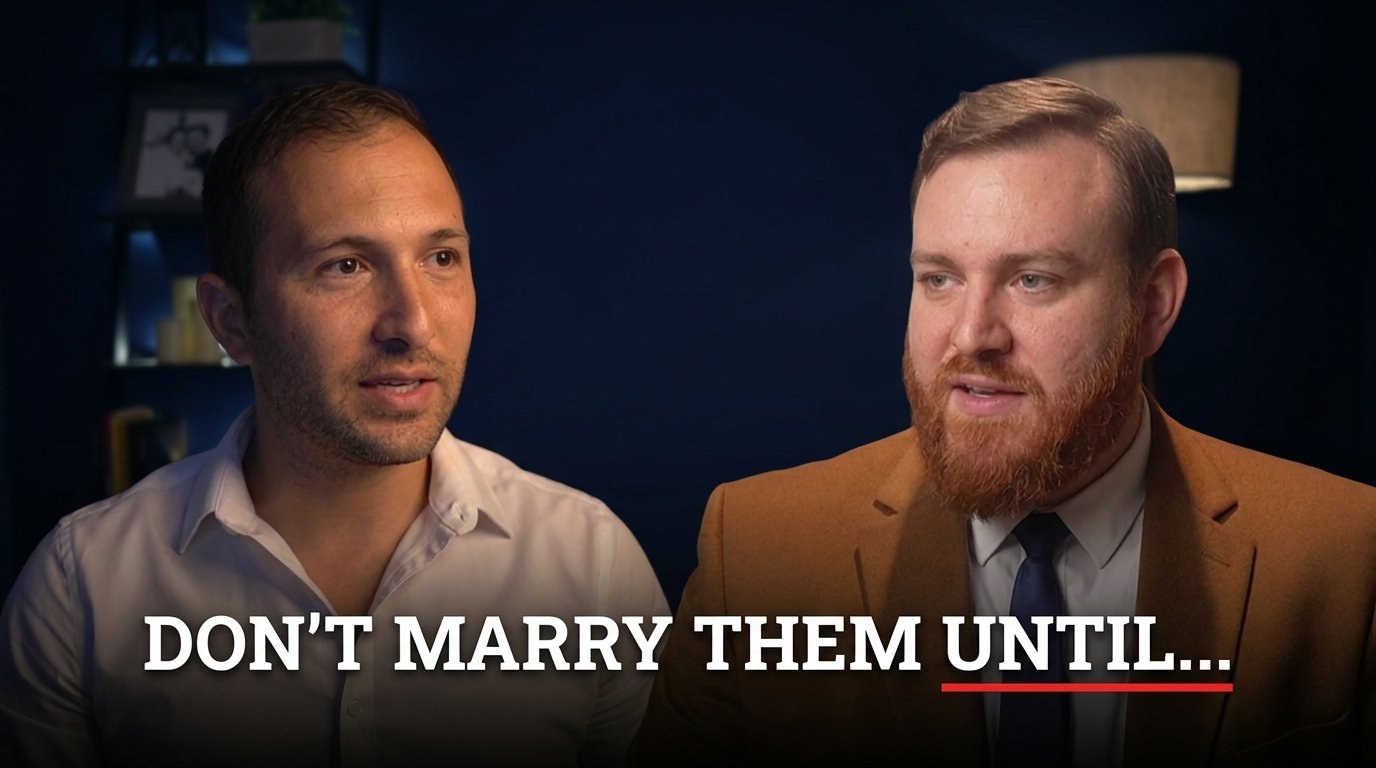
Enjoy the show?
To be notified when new episodes go live, subscribe below.
As a bonus, you'll receive the first chapters from our book, It's Not Your Fault: A Practical Guide to Navigating the Pain and Problems from Your Parents' Divorce.
TRANSCRIPT
Transcript produced by artificial intelligence. Please pardon any errors!
Joey Pontarelli (00:47)
Welcome to the Resort Podcast, I'm Joey Ponnarelli. If you come from a divorced or dysfunctional family, this show is for you. We mentor you through the pain and help you heal so you can avoid repeating your family's dysfunction and instead build strong, healthy relationships. If you grew up in a divorced or broken family, struggling with confidence is not random. Research consistently shows that children of divorce are more likely to experience lower self-esteem, higher anxiety, and greater insecurity in relationships.
Basically when love feels unstable or conditional early on, it doesn't just hurt you in the moment, it trains your nervous system and it shapes how you handle pressure later in life where confidence is essential. You might overthink everything you say, conversations, feel like you have to perform and be perfect in order to be loved, and assume that everyone else got the confidence gene and you didn't. But what if that's not true? What if confidence isn't personality, it's actually a belief that you have what it takes
based on proof. In this episode, we unpack what confidence actually is and why most of us have been building it the wrong way. We explore why emotional regulation under pressure matters more than hyping yourself up. We talk about the subtle belief that quietly makes your confidence collapse when you fail. My guest shares how to stop just listening to your thoughts and start talking back to them. I love that piece of advice. And why hyper-focusing on yourself actually kills confidence and why confidence doesn't come.
Before action, it comes after enough imperfect reps done scared. My guest today is Dr. Nicole Gabbana, a sports psychologist, certified mental performance consultant, and former director of sports psychology at the University of Massachusetts. She's worked with division one athletes at schools like Harvard, Ohio State, Indiana, and Florida State, and is listed in the United States Olympic and Paralympic Committee Mental Health Registry. She specializes in helping high performers stay steady.
under pressure, when pressure hits, when the moment gets big and nerves spike. And what she teaches athletes about performing under pressure applies directly to our lives, to dating, to work, relationships, and even healing from a broken family. She doesn't just talk about confidence as some abstract idea, she actually trains it. And so if you've ever asked yourself, why do I choke? Why do I overthink every little thing? Why does everyone else seem so much more confident than me? Or why do I feel like I have to earn love? This episode is for you. Confidence is not magic.
and it's not personality, it's built and you can build it. In this episode, we do talk about God and faith and if you don't believe in God, you're totally welcome here. Anyone listening for a while knows that this is not a strictly religious podcast and so wherever you're at, I'm glad you're here. If you don't believe in God, my challenge for you is this, just listen with an open mind, even if you skip the God part, you're still gonna get a lot out of this episode.
other things as well. And with that, here's a conversation.
Dr. Nicole, so good to have you on the show. Thanks for being here. One of the huge struggles that my audience faces is feeling unconfident, low self-esteem, feeling insecure, whatever word we put on it. And not just in sports, of course, I know it's your background, but really in life, work, dating, friendships. In this interview, I really would love your best advice for how to build confidence, how to go from maybe being unconfident or insecure or low self-esteem to having a good...
Dr. Nicole Gabana (03:31)
Thanks for having me, Joey.
Joey Pontarelli (03:58)
good confidence where you can do the things that you need to do that you want to do. But before we get into all the details of that, which I'm really excited for, I was curious, like, how do you define confidence? Like, let's give people an idea of maybe what we're talking about.
Dr. Nicole Gabana (04:09)
I think confidence is generally the way that we regard ourselves. So the belief in my abilities, the belief in my character, my capability, and it's closely related to self-efficacy. So self-efficacy is the belief that I can do something, that I have the ability to do something or the power to do something. So I think that ties into self-confidence of just my belief in my ability to
achieve a certain goal or certain, to complete a certain task.
Joey Pontarelli (04:41)
Okay, that makes a ton of sense. And one of the things I was thinking of is it's a continuum. Like it's not like you're confident or you're not confident. It's more about like how confident are you and perhaps how confident are you in a given scenario in a situation? Like it's, you know, I might have very different confidence of like, you know, making a checking the oil on my car versus like changing the oil. And I know that's more related to like task confidence, but, but would you say that's true that it kind of varies depending on like the situation you're in and that it is a continuum?
Dr. Nicole Gabana (05:11)
Yes, absolutely. as I'm trying to define confidence, even though you gave me a heads up about this question, I'm realizing I don't feel so confident in my ability to define it. But I think it has ties to this concept of identity, how we view ourselves, how we define ourselves. So I think there's an element of identity and then there's an element of action, right? How confident am I to do something specific, like you're saying?
to change the oil to perform the sports task to achieve this goal. I think there's an internal dimension of confidence of how we feel about ourselves. And then there's what is my belief about what I can do with who I am and my skill set.
Joey Pontarelli (05:56)
That's really helpful. Okay, yeah. I remember growing up, especially like I, there were certain things I felt really confident about, know, especially like sports related things. I loved playing sports with my brothers and I played baseball a lot, we football and hockey players and all of that. But then if you threw me in like a social environment, was a very different story in some cases. And thankfully, you know, I was able to grow there. But yeah, I could totally see the difference of like, what are, if we're calling it, yeah, like task confidence or whatever the right term would be versus maybe like you said, an identity or like a personal confidence.
Dr. Nicole Gabana (06:25)
Yeah, it is a continuum and I think there are many factors that influence your level of confidence in something. You know, some of those might be past experiences, like successful experiences you've had, mastery experiences. So with the sport example, if you've had successful performances in the past, you're more likely to be confident with your performance in the future. If you've watched somebody doing something well and you can have a vicarious experience of
watching someone perform well, then that might make you feel more confident in mirroring that or practicing it. Also, the feedback we get affects our confidence. So if I'm getting positive or encouraging feedback from supportive others, then that increases my confidence that I will be able to do something. Also, if we imagine ourselves doing it, if we kind of use imagery or mental rehearsal to picture ourselves doing something.
That can increase our confidence. And lastly, our ability to regulate our physical and emotional states when we're working toward a goal or performing or doing something. The ability to do that, to regulate our emotions, to regulate the results and our response to those results, that can also affect our degree of confidence in doing something.
Joey Pontarelli (07:44)
So good. So there's a lot at play and it totally makes sense. And as you're saying all that, the thing that comes to mind for my audience, for those of us who come from broken families, is I think the biggest area where we don't feel confident is in relationships. And it's interesting to compare that to an athletic environment like in sports, how they've actually seen relationships play out so poorly. Like you were saying, if you watch the pros do their thing,
and you watch, maybe amateur too, I think it's very different and you can learn a lot from the pros. I remember one of my coaches always encouraging us to watch the pros, watch the pros, watch the pros, you'll just learn from their example. But in these really broken families, the relational example that they're seeing, the marriage that they're seeing is really broken and so that is their training in love and then they go out and they try to build their own relationships and they end up being often very unhealthy. Do you see the parallel there?
Dr. Nicole Gabana (08:36)
Yeah, and we are shaped so much by those early experiences, both by ⁓ what we experience directly. So like how someone is relating to us, the way that they're talking with us, the way that they're demonstrating love or lack of love, and also by what we observe. So the way that we see our parents communicate, the lack of communication, the love that we observe, or how relationships are functioning around us.
teaches us a lot about where we fit in relation to others and how relationships occur between two people. And so a lot of it is, as we get older, as you know, is kind of unlearning some of those unhealthy behaviors that we might have experienced or observed, and then learning ones that are more ordered or more healthy, more of God's design, rather than broken or wounded interactions and relationships.
Joey Pontarelli (09:34)
I want to circle back to this in a little bit, this whole idea of relational confidence. I think this is really good, but I wanted to welcome your dog to the show if you're watching on video. See, a five month old pup, which is awesome. I love it.
Dr. Nicole Gabana (09:47)
fit on my lap. So she just puts her front two paws up and she just kind of hangs out there. So
Joey Pontarelli (09:52)
I love it. So good. So good. She's, she's adorable. Um, what do you think maybe people, what are maybe some misconceptions or unhealthy like beliefs when it comes to confidence?
Dr. Nicole Gabana (10:02)
I think one of the biggest ones I see as a sports psychologist and also as just ⁓ a Christian psychologist is this belief or vow that I need to perform for love. And performing, it can be sports, it can be school, academics, work, professional life. It could even be in the spiritual life, in our relationships, you know, that I have to maintain a certain level of performance to be loved.
or to be accepted or to be worthy. And I think that whenever we're chasing our worth or our value or our identity in something other than the core, is unconditional love of God that we're created to be loved, and before we even do anything, we are loved. If we don't have an anchor in that reality and that experience, then it makes it very hard
to feel confident in who we are, because we're constantly chasing that validation and chasing that justification of, I'm worthy, I'm valued, I'm good enough in our performance in a variety of areas.
Joey Pontarelli (11:13)
So good, and I'm excited to get deeper into that too, because I think that's huge. think, especially as a man, I can only speak as a man, I think I have that tendency of thinking that, my value, my worth comes from what I can build or what I can do. And so I think I definitely could see how you would not feel very confident if you base all of your worth on your ability to perform or make money or be good at a sport or.
you accomplishes of that and then you don't do that or you for some reason you're thrown off that then you would feel like I have nothing to offer it worries me I know people who so much of their value the way that the value that they feel comes from their job it's like that is their life it's what they focus on it's the thing that they're really proud of which is great but man if they ever stop working I've seen this play out where they stop working or they lose their job
and they're crushed and it's almost like they just don't know who they are.
Dr. Nicole Gabana (12:08)
I see that with athletes all the time, both in when they're in their sport experience and then, you know, if they retire, if they have a career ending injury, something happens that that changes their ability to perform, then all of a sudden, their their identity is totally tied up in their performance or their athletic identity, we call it. And once that is threatened or they experience a loss in that dimension, it totally shakes them as a person.
And I think that's a common area is like our work, family life, our life accomplishments. A lot of those markers can be sources of that, we're putting maybe too much of our identity into those areas and not having things ordered as they should be. And it's not to say that we shouldn't care about our performance, our work, our sport experience or our relationships. It's just to know that I need to keep it in the
the bigger perspective that no matter what happens that I'm still a child of God and I'm still loved by the Father and that will be a constant reality that I can't earn, I don't have to earn.
Joey Pontarelli (13:18)
that yeah and I like what you said how it is a part of your identity all those things you mentioned but it's only a part that doesn't make the whole and it's certainly not the foundation I think that's like you were saying where we often get it wrong we make some aspect like our job or career whatever the foundation of our identity and then when that cracks or falls apart then we're in trouble so I'm curious like is it possible to avoid putting yourself in a situation where you yeah make your identity so dependent on like what you can do and and what's the solution to avoiding that
Dr. Nicole Gabana (13:47)
That's a big question and a great one. And I think naturally as human beings, we all have that tendency to idolize, which is biblical. And I think putting too much of our identity in any one area comes from that temptation or that sin of putting something above God, worshiping something above God. So if we are regarding our successes in work,
as more defining in terms of our worth than who God says I am as His child, then I'm going to experience dysfunction. I'm going to experience unrest in that area. If I'm putting my bank account and securing my bank account above my security in God and His divine providence, I'm going to have things out of order. If I'm putting it in my youth or my appearance or my sports performance or whatever it is,
then I'm idolizing this thing that usually the world says is the most important thing or one of the most important things that gives you glory in a worldly sense. And God is saying, all of these things are passing, they're all temporary. They can help you get to heaven, they're designed for our good, they're designed for us to have an abundance of life, but they're not designed to be in that number one spot on a pedestal before God.
Joey Pontarelli (15:10)
So it sounds like what I'm hearing you say is like, there's this aspect of like formation or knowledge that we need. They're like, no, like this isn't the thing that defines you, your child of God, your son, your daughter of God, that being at the core. I'm curious if someone's listening to this is like, yeah, well, I know that, or I get that to some degree, but I maybe just don't like feel that at my core. Like I don't, like how do I make that shift from just like having the head knowledge and really like kind of living from that place?
where if I went through a career ending sports injury or lost my job or my dating relationship ended, I would be okay. It obviously would hurt, but I'd be okay because I'm not putting all my worth in that. How do I make that switch? All the easy questions today.
Dr. Nicole Gabana (15:53)
It's so challenging because we very rarely see that modeled by the adults around us, whether we're young and growing up as a child or even in the world around us. And I think that's why environment is so important. But also, like you said, there's a degree of formation there that, you know, it's who you're surrounded by greatly affects your own mindset. And so if you grew up with a parent saying,
You know, putting a ton of pressure on you to perform well in sports or even maybe they didn't do it explicitly, but you knew that they were kind of vicariously living out their own dreams through your sport experience. Or, you know, you grew up in an environment where you had a parent that was very insecure about themselves, whether it's their appearance, whether it's their ability to provide, whether you had a parent that was addicted to some, something that when we don't see.
those priorities modeled in ⁓ a rightly ordered way or a healthy way, it makes it very difficult for us to kind of change our hardwiring to learn that this really is the most important thing, that our relationship with God and our identity in Him is actually the deepest sense of who we are. And I think one way to go to begin to try to understand that and to plant seeds of belief, because it does take time, it's not like,
You know, we can expect ourselves to wake up and be like, I 100 % buy into all of this and all my self-confidence issues are fixed. Right. But just to think about the fact that we were created out of nothing before our parents even knew that we existed, you know, within our mother's womb, God created us. He breathed life into us and he intended us for, for us to be here. So even, even before anything of human origin,
God put that spark of life into our soul and wanted us here. So if we go back to the very beginning of our existence, it came from God. And if we go to the very end of our existence, of our end of life and what happens after we die, that we will meet God and that we'll see Him as He is and have a full understanding of our human experience and our life and be presented with an account of our life.
If we go to the beginning and the end, becomes very clear that everything in the middle is secondary because it should be a means to the end and not an end in itself. so thinking about, I know it sounds kind of morbid, but thinking about, you know, what happens after this life? What does it all mean? What does it all matter? You know, what does it matter if I'm all state?
or if I win the national championship, or if I achieve all of these things intellectually, athletically, professionally, even with my family and maybe some of the expectations I place on my relationships, what does that all mean if I haven't fostered a relationship with God the Creator, the one that I will face and that has eternity in His hands? That all being said, I think just beginning to foster a relationship with God through prayer,
by having conversation with Him in prayer. It doesn't have to be anything fancy. It doesn't have to be anything advanced, but just by acknowledging His presence, acknowledging that He created us and that He loves us, and then asking Him to reveal Himself so that we can come to a deeper understanding of who He is, I think is a great place to start. Because knowing who He is and reading His Word and understanding who we are,
will lead us to have a more healthy sense of confidence and put all those things in right order.
Joey Pontarelli (19:45)
Okay, real talk, if you've been trying to get in shape so you feel better physically and emotionally but nothing is working, you're not crazy. I've been there myself. I recently read a free guide by Dakota Lane, a certified personal trainer who we've partnered with that's helped about a thousand people and it was really helpful for me personally. In the guide, he breaks down the biggest fitness mistakes that we all make, like under eating.
overstressing or focusing too much on the scale and it gives really simple practical tips that you could actually use that you can implement today. And so if you're tired of feeling like you're never going to get in shape, just click on the link in the show notes and grab the guide today. It's totally free and it might just be the thing you need to start feeling healthier physically and emotionally. Love that. And I love the whole idea that you said that we can't do this alone. Like we need to be in a community of people like in relationships, whether that's mental relationships or friends or whatever it looks like who can really model this for us so that we can like,
you know, the whole saying of like way more is caught than taught. It's not something we really just study in a book, but we can see someone living it out. And when you do like, I've definitely been around people where it's like, no, they, their value does not come from their work. Their value does not come from money they make or, you know, how fit they are, how good looking they are, like all the things he went through. And you can just tell a difference. And maybe if you spend around time around something like that, you'll kind of learn, okay, maybe this is how I can do it too. But I do think there's this kind of bedrock foundational.
Knowledge like you said formation. That's like, okay, you're not made for just Performance like you're made to be loved and you stripped of all that is so you're so valuable
Dr. Nicole Gabana (21:15)
Yeah. And the ironic piece is that we see this in sport performance a lot is that once you can detach yourself from, know, your worth and confidence being totally dependent on the outcome, we actually end up performing better. You know, when we can let go and take off some of that pressure that, you know, the outcome will define me and I am how I perform.
We take off that pressure, we actually enter into a sense of freedom that the outcome of this performance, whatever it is, whether it's sports, whether it's professional, whether it's a relationship, that the outcome of that does not define me. So then, you know, I can exhale, can relax and know that I'm still going to be okay. And then we actually are more relaxed and loose and we're able to be more present in the moment and we're able to participate in the process.
because our attention is not so focused on the outcome, ⁓ which actually impedes performance.
Joey Pontarelli (22:18)
I'm curious, when did you first learn that and maybe when did you see that play out where you, if you don't put all of your value in your performance, you actually can perform better? I'm curious where that lesson came from. It's fascinating.
Dr. Nicole Gabana (22:28)
Yeah, I think just in my studies of sports psychology, you know, my education and then my experience as a sports psychologist working with a lot of athletes that were dealing with performance anxiety with pressure. I've had my own personal experiences of that, you know, from an early age, but then especially in my athletic career as a rower, we would have to do these rowing tests on the ergometers. And I would get so in my head about
you're staring at a screen and you're seeing the output of your power and your time, projected time. And so you're racing against a clock and physically exerting yourself as much as you possibly can and having to process the pain, the physical pain that comes with that. And you're also having to calculate and look at a screen and see these very real time numbers. And then you start, you might start hyperventilating and breathing more heavily.
even though physically you're breathing as much as you can. it's a very, for me, was a very anxiety provoking experience. When I got on the water and I didn't see the numbers, it was like, I could just pull as hard as I possibly could and be in the rhythm of my teammates in the boat and enjoy, you know, being on the water and the movement of the boat as we were rowing and just be giving it my all and like going all out and.
My power was so much greater when I wasn't thinking about the numbers all the time and when I didn't have that in my face. ⁓ but it was something that I had to cope with because inevitably seeing the numbers was something I had to deal with in my sport experience. There's things we have to do to test as being part of a team. So it was a constant struggle for me. ⁓ yeah. And that's something that I see a lot of athletes, regardless of sport time, there's different ways that performance pressure shows up for athletes.
Joey Pontarelli (24:23)
Okay,
yeah, so to be that cool, calm, collected athlete is hard. I remember hearing Jocko Willink, the Navy SEAL, who talks about leadership saying that that was like one of the qualities that they would look for and try to train in their like Navy SEALs in the middle of combat. And one of the ways it's played out, it's so fascinating, was literally
Nicole, they're in the middle of war. There's bullets flying everywhere. They would get on the radio. You see this in movies and you think everyone's yelling into the radios and things are going crazy. And they would get on the radios as little as they needed, or as little as they could, by the way. They weren't talking more than they needed to. But they'd get on the radios and they'd be like, hey, I need an airstrike to this location. And as calm and as collected as you can be. And I think there's something in that lesson. You can learn that,
even in like the most hellish of scenarios like war to have that clear headed, but it obviously takes practice. And I'm sure the modeling is like another thing where if you're around people who do that, you can kind of pick up on it. But was there like one hack or thing that you learned? Like were you able to improve on that when you, I you said when you're on the water is a different story, but was there anything that you learned? Were you able to transform into being a little bit more cool comp collected and being able to perform better because of that?
Dr. Nicole Gabana (25:38)
So ⁓ I had a mentor of mine recently tell me that a lot of this both relationally but also in sports performance, it comes down to regulation. How we're regulating our emotions and our physiological state and that is one of the factors that contributes to confidence. But I see this in sports and I also see this in my own experience of relationships that
it can be very challenging to regulate our emotional responses and our physiological responses. And so when I'm having a conversation or an argument in a relationship, you how am I able to regulate my own internal emotional experience? And how does that impact that performance, if you will, or outcome of how I'm communicating with the other person in front of me? Am I...
able to manage my own emotional state, my own internal experience so that I can communicate in a way that is not coming from a place of defensiveness out of self-protection, or it's not coming out of a, you know, totally losing my cool and yelling or saying something that I don't mean in the moment because I'm so triggered or my emotions are so activated.
that I can't think clearly as I would if I wasn't emotionally activated. So a lot of times things like fear, anxiety, fear of abandonment, rejection, those things will trigger an emotional experience. A lot of times there's connections to past relational experiences we've had, whether traumatic or not, or just ways that we've learned to relate to people that are close to us that can also have an impact on, you know, or almost
Repeat we have we have a repeat experience that we're playing out a pattern that we may not even know we're doing but until we take a step back and see You know, am I even able to regulate which most of us struggle with? That can give us a lot of insight of of where to go when we're having difficulty experiencing the anxiety in those situations
Joey Pontarelli (27:52)
That's fascinating. This whole idea of like regulation being like a core piece of confidence and being able to like perform all that's really fascinating. I remember there's one therapist, one of therapists I worked with in the past. He told me that they apparently did a study on like NFL players and I don't exactly know the details of the study, but the outcome was that when they were emotional, I think, especially when they were angry, they were able to measure that their IQ dropped by about 30 points.
So for anyone listening, if you're like an average IQ of like 100, that puts you in the 70 range and that in his words, he said that's a range of like mental retardation. And so you're trying to like maybe resolve a conflict with your spouse or boyfriend, girlfriend, or, you know, trying to perform on the sports field or work or, whatever the scenario is. And you're literally on the level of your brain, you're disabled because at least what he was sharing and feel free to push it back and says, you're, you know, you're,
the dysregulation like causes you to not be able to be your best.
Dr. Nicole Gabana (28:49)
Absolutely. Yeah. And we see this in, I was reading about this recently, you know, in cases of trauma and what traumatic experiences do to our brain. And so there's a high activation of our limbic system, which is the emotional center of our brain. So when, when that is highly activated, it kind of shuts down the activity of our, prefrontal cortex, which is like the executive functioning. And so that
tracks with what you're saying about the IQ dropping. You know, so when we're angry, that limbic system is highly activated, the amygdala, it's more of a primal area of our brain that is having, you know, an instant emotional experience, but we're not necessarily using that high level of functioning, executive functioning, and part of our brain. And so in DBT, which is a type of therapy, they talk about having a wise mind where you're having
If you think of a Venn diagram of our emotional brain and our rational brain, they put wise mind in that middle area of the Venn diagram where we need to have, you know, we need to keep our emotions in our experience because they're useful. They tell us something, they're meaningful. We don't want to shut off our emotional experience altogether, but sometimes we do because of trauma or because of experiences in the past where we've been in a vulnerable state.
and those emotions were not helpful to us or they were too overwhelming to us. In the case of the Navy SEAL, that is not the time or place for emotional experiences. So I would say it's dependent on the task too, that if the task is requiring precision and a quick reaction time, there's very like executive functions that need to be firing to execute this task well.
which is a lot of sports as well, not on that same level as military tasks or executions, but there's a level of I need to perform this task well without getting my emotions, having them pull me away from what I need to be doing cognitively or physically in this moment. So it's more of a time and a place of a win, you know, how much of do I need my focus versus how much do I need my emotions in this moment? And
All the while we're just living our human experience and we're not thinking about it that much. And that's why having someone where you can process this, that's why therapy could be so useful, that's why mental skills training can be useful because we have a place to sit down and say, how can I look at my reactions and kind of understand what's going on within me in this moment?
Joey Pontarelli (31:36)
So that you can retrain it. That's so good.
Dr. Nicole Gabana (31:38)
So that you can see, you know, how much is this helping me or hurting me when I'm trying to do X, Y, and Z, when I'm trying to have a conversation with my spouse, when I'm trying to, you know, play my best on the court, even though I made a mistake in the last quarter. How can I keep my focus on this military task when stuff is going on at home? Like I need to also know how to compartmentalize at times, but then not just to leave it there.
I need to come back and attend to it at an appropriate time.
Joey Pontarelli (32:12)
Just to summarize for everyone again, we're talking about how do we become more confident. Nicole is basically saying that one of the skills we need is emotional regulation. When we get really anxious or we feel really depressed or sad, when we go kind up and down on that scale, getting ourselves back into that calm, collected, cool spot that we're talking about, that's really key. It's fascinating that we're tying those two things together. makes a lot of sense. I want to share an embarrassing story, since you were so vulnerable, about rowing.
But before I do that, just like where my confidence, the time when my confidence really faltered and kind of what I learned from it. But before we get to that, I wanna say in this idea of emotional regulation and how that relates to confidence, what would you say are the best tips, the most practical tips that someone can take away when it comes to, in a moment where...
maybe they do feel the dysregulation, maybe they get super nervous, they get the performance anxiety, whatever environment, whether it's for a job interview or a first date or maybe a hard conversation that they need to have, and their body's kind of freaking out, right? We've all been in these scenarios, like, yeah, talk me through that, like, what do they do in that moment?
Dr. Nicole Gabana (33:13)
Yes, I think the first step is just to be aware of it because sometimes it happens to us and we have no consciousness whatsoever of what's going on. So the first step we always work on with athletes is just, you know, can I catch myself in the moment and just be aware of what's happening? Once we're aware of it, it's really important that we just observe it without jumping on the judgment bandwagon with ourselves. So
Often what we do is once we're aware of the jitters or the anxiety or the nervousness, we start judging ourselves for it. And I can't believe you're so nervous. I can't believe that, you know, this is bothering you so much. And we start beating ourselves up for the reaction or experience that we're having. But chances are there's a reason for that reaction. And so, you know, that's something that can be unpacked over time.
But if we judge ourselves for the reaction, it's not going to make the reaction go away. And it's usually not very useful or helpful in the moment. So once we acknowledge and we have that awareness, we have to accept this is the reality that I'm working with. And then accepting that allows us to move forward with some skills and tools like breathing for regulation to understand that.
Butterflies are a normal experience for most people who are getting up to give a speech or going out to play a game or a musical performance or even maybe it's having a tough conversation with someone. It's normal to feel some anxiety because you care. When something's important to you, it naturally brings up fears of what could go wrong and ⁓ hopes for what you want to happen.
So just knowing that it's normal to experience some of that activation because you care about this thing. Then it comes to surrendering, you know, and being like, okay, God, I am putting this in your hand, I'm in your hands, I'm entrusting this to you. I am praying for the trust that you're gonna take care of it no matter what happens and that you're a good father and that I'm yours and you're gonna be there no matter what the outcome is. And so I'm gonna give it to you.
all the anxiety, all the worries, the fears, the hopes too, and it's in your hands now. And I'm gonna do the best that I can with the skills and talents you've given me. ⁓ Another aspect of anxiety and confidence is our preparation. So the more that we can be physically and mentally prepared for whatever the thing is, the more confident we're going to feel by going into the task. It doesn't mean that it's gonna eliminate anxiety.
But if I know that I've been training for this, I know that I've been preparing for this, then that's going to help my level of confidence when it comes time for that moment to perform or to have that conversation or whatever it is. So doing some reflection, doing some journaling, getting some input from trusted others who are supportive, who are positive and encouraging, that can all be part of the emotional or spiritual preparation too.
Joey Pontarelli (36:15)
But I love the idea of like just the awareness as the starting point. think like you said, it's easy to maybe skip over that. ⁓ but yeah, I totally agree. Like we can be experiencing feelings or things in our body that like we don't quite put words to, we're not quite aware of. And once you do at least say, yeah, this is going on, then you can move to that acceptance, like you said, and then, you know, move through the other steps as well. And I love the, yeah, the ideas you had. And I think, like you said, the expectations so huge. I, you know, I do a lot of speaking with what I do and
Obviously early on it was terrifying. And still my body is like, this is something big you're doing. You're getting up in front of people, it's a vulnerable, bold thing to do. And I know you do this as well. So what I try to remind myself of in that situation is my body's actually doing what it's supposed to do. It's preparing for something big and that's normal. And so I actually remind myself, I have a whole checklist I work through when I give a talk. The talk I've given at this point is to about 2,000 people.
And that one was scary, but I worked through the checklist and I reminded myself, yeah, I'm gonna feel this, I'm gonna feel that, I'm gonna feel that, that's all normal, it's part of the process. And when I went through that, once I got up there, I actually didn't feel nervous. And the preparation piece, which I'll maybe get into a little bit, was another thing as well. So I totally, I'm tracking with you and it definitely has worked for me and hopefully can work for everyone listening too.
Dr. Nicole Gabana (37:34)
Absolutely. And something else that helps me, there's a couple others that are coming to mind as you're sharing your experiences, you know, getting a good night's sleep, minimizing or eliminating caffeine in the morning if you have a speaking event. But even for me, like getting on this podcast with you, I've done podcasts before, you know, and it's like you asked me that question of defining confidence and I'm like,
Everything that I was preparing just totally left my brain. And so I think having a sense of like, ⁓ humanness and humility and sense of humor, you know, and just being able to, again, be human and understand that we're often striving for a level of perfection that doesn't exist. And that doesn't need to exist that people actually relate when you can be a little transparent or open with your experience that.
Because you're not setting this expectation that everyone else needs to be perfect either. So the people that I've felt most comforted by or that I admire are ones that can also share their flaws and their faults and that are humble in that, that don't put on this false sense of perfection or false sense of strength that, you know, they have it all figured out. I think that's where like the self-reliance piece comes in.
that's not so healthy.
Joey Pontarelli (38:56)
For countless teens and young adults, their parents' divorce is actually the most traumatic thing that they've experienced, but so many feel lost and alone in navigating the challenges. I've been there myself. It's really not easy and it shouldn't be this way. My book, It's Not Your Fault, guides them through those challenges by helping them put their pain into words and begin to heal, work through the emotional problems that they face, cope in healthy ways instead of falling into bad habits, improve their relationship with their parents, navigate the holidays and other life events, and build healthy relationships and so much more.
One Amazon review said this, this book is packed full of really practical help. If you come from a broken family, or even if you don't, but you love someone that does, this book is so helpful. I can't recommend this enough. By the way, it's a quick read and it doesn't need to be read cover to cover. Since it's in question and answer format, you can just read one of the questions and one of the answers. And so if you want to join the thousands of people who've gotten a copy, just go to www.resortministry.com slash books.
to get the book or download the free chapters. Again, that's restoredministry.com slash books, or just click the link in the show notes. agree. And one of the, I heard someone say once, like the best, it was probably the best advice on like public speaking I've ever heard. And they told the person who was about to go on stage, like make a mistake. And then so I tell myself that, and I've told other people that are like getting up in front of people like,
Dr. Nicole Gabana (40:10)
Yeah.
Joey Pontarelli (40:16)
hey, good luck, make a mistake. like, because it takes a little bit of the pressure off of like, yeah, you know, don't need to be flawless and perfect and people are still going to be helped in that environment. But no, I think it applies in every other environment too. if you're going on a first date and make a mistake, if you're going, doing a job interview, make a mistake. If you're having a difficult conversations, like make a mistake, like you're not going to get through it perfectly. It's, okay to be a little bit flawed, but yeah, curiously, any further thoughts on that?
Dr. Nicole Gabana (40:41)
I think it makes you more relatable and it creates a space for other people to be human as well. So like with the first date example, I'm not saying that you need to like spill everything and overshare, right? Like that can be a little cringy too. So we need to have a healthy sense of like self-disclosure and boundaries. But you know, just to be able to put something out there and be like, I'm actually feeling a little nervous right now. You know, I was really excited to meet you and it can be an open door for someone to be like,
yeah, I was feeling that too. Or in other examples too, it just creates a space for other people to be vulnerable and then for them to there and feel accepted and for them to take some of the pressure off. Like, okay, I'm not the only one. A lot of times we feel like we're the only one. We're alone. I think of the classic example of like going around the room in a circle, doing introductions. Like to this day, I hate it.
I've done it with students. I've been on the other end of it so many times and I still get this like my heart starts fluttering and I'm just like, like I hate this feeling. And one of the other tips that I've learned is that when you really try to focus on what other people are sharing in their introductions, if you really try to keep your focus and attention on the other person and truly listen to what they're saying, it will decrease your own anxiety.
And that is because we're not staying in the self-focus, we're staying in the other focus. A lot of times, everybody's going around the circle and they're sharing what they're, and we don't even hear it because we're like, what am I gonna say? What's my unknown fact that has to be funny and has to sound a certain way? And you're all stressed out about what you're gonna say rather than being attuned to what other people are sharing. And I think I tell my athletes this too, like if you're sitting on the bench,
and you're worried about how you're gonna perform when you go in the game, pick a player in your position or even pick an opposing player, watch what they're doing and mentally rehearse how you're gonna respond to this. Try to put yourself in the game and focus on them, focus on what they're doing. And when we take ourselves out of ourself, we naturally lower that pressure, lower that anxiety because I'm not just obsessing about myself.
I'm focused on the other or I'm cheering on my teammates and paying attention to what they're doing rather than worrying about what I'm going to do at a future point in time.
Joey Pontarelli (43:14)
so good. I love this idea of overthinking being maybe at the core of a struggle with confidence. I remember I was talking with one of my cousins and she was saying that she was I think talking to mentor or something and he said, IQ is a little too high. If your IQ was a little lower, you would actually perform better, be more confident because you think through things too much.
And I've totally found myself falling into that as well. And so that's fascinating of like, the focus off of yourself. And I know I wanna come back to like this idea of visualization. think that's like, that's really helpful for me in a lot of arenas. But yeah, but this idea of preparation to art is also like really important. But I love that idea of like, just stop focusing so much on yourself. But I wanted to share the embarrassing story. So yeah, just a time when my confidence falters, because you shared so vulnerably. I was in college, right? And for some reason, Nicole, I just like hated.
reading in class. know, some teachers will like, you know, not just have you like answer questions, but they'll actually like, hey, read this part of the book. I don't know why I like up to that point, I'd given some like talks and done things like that. But like for some reason, reading just freaked me out. So I remember being in class with like all my friends and classmates and, just, got called on to read and I was like, and I got to a point where I just like couldn't continue. I like locked up. I like, I started reading. was like,
Literally choked. it was like, and it might even happen twice and it was so embarrassing and it's just so ironic. It's like, I guess God has a sense of humor now. puts me in front of like hundreds and even a couple thousand people to give talks. But it's, but yeah, that was like a very embarrassing moment. But I think, think one of the lessons I took away from it was like, putting so much pressure on myself to like perform. And now, you know, this whole idea of like,
I'm gonna give it my all. I'm put in the hard work, the time to prepare, and then whatever comes out, like the outcome, I'm leaving it all in the field. Whatever happens from that, it's like great, it's on God's hands, it's not under my control, but I'm literally putting to the best of my capacity now, I'm putting my effort in. But that was such a painful experience.
Dr. Nicole Gabana (45:19)
⁓ yeah. And I think that's such an excellent point that what you just said about putting it all out there and giving it your best, because this is not like I take my hands off the reins and I don't care and it doesn't matter. The outcome doesn't matter. It doesn't matter what happens to me. Like it's no big deal. It's not this laissez faire like attitude, like whatever. I
need to put an effort, I need to prepare, I need to try, and that's a good thing. And so we're more likely to walk away from something with our confidence intact when we have prepared and we have given our full effort. Sometimes what happens to athletes or other performers is that when they feel pressured, when they feel performance pressure or anxiety, they let go, but in a way where they give up effort.
and they stop caring, but out of the place of a loss of motivation because of the fear of failure. And so they're like, if I check out and I stopped trying, then I can't be blamed that it didn't happen because I'm not going to allow myself to be disappointed. And so I would just say that that trying is so important because even if you lose, right, proverbially or literally, you still can walk away saying, I gave my best effort.
I didn't give up and I think that means something. Like the quote by Mother Teresa always, Saint Mother Teresa always sticks out to me where she said, God didn't call me to be successful, He called me to be faithful. And so can I stay faithful to whatever I'm giving my all in the moment, whether it's in a relationship, whether it's in a sport, whether it's in a speaking event, can I give it everything that I have that I've learned and trained to up to this point? ⁓ And then can I
be faithful to that training and not just evaluate myself on my successful outcome or the degree of the outcome at that point.
Joey Pontarelli (47:18)
This episode is sponsored by Blackstone Films. They just released a new documentary called Kenny. It's about an ordinary Denver priest who lived like a true father and transformed families and inspired vocations. He would actually wake up at 430 every day to do an hour of adoration. His parishioners would ask him to pray for them and they actually got those prayers answered. Some even call them miracles. He had to shepherd his people through the Columbine shooting, if you guys remember that.
horrible, horrible event. He ate with the families in his parish every night of the week. He hiked with groups of young adults in the Rocky Mountains on Colorado, and he sat with couples on the brink of divorce, even saving a marriage, which they talk about in the documentary. And so if you want a hopeful model of leadership and fatherhood, something worth watching with maybe your spouse or your small group, watch Kenny. The trailer and the full film are now streaming on formed.org. You could just tap the link in the show notes to watch the full documentary.
or just the trailer. Again, thanks to Blackstone Films for sponsoring this episode and for telling such an inspiring story that I myself watched and really appreciate it. So good. I love it. I want to get even more tactical. think we've already been tactical, but just talking with people about like how they can implement this stuff in their life. And so one of the things that I just wanted to share from my personal experience was when I was in high school and college playing baseball, I came across the winning state books. I don't know you're familiar with those, but
They're great. We'll link to them in the show notes, but they have like I think it was a sports psychologist who wrote them and he has different books for different sports and I'm sure like the tactics are similar across the board but those are really really helpful and a few of the tools that I took away from that that I still use this day in different areas of my life was one ⁓ He said this like kind of like calm intensity is one of the things you want He gives the analogy of like like whenever you know, you're tackling one of these kind of big things in life whether it's know relationship
Job thing whatever and he said he gave the analogy of like a dog who was just like like a mom a mother dog Who is laying like by her puppies? Let's say she's just laying there calm But you get close to her and she'll give like a little growl like a And and like like like it's an intense growl like you're not like you mess with me I'm gonna like take you down, but it's not like a dysregulated like crazy psycho thing It's like no like I am like intense and so that that's been really helpful in a lot of different things. I even you know
before doing podcasts or whatever the scenario, kind of having that idea of like, okay, I'm like that calm intensity has been really helpful for me. Another thing that I took away from, might've been another book, but I think they talked about in those books as well was like you said before, having experiences that you can fall back on. So they would, I forget what they would call it, but like some sort of an anchor where I would think of like these just three scenarios that I, they were kind of mimicked when I'm walking into where maybe I was nervous, maybe I didn't do it perfectly, but I did get through it and maybe even did it well.
And so I always try to fall back on those things and that's been really helpful for me because it starts to change the way that you feel when you remember, and I you know this, but for everyone listening, it starts to change the way you feel when you remember those situations and think, yeah, okay, I was at that wedding and I gave that speech and people laughed and that was a couple hundred people and I got some good compliments about, I kind of forgot about that. And I'm feeling so nervous about this speech I have to give, then maybe.
I need to remember those things where it went well. And so that's been really helpful for me. But love for you to maybe expand on that and add anything else that you would add in as like these tactical tools that people can take away from this conversation and start using today.
Dr. Nicole Gabana (50:47)
Absolutely,
I love that example because that's one of the things I frequently encourage my athletes to do is to reflect on their previous successful experiences and it's kind of like watching tape, right? So there's multiple purposes of watching tape in sport but usually it's for the purpose of learning something but it's much more helpful to watch tape of yourself successfully performing well, like highlight reels.
because then you have those images in your mind and those memories in your mind of, yeah, I've done this before. And that goes back to one of the sources of confidence being past successful experiences or mastery experiences that we so often forget. Our brain is really good at focusing on negative information because it's built to protect us from a primal sense. So we are naturally going to attend to negative cues or cues of stress or danger.
just more than positive cues because they could be threats to our life. And so we need to be prepared. ⁓ But the way that happens in sport, this is again often takes place in overthinking is that we get so focused on the negative, the fears, the what could go wrong that we're just wasting mental energy on things that are not actually helping us to increase the likelihood of a future successful.
performance. So one of the things that I often work with my athletes on and people in general, especially from a Christian perspective, is the idea of our self-talk. We all have this voice in our head that is constantly chattering, constantly. And so we talk in sports psychology, we talk about talking to yourself more than listening to yourself. So oftentimes we have all these thoughts that come into our mind and we just automatically accept them as true.
So we're listening to all these thoughts that are flooding our mind. We don't often stop and pause and say, how true is this thought that I have in? How much evidence do I have for this thought? Is this thought coming from a positive, encouraging, kind place, which is the voice of God, essentially? Or is this coming from a voice of accusation, of doubt, of fear, of criticism, which
we know who the accuser is. So we know who wants to instill fear in our hearts and minds. And so if that is not the voice of God, then why am I paying so much attention to it? Why am I giving it so much power? And then we have to do the work to replace those thoughts with more helpful and they don't even have to be positive in the sense of fluffy, but just more realistic thoughts of, I've done this before.
I'm going to do my best to do it again. I've prepared for this. Think of all the positive comments and encouragement, the feedback that I've gotten in the past. Rehearse that in your mind and talk to yourself more than you're just automatically listening to all those unhelpful negative judgmental criticisms, doubts, fears. It's not going to help.
Joey Pontarelli (53:53)
never heard it said like that. That's really helpful. And man, yeah, there's so much to say, but one of the things I was just thinking of was like, so much of what we fear never actually comes true. And we would kind of forget that. In the moment, it just feels so real when it's actually not. It's just, yeah, like you said, our brain protecting us, which not a bad thing, but yeah, I can definitely hold this back. One of the, probably the best advice I've ever gotten when it came to confidence and performance and doing things that you want to do but maybe scare you is just to do it scared. Do it scared?
I love that and that's something I try to remind myself of and my four year old daughter, Lucy, she's got that ingrained in her now and so when she's scared I'm like, what are you gonna do? And she's like, I can do it scared. was like, yeah, that's Yeah, but I think that's really helpful because what some people might be thinking when we talked about the highlight reels, which I totally agree with, that's amazing, is like, I don't have that to fall back on.
And so I love your thoughts on that. Like what if they don't have that track record yet to say, to help them feel confident? What I would say from my experience of like messing up and doing things poorly is like, it's okay, like do it scared, like fail, struggle, do it imperfectly, and then in time you're gonna have enough successes or enough, you know, of a track record to fall back and say, no, I can do this, I know I can do it, it won't be perfect but I can do it. What would you say?
Dr. Nicole Gabana (55:14)
Yes, I would say everybody starts at that point. You know, we, of course, we're born with natural talents and gifts and things, but a lot of us end up doing things that we didn't expect to do. Like you said, public speaking, that's something that I never would have anticipated either. And we all had to start at that point. And I think the thing that has been most helpful for me is doing research and gathering as much information as possible, talking to people as much as possible.
So, you if you wanna improve your speaking skills, watch some videos on, you know, how to deliver a speech, talk to people that you admire that are good speakers, ⁓ you know, rehearse, make videos of yourself, like prepare yourself as best as you can, knowing that it's not gonna be perfect, that it's gonna take time to build up experience, and then remind yourself of the why. Remind yourself of why you're doing this, because if you're not connected with that sense of purpose,
The challenge is going to feel like, well, I'm just going to give up because this doesn't really matter. We know that we're doing it for a reason, that it has purpose or God has called us to it or that we've been given these gifts and we have a responsibility or an invitation to share them with others. Then we know that, OK, I can get through this hard thing. I can do it scared. I can. We often say like I can feel the fear and do it anyway. I like that movie In and Out.
with the characters, I think, or inside out.
Inside out, yes, with all the emotion characters, that. ⁓ Fear is just one of those characters and we don't have to let fear drive the bus. So like it can drive the bus and it can make our decisions and it can lead our behaviors, but we don't have to let it. We can feel it and acknowledge, say like, Hey, I know you're there. I see you, but I'm going to do this anyway, because you are not my identity. This fear is not my identity.
Something else I heard recently, think it was Father Mike Schmitz said it in one of his homilies or something, but I may be misquoting that, I'm sorry if I am, but that faith and fear both require you to believe in something that you can't see. So both faith and fear require you to believe in something you can't see. So when we believe, when we choose to believe in the fears, we can't see it, it hasn't happened yet, and we have just as much of a choice to have faith.
in what could happen if we push through the discomfort, if we challenge ourselves, if we go for it, if we do it scared.
Joey Pontarelli (57:54)
I love it. That's so good. And I know we're talking about a lot of different examples and public speaking has come up a lot. I wanted to kind of talk about that for a second. There's a podcast episode I'll link to.
where there's actually a world series of public speaking. one of the, think two of the guys who run a business teaching people how to speak well. So we'll link to that and it might seem kind of random, but I think it's really important because one of things they say in that episode is like speaking is kind of what they call like a keystone or a cornerstone habit, a linchpin habit where it's like, if you get better at that, then you're actually gonna feel more confident in other areas of your life too. And so I think that's something for if, especially if that's.
you know, maybe you need to talk a lot at work. Most speaking, by the way, is not getting up in front of a stage and giving a talk. That's actually pretty rare and like a low percentage of for most people. Most speaking is like impromptu stuff where you're getting up in front of like maybe a meeting of people at work or your classroom in school and, and being able to get better at that will instill a sense of confidence in you that will translate into other areas of life. And so I'll link to that episode. but yeah, I think, I think that's, know we're using this public speaking analogy and, and on that note,
You talked about the importance of preparation. So I know we're getting closer into our time here, but I just wanted to really focus on this and double down here. I heard Alex Hormozi, one of the top business content creators now, ⁓ he talks about this a lot. He says that confidence, like you said, is your belief that you can accomplish something, And so it's like, and it's more of, says it's like your percentage of likelihood that you could. So it's like, how confident are you? Like we said, it's a continuum. And if you're like,
If you've practiced so much and you're really good at that thing, like your percentage likelihood that you're gonna like knock it out of the park, it's pretty darn high, as opposed to something you kind of prepared for a little bit. And so one of the things that he says is like, confidence is the byproduct of proof. Where, just like you said as well, it's just he puts different words to it, where it's like if you've done this thing so many times, you have so much proof that you don't, in his words, he's like, you don't even need confidence, you're just sharing your experience, you're just talking about like what you've done.
in his environment at least. And so ⁓ he said, know, sometimes like the whole idea of faking until you make it, I think, I don't know his whole thought on that, but I think he gets it. But at the same time, he's like, no, it's better to have proof than trying to fake it. Now you need to start somewhere like we were saying. So doing it scared is I think the best advice. But yeah, I know like when he gives talks and things like he did this whole like ⁓ book launch, business book launch, I mean, he prepared for a whole year. He wrote a book.
I think he put like at least a hundred hours into preparing his presentation. And so I think like by the time he said he gets up in front of, know, these, I think it was millions of people online, it just felt like another rep. Like it felt like another practice because he had done it so many times. And so I think there's an important lesson in that too for preparation. But what else do you teach when it comes to preparation?
Dr. Nicole Gabana (1:00:47)
There's the physical element. There's the mental element and there's the in between of that would be like the physiological element. So what we're looking at is like for an athlete, you know, how have they physically trained? Have they put in the reps? Have they put in the time? What kind of coaches do they have? What kind of training experiences have they had? And so how are they training their body to be prepared to execute the sport that they play?
and the position that they're responsible for. Then you have the mental preparation, which a lot of athletes miss this. And then that's why you see very, very talented people choking or getting overwhelmed by the pressure and then not playing to their potential, even though physically they have not lost their skill. But there's what we call like a mental block or something that's
getting lost in that translation. So I think we underestimate the value of mental preparation. And what that can look like is doing some reflection on things that have gone well in past performance, things that could be better, and then how you wanna take tangible steps to continue improving. Mental preparation might also look like practicing gratitude, like before you get up for a speech or something that you're a little anxious about.
takes some time to just do a little bit of journaling, make a list of everything that you're grateful for today. And, you know, for this opportunity, for the people that have poured into you, for your life, for your ability to speak and communicate. And sometimes that takes us our focus on the deeper quality of our human experience rather than just at the surface level, I'm giving this talk and I want to be successful. Okay. Why am I here?
Why am I pushing through this discomfort to give this talk and what can I be grateful for before I perform and then doing that after to doing some reflection after the performance and again, going back to what went well, what could be better? How am going to do that? And what am I grateful for in this experience that I just had? Sorry, I just have to throw in the last. ⁓
Joey Pontarelli (1:02:57)
So good.
Dr. Nicole Gabana (1:03:03)
So the physiological would also be like the things like deep breathing, exercise, sleep, nutrition, caffeine intake, all those kinds of things that can affect our physiological functioning and regulation that can help us. It doesn't usually make or break the performance, but it can help us create an environment and an internal environment that is more conducive to performance. The last one would be spiritual preparation. Prayer for me is like the core of everything.
So like, you you and I said a prayer before we got on this podcast and it's that act of surrender and ⁓ just asking the Lord to use it for His purposes and for His glory. I think when we do that before we perform and then thank Him after we perform, it sits different.
Joey Pontarelli (1:03:49)
No,
it's so good. And I love the gratitude piece. I think it kind of reframes the whole situation that you're going to as opposed to being like, oh, like I have to do this. Then maybe see it as like, I get to do this. Like, this is amazing. I, yeah. So I think that I love that advice. That's really, really good one. There's so much more we could talk about. I wanted to tie what I was saying about.
and what you said multiple times in this conversation about proof, back to this whole idea of relational confidence. I think everything we've said can be applied to relationships, especially, you come from a broken family, let's say you haven't seen romantic relationships and marriage handled well, you don't really have a good pattern for that. I think what Dr. Nicole said about surrounding yourself with people who do model healthy relationships will, by osmosis, kinda help you to do that too.
But then if you can build healthy friendships, this is one thing that was really helpful for me, you know, well before I got married with, you know, they're a little safer. You can be vulnerable. You can build something healthy there. That's proof. That's a little bit of a track record. Maybe you have mentor relationships where you can have a good, healthy relationship. can essentially like experience loving and being loved.
And then that kind of overrides that maybe experience you had at home where that just wasn't the case. And then once you have enough of those experiences, that becomes your proof that you can then take into maybe a romantic relationship into a marriage. And that will give you, think, a greater capacity to love while there and to feel confident. Because I think, yeah, we're not meant to fake it till we make it forever. Like there are times where we have to push through it and do the whole scared thing, like we were saying, but I think like the proof piece is so key. So I wanted to tie that together. Would you say it any differently?
Dr. Nicole Gabana (1:05:27)
I wouldn't,
I think that's a great point of just building up to, you know, with experience. And I would just add that even once you get to a place where, you know, you feel called to marriage and you're ready and you get married, like you're still learning, you're going to be learning for the rest of your life. And I think we, we all are going to mess up and we make mistakes and things get, patterns get triggered and we start learning more about our spouse. And so I think just,
that understanding that we are constantly learning and we're constantly in a process of healing. Even when we have made a lot of progress and God has done a lot within us and within our relationships and our healing journey, we're continuously healing. And so there's always something more to learn. So I think if you don't have proximity to learn from people that you personally know, there's so many great books and this podcast and other podcasts out there.
They have retreats, they have, you know, and then going and seeking out if there's a couple that you admire, like having a conversation with them or like you said, even with the friendship piece of just, you know, even making friends can be really as challenging as dating, you know, and ⁓ intimidating and you don't know where to start. So I think just trying to put yourself out there and gain experience and give yourself grace in the process.
And even once you've achieved that next milestone, you have a really good friendship or you have a marriage or you have children, like you're always gonna make mistakes. And like you said, make a mistake and then you figure it out.
Joey Pontarelli (1:07:06)
I love it. Awesome. Yeah. No, and I think this whole idea that confidence is not about perfection, but it's just about, you know, kind of this belief that you're to be able to get through this and do the best you can. And even if it's not perfect, like that's okay. There's like a level of like peace. I think that probably comes along with confidence too. Yeah. So, I mean, we talked about so much, but I want to make sure that people, they want more from you, ⁓ how, yeah, where can they find your work and who do you typically work with?
No, it's like who's best suited to what you offer.
Dr. Nicole Gabana (1:07:36)
I typically work with athletes primarily and other performers, I do, I'm a general psychologist as well. So I do see, you know, teens, adults, young adults all the way up through older adults. So I have a private practice and ⁓ I've worked at universities in the past. I've worked with, you know, anything from youth sport to professional sport. So that's, that's primarily my population.
Joey Pontarelli (1:08:03)
So good. just to clarify for our audience too, since you do have the private practice side of things, are you unable to see people in Florida or do you, know there's SIPAC and different ways of.
Dr. Nicole Gabana (1:08:13)
Yes. So I do see ⁓ for clinical mental health cases, so like for clients that are coming in that, ⁓ you know, maybe struggling with something like feeling depressed or feeling like generalized anxiety or with the trauma history that are seeking mental health services or therapists for those purposes. I do work with people only in Florida. So I'm not side packed yet. I haven't taken that leap yet, but I'm considering it.
But I work with athletes from all over the world, actually, if we're just doing like mental skills training. So if we're focused mainly on performance and working on sports psychology concepts, like focus, motivation, performance anxiety, pressure, things like that, confidence, and it's not going into the realm of like clinical mental health, then I can see anyone from anywhere.
basically. And I just, give the caveat that like if something comes up and it seems like you're presenting with symptoms that would be better addressed in like a therapeutic clinical setting, then I make a referral, but it doesn't mean I can't stop seeing that person. It's just that they would be talking with someone else about more of those clinical issues.
Joey Pontarelli (1:09:28)
Great. Okay. Thanks for clarifying that. That's helpful. So if someone's in Florida, you do virtual as well. Okay. Great. So someone in Florida, at this point, you know, maybe in the future you'll be somewhere else, but at this point you're in Florida, you can see people virtually or in person and like the Jacksonville area, ⁓ or north of Jackson.
Dr. Nicole Gabana (1:09:43)
I
don't have an office right now. Sometimes I'm able to find a meeting space, but most of the clients that I see are virtual because they're kind of spread out through Florida, or like I said, athletes who are spread out throughout the country or throughout the world.
Joey Pontarelli (1:10:00)
Okay, yeah, on the athlete side, it's really anyone, it's more coaching, not therapy. And then on the therapy side, it's in Florida. And eventually, maybe by the time you're listening to this, CYPAC, for anyone who's not familiar, gives therapists the ability to see clients in other states, certain states. It's a lot of them now. So maybe by that point, they could reach out to you and see if you're CYPAC'd.
Dr. Nicole Gabana (1:10:20)
likely that I will be doing that in the near future.
Joey Pontarelli (1:10:23)
Great, okay, so yeah, so maybe ⁓ to reach out, think is probably the best option. And how could they contact you? ⁓ Your website, email, what's the best option?
Dr. Nicole Gabana (1:10:32)
Yes, so if you go to PAXPerform.com, P-A-X-P-E-R-F-O-R-M, that will have all the contact information and I'm happy to talk with people too if they're unsure about services or any details, just to briefly chat and then decide if that's the right fit.
Joey Pontarelli (1:10:52)
Great, I love it. Well, it's been so good to talk with you, Dr. Nicole. Yeah, I'm really glad and hopefully this gives people a little bit of a roadmap. I know we kind of jumped around with different analogies, but the whole idea is like if there's an area of your life where you don't feel confident and you want to be more confident.
Dr. Nicole Gabana (1:10:55)
Thanks for having me.
Joey Pontarelli (1:11:08)
some of the principles and tools and lessons that we brought out today from these different environments like sports and public speaking. You can use and apply that to that area of your life. And if you need help doing that, someone like Dr. Nicole would be perfect for you. We will link all the links, you know, the books and different resources that we mentioned in the show notes for you guys to make that easier for you. But I definitely encourage you to check out Dr. Nicole's website and maybe schedule a free consult if that sounds like it'd be helpful to you. Nicole, before we close down, I just want to give you the final word.
What final advice or encouragement would you offer to everyone listening, especially to that young person listening who maybe has a lot of brokenness, emotional wounds from their family's dysfunction, their parents getting divorced, and they want to be that confident, healthy whole person, but maybe they're not there quite yet. What final encouragement would you give them?
Dr. Nicole Gabana (1:11:55)
I would just say you're not alone. I was that person, I am that person, and there's always hope. And I would just say that God loves you so much, and there is a reason that you are here. And you will learn that everything that you've experienced, even the worst parts of it, God can transform it into good, and he can make all things new. So I just want you to have that hope that things do get better.
and you will end up using your experiences and the things that you learned in ways that will help other people and that will tie into your mission and calling in life.
Joey Pontarelli (1:12:36)
That wraps up this episode. this podcast has helped you, feel free to subscribe and rate or review the show. You'll avoid missing future episodes and help us reach more people too. In closing, always remember you are not doomed to repeat your family's dysfunction. You can break that cycle and build a better life and we are here to help. And keep in mind the words of C.S. Lewis who said, you can't go back and change the beginning, but you can start where you are and change the ending.
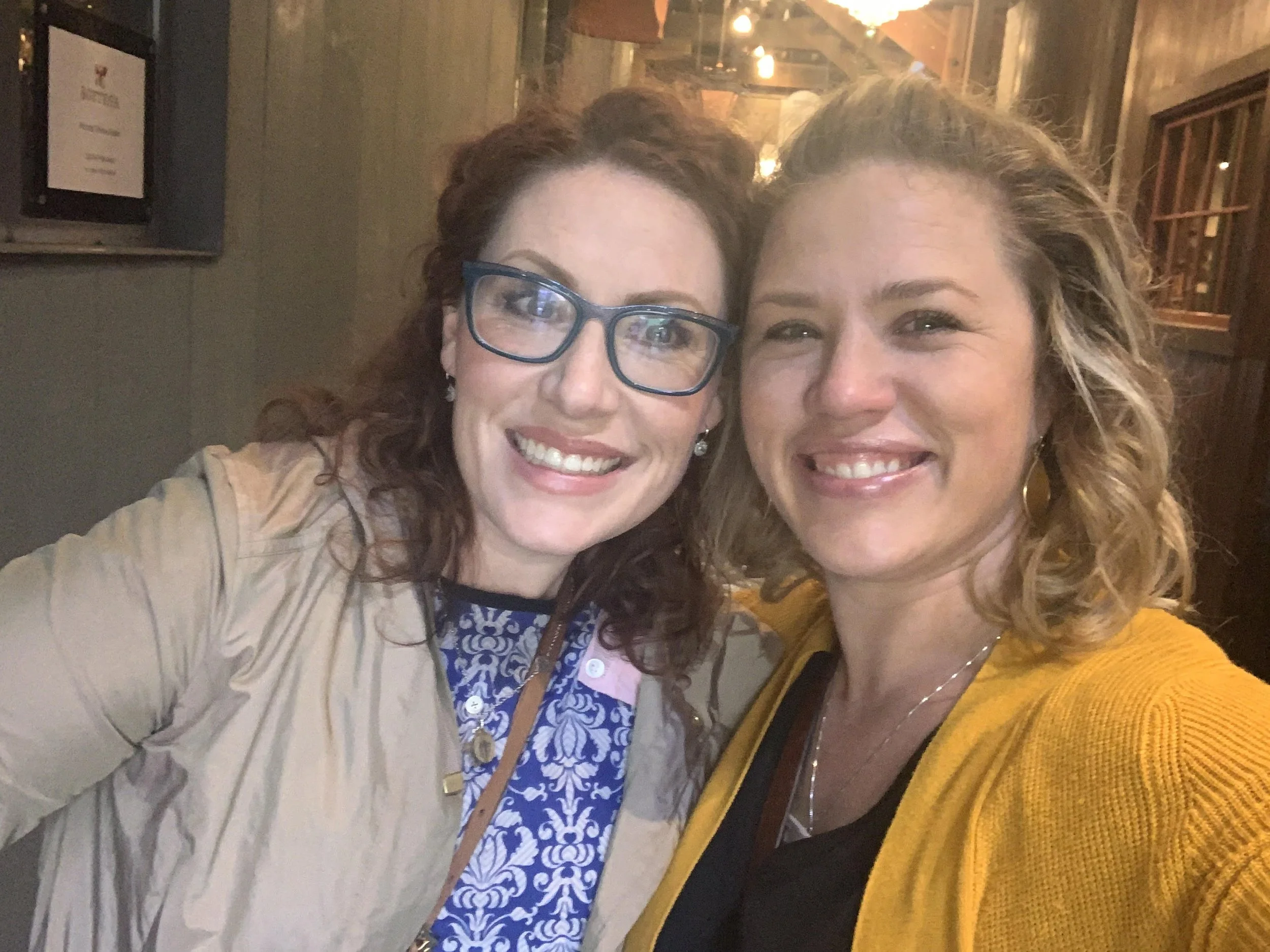
Money Stress in a Broken Family Forces You to Grow Up | Liz: #170
What if your anxiety about money didn’t start in adulthood, but in your dysfunctional family during childhood?
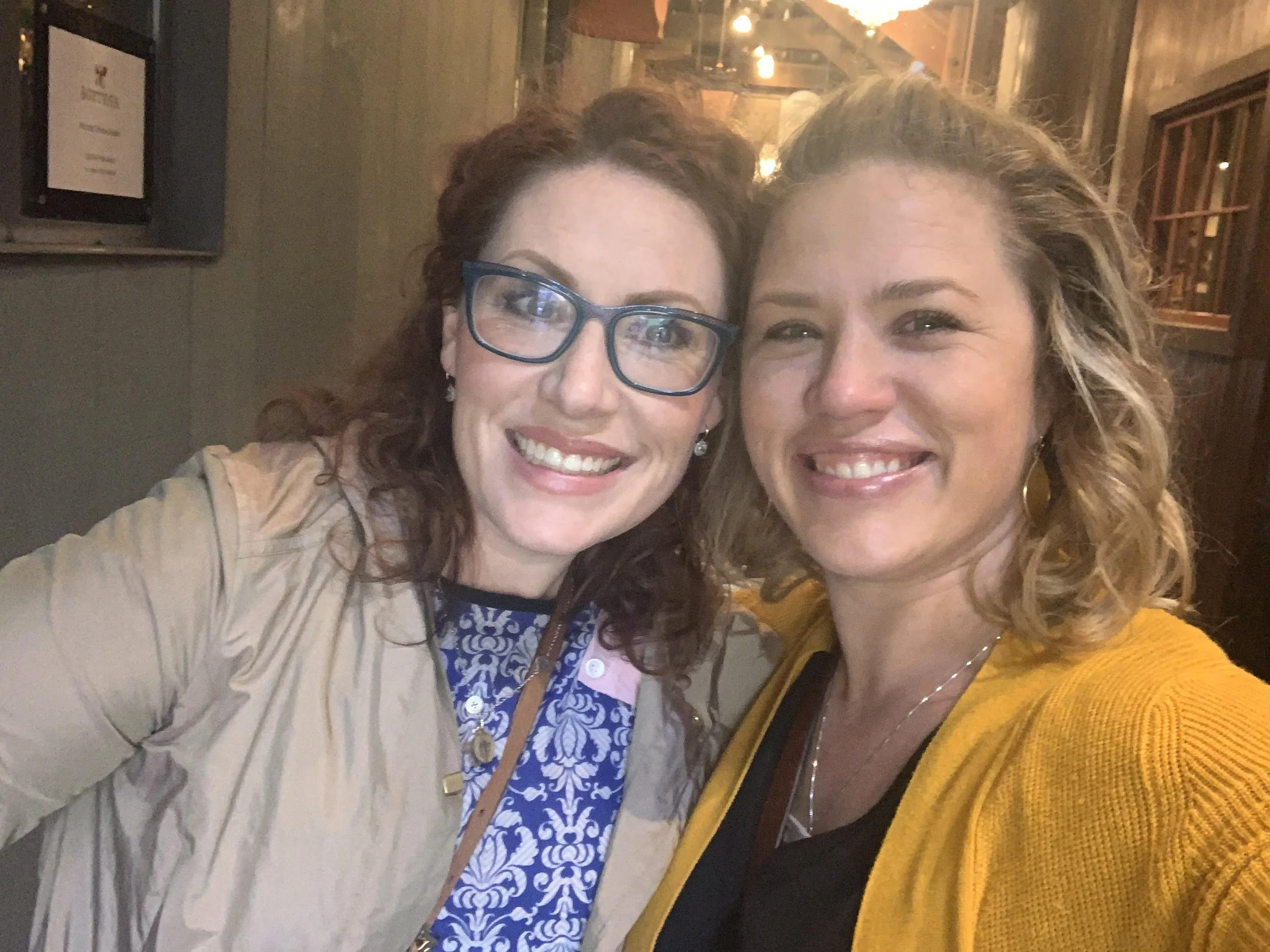
What if your anxiety about money didn’t start in adulthood, but in your dysfunctional family during childhood?
Growing up with financial instability doesn’t just affect your bank account. It can train your nervous system to live in survival mode — forcing you to grow up too fast and quietly shaping how you date, marry, and handle responsibility.
In this episode, pediatric cardiac ICU physician Liz shares her story of financial chaos, parentification, and how that hyper-responsibility followed her into adulthood and marriage.
We cover:
How money stress creates “parentified” kids
Why responsibility can feel like survival
How financial trauma affects relationships
If you grew up worrying about money, feel responsible for everyone, or struggle to rest — this episode is for you.
Get the Book or FREE chapters: It’s Not Your Fault
Get Dakota’s FREE Guide, The Biggest Fitness Mistakes to Avoid
Enjoy the show?
To be notified when new episodes go live, subscribe below.
As a bonus, you'll receive the first chapters from our book, It's Not Your Fault: A Practical Guide to Navigating the Pain and Problems from Your Parents' Divorce.
TRANSCRIPT
Transcript produced by artificial intelligence. Please pardon any errors!
Joey Pontarelli (00:48)
Welcome to the restored podcast. I'm Joey Pantarelli. If you come from a divorced or dysfunctional family, this show is for you. mentor you through the pain and help you heal so you can avoid repeating your family dysfunction and instead build strong, healthy relationships. What if your relationship with money was shaped long before you earned your first paycheck by the money problems within your dysfunctional family? Most people think being stressed about finances makes you somewhat responsible, but
What if it actually trained your nervous system to live in survival mode? Could explain why you struggle to relax even when things are technically fine, especially financially, why responsibility feels heavier for you than it does for other people, and why often in your relationships, you feel like the fixer, the provider, the one who has to hold everything together no matter the cost. In this episode, we explore how growing up with financial instability doesn't just affect money. It affects parentification, hyper-responsibility,
the way you show up in marriage and relationships long after childhood is over. My guest is Liz. She's a pediatric cardiac ICU physician who spends her days caring for critically ill children while also caring for her own father with moderate dementia. She shares her personal story of growing up in financial instability, becoming the emotional adult in her family, and how the survival mindset followed her into marriage, faith, and adulthood. And so if you felt like rest is in
If you grew up worrying about money before you even understood it, or maybe you've noticed that financial stress has quietly shaped how you love, how you commit, how you trust. This conversation is for you. Now in this episode, we do talk about God and faith, and if you don't believe in God, you're totally welcome here. Anyone listening for a while knows this is not a strictly religious podcast, and so wherever you're at, glad you're here. My challenge for you is this, if you don't believe in God, just listen with an open mind. Even if you skip or take out the God parts, you're still gonna benefit a lot from this episode. With that,
Here's our conversation.
Liz, welcome to the show. So good to have you here.
Elizabeth Dorwart (02:48)
Yeah, thank you so much. really appreciate that.
Joey Pontarelli (02:51)
I'm excited to dive into your story. You wrote a blog article for our blog and we'll link to that in the show notes, but I'm excited to get into more of the details. So starting out, I'm curious from what you remember, what you were told, what was life like for you growing up?
Elizabeth Dorwart (03:04)
So, you know, when I was little, things were really great, pretty normal, happy family. I remember going to summer camp in the summer. I remember my parents always being really proud of us, especially when we excelled at something. My sister was an athlete and very good volleyball player. I was in the band. Going to mass on Sundays, morning pancakes, I would always get syrup in my hair. Pretty good memories. And about middle school and high school is kind of where things started to get tough.
as we'll talk about it, of continued to kind of get a little harder in my 20s and 30s. But, you know, my parents in general were really good hearted people who went through some really tough stuff. But I think that was unclear at the time. And that's part of why I wanted to sort of talk about it is it's easy to when you're young to form an idea of what's going on. And sometimes it becomes clear what's actually going on quickly. And in my case, it sort of took
many years to sort of unravel what was actually going on and so my understanding of my family changed a lot.
Joey Pontarelli (04:06)
No, it's fascinating. Um, because I, um, I heard, I think it was Tony Robbins say recently, like how you describe your experience becomes your experience. And I think it's really wise. It's like, okay, so it's really like what you were saying. It's really important to actually know the truth. Obviously maybe some things we're not always going to be privy to as children with our parents, because there's some level of like maybe privacy, but as we get older, I think we have a right to learn a lot of that.
But that's super interesting that you hit on that right away because I think that's really important that we really grasp reality as it is.
Elizabeth Dorwart (04:37)
I totally agree. think that's one thing I've learned along the way is that it's really easy when things are imperfect and human and full of ugly emotions and ugly realities. For a long time, I thought that that part had to be sort of hidden from God and hidden from people. And it's taken me a long time to fully appreciate like in His mercy. Number one, He knows how human we are and how broken we are. And He loves us through that, not just
accepts it and tolerates it, but he's a good father who really like he has his compassion. So that's been very freeing. Yeah
Joey Pontarelli (05:13)
Yeah, that's so beautiful. Wow. I was curious, would you describe your parents' marriage as high conflict or low conflict?
Elizabeth Dorwart (05:20)
Yeah, good question. would say it was a mix. So high conflict in the sense that there was a lot of arguing, never any physical violence. I have all the compassion and respect for people. I have to go through that. We didn't. Some of the things that were more clear, I would say, were there was always this sense of stress around finances, some sort of shame around finances and wanting to keep that a secret as a family.
And then there were some struggles with addiction as a coping mechanism in my father later on as things got harder. So yeah, there were some parts that were unclear, but I wouldn't say there was a lot that was like surprising or sudden.
Joey Pontarelli (06:05)
Yeah, and it's sometimes a high conflict, low conflict, like categorization could be a little bit hard, because it can like change a little bit and then the lines are a little bit blurred. But yeah, I know, so, you know, violence and abuse and things being thrown and being exposed to maybe like drugs and things like that is obviously the hallmark of like one of the high conflict situations, but we all can have kind of pieces of that. that totally makes sense. I'm curious, so how old were you when things started going downhill and how, if you're open to sharing, how old are you now?
Elizabeth Dorwart (06:33)
Yeah, so
I'm 42 now and I found your blog, it was just a few couple years ago. So I think the healing is ongoing and sharing the story is helpful. So I'm glad that you saw that that was a need for people to share their stories, to own it and really accept it. But I would say interestingly, so when I was seven, I have like a really distinct memory of my dad and I were playing Monopoly.
and I was beating him at Monopoly and I felt really guilty and confused as a seven year old. I was like, how am I beating my dad? This makes no sense. And I remember thinking, is he like letting me win? But it seems like he wasn't. And then around that time, interestingly enough, I think because, you know, it's amazing how much kids absorb and I'm sure parents, they do the best they can to hide or protect them from conflict. But I would hear these discussions about finances and the race.
stressed, pressured discussions. And I remember asking my dad, what are taxes? How do taxes work? And what happens if we can't afford taxes? And I was so stressed. I'm a high strung individual. That's my nature. Anyway, and he said, no, it's a percentage of what you earn. Like, don't worry. That's, know, and he kind of laughed it off. But that's been an interesting part of the story, because unfortunately, he struggled a lot because of some undiagnosed
probably football related brain injury. He played football in high school and college and played on the offensive line. So I'm sure had many concussions. so kind of as all the discussions like five, 10 years ago came out about concussions and CTE or chronic traumatic encephalopathy, I kind of started to wonder and realize like, wow, his story of being a vibrant, friendly, he's a gentle giant, he's six four.
big guy, but friendly, everybody loved him. And outgoing, he was in sales. And through my teens and 20s and 30s, he would struggle to keep jobs. then as a man and someone tried to be a provider, there was a lot of shame hidden in that and a lot of struggles with depression. Anyway, sorry, it's a long winded answer. But yeah, but I feel like it was interesting because there's times that I wonder, like, wonder if that was.
Joey Pontarelli (08:45)
That's a good answer.
Elizabeth Dorwart (08:53)
guardian angel or the Holy Spirit or something kind of clueing me into maybe part of the story that was going to happen later on. And there are some beautiful like elements of providence that I only saw much, much later on. And so in that period of time was going through a lot of confusion, frustration at God, frustration at my dad, frustration at the whole situation and lack of trust was a big thing for me. But it has come to, I feel like it.
into my late 30s and 42, there's been a lot more understanding of, oh wow, God is a good father and he really did provide, even through my father who couldn't provide financially, but would always give us blessings and take us to church. He provided in the ways that mattered.
Joey Pontarelli (09:37)
Okay, beautiful. No, thanks for sharing all that. Okay, so you had that experience when you were seven. Would you say that's when things went downhill or was it a little bit later or was it of sprinkled through?
Elizabeth Dorwart (09:47)
Yeah, good question. ⁓ I would say, so in middle school, my dad lost a job and he was working in sales and he became really depressed. And it was the first time I really saw my dad not just cry, but really struggle to regain hope. And his personality kind of changed in middle school and high school. He became more withdrawn, you know, the lovable, ready to talk to everybody, life of the party.
dad that I knew kind of disappeared and that was hard. He was very withdrawn. It's a tough thing to go through, so I can only imagine how difficult that was. My mom was scared. And then when I was in, at the end of high school, my sister had gone away to play. She played volleyball at the University of Oklahoma. So we became Texans who then had to struggle with, we go for the Oklahoma Sooners or do we go for Texas? And there's a big rivalry there. So was kind of a funny.
That's awesome. We were like, what do we do? So when you walk down the street in Texas with an OU sweatshirt, you get a lot of dirty looks. People are like, ooh, get out of here. But so when my sister went away for college, I remember, I think I was 14, my mom said, there is no money for college, and you will go to college. So we were in the car, and she said, I'm dropping you off at H-E-B. It's a grocery store in Texas. It's pretty popular. And you will get a job. And so, OK.
and I got my first job. And then that wasn't hard as much as it was just sort of a stark reality of like, you're now growing up. And I'm glad I'm grateful for it now. And then sadly, at the end of my high school career, just before I went to college, may I shame us, it's cool. My dad was really depressed and had a near attempt. So almost committed suicide. Thanks be to God, at the last minute, he changed his mind. He actually called a deacon at our church who's a wonderful man.
and came to the Deacon, came to where he was and got him help. But that was ⁓ a really big moment as I'm sure it is for anyone. And I have a lot of compassion for people who have to bear the huge cross of losing someone to suicide, but even nearly losing someone was, it really changed the way I looked at the world. It made me sort of very fearful and sort of assume that this is what's normal. I think that's what happens when you're young if something happens to you traumatic.
that's traumatic, it's easy to say this is how the world is and luckily it's not.
Joey Pontarelli (12:13)
When the suicide attempt radiation hold you.
Elizabeth Dorwart (12:17)
So that would have been right at 18. It was my senior year of high school right before I went away to college.
Joey Pontarelli (12:24)
Yeah, that's such a tender age and difficult for all of you guys, man. I wanna push a little bit more into the financial stress side of things, because I think there's a lot of people who can relate to that. Before I go there, I was curious, at any point in your story, did you ever wish that your parents had gotten divorced? I know there's a lot of people who sometimes feel that. They sometimes feel like, things are so bad at home. Maybe they heard about, maybe even if they're young, they've heard about this idea of divorce, or they knew someone who went through it and like, yeah, that would be better. So yeah, and then later, it made me feel a lot of shame, like I wish I wouldn't have.
said that because now things got worse or whatever. But I'm curious if you were ever in that situation, did you ever wish that they had gotten the divorce? Okay, real talk, if you've been trying to get in shape so you feel better physically and emotionally but nothing is working, you're not crazy. I've been there myself. I recently read a free guide by Dakota Lane, a certified personal trainer who we've partnered with that's helped about a thousand people and it was really helpful for me personally. In the guide, he breaks down the biggest fitness mistakes that we all make, like under eating.
overstressing or focusing too much on the scale and it gives really simple practical tips that you could actually use and can implement today. And so if you're tired of feeling like you're never going to get in shape, just click on the link in the show notes and grab the guide today. It's totally free and it might just be the thing you need to start feeling healthier physically and emotionally.
Elizabeth Dorwart (13:39)
Yeah, I can definitely empathize with that. I would say in my 20s, I was married, I had decided to go to medical school, I was in medical school, and there was a lot of big, I kind of call them financial explosions, and I think a lot of these were related to my dad. Cognitive abilities were getting worse and worse, and he was just doing the best he could.
At the time, we didn't know that. so everybody in the family was so frustrated at him and so confused. And trying to be a young person who's grappling with your parents, can't seem to handle things that maybe it looks like on the outside other parents have figured out or should have figured out was definitely, I definitely went through periods of that. My sister was actually brave enough to say it out loud and I wasn't, but I definitely felt it.
because after a while of their marriage became so strained, I can't imagine raising kids. And my mom was raised in a family where her mother was the stay at home mom, was married to an Air Force general who was sort of a take charge person who was a leader and handled all of the finances. And my mom didn't want anything to do with that and didn't think it was part of her job.
didn't want to take on the responsibility, was scared of all that responsibility, especially because it wasn't going well. And so there was a lot of resentment between resentment from a mom towards my dad, even though she's a wonderful, hardworking, very faithful woman. But you know, it doesn't matter how faithful you are, anger and emotions are real. They're a part of being a human and being disappointed and dealing with disappointment. And so seeing her be frustrated at him and him continue to be ashamed.
as he declined and I think he was trying to figure out what was going on. Why can't I just fix things? Why can't I keep a job? Why can't I handle finances? He never said those things to me, but you could just see it. And looking back, just looking back, I can see all of those elements. Yeah, there was definitely moments and I was just like, they'd be better off alone or better off, excuse me, apart. But my mom was pretty stubborn, but pretty, she was honest about it. Like we got really close.
into my 30s. And sometimes she would call me to really vent and it felt awful because it gave me this new insight I didn't want. I wanted to keep this idealistic view of my dad and my mom. I didn't want to see these ugly emotions. So that was hard. And not to be too Pollyanna about it, but I just think this stuff is really the beautiful redemptive part of the story that I think, you know, needs to be said because God really did redeem all the ugliness and there was a lot. So my mom, you know, she was kind of broken at
many points. And she told me one time when we were, you know, I was an adult and your relationship changes and you could be more honest with each other. And she didn't have to hide anything from me because I wasn't young anymore. And she said, you know, there are weeks when I the only way I think I can get through this marriage and all of these struggles and all of these financial problems and all of these, you know, she was aging, getting arthritis and all this looking forward to she didn't know how they were even going to retire. They couldn't even like do basic repairs on their home.
in Texas where things were more affordable in the 80s and 90s and 2000s. And she would say, you know, ⁓ the way I get through the week is I do an hour of adoration every week. And that's how I get through the week. And she didn't do that her whole life. That was something she discovered, you know, into her like 50s and 60s. But she would just say, Jesus, I need an hour of you to get through a week of my family because nothing is easy. And at the time I thought,
Gosh, that was so harsh to hear. I wanted it to be softened somehow and be happier somehow, but it was so real. And I think it showed how much like her faith really did sustain her. So that was inspiring. I mean, it's humbling too, because I'm much ⁓ more self-reliant and like, I'll just go do it. And then I'll clue you in when I need you, I mean, that's part of my, yeah, it's a theory I need to grow in.
Joey Pontarelli (17:48)
I'm type A too, so the self-reliance is definitely a, oh my goodness, yeah. We think we could tackle the world, and in some ways we can, but in other ways, I mean, in all ways, we definitely can't do it alone. But I could tell that the financial stress was just a big part of your story, so I wanted to dig into that even further. I can relate, first of all. My dad worked in construction, he made good money, but my parents, they would tell you this, they didn't know how to manage it well.
especially when he lost his job and it was just a really hard time for him because he found so much worth and value in his work and he's really, really good at what he does. And it was just a hard time for him, for my mom, for their family. You know, and I was younger, so my memory of it is more of like maybe what I've learned from others, but I do remember some of it. But this whole idea that like job loss and financial stress in particular is really difficult on a marriage. And I remember hearing another interview.
where one of the guys from Shark Tank of all people was saying, he's like, I've done a lot of research into this. He said, a marriage, it's really difficult, but a marriage can survive an affair, but it can't really survive financial stress. Like you can come back from an affair, in his opinion he was saying, but financial stress is even more devastating than that, which is just wild to hear, but I've found it to be true in so many ways. And so I'm curious, what did that like financial instability,
How did that make you feel in particular growing up and then where did that leave you once you got on your own?
Elizabeth Dorwart (19:14)
Great question. I am so glad that you asked. So, and it's funny, I sometimes I get nervous talking about this because it's such a part of my story. And I like, I think about how it's going to come across as like financially obsessed, but it really does. I appreciate that the guy at Shark Tank said that, cause I totally agree. I think when there's just so much stress and then there's just, it's like, you can't just have joy and in relationships you need to have moments where it's just like,
the stress melts away for even a weekend or a day and you can just celebrate. My sister used to say this a lot. She used to say, you know, after things got hard, the biggest thing I resented is that we couldn't just relax and make memories together. We couldn't just go away. And even if it was just a, a relaxed, you know, weekend at some cheap hotel or, you know, something really frugal, but there just wasn't that breathing space to do it. And so for me, I definitely,
became, I reacted really hard against that. I assumed that if my parents can't handle it, like I knew my dad wasn't, to me he was a normal dad. He wasn't a rocket scientist, but he seemed like he could handle things. I didn't see the cognitive deficits at the beginning. And so I thought, man, if my mom and dad can't handle this, then the world must be incredibly expensive and finances must be incredibly scary and hard to manage because my parents can't do it. And then,
You know, I'll be perfectly honest, when I was in high school, kind of floated through high school, enjoyed school, was a good student, just kind of naturally loved to read books. know, calculus, forget it, that's hard for everybody. But I thought I really love music. And so I thought, okay, I'm going to be a music teacher, or maybe I'll go into something like healthcare. My mom was a, was a physical therapist, lot of aunts who are nurses. ⁓ But I wanted to care for people, I wanted to teach, I wanted to
focus on music. That was what I wanted to do. I didn't worry about finances before all of this sort of everything got hard. ⁓ And then after my dad's attempt, you know, I remember being really worried in college and seeing a lot of wholesome families who seemed together and happy, but just thinking, my gosh, if I get married and have children and like, there is a real possibility that my future husband could have the same attempt and not be able to keep a job. So I need to be able to provide for the entire family. So
that plus my mom saying, you know, if you want to be in medicine, ⁓ you know, don't let lack of confidence prevent you from applying to medical school. You're smart. I think you could do it. And so that was part of my decision to do it. But definitely thinking about I need a doctor's salary. was an I need that because the world is so expensive and scary. I must have that. And so I think there was a lot of
limitation. I think God did redeem that. There's been many beautiful moments that I'm very thankful that I went into medicine. I have a spiritual director I meet with monthly and she's pointed out these things that I haven't seen. And she's like, look at, you know, look at all this good that God has pulled out of you feeling like you had to be a physician, even though, you know, residency is very hard.
student loans are very hard just the stress, but he redeemed even that. I wouldn't, I think if this hadn't happened and I had been in a family that had a lot more peace, I probably wouldn't have gone into medicine, probably the medical field of some fashion. you know, everybody in medicine on every level is important to taking care of the patient from the unit clerks to the custodial staff to everything on up to the CEO. So anyway, I delve really, sorry, I long winded.
Joey Pontarelli (22:52)
No, no, this is great. But the financial piece is just like so important for you. could tell even like you talking about it. like, it almost like, this is what I'm hearing you say, it's like, it just felt like it's survival for you. Like if you didn't figure this piece out, ⁓ like you, things were gonna be really bad. That's at least what your mind and your body were telling you.
Elizabeth Dorwart (23:12)
Yeah, absolutely. And part of that was reinforced by, you know, things as I went into my 20s, sorry, like a very long story, a little shorter. As I went ⁓ into my 20s and 30s, my parents struggled more and more and so I went into a six-step mode. So I learned about all about Dave Ramsey and managing money and staying out of debt. And then I met a wonderful guy who coincidentally came from a very lovely
set of parents who happened to be very frugal. They came from humble families and just were frugal people and hardworking and also had a lot of fortune in their luck and good providence in their professional careers. But there was a lot of comparison there that was difficult. And then ⁓ my husband's career took us to California, which very expensive state. So there was sort of extra pressure. There was like the student loans was extra pressure. But I paid off my student loans really quickly so that I could help my parents because in my 20s and 30s,
there was like things would come up. My dad would, I think with all the best of intentions, open up credit cards and try to find a product he could sell because he always knew he could go back to sales. But he was unsuccessful multiple times. And looking back, I can tell it was because the cognitive abilities were slowly declining. One time he didn't pay the taxes for seven years and we found out in a surprise fashion. I wanted, yeah, I'm sorry. want to tell the audience, all your listeners.
I wouldn't share this many details if my dad was still in a state where he would hear or it would hurt his dignity. He's got pretty moderate dementia, so functions about like a five or six year old now. He's about 76 years old. So that's the reason I feel like it's okay to share. But so there was a lot of big sort of financial explosions that came up and luckily my husband's kind of a level-headed guy and he would just sort of dive in and try to help fix and we
tried to live frugally so that we could try to fix by giving my parents what they needed to help fix up their home. Yeah. But it never, it felt like the pressure didn't let up frankly from sort of medical school on and that was a lot of discussions I'd have with that is like, it's been so intense. It's been so intense for so long and it just seems to be like a slowly unfolding train wreck and I don't, you know, it was really easy to get hopeless and just feel like it's never gonna get better. It's only gonna get harder.
Joey Pontarelli (25:39)
wow, no I totally hear you and it's so interesting that you went the route of just like trying to be really good at making money and really good at managing the money.
And I think those are great skills to have, but it's unfortunate how it was like kind of thrusts upon you to like figure this out because it felt like survival with my family. My mom later got into Dave Ramsey's stuff and took the course and then, you know, shared stuff with us. And, you know, I went through the course and I went through with my wife. And, and so we follow, you know, his principles as well. And that was incredibly helpful. Now it's funny if when I look at me and all my siblings, everyone is in a spot where we're like stable.
financially and it's a beautiful thing. So I think like one of the kind of redeeming aspects I wanted to focus on, I know you want to focus on too, is that there was some good, even though it was kind of hellish going through it all, there was good that came out of it, now you're in a better spot. And I think to anyone who's maybe living through that now or who is kind of scarred by maybe a situation like Liz described, hopefully our situations can offer some hope that it doesn't always have to be.
that way and yeah, might take time. It's definitely gonna be hard. It's painful. But can get to a spot where you're better and ⁓ it doesn't mean you're crazy wealthy or anything like that. But you can be at a spot where you are able to provide for your needs and not be able to stress about it. Because there's nothing, yeah, I don't know if there's anything worse than money stress.
Elizabeth Dorwart (27:06)
Yeah, I agree. I guess I can't remember the name of the friar but there's one of the Franciscan friars of the renewal who I love and I watch sometimes and he says, Poco a Poco, little by little. Yes, don't lose hope. Just one foot in front of the other. Do a good job at whatever you do. I'm so thankful that Dave Ramsey says it's just like it's God's money and he gives it to you to manage. Or you could say the same with like talents, I think, you know. He gives you certain talents, go use those. He gives you energy or he gives you health.
go use it. And if there's a time in your life when you're deprived of those things, you know, that's another thing I had to come full circle onto is because I weren't so extreme into, ⁓ everything has to be fixed and everything has to be following these rules. It was easy for me to think because I was surrounded by physicians and I was in a very, we were in the Bay Area, which is very fast paced and there's a lot of really high achieving people and
There's a lot of focus on status or achievement or degrees and it's easy to get pulled into that. I think part of the story too is I think God allowed me to be humbled in some ways because and it taught me right to remember like it's about doing whatever you do well. It's not that there's a certain career or a certain level of wealth that necessarily gives you more dignity. You know, we all contribute.
Joey Pontarelli (28:28)
Yeah, and I think one of the lessons since we're talking about wealth that was really helpful for me and I'm curious any other lessons that you would want to pass on to like the younger you when it comes to finances before we move on to some other topics. But one of the lessons that I loved hearing was just that wealth is really, it's not for you in the sense that.
True wealth can be measured by the quality of your relationships, and so your money really is meant to enrich your relationships. It's not meant to just accumulate a ton of stuff, because we've been through that. Especially our parents' generation, they were more the generation of buying things. Our generation's more the generation of experiencing things, which has its own pitfalls we have to be careful of. But I think that the purpose of wealth is to, the purpose of money is to enrich your relationships, and true wealth is measured not by the stuff you have, but about the quality of your...
relationships and the rest of your life. So that was like one of the shifts for me. But one of the other, I think, lessons too, is just that, yeah, like you can be frugal and then you can also work really hard. So you can decrease the expenses and you can increase the income. Like there's ways of doing it and it won't happen immediately. You might fall and fail and mess up, but I think there's so much hope. And I think that's what Dave Ramsey does so well is like he shows people who maybe don't believe that it's possible that actually know it is because there's someone like you doing it right now. And if they can do it, you can do it too.
So anyway, so many lessons and I could talk money all day. actually studied finance as my undergrad. So I love this topic, but I'm curious, what are maybe some of the main lessons when it comes to money that you learn through this really kind of grueling experience? For countless teens and young adults, their parents' divorce is actually the most traumatic thing that they've experienced, but so many feel lost and alone in navigating the challenges. I've been there myself. It's really not easy and it shouldn't be this way. My book, It's Not Your Fault.
guides them through those challenges by helping them put their pain into words and begin to heal, work through the emotional problems that they face, cope in healthy ways instead of falling into bad habits, improve their relationship with their parents, navigate the holidays and other life events, and build healthy relationships and so much more. One Amazon review said this, this book is packed full of really practical help. If you come from a broken family, or even if you don't, but you love someone that does, this book is so helpful. I can't recommend this enough.
By the way, it's a quick read and it doesn't need to be read cover to cover. Since it's in question and answer format, you can just read one of the questions and one of the answers. And so if you want to join the thousands of people who've gotten a copy, just go to restoredministry.com slash books to get the book or download the free chapters. Again, that's restoredministry.com slash books, or just click the link in the show notes.
Elizabeth Dorwart (31:02)
I think one of the best things that I learned and I think this is, I think God, you know, he definitely puts people in your path that you need to learn from. My in-laws are really good about not falling into like a dis-American materialism comparison trap that we all are so susceptible to and it's hard. I remember watching them and I've always been like, love people and I love to watch people and I think I love to.
Maybe it's because I'm a little type A and a little perfectionistic, but also had a lot of fear when all this was going on in my high school years and my 20s. There was a lot of that I would look for advice and I would watch people and I would try to think about other couples that were like doing it well or doing it right. ⁓ Not that there's, you know, we're all in a journey, right? But they were just happy with simple things and it had a sense of just kind of natural gratitude for, you know, I don't need a brand new
I don't need brand new Tupperware. can use the same Tupperware that I got handed down from my grandmother, you know, 30 years ago. Or I can do a simple thing. Like we don't need to go out and eat. We can make a delicious meal at home. And my mother-in-law really was a good cook. And so it actually was delicious. And I think growing up in a family where sometimes it felt like, like the fancy thing to do is going out to eat. And it's like, well, in a lot of restaurants you could probably make something just as delicious or more at home for keeper.
So I think there's lots of examples of that you could think of, of like pulling back in certain areas so that you can spend in your other areas that enhance your life. My mother-in-law loves to play the piano, so she has a nice piano, ⁓ but she uses that gift and she's developed it. It brings her joy. ⁓ She sings and plays at her church. So both can happen at the same time. It's not a black or white, like everything is.
pinching pennies and stressful or everything is lavish. You know what I mean? Like it's a mixture like every part of life is. And then I just think just it's so hard to trust. And if someone said this to me at the time, I probably wouldn't have believed it. But if I can say like just trust that God does provide, maybe he doesn't directly hand you the money. Maybe he doesn't like I'm not saying prosperity gospel. I'm not saying like, just claim it and say a prayer and a thousand dollars will fall into your lap at all.
Joey Pontarelli (33:25)
That would be nice.
Elizabeth Dorwart (33:26)
I wish it was. Not at work. But, you know, he puts both the good and the bad in your life. And the bad, he'll redeem it eventually. It will be very unclear sometimes. You'll get humbled, but you'll eventually come around to where that humility you realize benefits you somehow. Like, there's been times in my life where I've had conflicts at work, I've gotten really humbled at work. And then a few years later, I realized that that humility that I was sort of forced into,
taught me a lesson that benefited me and someone else will say, like I had a coworker a year ago, she was like, I think you're one of the most humble people I've ever met. And I just started laughing because I was like, I am not by any means humble. am. I have an ego that gets in my way all the time. But I thought about that and I thought it was funny because I just thought, you know, if I hadn't gone through those really crappy situations, I wouldn't have gotten humbled and I wouldn't be here.
So God, even in that, was doing something. He was providing for me, maybe not directly financially, but he was providing me the things I needed for the next steps. If you just, yeah.
Joey Pontarelli (34:31)
No, no, that's so good and I appreciate you sharing all that and I, yeah, there's so much more we can say about the financial side of things but I think the last thing I was just gonna say is, yeah, I think it has so much to do with this feeling of safety and security and it's not about, for so many of us, especially who came from maybe families where money wasn't handled well, it can really, it can feel, maybe traumatizing is a strong word but it can feel really scary and like, ⁓ gosh, I don't know if I'm gonna be able to provide it so.
Yeah, no, even with me, I remember in college, I would give myself like a $10 a week, like budget to spend on things. And often I wouldn't even use it because I was just like so careful. And I was like, I'm putting myself through school, I'm taking dad, not going to go out and do all this stuff. And I'll just do the free stuff and play sports. But I think there was an aspect of like me just desiring like, just want to be safe. Like I just I don't want to be in a situation where I'm going to be.
Yeah, maybe not at someone else's mercy, but just like not not feeling safe. And so that was like a big motivation for me. So if you're feeling that you're not alone, and if you didn't see your parents handle money well, and you want to handle it better, like Liz has, then I definitely recommend Dave Ramsey's course. We'll link to that in the show notes. There's zero pressure from us, of course, and we don't, we're not incentivized to say any of that. But we've seen a lot of results he's helped about, I think.
about 10 million people and most like have massive transformations within like this first like I think six months or less. So you can see like really good results if you have a plan that works and Dave always says there's great hope in a clear plan and that's what it gives you when it comes to money. yeah, so anything you would add to that before we maybe shift the conversation a little
Elizabeth Dorwart (36:09)
Yeah, no, I think you I think you said it really well and watch his when you get down watch his Radio show and just watch those families that really shows that you can anybody can get there doesn't matter your budget It's just it's not what you make. It's what you keep ⁓ for your family and then when you have enough to give then you give and And that parts really fun
Joey Pontarelli (36:31)
Yeah, yeah. And that's, remember hearing that quote, what is it? If you don't think money can buy happiness, you can't, haven't given enough away. And so I think that's so much, that's beautiful to be able to be generous or to help a family in need or something like that. So I want us to shift a little bit to a topic that a lot of our audience struggles with this, which is this whole idea of like having to be parents to our parents. I mean, you could probably write a book on this with everything you've done. So I'm curious, like imagine you're talking to the younger you.
Elizabeth Dorwart (36:51)
Mm-hmm.
Joey Pontarelli (37:00)
What advice would you give to them? What do you maybe wish you would have known back then?
Elizabeth Dorwart (37:04)
Yeah, so I did a ton of counseling years and, you know, I'll just be honest about it. I know there's a lot of some people who still have some some holdouts and shame about about that. But I hope it's something that we're all learning as a society to talk about more openly or at least, you know, just allow other people to be wherever they are in their story because it's so helpful. But I had a lot of great counselors that taught me that about being parentified, as I think what they call it in the psychology literature.
how it's normal to become hypervigilant, it's normal to become hyperresponsible, it's normal to find it to be difficult to relax because the world is really scary when the people who are supposed to take care of you are not able to do that for whatever reason and to feel like you have to take the reins. It can make it, I guess I would just say allow yourself to know that that response is normal to accept yourself.
and to love yourself, give yourself some mercy because you're going through a tough thing. And those responses are very human and they're very normal and they take a long time. I mean, I'm still working through ⁓ learning to relax, learning to pull off the gas pedal, learning to like I reminding myself I don't have to take care of everything just because I did that role for a long time. And my spiritual director actually was telling me a story about in Japan, there's a
a ceremony called the, something like the ceremony of the loyal soldier. But they take soldiers who have been in battle and when they're ready to integrate into civilian life, they struggle. And so they have a ceremony where everybody in the community comes and they thank them out loud as a group. Thank you for your service. You are now finished with your service. It's giving me chills. It's like, ⁓ it's like, so, but.
And that's what it takes, plus a lot of time for people to shift gears into knowing that they can rest and not be, and I can't imagine, know, like everything I went through is little T traumas that caught, like I can't imagine being on a battlefield or going through like true PTSD, having like my life endangered or seeing violence or violence toward me. But I think that there is a small portion of that and there's a lot of resentment.
that can go along with a lot of anger that I had to deal with and worked through and it took time. It wasn't like one day I said a prayer and, you know, automatically all those ugly feelings went away. So the thing, one of the things that helped me is it became more clear over time that it was truly a medical issue for my dad. And so, but even that, it still took years to accept it and to say, well, I was so frustrated at him for making all these poor decisions and putting me in these situations where
I felt like I had to excele of these things. know, my mom would cry when the taxes weren't paid. They had to lean against their home. The home was almost taken away and we had to help negotiate that. And by the grace of God, they were able to keep their home. sorry, I don't want to traumatize everybody else. so but I and now I'm in a caregiving role. So my mom passed away sadly from a really rare ocular melanoma eye cancer in 2020. She was diagnosed. She passed away in 2021.
I have to insert this because it's a huge moment of grace. Sorry to tell this part of God's story because he, sorry. He writes the most beautiful stories, just sometimes really confusing as you're going through them. So, but I feel like I want that to be my quote on my headstone someday is like, God writes the most beautiful stories. Like he is the best plot writer. Just hang in there because, ⁓ so my mom passed away. Her mother had died on Good Friday and she had
was getting, we were getting close and she wanted to pass away. Good Friday. She had a real appreciation for the suffering Jesus, which I sort of appreciate from afar. And I'm like, I don't want to do all the suffering like can somebody else? No, thanks. Thank you for doing it for us. I really just want to sit in my cozy home and drink some coffee and pet a puppy as we all do, right? So 30 minutes over midnight, she's in our house in San Jose. She was the only one working at the time because my dad wasn't driving or working anymore.
And when she got diagnosed, they couldn't stay in their home. They didn't have anything in savings and they couldn't make the mortgage. So we had to rent the home out. 30 minutes before midnight, her breathing slowed and I had given a pope. was like, she's not gonna make it. It's gonna be the day after Good Friday. And her breathing slowed and her heart rate slowed and she very peacefully passed. And she got her last wish and it was just like, that can't be anything other than the grace of God. Like it was just the most beautiful ending to a really hard story.
Joey Pontarelli (41:44)
⁓ Wow, what a severe mercy. My goodness. Well, thank you for sharing that and I love that one. I think that the whole parentification thing is really tricky because there's an aspect of it that sometimes it's thrust upon you and you can do nothing else but the best you can and you can't often just walk away. There's other situations where maybe you can and you should, but that's not always the case. And so it's a really difficult thing. And that's where anyone who's in that situation, I think,
like you said, spiritual direction, therapy, maybe a good mentor who can guide you through it because each situation is so unique that we can talk principles, but it's really helpful to be able to apply those properly in any given scenario. But yeah, no, I think your story is like really helpful and difficult to hear because of how much you suffered. you, was, you know, I'm sure a lot and I know now there's such redemption and it's beautiful, but like talking to someone who's going through it now, it's like,
There's such a level of injustice. There's such a level of like, it's holding you back. It's causing you stress. You know, just doing all these things that are just, it's not supposed to be this way. That's the whole kind of takeaway. So let's say someone listening right now, let's say little Liz is listening right now and she's going through that. Are there any other lessons that you, cause you have so much wisdom. I want to make sure I get all the wisdom out of you. Is there any other lessons I guess you would offer to the younger you when it comes, if they're kind of getting pulled into this whole parentification situation in addition to what you already said?
Elizabeth Dorwart (43:09)
So great, it's a great question. And I thank you for asking because I want to be fully transparent about that. By no means was my story like I'm a human and I look back and there are things I regret. There are things that I wish I had done differently. I think that's going to happen for all of us. It's a beautiful and very difficult part of sort of reaching midlife is looking back and going, yeah, I really wish I had done that differently. And I can't really point the finger at anybody else except myself. But yeah, I would say just give it to God.
And also be a human, allow yourself to cry, feel angry, vent multiple times to trusted people, whether it's a counselor, whether it's a priest, whether it's a best friend. I was ashamed for a long time and I tried to hide things. I just didn't feel comfortable sharing it. I just assumed everybody else's families have it figured out, mine's such a mess and I don't want to share it. And that doesn't help anybody and it definitely doesn't help you. So try to open up as you feel comfortable. It's hard at first and it gets easier.
you know, with time and, you know. And then I think just be merciful to yourself to know that it's okay at times to say, you know, I'm depleted. I need to take care of myself. I'm young, I'm overwhelmed. I'm trying to focus on ⁓ my own career, my own marriage. You know, I'll be perfectly transparent. I was so overloaded with what was going on with my parents that there's times when I put them first before my own husband and he, you know,
I think wouldn't mind me saying that there's been times when he said, you know, I really felt like when you got married, like the Bible says, you're supposed to cleave to your spouse and they're your number one. And I felt like you would never do that. And I that frustrates me. It's hard. It's a hurt that he has to heal, too. I never felt comfortable because I was so focused on finances and I was so focused on fixing everything. I never felt like there was a time when we could have kids and when we tried it, it didn't happen. And that's another hurt. I would say help.
and also know that you need to call in other people. It's not all you. It can't be all you. Like no one can, in the hospital, right? I can't, if we have a dying patient, I can't run a code by myself. I need nurses, I need RTs, I need ⁓ specialists, need, you know, the best medical team is a huge medical team with lots of brain power, all tackling it from different areas. Part of it was hard for my parents.
They didn't, you they were ashamed. I want to be respectful of their privacy. But I think if I could do it again, or if I could give advice to someone else, I would say gently encourage your parents to find peers who can help in addition to you. It's normal to feel like it's all on you or it's your fault, but it takes a huge village. And so make sure you focus on yourself too. Focus on your family, focus on your career, your rest, your friends, all of the things that make us a happy, healthy human, your physical health, right? You need all those things.
to keep running the marathon. You need to have joy. You need to go on vacation sometimes and just get away from the burden so that you can go back and help them carry it again, right? Like Jesus had Simon help him, right? He was God, right? So we all need help. guess that's what I'd say.
Joey Pontarelli (46:18)
That's really helpful. Thank you for all of that. And I think at the end of the day, to you and to everyone listening, would say what you've done has been heroic and really beyond even what's required. It's really beautiful to see how you went through a lot of hurt.
And some people who've been through what you've been through become very bitter and angry at their parents. And I know you said you've wrestled work through that, me too. But they end up putting their parents out in a situation where it's like they don't help them. And so it's really beautiful and redeeming. could tell that you have been able to work through that and not be in a spot where you're giving, you're kind of giving your parents or your dad now the care that you wish maybe would have been shown to you and not saying that, you know, not pointing fingers at him or anything, but it's really, it's beautiful. There's like such a redemption in that. And I just wanted to highlight that before.
shifting to the final part of the conversation, which is ⁓ relationships. So were you like me and just terrified of love and marriage and relationships or where were you with that? This episode is sponsored by Blackstone Films. They just released a new documentary called Kenny. It's about an ordinary Denver.
priests who lived like a true father and transformed families and inspired vocations. He would actually wake up at 430 every day to do an hour of adoration. His parishioners would ask him to pray for them and they actually got those prayers answered. Some even call them miracles. He had to shepherd his people through the Columbine shooting, if you guys remember that horrible, horrible event. He ate with the families in his parish every night of the week. He hiked with groups of young adults in the Rocky Mountains on Colorado and he sat with couples on the
rink of divorce, even saving a marriage, which they talk about in the documentary. And so if you want a hopeful model of leadership and fatherhood, something worth watching with maybe your spouse or your small group, watch Kenny. The trailer and the full film are now streaming on formed.org. You could just tap the link in the show notes to watch the full documentary or just the trailer. Again, thanks to Blackstone Films for sponsoring this episode and for telling such an inspiring story that I myself watched and really appreciate it.
Elizabeth Dorwart (48:20)
Yeah, no, definitely. So it's kind of funny. I dated in high school as a public school kid and then I went to the University of Dallas. It was a wonderful experience, amazing education. I mean, I met real men of God and went, wow, there's actually guys in the world who like really believe in their faith and like live it. You know, as a public school kid, I remember like having guy friends and being like, oh, they're attractive. And then you find out like somebody whispers, oh, they're thinking about the seminary. And I was like, I don't know what that means. Like, can I talk to them? Do I have to?
Is there like a distance we have to, I don't know what to do. Just like looking back, it's so funny. Anyway, but wonderful priest and I'm so thankful for their service to our church. But so, I didn't date at UD, I just focused on studies, just, I don't know, didn't really meet anybody. So that was kind of a funny thing for four years and then I went out and I was dating in the real world and that was a real shock because, know, online dating was just starting, but I was, was scared and I was, I think,
I think because my journey was going to be so hard and so long and God knew that in his eternal wisdom, I think he put my husband in my path because he knew I wasn't going be able to do it alone. So I do think I'm very thankful for that. think if I hadn't met my husband, I did. And the way things continue to get more difficult through my 20s and early 30s, ⁓ yeah, can't imagine meeting someone and then...
sort of feeling like I was burdening them with that. I can't imagine really having the time and the brain space to even want to date. There was so much, so I'm very grateful that I met him when I did. I think that's another redemptive part of the story is I wonder sometimes if everything had gone smoothly, would I have picked up on some of the qualities that my husband had? He told me when we first started dating, he said, I've only been in one serious relationship.
and she broke my heart. And one of the things is she used to tell me that I'm not romantic. So I'm very nervous about how I'm not spontaneous and romantic enough. And high school me would have been like, oh yeah, like, bye. But it was just so funny because I'm a very idealistic, spontaneous, all over the place, kind of untreated ADD person. But it was like that steadiness and that just,
I don't want to say predictability because that sounds like boring. He's not boring. But he's the dependability is something I never would have appreciated if I hadn't grown up in a chaotic home. ⁓ And so, I even think God redeemed that. Like, I think He wouldn't have been like, I met Him. I just was like, I can rest around Him. I can rest because He's logical to a fault. It's so funny. Like, sometimes I know how He's going to like, He's a scientist. And so, any problem you come to Him with, He like,
he's like, well, according to XYZ principle in science, I just die laughing every time. But it's that, like that is a gift. And some people are like that. And guess that's the other thing I would tell people is when you meet people like that, that just your soul just rests, whether it's a friend or romantic partner, like lean on those people, because you need that peace and you need that steadiness to also help you handle whatever chaos is going on in your life. And I think
I think the alternative is also true when you're going through a lot of chaos, when you add another element of chaos or another chaotic person, it kind of just makes things much more difficult. So I would just say, try to be wise about that. know, everybody's journey is gonna be a little bit different. you know, I know some people are really gonna have ⁓ families that have a lot more trauma and a lot more dysfunction. And you know, there, there may be certainly scenarios where you need to step away from.
a parent or a loved one for a period of time, you know, for your own safety or anything like that. But I think a beautiful thing, you know, when you're looking for someone is to think about things like, I don't know, I just really believe that God gives us all gifts that really pull out different things in different people, know, different, He made us all so different and it cracks me up when I'm around somebody who's really direct because I'm really sensitive and it has an impact on me that's interesting, you know, or
I'm really empathetic and some people are not built that way. And so sometimes when I say something, you know, and people will say, kind of, did you pick up on that? Or, know, I had one time a friend say like, pointed out like, Liz, you're really, you're really warm. And you're good at like setting out a warm like environment. And I sort of thought, wait a minute, why is that? Like, this is how it always been. Why is that different? Sorry, I'm kind of going over this because I worked in the hospital last night. So forgive my tired brain. I think it's just interesting to point out those things and to think about
how different personalities work and just watch the person that you're dating or even friends. They'll have different impacts on sort of, I don't know, the climate or the feeling in your family. And I think stuff like that, it doesn't have to be like a make or break, but I think it's helpful to sort of think about that and to think about somebody who obviously is respectful or sort of whatever.
I think sometimes people can be a fix, can be part of the fix that God's trying to provide you. Sometimes it's like you need a different type of personality or a person with a different background or just a different way of approaching life, different way of communicating that it changes the dynamic in maybe a dysfunctional family. And it certainly did for ours. My husband is, he cracks me up. His parents and his whole family, they're very just naturally.
considerate of each other. very polite to each other. Versus my family dynamic, there was certainly a lot of outside pressures that amplified our natural predisposition. But our predisposition, you'd think that we weren't mixed Irish with a little bit of German and Texan heritage. You'd think we were fiery Italians. We are all up in each other's business and we argue.
and we fight and it's fiery and we say things we don't mean, but then we all know we don't mean it. And so we come back together after it's sort of the pressure is let off the volcano. And then, you know, we apologize and say, didn't really mean it. know, versus my husband's family. It's just funny. One time I asked him, I was like, do you guys ever fight? Like, is there ever any fighting? You know, and so but I can also be pretty intense. And so you need people who are less intense because it kind of balances out that, you know, I just think. ⁓
It's good for us to be around people who are different. And I had a friend actually, sorry, this is probably just my tired brain being really creative and linking things together. But I had a friend who I went to college with at UD, who taught me about like, know there's so many, there's so much to our church. There's like, you could study for ages and continue to uncover saints or teachings or books or philosophies that, know, wisdom that
that is out there. So it's always funny to me that I continue to get surprised because I'm like, well, the church has been around for a really long time. So there's a lot of ideas out there. But she would talk to me about like the Ignatian discernment of spirits. And I kind of think it's sort of similar to that. like different, like one of the things, and I'm certainly not an expert in this area is, you know, thinking about when you feel sort of consolation or desolation, maybe wait until you feel some consolation.
You feel consolation to sort of make a decision. You feel peace about something. Or you feel kind of peace about something. And I think that that's interesting because I feel like people do that. Sometimes people just give you a sense of peace versus they may kind of rile you up. But my husband was really just to get more concrete. Because he was so steady and reliable and respectful. And I think because we had had so much history of
And it wasn't just my parents, you know, my sister and I were under the same pressures and so there was some some arguing and some fighting and some different personalities that really revved up against each other sort of in a friction way rather than like a smooth way. And so I just think it's good to think about that. And similarly, like when you watch someone as you're dating, like watch how they interact with other people, it actually teaches you a lot about, you know, sort of just what they're like, what their natural character is and you know.
Some people are more introverted, more extroverted, quieter, louder. All that stuff is okay. But I think when you watch someone and, you I can speak to women because I am one. I think when you when you see a man who can be sensitive to people, who's principled, who believes in something and stands by it and who can sort of I'm not saying my husband's perfect. We're all human, of course. But, you know, when you can see those good qualities and see someone really treat people well and be able to relate to people. For me, that was really important because I am a massive
extrovert, can probably tell by how much I've talked on this podcast. I love it. I am a talker. I need to be around people. I like to be around lots of friends. And so if I was around someone who like couldn't get along with a lot of people, that would be really difficult for me. I just don't know that we would sort of fit. Like I can't envision my life just having one person that I'm around all the time. Now I love my husband and and he's primarily the one that I'm with, especially like we're in the trenches with with caregiving. My dad's got pretty moderate dementia and it's he and I most of the time. But
when we get a day off, we want to be around people. We love to have dinner parties. We like to invite people over. We like to, and that's just, that works for us. So I think just pay attention to that with people that you meet. And I know it's hard, especially as a woman, to feel so much pressure, to feel like, I have to find the person or I have to make this work. And I can't speak to the pain of, you know, I certainly had a few people that I...
In high school, I thought, well, they're the one in my sort of young, immature high school brain and it broke my heart. And I can't speak to having that happen later on in your 20s and 30s where you're feeling sort of the pressure of like, I'm getting older and I want to have children and I want to build a life. But I guess I would just say, try to find people who have healthy relationships, be around them and try to have a little bit less of a tight, white knuckle hold on a relationship just because you have it. Because if there's
If God's sending you signals that this doesn't work for some reason, and part of those are just natural things, it's your personalities, like you're human. We're spiritual beings and we're physical beings and we're personalities, we're psychological beings. It's okay to listen to those things and let them guide you a little bit. I think he talks to us through all those things, not just, know, Dear God, here's 15th, give me a billboard. Thanks for the billboard, answer, done.
No, I wish it was that way. really do. There's so many things in my life I wouldn't have stressed over if that was the answer. ⁓
Joey Pontarelli (59:08)
No, so good. What I hear you saying, like overall when it comes to the relationships is like just the importance of choosing the right spouse for you. And they're never going to be the perfect spouse for you. But like I hear you talking about complementarity. So certainly there's people you mix well with, you're better suited to than others. And it's important that we find someone like that, not just someone who we think is attractive or, you know, maybe we have fun with it, but it's like, do we compliment each other? I love that. And yeah, I think like maybe aside from like your own
growth and like virtue and healing. Um, the number one decision or the number one, yeah, really decision in your life, but especially as it relates to your relationships is who you marry. And so I love that advice. I think it's really, really timely. And I was like, I could talk to you forever. Hopefully we get a chance to sit down in person at some point. know we're on the side of the country, but um, but I just want to say thank you for being here and I appreciate all the wisdom you know, you've given us and I'm really hopeful that, um, you I know for a fact it's going to help thousands and thousands of people for.
tens of thousands and hundreds of thousands of people for years to come. And so thank you for ⁓ being here. And I want to give you the final word. What final advice or encouragement would you offer to that maybe younger you that's listening right now who feels pretty broken and knows that they want love, they want life to be better, but maybe they're not quite there yet. What final advice or encouragement?
Elizabeth Dorwart (1:00:27)
you give? know, I guess, I mean, can be trite and say, don't give up hope. But I guess I would just say ⁓ there is, it's a both and. There's so much in our church that teaches about the both and. And life, family life does not have to be perfect for it to be joyful. You will be surprised at how many things you find in life. And even if you remain single, if you're called the single life or you're called a religious life, you will be surprised by how many
funny moments happen and just tickle you and bring you joy and you think, now if you could told me 10 years ago I'd be in this moment and I'd A, still be standing and B, be laughing about it, I would call you crazy. And that really is true. There has been many moments as hard as it has been, as a slog as it has been, when I have just been surprised by hilarious things and joyful things that you never could have told me like.
you would be, that I would find delight in my father with dementia who just says the cutest things as he becomes more childlike sometimes. And that exists along with sometimes so much frustration that I can't even pull my hair out. And that's okay, that's life, you know? And you'll get there and keep going. ⁓ Cling to God if that is your journey of faith. And if you're not in a place of faith, truly, truly, truly, please hear this, no judgment. We are all on a.
We're all on our own journey and God, there are many, many, many, many, many ways to live your life. There are many ways that God can craft you into who he needs you to be. So just know that even if there's lack of trust, there's lack of belief, there's, you know, ⁓ a sense of like, that's not for me. That's okay too, because I'm not gonna try to proselytize, but truly your story is beautiful and you are beautiful, but your story's not done yet. So just keep on day by day and just keep hope.
because I promise you things will get better. I know that. I know that we have a loving God. And even if you feel like you're not comfortable with that, just know that there are good people out there and we're all struggling. And the more we can be open about our struggles, the more we can support each other through it and feel like this is a part of life and we can get through it together. You'll be happily surprised by the help that you find.
Joey Pontarelli (1:02:50)
That wraps up this episode. By the way, if you'd like to reach out to Liz, her email is in the show notes. We'd love to hear from you. And if this podcast has helped you, feel free to subscribe and rate or review the show. You'll avoid missing future episodes and help us reach more people too. In closing, always remember you are not doomed to repeat your family's dysfunction. You can break that cycle and build a better life and we are here to help. And keep in mind the words of C.S. Lewis who said, you can't go back and change the beginning, but you can start where you are and change the ending.
Dating is a Mess: A NEW Way to Meet High Quality, Virtuous People | Emily Wilson Hussem: #169
Emily shares what she’s learned from helping nearly 20 couples get married through her viral matchmaking posts, why you can’t “analyze” your way into certainty, and how real discernment only happens when you actually meet people in real life
Dating today feels exhausting. Confusing. And for people from divorced or dysfunctional families, it can feel even heavier — because one wrong choice doesn’t just mean heartbreak… it can feel like repeating your parents’ story.
In this episode, Joey sits down with Emily Wilson Hussem, Catholic author and co-founder of Sacred Spark, to talk about the most important factor in building a healthy marriage: choosing the right person — and why modern dating culture makes that decision harder than ever.
Emily shares what she’s learned from helping nearly 20 couples get married through her viral matchmaking posts, why you can’t “analyze” your way into certainty, and how real discernment only happens when you actually meet people in real life.
In this episode, we cover:
Why choosing who you marry matters more than anything else
The fear of repeating your parents’ mistakes (and how to move past it)
How real discernment happens through in-person dating
A NEW way to meet high quality, virtuous people
If you’re single, want marriage, but feel anxious, stuck, or afraid of choosing wrong — this episode is for you.
Get the Book or FREE chapters: It’s Not Your Fault
Get Dakota’s FREE Guide, The Biggest Fitness Mistakes to Avoid
Enjoy the show?
To be notified when new episodes go live, subscribe below.
As a bonus, you'll receive the first chapters from our book, It's Not Your Fault: A Practical Guide to Navigating the Pain and Problems from Your Parents' Divorce.
TRANSCRIPT
Transcript produced by artificial intelligence. Please pardon any errors!
Joey Pontarelli (01:07)
Welcome to the Restored Podcast. I'm Joey Pannarelli. If you come from a divorced or dysfunctional family, this show is for you. We mentor you through the pain and help you heal so you can avoid repeating your family's dysfunction and instead build strong, healthy relationships. If you're single and from a broken family like me, quick question for you. Do relationships and marriage make you anxious? Are you terrified of repeating your parents' story? Does the idea of picking the wrong person as your spouse freak you out?
If so, you're not alone. One of the solutions to these fears is making sure that you choose a good, virtuous spouse. That's by far the most important decision you can make if you want to build a healthy marriage and avoid repeating your parents' mistakes. But obviously that is not easy, especially given how messy the dating world is right now how hard it can be to find someone who's right for you. And because of all that, for so many people, dating feels so daunting and even hopeless. And if you come from a divorced or dysfunctional family,
it can feel even heavier because like I said, in the back of your mind, you might be thinking, if I choose wrong, I might repeat my parents' story. In this episode, we explore how to find the right person for you and a new way to meet that person. We also talk about why you can't analyze your way into certainty, how real discernment actually happens through in-person dating, and what it looks like to move from endless messaging on your phone to meaningful in-person connection.
My guest today is the amazing Emily Wilson-Hussein, a Catholic author and influencer whose Instagram matchmaking posts unexpectedly, get this, led to nearly 20 marriages and even children being born from those couples. She and her husband Daniel are now founders of Sacred Spark, a new app unlike anything you've seen designed to humanize dating and help people move off their phones into real life. And so if you've ever asked, how do I actually find someone solid and virtuous and how do I build something different than what I knew
Growing up, this conversation is for you. And with that, here's our chat.
Emily, welcome to the show. So good to have you here.
Emily Wilson Hussem (03:07)
It's
a delight to be here. Usually we're together in person, but it's so nice to see you from across America.
Joey Pontarelli (03:13)
Yeah, I know. I wish you could sit down in person. I wish Daniel could join us too, but I'm so grateful to be speaking to you and I want to dive right in. Your Instagram matchmaking posts are legendary. So obviously not everyone listening is aware of like how legendary they are and how the results that have come from them. what are they, what inspired them? Take me to that maybe first moment when you realized, wow, this is actually helping people. For sure.
Emily Wilson Hussem (03:36)
So I've been in ministry for a long time, just walking with people on the journey of faith, wherever they are on that journey of faith. And over the years, I've seen a real struggle for singles, like minded singles to connect with one another. So what the it was kind of a nudge, I feel like in faith from God to create a space where singles could meet each other. People use the word platform for for what I have and share. And I really hate that term. I'm not standing on a platform. I just have.
a place where I can reach people that the Lord has given me. So the question has always been Lord, what do want me to do with this place? What do you want me to do with this space? And in that moment, the Lord said, I want you to help singles connect with one another. So what I did was I made a simple post on Instagram. thought it was the silliest idea ever. I thought it was the most ridiculous thing. And that three people would comment. I wrote this as a matchmaking post. And if you're single and you want to write about yourself, what you're looking for, who you're looking to connect with, go ahead. So there's all these people in the first two days.
were over 6,900 entries on this one post that I had made. had friends texting me, I've heard about this matchmaking thing. What are you doing? And I was like, I don't know what I'm doing, but I'm just trying to be obedient to God and see what happens. So it became this revolution online that I didn't anticipate. That was in August of 2023. So we'll come up on three years since the first one this August and
Just about, I'm really trying to keep up with the numbers, but just about 20 married couples have come from those posts. ⁓ In the last 90 days, there have been two babies born to those married couples who came from the matchmaking posts meetings. And it has been people of all ages, people all over the world, a couple in New Zealand, one couple from America to Spain, and even one couple in their sixties. One woman, she posted about herself and she could have said, this is for people in their twenties and thirties, but she said,
going to take a chance. I'm just going to go for it see what happens." She posted about herself. And her now husband was not on social media, but one, a gal who follows my ministry, she knew this man and she saw this woman's comment. She thought, my gosh, I think I know the guy for this woman. And she connected the two of them and they're now married. they have been legendary in the sense of, it's just me trying to be obedient to the Lord and really shows it with God all things are possible. And he wants us to think outside of the box when it comes to dating.
when it comes to relationships and when it comes to love.
Joey Pontarelli (06:04)
Hmm, so good. I guess one of the obvious questions like, why do you care so much? know you said, you know, you felt moved in this direction, but like, go a little bit deeper into that. Like, why do care so much about helping people find love, build marriages? Yeah.
Emily Wilson Hussem (06:16)
Yeah,
absolutely, it's a great question.
There are a couple of pieces of my heart that factor into this question. I think really solid marriages really just help build up the culture, build up the world and build up the church. think when strong marriages, right? And I know you speak to this a lot, the importance of this and ⁓ strong marriages, they really can impact communities. If you think of real, beautifully strong couples and the mentorship that they have offered people and their home and what a beautiful place it has been.
that really changes cultures and communities. Along the way, some of my closest friends are amazing single women. Shout out to the single women and men listening to this episode right now. Single women who really ache to find a wonderful partner, a wonderful man to build a life with, and they just can't seem to find him. And I've walked with them on this journey for many years now. Some of them in their 30s, some in their 40s. Many years now of the ache.
and the longing for a good, holy, virtuous spouse. And this, guess, in a way was my attempt to say, okay, maybe I can help find a man for my friends, or maybe there's just many men and women out there just like them longing to connect with a solid, rooted person. So what part can I play in this? And I guess that's why, where my care comes from. Like I really want to do the Lord's work and...
help people who really have this deep longing for connection find that connection.
Joey Pontarelli (07:45)
And what I've seen too, especially in the young people that I work with, is that they all want love. They might be afraid of it, there might be a lot holding them back from it, but they want love, and they even want marriage. But like you said, so many feel hopeless because they can't find the right person for them. And so, you you already touched on that, but say a little bit more, like how real is the struggle for young people today? And maybe not even young people, for everyone.
Emily Wilson Hussem (08:10)
Yeah, wouldn't would you agree when someone if someone said to you dating culture these days is a dumpster fire. Would you agree with them?
Joey Pontarelli (08:17)
Yeah, I would say secular dating culture. Yeah.
Emily Wilson Hussem (08:20)
For sure. Would you say that about like Christian or Catholic dating culture as well or would your answer be different?
Joey Pontarelli (08:25)
I would say maybe it's a little bit better, but still a mess.
Emily Wilson Hussem (08:28)
Yeah,
totally. And I think that ache is so real because the longing is there to find a good person, but it really dating culture is a disaster. And there's a lot of reasons for that. Right. A of really painful reasons for people really trying to find a good virtuous person. The breakdown of communication. Unbelievable. Right. Nobody really talks to each other anymore. There was so many people don't know how to express their feelings, express their wants, communicate and say, I'm not interested in pursuing a romantic relationship for you. And I just don't want to lead you on.
People just have a hard time saying that period, the breakdown of communication, as well as the fear of commitment. The fear of commitment, as I know you talk about on your podcast, the fear of commitment is so real for so many different reasons based on our own experiences as young people looking at marriage or looking at love, looking at relationships, we can fear commitment because we think commitment is a horrible thing, or we can fear commitment because of the next best thing, culture, right? Our culture is always offering us this menu of people
this, you know, like the next best thing is always around the corner. Someone I saw someone write recently, the grass is always greener in the next DM. And I was like, my goodness, that speaks so much to the culture today, because you could be in this great relationship. then another man DMS you he slides into your DMS. And you think, well, I'm having a little bit of a hard time in my relationship. Now, would things be better if I just ended this and went with this man, when the reality is that all relationships have troubles. And so I think those two
pain points are so real in the dating culture of nobody knows how to communicate and everyone's afraid of committing to something, especially for life, which makes dating very, very challenging. The search for love, very, challenging in this day and age.
Joey Pontarelli (10:11)
I couldn't agree more and I heard someone say recently too, there's kind of this animosity, I don't know if animosity is the right word, this distrust, this suspicion between men and women right now. Something happening in our culture where we think that, to sound kind of skeptical, the guys are thinking like, women just want me for a paycheck, they just want me for this and that to provide them a home, whatever, security, whatever. That's what some people would say.
And then, you on the other end, the women are thinking like, well, men just want to use me for my beauty and my body, like whatever. And then there is this kind of rift where we were really meant to be each other's helpmates. We were meant to be companions. JBT calls it like your life's companion, like so beautiful. And yet it's come down to this thing of like, well, I'm going to protect, I have to protect myself from you and in so many ways. And so I think that's another thing, at that I've seen that's underneath this kind of hesitancy, even pursue love. And even though we desire it.
So I'm curious your thoughts on that, before I throw it over to you, the other thing I see in this aposlet with me coming from a broken family, serving people who come from broken families, parents divorced, all that stuff, is that there's just this huge fear of potentially repeating your parents' mistakes through your parents' story. And there is data that says you come from a divorced family two to three times more likely to get divorced yourself.
So people feel that fear. That's probably the number one fear that our audience feels. And so yeah, I'm curious your thoughts on both of those things. Maybe the skepticism between males and females in our culture and then also this just deep seated fear of like, I just don't want to become like my parents. So maybe it's just better to not do it at all.
Emily Wilson Hussem (11:40)
Yeah, absolutely. I think the skepticism between men and women, it's so true. It's very real. And as I've been in the dating culture, right, with my matchmaking posts and really accompanying singles along the way, I've really encouraged singles to stop playing this blame game. So many people want to say it's the men's fault. So many people want to say it's the women's fault. It's a collective struggle for all singles, right?
And what I encourage singles as I walk with them in this is to say, what part have I played in this mess? Right? Have I been a person who's been terrible with my communication? Have I been the person who's really just brought my baggage in ways that hurt a lot of people rather than dealing with it as is appropriate and then jumping into the dating pool? Right? So the skepticism between men and women is a very deep pain point.
that is exacerbated by people pointing fingers, right? Instead of saying, how can we all heal? How can we really come to a place where it's not like, you're the problem, you're the problem, but how can we say there's a big problem here and we all need to gather together to change it and fix it? I hear from a lot of young men who are, you know, the messaging and the culture from women have been like, don't talk to us.
We don't want to talk to you. Don't lift our bags. Don't open doors for us. So they don't do those things. Like don't talk to us. Right. And you know, I'm painting with a broad brush here. So then they're like, OK, I won't talk to you. And then the women are like, men never ask us out on dates. Men never approach us at events. Men never do these things. And the men are like, you told us to stop doing things. And so there's this dynamic that's just like, my gosh. And then men are thinking women say like, ⁓
you know, a man who's forward and forthright. he's such a creep. So men are trying to find this balance line of like, how do I be forthright, but not act like a creep. And it's this whole game. It's this whole overthinking mess that if from a woman of faith, my standpoint that God never intended it to be right. So stepping back, right. And we can get to this a little bit later on through a sacred spark, which I know I'll talk about. We created a, just a resource called dating 101.
Because so many people think, how do I even date? How do I even, you know, get past this animosity or skepticism between men and women and actually know how to approach a woman? How do you be receptive as a woman? All these different kinds of things. And to your second question, coming from a broken family and that fear of commitment. So my mom comes from a very, very, very dysfunctional family, a family that had just problems as deep and wide as the ocean. And.
She was one of those people who decided deep within her soul, I'm not going to carry this on. Like this stops with me. And I'm sure you've talked with about that with people here on your show. She decided this stops with me and she had to believe in her heart that she could create with the Lord's help, a family that looked entirely different than the family that she grew up in.
that really came from being discerning about who she was dating and being really discerning about who she chose to marry because she could have taken those patterns into her life. Her father was a really, really rough, abusive man, and she could have in her life decided to repeat those patterns and say, this is what I'm used to. This is what I know. But she decided I'm going to look for the very antithesis of the way that I was raised.
And she chose my father who's such a kind and giving and faithful and loving man. And I think that that choice, right? That's a very difficult choice to say the buck stops with me. I am not repeating this. This ends here comes with a lot of for her, a lot of prayer, a lot of discernment, a lot of very hard decisions, but she
did what she set out to do with the Lord's help. And she created a beautiful, loving family that looks nothing like the family that she grew up in. I have three siblings, three girls and a boy in my family. are as tight as could be, as loving and caring and warm a home environment as you could possibly imagine. And my mom's story, I really believe for all your listeners out there, I hope that anybody listening who believes
There's no hope for me to create a beautiful, warm, loving home environment family. My mom is someone who you look at and you say like, wow, those patterns don't have to be repeated. And I can, there is hope to create a family that's beautiful and holy and a marriage that's beautiful and strong for everyone. And so much of it, she didn't know how to do it. But as a woman of faith, really, she says, she all tells everybody, I invited the Holy Spirit in every step of the way. I had no idea how to create a happy home environment.
I had no idea what that looked like. I didn't know how you cultivate it. And every step of the way as a woman of faith, she just relied on the Lord. Teach me how to do this. Holy Spirit, come into my parenting decisions. Holy Spirit, come into the way I build out this home with my husband. Teach me how to honor my husband. And the Lord was faithful to her every step of the way. And she's like a lighthouse for so many people who don't believe that it's possible for them.
Joey Pontarelli (17:03)
Okay, real talk, if you've been trying to get in shape so you feel better physically and emotionally but nothing is working, you're not crazy. I've been there myself. I recently read a free guide by Dakota Lane, a certified personal trainer who we've partnered with that's helped about a thousand people and it was really helpful for me personally. In the guide, he breaks down the biggest fitness mistakes that we all make, like under eating.
overstressing or focusing too much on the scale and it gives really simple practical tips that you could actually use that you can implement today. And so if you're tired of feeling like you're never going to get in shape, just click on the link in the show notes and grab the guide today. It's totally free and it might just be the thing you need to start feeling healthier physically and emotionally. So good Emily. I love that. And I think that's the solution. That's what we need to hear is that other people like us have done it. So you can too. And I love the focus on God's grace. I think there's a temptation for us to think that our lives and us
are the result of just nature or nurture. But I've heard it said that there's two other components as well, which is your will, the choices you make, and God's grace, which is for everyone listening who doesn't know, it's God's life inside of you helps you to do good, avoid evil. And so, yeah, we do have nature, we do have nurture, but we also have our wills we have God's grace. you know, taking all those things into account, looking at your mom's story, you can build a family different than what you had, what's the whole saying, you even if a...
If you didn't come from a healthy family, healthy family can come from you.
Emily Wilson Hussem (18:24)
Absolutely. I really want all your listeners to really believe that and I know you know how I talked to my mom in her 20s she Who knows if she would have said that's baloney. I would never believe it Like it's not possible right and I so get coming from a horrible environment that that skepticism or that cynicism or just that jadedness of it could never happen for me and it's true with God's grace with proper healing with
choices, the choices that you make, is totally possible for a beautiful family to come from you, whoever out there is listening, it is possible for a beautiful family to come from you, from your heart. Is it easy? No. But is it possible? Absolute.
Joey Pontarelli (19:11)
And going back to what we said before, that's probably the biggest fear that our audience struggles with is like the fear of becoming maybe like mom or dad or repeating the dysfunction that they grew up in. But their biggest desire is to build something different. And so in order to arrive there, you talked about healing, I know it's another conversation for another time. But a big piece of it, of course, is building a healthy relationship. And by far, as you well know,
the number one most important thing you can do when it comes to building a healthy marriage is choosing a virtuous spouse. So that brings us to Sacred Spark. But before we dive into the details of that, I'm curious, you mentioned that the dating world is so broken even in the religious Catholic Christian world. I'm curious, if you could change it with the snap of your fingers, what would you make it? What would be a thriving, healthy, beautiful, ideal dating world?
Emily Wilson Hussem (20:02)
That's a really great question. I think a thriving, healthy, beautiful dating world would be one in which people are actually taught about masculinity and femininity in light of God's design for it. There has been so much confusion, right? One thing, one document that changed my life as a Catholic woman, it's an encyclical called On the Dignity and Vocation of Women by John Paul II. It is life changing. Have you read it?
Joey Pontarelli (20:30)
I have him.
Emily Wilson Hussem (20:31)
is amazing. It's available on the Vatican website for anyone to read. used to make copies of it. It's part of my testimony of why I'm sitting here right now is that encyclical. picked it up after church one day from a woman's library. She had died and she donated her whole library to the parish and I picked up a copy and it changed me forever. really understanding, I think that what would heal the dating culture is if men and women really believed in the pit of their souls
that women bring special strengths to a relationship and men bring special strengths to a relationship. And it is not a contest of who is stronger, who brings more, who does this, who does that, but the feminine strength of nurturing, of caring, of warmth, of openness, so powerful, Men's protection, provision.
so far beyond financial, right? And I hear that all the time when men saying, well, on the first date, every woman asks me how much money I make and I'm totally sick of it, Provision, providing protection, also warmth, also openness in their own way, in the masculine way. A couple of years ago, there was this beautiful image that came out of Hurricane Harvey that I show in talks, especially for young people. And it was this man in knee deep water and he was carrying a woman like,
to safety wherever she was going. His boat was behind him and there was this woman and this baby was just laying on her chest sleeping in the midst of utter chaos. This baby is sleeping on her chest. The image is so beautiful. It's so poignant. And I really show that to young people to talk about masculinity and femininity in the sense of there's a lot going on here that shows the strengths of these two people, right?
This man protecting and providing, what is he protecting and providing her from this hurricane, but protecting her and providing safety, right? This refuge of safety for her in the masculine way. This woman is providing this refuge and safety for this baby in this moment. Not every woman will become a mother, but showing that nurturing safety that she can bring. These two strengths, we've forgotten them. They've gone to the wayside. People are so confused. And so I think what would heal is if people step back to say,
what special things do women bring? What special things do men bring? And how can we truly get back to that complementarity of the way God's designed it to be? Okay, I'm going to throw the question back to you. If you could snap your finger and heal and you could think of, know, a way, my answer was bigger than kind of one way, a way to heal the dating culture, what would your answer be?
Joey Pontarelli (23:07)
I think when we were last together in person, we talked about this a little bit, but exposing young people, especially single dating young people, engaged to really healthy marriages and families. And it doesn't, that's just like one piece of it. Obviously there's other things that would need to be done as well. I think, especially with my background, was just, I was so afraid of love. I was so afraid of marriage, even though I really wanted it. But seeing my parents' marriage fall apart, I was like, I just really don't want to go through that pain. And so I thought the best
safest route was to avoid it altogether. I think to see us as I learned that actually is very dangerous. Another topic for another time. But yeah, I think the thing that really changed my mind and my heart was seeing really beautiful couples, beautiful. There's two families in particular. think of all the time, the Cheethams and the colors and my goodness, just, but mom and dad loved each other so much and they would flirt and it was romantic. And even when they disagreed, it was respectful. They were
really loving to their kids, but they weren't their best friends. They were responsible parents, they had boundaries, and being in their homes, there was just such a peace. Like you could just literally feel it. And so seeing that contrasting against what a lot of people I'm sure can fill in the blanks of just a lot of dysfunction, conflict being handled so poorly, there would be yelling, just the total opposite, right? The total breakdown of any sort of healthy relationship. I think that's one of the keys because I think Jason Everett says this a lot, but it's
you know, so much more is caught than taught. And so I think you need to be like immersed in it. So I think that would be part of my solution. I know I've heard you say that too, that I'm man, I wish we could have like a come and see sort of like weekend with families. And so I think that's a big part of it is that those virtues, you don't really learn them from a book as good as that is. And we have friends who've written those books, you've written those books, it's beautiful. But as good as that is, you actually learn it by being in the presence of people and seeing those virtues and then trying to live them out themselves.
Emily Wilson Hussem (25:00)
parents of your friends or were those people at your church?
Joey Pontarelli (25:03)
Yeah, great question. mainly at church. Yeah. ⁓
Emily Wilson Hussem (25:06)
think that's, that's what I joke about. And your listeners might not, might've heard me say that might not have, but yes. And in Catholicism, right? If you're going to go be a priest or religious sister, you go to a formal common seat. And if you're going to go be a sister, you go with them and you live their life and you live the rhythm of their life. And you see, this life for me? And so I've joked about doing that for a family and coming for not just a day, but like a week or two weeks to be with our family.
and see what it is like. What is it like to have children who are seven, five, and one? It's pretty chaotic. after a week or two weeks with us, you'd really be able to discern, right? Is this something that I think God is calling me to? I think that would be an amazing thing. on the vision board for my life. Obviously, you'd have to vet great families and all these, there would be a lot of things that you would have to get in order to do something like that. But I think it would, ⁓ help a lot with that for ⁓ people to see healthy, wonderful, happy, holy families.
But also discern is this the path God wants me on specifically, or does being in this environment just make me want to run and flee for the hills? So maybe this isn't for me. I think it could do a lot of good, but we'll see if it comes to fruition one day.
Joey Pontarelli (26:16)
No, I'd love to work with you on that one day. Maybe there's some sort of collaboration or future because we, we started to pilot. won't go into this much. We started to pilot a program that we were calling the school of love where we would pair up, you know, young people, especially came from broken families with healthy marriages and families and we had to put a pause on it because it was just much more difficult to pull off than we originally thought. But I, but I think there's a real need and I'd love to work with you guys on that. Maybe someday in the future. We don't have the capacity now either, but yeah, so good. And yeah, yeah, we'll see where the future.
brings but okay so just to kind of resurface the conversation again everyone we're talking about how you know we all were afraid of love especially you come from a broken family because we don't want to repeat our parents mistakes but we also want love we deeply want that and so the number one thing we can do to build really healthy a healthy marriage is to choose the right spouse but it's really difficult to find good people that is where sacred spark comes in and so Emily like what is it what do you guys offer and maybe more specifically like what makes you unique than maybe everything else that's out there
This episode is sponsored by Black Zone Films. They just released a new documentary called Kenny. It's about an ordinary Denver priest who lived like a true father and transformed families and inspired vocations. He would actually wake up at 430 every day to do an hour of adoration. His parishioners would ask him to pray for them and they actually got those prayers answered. Some even call them miracles. He had to shepherd his people through the Columbine shooting, if you guys remember that.
Horrible, horrible event. He ate with the families in his parish every night of the week. He hiked with groups of young adults in the Rocky Mountains on Colorado, and he sat with couples on the brink of divorce, even saving a marriage, which they talk about in the documentary. And so if you want a hopeful model of leadership and fatherhood, something worth watching with maybe your spouse or your small group, watch Kenny. The trailer and the full film are now streaming on formed.org. You could just tap the link in the show notes to watch the full documentary.
or just the trailer. Again, thanks to Blackstone Films for sponsoring this episode and for telling such an inspiring story that I myself watched and really appreciate it.
Emily Wilson Hussem (28:17)
Yeah. So as my matchmaking post went on and on and I, you know, continued to do them. So many people were saying, can you categorize this by age? Can you categorize this by region? Can you categorize this by single moms? And I was like, there's too many categorizations. Let's make this official. And there were a lot of problems. Well, there was a lot of fruit. There were a lot of problems. If you were not following someone, you could not like direct message them. I was the only person who could see all the comments. were thousands and thousands.
But you could only see a subset of the comments if you were not me. So my husband and I, my husband who has a background in tech, he moved to America in 2015 and his first job here was a job at a technology startup. And we thought, well, what are the offerings for Catholic singles or we're as Catholics, we want to help Catholic singles in the church. We have a heart for all singles, but what are the options for single Catholics and how can we help them to meet? And so we just got going.
on sacred spark. So sacred spark is a, we don't call it a dating app because you don't date on an app. Really what it is, is a connections app. We're just connecting people, whether that's in the same city or my husband and I are from many, many thousands of miles apart. We dated from California to the Netherlands in Europe. That's a whole story for another day. A connections app to connect amazing Catholic singles and bring them together to build these amazing ⁓ marriages and if God wills families. a couple of things that,
are just hard about dating apps is really feeling like you're shopping on Amazon. You're just looking at a picture. You're deciding, do I like this picture? Do I not like this picture? You know, shopping on Amazon is not how we want connecting with amazing humans made in the image and likeness of God to be. So there are a few ways that we have made it hopefully to highlight the humanity of the person. can't do it entirely like you're meeting someone in person, but we want to help you meet in person. So you have to on sacred spark, you make an audio introduction. And I just think that
⁓ Being able to introduce yourself is so important. Hearing what someone says, right? And the funny thing is that on Secret Spark, ⁓ people go all different directions with this. Some people tell their favorite jokes, right? ⁓ I'll get to matchmaking in a moment, but I'm a matchmaker for my friend on the app, and so I can hear these men's introductions. And some of them, talk about what they love or who they are whatever it is. Some of them make jokes from their favorite show. If you just want to make jokes from the office, like the office is your jam.
or like Lord talk about Lord of the Rings if that's your jam, you just go for it. And the right person for you will be like, this is funny. This is interesting. Let's connect, you know? ⁓ And then there's a video option so you can make a video. And it's amazing to see how these people make their videos. Just like if you love cooking, you you're you're just cooking in the kitchen and you're like, I am Emily. I'm making my favorite chicken parmesan. Actually, I'm allergic to chicken, so I wouldn't be making chicken parmesan, but I'm making my favorite recipe.
And this is just me and I love cooking and this is what I love. There was a man who brought the video into his woodworking. He's a carpenter. So he's in his woodworking shop and this just brings him to life. I will. This is my carpentry shop. These are the things that I'm working on to really in the ways that we can bring people to life on a dating app. So you don't feel like you're shopping. You're looking at this man, seeing what he loves, seeing you like bringing you into his space and going from there. So those are a couple of the humanizing features that we want to make people realize.
This is we're not shopping for our products. These are people that we want you to connect.
Joey Pontarelli (31:40)
So good. then from there, once you maybe connect with them, there could be, is there direct messaging or how does it work?
Emily Wilson Hussem (31:48)
Direct messaging by the time this episode release we should have our video feature up so you can video call with them right within the app. We just want you to connect and go on a date as quickly as possible rather than this back and forth of like what is this? what are we doing? texting, texting, texting. No, no, no, we don't need to text and text and text some more. We just want you to go in person, whether it's ice cream, whether it's a coffee, whatever it is, just get out there and meet each other in person that we are the avenue.
for that, not just long-term communication that leads to nothing.
Joey Pontarelli (32:19)
love that, I remember Jason Edwards saying that, you know, imagine you're holding two seeds in your hand, and you don't know if the seeds are apple seeds or pear seeds, let's say. And he said, you you could bait it endlessly, you can come up with all the different reasons, this one's the apple, this one's the pear, you can look it up online, I'm sure, but at the end of the day, he said, you just have to put it in the ground and let it grow, and see what comes of it. And I think that's so true for, like this, I think it's so.
Yeah, it's so tempting right to overanalyze and to dissect and and I remember him saying, yeah, just like when something's healthy, you just like let it grow. And I think you have to give it a chance to grow to begin with.
Emily Wilson Hussem (32:57)
Absolutely and in dating right it's so important to remember that some of those seeds will become a little sprout and then you're like Okay, it didn't work. I met a girl last week at an event and she said I'm on Secret Spark and I went on three dates with a guy and then we just both realized like it wasn't the thing for us but it was a really positive thing we had positive dates and we just weren't the right fit for each other and I said and so you just you feel just like hopeful that your fit is out there and she's like Yeah, it was really positive and so so much of dating right?
is and this fear of commitment, lack of human communication is I want to figure out if this person is the one before I go on a first date with them. And it doesn't happen that way. In an instantaneous culture, let's say you want to learn more about some conflict that has happened over time, right? There's some war that happened way back in the day and you go and you can just look it up on Wikipedia and you go and you find out every single thing, every single battle that happened, every single correspondence happened in one minute. You know, all this information.
We want people to be the same way. I want to punch in this man's name, right? And know every single thing he's been through, all his trauma, all his stuff. I want to know it all because my brain has been conditioned to Google search something or Wikipedia something and know everything. And we have to take a step back to look at our lives and reality to say, people aren't like this. I can't Wikipedia someone and know everything they've been through. It is something that happens over time.
Is that frustrating in an instantaneous culture? Yes. know, Joey, for you, you and your wife, I imagine your relationship as you, you know, dealt with your own fears and all of the stuff in your life. was this learning to trust one another instead of this instantaneous like, everything's healed, right?
Joey Pontarelli (34:38)
Yeah, it still is. even, you know, even just different layers and chapters within marriage, I would 100 % agree. Yes.
Emily Wilson Hussem (34:44)
And it is this, talk about this, it's more like a blooming of a flower, right? If we're going for the seed analogy, watering the seed that sometimes becomes a sprout and it's not the right thing for you, or it might grow into an oak tree, right? If we're looking at this, not making everything so instantaneous, it's like the blooming of a flower. don't microwave trust. don't put it in the instant pot. like, oh, I trust this person fully, completely. It is like a flower.
that blooms and what does it need? needs sunshine, It needs sunshine and needs water. needs all these healthy things for it to open up. And that's really like vulnerability with someone else. It's really like trust with someone else. is this slow opening up that happens. doesn't just burst open. It's like, boom, like a firework. is a slow, beautiful process. I'm sure you could
You know, speak to that for your own life, the slow, beautiful process of learning to trust your wife and opening up to her and realizing that there can be a good love for you in this life.
Joey Pontarelli (35:46)
Totally. it's definitely, it's definitely tempting, you know, like with everything else in our culture, like you hit a button on Amazon, something shows up at your door in two days. It's like magic. It's crazy. It does not work with love. It's just different category. That's great. You can get your package in a few days that you're not gonna, it's exactly like you said, it's more like farming. It just takes time to see the fruit of your labor. And I think it's a really beautiful thing we need to remind ourselves of. And on that note though, I wanted to say, know we're close to the end of our time together, but I just wanted to say that I think sometimes people will think, well, I'll be fine without it.
or maybe there's like resistance, because like maybe the crowd is going towards like this dating platform is kind of what I call it. know, Sacred Spark, there's like, wanna kind of keep doing my own thing. And I guess the question to anyone who's in that category, I would say like, how is that working? And not in like a mean or skeptical way, but I was like, is it working? Like, have you met really good quality people? Are you going on dates or are you just maybe swiping? Are you actually like getting in the game essentially, or is this something that, ⁓ you know, it's just a thought, a fantasy, something that you're not actually
jumping into and so the thing I love about the focus behind everything you guys are doing at Sacred Sport is like you said, you want them to go on the date, you want them to actually be in person and get to know each other that way, not just, to know the person, not just know about the person, very different.
Emily Wilson Hussem (37:00)
Yeah, absolutely. I have ⁓ a sweet, amazing gal. She married my cousin. They got married when they were 38 and 40. And what she says is that like the best thing that she did was continue to put in the work to try to find this man who was my cousin. He's amazing. I can't believe it. I remember so many conversations where he said, I don't I don't know that I'll ever become a dad. I think that dream, you know, has died for me. And now I see him with his two small children. It's greatest thing ever.
But she says what I did right was continue to quote unquote put myself out there, which people really hate because somebody really you need to put yourself out there more and you're like, I'm trying. And she said, I put myself out there in like discerning right in wisdom. I took breaks when I really needed to. When I felt that fatigue, when I felt like this is really not working and I need to take a step back from the apps or just from, you know, unquote, putting myself out there. I need to take breaks and I need to rest and I need to recharge.
⁓ She said that's what I did right and she said that's what got me to like the perseverance and the stamina in order to keep putting myself out there to find my cousin who's an amazing man and she said had you told me I would have been a first-time bride at 38 she wrote about she wrote an excerpt for my social media for me to share with women had you told me I'd be a first-time bride at 38 I would have been utterly horrified. She said when I was young she said but to know that this was the man
For me, I would have been absolutely thrilled to wait until I was 38 in order to find him. Basically is what she shared. And so I think taking those breaks to rest and recharge is important. That's good. yourself out there and realizing, and this is what also what I want your listeners to hear, because I sit in a home that I share with a man who was from another country, right? So many times we box in how we think that our love story is going to go.
and how we think it's going to be and where we think we're going to meet the person. I'm going to meet the person. live in Dallas and that person has to be in Dallas. Don't be afraid to think outside of the box and don't be afraid if you're a person of faith to, to not put God in a box and say, this person doesn't have to live in my city. Right. And that's the beautiful thing about secret spark. Lots of people are connecting from states away, any states away. And it's a wonderful thing to say for long distance can work for the right person. And if I put in a type and in a box and I, I limit
this this idea of what this person where they where they need to live and how they need to be. I that word limiting I'm limiting God if you're a person of faith or I'm limiting you know what the possibilities could be for me. So never put it in a box and always take those breaks but continue to put that effort in to see what could come of those.
Joey Pontarelli (39:37)
I love it. Yeah, I I love your nuanced answer and I hope no one misunderstood me before because I yeah definitely agree It's it's hard. It can be really hard I'm in many ways grateful that I'm not dating right now because I think it is like I have friends and siblings who are in this world right now and it's a difficult thing but I love your approach of yeah, just you might need to take a little bit of a break just like you know your body needs a break from working out you maybe need a relational break from going out but it's so good and I think one of the things that came to mind before we close down here is when you're looking for a job
There might be a job in your city, in your town, in maybe the state or maybe the next state over, that would be a great fit for you. Emily, it's tailor-made for you, but you don't know it exists. It's not there. You don't know it, you're not aware of it. And so the way I see Sacred Spark in so many ways, it's like you're just connecting people. You're making them accessible to each other. And so that's why I'm such a big fan of just give it a shot. What do you have to lose? Really, nothing. If you play-
Emily Wilson Hussem (40:34)
you
Joey Pontarelli (40:36)
And what I was getting after is like, you play the tape forward of how things have gone in your past, like how will this end up in another five or 10 years? Not to scare anyone or make you afraid at all, but just to think, is it worth maybe trying something new? ⁓ That's maybe a question I'll leave everyone with. But Emily, I know we gotta jump, but feel free to comment on any of that and then imagine someone who wants to give this a try. like, okay, I'm willing to put myself out there. They're feeling a little brave, they're scared, that's okay. What are the next steps? Like tactically, I know this might.
the user workflow might change in the future, but what do they do? Imagine they download the app on their phone or they go on their computer. What does that look like?
Emily Wilson Hussem (41:11)
Yeah, so it is only on. ⁓ It's only an app, right? Okay, you can go on the App Store or Google Play, can download sacred spark. I really just encourage anybody who wants to download and see what happens just to be yourself. Don't overthink it. We want people to just have fun with it to be authentic to rather than fear the process actually enjoy the process of talking about yourself.
Talk about what you love. Talk about what you're passionate about. Bring someone into your life. The right person for you will be like, this person is awesome and amazing. And like you said, you don't know who lives even in your city. My sweet friend Jenny, she was on Sacred Spark the first week and she has now been dating for a couple of months her new boyfriend who she met on Sacred Spark and the Phoenix Catholic young adult culture. A lot of people know each other. A lot of people. Nobody knew this man.
People are like, where was this man hiding? Where was he? He never went to anything. He was just a faithful Catholic who lived in Phoenix who never went to anything. And now they have found each other and it's just an amazing thing. So just have fun with it. Enjoy the process. You can download it and just see what happens. We got a lot of people in their twenties and thirties, some people in their forties. ⁓
Even a couple of people in their 50s, the gal I'm matchmaking for, she's in her 30s. And so it's in a variety of ages. And we want you to just go for it and have fun and highlight who you are and who God made you to
Joey Pontarelli (42:32)
So
good, I know we could talk so much more Emily but it's so good to be with you and the one thing I would just encourage everyone to do as well like you said before just doubling down on this is that I heard a woman say she went on like a hundred dates which is kind of insane but she learned so much through doing that you know not everyone has to do that of course but she learned like the type of man that she wanted to be with she was able to tell pretty quickly like this is not a good fit for me so this whole idea I would just encourage people like quantity has a quality of its own and so it's not a bad idea to
to kind of a high volume and maybe for some people that's five or 10 or 15, 20 dates. know maybe sounds like a lot, but man, you will have so much more wisdom and know more of what you're looking for after that process than before. So if you want love, I would encourage you to check it out and see if it might be a tool to help you potentially find the right person for you. But Emily, always a pleasure. If people wanna find you online, where do they do that? We'll link to all this in the show notes, including that letter from JP too.
Emily Wilson Hussem (43:25)
Yeah, so you can download Sacred Spark if you look up Sacred Spark in either of those app stores. You can find me online if you Google search Emily Wilson. I've written seven books. My new one, Sincerely Stoneheart. Some of your readers are sorry listeners might have read. And then you can find EmilyWilsonMinistries.com everything else.
Joey Pontarelli (43:42)
Awesome, so good. Yeah, really grateful for you and for Daniel, the good you're doing in the world. Just giving you the final word, what final encouragement or advice would you give to everyone listening, especially those listening who want love but they're afraid of it because of the dysfunction that they come from.
Emily Wilson Hussem (43:56)
There is hope for you. Anybody listening out there, I want you to hear the word hope. I want you to let it, you know, just come into every cell in your body. As a woman of faith, I believe there's hope in Jesus. I believe that in the dating culture, there is hope. And I meet so many singles who are looking for an amazing person with so many different backgrounds, so many different upbringings, but they want a healthy, wonderful, beautiful relationship. If that's what you're seeking, there are so many people out there seeking that alongside you.
There is hope for you. Believe it and know it and know of my prayers for you.
Joey Pontarelli (44:35)
Sacred Spark has so many unique features like their matchmaker function where can actually invite a friend or family member to be your wingman or wingwoman on the app. Super unique. But the main benefit I'd say of Sacred Spark is that you'll actually be able to meet people like you who value what you value in a new way that's not transactional but deeply human. And so I highly recommend just downloading the app just to check it out. By the way, if you hate it, you can always delete it. In fact, I spent years as the COO of a startup
tech company. And one of the things I learned through that experience about any new app or technology is that the best way to learn it and to experience the benefits of it is simply by signing up and clicking around the app, literally just playing with it. It's that simple. And so at the publishing of this episode, you can actually join Sacred Spark for free. That might change in the future. And so just click on the link in the show notes and download the app so you can check it out. Again, I just encourage you to click around and see what it's like. And if you hate it, you can always delete it.
Now, if you're not ready for that, I recommend watching Emily's free video series called Dating 101. There's also a link to that in the show notes. With that, this episode is a wrap. If this podcast has helped you, feel free to subscribe and rate or review the show. You'll avoid missing future episodes and help us reach more people too. And in closing, always remember you are not doomed to repeat your family's dysfunction. You can break that cycle and build a better life. And we are here to help. And keep in mind the words of C.S. Lewis who said, you can't go back and change the beginning.
but you can start where you are and change the ending.
Your Phone Might Be Blocking Your Healing (Here’s the Plan) | Christen Routh: #168
In this episode, I’ll mentor three people LIVE through real-life situations that people like us from broken families face.
Most people think screen time is a harmless habit. But what if it’s quietly training your brain against healing?
In this conversation, Christen Routh explains why doomscrolling feels like relief but often leaves you more anxious, more numb, and more alone. We talk about the real danger of screens, not just what they show you, but what they replace: real friendship, real presence, real growth. And we get practical about what to do instead, without going off-grid.
In this episode, we cover:
Why screen overuse can mimic an addiction cycle and keep you stuck in escape mode
How doomscrolling can increase loneliness through comparison and emotional crash
How algorithms quietly shape your standards for love, friendship, and boundaries
How to build a tech plan that makes your phone a tool again, not your master
Access the Family Digital Wellness Activity
Get Dakota’s FREE Guide, The Biggest Fitness Mistakes to Avoid
Enjoy the show?
To be notified when new episodes go live, subscribe below.
As a bonus, you'll receive the first chapters from our book, It's Not Your Fault: A Practical Guide to Navigating the Pain and Problems from Your Parents' Divorce.
TRANSCRIPT
Transcript produced by artificial intelligence. Please pardon any errors!
Joey (00:52)
Welcome to the restored podcast. I'm Joey Panarelli. If you come from a divorced or dysfunctional family, this show is for you. We mentor you through the pain and help you heal so you can avoid repeating your family's dysfunction and instead build strong, healthy relationships. What if the reason you're still stuck isn't just your past trauma, but actually your phone? Most people think that screen time is just a harmless habit, but the truth is it can actually quietly train your brain against healing. You're not just wasting time. You might be rehearsing escape.
This might explain why you keep telling yourself that you'll change and then keep falling right back into the same screen time habits. Why real relationships feel harder than scrolling? Why you feel more numb or more anxious or even lonelier after you've been online? Because the real danger isn't only what's on the screen, it's also what the screen is replacing. Real friendships, real presence, real growth, real healing. In this episode, we're talking about how screens affect your brain, your healing, and your relationships. We break down
why doom scrolling feels like relief but often leaves you worse off after. We also touch on how algorithms subtly shape what you think about love and friendships, how they should actually look, and what it actually takes to get your life back. Not by going off the grid, but by building a plan that makes technology a tool and not a threat. My guest today is Kristin Roth. She spent the first arc of her career in Big Four Consulting, helping major organizations navigate emerging technology and ethical AI.
She's also completed a master's in clinical mental health counseling and she's been studying the brain, attention, anxiety, and the real world impact of screen life on families, teens, and young adults. Now, if you've ever felt like your phone is your coping mechanism, your way to escape the life you live, your way out of maybe the tension in your family, if you've ever put it down and thought, why do I feel so much worse? Or maybe you just want a simple, realistic way to build real life habits, real friendships, and.
find real peace, then this episode is for you. And with that, here's our conversation.
Kristen, so good to have you on the show, welcome. As you know, our audience comes from broken families, where the parents got divorced, there was a lot of dysfunction. They've experienced trauma, they have a lot of wounds that they're carrying, and naturally, they wanna heal those wounds, they wanna heal that trauma, and most maybe importantly, they wanna go on and build strong, healthy relationships that don't repeat those patterns that they grew up with, but one of the threats I've been thinking about lately that they face is...
Christen Routh (02:51)
Thank so much, Joey. Thanks for having
Joey (03:13)
screens as good as they can be, particularly the overuse of screens. And what I've been thinking about is that these screens, especially the overuse of screens really hurt our ability to heal, to grow and to build healthy relationships. Would you agree with that? And if so, was there a particular moment that you kind of woke up to this fact?
Christen Routh (03:31)
Yeah, so I definitely agree with that. I would say there have been a couple milestone moments. I would say there was a distinct moment when one of our daughters was young and obviously every mother thinks that their kids are the cutest. And I was recording a little video of her doing something sweet and she just looked up at me and she said, are you going to post that mom? And I said, what's posting? And that was a real light bulb moment that what was a very intimate familial experience. She was already keenly aware of, I think she was maybe four.
cause I've been off social media for a while, ⁓ that that made me really aware of how much of an impact that that had on her little very, you know, continuing to develop developing brain. ⁓ so that what I would say is a distinct one. ⁓ but there have been a number, but that's kind of the first one that comes to mind in terms of the family life.
Joey (04:18)
That totally makes sense. And kind of where did you go from there? I consider you an expert on this topic and this is something that I know you're going to be producing more resources around in the future, which I'm really excited about, by the way. But I'm curious kind of what led you from that point to this place that you are now.
Christen Routh (04:34)
Yeah. So I spent the first arc of my career in big four consulting. So I was helping these large global organizations just navigate all sorts of technology adoption, how to implement emerging technology. I love learning. Love it. Love it. Love it. I could go back to school forever if I had unlimited budget. And one of my bosses, super generous guy, Simon, I said like, Hey, I want to really
learn more about this AI thing. So he was able to help me go through one of those executive programs through MIT. And as I learned more about the technology, and I was supposed to be thinking about it and the way that it would be adopted by people in an organization, I just found myself in boardrooms talking about how to do these implementations and how to configure all of that technology in an ethical way so that
It was AI enabled, but human centered. But every conversation I started having headed back to, I would say just like the workplace as a community, and then actually to those individuals, families. And so even though I was meant to be talking about things that were very corporate, nine out of 10 times, it was talking about how families were navigating the use of technology and how they were adopting it. Particularly, I would say with.
children and teenagers. And then the conversation of course trickles into adults as well. But I would say that was the general path that led me to starting to study the brain a little bit more. I'm sure a lot of folks have heard of Jonathan Heights, Anxious Generation, Ano-Lemke, Dopamine Nation. Some of those texts were coming online as I started just as like...
for the record, like an educational growth experience, a master's in clinical mental health counseling. And so as I progressed, I started to learn a little bit more about the functionality. And then I realized, OK, now I'm talking more about that a little bit than I am about the core content of my consulting. And so that's kind of when I realized it was time to pivot.
Joey (06:37)
Wow. You cover so much ground and I love how it led you to where you are today. guess like, want to go a little bit deeper into that before we get into some of the nitty gritty, like, why do you care so much about this? Like obviously you had that experience with your daughter, you know, you're working in, you know, big consulting and everything, but I'm curious if there's anything in particular, like, why do you, why does this, you know, get you going, like make you want to help people in this area?
Christen Routh (06:58)
Yeah, it's funny. But when my husband and I first started dating, he had a smartphone and I did not. And we started dating in 2010. So smartphones were, I guess, issues on the market. The iPhone was 2007. And I think it started just as like a little bit of a competition. Joey, honestly, it was like, no, no, I think I can make it without, you know, naps on my phone. Like, I just wanted to cultivate like some of those like now we call them like 90 skills, right? How to get to a place without navigation, how to, you know, look something up.
without necessarily like having it in the palm of your hand. Had to call a friend and ask for a paint color instead of, you know, going on Pinterest and comparing with thousands of people. And I was, I think at that time, probably just a jealous girlfriend. And so I was like, Jim, you're like on your phone, you know, would you think about going back to a dumb phone? And he did. And it was very kind. And then I think I made it. I don't know, maybe, so my daughter was born in 2012 and I still didn't have a smartphone.
But somewhere between 2012 and 2014, I got my first iPhone and I realized that it was just pulling so much of my attention. And so what started kind of is like this game. You know, I had colleagues that were working, you know, in many countries and again, many global organizations say like, how can you have this job? How can you have little children? How can you do drop offs and pickups without having, you know, total and complete unfettered access? And so I think it started out more like.
I can do this, you know, and probably like a little bit of like the digging in. ⁓ but that when I started to realize is when my husband and I were out, you know, and our phones were away, that was distinctly different than our peers. And it was something that I kind of wanted to protect. So I don't think that there was ever a particular light bulb moment with our parenting, but we opted to limit screens early. I would not say our screen usage is perfect. So don't look to me for the exact model, but we thought, you know,
I think we had an iPad for about 15 minutes and we were like, this is not having a wonderful effect. Like you could, you could just kind of see the immediate reaction of like the little brain for wanting more and kind of the addictive nature. Then of course we hear, you know, Steve Jobs children, you know, weren't given access to iPads and all the, all the anecdotes that everybody already is aware of. I was like, I think we can do it. I think we can do it. So through that, and it's definitely been a learning journey again.
Not perfect, but just really encouraging families like, like this is kind of a cool adventure. Technology should be a tool that we use. We should not be kind of enslaved and, know, kind of in service to it.
candidly admit how they feel. And so just like kind of talking with friends and starting those little grassroots, like, Hey, do you think, know, Susie would want to wait until this grade? And, and now we've seen the blasphemy of a lot of these movements, like wait till eight, you know, to wait for a smartphone till eighth grade, or parents kind of gathering around and signing a petition, you know, okay, we've got 10 kids that are going to great. it, just became very alluring to.
encourage and walk with people that wanted to kind of put the genie back in the bottle. And then just like kind of how to come back to being human again, more on that at some point. but ultimately, yeah, you can see the kind of trick I don't like to do say and, you know, kind of say all the negative things we already know. So I think everybody's in agreement on the problem. But really, all it takes is us banding together to kind of resolve that.
But we're at that tipping point, societally, and it's kind of cool. I'm very hopeful. I know you said you have a new little one coming. By the time your son is 15, we're going to look back to now and be like, what goofball decisions were we making as a society? So I think we're figuring it out and I'm encouraged by that. And that's why, you know, just kind of seeing the unfortunate trade-offs, you know, just made me more and more want to help others say like, okay, I think we can do this. Not that I'm a hundred percent confident, but like let's step out and...
try it and then encourage others to do this.
Joey (10:55)
Love it. That's so good. I do think everyone's aware of the problem to some degree, but I feel like a lot of us maybe don't understand it at a deep level and I know you do. So I want to dig into that a little bit. this idea of like technology, stunting growth, preventing us from having these real relationships, all of that, that we talked about at the beginning. I want to dig into that a bit. So like what's happening? How big of a problem is this? Like break that down if you would, in case someone listening is like, yeah, I kind of know screens are a problem, but I don't really understand.
Christen Routh (11:21)
Well, so we have a lot of data that supports that some of the major impacts of screen use comes down to attention span. And so the way that a lot of content is created is to kind of keep you on it. Your attention is the thing that is the commodity for which companies are trying to kind of pull in either direction. And that in and of itself may not necessarily be super inherently bad. It's more around like when we think of it in
the family context. So there are some dangers, right, with the brain and kind of the dopamine cycle that happens with the reward pathway. You you kind of have the ability to like step on the gas or step on the brake. And if you keep stepping on the gas of your little brain, then it starts to imitate what we would kind of associate with an addiction cycle, right? So you kind of want more of that thing. It starts to have less of an impact over time. So you need a little bit.
more of it. And we have a lot of research around that part. But what we're starting to find with more research is a direct clinical link to increased rates of anxiety, particularly in young women. But I don't think anybody really is immune to the impacts of it. It's changing the way that we work significantly in the workplace, both how we connect and then through some of, for example, those clinical impacts of anxiety. What it's making is it's
harder to actually interact in real life because let's say, you know, you were, let's say you were born in 2015 and you were five when, you know, COVID came on the scene. And so you're a little COVID baby angel that had to navigate his or her first years of like, say kindergarten and you know, first grade, maybe it was online. Like that was more the standard for your developing brain of interaction. So it's.
as unnatural as it might seem to somebody born in the 80s, it became kind of that commonplace thing for a little brain. And then confluence of events, right? So then we have families looking very different than they did. And so with multiple working parents, with families that are navigating households living in different homes, there's a lot more hours of work being taken place by the parents in a way that, ⁓ yeah, technology is being leveraged to kind of help
candidly with filling the children's time. I don't want to say babysitting necessarily, but it's just a reality of the way that that has unfolded. And so when you have a child who maybe comes home and their leisure is, let's say, gaming for a bit, and maybe they're interacting with somebody online in real life, but then they consume, let's say, some television content. And then let's say they jump on a Chromebook and then they're doing their homework. We've just seen the screen time skyrocket.
So my daughter came home yesterday from health class and the kids had to pull out their phones to report their screen time. And the winner was at 59 hours a week. And an interesting insight to Joey is that she's in a phone free school. So that was all incurred for 7.25 AM and after 3.15 PM. And so that's just a lot of time. The issue is that when you go then to build a friendship,
They have to learn the basic skills of building friendships in real life, which is natural as that is for you. And for me, it's not, ⁓ for somebody that has kind of started from square one building those relationships, let's say with a video game system as the core interaction or a social media platform as the core interaction. And so ultimately, yeah, we're just doing our best to kind of give those gifts of how to be a friend because the secondary kind of dovetail.
trickiness is a lot of these young adults and teens and, you know, even young adolescent children, their expectations around friendship are being driven by an algorithm. And so they have wildly, I would say wildly different standards of love and what kindness or
You know, an expression of like tenderness could look like, and candidly on the flip side, the very kind of dark side of it is they're getting fed a lot of content that's, know, candidly dangerous. You know, I just saw, you know, somebody kind of create a profile posing as a 14 year old girl. within I think two hours of being on Snapchat and Instagram was already being fed, you know, self-harm content and, you know, lot of things algorithmically that we're talking specifically about loneliness. And so.
Again, we've all heard the anecdote. We're never as connected as we've ever been in history in terms of the number of relationships that we're cultivating because most of those are, digital. It's overwhelming and not what we would maybe consider real friendship in the sense of like, Hey, I love you. You love me. I'm going to disappoint you. You're going to disappoint me. We're going to suffer through this conflict together. And then.
You know, the way the culture has kind of navigated the discussion of boundaries has also made that exceedingly complex, particularly for parent and child relationships, and particularly young adult, child and middle age and aging parent relationships as well. So I could keep going, but I'll kind of pause there. I'm not sure if there's a thread you want to.
Joey (16:42)
Yeah, no, no, no, it's so good. It's good to hear all of this as hard as it is to talk about. And I think that, like you said, everyone kind of recognizes this as a problem, but no one really knows what to do about it. So maybe let's shift over there for a second and maybe we'll go back to the problem a little bit later. But what is the solution? Because I know on some ends, one end of the spectrum is just like to live a totally kind of techless life, which I know for some people either isn't realistic or it's not very attractive. It's like, you know, I...
Don't want that. So I'm curious, what's the solution, especially for our audience, like if it's a teenager or young adult listening who, you maybe they recognize like, yep, I use a lot of screen time and I maybe need to cut back. So I'm curious, yeah, what are the solutions? What are the options? Okay, real talk. If you've been trying to get in shape so you feel better physically and emotionally, but nothing is working, you're not crazy. I've been there myself. I recently read a free guide by Dakota Lane, a certified personal trainer who we've partnered with that's helped about a thousand people and
was really helpful for me personally. In the guide, he breaks down the biggest fitness mistakes that we all make like under eating, over stressing, or focusing too much on the scale. And he gives really simple practical tips that you could actually use that you can implement today. And so if you're tired of feeling like you're never gonna get in shape, just click on the link in the show notes and grab the guide today. It's totally free and it might just be the thing you need to start feeling healthier physically and emotionally.
Christen Routh (18:03)
Yeah, so I would say there's no one call to action. I think it's specific to each individual and I think it's specific to each family. I would say just evaluating for an individual that is capable of doing a self-evaluation. How it is that you use your screen is a great starting point, just kind of inventorying. Clinical intake will often as counselors do some basic questionnaires, you know, hey,
Tell me a little bit about like your family's mental health history and your sexual health history and things that are pretty intimate. And when we get to the, so I've actually folded in screen time as an intake question. And when we get to that question, there's deep shame for many, many individuals. They might say, I don't even want to look at it or I don't even want to think about it or I'm sure there's a, I'm sure there's a screen time app. And then those that are aware,
can kind of cite it right away. So they might say like, yeah, you know, it's three hours and 25 minutes. I've worked my way down from fat. So kind of that self-awareness around how you want to live your life intentionally with your devices is a great first step. ⁓ I wouldn't say that's necessarily the call to action. I do think, like I said, I'm very encouraged that there are individuals that are really starting to be intentional. So if you've already navigated that, let's say you've.
removed the devices that are unnecessary. Let's say maybe you've gotten out the home phone and you're encouraging your kids to call each other. I think the next gift, particularly for young people that parents can help is around cultivating friendships in real life. So just encouraging to get together in person where you are able. I remember being struck the first time.
when a young adult told me like, yeah, they'd been dating somebody for six months, but they'd never met in real life. That's a much more common paradigm now that we have, or they might cite chat or chatty as like one of their closest friends. And that's because they're very reliably available to them. And so it takes a little more work, but particularly as parents, parenting children in multiple households, it's just doing like the harder, more present thing, which is encouraging them to be together. So I always say like a basic thing like,
The child texts their friend, it's like, who are you texting? Susie? Like, okay, great. Invite her over. And it's kind of that simple, but that, that can be very anxiety producing right now for a lot of children. We kind of have to start somewhere. have to like grab that first rung of the ladder to, you know, kind of climb up and overcome ultimately the social anxiety piece that a lot of young people are experiencing with in-person interaction. I would also say hobbies is another thing that I really promote. Most young people now, if you say like, what do you like doing?
They won't lead with like, I love scrolling, you know, Instagram and like checking out like new recipes. Like it might be more subversive. They might say cooking, but then you find out they actually haven't picked up a knife yet. ⁓ and so just kind of encouraging that bridge from an online interest into an in real life hobby, because ultimately, you know, often we use that digital communication as a pastime because we're exhausted, but it's, it's inactive.
In the sense that we're not learning something, we're not building a skill, we're not growing. And the thing that we think that is bringing joy when we actually then put it down, it often you realize, and this is supported by data, that you are more sad after having done the scrolling and then the mental, you know, comparison of looking at somebody doing a hobby than actually just doing it yourself.
Joey (21:35)
Thank you for all that great advice. I love how tactical it is. The loneliness piece is really interesting. I've noticed it with our audience that relationships can feel extra scary when you come from, you know, a really dysfunctional family. Um, I think there's especially this fear. I know I felt this myself of like repeating what you grew up in. And so I think there is a temptation, like you said, to kind of go online where it might feel a bit safer. There's some distance. I can kind of present myself the way I want people to see me.
not all the flaws, but I think that, like you said, it just leaves us lonelier and even more unseen than before. But why is that, I guess? I'm curious, like, why does all that make us lonelier and more unseen?
Christen Routh (22:14)
Yeah, so kind of goes back to the addiction cycle of the reward pathway of the brain. It's kind of the same thing as coming down from a little bit of a high. So maybe the colors and the interaction feels very positive, but you often end up, like if you look at the kind of graph of the actual chemicals running through your brain afterwards, it's kind of the letdown. So that's the more biological explanation. But I would say if you were to ask most
Like young children, what are you thinking about after they leave an interaction on social media? It's often like, don't have what that person has comparison comparison being obviously a thief of joy. talk about often. also promotes, I would say the elimination of suffering, which is not practical. So when folks come in for a session and they'll kind of say like, yeah, you know, I'm, I'm struggling with this thing. Let's say depression or anxiety. We don't eliminate.
Depression, we don't eliminate anxiety. We learn how to suffer well through it. We can reduce it. We can learn ⁓ tools to more healthily cope with it, particularly in a family system. We can build up good boundaries for what is and isn't appropriate in friendships and relationships to help rewire the brain around what's been wired very counter-humanly.
And then something that you said that kind of struck me was, you know, how not to repeat, you know, perhaps something that was modeled for you as a child, whether that's, you know, let's say, interactions of conflict. It's also just being hopeful and maintaining that hope that like, Hey, I can learn. We know so much more about the brain now with neuroplasticity. That is one of the most like easily connected to the virtue of hope scientific facts like that we require our brains and like,
You know, this isn't, this isn't forever. Things can be for a season, but by the same token, it's, it's navigating that balance of my one brother very adorably says like before he was settled into his like future life vocation, like I was sad. I was a little depressed and then I found my vocation and I was sad and I was a little depressed. And that's kind of normal, but that's not really promoted through social media. So kind of helping young people read jigger and just say like, Hey, like you see my interaction with my best friend. Like we're not.
always in perfect relationship. There's only one real perfect relationship we believe in any sort of faith tradition and that's typically with your God. And we're just trying to model that. But ultimately in family communities, but also in workplace communities, it's modeling it, right? So modeling appropriate boundaries, modeling reasonable expectations, not exceedingly wild ones of,
well curated and beautifully photographed lives that, know, again, we know all the anecdotes. It's the child with or the teen with the most amazing sets of like reels and feeds that's struggling with, you know, suicidal ideation or, you know, loneliness just as much as the next person. And so to the extent that you can bring in that layer of authenticity, but model it like, Hey, I'm, I'm sad. Like I'm struggling. Like,
I wish I had this thing my 40 year old friend had like life or, you know, I'm sad, but you know what? This is also some joyful things. You know, we know a lot more about, you know, gratitude and the positive effect that has on the brain. But again, I think I go back frequently to a huge life skill. hear a lot about resilience and resilience is good to some degree, but it's also like when things are sad, when things are tough, when we are suffering, part of it is, is how to work with it.
Not like to circumvent it because that goes right back to that reward pathway and like just kind of the addiction cycle, like eliminate all things that are bad. Well, if you eliminate all things that are bad, that's not how your brain was made. And that's not good for your brain either. So, you know, just helping to navigate it, recognize the packets of joy, embrace that joy when it comes. But.
Joey (26:21)
Yeah. This episode is sponsored by Blackstone Films. They just released a new documentary called Kenny. It's about an ordinary Denver priest who lived like a true father and transformed families and inspired vocations. He would actually wake up at 430 every day to do an hour of adoration. His parishioners would ask him to pray for them and they actually got those prayers answered. Some even call them miracles. He had to shepherd his people through the Columbine shooting, if you guys remember that.
horrible, horrible event. He ate with the families in his parish every night of the week. He hiked with groups of young adults in the Rocky Mountains on Colorado, and he sat with couples on the brink of divorce, even saving a marriage, which they talk about in the documentary. And so if you want a hopeful model of leadership and fatherhood, something worth watching with maybe your spouse or your small group, watch Kenny. The trailer and the full film are now streaming on formed.org. You could just tap the link in the show notes to watch the full documentary.
or just the trailer. Again, thanks to Blackstone Films for sponsoring this episode and for telling such an inspiring story that I myself watched and really appreciate it. I wonder if what you said, like this desire to eliminate suffering is why we're seeing so many suicides. I know there's been so many, even with people I know, and it's such a sad thing, but I think, yeah, I've never heard it put in quite that way. And I think that's so accurate. And I think with our audience in particular, with the young people listening right now, for example, the young adults in particular,
I think a lot of us, a lot of them would recognize like, yeah, I am using my phone as like a way to soothe myself or to cope with all this pain in my life, all the problems in my family. So I guess like to that person listening right now, you already gave a lot of good advice, but would there be anything in particular you would say if someone kind of came to you and said, Hey, this is my coping mechanism. This is my escape. This is my way of like kind of getting out of the problems of my family. What would you say? Maybe what's one thing that they can do to maybe help do something a little bit healthier?
Christen Routh (28:16)
Yeah, I don't want to clarify the question. So are you, are you tying that to self harm specifically meaning if somebody is struggling with self harm or suicidality or just suffering.
Joey (28:26)
Yeah, great question. Not, wasn't talking about that in particular. Yeah. So it's a separate question of more just like a general struggle with like, yeah, you know, my parents are fighting or there's a lot of tension in my family. instead of maybe dealing with it or in this way, that way you're coping in a healthier way. They maybe are just doom scrolling.
Christen Routh (28:42)
So there are so many, but again, I think it comes back to the individual and they're gonna know the best. I think I reflect back to just the self-awareness. So we have so many tools now and I expect, I would say in the next 12 to 24 months, we're gonna see a lot more tools available. So something actually one of my British colleagues mentioned it offhand knowing, like I chatter about this all the time during my.
other role as a, as an executive assistant. And it's actually, it's called the brick. So this is a tool where you can, at this point, I should be asking for commission. This is not sponsored, but does not know of my very humble existence, but you tap your phone and you select to essentially eliminate the use of any app on your phone. And you can put parameters around that. And very brilliantly, they'll say like, start with five apps. But once you leave the house, you can't.
Access that it's not like a screen time limit where you can ignore it and override it. It's it. You have like five lifetime, like get out of jail for free cards. But then after that, you need to buy a new one, which is great. but there are so many tools like that, that if you're looking really just to, like I said, kind of get on the first rung of the ladder, recognizing how you use it and then potentially leveraging a tool, there's many, many other digital tools available. Brook is just happens to be one, but it is a lot easier.
I'm going to tie it back to the hobbies. It is a lot easier to turn away from something when you have something else true, beautiful, or good to turn towards. And so like the thing that I pray for for my children is one good friend. And so if you can just imagine, you know, I think of my childhood and, know, I think of my daughter who has 56 more hours than the girl sitting next to her in health class. Like what's she doing with her time? You know, she's doing.
all things that are fun and true and good and beautiful. And it's like a lot of hobbies and, know, it doesn't have to, you know, again, a lot of young people go immediately to athletics. I was not an athlete. I was a musician, but to be able to cultivate that in a way that also doesn't become like automatically very competitive. We've seen a huge shift in families where, you know, we, kind of had this proliferation of unfortunately like promoting like.
Hey, there's kidnappers everywhere in your neighborhood. so parents came to kind of zoom in and we've seen a lot more helicoptering and results of that. And so we've never spent as much time supervising children as we have, but just really giving them the ability to cultivate creativity and free play. That's ultimately the stuff that pulls you away from the doom scroll. It's having something that you love more. And, you know, again, for people of faith, it's like, when will I stop using my phone? Well, when I realized I love God more than my phone, it's like, well. ⁓
That is good. But yeah, I think, again, it's hard, particularly for younger children to learn that without mom and dad modeling that. so, you know, that line, you know, are they going to remember your eyes or are they going to remember the back of your phone? It's like, you know, but it's it's just the reality. So the best gift you can give your kids is be interested in things other than your phone and show them that a creative and, you know, hobby filled and friend filled life is is a good one.
Joey (31:59)
Yeah, no, I love it. And I think you're wise to say that it's going to be personalized and customized to everyone. But I think the principles that you're sharing, I think are applicable to everyone. And I love that whole idea of like a push towards the real, toward experience, toward even like tangible things. It's really interesting. Like a lot of my friends now, I'm just looking around to like hobbies they're getting into. And it's like, it's all like away from a screen. It's very tangible. Like, you one of them is really into like farming now and
you others are into other things and it seems to be yeah this move towards like feeling dirt or something and not not so high tech.
Christen Routh (32:34)
Exactly. And we're seeing that with young adults. For those that are maybe, let's say in the 21 to 25 range who was handed a smartphone, maybe as an eight or a 10 year old before screen time limits existed, they feel the impacts. They're the first ones to say like, I've taken up fly fishing and I now, you know, know how to basket weave. They have, there's such a return to those hobbies for that younger generation.
And the first thing that they'll say is, my kids will never have an iPad. My kids will never have a phone. kid, like they lived it and they know, they know how much they have struggled as a result of it. And so that's why I'm encouraged, even though right now I do think the climate cultural message is a little bit like doomsday, particular around artificial intelligence, but like.
It's not going away. So I'm a big proponent of how do we make this like an exciting adventure where we can provide people the guidance for its good and ethical usage to put the genie back in the bottle in a way that it becomes a tool for us. ⁓
Joey (33:30)
Yeah, no, I would agree with you on that. And I think there's a lot of good coming to it, even though I a lot of people are being negative, but that's another conversation for another time. Okay. So imagine a young adult's listening right now and they've heard a little bit of like some of the signs of like, your screen time is like really high, other things like that. Maybe they're, you know, feeling a certain way, but what are some of the other maybe like warning signs that like, Hey, you need a break from the screen. Is there anything, ⁓ a list of things perhaps that you would give them? know we've thrown around a few things already, but I'm curious, like if you would say, look out for this.
Christen Routh (34:00)
So I don't know that there's any, again, like out of the box things to be aware of. I would say anecdotally, those that struggle more as a clinician, I might say, you know, any unprocessed trauma back there, you know? And so just kind of your subconscious has such an impact on the way you move. I'm sure it's come up. I know many greats have gone before me on this podcast. So I'm sure somebody covered that, but yeah. And just meaning like,
Cool. What are you here for? Because ultimately when you're struggling, so what's interesting is like it is difficult with young adults to promote it per se as tech addiction and kind of invite them on into a tech addiction clinic because there is that shame. But if we start with what are you living for? What's your purpose? What's your meaning? And obviously we're not expecting a 21 year old junior in university to be able to answer that articulately that it's a curve. It'll change. 21 will look different than 31.
But yeah, what are you, what are you living for? So one counseling technique, particularly for those that work with individual struggling with addiction, it's called motivational interviewing and motivational interviewing. It's just this most kind, gentle, compassionate way to approach. What are you motivated to do? do you really, in this case, if it were to be, ⁓ an actual, let's say physical substance to which somebody was addicted, like, okay, great. Like tell me about your relationship with heroin. Like, well.
What, what does it always given you? What is it providing to you? What do you, okay. Tell me more. It does not, it does not kind of demand or command that motivation should be something. It continues to open up and walk down the path until they find their intrinsic motivation. It's really the same thing with smartphones. If somebody is not internally motivated and does not know the meaning for which they are living their, why their purpose, their, at least like some sense of identity.
really hard to kind of convince somebody to be motivated to put something else away. So
Joey (36:00)
I agree. Yeah. And I love that technique because I definitely am a firm believer. One of my mentors kind of instilled this in me that everyone actually already has all the motivation they need. It's just
buried deep within them and they have to uncover it. have to discover it. But once they do, my goodness, people will do incredible things. It's, about finding that why like Nietzsche said, know, a few, yeah, I forget the exact quote, but you know, a man with a why can endure almost any house, something like that. And I think that's so true. You know, I found that in areas of my life, something I'm always trying to live better, but yeah, I think that's really, really good advice. Not, not what I was expecting you to say, but I think that's really beautiful. Cause, cause at the end of the day, if we kind of zoom out and look at it, it's like technology,
You know, smartphones in particular screens, there's just a tool and you know, if they're running our lives because we're addicted to them, ⁓ that's a sad existence. But the good news is there's a better way. There's a better existence and that can just be a piece, a tool, something that you carry with you to, you know, to accomplish some greater meaning, like you said. And I think that's a much more hopeful message because, because I, you know, I don't want this podcast to sound.
super down on technology. love technology and I know you do too, right? Like we've been able to do so many great things with, you know, helping people to exit poverty, to, you helping people have better health. I know there's like problems in all these areas for sure, but there's been so many improvements, you know, in the business world and just like in humanity overall. But of course it's a two edged sword. comes with a lot of problems, but, I think I love this approach. Like you were saying that it's just, it's a tool and it matters like where you point it.
Christen Routh (37:30)
Exactly. And I think what, when we're kind of rationalizing our use of it, we talk about how it connects us as a community, which it does. And that's one of its wonderful uses. But I'll say, for example, a shift in the workplace with that connectivity that has had a trade off, right? So let's say in my early days of when I was an auditor, we would, you know, when my dad was young and he was, you know, a CFO and somebody asked for a work paper.
And it was five o'clock and he was on his way home. First of all, he didn't have a cell phone to call, right? To ask him for that thing. Maybe halfway through his career, he had an email. You waited until 9 a.m. And so there was a lot more segmenting around the workplace and the workplace community. Now it is nice if you're the auditor that's going to be in the room till midnight. You can call the CFO. You can ask, you know, I can ask for the work paper. They email it. They ping it forward. But that constant connectivity and that.
work-life integration has kind of trickled into everything then. And so again, just being intentional about how it is that you want that tool to be used in your family and then agreeing with, you know, your life partner on how you want that to unfold or if there's multiple parents in the mix, just trying to sing from the same song sheet is one of the easiest ways to try to kind of make it that tool again, because ultimately, even though circling back, it was meant to be
a supplement or an augmentation of connection, it has replaced a lot of connection. So now let's say you have a colleague. I remember very distinctly, actually, I had a new client that was put on my plate in 2020 and I didn't meet them in person for almost three years. And then after having met in real life, the entire relationship changed in the best sense of it. And the ability to work together was just like absolutely.
skyrocketed and just changed in a way that I did not expect. And so I think that personal experience, again, I don't have the data to support that per se, but I think even from like a workplace efficacy because of task switching and because of the constant connectivity and because of a number of those other things, it's actually, that's where it's becoming actually deleterious to our ability to do work well and then to do work.
in community and it's the same thing with every community. So schools, know, PTO, used to be like just all in-person parents rallying around a thing and now it's, know, sign up genius and this and that. And that's not all bad. Some of those things are really good and super helpful, but it eliminates, you know, do you know all your children's friends, parents from having had an in-person interaction or is it more like, yeah, you know, we set them up to let's say play a video game together and.
They've been at one birthday party and I dropped them off, I didn't get so that in-person community. But right now it's funny. There's just still like this little bit of shame around just kind of popping into the center of a parent group of parents and saying like, Hey, I'm blank blanks mom. And like, you know, it's great to meet you because we we've kind of lost that art of, you know, kind of in-person networking. know that's something that you're very gifted and, kind of seeing people and putting together their, I call them Venn diagrams.
If you never have that opportunity or you're a remote worker exclusively, like you can't bump into anyone in the elevator. Online school is wonderful for some students, but it is harder to naturally develop a best friendship if that person is in Florida and you're in Georgia, you know, those types of things.
Joey (41:02)
Totally, no, I've seen them in the work sphere, like you said, without spending too much time on this. remember just, you know, we had a, last company was, we were completely remote. I was one of the leaders in the company and meeting the team members was huge. It was awesome. Just I was able to better lead them. You know, my colleagues as well, like the other leaders, like I was able to, yeah, just work. Like it's like, almost like it shifted overnight when you kind of meet them in person. So I think there's something very good and real about that, about, you know, meeting in person. And like you said, it.
goes into every area of life. so yeah, no, think there's going to be a lot in the future about doing like real experiences. There's a lot of opportunity there and a lot of people who want that. So no, so good. I was curious, you know, we've kind of thrown little nuggets here or there, but I'm curious if there's any, um, anecdote or story or study that kind of shows the benefits of just getting more of a handle on this. Like, like what are the results? Like what, what does the data say or what do you do at least stories anecdotes say about like, if you
get more mastery over this, will maybe make you happier, whatever the result is, especially when it comes to maybe healing and growth and relationships.
Christen Routh (42:06)
So I am far from the expert on happiness, but in our broader community, Dr. Arthur Brooks, who I highly recommend, is in fact a happiness expert. So I definitely would gear people towards his body of work, which shows the data that aligns to some of the things that we've been talking about. Those with a purpose and a meaning will for sure have an easier time of being happier more often. We see in Jonathan Haidt's work,
Instances of anxiety are certainly going to be decreased as screen time decreases. So we have that at this point, like I said, with that tipping point. I think if you come back to me this time next year or this time three years from now, there's going to be so much more available data because it now has so very many sets of eyeballs focused on it. But I would say those are just, yes, anecdotally some of those things that we had already talked about with.
some of those other experts in those key.
Joey (43:03)
areas. Love it. Yeah. And one story I would throw in is, you know, when I went to Franciscan University studying in Austria at that time, I didn't have a smartphone until after college and going over there, you know, my regular phone didn't work. And this is at a time where I don't even remember if I had like an iPad or something, but, but yeah, they gave us like these dumb phones and we could buy minutes to add onto them, which is so foreign to a lot of people listening right now. But, my goodness, Kristen, that was like one of the happiest few months of my life.
I just, loved it. It was so good. You know, just hanging out with friends, the 180 of us who were there, you got to know them real well. Yeah, there were problems, but you you work through those problems and going on hikes, playing sports, you know, going to waterfalls and diving through caves and doing all this like beautiful, beautiful views of the Austrian Alps.
Christen Routh (43:51)
You are the original ice bath champion, I'm sure. Myself, but there was one wired phone down the hallway that we had to share and like a phone outside. I didn't even have it
Joey (43:55)
Not me, but...
Okay, yeah, yeah, that was.
Christen Routh (44:07)
abroad.
And I remember Skype becoming an actual product when I did, I was a French major undergrad and it was like mind blowing. Again, that's the joys of both sides of things, you know, the ability to connect with your family at home without it being $17 a minute was great, but then being disconnected from your family at home so that you had these experiences of independence and failing and resolving and
you know, learning in a foreign country, you know, that's so different. I do giggle now because now I hear about students, you know, with cell phones and, you know, taking like Airbnb reservations as they're like walking in. like, there was some gift though, and having to plan and learn, but it's cool. You see, you know, I think you're familiar with Andrew Lobacher and the work that he's doing with Humanality and encouraging students to go back to those phones. They're learning life skills that they haven't had the opportunity, I'm sure, to cultivate, uh, just because of circumstance. so.
Joey (45:05)
Totally.
Christen Routh (45:06)
it they will be as formed young adults having to navigate it. Even if it's a little more painful, even if it's a little patience inducing, yeah, life's as my dad always says, is a lot about waiting. So the faster we embrace that, but yeah, the culture is preaching the opposite. So it is hard a little bit to reconcile those things until we settle.
Joey (45:08)
Yeah, no.
If you come from a divorced or broken family, or maybe you know someone who does, we offer more resources than just this podcast. Those resources include things like a book, free video courses, speaking engagements, a free assessment, online community, and much more. All of our resources are designed to help you heal from the trauma that you've endured and build virtue so you can break that cycle and build a better life. And so if you want to view those resources for yourself or someone that you know, just go to restoredministry.com slash resources or click on the link in the show notes.
Yeah, no, there's these big machines, like you said at the beginning, that want all of our attention. And so we're fighting an uphill battle, but I agree. think that the pendulum is going to swing and we're going to see some real change. Yeah, so good. And maybe one challenge I would leave people with and feel free to throw something in as well is just like, whether you're married or not, sitting down, if you're married, you know, with your spouse, fiance, whatever, and just coming up with like a simple plan of like, this is what we want our family to do when it comes to technology.
Or if you're just a single person on your own, this is kind of how I want my life to look. Because I think so often in my life, it sounds so simple and so basic that I'm almost too simple to be effective, but it's like, we just lack the design aspect, the intentionality. And when we actually sit down, we realize, no, this thing has been kind of on autopilot controlling me, dictating what I do. And I just want to be the one in charge. And I think everyone wants that. And so maybe that's one challenge with you.
Yeah, put the phone away, get out a piece of paper and a pen, which I know sounds kind of foreign. And maybe write out a little bit of like what you want that to look like for my family. What that looked like is we were spending too much time watching movies. You we don't watch like regular TV, but it was just too much time on movies and screens. And so we actually just took the TV down and it was just an experiment that we were just running. Like, let's just do this for a month and see what happens. We could always put it right back. Yeah, it's going to take, you know, 15, 20 minutes, but it's still sitting in another room.
we're not using it's awesome. Now we still will watch movies from time to time on a laptop or an iPad, but that's like even, you know, limited now. So we feel we're in a much better spot that the iPhone, I'll have to report back to you guys on that one. I'm doing, you know, I do better, but I feel like I can improve there. But I think that's sort of intentional and not that we've done it perfectly by any means, I think is, one of the keys. So that would be my challenge, but what would you say?
Christen Routh (47:35)
Yeah. So building off that, I think it's again, making your individualized and tailored plan. There are so many tools now and so many people that are navigating the creation of materials to help you. So I mentioned humanality. They're encouraging people to build like just in real life villages. And there is something to kind of rally around. have some cool, it's almost like a scouting where you get badges and you kind of earn stickers as you do little milestones that are screen limited.
Um, I talked already a little bit about the brick. One, one thing that we do in our household, every child that comes through the door, we have the talk the first time they visit us that phones live in our phone charging basket. They are welcome to stand next to the counter at the entire duration of the play date. They are not, not permitted. They are always allowed access to their phone. Um, it has to be plugged into the wall, which you can kind of watch. mean, my children's friends are all adorable and amazing.
you can kind of watch. It takes a few minutes to like untether. they're like, okay, they're walking past it in the kitchen. They're like, you're like trying to, you know, okay, or they might, they might check it a few times at the outset, but far and away once the phones are away, they just play and they play age appropriately in a way that they wouldn't if the cameras were out and the recording was going and they just get to, they just get to be little. So that's kind of like a cool way. So Jimmy and I tried to do that. My husband
I just put your phone away. So it kind of takes like the no phones at the dinner table to the next level. And then, yeah, just, but I would echo what you have already said. When I give talks in communities, we have a guide for how to go through some of those questions as a family and as a family plus community, because often families are living in two or three households in a community.
And like I said, when you're kind of singing from that same song sheet, it makes it a little easier to be consistent so that it's not like, well, when I'm at dad's house, I get to do whatever I want. When I'm at mom's house, she makes me put. So just having that real unified front, particularly in co-parenting is a wonderful way to help reinforce that. I will also say that every time I call a mom or a dad and I tell them about our phone rule, just so that they know, call the house phone if you need your child, because they're not going to text you back because it's in the basket.
I'm always bracing myself like they're going to be upset and I've never been met with anything other than that's awesome. Wow. And everybody's supportive. my gosh, I wish we did that. And then I say like, we can too, like let's, let's try to do it because a lot of that, you know, even when we talk about, yeah, big tech, it's like, if we didn't use it, it wouldn't exist. Right. We're the ones that are promoting and perpetuating its existence. So
Joey (50:16)
Dang. So good on that note. And I love that. And those questions, is there any way for people to get access to those? That's okay. If not, I just figured I'd ask.
Christen Routh (50:23)
If you don't mind sharing my contact information, always happy. But yeah, we call it again, positive spin, like a whole family or a whole community adventure of how to navigate just digital wellbeing. Because when it is a tool in service to us, we are, our wellbeing is higher and healthier and happier.
Joey (50:38)
Awesome. Yeah, maybe we'll try to put a link to it just so you don't have to coordinate all that, but that's amazing. Well, so good to have you on the show. I'm really glad that we had this conversation. Two final things. ⁓ One, how can people find you online? And then two, I want to give you the last word. Yeah, what maybe final advice or encouragement would you offer, especially to the young people listening right now who come from broken families, they've struggled a lot. Whatever final advice and encouragement would you give them?
Christen Routh (51:05)
Yeah. So I, as I mentioned, when my opening story, the minute my daughter asked me about posting, I eliminated Facebook and Instagram and all that good stuff. So I am only on the internet on LinkedIn. So I am happy to always receive folks that want to connect and chat about this through LinkedIn. And if there's one thing that I could tell young people, you're loved, you're lovable. It's if, if they all could believe that all the other stuff goes away, that's really the core of it.
Joey (51:37)
That wraps up this episode of this podcast. helped you, feel free to subscribe and rate or review the show. You'll avoid missing future episodes and help us reach more people too. In closing, always remember you're not doomed to repeat your family's dysfunction. You can break that cycle and build a better life. And we are here to help and keep in mind the words of CSU who said, you can't go back and change the beginning, but you can start where you are and change the ending.
Why You’re Not Healthier: The Real Fix Nobody Talks About | Brandon Hall: #167
In this episode, I’ll mentor three people LIVE through real-life situations that people like us from broken families face.
Most people don’t have a knowledge problem when it comes to wellness. They have a consistency problem. You already know the basics, but when stress hits, you fall off and you start chasing the next hack, app, plan, podcast, or supplement.
In this episode, Brandon Hall (CatholicWell) explains why the real battle is willpower, how stress and trauma can train your brain to live on high alert, and why the most underrated wellness practice is going inward. Stillness, self-awareness, prayer, Scripture, and simple daily habits that actually stick.
In this conversation, we talk about:
Why you keep starting strong, then falling off
How stress and trauma can rewire your brain, and how neuroplasticity means you can rewire it back
Simple nervous system tools (like breathing) that calm you fast
Why wellbeing is not just self-care, it’s self-gift and love
Get Dakota’s FREE Guide, The Biggest Fitness Mistakes to Avoid
Watch the Trailer: Kenny (3:31 min)
Kristen Holmes: Modern Society's Biggest Sleep Problem REVEALED | TUH #125
Enjoy the show?
To be notified when new episodes go live, subscribe below.
As a bonus, you'll receive the first chapters from our book, It's Not Your Fault: A Practical Guide to Navigating the Pain and Problems from Your Parents' Divorce.
TRANSCRIPT
Transcript produced by artificial intelligence. Please pardon any errors!
Joey (00:47)
Welcome to the Restored Podcast. I'm Joey Panarelli. If you come from a divorced or dysfunctional family, this show is for you. We mentor you through the pain and help you heal so you can avoid repeating your family's dysfunction and instead build strong, healthy relationships. Here's the reason you're not healthier, myself included. You don't have a knowledge problem. You have a consistency problem. Most people already know what to do. Sleep, move more, eat real food, pray, slow down. But instead of doing the basics, we keep chasing the next hack. The app, the plan, the podcast, the book.
hoping it'll finally make us discipline. And this might explain why you keep starting strong and then falling off, why you can't follow through with sleep, prayer, workouts, therapy, boundaries, or maybe the habits that you swear that you want. And instead, like I said, you keep chasing the next hack. And if you come from a broken family where you're carrying a lot of this untreated trauma, all of this can feel so much harder. In this episode, we explore what actually fixes that consistency problem. I promise you it is not what you think.
We talk about the most underrated wellness practice, which will certainly strengthen your will and make you more disciplined. We also talk about spiritual faith-based practices that when they're paired with brain science can actually help you calm stress, rebuild discipline, and live with more peace and purpose. My guest today is Brandon Hall. He's the founder of Catholic Well, where he integrates brain science, wellness research, and Catholic spiritual practices to help people navigate stress.
and anxiety. He spent 15 plus years in health sciences and medical devices and he's lived this personally too. He's battled chronic stress and anxiety himself, which is a big part of why he cares so much about helping others through this. And so if you've ever wondered, why do I know what to do, but I can't stay consistent? Or why do I feel like my nervous system is always on high alert? Or how do I stop coping and actually start becoming whole this conversation?
is for you. Now in this episode we do talk about God and faith and if you don't believe in God you're totally welcome here. Anyone listening for a while knows that this is not a strictly religious podcast and so wherever you're at, glad you're here. If you don't believe in God, my challenge for you is this, just listen with an open mind. Even if you skip the God part, you're still gonna get a lot out of this episode. And with that, here's our conversation.
Brandon, welcome to the show, man. It's good to have you. Excited to dive in. I was curious starting out, why do you care about helping people in particular? Be well, be healthy.
Brandon Hall (02:56)
Thanks brother, great to be here.
So this has been a passion of mine for a long time. As you know, I'm in medical devices and my mom's been a nurse and I've always been interested and passionate about health wellness. But more recently, I've started getting reinvested in my Catholic faith and you know, we're called to serve and we're called to love and we're called to help each other. And in particular for me, I have suffered from some stress and some anxiety for most of my adult life. And I think that is like the number one challenge that we face in today's society.
And so I just believe it's a calling of mine to help people get through their stress, their fear, their anxiety in any way I can with my experience in medical devices and also with my experience building Catholic Well, the holistic wellness platform that I'm working on.
Joey (03:47)
For someone who's just learning about this for the first time, like what problem do you solve with this work? I know you mentioned stress and anxiety, but I'm curious, like how would you communicate like this program, what I'm doing with this work solves this problem?
Brandon Hall (03:59)
Yeah, I mean, that's really what it boils down to. It's the lingering and seemingly growing problem of stress and anxiety and fear in not only adult lives, but young kids' lives and teenagers' lives. If you look out in the world, and specifically in the West and the United States, we have a growing epidemic of mental health challenges. And it's heartbreaking because there are so many tools and resources out there to help with our mental health, to help with our physical health.
I mean, you know, diet, fitness, nutrition plans, technology, smartwatches, phones, but it doesn't seem like it's getting any better. And so I think we're missing something. I think there's a major disconnect there. And I think that we are missing God and we are not incorporating God in our faith-based practices into our health and wellness practices. So that's what we do. And that's what I think kind of sets us apart as we take in particular our Catholic faith, Catholic traditions and teachings.
and integrate those practices into modern scientific health improvement practices to try to help people overcome their stress and anxiety and optimize their wellbeing.
Joey (05:06)
I remember you even mentioning St. Thomas Aquinas basing some of your curriculum and program on him. Would you say a little bit about that?
Brandon Hall (05:13)
I mean, he's like one of my heroes in terms of saints. I love it because of how intellectually rich he is or was. But also, like I understand how life can be overwhelming and we have so much on our plate already and we have so many challenges we face. Like how do we really get to the heart of the matter and how do we simplify things? And he boils it down so beautifully that we are embodied rational souls. So we are intellect and will. I think for the most part, like we know what we need to do.
in terms of optimizing our health and reducing our stress. We know we need to eat healthy. We know we need to exercise. We know that's good for the brain and body. We know we need to sleep well. We know we need to get out in nature and take a walk. And that helps with stress and anxiety. But the challenge is the will, right? So the challenge is making a conscious effort and a conscious decision every single day.
to do those practices, to stay disciplined. And so that's like the crux of the program is to focus on strengthening our will so that we can first and foremost put God first through Christ and then take on these practices every single day to work on our brains, to improve our brain function, to improve our mindset, and ultimately to improve our souls, our relationship to God.
Joey (06:25)
Beautiful. I love it. And I know you go much deeper in the actual program. I'm curious, like, when you look around in the world, you had mentioned the mental health crisis and different things. Like, what do think most people get wrong when it comes to living a healthy life?
Brandon Hall (06:39)
think we don't put enough emphasis on just how important it is to put God first in every single aspect of our life through the teachings of Christ, through the sacraments, through those spiritual practices, through scripture and prayer. And then in conjunction with that, going back to St. Thomas Aquinas and going back to what Christ said, you know, we are, he said, the spirit is willing, but the flesh is weak. So the second part of that is I don't think we spend nearly enough time focusing on
the part of the body that directly affects and controls willpower in our decision making or planning and that's our brain and that's our prefrontal cortex in particular. So I think it's a two-part answer. think when we incorporate things like greater prayer and scripture and the sacraments into brain strengthening practices, I think that's when we can really get to the heart of the fear, the stress, the anxiety and really overcome
a of these mental challenges and optimize our well-being. think we really need to focus on strengthening and improving our brain, like society says, to do so for like our muscles and our bodies with respect to physical health practices like exercise and diet, which are very important. I'll give you
Joey (07:49)
Yeah, no, it all works together. I'm excited to get deeper into that. But first I'm curious, you know, obviously our audience is full of people who come from broken families. They come from divorced families. They come from highly dysfunctional families. And one of the things I've seen in the data is that they're more likely to have health problems, actually. Obviously way more likely to have mental health problems than a number of them, whether it's depression, anxiety. They're more likely to attempt suicide, a whole range of things. Not pretty.
outcomes. And so I'm curious if you have any insight into how, you know, the crisis in our day and age and how this experience of coming from a broken family might affect like their health and wellness. Like, why do they struggle so much? know, maybe even what's kind of the starting point for them to turn that around? ⁓
Brandon Hall (08:34)
Well, first thing is I empathize with them because I thankfully don't come from a broken family, but I have experience with that and my parents have experience with that. And so I know how traumatic that can be. But if you look into a little bit of the brain science in full disclosure, like I'm not a neuroscientist or anything like that, but I've done a lot of research and I have experience in this department, it's heartbreaking because when you face either trauma or adversity or stress and anxiety, particular at a young age, it quite literally changes your brain.
it changes brain function. so people that go through these challenges, they have a tougher hill to climb because, know, just like a little bit of science, see like the amygdala for instance, in their brain or the limbic system, like that emotional brain becomes hyperactive. And so they're more prone to outbursts or, you know, negative health practices. And again, it's heartbreaking, but the science does show through what's called neuroplasticity brain change that people can absolutely overcome.
the challenges they face in life with specific practices. And, you know, the science shows that it takes a comprehensive approach. So it's not just, you know, trying to think your way to better health, or it's not just trying to hit the treadmill. You have to incorporate all these different things into your life, especially the spiritual aspects. You have to leverage your higher power and you have to flood your mind and your brain with positive, uplifting, healthy spiritual content to try to remold your brain.
and try to renew your mind. Like St. Paul said, do not be conformed to this world, but be transformed by the renewing of your mind. So it's quite literally taking what Christ said and taking all the health resources that we have and flooding our minds and our brains with that. And that helps you to overcome these challenges.
Joey (10:18)
Love it. I want to get into maybe some things you recommend a little bit later, but I'm curious, like if someone's listening to us right now, watching us right now, and they're thinking, interesting, like I don't really know where I stand with my health and wellness. Cause I think a lot of times we can become so much on the like autopilot that we don't really.
take a step back to assess like, I'm really struggling in this area or maybe I'm doing well in that area. How do you think about this? Like maybe for yourself or for people that you're coaching, how do you kind of assess your wellness and get a starting point as if you would go to the doctor and get a, you know, a little bit of like a health assessment? how do you think about this?
Brandon Hall (10:52)
So, I mean, there are a lot of health assessments and wellbeing assessments out there, and we actually have one for our program. But one unbelievably powerful, impactful practice that goes by multiple names that's been practiced for centuries by, you know, Catholics, Christians, and non-religious people is something that you've probably heard of called mindfulness or interoceptive awareness or contemplation. I think it quite literally boils down to, and this is very biblical,
Be still and know that I'm God. So get rid of the external noise and just spend a few minutes a day and go inward. Evaluate your own thoughts, evaluate your emotions, evaluate your bodily sensations. How do I feel today? How do I look today? How are my biological functions operating? Am I healthy? Am I well rested? Am I energetic? And then you do an assessment and wherever you're lacking, then maybe you start addressing those.
But I think no matter where it is, and you can do this obviously from a spiritual perspective as well, am I close to God? Am I living with meaning and purpose? Am I loving my neighbor? Am I performing spiritual or corporal works of mercy to be Catholic specific? So you do this internal evaluation, and this is very much in line with St. Thomas Aquinas, and you kind of figure out
what areas of your life, and I like to, I love, you the greatest commandment, and I use that to guide my entire life, but I think that is very pertinent in particular with respect to health and wellness. Like, just bucket it and focus on three categories. You know, mind, body, and spirit. Like, how do I physically feel? Again, am I well rested? Am I energetic? Am I strong? Like, what's my physical health look like? What does my mental health look like? Can I control or manage my thoughts, my emotions, and my behaviors? If I can't, why not?
And you can talk to somebody, you can talk to spiritual counselor or a mental health professional, you can write it down in a journal. Journaling is profoundly impactful for mental health and well-being. You can talk to a priest. How is my spirit doing? Again, am I praying? Am I hearing God's voice? Am I living the life the way God is calling me to live? And I think it sounds incredibly complex, but I think when you boil it down in simplistic terms, you have to go inward.
And you have to evaluate those areas of your life and find out, you know, where am I struggling? And hey, let's figure out a plan and let's start putting those pieces together and let's start improving those different areas of life. And then we can get over the challenges that we're facing and optimize our wellbeing.
Joey (13:19)
I like it. And I've always found Matthew Kelly's four parts of the human person helpful. And I'm sure I know he didn't like originated. I just learned it from him of like the, heart, your mind, your body, your soul. And, and that's always been helpful for me. Like when I'm assessing my own like health and wellness, it's like, okay, how am I doing on the level of like my mind? Like, I learning new things? Am I staying sharp? Am I, you know, giving my brain, you know, the kind of fuel it needs to, be at its best.
And I know, you know, they're all connected and they overlap like in that example. and then, know, with my body, like you said, sleep being the foundation of our health, like in my sleeping well. And one of the interesting things on sleep I saw recently, the head scientists at whoop, if anyone's familiar with whoop, the kind of wearable bracelet that gives you so many biomarkers, a lot of athletes where they, she was saying that sleep regularity is one of the biggest, most important aspects of sleep. And by regularity for anyone not familiar, she means that
when you go to bed and when you wake up, if it's roughly the same every night, that makes one of the biggest impacts on your health and just your function as a person, your mind, your body, everything. And they actually correlated that. There was a research they did at Harvard that she was talking about in this podcast. They correlated that with GPA, actually, with Harvard students, like the ones who had more consistent sleep regularity. They were the ones who had a higher GPA.
which at least there was a correlation. don't know if they got causation in that, but that was on Gary Brekka's podcast, anyone's familiar. We'll maybe throw a link in the show notes for that, but that was fascinating. So I imagine your course, your program is filled with little tips like that. And so one of the things on that topic is I'm curious about the nervous system, because it seems like there's ⁓ a lot of talk maybe more about the nervous system, and that's kind key to kind of assessing how you're doing as we're talking and also
figuring out how you can better deal with stress and fear and anxiety and all that. so just curious, how much do you teach on the nervous system in the program and how important is that to
Joey Pontarelli (15:13)
Okay, real talk, if you've been trying to get in shape so you feel better physically and emotionally, but nothing is working, you're not crazy. I've been there myself. I recently read a free guide by Dakota Lane, a certified personal trainer who we've partnered with that's about a thousand people. And it was really helpful for me personally.
In the guide, he breaks down the biggest fitness mistakes that we all make like under eating, overstressing, focusing too much on the scale. And he gives really simple practical tips you could actually use that you can implement today.
And so if you're tired of feeling like you're never gonna get in shape, just click on the link in the show notes and grab the guide today. It's totally free it might just be the thing you start feeling healthier physically emotionally.
Brandon Hall (15:50)
It's incredibly important. then, so that's funny. The nervous system in the brain in particular is obviously incredibly complex and incredibly important. from like coming from a scientific background, an analytical background, as you're well aware, you know, I've been in the operating room for 18 years and helping people with heart health devices. And so those are incredibly complex as well. So what I love to do, and I think is very beneficial is to take the complex and try to simplify it as best as possible.
and focus on, you know, the key components of health and wellness. So to answer your question in terms of the nervous system, I mean, you hit the nail on the head. Like sleep is incredibly important for holistic health and wellness. mean, that's where brain change occurs. That's when the body detoxifies. So we absolutely need to get high quality sleep and maybe that's the major change that somebody needs. They just need to improve their sleep and all other areas of their health immediately improve. But like I mentioned before,
Simple practices like, you know, meditation or mindfulness, interoceptive awareness, or even journaling, like simple practices really do wonders for brain health and the nervous system. And simple breathing practices can quite literally calm the brain and body in matter of seconds. And I'm sure you've heard of different breathing practices, but one of the things I thought that was fascinating, what I learned is, I'm not sure if you're familiar with this, but when we breathe in, our heart rates naturally speed up a little bit.
And when we breathe out, they naturally slow down a little bit. by just, again, going inward and just focusing on controlled breath work, but making sure you breathe out slower than you breathe in, you can quite literally calm your brain and body in a matter of seconds, which is like incredible. I use this technique all the time in the operating room. Yeah. So there's, simple practices that you can adopt into your everyday life.
like reading scripture. mean, reading physical paper is incredibly beneficial for brain health. And I like to boil it down. So my physical health practices, I like to first and foremost start in the brain because if my brain is not working optimally or if I'm stressed out or if I fear an anxiety, I'm probably not going to the gym that day, right? If I'm nervous about something and stressed out, I'm probably not getting high quality sleep. And like you said, I mean, everything kind of plays on itself. And so
You know, our brains affect our thinking and our thoughts affect our brain function, which affect emotions, which affect behaviors, and they reinforce the patterns. And so I think it's important to start somewhere. And again, that combination of I love to start with either prayer or scripture and, you know, start in the morning and start with the brain. And then that can kind of cascade your entire day and get you on the path to healthier living and those healthier practices.
Joey (18:31)
No, so good. I love those practical tips you gave to, think like with the breathing, that's so helpful. And we had a podcast episode where we talked with ⁓ a friend of mine actually, who is a first responder, he's a paramedic firefighter. And we talked about it. Yeah. Box breathing that those guys use and special operators use and how they are able to stay focused and calm and perform well under like high pressure. So that's great. And the rest of us can certainly use it as well. I heard of a study recently actually that said that if you read physical paper,
for at least six minutes before you go to bed under like low light, ⁓ you will, I think, fall asleep faster and have better sleep quality. Can't remember the details, so don't quote me guys, but it was something about like it helps your sleep and improves your sleep. And I've tried it and it seems to help. And so it usually results in like reading at least three pages, which is pretty doable. Six minutes, that's it. And so I'm curious, there any other sleep related or not kind of tips or hacks that you maybe personally use or that you recommend to?
to people that you like sharing something that maybe someone could take and like use right when they stop listening to this.
Brandon Hall (19:34)
My go-to practice that kind of ties everything together, which I absolutely love, is Lectio Divina. So I'm sure you're familiar with, but for those of audience who are not familiar. So Lectio Divina is ⁓ an ancient Catholic practice that's basically called divine reading. So there's a couple different parts of it. It's physically reading scripture, and then it's meditating or reflecting on that scripture. Then it's prayer, praying about the scripture. And then it's that stillness and listening to God speak back to you in prayer.
And this practice is incredibly beneficial for holistic wellness because when you physically read and you you mentioned something that I thought of, there's a nice study. If you read the Bible or scripture four times a week, there's significant reductions in stress and anxiety. yeah, yeah. So reading scripture directly targets the prefrontal cortex in your brain and then meditation, mindfulness, stillness, whatever you want to call it, again, directly targets the prefrontal cortex and it reduces stress and anxiety.
And this is quick sidebar. I love the science behind all this. People that regularly practice either mindfulness based stress reduction or mindfulness or interoceptive awareness. The studies have shown that they quite literally have stronger prefrontal cortexes in that they have greater density in that brain region and they have greater blood flow to that brain region. And conversely, the emotional brain, that amygdala in the limbic system,
they found to be smaller in people that do this over consistent basis. And that portion directly controls and governs stress and anxiety. So then again, it's about being disciplined. It's about doing it every day. But I absolutely love starting my day with ideally reading scripture, but or listening to like Father Mike Schmitz or Bishop Robert Barron or some kind of positive uplifting, ideally spiritual podcasts. And then just sitting in silence, praying, listening to God's voice and
For me, my prayer life has been absolutely on fire lately, especially since I've been working with my dad on Catholic Well and, you you're well aware, I three young kids and they go to Catholic school and I'm getting reinvested in my Catholic school and church. I mean, I can't tell you how many times I hear God speaking to me. Now, it's not like an audible tone, but the thoughts that I get from God in my head and the emotions that I get and the little life circumstances and coincidence are just incredible. ⁓
You know, God doesn't always answer them, know, answer my prayers how I want them, when I want them, and I don't always look for those signs, but I find the more I get involved in Scripture, the more I meditate on Christ's Word, the more I pray to God, and then I'm just still and I listen. And it could be like right now in the office, or it could be before bed, or when I wake up, or it could be taking the dog for a walk. The more I hear God speak back to me through my thoughts and my emotions, and I think that has been
incredibly powerful for my own personal health and well-being because we're not our thoughts. Thoughts come and thoughts go and we are bombarded every single day by evil, by negativity on social media, by the emergence of AI technology and artificial reality and all this jazz. mean the world comes at us every which way and puts thoughts in our head. But again, we have the will and we have the intellect and we have the power to choose what thoughts
hold on to and what thoughts to let go of. And when we flood our minds and our brains and our souls with the mind of Christ and with scripture, that's when, as St. Paul said, we can really transform our minds and transform our souls. But it takes consistency, and it does take work. And, you know, there's no shame in asking for help and getting help from somebody, a friend, a mentor, a colleague, a coach, or, you know, a spiritual advisor to help you along this process, you know, help you along your health and wellness journey.
Joey (23:17)
So is there anything you would say to someone who maybe is struggling with the implementation? So you mentioned maybe asking for help or getting someone to kind of keep you accountable, guide you. I'm curious if there's anything else that maybe someone can do today in terms of, know, they kind of understand at least at a high level that they need to be doing these things. Maybe they need to learn at a deeper level, you know, going through a program like yours or a book or something else. But I'm curious if there's anything that you would recommend in terms of like a best practice for being more consistent with implementing.
Brandon Hall (23:47)
think it's gonna vary for each individual depending on where they are. And I would say first and foremost, there's absolutely no shame in asking for help and getting help. So I would say start there, whether it's a friend, a loved one, again, a spiritual advisor. I would be open and honest and say, hey, I'm struggling with this. I need help. Because when you are so riddled with fear or stress and anxiety, sometimes it's hard to just get out of bed. Sometimes it's hard to just function. And it's a lot easier when you're getting the help that you need.
But in terms of if somebody said, you know, like they don't necessarily need the help or aren't ready for the help, think, again, I might sound like a broken record, but I think waking up in the morning, and I'll give a little bit of ⁓ habit science here for the audience. If you want to adopt a new practice, you know, say, Lekia Divina or journaling or reading scripture, and you want that to stick and become habitual, that eventually leads to other healthier practices.
There's two components in the habit research. You want to start small and you want to start immediately after an existing habit or routine. So if somebody's starting tomorrow is like, okay, you know what? I'm going to do something about my diet or I'm going to do something about this fear and this angst. What they can and should do is immediately after they wake up and they do something automatically like brushing their teeth or making their cup of coffee, they should start the practice. And what that practice is, is going to vary for each individual person. I recommend either prayer or reading scripture right away.
I recommend getting God into your life the first thing that you do in the morning in some capacity or turn on a podcast and go for a walk and listen to the Bible in a year or the catechism in a year. So I recommend starting there, starting small and just either read a passage or two or listen to a five-minute little podcast and going for a little walk and doing some praying.
So again, starting in the morning is great because we're naturally more alert and awake in the morning. then, know, the habit, habit research also shows that specific practices can lead to other practices that are called keystone habits. So a habit like, you know, either exercise in the morning or reading scripture or prayer can lead to other healthier habits. So that's, think, where I would recommend starting first and foremost, you know, go inward and kind of do a self assessment and ask yourself, can I do this myself, whatever the challenges I'm facing? And it's okay if you can't.
Ask for help. So that may be the first thing is to pick up the phone or open up to somebody and that can be challenging in and of itself, but pray about it. Ask God for the strength and the guidance to do it. Ask for the help and then, you know, whether it's my website or program, there's so many, there's so many, like I said, podcasts and there's resources out there to help people with their mental health and anxiety. Just start somewhere, get help and then put together a plan and take action, take consistent action because
your brains can absolutely change and a lot of the research shows that they can change in a couple of weeks to a couple of months. So you can absolutely change and improve your life. It's easier to do it with somebody as an accountability partner. And again, there's no shame, but it does take consistent daily action and you should ideally start tomorrow, start in the morning and just do a little bit each day and a little bit more. And you'd be surprised at how quickly you can change and improve your life.
Joey (26:50)
I it. Yeah. And I think a lot of times maybe we look down on those like small things because, you know, we think like, well, if I'm not reading, you know, a lot of this book or the Bible or doing a full workout, then it's doesn't really count. But I love it. You're saying that, you know, just getting started, just putting in the two minutes, putting in the five minutes to start is such a good piece of advice. I'm curious, ⁓ if there are any other kind of keystone habits you recommend people start with, if they're not implemented in their life, you know, you mentioned
prayer, you mentioned exercise for me, just to kind of share my experience. Exercise has been so huge. My goodness, that has really transformed my life in a lot of ways because I mean, for so many reasons, like I, so I typically work out in the morning. usually do like a 7 a.m workout. Um, so it's super early, but I like getting it in. I will work out for an hour and that just like sets my day super well. And for me, you know, maybe I'm just not as disciplined, but I really have a hard time like praying in the morning.
So for me, it's like I need to move my body first and then after that is when I'm able to kind of get into that state of prayer. So, so anyway, but it just like sets me up for the day. gives me so much energy. ⁓ and honestly, it makes me feel more disciplined throughout the day too, because, you know, I just did this hard thing, this hard workout and I got through that. So I'm like, okay, I can get through this project or deal with this difficult conversation or write this, you know, kind of challenging email, whatever.
⁓ I'm able to, it just makes me think a little bit more resilient. So I'm curious if, you know, in addition to exercise and prayer, if there's anything else that you would add to that as like, these are really good keystone habits to consider if they're not present in your life.
Brandon Hall (28:24)
I I have too much more to add to that. I'll just give you my own personal routine that's helped me. And I think I mentioned to you that I was not trying to brag or anything, but I lost a decent amount of weight this summer because I wasn't prioritizing these things. Like 25, 30 pounds. That's lot. Yeah. Yeah.
Joey (28:36)
How much to do this? ⁓
It's impressive.
And it's, imagine you just got really lean cause like I've known you for a bit now and you don't are carrying around a ton of weight.
Brandon Hall (28:48)
Yeah,
with a body that wears it well. I distribute it pretty evenly across the body, which is nice. I you know, I played football in high school and college and I've always been kind of like, you know, bulky, so to speak, and I kind of wear it well. But yeah, I mean, I wasn't feeling great and I was snoring a lot and sweating a lot. And I was like, you know, I've been meaning to just shed these these pounds and let's go. It's time to do it. And so again, what helped me was
working on Catholic well and incorporating these faith-based principles into my everyday life. But to answer your question, so what I love doing, and you actually bring up a very important point here. Not everybody's going to want to wake up and start praying in the morning or start journaling or reading scripture. mean, everybody's different. Some people might find it easier to get up and go for a simple walk or get up and hit the gym right away. But you can combine these different practices, especially the spiritual practices into your physical health practices.
So what I love to do is I actually, so I love waking up relatively early, nothing crazy, anywhere 6, 6.30, maybe sometimes 7, but usually early enough, about an hour before the kids have to get up and do the school routine thing. And I do, I love to just consume either scripture or a podcast. I love to start filling my mind and my soul with the Word of God. And again, it could be like a sermon of Bishop Robert Barron from the previous Sunday. It could be, you
Father Mike Schmitz, could be various podcasts like Thomistic Institute or Pines of the Aquinas, but just to get God into my life right away. And then some mornings I'll do the Lekio Divina, I'll do the full thing, but sometimes I'll do a partial Lekio Divina and then the prayer and the stillness I'll actually do while I walk my dog for, take my dog for a walk. And so I'm kind of killing two birds with the stone there. I'm getting in, you know, the spiritual, the mental practice plus the physical practice. And then depending on the day, you know, when I have to go into work,
I started running again. That's what helped me really shed the weight. Cause I actually love running, but I haven't been able to run that often because stupid me. ⁓ you know, I think I'm still in college and I can just go and do something and I don't stretch. Right. So I learned after going to the doctor when he evaluated my cast, cause I would keep popping my calf muscles cause I would never stretch. And he's like, sorry, buddy, you're getting old. You just, your calves are fine. You just need to stretch.
So that's one thing and there's another practice. if somebody wants to incorporate a really nice, relaxing, stress-reducing practice, maybe they get up and just start stretching in the morning just to get the blood flowing a little bit. And so, you know, I would do the Lectio Divina or pray or scripture. You know, I would work on Catholic Well a little bit or journal a little bit. Then I go take the dog for a walk. And that just kind of sets the tone for the day. And then maybe I drop the dog off and then I go run two extra laps, just something nice and easy. And from a physical health perspective, there's a lot of really good science out there now to suggest that
getting exercise on an empty stomach, they call it low intensity, steady state lists is really good for your health and wellbeing. So I'd like to do these practices on an empty stomach. And then maybe after I go take the dog for a walk or a jog, then I get a lift in and then that actually will set the tone for the day in terms of my diet. So then I will sometimes just intermittent fast till lunch or I'll just have like a small, you know, protein filled lunch. And so right there, by starting my day off with God and getting a little walk in a little exercise in, mean,
I feel so much better and this kind of goes back to my prayer life. And I think this is kind of what it really clicked for me. And I don't know if I heard this from somebody. It probably has crept up. I know it's crept up over the years, but it really started to sink in. used to love to eat to cope with stress and I would derive such pleasure and fulfillment from food and from sweets and those sorts of things. And lifting for me was always pretty fun, but then it became more of like a job and a task and I didn't like it. But again,
When I went back into my Catholic faith and when I started really deriving fulfillment and pleasure, if you will, from God, you know, that cookie didn't really taste as good anymore. And those exercises became more enjoyable because I would listen to a podcast while I would be jogging or I would listen to a podcast while I'd be lifting. And those sorts of practices, again, they kind of all became intertwined for me.
That really helped me with my weight loss because I wasn't overeating, I wasn't as stressed out, I was getting those stress-reducing practices, was performing the breathing techniques. Sometimes I would always kind of like take a pause throughout the day, but again, I couldn't get enough of scripture and I can't to this day get enough of prayer. And that just fills my heart and that's where I derive my fulfillment now. And those other areas that were negatively affecting my health and well-being like booze, alcohol, like the foods,
they just don't do for me anymore. Like this does it for me. know, it's getting together with you through, you know, scent or the different various Catholic organizations, or it's talking about Christ. It's trying to help people with their health and wellbeing. Like that's what does it. And that's what we're called to do. And that's what ultimately brings, you know, health and fulfillment is, you know, knowing, loving and serving God in our own unique way.
and then helping others with their challenges, because we all have challenges. I mean, we all have varying degrees of stress and anxiety in our lives, and that's not going away because evil permeates this world. But we're called to do more, and we're called to face that head-on with Christ's help. We have the tools and the resources to do that. Again, it goes back to Thomas Aquinas. It's about strengthening our will, and we absolutely can do it. We can overcome our challenges in life, but it takes help, and it takes consistent action, and it first and foremost starts with God through Christ.
Joey (34:23)
I
Joey Pontarelli (34:25)
Blackstone Films.
They just released a new documentary called Kenny. It's about an ordinary Denver priest who lived like a true father transformed families and inspired vocations. He would actually wake up at 430 every day to do an hour of adoration. His parishioners ask him to pray for them and they actually got those prayers answered. Some even call them miracles. had to shepherd his people through the Columbine shooting, if you guys remember that.
horrible horrible fan.
He ate with the families in his parish every night of the week. He hiked with groups of young adults in the Rocky Mountains on Colorado, and he sat with couples on the brink of divorce, even saving a marriage, which they talk about in the documentary.
And so if you want a hopeful model of leadership and fatherhood, something worth watching with maybe your spouse or your small group, watch Kenny.
The trailer and the full film are now streaming on formed.org. You could just tap the link in the show notes watch the full documentary or just the trailer.
for sponsoring this episode and for telling such an inspiring story that I myself watched and really appreciate it.
Joey (35:28)
love it. Yeah, that's so good. And I think one of things we talk a lot about to restore it is filling, you know, like you said, your mind with good content, surrounding yourself with like coaches who can guide you, can advise you, who maybe have accomplished what you want to accomplish. And then surrounding yourself also with community, with people who are maybe at your level who
can support you and encourage you and be a little bit maybe more constantly present that maybe a coach or a mentor or spiritual director couldn't do. So content coaching community, I hear so much of what you're saying kind of fitting into that as well. And yeah, I how practical you make it as well. Anything else, any other daily practices that fit within your routine that you found helpful that you would offer to everyone the same?
Brandon Hall (36:10)
I would say, and I know everybody's situation is gonna be different here, obviously because of the challenges that some of your audience have faced or may have faced, try to reconnect with family and try to get that family component into your life or back into your life. And maybe, unfortunately, it's not with your parents or siblings, but maybe could be with an aunt or an uncle. But again, for me, I'm so blessed in life, love of my life, I'm married to with three beautiful kids. That is...
The probably, you know, in conjunction with, you know, getting God in my life, that's the go-to for my stress and, you know, my stress anxiety management. It's having deep, meaningful conversations with my wife. It's doing things for her and doing things for my kids and seeing them grow in the faith and grow in Christ. And it's not just me going to church by myself or confession, which I do, but it's also taking my family with me and getting reinvested and reinvigorated.
in my faith with them and seeing my kids grow up in the faith. That's incredibly beneficial for health and well-being. along those lines, there is good research that shows people that pray consistently that they go to mass or spiritual services have reduced stress and anxiety. They have greater peace in their life because not only does that transform you spiritually, but it also transforms you mentally and physically, like physically going to receive the sacraments, going to mass, going to confession.
Those are the practices that I would encourage everybody to do, you know, with their family, if possible, you know, getting reconnected again with their family and just again, living life for them and for the benefit of others, because there's a huge, and don't get me wrong, I'm all about self care, but there's a little bit, I think too much of a movement to emphasize self care. And I think we tend to forget that, you know, the greatest commandment is to glorify God and love God with all our heart, mind, soul and strength and love others to will the good of others.
So we can and should focus on improving our health and wellbeing, but let's not forget that's for the benefit of others. That's to take care of others. And one of the best ways that you can help yourself and reduce that fear or those challenges in your own life is to go help somebody with the fear and the challenges and stress in their life. And it's to reconnect with family and it's to do things with your family. So, you know,
That may not be considered a health practice, but in my book it absolutely is because it is incredibly beneficial to health and wellbeing to have solid, deep, meaningful relationships with your close inner circle, with your friends and your family first and foremost, and then go out and evangelize and then go out and meet people in the world. But, you know, do everything you can to mend those wounds that you can with your family.
Joey (38:53)
Okay, no, it's good stuff. And I've mentioned this elsewhere in the show, but the author of the book, The Happiness Advantage, he was a researcher at Harvard who studied happiness, what makes people happy. it's a thick book, it's a dense book, but one of the big takeaways is that the greatest predictor of happiness in life is the strength of your social connections, which is like a nerdy way of saying quality of your relationships. And he even said like your family relationships are,
so key and core to that, just exactly what you're saying. So it's good research to back it up. In fact, I mentioned this before, but he actually moved away from Harvard after doing all this research and just, he now lives, I think, on the same street as like his parents and his sister and his family's there, which is pretty cool to see him put that into practice. So yeah, I think there's something to be said for if you want more happiness, more peace in your life, that improving those relationships to whatever degree is healthy and possible, especially for our audience, ⁓ is only gonna help.
I know it's a big topic for another time, but so often accomplishing that is maybe experiencing your own healing and growth first and then being able to work through some of those wounds and challenges in the relationship, which will often include difficult conversations, which is a whole topic on its own, maybe we'll shelf for another time. But yeah, so anyway, just backing up what you're saying with some research that I've seen. To do all that, everything we're talking about, but especially men in those relationships have those good relationships.
you know, requires emotional intelligence. requires a bit of resilience. I'm curious, how does wellness that we're, you know, these practices that we're talking about relate to support, improve emotional intelligence and resilience?
Brandon Hall (40:31)
Yeah, sure. have to just, know again, broken record, but it all goes back to brain function. The practices that we talked about, particular the mindfulness based stress reduction or meditation directly target the prefrontal cortex. And then again, whatever you want to call it, it's as simple as being more mindful of your thoughts and emotions. And then what you can do is you can take those thoughts, right? And those emotions and recognize which ones are healthy and which ones are unhealthy.
And that's kind of like the basis for emotional intelligence. It's understanding what's going on in our internal state so then we can better learn and understand what might be going on in the lives of other people. And that's like, that's the precursor to emotional intelligence. It's that interoceptive awareness. It's that stillness, it's that contemplation, it's that meditation that first and foremost comes from, again, being still known that I'm God. It comes from prayer. It comes from understanding where you are with your health and wellness. And then in terms of resilience, again,
It's really, it is brain function. You can basically strengthen the willpower part of your brain. Resilience is just overcoming adversity and it's very much mental as it is physical. And so again, it starts with those simple daily practices that help you to strengthen your brain and your mind and your thoughts so that when you do face adversity in life or when you face somebody that's dealing with challenges, you know how to help them and you know how to overcome those because you've either dealt with them yourself or
you have a stronger brain and you have stronger willpower and you have also incorporated those challenging practices in your life. Because, I mean, we all know this, like avoiding the cookie is hard. Go into the gym and lifting weights is hard. So when you introduce good stress into your life, like those physical health practices, you, you naturally will build resilience. You'll be able to strengthen your mind, your body, soul, to be able to deal with life challenges when they, you know, inevitably arise in your day.
Joey (42:22)
Yeah, I know it certainly translates and it seems to me too like if you you know do these things that help you have a calm like nervous system and you know like you said just maybe think before you act and not be as so on autopilot or knee-jerk that's gonna increase your empathy and it's gonna increase your kind of thoughtfulness and I'm sure we you know we've all been I know
this for me, I've been in seasons where I'm more knee-jerk and I'm more automatic and I'm not as thoughtful and I might come across as a jerk or arrogant. And so I've noticed when I'm doing that, and that's often because I'm not doing the things that you're talking about, but when I am doing those things, I am more thoughtful. I am able to take a step back and detach from the emotions and tense situations. am able to, maybe someone reacts poorly to me instead of chewing them out or feeling anger towards them or whatever.
I'm able to take a step back and think and even say maybe, hey, are you okay? Like, is everything okay? And so I've noticed that even, you myself and so not that I, you know, do that perfectly by any means, but it's something that I'm trying to work on. And so I think, you know, if we want to be better in relationships, learn how to love and what motivates my audience, especially is that we don't want to repeat what we saw in our parents' marriage. We have to start with being healthy and whole. And the root of that, as we've discussed is like healing.
whether it's through therapy or through other therapeutic practices that kind of resolve trauma and bring closure to emotional wounds, that's one end of it, healing. And then the second thing is building good habits, which you kind of hit on both, but especially the habit part. If you can build these good habits into your life, then you're going to be this healthy whole person and you're going to go on and instead of building maybe unhealthy relationships, you'll build healthy relationships.
instead of building, you know, maybe a weak marriage, you'll build a strong marriage. And instead of building a broken family, you'll build, you know, a thriving family and you'll be able to break that cycle that you came from, which I, you know, it's just, it runs so deep in our audience to want to do that and maybe being afraid, but you know, craving it so badly. So I love how all this kind of fits together. And I think that piece of, ⁓ yeah, just taking care of yourself, but even going beyond that and loving is just so good. And that's what this is all aimed towards is teaching you.
create helping you love better so you can build the relationships in the life that you want.
Brandon Hall (44:37)
think for people that might either not be familiar with Lectio Divina or maybe wondering like, know, give me something specific where I can start, right? Sermon on the Mount. I mean, that is like one of the most impactful, incredible sayings, words, sermons in the history of the world. It directly addresses every challenge with respect to human beings, stress, anxiety, fear, anger. So I would start there. And again, it goes back to everything that we talked about. When you read scripture,
And when you strengthen your faith in the words of Christ, then you can deal with those life challenges easier because you know what to say in certain circumstances. You just say what Christ said. You do what Christ did. I mean, He gave us the blueprint to deal with all life challenges. And when you combine that, again, with these other physical health practices, the mental health practices, when you get help, when you strengthen your relationships with your family, I mean, that's all you need. That's it. mean,
Like I said, it may sound incredibly complex and yeah, it does take a comprehensive approach to really optimize your wellbeing, but you got to start somewhere, start small and then you'll see over time and you hit the nail on the head. It's about building those habits and you know, reoccurring theme in our Catholic faith and in the Bible are the virtues. It's temperance and it's prudence. It's wise decision-making and it's self-control. So it's focusing on the brain, focusing on better self-talk, better self-control.
wiser decisions and then building from there and you'll see you'll find the changes will come in your life.
Joey Pontarelli (46:11)
If you come from a divorced or broken family, or maybe you know someone who does, we offer more resources than just this podcast. Those resources include things like a book, free video courses, speaking engagements, a free assessment, online community, and much more. All of our resources are designed to help you heal from the trauma that you've endured and build virtue so you can break that cycle and build a better life. And so if you want to view those resources for yourself or someone that you know, just go to restoredministry.com slash resources, or click on the link in the show notes.
Joey (46:39)
Okay, so that's your kind of spiritual challenge read the Sermon on the Mount which if I'm looking this up correctly would be Matthew 5 through 7. That sounds right. Matthew 5 through 7. What would you say I guess if there was like a physical challenge maybe related to sleep maybe not if you were to issue something that someone can do right away to improve maybe the way they sleep or the way that they're you know, but their bodily health. What would one challenge be there?
Brandon Hall (47:00)
Oh, let's combine them. So, and you hit the nail on the head with a sleep tip. So let's just say you're used to going to bed at 10 or 11, right? Back that up a little bit and try to go to bed at like 9.30 and then try to wake up a half hour earlier and just start with like 20 minutes to a half hour. Just try to go to bed a little bit earlier and then wake up a little bit earlier and then try to stay consistent with that. Go to bed at the same time, wake up at the same time and take that extra 20 or 30 minutes and do exactly what we talked about. Read the sermon on the mount, pray and just go for a walk. Just start there.
those three simple little things and then build from there. And then maybe instead of you go for a walk, then you exercise and you do some resistance training. But I would, I would wake up and make time for yourself in the morning. And if you're married, if you have a spouse or whatever, maybe they'll get up with you or they'll help you get up, you know, or maybe you have somebody that will call you and get you up. And it might be challenging at first. You may like your sleep. may like your Netflix at night, but I think that would be a good call to action would be, all right, let's not.
let's not watch Netflix tonight, right? Let's go to bed a little bit earlier and wake up just a little bit earlier and just start and then do something that you naturally like to do from a physical perspective. Cause I think we all like to move in some capacity, right? Unless we have a significant physical challenge. Maybe you like to, mean, the weather's still nice. Maybe you like to go hit some balls. Maybe you like to play racquetball. Maybe you like some different sport and maybe you're already doing this. So if you're doing this, maybe on the drive to this activity, you
put on a podcast or you put on the Bible in a year and you get God into your life. I think you should start your day with God, with scripture, with prayer immediately and then tie in a physical practice and then just build from there, go from there. And then you might find that, feel really good after doing that. I'm gonna do a little bit longer the next day and I don't feel like eating a donut after I just had a good workout. Maybe I'll eat some eggs instead. And a real quick side note, I think we as a society put...
It's very important. We put way too much emphasis on diets nowadays. I mean, just keep it simple. Eat what God made. Just read the Bible. Plants, animals and water. You'll be fine. You'll be healthy. Fruits, vegetables, lean meats, fish. Drink plenty of water. Sprinkle in some fasting. There you go. We have the tools, right? Yeah. It's about doing it. And if you're allergic to beets, I mean, there's tons of other, you know, like some random vegetable that you don't like, you don't have to eat it. There's plenty of other options.
Joey (49:09)
Cool.
Brandon Hall (49:22)
But back to what I said earlier, try to disassociate pleasure with eating. mean, that's a huge, that's a huge component, I think, to the physical health practices. When I learned how to do that, it was like, well, let me just, you know, I'll just eat a piece of meat and a piece of fruit and I'll go about my day. Like I was so concerned in the past with what I'm going to eat and, you know, and gorging and fill my belly and I need all this energy. No, our bodies are phenomenal. We can go on little calories. We can fast.
we stay hydrated, I mean we can go about our day, can get good quality sleep and exercise, it's not the physical, it's not so much those physical practices, it's more so the will, and it's more so the decision to stay consistent in deriving pleasure and fulfillment from God versus those physical passions or the food or the booze and those sorts of things.
Joey (50:09)
One of the things that has been helpful for me to get to bed a little bit early, because I'm naturally a night owl. So like you had mentioned, just to kind of add my personal experience, if this is helpful for everyone listening, having something I look forward to in the morning is huge with getting me out of bed. So I really look forward to going to the gym, to doing the CrossFit workout. I know that there's going to be people there that I like seeing and interacting with. kind of like waiting on me. They want me to be there. If I'm not there, like they're maybe reaching out and being like, Hey, you know, where are at?
So that there's kind of that accountability broken in or built in. And, and I love what you said, like it doesn't have to be like one size fits all, like what did you prefer? What you like can be different and starting with as simple as a walk, I think it's a great, great thing. And even if it's really cold out, you can bundle up. If you can't go outside, you can walk around your house. Like there's ways to do this. ways.
Brandon Hall (50:57)
it's actually good to get some cold, know, cold temperature.
Joey (51:00)
Yeah, yeah. No, for sure. That's been something that's been helpful for me. I've been, I'm not brave enough to do like a full cold shower yet, but I at least do like 30 seconds of cold water and it's like, it's invigorating. I feel great. I feel more disciplined, all the good things. So not to too much down that, but yeah. So like having something to look forward to, just like you said, I think it's been, it's a great tip that you mentioned.
Brandon Hall (51:02)
the world.
Joey (51:22)
And then like you said, the nighttime routine, like the evening routine, the bedtime routine, whatever you call it, I think is so huge. so I, I'm such a nerd. like wrote mine out and I have it to reference if I ever need it, but it's like, okay, you know, at this time you do this and I actually have an alarm on my phone that kind of starts it. So I first get myself, this is very nerdy, but if this is helpful for you people who are especially type A and maybe not, if you need this.
I have an alarm that says, you in like 20 minutes, you've got 20 minutes to finish up what you're doing and then you got to do your bedtime routine. And then the alarm goes off like right at the bedtime routine. And I actually like threatened myself on the screen saying, Hey, if you don't go to bed, this is what's going to happen. Like you're to get sick. You're going to, tomorrow's not going to be as good of a day. Like all these problems are going to happen. And that like is a little bit of a incentive for me to like, okay, like stop, get off the computer or stop working on whatever you're working on. Like go brush your teeth and.
drink your tea or whatever I do. so anyway, I just wanted to kind add my personal experience just to double down on what you said in case it's helpful for people. So having the alarm that starts a bedtime routine I think is huge. And then, you know, getting off your phone because doom scrolling is just probably the worst thing for sleep.
Brandon Hall (52:31)
I mean, we are up against it with technology. technology can be a blessing, but it absolutely can be a curse. And I think we all have been there doom scrolling. And again, going back to the brain, it targets that emotional part of the brain, the dopamine, and they're designed to keep us addicted and keep us attentive. And so it's challenging. Yeah, I mean, we're facing these challenges and there's no shame in that.
Joey (52:53)
No, and that's why you said, you know, having a program like yours, your book, you know, getting guidance and help and learning like the best practices, all that I think is really, really good. On that note, I'm curious, yeah, what is it that you guys offer? What is it that you, that people can maybe get and how do they get that?
Brandon Hall (53:10)
Yeah, sure. So there's two components of Catholic Well. There's the student component and then there's the adult component. So I'll just give you a quick 30 second synopsis. My dad is a retired superintendent of schools and also retired Catholic school principal. You know, I've been sharing my work with him over the years and he suggested that we put together this Catholic program because unfortunately, not many schools, if any, have an actual health class anymore in Catholic schools that teach kids about how their brains work.
teach them about stress, anxiety, teach them about mindset development, and incorporate the Catholic practices and the principles into their everyday life, in particular with their health and wellness practices. So the one component of Catholic Well, we have a, Pennsylvania standards aligned nine week course, so an elective course for middle school and high school students that does just that, that teaches them about their brains, helps them to develop emotional intelligence, resilience, transforms their mind, incorporates their faith into every one of the physical practices that we talked about.
And he's kind of spearheading that and off and running with that. And then I also personally offer some executive coaching for Catholic adults in businesses and some health and wellness, either workshops, virtual in person. And I also have a little book on the website, just again, to help people with their health and wellness to overcome their stress and anxiety and help them to really realize the fullness of life that God intended to incorporate those Catholic practices and their faith in the sacraments into their health and wellness practices to lose some weight.
get more energized to improve their physical health, their mental health, and their spiritual health.
Joey (54:39)
Love it. ⁓ remind us of the website one more time.
Brandon Hall (54:42)
So
it's one word Catholic Well, know, CatholicWell.com. And then you can reach out to me, email us, and the training guide on there is free, so you can download it and kind of walks you through, again, the way my brain works, kind of like a systematic overview of reality, God, how we connect with God, the necessity for Christ, how we derive ultimate fulfillment and optimal well-being through Christ and through our Catholic faith.
Joey (55:06)
Awesome. If you guys, ⁓ you know, need to reach out to him, feel free to do so. There's, ⁓ this, I know the program is going to be developing further and when they get to the website, there might even be new things there depending on when they're listening to this. So definitely encourage you to reach out if you, if you have any questions, it's been good to have you in. I am glad we got to do this and I just wanted to give you the final word. What final maybe encouragement or advice would you offer to everyone listening, especially maybe that young person unless you're right now who
comes from a broken family and maybe they're struggling with a whole range of problems, what encouragement and advice would you offer them?
Brandon Hall (55:37)
I can't help but think what Christ said. said, you know, in this world we will face challenges, but take heart, He's overcome the world. So we all have challenges in life, varying degrees. We all have the tools to overcome those challenges. And He also said, you know, take up your cross and follow me. So there are ways to overcome whatever challenges that we're facing in life. And it first and foremost starts with incorporating God into your everyday life.
as much as possible through Christ. And so I would just encourage anybody that's facing any type of challenge in life to think about some of the things that we talked about and just start small. And again, there's no shame in asking for help. Take the time and start, you know, tonight, tomorrow, start as soon as you can. And you can absolutely change your brain. The science shows neuroplasticity. You can absolutely change brain function. You can renew your mind and you can strengthen your soul by drawing closer to God because that's, you know, that's what we're designed to do. I mean, he's, he's written,
his law and his word on our hearts and all we have to do is just incorporate him more in our everyday life and we can heal.
Joey (56:43)
That wraps up this episode. If this podcast has helped you, feel free to subscribe and rate or review the show. You'll avoid missing future episodes and help us reach more people too. In closing, always remember you are not doomed to repeat your family's dysfunction. You can break that cycle and build a better life. And we are here to help. And keep in mind the words of CSU is who said, you can't go back and change the beginning, but you can start where you are and change the ending.

His Parents Divorce Led Him to Alcoholism: Here's How He Broke Free | Scott Weeman: #161
What if your parents’ divorce, or the chaos you grew up in, didn’t just hurt you emotionally but actually wired you to seek relief through addiction?

What if your parents’ divorce, or the chaos you grew up in, didn’t just hurt you emotionally but actually wired you to seek relief through addiction?
This might explain why you feel unsafe for no reason, why you keep numbing out when life gets hard, or why you crave control but end up stuck in the same self-destructive cycles.
In this episode, we explore the deep connection between addiction and family dysfunction, especially how growing up in a chaotic or broken home can make substances, screens, or success feel like your only safe place.
My guest is Scott Weeman. He began drinking at 15. By 21, he was spiraling, binge drinking, hiding vodka bottles, waking up in jail, and living a double life.
Today, he’s an author and the founder of Catholic in Recovery, helping thousands find freedom from alcoholism, lust, and more.
If you’ve ever wondered, “Is this just who I am now?” or “Will I always feel stuck?” this episode is for you.
Get the Guide: 5 Tips to Navigate the Holidays in a Broken Family
Watch the Trailer: Kenny (3:31 min)
Get Dakota’s FREE Guide, The Biggest Fitness Mistakes to Avoid
Full Disclaimer: If you purchase through the links on this page, your purchase will support Restored at no additional cost to you. Thank you!
To leave feedback, comment below or contact us.


Enjoy the show?
To be notified when new episodes go live, subscribe below.
As a bonus, you'll receive the first chapters from our book, It's Not Your Fault: A Practical Guide to Navigating the Pain and Problems from Your Parents' Divorce.
TRANSCRIPT
Transcript produced by artificial intelligence. Please pardon any errors!
Joey Pontarelli (00:37)
Welcome to the restored podcast. I'm Joey Pannarello. If you come from a divorced or dysfunctional family, this show is for you. We mentor you through the pain and help you heal so you can avoid repeating your family's dysfunction and instead built strong, healthy relationships. What if your parents divorced or the chaos that you grew up with didn't just hurt you emotionally, but actually wired you to seek relief through addiction? Then I might explain why you feel unsafe for no reason, why you keep numbing out when life gets hard or why you crave control, but end up stuck in the same self-destructive.
In this episode we explore the deep connection between addiction and family dysfunction, especially how growing up in a chaotic or broken home can make substances, screens, or even success feel like your only safe place. My guest is Scott Wieman. He began drinking at 15 years old, if you can believe that. By 21, he began spiraling, binge drinking, hiding vodka bottles, waking up in jail, and living a double life. Today he's an author and founder of Catholic in Recovery, helping thousands find freedom from alcoholism, lust, and so much more.
If you've ever wondered, is this just who I am or will I always feel this stuck, this episode is for you. Now in this episode, we do talk about God and faith and if you don't believe in God, you're totally welcome here. Everyone knows that this is not a strictly religious podcast. Wherever you're at, I'm glad you're here. If you don't believe in God, just listen with an open mind. Even if you take out or skip the God part, you're still going to get a lot from this episode. With that, here's our conversation.
Scott, great to have you in the show, man. Welcome. If you would take me to that moment when you hit rock bottom.
Scott Weeman (02:03)
Thanks Joey, thanks for having me.
Yeah, you know, I recall sitting on a cliff, not like I was going to jump off the cliff, but there was a moment before I got sober in 2011, my girlfriend wanted no more to do with me. She broke up with me in August. My roommate wanted no more to do with me. He had changed the locks on the door and, you know, I was manipulating, deceiving, lying to most people in my life to try to manage consequences. And so I was essentially homeless for a couple of like
like a week or two and was staying at someone's house who I was working with but remember I got a six pack of beer and walked over to the cliffs, lived by Sunset Cliffs in Ocean Beach, San Diego and sitting there with this six pack and thinking to myself that this is gonna run out soon and the only thing that I'm gonna care about when this six pack runs out is that I want more and I don't have the resources to get more and
I don't have a home to live in and I have lost every single relationship that was important to me. And I don't think I'm going to ever find help. And I don't know how I'm going to enjoy life. I know that alcohol and drugs are my problem, but I also kind of, couldn't say this at the time, but they were also the only solution that I had. They were the only way to effectively kind of relieve my mind from the insanity and the chaos and the darkness of the life that was created. Pursuit of alcohol and drugs was ⁓ really at the heart of this.
This, you I mentioned my ex-girlfriend no longer wanted anything to do with me, which was fair. I mean, I was right for her. She was doing what she had to do for herself. And in many ways, that was the best thing that anyone ever did for me. I was, of course, committed to trying to win her back, telling her the right things, but not doing any of right things. And there was this moment, it was on October 8th, 2011, when we had a very codependent relationship. I hadn't graduated college yet, but she was completing a master's degree in social work.
And I was doing whatever I could to stay in her good graces. She asked if I would edit one of her papers. I was happy to oblige. And before I dove into that, I lit up a joint of marijuana and smoked it in my little studio apartment that I had borrowed money from my uncle to get into. And she swang by to say hello as she was going for a run while I was doing some editing. Hadn't even cracked open my laptop, but she had opened up the door, saw me, was almost.
eager to see me for a moment until she smelled the marijuana and then from there she just her face turned to this look of disgust and she looked me in the eyes and said Scott you are absolutely hopeless you're never gonna change and she was saying exactly what I was feeling and thinking at the time and you know by the grace of God the rebound happened two days later where I knew I needed help and then on October well October 9th I made my way to Mission Bay to push my
bike through the heavy sand to the beach cruiser bike, one of the few things I had left in my possession. Called a few close friends from back home, great friends from school, elementary, middle school and high school. And then called my mom and my dad and told them what they already knew, which was that I needed help and that I had a problem with drinking. the next day, October 10th, 2011, I walked into a 12-step recovery meeting, bunch of people who had a recovering from spiritual disease of alcoholism, and they had a solution to my problem.
Joey Pontarelli (05:24)
What a story man. have so many questions, but the first one that comes to mind is like, was driving all that? what gave us a little bit of the backstory that led you to that rock bottom point.
Scott Weeman (05:34)
had
a good childhood, other than the fact that my parents divorced when I was about 10 years old. And, you know, the constant back and forth every week between mom's dad and mom's house and dad's house, which had very different rules and expectations at each and step siblings at each as well. My parents got remarried about two years afterwards. But beyond that, my parents loved me. They did the best they could.
Certainly growing up in northeast Wisconsin, if you do a Google search of the 10 drunkest counties in the United States, you'll see exactly what part of the country I grew up in. Outer Gamy County, Door County, Brown County, etc. Alcohol was just a way that people locally, my family particularly, celebrated or dealt with challenging situations. I really refrained from drinking until I was a junior in high school towards the end of my junior year, 17, was like May of 2002.
Joey Pontarelli (06:05)
Interesting.
Okay, wow.
Scott Weeman (06:25)
and a friend was back home from college. He went to the University of Wisconsin-Madison and two years older than me and invited me to go to a party with him and I was eager to be ingratiated by these older kids who I thought were cool and we walked to the party and had stuffed our cargo shorts with lukewarm beers and I recall walking on the railroad tracks, lived in kind of a rural community in Wisconsin, 30 minutes south of Green Bay and pulling out a
lukewarm bud light, said, Scott, don't think so much about what this is gonna taste like, because it's not gonna taste great at first, but just think about how good it's gonna make you feel. And I enjoyed the way that made me feel. I didn't become an alcoholic after that first sip. I think there were some, certainly some circumstances and situations that were, made it much more likely that I would be an alcoholic, some of that being familial, some of that being just kind of cultural. And ⁓ yeah, I started drinking towards the end.
It's kind of between my junior and senior year. It escalated a little bit into my senior year of high school. I do recall actually bringing a couple of times where I would, or a friend would bring like a Sprite bottle that was half drank and then filled with vodka in it. And maybe that would happen once or twice during my senior year in high school. But I was in sports, played baseball, was in policy debate, very active, very successful in policy debate. Got a full tuition scholarship to a school in New York City, downtown Manhattan, Pace University.
And that was a big change from small town Wisconsin to downtown Manhattan. And immediately even on the orientation visit that took that summer before school started and it connected with people and found those social connections through drinking and drugs. And I don't know that we, maybe someone had some pot or something like that with them that time too. But once I got into school, it was on. I mean, a lot of my friends were very, a bit different from me and just had different kind of growing up experiences.
My roommate was a transfer from Seton Hall University and he immediately began to get into his fake ID selling business and essentially sold fake IDs to most college students living in Manhattan. so getting access to alcohol was not a problem. others who were opportunity to buy and sell drugs was made available and engaged in that. Drinking every day, smoking weed every day became, quickly happened.
was still active in debate school was much less of a priority but you know i began really drinking or getting high every single day multiple times a day and it was really during that freshman year of college that you know i also felt this kind of escape i like i was away from my family i was away from the trying to navigate manage family relationships particularly around my parents you know different lifestyles in different households and things of that nature and i you know i thought that i had this newfound freedom
Unfortunately, I was just becoming a slave to the pursuit of feeling good. I think, you know, whatever made me feel good, alcohol, a variety of different drugs, the online poker boom was happening at the time. I was doing that quite a bit. And, you know, so certainly lustful pursuits as well. And, you know, I was really just losing myself, losing this sense of who I was. Three semesters later, I lost my debate scholarship, moved back home to Wisconsin, really kind of tail between my legs. I had put a lot of
really emphasis, really my identity and how people felt about me and, you know, carried with pride this, you being voted most likely to succeed or most likely to become president and I was failing and I had a hard time didn't know how to how to deal with that. I got two DUIs early on as well. I think when I was 19 and 20 after that second DUI went to treatment for 15 days at a treatment center in ⁓ Northwest Wisconsin.
And that was largely kind of to get my parents off my back. wasn't convinced that I was an alcoholic. I didn't even know that term. Talking to me about alcoholism was like talking to a fish about water. And it was just all around me. I didn't know anybody who was sober, certainly. yeah, just thought I was also too young to be an addict or an alcoholic. I was comparing myself to other people who were my age, who were drinking like I was. Of course, they were able to go to school on Mondays or to work. And I just chased it on Monday, Tuesday, Wednesday and just...
couldn't deal with the reality today. Every day I told myself, tomorrow's gonna be a different day. Tomorrow's gonna be the day I do something new. Of course, tomorrow never came. yeah, ⁓ so things got progressively worse. After treatment, I stayed sober for about eight months. Really just white-knuckling it though, not really any kind of spiritual alternative or program. I saw a therapist a couple of times. I went to a couple of AA meetings, but thought that it was dark and depressing and just it wasn't for me.
And yeah, so then fell in love with a girl who was from a great Catholic family as well. And she had, she was one of five kids, family, her parents were just a model of what a Catholic family looks like. And this attracted me, of course, coming from a family full of uncertainty and divorce and all the challenges that that involved. I, of course, wasn't willing to do anything that she was doing to get what she had, but I thought that if I just stuck close enough to her and her family, that maybe some spiritual osmosis would take place and I'd
I'd catch what they had and yeah, I'd say that the prayers of her family and her mom were very instrumental and perhaps later one day, you know, me getting sober and returning to our faith. Unfortunately, she and the family didn't get to bear any of that fruit is that, you know, most of the belligerent, dishonest, manipulative behavior ⁓ she was a victim of. And yeah, so when I got sober, I really wanted to win her back. That didn't happen. Spoiler alert.
but it at least drew me into the church and had me doing things that I maybe otherwise wouldn't have done if I didn't have these very human motivations. So that's kind of skipping around a little bit, but yeah, there's nine years from starting to drink at 17 years old to when I got sober at 26 years old. Really lost a lot of my self-esteem, my sense of self, full of shame, fear, resentment. I was a victim. If I had published a book while I was active in my alcoholism, it probably would have.
entitled something like, if you had my life, you'd be an alcoholic too. I was just full of resentment and also just as addicted to playing the victim as I was to any kind of substance or behavior.
Joey Pontarelli (12:34)
What was attractive about playing the victim? why was that something that you gravitated towards? Especially having the success you had. Because you have to fight for those things too. So you had like the hero or the protagonist in you as well. But why did you gravitate towards the victim?
Scott Weeman (12:47)
Yeah, well I found that, I mean, for a long time, and I think this may be the oldest child of D'Vore's parents, I felt that my achievement, like achievement was my way into relationships. And so if I could show you that I was achieving things and ⁓ worthy, I needed to kind of prove my worth. That inherent worth and dignity, I think, was somewhat lost. I think there certainly, I was learning from my parents as well about that maybe...
playing the victim would create some kind of pity from others. Now, I think really at the heart of it was being the victim was my way to rationalize my need for alcohol and drugs. And so I used that as kind of like this self justification that allowed me to kind of maintain or perpetuate my own selfish and unhealthy behavior.
Joey Pontarelli (13:37)
appreciate your honesty there. I know everyone's wondering it. We don't have to talk about this if you don't want to, but did you ever get to make amends or reconcile at all with that past girlfriend or family?
Scott Weeman (13:46)
I did. Yes, the 12 Steps provides a really wonderful pathway toward healing and, you know, internal healing first and coming to form a relationship with God as we refer to Him in 12-step, secular 12-step recovery groups, or higher powers, God as we understood Him. Of course, I came to know that God as being God, the Father, Son, and Holy Spirit, and got to know Him through Scripture and sacraments and my fellow brothers and sisters in Christ who were helping really carry me during these moments of
renewal. But yes, about a year after I got sober, perhaps just a touch over a year after I got sober, did, was finally at the ninth step where we make amends. In step eight, we made a list of all persons we had harmed and become willing to make amends to them all. And in step nine, made direct amends to such people where, except when to do so would injure them or others. So I had really even, you questioned and with the help of an awesome sponsor who had about 25 years of sobriety and recovery himself.
walked, know, really looked at all of the amends that needed to be made. It kind of made some of the easier amends first and some of the more challenging amends after getting some experience. She was certainly on the challenging amend side. And there's a lot of preparation that went into this as well, recognizing that I was going to need to get honest and asking, you how honest do I be? How much detail should I provide? What was advised to me was that I, you know, share in a general way, but be very open and willing to answer specifics if she asks.
And we even went through the process of preparation. At first, writing a do not send letter, I did this for most of my amends. Like, what do I want to say to this person? Write it in a letter form first, even if I'm making amends face to face with them. And that way I could share that letter with my sponsor, and then he would take out a red pen or a red marker and cross out all the places where I was trying to either justify my bad behavior or blame others or not take responsibility.
and rationalize and all that kind of stuff and that was a really healthy process as well. We even role played what that would look like, know, getting face to face, he playing her and me just kind of practicing. And so we were very thorough about this. And then when the day came where I made amends to her, I wasn't fully honest. And she had asked me a follow up question asking if I had ever cheated on her. And the answer was clearly yes. And the answer that I spoke was no.
And ⁓ she kind of knew that was insincere. I, of course, knew it was insincere. She left that day feeling probably worse than when she had come. I called my sponsor shortly after that as well, told her, I know we had practiced this all, and I just couldn't bring myself to be honest with her and really motivated to win her back. just, yeah. So I had to then call her, scheduled some time to see her the next morning to make amends for the amends that I had made. This was not, this was like the worst.
I did not come through well in this situation. She just made it clear, like, Scott, there's this voice that you have that where you start to rationalize, and I can't stand that voice. I am totally done hearing that voice. And I came clean and told her that I had lied to her the day before and that I'm committed to being honest. And I was devastated, totally devastated when I left there, but I had at least gotten honest.
called my sponsor to tell him that I had completed that and how it went and it didn't go so well. And I was kind of questioning the whole process of recovery. And he just very clearly said, Scott, I hear that you're hurting. And I want to just ask you a few questions. Do you believe in God? Yeah. Do you believe in a God that is all knowing, all loving, and all powerful? Yeah. So what are you worried about? God's going to take care of this and things will work out. Now, I had a really hard time seeing
or even envisioning a happy life without this person who had really become my idol. You know, as a result of pursuing alcohol, drugs, lust, other compulsive behaviors, I had lost a relationship with God and it really empowered her to be my God, my idol. And that's an impossible burden to put on anyone. And just, yeah, it was not long, it wasn't long lasting, so.
but i still had a deep relationship with jesus through the church and i met some great people in the church and really wonderful people in recovery and i'm you even over was able to overcome that's really kind of low moment in my recovery even though i was sober i still felt like i wasn't really living up to what i was called to be.
Joey Pontarelli (18:13)
So good. I appreciate that vulnerability. think sometimes when people hear of the 12 sub programs or being in recovery, there's a lot of misconceptions. I think one of them is probably that once you kind of make that decision, then everything gets better in your life. And it's refreshing to hear that like, no, you still have like crappy days or, you still have struggles. You have conversations that don't go like you want, like this one. And so I think, I think that's refreshing to hear.
I think another barrier I've heard from people I've walked with who've, you know, struggling with addiction saying things like this step of the process of like kind of making amends is probably the biggest barrier for them personally. And so you mentioned that, well, maybe talk about that a little bit. And I'm curious, like that last phrase you mentioned about how the situation where it would maybe cause injury. Yeah. yeah, cause except when doing so would injure them or others.
Scott Weeman (19:03)
So would injure them or others.
Joey Pontarelli (19:06)
I think this is a huge barrier for a lot of people. Let's talk about this a little bit and then that scenario when you make that decision. If you're from a divorced or broken family, the holidays can be so stressful and challenging. You know that. Pressure to choose between parents, being reminded of your family's brokenness, especially if you've been living out of the house or at school, and just feeling a bit lost and alone and navigating it all. Thankfully, you're not alone. Our free guide, Five Tips to Navigate the Holidays in a Broken Family, offers really practical advice that you won't hear anywhere else.
a worksheet to plan out your time with your parents, super helpful, and even a copy paste template you can edit for communicating with your parents through messages or even a call. Most of all, the guide helps you feel less alone and more in control when the holidays hit. You can get the free guide at restoredministry.com slash holidays, or just click the link in the show notes.
Scott Weeman (19:53)
All of this is not done in isolation. mean, I one of greatest gifts of 12-step recovery is having a sponsor who can walk us through the 12 steps and place our hands in the hands of God. I had some awesome sponsors and have awesome sponsors. And they've been very different and have provided what I needed in very different times. So he helped me to really discern what, you know, how to go about doing all this. And trying to do so, trying to do all this by yourself is a fool's errand. It would be
Because like I mentioned, we try to make amends and either don't do it at the right time or don't do it with the thorough honesty that's required. It can do more harm than good. so, first what we did was we made a list of all the persons that I had harmed and this was somewhat easier to do. just took a few weeks prior completed steps four and five. In step four, we make a searching and fearless moral inventory of ourselves and that's really an inventory of the resentments that we're holding.
the fears that we have been guided by and sexual conduct. And the most important part of all that is not just the list of people toward whom we're resentful. Then in the fourth column, we recognize what's my part in either starting or maintaining this resentment. What have I done? And that's really the most important part to look at. So that can create almost the template for that amends list when we get into steps eight and nine. yeah, there were some amends that just weren't appropriate to make.
old girlfriends and things, whereas to ⁓ initiate like a conversation might also do more harm than good. There might be some self-motivation in that. And it's not just to like relieve the monkey off of my back, but the intention is to restore and reconcile relationships. I think of it like the sacrament of confession, where we do a thorough preparation and then make the act of confessing, which in recovery is kind of like step five.
Asking God to remove whatever defects of character stand in the way of serving Him and others, Step 6 and 7. And then doing a penance, as we would call in the church. In recovery, we would refer to that as an amends. But really taking ownership and responsibility for the actions that we've engaged in that have hurt relationships or hurt other people. And also being honest with ourselves that if, you know, is it really, is this for me or is this for the other person if I'm going to pursue to make amends with them?
And yeah, think some people don't get to that point because there is a lot of honesty that's necessary. It can be challenging, but it's also necessary so that I can look other people in the eye and look myself in the eye and just know that I have done what I needed to do to take responsibility and accountability for the things that I've done wrong.
Joey Pontarelli (22:31)
Beautiful. Okay. No, sounds so it sounds like a deeply personal and kind of case by case discernment. And that's why going through a program having a sponsor is so helpful to have
Scott Weeman (22:41)
Also really important not to use that like as rationalization to not make the amends, know, just So so important to be consulting with another person throughout all this the man who saved my life told me that working through the 12 Steps is kind of like kung fu It's like teaching you're doing this on your own would be like teaching yourself kung fu you might get some of like the the moves and such but you're not gonna get the essence of it and You know really need someone to be guiding you through it. I found that to be incredibly beneficial and food
Joey Pontarelli (23:11)
Beautiful. You mentioned the man who saved your life. Who is that?
Scott Weeman (23:15)
His name is Michael Todd and ⁓ he was at the meeting so I mentioned, know, October 8th I had this encounter with my ex-girlfriend. October 9th I made the calls to tell people that I had a problem. Of course, drank myself to bed those two nights. That's just what I did. The next morning, October 10th, I came to this early morning, 7 a.m. AA meeting held at an Episcopal church about two blocks from the beach in Pacific Beach, San Diego. And I recall I got there maybe two minutes before the meeting started.
I was usually sleeping through hangovers at this time, working evening dinner shifts and such at a restaurant. I heard, you know, the meeting was taking place in the second floor of an Episcopal church and kind of an open stairwell to get up to those stairs. And I could hear laughter and camaraderie above in the meeting. And I thought, I've got to be in the wrong place. If these people have any idea what I'm going through, there's no reason for anybody to be laughing. But I hesitantly made my way up there and kind of sat in the back corner where I wouldn't be seen or heard from.
shared during the course of that meeting. Afterwards, we got around in a circle, put our arms around each other's shoulders, and prayed the Lord's Prayer. One of the few prayers that I had remembered from my childhood, growing up nominally Catholic, I didn't have, you know, kind of felt like that prayer is, this feeling of feeling like I was at home, like I had found my people. I didn't have a ton of time to sit with that and process that as immediately afterwards, a man darted across the room, looked me in the eye, and said, I know exactly how you feel. You don't ever have to drink again.
And he invited me to go get coffee with him, not, what's your schedule look like later this week or ⁓ next weekend look like. like right now, let's go get coffee. The stranger who I just met said, let's go, let's go get coffee and talk about this. And so we did. And we sat at the coffee shop for about two hours and share with him what was going on in my life. And he said, all right, well, let's do this again tomorrow. Meet me back at the meeting at seven o'clock. We'll go at seven AM. We'll go.
to the meeting and then we'll get coffee afterwards. And if you've got a big book of Alcoholics Anonymous, bring that with you. and if you've got a Bible, bring that with you as well. And if you ⁓ feel the urge to drink between now and then, give me a call and I'll be happy to help. And so we did that. We made that a routine every morning, 7 a.m. AA meeting and then sat at the coffee shop for a couple hours. He kind of learned quickly that he had me held hostage because I had burned most bridges in my life. ⁓ we would read through the big book of Alcoholics Anonymous and it's also
referred to different scripture verses in the Bible. One day he held up both, the big book in one hand, the Bible in the other. He said, this book, the Bible, is for people who don't want to go to hell, and this book, the big book, is for people who have been there and have no interest in ever going back. And that really, for me, opened the gateway to this life of faith and kind of got me into the church. Of course, some of that motivation was to win back my ex-girlfriend, but, you know, I
was very blessed also that there was a local young adult community that was very active meeting on Wednesday nights. We had dipped our toes there in there, the Lent prior, while I was still with my ex-girlfriend. So I had met a couple of people. Actually, I called the guy who was leading this, guy named Brock, who's today one of my best friends, because I had gotten his number. And I said, hey, Brock, I don't know if you remember me, but my name's Scott. was at the Bible study during Lent. So you're still leading that Bible study on Wednesday nights? This was like Wednesday morning.
day three of sobriety for me. And he said, yeah, come on by. You know, we're here every Wednesday. So he made my way there. I felt like a total imposter and phony, full of shame and assuming that all these people here have it all figured out. They're walking saints that have not made any mistakes. And I was soon wrong about that. I was a little nervous about some social awkwardness, which in any kind of Catholic young adult group, you're going to have a little bit of that.
Yeah, so I've made my way to the church through this really active and great young adult community, then became an usher, volunteered to become an usher at Sunday Mass, 9 a.m. Mass every Sunday. was partly I was learning from recovery the value and importance of service and commitment, and I thought this would help me just to be accountable to getting to Mass every weekend, which was not a routine of mine ever in life. And so, ⁓ yeah, I tried to apply what I was learning in 12-step recovery groups to my life in the church, and that was quite fruitful.
Joey Pontarelli (27:29)
Beautiful. again, thanks for sharing so fondly. I think for anyone listening right now who maybe is in that spot where they know they need help, but there's a lot of fears, there's a lot holding them back from, for example, reaching out to someone like you or your organization, getting in a meeting, a program. What are some of maybe those most common fears and therefore the mistakes that they make that keep them stuck longer?
Scott Weeman (27:54)
Yeah, would, I mean, boil that down in general to, I think it's a fear of suffering. Father Jacques Philippe in his book, Interior Freedom, does a really great job of contrasting the difference between actual suffering and the fear of suffering, whereas he notes the actual suffering can be redemptive. It has, you know, it can humble us, it can make us more reliant upon God and the people who are close to us, and however fear of suffering, there are no redemptive qualities. It just...
puts us into a place where our options are often forgotten, we make very irrational decisions, and really close ourself up to God. And so I think a lot of that is just for, and this is my experience as well, fear of suffering. I had learned early on that certain, that behaviors and substances could keep me from suffering. I mean, they were also the source of my suffering, but for a little while they were also the solution to my fear of suffering. So drinking or getting high.
or using pornography and masturbation or gambling or even eating behaviors can be a way to kind of numb my feelings so that I don't feel those feelings. And I was running from feelings for ⁓ several years. And alcohol and drugs were very effective at that. Whereas I would wake up with all sorts of feelings and then kind of begin just the day. I mean, a typical day for me would look like I wake up in the morning. This was before I...
lost my day job, but I would wake up in the morning and tell myself, today's gonna be a new day. You know, I'm gonna do something different today and, you know, get up, get dressed, feel like crap, drive to work. Then by about 10 or noon, I would be caffeinated and hydrated enough where I would then in some way tell myself, ⁓ maybe that was a little bit of an overreaction this morning. And I just, you then I was just obsessed, the mental obsession.
I couldn't wait to get that ⁓ feeling, get that drink, that first drink of the day, because that would be my escape from all of the fears that were in my head, the anxiety, the depression, the negative thoughts that I had about myself and the world. That was really the only solution that I had to relieve myself from the insanity that was going on in here. And so then I would, on my way home, stop at a liquor store, buy a bottle of Gatorade and a bottle of vodka.
Chug about half the Gatorade sitting in my car in the parking lot. Poured a bunch of the vodka into the Gatorade bottle so that I would have a drink for my drive home. Because I couldn't wait the eight minutes that it took me to get home before having that first drink. That's how powerful it was and how attached I was to it. And it was my source of relief. Of course, it was a very bad source of relief. I needed to find more different sources. So I would just say that the person who is suffering today...
If you're honest with yourself, if you allow yourself to be honest with yourself, which I struggled with, it was really hard for me to be honest with myself. My problems were everybody else's problems. My solution was found in alcohol and drugs and other compulsive behaviors and substances. But I also couldn't see how, I couldn't envision a different life. I was so afraid of the suffering that would come, the suffering that was taking place in my mind that I was trying to escape from it every single day.
And I just want to inform the person that is struggling today and is running from those obsessive thoughts, ⁓ maybe even those core negative beliefs that we that we think about ourselves and about the world and our relationship with God and others. You know, sometimes the worst thing that can happen to us can end up being the best thing that could happen to us. ⁓ And we usually it's you know, we were usually entering recovery on a losing streak. I've yet to find really one person who has gotten started their recovery.
on a winning streak, but they just thought, well, you know, I think today's gonna be the right day to get sober. Usually it's by ⁓ experiencing the natural consequences of our actions. And you know, a lot of times in families and in other relationships, it can be hard for the ⁓ person who is the quote unquote identified patient in the family to experience the natural consequences of their behaviors because others, parents, spouse, kids,
siblings are kind of going in and ⁓ softening that ⁓ blow. you ⁓ know, so therefore it's oftentimes family members who are most eager for this person to get sober because they have experienced a lot of the consequences and have in fact kind of shielded others, ⁓ shielded the person who is struggling from realizing the natural consequences of their behavior. So
I think it's a very nuanced and challenging thing, but oftentimes family members, if a listener has a parent or a spouse or a sibling or a child who is struggling with addiction, that's oftentimes the pathway toward help is let's, you you've experienced these consequences, but it's not your battle to fight. You need to learn how to take care of yourself so that the person who you love can be empowered to make positive changes in their lives with the help of God and others.
maybe family members, sometimes there's a humility required to maybe recognize that the person who's gonna help this loved one of mine is gonna be some stranger, some anonymous stranger, like Michael was to me and others have been to me as well.
Joey Pontarelli (33:02)
So good. No, it's such a powerful lesson that it's a hard thing to just face yourself. That's what I hear you saying. Then the first part, it's like that alone takes an act of courage. It's a difficult thing to do. You know, I remember when I was stuck just in lust and similar to, you know, pornography, masturbation, acting out in that way. It was, yeah, like you, lie to other people, you deceive other people, but you lie to yourself and you deceive yourself just like you said so well. And so.
you know, maybe that's like a great challenge. Like just be honest to yourself, like tell the truth, even if it's ugly, even if it's something that's really difficult to do. I think that's a powerful lesson and a difficult.
Scott Weeman (33:38)
Yeah, there's a saying in 12-Step Recovery that we're as sick as our secrets. And so the raw honesty that we engage in in a 12-Step Recovery meeting is very inspiring to hear of really what's going on in other people's lives and for them just to be honest about this and really an outlet to find once we share it, the burden of it is lightened.
I was bottling everything in, you know, from all of the ways that I felt about my parents' divorce to the challenges that I was having in life and, of course, trying to present myself as though I've got it all together. But yeah, I was lying to myself just more than I was lying to anyone else. In fact, you know, when I had pushed my bike through the heavy sand in Mission Bay and called my best friends and my parents about what was really going on, that wasn't even so much for them to hear it.
But it was for me to say it. Like that was, you know, there was so much power in that. And even in recovery meetings, you know, as we're sharing stuff, it's kind of like, you know, we're sharing it for others to hear, but it's also just really important for me to hear. It's important for me to hear, my name is Scott and I'm an alcoholic. I have a friend, dear friend, who I met in the young adult community in San Diego a couple of years after I'd gotten sober. So he didn't see any of the wreckage, but he just knew me in recovery. And I remember a phone call we had at one time and he asked me, said, Scott, I know people who are alcoholics.
I don't think you're one of them. Are you sure? Are you sure you're an alcoholic? And so we'll dust and you probably know, you know, those people are probably active in their alcoholism. You've never seen me take a drink, but I'm very capable of it. And, and I really just kind of said, you know, the, the only person that I need to convince that I'm an alcoholic is myself. As long as I am convinced that I'm an alcoholic, then we're going to be okay. I don't need to convince anyone else. spent a lot of time convincing other people and myself that I wasn't one. And that didn't do me a whole lot of good. And ⁓ yeah, so.
I think it's just important that we are honest with ourselves, with God, with other people. it takes, you know, we got to learn how to do that. I had to relearn how to be honest, of course, as evidenced by the failed attempt at making amends with my ex-girlfriend.
Joey Pontarelli (35:39)
Wow, so good. I wanna go to the situation described where someone's trying to help someone else who's going through this and they could see so clearly that they're struggling. But I think you hit on an important point. How does someone know they're an alcoholic or an addict of some sort, whether it's with sex, gambling, other substances? How do you, and I hear the whole subjective part of it, that totally makes sense, but I'm curious if there's any signs or symptoms that someone could use to maybe say, huh.
I thought I just enjoyed drinking a lot or I thought that this was normal behavior, but now I'm thinking maybe it's not.
Scott Weeman (36:11)
something
that everybody needs to come to on their own and there are a variety of ways. I'll give you a clinical definition here in a moment. I'll also note that we have assessments on our website, CatholicinRecovery.com, where if you're struggling with alcohol, drugs, lust, food, or a family member impacted by a loved one's addiction, we have some kind of questions and assessments that will help to...
I'm going to say diagnosed, but that's not really a diagnosis. It's just to assess, do I have a problem? Do I need to take a deeper look at this? For the most part, if someone is taking an assessment asking if they need help, they probably need help, or if alcohol is a problem. Normal drinkers or users of substances and behaviors aren't taking assessments about whether they have a problem. I have taken plenty in my life. clinically, would say that oftentimes the traits of addiction.
And I don't care really if you'd use the term addiction. Some people don't like that term. And I should also note, I was meaning to note this too. You know, I say my name is, if I'm in a meeting, I'll say, my name's Scott, I'm an alcoholic. Or, my name's Scott, I'm an addict and an alcoholic. Should be very clear, I do not define myself by my alcoholism or my addiction, but rather I define myself as a beloved son of God. I find my identity in that. And that is at the foundation of everything in my life, is being a beloved son of God.
And also, when I say my name is Scott, I'm an addict and an alcoholic, that can be a means that first it's important for me to hear it because I need to hear it on a regular basis and not forget. I've got this built-in forgetter that can recall the euphoric memories but can oftentimes forget the painful things that have happened. you know, Michael who saved my life would say, you know, that it's a blessing. It's why women have more than one children or more than one child, that built-in forgetter.
Also something that we need to be very mindful of, of just being honest. And it's helpful to be around people who are new to recovery to remember what it was like when I got here, not wanting to ever go back. So if there are consequences of our behaviors, and those might come in a variety of ways, they might be emotional consequences, this feeling of shame and guilt and lost esteem, anxiety, depression, jitters, certainly spiritual consequences, trying to fill the...
God-shaped hole in our hearts with all things that are not of God. know, familial consequences, relationship consequences, lost job or education consequences and such. You know, those things, if we're honest with ourselves, if we have a problem, we can usually point back to our alcoholism, drug addiction, food-related addictions, whether it's compulsive overeating or restricted eating, pornography, lust and sexual addiction, whatever it might be. And then also that it takes this, you know, this other component to it is this
idea around tolerance that it requires the more of the same substance to achieve the same desired results or in a behavioral addiction it would be kind of more extreme forms of that behavior in order to achieve the same result we build a tolerance to it and need more in order to in order to meet that i would say also if you're thinking about it now i really like alcoholics anonymous or other groups will really respect one's free will if you walk into an a meeting
They're not going to tell you, sit down, you're an alcoholic, you need to listen to this. And they're not going to try to convince you that you're an alcoholic. In fact, a lot of wisdom, there's a lot of wisdom in this idea that, if you don't think you're an alcoholic, why don't you go out and try some controlled drinking for 30 days? And if you can control yourself and keep to the number of drinks that you're going to tell yourself to and don't drink when you're going to tell yourself not to, then you may not be an alcoholic. But if that's a challenge and you can't...
keep to your limits or control your drinking, then come on back, we'll be here and we're here for you. It's noted in the big book of Alcoholics Anonymous that the obsession of every problem drinker is that he or she can both control their drinking or limit their drinking and enjoy their drinking. And for me, those two things were mutually exclusive. If I was controlling my drinking, I wasn't enjoying it. And if I was enjoying my drinking, I was not controlling it.
Yeah, so we gotta come to that conclusion ourselves. If people in your lives are telling you that you might have a problem, they're probably not just saying that for any reason, but ⁓ people who we trust, who are a part of our lives, might be the ones to recognize that maybe there's a problem, maybe this needs to be taken a look at. If you have a problem, you're probably gonna react negatively to that and deny it. Of course, denial is a really ⁓ big aspect. Denial, shame, isolation, fear, resentment, those...
components are typically found in anyone struggling with any kind of either substance or behavior related addiction.
Joey Pontarelli (40:46)
This episode is sponsored by Blackstone Films. They just released a new documentary called Kenny. It's about an ordinary Denver priest who lived like a true father and transformed families and inspired vocations. He would actually wake up at 430 every day to do an hour of adoration. His parishioners would ask him to pray for them and they actually got those prayers answered. Some even call them miracles. He had to shepherd his people through the Columbine shooting, if you guys remember that.
horrible, horrible event. He ate with the families in his parish every night of the week. He hiked with groups of young adults in the Rocky Mountains on Colorado, and he sat with couples on the brink of divorce, even saving a marriage, which they talk about in the documentary. And so if you want a hopeful model of leadership and fatherhood, something worth watching with maybe your spouse or your small group, watch Kenny. The trailer and the full film are now streaming on formed.org. You could just tap the link in the show notes to watch the full documentary.
or just the trailer. Again, thanks to Black Zone Films for sponsoring this episode and for telling such an inspiring story that I myself watched and really appreciate it. I think that just this whole lesson that it's hurting you and you might not even see it is just profound and important. And I heard the quote once that hurt people hurt themselves most. And I think there's like so much truth to that. So it's kind of, you know, we need to see ourselves in this light of like, no, like you're sick, I'm sick, I need help. There's a problem.
it's hurting me to come to that point. And that's a humbling spot to be, but it makes so much sense that that would be the path to freedom. it's so, I mean, yeah, I'm sure it's so scary to even admit that itself and then let alone reach out for help and then go to like a meeting where you're showing your face and people might recognize you. And it's like all these fears that come to the surface when you're trying to change the way you live. And I think one of the things I was going to mention too is I've heard it said that
So many people just repeat the same 30 days or six months of their lives for their entire lifetime. And so, you one of the invitations I would say to anyone listening, watching would be, do you want to try something new? And why might you want to try something new? You could always go back. It's always going to be waiting for you there, but why might you want to try something new?
Scott Weeman (42:57)
I would just add a few things here. think that the magic of what happens in recovery fellowships is, know, we have those which you just outlined, that fear and like, how am I ever going to come to actually talking about this thing that's been killing me that I've been hiding from for so long. And the magic that I found in recovery is that, you know, we bring that thing, that stuff, and we expect it to be received as, you know, judgmental or, you know, shame and
But instead of being met with judgment and shame, we're met with love and mercy and people say, keep coming back. Like that, that for me was incredibly moving and motivating and was very different from the way that I was otherwise being, it was expecting to be received. The man, Michael, would often say to me, similar vein to what you were just expressing, he said, I'm not okay and you're not okay and that's okay. And he said, actually don't, ⁓ if I ask you how you're doing, Scott, please do not tell me that you're doing fine.
Please don't use that word when I'm asking you. I've got too many people who one day have told me that they're fine and the next day I found out that they had killed themselves. so we just bring it to me like it's as it is. He said, out there in the world, we lead with our strengths and here we lead with our weaknesses. And in weakness there is unity and in unity there is victory. And so I mean it was all counter cultural to what I was, counter to what I was just conditioned to do. In fact, early recovery, I just kind of also said,
You know, I'm just going to listen and do what these people tell me to do. That way, if it doesn't work out, I'll just blame them for it not working out. Now, in my case, it did work out and I had nothing to blame anyone for, but that was also a little bit of a manifestation of that victim mentality that I had. just following those directions of the people who are there. And said, also, never underestimate your ability to help the addict or alcoholic who still suffers. I found a lot of purpose and joy in that.
Joey Pontarelli (44:50)
You did. Why do you care so much about this? You've dedicated your life. You've put so much work into helping people who were where you were. Why do you care so much?
Scott Weeman (45:00)
People have saved my life and I am just trying to give back a fraction of what I've received. And it also helps me stay sober and close to God. I mean, I think that every best, the best gifts that we have in life can only be kept if we're willing to give them away. And so I've gotten, I mean, I know firsthand what it's like to suffer with an addiction and the ⁓ toll that it takes on individual lives and on families and on communities and
even on our church. And so I have, yeah, just set out to help those people who have suffered and are suffering. I'm not the one to speak about prevention. That's like, I'm the last person to be speaking about addiction prevention. But to those who have fallen in the well, I am eager to reach my hand down and help pull them up as people have pulled me out of that dark well that I lived in for a long time.
And it's incredible. mean, the ability to see the light come on in other people's eyes and to see them start to get honest with themselves and others, to see families return to form, that is an experience that I want more and more of every single day. And yeah, I get to witness God through the individuals and families who find freedom, who were in a place of desperation. So yeah, that I think is just a call that I've had and this was not in my plan. I mean, I
I was supposed to be successful in college and be successful in debate and then parlay that into some career in politics or ⁓ law or maybe be a sports agent or something like that. ⁓ yeah, I believe that God has given me the experience and the dark past and not to shut the door on it, but to allow that to be an asset, probably the greatest asset I have to stay committed and connected to God and to my brothers and sisters.
a great asset to share with other people who are still suffering.
Joey Pontarelli (46:55)
I love it. One of the things you mentioned, ⁓ unwanted sexual behavior and how that that's something you guys help people with treat. One of the crazy stats, which I'm sure you've heard is from Dr. Patrick Carnes for everyone listening, who's an expert on sexual compulsion addiction. He found that 87 % of people who struggle with the sexual addiction come from a broken family, what he calls a disengaged family, which is absolutely mind blowing to me. Have you seen similar data or anecdotally that
a lot of the people who end up struggling with addiction come from really dysfunctional or divorced families? ⁓
Scott Weeman (47:28)
Yes.
I question though, I mean, at the same time though, I know people who are, you know, suffer from addiction who come from great families. Right. And none of us are immune from the potential effects and dangers of addictions. And I think that if we're honest, a lot of us experience all sorts of dysfunction within our families, some of it, of course, much greater than others. Right. I think that for those, you know, impacted by divorce.
The ⁓ separation of family is a great tragedy. I liken families to starting quarterbacks. This may not land for every listener, but they say if you've got two starting quarterbacks, do you even really have one? And I say if you've got two families, do you even really have one? Because I think that the family unit is like, my mom, whose parents did not get divorced, she has an intact family unit. My dad.
came from a family of dysfunction where his dad left him early on in life and a lot of tragedy has come from that. His sister died of a drug overdose and challenges with food and identity and in a lot of ways some of the same patterns have repeated themselves in my dad's life. So yeah, think that certainly the traumas that we experience as children and the challenges, if we don't have something or someone that we have a secure attachment to,
and can find connection and ⁓ a place of safety with, then it's going to be much more likely that we're going to turn to behaviors and substances to make us feel good. Because those primary caretakers who provide a secure relationship do provide also the outlet and model how we can self-soothe without having to rely upon external behaviors or substances to help us feel better. And that learning how to self-soothe in very healthy ways, either through
exercise or prayer or surrender or honest conversations and such. mean, think that just that puts someone in a much greater position to be able to not fall prey to compulsive behaviors and substances that can be tempting as outlets of reprieve. mean, for me, alcohol and drugs did for me what I could not do for myself. And of course, they also came with, you they
promised a lot and didn't come through on all those promises. And in fact, it turned out wanted to take everything from me. And so I needed to find a new solution that wasn't going to turn on me as alcohol and drugs and lust and other behaviors did.
Joey Pontarelli (49:57)
Okay, real talk, if you've been trying to get in shape so you feel better physically and emotionally but nothing is working, you're not crazy. I've been there myself. I recently read a free guide by Dakota Lane, a certified personal trainer who we've partnered with that's helped about a thousand people and it was really helpful for me personally. In the guide, he breaks down the biggest fitness mistakes that we all make like under eating, over stressing, or focusing too much on the scale and he gives really simple, practical tips that you could actually use that you can implement today.
And so if you're tired of feeling like you're never gonna get in shape, just click on the link in the show notes and grab the guide today. It's totally free and it might just be the thing you need to start feeling healthier physically and emotionally. No, that's good advice. And yeah, I think sometimes it's hard to see when you're maybe stuck in a compulsion, but there's so much in life that can give you like a natural high that can make you happy. In fact, there was a bunch of research they did at Harvard that basically said your happiness is more or less.
Determined by the strength of your social connections which is kind of a nerdy way to say like how good your relationships are and I the guy who did the research and wrote the book the happiness advantage Sean Acre I think is the name might be butchering that but ⁓ He actually left Harvard and moved on the same street as his sister and his parents to just like practice what he was preaching
And, ⁓ and there's some beauty in that. I think, you know, I think it always goes hand in hand when you're stuck in a life of deceit and addiction and compulsion, numbing, escape. You're so lonely, you're so isolated. And there's something beautiful that comes about when you're able to experience like a real honest, good relationship and go out in nature and experience like, you know, an adventure there or.
travel somewhere and not need to rely on substances and whatever other behavior. There's something really good and beautiful about that that I think is totally being missed.
Scott Weeman (51:44)
and these things, these unnatural things that get us high, whether it's food, compulsive eating behaviors, mostly around flour and sugar, or course lust or alcohol, drugs. Marijuana, legalized in many states throughout the United States now has been long thought of as a non-addictive substance. I would argue with that for a long, time, that there are very harmful effects and potential for addiction.
But using that as an example, marijuana use on a regular basis kind of just discolors our lives. And especially when we're not under the influence. And a lot of these other things, numb, are the natural experiences that we have, whether behavior or substance. And so even something like the enjoyment of a ripe fruit can be just a gift from God, a pleasurable gift from God that it experiences. But if we are inundating ourselves with these like
know, feel-good drugs, lust behaviors, or whatever it might be. It can be very hard to almost appreciate those very subtle, pleasurable gifts from God because our minds are so focused on this need, I need this substance or this behavior. It becomes my greatest need and source of comfort because I can't rely on God or other people to meet my needs, so I've got to turn to something else.
Joey Pontarelli (53:04)
Totally, I love that you mentioned that. It's just like how, yeah, like you said, a meal itself can be so good and beautiful and refreshing and the taste is amazing. If you've ever had a good steak, it's like, wow, this is so good. But you're right, those super stimulants like porn or drinking drugs really drain the life. It's kind of ironic. It drains the life out of those naturally good things and trains our brains to just seek those super stimulants. I mean, what I'm hearing you say is like,
You do need to go through a detox period in order to experience that joy again. Otherwise you can't like they don't compare. Yes.
Scott Weeman (53:39)
Exactly. I hardly even see the miracles of God when we are so self-centered.
Joey Pontarelli (53:45)
So good man, A few final questions. I'm just curious if there's anything else you would add, especially given our audience about how maybe your parents' divorce impacted you and contributed to your struggle with addiction. You've already talked about it a bit, but I'm just curious if there's anything you would add.
Scott Weeman (54:00)
Yeah, I think that a lot of it was just this escape. was seeking, you know, I didn't trust God or other people to meet my needs, and so I sought an escape through alcohol, drugs, lust, gambling, food at times, internet and technology still at times. And so that's, yeah, that really at the crux of it. And that might manifest differently for different people, but I think a lot of it is often the same. I think really the thing that I wanted just to...
What I've been reflecting on quite a bit as a father and a husband, father of three kids, seven, five, and three going on four years old, is, you know, and also coming to meet my wife. My wife comes from a great family, parents are together, and you know, even as we were pursuing that relationship, you know, I was sober.
several, you know, couple years into my sobriety and active in my church life and, you know, even feeling a little bit of that shame of not, you know, bringing a background of like a solid family and, you know, but just grateful that she was able to kind of receive that and love me for who I was at the time. But now I think sometimes too raising our kids, I mean, we just kind of go back. I mean, our experience is what we reference and so.
you there's sometimes where I can get a little bit stuck still in resentment and I'm so grateful for the 12 steps in our Catholic faith. Just two ways, parts of my life that help invite me into something new every day. But I can get all wrapped up in, know, what I'm trying to do is trying to give my kids an experience with family that I did not have. I'm sure yours is the same, Joey, having the blessing of meeting you and your family and...
Like sometimes that can be a challenge. It can be really hard. I can even get sometimes resentful that I wasn't given this, but I'm working really hard to give this to my kids. Not in an envious kind of way, but just like I can go back to this victim mentality and also not referencing or no, you know, like, so I've got to just be very careful. And I'm so grateful though to, because our family and my kids are kind of fascinated. They're at this age now where they're very fascinated with their, my parents' divorce. They're asking questions and things.
I've learned how to even communicate with my kids about the divorce. At first, I was kind of like, well, why don't you go ask grandma, my mom, who was the one that instituted it or initiated it and kind of put it on the spot. This was not the right thing to say or do. They did not follow up and do that, by the way, but just I learned that it's probably important that I control the messaging with my kids around what had actually happened. And my mom has gone through a lot of...
reconciliation and seeking forgiveness and has come to her faith in ways and you know a lot of my resentment toward her has been, we've worked that out and very grateful for those opportunities. But sometimes they'll even ask like you know we've got to be, say often, mom and dad will not get divorced, we don't believe in divorce, even if we don't like each other we're always going to be together and because they're, you know, they're like are you guys going to get divorced or...
It just brings up conversations that I just wish weren't a part of the family, but I also get it. There are kids and they're curious and it's outside of the norm, so they're asking questions about it. I like to see it as really a gift to be able to give my kids a family and that stability that they can rely and count on, mom and dad being together no matter what. Even just being able to share my recovery with them. They know the work that I do. They've even found
a jar of my recovery tokens one day about maybe eight to ten months ago in my closet. Wow, daddy's got treasure, all these bronze tokens that commemorate different recovery milestones. So even be able to introduce to them how I've come into relationship with God and know God through my recovery and what it was like, what happened and what it's like now. You that's got to make that age appropriate, but still has been a huge gift to be able to.
just kind of reassure our kids that mom and dad will be together and then invite them to participate in my recovery, which I have but a daily reprieve based on the maintenance of my spiritual condition. I'm not cured as an alcoholic or an addict, but get to live today.
Joey Pontarelli (58:01)
Before we close down, I just wanted to make sure to touch on this because we talked about it before. People who want to help someone who's struggling with an addiction. what are maybe the top one or two mistakes they make and then what is the better right way to help someone?
Scott Weeman (58:13)
I would strongly encourage, just from an attitude standpoint of perceiving or engaging with them as if they are a sick person. A sick person, like they have a physical illness. They have a spiritual illness and have in many ways lost their capacity to say no, which does not mean that they're not accountable for their bad behavior or responsible for their actions, but the will to...
not drink or use drugs or eat compulsively or lust or gamble has been taken from them or is no longer there in the way that their loved one has. And so just to treat them as you would a sick friend. I think one of the challenges I mentioned, one of the things that people do wrong is they try to soften the blow of the consequences. And so, you know, we'll try to, you know, make sure, make that car payment so that the car is not repossessed or make that
mortgage payments because they're you know whatever might happen or bail someone out of jail or not you know make sure that they don't get in trouble or cover up for them because honestly we think of that my gosh like that would be the worst thing that could happen to them. ⁓ It may also be the best thing that could happen to them is allowing them to experience the natural consequences of their behaviors and be empowered to do something different. What you can do I think is helpful is to share from a place of humility.
and maybe even recognize like I don't have, I don't struggle with this problem, but I do struggle with this and this and this and even just kind of providing some exposure, exposing yourself and you know, kind of letting someone into what's really going on in your life can be helpful for them to get honest about what's really going on in their life. Because you know, they have been treated probably as the quote unquote identified patient in the family.
And so everyone's almost identity has become rallied around helping that person. Or maybe if it's like a child, for instance, and ⁓ other children might be resentful at mom and dad because they're giving this identified patient more attention than they're getting. it's just a lot of messiness. The whole family is impacted. And so I would strongly encourage, if it's a family member, to also try to find recovery yourself. If you, a healed person who goes back into a wounded family system,
It makes it very hard for that healed person to stay well because in a lot of ways that family system is kind of set to have that identified patient. when the identified patient gets well, other family members are not sure what to do because their identity is somewhat been formed on helping this person. And so that's, know, there's a lot of kind of deeper, I would say subconscious psychology there, but I've seen that play out so many times. There's, you know, families want to maintain the sense of homeostasis and it can be very hard to change.
within a wounded family system. And so if your loved one is struggling, find a group like Al-Anon or Es-Anon or other groups. Catholic in Recovery has a variety of different meetings and resources for family members or loved ones, friends of an addict, alcoholic, food addict, you name it. And yeah, start to recover yourself. And this can be a pathway toward surrender in new life and trust and faith and...
all of the things that can be beautiful fruits of the twelve steps and just surrendering and finding freedom through our Lord.
Joey Pontarelli (1:01:32)
stuff man, appreciate that and if people want to learn more about you and what you offer, maybe give us a little bit of a list of what you guys do offer you mentioned a little bit and how people can get that.
Scott Weeman (1:01:42)
Catholicinrecovery.com is our website. You find there all sorts of different resources. I published several books. My first book, The Twelve Steps in the Sacraments, A Catholic Journey Through Recovery, published by Ave Maria Press. It's kind of the first book that I would encourage starting with. We've also published the Catholic in Recovery Workbook, which is a sacramental guide through the twelve steps, integrating wisdom from saints, scripture, catechism, and of course taking one through the twelve steps.
and then we most recently published the Recovery Rosary, are meditations for those impacted by addiction, compulsions, and unhealthy attachments. We have a variety of resources free on our website, blog articles, and assessments that I mentioned before to help discern if this is a problem and what can be done about it. We have events taking place, monthly webinars, and ⁓ a virtual recovery summit that's going to be taking place on Friday, September 26th.
Yeah, a variety of things. And then we have a ⁓ digital resource platform called CIR Plus where we walk through your first 90 days of recovery and have a host of videos, video modules, courses, resources, webinar recordings.
community forum to connect with others in recovery through the lens of Catholic faith as well as daily reflections that reflect upon daily mass readings and another person who's right doing a saint of the day reflections as well. We just launched this the Catholic in recovery app, CIR app, so that those resources can also be can be accessed through through your phone on a mobile app. Other retreats and events and things of that nature taking place. Got a lot of good stuff going on.
Catholicinrecovery.com, can find more about that and either begin your recovery journey or if you're in recovery already and you're active in a secular 12-step recovery group, we invite you to kind of integrate your faith into that, integrate Catholic faith into that process. We're not here to replace AA or SA or NA or OA or Al-Anon or all of the different 12-step groups that could go on and on, but really to be a supplement to those groups and or to be a bridge between.
12-step recovery in the Catholic Church.
Joey Pontarelli (1:03:48)
Beautiful man. Just want to give you the last word, Ben. What final advice, encouragement would you offer to everyone listening right now, especially someone who is stuck in an addiction and feels hopeless?
Scott Weeman (1:03:58)
I would say that the cost and the price of salvation is honesty. And we're promised a banquet with our Lord and Savior Jesus Christ. And the cost to get there is for us to be honest with Him, with others, and most importantly with ourselves. And so whatever kind of humility might need to be found, and many of us in recovery find humility first through humiliation. But whatever it takes to get right-sized in order to surrender,
and admit that I can't do this on my own, I need help, would encourage you to find people who don't have any kind of affiliation to your family, your work, your maybe even church community, but who know exactly what you've gone through and have found a solution, a solution to be free from that addiction, compulsion, or unhealthy attachment, freedom from those addictions so that we are free to love, serve, and know God, our neighbors, and ourselves.
And so I know, I totally get it. It seems like the worst thing that could ever possibly happen is for other people to know how much pain and how much challenge you're in. And the only way out of that pain and struggle and suffering and challenge that you're currently in, that enslavement, is by sharing with other people what's really going on. That seems incredibly scary, but I promise you that the fruits and the benefits from it will far outweigh the ⁓ difficulty and the challenge and the humility or maybe even humiliation.
that can be found by just letting people know what's really going on. doesn't have to be everyone. You don't need to take out a billboard to say that you are an addict and in need of help. you know, ask God in prayer how to go about doing this and then find people who can be the eyes and the arms and the feet of our Lord. Just as Micah was to me, I'll say to you, you're not alone. I know exactly how you feel. You don't ever have to drink or use drugs or eat compulsively or lust or gamble. Again.
God will make that happen, will allow you, but He also respects your free will and when you're ready, He'll show up. He may show up before you're ready to.
Joey Pontarelli (1:06:02)
That wraps up this episode of this podcast has helped you feel free to subscribe and rate or review the show. You'll avoid missing future episodes and help us reach more people. closing, I was remember you are not doomed to repeat your family's dysfunction. You can break that cycle and build a better life. And we are here to help and keep in mind the words of CS Lewis who said, you can't go back and change the beginning, but you can start where you are and change the ending.
#133: Digital Addiction: Why It Hurts You & How to Beat It | Andrew Laubacher
Our misuse of technology is causing us to be more depressed, more anxious, less happy, and less healthy than ever before. In this episode dive into a novel yet simple solution to help you find freedom from digital addiction

Technology certainly has benefits, but there are dangers as well. Sadly, our misuse of technology is causing us to be more depressed, more anxious, less happy, and less healthy than ever before.
Perhaps worst of all, it destroys our ability to heal, grow, and build healthy relationships. In this episode, we dive into that with my guest, Andrew Laubacher, plus:
Alarming data on how misusing tech is hurting us, especially young people
How to build an intentional relationship with technology
A novel yet simple solution to help you find freedom from digital addiction
30-Day Digital Detox Challenge via Hallow
Get the Mini-Course: Why You Feel Broken
Get the Guide: 5 Tips to Navigate the Holidays in a Broken Family
Links & Resources
Full Disclaimer: If you purchase through the links on this page, your purchase will support Restored at no additional cost to you. Thank you!
To leave feedback, comment below or contact us.
Enjoy the show?
To be notified when new episodes go live, subscribe below.
As a bonus, you'll receive the first chapters from our book, It's Not Your Fault: A Practical Guide to Navigating the Pain and Problems from Your Parents' Divorce.
TRANSCRIPT
Transcript produced by artificial intelligence. Please pardon any errors!
===
Joey: [00:00:00] How big is this problem?
Andrew: There was a study that just came out actually that surveyed teenagers and around 75 percent of them shared that they wish TOK never existed. I don't know anyone so far I've spoken to that's like, Hey, I want to be spending more time on my phone. Founders of Google and Instagram, Facebook, they don't give these products to their children.
Joey: What would you say to someone like that? Who's like, man, like I can't even consider giving up my smartphone. Like I live on the thing and I get, I'm so productive on it.
Andrew: When we talk about. Being moderate with our devices. It's like nurses going to high schools, telling students to moderate ecstasy. It's just, it's just not possible.
Joey: Welcome to the restored podcast. I'm Joey Panarelli. If you come from a divorce or broken family, this show is for you. We help you heal your brokenness, navigate the challenges and build healthy relationships so you can break that cycle. And build a better life. My guest today is Andrew Laubacher. Andrew is the executive director of Humanality, a movement, helping people overcome digital addiction and reclaim their humanity with degrees in theology and philosophy and a decade of experience as a [00:01:00] touring musician, he offers a unique global perspective on human connection as a national board certified health and wellness coach and personal trainer.
Andrew blends his expertise and wellbeing with Humanality's mission for humanity. Promoting balance technology use his innovative approach, empowers people to reconnect with authentic human experiences in the digital age. I'm really excited to have Andrew on the show. As you guys know, technology certainly has benefits, but there are dangers as well.
Sadly, our misuse of technology is causing us to be more depressed, more anxious. Less happy, less healthy than ever before. And perhaps worst of all, it's really destroying our ability to heal, grow, and build healthy relationships. And so in this episode, Andrew and I dive into that. Uh, he, we talk about the alarming data on how misusing tech is hurting us, especially young people, how tech addiction is perhaps the biggest barrier to achieving great hard things.
How to build an intentional relationship with technology is some awesome advice on that. And finally, he offers a novel yet simple solution to help you find freedom from. Digital [00:02:00] addiction. So if you have a smartphone or you watch screens, maybe more than you'd like, this episode is for you. Quick note. I apologize for the background noise due to a canceled flight.
Andrew actually had to speak with us from the Denver airport in the Delta airlines lounge. But I'm really glad that he did. Here's our chat. Welcome to show, man. So good to have you here.
Andrew: Hey, honored to be here. Thanks so much.
Joey: I'm going to talk about your apostolate, the work that you're doing. I, you know, it was checking out your website, obviously, and definitely impressed by what you're doing and just how well researched it is.
And just how, um, big of a problem this is. It's such a huge issue that we're all facing. And so I'm really excited to dive into the conversation where people aren't aware. Um, what problem are you guys trying to solve exactly?
Andrew: Yeah. So humanality exists to help people discover freedom through an intentional relationship with technology.
So. We are really helping people be more fully human and especially in regards to our phones and devices and TVs and tablets and, you know, the addiction regarding our phones and social media and gaming and, you know, pornography. We're, we're [00:03:00] addressing that problem, which is like the elephant in the room, you know, but the elephant's really in our pockets.
And it's affecting all of us in many different ways, but at this point in our society, we're really helping people get their lives back and get their time back.
Joey: So good. It's amazing. I know we'll get into this a little bit, but I've heard stories of people when they actually take a break from technology, they, yeah, like what comes of it.
So we'll get into that in a little bit. But I wanted to ask you the kind of maybe obvious question of why do you care about this? Like, you're a talented guy. You could be doing a lot of things. Like, why this?
Andrew: Yeah. At least in my own experience, I am a millennial, so I had half of my life, you know, without a phone and then kind of half my life with the phone and all the social media platforms.
And yeah, I got a, I got a smartphone in college 2010 and got on every, you know, social media platform. I mean, I was on my space and AOL and some messaging and, you know, all the early kind of things like that. You know, I had the razor dude and I thought it was like the coolest. Kid ever, but you know, as all these different platforms came out, I began to experience the addiction to all of [00:04:00] myself.
So just the comparison, the waste of time, the lust, and that just began to get just progressively worse in my life. I've been a musician pretty much most of my life. That's been my career the last 10 years. So playing music at, you know, conferences and retreats and had a band that traveled around the world playing music.
I was playing the game, you know, sharing all the. Places and people and flights and cool trips and I just noticed my own addiction to feeling good Getting more likes and yeah by 2018. I say I was addicted to all the platforms snapchat Instagram Facebook Twitter YouTube and I personally was just getting tired of the struggle with lust and Comparison and waste of time and just feeling lesser like I should be in this different place Place at this stage of my life, you know or all my friends getting married off, you know and finding their person and I'm not so anyway 2018 I decided to delete all my social media and go to a flip phone and my record label and Management at the time was like that's a [00:05:00] horrible idea You know, like how are you gonna get gigs and events and I was like, dude, this stuff just is not making me happy And I deleted all of it, and that year, God took me all over the world, North America, all over Canada, South America, Europe, Jerusalem, all without social media, all with a flip phone, and it was just this moment of real freedom, like my relationships improved, I got my time back, my purity improved.
I was beginning to experience like surprises about things, you know, like about stuff happening in friends lives. They're like, Oh my gosh, I found out they had a baby, you know, and I didn't know. And, uh, we'll get to do this thing called like catching up with people, you know, like in person, you know? So, so anyway, that's, that's kind of where this all started for me.
Um, and I just noticed even while I was on the road, playing music, you know. In front of all these people, I saw the mental health epidemic unfolding before my eyes, and I began to be very passionate about healing. I've always been fascinated with [00:06:00] healing, pretty much since I was 21. Um, so for me, I wanted to help people.
And I just felt like music wasn't enough. Like when I was on stage playing, like I wanted more. And so I started studying nutrition and health and wellness and longevity and mental health and started to find You know, and this intersection with technology, I just began to see more and more. We're getting sicker and sicker as a society, almost, you know, on every on every front.
And I wanted to help people heal. And I noticed that technology was really affecting us in many different ways. So there's a lot more to the story, but that's kind of how I got interested in these topics. And to me, it really comes down to healing. How can I help, you know, people heal? I
Joey: love that. One of the things I love about your mission is that It gets to the root of so many other problems.
And I think that for so long in our culture, we've just been treating symptoms. And now you're, especially with this, like that's what we try to do here as well. You're going to the root. Talk about that.
Andrew: Yeah. Let me hit you first with just a little bit of the data. I'm kind of a [00:07:00] nerd. Um, so I'm going to hit you with the slew of stuff.
This is going to be a little overwhelming, but it's going to get to, this is obviously describing maybe the symptomology and then I can kind of share some Um, you know, changes we're looking to present to the world. Uh, children aged eight to 12 in the United States spend an average of four to six hours a day watching or using screens while teens spend up to nine hours a day on screens.
This is common sense media. That was 2019. So that number is actually even higher. Um, excessive screen time is associated with a 30 percent higher risk of anxiety, depression in adults. A study of 4, 520 adolescents found that those who spent more than seven hours a day on screens were twice as likely to be diagnosed with depression and anxiety as those who use screens for an hour a day.
A 2021 study found that 210 million people worldwide suffer from social media addiction. Research shows that limiting social media to 30 minutes a day can lead to significant improvement in well being. I mean, there's an incredible amount of [00:08:00] information on, on gaming. Right now, in regards to pornography, 28, 258 users are watching pornography every second.
A study found that 64 percent of young adults aged 13 to 24 actively seek out pornography weekly or more. Um, and here's kind of a synthesis analysis. A study of 2, 587 adults found that problematic internet use, including social media, gaming, and pornography was associated with poor mental health, increased suicidal ideation, and decreased physical activity.
So, that's just some of the data. Obviously, this book by Jonathan Haidt called The Anxious Generation has really been blowing up lately. You know, since the last 10 years, anxiety and depression have skyrocketed amongst teen girls and boys. 10 to 14 year old girls have experienced a quadrupling in, uh, self harm, directly correlating to this moment when the smartphone came out and the front facing screen.
So these are a lot of different problems, right? I don't think the technology piece is the answer to all of them. I'd say it's a [00:09:00] huge contributing factor, and all the data is pointing to that the more you're on these things, the worse mental health outcomes you experience. So our idea is, Hey, how can we help people get more human interaction, more face to face in person interaction, get outside, get sunlight, get moving and actually do this thing together, right?
Here's the bread and butter of humanality. This is a movement. So it's people doing this together right now. We're at, you know, six universities, over 300 students that are essentially giving up their smartphones and taking on dumb phones to be a part of this movement. And when you realize there's people that want to do this together, that's the game changer.
Um, there was a study that just came out and actually that surveyed teenagers and around 75 percent of them shared that they wish Instagram and tech talk never existed. So we're actually giving young people the opportunity to opt out of this social contagion of. This need to belong via social media platforms and allowing them to reintegrate their friendships, their purity, [00:10:00] get their time back.
And it's already been incredible. We're only in our second year as an organization, but the testimonies coming in are just amazing.
Joey: Wow, man. So good. And how big is this problem? Would you say like, obviously all those. Stats show the seriousness of it and mind blowing, honestly. We'll, we'll make sure to link all that in the show notes, but my goodness.
Um, how big is this problem?
Andrew: I mean, it's definitely universal. So there's 2 billion people on the planet that have smartphones. I don't know anyone so far. I've spoken to that's like, Hey, I want to be spending more time on my phone. I also have never heard anyone after they scroll Instagram for like four hours, be like, wow, my life is incredible.
Everything is so great in the world. And I'm just so looking forward to this day. You know, I mean, I just, those aren't the things that people experience. And we have to understand that these different tech You know, gurus, different founders of Google and Instagram, Facebook, they don't give these products to their children.
So Steve jobs was interviewed in a 2010 interview. I was asked, how are your kids enjoying the new iPad? [00:11:00] He said, we don't give it to them. We limit their technology. And here's the also funny part. All these guys are Schmidt from Google. Mark Zuckerberg, Kevin Tok, all these guys went to Waldorf schools, which are zero to low technology schools.
So, and that's where they send their kids as well. So, you kind of know something's off when the guys creating these products aren't giving it to their children. And they themselves created these products from a place of growing up without them. So, we're really helping people. One, understand that these platforms are addictive.
It's actually behavioral addiction. Um, and we don't use that word flippantly, right? It's actually, uh, dopaminergic neurological wiring that's happening. And they've essentially exploited the human brain in such a way that we constantly feel that pull, right? The average American is checking their device, just looking about 352 times a day, that's almost every two minutes and 45 seconds.
Uh, some other numbers are even worse. Um, so [00:12:00] there's a reason you can't stop checking, right? Two major mechanisms they're using social approval and intermittent positive feedback. So a lot of these companies went to the slot machines of Las Vegas and actually, you know, looked at how they utilized intermittent positive feedback to create You know, greater dopamine responses to keep you coming back for more.
So that's your Instagram, your Facebook, your, you know, Snapchat, Tik TOK, but then even just the idea of communication, I mean, pretty much everyone constantly is checking email, text, phone calls. I mean, there's never a point where it disconnected. So. Once we help create boundaries once we help educate people on how these technologies are addictive and actually this is their attention you kind of build up this rebellious anger of like you know what when i don't like being used.
And i don't like my time being monetized for money i mean really your engagement and attention into these platforms is what's being monetized are not free at they're not free actually [00:13:00] cost you a lot. If your screen time here's, here's my thing. My screen time was average five hours and 30 minutes with no social media.
I was just looking at the weather channel app, you know what I mean? Just to distract myself, you know what I mean? And my Delta app, just see how many points I had five and a half hours times, seven days a week, you know, times 365 days a year times the next 20 years. It came up to, you know, over four and a half years of my life are going to be spent on the screen.
Now, if your average American is on a screen seven to nine hours a day, I mean, we're talking over ten years of your life, you're going to look back, and it's going to be spent on the screen. And I remember looking at that number, and just not wanting to entertain that reality. I wanted to choose a different path.
And That's really what we're inviting people into a new way of living while utilizing the good of technology. So we're not anti smartphone, we're not anti technology, I'm speaking to you on a computer in the Delta Club in Wi Fi, you know. But we have to understand that this didn't just happen, like this, this [00:14:00] wasn't just by chance, this is, this is by design.
And, um, there's many different physiological, social, emotional, spiritual implications that, um, humanality is really addressing as a whole.
Joey: So good. So much I want to comment on, but one of the things you made me think of is in one of our past episodes we had Dr. John Bishop on and he, um, was talking about how there's really three, um, somewhat recent revolutions that have really, in some ways, damaged the human person.
There's been some good things that have come out of them, but they've damaged the human person. They've hurt our ability to love and hurt like families and. And he talked about obviously industrial revolution, how that kind of took, you know, men and some women away from their families and away from like a farming lifestyle.
Then from there came the sexual revolution, of course, which had so many devastating effects on love, on marriage, you know, relationships, all that. And then finally, the one he pointed to, which I don't think is talked about enough. That's why I like the work that you're doing is the digital revolution. How that's like just upended so much of our culture and cause so many problems.
And so I love that you guys are talking about this. [00:15:00] I also, I was thinking about how you said that, you know, all these guys who've created these platforms and who are very successful businessmen are not, you know, doing the things that they're trying to get us to do. It's fascinating. I remember hearing from James Clear, the author of atomic habits.
He was in one of his like emails. I get this, he was talking about how, you know, a lot of people have their best ideas in the shower. And he's like, for a lot of people, that's the only time they're away from their screen. So it's like, it's amazing what your brain can do and how like productive you can be when you're away from it.
And the final thing I was going to say is I remember, um, studying in Austria, you know, going to Franciscan university, going over to Austria. And for anyone who's not familiar, we have this awesome study abroad program. where we go for like, you know, semester three, four months. And we're literally there on this, like in the foothills of the Alps and at this old Carthusian monastery that's been converted into a hotel.
And it's just like 180 of us. And, um, now it's a little bit different, but back in the day, we didn't have any smartphones. And it was like, you maybe had it done for maybe, and that was it. And so obviously we're using our laptops and computers to get schoolwork done. But then when we would [00:16:00] travel, we had nothing.
And it was so, so freeing. Like some of the most peaceful, happiest times in my life were there. And then my time in Italy. And so, yeah, I, I've tasted it and it's so good. And I think like so many people feel that, uh, this is just the way our culture is. And we can't really overcome it. What would you say to someone like that?
Who's like, man, like I can't even consider giving up my smartphone. Like I live on the thing and I get, I'm so productive on it. Like, what would you say to that objection?
Andrew: Yeah, so many things. But, um, I was just thinking briefly, Cal Newport in his book, digital minimalism says that we weren't wired to be constantly wired.
Like there's just not how we were designed. Um, and just, To your point about the shower, like we don't really have any space away from these platforms, uh, and it is affecting our capacity to think, to reflect, to be creative. Actually, boredom is one of the most incredible places that you can begin to be creative.
And I think there's a creativity crisis in our culture right now. [00:17:00] So yeah, to the people that are so addicted, most people are willing to admit they're totally addicted. So I've haven't met anyone. That's like, you know what? My smartphone is so amazing. It's doing everything. I don't actually struggle with being on it at all.
I have perfect control of it. I mean, I actually haven't spoken to one person that's ever said that. If that is the case, and, you know, maybe they're, you know, convinced that, uh, this is the only way forward, I would just say, you know, really ask the question, like, is this the best way you could, you know, spend your time because while there is incredible, like apps like Lyft, like a random person can come pick you up and take it, like, that's an incredible technology.
Um, I know most people aren't just using, you know, the phones for these incredible tools. Uh, they're also getting caught up, you know, scrolling on. On YouTube and Instagram and Facebook and Snapchat and Twitter. So again, it's very difficult because the, the tool, the phone has been so mixed with incredible tools.
Most of our society now doesn't even have menus at a restaurant, [00:18:00] right? You have to use a QR code where we're actually, it's getting very difficult to live without these platforms. So here's the only difference. It's very difficult to talk about the moderation conversation again, because this tool is largely addictive.
So. Abigail Schreier says, you know, and speaking of this moderation thing, this is what I just, I hear a lot of like, well, just be moderate with your technology, you know, she says that when we talk about being moderate with our devices, it's like nurses going to high schools, telling students to moderate ecstasy.
It's just, it's just not possible. You know, you'd never give an alcoholic a beer and tell them to moderate it. The issue is. Is that we have these addictive things in our pockets in our hands at all times. It's literally an appendage now That we can't live without so it's not like you can really fully detox from the thing because you just need it at all times so yeah for most people I think the answer to the You know, productivity.
I don't, I don't think I can get off this thing. I mean, I would one just say, yes, it is incredibly productive. Um, but [00:19:00] maybe are there places with your relationship with your device and social media that you're finding are unhealthy or toxic? And I guarantee you, every person is going to say yes. So we're here to help.
How do we help get those toxic places with our relationship with our devices out and kind of get back to a more healthy place? And to be honest, I don't know. At this point with how toxic social media platforms are, if there is a healthy place. Now that's a hot take.
Joey: If you feel broken, understanding why is the first step to healing.
Our free mini course called Why You Feel Broken features five short videos by a trauma therapist answering key questions such as, what is trauma? How does it affect your body, your mind, your emotions, and your relationships? It'll help you diagnose what's wrong so you can begin to heal and build. a better life.
Get the free mini course at restored ministry. com slash broken, or just click the link in the show notes. Yeah, that totally makes sense. And I remember when we were in Indianapolis, when I met you for the first time, you showed me your dumb phone. I was the wise [00:20:00] phone or light phone. And, um, and it was kind of impressive actually how like, New looking they are, they're not the phones from the nineties or early 2000.
So I was impressed with that. But the few things I would throw out there, in addition to everything you just said, would be, you know, doubling down on what you said, if someone said, you know, saying that their phone makes them so productive and their life so easy and everything like that, which I think there's a lot of truth to it.
Um, but at what costs you said that really well, then the other thing is, is it the only way, like you said, you can do a lot of this stuff on your computer. And then what if, you know, you could actually be more productive. Without your phone, which I think, you know, you, you quoted, uh, Cal Newport and I forget the name of his new book, but it's, I think it's slow, slow productivity.
It's like that, that idea that, you know, anything great that you can produce in your life is going to come through a lot of like focused, deliberate work that, you know, doesn't involve distractions, maybe some healthy breaks,
Andrew: but
Joey: it's like, good luck. If your attention span is worse than a goldfish, like you're not going to be able to build anything great in your life.
And it's going to, there's going to be a [00:21:00] lot of other struggles that come from that.
Andrew: Yeah, no, I mean, it's kind of the whole funny thing I've been discovering that even when I deleted all my social media, I mean, I really actually felt withdrawal symptoms that first week and two weeks, like actually anxious, feeling left out the FOMO, the whole, the whole thing, you know, which again, they know, this is how we feel.
This is why young people can't get out of this. Um, they feel stuck, you know, cause all their friends are on it and when they get off of it alone or their parents are forcing them. Yeah, they feel very alone. Um, but yeah, county reports book is incredible because he goes through a list of, uh, you know, inventors, creators, businessmen, I mean, really anything worth building just takes like 20 plus years, you know, and right now this is what I'm calling the instification of everything.
So I think again, our habits and our day to day. Um, decisions really do impact our thinking and behavior. So in regards to our Instagram and Facebook and Tik TOK, like watching influencers and watching them share [00:22:00] every meal and everything they think and everything they do and every time they go to the bathroom and whatever, like.
This is warping our view of reality. Um, So the idea is, okay, I can get rich and famous instantly and go viral. Uh, this is what, like the number one thing young people want to be is an influencer. Like, that's very alarming to me. Um, because that isn't real life and it's mostly people projecting false illusions, you know, and this is like the part of the difficulty is like a lot of people are, you know, desiring to do so many good things.
You know, via the internet, via these different, you know, websites. Um, I think it's just missing the mark in so far as that you have to become obsessed with how many people are following you, you know, everything's about a reaction video to what this person said, we're, we're losing actually authentic friendships.
We're losing actually real in person communication. Uh, Dr. Cardoris talks about this in his book, digital madness. And Nicholas Carr talks about in his book, um, the shallows, how we're actually [00:23:00] losing our capacity for what's called spectrum or critical thinking. So these platforms are actually making us dumber, like our IQ is going down, but actually one of the main indicators of success.
In many different realms is actually creativity, and I would say our creativity is actually going along down along with that with our IQ. So my point being to really do anything fulfilling, uh, we're in a meaning crisis. We're in a loneliness epidemic. Uh, the surgeon general has shared. We're in a loneliness epidemic.
The surgeon general has shared that, you know, we need to have warning labels on our social media platforms.
Joey: Wow.
Andrew: Um, because this stuff is making us. Sick and really anything worth doing in life, I believe takes a really long time and it's slow and it's painful. Like even just building this organization, you know, it's like, this is an incredible undertaking that is not instant.
And it's probably going to take the next 40 years to really unpack for the world. What I want to unpack for the world. Um, And along with that, um, I think it's pretty [00:24:00] clear that at this point in time, the experiments gone horribly wrong. So, you know, 10 years ago, we didn't have this data, right? But now we do.
And it's like, well, what do we do moving forward? I don't think the influencer model, you know, creating a culture of consumption and obsession with self is healthy. And we're really interested in helping humans flourish. I'd say humanity is more of a wellness movement. Yeah. We actually don't even call ourselves a ministry.
We're actually just a movement for humans. So it doesn't matter if you're religious or where you land on the political spectrum, everyone is asking the question, how do I be more human? 90 percent of our time is now spent indoors with 10 percent of that time being outside. A hundred years ago, that was completely the opposite.
You know, we're not getting enough sunlight. We're not getting enough movement. Uh, we're eating highly ultra processed food. 60 percent of the American diet is ultra processed food. Almost 70 percent of our society is, you know, overweight or obese. These are a multiplicity of issues coming together that within our calling them villages at our universities, because [00:25:00] it's this idea of how do you get back to your local village?
Again, we were talking about that omnipresence idea. I can't really do much about all the wars around the world, but I can go help that person down the street that just like needs someone to say hello and maybe needs food. Or I can call that friend, you know, that I know is struggling and instead of just liking their picture, I actually, I think I could call them and actually check in and see how they're doing, you know.
There's people like literal neighbors next door. That need a hello, that need a hi. Like I've lived in a lot of different places and I'm sad to say I've barely known my neighbors. So with globalization, with all of its benefits and amazing attributes, again, it's making us lonelier than ever and unhappier than ever before.
And so really the things we're proposing in the club, which we can get into maybe our, uh, solutions that we're proposing are actually to help people heal physically, mentally, spiritually, emotionally. I mean, it's the whole person and it's, and it's literally applicable to every human. Um, so that's, what's so exciting about.[00:26:00]
Um, our work and i'm also a national board certified health and wellness coach. So i'm very passionate about behavior change. I love you quoted the, uh, atomic habits. Um, but i'm very interested in virtue and i'm very interested in those questions, you know, like what does it mean to be happy? What does it mean to live a life worth living?
So anyway, those are some of the things I'm, I'm interested in.
Joey: So good, man. I love that. Yeah. Let's get into the solution. Um, for you, I'm just curious if you'd add anything about like young people who come from broken families in particular. I know we've talked a lot about kind of where technology leads us when it comes to like anxiety, depression, tension, span, all those different things that we talked about.
What do you think is driving at least for these young people from broken families, their use of technology as an escape?
Andrew: Yes, there is a 20 percent increase in low income communities on all platforms and all gaming platforms. So yeah, single mom, three kids. I mean, the, you know, the phone and tech is, is a pacifier, you know, and it's hard to blame these.
You know, families that are having to, you know, [00:27:00] to do this, but man, I mean, I pretty much lived my life in airports and it is wild when you walk around how many young, young kids are just glued to a screen, you know, and there's an incredible amount of data showing that this is affecting their, their hardware, right?
Their, their brains, their communication skills, their emotional recognition skills. So it definitely is affecting younger populations, especially low income families. Uh, More and it's a problem. I mean, it's actually creating these bigger disparities because the more wasted time they experience on these devices, the less they're engaging reality, the less they're building skill sets, the less they're, you know, able to engage in their schoolwork and actually finish, you know, homework and projects.
So it's a real issue. And the whole idea that, you know, every kid needs technology in a phone or iPad, you know, to be successful in this day and age, it's a complete lie. I mean, Jonathan Hyde's been talking about this. Yeah, again, Dr. Cardares, Anna Lemke, her book, Dopamination. I mean, there's a slew of PhDs, MDs, [00:28:00] um, that are sounding the alarm that, you know, the idea that every kid needs to have an iPad with full access to the internet is going to help them succeed.
It's actually the complete opposite.
Joey: No, it's a real problem. And that's why the work you're doing is so important. Uh, what are you guys offering? What's the solution to this whole mess we're in?
Andrew: Yes, this is the good news part. So I'm excited about this because it gets, it's dark, dude. I mean, it's even worse than what we just talked about sadly with, you know, how children are getting exploited, you know, the sex trafficking, pornography.
Um, it's really, really bad. And so our solution is pretty radical. And I think Jonathan Heights book is great, but I don't think it goes far enough. And, um, I think he's just a little too soft. To be honest, so our, you know, proposition right now to college students, which we realize we're late, right? We realize that at that point, you know, we need to go further upstream to really help, you know, young people heal.
But at the university level, these kids can make the decision. They get to decide. To give it their smartphone, take on a dumb phone. And we've just found that, you know, students are doing this together, are [00:29:00] so excited to opt out of the matrix, you know? So, uh, you join a humanity village at one of our six locations, you can get a light phone or a wise phone.
You go through a 30 day detox that we have together. Um, which again is going diving into all the data, little challenges throughout. And then during, during the year, every month we have, you know, a meeting where we've synthesized multidisciplinary fields on technology and mental health, spiritual health, physical health.
Um, so we're unpacking all the data of what is doing to us, our attention spans, our social connections, our dating life, our, you know, everything. Right. So once a month they meet, they dive into the data and then we're giving them like phone free experiences. So they're going on phone free hikes and having phone free bonfire nights.
And creating new games just without their phones. Like, uh, one of our groups at Aave just had a cookout night and they just literally went and cooked food and grilled meat without their phones. It sounds hilarious how simple this is, but it's like, uh, [00:30:00] there was one group I was talking to, you know, that was sharing like some young guys, you know, they're going through this detox and they're like, we literally don't know what to do.
So. Young people actually don't know what to do when they aren't engaging in some of these technologies. So we have a slew of challenges that students take on and they get to choose their mode. Okay, so this is like the humanality modes. You join the club, you can be in human mode. Rebel mode or savage mode so human mode you go grayscale you keep your smartphone you take off all addictive apps you just have maybe podcast maps banking very basic.
Rebel mode you go to a light phone or a wise phone you can still have some of your social media platforms on your computer. But again, just that little bit of friction from it not being in your pocket is just going to decrease your chances to just endlessly scroll on it. Um, then you've got super rebel mode, which is just a light phone, wise phone, no social media accounts, um, and everything is done on your computer.
And then savage mode is [00:31:00] just choosing one device. I mean, we had some students that did this, they went no cell phone and just used a computer laptop, you know, which sounds so wild now, but it's funny. Like that's how most people lived for millions of years. Yeah, like this is actually more human and these students are thriving.
So you pick a mode and then you have a monthly phone challenge and a monthly wellness challenge with the community. So for example, monthly phone challenge, no phone at meals. Say you look at the phone three hours at each of those meals, right? You add that up by the end of the year, it's close to 70 something days.
So if you just don't look at your phone at three meals every day, you get 71 days of your life back. So last year, just with all the, you know, the events that students did in their clubs, they got about an average of 144 hours back from their lives, just. And so, yeah, at the end of the year, you know, we bring in a speaker each semester as well to speak on the topic.
And then at the end of the year, the Humanality Club throws a concert for the whole [00:32:00] school with the cost of admission being your phone. So you just act to experience music without a screen. So students are, I mean, they're literally having like transformative experiences. Experiences so you have to realize like this generation now grew up on the smartphone.
So they're learning how to interact. They're learning how to flirt and go on a date. And I mean literally like learning how to ask people out in person. You know, they're learning how to do new things. Like there's a guy in our club that was addicted to YouTube got off YouTube and he realized and I want to emphasize this point in a moment.
He realized that he had the desire to learn to sing and play guitar. And now he's like playing events and learn how to sing. And like, that's exactly what I love. I really believe humanity is going to help people get their time back. Their lives back. We're going to have the newest, best artists, authors, physicians, lawyers, teachers.
They're going to come out of these clubs, um, looking very different from their generation. Because [00:33:00] they're going to be more human and being more fully human, they're going to be happier. And we also have some fun like sauna challenges and cold plunge challenges and circadian challenges where you have to watch the sunrise and sunset and not let the screen be the first thing your eyes see, but actual morning sunlight.
So we're incorporating a lot of wellness principles too. And yeah, right now we're, you know, in six universities, we have a waiting list of high schools and we're just kind of about to take off. We're just kind of in this process of Preparation, you know, kind of period here, gathering all the data and getting ready to, to blast out the world.
The funny thing is you probably don't know this is happening because we're not on any social media platforms. So that's part of the gift of podcast and I actually love podcasts. Long form podcasts are amazing. Um, I myself was addicted to podcasts as well. So I had to actually find that balance as well of like I was listening to too much good information.
I would say i'm a recovering addict of information. So in my car rides, it was filled with [00:34:00] podcast and my workouts is filled with podcasts and my flights is filled with pocket. I'd say even good things, all good things. Um, so I've even had to found my own new methods moving forward to not be constantly consuming information.
And miss out on information and that's been extremely healing for myself. But anyway, that's a little bit of what is happening in the clubs. Um, and students are responding in an incredible way.
Joey: So good. I'm sure there's so many benefits. Um, what are kind of the biggest benefits you've seen? And if someone wants to jump into this, what's the first step?
If you're from a divorced or broken family, the holidays can be so stressful and challenging, you know that. Pressure to choose between parents, being reminded of your family's brokenness, especially if you've been living out of the house or at school, and just feeling a bit lost and alone in navigating it all.
Thankfully, you're not alone. Our free guide, 5 Tips to Navigate the Holidays in a Broken Family, offers really practical advice that you won't hear anywhere else, a worksheet to plan out your time with your parents, super helpful, and even a copy paste template you can edit for communicating with your parents [00:35:00] through messages or even a call.
Most of all, the guide helps you feel less alone and more in control when the holidays hit. You can get the free guide@restoredministry.com slash holidays or just click the link in the show notes.
Andrew: Yeah, so if you're at one of our six schools, if you're at, um, Christendom Ave, Maria Franciscan University, university of Dallas, Benedictine, or tac, you can join a club there if you want.
Start a club at your university. You can be totally secular this again. This is not a religious political thing Anyone can start a humanality village at your university So if you want to do that just reach out to us from our website Humanality org and we'll help you start a club, but really If you just find a few people that want to do this together, that's, that's really all it takes you would be amazed.
I mean, average year one of humanity villages starting was 40 plus students. Like we're all in, you know, um, we've had as much as 60 students in one of our villages around the country. So really, if you're at one of those universities, Join, [00:36:00] and if you want to start one at your own university, there's nothing stopping you.
There's no startup fees. You essentially create the club and you fundraise. Each club fundraise for what they want to experience, whether they want to fund the phones, Humanity merch, the speaker, the concert at the end of the year, other phone free activities. You got, you know, they get to fundraise and they create the experiences they want.
So that's a great place to start. And then I'd say for the general population, um, we're going to have some resources for them as well, probably in the next couple of months. But the best thing you can do right now is probably go through our 30 day digital detox with HALO. Uh, which everyone always is like, Oh, that's an app.
What do you do it? You know, and my answer again is we are not opposed to technology. HALO is not trying to addict you through social approval and intermittent positive feedback. We are happy with our partnership with them and in the coming weeks, we're going to have a 30 day digital detox, uh, you can go through with hallow.
So I'd point people there and that's going to walk you through all the data, [00:37:00] all the hacks, all the ways to move forward. And I, and I mean, I know people say this about a lot of other things, but this is so particularly true to this movement. I literally believe this is going to change your life because your life comes down to time and attention.
And right now our time and attention is being sucked into the abyss. When you get your time and attention back, it's going to change your life, you know, and here's the thing, my life hasn't gotten any easier once I've gotten off of these technologies. My life is still difficult in many ways, but I think my capacity to be resilient and have incredible friendships, have a prayer life, exercise, sleep, the average American is losing 30 minutes of sleep per night.
That's largely due to the invention of the light bulb, but also social media and our devices. I mean, life doesn't just get easier all of a sudden because I got off of Instagram, but it does actually become incredibly more fulfilling. So I just want to invite people. I know this is scary. This is terrifying for most humans to think about not being on these platforms.[00:38:00]
And even if you get amazing information, because there are incredible pieces of information, all these platforms. The detriment along with it, I think outweighs the good. And even if you just take a break, maybe this isn't what you have to do the rest of your life. Go on a 30 day detox. Maybe go to a light phone for a year.
Like what's one year of your life going to look like if you just went to life and like do a scientific experiment and just see what happens if you want to go back to your smartphone later and go back to all your social media platforms, do it, but just give it a chance. Like, don't look at the news, which I know is really difficult during this time in our society, but imagine just not going on the news for 30 days.
Here's what I found that was super interesting when I didn't go on the news for 30 days. The world kept happening, like reality didn't like just explode into oblivion, you know, like life kept happening, you know, and I knew what was happening in my environment and my village and I was happier for it. So, um, I hope that [00:39:00] encourages people.
There's a huge fear aspect to this of missing out, not having real connections, being lonelier. I've experienced the complete opposite and most people will too. You really have to take that leap of faith, but find someone to deal with. And two major predictors of actually long term sustained behavior change is your environment and accountability and the humanity club.
You get both your environment is now a group of people. That are opting out of this norm of being on these platforms and you have accountability. So maybe go through this 30 day detox with hollow, you know, with your family, with your coworkers, with your friends, we're also going to have stuff available for anyone soon, but yeah, that would be my encouragement moving forward is.
Take a leap of faith, like just do a scientific experiment and see what happens.
Joey: So good, man. Thank you so much for being here. I, I just love the work you're doing and I'm excited to promote it to our audience. I, um, yes, when you were speaking, just all I could think of is like, this is such a barrier to doing, building marriage, building, like, Date, like whatever this stands is such a huge barrier.
So I love the work [00:40:00] you're doing. I love how simple it is. And I love how yeah, novel too. I think it's simple and novel at the same time, which is a hard thing to pull off. So well done, man, really appreciate you and the work you're doing, your wealth of information too. This has been awesome. Again, everyone, I invite you to check out humanality.
org. We'll link to that in the show notes and yeah, just want to give you final last word, like what final encouragement or advice would you offer to everyone listening, especially if they feel maybe a bit. Heavy or the weight of what we've spoken about and even discourage any just kind of spoke to that but any final words of wisdom
Andrew: yeah i'd say don't be afraid to heal and i really think what these technologies have done to us we have to be willing to enter into a healing process and that's painful and i'll never forget i was playing an event with my band in west point.
This navy seal ranger dude, whatever, you know, eight kids been to war three times was driving me my band at the airport and he just said something I'll never forget. He said, if you seek comfort, you will deprive yourself of self knowledge. So I'd say one of the things that these devices have done to us, which is really sad, is that we're, we're escaping [00:41:00] our embodied reality and self to see someone else's.
And I would just encourage people that you're worth getting to know. Like get to know yourself in a place of solitude and discover what silence does to you. It's incredibly difficult to get to know yourself and love yourself and your neighbor and God. But I would encourage you to go on that healing journey.
And instead of escaping our emotions and our difficulties, um, to face them. And it's easier said than done. But, uh, the healing process is so worth it. And Dr. Bob Schuetz says that, you know, hurt people hurt people. Heal people heal people and i want to be part of seeing humanity heal i think we need a healing movement i think humanity is it so i just want to encourage people to not be afraid to heal and make some difficult decisions with our relationship with tech.
And you're going to experience healing, and it's going to be amazing.
Joey: That wraps up this episode. If this podcast has helped you, feel free to subscribe or follow on Apple Podcasts, Spotify, YouTube, or [00:42:00] wherever you listen to podcasts. Not only is that the best way to not miss future episodes, but the more subscribers we have, the more the apps will show our show to people who are looking for help, and it only takes a few seconds.
If you've already done that, feel free to review or rate the show. That also helps us reach other people, and we appreciate that feedback. And in closing, always remember, you are not doomed to repeat your family's dysfunction. You can break that cycle and build a better life, and we're here to help. And keep in mind the words of C.
S. Lewis who said, You can't go back and change the beginning, but you can start where you are and change the ending.

#120: Freedom You Never Tasted But Always Wanted | Jake Khym, MA
Two years into marriage, Jake found himself enslaved to a sexual addiction. He longed for freedom but felt very stuck.

Pending! Stay tuned.

Two years into marriage, Jake found himself enslaved to a sexual addiction. He longed for freedom but felt very stuck. As a result, he lived a double life, hiding his unwanted behavior from his wife.
But one random day, it all came to light. At that moment, he thought his marriage was over. In this episode, he shares what happened next, plus:
What kept his marriage from falling apart?
How a wound of abandonment from his family drove his addiction
6 tips to break free from sexual compulsion or addiction
Go to Jake’s Website & Resources
Listen to our series, Healing Sexual Brokenness
Links & Resources
Full Disclaimer: If you purchase through the links on this page, your purchase will support Restored at no additional cost to you. Thank you!
To leave feedback, comment below or contact us.





Enjoy the show?
To be notified when new episodes go live, subscribe below.
As a bonus, you'll receive the first chapters from our book, It's Not Your Fault: A Practical Guide to Navigating the Pain and Problems from Your Parents' Divorce.
TRANSCRIPT
Transcript produced by artificial intelligence. Please pardon any errors!
Two years into marriage, Jake found himself enslaved to a sexual addiction. He wanted to break free, but he felt so stuck. And as a result, he just continued to live a double life, hiding his unwanted behavior from his wife. But that all changed one day when it kind of randomly came to life. And at that moment, he thought his marriage was over.
And so in this episode, he shares about what happened next and much more. We talk about how shame. truly crushed him, but it didn't destroy him. He answers the question, like, what kept your marriage from falling apart? We also discuss how pride is often at the root of lust or sexual compulsions. He touched on how a wound of abandonment from his family was at the root of a lot of his behavior, and he shares six tips to break free from sexual compulsion.
Uh, or addiction. So if you or someone, you know, struggles with a sexual compulsion or addiction, especially within marriage, this episode is for you. Stay with us. Welcome to the restored podcast, helping you heal and grow from the trauma of your parents divorce separation or broken marriage. So you can break the cycle.
I'm your host, Joey Panarelli. This is episode 100. 20. We're so thrilled that so many of you have found the podcast helpful and even healing. We've heard tons of great feedback. One listener said this, finally, a podcast that helps me understand why my parents divorce when I was five affected me so much.
Joey's guests are articulate and every episode helps me heal. I normally avoid religious content, but this show is so focused on felt experience that it doesn't come across religious at all. Major props for that. Thank you. And I just want to say, you're so welcome. Like we do it for you. Like I know it might sound kind of cheesy, but we do it for you.
We're so happy that the show has been helpful and even healing. Today's episode is sponsored by Dakota Lane Fitness. If you've ever felt intimidated by working out and eating healthy, or perhaps you've tried workout programs and meal plans that just didn't work for you, then this is especially for you.
Dakota Lane is a nationally certified fitness and nutrition coach who's helped about a thousand clients worldwide, including moms of 10 kids, CEOs, MLB baseball players, 75 year olds, and people who've never even stepped foot. In a gym, Dakota builds customized fitness and nutrition plans with around the clock accountability and one on one coaching for people anywhere in the world in a safe and approachable environment.
But what makes Dakota different than the insane amount of fitness and nutrition coaches out there? I would say three things. One, he's done it himself. He's a very healthy, ripped duties, but he's also a good virtuous man. He's not just caught up in his looks. Another thing I'd say is he, he studied to become a priest for a little while.
And from that experience in his time at Franciscan university and the Augustine Institute, he developed this belief that to live a fully human life involves not just growing in one area, such as your spiritual life and neglecting all the rest, like your body. We really need to care for it all so we can become more virtuous and free to love.
And the final thing is Dakota's mission is not just to help you get a six pack or get bigger arms or whatever. He really wants to lead people to experience the highest quality of life through intentional discipline and treating their bodies the way that they were made to be treated. And so if you would desire that freedom, if you desire transforming your body and even your life, Dakota can help you.
One client said this. Dakota Lane changed my life, and the best part is that what I once thought was impossible was made so doable and realistic by Dakota. This program is worth every penny. If you have struggled in the past and can't seem to find a way to change yourself for the better, look no further.
Dakota Lane is your man. And so if you want to see what Dakota offers and the amazing results that his clients have achieved, just go to DakotaLaneFitness. com or click on the link in the show notes. My guest today is Jake Kim. Jake is a Catholic leader with over 20 years of experience in various ministry settings.
He has a master's degree in counseling psychology and a bachelor of arts in theology with a concentration in catechetics. Jake has worked in adult faith formation, a seminary and in priestly formation, a diocesan evangelization, catechesis, retreat ministry, and had a private counseling practice for over 15 years.
Currently Jake offers Human and pastoral formation for Catholic leaders is a consultant to various churches and ministries across North America. He offers an annual men's retreat in British Columbia, Canada, and accompanies male leaders on their journey of faith. And he co hosts two podcasts, uh, restore the glory is one of them.
And the other one is way of the heart. Plus in this episode, he shares about a new podcast that he and his wife are going to be launching. And with two children at university, Jake currently lives in Abbotsford. Uh, BC, British Columbia up in Canada with his wife, Heather, and one of their three. Now, in this episode, we do talk about God and faith.
If you don't believe in God, you're totally welcome here. Anyone listening to this show for a while knows that this is not a strictly religious podcast. And so wherever you're at, I'm glad you're here. My challenge to you is this, just listen with an open mind. Even if you were to take out or skip the God parts, you're still going to benefit so much from this episode.
A little bit of a trigger warning before we jump in. This obviously is a mature topic talking about sexual compulsions and addictions. And so we recommend putting in earphones or at least not listening around children. But with that, here's my conversation with Jake. Jake, so good to have you on the show.
I'm honored that you joined us. Thanks so much for having me, Joey. It's great to be with you. I want to get into your story. And if, if you would, I'd love to start with a little bit of background and then take us to that day when you and your wife, Heather, Heather, really difficult conversation about your struggle.
Well, the, the back story is that I, I walked into marriage under a lot of deception. I had convinced Heather that previous issues in my life weren't there anymore and she was convinced and settled and she had entered into marriage, you know, with a lot of bliss and isn't this great and, you know, and. All that you would hope and expect, but what you didn't realize is that I was hiding a lot.
Um, there was a complete double life that was going on for me and I think to make it even worse, uh, at least it feels worse to me is that I, when all of this was happening, I was working at a church and so I was, you know. leading people into the Catholic faith through RCIA. So the duplicity stung particularly because my double life was extra heightened because I was proclaiming something about not living a double life to people.
So I'm working at a parish and, and all this is going on behind the scenes. And it's not like I'm loving it or embracing it all and going, Oh, who cares? I never was. Content with this being the reality, but felt utterly defeated and honestly didn't have much hope. Confession was my close friend and that's kind of the best that I was doing.
So the day where everything, where everything hit the fan, I was in, uh, we were getting ready or we were up in our bedroom and we were just chatting about various things in life. And. It's, it's really ironic because in hindsight, I realized what happened is that I was actually sharing a story, which was very boastful.
It was a story almost patting myself on the back about how wonderful of a helper I was to people. And so I was sharing with Heather about this story, uh, about this guy who came to me for counsel about going to confession for, Sins of impurity and so I was sharing with Heather. Oh, I know and I counseled him so well And I said, oh you got to go see I said to him you got to go see father So and so he's really good at these things but father so and so, you know, he's not so good and boy look at this great counsel I gave and was very full of myself and Heather for some reason it hit her and She said Jake, how would you know which priest would be better at that?
You And that question felt like everything went into slow motion, and I had possibly, you know, the most important decision of my life right in that moment. Because there were other times where Heather had quote unquote caught me or confronted me, and I'd lied my way out of it. But for some reason, this particular day, she asked that question, and I made the decision to cross a threshold that was terrifying to me, and to start being honest with her.
And so, I think my pause, and probably the look on my face, began to communicate to her, Oh, no, we have a lot more that's going on here. And so, I think if I'm, if I recall correctly, it was probably over the course of Two days that I came completely clean about everything that was going on in our marriage and Honestly, it was it was horrible just to be blunt There was there was not a lot of consolation in it the consolation did come for me quicker than for heather for obvious reasons because the burden of a secret and an addiction is Excruciating.
And so when you no longer live under the burden, what often happens is the addict starts to feel a bit of relief. And that can be massively confusing and hurtful to the person you've hurt your spouse or somebody else, because they're watching you almost feel relief and they've just been thrown into, you know, a hornet's nest of pain.
And so that came a bit later, but the first few days were, they were terrible. Because I'm, I'm honestly thinking my marriage is over. That's genuinely what I thought. We had my oldest daughter at the time and I, it was a very real serious consider so much so that I went to work probably, you know, I think I took the first day or two off and said I was sick or whatever, and I went back to work and I.
I had a meeting with my boss, who I was very close with, and I said, I need to talk to you and I need your help. And I said, I need to learn about annulments because I think my marriage is over. And he just obviously was floored and was like, what are you talking about? So it launched into this whole conversation with him.
So that's how the day, the first kind of day went. Um, there's all kinds of nuances I could say, but that's the rough sketch. Wow. No, thank you for sharing so vulnerably and knowing you a bit, how long you've come from that day. I just want to say a little bit of a pause in the conversation. Like I admire you so much.
It's incredible. The transformation in your life. And we're going to get to that. I want to give everyone some hope. Cause I know we're in like a heavy spot right now, but man, obviously I know you'd say it's a lot of God's grace, but you just, you have to be a fighter to be able to come, come back from something like that, which I'm excited to get into one place.
I want to go to is leading up to that. You alluded to the fact that. You know, all of this was unwanted. This is unwanted sexual behavior. What did it feel like in the midst of it all? I think so often it might be easy to like skip over that, how grueling and difficult it is. But I think to people who are in the midst of that right now, it's actually really helpful to talk about that.
So what did it feel like in the midst of it? And then, you After you opened up to Heather, how did you not let the shame crush you? I think any person that has any level of addiction and some addictions are worse than others, you know, like an addiction to cookies doesn't seem to bother as many people as an addiction to pornography.
Right? So it's like, okay, so But when you kind of increase the magnitude of what you're addicted to, alcohol, any kind of pleasure, and then when you bring in sex and all of those kinds of things, I think the reason that the sexual one has greater implication, greater pain, greater sting to yourself and other people is because it taps it into deep, deep dynamics in the human person, which is we're inherently relational.
And especially when you're in a marriage and an addiction of that kind in a marriage is like a direct. Like heresy of sorts. It's like a direct countersign to the very thing you're supposedly living day to day. Alcohol maybe is a little bit less than that because it doesn't have necessarily as blatant a direct correlation, but it does.
I mean, like a person coming home drunk impacts their spouse. I'm not trying to diminish that at all. But, you know, food is a bit less than a bit kind of like for me, the sting of it gets less. And I'm sure other people who struggle in those other areas would argue the opposite. And I'm welcome them arguing that I think that's fair for them.
But when you're in the midst of it and you look at something and you feel the clutches of something around you that you honestly, sincerely believe there's no way out of, It is a horrible experience. I think it's the closest thing I've ever come to knowing what it's like to be in jail. Like, here's the reality.
I can't do anything to get out of here. I am imprisoned by this. Every effort I try, it's like trying to shake the bars of a prison cell open. Doesn't work. And you know, you, you go for a week or whatever, and you even have the slightest ounce of hope that maybe, maybe this one's different. I remember feeling like, Oh my gosh, it's been two weeks since I haven't fallen and feeling this sense of victory only to like the next day have fallen worse than maybe a six months ago.
And that repetitive cycle of defeat and shame and imprisonment is. It, it really can mess with you. And I think what eventually people probably do is they just associate because of that pain, it gets so bad, they just start to check out and they get really numb. And that's usually when the addiction gets worse is because there's this thing in psychology called a tolerance effect where what one beer would do now takes five, what.
One website does, now it takes a worse one, a more intense one. And so you're always looking for the next high and you get used to the current high. And so it increases your tolerance increases. And so the, usually the ugliness of what you do can get worse. And so that's the whole cycle is. It's brutal and it can create a lot of despair.
I know a lot of men and women who I've seen and encountered and they feel utterly defeated. They're like a shell of a person. It's like looking at someone in a concentration camp and they're like, I'm going to die in here. And I have no hope of getting out. It's terrible. Like, it's, ugh, anybody who knows it.
And that's one of the things where I have a lot of compassion on people who struggle in this area, because I know what it's like. I know the pain of these areas, and I don't wish it on anybody. Your second question about the shame, you know, it's funny, I'm not sure I didn't let it crush me, if I'm honest.
I think the shame probably did crush me. The shame even in the addiction was crushing me. The shame of telling Heather, like my stomach, I probably grew 15 ulcers in a four days and I don't, and I never knew about it. I mean the, it was, it was terrible. Like it was brutal. And I say that cause I'm not trying to candy coat this.
Like I, there's a no BS philosophy that I kind of abide by and I don't want anybody to have, you know, Oh, it's rainbows and, and flowers when you go through this thing, it's awful. Like it's, It's brutal, but it is incredibly worth it. So I think the shame actually did crush me. I, I think why it didn't destroy me is maybe how I would rephrase the question.
And honestly, I would say grace. And I would say there are things in my life that God did to me very, very early on. He set up in me, he established in me that were critical to my recovery. And I think that's for everybody. I trust that that's the case for everybody. Everybody has things that God. Has put in their soul and in their personality and in their temperament, et cetera, that is their pathway out.
They probably just don't realize it. And so here's an example of one of those for me is I'm a very competitive person. I've been competitive for since I was little, I had two older brothers and I hated to lose. And so what, what ended up happening is that very early dynamic that just felt like me and my personality.
With some of the right love and mentorship from other people, they tapped into that dynamic in me and it was like a lifeline of don't lose and it, it, it like brought fire, even a spark back into a pouring rain environment internally. And that really mattered. There was one man in particular. He's quite well known.
Christopher West was a dear friend of mine in this journey. And it was Christopher West at the time was just Christopher West. Nobody really knew who he was. He wasn't this big popular guy. He lit fires underneath me all the time. And, and he, I don't know if he could see it or it was just the Holy Spirit, but he could motivate me like, like an athlete in a locker room.
You know, you watch those YouTube things and, and people are like, I would run through a wall now because like he had that capacity and he lit things up in me that massively helped me. And created lifelines for me. I think another one that was a lifeline for me, like I first learned that all of this was wrong when I was 18, um, I went to college and I remember going into the church because honestly I was lonely and I went to university and the girl I was after didn't work out.
And now I'm like, oh crap, I'm all alone. What do I do? And it was this tug of, well, where am I going to go? Where are people going to be nice to me? I'm insecure. I'm alone. And I felt like, go to the church, they kind of have to be nice to me. So I was like, okay, so I, I go to the church and I meet some nice people and they did, they welcomed me.
Then I start going to the talks and stuff like that. And the priest was brilliant. He just started saying the truth. And one of the things he said is masturbation, pornography, sexual addiction is real and it is a mortal sin. And here's what a mortal sin is. And that scared me because he said, hell is real and you don't want to go there.
And if you don't want to go there, you need to be in the state of grace. And so I had a very quick, Oh, Oh no, Oh, this is bad. And, and for some reason, the concept of eternity haunted me like forever, like forever, forever, like jail forever. And it terrified me. And so that in turn motivated me. And he said, there's a very simple way to be in the state of grace, go to confession.
And I was like, Okay. And so at some level, I was like, I don't care. Uh, I kind of had this internal disposition of if you don't let me go to confession, father, somehow that's on you. Cause I tried and God have mercy for you, buddy. So I worked those priests as hard as you can work them, man. Like I went to confession.
A lot. A lot. Numerous times I went twice in one day. They had the Saturday morning one, and the Saturday afternoon one, and I'd hit both of them. Because I would fall that frequently. So, that was another massive motivation for me, was somebody just flat out saying, Hell is real, you don't want to go there, and there's a way out.
You need to be in the state of grace and there's a sacrament you can get, even if you're an addict, you can come to and all you need is a slightest bit of, I don't want this anymore. And the Lord takes that. He cleans it all. And I drank, I gorged on confession. That was huge for me. It's beautiful. Wow.
There's so many lessons and so many great points I'd love to comment on. One of the lessons I'm learning from you is just how essential it is to have people in your life who can love you through this, who see you as you are, not some mask, not some fake version of you, but just like Christopher West was for you.
He's been on this podcast, so people are somewhat aware of him. And, uh, man, that was just like a lifeline, like you said, something that kept you moving. And also, like, you know, I know it was such a big struggle for your wife, Heather. I'm curious, just let's stop here for a second. Like, what made you guys keep going?
Because there's a lot of couples who would just go through something like this and say, Oh, I'm done. This is, this is not what I signed up for sort of thing. What, what kept you going? Ah, this is where my gratitude for my wife is. I, I honestly struggle to express it because I, this isn't a normal expression of love.
Like my wife, Heather is, she's amazing. Like she is amazing. I don't know why. It doesn't make sense for her to stay with me. Like, if you're honest, she shouldn't have. On every natural, normal reason, I've lied through my teeth. I've destroyed her. I've been unfaithful to her. Like, what? Why? Why should you? And, Her response here has been something that I've watched her live for the next, we're coming up on 24 years married, and this happened in year 2.
So year 2, so for 22 years, I've watched her live this wholeheartedly, and that basic point is, Either the gospel is what we say it is, or it isn't. Either Jesus Christ is who he says he is, and it's real, or what in the world are we all doing? And so everything that flows from that, the church's teaching, um, vows in a marriage, fidelity, all of that stuff, either it's real or it's not.
And what she lived was, I believe it's real. And I'm not going to believe another narrative about reality other than the one that Jesus Christ presents. And honestly, I can say, Jo, I do not think I would be here if it wasn't for her. There's no question. She was the catalyst to all of this for me. I actually have thought about it numerous times.
I'm scared. It's a scary thought for me to think about where I would be if it wasn't for her, I'd probably be divorced five times. I'd probably, I mean, I don't even know. It's, it's a scary thought. I definitely wouldn't be doing any of this kind of stuff. Heather was a, I mean, she was, a massive, massive gift and grace in my life.
Like just take this on day two. I think it was day two or day three after I've confessed everything. I'm sleeping in a different room and she's not yelling at me. She's not like mad. She's deeply hurt and she's not hiding it. And day two, day three, she says to me, I want you to know that I forgive you. And, and here's the crazy part.
I don't even remember that because I was so consumed with my inner world and my pain. That's part of the dynamic is you're obsessed with yourself. That's part of the issue. I was so consumed with that. I don't even remember her saying it and she, we've had to retell the story and I, and I vaguely have this memory of it because I remember internally, I'm like, That's impossible, right?
Like you look back on it and go, that's not possible. People don't do that. This isn't real, but it is, but it's the gospel, right? It feels impossible. I was the guy caught in adultery and Heather was the one who's saying, I forgive you, but don't sin anymore. And she offered both of those to me. She said to me, she doesn't remember saying this to me, but I have this vivid memory of her saying it.
Maybe it was the Holy spirit put these words in my heart, but I felt like it came directly from her and they were. I expect you to be a man, and nothing less. That's my expectation of you. I forgive you, but it's time for you to be a man. And, what I say when I share this story with people, I'm a movie guy, and like I said, I'm inspired, I like, Competition that that's the scene for me when the Rocky music turned on in the background and it lit a fire under me because I felt like I had a second chance at life and somebody said to me, not you're the biggest loser I've ever seen.
What the hell's wrong with you? I mean, all the things she could have said, she could have rubbed my face so deep and all of that. And what she said to me is the thing I wanted to be the whole time to begin with. I, that's what I deeply desired was to be a real authentic, strong and good man. And she basically said, put up or shut up time to get in the arena.
And that, that like exploded the fire within me. And now it wasn't easy. Uh, you know, every time you see the montage in a movie where it's like they go through eight months or a year or five years of something in 30 seconds, we all go, yeah. But the friggin five years is hard, and the music stops, and it sucks, and you don't want to do it anymore, and all of that.
But those moments were utter gifts to me, and all of them were from Heather, because she trusted and believed the gospel. So beautiful. And thanks again for sharing so vulnerably. I want to backtrack a little bit because you said something that was really profound about shame and about how, you know, I think there is the scale of intensity when it comes to various addictions or, you know, unwanted behavior.
Like, I agree with you on that. And I think part of the reason that makes the sexual struggles so shameful is that As a culture, I think we look down on them, at least, you know, within like the Christian culture. And so I think, yeah, I can drive you so deep within yourself that you think, man, if I ever were to show anyone this, they would quickly and easily disown me.
And they would, you know, say all the things that, you know, Run in the back of your head, you know that I'm a failure I'm never gonna get over this and so on and I've heard people say to that What when you're in the midst of that not just believing that what you're doing is wrong, but you are wrong You are bad kind of being the definition of shame this dual identity emerges where you to the outside world and to, you know, like you said, at work and church, like you were this one person and then interiorly you were just this broken, struggling person.
And then the gap between those two gets so big, it can feel like they can't be reconciled. Like, and that's such a hopeless, hopeless place to be. Like you, you articulate it so well. I'm curious if Yeah, backtracking a little bit when it came to, what, what held you back? Was it the shame that held you back from telling Heather in the first place?
Because I imagine there were times when you were going through this and you were like, man, I just, I want to open up. I need to open up. Like, what, what was it that held you back and held you, you? To that line of lying and deceiving, it took me getting into my own story and almost understanding myself before I could really appreciate the why.
And I'd say one of the biggest reasons of why I didn't share with Heather is because I was terrified of experiences that happened earlier in my life happening again. So as a very young boy, Abandoned very early by my mom, not her fault. She had mental illness and she had extreme postpartum depression.
She had to go into inpatient mental health care. Um, so she was gone for months, uh, when I was a brand new baby. And that was an incredibly deep wound of abandonment. And then from that, the enemy just thought, Hey, let's just beat the tar out of this guy with this wound of abandonment. So every girlfriend I had, they always broke up with me.
I never broke up with them. So there's always this repeating narrative of the thing you long for the most, feminine care will always leave you. And it, it was to the depth of my being. So the thought of sharing with somebody Something that in my mind guaranteed my biggest fear to happen. I'm like, I can't do that.
So I'm in this terrible, I call it a double bind. If I go left, I'm dead. But if I go right, I'm dead. I don't know what to do. So if I share with Heather, all this, she will abandon me. But if I don't share all of this with Heather, I'm living a complete and utter lie that once she finds out she'll abandon me.
So I'm just stuck. In both places, terribly, that was probably the biggest reason, but I didn't know that that was the biggest reason until after the fact. I think another reason, if I'm just honest, the, the wounds that those dynamics, the impact of those wounds in me made me very, very selfish and self reliant.
I basically, I call it a masturbatory mentality. And this is the language I've learned. People say, Oh, I've struggled with masturbation. I think the bigger issue is that we have a masturbatory mentality, outlook, way of life. Everything becomes masturbatory. It's all about me, what I can get and my pleasure.
And so I think that dynamic goes on. It's rampant. And it was rampant in my life. Selflessness Was a very small category for me It was all about me because I believed I had to make it about me For me to be okay because no one else would take care of me or be there Those are all the lies and vows and beliefs and so I mean it sounds it's a bit crude But I was quote unquote Masturbating all the time because everything was about my pleasure and everybody else's job was to make sure I was okay So that was another reason So, I would look at Heather and justify at times my behavior because she wasn't giving me what I wanted and I was convinced this is what I need and if everybody would just give me that.
You know, the lie becomes, if I could just have pornography in real life, I'd be fine. And I believed that lie deeply. And so in my relationship with Heather, you bring that into the marriage. That's one of the issues with pornography. And then you end up deeply wounding your spouse because you're expressing disappointment in them because they're not living the lie with you.
Just as a footnote, I think that's a very dangerous thing that happens for a lot of couples is their spouses that believe that's the remedy. Give them what they want. And then they begin to compromise their own dignity, and that just creates all kinds of more interesting and troublesome dynamics. So, selfishness is kind of what I'm saying here.
Massive selfishness and terrible fear of abandonment. And then I would say the last one was, I honestly didn't have the kind of relationship with God to where I sincerely trusted he would actually satisfy me. And so I'm living this life with God and going, yeah, God's good. And, you know, I say all the right stuff.
I'm passing all the multiple choice tests, but if I'm honest, Will God actually satisfy me to this depth? No, I don't think he goes there. I mean, you know, you look at all the stuff that we're formed in and all the false formation and prudishness that enters into our, our world and we call it holiness. We call it prudence, but it's actually manichaeism, which means body, bad spirit, good.
You know, we, we adopt some of these heresies without even realizing it. And then we shut out. The very grace of God in our lives. And so I believed God can't satisfy me. So you throw that combo together. That was gnarly. I was like, man, I'm not going there. No, it's so profound. And I love how you tied lust and pride together.
I don't think a lot of people make that connection, but I think it's so potent. I heard that St. Augustine once wrote that lust is the sin of the proud. And, and I think like you said so well, it's so true because at the core of lust of using another person for own pleasure. It's, you know, obviously an extreme amount of selfishness, which is pride.
And so I think one of the antidotes, which I know we're going to get to in a second here, is an incredible amount of humility of, and obviously valuing like the worth, the dignity, the value, you know, of another person, seeing their pain, seeing, you know, their desire to be loved and just understanding how Our behavior of salvageness just destroys them in so many ways.
And so I love how you guys were able to kind of go from that place into just a much healthier, more beautiful place. And so many things you had, I would love to comment on, but I know we don't have forever today. I could talk to you forever, but I'm curious if there was, um, if there was anything else that you would say that that sexual compulsion addiction Uh, was, was filling, like, if there are any other needs, cause you, you outlined it so well how it went back to the abandonment one, but I'm just curious if there's anything else you would say like this need or this thing was filling this need.
Yeah, I, I would say I'm a very, I'm like, you know, like when you talk about the five love languages and those kinds of things, physical touch is very high for me. So I'm a sensual person and I'm, Stereotypically male where I'm highly visual, I'm very sensual. And so what the pornography was doing was just almost like meeting me to a depth that I felt.
And so in some ways it was this perfect assault on me because it's deeply visual, highly erotic. All of these things that I kind of at baseline feel, and I think I'm, I'm, I don't think everybody's that way, or if they are, I don't know that. And so pornography had like this perfect concoction for me and passion, like I'm a passionate guy.
I'm a pretty intense guy when I play a sport like I, I go all in, I'm an all in kind of person. And so what you see. One of the twists of pornography is that it meets you in that space. And the lie that it suggests is you won't find this elsewhere. In other words, when you hear and look at the passion of Jesus Christ, you don't equate that to a satisfaction of Eros.
Most people don't link those. They go, that's the opposite of Eros. And I think one of the dilemmas that we have is that we, we assume making a gift of ourself, which is. The passion of Christ, the cross doesn't satisfy. This to me is one of the crux issues with Christianity and the gospel and Jesus's message is we, we don't believe in when we say, when you lose your life, you'll find it.
I think that's a, that's a line in the sand that few people actually cross over to believe. And so we think we actually have to take care of ourselves. And so they go, where am I going to go? I want it to be really good, highly intent, blah, blah, blah. And it's, this is the brutal thing of pornography. It's affordable.
They call it the three A's. It's affordable, meaning I don't have to pay much to get it. It's anonymous. No one's going to watch me. And it's easily accessible. Affordable, anonymous, and accessible. That is a real tough one. And this is one of the issues with the advent of modern technology is, you know, back in the 70s or 80s, early 90s, to partake of pornography, More guts than it does now.
And so you had to, you had to have a bigger desire. So it had a threshold that a lot of people just wouldn't push through. And in some ways it prevented a lot of issues, affordable, accessible, anonymous, man, that is rampant right now. So, um, anyway, I feel like I'm digressing. No, no, it's so good. And so relevant to what we're talking about.
Cause you're right. It's so, it comes at you so aggressively. And I think not only men, but also women now are struggling in so many different ways when it comes to just lacking self mastery in the realm of sexuality. But also, I think, like you said so well earlier on, there's something about our sexuality that just hits on so many components of the human person.
And so, We're all, you know, I think so many people have been through trauma. They carry broken with brokenness with them through life, especially our audience who's coming from, you know, really broken dysfunctional families that the kind of sexual release is just so attractive because it feels in the moment that it kind of satisfies those needs to satisfy that brokenness for a moment.
At least you feel some level of relief and maybe even wholeness. I don't know if I'd use that word exactly, but when you have, uh, I'm trying to be Veiled with my language when you have a full experience of a sexual act what literally goes on Neurologically for you is an is a very intense bonding cycle And so what it's created to do is one of the most powerful things on the face of the planet It's to take two people and to have this repeated experience where they keep bonding and keep bonding and keep bonding and get closer And deeper and closer and closer and closer because the Lord's saying I want to show you what I want you Us to look like, meaning God and the person.
I want to give you a sign of what that looks like and how deeply bonded I want to be with you. Well, it's like he, you know, this is the joke. Like when God's pouring the chemicals together to make reality that he like slipped and he like poured too long in this domain and we're like, Whoa, why'd you put so much of that one in this one?
And we go like, back off a bit. And so we feel like we got to counteract God's design, but that's just not true. Like he got it right the first time. And what he's desiring is that level of intense bonding intimacy with us. Like this is the four and all these domains is exactly what heaven Is it's the fulfillment of all the desires that we have they're put back into right order and I think that's where people just go no way heaven's full of angels and organ music and ice cream like that's we put all these random categories together and go such a trite definition of it and so C.
S. Lewis has this concept of, there's no desire that God can't satisfy. I think what people struggle with is they go, well, I have desires. He won't satisfy my way. Okay. Yes, that is the issue, but a desire that's unsatisfiable. No. That's hard to believe. Oh, just pick up your cross. That's going to make me happy.
Baloney. I'd rather go do this other thing. And this is where the cross is not easy. This is where GK Chesterton says things like Christianity to be, has not been tried and found wanting. It's been found difficult and left untried. Like it is not for the faint of heart, this call to be a disciple of Jesus.
But what you see over and over and over and over with the people who took it serious, we call those people saints. They were deeply satisfied. I would call them the happiest people that have ever lived. Now you might look at them at face value and go, they look sad. Look at the artwork that shows them.
And I'm going, uh, you might not realize all the depth that's going on. Right? Don't judge a book by its cover. I had somebody recently say, Jake, why don't you smile bigger? And I was like, I thought I was smiling. Like, I'm actually happy when I'm making this face, you know? So, there's a bit of that maybe going on.
But, um, Wow. No, no. Profound and so good. And I think this gets to the root of so many struggles in our relationship with God, where I think father, uh, Michael Galey said that the, I think the core problem is that we don't actually trust God because we don't believe he's good. And we think that, He's holding out on us.
We think that he's putting us through these ridiculous rules and regulations and just trying to stifle us so that we don't experience the joy and the pleasure that we could experience on our own. And so like you articulated so well, and I've experienced this in my life too. We just think, well, I really don't believe that God's going to take care of me, come through for me, satisfy me.
So I'm just going to take care of it myself. And that, you know, can look like any number of. unhealthy behavior, but I think that's where the world is right now. And it's so sad and you're right. Like when you go through that, the cross and you go through just living life as it was meant to be lived, even though it's not pain free, it's not easy.
There's like a deeper level of satisfaction of meaning of, of joy that you receive that it's hard to articulate unless you go through it. Yes. I am eternally grateful to John Paul the second. And Christopher West, because the whole anthropology of the theology of the body, particularly how do I manage desire, was them.
Like I, all of that has been formation from them being able to situate the deepest longings of my heart within a context where does, where satisfaction is real and it's also holy. So for example, the concept of freedom. For me, freedom meant Do what I want, when I want, how I want it, so I get the biggest bang for my buck, the biggest return.
And then another concept of freedom was put in, was offered to me, which was, freedom is not living in jail. It's not, because you can do all the things you want within a jail, but you're still in a jail. You're still locked up, you're not actually free, you don't have the capacity to have your yes be yes and your no be no.
Something else is pulling you around like a puppet. But you have to be brutally honest to admit, man, I can't actually do and say what I want here. I'm in bondage. So getting the permission to do whatever I want is different than the capacity. Do I even have the capacity to love somebody? Do we even have the capacity to say no?
So that spin for me was huge. And then to say, what if you can be free and be satisfied? And I was like, that's impossible, right? And it's just so subtle that these narratives get in there. And basically what they taught me was, now you're looking Jesus Christ right in his face and he's saying to you, I can't.
Will you follow me because I promise you I can, and that is a shattering, rattling reality. An author put it this way that I love. When you encounter Jesus as he truly is, you will either turn away from him because you can't handle what he's offering, or you will shamelessly worship him. And that I love that articulation because it captures my experience and I think the honest experience people have when they encounter Jesus as he actually is with all the, all the garbage drapery that we put around him.
Like when you peel all that stuff away and you look Jesus Christ square in the eyes, his offer is life. And he even says it. To the full life to the full is what I'm offering to you. Wow. Wow. Wow. And I love the point you made about freedom. Cause I think people feel that strongly today. Like they want freedom, right?
They don't want to be tied down. They don't want to be, so to speak. They don't want, you know, shackles, but like you said, so often we're slaves to certain behaviors or whatever attachments that we have in our life that we don't even realize. We just think that, no, I choose this thing. But if we ever tried to stop it, it would be like, no, I couldn't really do it.
And I love that definition you gave. And I, the way I've kind of thought about it too, in the past is. The greatest measure of freedom, in my opinion, is, like you said, your capacity to love. The greater your capacity to love, the more free you are. The less your capacity to love, the less free you are. And I think a lot of even moral issues can be looked at through that lens.
And so that, that shifted things for me, especially when I was younger and struggling with, you know, lust and pornography and masturbation, all that stuff. It was, you know, realizing that it was holding me down. And, and there's, it's almost like you can't. You know, I know Christopher Walsh uses the analogy of like eating junk food from a dumpster.
You know, it's like, you can't really imagine what like, you know, an amazing ribeye would taste like when you're in the midst of that. But once you taste it, you're like, my goodness. Like, this is like a world of a difference that I never even knew because I never experienced it. But once you do, you're like, wow, there's something else on the other side.
And I think that's what I want people to hear. From your whole story, like there's something better on the other side that maybe you can imagine or experience or, um, yeah, there's something burning within me that I want to say to people because I, and I almost want to remind my former self of this. So you, you take me back 30 years and, um, Uh, you're looking at a teenage version of me walking up to a beautiful woman and having the integrity of heart to simply love her and not grasp after her felt impossible.
But I can do that now. And the satisfaction that comes from walking up to a beautiful woman and not having this thing within me, that's trying to fantasize or what if, or if I played my cards right, you know, all that stuff that's twisted and distorted within you, and to be able to say it in freedom and to make that a gift to them and they feel and see that you have no ulterior motive.
Watch what that does. It is amazing. I have, what I love about that is that when you start to taste and see what love is like, and to be a lover in all of the right contexts and ways as a, as a husband, as a father, as a brother. To be able to, with utter congruence to walk up to somebody and bless them and not need anything from them.
The life that goes into that person is like stuff you've never seen before. And what that takes is an integrity of heart. Like that, that's not easily won. You don't cheaply go up there. This is one of the things I love about the feminine soul. Their BS meter is so sensitive. It is such a gift, and it's terrifying all at the same time.
And so they can smell your macho BS from so far away. And so what that demands is an utterly clear minded, solid man. And when you can offer that to them, the life that comes into them is like nothing you've ever seen on any false version of pornography. And it's live. And you get to do that all the time.
Like, I'm not recommending going up to everybody and go, Hey, you're beautiful. Hey, you're beautiful. Cause now that starts to get distorted and probably be about you. But imagine your heart is so conformed unto Christ that you are literally moved by what moves his heart. And so you go up to people and you want to love them and you become a lover.
And the right context, an untwisted version of being a lover of people. It is the most satisfying thing in the world, dude. It is unbelievably wonderful for men to, to love men and women. Well, like it's the best, it really is the best. And then to have that capacity to love in a unique and particular relationship where those words.
Can become flesh and you mean it into your bones and to make that gift of someone to someone and for them to receive that gift from you and to have it all be true and good and beautiful and passionate. There's nothing like that. And so, we, we, we, we settle, C. S. Lewis says it this way, we settle for playing in dirty mud puddles when we're made for the holiday at the sea.
And what I'm trying to emphasize is, I have gone on the holidays, I've tasted the holidays that C. S. Lewis references. They're amazing. Like they are worth it. They're incredibly satisfying and they're not cheap. They require a total and complete. Yes. Of the person who wants to realize that reality, but that's what makes them matter.
Like. The, the stuff that we get these days, because it's cheap, like cheap love, cheap respect, cheap praise, it's so shallow. And then you wonder why people are depressed and have no meaning. It's because everything's lost its value. But when you raise a standard. And you hold that standard. The thing has value again.
Like this is one of the things that like with athletics, I'm being an, I like athletics when they start changing all the rules and all the old people who played the sport are like, you can't do this. Like, come on, like, you don't get to change the thing. Cause that compromises the whole point of it all.
You show up and you either won or you lost. You're either better than them or you're not. And there's no other way to prove it other than getting on the mat and showing It is instant. reality right in front of you. And if you want to get better, it takes a lot of dedication and hard work. It just, it is what it is.
You're either going to embrace it or not. There's no games. I love that. It's not cheap. So good. So good. And I think we need to hear about that more. So I'm so glad you, we spent so much time here because I think people, when they're stuck in an addiction or compulsion, They, yeah, lack the motivation and they don't think what's waiting on the other side is worth it.
It's like, no, I'm more comfortable here. And I remember Jay Stringer in his book, he has like this awesome quote about how you have this kind of maddening fight with freedom in the midst of an addiction or compulsion. And I think this gets to the heart of it, because we actually don't think that's what's waiting on the other side is better.
We think what we're in the midst of is so much better. And so feel free to comment on that. But I wanted to shift gears a little bit in the time we have left to kind of fill the gap. We've kind of contrasted what your life was like then to what it's like now, which is just beautiful. Feel free to add anything there.
But I'm curious what happened in between, if there's any particular steps or principles or lessons that you would like to pass on to everyone listening, especially people who maybe find themselves where you were years ago. Yeah, there's numerous things that were very important, you know, over the years I've tried to categorize them and what's difficult about just labeling with.
You know, Oh, here's the five easy steps to pornography recovery. Like it's never that, that that's cheap. And so I don't mean to cheapen it. Like these are very real and there's a lot of depth to them, but I mentioned one before and that would be the sacraments in particular confession. Confession changes lives.
It's a real encounter with supernatural capacity. In particular, in the areas of healing and forgiveness and the grace to be able to not sin again. You, you can't find that anywhere else. You might not be able to see it, but there are lots of things we can't see that are very, very real. So I would say sacraments are very high on the list and use them a lot, go a lot to them.
You know, confession, I'm not encouraging scrupulosity, but I'm saying if you're in an addiction. Go to confession every week go to confession every three days like what I love about my region is I can find confession like Anywhere the next day, right? So just yesterday I was like it was the I'm gonna timestamp this but We're recording this right after the Feast of St.
Joseph. And so Big feast day for me. And I was like, you know what? I just want to go to confession and I could. So I'm really grateful for the priests out there who offer that because it's a huge thing. So sacraments, I would say another one that was very big for me that you mentioned as well, which is other people.
You cannot get through this alone. And there's different kind of types of people that you need. I needed a Christopher West who was like the trainer at the gym. Who's Got the right dose of, come on, you can do this, as well as helping me analyze my, you know, what I'm doing and not doing. But I also had a lot of people who were exceptionally kind.
The guy who I mentioned, who I shared my story with at work and the annulment thing. The first thing he said to me was, Jake, hold your head high. And, and I was like, what did you just hear what I just said? And he said he was fighting for me right in that moment. The brilliance of that man to begin battling shame on my behalf, like in his third statement, it was utterly brilliant.
Hold your head high. You are now fighting a good fight. Like. Oh, that phrase just rang in my ear. So I needed other people. I needed to go to counseling. I needed healing. And so I went to many versions of counseling and basically I've never stopped. I've been in counseling ever since that whole journey started with me.
I've never stopped because I have perpetual areas that I need to address. This area isn't there anymore, but that doesn't mean there aren't other areas that I need to address. So, I went into healing, lots of it, and I just said, I meant this is my path and I'm not getting off of it, because this is what it means to be a Christian.
This is the gospel message, perpetual healing. My prayer life I had to take very seriously. And I made things practical. I made a bet with a buddy, because money was precious when you're young and you're early married and you got new family, so I made a bet with a friend. If one of us misses, uh, we had, we committed to an hour, a holy hour, you have to pay the other guy a hundred bucks.
And that stung. And so it was like, I'm not missing. And you know what? Heather was like, you're not missing. Get your butt up and pray. Cause we don't have a hundred dollars to spare. And I was like, it's not in the budget. Yeah. It's not in the budget. You being lazy is not on the budget. So I needed that.
Another one was fasting. Fasting was very important to me. I had to strengthen my will muscle. That's Christopher West's brilliance. He said, Jake, you go to the gym for your body, but you're not going to the gym for your soul. And part of the going to the gym for your soul is fasting. And so I committed to a bread and water fast on every Friday.
And it was hard. I did not like it. And it wasn't brutal, like I'd go to Panera Bread and I'd get the nicest stinkin bread that I could find. Cause I was like, I don't know, and I, I even eventually got to the point where butter counted. So, I don't know if that was cheating. The point was, I was strengthening a muscle, which was my will muscle.
And I would say the last thing was just truth. I needed to fill, fill myself with a ton of truth. Not just truth like, oh, the church teaches, yes, that. But also, this is the truth about my identity. This is the truth about why I do what I do. This is the truth about God. And I had to fight for those truths to actually, like, find root within my soul.
For the soil to be turned over to be able to anything to have root. Because, like, my life at that point was like a hurricane and you're trying to plant a garden in a hurricane. Like, you gotta really protect some of those things. for them to actually grow and get strong enough. So that's kind of the rough categories that I would say.
No, it's super helpful. And I love that you highlighted the point, like as helpful as all those principles are and those tactics that healing is deeply personal, that it might look a little bit different in different people's life. But I think so many of those components, um, I know in my story were present when I've experienced the most amount of healing.
And so especially I would just double down on that whole vulnerability point of like having someone in your life who just knows everything about you, who you can just share everything about you and who they're just going to love you in spite of it all. Um, it's, it's beyond healing. It's beyond helpful.
It's something that can transform you. Yeah, there, maybe I can nuance that for a little bit. There, there are two types of people that I find helpful and both are needed. And that, and that was represented by Christopher and Tom. Tom was the guy who said, hold your head high. And so as I've seen that over the years and becoming somebody who's worked with people in these regards, I've found that both kinds of people are necessary.
So. The kind that I will love you no matter what. And I will love you in the midst of the sin and the ugliness, et cetera. And Christopher did that for me. He also was a wonderful version of accountability because he wasn't okay with excuses. And so I think a lot of the problem is that people have an accountability partner and what they give each other permission to do is to just get away with whatever.
And so I, I challenged a group of men I was working with one time. And this is one of the best stories I've ever heard. I challenged a group of men one time to actually do real accountability with each other. And so there was a group of men and they came in and one guy kept coming and saying is falling.
And another guy in the group said, I promised you, I promised you. I would help you. And if you come back next week and you say you've fallen again, I will take care of this problem for you. And the guy was like, what? So we're all like, Whoa, what does this mean? The guy comes back the following week. He says, I fell again.
And the guy who promised him said. I'll take care of it. So I'm like, what is going on? So now it's the next week and there is all kinds of issues between these two guys. Well, here's what the guy did. He knew that the way that this guy fell was through the internet and through buying things on TV, he went over to his house.
And he ripped the cable box off of his house and cut all the cable wires, ripped it off, like holding the head of Medusa in his hands and left it on his porch and drove away. So he had no access to the internet. He couldn't get any access to anything. I think that's illegal, what he did, but the commitment was so amazing.
They were the one guy who had his house. Assault was not happy because then he had to pay the company to come back out and fix it and blah, blah, blah. But I went, that's the kind of thing. I'm not promoting illegal behavior, but that's the kind of thing that the guy was serious. He was like, Either I'm, either I'm whole, I'm loving you or I'm not like, uh, so I love that story.
And so good. Maybe that guy's in jail for doing that for other people. No, so good. No, I think it hits on that whole thing. When we're trying to help someone, we need to go in with both truth and love. We can't just love them and, you know, say, well, You know, what you do doesn't matter. No, it does. We need to hit them with the truth and say, no, no, you're, you're called to more than this and you can beat this.
And yeah, I'm going to be standing right there through it with you, but I'm not going to let you fall prey to mediocrity and just like living this life. That's never going to end because that's just depressing. So, so much good stuff there. I want to, um, just get kind of fire. A few questions that you, when it comes to someone listening right now, Who is in that spot that you were in, maybe in their marriage or leading up to marriage in a dating relationship even.
I know those are two different things. So maybe let's just focus on marriage for the sake of this. So what would you say to that person? Like, where do they go first? And I'm curious, do you always advise sharing your struggle with the spouse? Yeah, good questions. I'll be brief. The first things I would say is you're not going to go anywhere if you're not honest.
And so step one is getting honest with the reality of the situation. Christopher did the same thing to me, and he said, you've got to be honest about do you actually want this? Because he said, you can actually want it, and that looks a particular way. Or you can want it. To want it, or you can like the idea of wanting it, that's not wanting freedom, and you just need to be honest about where you're at.
Do I want it? Do I want to want it? Or do I hope to one day want to want it? You know? You've got to situate yourself there. Cause there you're least honest. You have to be honest at first. Then I would say the next step is what do you believe will happen with regard to a journey of transformation? And you need to look for the lies there.
So for example, it's impossible. I said that. I said that all the time. Obviously I'm sitting here proving that wrong, but I believed it. So I believed a lie. So I have to look at what I believe about a process of change and actually examine it and, and, and examine that for lies. And usually you need to do that with someone else.
Amongst all the other stuff, I would say the last one is something I've learned from The Navy SEALs. And I think the reason I say that is because Navy SEALs are people who do extremely difficult things and you can learn a lot from them. There's a friend of mine who's a Navy SEAL. He's a retired Navy SEAL.
And I've talked to him about all these things. And he said, getting free of pornography addiction is an equivalent to going through hell week. So if you know anything about the Navy SEALs, he said, and he's been through hell week. He's been through hell week. So he has real life experience. And he said, I respect any man who has worked through an addiction, man or woman, but we're talking about men work through an addiction of pornography.
He said, you are like us when you've done this. That was huge motivation for me. But one of the things that they teach there is what's called micro goals. The principle is you will never make it through hell week. When you think about the entire week at the same time, You'll quit because it's overwhelming.
So what you have to do is draw your attention, which isn't easy, but it is possible. Draw your attention back until the next thing you're focusing on is reasonable and achievable. And that might be. All I have to focus on is the next 30 minutes. And if that's the sobriety journey that you're in is all my goal right now is the next 30 minutes.
And I'm working hard because it's not instantly happening. I'm working hard to hold my attention to being holy, being pure, and being free. For the next 30 minutes, I'm breaking down this lifelong journey into a goal. That's reasonable and achievable. It's micro goals. That's how they survive extremely difficult things like hell week.
And they train that and they practice that. And then they embody it. I think that's essential to recovery is micro goals. You have to break this whole thing down into realistic parts. And. That doesn't magically happen. That is intentional. Soon as you think about, I'm going to have to go seven years without ever struggling, you're done.
It's too big. You're done. It'll crush you. You got to think about the next 10 minutes, day, week, whatever is manageable to you. So good. And proof that that work is that works is, um, the lone survivor story of Marcus Luttrell, who's a Navy SEAL, who you guys might know this story. He was, um, essentially just left without a team in the mountains in Afghanistan.
And he actually using that exact tactic that Jake just taught, he actually crawled on his belly with like a broken femur. He, his nose was collapsed into his face. Sorry, this kind of graphic he had. bitten through his tongue. Um, he was on his belly, like running from likely hundreds of enemy fighters. He, he would take a stick and draw a line in the sand in front of him.
And he said, if I can just get past that line, I'm going to live. And he did that again. He did that for seven miles. seven miles. And so it works, it works. And so, so, so good. And I think one of the biggest lies I just want to touch on briefly when it comes to, um, breaking free from sexual compulsion addiction is that I'm going to beat it myself.
I'll figure out a way to be yourself. That's a complete lie. And I know you can, we can do a whole nother show on that. But, um, the, the final thing I just wanted to make sure we touched on was just your ministry. You have so much more to offer here. I mean, this, Episode is a proof of it. So please tell us about it.
What do you guys offer and how can people find you online? Yeah, I'd say that the simplest thing is to go to our website life restoration C A, C A is for Canada, we're in Canada. So Life Restoration Ministries is what we do and in that we do all kinds of various things. The biggest thing that we offer is we want people to encounter Jesus and we want people to experience the maturation and healing of their humanity.
So, human formation, healing, encounter with Jesus, that's what we're all about. So, if you're kind of looking at going, what's the nuance here? Human formation is a big nuance. Encounter with Jesus is a big nuance. Um, but we do that through conferences, podcasts, like, podcasts. Uh, we have a podcast and Joe, you've been on ours, which was a great gift to us.
So Heather has a podcast, my wife, she and I run it together, abiding together. I have a podcast called restore the glory. Heather and I are actually going to be starting our own podcast together. It's one of our ministries and podcasts are a thing we love to do. So they'll, that will be one. We do conferences and talks and formation courses, et cetera.
But if you go to the website, you get a sense of all that. And Joey, I, I'm sorry, I know I'm way over time, but I, you, you had asked a question about. Do you say to your spouse or do you not? And I think I'll answer that very, very simply. I wish there was an easy black or white answer. I don't think there is one, but here is one thing I will say in my experience.
I don't know anyone, and I'm sure they exist, but I don't know anyone who hasn't told their spouse and gotten through it. I say that as a field note from my experience. Now, hundreds of people could write in and say, Hey, I great. I just don't know about them. I have a lot of stories of people who have broken free when their spouse was on the journey with them and their spouse was aware.
That's my story. So. That's one comment I would make. But back to the other thing, life restoration podcast, you know, retreats, et cetera, go to that website. Love that. And one piece of advice on that for everyone listening. I've heard that when you do tell your spouse, you want to make sure there's someone else present there who is some have some level of competence in this, because then your spouse has somewhere to go to, to talk about these things and not just between the two of you.
So I've heard that's a really, really helpful tactic. Yeah, we don't want to be flippant. Like, I mean, It's not about you. That's the thing. Um, I mean, we, yeah, we could do a whole other episode just about that, but there's a lot of differing opinions there, but love them. The point is to love them. It's not to get you out of the doghouse or to get you better.
Remember, it's not about you. The point is, what do they need? How can I love them well? Okay. No. So good. And Jake, thank you so much for coming on the show. I could talk with you forever and just such good content, good advice. I want to give you the last word, like what's one final piece of encouragement that you would give to everyone listening, especially someone who finds himself where you were years ago.
Trust Jesus. It sounds cliche, but when you are with him, when you're facing his direction, even if it feels like you're so far away, you don't lose. You never lose. When you are close to Jesus facing him, trust him, it's worth it. So good. Jake is amazing. And it's really an understatement to say that if you want to really soak in all the wisdom that he has to offer, uh, relistening to that episode is a smart move.
But I wanted to highlight the six tips that he gave to break free from sexual compulsion or addiction. Uh, one is sacraments like confession. He mentioned two, People someone to coach you and really hold you accountable through this whole process of breaking free a three therapy to heal the brokenness that drives that behavior for his prayer to tap into strength.
That's beyond your own five is fasting to grow your self control yourself mastery muscle. And six is truth to bury those lies. How to keep you stuck. And if you want more content like this, I highly recommend checking out Jake's website and the podcast that he hosts. Um, but I'd also humbly recommend our podcast series called healing sexual brokenness.
It's a six part series where we just offer a lot of tactics and resources from experts on how to overcome unwanted sexual behavior. So you can find freedom. And it's so relevant for people like us who come from divorce and broken families, because one expert found that 90 percent of people who struggle with a sexual addiction actually come from a broken family, pretty mind blowing.
And so if you want to listen to that, there's two ways you can do that. Uh, in your podcast app, you can just, once you've selected our show, you can just search. Healing, sexual brokenness, and you'll see all of those episodes. Um, or you can just click on the link in the show notes of this episode, which will take you to restored ministry.
com slash sexual brokenness again, restored ministry. com slash sexual brokenness, or just click on the link in the show notes. That wraps up this episode. If you know someone who's struggling from their parents divorce or broken marriage, feel free to share this podcast with them. Honestly, if you take like 20 seconds out and message them, I promise you they will be so grateful.
And in closing, always remember, you are not alone. We're here to help you feel whole again and break the cycle of dysfunction and divorce in your own life. And keep in mind the words of C. S. Lewis who said, you can't go back and change the beginning, but you can start where you are and change the ending.
You may have entered adulthood without ever seeing what healthy conflict looks like. But avoiding conflict isn’t the answer. In fact, healthy conflict can be one of the main ways couples build trust. Adam breaks down the practical relationship skills many people never learned growing up.