

BLOG

#106: Healing Sexual Brokenness: A Resource for Men Struggling | Steven Motyl
When you’re struggling with unwanted sexual behavior, asking for help is terrifying. The struggle feels so shameful and admitting your weakness feels humiliating. As a result, most men stay stuck for years and years.


When you’re struggling with unwanted sexual behavior, asking for help is terrifying. The struggle feels so shameful and admitting your weakness feels humiliating. As a result, most men stay stuck for years and years.
Thankfully, there’s a way out. Asking for help from the right people is the key to overcoming shame, humiliation, and unwanted behavior. Today, a coach specializing in helping men break free from unwanted sexual behavior joins the show to discuss:
Is freedom even possible?
Why do men deserve that freedom?
A valuable for you or men you know struggling
Stories of transformation in the lives of the men he’s coached
Advice and encouragement for any man struggling right now
Get FREE Mini-Course: Why You Feel Broken
Links & Resources
Full Disclaimer: If you purchase through the links on this page, your purchase will support Restored at no additional cost to you. Thank you!
To leave feedback, comment below or contact us.


Enjoy the show?
To be notified when new episodes go live, subscribe below.
As a bonus, you'll receive the first chapters from our book, It's Not Your Fault: A Practical Guide to Navigating the Pain and Problems from Your Parents' Divorce.
TRANSCRIPT
Transcript produced by artificial intelligence. Please pardon any errors!
[00:00:00] When you're struggling with unwanted sexual behavior, asking for help is terrifying. The struggle feels so shameful, and admitting your weakness feels so humiliating. And as a result, most men stay stuck for years and years. But thankfully, there's a way out. Asking for help from the right people is the key to overcoming shame, humiliation, and the unwanted behavior itself.
Today, a coach specializing in helping men break free from unwanted sexual behavior joins the show to discuss, is freedom even possible? Why do men deserve that freedom? We also talk about a valuable resource for you or the men you know who are struggling. He also shares some stories of transformation in the lives of the men that he's coached.
And then finally, he offers some advice and encouragement to any man struggling right now. So keep listening.[00:01:00]
Welcome to the Resort Podcast, helping you heal and grow from the trauma of your parents'. Divorce, separation, or broken marriage. So you can feel whole again and break the cycle. I'm your host, Joey Panarelli. This is episode 106. This episode is also part seven of our series called Healing Sexual Brokenness.
On this show, you know that we feature stories and expert interviews about how to heal from the trauma of your parents divorce and broken family, or how to navigate the pain and the problems that stem from it. One of the biggest problems that often stems from your family's breakdown is unwanted sexual behavior like pornography, masturbation, hookup culture, paying for sex, infidelity, and so much more.
In fact, one expert found that almost 90 percent of those who struggle with sexual addiction come from a broken family. In this series, you'll get tactics and resources to overcome unwanted sexual behavior. So you can find freedom and a little trigger warning. This is obviously a mature topic. So we recommend putting in earphones or at least not listening around children.
And by the [00:02:00] way, if you want to view the other episodes in this series, just go to restored ministry, restored ministry, ministry, singular. com slash sexual brokenness, or just click on the link in the show notes again, brokenness, or just click on the link in the show notes. My guest today is Steve Motel. As a certified professional life coach and with fatherly encouragement, authentic compassion, and honest prayer, Steve helps his clients get beyond mere coping to real freedom.
He firmly believes that freedom coaching is the answer many have been looking for because he's seen it transform his clients and their marriages. His genuine love of personal freedom and sincere heart for others, combined with his tremendous personal experience of over 12 years mentoring single and married young adults, six plus years preparing thousands of couples for marriage, uh, 15 years as a youth minister, as well as his rich personal experience losing his dad at a young age, uh, 30 plus years of marriage and almost 30 years of parenting makes him a seasoned [00:03:00] coach to guide you through this incredible program to freedom that you long for.
Steve currently lives in the countryside of Southeast Pennsylvania with his wife, children, dog, barn cats, and chickens. And he wants to know if you're ready to claim your freedom. In this episode, we talk about God and faith. And if you don't believe in God, you're totally welcome here. Anyone listening to the show for a while knows that this is not a strictly religious podcast.
So wherever you're at, I'm so glad you're here. And if you don't believe in God, my challenge for you is this. Just listen with an open mind. Even if you were to skip the God parts, you'd still benefit from this episode. But let's jump in. Here's my conversation with Steve.
Steve, so good to have you on the show. Thanks for being here, Joey. Thanks so much, man. It's great to be with you. There are so many men listening right now who are struggling with sexual compulsion or addiction, just unwanted sexual behavior, basically like pornography use. And they want freedom. They really long for that.
But their compulsion, it feels so strong. It feels like it [00:04:00] controls them, like they'll never be able to overcome it. And they might even be tempted to think that Freedom isn't possible. And of course, there's women listening right now too, but I know it will gear the conversation a little bit more towards men, though this all applies to them as well.
So I'm just curious, like, is healing and freedom possible? Yes. Next, next question. No, um, yeah, absolutely. And it's a great question. Um, because you're absolutely right. I think a lot of times we get sort of stuck. In a, in a negative thought pattern or negative behavior pattern. And, and we sometimes wonder if I'm just going to be this way forever.
And if we start to think, am I just going to be this way forever, that could lead to some of that, that shame that makes me feel like, man, what's wrong with me? Like there must be something wrong with me. And then, and then we hide that because I, if there's something wrong with me. I can't share that with Joey, I can't share that with my wife or my friend or my pastor or my, my, my mom, because, you know, they're gonna think something less of me, they're gonna [00:05:00] think, you know, that, um, they might, they might love me less, they might value me less, whatever that might be, and so we hide that, we hide the compulsion, we hide the bad behavior.
That we have to we have to untwist all that and start to speak hope into all of that, right? Because of course it's possible and any anyone who falls into any sort of Unhealthy behavior and there's there's so many and you're right to when you're mentioning today Obviously is is is so is so prevalent right now anyone who falls into that there is always always hope We can get into whatever you want to get into here, but i'll just give you like a little a little uh, Spoiler alert here the I the work that I do Is, is exactly this.
I'm working one on one with men all day, every day who had some point in their life, thought that. They were always gonna have this issue. They were always gonna be struggling with this and by, by, by their hard work, by the grace of God, you know, by the love and support of other friends and family, they have, they have not just found freedom, [00:06:00] but they're living in freedom.
And so, yeah, it's absolutely possible. It's held out to all of us. And, um, and it's real and it's, it's, it's real. I love that. That's so hopeful. And especially the stories, I think when you hear someone who's been through it. Has been able to break free, find freedom and we'll, we'll definitely get to that.
Cause I, again, I think that's so hopeful, but aside from that feeling of maybe feeling stuck or hopeless, what are some other emotions that men face when they're struggling in this way? Yeah, well, I think, um, I think the, what they struggle with when they're, when they're in a compulsion is, is not that unlike what we men struggle with in general.
Like there's universal struggles and very personal, particular struggles in which the way they're played out. I mean, You know, in general, men tend to struggle with, you know, am I man enough? You know, am I, am I adequate enough? Am I going to measure up? Am I going to, to be successful? Whatever that might look like to them.
And I think when you start to get into a, a [00:07:00] negative pattern, like porn compulsion, That will, that fear puts like fuel on the fire of that. Like, okay, no, I'm never going to live up. I'm always going to be inadequate. I'm never going to give in enough because it neuters a lot in a lot of ways, your ability to be able to, to grow.
It certainly affects the way in which you see yourself in a negative light. You start to see yourself through the eyes of what you perceive to be your failures, your shortcomings, your weaknesses. And when you start to perceive yourself that way, you start to, you start to diminish your own self worth.
Now, you can't diminish your own self worth in reality because you are infinitely valuable to the one who has created you and nothing will ever change that. But we, we change the perception of our value. And then we transfer or project that onto him or onto others. And if I feel this way about myself, well, my wife must feel this way.
My boss must feel this way. You know, God must feel this way. And now it's [00:08:00] only a matter of time before the jig is up and I'm found out to be the fraud that I know that I really am. And now we've just bought into the biggest lie that, you know, that man has ever bought into. And I think on some level, I've never met a man who hasn't bought into that.
In some way, shape or form, but when you throw a compulsion in there again, it's, it's really fueled to that fire because you start to have, you think you now have evidence. Of why all those lies you believe about yourself actually are true. And so it's, it's to be able to break those and speak into that is, is a real privilege of the work that I get to do.
I bet. And I love that you take this deeper approach because I think there's this temptation to say on the surface to say, well, men are just always going to struggle with porn and lust in general, and that's just the way it is. And, you know, I think there is maybe some biological truth to that. Like we.
We do have, you know, often men usually have like a very strong sex drive and that's like a good and beautiful thing. But yeah, I agree that like there's deeper issues here that often aren't addressed in this attempt to just kind [00:09:00] of reduce this issue to just, well, you're just really, you know, we have lack self control, but there's often a lot below the surface, which I love.
Uh, what you're saying. I remember hearing a quote of like, you're never, um, maybe as bad as you think you are or as good as you think you are. You're somewhere in the middle. All true. All true. All true. Or one of my, I'm going to butcher it, but one of my favorite quotes of my, my, uh, you know, my favorite saying, poke, jump all the second.
I think he said it at a world youth day in Toronto, you're not the sum of your failures and weaknesses, but the, but the sum of the father's love for you. And there's more to the quote, I forget what it is, but that is just so profoundly true for all of us, regardless of what our faith is, regardless of what we believe, this reality is innate in us, that we are not the sum of our failures and our weaknesses.
We, we, we are, we are, we were created for greatness. We're destined for greatness. And we are great. We not, we might not be behaving great, but that doesn't mean we're no longer great. We're still great. We we've just, we've just covered up our greatness [00:10:00] with, with actions. We've numbed it for whether it's porn, alcohol, gambling, the excesses that we can do to numb, whatever pains that we're experiencing.
And then, and then that, and then we can forget in the numbness, we can forget how great we really are. So as we begin to get sober, whatever, whatever it is that you're numbing yourself with, we can start to again, breathe a little fresh air and start to see clearly that's why it's so important that when you are.
Again, in a negative thought or behavior pattern like a porn compulsion, you start to, you want to start to get an understanding of like, what's that rooted in? Like, where's that coming from? So, so my clients, most of them are Christian. Most of them are Catholic. And I'll tell them, you know, God's interested in far more than just you stopping to look at porn.
Like, I think, like he wants so much more than that. And in fact, and I have to tell them too, you know, there's nothing uniquely wrong with you. We're all falling, we're all broken, you know, because when we buy the live, [00:11:00] I'm uniquely, somehow there's something wrong with me. Everyone else is okay, it's just me.
We buy that lie. We forget the reality of the fact that, you know, I am seen by God exactly as He created me. Like, my actions, my behavior does not and cannot change the way He sees me. I mean, if it did, then that would make Him a conditional God, a conditional Father, a conditional Lover. And we know that's not true.
He's unconditional. But this is how we project that onto Him. So He wants to say, okay, look, and this is part of the work that we'll do. Let's start to get a sense of where maybe some of this all, you know, is coming from, like what, what took you there in the first place and what keeps you going back?
Because there's, there's, there likely would be an escape mechanism. It's a coping mechanism. It's a numbing mechanism. But if you can get underneath the hood. And start to figure out where it's coming from. Again, my brother, you won't just stop looking at [00:12:00] porn. You'll be, you'll be living in freedom. And that's a whole different thing.
And that's what God wants. Like he's not, he doesn't come to condemn. He's not here to condemn. He's here to set us free. You know, so this is all an invitation to, to freedom, ultimately. Love that. So good. And yeah. And in terms of coping mechanisms, I remember just with my own past struggle with pornography, when my parents separated and later got divorced, it just brought so much pain and so many problems into my life.
And my drug of choice was pornography. By and large, and so yeah, it served a purpose. It was effective in the short term, but of course was just horrible for me as a person. I was damaging, you know, my relationships was damaging my soul, like all these negative effects. But, but I think it is good. Like you said, acknowledge that it does serve somewhat of a purpose, even if it's horrible for us, but if you can figure out what the purpose is, then you can start, you can start getting that, that whatever that is, if it's a wound and efficiency, whatever it might be.
Thank you. You can actually get that heal instead [00:13:00] of just continuing to numb it with the counterfeit. Love that. Love that. Why do men deserve better? Well, first of all, we've been created for better. Absolutely been created for better. I mean, we have a, we have a real purpose to be a gift, to be a masculine gift to everyone we encounter.
And what does that mean? Well, it means, it means that, that whoever's in front of me, you know, I have, I have a mission to, to love and serve. And work for the good of that person in whatever in, in, in the context of the relationship and the context of the setting. So whether it's the barista handing me my coffee, you know, there's a, there's a smile.
There's a thank you. There's some kind word, you know, that's been offered whether it's holding the door open for somebody as I'm walking into into a store to the office. Order the shoulder to cry on the words of wisdom the sense that that that that we are willing and ready to protect that we have this reality of strength under control which is my favorite definition of of meekness like we want our [00:14:00] wives to know that even though in our children so even though we could we could bring physical harm to them we would never do that because we're in control of our emotions however because we have that physical ability we will fight to the death for them.
You know, and, and this is, and this is what we've been created for. Now, if, to get, to get theological for a second, we would, I would believe as, as, as a Catholic that my, that my role and your role, Joey, is to, you know, simply put to image, image the Father, God the Father, and, and to whomever we encounter.
Like, like that's, that's a daily prayer of mine. God, you know, let whoever encounters me today encounter you. That's what I want. I want to image the father from my wife, my kids, whoever, whoever's in front of me. That's the masculine gift. And that's why we deserve better because everything that we do that is unhealthy, it won't cancel that out.
But it will certainly neuter it to some, some [00:15:00] degree. And this is why the guys start feeling such self loathing, such self disgust because they know they're harming their masculinity. They're harming, they're neutering their masculine gift. They're hurting their wives or children because they're removing themselves.
They're taking what's good and true and beautiful about themselves that's meant to be a gift to their wives and children and, and, and diminishing that. And this is why, though, as they begin to become free, I tell them all, everything that's been affected negatively by your porneas, as we, as we begin to get you free, will now start to become positively impacted.
And so to that point, I will tell you one of the greatest things I've ever heard from any client's wife. love it. I get chills every time I think about this. Thank you. She said, I got my husband back, you know, and, and what I love about that is I don't have a new man. I don't have the man I always dreamt of.
I have the man I fell in love with. He was gone for a while. But he's back, the real man, real self, you know, be [00:16:00] who you are. Don't be somebody else. Be who you actually are. So good. I love that. And I love the point about we're needed. And if we don't use our strength in a way that serves and protects and gives life to others, then.
There's going to be a void in not only our lives, but in their lives too, and you maybe think of Viktor Frankl, the Austrian psychiatrist who wrote the great book, Man's Search for Meaning, who I talk about a lot on this podcast, but he ran a clinic in Vienna for suicidal patients, and what he would do is in that clinic, he Um, use therapy called logo therapy.
It was something that he invented where he would, um, help these patients find meaning in their life, which is basically another way of saying a deep purpose that was bigger than themselves to live for. And it said that he never lost a single patient, which is unreal. And so I think we all long for that deeper mission.
I think, you know, men and women alike are made for that to be a part of something bigger than themselves. But I think men in a special way, like we need that focus. We need that mission. We need something that we can fight for. Something that we can move [00:17:00] towards. And so, um, yeah, it, it works. It's effective.
And I love that you're helping men enjoy. I'm sorry for your, uh, you know, for the, the pain you went through with the divorce. Yeah. No. So how, how old were you, you said when your parents divorced? About 11, I was 17 when my dad died. And so, you know, similar things. So you, you and I can answer the question from a different way.
You know, why do men deserve more? Because we, we know, we know the void. The unfillable void that's been left and in our lives. And so, so that has caused me to say something kind of, kind of, you know, cheesy and whatnot. But, but I've said about my own fatherhood. I said, look, even if I'm just a mediocre average dad, you know, I, I know the impact that it would have if I was suddenly removed from, from the, from the lives of my kids.
And so that motivates me to, to, to strive to be that what they need me to be. You know because I I'm painfully aware and of course the work that I do now I'm even more painfully aware [00:18:00] just like the work you do of of how Much that father wound can really affect us now. He doesn't have to be gone He could be in the home and it could still be a tremendous father wound Um, but we all have one on some level there's family boards and stuff and you you do this work, too But um, but we know we know how you and I and others who have had their dad removed from the home one way or another Um, by choice or, or by death, um, we know, we know the void and we're like, we can, we can answer.
That's, that's why, that's why the man's so important. That's why that's important. Because all this, all this pain happens, you know, when he's not there. I love that. No, it's so true. And if that's the problem, I want to shift to the solution. So. What is freedom coaching and how does it work? Awesome question.
Thank you for asking. So, um, so freedom coaching is, uh, has been around for probably like 12, 13 years started by a Franciscan grad, Steve McCorney, um, great guy, and, uh, he, he himself [00:19:00] struggled for, for a good 10 years or so. Also deep, you know, deep father wounds his father. This is all public knowledge. It's in his book um, his dad tried to to commit suicide by uh, asphyxiating himself with the car in the garage and it wasn't successful and then he ended up in a nursing home and And so steve says I it's like I lost my father twice You know because I lost him that day because he was no longer the same man after that because of the brain damage and then lost him again for good the second time he died, but um, you know and and and again It's really important to know and we don't blame anybody for our stuff.
This is never about blame. I mean, I tell all my, my, my clients that we, you know, we, we, at some point in our adult life, we have to stop at some point and say, okay, look, I am, I'm going to choose to believe, even if it's not true, I'm going to choose to believe that my parents did the best they knew how to do.
And, and I'm going [00:20:00] to forgive them. I'm not going to blame them anymore for anything. That said, I'm going to be also very honest about what wounds or deficiencies I, I've experienced as a result of my family of origin, not so I can blame them anymore, but so that I can, I can get those things healed and move forward.
So Freedom Coaching, um, was born out of Steve's own struggles, um, and his own discovery of John Paul II's theology of the body and his own deep faith. Thank And so it led him on a journey. Like he, he, he didn't know how to get free either and he couldn't find anything. And so God inspired him to develop this, this program.
And, and it's, it's, it's, there's four stages to it. We, we do, um, we work through the men's background. We do talk through family boards and stuff. We do, we do give them an opportunity to process past events that have never been processed before, because when, when, when a trauma. Or a highly emotionally charged experience has happened in our past and we haven't [00:21:00] processed it that the neuroscience shows us that gets lodged in the right part of the brain where the feelings and emotions are and it locks out the left part of the brain, which is the logic.
And so, so every once in a while, if we, if we, if we don't, if we encounter something similar, Um, Later in life, you know, Joey experiences something when he's seven and, and, and he, and, and he's never processed that when he's 27, 57, 87, and he encounters something, a similar experience, he can respond the same way he did when he was seven and he has no idea why.
So this is part of why we'll revert right back to, you know, sort of like the, the, the child that got stuck. Or revert right back to some of those bad behaviors. So in a process, we give the left brain a chance to process and then calm those emotions down. We, we pray through those, we surrender all those, you know, to, to the Lord and we work and allow him into those memories.
God normally does not wipe a memory clean. That's not the business that he's in, [00:22:00] but the business that he is in is redemption. And so he'll redeem and heal and set free. The memories because all of us are dragging stuff through life that we're much of it. We're not even aware of and they're like chains around the ankles.
They just hold us back from becoming the greatness that we are. And so the more we can get released, the better I teach them the neuroscience. We teach them the neuroscience at freedom coaching. Oh, by the way, it's a one on one coaching experience. Just like we're having, you know, one on one conversation over over video.
Teach them the neuroscience because their brain was literally rewired by the pornies. And this is not magic, it's science. Our brains are wiring and rewiring themselves all the time. Sometimes we do it on purpose, and sometimes we don't. I like to ask my guys. So I'll ask you, Joey, do you play? Have you ever, have you ever played basketball?
I have not very good at basketball in particular, but if you were to do a layup, would it be a left handed or a right handed right handed? So Joey, you go to your coach one day and say, coach, I [00:23:00] want to learn how to do a left handed layup. And he's like, Joey, get your butt in the gym every day for two weeks.
I want you to do a hundred left handed layups. And then all of a sudden, one day Joey's in a game. He does a left handed layup without even thinking about it. So that muscle memory that's rewiring your brain, you learn a new language, new skillset, we're doing this all the time. So, but your brain and, and, and we didn't intend for this to happen.
We never gave our brain permission. No one looks at porn and says, Hey, let's rewire our brain. So it takes me there. But it happens. We build up neural pathways. The neural pathway says, gets trained and says, Hey, so, so Joey, you're, you're, um, you're stressed. Let's let's let's because the brain's designed to protect you.
So it wants to normally escape. It's a fight or flight mechanism. So let's get out of this uncomfortable situation and let's go self medicate by looking at porn and masturbating because through the use of that, you've trained your brain to know. It's going to get a really high hit of the good chemicals.[00:24:00]
We get, science has shown us, we get a, it's ridiculously high. It's way too much. It's unhealthy amount. Dopamine, norepinephrine, oxytocin, all this stuff. Very high hit when we look at porn and masturbate. So the brain gets trained. Give me more of that. Give me more. Give me more. Give me more. And that starts the cycle and the compulsion.
So. We have to start literally doing some brain exercises, not magic. It's science to retrain the brain when you get. So we start identifying what are, what are your triggers? Is it when you're stressed? Is it when you're lonely board? What, what typically triggers you into that flight into the porn? And then we start looking for healthy replacements.
It takes a little while, a few weeks, maybe longer, but over time, the brain starts to retrain itself to go. Oh, I can get the good chemicals I need from going for a bike ride, listening to a podcast, checking in with Mike, whatever, you know, instead of, instead of going to the porn. So that's, that's kind of what we do.
So then we teach them a lot of, you know, a [00:25:00] lot of prayer. We teach them a lot of other activities and things, but it's one on one. So we're checking in. I serve as a bit of an accountability partner, you know, but more, more just entering in. And journey with them as far as that road will take us until they reach their ultimate goal of freedom when they're married.
Of course, by extension, this beautifully ends up having an impact on on their marriages too. So I get to watch them transform and by extension their marriages. So it's it's really incredible. So it's 1 on 1 weekly every other week, whatever. We don't usually, but, um, It's it's it's somewhat flexible on that, but we like to keep the momentum going.
So every week or every other week, that makes sense. And how long is typical? I know it probably varies quite a bit, but how long is typical for a man to like be in a program like that before he could then say, I'm able to stand on my two feet. Of course, I'm You know, maybe he builds a local community with other men that can kind of help him or something like that.
But how long would someone typically be in a program like that? That's the best question that I never know how to answer. Um, yeah, no, I just, just history. I can tell you it, [00:26:00] yes, it's so lame to say it depends, but it depends. And here's why, because. One guy might have so much stuff in his background. He might have so much stuff that he wants to talk through.
And it could take months just to get through that. I've had guys who didn't have a whole lot and we got through it in a couple of sessions. You know, some guys, some guys need to talk. Some guys, I'm the only person they talk to all week. It's a slight exaggeration, but it comes pretty close for some of these guys.
So they just, they need to talk and I'm there to serve them and love them as best that I can. So I keep them on track, but I gotta give them that space. Some guys just wanna get right down to, okay, what do we got today, Steve? Let's go. You know, it just depends. So it, some guys will show up and their marriage is such a wreck that, that they're, they're, they, they're not in no place to talk about our work.
They just wanna talk about their marriage. So that, that's why it, it, it sounds lame. But it's very legitimate to say. It depends. But I will give [00:27:00] you, I will give you on average six months to a year. And again, also depends how frequent you meet as well and how, how serious you are about the homework and how serious you are about working at this.
Actually, do you mind, I, I, you said, you said something in your, in your opening that I wanted, I wanted to come back to and it's appropriate. Please do that. You, you said the, the phrase, um, you know, want to quit something like that. This is really critically important because when you get into a compulsive pattern, a compulsive behavior, sometimes you don't really want to quit and sometimes you want to quit a little bit, but not a lot of it.
You know, we get comfortable with our vices. We are comfortable with our bad behavior. And, and, and so I have to challenge it occasionally from time to time. Okay. So like on a scale of one to 10, Hmm. How bad do you really want to quit? Maybe it's a six. Okay, start good Acknowledge it, you know and and maybe ask for the grace if you're a praying man ask for the grace to get to a seven you know because We we want to hold on these things.
So what we tell them is [00:28:00] Clearly, there's so much more going on that we can't just simply quit with an act of the will. Like we can't, very few people can say, I just quit and really quit cold turkey. But likewise, and just as important, you can't quit without your will. Like, you know, no one's going to take it away from you, including God.
God is not going to take it from you. You have, you have to want it, you have to ask for it and you want to be able to surrender. So sometimes. Motivation is important as well. How bad we really want that. So, um, I hope that answers the question on how long. It's a tough one to answer because there's a lot of a lot of variables, but that's, that's the general sort of scope of things.
Yeah, no, that's a good range. In terms of like an investment of, of time, like that is a great investment. I mean, if this usually I bet for men who are talking with you, it's been a struggle for years and years and years before they're even willing. To look or ask for help. Yes. And so it's like so much lost time, like probably hundreds of hours of lost time and [00:29:00] years of their life that has just been wasted, you know, on this vice.
And then looking forward, it's like, okay, you don't have to do this coaching. You don't have to do anything like this. You don't have to even get porn out of your life. If you want to continue, do you have free will? You can choose that. But. You know, I'm not being facetious here. I know like there's this, like you said, this maddening like dimension of our struggles in this area where it's like we find comfort in the misery.
It's really fascinating. But you know, again, like looking at it in terms of like, okay, are you how serious are you about getting this out of your life? Thinking to the future? It's like, is a six months or a year or maybe even longer in this program? Yeah. Worth transforming your life entirely and bringing it to a point where you, you know, don't struggle.
I mean, maybe it's a temptation always, but you don't struggle seriously with this. And maybe the temptation becomes almost like non threatening, um, for the next 50 years of your life, 30 years of your life. It's like that is an incredible investment. It's like almost in the business world. If [00:30:00] you, you know, were to ask someone, Hey, if I gave you this training that lasted six months or a year, What And you can go on and you can save, you know, a hundred hours a year, or, you know, a thousand hours a year.
And then you can make, you know, an extra hundred thousand dollars in a year, every year for the rest of your life. I mean, you would jump right on it when you think about it. Yeah, exactly. And I think in a similar way, It, it, all this is connected. Like you could live such a better life. You could probably excel even more in your career, have better relationships, you know, just feel more emotional peace.
Like if you were to invest in something like that, so I totally get the resistance that we all feel there and doing a program like this, but I just wanted to touch on that because I think it is a very real problem that people face when they're thinking like, maybe I'll do it, maybe I won't know. It's not the time.
That's a lot of effort. So yeah, any thoughts on that? Beautifully said. Beautifully said. I, you know, the, the, yeah, the last thing you said about, um, having positive impacts on other areas of your life. Yeah. You know, I think, you know, I, I like to quote the, the one scripture when the sun sets you free, you're free indeed.
[00:31:00] What happens is when you, when you're enslaved in any particular area of your life, it's affecting all areas of your life. So it only stands to reason that when that area gets freed up, it's going to have a positive impact. So absolutely. Cause I, I'm, I'm watching. Like a lot of, a lot of, um, a lot of men who are, who will, you know, when they first sign on, we go through this whole intake form and, and, and I hear, I see over and over, over again, struggle with, um, with confidence, you know, struggle with social anxiety, like those are two things right there that I see quick improvement on as, as, as people get free and again, the science makes sense because you've been, you're forming yourself You're forming your brain, your vision in a fantasy world.
So then when you come out of that fantasy world, No wonder it's so awkward to connect with reality. You're cause you're, you're so formed in the fantasy world. So it affects all that. So you get free from all that. It starts to free up your confidence and your self esteem and your ability to communicate with people in real life.
And that's a big deal. I mean, [00:32:00] especially like a lot of the guys who are younger and they, they'd like to date. They like to find somebody. They just, they're just, they're just so, they just feel so inept. They feel so emasculated by all of this stuff, you know, because to some degree they are, but that's not who they are.
So as they become free, they sort of discover who they really are, and that really boosts their confidence. So yeah, definitely see a lot of that. Now again, especially, especially if you are, you know, if, if a guy is, is someone who, um, is Catholic. And he wants to understand the fullness of his faith and not just be free from pornography, but also grow in the fullness of what it means to be a Catholic Christian man, then it's even a better investment because that's so much of what we do here because we have to not just again, we say it's not just freedom from its freedom for so we're getting free.
From the porn so we can be free for a life that god's called us to like again John paul ii says freedom doesn't exist for freedom's sake it exists for for love. That's our mission So love in the masculine way in a masculine [00:33:00] gift. And so yeah, totally a great investment and I completely see Their whole lives transform not it's not like their life is the same They're not looking at porn anymore.
Now that's just the tip of the iceberg of what the positive effects here. Um, now, of course, if anybody's concerned, there are no contracts, you know, people drop guys, drop out. I've had guys drop out for a while and then come back, you know, so there's no stress, there's no pressure. I'm here for you. We're here for you.
The organization is here for you, you know, whatever, whatever, whatever your needs are. So, um, so there's no. There's no sense of like, Oh my gosh, I'm signing up for, for six months to a year. No, you're taking it one step at a time. In fact, that's a big thing too. We, we start teaching them what it means to live one day at a time, you know, really in the present moment and not worry about, about tomorrow.
Just know you're going someplace good. God's bringing you someplace good. So good. And I love that, that idea of like a rising tide raises all ships. So if you kind of. Work on one area of your life, it [00:34:00] will bring up other areas of your life too. And on that note, I'm just curious if you have any like quick tip, like what's maybe one tip that you'd offer to men listening right now that are struggling?
And again, they can use it today. Yeah. Yeah. I mean, the first thing that comes to mind is breathe, you know, breathe. Go easy on yourself. First of all, breathing is, is spiritual, but also very scientific. When we, when we feel tempted and you said something before, you may not live a temptation to free life.
No one, of course, is guaranteed that that's not what this is about. What I want to teach you though, is that is to, is to what it means to be in the world, but not of it. That means you can navigate whatever the world throws out at you. You know, if you really can't have your smartphone, if you really can't have Netflix, fine, get rid of it.
But I want to take you beyond that because in my, in my definition, that's not the fullness of freedom yet. Those are still coping mechanisms and they serve a place and a purpose for a time. But I want to get you to a place where you can have full access to anything and everything. [00:35:00] Because you're totally free to know how to navigate it.
You can go right to the good stuff on Netflix or right to the good stuff on your phone and avoid everything you shouldn't. And if something comes at you that you weren't expecting, you know, how to just flick it away. It's it, you know, it's not going to haunt you. It's not going to get his hooks in you anymore because you're going to become not just free, but inoculated from all of this stuff.
So again, I don't want you just to be free. I want you to live in freedom. And so. So sometimes when we get caught by the temptation, it literally will catch, take our breath away. And once our breath is taken away, our brain start, our eyes are trapped. And our brain starts to wander, so breathe, literally breathe that because the science shows us that that when we, when something shocking hits us, or there's a break between the left and the right hemispheres of our brain, but breathing reintegrates them.
So, it logic comes back. It's a load. See, what are you doing? Don't come on, man. You know, so breathe. I like to say, breathe, break your environment. So again, if you're [00:36:00] on the computer and something shows up, breathe, get up, go do something else, but go do something else. It's important that you, cause your brain in that moment is saying to you.
I need a chemical hit. So give it one, but make sure you, but go for a walk, go for a bike ride, you know, go do something that's healthy. Go do 20 pushups, something that you enjoy doing, where you'll get, you're going to get the chemicals, but it's going to be healthy. So breathe, break the environment, go do something else.
And please, my brothers and sisters, go easy on yourself. This is a journey. You know, we, you are not, you're not going to ever, the most dangerous thing a Christian can say. There are no trophies, no, no gold stars or ribbons were always going to be in the process of becoming perfected, you know, because whatever it might be, we might overcome this.
Then there's going to be something else. We're going to want to work on. So we're always in the process of becoming perfected. And so, so just enjoy the journey. [00:37:00] Don't put that stress on yourself to feel like I got to get this figured out now. Why haven't, why am I not further along than I thought I would be by now?
Why am I still dealing with this? That's, that's the way this is, you know, and that's the journey. So. Get it in the light, you know, if you have it, that's another thing too, is get it in the light. Talk to somebody, you know, have, find somebody that you feel will receive you in a safe way and be vulnerable about this.
There's a 99 percent chance that he will say the two most powerful words in the English language. Yeah, me too, me too. And, and then you will feel, oh my goodness, I'm not the only one. Okay. And then, and then if you really, and if you want, you go, you know, if you're, if you're Catholic, go to confession, reach out to your pastor, reach out to us, you know, um, but, uh, but if you're alone in that moment, breathe, break the environment and go do something else.
Thanks so much. And Steve, you clearly have a heart for. These men, and I'm curious, it's kind of two questions, which you touched on a little bit before, but let's go deeper. Why do you care [00:38:00] one, about these men so much? And two, uh, what transformations have you seen in the men that you've coached? Yeah, beautiful question.
Um, so it's, it's, um, it's difficult to answer the first question. I, I'm not 100 percent sure. I feel like the Lord over the many years of just living, The Lord has shaped my heart, um, to just have the heart of the father or a father. I mean, I literally just love being dad. I love, I love speaking truth and love and mercy and compassion and empathy into, into people that I meet.
Um, you know, it's, um, it's just, I think something the Lord has formed me in over the decades. I certainly, again, with the wounds of my own. You know father fatherlessness and other things. I certainly know what it's like to to to give my my my emotions over Surrender that and lose control. I certainly know what that feels like to be [00:39:00] enslaved But I also but I also have tasted so much the beauty Of what it means to to live a free life or a freer life because we're always growing in that right?
and so The opportunity to, to speak this into men, to, to, to, to remind them of their greatness, as you mentioned before, to, to encourage them, you know, we call ourselves a coach, but I more feel like a cheerleader most of the time, you know, because I like, I just want to, I want to encourage, you know, and call men on and to remind them of who they are.
So, um, and of course, the more I do this, the more I see. The fruits and that just encourages me even more to keep going with this. It also it's you know, it's it's you know I've gotten the point now where i'll just start talking about porn at a dinner party or a you know, whatever I mean, you know, obviously i'm being a little facetious But but but i'm not shy about it anymore because I know this is like, you know This is this is not something in the back alleys anymore.
This is in the pews. [00:40:00] This is in our families. It's affecting Us or somebody we know, you know, the listener or someone they know for sure. Everyone's been exposed. I have never met a person in my life who's not been exposed or that they weren't exposed until they were an adult with a fully formed brain.
So you get exposed. Your brain's not fully formed yet. You don't know how to process it. You don't know what to do with it, but you're curious. It's intriguing. It's intoxicating. You go back to it again and again, before you know it, your brain's been wired. The guys have to know that they are complicit on some level for continuing to go there, but on another real level, much of this is not really their fault.
You know, there's a lot of factors at play here. So I want, I also like, I want guys to take it seriously. But stop beating yourself up. Go easy on yourself. As far as the transformation, it's been just incredible. I have guys who, who, um, who have a real success real quick. Others who [00:41:00] takes longer, but when it starts to click in and you can see that the neural pathways in their brain have actually started to, to rebuild.
Um, and because now the struggle is getting easier, you know, we're going to, they're going to be in this battle, but the battle is not going to have to be as hard as it seems right now, because until your brain's rewired, your brain is literally working against you. It's trying to take you someplace. You don't really want to be going.
So you got to get your brain working for you. And so once we see that, then I see the beautiful transformation. Then, then to your earlier point, the transformation happens because it starts to open up other areas of their life. I started hearing about, you know, new and. Unexpected, beautiful connections with their wife or with their children with her fiance or girlfriend or coworker, you know, beautiful encounters.
I start to hear experiences they're having where, where, where they would have been tempted to lust in the past. Now they were just loving that person, you know, beautiful stories about how they [00:42:00] entered into intercessory prayer for a woman they saw at the airport or whatever it might have been before they would have just been gawking.
You know, and, and they, and, and that self realization of like, they're starting to realize what you said before. Wow. I, I, I'm made for more than what I thought I was, you know, and they start to taste that and the more you taste it, the more you want that. So you put the counterfeit behind you and you start going after the real thing.
And that's where transformation really happens. Beautiful. And I know I imagine like relationships and marriages have been saved. Divorces have been avoided. You know, like you said before, anxiety and depression had been largely cured money probably has been saved, you know, careers perhaps have been saved, like their bodies transformed.
I'm sure because of that kind of linchpin effect where they get control of this area of their lives and then they get control of their other, the other areas of life too. So I imagine there's so much there and thanks for mentioning that. And I wanted to touch on one thing you said earlier, and you just mentioned again about how, yeah, we need to take ownership and there is this balance between.[00:43:00]
You know, kind of not going hard on ourselves and still like taking ownership and, and in terms of our parents too, I just want to touch on that because, you know, the people listening right now are coming from really broken families, divorce, separation, often infidelity, like a lot of messy stuff. So the way I usually talk about it is like, there's a purpose for grieving all of that.
And I know you would agree with us. There's a purpose for grieving all that we need to grieve that loss. That's a serious thing. It's something that shouldn't be taken lightly. Um, but you're right. At some point, we have to ask the question, like you said, now what? Now what? Like, what am I going to do with this?
How am I going to move forward in life? How am I going to not allow this to have the last word, to not control me? And so the way I usually talk about it is that, you know, the grieving can't last forever. Uh, it needs to be there. It can't last forever. And we have to ask that question now. And so even if the problem wasn't our, you know, our cause, like we didn't cause it.
We can take ownership of the solution, right? And that's what I hear you talking about. So I love. And so, so I, and then in that solution, I think it is wise to like, give yourself grace. When you fall so you can get back [00:44:00] up. So you're not discouraged because discouragement will keep you stuck. Um, but at the same time, you know, take ownership and call yourself onto something greater because you can, you can get over this, you can move beyond.
It doesn't have to be your life story. Amen. Amen. And I think what you're speaking about beautifully is the difference between, between, um, between blaming and reasons. Like, you know, we, we can't blame anyone for our bad behavior. We can't blame anyone for, you know, I, I, I joke. And again, as a Catholic, obviously we go to.
I joke and I tell my guys, okay, so this is the litmus test. Go, go to confession and say, Hey, father, you know, I, I, I, I sinned. I was in, I was in church and I was lusting after this woman. It wasn't my fault. You should have seen the way she was dressed, you know, and, and, and I'm like, father would get a good chuckle just like you're doing now.
And he'd say, my son, that's, that's, I understand, but that's not a good confession because. You can't blame another person for your sin. You know, you can't blame another person. So even though we think we want to blame whoever, our wife, our [00:45:00] parents, we can't blame. But that said, there are reasons. There might be reasons why I slipped into X, Y, or Z.
So we want, we want to look at the reasons. So we, we don't let ourselves off the hook, but we also don't want to beat ourselves up. So we look at the reasons and we start to see, okay, so, um, what, what are the reasons again, that led us to that. And keep us there, you know, and, and, and is that, is that reason?
What is that reason? Is it a wound? A deficiency? Is it real? Is it perceived? What is it? Let's address it. Let's get it in the light. Let's get it healed. So you can be, you can be set free from that. And if it's, if it's a, if it's a, if it's a different sort of thing, like I work with, um, let's say I work with guys who, and, and, and these, these guys, God bless them really, really have a tough, tough go at this.
They, they, they live alone. And they work from home. So, so isolation is always knocking at their door. This is, they're, they're always on at the risk of slipping into isolation. And so we have to work hard. [00:46:00] Okay, so, so you're, it's, it's, it's, so we'll talk about, so your current reason might be loneliness, for example.
So we got to find, we got to find, Ways to adjust. We're not making excuses. We're not saying, oh, if I could just get married, if I could just find a job where it was, no, those are excuses. The reasons I'm going is because I'm feeling the ache of loneliness. Okay. Well, let's address the reason now, you know, let's not go find you a wife.
That's not going to solve this problem. You know, let's not go change your job. That's not going to probably solve the problem. That's not going to get to the root of it because the root for you, you discover now. You know, not, not you personally, but, but that client is, is the loneliest. So let's get to that now and see how we can start addressing that one.
And of course we invite, we invite the Lord into that and we start to find ways in which we can actually address the root cause of it. The real reason. Appreciate that. And if there's a man listening right now who's thinking, you know, I might not feel like doing this, but I know I need this. What's the next step that they could take?
How do they sign up and start? Yeah, no. And that's a great [00:47:00] question, because I want everybody to know that, you know, the first session All of this and so much more gets explained and we start doing work in the first session, but there's no obligation to do a session to, you know what I mean? Um, and or that, but, but if you go to freedom dash coaching dot net, you can read all about it.
You can see me. You can peruse the other coaches. You can fill out the application if you want to and we're, we're doing, um, you know, freedom coaching is, is, um, is offering actually the first session for free to anyone who mentions, uh, mentions you, you know, when they, when they sign on. So there's no obligation all then for any of your listeners, so they can fill it or they can mention us, they can pick a coach and.
And you're welcome. You're welcome. One word about the coaches. The whole team is fabulous. You can, you can select a coach. We encourage selecting two coaches because your first we will do our absolute best to assign your first choice, but it's not always possible. It's a [00:48:00] prayerful decision. It might not.
We might not feel it's even the right match. Um, but we'll, we'll, we'll do our best to match with their first and if not, you know, your second. So, but you're welcome to select a coach and if you don't select a coach, then we'll just, we'll just prayerfully, you know, match, match you with one. But first session, first session is free and no obligation for, you know, a second one.
And I really appreciate you offering that to our listeners, and I know it'll be a great value. And so you really have nothing to lose. You know, maybe you might be embarrassed or shy or something, but at some point, this needs to come into the light. And if you want to heal it and overcome it, so I would just encourage you take that step.
And so, in addition to the website, is there any other places online that people can find you or contact you? No, that would be the place. Thank you for asking. But I want to respond to something you just said. Embarrassed, all that. Listen. There is no, there is no embarrassment here. There is no, there is no condemnation.
No judgment. Um, this is, this is a place to find, you know, a [00:49:00] brother, whether it's me or the coach to understands the issue and, and, and just cares about you and your freedom. And the longer we stay embarrassed or ashamed. The longer it's going to take to get to our freedom, because we, we have to make that step.
We have to want it just enough to at least, okay, I'm going to take one step and see what happens. So, um, you know, if you, if you're on the fence, come on, check it out. And, uh, and again, like you said, there's really nothing to lose for that one hour of your time, because, uh, you're not going to have to pay for the first session, but you'll walk away from the first session with, with already with some tools, you know, to, to get you going.
Love that. And comfort is a slow death. So avoid that. Often discomfort is a sign that you're growing and that's what we all want. So Steve, thank you so much for being here. Really honored by you and the work that you do. I'm definitely supportive of it. And so I hope many people come to you through this episode and you can help them find freedom.
I want to give you the final word though. What final advice or encouragement do [00:50:00] you the men who are struggling with unwanted sexual behavior? Yeah. You're not alone. You are not. Alone if you if you if you're sitting in a pew at church If you're sitting at the office, I you know, I I'm you are not alone This this is every man is fighting this on somewhat or has fought it on some level.
You're not alone So all that's needed is a little bit of honesty and humility the honest to say, okay I have this struggle Um, and I no longer want it and the humility to say I could use a little bit of help And you will be on your way. You'll be on your way.
Here's my challenge If you're struggling with unwanted sexual behavior. Take a risk and schedule the first session for free. Again, make sure to add to the form that you heard Steve on the restored podcast. So you can get that first session for free. And if you're tempted to deal with this on your own, I get that, but consider this.
It [00:51:00] might be possible for you to overcome unwanted sexual behavior on your own, but it's extremely unlikely. Like, if you were making a bet, it would be a stupid bet to bet on overcoming this on your own. Like, in my opinion, we're talking about, like, a 1 5 percent chance. So, we're talking 95 99 percent likely that you'll just keep struggling.
And not because you don't mean well, it's just because it's not effective to do it on your own. So, it's truly an option. You could keep trying on your own and continue struggling and perhaps struggle for the next 15 years. And I don't say that facetiously, I say it with a lot of love. Or, you can stick out your neck, feel embarrassed about asking for help, but then actually get porn or other unwanted sexual behaviors out of your life for good.
And like Steve said, on average they see that it takes about 6 to 12 months, it varies a little bit, but maybe 6 to 12 months, uh, in this program. And so the question is this. Is that huge potential win that could change your life? Like imagine all the ways it can change your life, not just this [00:52:00] area of your life, but the spillover effect it would have in other areas is that huge potential win worth.
a little embarrassment. Only you can answer that. But if you'd like to take that next step and act in spite of your fear, right? Do it scared. Just click on the link in the show notes. If you'd like to fill out the application and then schedule an appointment with the freedom coaches and perhaps you'll get Steve as a coach as well.
So go ahead. My challenge for you is to do that today. Another resource that I wanted to mention is that so often at the root of sexual compulsion or brokenness is trauma, but before you can heal it, you have to understand it. Our free mini course on trauma titled why you feel broken consists of five short videos by a trauma therapist that answers the questions.
What is trauma? What impact does it have on your body? How does it affect your emotions? What does it do to your mind and how does it impact your relationships again? Once you understand what trauma is and how it's affecting you today Then you can begin to heal [00:53:00] and build the life that you long for again to get the free course It's really easy.
Just go to restored ministry Dot com slash broken just sign up for free and then you can begin watching the course again. That's restored ministry Dot com slash broken or just click on the link in the show notes That wraps up this episode. If you know someone who's struggling from their parents divorce or broken marriage, share this podcast with them.
Seriously, take 30 seconds now or less to just message them that, Hey, I heard this episode. Thought it might resonate with you given what you've been through and just wanted to share. That's it. That's all I need to do. And in closing, always remember, you are not alone. We're here to help you feel whole again and break the cycle of dysfunction and divorce in your own life.
And keep in mind the words of C. S. Lewis who said, You can't go back and change the beginning, but you can start where you are. And change the ending.[00:54:00]

#105: Healing Sexual Brokenness: A Resource for Women Struggling | Rachael Killackey
If you’re a woman that struggles with unwanted sexual behavior, you are not alone. The myth of porn, or even lust, being a male problem is just that - a myth. More importantly, healing and freedom are within reach for you.

If you’re a woman that struggles with unwanted sexual behavior, you are not alone. The myth of porn, or even lust, being a male problem is just that - a myth. More importantly, healing and freedom are within reach for you.
In this episode, brave author and speaker Rachael Killackey shares her struggles with unwanted sexual behavior and a valuable resource for women struggling, plus:
The emotions that sexual struggles brought into her life
How she found freedom and helps other women now, too
How you should respond if you have a relapse
Get FREE Mini-Course: Why You Feel Broken
Links & Resources
Full Disclaimer: If you purchase through the links on this page, your purchase will support Restored at no additional cost to you. Thank you!
To leave feedback, comment below or contact us.
Books
Enjoy the show?
To be notified when new episodes go live, subscribe below.
As a bonus, you'll receive the first chapters from our book, It's Not Your Fault: A Practical Guide to Navigating the Pain and Problems from Your Parents' Divorce.

TRANSCRIPT
Transcript produced by artificial intelligence. Please pardon any errors!
Episode 105
[00:00:00] If you're a woman who struggles with unwanted sexual behavior, you are not alone. The myth of porn or even lust being just a male problem is just that, a myth. And more importantly, healing and freedom are within reach for you, even if you don't feel like it. In this episode, brave author and speaker, Rachel Kalacki, shares her struggles with unwanted sexual behavior and a valuable resource for women struggling too.
Plus, we talk about the emotions that sexual struggles brought into her life. She shares how she found freedom and helps other women now. Two, we touch on what freedom from unwanted sexual behavior actually looks like. She offers advice on how you should respond if you have a relapse. And finally, she gives encouragement for any women struggling that feel hopeless.
Such a beautiful and refreshing conversation. So keep listening.[00:01:00]
Welcome to the Restored Podcast, helping you heal and grow from the trauma of your parents'. Divorce, separation, or broken marriage so you can feel whole again and break the cycle. I'm your host, Joey Pelli. This is episode 1 0 5. This episode is also part six of our series called Healing Sexual Brokenness.
On this show, we feature stories and expert interviews about how to heal from the trauma of your parents divorce and broken family, or how to navigate the pain and the problems that stem from it. One of the biggest problems that often stems from your family's breakdown. is unwanted sexual behavior like pornography, masturbation, hookup culture, paying for sex, infidelity, and so much more.
In fact, one expert found that almost 90 percent of those who struggle with sexual addiction come from a broken family. In this series, you'll get tactics and resources to overcome unwanted sexual behavior so you can find freedom. [00:02:00] And a little trigger warning, this is obviously a mature topic, so we recommend putting in earphones or at least not listening around children.
With that, my guest today is Rachel Kolacki. Rachel is a Colorado native, depending on your definition of native, who earned her bachelor's and master's degree in theology from Ave Maria University. After beginning to share her testimony in college, Rachel has had the privilege of hearing dozens of beautiful stories of healing from sexual addiction and is pursuing certification in sexual addiction therapy.
Rachel married her husband Tommy in 2021, and they now live in Tampa, Florida with their daughter, where she enjoys the beach almost as much as she enjoys the mountains. Her book, Love and Recovery, is available through Ave Maria Press. Pumped for you to hear this conversation, but first just wanted to say They, in this episode, we do talk about God and faith, and if you don't believe in God, you're totally welcome here.
Anyone listening for a while knows that this is not a strictly religious podcast, so wherever you're at, I'm so glad that you're here. And if you don't believe in God, my challenge for you is this. Just [00:03:00] listen with an open mind. Even if you skip or take out the God parts, you'll still benefit from this episode.
And lastly, before we jump in the conversation, funny story, during our interview, I completely lost power in our studio for hours. And so we had to reschedule the interview to finish on another day. And so you'll hear both parts in this episode, but just a warning if we mentioned that, or maybe the audio sounds a little bit different at parts.
Either way, it's a great, super helpful conversation with Rachel.
Rachel, it's such an honor to have you on the show. Thanks for being here. Thanks for having me, Joey. I wanted to start with kind of the obvious question, like, why in the world do you care so much about women who struggle with lust or unwanted sexual behavior, however you want to talk about it? Yeah, I, well, I love that this is your first question, because usually right out of the gate, people ask me for stats of like, Why, why or just that I have to prove that women struggle.
So why do I care? I think because I experienced personally the isolation [00:04:00] and just the heaps upon heaps of shame that are associated with women struggling with sexual addiction in my own story. And then. When I would reach out for help, there was just nothing. So I, I think I just wanted to create what I would have needed at the time.
And yeah, that's why I move forward. That's beautiful. You felt that you've been through it and I want to go deeper there. I'm curious as much as you're comfortable sharing, what's your story? What's your struggle been like with this? Yeah. So I was exposed to porn when I was 13, which statistically is a little bit late.
I think the average age for girls is 11 and boys is nine, but it kind of, Answered a lot of, uh, questions I had a lot of discomfort I had with myself because of early kind of violations of my sexuality that I experienced as a child. So I was headed into middle school with a lot of discomfort and yeah, just already a lot of bodily shame.
And so pornography kind of came into my life in in that. That season and felt just kind of like [00:05:00] medicine to those insecurities and those experiences and I ended up struggling for about five years after that. So I didn't enter recovery until I was a sophomore in college, but yeah, I was, it was five years of kind of this on and off battle with the content itself, but also just with whether or not I was actually struggling.
I went through a lot of narratives in my head of, you know, women don't watch porn, so that can't be what I'm watching or. I'm the only one who struggles with this and so I can't tell anyone or just lots of back and forth and it kind of felt like. Because the church was not giving me a framework for women struggling, that meant that God did not have a framework for me struggling.
So it was something that went largely unaddressed in my personal prayer life, um, in my friendships, I just, it was really my secret. And I started to slowly come to terms with what I was doing late in high school. And... I ended up telling my closest friend later on in high school as well. And [00:06:00] then in college was when I really came to grips with, like, what it could do to my life if I didn't get it under control.
I had tried a couple different tactics. Like, I had gotten rid of my smartphone for a while. I, you know, I tried accountability. I tried a couple different things, but it took kind of a combination of a bunch of things eventually, but and just a lot of, a lot of prayer as well. But yeah, I didn't, I didn't have the...
The ability to enter recovery until sophomore year, when I finally those 2 narratives kind of came together of like, yes, I am a woman. I am struggling with this and yes, God does want to help me. There's a higher power that can help me. And once those 2 things came together, I was able to enter some healing beautiful.
And thanks for sharing. So, vulnerably, like you, I was 11 and that became my drug of choice, especially In the wake of my parents separation and later divorce. And so I totally got, you know, it's such an addictive thing, but it really serves such a basic need of calming ourselves when we feel anxious or whatever other need that we're [00:07:00] feeling by going to it.
So, um, so totally hear you there. And I love that, you know, in this. And what you just said is just this idea that you can be a woman and be fully woman and still struggle with this stuff. Like there's nothing that makes you less female, less women, less feminine, um, in struggling with this. Like, obviously we want to break free and leave that behind, but that doesn't make you any less of a woman.
Yeah, absolutely. Because I think a lot of the narratives that I heard. Whether from like secular or even church spaces, it's just, uh, there's just a lot of influence of purity culture of, it seems like we almost would prefer that women were asexual and we spend a lot of time, uh, talking to men about their sexuality, talking, there, there's permission for men to struggle, but there was never like, never once did I hear this addressed towards women from either a secular or a church standpoint, right.
Hmm. A lot of our, you know, any talk I heard or any sort of, like, youth event, it addressed, like, emotions. It was all about [00:08:00] emotions. It was all about modesty, like, kind of just the hallmark topics for women, which aren't bad topics, but statistically, uh, you know, when. We hear that one in at least one in three porn addicts are women like it, you know, that kind of begs the question.
Why are we not addressing this early on? So, and I think there's another study that I saw that said it's like 60 percent of girls in high school are watching porn regularly. So clearly it's a, it's a demographic that's in a lot of. And a lot of need and I was a part of that demographic, but yeah, there just wasn't, there was not any acknowledgement.
And so you do kind of start to have this identity crisis of, I love that you said like you're, you're fully woman. It's like, yeah, but when you're in the midst of it, you're questioning, like I'm struggling with a quote unquote male struggle. So what does that say about my femininity? And that's a whole nother level of the healing.
It's just kind of reintegrating your femininity, re kind of reestablishing it, owning it. And and being confident in it takes a lot of work. Yeah, no, I couldn't agree more. And I love that point about like the asexualness. I never put it in [00:09:00] that word like that makes so much sense. And I think a lot of the struggles I've heard from married couples to almost results in that where the woman almost in many ways becomes asexual.
And I wonder what component like this whole, like you said, purity culture plays and making that a reality within marriage. Any thoughts on that? I know it's kind of a side. No, that's that's hot button. I think you're getting. Something right on the nose there because I encounter a lot of the same thing with sort of our married women is, I think there's just been a lot of ignorance of women's desire, women's experience sexually, whether in marriage or outside of it.
A lot of the ways we teach young people about sex does not reflect the female experience. It reflects the male experience. So we're not acknowledging that. Especially starting out, it can be painful. It can be like very emotional and strange. There can just be a lot of mixed feelings heading into it.
There can be a lot of trauma that both men and women experience that affect the relationship. So I think in marriage, oftentimes, I know in kind of the more religious sphere, we [00:10:00] get sort of this prosperity gospel mindset about it. And just like if we follow this set of ethical rules beforehand, then in marriage, we'll just experience pure bliss.
And you're two broken people bringing... Very broken stories together to form one beautiful but broken story and so I think when I'm what at least on my end when I'm talking with with women who are dealing with sexual addiction and perhaps, um, some stuff within their marriages. Oftentimes they're struggling with sexually addictive behaviors because there's an ignorance or a disregard of their experience happening within their marriage.
There's an ignorance of their desire. They're seen as like, uh, just kind of. I don't want to say subordinate, but but just kind of sexually second, like their, their experience matters less than the male experience. So, um, I don't know if that answers the question, but those are kind of some off the top observations that I have totally.
And I think we, let's stay here for a second because I think this is super, super relevant to anyone. We're scandalizing with this topic. Pope John Paul, the second wrote about this [00:11:00] stuff and love and responsibility. And so just crack that open and you'll, I'm sure we scandalize, but it's so good. I say that like, and just because you.
This is such an important topic because I agree. I've talked with like plenty of couples now married who, yeah, they were kind of sold this idea. Like you really well said that if you, you know, save sex for marriage, sex within marriage is going to be pure bliss, like you said, and that is just not always the case.
And so it's, in fact, I don't know many cases where that is the case right off the bat. It takes time to. Learn how to love essentially. And so, uh, so yeah, I think it's, it's really important that any young people listening right now, especially anyone who's dating or engaged, like when you're approaching, you know, your wedding night, you know, it's not going to be a pure bliss and, you know, Rachel, you already threw out like it, it could hurt and probably will.
And it's not something that is going to be like mind blowing and amazing right away, but in time. Wait, if you work at it and love each other and, you know, communicate well, and it could be really, really beautiful. I remember talking to Chris Stefanik at one point. Um, [00:12:00] he was giving me some advice and he was saying, he's like, Oh yeah, sex in your thirties is like way better than your twenties.
I was like, really dive into that. Yeah, I know. I know. It's like, wow. Okay. Yeah. Cause I, you know, I think, um, I know for me after, you know, struggling with pornography and other unwanted sexual behavior, um, Trying to live a pure life and make that making my life so much better. I did have this like goal of marriage of being like, okay, I'm saving everything for marriage.
And then I think like within marriage, like, like you so well said, there's like this, the expectations, you know, don't match the reality. And then that leads us into this thing of like, man, I just spent so many years of my life kind of preparing for this. Waiting for this, hoping this would be like everything that I imagined and it's not, it's different.
Um, and maybe that's the point it's different. And so I think that's where I found it so helpful. And I try to be that man for other guys is like, if you're someone who's approaching marriage, like talk to. Ideally the same sex partner in a [00:13:00] good marriage that you admire that can give you some like realistic ideas of like what it will be like, I mean, I've done it for all my friends and some of my friends were able to do that for me a little bit, but I wish there was one more there as well.
So I threw out a lot there, but I'm just curious if you have any other advice or thoughts for any young person listening right now, again, who's in the dating scene, who's maybe engaged moving towards marriage and we want to help them avoid maybe what the people we know have been through and perhaps we've been through as well.
Yeah, that's no, I think what you said is so beautiful too. I'm just seeking out the wisdom and community and just, yeah. Cause I think we feel like we can do that in things like conflict or prayer together or something like, you know, I feel like, yeah, when I was engaged, I could reach out to some wives who are maybe 10, 20 years ahead of me and ask for advice.
But when it comes to the topic of sex, we're like hands off, like we don't want to talk about it, which just perpetuates the problem. It's, but it is. It's a place of growth and communication in marriage, just like everything else is, and it's just, yeah, nothing is [00:14:00] 100 percent perfect from day one, I think. I think what I would say is just, like, expect healing.
Like, expect healing. That, like, we're all damaged by an over sexualized, porn saturated culture, and that even if we have been trying our best to live within sexual integrity, like, we're going to be affected by that. So, whatever struggles you're bringing from the past and like, however much healing you've received, just expect more.
And that's a beautiful thing to experience together. It's not something scary. It just deepens the emotional, physical, spiritual union that you entered into in the first place. But, but yeah, just venturing into the conversation doesn't mean scary. It doesn't mean you're going to get hurt. It doesn't mean you're not going to understand each other.
And this is going to be just an awkward, terrible place. It just means there's going to be lots of healing. And don't be afraid of that. I think that's what marriage is for. That's beautiful. And like you said, I think porn and especially movies too, in a lot of ways, which can certainly be pornographic, have just like, so warped our expectations of what sex will actually look like.
We think it's going [00:15:00] to be this like crazy, like explosive thing that takes no effort. It's just like, especially like you were saying for women, like so much porn, not all porn, but so much porn is made for men. And so it's like, we've The men have been conditioned to think, well, all women are like this. And so if I do this, then therefore my wife will be pleased.
It's like, no, no, no, no, that's not how it works. So male centric. Yeah. Yeah. There's so much more. I'm sure we can, can say there any final thoughts before we move on? No, I think what you, yeah, what you just said begs, begs a lot, but we can, yeah, we can move wherever you want. Let's go back in time to when, um, yeah, you were just like really, really wrestling with this.
What were the feelings or emotions that you were going through? Because I think so often when we have these conversations about like freedom and transformation, we skip over this stuff. So like, what was like in your chest? Like, what were you wrestling with in terms of the feelings and the emotions? Yeah.
Thanks for asking. I know for me, again, kind of the, the things that porn kind of [00:16:00] soothed in me were Just feelings of deep awkwardness or shame or discomfort in regards to my, my femininity and my female body because of lines that have been crossed and so ironically, you get some relief from consumption, or I would get some relief from consumption for just a moment.
And then it would end up feeding that feeling even more. It also created just a lot of isolation. And kind of a pattern of dishonesty and a Lemke wrote a great book called dopamine nation. I don't know if you've ever read it, but she talks about how addiction eventually has to be covered in dishonesty because you're so used to covering your tracks with everyone, including yourself about your unwanted behaviors, that it becomes this lying habit where you just kind of end up spiraling.
So I kind of, I surrounded myself with kind of a lot of like lies, a lot of dishonesty for a time. I could just very easily make up a version of the truth that served my needs in the moment, which created a lot of dissociation between like myself and reality. [00:17:00] A lot of the times. So, yeah, it just. I think all of those things, yeah, just kind of created this perfect storm of just keeping me further and further away from God, myself, other people, and yeah, just deep, deep isolation.
No, that totally makes sense. And thanks again for sharing so vulnerably. I know these are like sensitive topics, so I appreciate that. And no, I love what you said. I'll have to check out that book. I think, yeah, just this whole, like... Secrecy this theme of secrecy in our lives when we're struggling with the stuff is just so common and that I think even in itself can be like addictive where we just get so used to the maybe the excitement or the intrigue or whatever we want to say about secrecy.
And so I think that in and of itself can be can be a real a real struggle. But on that note, and feel free to add anything you'd like. I'm just curious what helped you find freedom. Yeah, there's a few different things. I think it was my senior year of high school that I started to kind of finally put the pieces together, admit to myself what I was doing, kind of started to desire some [00:18:00] freedom.
So one day without much Explanation. I just woke up and decided to get rid of my smartphone. I remember going to the Verizon store and standing behind this older woman who was with her daughter looking for a phone. And the older woman said, like, I just want something with buttons and a small screen. I can press the buttons.
And then the guy asked me what I wanted. I was like, whatever she's having, like, I'll just be fine for her is what I want. But that, that put some distance between me and, and just the availability of porn in my life. So, you know, Yeah, just not having a smartphone in my back pocket all the time served me really well.
So that created some longer gaps of sobriety. But there was still all the internal stuff brewing and then I got to college and it was actually a, a guy who began pursuing me that it, it kind of his purity and kind of his intentionality about that process and the process of getting to know him and wanting to enter into a relationship with him [00:19:00] that really convicted me and brought my shame to the surface of just like, I.
I can't have the relationship I want if I'm doing this on the side. And that relationship didn't end up lasting very long, but I'm still so grateful that kind of just his virtue led me to a different place, at least for a time, because I, it wasn't perfect after that either. I, I definitely still fell quite a lot, but I was able to enter like long term recovery a few months after we broke up, which was, um, which was huge for me.
So yeah, just kind of being motivated by this desire for, for a relationship that wasn't consumed by lust or use and, or dishonesty and just one that could be transparent and honest and virtuous and good and uplifting. And then, yeah, personally, it was also things like. Exercise, getting the right amount of sleep, filling my cup with like service of other people with good relationships and friendships and opportunities that [00:20:00] excited me and used my gifts.
And I definitely had to learn how to, how to just express my creativity, express my desire in healthy ways. And that took time, but that was huge for me as well. Beautiful. Yeah. So it's not like a, One and done thing. I think that's important to say, because a lot of people maybe have that perspective when they hear people who kind of had these miraculous recoveries where it's like, Oh, yeah, I just stopped and never looked again.
And it's like, that is very, very rare. If ever, maybe that might even be true, but very rare. And then also, yeah, just this. Reality that we can't just remove it from our life. Like you said before, we need to replace it. We need to find other outlets, other things in our lives that give us life, that give us that dopamine that we're craving or whatever other chemicals we're craving.
So that makes so much sense. And I love that holistic approach. And I think. It's important, and you can talk about this way more than I could, but it's important to have not just the defensive strategies, but also the offensive strategies, because I think so often we kind [00:21:00] of stop with the defensive, like we get an accountability partner, we put, you know, software in our phones or even get rid of the phone.
I mean, those are great. Like, those are good and necessary, but they're not sufficient. Like, they don't end up. And that's what I heard you say. Like, they don't end up bringing you the freedom that you really long for, even if they just work in the short term. Yeah, well said. An instructor I had. once said that the opposite of addiction is not sobriety, it's intimacy.
And I kind of looking at my own story, I can see how that's incredibly true and also in my work. Now I can see how that's incredibly true. I think we, we can get addicted to, like, finding the answer, right? Like, finding a silver bullet that will take our addiction away that can become an addicting feeling in and of itself.
Just like this will finally be the thing that gets rid of it. Yeah. And yeah, I've never seen no two stories are alike. And even in the work I do now and in the recovery group system that we've kind of created, we have to create a system that welcomes so many different individual stories [00:22:00] and can be supplemented by so many different things or act as a supplement to so many different things.
You just have to make space for people and their stories and you have to make space for yourself and what you need. And there's just no, there's no one thing. I wish there was when that was so easy. But yeah, I, looking back at my own story, I don't give the best advice on like how I recovered because it took so many different things and there were so many different layers and years of, of work and still years of work on covering what happened and, and why.
And I think. Maybe one of the best things you can do is accept that healing is going to be an ongoing process and to welcome that and see it as an adventure rather than a threat. That's kind of a big mindset shift, but just that there's going to be layers to this and there's going to be different avenues you take to reveal those layers.
Yeah, no, that's so good. I think it was John Eldredge who wrote that. Healing, like you said, it's not like a silver bullet. There's not like five steps that everyone can complete. There are some healing principles that we [00:23:00] can follow, of course, but it looks different for everyone. Like the particular application can look different.
And so the way he said it, I remember is like, it's personal. It's like individual to the person and I found that to be so true and another thing too about like kind of reflecting back on your own experience and then giving advice based on that is timing. It's so big. Like I've seen that in my life too.
It's like literally someone could have said the exact same thing to me or offered this solution, you know, five years ago and I would have been like, Nope, I'm not going to do that. I want that. And then, you know, five years later, it's like, I'm totally on board. Like, why would I ever say no? Yeah. So, so I think that's something when we have these conversations, it's important to kind of take that into account.
I know, um, I know that's been the case for me. Yeah, absolutely. I think I had one of the big parts of my kind of entry into recovery was a really big experience of prayer and Eucharistic adoration. And I know that I couldn't have had that experience except like at that very moment, like, [00:24:00] that was the time to surrender to God.
It was like this, this was the moment. I don't know if I could have had it as authentically before or after, and I think trust, like this is another thing that a lot of women ask me is like, what if I don't want to recover and it's like, well, just use St. Augustine's prayer, you know, pray for the, the want to want the desire to want to recover, because if you don't have that desire right now, like the trust that God can create it in you, you know, and that's your first step, but don't be ashamed that that's your first step.
Like he doesn't want, He doesn't want your journey to be inauthentic. He wants it to be incredibly real and there's just no, there's no forcing it and I, I think white knuckling recovery only sends you back into the spiral. It's, it's a form of control. So you have to be patient with yourself. Love that.
Love that. And how honest is that? I love that. Some of them would say that, like, I don't know if I want to quit. That's beautiful all the time. I hear it all the time. [00:25:00] Yeah, that's good. Honesty is like totally inspiring to me because I think, you know, it also shows us that there is something in whatever, you know, addiction or compulsion we have that is providing for some need that we have.
And so when we, you know, think of cutting it off, we probably think of having that need go unmet. And of course we wouldn't want that. Why would anyone want that? And so we do need to find a way to meet that need. And I think people just think that's not possible. And so we're going to get into all of that, um, with the ministry that you run, the awesome ministry that you run.
But before we get there, I'm just curious, like, contrast your life for us. Like, what was it like When you were in the midst of this versus now, and I know it's always a work in progress. We're always growing and healing and all that. But, um, I'm just curious kind of what's life like now compared to then.
Yeah. It's interesting because a few things come to mind. Number one, I mean, you can hear one of the greatest effects of my life in the background right now, my daughter's talking. So that's very different being a mom, being a wife. Yeah, I, it's funny because I talk about this all the time [00:26:00] for work, I have to face my own story daily for work, but at the same time it feels just kind of like a drop of a drop in the ocean of who I am, it doesn't feel like the predominant part of my story.
And so I think that's just, that is really interesting is that like, I, I just feel more myself, I think, than I did when I was addicted. I felt, I felt distant from myself, distant from the Lord and his plan for me. But I still felt like myself. I think it just felt like a shell. So, at times. So I think now it's just like, I just feel more real, which is, is huge.
You know, it's like in, it's like in C. S. Lewis The Great Divorce, how when, you know, the ghosts are treading closer and closer to heaven, the grass beneath their feet becomes Like more real, more dense, more hard. And so they're kind of ghost like feet can't tread upon it without getting hurt. They have to become more [00:27:00] real in response.
So I think part of healing for me has just been like my life becoming more and more real, you know, more and more tangible right in front of me and I have to respond by becoming somebody who can walk in that life. So looking back at. Kind of my season of addiction. Yeah. It just, I can see just a more ghost like version of Rachel, you know, that wasn't quite as real, but she was there.
She was good. She was beautiful. She was loved, but just not quite as real yet. And so I hope, I hope I'm just on more and more of a journey of just becoming more myself. And at the end of my life that that will be, I will be more fully myself, more fully God. Yeah, no, that makes sense. And yeah. I know, um, what, what I see from what you've shared with me is that you've kind of built this structure in your life that, you know, not perfect, but you built a structure in your life that makes the need for pornography in particular, go away and, and, or maybe not go away, but the lessons, the temptation, at least, and I, and I think that's [00:28:00] beautiful.
I think there's a big lesson in that. And I know you help a lot of women. To do exactly that as well. And so I wanted to go there. If you would tell us about Magdala, what do you offer and how does it help women? Yeah, and I like what you said because I I definitely have felt the the need largely disappear It's off.
I mean all of us are neurological like biological beings. So if if porn were presented to me again I don't know what my response would be but I have no desire to seek it out, which is a gift I think yeah magdala I don't know if we talked about this earlier on Because it's been a couple of days, but yeah, um, I took the small group model that we use on our college campus and our recovery group and launched it to kind of a more virtual platform.
So we offer virtual groups for adult women of all ages. We're serving women in 37 countries right now, which is awesome. So we have hundreds and hundreds of participants. It's such a gift. We average 12 inquiries a week for a [00:29:00] group. So 12 women on average come to us each week asking for help, which we are so honored by.
And these are women from all walks of life. We have single women, women who are dating married mothers. We have religious sisters in our community. Like, we have so many beautiful women, uh, just engaging, engaging with us. So, in kind of a closed, confidential, small group, women journey through a 17 session curriculum that we developed just kind of.
Based on our own, the team's experiences of recovery, we had it reviewed by a team of psychologists and clergy and people who were active kind of in addiction and rehab work to kind of ensure that we were theologically accurate, because we're a pastoral resource, but also to ensure that. We're psychologically informed and actually helping women build a strong foundation for recovery.
So in that curriculum and in their small groups, women cover topics like body image dissatisfaction. They cover woundedness, especially from family of origin and [00:30:00] childhood. They cover. Uh, their triggers, lies about their identity that come from addiction and the shame that kind of ensues. Uh, they talk about spiritual warfare, they talk about sexual integrity in their relationships.
There's all sorts of topics that are covered, but just really robust, really fruitful discussions come from it. And each group is led by a woman who is in recovery herself. So women who have received kind of a certain level of stability, so they can then kind of give that out. Uh, to the women in their groups, and we are always, always looking for small group leaders.
So if a woman listening to this is interested, please reach out to us through our website, because we're always looking and we, I think we have two or 200 or so women on our wait list right now to get into a group. So huge need out there. Yeah. And then we produce content to kind of bring women in through just starting the conversation in the public sphere.
So we speak at retreats and events and all sorts of stuff. We're just. Getting the message out there and trying to kind of reverse the course of how we've spoken about [00:31:00] women in this topic. Love that. So good. And yeah, we have a lot of leaders listening as well. And so, yeah, check out Magda, check out, uh, Rachel's talks and bring her in to speak, bring the team in to speak, and maybe you Yeah, no, yeah, seriously, this is so so needed.
And so I just want to encourage everyone if that wasn't clear to like, take action on this and reach out and at least learn more about it. The I'm curious a little bit more about the groups because I can hear some people maybe asking one to ask more questions. So it's like, in terms of how they work, are they always virtual?
Or can they be in person? https: otter. ai What does that look like? And how long is a typical session? It sounds like you meet weekly. Is that right? They meet at least twice a month. So some leaders prefer to do twice a month. Some of our leaders do weekly. The curriculum in total takes about 10 months to journey through as a group.
And each session is about an hour or two. We tell leaders to set aside 90 minutes. So that's kind of our advice. But Yeah, they pray together. They enter into discussion together. [00:32:00] We are Catholic in founding and kind of Catholic in ethics, but we have women from all religious traditions joining us, which is awesome.
Uh, some women with no religious tradition at all, uh, but just are focused on, on freedom and what sexual integrity can bring to their lives. They're not always virtual. We have. Chiefly virtual resources so that we can continue that international outreach, but we do partner with college campuses to help them facilitate groups in person.
I think we have 12 college campuses heading into the school year because we just launched that last year. And then we also partner with, with churches to help them facilitate groups as well. So we'll onboard and train the leaders and mentor them on campuses and parishes. And yeah, and just kind of walk alongside them as they, as they lead.
So good. Love that. And if someone listening right now is like, okay, I'm not going to listen to the rest of the interview. I just want to go sign up. How do they do that? Do they, I assume just go to the website, but I'm curious of the process from like, start to finish. If someone's like afraid, especially like, I don't know what this is [00:33:00] going to be like.
Yeah, so you go to magdalenministries. org and then at the top of our website there's a little tab that says join. There's many, many buttons that say join a group all over the website, so if you can't see it you will run into one if you poke around the website. And under the join tab you just kind of select which one you're interested in.
Are you interested in a virtual group? Are you interested in bringing Magdalen to your campus or parish or your church? And you just kind of click on the tab, you send in a little bit of info to us. If you're scared, please tell us because we hear that all the time. Many women just send in messages saying, like, I don't know if I'm ready.
I need to know. No, I need to know more before I join. We send out tons of information to you. Um, so that you know what you're getting yourself into before you sign up for a group. You have plenty of time to decide. There's no rush and all of your submissions stay confidential to just our our leadership team of four.
So nobody will see your story and what you submit but us. And we take that whole list to, to prayer. So every woman who submits to us is in our prayers. And even if that's all you [00:34:00] need right now, we would love to be praying for you. So feel free to submit. And then if you're interested in being a group leader.
You go to the join a virtual group tab as well and then can submit that you're interested in being a leader. It's a little box you can check. Thanks for making it so clear. And yeah, there's so much fear that holds people back from doing this stuff. So I think that's really helpful to see how simple it is.
And, um, yeah, and just the fact, I mean, hopefully by this point in the conversation, everyone knows like how just compassionate, empathetic you are. Like it, it just bleeds off of you, by the way, which is beautiful. That honors me a lot. Yeah. And so I think like, that's going to be your experience of Magdala.
You're not going to go to Magdala and you're not going to go to Magdala and be judged or shamed for your struggle. It's like, no, no, no. They just want to love you through it. And it'd be there in the midst of the mess with you. So love that. I am curious about, you know, stories of transformation, um, of the women do that.
So yeah. What, what kind of successes have you seen? Uh, what successes have the women in your groups experience? Thanks for asking. Yeah. These are. These are the things that kind of keep [00:35:00] us going. One of the biggest. Kind of victories that we've been seeing lately because we started in 2021 and spring of 2021.
So about two and a half years old is in the past year. We've seen this turnover of women who are group participants entering recovery and then becoming small group leaders. So we're really starting to see traction there of women who receive from our community and then want to give back, which wasn't a part of it at, you know, in the first year, it was largely recruited small group moderators.
And we still do some recruitment, some women who have recovered through other means and, and want to give. But a lot of our leaders are our past participants, which is huge for us. So there's a couple that, you know, are just absolute rock stars. One, one moderator is really good about sending us kind of glory stories.
She calls them every few months. She'll just, she'll send us the leadership team an email with some stories. And she said two girls in her group recently were. They were both dating and, uh, [00:36:00] we're both struggling with, I think both pornography and masturbation and had put off their engagements until they entered a stable recovery for about six months.
And she emailed saying both of them got engaged this summer and were able to enter into kind of preparing for their vocation, which was awesome. So that was huge. Another kind of angle that we've gotten into recently, that's Kind of a story of transformation is we have women who are trying to leave the porn production industry.
So they reach out to us for help as well. Those are some of my favorite conversations to have with women. I just think, I think these women are beautiful and I just love talking to them and their courage just absolutely stuns me. I'm just in awe of their, their courage to reach out and to leave. An industry that's made them very comfortable and provided for them.
And sometimes the only type of work they've ever known. And so they're just incredible women. So we get to have those conversations as well, which has been huge, but yeah, there's like endless stories. We just, we, uh, we love our community. I think. We're just [00:37:00] surrounded by incredibly stunning women inside and out.
So I feel very blessed. Love it. I love all those stories. And especially that you guys are, you know, helping those women who are stuck in the porn industry. And like you said, making maybe a lot of money off of it. And it's such a scary thing to take that jump. So that that's so beautiful. In the remaining time we had left, I just want to get your advice on a few things for all of us listening.
One is, I'm curious, like, what does freedom from sexual brokenness, from unwanted sexual behavior in particular, actually look like? Because I know we kind of throw that around a lot. And we touched on this a little bit before, like, it's not a silver bullet, not a one and done thing. But I'm curious, like, let's define that a bit.
Like, what does freedom actually look like? This is a conversation that we have internally as well. Because I talk to a lot of women who perhaps are sober or, you know, even a few years in, and they just ask, like, will it ever, will it ever be easy? Like, will I ever not have this constant tension and difficulty with myself and difficulty with temptation?
I think the [00:38:00] answers are resounding yes. I don't think temptation is ever going to go away because we're simple people and living in a fallen world. And so I think that the temptation, even if it changes, it's still going to exist. But I think there's an absolute resounding yes to you can be free from this tension you feel between this old answer that you used to give yourself to this new life of, like, kind of just looking on your sexuality as a whole with blessing.
I'd say that's kind of where the past few years have taken me is. With the help of some mentors and also just a really incredible therapist, I was able to dive into my story and look at those, those experiences that led me to pornography in the first place and just love that little girl, bless her and carry her forward.
Just be like, you, you're good, but you're not, you're not driving the car anymore. Now adult Rachel is, and, and here's what she's learned. So [00:39:00] I think sometimes a little kid in us is still. Raging a little bit, and that can cause the tension and inhibit our freedom. And so you kind of have to dive into some really hard parts of your story that you feel may not be related to your current struggle, but usually they are.
And yeah, so I think, I think the people that I talked to who. Are still feeling a little afraid that they're never going to find freedom. Maybe there's just a part of your heart that you're ignoring that just wants to be met where it is, whether that's something from your childhood, something from your adolescence, or just a place of neglect in your life right now.
I think there's just. You have to engage with your whole heart in order to be free. And it's not just freedom from, it's also freedom for as Fulton sheen put it. So, um, focusing on what are you free to do now, not just what are you free from and kind of cast your gaze forward rather than backward. That helps too.
Love that. So good. And yeah, I think there's probably so many different measures of freedom in, in someone's life, whether it's men or women. I know we're talking about women in particular here, but yeah, [00:40:00] there's obviously the self-mastery component where it's like, if faced with that temptation. You wouldn't say yes, you would say no, that's beautiful.
But that's not the only measure. You know, I think like you've experienced, even the temptation leaving itself is really a beautiful measure of freedom. But also, like you said, like the offensive or the proactive component of like, yeah, you have these different needs. There's different parts of yourself that need to be attended to, whether they're broken or just something that Like you said, physiological, like you need to be working out, like you need your body needs to feel like the endorphins, like all that good stuff.
So I think there's like so many angles to this and it can't be simplified necessarily. So that I think that's really important. But no, I just love that. Uh, that that message again and again. I hope everyone has heard that theme that this is possible. It is possible to break free. And yes, I think we're like you said as humans, we're always going to feel like we're sexual beings.
We're always going to be able to at any point. To feel a temptation to do something wrong [00:41:00] sexually, but we can grow as people and kind of put that into rear view mirror as well. And so I think that's such a hopeful message. Yeah. I hope so. I think also like making sure that your recovery is your own, you know, I think we can have models of inspiration and of hope, but even those models are still in recovery and still healing, you know, it's a lifelong thing.
So I think just. Yeah, maybe sitting intentionally with yourself, with God, asking the right questions of, you know, what do you want for me and, and who am I and letting that be what drives you forward, not this picture that you have of somebody else in the life they're living now. Like, I have a lot of people mistakenly credit the fact that I'm recovered with my marriage and saying those.
You know, that I'm, oh, you're fine now because you got married and it's like, well, no, you don't, you didn't see like the three, four years of really intense work before I even met my husband and that that was the foundation of [00:42:00] my long term recovery was long before I even met him. So I think sometimes we can idolize a state in life.
We can idolize a person can idolize a life experience, whatever it may be, and be like, and set that up kind of as this. this ideal and I think real freedom comes when you recover as only you can and when you heal as only you can and for everybody that's going to look different, you know, yeah, no, I love that.
That's so good. And yeah, I love that lesson too of what you just said that, you know, marriage is not like the fulfillment of porn or, you know, something like that. That's such a faulty idea that I think is really popular that, Oh, well, once I have that, I won't need the porn. I won't need the masturbation.
It's like, no, no, no, it's that's. It's actually going to infect your marriage and cause a lot of issues there as well. So I, I'm really grateful for that. And I think, uh, one of the things I remember one of my professors, uh, at Franciscan talking about is that, you know, you know, you've integrated a virtue into your character.
If you can. Do that virtue, perform that habit, whatever, with ease, promptness [00:43:00] and joy, ease, promptness and joy. And so, um, if you're not there yet, to everyone listening, that's okay. Like that's the work. That's what we need to do. But once you get to that point, um, and again, that's just one component. Like there's maybe the sexual struggle.
We want to have mastery over that, but there's something so much deeper, like you're saying of like the healing of the whole person and being able to thrive in life, not just say no to porn. That's just a small part of it. So, but I love that framework of ease, promptness and joy. It's kind of a. A measurement of how we're doing with maybe that particular virtue that there is so much more to say there.
Yeah. I love that. Wow. I haven't heard it simplified that much, but yeah. I mean, I think it's Aristotle who talks about like virtuous. Yeah. Virtue is when it's It's done with ease and not when you have to wrestle with sort of the enemy in yourself or the outside enemy in order to be virtuous. It's when it's done with ease.
So I like the ease, promptness and joy though. That's, that's a, that's a good cap. No, for sure. I wish I could take credit for that, but I can't smart professor. Along these [00:44:00] lines, I think it's so common, right, to be on this path of recovery and then have a relapse. And so if someone has a relapse, how would you advise that they respond to that?
Well, I think relapse is a normal part of recovery too, which I think people wish it wasn't, but a relapse was absolutely a part of my story. I think respond with curiosity, which is a weird answer, but instead of immediately condemning yourself. Respond with, you know, why did that happen? Like, it's a moment to examine your triggers and examine your places of growth and what you've learned, but then also places where you clearly need to be putting in more effort.
I think it was Henry now and who. Wrote this great kind of passage about how he was talking about, he may have been talking about relapse in addiction, but he's also talking about just when you fall into a habitual sin that you thought you had gotten out of. But, um, when you're driving a car on a road, he was like, when you run off the road, you don't get back on at the beginning of the road.
You get back on where you, where you [00:45:00] drove off and it's kind of the same with relapse of, um, you're not at the beginning of the road again. The shame is going to tell you that you are, the shame is going to feel like you are. But you get back on where you left off everything you've gained you've you've gained and that hasn't left you so take those tools that you have now enter into curiosity about why you relapse repent, you know, go through, um, what you need to go through to to make yourself right with with God and yourself and other people.
Absolutely. But but be curious about what led you there and it can be relapses. Devastating but can be a an incredible learning experience that bolsters your your growth and your recovery long term love that I think that yeah, like you're saying there's so much to be learned in the relapse I a priest once told me that Augustine said that less is the sin of the proud Less is the son of the proud which I think is so true for so many reasons maybe more that we can even get into in this show, but [00:46:00] one of I think the Antidotes to lust is not just purity, but humility.
And what is more humbling than relapsing? Yeah, so true. So it's like, there's, I think there's a bigger lesson to be learned than just like, okay, I slipped up there, or maybe even, you really slipped up, you like, you made big mistakes, it's like, okay, get back on the track, get back on the track, get back on the track, like, the temptation in that moment is to become very discouraged and just to walk away.
And to be like, I'm done. I'm done. And, and at that point, the winning is staying in the game. Winning is staying in the game. And, uh, and I think like we need to hear that all of us again and again, again, in multiple areas of our life, but especially in this area. Yeah, absolutely. It's like, um, what is it? You hear all the fitness instructors talking about how, like, if you miss a workout, just get back in the gym the next day, even if it's for 10 minutes.
Like, it doesn't matter. Like, just get back in because it's about consistency over performance. And it's the same with, with recovery. I think consistency over performance, you know, a B plus day or a B minus day is better than one a plus day every once in a while, [00:47:00] you know? So no, I love that. I, I know, um, uh, the gym that I've been going to recently, one of the things that they say along those notes is like, just keep moving, just keep moving.
It's like, you don't need to be lifting a crazy amount of weight. You don't need to do like a crazy amount of reps, but like, keep moving. And, uh, and for me, that's been kind of like, okay, I don't need to be the best. I don't need to be like shocking everyone with how fit I am. I just need to keep moving and stay humble.
And, and that like there's. Yeah, show up and then that like you if you keep doing that you will get to where you want to go eventually It might take longer than you think there might be a few extra detours along the way But in my experience like you will get to where you need to be. Absolutely To to the woman listening right now who feels just stuck who's thinking like I know I need help But I just don't want to deal with this right now.
What would you say? Mmm, I see you first of all, I feel you second That's exactly why, like, I show up to [00:48:00] work every day. That's why my team shows up to work is to create community for you. You know, you are the woman that we have in our mind that we're, we're striving to welcome. So you're the reason I show up to my desk every day.
So just don't leave me hanging, you know, like come join us. Yeah, just that we've truly seen and heard it all, and so has God, so even, yeah, even if you feel stuck or just don't want to deal with it, if you just show up, if you just take one step, that's enough. You give him an inch, he'll go a mile, so give an inch.
And also, like, I know I can speak for myself and my entire team. Like, Your story is the source of our joy at work, hearing, hearing stories of like incredible, devastating darkness transformed into glory. That's that is our joy. So we'd be honored if you give us the chance to see that happen in your life to together.
feeling stuck is one of the , one of the worst. But again, just step one is, uh, step one's, all it takes. [00:49:00] And, uh, and you're not committing to like a life sentence or anything, . No. By doing that, it's like there, you know, for some reason you need to take a breather, a break, uh, you know, that's always an option.
And so I think that's a good thing, um, to, to have in the back of your mind to kind of combat that fear. Absolutely. Yeah, that before we close down here, I'm curious about your book. Tell us about it, like what's in it and where can we buy it? Yeah. So it's called love and recovery, uh, through Ave Maria press.
They reached out to me a couple of years ago, just asking if I wanted to kind of write my story down and maybe the things I was learning is our, you know, the leader of our organization and just about women's stories. So that's what I did. I tried to compile. Kind of using my own story to craft the narrative, but I tried to compile all of the, the best things that we've been learning about what a woman's journey through sexual addiction recovery looks like.
So yeah, I, I think I put an interesting spin on a couple of things. Uh, there's lots of quoting of C. S. Lewis. So if you don't like him, you probably won't like me. Uh, but. Yeah. [00:50:00] So, um, it can be found through Ave Maria Press or, uh, just kind of any major book retailer. But I wrote specifically for women, obviously, but also to serve psychologists, men who are trying to understand the women in their lives, trying to put something in there for everyone.
So good. Love that. Thanks so much for, for writing that. And again, your vulnerability is admirable. And again, it's going to help so many people, as I know you've already seen, but again, uh, Rachel, how can people find you and Magdala online? Yeah, so I don't have any social media accounts, so you can't find me too much, except through uh, Magdala, and then I have a subset called the Contrarian, uh, so you can follow some of my writing if you want to keep up there.
But Magdala is where you're going to find all of the resources that you could be looking for, and that's magdalaministries. org. Blog is on there. Our podcast is on there. It's also on Apple and Spotify and YouTube. And yeah, and then the opportunities to join a group are also there. And then anybody who's interested in supporting us through group leadership, through financial support, you can also find the links on there.
Sweet. Love that. Since this [00:51:00] is a podcast audience quickly, I just wanted to ask what's your podcast like focus around? I imagine it's maybe stories of recovery and advice or what do you guys cover on there? Oh gosh. Um, kind of whatever I'm feeling like. I don't know if you relate to that, but I just, yeah, I kind of wing it.
Yeah, we've covered, uh, everything we have. One of our most popular episodes is on relapse, actually, uh, relapse to spiritual warfare to just kind of prayer and recovery, kind of the Catholic angle of like confession. We talk about that a lot. We talk about fertility cycles and, and health, um, women's health in relation to addiction.
I had a great episode with, um, Jay Stringer talking about sexual brokenness and healing. He's amazing. Yeah, she's kind of all over the place, but. It's just so many different elements of what a woman's recovery looks like. We had a series that my husband and I did on, uh, technology and media and its role in recovery and kind of making sure that technology's presence in your life is fruitful and meaningful and not destructive.
So yeah, kind of everything under the sun. Yeah. [00:52:00] Love it. No, all super relevant to, to this audience. And so thank you so much for being here again, Rachel. Um, we'll put all those links in the show notes guys, so you don't need to remember. Um, but Rachel, I want to give you the final word in closing out. What encouragement would you give to every woman listening right now who's struggling with unwanted sexual behavior?
I would say, I can't wait to see what God does with your passion. Cause that's, what's at the bottom of this. And I've just, I've never heard a woman's story where. Lust is attacking somebody apathetic or boring. It's always attacking the ones who are going to do great things. So yeah, whenever a woman tells me that this is part of her story, I just...
I get excited for what God's going to do. I get excited for what he's, he's going to do with that desire. Once lost has been killed, as C. S. Lewis would put it.
Such a great conversation. I'm such a big fan of Rachel's and of her team at Magdala. And so make sure to make use [00:53:00] of their resources. See the show notes for her book and for other resources that we mentioned as well. And if you or a woman struggling in your life are dealing with unwanted sexual behavior, share this episode with them.
There's so much hope. And so if you're that person who needs help. Please reach out. They're waiting to help you. They want to help you. Act now. As you likely know, so often at the root of sexual compulsion or brokenness is trauma. But before you can heal it, you have to first understand it. Our free mini course on trauma titled, Why You Feel Broken, consists of five short videos by a trauma therapist that answers the questions, What is trauma?
What impact does it have on your body? How does it affect your emotions? What does it do to your mind? And how does it affect your relationships? Again, once you understand what trauma is and how it's affecting you today, then you can begin to heal and build the life that you long for. To get the free course, it's super easy.
Just go to restoredministry. com slash broken, sign up for free and begin watching the mini [00:54:00] course. Again, that's restoredministry. com slash broken, or just click on the link in the show notes. That wraps up this episode. If you know someone who's struggling from their parents divorce or broken marriage, share this podcast with them.
Seriously, just take 30 seconds right now to message them. And in closing, always remember, you are not alone. We're here to help you feel whole again and break the cycle of dysfunction and divorce in your own life. And keep in mind the words of C. S. Lewis who said, You can't go back and change the beginning, but you can start where you are and change the ending.
#104: Healing Sexual Brokenness: Why is Our Culture So Sexually Broken? | Christopher West
Our world is very sexually broken. The examples are endless: Pornography use, sexual compulsions, addictions, hookup culture, paying for sex, infidelity, sex trafficking, and much more.

Our world is very sexually broken. The examples are endless: Pornography use, sexual compulsions, addictions, hookup culture, paying for sex, infidelity, sex trafficking, and much more.
But how did our world become so sexually broken?
That’s the topic we tackle today with famous author and speaker Christopher West. If you’ve wrestled with sexual brokenness or noticed an ache inside that you that nothing seems to fill, this episode is for you.
Listen to the Ask Christopher West podcast
Get FREE Mini-Course: Why You Feel Broken
Links & Resources
Full Disclaimer: If you purchase through the links on this page, your purchase will support Restored at no additional cost to you. Thank you!
To leave feedback, comment below or contact us.
Christopher West
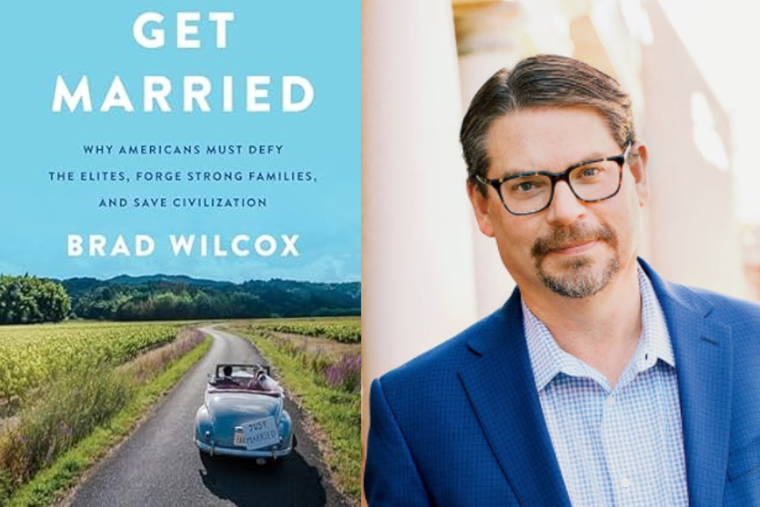


Enjoy the show?
To be notified when new episodes go live, subscribe below.
As a bonus, you'll receive the first chapters from our book, It's Not Your Fault: A Practical Guide to Navigating the Pain and Problems from Your Parents' Divorce.
TRANSCRIPT
Transcript produced by artificial intelligence. Please pardon any errors!
It's no secret that a world is very sexually broken. I mean, we can think of pornography, sexual compulsions, addictions, hook up culture, paying for sex, infidelity, sex trafficking so much more. But how did we get here? How did our world become so sexually broken? That's a topic we tackle today with famous author and speaker Christopher West. And so if you've wrestled with sexual Brokenness or wondered how our culture became so sexually broken. Keep listening. Welcome to the restored podcast. Helping you heal and grow from the trauma of your parents', divorce, separation or broken marriage. So you can feel whole again, I'm your host, Joey Panelli. This is episode 104. This episode is also part five of our series called Healing Sexual Brokenness. So, on this show, we feature stories and expert interviews about how to heal from the trauma of your parents', divorce and broken family or how to navigate the pain and the problems that stem from it. And one of the biggest problems that often stems from your family breakdown is unwanted sexual behavior. Like the things I mentioned at the start of the show, pornography, masturbation, hookup culture, paying for sex infidelity and so much more. In fact, one expert found that almost 90% of those who struggle with sexual addiction come from a broken family. And so in this series, you'll get tactics and resources to overcome unwanted sexual behavior so you can find freedom and trigger warning. This is obviously a mature topic. So we recommend putting in earphones or at least not listening around Children with that. My guest today is Christopher West West is the author of more than a dozen books, including Word Made Flesh, Theology of the Body Explained Theology of the Body for beginners and good news about sex and marriage. His work has been featured in the New York Times on ABC news, MS NBC and Fox News and on countless Catholic and evangelical media platforms. His global lecturing best selling books, multiple audio and video programs and popular podcasts. Co-hosted by his wife Wendy have made him into one of the world's most recognized teachers of Saint John Paul, the second theology of the Body. He is the president of the theology of the Body Institute, but of all his titles and roles. He is most proud to call himself a devoted husband and father. Now, in this episode, we talk about God and faith and if you don't believe in God, you're totally welcome here. Anyone listening for a while knows that this is not a strictly religious podcast. So wherever you're at, I'm glad you're here. And if you don't believe in God. My challenge for you. Is this just listen with an open mind, even if you were to skip or take out the God parts, you're still going to benefit from this episode. Also, if you're listening on audio and you want to see the images that Christopher references, just go ahead and click on the links in the show notes. And now here's my conversation with Christopher West Christopher. Welcome to the show. It's so great to have you here. Thank you, Joe. It's a pleasure to be with you and your audience. We're honored. There's so much sexual Brokenness in our world. I think everyone listening would agree. I mean, the examples are endless. We have pornography, sexual compulsion, addiction, hookup, culture, paying for sex, infidelity, sex trafficking, and so much more. I think we all desire better, but so many people feel stuck, they feel alone and they feel hopeless. But before we get to the remedy, I think it's helpful to go back in time. How in the world did we get here? We got here by misdirected desire. I think one of the most fundamental and important principles of a proper theological understanding of the world is, is this that the devil doesn't have his own clay? Uh What does that mean? It means the only clay that exists is God's clay, right? And God looked at the clay that he created and said, behold, it is very good. I I do this visual often with my, my audience is I'll take a piece of paper which hang on a sec. Uh Here I actually have, I'll take a piece of paper like this. And I'll say, I, I want you to imagine this is the most beautiful painting you've ever seen in your life. And I say, what is it? What's the most beautiful thing that, that there is? And I say this is man and woman just as God created us to be naked without shame. There's nothing more beautiful in the universe than this painting. Male and female. He created them. He blessed them and he said, be fruitful and multiply. They were naked without shame. That whole mystery of human sexuality and the call of the two to become one flesh so that life might come into the world. This is the most beautiful painting there is uh but there's an enemy who hates this painting and he hates this painting because this painting reveals the heavenly mystery of who God is. God himself is not sexual, but God himself is an eternal exchange of life, giving love, right? Uh A communion of three persons. And in the normal course of events, the union of the two man and woman leads to a third. And so we have a, we have an image here, a bodily representation or representation of the life-giving exchange of beauty itself, of, of the divine. And that's why the enemy hates this painting and his goal from the beginning was this. And this is exactly what has happened to this mystery of human sexuality in a fallen world. It gets all twisted up and, and this is what this is the classic mistake of spiritual people. And, and all of this is an answer to your question, Joey. But all of this has to be laid out to understand how we got in this mess, right? The typical response of spiritual people. And I put that in quotes because this is false spirituality, a false spirituality thinks you have to live a spiritual life ruptured from the body. And it's just not authentic spirituality. It is certainly not Christian spirituality but falsely spiritual people look at this crumpled up painting and, and what does it appear to be? It, it looks like trash, right? So spiritual people will say that's bad, throw it away and, and this is what you would call a puritanical approach to human sexuality. Spirit, good body, bad. Well, I find this fascinating in, in 1953 Hugh Hefner starts Playboy Magazine and this is what he said in 1953 he said I started Playboy Magazine as my personal response to the hurt and hypocrisy of puritanism in my strict Christian upbringing. Wow. Yeah. Yeah. So Hugh Hefner in 1953 pulls this crumpled painting out of the trash and says to the modern world, hey, people, you shouldn't throw this away and guess what Hugh Hefner was right on this point. He was right that we shouldn't throw this away. But where did he get it wrong and wrong with horrific consequences, all of which you named and were living through and we still are reaping the horrors of Hugh Hefner's mistake. Now we can't pin it all on Hugh Hefner. But I turned to him as, as kind of one of the main architects of the, of the sexual revolution and and more aptly, it's a pornographic revolution, right? I don't want to surrender the word, surrender the word sexual to the enemy. Sexual sexuality is a good word. Remember the enemy doesn't have his own clay, right? God created sexuality. He created us male and female. And he called the two to be fruitful and multiply. Sexuality is a wholly sacred reality. It's gotten all twisted up. Hugh Hefner's mistake was that, that he left the paper, the painting in its crumpled up form and he started reveling in the crumpled up version of the story, right? And he started saying to the modern world, don't you want to look at this? Don't you want some of this? And because most of the culture was puritanical in its approach to sexuality, when Hugh Hefner started saying, hey, you can have this. We jumped in, we we dove head first into this crumpled up version of the story. Here's another metaphor I use, right? We all have this hunger. We all have this yearning, this, this, this desire for love, for union, for affirmation, for beauty, for goodness and the proper name for that longing. The church herself uses this language borrowed from the Greeks. The proper name for that longing is, is eros. We all have this erotic longing for, for, for love, for union, for beauty. But here's the problem. Most of us grow up when it comes to that fundamental hunger. And I, I count myself on this list. Uh Most of us grow up with what I call the starvation diet Gospel, which is basically your hunger is bad. You need to repress all that. But follow all these rules and you'll be a good upstanding Christian citizen. Again, that's a puritanical approach, right? This is not authentic Christianity, authentic Christianity. I learned uh in my twenties, I'm now in my fifties. So this was 30 years ago, I learned from Saint John Paul. The second that Christianity is not a starvation diet. Christianity is an invitation to a wedding feast, a banquet of life giving love. But if you don't know about that, if you think Christianity calls you to starve erotic longing, then you're gonna become a quick convert. As I did in my teenage years, I became a quick convert to what I call the fast food gospel. And the fast food Gospel is the secular culture's promise of immediate gratification for that hunger. And that's what this crumpled up painting is. This is the fast food approach. Hugh Hefner started saying to the modern world, don't you want some of this? Look at these greasy chicken nuggets, you know you're hungry. Come over here, I'll give you what you want. And yeah, don't lie to me. The chicken nuggets taste good going down, especially when you've lived that starvation approach to things. But if that becomes your steady diet, fast food, eventually the grease and the sodium is going to catch up with you, right? And that's a picture of me in my college years, the grease and the sodium caught up with me, so to speak. And I was sick inside and it put me on my knees saying God in heaven, if you exist, you better show me why you gave me all these desires because they're getting me and everybody I know into a hell of a lot of trouble. Do you have a plan? What is your plan for sexual desire? And long story short that put me on a journey that led me to discover Pope John Paul, the second's theology of the body and, and Joey, I find this fascinating. This is all looping around to answer your question, how we got in this mess we got in this mess because we thought the only two choices were starvation or fast food. That's how we got in this mess. And if those are the only two choices, the chicken nuggets are much more appealing than the starvation approach. But here's what I discovered from John Paul the second, as I've already said, Christianity is an invitation to a wedding feast. And I find this absolutely fascinating. Right. At the same time, Hugh Hefner pulled this out of the trash can, this crumpled up paper painting and, and started saying to the modern world, hey, don't you want some of this? This is what you're looking for. Right. At the same time, a young Polish priest named Carol Voila who would many years later become Pope John Paul the second, who would many years after that become Saint John Paul the second. At the very same time, Hugh Hefner pulled this out of the trash can. He also did, he was responding to the puritanical error in the modern world and he pulled this out of the trash can and said to the modern world, you mustn't throw this away. But he did something Hugh Hefner didn't do by reflecting on God's original plan when they were naked without shame. And by reflecting on how the paper got crumpled up in the first place. And more importantly, how Christ came into the world. A a male born of a female, precisely to redeem masculinity and femininity. This young Polish Saints started un crumpling the painting for us so that we could rediscover the original beautiful, wonderful plan of God for making us male and female naked without shame. This is the true sexual revolution. It's the un crumpling of the painting. It's not reveling in the crumpled up version of things like the pornographic revolution, the true revolution, we could call a redemption of the body, a redemption of sexuality. That's the path of Christianity, not repression, redemption. How did we get in this mess? Because we confuse the fast food for the banquet, right? We are hungry. God created us with this hunger and starvation is not gonna cut it. There must be something else. There must be another way, there must be another place to take the hunger. And Christ says, come to me, all you who are hungry, come to me, all you who are thirsty. I will redirect your arrows towards the wedding feast. That's the true path to sexual wholeness. That's the true path to sexual fulfillment. That's the true path to human fulfillment. But when we don't know that true path we fall for when we don't know the banquet, we fall for the fast food. And that's why we're in the mess we're in. Wow, beautiful, incredible. And I think it's so helpful to have that historical foundation. And I remember just at different points in my life when struggling with, you know, pornography and just feeling that emptiness that you described that just getting so sick, feeling like can any good come out of sexuality? Like I truly wrestled with that question because I looked around and saw I'm like, man, this is just so broken and that's the danger, right? There when we indulge in this twisted crumpled up version of the story and we start to feel sick because we've done. So the danger is once again, what do we think this is evil in itself? And we think how can any good come from this? And we throw it away? And that's why I go back. I said the fundamental principle in all of this is the devil doesn't have his own clay. There's nothing that is evil in itself, right? Evil is always the twisting, the distortion of something good and true spirituality. True faith is, is never to throw the evil away. It's to let God come into that evil, to redeem it, to untwist it to restore us redemption. The very word redemption means AAA restoration, right? A restoration of an original good. And when we don't understand, there is a redemption to be had we see the good twisted up and we just think it's evil and we, we toss it away. That's how we got in the mess we're in. Wow. Wow. Wow. And when you say the word restoration, I think of maybe an old piece of furniture that's so valuable that's lost. Maybe some of it's flare its beauty. But if in the right hands of a wood smith like that can be restored, it can be brought back amen to its original beauty. Maybe not exactly as it was, but there can be so much beauty and we can also think of a church being restored right? When it's all the paints chipping, the marble looks horrible. We can take that away and resort back to its original beauty, I think. And I think this is apt uh I think of the Sistine chapel and, and over 500 years, all of the soot from the incense and the candles just caked this dark layer like a a cloud over the original pristine colors of Michael Michelangelo's human figures. And and John Paul, the second ordered this restoration project where these layers and layers of soot and grime were removed. And even art historians were in disbelief at the vividness of the colors because for, for however many hundreds of years, we just saw it covered in soot and we thought Michelangelo was kind of dim and dark in his portrayal. Oh no, no rightness, vividness and, and even more so to just make an apt connection. Uh John Paul the second, also in the restoration project of the Sistine Chapel, ordered the removal of many of the loin cloths that previous Popes had ordered to be painted over Michelangelo's original nudes. John Paul the second said, take them off, why take them off in the name of Christian purity? And then he said in the in when he dedicated the restored Sistine Chapel, he said, Michelangelo allowed himself to be guided by those evocative words of Genesis that the man and his wife were both naked and felt no shame. And then he dedicated the restored Sistine chapel with all these vivid colors in these original nudes. He he dedicated it as the sanctuary of the theology of the human body. Our bodies are not pornographic. Our bodies are the, they reveal the mystery of God. Our bodies are theological. They tell a divine story. They tell the story that God himself is an eternal exchange of life, giving love and we are destined to participate bodily in that exchange of life-giving love. And that's why the enemy hates that beautiful painting. And that's why he wants to twist it up so that we no longer see our bodies as the graphic uh uh uh an image of God. We rather see them as pornographic, an image of, of, of something twisted and distorted and base, incredible, so beautiful. And I remember Jason Everett in his book on John Paul the second talking about something Michelangelo said. I can't remember the exact quote, but please uh jump in if you remember it where I think some of the cardinals and bishops at the time were scandalized by the way, he was depicting the human body just in all its glory without any lo cloth. And I, do you remember the line? He said to them, I, I can, I can recall it but it was something, it was something to the extent of like the body isn't bad and dirty. The world has made it and it's just something bad. And yes, it's, it's the point he was making is that the body itself is not impure, but we are projecting our own impurity onto it. There you go. Right. And Saint Paul says it this way to the pure, all things are pure but to the impure, nothing is pure. And what does that mean to the pure? They're seeing the world as God created it to be. And God looked at everything he made and said, behold, it is very good, right? The only clay that exists is God's clay. All that impurity does. It takes God's clay and twists it up. So when we're coming to put it this way in this crumpled up painting those who are pure can see even in what is impure, this crumpled up version of things what's still in there, Joey, what's still in there? The original pure beautiful plan of God is still within this crumpled paper and those who are pure can see it and tease it out, right? But even for the impure, even when the painting is un crumpled, they're still projecting their own impurity onto it, right? That's what Saint Paul means. When he says to the pure, all things are pure but to the impure. Nothing is pure because they bring the impurity is in the way we see the world. It's not in the things of the world, it's in the way we see it. Blessed are the pure of heart for they shall see the mystery of God revealed through the human body, through a tree, through a waterfall, through a sunset, through all of God's creation. We come to see the mystery of God revealed and the pinnacle of God's creation is male and female. He created them and he blessed them and he called the two to become one flesh to be fruitful and multiply. They were naked without shame because in the beginning, they saw the world purely because their erotic longing had not yet been crumpled up and God gave us erotic longing. God gave us arrows to be the very power to love as he loves. In the beginning. Eros, we could put it this way in the beginning before sin, Aros expressed agape. What's agape? Agape is sacrificial divine love. Eros is meant to be the human expression of agape. But with original sin, eros ran out of agape. Aros got cut off from agape and when Eros is cut off from agape, Aros becomes inverted becomes a selfish thing and and the male is now looking at the female and vice versa as an object for my own selfish pleasure. Right? Shame enters the world right here, right? Shame enters the world. When Eros becomes inverted. When Aros gets cut off from agape, shame enters the world and shame is not saying the body is bad. In fact, shame is the recognition that the body is good, but you're looking at it as if it's a thing you're treating me not as a person made in the image of God. You're looking at me as an object for your selfish pleasure and Eve covers herself, not because her body is bad. She covers herself because her body is so good and she knows because of the goodness of her body, she's not meant to be treated as an object for Adam's kicks. Adam covers himself also because the the shame goes both ways. Eve is also looking at Adam now with a a manipulative distorted arrows. But here's the good news of the gospel. Where does Jesus perform his first miracle, Joey at a wedding? And what does he do? Changes water and so on? Why? Ok, we got, we gotta press into this. If we want to find the real cure or what ails us. We gotta press into the first miracle. Running out of wine is a symbol. John Paul the second tells us of of the original sin. What what is wine a symbol of in the Bible? It's a symbol of divine love and divine life poured out for us, right? Running out of wine is a symbol that eros has been cut off from agape. So what does Jesus do? He restores the wine in super abundance? In other words, he restores agape to arrows in super abundance, right? What is the goal of the Christian life? From this perspective? It's to get totally plastered. It's to get totally intoxicated on God's wine, right? Nothing of Christianity will make sense unless we understand it as this invitation uh for arrows to be intoxicated by agape, the commandments will make no sense unless Aros is intoxicated by agape. Nothing. The church teaches about sexuality will make sense unless Aros is intoxicated by agape. This is the first miracle because this is the first result of original sin. The first result of original sin is Aros gets cut off from agape. Aros runs out of wine. So the first miracle has to be the correction of the first consequence of original sin. And that's why the first miracle is the restoration of agape to eros. In other words, the first miracle is the un crumpling of this painting. This is our faith. This is Christianity. Wow, it's beautiful. It's beautiful. And I think if people really knew that it's so it's so attractive. And so we really knew this. We wouldn't take our hunger to the fast food. So this brings us back to your original question. How did we get in this mess? And I said we got in this mess because of misdirected desire. We, we thought that the fast food was the answer to our hunger. Well, put it this way, if the content is between starvation and fast food, well, who wins? The fast food will always win. But if the contest is between a banquet and fast food, which one's gonna win the banquet, the bank. Because that's what we're made for. What does Jesus say? Go out into the main streets and invite everyone to starve to death. No, that's not what he says. Go out into the main streets. What does that mean to real human life? Where people feel this hunger? Go out to the hungry people and invite them to a banquet. Invite them to the feast. My brother, you know, and I know that taking our hunger and our thirst to pornography, it's like drinking salt water, right? There's a semblance of OK. My tongue was stuck to the roof of my mouth. I was so parched. I was so thirsty and and there's water in my mouth now and, and now my tongue is loosened from the roof of my mouth. It feels like I'm quenching my thirst, but there's so much salt in that sea water that it's going to, it's going to increase my thirst in such a way that I drink more and more saltwater. And then I kill myself from the levels of sodium in my blood, right? So it's the semblance of satisfaction of my thirst, but I'm actually killing myself, right? You can, you can die from starvation, but you can also die from food poisoning, right? You can die from thirst and you can also die from drinking something that will kill you. We have to take our hunger and our thirst to that, which truly satisfies. And this is why the gospel is good news come all of you who are hungry, come all of you who are thirsty. I will give you bread from heaven. I will give you living water. So good, so good. And I think it's, it's so free too. Just to hear that the desire is not the problem. The twisting of the desire is the problem. And I think it's so interesting to look out in our world, you know, years back. And even to this day, there's this phenomenon of like 50 shades of gray and this whole kind of perversion of sexuality. But I think even underneath that, there's something so good and so beautiful, right? Not in itself all that 50 shades of great stuff. But underneath that, it's like this desire to be loved, to be wanted to be, you know, cared for, to be seen like all that good stuff. It's there, that desire is there. And like you're saying, behind every twisted crumpled up desire, there's something good that got twisted up and crumpled up. And this means there are three choices we have with erotic longing. We think there's only two. We tend to think there's only two indulge it or repress it, right? And if those are the only two options, which one looks more. Holy repress, right? We think repression is the answer to our indulgent. No, no, no, no. There are three choices. Don't indulge, don't repress open to redemption. And here's, here's a visual of what I mean, this is repression. We hold it all in, this is indulgence. We aim that longing at the pleasures of this world, right? And this is redemption where we learn to open those longings to the infinite at its root. Erotic longing is a desire for infinite truth, infinite goodness and infinite beauty, right? That means Aeros as Pope Benedict the 16th tells us eros is man's longing for God, only God is infinite, only God is infinite truth, goodness and beauty, right? And as John Paul, the second says the gospel does not invite us to repress Aeros. The gospel invites us to the fullness of Aeros, which implies the upward impulse, the upward impulse of the human spirit towards the true, the good and the beautiful. So that what is erotic says, John Paul the second also becomes true, good and beautiful. This is the path. Another name for this journey is prayer because prayer is nothing other than holy, the holy expression of arrows. Prayer is nothing other than becoming a longing for God. I like to put it this way. It's an analogy I often use, I like to say God gave us erotic longing to be like the fuel of a rocket that has the power to launch us to the stars, to infinity and beyond, right? But there's an enemy who doesn't want us to reach those stars. And his goal is to invert those rocket engines. That's why so many of us go out into the world. We're, we're looking for love and happiness. But when we launch with inverted rocket engines, it all backfires on us. Christ came into the world not to condemn those with inverted rocket engines. He came into the world to redirect our rocket engines to the stars. Beautiful and so inspiring and so hopeful and shifting gears a little bit. I think when it comes to this idea of like men and women, masculine and femininity. So often the Brokenness that we carry, whether it's sexual or not. But so often the sexual Brokenness we carry is rooted in a broken experience of the masculine or the feminine of men or women. For example, maybe a girl who was abused by her father might throw herself into the arms of men in a, you know, casual hook up just to feel that comfort that being wanted. She might also throw herself into the arms of women because she's scared to death of men and men. Yeah. Absolutely. Which I would totally understand or, or maybe it's understandable. All of our distortions are understandable when we have a sense of what happened to the human heart when we ran out of wine. And you're exactly right, Joey. It goes back to an identity crisis of masculinity and femininity. What does it mean to be a man? What does it mean to be a woman? The original blueprint is Genesis, right? In the beginning, they were naked without shame. And, and here John Paul, the second begins his entire theology of the body with the discussion of the, the the saying of Jesus where Jesus is talking to the Pharisees and the Pharisees say, is it OK for a man to divorce his wife, Moses allowed us to divorce. What do you say, Jesus? And Jesus says, Moses allowed you to divorce your wives because of your hardness of heart. And then he adds, but from the beginning, it was not. So Jesus points us back to the beginning as the blueprint of what it means to be male and female. If we don't go back to the beginning, then our starting point is going to be the crumpled paper. Yeah. Good. Exactly. And you know what? We're gonna conclude, we're gonna conclude that masculinity is toxic in itself. We're gonna conclude that femininity is toxic in itself, right? And we're gonna throw away the painting because we haven't gone back to the beginning. Fall in masculinity and fall in femininity are toxic, twisted, masculinity, twisted femininity are toxic. But we must remember those words of Jesus in the beginning. It was not so. And the good news of the gospel is that Christ came into the world to restore creation to the purity of its origins. This is our hope, this is our hope. And what do we learn about masculinity and femininity in the beginning here, I want to point out two Hebrew words that are used in the book of Genesis that shine a bright light on the authentic meaning of masculinity and femininity. We lose this entirely in the English. But in Genesis chapter one, when it says male and female, he created them, the Hebrew words are Zakar and Neva Zakar and Neva Zakar is Hebrew for male and neeva neqebah, but the B is pronounced with a V sound, Neva Zakar and Neva, he created them Zakar and Niva mean in Hebrew they have a, there's a happy homonym kind of a play on, on the word and Zakar means male, but it also means to remember the deepest identity of the male according to the pattern of genesis is for the male to remember divine love to the female. That is the identity of the male, that is the mission of the male to remember divine love to the female, right? Saint Paul will say this when he says husbands love your wives as Christ loved the church, you must remember divine love. That's your identity. Neva means female in Hebrew. But the happy homonym is that Neva also means to open. Now, notice, look at the male and the female body, the male body has the member that allows him to remember divine love. Uh This is shocking to many people and I'm I'm I'm not trying to be crass at all. I'm trying to reveal the holiness of the original blueprint, right? Do you know where we get the word testicles, Joey, I do not, I can't say I do. The word testicle shares the same root as words like testify, testimony, testament. What is the purpose of the male body? Right? Females don't have testicles, they have ovaries, right? What is the distinctive purpose of the male body? It is to testify to the eternal love of the father. It is to give testament and testimony. It is to remember the love of the Father Zakar. Look at the anatomy of a, a woman's body. She is literally designed by God to open, to receive divine love, to conceive divine love and to bear it forth to the world, right? So the body of the man is designed to remember divine love. The body of the female is designed to open to receive divine love. We see this ultimately fulfilled in Jesus and Mary. What did Jesus say at the last supper to restore masculinity? There were 12 men gathered around him and he said to each and every one of them do this in remembrance, remembrance of me. Do what? Love the bride as I love the bride by saying this is my body given up for you. Well, there is no more mad arrows. Pope Benedict the 16th tells us than the arrows that led Jesus to the marriage bed of the cross. Have you ever seen this depiction of the crucifixion from you? Yes. Yes. So what happened at the cross was the consummation of a marriage Christ is saying to his bride symbolized by the woman at the foot of the cross, right? It's absolutely critical that there's a male on the cross and a female at the foot of the cross. This is the absolute definitive revel revelation of what it means to be male and female. What's he doing? He's remembering the love of the father. What's she doing? She's opening to receive that love. And what happens? She becomes the mother of all the living. What does Jesus say the real man to the real woman? When he remembers the love of the father to her? He testifies to the love of the father. And he says, woman behold your son in reference to the beloved disciple, right? The beloved disciple is the mystical offspring of the mystical marriage happening through the union of the hearts of the New Adam and the New Eve at the marriage bed of the cross. And people think, OK, that's a little weird. Isn't that his mother at the foot of the cross? Yes, in the flesh, she's always his mother. But in the spirit, she symbolizes the church, she symbolizes the bride. It's right in the catechisms of the Catholic church that Mary symbolizes the bride of Christ, right? So this also Zakar and Neva to remember and to open, that's our deepest identity. But sin itself is a direct attack against male and female identity. If the mission of the man is to remember divine love. What's the antithesis of his mission? What's, what's his sin going to be? What, what's the opposite of remembering? Forgetting? He's going to forget who he is. He's gonna forget divine love and he's not gonna be able to give authentic testimony. This is what happens when the man runs out of wine. He forgets divine love. And now that initiation of divine love becomes domination and control of the woman. And if the man forgets, what's the woman gonna do? Her true identity is to open? But if he forgets, what's she gonna do? Close up? And she, if the man forgets, she has to close to protect her own dignity. That's what this crumpled paper is. The crumpled up painting is a car and Neva having forgotten and closed to divine love. Fascinating. So good. Yeah. What's the restoration? How do we hear men must remember? Right? Do this in remembrance of me and how, what enables Mary to be the open one? What enables Mary? The woman, the quintessential woman, the New Eve? What enables her to be forever open? What if she was saying her, her in her magnificat, the Lord has remembered his mercy. It's the fact that God that Christ has remembered that the Lord has remembered that enables her to remain ever open. Even though that takes her right here to the foot of the cross, she still stays open. This is the path for us. This is the redemption of masculinity and femininity. We must all because in a very real sense, we're all first feminine in relation to God because we're creatures, right? We're all the bride in this sense, right? And sometimes that wigs out men. They're like, ah, I don't like that imagery of being the bride. Ok. Choose something else that still puts you in the receptive posture and I'll say Jesus is the quarterback and you guys, you're the wide receiver, right? And what does the wide receiver have to do? He has to get himself open, right? So whatever image works for you just get yourself receptive and open. If we're gonna use the bodily image, that means we're all bride, right? We have to open to receive divine love in order to give it men, we cannot be men, the giving of that divine love, the remembering of the divine love. We can't give it if we haven't first received it. And here Jesus himself is the ultimate model of masculinity. How was he able to remember divine love? Because from eternity, he was open to receiving the love of the father. And so he was able to give it right? We as men, if we are to remember it, we have to open and this means Joey, we have to expose to Jesus all of our twisted up, broken, mucked up pornographic diseased humanity, right? We have the temptation to just bury this like I'm not gonna look at that. I'm not gonna look at it. It's dirty, it's evil. It has to come out into the light. We have to open this to God's mercy so that he can come into it so that it can get un crumpled. Jesus says it this way. He says, make sure these are the words of Christ. Make sure that no part of your body remains in the darkness, bring your whole body. He says into the light and make sure no part of it remains in darkness. This is Luke chapter 11. Uh It might. Yeah, Luke chapter 11, I'm pretty sure bring your whole body into the light and make sure no part of it remains in darkness. And then he says your whole body, your whole body will illuminate you like a burning lamp with its brightness. The problem is we prefer the darkness to the light, right? The only way to healing here is to bring what is dark in you into the light. He will not shame you. He will not scold you, he will not condemn you. He will come into all that is crumpled in you with his healing mercy and you will open up and you will be restored and the grime and the soot and the loin cloths, the fig leaves will come off those paintings and you'll be restored in your splendor. Now, it's not an overnight thing. It's take up your cross daily and follow me in this life. There's always gonna be some amount of leftover grime, right? It's not gonna be pristine in this life, but we gotta take up our cross every day and follow him and we will become more and more the men and women. We are created to be beautiful Chris. Thank you so much. I could talk to you forever. I know we're at the end of our time now, but I just want to make sure if people want to go deeper into all of this. Tell us about your books, your courses, your resources, how can people get those and how can people follow you online? Yes, I am the president of the Theology of the Body Institute and we're based in Pennsylvania, but we are a global mission and our mission is really to lead people on this path of sexual healing and redemption so that they can live a restored life uh so that they can live a redeemed life. Not that we are perfectly redeemed in this life, but we can journey on this path in a much deeper way than most of us realize. So that's why we exist. And we offer courses both online and in a five day in person format. Uh We, we have a very active youtube channel. You can learn about us there. My wife and I have a, an active podcast. It's called The Ask Christopher West show, hosted by Wendy West. And uh we've answered more than 600 questions on that. Podcast over the course of about over 200 episodes. So you can look in the back catalog there and plug in, you can go wherever you listen to podcasts. Uh Just go to theology of the body dot com. That'll take you to our main website. You can learn more about who we are and what we do there. Uh That's the main place to go. Yeah, we'll make sure to link all of that in the show notes too to make it easy for you guys to, to find those resources, Christopher. I wanna give you the last word. What final advice or encouragement would you give to anyone listening right now? Who's really struggling with sexual Brokenness? You are loved as you are, you are loved where you are. You need not be afraid to open up the darkness as it is and as you experience it to the light, but you are loved so much as you are and where you are that the Lord doesn't want to leave you as you are and where you are, he wants to lead you into the banquet and the journey of conversion from the fast food and the starvation approach to the banquet is long. It is arduous. Uh It's not a straight uphill climb. There are setbacks and we fall but you are loved thoroughly in and through it off. Do not be afraid to take all of your desires as you experience them to the one who loves you as you are and where you are and let that love lead you to where you are meant to be. That's the journey knowing we are loved as we are and that, that love will take us where we're meant to be. Wow, that was profound, so much to learn. I love his main point that at the core of our twisted sexual desires are good, true and beautiful desires. And if you want to learn more from Christopher, go ahead and pick up his books at the Theology of the Body Institute or TOB Institute dot org or just click on the links in the show notes. Now, speaking of sexual Brokenness so often at the root of sexual compulsion is trauma, but before you can heal it, you have to stand in our free mini course on trauma titled Why You Feel Broken consists of five short videos by a trauma therapist that answers the questions. What is trauma? What impact does it have on your body? How does it affect your emotions? What does it do to your mind and how does it impact your relationships again? Once you understand what trauma is and how it affects you today, then you can begin to heal and build the life that you long for and so to get the course for free again, it's free. It's really easy. Just go to restored ministry dot com slash broken again. Restored ministry ministry is singular dot com. Slash broken. Sign up for free and begin watching the mini course again. Go to restored ministry dot com slash broken or just click on the link in the show notes that wraps up this episode. And if you know someone who's struggling from their parents, divorce or broken marriage, share this podcast with them seriously, take like 30 seconds right now to message them this episode and then closing. Always remember you are not alone. We're here to help you feel whole again and break the cycle of dysfunction and divorce in your own life. And remember the words of CS Lewis who said you can't go back and change the beginning, but you can start where you are and change the ending.

#102: Healing Sexual Brokenness: Your Sexual Brokenness Isn’t Random | Jay Stringer
What if I told you that your sexual struggles could be predicted by your untreated trauma?

What if I told you that your sexual struggles could be predicted by your untreated trauma?
Today, we’re joined by author Jay Stringer who studied ~4,000 men and women who struggle with sexual compulsion or addiction, such porn, masturbation, affairs, buying sex, and much more.
In this episode, we breakdown his NEW study and more:
How the sexual fantasies and porn searches of the study participants could be predicted by their untreated trauma
Why we often repeat behavior that harmed us, such as sexual abuse or affairs, and how to avoid that
How anger actually drives unwanted sexual behavior
Why people from rigid or disengaged families are much more likely to struggle with sexual compulsion or addiction
How in order to break free, you have to listen to your lust and understand why you struggle in the particular ways that you do
Why typical lust management strategies like accountability software are not enough
Whether you struggle with sexual brokenness or know someone who does, this episode will help anyone find healing and lasting freedom from sexual brokenness.
Buy Jay’s Book: Unwanted: How Sexual Brokenness Reveals Our Way to Healing
Get FREE Mini-Course: Why You Feel Broken
Links & Resources
Full Disclaimer: If you purchase through the links on this page, your purchase will support Restored at no additional cost to you. Thank you!
To leave feedback, comment below or contact us.
Jay Stringer
Books


Enjoy the show?
To be notified when new episodes go live, subscribe below.
As a bonus, you’ll receive our free guide, 7 Tips to Build a Thriving and Divorce-Proof Marriage!
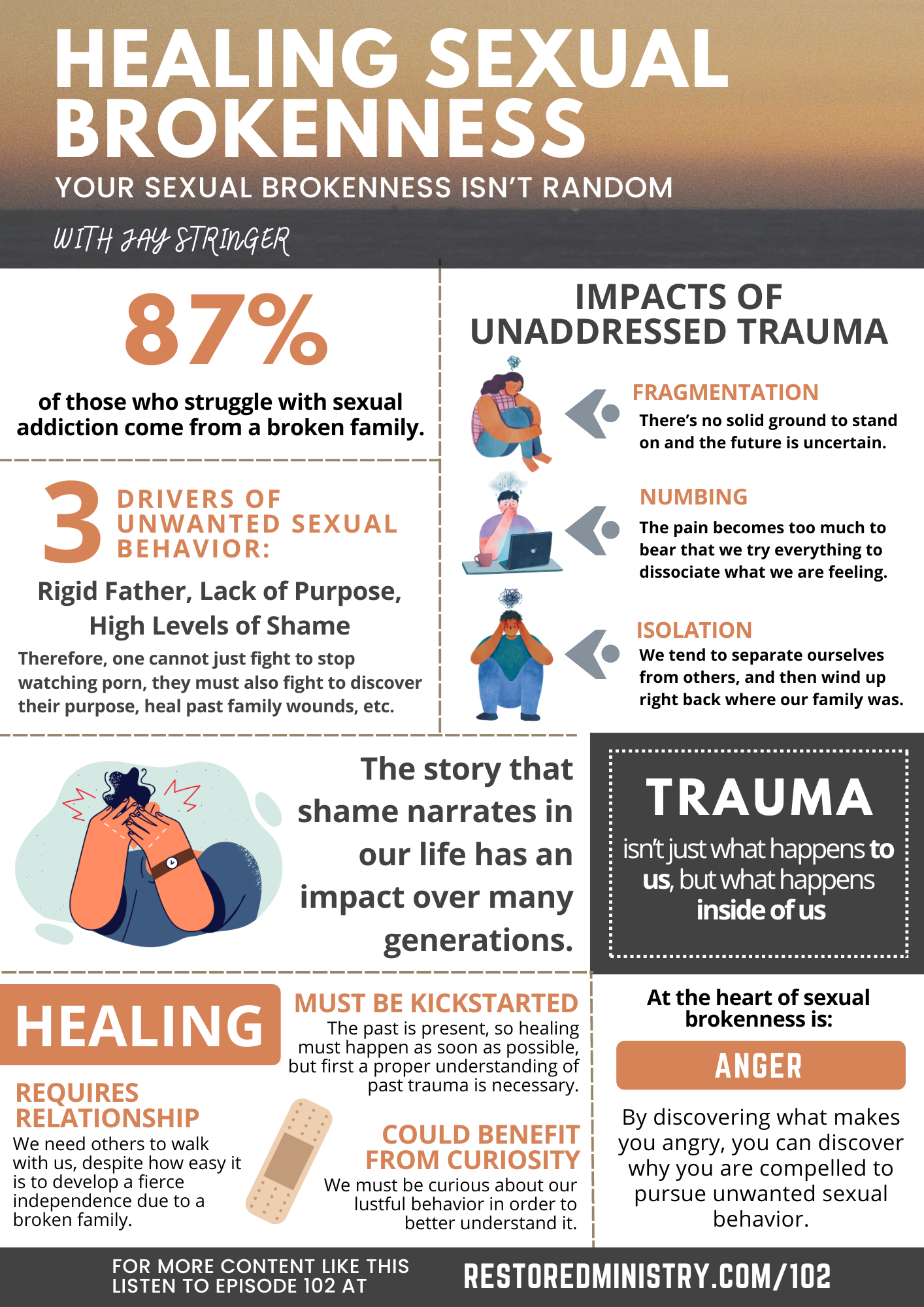
TRANSCRIPT
Transcript produced by artificial intelligence. Please pardon any errors!
What if I told you that your sexual struggles could actually be predicted by the untreated trauma that you've endured in your life. Would you want to know more about that? If so this episode is for you, that insight actually comes from the book, unwanted. How sexual Brokenness reveals our way to healing in which the author says this. He says, I'm asking you to consider the possibility that your sexual struggle is not random. Today, I speak to that author, Jay Stringer who studied almost 4000 men and women who struggle with sexual compulsion or addiction such as porn, masturbation affairs, buying sex. And more in this episode, we break down that new study and more like I mentioned, we talk about how the sexual fantasies and porn searches of the study participants could actually be predicted by the untreated trauma they endured. Why we often repeat behavior that harmed us such as sexual abuse or affairs and how you can avoid that. How anger actually drives unwanted sexual behavior. Really, really interesting stuff. Why people from rigid or disengaged families are much more likely to struggle with sexual compulsion or addiction. How in order to break free. You have to listen to your lust and understand why you struggle in the particular ways that you do. And finally why typical lust management strategies like accountability software are actually not enough, whether you struggle with sexual Brokenness or you know, someone who does this episode will help anyone find healing and lasting freedom from sexual Brokenness. So keep listening, welcome to the restored podcast, helping you heal and grow from the trauma of your parents', divorce, separation or broken marriage. So you can feel whole again and break the cycle. I'm your host, Joey Panelli. This is episode 102. This episode is actually part four of our series called Healing Sexual Brokenness on the show. You know that we feature stories and expert interviews about how to heal from the trauma of your parents', divorce and broken family or how to navigate the pain and the problems that stem from it. One of the biggest problems that often stems from your family's breakdown is unwanted sexual behavior like pornography, masturbation, hookup, culture, paying for sex and fidelity and so much more. In fact, one expert found that almost 90% of those who struggle with sexual addiction come from a broken family. In this series, you'll get tactics and resources to overcome unwanted sexual behavior so you can find freedom, little trigger warning. This is obviously a mature topic. So we recommend putting in earphones or at least not listening around Children with that. My guest today is Jay Stringer. Stringer is best known for helping both men and women find freedom from sexual Brokenness and pursue the life. They truly desire a licensed mental health counselor, an ordained minister and an acclaimed international speaker. Jay provides a safe and supportive environment for individuals seeking to address unwanted sexual behavior. Now, based in New York City, Jay has spent more than a decade at the forefront of combating the demand for sexual exploitation and porn geography. Through his clinical work, he offers a comprehensive understanding of the origins of sexual Brokenness, shedding light on the factors that sustain these struggles. Jay's award winning book, Unwanted is the culmination of an extensive research project that delves into the stories of 3800 men and women. That book has sold more than 100,000 copies and has widely been embraced by counselors, churches and small groups globally affirming its impact and relevance. I'm so excited for you to learn from Jay. So here's our conversation, Jay. Welcome to the show, Joe. Thank you for having me. It's an honor to be here starting out. I just want to say you are the freaking man. I just love everything you're doing. I have so much respect and admiration for you. I found your content so helpful. So thank you so much. I look up to you a lot. I'm honored to have you here. Thank you for reading the book and sharing it with others. So I have so many questions for you and uh so we'll just go, go at them. But uh starting out, I'm just curious, what do you care about, about this so much? Why do you care about this problem? Why do you care about people who struggle with unwanted sexual behavior? You know, one of the first stories that comes to mind is, uh I went through graduate school, got my master's in counseling psychology when I was probably in my mid twenties. And my grandfather whose name was Elmer died when I was about 25 26 years old. And I went to his funeral in sort of the North Florida area. And I remember being in his funeral and not sure if you've ever had this sense, but like the sadness that I felt was not so much that he had passed away, but far more the reality that I never knew this man in his life. Like we knew some of the cover stories, some of the big stories of his life, the headline stories, but we never really, I never really knew uh the man. And so I remember flying back across the country from Florida, back to Seattle where I was in grad school at the time and just having this kind of inner defiance rise up within me of, I need to understand my, my story, I need to understand who these major characters are and I need to get to know my grandmother. So the first one up on that docket was my grandmother, Dorothy, who was my dad's mom. And uh you know, long story I could share about her, but I always referred to her as just like a cold steel door of emotion. Like I have a memory of being eight years old. And she had called our house middle of January. And she had said, uh, you know, are your parents there? I said no. And I said, can I take a message for them? And she said, yeah, if you could just let your parents know that I was quite disappointed by what your family gave me for Christmas this year. I don't know, she's probably in her mid seventies or something at that point. And I'm like, I'm not even allowed to say that. Um And so that was the challenge with Dorothy. But I took her out to a cafe on her 90th birthday, went and got the skeleton keys that I wanted to represent the era of her birth year. So they were keys from like 1916, 17, 18, somewhere in that range, took her out to a cafe. I gave her these keys and I said, grandma, these three keys symbolize three lunches that I wanna take you out to, to learn more about your life. And you know, most grandmothers would be deeply touched by an expression like that. But my grandmother was horrified and five seconds passes, 10 seconds passes she says nothing. Uh eventually she looks back up at me and passes the box back across the table and says, Jay, there are some doors you just don't open. There are some stories you just don't tell. And that was probably what sealed the deal for me to become a psychotherapist is, you know, there are stories that so many of us have that we are too ashamed to tell and then you get closer to those stories and that's where shame defensiveness, blame really begin to rise. And so I think that was really the beginning of i it's not just me that has a story of secrecy and silence and judgment, not just my father, probably not just my grandmother, but many generations. And so part of what we found out about my grandmother was she was likely sexually assaulted by a family member sometime in her mid teens. And that was a story that she was never able to share with any of her friends with any of the religious communities that she was part of. And I've wondered so much since that day, you know, how her life, how my father's life, how my life would have been different if she had had a context to share some of the sexual stories that she was part of in life. And so I think, you know, I have my own history with pornography use and struggles. Uh But I think far more than that, it's a sense of like this is the story that shame narrates in our life has an impact over many, many generations. And again, just that inner sense of defiance of, I don't want sexual shame and stigma to have the last word in an individual's life. Much less many generations from now. So that was kind of the impetus to write. The book is as a therapist, seeing a lot of people struggling with infidelity pornography use and yet most of the resources that were out there were kind of like lust or symptom management of kind of bounce your eyes, put some internet monitoring on your computer or try and just militantly fight it or on the other side would just be like this is just a common issue that everybody faces. So don't try too hard to fight it because it's completely normal. And so I think just that sense of either lust management or just shame management. Those are the two primary ways that I, I see society trying to address these problems. And so that was the decision that I had to do some research of like, what could we find out about the key drivers that are influencing people to use these behaviors and pursue these choices rather than just stigmatizing or normalizing them. So good. And thanks for sharing. So vulnerably. Yeah, I I'm so excited to get into the study. So you studied a little under four 1000 men and women who struggle with unwanted sexual behavior. He also did a bunch of robust data analysis on those findings if you would break down that study and how it was done. Uh So we, we designed a research instrument that basically looked at, you know, we looked at attachment theory like what was people's attachment like to their mothers and fathers? Were their family systems very rigid, disengaged or very emotionally enmeshed. And then we looked at what are called adverse childhood experiences. And those are the kind of the big tea and little tea traumas that we all go through anything from bullying to sexual abuse to kind of uh issues of abandonment and neglect. And then we looked at what were people dealing with in the present? From depression anxiety, uh a lack of purpose in their life and all of that has kind of been researched before. But the really fascinating and slightly maybe even intrusive thing that we did was we asked people to share, not just do they look, get porn, but what are the things that they go to the internet for? Like, what are the search terms? And so several of the major porn sites would publish, you know, the top 10, top 20 search board terms on the internet in terms of porn. So we took, I believe it was like 10 or 15 of the number, the top 15 searches that were out on the internet. And we just were like, what if we put that in the instrument as well. And we had a team at New York University handle some of the analytics with it because I don't have my background or phd and analytics, not smart enough or have the patience for that level of TDO and boredom and expertise. But uh that's what we did. We put all that together like family story, uh role that you played in your family, current problems that you're facing and what's known as the arousal template, which is kind of a constellation of thoughts, images, sensations, fantasies that bring sexual arousal to someone. And we were just really curious what we would find and that was what the data came back is if I were to say like the thesis of my work in that book, unwanted would be that, you know, sexual problems are not a life sentence to sexual shame or stigma. They're a road map to healing and growth. And so we found that sexual fantasies that people were troubled by or wanted to outgrow uh were not random at all. Uh They were actually a direct reflection of the unaddressed issues of their life. And so that's the premise of the work that I do with people is, you know, let's put the problem in the foreground. Let's get really curious about where it comes from, why it might be manifesting in this way and begin to break those things down so that we can understand what driving it. And so we can learn how to heal and then also how to outgrow it so good. And I've read a good amount on this topic, especially just in my past, having struggled with pornography and other un monos behavior and your book is just so revolutionary. There's nothing like it. And, and so that's why I wanted to talk to you. And that's why I, I love the book and I recommend it wherever I go. On. That last note that you mentioned about, um, you know, studying the specifics of people's struggle. I was really blown away about how the sexual fantasies and how the even the porn searches of the individuals in the study, like you said, could actually be predicted by their past untreated trauma. Would you go deeper into that? So, yeah, so a couple, you know, these would be more softball tosses, but I think they're good to be able to understand and break down a little bit. So we looked at, ok, let's say that you were a man and you were drawn towards kind of themes of college or teen porn or maybe you wanted to see someone that was, had a more petite body type or a race that suggested to you some level of subservience. Uh We wanted to see what was driving that and we found that the three primary drivers of that were a very rigid father growing up, a lack of purpose in their life and high levels of shame. So if we were to just play armchair psychologists, just for a moment, if you're growing up with a father who tends to be very authoritarian, very rigid part of what you experience in life is a level of powerlessness, right? So he has all the power, he makes the rules, he has the regulations and he might rule with an iron fist or it just might be like a look that can really shame you into compliance. So when you're growing up in that family, you're gonna feel powerlessness, but also probably some level of humiliation under his reign. So we have that unaddressed story, which how do you talk to your dad about that? You can't, how do you talk to friends about that? You usually don't, but that that issue has to go somewhere. So then this person grows up into someone who's trying to get their career started, but has all this unaddressed family of origin stuff that they've never addressed. And so then they feel a lack of purpose in their life. And one of the things we found in the research was that if the man is struggling with the lack of purpose, meaning he looked back over the course of his life and saw a lot of failure. He felt just a sense of being stymied or stuck with making any movement in his career. He was seven times more likely to increase his involvement in porn compared to those who had, uh, a really solid sense of purpose in their life. So we have this story that begins in childhood where you're, you have no power and then you grow up into a man and you feel like you don't have any power in your life. Well, that's one of the primary allures to pornography is not just lust or fantasy. It's a level of power that for, you know, nine minutes, 10 minutes, 30 minutes you can get exactly what you want, see exactly what you want to see and you feel like you have power and autonomy over your life. And that's a rare experience for someone like that. So as you can see if you're only trying to fight to stop using porn, but you're not fighting to discover purpose or you're not fighting to heal some of those wounds that your father afflicted you with your struggle with porn is going to remain. And so I think that's the key insight is instead of just trying to fight and unwanted behavior, go back to fight to discover the meaning embedded within it. And if we can heal that and outgrow it, then we have a really solid chance of not just like being free from porn, but far more making movement and finding flourishing in life and living a life of meaning. Precisely. There's so much more there than just, yeah, like the absence of pornography. I hope people don't misconstrue this whole series that we're doing on healing sexual Brokenness, like there's something so good on the other side. And so I love that you're, you're mentioning this. I, on a similar note, I'm fascinated, especially given that we're serving, you know, teenagers and young adults who come from what we call broken families where there's divorce, separation or just a lot of dysfunction. We're fascinated by this idea of repetition, compulsion. We don't talk about that a lot in the show. But this idea of how you might repeat behavior that you even despise. That's my understanding of it at least. And so an example that I often give is like a girl who maybe grew up with an abusive father who ends up marrying an abusive husband, even though she swore she would never do that. And so more particularly for my audience, so many of us come from families where mom or dad cheated on the other and now they're terrified of repeating that in their own relationship. Yeah. So two questions on this. Why has that happened? Like, why do we repeat these behaviors, especially in this sexual context? And perhaps more importantly, how do we avoid that? Let me address like, how do we avoid it first? And then let's go back. So there's this great quote from a guy named Richard Rohr who says the pain that we do not transform, we transmit always someone else has to suffer because I don't know how to. So uh that's what's happening intergenerational is that we have all this pain uh that a lot of us have not always been able to transform. And if we don't transform that pain, we are going to transmit it onto the next generation. And so how do we transform pain? I would say it's a matter of finding grief and finding anger. So grief is that sense of it when you're staring down the Brokenness of many generations, like, you know, the story that I shared about my grandmother when I'm dealing with my own compulsion for secrecy and shame, you know, I can either choose to try and hide that or I can try and will my way through it or I can begin to allow tears to fall with regard to. This has been a deeply broken sexual story in my family for generations, right? And so the only I think real appropriate response to that is a level of grief, but also the other side to that is a level of anger of I don't want trauma to win in my life or my kid's life. And so if we can kind of hold that razor's edge of, sometimes we need grief for some of the tragedies and heartaches that we have known. But also we need a level of anger and defiance to say like no more. Uh this is not going to continue in my family. So any of my clients that I see that are able to hold that paradox of grief and anger end up transforming their lives. So that's how we get out of it. Why does that happen? Uh We are learning more and more and more every day about why this happens. So, one of the fascinating studies uh that's been not just studies but field of studies would be epigenetics and that's the study of gene expression. And so they have done studies with uh something like water fleas. So water fleas that are exposed to a predator, they will give birth to other water fleas that are born with a helmeted or horned head. And that will remain on the water fleas for subsequent generations until the threat is removed from the water. So that's just microscopic water fleas right born with helmeted heads because of the trauma in the water. So if that's happening with water fleas, how much more is that happening with family systems? How much more is that happening with your sexual story? So, epigenetics, I think begins to answer some of that, some of the other things that we know. Uh and this would just be an adage in psychology would be uh we go to people that are familiar to us because they are familial. And so that sense of if you are used to a particular man or woman or archetype in your family, that might be compulsive or uh using substances or having a secretive life that gets coded in your neuros systems, neurobiology is like, this is just a normal person to be around. And so the people that you feel comfortable with later on in life will probably end up resembling what your body has known. And so just that sense of that's part of the repetition. Uh but the other thing I would say, and then I'll pause to see if there's any clarification would be it. You know, all of us that are growing up in these types of home have endured some level of trauma and trauma according to people like Gabor mate and Peter Levine would say that trauma is not just something that happens to us. Trauma is also what happens inside of us in the absence of an empathetic witness. And so just that sense of when the divorce occurred, when the alcoholism occurred, when there was some level of Brokenness, it wasn't just that that event occurred. The bigger question is who held your tears? Who held your rage? Uh who held your face in the midst of a family system breaking down? And if you didn't have someone that offered a face that was able to bear witness to what you went through, you have unaddressed trauma in your life and what's the impact of unaddressed trauma? Uh Three things we have fragmentation. Number one, number two would be a sense of the need to numb. And then the third would be isolation. So, fragmentation, numbing and isolation. So, fragmentation is just that sense of uh when the story is broken. When the family is broken, there's not solid ground to stand on. There is difficulty. We don't know where to go. We don't know what tomorrow looks like. We don't know what five years looks like. And so there's just a sense of how is a nine year old girl supposed to hold the reality of a family imploding or blowing up due to some particular issue where you can't. So you go from this sense of profound fragmentation of life into the need to numb and why do we numb? Well, because the pain of what we are experiencing is far too much. And so that could be finding porn is a great numbing agent, promiscuity. Uh Hooking up with people could be a great numbing agent. Uh Alcoholism, just a lot of substances or screen time can all help us numb and dissociate from the pain that we're experiencing. But then after fragmentation, after you've found kind of the go to numbing device, uh you will inevitably end up in some level of isolation from what you're experiencing. So the shame of what numbing you chose or just the reality that you don't have a lot of people in your life that are able to bear with to what you went through. You end up highly isolated in life. And that's the story that gets repeated over and over again is that we feel fragmented in our adult life. It's too painful to deal with our own family or our own career. So then we find things to numb out with and then we eventually feel isolated and then we're like, dang it. Uh I'm right back to where my family was. Why am I so screwed up? What's wrong with me? My whole family is messed up. I'm messed up. And then that's really where that sense of shame solidifies in our life. Wow. I know that's a lot. No, it's amazing. Generational trauma. But that's, that's how we heal. But also that's why it keeps happening. No, this is so relevant to our audience. And I'd invite everyone listening to actually rewind and listen to that section again because there's so much there. It's so dense. It's so rich. It's so good and there's so much I want to say, but I can relate on such a deep level to everything that you said. So I was 11 when my parents separated and that just shattered my world. Uh They later got divorced and it was just really difficult. And one of the ways that I numbed was pornography. A friend of mine introduced me to it and, um, fell into that habit. Thankfully, I was able to get it out of my life, but it was, um, certainly some an escape, a distraction from the pain in my life. That was just too much to deal with that sense of feeling just broken or fragmented like you said, I, I felt that palpably Jay, like it was palpable through high school into college. It was like, man, I just, I feel so broken. I know I need to heal and I just had no idea how to go about that, which is actually why this ministry exists because I don't want other young people going through the same thing like they deserve better. Um Another thing that you mentioned was just like going to what's familiar. So I've seen this a lot and the young people that I work with, especially when it comes to relationships. It's like, yeah, we, we end up kind of back with people who treat it as similar as our family. Like you said, even to the point that we've noticed that even to the point that healthy relationships feel boring, like they literally feel like uninteresting because we're looking for drama, we're looking for dysfunction and the lack of it seems like this might be isn't the right thing and, and that is just mind blowing as well, so, so much to say there. But thank you for going through it and just want to give you a chance to comment on any of that. Yeah, it's heartbreaking to see these patterns be repeated. But I think that that there's yeah, there's so much in there for healing and growth and I think that's, I mean, that's what we talking about is like there are so many things in our present life that do need to be addressed, that we do need to heal, that we do need to outgrow. But if you are engaging that issue with a level of contempt, like how could I be so stupid or what's wrong with me? Uh You're not going to heal or grow and so growth and healing require a level of curiosity and kindness. And that's what we're getting at is, can you at least be curious about why you might be drawn to the partner that you're drawn to? Can you be kind to the reality that you have an unaddressed sexual struggle uh that you don't know what to do with and most of your efforts to change that uh have actually, you know, thickened the plot. And, and I think again, if we can hold that razor's edge between, how can I be curious, how can I be kind? But also I have a lot of integrity with regard to, I don't want this to, to ruin my relationships. And I don't want this to rob my experience of joy in life. That's really where change will begin to unfold. Makes so much sense. I, I think one of the struggles for this audience in particular coming from these divorced families especially is that so often um because divorce is so common, it becomes so normalized, it's not even called the trauma. So that point that you mentioned about isolation people, I can't tell you today, like how many people we've heard who reach out and say, like I just feel so validated, listening to interviews like this, hearing the experts, like you on the show talk about this stuff because it's just so freeing. And um one other thing I wanted to mention on repetition, compulsion was, um I've noticed and I've heard this from other psychologists as well that you so sometimes kind of go down that path of that unhealthy behavior that you observed growing up almost in an attempt to rewrite the ending of the story. It's like, well, you know, dad or mom cheated on the other. If I maybe start going down that path, I can end it in a way that I wanted them to do that. But uh any final thoughts on that before we move on. Yeah, I mean, there's so much there. Uh one thing that I was thinking about when you were talking uh would just be like we have to think about this in terms of attachment as well. So like when you know, when you, when there's a divorce that happens, your attachments are severed. And so that you found porn at a point where your attachments were severed, that's the work that we want people to be doing is, you know, how have these broken attachments with a mom or a dad actually? Like where is that playing itself out? And for a lot of people, they begin to kind of get a sense of I would never felt attached to my mom or my dad. But that first time that they experience porn or that first time that they uh took a substance, it was like a warm hug that they had never had before. And so that, I mean, I think just even that language would be just really important to understand your attachment. So the point that you were making with regard to people feeling validated and listening to your podcast, um a a little bit bit of kind of neuroscience on that and brain neuroscience, I guess as well would be we have something in the left uh prefrontal lobe called Broca's area. And Broca's area is what's responsible for speech. And so any time that there is a trauma, Broca's area goes offline and so you may have even had that experience in your adolescence or childhood where you know, the divorce happened or something rocked your family and then people are like, how are you? And it's just an aggravating awful question because you're like, I don't know what to say to this. It's like I have no freaking words for what I have been through. I don't know how I talk about any of this kind of stuff. Well, why is that? It's not because you're dumb. It's not because you're stupid and just can't articulate something. It is a form of trauma where Broca's area goes offline. And so again, back to the empathetic witness, but also Brene Brown talks about this in her newest book, she quotes a German philosopher who says that the limits of my language are the limits of my world. And so that's part of what this podcast is doing and what you're doing is you're expanding people's language, which is expanding their world, which is helping them make sense of what they have been through. And so that's where, you know, having an empathetic witness, but also a podcast or just any language that helps people name what they've never been able to name before. Uh group therapy, really important for people coming out of these types of family systems as well because you get to hear other people's experience and you're like, yeah, I had that experience as well like, yeah, moving schools or the shame in my community or you know, how do I deal with the relief of it was really good to get that narcissistic man or what and out of the house. Uh So grateful I can kind of date my life before my mom left and then after she left because it got so much better for me. So we just never quite know in sharing our stories with one another. Uh what's gonna resonate and then what's going to help us develop and cultivate our language for what we've lived through? Wow, so good. And I appreciate all that. If people want to learn more about the neurobiology, neuroscience, are there any books that you recommend starting with because I could tell this is so relevant to our audience. Yeah, I mean, a lot of the, I I would say the body keeps the score by Bessel Van Der Kolk is a great um initial read. If people haven't read it, it's just, I think it breaks down pretty complex uh neuroscience and just the understanding of a lot of what we're talking about, of how does how does the body keep the score from what we have been through? So I would say go there first and then Gabor Mate, uh the myth of normal dives into some of that as well. So there's a lot more neuroscience coming out around all this. But I would say start with Bessel Van Der Kolk or Gara mate. Thanks for that. And I know everyone will, will love hearing that if you were to add anything. Like let's say you were to sit down with a young person. You already said so much. I think that applies to this. But let's say if you're going to sit down with the young person to have that difficult conversation with them about, yeah, just them wrestling with, dealing with their mom and their dad cheating on the other. Would you add anything to what you've already said if you were to again sit across from them and just help them wrestle with that? Mhm. Well, I think it's like the, what's the meaning that they made out of the affair. Right. So, um that's just really important to get a sense of, you know, were there details that they were privy to that, you know, sometimes it was a sense of, it wasn't just the detail of the affair, but they had some sense that their mom or their dad lacked integrity in other areas of their life as well. So, were they brought in, you know, there's just, there's so many different ways that this could play out within a family. So some families, it could be, I, you know, my dad was always traveling and on business and so it, it was never a surprise that he had something of a hidden life or it could be that some parents bring their Children into some of the drama and some of the love affair of what they are developing. So there's this sense of, you know, what did your parent ask you to hold? Was it more emotionally and mesh leading up to that affair? Or was there just more neglect and abandonment? And then that usually has implications from there of kind of what I would follow. So those issue, those questions that you're asking are so good Joey, but it's also, it's so contextual to, yeah, what's the family system like? And you know, all of us have, even though my dad's name is John and my mom's name is Beth. I have a different relationship to my mom than any of my siblings. Uh they have a different relationship to my mom than any of us. So even though we have the same mom, each of us have different mothers. We have different fathers. And so uh that's usually the work of therapy is to kind of get a sense of who was your mother father to you, but also who were they to you as well? Love that. And I think it's an important reminder that there's not just like this one size fits all five step plan to heal anything in your life. Like it is so contextual, like you said, it is so personal and I think it is that way for a reason because like you said, healing happens in relationships. And so, well, that's a relationship with a therapist, a friend, a mentor. We really need people to go into that depth, into the darkness, into the Brokenness with us. In order to come out the other side, we really can't do it alone. And for someone like me who's just like, I've noticed this a lot with our audience too. Like we developed this sort of fierce independence because we felt like, well, you know, I can't really rely on mom and dad, like they're so busy, boring with each other that I kind of have to learn how to stand on my own 2 ft. And then we carry this Brokenness with us through life and these unwanted behaviors. And it's like, man, I really want to get these out of my life. But I have this tendency to just rely on no one just to rely on myself to have this first independence and it puts you in a really tough spot. Yeah. So two things there, part of what we're talking about is the role that each person developed within their family system and you've got to understand your role. So for some people there is that approach of, I can't rely on anyone from here on out. And then yes, you develop a life of a lot of secretive behaviors because you're trying to make your life work outside of the context of relationship. And so that's, you know, the work of healing is to be able to say, I bless that boy, that girl that figured out a way to get through life through being fiercely independent. But then usually at some point in your thirties or forties, there's usually going to be a crisis of the person that you became in response to your trauma is now causing new problems. And so that's always the paradox of this work is let's bless that adolescent, that young adult that learned a way of life to help them survive. But anything that we begin to lean on in the aftermath of trauma will inevitably create problems for us later on in life. And we've got to address that. So that's one role, another role might be, you know, it's the, the son or the daughter who their mother or father never got the therapy or the friendship that they needed in the aftermath of the trauma. And so that child feels like I can't really go off to live my own independent life because I need to kind of tend to my mother or to my father because if I don't, I am something of their lifeline. And so it's that sense of the umbilical cord is still connected to your mother because you feel that sense of if I go off and live my own life, she's gonna be alone. And so I will sacrifice some of my desires and some of my independence. Uh so that she doesn't have to face some of this loneliness. And so then you try and get married, maybe you do get married and then there's this fierce loyalty of like, you know, my spouse wants me to be doing this, but then I really need to go on vacation or at least make a family visit to my grandmother or, or to my mom or to my dad. And again, what is that exposing? It's exposing the role that you learned how to play in a very broken system. And so, you know, don't think that just because you're fiercely independent, you have escape trauma, but also don't think because like you're still very enmeshed with your family system that that event from 20 years ago is still not affecting your life today. So in the words of kind of the writer Faulkner, the, the past is not dead. It's not even past meaning it's playing out right now. One of my guests said that sometimes the past lives in the present. I thought that that's exactly what you're saying. It's, it's so true. And I think that's the work of feeling that we can put the past in the past and live fully in the present, which is beautiful man. There's so much I want to ask you, but let's switch gears a little bit. I was so fascinated by the connection you made in the book between Lust and Anger. Just mind blowing. You said this. You said, I believe male anger to be at the heart of much of the sexual Brokenness and violation in our world want to find out why you're so compelled to pursue unwanted sexual behavior. Figure out what makes you so angry, what's happening here? Why does anger drive those behaviors? Yeah. So we need to think about kind of these behaviors, unwanted sexual behaviors as a river. And so the comparison that I make would be like, think about your unwanted sexual behavior as like a river no different than the Mississippi. And so why is the Mississippi river so powerful? Well, it's because it's fed by so many other tributaries. So the Missouri, the Arkansas, Tennessee Red, I forget how many tributaries the Mississippi has, but it's a lot. And so that sense of what we're dealing with is not just one issue. Uh There are several tributaries that flow into it. And so uh in a lot of kind of faith based communities, they always address, they always try to address the issue of lust. And so what they do is they try and put a dam on that river and they put internet monitoring there. They try and get people into invasive voyeuristic accountability groups. Uh They try to get people to kind of just will themselves to kind of dam it up so that it doesn't flow. And then they find out that it, you know, maybe might work for a little bit, but then it, it inevitably fails. Well, they, they've only looked at one tributary which would be some level of lust, but they haven't looked at other things like unaddressed trauma. They haven't looked at family of origin issues. They haven't looked at the issue of anger. And so anger would just be that sense of, you know, that the man that I was describing earlier with regard to lack of purpose in his life. And also, you know, some level of a rigid father, well, that anger has to go somewhere and for a lot of people, if you don't have a and most of us don't have a context in our world today to talk about the anger of a broken family, to talk about the anger uh that we have towards our moms towards our dads or towards just really anything, uh, any presidential candidate, like we are a people that have so much unaddressed anger in our lives and it's being lived out always. And so that's one of the appeals to porn. You know, let's say that you're in a marriage and someone doesn't like sex as much as you do and you feel like there's some desire discrepancy. Well, if you don't tend to that with honor and delight for one another, there is going to be a sense of I'm angry at you. So I'm gonna go behind your back and feel really justified doing what I want to do because you don't desire sex as much as I do. So therefore, I'm gonna take my anger to this world of porn. Uh Or maybe, maybe you didn't get the promotion that you wanted at work and you feel like that person that so undeserving got it. Well, what are you gonna do with that? Anger? And a lot of times people will begin to find that porn or an affair really begins to kind of help soothe them and calm them down after they're really angry or upset about something. So again, there's just so many different key drivers and don't think that you can just address it through trying to combat lust. It's just, it's not an effective approach. It's a losing battle for sure. Elsewhere in the book, you say this, you say the first key childhood driver of unwanted sexual behavior is having a family system that was characterized as rigid and or disengaged. You mentioned that earlier in the show, Dr Patrick Cars, one of the leading researchers on sexual compulsivity found that 77% of those who struggle with sexual addiction report coming from a rigid family and 87% percent report coming from a disengaged family. I know we can't go too deep into this. But what are the characteristics of those family, families and anything else to add on why they play such a big role? Sure. So, I mean, a rigid family really comes down to this issue of kind of discipline. So discipline for some families might be, yeah, like a, a paddle, corporal punishment. But it could also be something more subtle where you just knew that like you needed to get straight A's or you were gonna be interrogated by a mother or a father. Uh It's usually some sense of like we need conformity in this family because conformity gives us some level of stable ground to lean on. But then if you don't conform in some way, there's usually some discipline that you have to undergo. Well, what's the root word of discipline? Uh It is a disciple which means to teach. And so that's the really key question is, was the disc was the discipline in your home? Did it help you to understand your emotions and why you did the things that you did or was it really trying to use control based methods against you? Um And that's usually, uh you know, a big part of those rigid families is it's gonna create a lot of powerlessness, a lot of humiliation. And so you have to take that somewhere. So what I say in my book is that a rigid family creates fertile soil for anger to emerge, what we were just talking about disengaged family systems would be, you know, much more abandonment and neglect. It's just the sense that care is overlooked in your life. Um And so just from that attachment standpoint that we grow up looking for someone looking for us. And this never ever stops. As long as we are alive and conscious is that we're looking for the delight. We're looking for the faces of people in our world to love us, affirm us, be there for us. And if we are looking out into our family system and there is no loving, compassionate, a deeply delighting face that is given back to us, we are going to scan the horizon looking for someone to look at us. And a lot of times that's what will happen where I will hear people that come from disengaged family systems. And it's like, yeah, the first time that I saw porn, what I was drawn to were the eyes of someone in the porn film because it felt like they were looking into my soul. And I had never had that experience of someone just kind of looking deeply and wanting me. Well, that's an attachment womb that's being sexualized into porn. And so what I say in my book is that disengaged family systems, create fertile soil for lust to emerge. And so I think that's the work is we've got to not just fight against a sexual problem. We've got to go back to the core stories with our parents, with our families. Uh where there is unaddressed, anger and unaddressed grief in our life. Absolutely. No. So good. And, and you're hitting on stuff that this audience deals with so much. So, thank you for, for going into this so well, I've heard you also speak about this tension in families between honor and honesty. Again, we can't go into it too deeply. But what does that look like? And how do you hit that proper balance? Because so many of the young people that I walk with, they really struggle with that, you know, there's like this protection they have of their parents even though they harm them in a lot of ways. Um But they still love them and you know, we want to honor that. So, so how do you hit that balance between the two? So yes, I think we have to hold the tension between honor and honesty. And I would say most people had believed the lie that if I am honest about my mother or father or faith community that I could not truly honor them or the other realm would be if I honored my mother or father or faith community, I could not actually be honest about what I experienced. And I just to point out like that is not the way it is supposed to be. So I think of some of the, you know, ancient. So something like the story of Abraham uh that is held by many different faiths. We know that Abraham in kind of Genesis 12 left everything that he was supposed to leave to go into this land that God had called him to. Uh he is the father of many faiths. And at the same time, we also know that he tried to traffic his wife at least twice. And so it's this sense of like it, the, you know, the Bible is an ancient near east document, which means it's much more of like an Eastern context than anything we would know about it in the western world. So in the western world, we might tend to bend a bit more towards just trying to be honest, uh and unbridled honesty in our day age, but we don't always have honor. But in an, in an Eastern context, I mean, it's all family honor. So just that sense of like we're able to hold, you know, the paradox of this person is full of faith, but they're also a profound coward. And that's the work is, you know, when I've had to address my own family system, I've had to understand that, you know, my dad was consistently reading psychology and theological text together. And so when I think back to my origins of how did I learn how to integrate kind of faith and psychology and being naturally curious about why things work the eyes in the heart and the brain that I have were formed by many conversations with my dad throughout my childhood. So I can honor him for that. But I also have to be honest, that much of the debris in my life and difficulty with attaching and feeling my emotions and having the ability to kind of know what to do with some of the heartache and trauma in my life and his abandonment of my family. And in very significant moments is something that I've had to grow increasingly honest about. And so I think that's the work is uh I, I deeply love my dad and honor him for who he is. And he's a deeply broken man that created a lot of debris in our family. And that Brokenness is not grounds for separation or blame. But I think it's that sense of the grief in our family and in the midst of honoring and being honest about our grief. I think that allows for a new family life to emerge where it's not trying to keep up the appearance of what the stringer family name was supposed to represent. But it's also not trying to kind of just be cruel and angry with one another. But it's a sense of the honesty creates a new foundation of intimacy and that's what we're after. Beautiful and that's healing in itself. We're almost out of time here. But in order to break free, you know, you say that you need to listen to your lust, you mentioned that before. I love, love your analogy of imagining your sexual life as a house. Would you explain that? Yeah. So it probably should have addressed this early on in case people are like, why would I think about my sexual fantasies or porn searches? But uh the basic premise here would be I encourage people to think about their sexual life as a house. So just imagine it's late in the evening and they feel that familiar knock of lust or desire come to their door and just that sense of what are you gonna do in that moment? And some people will, you know, put a force field around their house, they will try and just say no, they might call a friend and say I'm really struggling or other times you just resign to like it's worse to fight this thing. So I'm just gonna let it in and let it ransack various rooms of my house. So as you can see most of the approaches that we take, either try to stiff arm these issues or they just kind of like, let them in. And so the approach that I take in my book and some of the online courses that I have is what would it mean for you to go out onto the front porch of your life and begin to ask your sexual life questions? Like, I wonder why this form of pornography has been appealing to me since I was the age of 15? Or? I wonder why I, I tend to be most seduced into an affair or to porn on a Sunday evening instead of the other days of the week. I wonder what's happening there. Uh So I want people to just develop a sense of curiosity about their life. So get out onto the front porch, ask your sexual life questions. Why am I drawn to this? Why do I love this? I wonder what the meaning is within this particular fantasy or I wonder why I can't reach orgasm without thinking about this particular person or this archetype or this fantasy. And I think that's the, that's the work of healing. It's a bit odd and counterintuitive at first. But I think curiosity can really take us so much further than just a desire to militantly fight something or uh even just praying over and over again to find healing. Uh I just, I think that those, that repetition just doesn't, it's not very generative for us. Yeah. No, so good. I love this approach. So much better than kind of what's typically thrown out there, like less management mastery in some way, like you say. So. Good Jay, you're the man. Thank you so much for your time. I don't want to keep you any longer if people want to get the book and the course in order to kind of be guided through everything that we talked about. How do they do that and how do they find you online as well? Probably the best would be just Instagram uh A Y underscore Stringer underscore the reason for all the underscores is I think there's another British crime fiction that is also J Stringer. So which is actually he was first to market it. Yes, those are your secret identity, right? Yes, exactly. So uh you can find me there website is jay dash stringer dot com and there are assessments that people can take uh if you want to learn this approach and learn the key drivers, there's what's called the sexual behavior self assessment that you can take. Uh the journey course is a faith based course for people that are looking for a new paradigm to address this. Uh unwanted is my book. And then we do a lot of individual intensives uh with my team. And then we also have a training program for leaders. So if you are a therapist, if you are a coach, a clergy of any kind, uh if you're in any type of leadership position, helping people to outgrow these problems we have what's called the unwanted guide program. And that's a 13 week training for professionals to help them understand their own story so that they are more effective in, in teaching others. So good Jay. Thank you so much for your time. Thank you for everything you've done. I want to give you the, the last word quickly. Any final words of encouragement or advice for everyone listening, especially those who struggle with unwanted sexual behavior. I just keep going back to curiosity versus contempt. And most of us the way that we tend to engage our own life, our own relational life, our own sexual life is principally out of self contempt or other centered contempt and contempt, especially for us who have known trauma feels really powerful. Why? Because within fragmentation in our current life, fragmentation from our past, we need a sense of sure footing and contempt provides us with a sense of certainty in the midst of uncertainty. So if you can resist the temptation to choose contempt for yourself or to someone else, and you can begin to get curious about your life or someone else's life, it will be so much more beautiful, so much more transformative than anything else that you could choose. So give curiosity a try. Wow, Jay is amazing. His content in his book is just so so helpful. And the main takeaway from this episode, as you can tell is your sexual Brokenness is not random. It's not random. The key to healing. It is actually understanding why you struggle in the particular ways that you do. And Jay's book will help you do that again. It's titled Unwanted. How Sexual Brokenness Reveals our way to healing. Just click on the link in the show notes. If you want to buy that, I highly highly recommend it. And if you're not ready to buy the book, you can get the first chapter for free by going to J dash stringer dot com slash book or just clicking on the link in the show notes. So often as you can tell from this episode at the root of sexual compulsion or Brokenness is trauma. But before you can heal it, you have to understand it. Our free mini on trauma titled Why You Feel Broken consists of five short videos by a trauma therapist that answer the questions. What is trauma? What impact does it have on your body? How does it affect your emotions? What does it do to your mind and how does it impact your relationships again? Once you understand what trauma is and how it's affecting you today, then you can begin to heal and build a life that you long for to get the free mini course. It's really easy to just go to restored ministry dot com slash broken again. Restored ministry ministry is singular dot com slash broken to sign them for free and begin watching the mini course again. Go to restored ministry dot com slash broken or just click on the link in the show notes that wraps up this episode. If you know someone who's struggling from their parents, divorce or broken marriage, share this podcast with them and closing, always remember you are not alone. We're here to help you feel whole again and break the cycle of dysfunction and divorce in your own life. And keep in mind the words of CS Lewis who said you can't go back and change the beginning, but you can start where you are and change the ending.
#101: Healing Sexual Brokenness: Freedom from Porn | Matt Fradd & Jason Evert
When it comes to pornography, there are basically two types of people:

When it comes to pornography, there are basically two types of people:
Those who believe that porn is wrong and harmful.
And those who do not.
But beyond the arguments, millions of people struggle with a pornography compulsion or addiction. They want to break free, but they feel stuck and hopeless. No matter what they try, it doesn’t work.
In this episode, popular speakers and authors Matt Fradd and Jason Evert join me to answer these tough questions:
Is porn harmful and wrong? If so, why?
What does it do your brain and your relationships?
How do you actually break free from porn?
What resources are out there to help you or someone you care about?
Buy the Book: Forged: 33 Days Toward Freedom by Jason Evert and Matt Fradd
Buy the Book: The Porn Myth: Exposing the Reality Behind the Fantasy of Pornography by Matt Fradd
Get the FREE Mini-Course: Why You Feel Broken
Links & Resources
Full Disclaimer: If you purchase through the links on this page, your purchase will support Restored at no additional cost to you. Thank you!
To leave feedback, comment below or contact us.
Jason Evert Podcast
Matt Fradd
Books
Enjoy the show?
To be notified when new episodes go live, subscribe below.
As a bonus, you’ll receive our free guide, 7 Tips to Build a Thriving and Divorce-Proof Marriage!
TRANSCRIPT
Transcript produced by artificial intelligence. Please pardon any errors!
When it comes to the topic of pornography, there are basically two types of people, those who believe that porn is wrong and harmful and those who do not. But beyond the intellectual argument, millions of people right now are struggling with the pornography compulsion or addiction. They want to break free but feel stuck and hopeless and no matter what they try, it just doesn't work. They always seem to fall back into it. In this episode. Popular speakers and authors, Matt Fred and Jason never join me to answer these tough questions, is porn harmful and wrong. And if so why, what does it do to your brain and your relationships? How do you actually break free from porn? What resources are out there to help you or someone you care about? And finally, we discuss a 33 day resource to help you break free. If you believe that porn is not wrong or harmful, this episode will just give you a lot to think about. And I challenge you to listen with an open mind. And if you struggle with a porn addiction or compulsion, not only will you be given tactics to break free, but more importantly, you'll be given encouragement not to lose hope. So, keep listening, welcome to the restored podcast, helping you heal and grow from the trauma of your parents, divorce, separation or broken marriage. So you can feel whole again and break the cycle. I'm your host, Joey Panelli. This is episode 101. This episode is actually part three of our podcast series called Healing Sexual Brokenness. So typically on this show, we feature stories and expert interviews about how to heal from the trauma of your parents', divorce and broken family or how to navigate the pain and the problems that stem from it. And one of the biggest problems that often stems from your family's breakdown is unwanted sexual behavior, like pornography, masturbation, hook up culture, paying for sex infidelity and so much more. In fact, one expert found that almost 90% of those who struggle with sexual addiction come from a broken family. And so in this series, you'll get tactics and resources to overcome unwanted sexual behavior so you can find freedom and a little trigger warning. This is obviously a mature topic. So we would definitely recommend putting in earphones or at least not listening around Children with that. My guests today are Jason Everett and Matt Fred. Ja is a speaker, author and podcast host. He's traveled to six continents, speaking to millions of people for the past 25 years. He's lectured at dozens of universities including Harvard Princeton and the United States Naval and Air Force Academies. He's a best selling author of more than 15 books, including How To Find Your Soulmate without losing your soul. The Dating Blueprint and Forged. He and his wife Crystalline are frequent guests on radio shows and podcasts throughout the country. And their television appearances include MS NBC Fox News, the BBC and EWTN. Their resources have been distributed in over 40 countries helping teens and young adults to build authentic love. Jason earned a bachelor's degree in theology and undergraduate degrees in counseling and theology with a minor in philosophy at Franciscan University of Steubenville. Actually, my alma mater as well. Jason lives in Arizona with his wife and kids. Matt Fred is the creator and host of the popular podcast, Pints with Aqua. He's the author and co-author of several books, including the porn myth and delivered. Matt earned his undergraduate and graduate degrees in philosophy from Holy Apostles College and Seminary which also awarded him an honorary doctorate. He lives in Steubenville, Ohio with his wife Cameron and their four kids. Quickly, I want to let you know that Matt's connection was a little bit spotty during the interview. So I apologize in advance. You should be able to make up most of it, but it is a little bit spotty. Here's my conversation with Jason and Matt. Matt and Jason. Welcome to the show. Thanks for having us on. Thank you. Pleasure to have you. There's two types of people listening right now, there's people who believe that there's nothing wrong with pornography that it's not damaging. Uh, but then there's also people who do believe that there's something wrong that it is damaging, but they struggle to break free. And so in this conversation, I want to talk to both people. But let's start with the first to everyone listening. Who doesn't believe that there's anything wrong with pornography. If they came up to you and asked, what's wrong with pornography? Why is pornography wrong? If you had to put it in just one sentence, I'm curious, what would your answer be? And then I'd love for you to elaborate on it. Let's start with Jason. What's your one sentence? I would say that it's because people who are created to be loved and pornography is the opposite of that because it's using another person instead of loving them beautiful matt. Yeah, I would say that over the last 40 years, there's been a ton of research that's come out of academia, different branches of science, like neurology, psychology, and sociology. And all of it says unambiguously that pornography is detrimental to the consumer, to our relationships to society. So if you're interested in science and you're pro science, then that should at least get you interested in in some good reason to so good, let's go deeper there. Then Jason, what else would you say on this topic? And one of the things I learned from you when I heard you speak uh years ago when I was a freshman in high school is porn destroys your ability to love. And so if you want authentic love, porn is not your best bet. Yeah. No, people will say, well, porn doesn't really hurt anybody. I don't know that you could get a statement more factually untrue than that one. I mean, the, the user, his capacity to love is, as you said, is diminished, the person behind the camera, the person filming it, the person in the scene. I I just think that porn only exists because it shows so little of the person because if it actually showed the full woman or the full porn star, what's actually going on in her life, how she was sexually abused when she was eight years old by her uncle that she was raped on a date when she was 18. Uh Then when she was 21 she entered into this, I remember one woman who had had that she decided to quit after being in the porn industry after her fourth abortion, she said I just couldn't take it anymore. But could you imagine if you saw this full picture? Uh like I'd known of one woman. She said that after the, the filming of the scene, it only took three minutes for the whole finished thing to be done. But the filming of it took hours and hours and hours and she was just brutalized. During it and she said it was so bad that when it was done, I had to go to the hospital. Uh but the, the porn producer was such a jerk. He didn't even drive her there. He called an Uber to take her to the, er, after the filming. But imagine if the viewer you saw this, ok, this scene that I'm seeing right here, uh A child that is conceived during this scene is gonna be aborted six weeks later and this woman had to go to the er, afterwards and this and that, like, how could you possibly get gratification out of staring at something like that? If you saw the full picture, you saw the full woman porn would go out of business overnight. That's why it has to reduce the woman only to her sexual value and show nothing else. And so, yeah, the viewers capacity to love is harmed. Kids are harmed, the porn. I mean, everybody's harmed and so we got to ditch that, you know, objection right away and then Matt. Yeah, let's, I, that's wonderful. Jason. It's like we've reduced morality to, if it doesn't hurt, it's OK, which is just a real reduction of the way we should be viewing anyway. Two people can choose to do things that hurt them and that doesn't make it ok. There's a famous story in Germany of a man who had always wanted to eat another one and a man who had always wanted to be eaten. They got together and this actually occurred, both of them consented to it. But I would hope that most people, all people would say this is horrific. Obviously, that's a very intense example. But in pornography, even when two people consent to degrading each other or consent to me lusting over them, people are still being hurt and this is still a perversion of the, the sexual faculty. It, it makes it such that it isn't as it should be. And I had, I had once heard also in the occult kind of the motto uh for witchcraft is harm ye none. And so basically saying, don't harm anybody and then you do whatever you want. But it's like, ok, if that's a good enough motto for the witches, shouldn't we shoot a little bit higher in our own ethical life. And so that should be a red flag. If we think that that consent is the highest good, there's got to be other goods higher than that. Then the greatest of which is love. And Jason I've heard you say, and I'd love you to expound upon this that it's like we reduce our morality in the sexual realm to so long as I'm not raping her, I'm basically at the pinnacle of masculine morality or something. Yeah, like, well, she agreed to everything. How could I be in the wrong? And I, I convinced her to do this and I convinced her to that and she was ok doing this. Well, we're good. It's like, dude, where's your moral backbone? I mean, where's your compass? It's like his barometer is what she's willing to do. And as long as I'm not forcing her to do anything. Oh, I'm quite the gentleman. It's like, ok, I think we got to set the bar a little higher here. Fellas. We couldn't agree more. Matt. Let's go deeper into the science. So, what does pornography do to your brain? And if you wanna talk about what it does to your relationships too, yes. Well, we used to say that only drugs can be addictive and since pornography isn't a drug, it's not something being injected or ingested, it's therefore not addictive. But since, uh, neuroscientist started looking into the brain, it's changed how they understand addiction. They now think that behaviors can be as addictive substances can. And we've heard, we hear a lot about dopamine these days but that when somebody consumes pornography on a regular basis, sort of downgrading occurs in the brain so that the brain cannot feel as it were dopamines effects in a way that it once did. And because of this, the brain is in a state of dopamine craving. And that's why the person immersed in pornography feels the need to perhaps watch more pornography and even more violent or shocking forms of it just to boost those dopamine levels up enough, uh, to get the same kick he did in the beginning, I heard someone use this analogy. He said, if you were on the phone with somebody and they started yelling, you might remove the phone away from your ear and you'd be able to hear them. But if they started to speak, normally you wouldn't be able to hear them unless you brought it back up to your ear again. And likewise, if I spend so much of my time looking at pornography, it's as if my brain is being shouted at by dopa. And when I shut that laptop lid and go out into the world and try to enjoy the things I've, I used to enjoy. I can't feel or hear dopamines effects as it were as I once did. And this is why people immersed in pornography tend to lose interest in very good and beautiful things that you find interesting and obviously that has a negative impact on not just romantic relationships but friendships and family life. Absolutely. Jason anything. Yeah. And I once heard that the one, the pleasure center of the brain uh is the medial preoptic nucleus. And it's very easy to train you think of Pavlov's dog. You know, he'd feed the dog a be ring a bell, feed the dog. And eventually he just ring the bell dog salivates. And what happens is when we get immersed in this world of fantasy and porn, we essentially train our brains to associate sexual joy with dirty, illicit, forbidden sexual fantasies that are always new. But then you transition to a real relationship and your wife is not dirty. She's not illicit, she's not forbidden. She's not a fantasy. She's not ever new. And, and there's a mad thing, like, how, how do you readjust? How do you be, like, ok, I just taught my brain that what is most sex satisfying is something other than a human relationship. And then I try to enter a human relationship and, well, she can't put up with my porn problem. Well, she must be approved. It must be her issue. I'm not actually cheating on you and you could just see how it would deteriorate the very fiber of that relationship because of what it's done to the guy's brain or to the girl's brain because we got to be fair. This isn't just some guy issue. More and more women are struggling this as well. Get, getting into this sometimes out of curiosity. Like, what do I need to look like? What do I need to do? What do I need to be? But I need, we need to remind them that they were never even created to be porn and they were created to be loved. A good point. I love that. I think often I've been thinking about this more and more about how porn lies to us. But, but in a way that's it. It's so much more insidious and goes so much deeper than we often realize And I know for me when I started to, when I became a Christian at the age of 17 and started to try not to look at pornography or masturbate, that sort of stuff. I kind of had this intellectual conversion where I realized that I probably shouldn't be treating people as consumable goods, you know, like animate providers of pleasure. And I kind of thought, well, that's it. Like I, I understand it now but, you know, I've been married 17 years and I still wrestle with liars that I apparently are still holding on to at some level about what pornography and what Hollywood has taught me about the way what women are, how they should respond, how they should desire these sorts of things. So, it's, yeah, I just, just to that point, I think it's a lot more insidious and goes a lot deeper than we often realize it sinks very deeper. It's just, and I remember you having like points about what porn teaches men about women. Some, like the, the value of a woman is determined by how much lust she provides to you. Yeah. Well, yeah, I mean, that, that's a, that's a big one. I mean, wouldn't even start there of just like, ok, then you start treating women according to how much lust they're generating in you. And if I don't feel a lot of lust towards that woman, then I don't even treat, give her the time of day. Whereas this one, you know, is really sexually alluring and so all treat her in a different way. And so you become very utilitarian just using people according to what you're getting out of this arrangement. And for the guy who's getting hooked on this stuff, I think in a sense he's, he's got that moment of male validation in her eyes that the way she looks at me is like, I'm handsome, I'm desirable. I'm powerful. I'm good, I'm sex and all these things that I really don't think that I am. But just for the moment, she makes me feel those things and then you get on this high and then you walk out of the world and just crash afterwards of just like, wait a minute, the girls in my gym, the girls at the mall, like nobody's looking at me that way. In fact, they look down at me if they were to find what type of guy I am behind closed doors. And so there's a lot of power in the way that a woman I think presents herself to a man. And there's a lot of power in the way that a man looks at a woman and, and whether he's looking at her as a thing as a collection of body parts, I think women can sense that from 100 yards away and, and it creates this kind of restless vulnerability and resentment in the woman towards the guy and even perhaps towards her sexuality itself where she could even swear sexuality. I'm asexuals. I'm not into any of that stuff because of how porn fi it's become. But likewise, if a man grows in purity of heart, uh he can give his beloved this piece of the way that he looks at her. Like, wow, he's not looking at me for something he can get from me. He sees me as his respected and beloved companion. And I think everyone wants to be seen that way and every man wants to get to the point where he can look at his beloved that way. But porn really ensnares us in this cycle of OK, you make me feel valid, you make me feel manly. But then when it's all over, you feel like I'm not a man, I'm just a boy trapped in a man's body. And so to find freedom, obviously, we got, it's not enough to say, hey, look, this is why it's bad. This is why it's damaging. We got to get to deeper roots to find healing. We often talk about the feminine genius, but I would say that the masculine genius could be summed up as strength on behalf of others. But uh with pornography, it's, it's the opposite. It's I'm taking your strength to validate my poor self esteem or something like that. I think we all kind of realize that look to a woman to validate my masculinity is not the way to go. And I think at our core we know that that's fake. But Jason, like you're saying, like you said before, Matt too, there's something about it that's so ensnaring. Like we get back to it even if it is fake and maybe that's, maybe that's just so important to begin with. Like, pornography. Thank you. Perfect. Right. Like, it'll make you feel alive, you know, really important to say those things. If it didn't, it wouldn't be this multibillion dollar industry and people wouldn't find it so difficult to quit. But then you go a little deeper than that, say, well, what's pornography promising? And, and what is it actually resulting in? You know, because I don't know if I'm parroting Jason here, I'm sure you said something to this effect, but it promises us freedom and we find slavery, promises us entertainment, we become bored, it promises us adult, adult entertainment. We become increasingly juvenile. So it does give us something in the short term, but it leaves us emasculated, bored and um unfulfilled. And anybody who's looked at pornography I think is aware of that. Like, that's just a common experience that men have when they and I'm sure women when they engage in pornography during the anticipation and act, it, it might feel incredibly rewarding in a but then as soon as it's done, you're like, oh my gosh, what the hell am I doing with this beautiful gift of sexuality? And there's a reason we feel like that. Yeah, I couldn't agree more. And I think so much of it is also sought after for some sense of adventure, some sense of like, you know, the rest of your life kind of, you were saying before Jason might feel incredibly boring, you might feel so unvalidated. Um, but pornography feels exciting, it feels like some sort of an adventure. So, I mean, I guess the challenge there for people is like, go find real adventures. They're out there. I mean, people for thousands of years have found that sort of adventure. It doesn't need to be found. And that's Jason. Did you have some say in that? Yeah. Sometimes when I talk to people about trying to break free, one of the first things I encourage them to do it. Ok. Look at, when are you messing up? Where are you messing up? What's the circumstances there? Are you bored? Are you lonely? Are you angry? Are you stressed out? Are you tired and perfect? Yeah. Yeah. When I'm bored or, you know, it's when I'm all stressed out, I go to that for some relief. But it's in a sense a bit like alcoholism. They say that the emotional age at which you get hooked on alcohol and I would say drugs, porn, whatever is the emotional age at which you remain until you learn how to cope with moments of desolation with healthy consolations instead of false cons. And so I'm bored, I'm lonely. I'm angry. I'm stressed. I'm tired. Boom. I'm on my laptop, I'm into porn. Did it solve the problem temporarily? Yeah. I mean, just for the moment I was on that I could forget about all this other stuff I felt wanted. I wasn't lonely, certainly wasn't bored for that time being. And, you know, and, and it seems like, ok, it solves the problem then as soon as it's over, all the problems are there and they're deeper. And so it's like, ok, I'm bored, I'm only, I'm angry, I'm stressed, I'm tired. Maybe you need to take a nap. Maybe you need to go for a jog. Maybe you need to connect with your family. Maybe you need to get a job, maybe to get off video games, maybe you need to go, go for a hike, go, go bench press, like go sweat, like go do something, get some healthy dopamine, flooding through your system instead of always thinking like, ok, sitting on my couch all day on flipping through Instagram reels. Why do you think you're bored out of your mind? Why do you think you're lonely? Because the only things that would actually remedy this thing is getting off the screen, engaging in reality and doing something noble. And so obviously, it takes a little bit more effort to do that. But that's the only way that you become a man when you're able to say, yeah, I am bored. I am lonely. I'm not, I'm really lonely right now. What do I gotta do about that? Well, maybe I should start up a young adult group at my church and get to meet 30 people. Maybe that would work better than the porn website. Jason. I'm curious, what effect does pornography have in addition to what you already said? What effect does pornography have on a macro level on our culture? Uh, I mean, it's, it's impossible. I mean, how much time we got about four hours you could dive into this but just this isn't Matt's podcast. Yeah, I mean, yeah, I mean, you just think of the poor kids that have been exposed to that stuff. I think of two girls in particular. One girl told me, she said she's been looking at porn every single day for the past five years because she said that's when I found my dad's porn collection and he doesn't know that I know he looks and he doesn't know that I look, but every day since I found his addiction, it has become my own. Now. Imagine an adolescent girl for five years absorbing that violent degrading imagery. How do you transition from that into trusting a man with your body into what healthy sexuality is supposed to look like and what, what your body is supposed to look like, what the bedroom is supposed to look like? How do you heal and transition that when your own family doesn't know about that? Then I know of other people who basically had the opposite reaction found their dad's porn collection and said, look iiii I used to, to look up to my dad and now, now I can't even look at him anymore like I thought he was a better man than that. And my dad is lusting after girls who are two years older than I am. Why my mom's sleeping in the next room then erases internet history. Kisses my mom and goes off to work and thinks we don't know. She said it makes me sick. How much, how much I resent that guy. And so you imagine this stuff now compounding exponentially over the hundreds of millions of young people getting exposed to this stuff. Like, no wonder relationships are imploding after three months. No wonder kids just want to run to some dating app to com modify each other when it comes to dating relationships and none of it is ultimately satisfying us. And so, yeah, it, it's hard to, it's impossible to overestimate the harm that this is doing to young people, old people alike because I mean, I, I've met men who've told me they've been addicted to porn for 40 50 years. I get emails from the wives on a weekly basis of like, yeah, I'm trying to work with them but it's been 20 years and he, I caught him with it again. It's like, wow, like, how do you build a marriage in the absence of trust. I mean, the answer is you don't. It's heartbreaking. Jason. I, I recall you talking about a British researcher, maybe an anthropologist who studied all these different cultures over time and noticed that any culture that persisted in sexual immorality for, like, more than two generations eventually crumpled or something like that. Do you recall? Yeah, I believe his name is JD Unwin Un. Win for someone who wants to look that up. But, yeah, I mean, he studied ancient Greece and Rome and all these seemingly cultures that would never collapse. But once they diverted the sexual energy away from its natural end, which is marriage and the family, they just imploded. And you see like, ok, well, how are we here in America since the 19 sixties? Wow. Things are going, getting pretty messy real fast and that's why I think the family is so much under attack. Not because like, it's just a target of attack. It's, it's under attack because it is the weapon. I mean, you think of like the top gun movie, you know where Tom Cruise? Just that came out Maverick last summer or whatever the whole point of the movie was to attack. One thing and what was the one thing? It was the weapon, it was the weapon of the enemy. And so it became the object of all the bombs and missiles at the end of the movie. And so in the same respect, the family is the cell of resistance to oppression. GK Chesterton said, and, and that's a very, that's a very weapon that's needed to build up a civilization of love. And that's why it's under such tremendous attack. And so we've got to realize the greatest weapon we have our little holy families. That's why there's so much under attack. That's the solution to this cultural mess. And the only thing that's gonna get us out of the disaster that porn and the sexual revolution is driving us into. I think often what we do is we see the extremities of perversion and then point at it and seek to remedy it. But I was just reading this today from Acts chapter two verse 40 where Saint Peter says in his preaching immediately after Pentecost, save yourselves from this wicked generation, we live in a wicked generation. And if we're going to save ourselves from it, we need to acknowledge that the generation in which we live is actually wicked. We also have to take uh the words, you know, don't be polluted by the world or keep yourselves unpolluted by the world. Don't let there be a hint of impurity among you. And I think for too long Christians seeking to cozy up with the world, seeking to prove to the world that it's cool and tolerant has just given way too much ground. I was on an airplane flying back from France the other day and a couple of ladies were in front of me watching that movie, Wedding Crashes. I think Owen Wilson is one of the actors and I haven't seen the movie, but I glanced over a few times and I realized it might be funny. I don't know, I haven't watched it but it's deeply wicked and perverse. And I think as Christians in this kind of day and age, it's just, it's not enough to kind of cut off the flour. Like it's kind of the porn is a problem. We really have to be serious about not ingesting the same entertainment that the world is ingesting. And instead we've got to be ingesting that which is true, good, beautiful. And that's, that's tough. That's tough. I think a lot of people don't want to do that. We, we really, we want to just receive from the world and from the entertainment it produces on Netflix, peacock, et cetera, whatever we can. But especially for those who are in the midst of this struggle that I think all Christians, especially those who are struggling with sexual purity, which is gonna be so vigilant that is challenging. But I think there's so much freedom there if you actually do about what you're saying and we could talk about this forever guys. Um especially responding to this question of like, what's wrong with pornography. I wanna tie that question up there. Um But do you have any resources that you would recommend if someone's hearing this for the first time? And they want to know more about why pornography is damaging, why it's wrong. Yeah. Well, first I wanna pitch over to Matt because I know he's got a book he did in terms of the scientific research on it. And then I can talk about the one that we did together. Yeah. I wrote a book called the porn Myth which is a non-religious response to pro pornography arguments. I thought just like someone can make a case against abortion without appealing to Christian morality or scripture. Even though those things, I think obviously the strongest side, then someone can do that with pornography as well. So this book, the porn myth, there's no quoting of scripture, no referencing to Christ or the teachings of a particular church. It's just, here's the findings like I mentioned earlier, neuros psychology, sociology. So even if people watching right now, they're not religious and they're not interested in religious arguments. Well, they don't need to worry. This book isn't based on that. Um And so that book is on audible paperback and whatever. So that I, I was pretty happy with that book. I thought, I thought it was a, I tried to, I responded to about 27 arguments that people often, you know, like maybe animate porns or maybe masturbation is ok without pornography. All those sort of things that we maybe say to ourselves that we hear from society. Yeah. And, and that, and I teamed up a couple of years ago because so many guys and girls would come up and say, hey, look, I've been trying to break food from porn. I know it's wrong. I get the arguments but I'm good for like a two week and then it's back at it and I'm good for a month and I'm back at it, I'm good for a day and it's back at it. Like, how do you actually find lasting freedom? And so he and I met and I teamed up and created this little book called Forged. And essentially what it is is a 33 day game plan to find freedom where you're really getting to the roots of the issue that we're not just tackling it from a, you know, a neurological perspective or just from a spiritual perspective, just, just pray more Hail Marys and it'll go away. Obviously, prayer is an essential component. I believe the spiritual element is there. But also there's physiology we're dealing with there, psychology, sometimes emotional wounds and trauma. And so we really try to tackle the porn issue from a fully human perspective of emotionally, physically, psychologically, spiritually covering all these bases. And then with every day, it's like a 33 day challenge, you get emailed to you a free video from a different person. And so some are doctors and psychologists, some are more spiritual, you know, leaders in the church and this and that. So every day you're getting it from a different angle. So it's not the same talk and head. And that little short inspirational video is corresponding with that day's content to really get to the roots of the issue and help people that and it's obviously not a money back guarantee, 33 days and your porn is gone for the rest of your life. No, but it's 33 weapons in a sense that you can use in this daily battle because it's not like you, you sign some chastity commitment card and like, oh, now I'm good to go. I'm like this is something you're gonna fight for your whole life. And if you don't have the strategy in the battle, I think you've pretty much already lost before the battle began. So it gives those strategies of how not to lose your peace when you fall, how to start over, how to have accountability, all the different components because Matt and I felt we were hodge podging. People would meet him like, hey, try this filter and use this thing and call that counselor and felt like we were just patching things together. So we thought maybe let's just create one resource that's got it all. And uh and that's why he created the book for. And the idea is that you don't do it alone, you need to do it with another guy. Uh We have a similar one for the women called an uncompromising purity. Uh It's let lust is not just a guy problem that Kelsey Sco wrote. But this is the one specifically designed for guys to do in community where there just one guy, father, son, men's youth group, whatever do that persevere in 33 days. And I think you'll have the strategies you need to win because honestly, defeat is not an option here. I mean, being some 48 or 35 year old porn addicted husband or father, that's not on anybody's radar as the goal. And so this is just a battle, not only that you can win, but that you can't afford to lose. Also, I point out real real quick a ministry specifically for women would be Magdala Ministries dot org started by a friend of mine, Rachel Klei Magdala Ministries don't bog if they're women watching who are struggling with pornography and wanna find like a safe group of other women and, and, and if a woman is struggling because her spouse or partner is looking at porn, there's another one called Bloom for Catholic women. Uh Even if you're not Catholic, you find a lot of helpful stuff there because the women going through this, if their partners are looking at are suffering really a sexual betrayal, trauma, that's often gaslight. I'm just like, oh, you're just a prude or you're getting too worked up about this whole thing. There's a lot worse husbands out and all of her emotions and feelings get completely invalidated. Um And so she needs support through this whole thing as well. Not only the guy so bloom for Catholic women is a helpful one too. So I think that this is so needed. Especially Matt, I saw your interview with Dennis Prager and I think there's a lot of people out there who, you know, by all other measures are really intelligent, but they don't really understand what's going on with pornography, how damaging it is on our culture. So in the time we have left, I want to switch gears over to that second person that I mentioned, people who they know that pornography is wrong, they know that it's damaging. But Jason, like you said, they struggle to break free. And so let's go deeper into that content. If one of them came up to you right now and said, hey, how do I finally break free? What quick advice would you give them, Jason? Well, one is, does anybody else know about this except for me? Because if I'm the first person you're telling, uh obviously you haven't done the most important thing because in order to really strike at the wound uh of pornography, we've gotta, we've gotta address the pride issue of just like nobody can know that I'm not the guy who they think that I am. And so as long as you want to wear that little cloak, uh you're not gonna see a lot of victory. And so you need to have accountability, somebody that you can talk to someone that's a little further along on the road in terms of these battles instead of like, I look yesterday, hey, I did too see any good websites. Like, no, we need somebody who's gonna call us on and sometimes counselor is necessary finding whether it's a sex addiction therapist and really kind of getting down to the roots. There's an, an evangelical therapist named Jay Stringer who's got some really good stuff online about really getting to the core. And, and I like his approach. We just did a podcast with him where he talks about that the the desires, the things that you're looking for online and these unwanted sexual behaviors are often a road map towards your healing. And he, he did a study more close to 4000 people of what their internet searches had to say about them. And they were able to kind of create these templates that if you're looking at this type of porn, odds are you had a really authoritarian father and you have a relationship towards women that's more fantasizing about this because this piece is kind of lacking in your life. And if we can remedy that really get down to those issues, then you're dealing with the roots of the weed instead of forever, like Matt said, just clipping at the leaves of it. And so therapy is often a very underestimated tool and the importance of breaking free because this, this has been going on for years and I've tried this filter and I've tried that thing. Maybe it's time to get down to the root structure beneath it to help find the healing. So good love Jay Stringer. He's actually the next episode in this series on healing, sexual Brokenness. Oh, awesome. Now, what would you say if someone came up to you in addition to what Jason said and said, hey, I can't break for you. How do I finally get rid of this stuff? Yeah. Well, I, I guess I'd want to define what is meant by break free because what is freedom? It's not like this thing that we like this milestone that we pass one day after having read a book or having watched this video and then you have some kind of phenomenological reaction where you feel freedom is now something you're living in. I think I found it helpful to think for freedom is one day rather than a finish line. And so like, what kind of man do I want to be? What kind of things should I be doing? Should I not be doing in order to be the kind of man that I, those are really good questions that I'm asking. You know, when I, if I do, if and when I do fall to rely on God's Mercy, I think incredibly important great book called I Believe in Love. He's got this great line. He says, I'm not telling you, you believe too little or too much rather in your own wretchedness. He says we are far more wretched than we can ever imagine. He says, what I'm telling you is you don't believe enough in the love of God. And so I think whenever we are become face to face with their own wretchedness and Brokenness and selfishness and lust, that's a horrific thing to look at. And it all, it should always be looked at in light of the savior's merciful gates. Chris loves us. He doesn't give up on us even when we want to give up on ourselves. I think honestly having a more gentle approach to ourselves is actually more effective. Like not just that it makes us feel better than being a hard ass to ourselves, although sometimes that can help, but it can be kind of just, it's actually counter productive to call yourself like a worthless sack of crap. He again, it's actually a lot more healthy to be like, what, what happened there? Like, why did I do that? What was happening? What was I looking for? You know, uh What, what um what, what kind of negative emotions was I maybe running from and having that more curious approach. Uh I, I found the same thing that if you have more compassion on yourself instead of just beating yourself up out of shame. Uh You, you make a lot more progress because a lot of times the root of these things is wounds of shame and just identity of just like I am a failure. I am a hypocrite. I'm not a real man. And so I might as well just go back to all that stuff because that's not just what I do, it's who I am. Whereas if you start to see yourself in the light of God's love. Well, maybe I'm not a worthless piece of garbage. I remember one guy he, I read about that who was hooked on porn, going to prostitutes, strip clubs the whole nine yards. And he finally opens up to another Christian guy. And this other guy who was a real upstanding Christian man in the community said to him, well, what you really want to do is look at porn and masturbate, then go ahead and do it. And the guy was like, what like, yeah, if what you really want to do is look at porn, Masur bait, go ahead and do it. And the guy was, he just kind of pounded the desk. He said, no, that's not what I really want. And the guy looked at him and smiled and said, exactly. And for the other guy, it was this watershed moment of like, maybe I am not pure depravity. Maybe there's actually something good in me that craves for something better than the next hit on the next porn website. But it's just been buried under all this shame. And so if you have a little bit of mercy, you make a lot more progress, I think than just trying to white knuckle it to the finish line, let's say with that theme of shame because I think this is so important. I think shame is at the root of staying stuck. Matt. I've heard you talk a lot about this as well, Matt when you were in the midst of this and in the midst of your struggles with pornography, what did that shame feel like? And what did you do in order to break free from that or to deal with that shame? So you could find that freedom that you mentioned. It just feels hopeless. Feels like there's something fundamentally wrong with something fractured at the core of other people don't experience. I'm special in my group. Other people can be free of it. I can't. And that must mean that there is something just irreversibly wrong. And I think what's interesting is we sometimes make agreements with those things, you know, like, yeah, I am. That is true. That is a true fact about me and then we walk around not realizing we've made these agreements with the enemy and these agreements need to be broken. And so I don't know, I've had several really powerful experiences where I've said in the name of Jesus Christ, I renounce, I there is something fundamentally broken. I, I proclaim the truth that I am a beloved son of the father, you know, and, and to be kind of patient with myself during that time and say, ok, like this is completely unacceptable. Of course. And yet, like you were exposed to porn when you were eight, he didn't ask for that. You just stumbled across it. And then you had a, I'm talking to myself here. Then you had a best friend's mom who would buy you porn when you were 12 and 13, like go to BHS stores and buy them and like, if you like, yes, like you're a victim in this like this, this isn't ok. Like there's a reason you're struggling with this, that kind of, that kind of patience. And I know sometimes people are reluctant to talk like that because I like what Jason said a moment ago about being gentle with yourself because we fear that. Well, if I'm gentle, then somehow I'm giving myself a pass, but that's not what we're saying. So I think that really helped as well. And then, um as Jason said earlier, kind of bringing people into that. Some things can only be healed by the antiseptic light of truth. This is one of those things. So bringing it out in the open before people that you can trust. I think one of the things that does as well is you see in their response to you that you're worth being friends with. You know, I think that's one of the lies we believe in when we slip up into serious sin. Be it pornography or something else is like, if people really knew what I was like, they would not stick around but having a good friend that you trust and rely on or multiple people, this proves that like, no, it, people are gonna stick with. People do love you. They are here to help. They're not ashamed of, but they do believe. Yeah, so true. It's beyond healing when someone loves you. Not in spite of your Brokenness, but perhaps even because of it like they're there for you through the thick and thin. And I love that. And I think that that approach makes so much sense. And I, I love the different tone we're taking now to people who again, they understand that it's wrong and they want to break free but they're struggling to do. So I want to go deeper on something I don't think is talked about much in Jay Stringer's awesome book, Jason Unwanted. He says this. He says when you are involved in unwanted sexual behavior, one of the most maddening dimensions of your life becomes your fight with freedom. You long for liberation. But you also experience a strange comfort in the misery and pleasure. Your unwanted behavior provides. How can someone break that attachment and overcome that fear of letting go? Because maybe this thing has just been a crutch for them. Yeah. Well, I think one thing would be helpful is keep in mind what Matt just said a few moments ago about what freedom is, you know, is freedom a finish line or is freedom, the road that you're on and that, you know, once you get your will set in the right direction, yeah, there's gonna be setbacks, but don't think. Ok, well, I had a setback, I guess I'm not free, you know, I, I got wounded on the battlefield. I guess that means I trade my troops. No, there, there's no dishonor and getting wounded on the battlefield. The, the real dishonor is fleeing the battlefield, kind of waving the white flag and leaving the rest of people on the battlefield. And so I think with Jay Stringer, one of the things that's so helpful is that he really kind of really gets down to these core issues of having compassion on yourself. And it, yeah, it seems like a mystery of like, what the heck, when is this thing gonna be away? You know, how am I gonna be done with it? And then you get upset about the fact that you got upset about getting upset that you were upset. It's just this cycle of scrupulosity and shame and it's just like, ok, hit the time out. You know, you are not defined by your weakness. You know, you're more than that. And yeah, you, you had a little setback but you know what your heart's in the right place. You can have victory in this regard. And so don't give up like, let's just keep fighting at this thing because maybe this false notion of freedom is what's holding you back of thinking. Uh You know, maybe you grew up with a lot of scrupulosity, maybe with an overly authoritarian parent, you know, maybe in a home environment where you felt you needed to earn the love of the father. And as long as you kept screwing up, it's just like, man, until I get that straight. A's until I, until I win that state champion being in ship until I do all things, right? The father's never really gonna approve of me. And if we think that, hey, winning his love is impossible, sometimes we just sit down in our shame and be like you, you resign yourself. It's kind of like the movie, The Shawshank Redemption where there's that guy who lived basically most of his whole life and you know, in prison and then he finally was getting released from prison. What's the first thing he did? Like he tried to commit a crime in the prison so he could stay in prison longer because for him, it, it had become like a, a false companion. It's all that he ever knew was that. And so in the same respect, porn or unwanted sexual behavior becomes our false companion that goes with us through some really dark times of life. That time I was laid out for my job and I was lonely and I was struggling with this and that I could always go to that to find a little bit of comfort. It becomes almost a maternal sensuality that it's sexual, but there's a maternal element to it. And that's why porn keeps us as boys. Because if you think about it, when we're conceived in our mothers, we associate the woman's body with comfort and warmth and safety, then you're born into the world. And again, the woman's body, I'm crying. Well, your nurse and your mother holds you at her breast. And again, the body is a source of comfort and warmth and consolation and all these things. And then eventually the boy gets weaned and grows in enough strength to become a source of consolation for the woman. And that's the ascent towards manhood. And, but what porn does is it retards the entire process of masculine development. Where now in your moments of desolation, you're running back to the woman for consolation instead of being a source of consolation for her. And so once you, once we start understanding like, what am I really doing here and why, why is this having the effect that it is? Sometimes you can kind of stop beating yourself up and be like, ok, here's what's going on. I understand my shame a little bit. I understand my cravings. And so I don't need to identify with shame because they say, you know, guilt is that you did something wrong, but shame is that you are wrong because of what you did. It's like that quote I once heard from a priest that God knows your sins, but he calls you by your name. The devil knows your name, but he calls you by your sins. And so just be mindful if, if you're trying to identify yourself by your sins, that's not the voice of God. That's so beautiful. Jason, my goodness gracious. Well, but you know, to that point that you just made at the end there, you know, in revelation chapter 12, verse 10, Satan is called the accuser of our brethren who accused him day and night before the throne of God. Conversely, the Holy Spirit is called the uh parachute, which they tell me means defense a turn. I love that. Uh this idea that the father is on our side, you know, you're not the enemy, there is an enemy and it is not you. You are a beloved son so good. We've touched on this a couple of times, but I just want to put a picture in people's minds. So let's say you get porn out of your life. Let's say you, you learn to master, you know, your desires and you're not falling and on wanted sexual behavior. What does that leave you free to do? Like again, we've touched on this a little bit. But I'm curious, Matt, what would you say? Like, what sort of freedom waits people for people on the other side? Because I feel like sometimes all we hear about is like, just quit porn, quit porn, quit porn, but we're not really selling them. The vision on the other side. Yeah, that's a good point. I tell you the times I feel most masculine is when I am serving my wife, when I, but I feel like I am offering my strength to her and the kids and I'm not just trying to take it from them. There's something so right about that and it's so liberating. It's almost like I'm no longer driving in second gear. I'm in fifth gear and I'm cruising and I'm 11 as I should. So I don't know, that could be part of what you experience as you begin to break free of this stuff, begin to feel like you're living the way that you should now, maybe you weren't, you know, maybe you could quit porn and then just replace the addiction or still waste your life in a mind numbing time killing pursuits. But one thing I like to think about is and, and Jason forgive. You can tell me if I stole this from you, I steal much from you because you have, you say things so well. But when a person battles against pornography, he's actually growing as a, his, his virtues are sort of growing together. He's not just growing in sexual purity, but he's growing in like, like think about what's required of the man who makes the decision to stop looking at porn, not just chastity, it's moral courage, patience and humility. Like the battle itself can be a way that I kind of grow as a man. So that when I find a good degree of freedom from it, it's not like I'm as I was, except my chastity Health bar is up here. It's like, no, like I, I'm actually becoming a more to put Matthew Kelly, a better version of myself in every respect. I I once seen the stats for porn, biggest porn website in the States, how much porn was consumed in one particular year? And it was 4.5 billion hours that people spent streaming pornographic videos in one year. And you do the math on that. It's 500,000 years of human life wasted on one porn website in one single year. And so now now think of that, OK, what could human beings do with 500,000 additional years of human life for the good of humanity? I mean, you, you can't even conceive how much more good could come into the world and the time that was wasted doing that. But just to get really micro instead of macro like that. I remember talking to father Augustino Torres who was giving counsel to a woman on what should I look for in a potential husband? And he said, make sure you find someone who's fat and he said, faithful available in tea and in terms of the faithful, it's obviously not just I want cheating on other people but obviously the, the fidelity of your imagination, but the one I wanna hone on is available, he said a lot of times when guys get hooked on porn, they're just not available. Not in the sense that he's sitting in a basement looking at porn, but when you're having a conversation with him, he's not even all there. I remember talking to a guy and his girlfriend once and as I was talking to the guy, I was thinking like this guy's got to be hooked on porn like he's just like, he's just not here in the con, he's not fully there. And sure enough, within 10 minutes of conversation, he divulged how, how hooked he is. It just keeps you from being fully present as a man, not only to your partner and to God, but to civilization as a whole. Yeah. And I remember one of the lines, Jason, you would say a lot is like the peace and the joy that come from living this pure life. It's worth more than anything that the world has off. And I found that to be so true as well. Matt, I want to go back to your wife. I think your wife is basically a living saint. Most women, she's like most women, uh wouldn't respond to maybe their husband struggling in the ways that you did in your past, uh, in the way that she did. How did she respond and what can spouses listening right now who are going through this do for their spouse? Yeah. Well, I would say like if you're a fella and you're married, you realize that, you know, maybe to state the obvious, but your wife has every right to be angry, I think, uh, you know, I think a lot of wives fear that they're not allowed to show any negative emotion because if I do that, then that's gonna trigger you. And apparently it's all about you anyway. And so I've got to somehow react to this with a complete stoicism, but I think just kind of giving your spouse the freedom to react however they want to react. Um And I've heard Jason say before that rather than just telling your spouse that you might be engaged in these things, you're ashamed about. What if you went to them with a litany of things that you are doing and have been doing in order to be free out of love for them. That's just, that's also just kind of a more masculine approach. Like here's what I'm doing. I'm not just complaining because I fell again. Now, I'm letting you know that I've implemented this software. I'm going to an essay meeting maybe where I've, you know, I, I've, I no longer have a smartphone and these sorts of things and I want you to know that I'm doing this not primarily for you, primarily for my love of God. And next, because this God has commanded me love you. Well, yeah, it's, it's kind of like a Jaco approach. You know, that ex Navy seal guy, business entrepreneur of just extreme ownership. Like I'm not gonna pass the buck on this. I'm not gonna blame distress in my life. I'm not gonna blame you for not being as sexually available as I might have wanted you to be. I'm not, I'm not gonna sit the plane anywhere. I'm the one who clicked on that website. I'm the one who did this. I own it and I'm gonna get myself out of this. I think that is the hope that the wife needs to see because if it's anything other than that, I mean, it's crushing for a wife, uh, to have the husband pass the book and make excuses and say, well, I'm trying, it's like, could you be trying any more or are you just trying any? Could you not even try any less than you are? Yeah. It's such a good point, right? Like, it's so easy to, the easiest thing in the world is to criticize other people. The hardest thing in the world is to own their own stuff. And that's true in this situation. Yeah. And it, and it pays off because like when II I read one book by Jaco where he just talks about that extreme owner ownership principle and he just talks about him and some other troops when they made some faults on a mission, just totally owned it in front of the commanders and just said, look, it was my fault and I know my fault, my fault, my fault. And it's counterintuitive that you think by taking on the fault that the person would look down on you. But the opposite effect actually happens. It's like, ok, now I actually admire that person. I remember we let go of a company once that we were working with when things didn't go as planned, it just seemed like they were making kind of excuses. Whereas what I was looking for for them just like own it. Yep. Drop the ball. Could have done better. Here's what we're gonna do next time. We probably would have kept him. But the very fact that it was just always another reason I, I just never saw that ownership. We decided, hey, we might want to move in a different direction. So from a, an executive business perspective, bosses, look for that of like, wow, that guy stepped in it but he owns ok, I can see that guy moving forward in this business whereas you got this guy. Yeah, he stepped in it but it's everybody else's fault. Somebody shoved me into it. It's like, ok, that guy's not owning it. Let let's move on. And so same thing in a marriage, I think you might fear that if I really own this stuff, my wife is gonna see me as less of a man. I think the opposite is true. When you, when you own your junk, that's when she's gonna see you as most of a man. It takes a lot of humility to do that. I remember a priest telling me once that Augustin said this. He, he said that Augustin said this. I've never been able to find it, but he said that Augustin wrote that lust is the sin of the proud. Lust is the sin of the proud. And so naturally, the antidote to lust is not just chastity or purity but humility. And so I think it's anyone struggling right now, especially don't just develop the virtue of chassis, develop the virtue of humility because of course, that's the foundation of all the virtues, but it will directly counteract this struggle as well. Yeah. And, and it's not like the, the more pure I get, I suppose I'm stronger and stronger and stronger. I think the opposite is kind of true that the more you grow on purity, the more you just realize your weakness that it first I wanna walk with God, then you trip. It's like, ok, I'll crawl with God. Ok? That's not even working. I just need him to pick me up and just carry me. And so it's returning to this spirit like a child like spirituality, not childish in any respect, but a child like of an utter dependency on the father instead of just trying to pull yourself up by your own bootstraps, which never works. Yeah, so true. Uh Before we end up the show, Jason, I had one question for you. I think for people who, who have adopted this life, so who have gotten porn out of their life? Who are living this virtue of purity? I think there's this faulty assumption often that if you live purity before marriage, you're guaranteed to have a great marriage. I know I kind of subconsciously fell into this myself. Why is that not the case? And what other virtues are necessary in order to build a great marriage? Yeah, I think we kind of need to avoid kind of a sexual prosperity gospel when it comes the marriage, uh like a health and wealth kind of thing. Like if you just stay faithful to God and you signed your commitment card, then hey, you did what mattered and you're gonna have a fruitful marriage. Ok. Well, that's, that's covering maybe the sexual piece of marriage. But guess what, 99% of your marriage is not on the bedroom. You know, it's not sexual, what's going on with that other 99 piece when I was interviewing uh Jay Stringer recently, he told me that when he's an evangelical and he was going through his seminary, they had to get 40 hours of psychotherapy before they were allowed to graduate from the seminary. 40 hours of psychotherapy. Like I think that should be part of every pre K A program for marriage preparation. Like, imagine what would happen at the divorce rates if we actually put couples through the ringer like that? Like, OK, is there some junk that you're dragging into your marriage? You're expecting marriage is gonna be some kind of car wash. Whether it be financial, emotional, mental, psychological. Like that's real. Get into the nitty gritty. I'd heard of one Protestant marriage prep program where they gauged how successful it was by how many couples they could get to call off their engagement and they would typically get about 50% of the couples to call off their wedding after going through the course. And that is massively successful. And you think, oh no, it's not. It's breaking up all these future marriages. No, it's not. It's preventing all these future divorces is what's going on there. And so I think what we've got to do is make sure we're not treating marriage prep like triage like something you're doing four months before you get married. Now, we got to be doing this in junior high and high school saving marriages before they even begin. Matt. Anything to add to that in the past. So I'm curious if you were to leave everyone with like one challenge that they can do after listening to this in order to break free, what would that challenge be? Yeah. So I agree with everything Jason said and yet to add to it, I would also point out that neither of us is saying that we have to be saints before we're married. And yeah, because I had this idea when I got married, I was like, I, I kind of get the theology of the body and I'm not sleeping around and you know, like I got this and I had no idea how selfish I was like, especially when kids came and demand how selfish you were either Matt, Nobody knew. Not Jason, not me, not my wife. But it was shocking to me. You know, and I've heard Jason say that like marriage often kind of brings to the surface like oil and water, all the imperfections and, but sometimes I'll say to people who are like, I don't know if I'm ready to get married. I'm like, dude, I've been 17 years married. I'm not ready either, but it's a beautiful thing to grow together. Uh grow in virtue, spouse. Uh One thing, what did you say? One thing, one challenge. Yeah. If you, if you want people to do one thing to break free from unwanted sexual behavior after listening to this, what's one thing that you would challenge to? I, well, I just to kind of circle back to what I said earlier. There's a million things you could say, right? But one thing is to stop justifying entertainment. That's evil. Stop it. Don't watch it. And that might mean smashing your computer. It might mean getting a, a dumb phone, they have these smart looking phones might just mean that living a more radical lifestyle looks different, those around you. So might want to get serious and that seriousness might wanna become visible in making these manly kind of decisions. Awesome. Thank you both. Uh Jason, how can people get the forged book and how can they find you both online? Yeah, if you just go to chast dot com, chastity dot com, they can click on the books and the forge book is available there. And I think if I could throw out one challenge, just just be in today. Don't worry about tomorrow, don't worry about it. I gotta be absent for the next eight years of my life or what about the past? What are the devils so obsessed with getting you either in the past or the future? Because only in the present moment is sanctity to be found. And so all you gotta worry about is today just between now and time to go to bed, just keep your focus there. Don't lose your peace and then I'll kick it over to Matt in terms of how people can get a hold of him. Yeah, I have a podcast called Pints with a Quus. It's on youtube. You could type that in and find it. We have long form discussions. Folks might find it helpful. So good. Thank you both for your time. Honored to, to have you on the show. Everything you said is so, so helpful. We'll throw all the links in the show notes and uh yeah, just honored by both of you have learned so much from you over the years. So keep up with the great work, so much good stuff packed into that interview. Two final thoughts or challenges. One, I'd invite you to actually listen again. If you can make the time. There's so much to digest a lot to learn from that interview. Next, it's a pick up Matt and Jason's book Forged. The subtitle is 33 Days toward Freedom. Just click on the link in the show notes to get that very affordable. And by the way, at this recording, the book is so popular that it's actually on back order. And so if you find that that's the case when you click that link, just set a reminder on your phone to check back in like 2 to 3 weeks. So you can pick up the book. So obviously, in this podcast series, we're talking a lot about sexual Brokenness and how to heal it so often though at the root of sexual compulsion or Brokenness is trauma. But before you can heal it, you have to understand it. And our free mini core trauma titled Why You Feel Broken consists of just five short videos by a trauma therapist with 17 years of experience that answers the questions. What is trauma, what impact does it have on your body? How does it affect your emotions. How does it affect your mind and how does it impact your relationships again? Once you understand what trauma is and how it's affecting you today, then you can begin to heal it and build the life that you long for. If you want to get that free. Course, it's really easy. Just go to restored ministry dot com. Restored ministry ministry, singular dot com slash broken restored ministry dot com slash broken. Sign up for free and then you can begin watching the mini course again. That's restored ministry dot com slash broken. Or just click on the link in the show notes that wraps up this episode. If you know someone who's struggling from their parents, divorce or broken marriage, share this podcast with them. And in closing, always remember you are not alone. We're here to help you feel whole again and break the cycle of dysfunction and divorce in your own life. And keep in mind the words of CS Lewis who said you can't go back and change the beginning, but you can start where you are and change the ending.
#099: Healing Sexual Brokenness: The Cure to Unwanted Sexual Behavior | Dr. Bob Schuchts, PhD
Millions of people right now are struggling with sexual compulsion and addiction. It’s a massive problem that doesn’t get the attention or resources it deserves.

Millions of people right now are struggling with sexual compulsion and addiction. It’s a massive problem that doesn’t get the attention or resources it deserves.
Thankfully, in this episode, psychologist Dr. Bob Schuchts offers steps and a resource to heal your sexual brokenness. We also discuss:
A story of profound healing and transformation
Dr. Bob’s own past struggles in this area
How sexual brokenness is often passed down in families through generations
Buy Dr. Bob’s Book: Be Restored
Get the FREE Mini-Course: Why You Feel Broken
Links & Resources
Full Disclaimer: If you purchase through the links on this page, your purchase will support Restored at no additional cost to you. Thank you!
To leave feedback, comment below or contact us.
Dr. Bob Schuchts
Enjoy the show?
To be notified when new episodes go live, subscribe below.
As a bonus, you’ll receive our free guide, 7 Tips to Build a Thriving and Divorce-Proof Marriage!
TRANSCRIPT
Transcript produced by artificial intelligence. Please pardon any errors!
You may have entered adulthood without ever seeing what healthy conflict looks like. But avoiding conflict isn’t the answer. In fact, healthy conflict can be one of the main ways couples build trust. Adam breaks down the practical relationship skills many people never learned growing up.