

BLOG

I Am So Lost and Hurt
Because I was so young I didn’t and still don’t know the main cause of my parents’ divorce other than the fact that they “didn’t get along anymore.”
I am so lost and hurt I feel I will never be okay. There’s so much more I could say about how this has hurt and impacted my life.

2 minute read
The story below is from an anonymous author, written at 19 years old. She gave permission for this story to be told.
HER STORY
Because I was so young I didn’t and still don’t know the main cause of my parents’ divorce other than the fact that they “didn’t get along anymore.”
HOW THE DIVORCE MADE HER FEEL
Awful, broken, unwanted, afraid, stressed, and angry.
HOW HER PARENTS' DIVORCE HAS IMPACTED HER
My stepmother has emotionally abused me throughout the past 10 years that she and my dad have been together. She takes advantage of my dad, makes him chose her over me and my little brother ever since I can remember.
She drove me and my brother out of our own dad’s life and spoils our stepbrother endlessly. Ever since I can remember she has gone out of her way to push me down and make me feel like me and my brother are dirt.
I’m in college and dread coming home but still want to see my mom and dad. But every time I come home my stepmom does something that triggers all the other awful things she’s done to me and I break into a million pieces. I also realized over Christmas that she is a functioning alcoholic which plays into why she would freak out on me.
My dad has more money than my mom and is paying for my college so I am stuck having to be involved with them. My dad also holds a big name in our town and if I speak out about it, I will ruin the picture-perfect family they try to portray...
I am so lost and hurt I feel I will never be okay. There’s so much more I could say about how this has hurt and impacted my life.
HOW TO HELP YOUNG PEOPLE FROM DIVORCED AND SEPARATED FAMILIES
Obligated therapy for the kids with the parents. A bigger platform for kids of divorce to feel like they aren’t alone...
Are you interested in sharing your story with Restored? If so, click the button above. Sharing your story can help you begin healing.
Be assured: Your privacy is very important to us. Your name and story will never be shared unless you give explicit permission.
#009: A Retreat for Adult Children of Divorce | Dr. Daniel Meola, PhD
How did you find out that your parents were divorcing? Today’s guest, Dr. Daniel Meola, actually found out before his mom. Then, he called her to break the news.


How did you find out that your parents were divorcing? Today’s guest, Dr. Daniel Meola, actually found out before his mom. Then as an 11 year old boy, he called her to break the news.
You’ll hear about the impact the divorce has had on him over the years and what he’s doing to help other adult children of divorce to heal.
To get more info and sign up for a Recovering Origins retreat, go here.
Links & Resources
Leave your feedback here! If it’s easier, feel free to comment below too.
Contact Dr. Daniel Meola
Website: Life-Giving Wounds
Enjoy the show?
To be notified when new episodes go live, subscribe below.
Coming Up: Episode #010: 5 Practical Tips to Cure Loneliness
Thanks for listening! Our next episode features 5 practical tips on how to cure loneliness.
TRANSCRIPT
Transcript produced by artificial intelligence. Please pardon any errors!
It's probably no surprise to you that resources for children of divorce of separation are practically nonexistent. In fact, I started restore to change that and to build those resources, but we're not fighting this battle alone. You know, our goal is to become the first resource that anyone thinks of or recommends in the United States or even the world, eventually the world, to help teenagers and young adults from divorced or separated families, or really anyone who, who loves or leads them.
But I never planned to do it alone. I wanted Restore to offer a lot of help directly. But also indirectly by connecting those who need the help with those who offered the help. And so today we're introducing you to a Catholic resource for adult children of divorce. It's a retreat to help you in your healing process.
You'll hear the story of the man who started these retreats, who is also a child of divorce. You'll hear how he sadly found out about his parents' separation and later divorce, before his mom even knew. And, and you'll hear the story that he tells about that, but you'll also see how he's taken that pain and he's transformed it to help others.
Keep listening.
Welcome to the Restored podcast, helping you cope. Heal and grow after your parents' divorce or separation so you can feel whole again. I'm your host, Joey Pontarelli. Thank you so much for listening. This is episode nine and quick disclaimer. This episode is especially geared towards Catholic Christians. Dr.
Daniel Mela, who is our guest, is a devout Catholic, and his ministry is specifically focused on the Catholic church. And of course he wants to help everyone, but he specifically focused on Catholics in the Catholic church. But naturally, anyone with an open mind can listen to this show. A little bit about our guests.
Dr. Daniel Mela is an adult child of divorce here into his PhD in Theology of Marriage and Family from the Pontifical, John Paul II Institute for Studies on Marriage and Family in Washington. It's a long name. Uh, while studying at the institute, he helped create recovering origins, a unique retreat to heal adult children of divorce.
He's been leading those retreats since 2015. In 2018, he founded the Life Giving Wounds Traveling Retreat team to spread the recovering Origins retreat and other, uh, ministry. To adult children divorce around the country. Dan, uh, Dr. Daniel has over 15 years of experience running retreats and giving presentations to various groups.
He, he currently works at the John Paul ii St. John Paul ii National Shrine in Washington DC where he facilitates, uh, evangelization in catechesis events for people of, of all ages. Now, Dr. Daniel and I have become friends from afar. Uh, so you hear me call him Dan, I, I just did a little bit ago. Yeah. Very grateful for him and everything he's doing like restored, he's really one of the few people out there who are trying to help adult children of divorce.
And listen to the end. Make sure you listen to the end, because we actually have a discount for you if you wanna attend one of the retreats that Dr. Daniel runs. So here's our conversation. Dan, thank you so much for coming on the show. Hey, great to be with you, Joey. Love what you're doing at your ministry.
Thanks so much. You as well. I wanna, I wanna talk about your ministry, but let's actually start with your story. If you would take us to the day your parents separated. How old were you? What happened? How did you react? Yeah, so I was 11 years old in sixth grade, and I actually found the letter, my father left for my mother, um, saying his intention to separate, uh, and I was, you know, shocked, Saturn bewildered.
And of course I called my mother, you know, about it right away. And so I had the very sad and fortunate position of actually telling her about the news and, you know, she was at work, couldn't comfort me and, you know, just told me to quickly put it down and that we talked later. Um, but of course, like I sent me in a whirlwind, I had a lot fear and dread and confusion.
And yeah, I mean, it's a day I'll never forget. And it was a day that was very, very difficult in my life. And after that, you know, my mom sat me down and talked about a little bit what was going on. It was still a shock to me. There had been some high conflict leading up to this decision, but it still was a shock.
It still felt like the rug was being pulled underneath of me and you know, I wasn't expecting it. And they said that they were separating, they weren't divorcing right away. They were gonna try to work on the relationship. And you know, that gave me a little bit of hope that maybe they get back together.
But unfortunately they never did. And it set off a pattern of 15 years of separation actually. So I'm very sensitive and attentive to those who are sort of in limbo. Um, and their parents haven't completely divorced, but the separation's dragging on of a big heart for them. and eventually they did divorce 15 years later.
So it's a lot of years of limbo, although it seemed pretty evident it was gonna be a divorce, um, after a few years when they stopped talking to one another. So that's a little bit about what happened. And, um, yeah, I mean, it was defining event in my life. It, it changed so much, uh, in my childhood heart.
Yeah. I, I mean, I can't imagine, I'm so sorry for what happened and I can't imagine finding out from a letter and then forming your mom about it, like that must have been traumatic. Oh yeah. I mean, it always is, right? Like, I've never talked to adult child divorce, separation. That moment wasn't traumatic, and you sort of, mm-hmm replayed in your mind a lot about how you handled it.
There be a lot of false guilt and shame about how you handled it. And, you know, that's part of my story too. Like, should I have even called my mom? Should I have told about, you know, told her about it and. It was weird. I felt like complicit in the, the separation itself, because I told her it was like, it was so bizarre, uh, to be the bear of that news.
Uh, rather than receiving it, I just, I felt so dirty and ashamed and I don't know, somehow like I was doing it to my mom and then to hear my mom's first reaction before she could process anything, that was, that was brutal. That was very brutal. I mean, I remember crying myself to sleep and actually many nights afterwards, you know, I had definitely had a difficulty in sleeping after that.
Yeah. Cause my home was split up. Yeah. Yeah. No. And 15 years of separation. I'm glad you mentioned that. That's one thing that I don't think we talk about enough, but at ReSTOR we're, we specifically wanna talk about the fact that there's people who come from divorced families and there's people who come from separated families and they're different.
And, and so I'm, I'm glad that you're paying attention to that and you obviously have experienced that. You have a lot of, uh, authority to speak on that. Thanks. Yeah. I mean they're very similar and a lot of families go in and out of them, um, as well. Cause definitely when the separation happened, a lot of it was basically like living in a divorced home, except for like the first year or two they were trying to work on things with counseling and that.
But you know, going between two homes, feeling like your home was separated, you lost a family meal, there were no family vacations. Dad and mom were arguing often through you as a proxy. So it was, you know, very much like, um, you know, when I became an adult child divorce. So, you know, I'm very sensitive to those who families, uh, are going through separation.
And it is unique too, because you are a little bit in limbo. There's, you like to think there's a little bit more hope . Mm-hmm. . Cause it's not so definitive. But every situation's different. Like I said, after two or three years, once they stopped talking to each other, I knew it was, you know, I knew it was bad, uh, it was over, but you always held out hope.
And then. Uh, the crazy thing is the year that they divorced is the year I got married, . So that was its own difficulty because, you know, as you know, it's hard for us to enter into a relationship, let alone marriage, you know, hoping it's gonna last because you've all, you've known all your life with the most important relationship that forms you developmentally is brokenness.
So, you know, you question everything related to love and to have that happen, sort of the year I got married was just man, oh man, talk about struggles with trust. And I had done a lot of healing by that point. You know, I was 26 at that point. I done a lot, a lot of healing with God and, and others, but, uh, it still was, still was really hard and it just was such a sign of contradiction to everything I wanted to do in my own marriage.
So it was, um, interesting times to say the least. You bring up a great point. I can't imagine, you know, going through all of that along with getting married and the fear and the anxiety and all that, that came along with it. But you bring up a great point that when we go into different chapters of life or certain events happen, it can bring a lot of that brokenness right back to the surface.
Oh yeah. Oh yeah. Without a doubt. I mean, I often say that divorce is a lifelong grief that rears its head at every holiday milestone, you know, every pickup and drop off at the different home. Like, you know, just this last holiday, you know, I'm going between two homes in my hometown remembering that. So yeah.
Rears its head at all these major milestones and you've gotta confront that and heal again from that. And, um, mm-hmm. , I, I think that's important thing to, to recognize that. It's a lifelong grief, and that's okay though. That doesn't have to be depressing because you learn how to deal with it better and better so it doesn't wreck you like it maybe once did early on.
Or if you're on heeled or you sort of push the wound aside, you can still draw joy and hope and faith and love from those moments. You just have to be intentional about it, which, you know, one of the big differences now in my life is how I handle those moments. So, and not that it's any better than other trauma.
Trauma is always tragic and bad, but you're right, it continues on, it's drawn out. Like you said, you had mentioned that it was such a pivotal point in your life. It really a defining moment when your parents separated and I'm sure everything that led up to it and everything that followed too was a part of that.
But how did you see, um, Breakup of your parents affect you in the years that followed? Oh, man. , like, it affected so much of my life. Like, I don't think there was a time when I wasn't thinking about it. I mean, certainly there were, you're unconscious about it, but like, I feel like I dabbled in like every unhealthy coping method, possible.
Sure. Except for drugs. And, you know, I never touched drugs for, for whatever reason. I just knew that they were dangerous. But I feel like, yeah, I feel like I dabbled in every unhealthy coping mechanism, uh, like unhealthy amounts of anger. Certainly. Um, it's interesting, I dabbled in them. I, I didn't like stay in patterns of, you know, like struggles with like, promiscuity or drugs, like some people.
Yeah. It's interesting. I just sort of dabbled just like, okay, what what's this gonna give me? What's that gonna give me? And, um, you know, ob obviously like all those unhealth, the coping mechanisms, and it, it goes beyond just like, Promiscuity and like anger are those, those two are tend to be like at the forefront or sadness, but I mean it like manifests itself in other ways in my life, like a certain workaholism, like trying to earn the love of my parents, you know, by being successful in school, by being a role follower, I was mostly a role follower actually.
Um, even though I dabbled in, you know, what a lot of people would call risky behaviors at. But, um, you know, being a people pleaser, I definitely struggled with that, uh, to cope, you know, instead of sharing my true self, just, you know, saying what other people wanted to say just in the hopes that they would stay around me, right?
Cuz I wanted whatever stability I could get. Certainly staying in relationships too long, I mean, it just, it runs the gamut. Uh, also, you know, what's interesting is in the media aftermath, and I think this is a grace, you know, I'm a Christian, I'm a Catholic, and a big part of my story is the faith and the media aftermath.
Uh, luckily one of the gifts that my mom gave me afterwards is strong, strong Catholic faith that turned to. Initially I did that initially. It's interesting, right after the separation I started praying a ton, like actually like three or four rosaries cuz I was Catholic, you know, praying to Jesus through Mary.
It was, you know, built into my consciousness and um, that's just really interesting that would like, help me get the sleep at night. And I did that for two years and then I think I became disillusioned because, you know, I was treating it like a little bit like magic. Like I was hoping if I just did this enough, if I just prayed enough.
God would bring my parents back together. You know, not really realizing that, you know, God respects their freedom so much that people can choose against, uh, what is good, you know? And, um, so I prayed a ton. Like I'm talking like, I became sort of obsessed with it, like 3, 4, 5 rosaries a day for two years and nothing happened and I sort of became disillusioned.
And, uh, I went far away from God for a while and for the first three years of, of, um, high school and, you know, part of my story to my shame, I think my low point was just feeling a certain anger and hatred towards God, which I didn't really reveal to anybody outwardly, cuz I know it break my mom's heart and just being far from him.
And so that was all the unhealthy stuff. Now, what really saved my life, I think, and was a big turning point, was rediscovering that faith, uh, deeper level. About junior year in high school, uh, going on a retreat, I went on a retreat that really changed my life and brought me back to, to Christ and an authentic understanding of Christ and the way he, he respects our freedom, but the all the different ways that he's there in my life, even if my parents never get back together.
Helped me to rediscover that and just rediscover that. You know, I was really pushing away the one thing that could heal me, uh, which was, God, you know, I, I really believe that the deepest cause of suffering and the aftermath of our parents' divorce, separation is the absence of God. But, you know, he never fully left me, which was great.
Even when I was pushing him away as one priest told me, at least I had my hand on his chest. . I always liked that image, even when we're pushing away, like we have our hands on his chest and his, his heart is beating for love for us. But I mean, there's so much to that goes into my healing. Like it's, it's not just one retreat like that just started my healing back and, and helped me to know that I am actually loved.
Okay. And my parents to the best of ability afterwards did try to love me. It wasn't like some cases where one of the parents just completely abandoned or both of them checked out. They were trying to love, but I still had a loss. And, uh, I still need to recover that deeper love of God. That was, that was crucial to my healing.
Yeah, absolutely. Let's talk more about that. So obviously your relationship with God was just so instrumental, so key, really the source of, of so much of your healing. And um, of course, you know, there's human level healing that I'm sure you went through, uh, learning, you know, different coping mechanisms.
But let's focus on the relationship with God. Cuz I think this is important and some people listening, you know, you, you may not believe in God, and that's okay if that's where you're at. But I just challenge you to hear Dan out, hear his story and how much this has affected him. And, uh, hopefully it'll bring you some help and maybe even, uh, challenge you to question why, you know, maybe you've gone away from God.
And, and so Dan, in talking about this, I'm just curious how is, how did your perception of God change over the years? Cause it sounds like in the beginning you saw God as someone of a divine butler like, Hey God, bring me this, bring me this, get my parents back together. And then, you know, Then I'll be good.
How did that change over the years? Yeah. , Uh, yeah, My image of God, and, and this is something too one, I like explain to listeners, especially those who are far from the faith, that so often we push God away. And this was so true in my life because we project certain image on God, like of our parents' relationship.
And when that relationship is messed up, we can project those same qualities on God. Um, and what I mean by that is, you know, initially, yeah, initially I approached God sort of as, um, what's interesting you said Butler, but just something like, okay, I'll believe in you if you do this. You know, like I made a deal, like, I'll believe in you if you do this.
And, and also thinking like I could somehow manipulate God's will by like praying enough. Like I was, you know, like I said, I was praying a ton, um, which was, which was interesting. I don't even know where it came from. I mean, some of it could be my mom's faith, but it was just interesting to me. And I, I said it's also a grace cuz even though it was a flawed view of God, I think there was something there of like, Mary comforting me, like I said, like she did help me get to sleep.
And again, when I say Mary, I know Protestants, or like, well, why are you focused on Mary? Well, every time I say that, I know very much. It's like Mary leading me to Christ and Christ doing, you know, intercessory work through her. But, um mm-hmm. , but I mean like, helped me to sleep. It's just interesting so it wasn't like all bad.
But yeah, I, I treated God as a, um, you know, like a deal. Then when the deal fell apart, you know, I became disillusioned very far from God. Again, very secret about this. It was, it was, a lot of it was interior, but, you know, I just stopped praying. I went to mass appease my mom. But, you know, I, I found it boring and all these things and, um, I think the biggest thing that changed was instead of seeing God as a, you know, like.
A secular review of Santa dispensing gifts if you do X enough. I really saw God as somebody who suffered with us. I think that was the big thing that changed during the retreat. Um, I mean this is a whole nother podcast about this, but to see that his answered and love for me was to suffer with me, really changed a key thing that a priest helped me to see.
I couldn't articulate it as well as this. Now, when I was in high school, I couldn't articulate it. But that, um, you know, God didn't come to take away all the suffering in our life, but to fill all that suffering with his presence, that was the answer. And I've been looking for God just to take this suffering away.
I thought that's what God does. And sometimes he does that, you know, sometimes he answers. But the far deeper miracle, because we're all gonna die one day, the fall far deeper miracle is to recognize his presence in the suffering and to allow him to. With his joy, his love, his hope, and that was the change of image of a God who suffers personally with us.
And I as somebody outside of me and just giving me good gifts and just taking away suffering again. I thought that's all he did right? So to see that there's something much deeper going on. And you know, part of my story being Catholic too is rediscovering Catholicism and the amazing gift of the Eucharist, uh, which we believe there.
Christ suffers with us in a unique way. His presence suffers with us a unique way. Uh, his, his passion, his death across, but also the resurrection and then simultaneous with that. Renewed sense of a God who suffers with us and a God is, you know, really, really with us, not just far. Also, you know, a God who loves us, A God who brings us joy.
And I was also drawn to the joy of, um, the people on the retreat team. They had a joy that I was lacking. And so just rediscovering that joy in God that, I mean, there's so much that can be said about. But it's just something you have to dive in and start to experience yourself as you start to live a Christian life.
Cuz I've been brought so many joys I wouldn't have been if I wasn't living a Christian life. And uh, yeah, just discovering that God has God of joy and receiving that joy by following him. Yeah. And, and to stop projecting to like my views of, you know, my parents onto God, um, or run away from God. And the other side of it is run away from God because of the hypocrisy of my parents' religion that was there too.
You know, I don't wanna get too much into it, but there was a certain hypocrisy, like what I found was interesting, I'll just state this and may Doche on a divorce and separation shared this with me too is one of the things that disillusioned me about faith that I was just so angry about for so long in high school was, how was it two people who went to mass every Sunday could divorce?
I mean if mass was so important. Why or how could it, how could they do, how could they go to mass on Sunday and be separating on Tuesday? Right. Yeah. I just, I just, I knew these things were incompatible and I was so angry about that. And initially that was a question, but then it became full blown anger, you know, and I just, that, that destroyed me.
But what I had to learn was like, that was hypocrisy. They weren't allowing that to fully enter into their life. Now, I mean, I think there's some genuine faith that was there. I don't mean to some of my parents short. My parents are wonderful, loving people who there is something of the faith they took serious, but there was some hypocrisy there.
And I had to realize that they weren't really living out the mass on all the other days of the week. And that's the challenge for all of us, right? We're all sinners. So I'm also aware that when discussing sins of others that, you know, needs to begin with my own life, recognize and send my own. But we have to live that out.
We can't just leave God for Sundays. Right. And I had to realize that, um, that's sort of what was going on. And uh, but for a time I was really angry because of that. And I would just say to the listeners who feel far away from God, is it because you associate God was some hypocrisy parent? Rather than guide it in who he is and himself and those who actually follow him.
And to look to the models of people that actually follow him, uh, sort of over God. Cause I think we can run away from God for those two reasons, but there's many more. But that, that was the case in my life. Yeah. Those are all excellent points. And like you said, it's a huge topic that deserves its own show or series of shows.
And guys will be bringing you shows on this topic, especially a topic of, you know, if God is all powerful, how does, why does he allow us to suffer? So we're gonna talk about that more in future episodes. But one of the things, uh, that you said, my, my takeaway from that and like you just challenged everyone listening, is maybe the.
Person that you think God is isn't the one who he actually is. And so kind of challenging that idea and that, that's what I challenge everyone listening to do as well, just like Dan, uh, just said, is think, think through that, reflect on that. And uh, you may be surprised what you find. Yeah. And guys is one of surprises too.
Like I feel like he's constantly surprising me with who he is. So to not box him into any one concept, but to really encounter him or give him a chance to encounter you. Yeah, that's beautiful. Dr. Uh, Peter Creep from Boston College. He's a fluer at Boston College. For anyone who, who doesn't know who he is, he writes a lot of books and just phenomenal man, really, really intelligent.
Uh, he talks about how, uh, like God, You know, in a way, in an using an analogy like a good friend who Dan, like you said, he sits with us in the midst of our suffering. He doesn't just try to, you know, get us out of it. And Dr. Creeped, I think he uses the example of your car breaking down. You know, like on a country road in the middle winter, a friend will call a tow truck for you, but a really true, authentic friend is gonna be there with you sitting in the car waiting for the tow truck to come.
And he, uh, he uses that analogy to kinda show, um, yeah, God's just not that divine butler. The Santa, like he said, who's just gonna give us everything we want in every moment. But he is really gonna be with us through that all. And, uh, I I think that's beautiful. And if you, if you look for that, uh, I do think you'll find it.
I have in. Yeah. Amen. I would not be the man I am today and have the healing I have today without God, like, full stop. That's beautiful. Going back to different coping mechanisms that you use, you mentioned some of the unhealthy things that you had done, uh, to cope. How about some healthy coping mechanisms?
What did you kind of figure out over the year on a spiritual level, but also on a human level? Uh, what did you do to help you cope in healthy ways? Yeah. Um, I think for me, again, it began with the spiritual, then like went into the human level, . Um, sure. That was just my path. I know there's different paths, you know, but again, it was first, okay, so first getting the relationship with God, right?
And giving him a priority in my life. So turning to him when I'm in my lowest in prayer, that was huge. But, uh, o obviously too, like having good Holy Catholic friends at the retreat gave to me, turning to them because there's a, there's a big world of difference talking about a problem with somebody who.
Just while one doesn't care, just wants to complain about it versus somebody who wants to be there with you, uh, grieve the pain, but also strengthen you in the faith through it. I mean, there's a big world of difference there. And those two types of friendships, cuz again, I had some, some conversation with friends prior to being a good Christian community about it, but it was just complaining.
It was toxic. It was a real toxic discussion about our wounds. Um, it was just complaining, complaining, complaining, and, and you sort of just get stuck in the wound. Whereas the conversation changed with my friends who were, uh, Christians and Catholics. Like there was, there was hope, there was something that could be done about the situation.
Yeah. All the suffering wouldn't go away, but it was much more constructive. Um, and all the different like, suggestions that they gave, you know, gave me or we sort of worked out and discovered on our own. So, you know, definitely find that in person. Uh, Catholic Christian community made a big difference. I mean, and then from that, I think they challenged me in how to like rethink and live love obviously.
Again, I believe the Catholic church gives a beautiful vision of love that was key to, to have a blueprint for love. I was always searching for a blueprint for love cause I didn't have that for my parents. So the Catholic faith sort of gave that to me, but then it was worked out in those holy friendships, uh, cuz one thing to have that blueprint, but another thing to actually try to, uh, live that, which, you know, again, friends did.
So, you know, it was a little bit of the, the human side of things like changing my approach to dating. Changing my approach to chasity, changing my approach to, uh, marriage changing my approach of what I'm looking for and a person to marry all changed. So those are all human things that changed. Yeah, I mean, there's so much here.
I . I mean, you talk about good coping. Yeah. Again, so much of my story, spiritual, I mean too for like, for me coping was like also the sacraments. And each sacrament has a story that helped me to heal, whether it be the Eucharist or marriage. I mean, my marriage was very healing both on a human spiritual level, but that happened many years later.
But I mean also, you know, on a human level, coping, like I went to a spiritual director. I know you're big on that in your ministry. I went to a counselor that helps. I did avail myself of all these tools, uh, to help heal. But the three biggest things I would say were, you know, my Catholic faith, then person, community with good.
Mm-hmm. good, you know, Christian friends and the sacraments. Those would be the three things that have helped me heal most. That makes so much sense. There was, there was, there was a bunch of things that, again, I believe that God led me to on a human and spiritual level through it. And it was gradual. It was gradual.
Like the retreat started it, the counseling and therapy came during college. Um, the good friends was throughout it all was high school, end of high school, college, after college, still to this day. Right. In my married life. And speaking about it, I mean, that's another thing like, oh, on the human level, You know, I, It was frustrating on one level.
You could talk about, in certain terms with people about complaining about your parents, but another level, there just was such a silence around this issue, especially experienced that in my family. Yeah. And this big Italian family who just don't talk about these deep problems. I think some of it's cultural, but some of it's cultural to America that, you know what I call now putting fancy words to it, was there was a wound of silence and a lot of sectors in my life.
So, you know, And some of it was self-imposed. I didn't want anybody to see that I was broken. Right. But some of it was imposed by others that you just don't talk about this. And um, you know, so on a human level, I need to break the silence, but again, in a healthy way where I didn't get stuck in the past but could confront the past in, in a healthy way.
Yeah, that's a great point that you make about the silence. Cuz I think that's so common in so many of our lives. We just don't talk about these things. And so yeah, I really applaud you for having, uh, the courage to change that. And, uh, I, I think like, like you said, it, it's so helpful, it's so healing to just bring this stuff out into the light.
As opposed to just struggling interiorly and, and like, you know, so many children, no divorce do that. We just carry this, all this baggage around with us for years without saying anything often to, to people. And then, uh, you know, in different ways it comes out. Right, Right. And uh, that's part of the reason we feel so alone.
Hmm. Because it's such a deep part of our life and our story. So even though, you know, there's a million do loan divorce every year and countless others who come from separate homes, we feel so alone in our problems cuz we never really talk about mm-hmm , or at least not a constructive way. Again, there's a lot of social media dumps, but that's not a constructive, meaningful.
Discussion of, of the problems. Yeah. Then there is a difference, and I'm glad you're putting that out, shifting to kind of how your life is different now. Uh, though we're, we're always a work in progress. I acknowledge that. A, after going through the healing process, the steps that you've taken, how is your life different now after you've healed and grown?
Yeah, I mean, so many different things. Like, first of all, I don't fear suffering the same way I did early in life. Um, I embrace it when it comes related to this and I take it to the Lord and I try to draw greater faith, hope and love out of it. Uh, faith. I try to allow it to deepen my relationship with God.
And you know who I think God is, hope, you know, I, I respond to it like, Okay, things are gonna be okay. We're gonna find something to do with this that involves greater love. And that's the other thing too. Like I look for the way that these struggles are teaching me to love. I look for the mission that, you know, God might be giving me in these wounds.
And I try to love more deeply. So for me, healing is not, um, the absence of pain, but rather how I respond to that pain. And I respond completely different. I don't get stuck in it. I don't dwell in it as much as I did before. There's not that despair. There's not that frustration. There's not that anger. And also in terms of love, you know, for relationships, you know, I feel very confident in who I am now.
You know? And I feel confident in my love. Uh, you know, there's still areas. My marriage had gone on nine years of marriage here with my awesome beloved wife, Bethany. But feeling very confident in our love, confident in our marriage, and just so many joys and graces from our marriage, you know, And being able to receive that, of also matured in love, receiving love.
I think that's a big thing. One of the side problems of not talking about the effects of our parents' divorce separation on us is in the silence that surrounds us, is what it teaches kids and adults to do is like, okay, you gotta figure it out on your own in a very deep, central way. You've gotta do everything on your own.
Uh, the problem with that is when it comes to love, you can't do it on your own. That's called narcissism. . If you just love on yourself, rather you gotta receive love. And so, like, initially that was very hard for me was to receive love actually. It was easier for me to give but not receive. And actually the greatest gift I can do for my wife is receive her love, cuz that brings her delight.
So I've really matured in that giving and receiving of love. And it's because I, I now have a firm stand, a place to stand upon for love, which is Christ. Um, because I've received love from Christ. So all of those, and I could go on, there are many, many other ways that. I've experienced healing and how my life is different now, but those would be the core of it.
I, I love that you've found so much meaning in the midst of your suffering and you've taken that suffering and you've started a ministry and you've been doing this for years, and we're gonna talk about that in a second. Um, but I really think that's so beautiful because what I've seen so many people who are doing really good work in the world, oftentimes it comes from a really dark place, a place of suffering that they've chosen to transform into something really good and beautiful.
And so I, I see that you've done that. So, um, thank you for, for doing that. It's such a great example, a beautiful example for, for all of us especially, uh, who, who are suffering due to, you know, a broken. Uh, as you know, usually the biggest effect that the divorce has on, on us is our future relationships that impacts our future relationships in negative ways.
And so you touched on, uh, your marriage. You talked a little bit about how it affected, you know, your dating life, but would you draw that out a little bit more? How, how have you seen the effect of your parents' divorce affect your dating relationships and now your own marriage? Oh yeah. I mean, uh, you, you mentioned I do ministry.
This is like a huge topic we talk a lot about. Uh, cuz I also do a lot of ministry with young adults who are dating and getting married. But, but yeah, but going back to my own life, I won't talk in general about the struggles I see. But I mean, going back to my own life, man, , uh, there's so many mistakes I made in love and dating and I just wanna tell all our viewers out there who are struggling with dating.
And I think it's related to parents' divorce, separation, that God can write straight with crooked lines. I am a living example that I've made a lot of mistakes in dating, e everything from, you know, cynicism. I think that was my first response was, you know, the forgo dating actually, um, exclusive dating because, you know, I'm like, love's not gonna last
Like, this is, this is a joke. Get, get out of this relationship. What I can, but I don't know about exclusive dating, you know, to, uh, romanticism. You know, I, I definitely then held up relationships as like, my God, like this is the answer to all my suffering folks. Um, which also disillusioned me and led back to Cism.
So I think cynicism and romanticism sort of are related to one another. Uh, even though I'll talk in a minute about marriage being healing, it, it, uh, I can't solve all our problems alone, again, apart from God. But I had to learn that the hard way cuz I did hold up relationships on a pedestal. Like, if I just find the right spouse, all my problems are gonna be taken care of, right?
Yeah. Um, so I fell into that and then what happened was I was in a few bad relationships and because I was a people pleaser and because I was a romantic, what happened was I'd ignore all the bad warning signs that this relationship is not good because I was grasping to like any good thing because I just so desperately want stability.
I so desperately want whatever little affirmation. You know, I just clung to a relationship that I shouldn't have for a long time that, that needed to, I needed to let go. But again, as a people pleaser, I'm like, ah, I don't wanna do that, and I need whatever stability I could get, again, because the loss, stability in my parents' relationship.
So I just clung to some bad relationships. So I made that mistake, which is directly related to the aftermath of my parents' divorce, wanting stability, wanting affirmation, and a, a romanticism of love as being the answer to all my problems. Um, human love that is, and again, it's a huge part of our healing.
But if that is what you put all your eggs in the basket for healing, you're gonna be let down. Because even in great relationships, no person, no human person can fill every need that we have in our heart. Again, I gotta keep coming back to it cuz it's been true in my life. There's a part of our hearts that only God can provide for.
And I found that through making mistakes and dating and what ended up happening was the most fulfilling relationship was when I brought God to the four of it. So that was, you know, one thing I needed to do. But even then, I did have relationships where, you know, God was at the four of it, but I really wasn't living it.
So the other thing is like , you know, not just bring God to the four of it, but actually make a commitment to living it every day in the relationship. I had to learn that too. Cause I made that mistake, right? Oh, if I just dated a Catholic or Christian, I'll be okay. Right? Um, yeah. , you know, , um, no, you gotta be committed to these, You, you gotta look for women who are committed to your ideals or, or you know, in my case, with women listeners, to men who are committed to living it, not just, um, Not just name only, right?
So you need to see people who are living it day in and day out by their virtue. So I had to learn that. I had to learn that that's what I needed to look for. And the other thing is like, is this person somebody who reciprocates love? Cuz as a people pleaser, which again, I was in the aftermath of my parents' divorce because I just so badly wanted affirmation that I would just give into what other people wanted as a people pleaser.
You know, love really wasn't reciprocated, you know, like it, it was just me trying to please the other, but not receiving love from another. Even if they wanted give it. But even if they didn give it, I didn't believe in that love because it was a mask. I thought they were loving. So I was really bad at receiving love.
And couple of that, I was in a bunch of relationships where it was the love wasn't reciprocated, you know, like they were just taking from me. and I just so desperately wanted to work out that, you know, I let them get away with murder, so to speak. Um, not murder, but mm-hmm. , you know what I mean? Like, just take, take taking, um, that was the bad cycle we got in.
So really learning that the most beautiful and fulfilling relationship is one that's reciprocal and one where I allowed the other person and I allowed the other to enter in my heart to receive. And that was what was really different with Beth and my wife was, it was very reciprocal and I actually really practiced receiving, um, that was sort of like my last leg of like healing.
I needed dating, I got rid of the cynicism and romanticism maybe after high school. But that, um, looking for somebody who reciprocated that came much, much later. And that flowed from a view of marriage that the church gave me, which was the total self gift we're called to totally give ourselves, which also means receiving the other.
So anyways, I know that's a lot. There's so much on this topic, but that's a real quick. Nutshell about my dating and, and love. Yeah, no, I'd love to have you back another time to dive more into that and some of the current issues that you're seeing, uh, from, you know, your ministry that young adults are dealing with.
Ju just a few points I think you've made that were really, really great, The cynicism and the romanticism. I've often seen that, I've seen children of divorce and I've been one of them either run towards marriage as like the solution to their problems, like you really Well said. Um, or just run away from it because love doesn't last.
And it's such an interesting dynamic to me, and we'll have to talk about that more later. But one really, really important thing that, uh, I wanna talk about a little bit is if you have that mindset that your spouse is gonna fix and heal you, one of the really dangers to that is that when they don't, when you get married and they don't, you may start to think that you married the wrong person, that this isn't right, that you should leave them.
And that's just so, so tragic. So, uh, Yeah, talk about that a little bit if you would. I know, again, it's a big topic, but it's, it's really dangerous, isn't it? No. Let's, let's jump into this cuz this is important. Yeah, no, it's absolutely very important. Um, like you said, like if you put up your, your wife or husband on a pedestal and they let you down, not only will you start thinking like, Oh, maybe I married the wrong person.
But again, you can fall into cism, you can fall into that disillusionment like, Oh, you know, like, I'm just so bad at love. You know, or, or like, love is just not possible, et cetera, rather than seeing a few things. Well, one, it's a normal part of any relationship, to have problems, to have conflict. It's just how do you respond to that?
Do you allow that to grow? That's one just to have a real view or, you know, again, one of the healing things that the Catholic church gave me was a non-romantic view marriage that, you know, marriage like all the sacraments modeled after the cross. There's moments of sorrow, but there's moments of joy that's, that's in the vows.
You know, I promise to love you in good times and bad. You're like, we know that, right? That like in the vows going into that, there's gonna be good times, there's gonna be bad, but I'm gonna love you through it all. Uh, but yet we forget. Right? But, but luckily, you know, I was blessed to get that, that view from the church, that that non-romantic view that yes, is profound joy, but there's gonna be profound sorrow that you have to work through.
So that's one. But going back to the dangers, but also, I, I wanna be nuanced here. The best way to like approach sacrament marriage is to know it is very healing. But when we say that it's not because it's all our spouse all alone. Mm-hmm. , it's healing in so far as it's our spouse, but also our spouse leading us to God.
Because again, there are things that only God can fulfill. Bethany, my wife, there's only things that God can fulfill me. And we're healing and we're fulfilling the other, only insofar as we are also leading them to God. Otherwise, you know, we're treating ourselves like an idol. So it's like, yes, it's healing, but it's healing only insofar as you, you both recognize there's something greater than you at stake in, in this relationship that you need to lead the other person to.
So, and this gets really practical really quickly, but it's like when we have an argument, right? If I approach the relationship as, Okay, this is the person who's gonna fulfill my every need, I'm gonna be devastated by that argument. But on the flip side, if I see like, okay, she's gonna meet my needs more than any other person, but not every single one, there's something that only God can do.
And um, and you know, we need friends, et cetera. Then I approached that argument, not devastated, that we disagree. Like, Oh, okay, you know, it's fine that she doesn't meet every single one of my needs, but let's work through this and we're gonna be okay. Cuz our love is deeper than just, um, our human wills alone.
So it gets really practical and expectations when you approach the healing and fulfillment in marriage is understood as you participating with God. So it's, it's not just your wife, but their participation in God that fulfills and it's, it's God, it's God primarily. So it just releases this huge burden, I think when you, um, go with that mindset versus, again, the danger, like you said, if, if this is the person who's supposed to take care of all my problems, then they don't, then yeah.
I mean, why am I in this marriage? You know? Yeah. Start thinking of all these issues. So, yeah. So we have to have a nuance, right? So the nuance is yes, marriage, parenting is very healing, but it's not everything. Like there has to be a more to our healing. It has to be God. And by the way, when I say God, uh, that's also every other gift he wants to give us too, like friends, family.
So I do believe a spouse is called to meet our needs more than any other person in the world. That is part of the calling, but it's not every need with healing. And, and that's important. And actually the primary person is God, but God working through my spouse to meet my needs, um, I think that's important to recognize.
That's what I mean when I say healing through the marriage, um, because I do. That it's one of the primary ways that God can heal us. Can you know some people, maybe they're never blessed with a marriage and God can still heal you. Like, I mean, God is the primary healer, right? But for a lot of us, and I'm sure you've experienced this too, Joey, that like in a faithful, loving, fruitful marriage, that is extremely healing.
It's just we have to understand that's a gift from God and not mistake it just for our wife, right? The, or just our husband, because we're gonna let him. So we have to have that nuance. Right? Absolutely. And I'm glad, I'm glad you went into that. And like I said, we're gonna have you back, Let's do another show on just love and marriage and all the issues that come along with that.
But you, you hit on so many good points, and I really believe that, uh, one of the, maybe underneath every divorce is this kind of unconscious expectation that our spouse is gonna make us perfectly happy. I, I know there's other reasons and so I'm not, I'm not saying that's the only one, but I think underneath so many divorces, and I would argue the majority, if not all, is that belief.
And then, you know, we get disappointed and we start to do other things that aren't healthy. And it just leads to the breakdown of the marriage. And like I said, there's more to it than just that. But I, I really believe that that's at the root of so many. Yeah, I mean, I, I do think that in a secular society that, you know, has so many idols that human love and relationships are held up as like, The end all, be all answer to our problems.
So I think you're onto something, uh, yeah. To reflect further on. Yeah. Yeah, definitely. And we will, we'll talk about this more in the future. Uh, Dan, tell me a little bit about your ministry. So your ministry is called Life Giving Wounds, which great name. Talk a little bit about why did you start it, um, and what do you do to help, uh, adult children of divorce?
Yeah, thanks. So, life giving wounds, um, ministry, which it's a paradox, right? Cuz we don't usually think of our wounds as life giving . And that's intentional because what our ministry hopes to do is that, to draw life from those wounds, from that very thing you might wanna run away from might be your salvation, right?
Why did I start this ministry? Well, really God called me to it more or less dragged me and do it because, uh, I mean I didn't go looking for this. Uh, what was interesting, what I did go looking for is in aftermath, my parents, uh, divorce or separation, then later divorce. I always had that question like, What makes love, love, and last and last in a happy way, right?
Cause you know, I knew love wasn't just staying together, but staying together and happiness, joy, it was always that question. It, it, it sent me on this lifelong search and I'm still have a lot of answers, but I'm still discovering new aspects of the mystery of love. But, um, it led one thing after another, led me to what was called the John PTO Institute for Studies of Marriage and Family.
So fascinating marriage and family. First, I started off, I got a psych degree at Catholic University of America. So I looked at marriage and family from the psychological viewpoint and I'm like, There's, there's gotta be something more. So then I went on to get a theology degree at the John p Altoon Institute for Studies of Marriage and Family.
And, uh, but it was this question of marriage and family, just my own personal search. What, what makes love, love? And it was there just looking at love from every angle, but especially with the light of faith that just drew me to understand marriage in a deeper way and to try to live it in my life. But, so I wanted to strengthen marriage and family.
I had that deep calling, which came again through the wound. I had this clear mission through the wound to strengthen marriage and family, but also live a strong marriage and family. Still to this day, the greatest accomplishment I wanna be remembered for is not life giving wounds, but having an awesome marriage.
And that's still this day. That's, that's my number one goal. Beautiful. And um, so I wanted to do that. And then just, it happened to be, so I wasn't really looking to do specific ministry for adult divorce, so that was part of my story. So I was always attentive to the needs of d divorce and helping em in various ministries like men's ministry, young adult ministry.
But when I was at the institute, Well, I got asked to get a PhD, which I thought was crazy. Uh, because I come from blue collar family, nobody's got a PhD in my me family. So I was like, Really? You want me to like pursue this? Okay, God, I'll, I'll give it a try. Right. Um, but you know, you can probably even tell just talking, I have a very blue collar, you know, background.
I've never lost that route. So I'm like, Wow, you want me to try to get a PhD? So I went to get a PhD and as I was there the institute was reflecting on the need for pastoral ministry for adult children, divorce and separation. And I just happened to be there, had this background getting PhD, got asked to be a part of this.
Um, trying to develop pastoral ministry for Donald Trump divorce cuz there's nothing in the church at the pastoral level in diocese and parishes. And they wanted to do something about it. I'm like, heck yeah, I wanna do that too. But I wasn't looking for it. It just kind of came to me when I was at the institute, got involved in it.
Next thing I know, I'm running the first retreat. In 2015, and then things just sort of took off from there. I mean, again, I wasn't looking for it, but I knew the needs of adult children divorce and then God put this in my path at the right time, and it was just so clear that this, this was a calling, this was a need.
And then started doing these retreats. Then I, I gave a talk at a National Association of Catholic Family Life ministers who said, you know, other diocese need this too. And then I founded life giving wounds to spread these retreats, but also support groups. We also do consultations for leaders to help them be more attuned in how they can accompany, um, adults and divorce separation in their ministries.
Uh, we try to offer some online resources, although, you know, you're doing more so I try to point 'em to you and other people. I have a curated list of resources on our website, life giving wounds.org and, um, it came outta my wound to want to help others because there was nothing at the pastoral level.
But it was also God finding me at the right time in the right place. So I'm, I'm very aware of the providence of it, and I'm also just aware of the humility needed because not only was this a joint project from the beginning with a lot of people from the institute, but also I see my role as creating pastoral ministry and diocese and parishes to create teams, teams of people who are on fire for Christ, who want to help heal these souls that are really suffering and neglected and are underserved.
And I just wanna do something about it. So, Yeah, it's just, it's just amazing. It's still amazing to me that I'm here doing this podcast with you, and this ministry has grown. I, I still, I marvel, I marvel at God's work, so, Yeah. No, I love it. And, uh, one question. If, you know, years down the road, you look back and you look at your ministry, uh, what would make it a big success?
Like what, what's, what I'm getting at here is what's the ultimate goal? Like what, what do you, what's the end goal of everything that you're doing? And, and you touched on that a little bit, but I wanna draw it out. Well, obviously the end goal is to, Well, okay, so I called life giving wounds because of, I love this verse and scripture by his wounds, you are healed from first letter of Peter.
I mean, it's to allow Christ wounds to heal others who have the same, He, you know, same cross. And so for that matter, it's already a success. And I feel like I'm playing with house money, um, now. But, uh, it, you know, it would be for me that the church. is more attuned to the suffering and gets better at accompanying and healing children from these situations.
Cause I don't think we're doing a great job. So it's, it's really the end goal is not even to have a standalone ministry, although I want that, but you know, everybody from youth ministers to marriage prep, to social justice types, to everybody to be more attuned and to help these folks. We all have a part to play cuz you know, I believe the deepest level of healing is sharing one's faith.
And by doing that is healing. We all have a part to play and, and helping to heal. We just have to be more attuned to those who suffer in this way and to break that silence so we talked about earlier, Um, and to say, you know what? That's not okay. I'm sorry that you suffered like that. How can I help you and just listen?
But I think on a more practical level, what I would love. But it's totally up to God. And you know, he surprises me and who knows what he wants. I would love personally every diocese, as many parishes, as many campus ministries as possible to have dedicated pastoral ministry to adult and divorce and separation.
Cuz I do think they need to have that specific time of healing with those who share similar wounds. There's something that's really important about that. There's something important about the in person community and I've noticed in the diocese that have embraced our ministries, it starts changing the local culture.
When you have an in person pastoral ministry, although other ministries around you pro-life, uh, marriage prep, they start changing. They start referring you, they start interacting with you and learning about the issues, learning about the pain and how they can help. So I want a church that can heal better.
That's basically it. I want a church that can heal souls with the wounds of Christ better. And whatever form that takes, so be it, you know? And, um, I just want to contribute to that. And I, you know, the, to me the success is not having my name out there, not damn to me, the success is every healed soul, every person that is touched because of some indirect thing that I did, or one of the teams did, or one of the people did.
You know, It's, it's, um, it can't be quantified, but it, that's sort of, those are my end goals, you know? And also supporting people like you. I mean, we're all working on it together. It, it's, it's, um, it's just to create a church that's better at healing, healing soul. That's the thing. I mean, the thing that breaks my heart the most, I think in doing all this ministry and in my own life, was a church that has said and done nothing for people.
So many people, especially young adults, who come to me and said, you know, nobody from my church reached out to. Hmm. That breaks my heart. That breaks my heart, and nobody reached out to them during their deepest level of pain or after. And we wonder why so many people leave, especially in young adulthood.
That breaks my heart. I want to change that. I want a church that's better at healing because that's the healing that Christ expects of us. That's the healing he talks about by his wounds. He wants to heal all Donald and divorce separation, but we have to say yes to that. We need more people to say yes to that.
and have less people who get into young hood and beyond and said, You know what? Nobody from my church even reached out to me about this. Hmm. That is what I'm about. That's what I'm trying to do. That's why I'm trying to noble other people and other ministries that are willing to have that same vision.
Hmm. Wow. So good. And you clearly have a heart for this. And one of the things, uh, I think is, is just so beautiful is how Yeah. It's just, this is a just cause and you're, you just want to, you know, fight this battle in whatever way possible. And we're, we're rooting for you and I appreciate the, you know, the support and return and.
Yeah, Catholic leaders out there. Anyone who works on a diocesan level, uh, in, in parishes. Uh, think about how you can implement this in your diocese and you can contact Dan. We'll give you info on that in the show notes and then at the end here. But, um, but yeah, there, there's such a potential here. There's such a need.
Uh, and, and it's very clear it's anyone who's not aware of it. If you just look into this for like five seconds, you'll realize how much of a need there is here. And so, Dan, you guys are doing great things and just really happy to support you guys. And for you, one of the ways that you, uh, help children of divorce when really practical ways you offer retreats, like you mentioned.
And so just wanna talk about those really briefly. What happens on those retreats? Start with that and, and I have another question. Well, it's a time of personal reflection. You get a time to journal, you get a time to talk in small groups about this pain. But, uh, you know, it, it is a Catholic retreat.
Anybody's welcome. Um, anybody's welcome. Christian, you're far away, but I do wanna let you know it is Catholic. So we do some Catholic practices, but I'm happy to walk you through what those are, why we do that. And just quietly can pray during those times, even if you don't understand it there. So there's, there's also the sacraments, of course.
There's the sacrament eu. , there is, um, times of prayer. Uh, we, you know, we introduce them to some Catholic devotions as well, which again, I'm happy to explain for those who don't know, like the Divine Mercy Chapel. Well, so the heart of the retreat is to try to spiritually heal. We're, we're not, We focus a little bit on the psychological side of things, some dynamics, but it's primarily to increase your faith, hope and love.
So it's to, you know, help you spiritually heal to encounter Christ. And so we go through our father prayer actually. And how does our father prayer relate to different wounds we might have in the aftermath that our parents divorce, like the wound of identity, our wound, a relationship with God I wound to love and how we approach intimate relationships.
And we also address the topic of forgiveness, anger. Anxiety and also what's the meaning of Christian suffering and then, and perhaps most importantly, the joy, the joy that we can experience in our life. So, um, those are some of the topics that, some of the dynamic of the retreat. You can find more information about the retreated life giving wounds.org, but overall, it's a place to honor your ones and you can make the retreat multiple times.
I often tell people when they make the. If all you do this weekend is just begin to grieve, that's great. That's, that's, that's a great first step. That's all that some people do, you know, their first time. It just opens up a place in person to, to grieve. Yeah. I was curious, um, what are some of the benefits that people have, uh, walked away with from after attending the, the retreat?
Yeah. Well, thanks for asking. I think instead of me saying, I'd like to just share with you some of the testimonies that I received from people. Like, here's, here's what some past participants have said. One man said this retreat was such a beautiful experience. Uh, the retreat team is so humble and caring.
Obviously parts of the retreat were painful, but everything pointed to understanding that pain and healing with God's grace. So again, it's to give insight to better understand the wounds that people have and to un uncover the hidden wound. To name them. Um, another person talks about the community. She says, quote.
While the retreat was very difficult because of the topic and memories, it was also very healing to see the community see that there are other people out there who have been similarly wounded. And it's not just me. It was incredibly beautiful. You know, other people have said that it's deep in their faith with God.
Obviously that's what that person was getting at the community. The insight, I love what this other person said. Uh, just to share another one, I came to the retreat thinking I might get one or two things from it, but I'm leaving with a whole new perspective on how to live my life. And with a bigger heart for my family.
Mm-hmm. . And that's another thing to have bigger heart for your family. I, I've had retreats who finally, it, it enables 'em to get over the hump to say yes to engagement and marriage from this. But I think the point is that there's something that this retreat has to offer everybody, no matter what level of healing you have.
And it's to set you on a journey. I mean, one, there no illusions that, you know, one retreat weekend's gonna change your life, uh, completely. Right? Uh, but we do hope it sends you on a, uh, it's like a spark for a deeper journey of healing. And it, it can be truly life changing. I myself was a recipient of a life changing retreat that changed the trajectory of my life in high school.
And I've seen this happen to other people. And I hope it happens for you too. But no matter what, uh, there's just so many graces. We're humbled to hear from participants often, many years later too. Um, from it. So there, there's a whole lot of things, but if I have to boil 'em down, what we consistently hear is insight community and deep in faith.
That's beautiful. And I, as you were talking, I was thinking one of the most practical benefits, I would say is that they just have the time and a place and the support to process a lot of the pain and the problems in their life and kind of dive into, like you said, the grieving process and things like that.
Because so often I think, uh, it's so easy to just go through life on autopilot and life is just so busy. Uh, it's easy not to make healing a priority. And so by doing one of these weekend retreats, cuz they're, they're what, three days long, is that right? Yeah, typically three days. We do have a two day adapted version cause some diocese have asked us for shorter, so.
It can be adopted. Yeah. Yeah. But it's just, that's such a benefit in and of itself. It's like, yeah, can you do some of this on your own? Possibly. Um, but you may not make the time for it, or you may not have the support, or you may not, uh, you know, have the content to, to go through. And so it's, yeah, I can recommend these more.
I haven't been on them, uh, yet myself, but I, a lot of people I trust, uh, have, and they say really good things about it. So guys, definitely encourage you to go. Um, Dan is life giving wounds is where they can learn, uh, more about it. Life giving wounds.org, not.com. Dot org. Uh, is that the best place for 'em to sign up and learn more about it?
Yeah. Life Giving wounds.org has our calendar with all the different retreats, and I'm really excited to announce that next year we're gonna be all over America, all four corners. Uh, we're gonna be on the west coast, the east coast, down south, and Midwest. Um, you can find out about that. You can also, we just launched a Facebook page, uh, Life Giving Wounds, uh, Facebook page.
You can also see all the different retreats on there. And as we set up local chapters, we're gonna publish when they start running retreats as well. Right now we're in four diocese. Next year we're gonna be in nine diocese, and each diocese is gonna continue doing a retreat in a support group after the fact.
So we'll keep posting and there's gonna be more and more opportunities for people to go. Uh, but yeah, best places, life giving wounds.org or a Facebook page. You can also like and follow us will put all the announcements up as soon as we get them on the Facebook page. And you can also email me at dan life giving wounds.org.
Uh, as a final word, what, what would you say to someone who, uh, feels very broken and stuck in life, uh, teenager or young adult, especially because of their parents' divorce? What words of encouragement would you give to them? Healing is real. But healing can only happen with God. Don't run away from God, but run toward him.
You won't be disappointed. You'll be surprised. He wants to fill your wounds. He wants to fill those wounds with love, faith, hope, and Christ. So please, brothers and sisters out there, even if you're pushing God away, give him a second chance. Run toward him, please. You won't regret it, I promise you. Dan, thank you so much for, for being here, for everything you're doing with your ministry and just, uh, everything you've done to yeah, become the man that you are.
It's inspiring. So thank you so much. Thank you, Joe. You rock. You got a great ministry, folks. Keep listening and restored and keep following Joey. He's got a lot of gifts himself and I'm inspired by you and I admire you as well, Joey. So thank you for having. Lots of good takeaways. I'll just mention one. I especially love this line that Dr.
Daniel said. He said, For me, healing is not the absence of pain, but rather how I respond to that pain and I respond completely different. Now, I don't get stuck in it. Love that. If you wanna attend one of Dr. Daniel's retreats, uh, here's how you do that. Go to life giving wounds.org. not.com. Dot org slash recovering.
Dash origins. Again, that's life giving wounds.org/recovering-origins. And on that page you can read about the retreat, get a little bit more info about it, and then at the bottom you'll see a button that says Attend a retreat. Once you click that, You'll see a list of the retreats offered, uh, their locations, dates, and so on.
And you can, uh, on that page, you can click to, to register. And I mentioned a discount code at the beginning. Uh, Dr. Daniel is generously offering a $20 discount for anyone who, who mentions the Restored podcast when they're signing up for the, uh, 20, 20 February or April retreats that are, uh, hosted in Silver Spring, Maryland.
Little bonus for you guys there, so hope you take advantage of that. The resources mentioned are in the show notes@restoredministry.com slash nine. That's the number nine restored ministry.com/nine. Thank you so much for listening. If this has been useful, go ahead and subscribe and share this podcast with someone you know who could use it.
Always remember, you are not alone. We're here to help you feel whole again and become the person that you were born to be.
#008: The Hardest Part of My Life | Miranda Rodriguez
What’s been the hardest part of your life? For Miranda, it has been navigating her parents’ divorce.

What’s been the hardest part of your life? For Miranda, it has been navigating her parents’ divorce.
If you read her article “Dear Divorce” you already know how clearly and beautifully she articulates the pain and the struggles she’s faced. But this episode isn’t just about the pain and struggles.
We talk about her #1 method of healing, the awareness she’s developed about herself, and the fact that nobody can heal alone. We all need help.
Share your story using our online tool:
Write your story as guided by the form
Submit and we’ll turn it into a blog article (anonymous unless specified otherwise)
Links & Resources
Leave your feedback here! If it’s easier, feel free to comment below too.
Follow Miranda Rodriguez
Blog: First Class Act
Instagram: @ms.mirandakate
Enjoy the show?
To be notified when new episodes go live, subscribe below.
Coming Up: Episode #009: A Retreat for Adult Children of Divorce | Dr. Daniel Meola
Thanks for listening! Our next episode features a retreat for adult children of divorce and the story of the man who started it.
TRANSCRIPT
Transcript produced by artificial intelligence. Please pardon any errors!
#007: 9 Common Struggles of Adult Children of Divorce - Part 3 | LeeAnne Abel
Part 3 of 3. When your parents separate or divorce, it hurts. It brings a lot of pain, problems, and struggles into your life. But what are some of those common struggles? That's the topic of today's show.
We discuss 9 common struggles that children of divorce typically face based on a survey of 350 adult children of divorce and some tactics to deal with them.

When your parents separate or divorce, it hurts. It brings a lot of pain, problems, and struggles into your life. But what are some of those common struggles? That's the topic of today's show.
We discuss 9 common struggles that children of divorce typically face based on a survey of 350 adult children of divorce conducted by LeeAnne Abel.
Throughout the conversation, we offer practical advice on how to deal with those struggles. In addition, this episode will help you understand yourself if your parents are separated or divorced. If you love or lead anyone from a broken family, it will also help you understand and love or lead them better.
Part 3 of 3. Part 1 is here and Part 2 is here.
eBook: 5 Practical Tips to Cure Loneliness
“Mom told my siblings and me that Dad would no longer live with us. In fact, they were getting divorced... Immediately, I froze. I went numb. The 11 year old Joey couldn’t handle that news.”

Links & Resources
Leave your feedback here! If it’s easier, feel free to comment below too.
[Full Disclaimer: If you purchase through the links below, your purchase will support Restored at no cost to you. Thank you!]
Read LeeAnne’s report: 9 Common Struggles of 350 Adult Children of Divorce
Podcast
Video
Books
Primal Loss: The Now-Adult Children of Divorce Speak by Leila Miller
Dr. Judith Wallerstein's book: The Unexpected Legacy of Divorce
Enjoy the show?
To be notified when new episodes go live, subscribe below.
Coming Up: Episode #008: The Hardest Part of My Life | Miranda Rodriguez
Thanks for listening! Our next episode features the story of Miranda Rodriguez. She wrote the very moving article Dear Divorce.
TRANSCRIPT
Transcript produced by artificial intelligence. Please pardon any errors!
#006: 9 Common Struggles of Adult Children of Divorce - Part 2 | LeeAnne Abel
Part 2 of 3. When your parents separate or divorce, it hurts. It brings a lot of pain, problems, and struggles into your life. But what are some of those common struggles? That's the topic of today's show.
We discuss 9 common struggles that children of divorce typically face based on a survey of 350 adult children of divorce and some tactics to deal with them.

When your parents separate or divorce, it hurts. It brings a lot of pain, problems, and struggles into your life. But what are some of those common struggles? That's the topic of today's show.
We discuss 9 common struggles that children of divorce typically face based on a survey of 350 adult children of divorce conducted by LeeAnne Abel.
Throughout the conversation, we offer practical advice on how to deal with those struggles. In addition, this episode will help you understand yourself if your parents are separated or divorced. If you love or lead anyone from a broken family, it will also help you understand and love or lead them better.
Part 2 of 3. Part 1 is here and Part 3 is here. Enter your email below to be notified.
Join Restored’s private online community
Fill out and submit the form (1-2 minutes)
We’ll email you instructions to join
Links & Resources
Leave your feedback here! If it’s easier, feel free to comment below too.
[Full Disclaimer: If you purchase through the links below, your purchase will support Restored at no cost to you. Thank you!]
Read LeeAnne’s report: 9 Common Struggles of 350 Adult Children of Divorce
Podcast
Books
Primal Loss: The Now-Adult Children of Divorce Speak by Leila Miller
The Advantage: Why Organizational Health Trumps Everything Else In Business by Patrick Lencioni
Enjoy the show?
To be notified when new episodes go live, subscribe below.
Coming Up: Episode #007: 9 Common Struggles of Adult Children of Divorce - Part 3 | LeeAnne Abel
Thanks for listening! Our next episode is part of 3 of the 9 common struggles of adult children of divorce.
TRANSCRIPT
Transcript produced by artificial intelligence. Please pardon any errors!
#005: 9 Common Struggles of Adult Children of Divorce - Part 1 | LeeAnne Abel
Part 1 of 3. When your parents separate or divorce, it hurts. It brings a lot of pain, problems, and struggles into your life. But what are some of those common struggles? That's the topic of today's show.
We discuss 9 common struggles that children of divorce typically face based on a survey of 350 adult children of divorce and some tactics to deal with them.

When your parents separate or divorce, it hurts. It brings a lot of pain, problems, and struggles into your life. But what are some of those common struggles? That's the topic of today's show.
We discuss 9 common struggles that children of divorce typically face based on a survey of 350 adult children of divorce conducted by LeeAnne Abel.
Throughout the conversation, we offer practical advice on how to deal with those struggles. In addition, this episode will help you understand yourself if your parents are separated or divorced. If you love or lead anyone from a broken family, it will also help you understand and love or lead them better.
Part 1 of 3. Part 2 is here and part 3 goes live Dec 26. Enter your email below to be notified.
Join Restored’s private online community
Fill out and submit the form (1-2 minutes)
We’ll email you instructions to join
Links & Resources
Leave your feedback here! If it’s easier, feel free to comment below too.
[Full Disclaimer: If you purchase through the links below, your purchase will support Restored at no cost to you. Thank you!]
Read LeeAnne’s report: 9 Common Struggles of 350 Adult Children of Divorce
Podcast
Books
Primal Loss: The Now-Adult Children of Divorce Speak by Leila Miller
Enjoy the show?
To be notified when new episodes go live, subscribe below.
Coming Up: Episode #006: 9 Common Struggles of Adult Children of Divorce - Part 2 | LeeAnne Abel
Thanks for listening! Our next episode is part of 2 of the 9 common struggles of adult children of divorce.
TRANSCRIPT
Transcript produced by artificial intelligence. Please pardon any errors!
Report: 9 Common Struggles of 350 Adult Children of Divorce
This report was written by LeeAnne Abel. It explains the 9 common struggles that children of divorce typically face.

10 minute read
The report below was written by LeeAnne Abel (pictured above). She gave permission for the report to be shared on Restored’s blog. You can listen to episode #005 of the Restored podcast where we speak with LeeAnne about the 9 common struggles of children of divorce.
Do you understand what it is like to be an adult child of divorce?
If you are not an adult child of divorce (ACOD), I doubt you understand. As a result of the publication of Primal Loss: The Now-Adult Children of Divorce Speak, a number of secret online groups has emerged with the goal of providing its members, maybe for the first time, a place to discuss how their parents’ divorces have affected them. In the groups, which I administer, people share, without criticism, giving one another time and space to vent and grieve, analyze and process, as well as heal and forgive. When a person from an intact family says he understands, I usually find out relatively quickly that he doesn’t. When someone says that everyone has pain, trauma, hurt and disappointment, not just those whose parents are divorced, I let them know that I agree. However, an adult child of divorce has the normal difficulties of life, but in addition handles them from a broken family foundation. Just as I would take seriously an addict telling me that I do not fully understand what it is like to be an addict, I hope others will take seriously that they may not know what it is like to be an ACOD.
I asked members of the online groups to tell me what they still struggle with, and then I created a survey to see how many of those symptoms were common among members. There are currently about 350 people in the groups, and they are men and women, older and younger, adults and children at time of divorce, some with multiple parental divorces. For the most part, they are highly functioning people. But on the inside, they are dealing with the issues summarized below, listed within a few over-arching categories. This is not what they dealt with while growing up, just what is still difficult now. If you would like to know what kind of suffering still afflicts many adult children of divorce, read on.
Confidence, self-doubt, insecurity, anxiety: They struggle with confidence, having not received much familial affirmation in the past. They lack validation about their pain regarding parental divorce. Many struggle with being loved by others and by God, often feeling like second-class citizens compared to those from intact families. They have trouble accepting praise and find it difficult to stand up for themselves, many citing the fact that they were left behind as their parents moved on to prioritize the family that came after them. They often feel misunderstood about their feelings of childhood because their experiences were different than siblings who were at different ages when the family split occurred and may have lived with different parents at different times. Many have sustained feelings of unworthiness. They feel they are not allowed to have needs, are not as valuable as others. They experience general lack of confidence and nervousness but hide it.
They over-think things, find difficulty with decision-making, saying they are paralyzed by uncertainty. They experience immense stress with planning events because that will involve family members who do not get along, refuse to be at the same events at the same time with other people who were once in or are new to the family. They are told who may be invited and with whom they may have contact. For example, mother’s husband one, husband two, and the new boyfriend cannot attend simultaneously. They fear how exposure to their family of origin will affect their own children. They state insecurity as a constant companion, along with a generalized fear that something is looming in the shadows which will ruin everything, just like the sudden announcement of parental divorce did. Many have a hidden, deep-seated feeling of inadequacy, especially in their careers. They live with a fear of divorce or abandonment, thinking one wrong word may cause someone to leave.
Anger: Anger developed for many respondents during youth, especially the males, though some were older when this became an issue, and it has caused significant and predictable problems for many.
Boundaries: They struggle with understanding boundaries and establishing them. Specifically, they have difficulty establishing how much contact/interaction to have with certain parts of the family, how much to expose themselves to the stresses of their families of origin while they are trying to establish and be healthy with families of their own, and how much they can hide these difficulties when around family. As mentioned above, the logistics of attending or hosting events creates a paralyzing awkwardness and lack of joy surrounding events such as baptisms, graduations, weddings, birthdays, Christmas, Thanksgiving, soccer games, and choir recitals. This confusion around handling boundaries carries over into other relationships and friendships as they are not sure how to understand proper boundaries and whether they can establish them in a healthy way. Though most people from intact families can choose how to divide time and attention with various family members, ACODs are often put in a position of choosing between parents, which is of course more difficult than choosing which aunt to visit first when coming to town. This stress is added to the normal difficulties of dividing time with family and in-law family. They have functioned as middlemen between parents and have difficulty establishing boundaries which help them escape that role. They have difficulty deciding how much time to spend with a parent with whom they did not live while growing up.
Many were forced into role reversal as parents, especially abandoned parents, experienced turmoil during the divorce, and that dynamic is hard to break from now that the children are adults. This is related to the issue of children who were treated just like friends, but who wish to adjust that dynamic to a healthier one. Many expressed the feeling of fragmentation, having to be different with different people and speak about or avoid different things with different parts of the family.
A high number of people said they had to pretend they were happy about the divorce and/or remarriage(s), remembering they were told to repeat the story in a certain way, and fearing that the family would find out they have negative thoughts about what happened. Many said they spent years and even decades denying they were upset about the divorce before they admitted it. Many were silenced by family members, told to not talk about the divorce because it would upset someone who was already upset by it, for example, the abandoned parent. They had learned that they should not add to the burdens of their parents and feared and avoided increasing the conflict between their parents. Many reported gaslighting.
[Honoring Parents/4th Commandment]: An overwhelming number reported confusion about how to live out the fourth commandment to honor one or both parents, having lost respect for one or both and having developed a strained or broken relationship. They struggle with forgiving their parents for ruining the family, as well as struggling to forgive others who contributed to the divorce, condoned it, benefited from it, or did nothing to discourage it but could have.
Grief: Many report feelings of grief coming from the loss of family. They report silent, hidden crying and suffering, not feeling entitled to happiness or trusting it is realistic to be happy. They report sadness and sorrow, regret about decisions made while reacting to their unstable home and unprotected youth. Many have loss of memories from the trauma, feelings of being an outsider in the family/stepfamily, and resentment.
Codependence: There is a strong need among many to create harmony, fix problems, and people-please, often trying too hard so others and God will find them valuable, as well as also being a “rescuer” or “extreme friend.” Many turned to emotional eating, substance use, or other types of escapism to handle the hidden pain of family breakdown.
Loneliness: Many reported having poor or missing coping skills, an abiding loneliness, and an inability to find connectedness with grandparents, aunts, uncles, cousins, because of what happened with the divorce. They have found communication has broken down within the family regarding important things because the parents are split, and information is lost and not transmitted among people in the family. They noted a lack of belonging, a lack of a feeling that they have a home to go home to, a lack of the ability to know what is normal and what a normal person would do in certain situations.
Trust: Many have problems trusting others, trusting their words and promises, as well as attachment to others because they fear opening their hearts completely even to a spouse or potential mate. They tend toward being guarded and cautious. They are often defensive and on guard for poor treatment. Some develop a fierce independence, even though they know it can be difficult on a relationship. Some develop a hard exterior which is attributed to learning to be a survivor during the times that the parents were occupied with the divorce, recovery from divorce, and attention on the next relationship. Many fear intimacy and being vulnerable.
Many fear that conflict leads to permanent separation, and so they avoid conflict, not having seen how to resolve it, and having a fear of it. Many have developed a distrust in either men or women because of what happened during the divorce and thereafter. Many report a distorted image of God the Father and not knowing how to trust in God. Many report being too controlling, being perfectionists (to avoid showing faults and perhaps being rejected), a lack of peace, and constant worry.
Relationship Skills: Many lack examples of what marriage should look like, worrying they too will divorce like the parents did, not trusting their own ability to navigate relationships, and hopelessness about marriage being long-term. Many have been tempted to self-sabotage, thinking a relationship will end anyway, and so they might as well cause the end of the relationship now. Many report that the family does not understand the ACOD issues with which they suffer. Some have difficulty disciplining their own children, this resulting from poor modeling by their parents, perhaps having fear about over-reacting to their own parental neglect. An ACOD worries about his or her own children who fear there will be a divorce because the grandparents divorced.
Many reported problems with dealing with past abuse, loss of protection from busy single or remarried parents, and neglect. Many blamed themselves. Many felt commodified, had problems with what they had to do in court at the time of divorce, suffered from what happened when parents were dating. Many lost their connection to their faith, lost friends, felt manipulated, suffered with stepfamily problems, felt pressure to be “resilient,” lacked rules and structure, suffered with carrying of secrets, and loss of identity. Many reported their future prospects were impacted in areas of academic achievement, addiction, networking, friendships, goal formation, poverty, suicides, and loss of inheritance. They suffered with parental estrangement and watching their parents decline, especially the abandoned ones, but also those who took the same problems from the first marriage into their other relationships. Many are taking care of an aging parent, while the other parent has moved on.
ACODs rarely tell their families about this for fear they will be ostracized, judged, mocked, or rejected. Obviously, this list does not apply to every ACOD in the same way, and some things may not apply at all. But much of it may apply to different people you know and love. Thanks for reading.


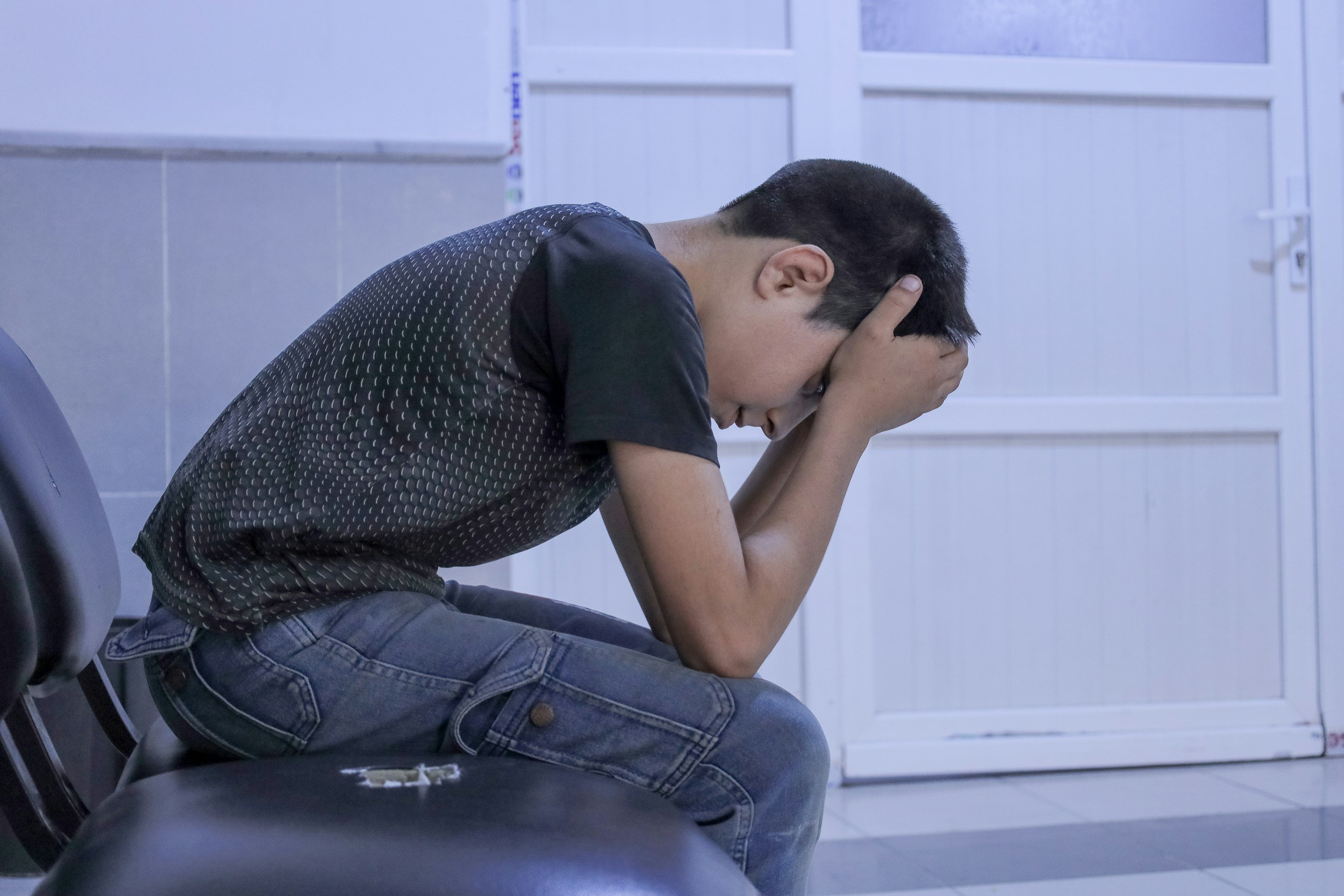

Dear Divorce
Dear divorce,
Thanks to you, I learned nothing on earth lasts as long as it should.
Dear divorce,
You spread the heinous lie that ‘happiness’ is on the other side of leaving, that it’s the only answer
You convinced them that ‘children are resilient;’ after all, we ‘want you to be happy.’
Dear divorce,
You taught me to trust no one, not even those who say ‘I love you’, not even myself.

3 minute read
The article below was written by Miranda Rodriguez (pictured above). She gave permission for the article to be shared on Restored’s blog. It originally appeared on her blog, Miranda Kate.co. For the Spanish version, go here.
Dear divorce,
Thanks to you, I learned nothing on earth lasts as long as it should.
Dear divorce,
You spread the heinous lie that ‘happiness’ is on the other side of leaving, that it’s the only answer.
You convinced them that ‘children are resilient;’ after all, we ‘want you to be happy.’
Dear divorce,
You taught me to trust no one, not even those who say ‘I love you’, not even myself.
Dear divorce,
You showed me how my world can come crashing down on me at any moment – so don’t get too comfortable.
Dear divorce,
You made nights slow torture as I tried to manage the pain in the darkness alone.
Stop crying
Stop crying
Stop crying.
Dear divorce,
You taught me to isolate myself, to keep my distance, to remain unattached, to fear instead of love.
Dear divorce,
You made me desperate for attention but wary of affection.
You convinced me to cling instead of trust, because they will leave.
They will.
Dear divorce,
You caused guilt to follow me every day of my life. Guilt that envelops me, though it wasn’t my fault.
It wasn’t my fault
It wasn’t my fault
It wasn’t my fault.
Dear divorce,
You made closeness feel impossible, love seem unattainable.
Dear divorce,
You made me feel unlovable – that I am not worthy and never good enough.
You told me that something is wrong with me – it must be.
Dear divorce,
You filled me with rage but gave me no way to express it. You told me to shove it down, deep deep deep.
I’m angry
I’m angry
I’m angry.
Dear divorce,
You left me with the heart of a broken child, a heart too weak to love, too hurt to be held.
It hurts.
Dear divorce,
You stole my haven, my comfort, my security. You just took it.
You bastard.
Dear divorce,
You’ll never know what it’s like to make a vow to someone and keep it until you die.
You’ll never grow old with the person you promised “till death do us part.”
You’ll never experience the unconditional love from one person all of your days.
You’ll never know what it’s like to come home to the same people, the same person, year after year.
Dear divorce,
You’ll never know what they mean: the words ‘love’ and ‘family’ and ‘stay’.
Dear divorce,
You will miss out on countless moments: Hugs and kisses, tears and breakthroughs, fights and grief, forgiveness and reconciliations, firsts and lasts. You lost them and you will never get them back.
The ghosts of memories will haunt you until your lonely death.
What could have been.
You’ll never know what could have been, what was on the other side of staying – the forgiveness, the grace, the love.
I pity you.
Dear divorce,
You thought you had me. You believed I would buy into the treacherous lies, but I won’t.
You have led many others astray, lured them with your siren’s call, but not me.
I will never be yours – I have seen too much.
The charm of ‘freedom’ is only loneliness. The happiness you promise is empty – a black hole of egotistical wishes.
I know the suffering, I know the fallout, I know the pain. I know.
I will never choose you – not as long as I live.
You are dark, sad and alone.
I pity you.
Dear divorce,
Thanks to you, I know that I will never be yours.
To hear Miranda read and discuss the article, go here.
Are you interested in sharing your story with Restored? If so, click the button above. Sharing your story can help you begin healing.
Be assured: Your privacy is very important to us. Your name and story will never be shared unless you give explicit permission.
#004: 7 Tips to Navigate the Holidays for Children of Divorce
The holidays are a challenging time for most children of divorced or separated parents. Most of us feel alone, lost, and uncertain of how to navigate the holidays with our broken families.
If you can relate, we made this episode for you. In it, we give 7 tips on how to navigate the holidays so you can enjoy them and hopefully, avoid all the drama.
The holidays are a challenging time for most children of divorced or separated parents. Most of us feel alone, lost, and uncertain of how to navigate the holidays with our broken families.
Instead of experiencing the joy of the holidays, we often feel overwhelmed, frustrated, embarrassed, and sad.
If you can relate, we made this episode for you. In it, we give 7 tips on how to navigate the holidays so you can enjoy them and hopefully, avoid all the drama.
The advice is from a survey of older children of divorce combined with Joey’s advice on the topic.
If you love or lead someone with divorced or separated parents, share this episode with them.
Join Restored’s private online community
Fill out and submit the form
We’ll email you instructions to join
Links & Resources
Leave your feedback here! If it’s easier, feel free to comment below too.
[Full Disclaimer: If you purchase through the links below, your purchase will support Restored. Thank you!]
Books
Enjoy the show?
To be notified when new episodes go live, subscribe below.
Coming Up: Episode #005: 9 Common Struggles of Adult Children of Divorce - Part 1 | LeeAnne Abel
Thanks for listening! Our next episode features speaker, author, and leader LeeAnne Abel. We talk about the 9 common struggles that children of divorce face and some tactics of how to deal with them.
TRANSCRIPT
Transcript produced by artificial intelligence. Please pardon any errors!
The holidays can be a challenging time for so many people, for so many reasons. But this is especially true for people whose parents are divorced or separated, particularly if they're teens or young adults. Most of them feel alone. They feel lost, and they feel uncertain of how to navigate the holiday.
Given their family situation and worse of all, they're vividly reminded during the holidays of how broken their families are. I remember one of the first holidays that my parents were separated as a boy. I felt kind of awkward. I felt kind of embarrassed about what was going on with my family. I think most of all, I felt sad.
I was sad because this was one of the first holidays where both of my parents were not there, and so I remember spending most of that holiday, most of that Christmas in one of the bedroom. Playing video games. If the holidays are a struggle for you, this episode is for you. In it, I'm gonna give seven tips, seven practical tips on how to navigate the holidays if your parents are separated or divorced.
And this isn't just my advice. I surveyed older children of divorce and ask them what they would say to you if they could speak to you. And so I'm gonna take their advice. I'm gonna combine it with my own thoughts on. And that's where the seven tips come from. Keep listening.
Welcome to the Restored podcast, helping you cope and heal after your parents' divorce or separation so you can feel whole again. I'm your host, Joey Pontarelli. Thank you so much for listening. This is episode four and I wanna just dive right in. If you're someone who doesn't come from a divorce or Ed family, you may not understand why the holiday.
Can be so challenging for people like us. And so I wanna spend a little bit of time on that. I wanna explain some of the reasons why it can be so challenging, and certainly there are many reasons, but these are just a few. Like I said at the top of the show, it's a clear reminder that your family is broken and your parents are not together.
For most of us, we, we have fond memories of holidays, and when your parents separate a divorce, those kind of holidays just don't happen again. Those memories, sadly, will never be made again. On a practical level, it's just challenging. Logistically, you could have twice as many parties to attend, or if your parents are remarried, maybe even more.
If you're married, of course you have your spouse's family, and if you have children, you may feel even more pressure to bring the kids around to see your relatives and your parents. An obvious reason is the possibility for drama intention. Perhaps there's already drama intention to begin with. I know if it hasn't been long since the divorce was finalized.
Maybe you're in the midst of it all. There can be a lot of tension, not only between your parents, uh, but also between your relatives. Some of your relatives may be speaking bad about one of your parents, uh, and vice versa. Like I said, I remember just feeling sort of awkward about everything that was going down, and I knew some of my relatives didn't think very highly of my other parent, and so there was just a lot of tension and drama at some of those parties.
And one of the last reasons is that it's difficult to make everyone happy and, and I don't think you should, and we'll get into that in a little bit. But it can be challenging because mom may want you over at this time. Dad may want you over at this time. Dad may not wanna see mom, but mom may be okay with seeing Dad or like I've heard in some families, Mom and dad may still do holidays together, which can bring its own type of challenge.
Relatives can be upset that you didn't go to this party or that party, or you didn't stay as long because you were leaving to, to go to the other side of the family. And so, and at the end of the day, it leaves you feeling frustrated. Overwhelmed. Embarrassed, like I said, and I think kind of hopeless and just sad.
Just sad that your family is the way it is, that your family is broken, that your parents are not together. Even if I always say this, even if it was necessary for them to break apart, it's still a tragedy. The first thing I wanna say is if you feel any of those feelings, There's nothing wrong with you.
You're not weird, and you're not alone in feeling that writer and psychiatrist, Victor Frankel said that an abnormal response to an abnormal event is normal. In other words, when your parents separate or divorce, that's an abnormal event. It's not supposed to happen. And so if you feel anxious, if you feel sad, if you feel embarrassed, overwhelmed, frustrated by the divorce, but especially about navigating the holidays, that's.
And I just want you to know that this isn't right. The holidays should be a time for celebration, not drama. And I'm sorry if in your family there's a lot of tension, there's a lot of drama, and you really struggle to even attend these parties and especially struggle to find any joy in these holidays. So faced with all this, what do we do?
How do we navigate the holidays so we can enjoy them and hopefully avoid all the drama? The first tip is to set and enforce boundaries. Now, boundaries you could think of as like property lines. On this side of the line is me and what I like and what I'm willing to do, and on that side of the line is what I don't like and what I'm not willing to do.
It's out of bounds. Again, it's basically saying, I'm willing to do this. I'm not willing to do that. A few examples are telling your parents that I will not talk to you about the other parent. Another example is saying, I will spend the holidays with both of you, and then maybe laying down some rules saying, This is how much time I'll spend here.
This is how much time I'll spend there. And remember, it's okay to say. No, it's okay to say, I don't wanna do that. I'm not willing to do that. I'm not willing to talk about that, whatever it may be. Once you set the boundaries, you have to enforce those boundaries. If someone steps over one of those boundaries, you have to enforce it.
You have to show them that if these boundaries are not followed, there are consequences. And what you're basically saying, In enforcing your boundaries is that I am not a doormat. These are my rules, and if you follow them, we can have a relationship. I'll come to that party and so. If you don't, then you are self-selecting to not have a relationship with me.
Remember, you set the boundary and if they don't follow it, they're the ones making the choice not to have the relationship, not to have you present at the holiday, not to have you present at the party. It's not your fault if they don't follow the boundary that you set. You're not doing it to them. They are doing it to themselves.
Of course, as part of boundaries, there's likely to be some drama, and so just don't engage in that drama. Underneath this advice for boundaries, there's a few other important points, and one of them is it's not your job to please everyone. You're not responsible for pleasing your parents or your family or your relatives.
You have no responsibility to, to make everyone happy, and so on a, on a practical point, don't feel forced to involve strangers. In your life, whether that's, you know, your dad's girlfriend or your mom's boyfriend or someone else, you shouldn't feel forced to involve them in your life. It should be something that's natural and gradual.
Remember that you're not responsible to parent your parents. You are not your parents' crutch. You're not what holds them up. And don't let your parents emotionally rely on you. I know that sounds like tough love, but I mean it, it's really not good for them or for you if mom or dad are emotionally relying on you, they're opening up to you in a way that just is too much.
They shouldn't be coming to their child with all of their emotional baggage and emotional issues if they do. Kindly and firmly redirect them to their support network. And what I mean by support network is their friends, their family, maybe their siblings, or an aunt or an uncle or their mom or their dad.
Your grandparents could be a counselor, a pastor. Someone like that, they need help, but not from you. And so it's actually more loving for you to redirect them to someone who could actually help them and support them than to keep listening to them and allow them to use you as their emotional support.
And so you could say something simply like this, mom or dad, I love you. I care about you. I want what's best for you, but I can't be your emotional support. You need to go to your friends, to your counselor, to your family. To a pastor and lean on them, Not me. I wanna help you, but I have to help you in another way.
And one of the last points when it comes to boundaries is protect yourself from manipulators. And I'm not condemning parents here and saying that your parents are automatically manipulators, but if there's a manipulator in your family, whether it's your parents or someone else, be aware of that. Protect yourself from anyone who might want to use the holiday celebration or the holiday.
Spirit to take advantage of you or to back you in a corner, so to speak. In any way, don't let anyone use fear, a sense of obligation or guilt to manipulate you. So just keep an eye out for this. Recognize the manipulation, and just distance yourself from that person. It may mean confronting them and telling them, No, I'm not allowing you to manipulate me like this.
But it also may just mean getting out of that situation because you know that they just won't listen to what you. The next tip is to communicate ahead of time. There's a few important points here, and one of them is that you have a right to express your feelings. Be honest about your feelings and the needs that you have.
In fact, if you're at that point, I encourage you to talk to your parents, sit them down, talk to each of them, and tell them I love you both. But it can be very hard around the holidays to please you both and to not offend you. So I need you to please understand my decisions, my boundaries, and please understand that the tension in our family makes it difficult to actually enjoy the holidays.
But even if you're not there yet, I encourage you to set expectations early by communicating to both of your parents. You could tell your mom, Mom, I will be coming to your party for this long and then leaving to go to dad's party. The reason to do this is so that there's no surprises when the holiday shows up.
Now I realize if you live at home, This can be especially difficult. You may not have as much power to just leave or tell mom or dad that you're not coming to the party, but even in that case, I encourage you to communicate with mom, with dad, and tell them what you're comfortable with, what you're not comfortable with, and my hope is that they'll hear you out and they'll love and care about you enough to understand where you're coming from and give you that respect and that freedom.
That you need. Tip three, take ownership. You can choose how to respond even in the midst of the worst situations. I know it's difficult, Trust me. I know it's difficult, but this is absolutely true. You can choose how to respond even in midst, all the tension and the drama during the holidays. When I say take ownership, I mean do what you can with what you're given.
When it comes to traditions, some of the old traditions that you're used to may die, sadly, but you can make your own traditions, especially if you have your own family, you can spend. The holiday with someone else, with a friend or a family. If your family right now is toxic for you, and if you spend the holiday with another family, I really encourage you to be intentional about that and to choose a family that really exemplifies it shows what it means to be a true, good family.
And as the years go on, keep in mind that you get to make your own family. You get to choose your own family. And again, if you're married or moving towards marriage, just focus on your. This could be a good time to think about what you want for your future family or your current family compared to what you have right now in your immediate family.
And a practical tip is to just plan things around the holidays that can distract from the drama and the tension. An example of that could be going to a movie or doing some sort of activity, whether it. Bowling or glow in the dark, mini golf, whatever it may be, some maybe activity that takes away the tension and the focus on conversation.
The fourth tip is to be virtuous. Vir, of course, is those good habits that we have and the disposition that we have toward what is good. And so give your parents some grace during the holidays. Just understand that they are navigating the holidays too, as someone whose family is broken as well. So be polite, be kind, be loving.
But remember, I'm not saying to just be nice and be a doormat. Stand up for yourself. Set those boundaries. But of course, be loving. Be virtuous. Tip five. Have a plan to take care of yourself. Think ahead about what could happen during the holidays. Prepare for different conversations. You're gonna have, I know this sounds extreme, but seriously, think about, I'm gonna be talking to this family member.
I'm probably gonna be in this situation and this conversation. Think ahead. Think about what you'll say, what you'll do in that situation, and be prepared to handle the difficult emotions that come along during the holidays. If you're from a broken. In my life, whenever I've been faced with a lot of stress or, or difficult emotions, especially as a teenager, I was always tempted to seek comfort in unhealthy things like pornography.
And I know other people struggle with things like alcohol or drugs or binging on social media, overeating, so many different unhealthy ways of coping. And so think ahead to that. How will I be tempted in the midst of that tension, that trauma, that stress? And then think about ways in which you can respond in a healthy way that may be going on a run or spending time with a friend or a good movie.
It's really helpful throughout the holidays if you can have a friend or maybe a couple friends who you can talk to about everything with your family. Don't keep it inside, get it out of you. Find that support and I'm gonna tell you how at Restored, we have an opportunity for you to join our private safe online community so that you can do just that.
You can find support with people who've been through the things that you're going through, and who in fact are going. The things that you are going through, uh, stay tuned. I'll tell you about that at the end. Another great way to get things out of your head, out of your chest is just to journal about them.
And this doesn't have to be in a paper notebook. It could be on your phone, it could be in a recording app. You can just say it out loud. It doesn't matter. The point is that you get it out of your head. And whatever happens through the holidays, learn from it. Look at it as an opportunity to be better, and whatever comes up inside of you, whatever emotions or memories come up inside of you, work through those.
Don't shove them away, but pay attention to that. Tip number six. Focus on the celebration. It can be so easy when there's so much drama and tension to forget about the reason that you're celebrating that holiday. And so try to remember, try to think of the meaning of the holiday and the United States. Of course, we have Thanksgiving, so think through maybe the history and the meaning of Thanksgiving and think about what you're thankful.
Again, even in the midst of a really bad situation, look for what you are thankful for, cuz there's always something that you can be thankful for. Even if it's as simple as the food or your friends who you can talk to about this, or if you love traveling, whatever might be, find something that you can be thankful for.
If you're Christian, of course you celebrate Christmas, but maybe you're Jewish, so maybe you celebrate Hanukkah, whatever it may be, remember the meaning of the holiday. Don't lose the meaning. In the midst of the drama and try to enjoy it. Enjoy the little things, and keep in mind that you may need to lower your expectations of what the holidays are going to be like.
Especially if your parents' separation or divorce is pretty fresh, you may not feel safe or secure at your family parties. And I'm sorry that's the case, but it is the reality and I just wanna warn you of. On a personal note, there are very few places that I feel safe and secure, and so just be prepared for that.
And don't be afraid to, to take a break. You know, help with clean up, help with setting the table, help with whatever someone may need help with. If you need to step away, go for a little walk step outside. And do things you enjoy. Play a game, play a board game. Play a card game, watch a movie, watch sports, whatever it might be.
Do something that again, takes the focus off of any drum or attention and helps you to enjoy the actual holiday. Tip number seven is to ask God for help. And if you're not religious, I'm not trying to stuff God in your face. For anyone who is religious, rely on God in the midst of these situations. If you're Christian, bring Jesus with you into the family party.
You don't have to do this alone. And if everything is a complete mess in your family, uh, first I'm so sorry that that's happening, but I want you to trust that God is not finished. He does not want this to be happening to you. I'm so convinced of that. I struggle with that for a long time thinking, God, why would you allow this to happen to me and to my family?
And that's a huge topic that we're gonna tackle later, but I just want you to know that God is not a sadistic God. He doesn't enjoy watching us hurt. He hates it too. He doesn't like us to suffer, but he does allow it. And that's something that we're gonna be talking about in the future. We'll talk about free will, and we'll talk about how God can bring good even out of the worst situations, even if it's hard to believe.
And I want to end with a quote from Saint Mother Therea of Calcutta, and it's a beautiful quote, and if you're not familiar with Mother Teresa, I think most people are, but she was a religious sister who served in India and really the worst part of India, and she would just serve the poor was so much love and so much joy, and she didn't just capture the Christian world, she captured the entire world secular.
Religious world, even atheist, just had so much respect for this woman. This woman who had so much love in her heart. So much joy and so much wisdom, which I wanna share with you because I think that it is applicable to the situation that we find ourselves in when it comes to navigating the holidays as children of divorce or ed parents, she said people are often unreasonable, irrational.
And self-centered, forgive them anyway. If you are kind people may accuse you of selfish, ulterior motives. Be kind anyway. If you are successful, you will win some unfaithful friends and some genuine enemies succeed anyway. If you are honest and sincere. People may deceive you. Be honest and sincere anyway.
What you spend years creating, others could destroy overnight, create anyway. If you find sincerity and happiness, some may be jealous. Be happy anyway. The good you do today will often be forgotten. Do good. Anyway, give the best you have and it will never be enough. Give your best anyway, in the final analysis, it is between you and God.
It was never between you and them anyway.
I hope these tips have been helpful for you. I just wanna name the seven tips again in case it's helpful. Tip one is to set and enforce boundaries. Tip two is to communicate ahead of time. Tip three is to take ownership. Tip four, be virtuous. Tip five, have a plan to take care of yourself. Tip six, focus on the celebration.
And tip seven, ask God for help. Like I mentioned during the show at Restored, we have a private online community, and the main benefit of the online community is that you can speak freely. In a private setting to people who also come from separated or divorced families. If nothing else, they can just encourage you and listen to you.
But often what I've seen in our community is that people will actually give some wisdom and some guidance on what you're dealing with, and you'll be challenged to grow into a better, stronger person. And even if you're not interested in sharing a lot in our community, You can still benefit from hearing what others are going through so that you know that you are not alone.
Now, if you wanna join our private online community, you can go to restored ministry.com/community. Again, that's restored ministry ministry singular.com. Slash community, again, restored ministry.com/community. When you go on there, you're gonna fill out a form, submit the form, and we'll get back to you, uh, with the next steps and welcome you to our community.
If you'd like to access the show notes for this show, you can go to restored ministry.com/four. That's the number four. Again, restored ministry. Ministry is singular.com/four restored. ministry.com/four. Big thanks to everyone who filled out the survey. Thank you so much for sharing your wisdom and taking the time to do that.
Thank you so much for listening. If this has been useful, please subscribe. And the reason to subscribe is not only to be notified when new episodes go live, but also it helps us get more visibility on the different podcasting apps so that we can help more people. And please share this with someone that you know who could really use this.
During the holidays, and please know that I'm thinking of you. I'm praying for you. I really wish you the best this holiday season. I hope you can navigate that holidays successfully so you can enjoy them hopefully without all the drama. And always remember, you're not alone. We're here to help you feel whole again and become the person you were born to.
#003: How Craving Wholeness Motivated Her to Heal | Beth Sri
Beth’s parents divorced when she was very young. However, she still remembers the cardboard boxes and feeling confused about her dad leaving.
Over the years, she saw her parents’ divorce impact her in various ways. She recalls looking for external approval, feeling lost, and the challenge of constantly navigating between two homes.
Beth’s parents divorced when she was very young. However, she still remembers the cardboard boxes and feeling confused about her dad leaving.
Over the years, she saw her parents’ divorce impact her in various ways. She recalls looking for external approval, feeling lost, and the challenge of constantly navigating between two homes. She also shares what she has done to heal and how her life is better now because of it.
By listening to Beth’s story, you’ll find that no matter how broken you feel or messy life becomes, there’s always hope. She also shares some practical tips on how you can heal too.
At the end of the show, we introduce a free online tool for you to use at RestoredMinistry.com/story
If you love or lead someone with divorced or separated parents, this episode will help you to better understand them and how to help them.
Links & Resources
Leave your feedback here! If it’s easier, feel free to comment below too.
[Full Disclaimer: If you purchase through the links below, your purchase will support Restored. Thank you!]
Books
Research
Podcast
Join Restored’s private online community here.
Follow Beth Sri
Instagram: @mrsbethsri
Facebook: Beth Sri
Website: Born to Do This
Enjoy the show?
To be notified when new episodes go live, subscribe below.
Coming Up: Episode #004: 7 Tips to Navigate the Holidays for Children of Divorce
Thanks for listening! Our next episode features 7 tips on how to navigate the holidays for children of divorce, so they can enjoy them and hopefully avoid all the drama.
TRANSCRIPT
Transcript produced by artificial intelligence. Please pardon any errors!
#002: How 70 Adult Children of Divorce Have Suffered | Leila Miller
When your parents separate or divorce, it hurts and you feel alone. You feel like nobody can understand what you are going through.
At Restored, we know how that feels. But we want you to know this: You’re actually not alone.

When your parents separate or divorce, it hurts and you feel alone. You feel like nobody can understand what you are going through.
At Restored, we know how that feels. But we want you to know this: You’re actually not alone.
To prove that, we talk with speaker and author Leila Miller about her book Primal Loss, which features 70 stories from children of divorce. We uncover the shocking ways divorce has affected them, even years later as adults, and some practical advice to deal with it.
If you love or lead someone with divorced or separated parents, Leila offers some practical advice for you too.
Links & Resources
Leave your feedback here! If it’s easier, feel free to comment below too.
Book: Primal Loss: The Now-Adult Children of Divorce Speak
Buy a physical copy here [Full Disclaimer: If you purchase through this link, your purchase will support Restored. Thank you!]
Follow Leila Miller
Research
Dr. Judith Wallerstein's book: The Unexpected Legacy of Divorce
[Full Disclaimer: If you purchase through this link, your purchase will support Restored. Thank you!]
Enjoy the show?
To be notified when new episodes go live, subscribe below.
Coming Up: Episode #003: How Craving Wholeness Motivated Her to Heal | Beth Sri
Thanks for listening! Our next episode features mother, wife, and leader Beth Sri. She shares her story as a child of divorce, her process of healing, and the transformation she experienced.
TRANSCRIPT
Transcript produced by artificial intelligence. Please pardon any errors!
#001: How Restored Helps Children of Divorce
Are your parents divorced? Are they separated? Has that brought a lot of pain and problems into your life? Do you feel alone and unsure of how to deal with it all?
If you answered yes, the Restored podcast is for you.
Are your parents divorced? Are they separated? Has that brought a lot of pain and problems into your life? Do you feel alone and unsure of how to deal with it all?
If you answered yes, the Restored podcast is for you. In this intro episode, we'll talk about how your parents' divorce is still affecting you, what you can do about it, and how this podcast exists to help cope, heal, and feel whole again.
Also, if you love or lead someone with divorced or separated parents, the Restored podcast is also for you. We want to help you, help them.
Links & Resources
Leave your feedback here! If it’s easier, feel free to comment below too.
Dr. Judith Wallerstein's book: The Unexpected Legacy of Divorce
[Full Disclaimer: If you purchase through this link, your purchase will support Restored. Thank you!]Research: 1/3 high conflict divorces, 2/3 low conflict divorces
Enjoy the show?
To be notified when new episodes go live, subscribe below.
Coming Up: Episode #002: How 70 Adult Children of Divorce Have Suffered with Leila Miller
Thanks for listening! Our next episode features speaker and author Leila Miller, who wrote the book Primal Loss: The Now-Adult Children of Divorce Speak. [Full Disclaimer: If you purchase through this link, your purchase will support Restored. Thank you!]
TRANSCRIPT
Transcript produced by artificial intelligence. Please pardon any errors!
Are your parents divorced? Are they separated? Has that brought a lot of pain and problems into your life? Do you feel alone? Do you feel broken? Do you feel uncertain of how to deal with it all? If you answer yes to any of those questions, this podcast, the Restored podcast, is for you. Now, if that doesn't describe.
I have another question. Do you love or lead someone with divorced parents or separated parents? If so, the Restored podcast is also for you on it. We feature expert interviews and stories that give practical advice on how to cope and heal after the trauma of your parents' divorce or separation so you can feel hold.
Keep listening.
Welcome to the Restored podcast. I'm your host, Joey Pelli. This is episode one. Thank you so much for listening. In this episode, we're gonna touch on a few things. First, we're gonna talk about how your parents' divorce is affecting you. And what you can do about it. Uh, we'll touch on why studies show that people who come from divorced families typically struggle more in romantic relationships than people who come from intact families.
We're gonna talk about restored. What is restored and why does it exist. What you'll find is that it exists for you, and we're gonna also talk about the plan for this podcast. What's touc come down the road and how this can be valuable. To you if you come from a divorce or separated family or you lead or love someone who does, Anyone from a broken family knows that when your parents separate or divorce, it hurts.
It's painful even when it's absolutely necessary and it makes life harder. A lot of unique problems and challenges that children of divorce have to face that other people. And most young people I've found, feel alone, feel broken, and really uncertain of how to deal with it all. In fact, that was Mary's story as a little girl.
Mary watched her parents fight all the time. Their marriage was a mess, and they needed some serious help, but they never got it. Fast forward to when Mary was in high school, Mary's mom came to her and said, I want to divorce your dad. Mary didn't quite know what to say, so she said, I just want the fighting to stop.
Her mom went through with the divorce and what seemed like a solution to really bad situation, just made things worse. It just brought more pain and problems into their lives instead of fixing them. Now up to that point, uh, Mary was a pretty good girl. She didn't drink or party or do anything like that, but that all changed when she went off to college.
She got into the party scene, started drinking heavily. That led to dating the wrong guys. She married one of those guys. He ended up being a drug addict and an alcoholic. They got pregnant and because Mary was terrified that her baby was gonna grow up in that hell, she got an abortion. That obviously brought a lot more pain into her life and eventually she divorced her own husband, repeating the cycle, started by her parents, and once the dust settled, she fell into a deep depression and she still deals with all of this to this day, years later.
What if Mary could have gotten the help that she needed when she was dealing with all that stuff as a teenager? As a young adult, what if I could have helped Mary? What if restored could have helped Mary, given her the support she needed, helped her learn how to cope in healthy ways instead of unhealthy ways, and how to find real healing.
I can't help but think that her life would not have turned into the tragedy that it became. Mary isn't alone. Each year, over 1 million American children suffer the divorce that our parents. That statistics from the The Heritage Foundation, and if you're one of them, if you're like me and you're one of them, you can relate to Mary's story.
Again, I created this podcast, The Restored Podcast for you specifically. Now, divorce is a heavy topic, but it needs to be talked about. And for anyone listening, especially any parents out there, You know, you've gotten divorced. We're not here to condemn you, right? We're not here to condemn anyone or tear our parents down.
We're rather, we're here to focus on how we can help the children who are often forgotten. Like Mary, my parents are divorced too. I'll never forget the day that they separated. I was 11 years old and my mom sat us down, my siblings and me to break the news, and as soon as I. My whole world just shattered.
Without a doubt. It was the most painful day in my entire life. And as a boy, as an 11 year old boy, I didn't know what to do with that news. I didn't know how to deal with it. And so I just hid the closet and cried, and a million thoughts raced through my head, and I worried about my parents. I worried about my siblings, and I worried about myself and what would happen now sitting there in that closet, I felt so.
I felt extremely abandoned, and I felt like I wasn't good enough because if I was, why were mom and dad going separate ways? I became very bitter, very angry, uh, very sad. I isolated myself and just felt very lonely, and in an attempt to numb the pain, I turned to pleasure. Around that time, a friend showed me some pornography, and so I, I got into porn.
Even though it brought some momentary relief when I was looking at it afterward, I just felt so empty. Even at a young age. I knew that I wanted to be happy, and I knew that this was not making me happy. And so I needed to change. Not long after that, I heard a talk by Jason Everett, and in his talk he spoke about pornography and how harmful it is and how it just poisons us and our future romantic relationships, our future marriages.
Around that time too, I, I met some really good friends. The people I was hanging out with weren't good for me, and so got some new friends and I noticed. When I spent time with them, I was just happier and they happened to be, uh, Christians. They, they were Catholic Christians, and so I, I tried to spend more and more time with them, and that helped a lot.
But even though life was getting better for me, I still felt very broken inside. I knew that I wanted authentic love, I wanted freedom. I wanted happiness, but I felt stuck. I felt held back by my own brokenness. And so I realize this principle that I believe is true for all of us, and that is our untreated brokenness is one of the things that holds us back most from becoming the person we deeply desire to be.
I'll say that again. Our untreated brokenness is one of the things that holds us back most from becoming the person we deeply desire to. And so I knew I needed to heal. I looked around for some help. I looked for a book, a speaker, a retreat, something out there, and I found nothing. There was next and nothing out there to help people like me and certainly nothing practical.
There were some studies and some research that had been done on children of divorce, but nothing specifically speaking into the pain and problems that we deal with, and I knew I wasn't alone. I looked at my siblings and I saw how they were struggl. I looked at friends of mine, close friends of mine, and I saw how they were struggling with their parents' divorce or separation, and I heard about other people too and how they were struggling, and so years later I started restored and ever restored.
We create content that gives practical advice to teens and young adults on how to cope and heal. After the trauma their parents divorced their separat. At this recording, the, the type of content that we produce is talks, podcasts, episodes, and our blog articles. In the future, we're gonna do things like videos, books, and, and much more.
We have a lot planned ahead. We also offer online community just to give support and, uh, help everyone to have a safe place to talk about, uh, the pain and the problems that they deal with from their parents', divorce or separation. And we also have a way to find a coach, a counselor, or a spiritual. Uh, to guide you.
My goal with all this is just to give. What I wish I would've had years ago. Now, I, I mentioned that restored is focused on teens and young adults, so anyone from 13 to 30. But of course, anyone can listen to this podcast and if there's something that's useful for that audience and someone else finds it useful, that's awesome.
We love that. Now, I also mentioned that anyone who loves or leads children of divorce or separation, uh, this is for you too, whether you're, you know, a boyfriend, a girl, Family friend, a cousin, an aunt, an uncle, whatever the case might be. Uh, if you're a teacher, a coach, a youth minister, passer a priest, this is also for you as well.
We wanna help you help them. A little bit about me. I'm not a psychologist, I don't have a PhD, but what I do have is 15 years of experience wrestling with this stuff. I've done 10 years. Spiritual direction or coaching. And if you're not familiar with that, it's just basically a, a mentorship where a coach helps you in life, deal with whatever you're dealing with, and especially helps you grow in your spiritual life.
I've done five years of counseling, three years of listening to people like us and researching this topic heavily. Now I'm not pretending to be perfect and trying to tell you guys that you just need to be like me. Not at all. That's not what this podcast is about. I have learned a lot along the way and I wanna share what I've learned if it's helpful, but we just wanna help you guys and if that means you learn something from me, from my experience and what I've learned in the research, I've.
Great. Um, but maybe it's from someone we bring on the show or a story that you hear. We just wanna help you guys in whatever way we can. And I'm still learning. I'm still growing, I'm still dealing with my own brokenness, but the whole goal here is for me to help the people who are a few steps behind me.
And if I can't help them, then I'm gonna get you the help that you need in some other. Let's talk a bit about divorce and how it affects the children. Now, I think most of you guys would agree that divorce is a tragedy. It's a really sad thing. Even in cases where it's extremely necessary, it's traumatic for the children, right?
It wounds us. It overwhelms our ability to to cope and deal with it all. Even with that, there's some people in the world who say that divorce is such a good thing that we need more divorce. In fact, you can Google this. There is such a thing as divorce parties. These are parties to celebrate your divorce.
You get a divorce, you invite your family, your friends, to celebrate your divorce. It's like a reverse wedding. Now, some people say that divorce doesn't hurt the kids, or you know, they're resilient. We hear that a lot, that the kids are resilient or even if they admit. Divorce does hurt us. The kids, they usually say that it's not very significant.
It's a small hurt and it doesn't last very long. The problem with that is that it's just not true, and even though some people who say that are probably have like the best intentions, they just haven't seen the research. Even those of us though, who do admit that divorce is a bad thing, I think we've just become so numb to it because it's so common.
When I give talks, uh, I ask the audience to raise their hands if they come from a divorce or separated family, or, uh, if they have a friend who does. I know someone who does, and every time I've given it, it's been practically a hundred percent every time. I, I'm pretty sure it's been a hundred percent.
It's hard to count when you're up there, but pretty sure it's always been a hundred percent and. This is a tragedy. This is such a big problem in our world, yet hardly anyone's talking about it. I wanna take a second to speak to those of you who do come from a divorce or a separated family. Guys, I'm so sorry for what you've had to go through.
You've had to endure more pain in your short lives than some people have to deal with in their entire lives. Every child deserves. A healthy family and two parents who love each other and stick together. Guys, the divorce was not your fault. The divorce was not your fault. No matter what anyone says, there's nothing that you could have done to prevent it.
And there's nothing that you did that caused it. It was between your parents, not you. And of course we were affected by it, but it nothing you did cause. After giving a talk recently, a girl came up to me and she confided in me that her dad, even though she's in college now, her dad still blames her for the divorce that happened years ago when she was a kid.
It's so sad, and I want you all to know that you are not doomed to repeat your parents' mistakes. You are not doomed to repeat your parents' mistakes You. Your own story. We fear that, don't we? We're afraid that we're gonna get divorced, that you know our life, our marriage might turn out the same way our parents said.
But I'm here to tell you that you don't have to repeat that past, You can write your own story. Now, diving into some of the research, how does Divorce effect the children? So the research shows that children of divorce are more likely to have social. Behavioral problems, difficulty in their relationship with their parents, difficulty in romantic relationships.
They're more likely to get divorced. They have higher frequencies of depression and violence. Higher risk for suicide attempts, reduce physical health, lower levels of success in school, more emotional problems. And typically have lower self-esteem. Now, this wasn't just one study that found this. This is from a meta-analysis study, which is basically a summary study of 67 different studies about children of divorce and the effect the divorce has on them.
And it was published in the Journal of Family Psychology by Dr. Paul Amato from Penn State University. Another researcher who spent so much time with children of divorce was Dr. Judith Wallerstein, and for 25 years plus, she studied children of divorce and she wrote a book called The Unexpected Legacy of Divorce.
And in it she reports her findings from a 25 year long study. She followed around 131 young people from 60 families, and one really important. Note about this study is that she only chose children who never had emotional or developmental problems before the divorce. And she compared them of course, to, uh, children from intact families over the years and after years of researching this, she said our findings challenged the myth that divorce is a transient crisis.
And then as soon as parents reestablish their lives, the children will fully. That doesn't happen. She found in her research that children of divorce were less likely to get married. They were more likely to divorce, less likely to have children. They're more likely to heavily use drugs or alcohol during high school.
They were less likely to finish high school, less likely to go to college, and more likely to drop out. They're far less likely to receive financial support from their parents for college and the men. Interesting. We're far less likely to enter into an intimate relationship. Dr. Judith said parents like to believe that if they are unhappy in their marriage, the children will also be unhappy.
Conversely, if divorce is better for them, it will be better for the children, but things don't work that way. Children frequently do not share their parents unhappiness with a problematic marriage while a divorce brings pain into their lives. That until. Has gone unrecognized. She goes on to say, We are allowing the children to bear the psychological, economic, and moral brunt of divorce.
The really key takeaway from her research is that the effects of divorce actually aren't fully experienced until adulthood years later, and the most obvious way that it becomes apparent. Is in our future romantic relationships. And you might be wondering why is that? We're gonna get into that in future episodes of the podcast.
But a basic, the basic reason why is that we lack a roadmap for love. We don't have a roadmap for love. Our concept of love and marriage is very broken because more than anyone else, our parents teach us about marriage and they teach us about love. And if we didn't see that go. Then we have a really broken idea of what it's supposed to look like, and I think that's a big reason why we're less likely to marry and more likely to get divorce.
I mentioned that we're gonna talk about that in future podcasts. We're also gonna talk about what you can do about it. At this point, I hope you can see that divorce is bad for the children, even in. When it's necessary, it may just be the lesser of two evils. And it's painful, right? It makes our lives harder.
Now, you may be thinking, are there ever any exceptions to this? And you probably caught what I've said a few times, that there's extreme cases where it is necessary. And before I get into those cases, I just wanna say, The goal is always to reunite the couple and bring the family back together if it's possible.
And sometimes it's not possible, right? We're under no illusion here at ReSTOR, but that's always the goal. Now, some of the cases where divorce is necessary is when there's violence, when there's abuse, you know, no one should live in that situation. We are. Encouraging that at all. You know, you there needs to be physical separation in that case, and if it's necessary, divorce extremely high conflict marriages where there's just always so much drama.
Now, side note on that, research shows that less than one third of divorces are actually like that. I always thought it was much more, but less than one third of divorces are actually like that. And more than two thirds, more than 66% of divorces are actually low conflict. So they don't have all that drama.
They don't have, you know, maybe the violence or the abuse. And the last reason I'll mention is for legal reasons. So imagine a mom who is a full-time mom. She, she's at home with the kids and maybe she has three kids, let's say, and dad one day just picks up and leaves with another. At that point, it may be necessary for the mom to pursue a divorce in order for her to get some money for her and the kids and provide for herself and just while she gets on her feet.
Again. Having said all of that, I want you to know that we're not belittling parents or their suffering. I can imagine what it's like to live in. Difficult marriage. I am married, so I know that marriage can be hard, but I can't imagine to live in something that's so intense. That being said, we believe that children, parents, and society deserve better than divorce.
We believe that we need to be supporting them. Supporting these families, supporting these marriages and helping them fix or heal the problems in their marriage and help them thrive, help them have great marriages, instead of leaving them feel like they only have one option and that's to leave their spouse or to get a divorce.
In the majority of cases, there's simply a better way and we need to be doing all that we can, uh, to help couples like that. If your parents are divorced or separat, I know hearing all this can be pretty depressing, so bear with me. There is hope. The first thing I want you to know is that you're not alone.
You're not alone to face all of this. We're here to help you. You are the hero of your story, and we just want to guide you. We just wanna help you along your journey. How are we gonna do that? We actually have a very simple plan. The goal of this podcast is to offer practical advice from expert interviews and stories.
Focus on two area. The first area, how to cope in healthy ways. The second area, how to actually heal the expert. Interviews are gonna be conducted with authors, speakers, researchers, psychologists, counselors, marriage experts, uh, spiritual coaches, life coaches and so on. In these interviews, I'm gonna be asking questions like, how do you begin to.
Right. What's the process look like? How does someone overcome their porn addiction? Right? Drinking habit, overeating, cutting. The list goes on and on. How do I cure the loneliness? I feel, How can I overcome my fear of love? How do I build a really good marriage when I didn't see it at home? How do I build a divorce proof?
And so many more questions like that. The idea with the interviews is for us to do the hard work and give you access to people who you may not have access to In this podcast. For the stories, we're gonna be talking to other children of divorce, especially those who are older, so they can shed light on not only what happened and the pain and the problems that they dealt with, but also.
How they found healing and what their life looks like now, and how they feel so different now because they went through the healing process. You may be wondering, why are we gonna focus on coping and healing? Specifically, coping is all about survival. In simple terms, coping is the thoughts that we have or the actions we take, and in response to the pain and problems in our lives and the stress in our lives.
And what I've seen in my own life and working with and speaking to so many children of divorce is that when your parents separate or divorce, it hurts, right? It's painful. It brings a lot of problems into our lives and to numb the pain and distract ourselves from the problems that we face, we usually.
to unhealthy things, right? We turn to unhealthy ways of coping. Like I mentioned porn in my own story, drinking drugs. The list goes on, and when we do those things and we seek and escape in that way, it always leaves us feeling empty, and it certainly doesn't make the pain or the problems go away. It doesn't solve anything.
And so it's so important that we learn to cope in healthy. If we wanna find the freedom and the happiness that we long for, because life in our family situation is gonna throw a lot more pain and problems at us. We're also gonna get into specific situations and, and how to deal with them situations like, you know, what do you do when your parents turn to you for emotional support in an unhealthy.
Or what do you do when mom or dad starts talking bad about the other one? What do you say in that situation now? How do you set healthy boundaries? What do you do when holidays come around and it's really painful and, and much more. There's so many unique and difficult situations that we wanna help you learn to navigate, uh, and deal with.
Now, shifting gears from coping to healing. Healing is all about growing and thriving. If you, if you Google healing, You'll see that it's the process of becoming healthy and whole. And we all know what this looks like in physical healing, right? You break your arm, you go to the doctor, they examine your arm, you know, they put you in a cast.
Maybe they have to do surgery or do something more extreme, but they give you pain medication and you know, you do physical therapy for a while and then eventually your arm is, is whole. It's, it's healthy. The same thing needs to happen in our emotional and psychological lives too, because we experience very real injuries, very real hurt in those areas of our lives.
But because we can't see them often, we don't do anything about it. You. As I've said a few times now, when our parents separat a divorce, it wounds us. It hurts and left untreated. Those wounds usually bring more pain and problems into our lives, and they, they hold us back in life, right? They give us that feeling of being stuck.
So we can't simply treat the symptoms in our lives, the porn, the drinking, the drugs, whatever else it might be. We have to go underneath and get at the root cause, the root issue. And I, I noticed that in my own life. Like I said, you know, when I got porn out of my life, life was better, but I still felt broken.
And so I was just treating the symptoms and I think so often in a world we do that, right? We just treat symptoms, we don't actually get to the root problem. One of my parents separated. It left me feeling, uh, abandoned and not good enough. And those are very real wounds. A wound of abandonment and really a wound of inadequacy or just not feeling like you are enough.
So many of us. When we experience wounds like that, we stuff them away. Now, if you stuff your wounds away, or you live with them for so long, they'll seem normal. You'll just think that, well, this is the way that life is and this is the way it's always going to be. And I'm here to tell you guys, that's not true.
All right. Your life can be better than it is today. You can actually find healing. You can actually reverse those unhealthy ways of coping. You can find freedom from your wounds, and you can feel whole, and we're gonna prove it to you in this podcast through the stories that we tell. Two obstacles I think we face when it comes to healing is that one, we don't make it a priority.
Like I said, we might. Get comfortable in life. So we don't give any time or attention or effort, uh, to dealing with it. And I hope that through listening to this podcast and these future episodes, you'll realize that healing is actually worth the effort. It's worth your time. It's even worth the pain that you're gonna need to go through to find it.
The second thing I think is we don't know how, We don't know how to heal. Over the years, I asked so many people, How do I heal? And to be honest with you, I didn't get very good answers. Certainly not practical and actionable answers. And so listening to this podcast, our hope is that you'll know how to heal, and we're working hard to make all of this content, all the advice that we're giving.
Very practical, simple, and actionable stuff you can actually start doing in your life. I want to end with this. You may be thinking, what's the point of all this? Why do I even need to heal? Why do I need to find healthy ways of coping? Why can't I just leave what's in the past, in the past and be done with it?
I wanna tell you a beautiful story of Lina Everett's healing. Uh, as a response to those questions, her earliest memories are of her dad hitting her mom, her, her parents got divorced as well. She suffered sexual abuse and high school. She got into drugs, alcohol, sex, and she just felt miserable. Too similar to me.
She heard a talk that changed her life. And she stopped drinking, stopped doing drugs, and stopped sleeping around, and it was difficult for her, but life got better. But even though life got better, she still felt broken, and it wasn't until a few years into marriage. When she became a, a mother that her brokenness started to surface.
She started to feel angry a lot and just was experiencing all these messy emotions. And what she realized is that for so long she had stuffed to weigh so much of her brokenness, and she was seeing it come out now on her children and her marriage on her husband, and so she said, This stops with me because she knew that if she continued down this path, she was gonna pass on her brokenness to her husband and to her kids.
And so she dedicated herself to her healing and she got a counselor. She went to counseling. She got a good spiritual coach. She's Catholic, so she spent a ton of time praying, spent a lot of time in adoration, and this was a three year major healing process. Afterward, she said that she felt so transformed.
She felt so free. She felt so light, she felt more confident, she felt stronger. She felt like a better wife, a better mother. She wasn't ashamed of her past. She didn't feel the need to keep secrets. In short, she just felt so free, so whole, and she just wasn't afraid. Guys, that is what healing is meant to do for you.
That's what I want for all of you to experience the freedom and wholeness like Sina felt, and I, I wanted you to imagine that. Imagine that you feel like Chris Sele very broken, all these messy emotions. A lot of pain and problems in your life, and then imagine going through that healing process and feeling so transformed.
Life isn't perfect, but you are better, and you are stronger, and you're more confident and you're, you're experiencing that freedom that you long for and you feel whole, not broken. And we have to acknowledge too, that at an extreme, our lives could become like Mary's life. They can turn into a sort of tragedy or maybe it's not that extreme and maybe life just continues on, but we lack the meaning that we long for, we lack the freedom that we long for life is kind of dull.
It's not the adventure that we want it to be. And I, I don't say that to scare you, but just to acknowledge the fact that if we don't do anything about our broken. Then that's the path that we're heading down, and I wanna leave you with this. It's a quote I heard the other day that's attributed to CS Lewis.
He said, You can't go back and change the beginning, but you can start where you are and change the ending. We can't reverse what happened to us. We can't change our past. In that sense, we are a victim, but we're not meant to remain victims. We can write our own story and we can choose. What our future will be like.
We can heal, we can grow. We can learn how to deal with the pain and the problems in our lives in a healthy way. Guys, that's what we want for you, and we're gonna help you get there. With this podcast, we're working hard to really make this useful and valuable to you. And if it was useful and it was, I invite you to subscribe just so you'll be notified of, of new episodes that come out, and you can do that just on your preferred podcast app.
Otherwise, you can go to our website, restored ministry.com/podcast. Uh, again, that's restored. Ministry Ministry is just singular restored ministry.com/podcast. When you go on that page, you'll enter your email and your name and we'll notify you when new episodes. Thank you so much for listening. Always remember, you're not alone.
We're here to help you feel whole again and become the person. You deeply desire to be.

Watching Your Family Die
When I found out my mom was cheating on my dad, two people told me “I know you are upset, but your mom is cheating on your dad, not on you.” Though well-intentioned, that comment did not help at all. When a loved one passes away, it is expected for you to mourn. Why shouldn’t it be the same when you are watching your family die?

The story below is from an anonymous author, written at 21 years old. She gave permission for this story to be told.
HER STORY
I don’t know exactly why my parents chose to separate and pursue divorce. They have never seemed to get along super well, but as a child, I failed to realize the depth of the issues that were going on.
My mom planned to be with another man years before I was born, but somehow changed her mind. After I was born, she packed my brother and me in the car and threatened to leave my dad unless he did what she wanted. This happened on several occasions.
My parents never slept in the same room when I was growing up. I can remember telling them they should go to dinner together when I was younger, but they would almost always decline, saying that they didn’t want to leave me and my brother alone (my brother is two-and-a-half years older than me). When they did spend time together, they would return from their outing irritable. My mother would go to her room and my dad would go into his office and work (he worked from home).
Their fighting used to make me upset and insecure as a kid, but when they converted to Catholicism, I thought they would be together forever since the Church does not support divorce. I failed to realize the difference between divorce and separation, however.
I also failed to fully realize that my parents were human and therefore not perfect. More recently, family issues have escalated. These have resulted in my dad pursuing legal separation or divorce – whichever is cheaper.
My brother recently overheard a phone conversation my mom had in which she expressed plans to be intimate with the man on the phone, but said she couldn’t because she already made plans to be intimate with a different man (and it’s not my dad). I am sure this has not helped her relationship with my dad.
My parents are still separated, but have not actually moved apart yet. They live separated under the same roof. Yes, it is as miserable as it sounds.
HOW THE SEPARATION MADE HER FEEL
When my mom told me she and my dad were separated, I can’t even describe how horrible I felt. It was like my world was falling apart in a thousand ways, like my image of family being forever was a lie, like even my faith was somehow flawed. After all, they were Catholic! Separation led to divorce, and divorce wasn’t a thing.
I wondered how God could have let this happen, and I wondered what was going to happen to me. I was looking at colleges at the time and had planned to go to school close to home so that I could commute. Where would I be living now? Would I have to go back and forth between my mom and dad? Or was I old enough to decide for myself? I had a horrible knot in my stomach that has never really left.
I remember how I felt when I went to bed that evening. My world was shattered and my heart was broken, but maybe it was just a bad dream. When I woke up the next morning, the memories of the previous evening washed over me. I felt hopeless, miserable, abandoned by God, and terribly alone, like someone had removed me from my home and left me in the middle of nowhere with no supplies and only the assurance that I would figure it out. I remember the feeling so acutely because every morning since then I have felt that way to some degree.
HOW HER PARENTS' SEPARATION HAS IMPACTED HER
My parents’ separation has impacted me in a multitude of ways, some of which I am still working to identify.
I blamed and still blame myself for the separation, largely because I was told it was my fault. This has led me to struggle with really disliking myself.
I don’t trust people and I don’t trust God. After all, if my own parents couldn’t be trusted, how can I trust other people? And if parents are spiteful, how do I know that God the Father isn’t more of a Zeus-like god, striking me with a spiritual lightning bolt when I step out of line?
I struggle in all of my relationships because of my lack of trust, and I can’t even imagine being in a romantic relationship. Marriage seems to frequently end in misery, and even though I know this is not true all the time, I still struggle with feeling that it is not worth it.
Parents (or at least my parents) comfort themselves with the thought that their kids are resilient and will be just fine, but that doesn’t excuse the fact that our worlds are destroyed by the dissolution of our parents’ marriage.
I struggle on a nearly daily basis with suicidal thoughts, and though I have never attempted it, I have come very close. Sometimes, the family tensions are so enormous that the only means I have of dealing with them is cutting. It is a terrible coping skill that I would not recommend to anyone. Please, if you are reading this and thinking of using self-harm as a coping skill, do not do it!
Family problems are intense, horrible, destructive, and can make you feel utterly miserable. Talk to someone. Go for a walk or a run. Listen to music. Pray. You are strong and you will get through this. Don’t give in and don’t give up.
Despite the negative changes, my parents’ separation has also changed me in positive ways.
I am far more independent now. I am closer to my extended family than I was before (I have lived with all of my local extended family at some point since the separation). I can empathize with people who are struggling because of their parents’ divorce/separation. Almost all of my friends at college come from broken families, so the benefits of being able to empathize should not be overlooked.
Even though I struggle with my faith more now, I also think I am closer to it. My self-harm habit has put me in the confessional a ridiculous number of times (I have most definitely found myself saying, “forgive me Father for I have sinned, it’s been a day-and-a-half since my last confession”), but this has also allowed me to encounter the love and mercy of Christ. No matter how many times I fall, He is there to forgive me and pull me back on my feet.
My parents’ separation has led me to view life differently, to realize that even seemingly perfect families have their demons, and to understand just how difficult parenthood and family life are.
ADVICE TO SOMEONE WHOSE PARENTS HAVE DIVORCED OR SEPARATED
It is so hard to give advice for this situation.
I guess I would start first with this: God loves you. I know it sounds cheesy and unhelpful, but it’s true. Nothing can separate you from the love of God. Your parents might not seem to care about you while they wage war against each other; God cares. Maybe one of your parents is leaving you; God will never leave you. Draw close to Him. Tell Him how you feel. If you can’t trust anyone else, trust Him.
I love the song “Stars” by Skillet because it talks about everything God created, how He holds the stars in place, how He tells the oceans how to form, and how despite all of these majestic things He created, He also holds and knows your heart and calls you by name. You are just as majestic as the heavens and the seas to Him.
Second: it’s not your fault. Maybe your parents told you it’s your fault, so you blame yourself. Maybe they didn’t, but you think that if you just hadn’t acted out that one time (or all those times). Or if you had done what your mom or dad told you to do the first time. Or if you had done your chores. Or if you had been a perfect son/daughter. Then your parents wouldn’t have split. It doesn’t matter. Your parents made a vow to each other and to God, and they were to stay true to those vows, no matter what happened. Nothing you have done can change that.
Third: reach out to someone. Maybe you are comfortable talking to someone you know well, or maybe you are afraid of what a friend might think and you would rather talk to someone you don’t know well. Maybe you want to talk to a counselor. Whoever it is, just PLEASE reach out.
The thoughts and feelings that stem from your parents’ marriage dissolving are powerful, overwhelming, and too much to keep locked in your own head. I know it hurts. I know you don’t want to talk about it. But you will most likely find that talking will help. It helps even more to talk to someone who experienced divorce and/or separation as a kid themselves.
Fourth: it’s okay to not be okay. I think people try to console children of divorce/separation with comments like “at least there isn’t abuse,” “at least you know your parents love you,” “there won’t be as much fighting now,” or “it will get better.” Even worse, you might have been told that you need to get over it, that it has been long enough that you should be over it, or that your parents weren’t happily married and so the destruction of their marriage was necessary since everyone deserves to be happy.
When I found out my mom was cheating on my dad, two people told me “I know you are upset, but your mom is cheating on your dad, not on you.” Though well-intentioned, that comment did not help at all. When a loved one passes away, it is expected for you to mourn. Why shouldn’t it be the same when you are watching your family die? Your world is being shaken. You are the physical manifestation of your parents’ vocation and love for one another. It is understandable that you feel upset, broken, and just not okay.
Fifth and lastly: try to be gentle with your parents. I know they are the source of your pain. I know they are difficult. I know they try to make you choose sides, and then get upset when/if you do. I know they act more like a child than you. I know that the parent-child role is reversed and you feel like it is your job to be the parent to your squabbling, toddler-like parents.
My grandmother called me one day and asked me to physically check on my mother, or to have my dad do it, as she was worried my mother was a risk to herself. My dad thought it wasn’t serious, so I had to drive over to my parents’ place (as I mentioned previously, they were and are separated, but living in the same house). She was fine and very condescending about my concern for her.
It is hard in these moments to gentle, kind, and merciful to our parents when we really just want to throw things and scream. But we are called to honor our parents (when they are acting reasonable) and to love and forgive always.
HOW TO HELP YOUNG PEOPLE FROM DIVORCED AND SEPARATED FAMILIES
I don't know what specifically needs to be done, but teens and young adults from divorced and separated families need to know that someone cares about them. There are so many support groups out there for spouses who are divorcing/separating, but almost nothing for the kids. These teens and young adults need support too. I am not sure what form that support needs to take, however.
Are you interested in sharing your story with Restored? If so, click the button above. Sharing your story can help you begin healing.
Be assured: Your privacy is very important to us. Your name and story will never be shared unless you give explicit permission.

I Just Want to Feel Healed
From 17-24 I slept around, did drugs, drank, smoked and treated women like sexual objects. My dad was a womanizer so I just followed suit. I hated God and was angry. I had this constant feeling of melancholia and I never understood why. I suppressed it and told myself I was stupid and a baby. I hated myself and still do sometimes.

The story below is from an anonymous author, written at 25 years old. He gave permission for this story to be told.
HIS STORY
My parents were always arguing when I was younger and I think my dad had another woman. He moved to a different city and then my mum followed. Mum has Alzheimer's now so I don't know her version of events but my dad said they became just like friends which I take to mean he was unhappy with their sex life.
I used to blame my dad for everything but now I realise there were two adults involved. Mum could be extremely stubborn and just did things her way. Dad is very unstable and mentally ill.
HOW THE DIVORCE MADE HIM FEEL
For years I suppressed it especially as my dad had two further divorces and my mum got dementia when I was 16. It was normal at school, even though it was Catholic, and nobody cared. All people care about is the adults having 'freedom of choice'. I feel sad, lonely and disparate, like I have two irreconcilable sides to my personality. I just want to feel healed but I am carrying around all of these wounds and scars.
I really liked where we were originally and my whole life was totally uprooted because of my parents' inability to love one another. Looking back now I feel like they failed me and can't help but feel that if they loved me more then they would've stayed together. Why weren't me and my siblings good enough?
HOW HIS PARENTS' DIVORCE HAS IMPACTED HIM
From 17-24 I slept around, did drugs, drank, smoked and treated women like sexual objects. My dad was a womanizer so I just followed suit. I hated God and was angry. I had this constant feeling of melancholia and I never understood why. I suppressed it and told myself I was stupid and a baby. I hated myself and still do sometimes.
ADVICE TO SOMEONE WHOSE PARENTS HAVE DIVORCED OR SEPARATED
Don't let people tell you to be grateful that you have two sets of Christmas presents or that it's “normal.” Don't listen to the lies. Allow yourself to be sad because you need healing. Reject the culture around divorce. Lies everywhere we look. Finally, don't blame yourself even though that's the easy thing to do.
HOW TO HELP YOUNG PEOPLE FROM DIVORCED AND SEPARATED FAMILIES
The Catholic Church needs to be more proactive about it and stop focusing their attention on trying to give communion to the divorced and remarried. There ought to be greater understanding about the hurt it causes and how we can overcome it. It's such an overwhelming problem I think the Church is scared to tackle it head on through fear it will offend people and drive them away but the children come first.
Are you interested in sharing your story with Restored? If so, click the button above. Sharing your story can help you begin healing.
Be assured: Your privacy is very important to us. Your name and story will never be shared unless you give explicit permission.

I Felt Incredibly Betrayed
I often questioned myself and would ask questions like; "Am like my parents? Am I a product of a broken divorced family? Am I guilty for this?" I felt incredibly betrayed by God, my parents, and even other family members. I was always taught that marriage is forever and that you do not break the vows you made at the altar, so when I saw my parents doing this it almost destroyed everything I ever understood or knew about marriage and family.

The story below is from Ashlyn, written at 26 years old. She gave permission for this story to be told.
HER STORY
I was 24 when my parents finally divorced after years of infidelity, countless arguments that ended yelling at each other long into the night, and many other lies and wounds. I grew up in a large Christian family. We always attended church together and my family was the "staple" Christian family at said church gatherings. But as long as I can remember my parents argued. My parents were angry with each other and there was a lot of dishonesty in their relationship and eventually, it led to their divorce.
HOW THE DIVORCE MADE HER FEEL
The divorce was incredibly difficult at first, and still is at times. I was a young adult already on my own when it happened, but I had an unshakable feeling of shame and embarrassment of my family. I often questioned myself and would ask questions like; "Am I like my parents? Am I a product of a broken divorced family? Am I guilty for this?" I felt incredibly betrayed by God, my parents, and even other family members. I was always taught that marriage is forever and that you do not break the vows you made at the altar, so when I saw my parents doing this it almost destroyed everything I ever understood or knew about marriage and family.
HOW HER PARENTS' DIVORCE HAS IMPACTED HER
My parents’ divorce has impacted me as an adult substantially because I still have young siblings at home. I often felt like I had to step up and keep the peace between my parents for the sake of my younger siblings. I felt like I had to take care of them which caused me to ignore my own feelings and my own experience of the divorce for a long time. I also have shame and embarrassment when I talk about my parents’ divorce because I am Catholic and Catholics aren't supposed to get divorced.
ADVICE TO SOMEONE WHOSE PARENTS HAVE DIVORCEd OR SEPARATED
Develop your relationship with Jesus and allow yourself to experience all the feelings that come with the situation.
Additionally, I would encourage you to set boundaries with your parents. I often found myself in the middle of my parent's arguments growing up which caused a great deal of confusion and harm to me. When I finally told my parents I was not going to participate or talk poorly about the other parent I found a lot of freedom and was able to move on the way I needed to.
Seek counseling and spiritual direction.
Do not allow your parents’ divorce cloud your view of marriage and family.
Share your story honestly. When I finally started sharing my story with others I realized I was not alone and that my story was not shameful or my fault. That is when I started to receive the most healing.
Take care of yourself. You have the freedom to change your situation. I am in the process of trying to change mine by moving out of the state where my parents reside. I have realized that I am not responsible for my parents and that it is not my duty to keep the family together.
HOW TO HELP YOUNG PEOPLE FROM DIVORCED AND SEPARATED FAMILIES
Better counseling and better services within the Catholic Church. Many of us feel shame because the Catholic Church doesn't do a good job of providing ministries or support groups. It is not discussed in a manner that is helpful.
Are you interested in sharing your story with Restored? If so, click the button above. Sharing your story can help you begin healing.
Be assured: Your privacy is very important to us. Your name and story will never be shared unless you give explicit permission.

I Am More Than My Pain
Usually, I’d get home and my parents would be fighting, instead there was silence. They asked me if we could talk in their room. This wasn’t a good sign because they were together, not fighting for the first time in weeks. That’s how I knew.

The story below is from an anonymous author, written at 22 years old. She gave permission for this story to be told.
HER STORY
I had a great childhood, very happy! When I was about 10, my dad got an apartment for work, or that’s what they told us kids. They separated for a brief period of time and got back together and had my little sister in the process. After that, to me, their relationship was never quite the same.
As I got into high school, I battled heavily with depression and loneliness my first year. It got so bad that I had to switch high schools midway through my sophomore year. My Sweet Sixteen was about two months after I switched. It was anything but sweet. My mom was the only one who celebrated it with me saying my dad was at “work”. That next week, I came home from Youth Group and almost instinctively knew what was going to happen.
Usually, I’d get home and my parents would be fighting, instead there was silence. They asked me if we could talk in their room. This wasn’t a good sign because they were together, not fighting for the first time in weeks. That’s how I knew. They told me how much they loved me and that they were getting a divorce. I broke down, my dad already was living in an apartment and I didn’t even pick up on it. I was the oldest of the four of us so they told me first and then my siblings after me. I walked out of the room crying and then my brother knew what was coming too. My life was impacted in every way from that point on.
HOW THE DIVORCE MADE HER FEEL
The divorce made me feel unlovable because if my parents weren’t willing to fight for each other, they definitely weren’t willing to fight for me. There was so much extra drama that was happening around it as well that I just felt drained. I remember asking my mom what happened and she said, “We just fell out of love” and I remember thinking “You don’t fall out of true, authentic love so it must not have been love to being with” which I later translated as one or both of them made the CHOICE not to love anymore.
The day after they told us, there was a Reconciliation service at my high school and I went to Confession with one of my great Priest friends. I broke down in front of him, like ugly crying! It was such a release! The bad part is they spread the priest out around the gym since they didn’t have room, so people saw me, but I finally got to tell someone who wouldn’t feel sorry for me. Once I started telling friends, they all just said: “I’m sorry, I understand”. I wanted to stop feeling like the victim and I wanted it to stop being the sole topic of conversation!
HOW HER PARENTS' DIVORCE HAS IMPACTED HER
As an adult now, SO much healing has taken place! Our Lord is so good and so loving and He met me in my mess!
About a year ago, I was talking to my mom about how I was discerning my vocation. You don’t know your vocation until you’re at the altar, but at this point in my life, I believe I’m called to marriage. Anyway, I was talking to my mom and I said, “I’m so scared to get married because I can’t go through divorce again.” There was a brief pause in the phone and she said something that will impact me the rest of my life: “Maybe that’s why God called you to marriage, because you’re scared, because it will make you holy. Marriage may be the very thing that makes you a saint!” Mind. Blown.
Ever since that moment, a lot of healing has taken place and, even though both of my parents are dating now, both of them (my dad did not regularly attend) are now attending Mass regularly which wasn’t a thing that was happening even a year ago. I really want my parents to get an annulment because, in the eyes of the Church, they are still married and should not be receiving Communion since they are both in relationships, but I’m taking baby steps to get to that point. My parents divorce will always impact me, but it’s something where God took ashes of my life and made them into diamonds.
ADVICE TO SOMEONE WHOSE PARENTS HAVE DIVORCEd OR SEPARATED
Here’s the very first thing you need to know: It’s NOT your fault, no matter how many times your tell yourself it is, it’s not! Satan, the Father of Lies, will work as hard as he can to make you believe that it is.
Secondly, YOU are loved, you are SO loved, it is unbelievable how loved you are! There’s gonna be people that tell you things like “I’m sorry” or “I understand.” Honestly, that was the thing I hated the most because they actually don’t unless their own parents got divorced.
I would say just find a community, like this one to talk about it. It is such a release to just get all of your feelings out. I wrote letters and burned them as well and that helped, but I think the thing that helped the most was spending time with the Lord in Eucharistic Adoration as much as I could. I would go everyday between the time I got dropped off for school and the time that the bus came since my bus stop was at my siblings school/church. It gave me such healing because I could rest in the Arms of a Father who would never leave me. I started praying a daily Rosary and also rested in the Heart of my Heavenly Mother. It helped so much to know that I was more than my pain, more than my cross, more than my sin because I was His daughter! Know that you are infinitely loved by our father in Heaven!
HOW TO HELP YOUNG PEOPLE FROM DIVORCED AND SEPARATED FAMILIES
Well, first off, I think that this community is a GREAT start. If I had known about it, I would definitely have utilized it at the time. I think that kids need to not be made to feel like victims. Kids need to know that they have peers their own age who actually DO understand. Also, I think that there needs to be an understanding that parents are not going to put their kids in the middle because that makes it worse. I think that talking with a priest needs to be immediately available because they can help so much just to make sense of all of it. My priest friend had parents who divorced when he was a teen as well and it was so nice to have someone who understood where I was coming from!
Are you interested in sharing your story with Restored? If so, click the button above. Sharing your story can help you begin healing.
Be assured: Your privacy is very important to us. Your name and story will never be shared unless you give explicit permission.

Family Always Has Felt Dangerous and Unpredictable
I was in the car with my mom and two of her cousins, who she had always been close with. We were driving through a part of town that was unfamiliar to me until we finally pulled up along the sidewalk outside of a small office building, and the car came to a halt. My mom turned to her cousins and said, "I have to do this," got out of the car, and walked into the building. I had no idea where we were, what was in the building, or what she "had to do." I later learned that the building was the leasing office for an apartment complex in a suburb about 20 minutes from my childhood home. I didn't know this until much later, but my mom had been seeking employment, and also a new place for us to live.

The story below is from an anonymous author that we’ll call Jennifer, written at 26 years old. She gave permission for this story to be told.
HER STORY
My first memory related to my parents' divorce took place in the summer after my fourth grade year. I was in the car with my mom and two of her cousins, who she had always been close with. We were driving through a part of town that was unfamiliar to me until we finally pulled up along the sidewalk outside of a small office building, and the car came to a halt. My mom turned to her cousins and said, "I have to do this," got out of the car, and walked into the building. I had no idea where we were, what was in the building, or what she "had to do." I later learned that the building was the leasing office for an apartment complex in a suburb about 20 minutes from my childhood home. I didn't know this until much later, but my mom had been seeking employment, and also a new place for us to live.
A few months later after I had started fifth grade, my mom picked me up from school and said she had something she wanted to show me. We drove for a while and arrived at a small townhouse. My mom took me inside and showed me all the rooms. I remember lots of white walls and blankness. She showed me the room that was to be mine. It was much larger than my bedroom at home and this excited me. It even had its own bathroom! But I had a sinking feeling about it all. "Are we moving here with dad?" I asked my mom when we got back in the car. "No," she told me, "we would be moving here without dad."
We celebrated our last Christmas as a family and my mom and I moved into the townhouse right after the new year. My dad continued living in our old home and I visited him on the weekends. Not long after the divorce, my dad began dating someone. His girlfriend lived an hour away and we soon found ourselves spending the weekends at her house rather than his. I hated the back and forth of custody, hated spending my weekends an hour from my home, my mom, and my friends, in what was essentially the house of a stranger. But I began to hate it all even more during my seventh grade year when my dad and his girlfriend bought a house an hour away from my hometown.
I still visited every weekend - Thursdays meant packing my suitcase, Fridays meant dad would pick me up from school and take me against my will to the new house. Saturdays - the day that most people look forward to - were my least favorite day of the week for my entire adolescence, because they meant both waking up and going to sleep away from home. Sundays meant counting down the hours, all day long. I remember getting to my dad's house on Friday nights, going straight to my room, looking at the clock beside my bed, counting how many hours I had to kill before I would be home again. This went on roughly until college.
My parents had what society would call a "good divorce." They were civil to each other, able to communicate about issues and logistics involving me, and I always knew they both loved me very much. They both attended my milestones and celebrations and I never had to worry about either of them making a scene if they were in the same room together. But even with all those things working in my favor, it was still difficult and unpleasant, and created lasting effects that I notice in myself to this day.
HOW THE DIVORCE MADE HER FEEL
During my teen years, in the height of it all, I remember thinking I was unaffected. I had heard about children who had not adjusted well to divorce and were in therapy or noticed significant changes in their school performance and personality. I wasn't in therapy, my grades didn't change, and I had lots of friends, so I assumed I had gotten through unscathed.
I did, however, struggle with a lot of anxiety, particularly when I was at my dad's house on the weekends. I was unhappy, always waiting to turn 18 so I wouldn't have to feel like cargo anymore. I remember many holidays spent in tears because I didn't want to leave my mom's family to go spend time with my step-family. I remember the feeling that it didn't matter what I wanted, or where I wanted to be, or how I was feeling - if it was time to get picked up or dropped off or transferred from one car to the other, I had to go.
I remember starting middle school and high school and feeling left out when my friends would talk about weekend plans, because I knew I had to travel an hour away and spend my weekends in a place where I knew no one. My friends would talk on Monday morning about the things they had done together over the weekend, and there were lots of times that the divorce had kept me from being able to share those experiences with them.
As I got further into high school, my parents were very understanding about this and worked with me to allow me to spend time with my friends on the weekends, even if that meant spending only half the weekend with my dad rather than the full weekend. I was very grateful for their willingness to be lenient when it came to this.
HOW HER PARENTS' DIVORCE HAS IMPACTED HER
As an adult, I feel much safer placing work above family. I now see that this tendency stems directly from the coping mechanisms I used to deal with the divorce during my teenage years. When I had to go to my dad's house on the weekends, I would hide in my homework. If my dad wanted me to come out of my room and spend time with my stepmom or stepsister, or if we had an event to go to with my step-family, I would always say I had homework to do. I would assign myself extra homework or read ahead in my textbooks to avoid engaging with my step-family when I was visiting my dad.
When I turned 17, I got my first job and I always tried to be scheduled on weekends and holidays. Having to work on a Friday night or Saturday meant not having to spend the entire weekend at my dad's. Having to work on Sunday meant getting to come home early. I quickly figured out that being scheduled to work was the only excuse in my life significant enough to get me out of going to my dad's house, so I became very invested in my retail job.
It wasn't until recently that I noticed the pattern. My fiancé is very family oriented and while I like the idea of family, I love the idea of independence. When I began getting intimidated by frequent family gatherings, I caught myself grasping for work events. It was then that I realized I use work to escape family, because family has always felt dangerous and unpredictable and work has always been the one area of my life that I could control, making it the safest.
Also, when I began dating, I noticed myself pursuing men who I perceived to be "safe" over men who I was more interested in or attracted to. My subconscious number one criteria for dating has always been to find someone who does not seem likely to ever end the relationship.
ADVICE TO SOMEONE WHOSE PARENTS HAVE DIVORCE OR SEPARATED
I think I would tell them to develop their relationship with God. That was one thing that helped get me through my parents' divorce, and I believe that a large part of the faith I have in my life today is because of that foundation of forming a friendship and trust in God at a time when I was young and vulnerable. I turned to a lot of things to distract myself from my situation during my adolescence (school, music, writing, etc.) but one of the things I turned to was God and my Catholic faith, and I believe that without that early experience of relying upon God when I needed Him most, I might not be the religious person I am today.
I would also tell them to stay close to their siblings, if they have siblings. I do not have siblings, so I navigated the pain and confusion of my parents' divorce completely alone. I wish that weren't the case. I wish I'd had even just one sibling to go through it with, because we could have helped each other. I'd imagine that if I had a brother or sister, we would be so close as adults because of having gotten through that difficult time together.
Finally, I would tell them to try to enjoy their childhood and adolescence even though that may not always be easy. I spent a lot of my time as a teenager complaining because I thought that if I showed my parents how miserable I was, they would fix the situation. What I learned is that when you make yourself miserable, you only hurt yourself and you waste your own time. If I could go back I would probably try to enjoy things a little more, even if they were things I didn't want to do, because if I had allowed myself to be fully present during that time, I might have surprised myself by having meaningful experiences that I would be thankful for today.
HOW TO HELP YOUNG PEOPLE FROM DIVORCED AND SEPARATED FAMILIES
I think there is a shortage of resources directed at young adults from divorced homes. Divorce support focuses on the adults going through the divorce. I think creating a community like Restored and allowing young adults to share their stories can be such a huge help to others going through the same thing. I would love to hear stories from other young adults who dealt with divorce growing up. I would love the opportunity to talk with them, share stories (even sad or painful stories), and be part of a community where adult children of divorce can support each other and help each other heal.
Are you interested in sharing your story with Restored? If so, click the button above. Sharing your story can help you begin healing.
Be assured: Your privacy is very important to us. Your name and story will never be shared unless you give explicit permission.

I Just Wanted Us to Be a Loving Family
My parents fought all through my childhood. Alcohol was always the spark that started the fire. If my dad wasn't home by 7pm, we knew he wouldn't be home until well after midnight, and that he'd be drunk. My mom would wait for him, drinking wine and trying to figure out how to get back at him. Sometimes she'd make me call the bar, ask for him, and ask when he's coming home. I hated that.

The story below is from an anonymous author that we’ll call Mary, written at 54 years old. She gave permission for this story to be told.
HER STORY
My parents fought all through my childhood. Alcohol was always the spark that started the fire. If my dad wasn't home by 7pm, we knew he wouldn't be home until well after midnight, and that he'd be drunk. My mom would wait for him, drinking wine and trying to figure out how to get back at him. Sometimes she'd make me call the bar, ask for him, and ask when he's coming home. I hated that.
Other times she'd take us to a motel to make him think we were leaving him. And then some nights her blind rage came out as soon as he got home. Very physical and horrible fights. I was so scared they were going to kill each other and called the police on several occasions. I was told if I kept doing that, we'd end up in foster homes.
One night as I was hiding in my bedroom, I heard a huge crash. She had ripped the new chandelier they had just bought out of the ceiling. It was in a million pieces on the dining room floor. Another time, my mother had a black eye and made me take a picture of her. I was so scared my dad was going to go to jail. Who would provide for us? Why couldn't they just stop fighting?
After I turned 17, my mom talked to me and asked me how I would feel if she divorced my dad. I told her I just wanted the fighting to stop. She took that as a green light, told my dad she wanted a divorce, and that the kids support her. It was horrible.
I felt completely stuck in the middle and felt I had betrayed my father. The worst day of my life was when I visited my dad in his new apartment. I cried for days. He did not want the divorce, but also, he did nothing to save their marriage or to address his alcohol issues. I loved both my parents, I just wanted them to love each other. I wanted us to be a loving family.
How the divorce made her feel
I felt incredibly lonely. I went off to a college where I didn't know anyone, and now I had no home to come back to since they sold our family home. I was truly on my own and had no idea how to handle that.
I never drank in high school because I didn't want to be like my parents. I started drinking in college to numb the pain. After college, I moved to another state, and so did my brother. Watching our parents marry different people was incredibly painful, and we didn't want to be around their "new lives" that didn't involve us. My mom actually wanted me to be her "maid of honor" during her wedding to her new husband, which was two years after the divorce. When I said "No, I can't do that to my dad," she was furious at me.
My dad also later re-married, and twenty-three years later, during his battle with terminal cancer, my stepmother tried to prevent me from seeing him, and insisted he leave his money equally to her and her three children and hated the fact my father was leaving anything to my brother and me. It made a horrible event even more horrible. I fell into deep depression and have never really gotten over it. It still haunts me.
HOW HER PARENTS' DIVORCE HAS IMPACTED HER
I have made terrible choices in people I have dated, and the man I married and eventually divorced, an alcoholic and drug addict. It seems I have a need to "fix" people, to no avail. Fortunately, we didn't have children.
I have trust issues, fear of abandonment, terrible self-loathing, depression, and no sense of purpose. No self-confidence at all. I had an abortion, thinking this child is better off not living with me as a mom. I struggled with alcohol issues, and a lack of loyalty to family and friends. I tend to sabotage relationships as protection. I assume they will eventually leave me, so I leave first. It is a terrible pattern.
ADVICE TO SOMEONE WHOSE PARENTS HAVE divorced
Find someone to talk to, who has gone through it as well. Someone you can trust.
Your parents will tell you this is not your fault, and it isn't. When you think you can't be loved, because you are the combination of two people who can't stand each other, know that it was God who created you. They were only the physical vessels in His plan, and their sin does not define God's love for you. His love is real and will never leave you nor forsake you.
Unite your loneliness with Jesus in the Garden of Gethsemane, and cling to the Cross! Know you are loved deeply by your Creator, the Creator of the Universe, as best you can. It is the only true, real kind of love that is understandable.
HOW TO HELP YOUNG PEOPLE FROM DIVORCED AND SEPARATED FAMILIES
Form a fellowship for them. A support group. Knowing others are going through the same emotions and experiences helps us feel less crazy, less lonely. Fellowship is key. Just for the children of divorce. The parents can't be involved at all. The children need a safe environment where they can open up with each other. The real problem is they feel they can't speak to anyone, that no one understands nor cares. An older adult child of divorce as a moderator would be a great start. Ask them to write down their stories, share them, and discuss how they can heal and move forward.
Are you interested in sharing your story with Restored? If so, click the button above. Sharing your story can help you begin healing.
Be assured: Your privacy is very important to us. Your name and story will never be shared unless you give explicit permission.

Sea of Confusion
If someone—anyone —would have reached out to me to just talk...I would have been so appreciative of that lifeline thrown to me as I was drowning in a sea of confusion.

4 minute read.
The story below is from Kendra, written at 23 years old. She gave permission for her story to be told and her real name to be used.
Her Story
We did an intervention for my dad's alcoholism right before Christmas of my freshman year of high school. I was 14. We thought that it went well, and he agreed that he would go to treatment for his addiction. When we went to visit him for Christmas at the treatment center, he was royally pissed off and tremendously cold. He refused to see us beyond a 15 minute hello.
Two days later, we drove back home and heard from the center that he had left. He then moved out, filed for separation, and all hell broke loose. I was scared. I didn't know what was going on. The small town in which we lived all became involved and sides were drawn. Teachers were harder on me, acquaintances and relatives alike tried to tell me I was acting ridiculous towards my father.
I didn't understand how to articulate how hurt and betrayed I felt. The courts dragged us through counselor after counselor, but the judge wouldn't meet with me or any of my siblings to let us say our part. I felt like my opinion didn't matter because I wasn't 18 and a legal adult. There was no trustworthy confidant for me throughout this whole time. I threw myself into school and extracurricular activities, ignoring the not-so-quiet whispers regarding my family. There was no privacy — our family's dirty laundry was dragged all over the town.
My mother decided to move my senior year but wanted to make sure I was okay with that. I was numb—I didn't have an opinion one way or another. The divorce was finalized that year, so we were court-ordered to continue to see my dad every other weekend. It was hell. My little sister and I dreaded driving the four hours to his house, the whole weekend, the manipulations and verbal and emotional abuse—all of it. We became recluses in our own house, mindlessly going through the weekend watching TV or just sitting in silence. We would try to ignore the horrible things my dad would say about my mother or other siblings—or even of us.
My senior year is a blur. I hardly made any friends because I was so scared they would all turn against me again. The counselors kept changing so I couldn't even talk to them. I became overprotective of my little sister who is four years younger than me. I became more of a parent to her rather than a sister, and all she wanted and needed was a big sister. I carried great anger towards my parents and siblings, feeling abandoned and alone.
When I turned 18 during the spring of my senior year of high school, I refused to see my dad. I felt awful leaving my little sister alone there for the weekends, but I somehow knew I needed to do something for myself. I made things worse for her when I was there because I couldn't keep quiet as I heard all of these awful things. She later told me it was a little better only because there wasn't arguing, but she desperately needed a sister.
Leaving for college was exciting. I was going out of state and knew that I would completely get a fresh start. I would have the chance for people to get to know the real me, not worrying about them knowing about my dad. I knew that I would be able to invest in relationships because I was not only going to be there for a year. I started to feel again. I found a spiritual director and grounded myself in faith and reason. Still, I made and lost friendships because I wasn't happy with myself. I felt unlovable but couldn't come to terms with it. It's still a daily struggle.
December 2017 was nine years since my dad left. I haven't seen him since 2013. I've drawn and held the boundary I know that I need — can't have a relationship with him until he comes to terms with his addiction and wants to change. I just can't. And you know what? That's okay. My siblings and I will never all be on the same page in our relationship with our dad. That's okay. I'm constantly working on forgiveness towards both him and my mom.
How Her Parents' Separation has Impacted Her
I struggle with the daily belief that I'm not lovable or enough. Even though I have come to terms with his leaving, it affects every other relationship in my life: professional, familial, filial, and romantic. There are times when I go through similar numb periods of just existing instead of enjoying and being thankful for my life. These frequently happen when I get a text from him or someone asks about him. I freeze up and my gut forms a knot.
I needed to find ways I could be happy and to selfishly pursue those. I've communicated those needs to my family and friends, so they understand if I need to go for a vigorous hike in the woods to blow off some steam. If I don't, my anger will affect everyone else around me that I know and love.
Advice to Someone Whose Parents have Separated
Find someone to talk to, someone who shares the same beliefs as you. Many of my counselors didn't understand why I was so angry with my dad for leaving and filing for divorce —they didn't understand the Catholic teaching of it. Many counselors didn't understand that there was a high-functioning alcohol addiction hidden in our family communication that still affects me to this day. It wasn't until I found someone that understood and respected my beliefs, realized that alcoholism and its communication patterns were present and that I built up trust in them that I could start to heal.
How to Help Young People from Divorced and Separated Families
No one wants to talk about divorce. Or, rather, no one wants to talk about the devastatingly negative effects divorce has upon the kids. It might seem like the best thing for the parents because they are unhappy, but they are passing the cross of marriage down onto their kids —and it is absolutely not the best thing for them at all. I wish I knew that someone would've been there for me as I was going through an already tumultuous time in my life, and then this massive curveball was thrown at me. If someone—anyone —would have reached out to me to just talk...I would have been so appreciative of that lifeline thrown to me as I was drowning in a sea of confusion.
Are you interested in sharing your story with Restored? If so, click the button above. Sharing your story can help you begin healing.
Be assured: Your privacy is very important to us. Your name and story will never be shared unless you give explicit permission.

The Purpose of Marriage Isn't Happiness?
In all human love it must be realized that every man promises a woman, and every woman promises a man that which only God alone can give, namely, perfect happiness. - Archbishop Fulton J. Sheen
“I, Joey, take you Brigid, as my wife. I promise to be true to you in good times and in bad, in sickness and in health. I will love and honor you until one of us becomes unhappy.” …wait, what?

4 minute read
In all human love it must be realized that every man promises a woman, and every woman promises a man that which only God alone can give, namely, perfect happiness. - Archbishop Fulton J. Sheen
“I, Joey, take you Brigid, as my wife. I promise to be true to you in good times and in bad, in sickness and in health. I will love and honor you until one of us becomes unhappy.” …wait, what? As funny as it sounds, the sad truth is that some people leave their spouse because they become unhappy.
Undoubtedly, there are numerous causes of divorce. I’d like to only focus on one problem that I believe is underneath many marriages that split: consciously or not, we expect our spouse and marriage to make us perfectly happy.
In Three to Get Married, Fulton Sheen wrote:
“In all human love it must be realized that every man promises a woman, and every woman promises a man that which only God alone can give, namely, perfect happiness. One of the reasons why so many marriages are shipwrecked is because as the young couple leave the altar, they fail to realize that human feelings tire and the enthusiasm of the honeymoon is not the same as the more solid happiness of enduring human love… In the first moments of human love, one does not see the little hidden deformities which later on appear.”
In his fatherly way, St. John Paul II often tried to shatter the illusion in young people that marriage will only bring endless romance and happiness. He knew if we make an idol out of anything, it will eventually leave us empty. Only God can satisfy the ache in our hearts for perfect love and happiness. Yet we often look to another person for the love that only God can give us.
If not happiness, what’s the purpose of marriage?
“Marriage does not exist to make you happy; marriage exists to make you holy,” said Jason Evert.
In other words, marriage exists to make you a saint; to transform you into the best version of yourself and draw you closer to God. Of course, marriage also exists for the procreation and education of children. Simply put, it means being open to life, parenting well, and helping your children become saints, too. (See CCC, 1601.)
God is love. The central mission of our lives is to perfectly reflect his image. Therefore, the more authentically we love, the more we become like God, and consequently, the more we become ourselves.
However, to love like God does, denying ourselves and choosing what’s best for those we love is necessary. That will inevitably lead to suffering. Jesus on the cross is the perfect example. St. Clare of Assisi knew this when she said, “Love that cannot suffer is not worthy of that name.”
When the struggles come, do not become discouraged. Rely on God's grace via the Sacraments. Ask Our Lady for assistance. Find a good spiritual director to guide you. And remember: You were made for greatness. Did you think it would come easy? Nothing worth having comes easy. No Olympic athlete ever won gold by watching Netflix or quitting when sacrifice became required. They endured grueling training just to win a piece of metal. Why should you expect any less sacrifice if you want a great marriage?
Does that mean marriage will be miserable? Nope! Marriage will be wonderful and difficult. Joyful and frustrating. Beautiful and challenging. Just like life. The real measure of a successful marriage is not how happy the couple feels but rather how virtuous and holy each becomes.
As you discern and head toward marriage, here are five ideas to purify your idea of marriage.
Make God the center of your life and ask him to purify your idea of marriage.
Remember: Marriage does not exist to make you happy; it exists to make you a saint, and holiness is the path to authentic joy..
Set realistic expectations for marriage by spending time with good families and holy couples.
Unhappiness in your marriage is not a sign that you chose the wrong vocation, married the wrong person, or that you should leave your spouse.
Don’t despair. Even amid struggles, a great marriage is possible with God’s grace and hard work.
This post was originally featured by the Chastity Project here. Later, it was featured in Shalom Tidings Magazine (online and print).
Growing up with a narcissistic father meant fear, control, walking on eggshells, protecting her younger siblings, and even parenting her own parents.