
Narcissistic Parent: How to Heal When Dysfunction Felt Normal | Mickela : #181


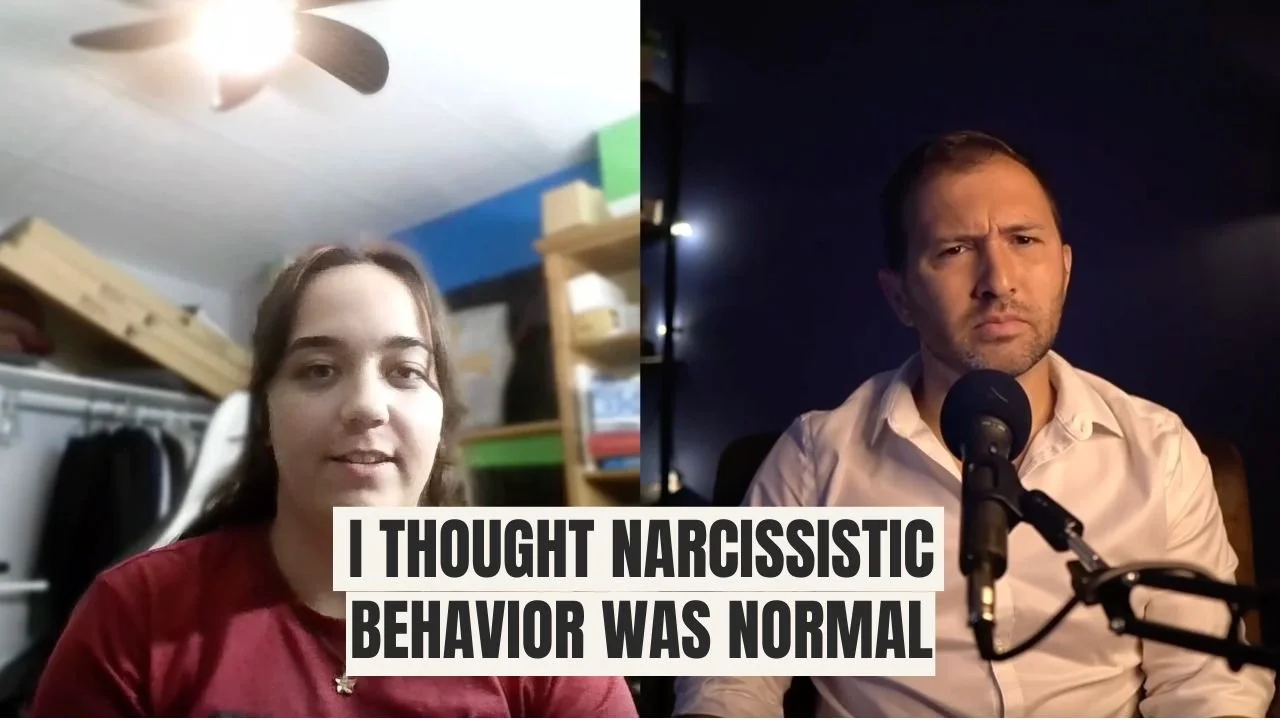
When dysfunction is all you know, it can feel normal.
For Mickela, growing up with a narcissistic father meant fear, control, walking on eggshells, protecting her younger siblings, and even parenting her own parents. For years, she didn’t realize how unhealthy her family dynamics were. It wasn’t until she encountered healthy families that she began to see how different love could look.
In this episode, Mickela shares how those relationships helped reshape her understanding of family, love, boundaries, and healing.
We talk about:
Why unhealthy family dynamics can feel normal when you grow up inside them
What it’s like growing up with a narcissistic and controlling parent
How healthy families and mentors can show you a different way to love
How to stop carrying responsibility for everyone around you
Why forgiveness doesn’t always require reconciliation
If you grew up with a narcissistic, abusive, or deeply dysfunctional parent and want to build something healthier, this episode is for you.
Resources Mentioned
Free Guide: 7 Ways to Work Through the Pain of Your Parents’ Divorce
Book: It’s Not Your Fault
Share Your Story with Restored


Enjoy the show?
To be notified when new episodes go live, subscribe below.
As a bonus, you'll receive the first chapters from our book, It's Not Your Fault: A Practical Guide to Navigating the Pain and Problems from Your Parents' Divorce.
TRANSCRIPT
Transcript produced by artificial intelligence. Please pardon any errors!
Joey Pontarelli (00:00)
Michaela, welcome to the show. So good to have you.
forward to this. I know that your upbringing was definitely a a difficult one. You you grew up in an abusive home and so I'm curious to whatever degree you want to share, like what was life like and how did it affect you?
Mickela (00:13)
Yeah, so I think it affected me only in my early teens 'cause growing up I thought that everything that was happening at home was normal. Like that was the norm. Everyone went through that. Basically I grew up with a narcissistic father who also suffered from schizophrenia. So it was very like a different world, I'd say. Like we were brought up into his schizophrenic episodes.
So whatever he was going through, we were brought up into it, if that makes any sense. And yeah, we my dad wouldn't let us go like do anything. It was weird. It was like very strict but very like we weren't allowed to go see friends, we weren't allowed to go out and even just the simple things like climbing a tree 'cause that's too dangerous, you could die. Or so many little things like that were blocked out out of fear. So there was a lot of fear growing up.
And there was also a lot of like religious control in a sense. I don't know if that makes any sense, but a lot of like, you talked back, you're gonna go see a priest. Like s stuff like that. And growing up I thought that was normal. I thought that that was how God was. Like God was if you fail, like I don't love you, that nope, you know. So I'm trying to like squeeze it in 'cause I could talk about it for hours about my childhood, but I
Also, I'm the oldest of six, so I always grew up being like kind of like a mom to my siblings. So whenever my parents would have fights, whenever there would be abuse going on, I would have to like run in, grab the babies, and then we would go hide in a room and just, you know, try to keep things, you know, just that's our safe spot. Right now there's stuff going on, we're gonna stay like that. So it was often scenarios like that growing up. And I think
The worst period of time was during COVID, 'cause then we were secluded at home, right? We were like in our house all the time. For me going to school was like the way I could go out. It was like my free pass to like leave the house. And during COVID my dad went through a psychosis, like a religious a religious psychosis and a covid psychosis and it was just crazy, like
Joey Pontarelli (02:31)
Explain that if you would. What what is that?
Mickela (02:33)
Yeah, so a psychosis is just like just thoughts that keep trotting in your brain and it's like I grew up with my dad telling me that the Pope wanted him to leave my mom. Like stuff like that. So it was I really don't know how to explain it. It's like just such a twisted way of seeing the church and bringing it up to your kids, if that makes any sense. And during COVID my dad worked at a hospital as a janitor, so
He had to face like the whole like mask thing, the whole like asthmat suit and everything to clean rooms. So I think that traumatized him a lot. And that made him like like he quit his job and then we were stuck at home for like twenty nineteen to twenty twenty three, I'd say. So for a whole year it was just the same things over and over again. And at that point I was about seventeen when
After some while we had child services come every once in a while. And at some point they were like, Okay, this has to stop. Like, this is not healthy. Like we were neglected with food. We were neglected in like verbal abuse. A bit of physical abuse as well. And at some point we were sent out into different homes just to like get out of this scenario. To get out of you know, it wasn't officially like a foster family.
It was more like emergency family type s situation. And eventually it became into foster families. So yeah, if that could resume it very simply. But I don't mind diving into whatever.
Joey Pontarelli (04:10)
Yeah, no, I'm sure there's so many layers to this. Well, thank you for sharing so openly and no, I know and there's a lot to your story even more than we're touching on. This idea you brought up of it was kind of all you knew, you thought it was normal. I think it's a really common experience for people like us. At what point did you realize it wasn't normal? Take me to that moment, I'm curious, yeah.
Mickela (04:29)
So when I was twelve, thirteenish, I started going to this youth group. It it was the first time I had ever seen people like in worship and like loving God and I'm just like why? Like one of he actually turned into being my sister's foster dad. And I was at a retreat with that youth group once and I see him, hands up, cry like a grown man bawling his eyes out in worship and I'm like
This is not norm. Like the god I know like what's going on, you know? And I became really close with one of the girls at that youth group and she started wanting to like invite me. Like, you wanna go for a play date? Go for a trip, go for that. And I saw her going out, like, with friends for sleepovers, for, you know, fairs and stuff, and for me it was always like, No, you're not allowed. And I was like, Why? you know? That's when I started realizing something's off with this.
And every time I kept pushing, there would be like a almost a guilt trip. So like, well, you disobeyed or I'd try to think of a good scenario. It's like there would always be a payback. So every time I would go out, there would be like a punishment. Like you weren't here and dad was mad so Dad's not talking to you. So there was always a consequence. And my friends made me realize like that's not normal. And I'm like, What do you mean, your dad doesn't do that? Like your dad doesn't ignore you for two weeks if you like don't show him
I don't know, enough attention or if you don't obey, they're like, No. And I think now I understand that with my dad's mental health, it was out of fear. Like it was he would try to control out of fear. So there wasn't any authority. It was like just scare me. Like he would scare me to the point where I would just like listen to what he told me to do. Yeah. Like one time I think we went to Wonderland, Canada's Wonderland in Toronto. And
Instead of letting me sleep over 'cause we were leaving at four in the morning to go 'cause it's a good seven hour five hour drive from Ottawa. So instead of like letting me sleep there, he drove me at the house at four in the morning. And like the parents my friend's parents they were like, Why? Like it's so weird, you know.
Joey Pontarelli (06:42)
Yeah. Just little things like that, I could see how it'd add up and it'd be like and some bigger of course things, but a lot of those little things would yeah.
Mickela (06:49)
I
would go with friends, my dad would always like stalk me just to make sure I'm okay. To make sure or if he wasn't there, my mom had to be there. Like it was like no freedom, always surveillance, and it was out of fear that something bad would happen. But to an extreme like it was almost like being choked. Like you cut you didn't have anything to say, couldn't do anything. So that's when I started to realize it that it wasn't normal.
And also just being surrounded by other families and seeing like like couples actually show affection to each other or communicate with each other. Like I grew up analyzing a lot. That was like something I had to do. Like, dad's in a bad mood, walking on eggshells, I'm gonna remove myself and make sure nothing bad happened. But I would go to these houses and then I could tell there were you know, little tensions as with couples, whatever, and they're just like, Can we talk? you know, just
And it's out of love and out of compassion for each other. I would see families go to church together and they actually like looked happy to be together. Well, that was very French together.
Joey Pontarelli (07:53)
Ha ha ha.
Mickela (07:55)
They would like it was a life changer for me to just see actual couples sh like just hug each other, talk to each other, have their kids cuddle them on the couch while watching a movie. I'm just like, You guys aren't normal, what is wrong with you guys? And
Actually when I was seventeen and I moved out, one of my that dad that was crying out worship I mentioned earlier, he actually invited me to work with him. He's a plumber. So he invited me to work with him and just be an apprentice for a while. And just seeing a man in a different like aspect of it's like I was sheltered my whole life and now I see this man who's like teaching me how to use tools, teaching me how to fix a toilet, like
It I didn't have a passion for plumbing, but it was just so healing to see like a man just caring and like educating me and guiding me and then eventually I would like I felt so honored he would trust me to like go put a sink, like fix a sink, or go install this toilet, or stuff like that. Yeah. So
Joey Pontarelli (08:59)
There's so much in your story to pull in. So one, just like it was by the contrast of like a healthy family that you realize yours was really unhealthy, which I think is a super common experience. I know I experienced that as well. And and then that experience of being with those other families that being healing totally the same for me. And even like inspiring, like I didn't want to get married when I was younger. And then when I s once I started these seeing these really beautiful married couples, I was like, I want that. That's cool. Like that that would be great. Because I kind of thought all marriages
Eventually, like maybe under the surface we're all bad and unhappy. And then I realized no it's not actually the case. Like yes, marriage can be hard and you go through hard seasons, but it's not you know, you could actually really love each other and actually have a a good, beautiful marriage. Yeah. And yeah, and and just like that experience you had too of having a mentor, like mentors in my life, make it like have been incredibly helpful and healing. And like having that man who, you know, taught you his trade and yeah, was just their
for you it that's amazing. I so beautiful. I was curious a couple of things. One, you mentioned this idea of like being mom to your siblings. Yes. So was that just like a reality for as long as you remember? And take me if you would to the moment where you realize maybe that wasn't quite the way it was supposed to be.
Mickela (10:11)
Yeah, so I guess I think it wasn't until I moved out until all my siblings were sent into different families and I was trying to like fold into like five people 'cause we're I had f I have five younger siblings. I have three sisters, two brothers, and I would try to like make sure everyone's okay, everyone's you know and unfortunately some of my siblings didn't really they weren't as mentored as some of us were. So unfortunately they were they went
through a rough patch of being in the wrong crowd, you know, struggling with alcohol and who knows what. I had to stop keeping in touch because as much as I wanted to help them, as much as I wanted to protect them, I had my own wounds to take care of. And I think taking that step back and saying, okay, I will heal first and then I can be there but also putting a boundary of I'm not their parent and I'm not responsible for them.
I'm responsible to them in the sense like I owe them respect. I owe them love. But I'm not responsible for their outcoming in life. I'm not responsible for their choices. And it's still something I struggle with today. Like I'll see them I'll try to organize like, you know, little coffee dates and stuff, and I see their pain, I see their life situations, and I'm just like, I can't do anything about this, you know? And I think with therapy it helped so much. At first I was against therapy. I was like
Have God, you know, I can deal with this on myself on my own. But it was actually one of my mentors in church that was like, No, like therapy is good and you can have God and therapy. There's no shame in that. So my therapist has helped me with realizing like what my parents made us go through, what I went through because of my parents' choices isn't something that I have to carry and I don't have to be that parent towards my siblings anymore. You know? Like I grew up like basically I took care
of my s like I you know like girlhood and everything, womanhood, I had to teach my sisters about that because I wasn't taught any of it. So I learned on my own and I was like, okay, like this is life. Like I have to talk about it with my siblings, you know? So Wow. Yeah. And now
Joey Pontarelli (12:23)
Yeah, it grew up so fast, yeah.
Mickela (12:25)
Yeah. And I keep touch with them time to time. One of my sisters was adopted with that plymer. So
I see them all the time and they're I really consider them like my second family. Like they're so nice. They have seven kids now. And they still adopted. Like overnight they
Joey Pontarelli (12:43)
Seven like biological children and okay.
Mickela (12:47)
Actually six. They had six kids. They just had their sixth and the oldest I think at the time was like ten or eleven. And they adopted a teenager, like a fourteen year old teenager overnight. So it's I can't imagine just like, you know, you're learning how to cope with a ten year old and then bang you have a teenager with all this history. But like and I've been on like with them through that journey too. And just seeing the compassion and the efforts that they 'cause it's not easy to like foster a kid.
Especially when they're older, like 'cause you have all that baggage. You have all the pain, all the suffering, and then it's just like you're being taken out. You're like, Okay, start here you know.
Joey Pontarelli (13:26)
Yeah, I'm sure it's not easy for anyone involved. yeah, thankfully I didn't have to go through that. but man, I I could have probably at one point, but thankfully I was I was definitely hard headed down a dark path. But thankfully things got corrected. But yeah, my goodness, there's so much there. But I I appreciate you sharing and and that makes sense. Like I I know we've talked about this in person at the retreat that we did, about how there's a necessity at times for us to be that older one more than an older sibling, like to be that parent. Yeah.
And it's it's such a tricky situation 'cause yes, it's not normal for an older sibling to be mom to younger siblings. It's just not. It goes way beyond any responsibility that a kid should ever experience. That being said, it's like, well, what are we gonna do? Like there's a necessity here. Some someone's gotta do this, someone's gotta fill this role, take on these responsibilities, do these things, protect these kids. And if we don't, like who will do it?
You know, it would be nice in an ideal world if someone else would like come in or mom or dad would like step up more. But in such broken situations at times, like we just have to do it. And so I guess I'm curious, like, what's your advice to someone who maybe is in that situation now who maybe they are starting to recognize us, like, yeah, this is not normal, it's not sustainable, I can't do this forever. But maybe they're stuck in it. Like what w yeah, what would your advice be kinda to your younger self in in this regard of playing mom?
Mickela (14:49)
As a kid I found a lot of value in it. Like I felt like I was it was my job. It was my purpose 'cause I didn't see my parents step up, I didn't see my mom show that affectionate side. I think with everything she was going through, it wasn't it wasn't even an option. Like when you're on the survival mode it's not even like something you think of. So I wish like if I could tell some like talk to myself as a kid, go back to myself as a kid, if I could say anything is just like hm
It's profound 'cause like you said, it's like you feel like you have to do it 'cause no one else is doing it. And yet again, you want to be a kid. So honestly, I would just remind myself like you're a kid. You're allowed to feel your emotions, you're allowed to be a kid. Like you don't have to grow up and become this adult. But sometimes with trauma and everything, it's like not even you just skip that whole phase of being a kid. But if
now I struggle with the consequence of that. Like in my relationships with my friends. Like sometimes I'll be with friends and I won't even like if I don't feel like I can help them, I won't connect with them 'cause I'm like, I don't have a purpose in this friendship. But you don't have to be like your value isn't in what you can do for others. It's not in what if you can save someone or not, if you can protect someone or not. And that's what I had to do with my siblings, like recently, because I can't stop them from
making bad choices, you know. I think I'm not sure of the passage in the Bible, but it's like it literally says you can't help like it it doesn't say it specifically, but I know anyways my brain is like fried right now. I'm on coffee, my second coffee, it's gonna come. But it's just you can't help someone that doesn't want to be helped. And I lost so much energy, so much, even with my parents. Like at some point I had to parent my parents as well. And that's a whole
I think from parenting your siblings to parenting your parents it's two different categories 'cause you should never parent your parent. And that's another boundary I had to set. 'Cause often like when I see my mom or something, like it would often be an opportunity for her to vent to just tell me everything that's going on between her and my dad and my siblings and I being the older sister, second mom person that I am, I'd like, my goodness, like what can I do? I have to you know? But that's not healthy and at some point you have to choose you.
Like you have to choose to lift yourself up instead of just drowning with other people's struggles. So yeah. It's a hard question. It's so
Joey Pontarelli (17:24)
Profound It is hard. And every situation I think is a little bit different. But I think there are these principles that kind of apply throughout. And I think one of you articulated really well there is like it's not selfish for you to take care of yourself and to be a kid. And yeah, maybe there's a necessity where you step up a little bit more or even a lot more for your siblings. And like you said, I l I like the line you drew. It's like, yes, maybe out of necessity your siblings need you, but your parents you should never have to do that for your parents.
But yeah, but I I think I think just that truth of like it's okay, like it's not selfish for you to take care of yourself. Cause I I know like kind of speaking of this, you know, going back to this whole theme of like I thought this was normal. Now I know it's not normal. It's like just to give whoever's stuck in this situation a little bit of contrast, it's like, nope, not normal. Not something that happens in healthy families. Like kids are kids, parents are parents. Yeah, yeah, yeah. Exactly. Kids are kids, parents are parents. The parents have the responsibility to take care of the kids, not the other way around.
And yet in so many really broken situations, as you and I are very familiar, everything gets turned upside down. I wonder, what did parenting your parents look like? I a little bit more. I know you said mom opening up, being kind of that emotional confidant therapist, whatever you call it. w wha what else did that look like? 'Cause I think that's again something a lot of people can relate to. So you just found out that your parents are getting divorced or maybe the pain from their split has started to resurface. Either way
You feel alone and you might even be experiencing emotional problems like anxiety, falling into habits that you're not proud of just to numb the pain, and struggling in or feeling afraid of romantic relationships. I've been there, I totally get it. But worst of all, perhaps you fear that one day you might repeat your parents' story. If you can relate, I wrote a free digital guide for you. It's called Seven Ways to Work Through the Pain of Your Parents' Divorce. Inside, I share practical steps that you can take.
To grieve the loss of your family, healthy ways to deal with your pain, and expert tips to heal those wounds. It's what I wish someone would have told me years ago, seasoned by 20 years of experience navigating my parents' split, listening to hundreds of young people from broken families one on one, and helping tens of thousands of us heal and grow. You are not alone and you're not doomed to repeat your parents' story. Download your free guide at restored ministry dot com slash seven ways or click the link in the show notes.
Mickela (19:40)
I guess with my mom it would often just be especially after we all moved out. 'Cause before that we were kind of silenced because of my dad and because of his mental health and everything. So we couldn't say anything or else it would trigger something. So we were quiet all the time. No talking. But it was once my mom started to step up and saying like, Okay, I've been in this suffering for so long and I see my kid like she could see it.
very clearly that something was wrong. And it was by being surrounded by people that she was able to get out of that that hole she was in. But I remember in those like just before we moved out, we had child services come over and everything and I would tell my mom, like, we have to get out of here. Like it's not an option. And often we were told to like pretend like everything was fine whenever they would come. So just like if you 'cause child that's the thing with child services, they always give a warning when they come. Sometimes it'll be a surprise, other times they'll just say
Hey, we're coming in ten minutes. So in that ten minutes there was a whole speech of like you can't say anything, can't talk, can't everything is fine. If you say something, the family's ruined. It's your fault. But specifically near the end, like when I was close to seventeen, I was telling my mom, like, this isn't normal at all. Like and she'd have like mental breakdowns and I totally understand. Like, I can't imagine being under that stress of being in an abusive relationship and then having six kids in your house that are all suffering, like
I have so much compassion for her. But she would often like just mental breakdowns and just mental crashes, which I when you're on survival mode it happens way more often 'cause it's just your your whole system's like compromised, right? So I often felt like I had to tell her what to do. Like you have to step up and talk to child services. You have to talk. Talk, you know? And especially when we moved out there was a lot of court
stuff. There's still a lot of court stuff right now. And for a while I kept telling my mom, like, no, you have to step up and talk. Share your story. Do something. Cause even when they were separated there was still like they lived in different houses but there was still stuff going on between and unfortunately like my younger brothers were exposed to that. 'Cause my younger brothers stayed with my mom. They're eight and ten. And but that's maybe three years ago. But at that point there wasn't like any restraining orders. There wasn't anything between my mom and dad.
So she would go to my dad's house and I would be like, Why are you doing that? Like it's not healthy. At that point I had to kind of guide her. And it it was rough, especially when you're in that position of like having to separate your parents because they're not healthy for each other. Yeah. And I often felt like I had to discipline my mom. And often it felt like I was talking to a teenager. But her background with all like she grew up in an abusive home without a dad.
as well and she married into an abusive marriage. So it's almost like I was dealing with a traumatized teenager, if it makes any sense. She never got the chance to grow and become an adult. So she was very young. She's she still is like that, just very on the defensive mode, ready to like defend herself, protect herself, protect her reasoning. And often it's out of fear of suffering.
Yeah. If I leave dad, I'm gonna lose everything. If I I don't wanna lose dad, but dad is sick. Like stuff like that. Just conversations of what she feared. And then I had to remind her, like, you're surrounded by people. The government has programs. Like as much as I have my opinions about the government, the government does offer like programs for like abused victims. Like and it was something she didn't want to take 'cause she's strong and she has this. She can push through it, but she couldn't.
Joey Pontarelli (23:34)
Yeah, no. My goodness. So you played this role of like negotiator, counselor. Yeah, like you we said mom. this is yeah, that's a lot for anyone to go through with their parent, but especially at such a young age. I admire the compassion you have for your parents. Maybe we'll come back to that a little bit later.
But you mentioned this idea of she came from a broken family and kind of recreated that. How much is that a fear for you? I know for me, I felt that before I was married like so freaking strongly of like, I do not want that. I am afraid of that. Where are you at with that?
Mickela (24:07)
So I guess I could talk about the importance of finding good father figures because or even I guess for guys out there too, like good mother figures. Because the story of you know how they say like you end up finding a future spouse or a future person that is like your parent. Like you like it's just and for me, my first relationship ever, there was this guy. I was seventeen. I was so young.
I say that it's like four years ago. But it was such my goodness. Like the guy wouldn't let me hug my friends 'cause he was jealous. He wouldn't let me like turn my location off my phone. I had to tell him what I was doing all the time, cause and I was like, He loves me. my gosh. And I thought it was love. I thought that being controlled like 'cause that's what I grew up in. I thought, you know, I mattered and he tracked me like that. And
He crossed a lot of like physical boundaries that I had. Like as a Christian, you know, purity was something I valued a lot. And it was very broken growing up. I was exposed to so many things that kind of affected my purity. And it was a boundary that he kept trying to cross. Kept pushing, pushing, pushing. And I was just like, Yeah, as much as I wanted to say no, he would cry to have it. Cry to like, but I just wanna hug you, nah, you know. So I thought that was love. I thought that, you know
I felt comfortable with it 'cause that's what I was brought up in and just crossing boundaries and protecting, controlling. And it wasn't for if it wasn't for my friend that I ended up living with, and my foster family actually, it's really cool, for my youth group, I would probably still be in that relationship. Like she like it ended so bad, but it was very good and it was almost like an awakening for me.
I think God permitted all of that to happen for me to realize like, okay, I have wounds that I have to deal with before I can even consider being in a relationship. And that is true. But I for a while I like for a good four years I didn't date anyone. I didn't even consider like thinking about like no, I was too scared. And I know that I know my weaknesses and I know I know myself. And I know I don't wanna repeat I d I still a fear I have today. But
It was by letting myself be loved by others and being surrounded by good mentors, good families, that I was able to like, hey, so like for my my boyfriend right now, we've been together for almost a year and a half. And I made sure when I started dating him, I was like, I'm telling I'm I'm gonna be close with someone, I'm telling them everything. Just 'cause I was so scared that if I didn't see the red flags, I would just walk
blindly into it like I did in my r other relationship. And I didn't want to do that. So I made sure to surround myself and to just trust. Like I've been through a lot of healing ministries, a lot of therapy, and I'm like, I know now like identifying your wounds, identifying your weaknesses. Like for me it helped me realize like, okay, these are my weaknesses. I have to set like set those boundaries and hopefully
Like, I'll see where goes. That's what my mindset with this relationship was. And if I'm like honest, it still pops up in my mind the fear of like, what if it happens again? What if the same thing that happened to your mom, to your dad, to your grand like on my mom's side, my great grandma married an abusive man, they divorced, and then my grandma got married, had four kids, the guy cheated on her the guy my grandpa he cheated on her, got into drugs, he left. So she grew up
My mom grew up without a dad and later in life she met her dad and he brought like sh he brought her up into drugs into a broken family. But she never met him before. So it's like it's so co not complicated, but it's so deep. And that fear of seeing like my grandfathers on my mom's side being these abusive men and then seeing my dad and I'm like, Okay, I know I have to break this. I know I have to break the cycle and
It's not easy to break the cycle 'cause that means you have to face your wounds. You have to face your fears. And honestly, I think my biggest help with all of that was God. Like there's no way I don't know. I can't see God not helping me to get out of that mindset. Like I even have one of my friends that told me I'm like the black sheep of my family, but in a good way. 'Cause I'm the only one like I have another sister, she's too I guess she's sort in a good Catholic family who's sheltering her. But
Out of all my siblings, like I'm the only one maybe not the only one, two of us have a strong relationship with God and somehow we didn't go down the tracks. So I do have hope that my other sisters will find that too, and that we'll we'll all be able to break that cycle. But it's a genuine fear.
Joey Pontarelli (29:04)
Agree more with you. And the more people I talk to like us, the more I realize like I think this is the number one fear that we all face. It's like we don't want to be become like our parents or at least repeat their stories. Not because we hate them, but because it wasn't good. Like we don't want that too. And so, and yeah, and I think there is always that risk. And I think that's okay to say, like, yeah, it that could be me. Like, I could do that. I have freedom to choose all of that. Or if I don't, you know, proactively you said, heal and grow, then there's that risk that I might kind of.
by nature default to going down that path. Totally. But at the same time, like you said, there's so much hope. And I love there's so many principles from your story that I think are so helpful. Like surrounding yourself with people you want to be like, people who can love you, who can tell you the truth. But also like it's kind of wild, like this whole theme that we're talking about of you don't really know what's healthy until you see it. You kind of assume what you have, like right again, like we talked about before, is normal. And then you see, well, no, that wasn't normal because I see what normal is or I see what healthy is. Maybe it's a better word.
And I realized like, no, no, that this is like very much so w the opposite of what I had. But it's funny, like before you are exposed to that, you wouldn't really know. So it's such a conundrum. But but I think it's beautiful that you've seen that. And even even like kind of like painfully learning that in your relationships where you're like, Well, I thought this was kind of how love was. Like if you really love someone, there's like this possessiveness and then you're realizing, no, there should be actually a lot of freedom and you know, sure there's boundaries and you want, you know, someone's not gonna
disappear and run off and do whatever they want. There's to have to be like boundaries. But but at the same time it's like the stuff you described is like, no, no, no that's like you said red flag. It's so interesting. And and I think like your advice of like having good mentors and surrounding yourself with, you know, a father figure, a mother figure who can love you is good. I I think one of the things people struggle with when they hear that is like, well how do I do that? Like how do I, you know, find that person and so and that not an easy question, but I'm curious if you had any advice. And I know some of them kinda serendipitously by God's grace I would
argue came into your life. but yeah I'm curious if there's any like principles or advice you'd say to someone who's like, yeah, I want that, but I don't know how to go about getting that.
Mickela (31:08)
Like you mentioned, like for me it kind of I think it was a gift from God. Like 'cause I started going to youth group and this random like the the leader of my youth group just came up to me and he's like, We're gonna go for a walk I'm like, Who are you? You know? Like, what? And he's like, Tell me about your life and I was just like, Never have I ever talked about it to anyone and that was the first step for me to just let it out. And it like I still remember that walk we had, like
He took me out of the youth group and we just like went for a walk in the parking lot, like in an open area, you know. And he just made me realize like I didn't have to be alone. I didn't have to keep all of that stuff in and pretend like I'm fine. So I would go to that youth group and I'd be like, Yeah you know. But there's there's people out there with genuine like like I'm sure he hears God speak to him. Like he has such a profound gift with the he has a profound relationship with the Holy Spirit. But I think for me
If if let's let's say I removed the the godly aspect of it. Although it was I know God God did something on that side. For me it was just identifying someone within a group. Like someone I could trust. Someone I don't know. There's just people out there that you have that intuition, especially for people I find well, for myself at least, with my like hyper analysis
like from like my PTSD and everything I grew up in, I developed this like can I trust this person or not way of seeing people. And it was like that that I was able to just Okay, I can talk about this with this person and trust it with them. And then there's some things I'll talk about with my father figures. I think I have like two dads. It's really funny, actually when I started dating my boyfriend I'm like, so you're gonna have to ask permission to three of my dads?
Joey Pontarelli (33:00)
Yeah.
Mickela (33:03)
And same thing with like there's things you can talk about with father figures, but there's also things you can talk about with mother figures 'cause, you know, life. Life being life and but yeah. I think it's important to surround yourself with good people. it's the only way that I would say I even got the chance to talk to get out of my crap 'cause it was I didn't have anyone else. And those people became my second family. I know it's hard because I went recently to
kind of like a foster family gathering with child services around here and there was a meeting for one of my sisters actually who isn't doing so good in life right now and we're trying to support her, we're trying to find a good foundation for her. You know, she was barely graduating high school, barely going through life. And I said, like my only way to get out of this was by finding a good family and then I didn't realize how hard that is until
the speaker, like the the person who was organizing this meeting, was like, Okay and how do you find that? And I was just like, like it's actually so much more challenging than you think it is. Yeah. So I don't have a direct answer for it. I just know that, like my experience, I know it was a gift. I know it was like presented to me. And I could have refused it as well. I know some of my sisters did. They just turned around 'cause being loved hurts. It's like a icky, like recoiling feeling of like
No, I don't want it. And my sisters were actually presented with like the same families we had, like me and my sister have. But they're both from that youth group that we went to. And they refused.
Joey Pontarelli (34:41)
It's vulnerable, right? I think that's like the icky feeling you're mentioning. It's like yeah, it's like
Mickela (34:46)
Your
whole life you put up these walls to protect your heart and to protect your vulnerability to protect you know, you don't want to get hurt again. And then these people that are coming with like arms wide open they're like, I love you and you're like That's weird
Joey Pontarelli (35:02)
That's so true. It's like I remember even in my family a few things that again seeing the contrast between like healthy and unhealthy. I remember like there being a lack of affection, like physical affection and wanting to change that and slowly starting to change that, like with my siblings. I remember there not being like at least this is the way I felt. Maybe my perception was off, but not being able to like compliment someone or
say something that was a little bit more like vulnerable. It was like always like very much surface level, like kind of guarded, safe. And I remember trying to like integrate that into like my family, especially with my siblings, because I'm the second oldest of six. And and it felt so weird. It's like it's like this is so unnatural. But then over time, do more of it and more of it and you kind of just do it in spite of feeling weird about it. It became normal. And it became like normal to hug or say something like a compliment.
be like more direct to then, you know, say something that is like a little bit more vulnerable. It's like, no, now that's like a normal part of how me and my siblings interact, which is cool. But it takes like that transformation is hard because it you have to push through some resistance.
Mickela (36:08)
Yeah, it takes a lot of courage to just become mushy. You know, like to be soft and like genuine and care like and to accept it as well. It's like i I don't know how to explain it, like it's like recoiling. I just I have this idea of like you know when you're using the vacuum with the cord you plug in the wall and you press the button it's like it goes back in the machine? That's how I felt whenever someone would be like giving me a hug or giving me like
any like affection or a compliment I'd like, you know. But with time, like literally with time I was able to just open up and accept it.
Joey Pontarelli (36:44)
So good. No, I love that. And yeah, no, I I definitely have had a similar experience. But I yeah, just kind of going back to the question we were talking about. I think so often, yeah, it's hard to find a family like that. It's hard to find mentors, not easy. But I think there are a few principles in your story, and I could add from my experience too if that's helpful. one, I think you said like God played a role. Yes. And so it's like asking God for that. Not to say like you can he's not like a divine vending machine where you're like, I I want a good healthy family in my life. It's like next day.
They're knocking on your door. It's like not gonna happen like that. But I think like it's pretty powerful if you you know, I I've seen that happen in my life where I ask for things and it's like, yeah, it actually comes about. Pretty cool. God's timing. In his timing, yeah. And in in in the way that he wants, which is sometimes often different than what I think, or in the way, yeah, the way that I need, not always the way that want. so that that's one thing. It's like you can ask God. The second thing I think is you you alluded to this, it's like pay attention to the people already in your circle.
Like you don't need sometimes there's this thought of like, well, I need to travel the world or scour the internet and find like the mentor for me. It's like, well, maybe there's people around you now that could be that role. And when you're doing that, I think another principle is that pay attention to the people you admire, the people you want to be like. And and you it seemed to be a theme in your story. It's like you know, eventually, especially once you got to know them, it's like, My goodness, I want that. Like I want that type of family, I want that type of marriage, I want that type of life. And so I think figuring that out.
I don't know what comes first, if if you like get to know people who have what you want and then you want it, or if you want it and then you find those type of people, I think it may be chicken and egg situation. But I think for some people it's like figuring out what you want. It's like, no, I want that life and then finding the people who are living it. Other times it's like I am just surrounded by good people. They have something I want, I want to go after that. So whatever the case, I think that's really good.
And then I think like just like any relationship, you have to build it gradually. So, you know, obviously your situation was a little bit unique and that there was like a placement component to it. But I think what I've seen with a lot of my mentors that I've grown close to, it's like, you know, you don't go in and just like pour out your heart in the first conversation. No. Right? There is this like gradual building of like what I always loved to do is I would
go to them for advice. People love giving advice. And so I would go to them for advice. And whether it was like sitting down for like a coffee or something like that, we had, you know, a simple conversation, more surface level. And then that maybe led to a second one. And then they kind of more officially took me under their wing. So those are a few principles I think that maybe could be helpful for people. And and especially if you want to spend time around a good family. One thing I always say is like try to be helpful to them. Families family life is hard.
There's a lot of needs that you have that you can't really keep up with as mom and dad. And so if you can be like helpful, whether that's babysitting or helping with a project around a house or even like bringing them food and some s like simple stuff, I think that could also help build the relationship. So what else would you add though? If you'd like to share your story with us, we'd love to hear it. You can do that in three easy steps. But first, some of the benefits of sharing your story, reflecting on your story and sharing it with someone who can receive it with empathy is actually healing on a neurobiological level. It makes your brain
healthier according to neurobiologists. Writing your story is also healing. Studies have shown that people who write about emotionally significant events in their lives are less depressed, they're less anxious, they're healthier, and they're happier. And finally, it can be really helpful to someone who's maybe on the same path that you're on, but a bit far behind you.
to just hear your advice and to hear your story since they're going through things that you've been through. And so if you want to share your story, just go to restored ministry dot com. You can fill out the form on that page that will guide you in telling a short version of your story. And then we'll take that and turn it into an anonymous blog article. Again, if you want to share your story now, you can do so at restored ministry dot com slash story or just by clicking the link in the show notes.
Mickela (40:28)
Yeah, well like you just said, like helping them around. I was actually a nanny with my sister's foster parents for about six months. And they did homeschool with their seven kids. So every day I got to witness the functionality of this family. Like the dad goes to work, comes back and how excited the kids are to see dad come in to be like and the mom taught me how to cook, how to like make meals, how to
you know, just do house tours. It's something I never got to do. I never got to feel like I had a responsibility in my home. So it was so life changing. And another good experience for me was actually a year after I moved out, I directly I don't know if it was kind of like a way for me to run away from reality, but it definitely had benefits in my life. I went with Net Ministries. So Net is short for national evangelization teams. And I did Net Canada.
So basically for a whole year like I traveled across the country to share like the gospel with kids in high school. And every day we would go into a host family. And that was like the first time first of all that I ever traveled. Never really left Ontario or Quebec. So for me that was like life changing. It was like, my gosh. Like especially in the Rockies, seeing the mountains, I was like bawling my eyes out. It's like Yeah, I'm tiny. I'm nothing compared to the world. Literally. but
Being able to be hosted by these families and see like different ways families function, you know? And every day I would be hosted by a different like maybe it's six kids, two kids, no kids, just an old couple. And that was it was draining 'cause after a whole day of like hosting a retreat with like a hundred kids, it's a lot. And you have to go back and you have to present yourself like very like you know, you're being hosted. You're kind of free. So you have to you know but it was such a life like a game changer for me.
'Cause I was like, Okay, there's good families like everywhere. Like Wow. So it was such I think it brought so much growth in my life. Especially being with a team like that too. We were eight strangers and then they put you in the van and they send you on the road and they're just like, Okay, learn how to work. Yeah. Just being able to like to go back on what you mentioned earlier, just like be like grounding yourself into it. Not just like
watching from behind and seeing like okay this is how this family works like actually like get into it and help them and it really changed for me. It really helped.
Joey Pontarelli (43:05)
I think there's another principle in all that. Travel. No. I love travel. And I think I think it can be abused for sure of like kind of like this endless searching and never planting roots and
Mickela (43:15)
Yeah, like I said, like as much as it was good, I know it was also me especially a year after everything happened, I think if I could reconsider like not running away right away, but it was also really good for me.
Joey Pontarelli (43:27)
Yeah, no, I I I agree. I think like, you know, obviously I don't know all the details, but I think there is something to be said of like sometimes you need a breather, sometimes you need to, you know, actually remove yourself to, you know, to grow and heal. And I I felt like that at different points in my life. But never saying like we're abdicating our responsibility or hurting people, but like truly you're in like the right state on life, of course, to do that. And so I think I think that'd actually be a really good thing. So yeah, I'm a big fan of traveling. I you know, have been blessed to do a decent amount of it and
There is something that experience you described of like kind of getting to know yourself more. You know, like just like who is it? Socrates who said, No they self-like like that there's a piece of that, like that self-knowledge that you get by putting yourself in situations that aren't your everyday. And so it's like traveling to a different culture, seeing the mountains, like stuff like that is like really, really good for you and helps you grow. And so I think there's something in that and and just
Like we're saying too, it's like getting outside of your normal everyday life, whether that's like spending time with another family or like you the experience you had too was awesome of like being with other host families. So there's a lot of good I think in in that and I think that could also be really helpful in healing and help you again, especially if you came from like an unhealthy, dysfunctional situation family. you then get the contrast that we've been talking about this whole conversation to realize like, okay, what I had wasn't normal, but I do want
Mickela (44:43)
I think on like that mission year I had, if I could resume it in any way and try to explain it for someone, it's like sometimes you have to be taken out of your comfort zone to just see. 'Cause when you're in the middle of when you're in the midst of this whole cloud you're in, you don't see. And for me, being someone who wasn't allowed to go out, who wasn't allowed to get out of my home or anything, I was terrified. Canada is huge.
And we had to drive through the provinces and like Ontario I think it took us three days to drive out of it. And I'm like, I don't think I've ever driven this far in my life. Like it's just it wasn't until I realized like I have a life outside of my life. Like I'm a person outside of this cloud I was in. And it helped me identify like, okay, this is where I came from, this is where I'm at. Where do I wanna go after this? It took me that time to realize like it's so important to reflect
Not to like be attached to it, but to reflect on where you came from, to be able to like be able to see f your future. Yeah. But stepping out of where I came from was so healing and it was like almost an opener. 'Cause when I was back at home I couldn't see as clearly as when I was driving in a mucky car with a pe i it wasn't that bad, but when it's been like when you're on your like fifth hour in the car with a bunch of people and you're all tired
And you're on your last stretch, you know, you just reflect. I had like reflection is so good. And it really helped me. Not in the sense of like it just made me realize, like, especially within that time frame before I was lo gone for a year traveling. I didn't know where I was going. But I also didn't really think about it. And being taken out of that context, like, yes, there was those families that helped me and loved me, and they're still there today.
But just making a decision for myself, like removing myself, getting out of my comfort zone. It's like the image that comes to mind is like being in a classroom full of like stuff. Or like a like this room, like kind of stuff everywhere. And then I just see like removing myself and seeing the picture. You know, like I couldn't see the picture. I could feel it, I could see the brokenness and everything. But once I was out, I was like, you know what? Like this world is big enough and everything that I carry
And everything I carried before, like it does have a meaning, but it was pointless to carry. It was stepping out of my comfort zone permitted God to like speak to me. 'Cause I was so crowded with those thoughts, with those fears, with just everyday life. Yeah. So I d I don't I wouldn't say like remove yourself and travel like for a whole year if you want to hear God's voice. But
Joey Pontarelli (47:33)
Maybe.
Mickela (47:34)
just in the simple things in life, you know.
Joey Pontarelli (47:37)
Yeah, no, I'd agree. No, I so many different sayings come to mind that I found helpful. One, you know, you you can you can't see the label inside the jar. Like sometimes you like you said, you're too close to a situation where you need to kind of like take a step back to see the wider picture. Like you said, growth happens outside the comfort zone. Yes. That's always been true for me. Whether it's in relationships, physically, like worth work, financially, like it's like there's always gonna be discomfort if you wanna grow. And I remember
seeing this quote that comfort is a slow death. It was just so true. It's like you could be comfortable your whole life and you'll never grow. You're just gonna get weaker and weaker and weaker and slowly decay. It's like, man, I don't want that. but the trait is that you're gonna feel pain and it's gonna be hard and you gotta push through those things and hopefully if you you know have good people in your corner it makes it a lot more bearable. But so good. There's so many good principles and things. I I'm curious like what else in your life has helped you heal?
You had mentioned in the article on our website the idea of like grieving, how that's been helpful. But I'm curious, I want to go into that a little bit if you if you don't mind talking about like what what what does grieving look like for you? What has it looked or felt like? But then what else has helped you heal in addition to what you've already mentioned? You've mentioned a lot.
Mickela (48:49)
I held on to the idea that things would go back to normal. Normal as in my parents are gonna go back together and the family's gonna be reunited and it's gonna be like this picture perfect story.
Joey Pontarelli (49:02)
That would be awesome.
Mickela (49:03)
It would be awesome. I think it's everyone's dream. And I know like if it's in God's will, like it will happen one day maybe. But being attached to that just made me develop this like almost victim mindset. Like
My life is terrible, my family's separated, I don't see anything, I don't see the point of this and for a while I was holding on to it. I still do sometimes grieve it. I grieve my dad. I grieve not having my own dad, you know, not having my own mom, not being able to have conversations about life, about work, about my relationship, about and I'm in the middle of that. I don't have anything to say about like how I overcame it. I'm in the middle of it.
And I'm surrounded by people, like I mentioned like I don't know how many times, but the people I'm surrounded with, I'm able to just talk about it. So it's nice. It's really nice to be with people that are able to listen. But I think acceptance has a huge role. Often without even realizing it, we run away from our problems. And I didn't want to accept that my like my family was broken. Which is weird because I think I mentioned that on the document as well because
Growing up, especially when it got tougher at home, like I wanted my parents to separate. I wanted it to be over. It was so bad and I was like, If this is gonna be like this for the rest of my life, I don't want it.
Joey Pontarelli (50:27)
Which totally makes sense to me.
Mickela (50:28)
Yeah,
it was a lot. And at that point in my life I developed like a lot of depression. And I was in a really dark place and getting out was really good. It helped a lot. I was able to breathe again and everything. But I still still to this day, maybe with time, it helped a lot. But just grieving the mindset of like, I want my mom, I want my dad, I want my parents. And you know, you see like couples like being lovey dovey, it's like
I wish my parents were like that, you know. But learning to not dive into that victim not vic I don't want to say victim mindset. I don't know if it I don't know how to really pronounce it, but not letting myself get swallowed into that grief. Swallowed, not swollen. Swallowed into that my French is kicking in. Yeah,
Joey Pontarelli (51:20)
Yeah, take it.
Mickela (51:21)
not letting myself being swallowed into that grief.
'Cause then that's where I would often catch myself going down this loophole of like, Life is terrible, everything happened to me. Like, yeah. I don't know if it answers your question or though.
Joey Pontarelli (51:33)
No, no, no. I think it makes sense and I I appreciate you being honest about like I don't know if gre if grief is anything we like necessarily figure out or overcome. It's more of like a process you just like walk through.
Mickela (51:45)
I guess a way to explain what I'm feeling is like it's like you're grieving someone that's still alive. Yeah. Like it's so weird.
Joey Pontarelli (51:54)
Like it's a very real loss, but at the same time, like they're still there. It's like you haven't fully lost them, but you lost a part of them or a part of like your life. Part of yeah.
Mickela (52:03)
Yeah, and it's something like that's my current season right now. Just accepting that the relationship I wish I had with my parents probably won't happen. It's it's hard.
Joey Pontarelli (52:14)
Yeah, it's like a punch to the gut. Dang. But I I've had to walk in through a similar journey of like yeah, being not okay with it. That's not maybe the right word, but like you said, I think acceptance is the best word. And kind of surrendering it to to I know not everyone believes in God listening, and that's if wherever you are, we're glad you're here. But I think especially like giving it to God, being like, Okay, I don't have control over this, I'm not God. Like I'm not all powerful and wish I could make this different, can't.
Yeah, I could do maybe the little things, but there's another person involved here, you know, a a especially as it relates to my relationship with my parents. and so I'm gonna do everything in my power to make this healthy and good and and repair things, but I'm not a hundred percent of the equation. So yeah, so I think like when it comes to grieving, what I've learned though is like you said, it it work like we are walking towards acceptance, like you said. And it's kind of like gr grief in my mind, like my simple mind is like it's it's the process to
of accepting life after a loss. So it's like some you lose something, someone dies is the typical example. And then you're trying to like kind of readjust to reality. And it's hard. And there's like sadness along the way. There's a lot of anger. There's, you know, all the things that they talk about with grief.
Totally. And it's all it's all aimed at kind of helping you adjust and then keep moving. not in a way that's like forget it, you know, run sort of thing, but in a way that's like, okay, that happened, it hurt, it was hard. But like you said, I'm no longer stuck in that. Exactly. And I can like move beyond it. And I think that's where a lot of us and that's where it's tricky when we're having these conversations, thinking back. We don't want to give that the impression that like we're selling telling everyone like
Just be pissed off at life and just never, you know, grow. It's like, no, no, we we talk about it so that we can grow and live the life, a good, meaningful life. But yeah, but I I think grief, grief is a tricky thing and there's more that we can say on it. But yeah, feel free to add anything you wanted to that. But I'm I'm curious if there's anything else you would say that's been like extremely helpful when it comes to healing in your own growth in addition to what you've said.
For countless teens and young adults, their parents' divorce is actually the most traumatic thing that they've experienced, but so many feel lost and alone in navigating the challenges. I've been there myself. It's really not easy and it shouldn't be this way. My book, It's Not Your Fault, guides them through those challenges by helping them put their pain into words and begin to heal, work through the emotional problems that they face, cope in healthy ways instead of falling into bad habits, improve their relationship with their parents, navigate the holidays and other life events, and build healthy relationships and so much more.
One Amazon review said this. This book is packed full of really practical help. If you come from a broken family, or even if you don't, but you love someone that does, this book is so helpful. I can't recommend this enough. By the way, it's a quick read and it doesn't need to be read cover to cover. Since it's in question and answer format, you can just read one of the questions and one of the answers. And so if you want to join the thousands of people who've gotten a copy, just go to restored ministry.com slash books to get the book or download the free chapters. Again, that's restored ministry.com
dot com slash books or just click the link in the show notes.
Mickela (55:18)
I think actually was in therapy. My therapist at the time was this little Brazilian lady, super cute. Had like a thick Brazilian accent. And I'm just saying it 'cause okay, I'm very visual and I like elaborating. Just picture it, okay? I'm in my therapy session and this little lady takes out a bunch of like random things on the floor. Puts them on the floor. There's like a printer on the floor. There's a punching bag. Not a punching bag, but you know those l those little balls you use for w weights?
Joey Pontarelli (55:48)
Yeah, like medicine blossom.
Mickela (55:50)
Like a bunch of heavy stuff on the floor and I'm just like, What is this? And she gives me a garbage bag. And she told me that garbage bag r referenced specifically to when I moved out. 'Cause I basically put my life in a garbage bag, right? Like foster kids when they go out, like it's the typical like put your clothes in a garbage bag and that's put everything you want, you don't want to lose and go. So that was like okay. Like that brought me back to that separation moment. And then she's like, so all these things represent
the negative stuff in your life. I was like, okay. That's weird. And she's like, okay, put it in your bag. And then she would make me identify the printer as a specific wound that I had. Because being like with my therapist or everything, she would write down like specific moments, you know? And at the end I had this trash bag. I couldn't even lift it off of the ground. And she for like she'd be like, okay, lift it up. I'm like, I can't She's like, lift it up. I'm like, I can't. I can't lift it up. It's full of junk. It's it's too heavy.
And then she would make me hold it and I was like, What is the point of this? It's going nowhere And then I let go of it and she's like, So why are you still holding on to everything in your life? If you can't lift it up, why do you carry it? It made me realize that it was so helpful and I still reference to that sometimes in my own path in life 'cause there'll there'll be times where I'll like start carrying it again. It's so easy to just like wear the title of being from a broken family and like letting that be my identity.
Yeah. But it just made me realize like what happened to me and what my parents decisions were and what they did to me, it doesn't identify me. And I don't have to carry it just because I went through it. And by reminding me to do that is like I'm developing this ability to love myself and by loving myself I'm able to choose good things for me. And I think that's something I go back to a lot. And
Just think about the garbage bag with all the the trash and the heavy stuff in it and do I want to carry that? Yeah. I don't have to carry it. Why do I carry it? Yeah.
Joey Pontarelli (57:57)
No, it's okay. You can let that stuff go. Wow. Powerful. If you could say anything to your parents, you know, to speak honestly, like what what would you say to them? What would you want them to know? I think
Mickela (58:06)
That I understand. At the time when we were in the midst of it I didn't understand. I didn't understand their own suffering and their own wounds. And I thought it was just absurd. But on my own like journey through healing, I'm discovering like the why, like the reasoning behind their actions. And it made me realize like they were trying their best in their own ability and their own capability. And I actually
If I could say anything for someone who's in a situation like with their parents where they can't talk to them 'cause that is a that is so real. I actually tried to have a conversation with my dad, like last year, and I wanted to tell him like that I forgave him. I was terrified 'cause I hadn't seen him in like two years. Wow. And I also started remembering a lot of stuff that happened as a kid recently. It's like I had this like this cloud
And now like PTSD stuff, you know, I just through therapy I was able to identify s events. And I was like, I don't want to carry this anymore. Like I don't want this anymore. I have to tell him like I know this happened and I forgive you. And that was I think a big mistake going to his house. I was back into my home, like my childhood home. He's still in my our house from where we grew up. And the second and I'm not saying this to like
discourage people like in any way, but I think it was a learning opportunity for me. I walked in and I made sure was with someone else 'cause, you know, I'd rather be there with someone. And he said, It's okay, I forgive you for leaving me. I was like, Okay. Like and that ruined me. It broke me. Cause I came up with this desire to be better. To be, you know, 'cause I want him and I love my dad. But to me that made me realize like
it wasn't an option. And accepting it was so hard. It was a hard pill to swallow, like but at the same time it made me realize like you can forgive someone and love someone at a distance. And it was it's still today the only option that I can do. Hopefully one day it'll change. But I think forgiveness is the key 'cause the human side of me would love to just have a conversation with them and tell them everything.
Tell them what made me angry, what made me sad, how much therapy I have to do, how much, you know. But sometimes that's not an option. 'Cause they don't understand. They don't have the capability of providing that what I'm looking for. And I guess on my walk in my faith, I've been able to find what I'm looking for from my parents and God. Because God is the ultimate parent, He's the ultimate like
For me, in my story, it literally in the darkest times of my life, turning to God was like the only option at times. It was either that or probably like, you know, at the time when I had suicidal thoughts and everything. It was between God and that. So Wow.
Joey Pontarelli (1:01:16)
I admire yeah, the compassion you have for them and I think there's so much wisdom in what you said about it's not always the right move to, you know, approach mom or dad with these things, even though we'd like to tell them a lot. Sometimes it is, but I think like you said.
Mickela (1:01:29)
Like it's an option, like to just sit down. But it I think it takes discernment.
Joey Pontarelli (1:01:35)
A ton, yeah. What we typically advise is you have to use a little bit of like prediction. You have to figure out like how might this go based on how it's gone in the past.
Mickela (1:01:45)
And
you know your parents. Like you know what happened in the past, you know, like the events of everything.
Joey Pontarelli (1:01:50)
Totally. And it it's like if there's like a ninety percent like chance based in your gut, like it's not exact, right? That it's gonna go poorly, it's like maybe maybe this isn't a good bet. It's not a good thing to do. and so that's where I think finding other people who can like step in for, like you said, God and all these other mentors who can kind of be that parent and hear your pain and walk, carry that with you, I think is and and like you said, so well, allow you to like put it down and let it go is I think the alternative, which kinda sucks. It's
Not meant to be that way. It would be great if we can resolve things with the person. Yes. Like you said. But I think there there's a lot of wisdom in that. But yeah, I admire you for I could tell you've grown a lot and you've grown like a heart of like compassion on your for your parents. And I think that's where whether we're there or not, I think all of us I think it's something all of us want to like work towards 'cause there's so much freedom in that too because resentment is so poisoning.
Mickela (1:02:44)
It's imprisoning. It's like Imprisoning. You feel stuck. It feels like it takes over. Your whole heart. I don't know how to ex i it it feels like your heart gets turned into a stone. Yeah. And you can't accept love and you can't give love. It takes a while. Like it's not easy to just get rid of it overnight. You can't just be like, I'm not resenting you anymore.
Joey Pontarelli (1:03:05)
Yeah. No, I agree. And I think like one of the things I've learned about resentment is is really what you described before. A therapist at one point challenged me on this and she said she was like instead of like going to resentment and feeling like a lot of anger and disappointment and you know, resentment's kind of this deep emotion, but instead of like kind of resorting to that immediately, what if you were to kind of like pause that, kind of skip by it to some extent and just go to grieving. Go to the point where it's like, Yeah, man, this sucks.
That was hard. I really wish it wasn't that way. I wish it was different. I really as a kid especially, like I deserved it to be different. There's a matter of justice in this. Like parents owe their kids like a stable home. I owe that to my kids. And the fact that it wasn't that is sure, a a reason for anger, not not diminishing that at all. You can feel that. Totally, I have. But what if you were to just like kind of sit in the sadness of it? Like And for me, that has helped me work through resentment. So
Maybe it doesn't work for everyone, but for me that's been helpful. And you kinda come to this place where you've arrived of like compassion where it's like, Man, I see not saying it was okay, but I see why mom and dad, you know, acted this way or did this thing and it hurt me and that wasn't okay. Never will be. But I get it. And and I'll love them in spite of all of it. And I want the very best for them. And so I think yeah, I think but it resentments hard. It can poison you. It's really bad. Yeah. If you kind of continue on this theme too, if you can go back to Well, first off I just want to say thank you for being here.
And yeah, you shared so beautifully and vulnerably and I admire the kind of soft heart that you had. I I've heard it said, I think it was Peter Creft he said that in our world we have people who have hard hearts and soft heads. But what we want to have, like like we we accept any sort of idea as true, but we wanna have is like a soft heart and and a hard head where we think critically. And so I I see that in you. It's really beautiful. So thank you. And I know everyone listening is better because of this conversation.
If you were to go back to your younger self and give some again advice, final advice or encouragement, what what would you say? And remember that that person, that younger you is listening right now, so what what would you say?
Mickela (1:05:09)
thing that came to mind is like as a kid, I think my escape in all of the myths of the suffering was like dreaming. Like it's I guess it's kind of a coping mechanism, right? We think of you just as a kid you're like inventing stories and like I would often make up plays with my siblings. I was very creative as a kid. And I think with time I lost that creativeness because of you grew up to face reality and you're like, okay, this sucks, you know.
But I think one thing I could tell myself as like a younger version of myself is to never quit dreaming. Like never quit hoping or reaching for better. Like you deserve better and you're allowed to get that betterness. Like it's so weird 'cause often all like growing up I thought like I'm just doomed to like my life is messed up, whatever. But no, you're allowed to be better. You're allowed to do things you never thought you would be able to do. But it starts with you.
So if I could tell myself something it would be to just not give up on hoping for reaching instead of just accepting the drowning and everything.
Joey Pontarelli (1:06:20)
That wraps up this episode. By the way, if you want to share your story with us, we'd love to hear it. If you want, we can post your story as an anonymous blog article on our website. Just go to restored ministry.com/slash story or click the link in the show notes to share your story. And if this podcast has helped you, feel free to subscribe and rate or review the show. You'll avoid missing future episodes and help us reach more people. In closing, always remember you are not doomed to repeat your family's dysfunction. You can break that cycle and build a better life. And we are here to help. And keep in mind the words of C.S. Lewis, who said,
You can't go back and change the beginning, but you can start where you are and change the ending.
You may have entered adulthood without ever seeing what healthy conflict looks like. But avoiding conflict isn’t the answer. In fact, healthy conflict can be one of the main ways couples build trust. Adam breaks down the practical relationship skills many people never learned growing up.