
Catholic Annulments: Questions Children of Divorce Are Afraid to Ask: Anthony St. Louis-Sanchez, JCL #179



If your parents are divorced and seeking a Catholic annulment, it can feel confusing — and even scary. What is an annulment? Is it just “Catholic divorce”? Does it erase your parents’ marriage? And the question many children of divorce are afraid to ask: Does this mean I’m illegitimate?
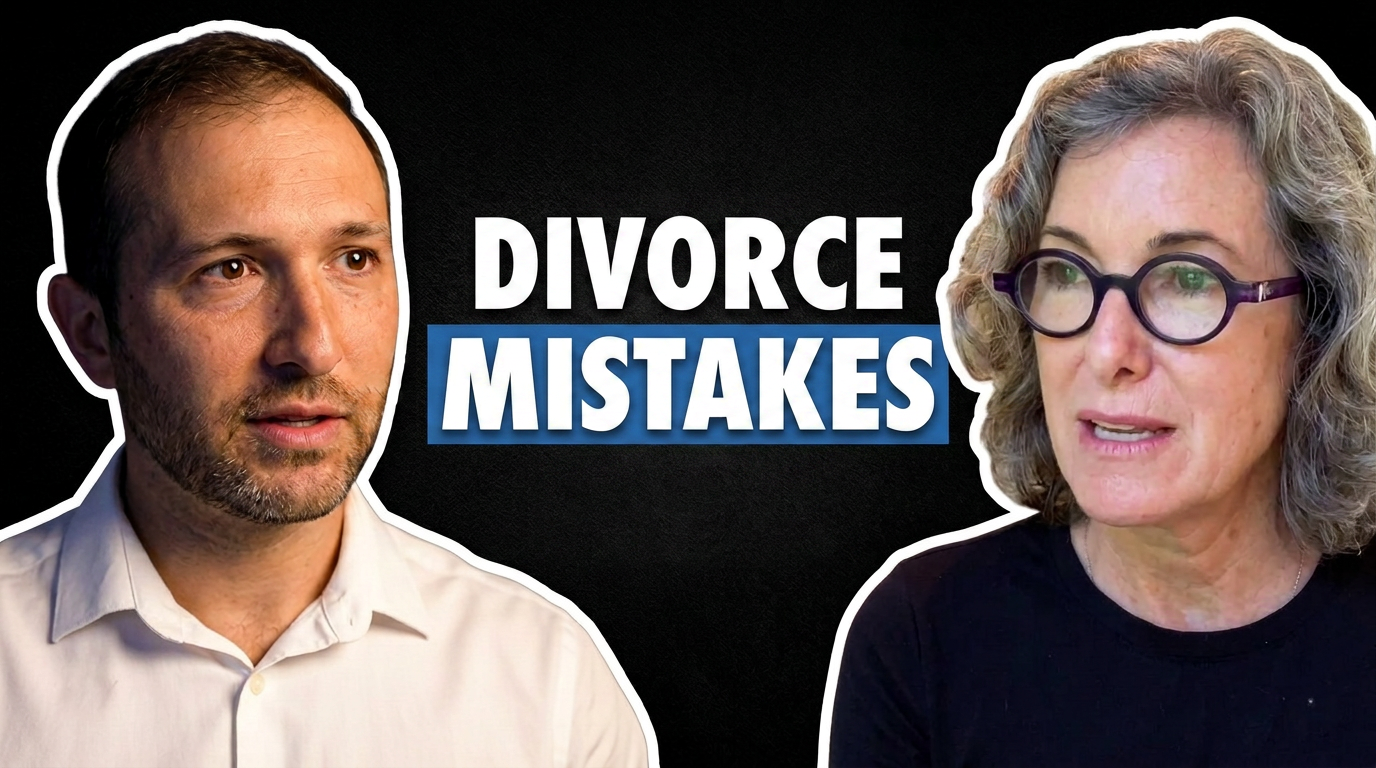
In this episode, I’m joined by Anthony St. Louis-Sanchez, JCL, Director of the Metropolitan Tribunal of Denver, to explain what annulments are, how the process works, and what they do — and do not — mean for the children of divorced parents.
In this episode, we discuss:
What a Catholic annulment actually is
Why an annulment is not the same thing as divorce
Whether an annulment makes children “illegitimate”
How the annulment process works
How to cling to Christ when your family story feels confusing or painful
If you’re a child of divorce who has ever wondered what your parents’ annulment means about your family, your identity, or your worth — this episode is for you.
Free guide: 7 Ways to Work Through the Pain of Your Parents’ Divorce
Book Anthony recommended: When Is Marriage Null? by Paolo Bianchi
Chapter 4 on Annulments (It’s Not Your Fault)


Enjoy the show?
To be notified when new episodes go live, subscribe below.
As a bonus, you'll receive the first chapters from our book, It's Not Your Fault: A Practical Guide to Navigating the Pain and Problems from Your Parents' Divorce.
TRANSCRIPT
Transcript produced by artificial intelligence. Please pardon any errors!
Joey (00:00)
Anthony, welcome to the show. So good to have you here. This is such an important topic for, you know, for Catholics. And so I'm excited to dive in. What I've kind of observed anecdotally when it comes to young people whose parents are divorced, maybe seeking an annulment, is that there's a lot of confusion around this annulment process, around what an annulment is, what it's not. And so I'm hopeful that we can kind of shed light on it to answer, you know, some questions. Because some people some young people will wonder, it's like, man, if my parents get an annulment, does that like make me illegitimate? Does it mean my family
is kind of erased, as my parents, you know, marriage essentially cease to exist. Like the lot lots of questions, lots of confusion. So I'm I'm really excited to dive into that. Before we get to those questions, just for everyone listening, you are an expert in this area. You have a lot of expertise here. And so if you would tell us a little bit about your job as the judge and director of the tribunal in Denver. Yes.
Anthony St. Louis-Sanchez (00:49)
Thank you. I'm the director of the Metropolitan Tribunal of Denver. Before this, I was in Colorado Springs. I worked in the tribunal as an auditor and a judge. I began working in 2007 for the church for the tribunal. Yeah, what is it, 18 years of experience, something like that now? So I have a bachelor's degree in philosophy, I have a master's in theology, and then a license in canon law. So I've held several different positions in the church and the tribunal throughout the years, from auditor to advocate to notary.
assessor and now judge and now in Denver as the director of the tribunal.
Joey (01:25)
Okay, very good. And to anyone listening who's like, What's a tribunal? Maybe could we talk a little bit about like church law and tribunals? Yeah, yeah.
Anthony St. Louis-Sanchez (01:32)
Yeah,
the tribunal is the kind of judicial branch of the church. If you think of the church as sort of like the government, you have the executive branch, the legislative branch, and the judicial branch. Now in the United States, those are separate powers, right? Not one person holds all these, but they're separated between various groups. In the church, however, it's the bishop who holds all three powers. So the bishop is the executive power, the bishop is the legislative power.
And the bishop is the judicial power. the judicial system exists to resolve disputes. You know, Saint Paul gets on the Corinthians case 'cause they're taking their ⁓ disputes within the church and they're going to civil courts and civil judges. And Saint Paul gets on their case and says, you know, why are you doing this? Why are you taking your cases to the unbaptized when you should bring them to the church?
So there was a very early tradition in the church of court of the bishop holding court and hearing cases. One of the primary ways that that's done today is through annulments. So the would be Catholics or anyone who's interested in maybe marrying a Catholic and they want to dispute their marriage.
You know, it looks like a marriage on the surface, but now they bring a petition to the tribunal, the Catholic tribunal, and say what appeared to be a marriage, really was not a marriage for some concrete reason. Okay.
Joey (02:54)
And thank you for for clarifying that and that that's fascinating about kind of the structure of the church being under the bishop. Makes a lot of sense. So you kinda went into it already, but I'm curious, like to anyone wondering again, like what is an annulment exactly? Would do you mind explaining that?
Anthony St. Louis-Sanchez (03:09)
You know, w we think of marriage as a relationship, right? But it's it's deeper than just a relationship. It's it's built on a relation. Now, what is a relation? A relation is an ontological kind of category. You have a relation between your father and your mother, right?
So father-son, there's a relation there. Mother-son or mother-daughter, there's a relation there. And then on the basis of that relation of father-son, you can build a relationship. Okay? And so I think we see this with father and son. It's very clear that there's a a level that's the relationship level, and then there's a level that's the relation level. Even if your relationship with your father completely falls apart and you profess you hate each other and you never talk to each other again, the relationship may have died, but the relationship
is still there. You're still the son of your father. Your father is still your father, right?
No matter what the relationship, what happens to the relationship. The same is true with marriage. So when you show up to church and you pronounce the vows, you give your consent for marriage, that establishes this relation of now husband and wife. And hopefully on that is built a relationship, hopefully a very good, you know, loving relationship. But the church teaches is even if that relationship goes south and and dies and they hate each other and don't want to talk to each other anymore, there's still that relation, they're still related as husband and wife.
And that ultimately comes from scripture. Jesus taught this. He said multiple times in the Gospels that if you marry and then divorce and remarry, you're committing adultery. And so the church has over the centuries reflected upon that and said, okay, well that means that when you get married, there's this ontological relation that happens. And no matter what happens in the relationship, you're still gonna be husband and wife, even if the relationship dies. So what is an annulment?
An annulment is kind of looping around after the fact, after the relationship has died, and examining that relation, that husband-wife relation, and asking, was there anything that interfered with that at the time of the wedding? Is there anything that got in the way so that this relation between husband and wife really never came to fruition? That these were just two people that lived together, that had a relationship together, that built a life together, and then that relationship died. So that's what the annulment process.
process is about is again going back and looking at that more ontological level, the the level of the relation of husband and wife.
Joey (05:35)
Okay, that makes sense. And for anyone maybe unfamiliar with the term ontological, what what's the rough definition of that? It has to do with being
Anthony St. Louis-Sanchez (05:41)
With being
kind of a way of being. So this is more than just a job, right? You could be a plumber and and that's just your job, your j your function. But I'm talking about a deeper kind of level of being, where it's like I'm a husband kind of before anything else. So that's kind of the deepest aspect of of my being is as a husband, as a son, things like that. And then you can build on top of that relationships and
Joey (06:08)
Okay, that makes sense. So it's kind of that layer of identity and especially the deepest identities that we hold and ways of being. That makes a lot of sense. So from what I hear you saying, the annulment process, which we're gonna get into in a second here, is not a Catholic divorce. Sometimes there's confusion around that.
Anthony St. Louis-Sanchez (06:22)
Yep. Yeah, so the church has a long history of opposing civil divorce. Again, going right back to the words of Jesus. You know, Jesus said if you're married and then you divorce and then you remarry, you're committing adultery. The logic there is that divorce really doesn't do anything. Divorce is essentially meaningless. Divorce does not affect that relation of husband and wife. What divorce does is says that the relationship has come to an end.
that for whatever reason we can't live together under the same roof, we can't make this relationship work. And so we're gonna put an end to this relationship. We're gonna stop living together. We're gonna maybe stop sharing finances or or whatnot. But the church has always taught that that does not do anything to affect that relation of husband and wife. So even though the state
Proclaims that it dissolves a marriage with a divorce, that you're no longer husband and wife. The church says that's essentially a fiction. The state has no power to dissolve a marriage, to make a husband and a wife no longer be a husband and a wife. So the annulment process is looking at that deeper level. It's it's looping back around after that divorce, after the relationship has come to an end, and really asking those questions about what happened at the church, what happened when we were giving our
Consent. Were we capable of that? Were we thinking the right things? You know, that kind of thing.
Joey (07:42)
Okay. No, that makes sense. And it's so fascinating what you said about the church's history and kind of opposing civil divorce. I'd like to talk about that a little bit more. So it is fascinating when you read the gospel that Jesus was very stern. I don't know if maybe there's a better word to say about this, you know, saying that in the beginning, you know, this thing, divorce, what it was not so
And Moses basically allowed it because of the hardness of their hearts, you I'm paraphrasing. But talk about that a little bit. Like so this is something like Jesus I remember hearing Doctor Scott Hahn say, like, yeah, the church has kind of tried to soften in some ways what Jesus said, but has had a hard time doing that. So yeah, talk to me about this history.
Anthony St. Louis-Sanchez (08:23)
Yeah.
I mean it it's a bit of a hard teaching. But it's a hard teaching, I guess, in light of our own weaknesses, right? The original plan was that a man and a woman they find each other and they become one. And that becoming one, you know, no one can undo that. And that's the reality of of marriage and what marriage is. But because of our own hardness of our hearts, because of our own sinfulness, because of our own, you know, bad behaviors and and whatnot, many times it's difficult, if not impossible, to maintain
That that kind of relationship. So the church has really struggled with this, I have to admit. I mean that the Jews were struggling with this, you know. Jesus pointed out that in the beginning it was man and woman for life, you know, one union that no one can separate, but because of the hardness of their hearts, you know, divorce became a reality. It it's not the ideal reality, right? But it is the reality even of our own world. I mean, divorce is kind of everywhere. Nevertheless, the church holds marriage as a sacrament. Marriage truly
Truly is a reflection of the relationship between Jesus Christ and the church. And just as God became man, he took on human flesh, he wedded himself to humanity in an irreversible way. You know, God is never gonna wake up tomorrow and say, Well, I'm just done with the human race, I can't take it anymore, right? Let's file for divorce.
Joey (09:44)
Yeah, I hope not.
Anthony St. Louis-Sanchez (09:46)
He probably wants to sometimes, but But God is faithful. God is true, right? And so He's despite our own sinfulness, despite our own weaknesses, He's never gonna leave us. He's never ever gonna abandon us. And so marriage is supposed to be that sign and symbol of this relationship that we have with God, with Jesus Christ. This indissolvable relationship that no matter what we do, you know, God is gonna be faithful to that. And that's what marriage
should be a reflection of. You know, marriage doesn't mean there's gonna be no hard times. There may be hard times. There may be adultery, you know, there may be infidelity within marriage. And these are extremely difficult things to deal with. But if you think, well what would Jesus do?
I mean Jesus did do this. He wedded himself to us, to humanity, and we decided we hated him for that and we nailed him to a cross. And even though we did these horrible things to him, he still loves us and still remains faithful to us. So there's a beautiful calling there. Spouses are called to be that faithful example of Jesus Christ. So if if your spouse falls into adultery,
I mean again this is extremely difficult to deal with and there's probably lots of therapy and and things that need to happen, but the Christian is called to be like Jesus and to forgive and to find a way to reconcile that. So that that's the ideal. That's what scripture holds out as that's what marriage is.
Joey (11:16)
Yeah, no, and I I love people are probably thinking, Well, what about this case and that case? And we can get into all that 'cause I think there's so much wisdom in h how the church does you know, holds the standard high and doesn't falter on the principle. But of course there needs to be prudence given particular situations. So like the case of infidelity that you said, it's like, Well, if the fidelity's ongoing and unrepented, that's one situation. But it's a different situation if the if infidelity was like repented and
ceases. Yeah. That's kind of another situation. So so I know I know there's kind of like all these fine details and even reading a little the very little canon law that I have read, there's even very specific instructions for like what to do in different situations, even though it does require like human interpretation. Yeah.
Anthony St. Louis-Sanchez (12:01)
Yeah, yeah. And you know, like you said, there's so many different situations. You could be in a situation of abuse where you know one spouse is being abusive towards the other. And in those situations, I think it's for the safety of the one being abused to separate themselves from that situation. you know, you have to take care of yourself both physically, mentally, and spiritually, and you can't allow someone to abuse you or beat you up or or whatever. So there's times that it's necessary to separate yourself, to to seek a separation or or possibly a divorce. Anytime it
Catholic though gets a divorce, you have to have the churches thinking about divorce. Divorce doesn't really mean anything other than a separation. It's we're still husband and wife, we still have those obligations, even if we're not living under the same roof, even if we can't communicate in a healthy way together. So Catholics, you know, can get a divorce, but they need to be thinking about it in the in the right way. The divorce is not the end of a relationship, it's maybe the changing of a relationship. But it ultimately we're still husband and wife.
Joey (13:00)
That makes so much sense. It is fascinating to read the catechism and to see how it seems to talk about divorce in like two senses. Like you said, in one sense it could be used as this legal maneuver in order to protect a spouse and her children. Right. In another sense, when used in correctly, a divorce can be used as kind of like a an exit plan to go seek my own quote unquote happiness. Right. Am I right in understanding it in that way? Yeah.
Anthony St. Louis-Sanchez (13:29)
I think
so. I mean Catholics just you you have to be careful that you don't fall into that secular mentality of well, marriage is just too hard for me, I'm giving up on it, I'm gonna go find my happiness somewhere else. I mean to some degree that's legitimate, but you just always have to remember if if you married this person you're still married to them, even if you're not living under the same roof, even if you're separated, even if you're divorced.
Joey (13:52)
No makes sense. And that being said, there is a reason for the annulment process. Like there are legitimate cases, even even if our culture and like our secular way of thinking maybe veer so far from what God originally intended, there is a purpose to it. And so I'm wondering at a high level, yeah, how does the process work? Like if someone, you know, is like I think my marriage wasn't valid, or we can get into all that, what are the steps at a high level?
Anthony St. Louis-Sanchez (14:16)
Yeah,
at a high level I think the first step is always meet with your parish priest. Your pastor can help direct you, figure out, you know Usually there's someone called an advocate who helps someone who's in need of a declaration of nullity, helps them kind of maneuver the process, fill out all the paperwork, but most importantly make an argument. Really that's what we need.
someone to do is to make an argument that my marriage wasn't valid for these reasons. And most people this is kind of beyond them a little bit. So ⁓ we have advocates who can help people do this. Some t it depends, every diocese is different. You know, sometimes the pastor is the advocate.
Sometimes it's the associate pastor or the deacon who's the advocate. Sometimes there's a layperson who's an advocate. Depending on the diocese, maybe they don't even use advocates, but maybe you need to contact the tribunal and and talk to someone there to get the ball rolling. So it d depending on what diocese you're in, what parish, where you're at in the country, that can look different. The initial stage of reaching out to someone in the tribunal can look very different. But I would say it's always a good idea, just go talk to your pastor. Your pastor will have good advice for
you on on where to go and how to get this thing started. But essentially it's contacting the tribunal and getting a bunch of paperwork and filling out a bunch of paperwork and then submitting it to the tribunal. But beyond the paperwork and the bureaucracy, it's you're approaching the church, you're approaching really the bishop, this is the bishop's judicial power to decide these cases, and you're you're asking for a judgment. You're asking that what appears to be a marriage, what appeared to be a marriage to everyone
That the church overturned that presumption.
And declare that the marriage, even though it looked like a marriage on the surface, really was not a marriage at all. And that always requires some sort of evidence or proof. So you have to both articulate a specific reason in canon law and then prove that or provide evidence for that. Evidence is always are usually gonna be witnesses. You could have documents that could be proof, like if there was some sort of maybe psychological disorder, maybe someone was diagnosed
as bipolar or something if if you have those records, the medical records, those that could be evidence. If you entered into the marriage with a prenuptial agreement, you know that entering into the marriage with with a prenuptial agreement itself is highly problematic. It seems like you are likely excluding the indissolubility of marriage because you're planning for an eventual divorce. So that prenuptial agreement could be a document that you submit to the tribunal as part of the proof. But most often proof is going to be witnesses.
So when you're looking for an annulment you need to be asking yourself who could be a witness for me? Witnesses the best witnesses tend to be people who really know you and your former spouse and
know why you wanted to get married and problems within the marriage, all that kind of information. People who work best as witnesses are parents, siblings, close friends, people that you have shared intimate details about your life with. So it's it's necessary to kind of bring these elements forward ⁓ with you when you petition the
Joey (17:23)
church.
Okay. So then you petition the church and and then from there and I I know we're kind of maybe speaking more to the parents at this point or maybe someone who would go through, but I think it's helpful for all the children who are listening to this knowing like, okay, this is what mom or dad would go through if they did go through this route. My mom and dad are actually going through this process right now for for context for everyone. And so then after that, yeah, I'm curious what happens next at a high level. Yes.
Anthony St. Louis-Sanchez (17:45)
Well,
you submit a petition to the tribunal. The tribunal would then look at everything and accept the case if it seems like it has merit to it. So you would probably submit written statements, kind of the story of your marriage in writing, kind of a narrative of that. The tribunal may wish to also interview you, but to ask other questions, to elicit information. They will always reach out to your ex, so and there's a reason for this. ⁓ this is a marriage between the two of you.
You know, if you're arguing that the marriage was invalid, your ex at least has the right to be informed of this, if not to fully participate and and tell his side of the story or her side of the story. So we always need a a good address to send paperwork to your ex. Now they don't have to agree or be cooperative at all. There's a lot of fear sometimes that once I submit all of this, can my ex just derail the process or
Or make it so that I don't get my declaration of nullity? And the answer there is no, they can't really do anything to stop the process, but they can participate in the process. And we always want to hear both sides of the story. If we're only hearing from one party, we understand that we're hearing kind of a lopsided story at that point. So it's always, always beneficial to hear two sides of the story. So w we will always reach out to the ex and elicit their participation. Again, it it really varies.
Sometimes they never respond to us, sometimes they call and yell at us for hours, you know. Sometimes they throw it in the trash. Sometimes they want to be very involved and name their own witnesses and provide their own testimony. So the options are open.
Joey (19:23)
Yeah. Yeah, no, I bet you see a lot and I'm excited to keep going through this. But I'm curious, some young people have told me that maybe there's been times where especially I'm thinking of a situation where
The I think it was a daughter, you know, young adult who was a devout Catholic. The parents I think weren't so much, but there was some reason they still wanted to seek the annulment. And if I remember right, she was kind of concerned that they were going about it for the wrong reasons. And so I know it's a big question, but I'm curious like what's maybe the proper like attitude or approach when it comes to seeking an annulment so that we don't again fall into the secular mindset of like, this is kind of my escape hatch. So you just found out that your parents are getting divorced, or maybe the pain from their sponsor.
Has started to resurface. Either way, you feel alone and you might even be experiencing emotional problems like anxiety, falling into habits that you're not proud of just to numb the pain, and struggling in or feeling afraid of romantic relationships. I've been there, I totally get it. But worst of all, perhaps you fear that one day you might repeat your parents' story. If you can relate, I wrote a free digital guide for you. It's called Seven Ways to Work Through the Pain of Your Parents' Divorce. Inside, I share practical steps that you can take.
To grieve the loss of your family, healthy ways to deal with your pain, and expert tips to heal those wounds. It's what I wish someone would have told me years ago, seasoned by 20 years of experience navigating my parents' split, listening to hundreds of young people from broken families one on one, and helping tens of thousands of us heal and grow. You are not alone and you're not doomed to repeat your parents' story. Download your free guide at restored ministry.com/slash seven ways or click the link in the show notes.
Anthony St. Louis-Sanchez (21:00)
Right, right. And unfortunately many Catholics approach it like that. Like, well, this is just the thing I need to do so that I can get remarried in the church. But the best mindset to approach this with is discernment of, you know, I don't know for sure, but I think my marriage is invalid. Here's my argument, and I'm submitting to the judgment of the church. I really want to hear what the church has to say about my marriage, because that will determine what's possible for me. So many people come to the tribunal with a second marriage already planned.
Or many times it's already happened civilly, and now they want to just get married in the church. Or they already have someone, a fiance in the wings, and they want to get married, you know, as soon as possible. You know, and that's just the reality, that people approach the tribunal. But again, the best mentality though would be to approach the tribunal even before you have someone in mind. Really it should be, can I even be allowed to date? Because right now I'm married, right?
I'm separated and divorced from my spouse, but I'm still still married to that person. I still have to be faithful to that person. Sex outside of marriage is still a mortal sin. So in discerning how God might be calling you to move forward in your life, part of that discernment is the annulment process. Submit to the judgment of the church, you know, put forward your best argument, put forward your best evidence, but then just wait to hear back from the church whether they declare your marriage invalid or not.
If if they declare your marriage invalid, that means you were never really married and now you would be free to marry. Or you were never really married and now you would be free to join the seminary or join religious life. Whereas if they say no, if they give a negative decision and and the church says we can't declare your marriage invalid
Well then that determines what's possible for me in my life moving forward. If if that's the case, if I'm validly married to my spouse, I just can't live with her or him, you know, we can't be in the same room together without fighting. Well, you need to learn to live that way then. You need to live faithful to your marriage vows. That means, you know, no romantic partners other than your spouse who you're divorced from, you know, no going on dates, no living with someone else. But there's a real path to holiness.
There. You know, you can be like Jesus on the cross, being faithful to the commitment that you've made, even if your spouse is not faithful anymore. And there's beautiful holiness in that.
Joey (23:27)
Heroism even. I remember yeah. It's like it's so heroic to see a spouse who, yeah, maybe their spouse abandoned them and they're staying true to the vow they made because they take that promise so seriously, which I admire the heck out of. Not an easy path. And I know like everything we're talking about, Anthony's so countercultural, so unpopular, such a like punch in the gut. It's like, My goodness, this is like so difficult. But but I think yeah, there's obviously a reason
Anthony St. Louis-Sanchez (23:39)
Yeah, me too.
Joey (23:54)
Going back like you said, to to what Jesus said. So in the case of that young woman, I think like the answer it sounds like it would be you gave such a good answer, the church has kind of checks in place to make sure that people aren't doing it for the wrong reason. Is that kind of the gist of it? I don't
Anthony St. Louis-Sanchez (24:08)
Know, it's more of a hope that people would do this for the right reasons. But the reality is the majority of people who come approaching the church for a declaration of nullity are doing so because they are either remarried and want to get remarried in the church or they have a marriage planned. You know, I don't want to criticize anyone for why they approach the tribunal. I just I'm trying to suggest that there's the best way to approach the tribunal, which is in the spirit of discernment of trying to discern how best to move forward in my life and what God might be calling me.
Yeah.
Joey (24:38)
Makes
a lot of sense. I wanna go back to something that we talked about before, which is a really difficult topic, a a hard question to answer, so forgive me. But we have this idea of abuse that we talk about in our culture and we throw that word around a lot. And what I've seen, you know, in in cases of physical or sexual abuse, typically it's like very clear cut. That's what I've observed and on you know.
walking with young adults, for example, who maybe had that in their past when they were at home. When it comes to things like emotional or verbal abuse, it definitely seems to get a little bit trickier. And I've seen kind of two camps. One camp who calls everything abuse. Even any sort of bad behavior counts as abuse, it seems. And then the other end of the spectrum, which is another camp which isn't kind of unwilling to call anything abuse. And obviously I I think neither are helpful until
Where's that line in the middle and kinda what does the church do to decipher these cases of like maybe emotional, verbal or like mental abuse? Yeah.
Anthony St. Louis-Sanchez (25:29)
Certainly
it it calls for discernment. Many times the church is really relying on on the person. You know, the church isn't gonna send out a priest to your house to investigate like what's going on in terms of abuse. It's it's relying on your self reporting and your s your self ⁓ evaluation of that. You know, is this just my husband mouthing off and not treating me kindly? Or is this abuse that I need to separate myself from? Yeah, i i it can be very difficult to kind of discern where you're at.
Because I I would say if it is truly abuse, you I mean,
You're a human being with dignity and you're not you're not expected to just put up with abuse, right? So you can legitimately separate yourself. You don't have to put up with abuse. At the same time, I think your point is well taken that we can't be overly sensitive in calling just anything abuse. Any unkind words or or anything, you know? Because living together that you're you're gonna rub up against each other, you're going to ⁓ irritate one another, there's gonna be short tempers, there's gonna be maybe words spoken in anger.
Right? And this is just normal stuff. You know, this I would say that's not abuse. This is just normal daily living. But if it is constant, if it's berating, if it is really having an effect on you spiritually, emotionally, right? If it's leading to depression, if it's leading to thoughts of self-harm, things like that, I mean that's a different category in my
Joey (26:54)
In my book.
Yeah, totally. And I remember a Catholic psychologist explaining to me there's this idea, like you said, of a personal threshold too, which is where it it's a little difficult to kind of draw a line in the sand as like this is abuse and this is not abuse when it comes to like the emotional, verbal, mental. So definitely tricky, but but that makes sense and that needs to be taken into consideration and account. But yeah, it it's definitely it's a topic I've struggled to kind of wrap my head around and it makes sense that it's a little elusive because it might differ a bit in every situation. But I agree with you and I
I think to be clear to everyone listening, it's like bad behavior needs to be corrected. Boundaries are necessary for a relationship to be healthy, especially when it's a case of, you know, ongoing severe abuse. Like it needs to be sometimes, like you said, a separation might be necessary for the protection of the spouse. And so yeah, so I hope no one's hearing us wrong and saying, like, yeah, just put up with it and you know, deal with it. Like that's not what we're saying. But at the same time we need to be careful that we don't call, you know, everything abuse 'cause I think in one way it does actually a great disservice to people who actually fully
like are being abused. So it's a it's a big topic I'm sure we could get into deeper. But I do wanna maybe go back to the process a little bit further. So I'm just curious, up to this point, we've talked about submitting the petition, we've talked about kind of the church going through ⁓ reviewing that. And then yeah, what kind of ⁓ lead us to the finish line, if you would, of how that all works.
Anthony St. Louis-Sanchez (28:15)
Yeah, so there's some important people in the tribunal we need to talk about. And the first is called the defender of the bond. This is a position within the tribunal where whoever fills that position, whoever is named as defender of the bond, their duty and role is to bring forward anything that can be said for the marriage, that this was in fact a valid marriage. If you think of this in terms of like a court situation, you know, typically you have two different desks, right? You have the like the prosecutor ⁓ and the defense attorney.
This isn't a perfect analogy, but if you think of the defender of the bond as sitting at one of those desks. And it's not the desk that you're sitting at, if you're the one asking for the annulments, right? You're sitting at one of the desks trying to argue with your advocate that what appeared to be a marriage really wasn't a marriage.
And then the opposite argument is coming from the defender of the bond that in fact this was a valid marriage, you know, for X, Y, and Z. So these are the two arguments that are proposed. It's the defender of the bond is arguing for the validity of the marriage, and then the party with their advocate is arguing for the invalidity of the marriage. And then it goes before the judges. So in marriage cases, there have to be three judges. There always has to be a priest involved, and then there can be two lay judges. So in the Archdiocese of Denver, it's Father Giovanni Cappucci as
The judicial vicar, and then we have ⁓ myself and then two other lay judges. So on any given case, three of us, always the priest, and then two lay people, will be on that case to resolve the dispute. And the dispute is: you know, was this a valid marriage or not? So we listen to what the defender of the bond has to say, we listen to what the party and their advocate has to say, and then we have to evaluate all the evidence. And the tribunal has to come to moral certitude. Now
Moral certitude is not absolute certitude, not like scientific certitude, but it's very similar to what you would have in a courtroom, like beyond a reasonable doubt. So we we kind of need to get to that level of beyond a reasonable doubt, that we are sure beyond a reasonable doubt that this marriage was invalid. I said that there's three judges, so it's a vote at the end of the day. ⁓ as long as two judges agree, then
That that holds sway. And so if the two judges, two or three judges determine that the marriage was invalid, then we proclaim that in a a decree or a sentence that ⁓ really lays out the logic and the reasoning and everything behind why we're declaring the marriage invalid.
Or ⁓ on the other hand, if we can't declare the marriage invalid, if there's insufficient evidence, whatever the case may be, then we again issue a decision, but it's a negative decision. It'll again outline all of the different reasons why the tribunal can't declare the marriage invalid. And then we notify the parties and then if anyone's unhappy with that, they can appeal. So there's an appellate level. Any tribunal in the country has an appellate court that they can
Joey (31:11)
And does that immediately go to Rome or is there something else?
Anthony St. Louis-Sanchez (31:14)
It's one of the options, but it's not necessary. So in Denver, if we ⁓ declare a marriage invalid in Denver, but then say the other spouse is unhappy with that, they can appeal to Philadelphia or to Rome. There's two options there. There's a whole like levels of appeal thing. It starts at the trial level, and then there's an appellate level, and then there's an up an appeal of the appeal. If you ever go to that third level, it has to be Rome.
That second level can be Rome but doesn't have to be.
Joey (31:45)
Makes sense. A few kind of questions about numbers. I'm curious. Denver maybe in particular, or the rest of the country, whatever you think, what's the average number of annulments that maybe are started in a year?
Anthony St. Louis-Sanchez (31:56)
So that's that's
a difficult thing to answer. Because there's so many different types of annulments. What I've been talking about is what we call the formal case or the ordinary contentious process. But many people have what we call a lack of form. And so the idea here is if you're a Catholic, if you were either baptized Catholic or received into the Catholic Church in a formal way, then you are bound by canon law. And canon law says that if when you get married, you have to get married before a priest or a deacon, essentially. And if you don't do that, then the church doesn't consider.
Your marriage valid at all. That's what we call a lack of form annulment. So if you were baptized Catholic and you ran off and you got married civilly, you know, however, then the church
really just doesn't see your marriage as valid at all. There's a lot of Catholics who fall into this category and so this is called a lack of form. In Denver, I don't really have the numbers off the top of my head, but I think we do a hundred and fifty to two hundred lack of forms every year. Similar, you know, dioceses that are similar size would probably be similar in numbers. And then ⁓ formal cases, we do upwards of two hundred formal cases a year. And then there's all kinds of other things also that we do and other types of cases, but so I mean if I had to just
Rough estimate in Denver, I would say probably upwards of five hundred annulments a year given. That's lackoform, that's documentary cases, that's the ordinary contentious process. And then we can talk about other dissolution cases that are not annulments, it's kind of a different category.
Joey (33:25)
Okay. Yeah. Yeah. So okay, that makes sense. So not dozens but hundreds and but not thousands. So somewhere in that category. Okay. That makes a lot of sense. And how long, you know, for a young person maybe who's learning about this whole annulment thing for the first time, they're probably wondering, like, how long will mom and dad be going through this? 'Cause I know on the civil side, I know typically what I see is, you know, it could be months or maybe a year that's typical for a divorce. Two years seems to be long. Three years is kind of insane.
And so so that's kinda we s what we see on the civil side, but I'm curious on the church tribunal side. Like not that not that an annulment is a divorce, but the closest thing I can compare their experience to.
Anthony St. Louis-Sanchez (34:03)
Exactly. ⁓ it depends. If if you're looking at a lack of form annulment, it we're talking weeks. If you're talking about the full ordinary contentious process, I would say at least a year. Canon law says it should be about a year in first instance, that's the trial level. And then if it does get appealed, it should be about another six months there. So that's a year and a half if it gets appealed. To be honest, that's a little optimistic in my opinion these days. Cases just because of the volume and the lack of
workers in the tribunal and whatnot. ⁓ it seems like the ordinary contentious process is taking a year to a year and a half on its own. And then if you appeal that, I mean it c it can be a mess. I've seen cases that are just a train wreck where it takes maybe a year and a half the first time around and then it gets appealed to the appellate court and it takes another maybe year there. And then it gets appealed again to Rome and it in Rome it could take three or four or five years. So
I mean this can get really drug out for years and years and years, which is extremely unfortunate and not an ideal situation.
Joey (35:08)
Yeah, no, I'd agree with that. But okay, that's fascinating. And so thank you for laying everything out so clearly. You're such a good communicator. I'm curious there's so many myths, you know, we've tackled maybe some of them so far when it comes to annulments, but I'm curious yeah, what are some of maybe the most popular misconceptions or myths about annulments?
Anthony St. Louis-Sanchez (35:26)
I would say there's two that come up all the time. And one is if I'm Catholic and I get a divorce, then I'm excommunicated. So let's talk about that. That's really not the case. If you are a Catholic and you get a divorce, you're not automatically excommunicated. There is this pervading like idea though, that if you're divorced, you're not, I don't know, some people feel marginal.
When they're Catholic and then they get a divorce. And that's in my opinion, that's unfortunate that that continues to be a part of Catholic culture. I don't know what that is, but but no, that's a myth. If if you're Catholic and you get a divorce, you're not automatically excommunicated. What you know could lead to you not being able to receive communion. That's not the same as excommunication, but
you could find yourself in a position where you're not able to receive communion, but that's because you've chosen to get remarried. So if you're a Catholic and you get divorced and then you get remarried, now you're in an in an objectively sinful situation and you would need to resolve that before you can come to communion. So some people kind of think of that as excommunication, although technically speaking it's not excommunication.
Joey (36:33)
For countless teens and young adults, their parents' divorce is actually the most traumatic thing that they've experienced. But so many feel lost and alone in navigating the challenges. I've been there myself. It's really not easy and it shouldn't be this way. My book, It's Not Your Fault, guides them through those challenges by helping them put their pain into words and begin to heal, work through the emotional problems that they face, cope in healthy ways instead of falling into bad habits, improve their relationship with their parents.
Navigate the holidays and other life events and build healthy relationships and so much more. One Amazon review said this This book is packed full of really practical help. If you come from a broken family, or even if you don't but you love someone that does, this book is so helpful. I can't recommend this enough. By the way, it's a quick read and it doesn't need to be read cover to cover since it's in question and answer format. You can just read one of the questions on one of the questions.
the answers. And so if you want to join the thousands of people who've gotten a copy, just go to restored ministry dot com slash books to get the book or download the free chapters. Again, that's restored ministry dot com slash books or just click the link in the show notes.
Anthony St. Louis-Sanchez (37:36)
So that's one of the big myths that if you're a Catholic and you get divorced, you're excommunicated. The other big one is if you get an annulment, your children become illegitimate. And again, that's just a big myth. It's very clear in canon law that if you were born of a valid or even a putative marriage, a marriage where we weren't sure, we thought it was a valid marriage, but then we looked later after the fact and we determined it was in fact invalid from the very beginning. That's what a putative marriage is.
So if you're born to a putative marriage, you're legitimate in canon law. You could be illegitimate if your parents just weren't married at all and got married or just had you outside of marriage. Then according to canon law, you would be illegitimate. Now, that doesn't really have any bearing anymore. It used to. In the 1917 code, there was an impediment to holy orders. If you were an illegitimate child, that was an impediment to holy orders. So you couldn't become a
Priest, let's say, if you were an illegitimate child. But that was under the nineteen seventeen code and that has now been changed. So even though you can be illegitimate under canon law, there's really no effects anymore. It doesn't really ⁓ matter in any practical sense. So people get all worried about, you know, my children will be illegitimate. Well, no, they won't. If it's just a declaration of nullity, that's not gonna render your children illegitimate.
Joey (39:01)
No, that's helpful to hear, especially to the ⁓ young people listening right now. It's ⁓ yeah, and it says nothing. I remember when we were working on the Impermoter, which for anyone listening, it's like the approval of the church for my book. We talked about this quite a bit and you were so helpful. Thank you again. And and I think I remember you encouraging me saying it's very important that we emphasize that it has
Like you said, no practical consequence, but more importantly, it it says nothing about the dignity of the person, their value, their worth. Exactly. If they have this title of like illegitimacy, which in my opinion, and this is what we ended up communicating through the book, it's like it says way more about your parents than it does about you as a child. What what would you add to that to maybe a young person who's kinda like wrestling with this? Like, I don't want to be illegitimate, that sounds bad.
Anthony St. Louis-Sanchez (39:45)
Just exactly what you said. Like it it just doesn't really ⁓ matter much. I mean, I don't know. It it does. It speaks more to what your parents were doing at the time that you were conceived than says anything about you. It it says nothing about you, it says nothing about your quality as a human being, it says nothing about your dignity as a human being. It's essentially meaningless.
Joey (40:05)
I agree. No, it's helpful to hear. And ⁓ it is a scary term though when you hear it, you're like, gosh, I'm illegitimate what the heck. So okay. That that's helpful. And I'm I'm curious, one question that's kind of come up from parents I've talked to and young people too, is like I've heard this and you correct me if this is wrong, that in order to seek an annulment, it's required that you have a civil divorce. Is that true, first of all? And if so, why is that?
Anthony St. Louis-Sanchez (40:32)
Yeah, that's not technically true. In canon law it says for a tribunal to accept a case, there has to be some assurance that there's no hope of reconciliation. Okay, so the tribunal needs to judge that this isn't just a couple that's having marital difficulties, but that they've gotten to the end of the road and that there's really no hope of restoring a a good married life.
And so how do you judge that? As the tribunal, how do we judge that? What we've done just as a very practical step is we've said a divorce is that signal to us that if they've gotten a civil divorce, that means that this relationship is irretrievably broken. Okay. That there's really no hope of reconciliation.
If there's no divorce, then I think we we have hope, right? If they're just separated and they're maybe trying to work it out, well let's keep keep that up. Let's keep trying to work it out. Let's keep going to marriage counseling. Let's keep doing the work we need to do to see if we can bring this back together and effect some sort of a reconciliation here. So we use civil divorce just as a very practical measuring stick. If you've gotten a divorce, then for the tribunal we say that there's no hope of reconciliation. If there hasn't been that divorce yet, then we're
Joey (41:48)
Okay. I see. So it's not all it's not a requirement per se, but it you you need some sort of measuring stick to say there's no hope. Yep. Which is a tricky man, what a conundrum because like we believe deeply in hope. Like we believe in redemption. Like I've heard so many stories of marriages that were in like horrible cases and horrible situations and over a lot of time. Like I think that's the important thing to emphasize. It's like this did not happen overnight. they found a lot of h help and healing and they were able to slowly rebuild and bring
the marriage and the family back together. But in some cases there was abuse, there was infidelity, there were like long periods of separation. And then over time, you know, through God's grace especially, they were able to come back together, which is so beautiful. So man, what a tricky thing to do is say like, that's at the end of the road. Whereas no, we believe we're very hopeful people.
Anthony St. Louis-Sanchez (42:36)
Yep, yep. And I've even seen a case where they got divorced and then they got their annulments and then years later they got back together and got remarried.
Joey (42:45)
So wow. Okay. Yeah, who knows? Yeah. But it's beautiful. And I think there's something, ⁓ obviously, you know, looking again through the lens of the children like we're talking here, there can be deep wounds through that whole process itself. Yeah. But there is something I think beautiful that you can take away when that happens that wow, even though there were hard times, like they my mom and dad endured and they were able to make it work. Not that that's applicable in every situation, because I know personally now there's families I'm walking with who
are truly in situations where it would be bad. It would be dangerous and not good for mom and dad to be together, unfortunately. Yeah. And so so anyway, so I know it it runs the gamut, but but that's that's helpful there.
Anthony St. Louis-Sanchez (43:24)
Th we gotta bring the kids into this equation too. Sometimes mom and dad's relationship is so toxic to the children that it's it's not fair for the children to be living in this emotion.
Joey (43:34)
Yeah, no, totally. And I I think that's where the secular research is really interesting where and I've talked about this a lot in the show, so I won't dive w go into a ton, but the quick version is that like in cases of high conflict, there is like a very like children seem to do better when there is some sort of protection via a separation. ⁓ again, as that protective measure. And as a church, we would always say the goal
is to heal the marriage, bring the family back together. And I think, you know, you and I I'm sure would agree on this. Like we've been too infiltrated, maybe that's the wrong word. We've been too influenced is a better word, by the culture to think that there's no hope. And yeah, even when there's maybe struggles, like maybe it's better just throw the towel in where it's like, no, this is you know, in absent extreme cases
Marriage has a lot of ups and downs. Like I've you know, experienced some of them myself and it's like, no, you need to be prepared for those hard times and love each other through them and get the help that you need. So so yeah, it's it's a tough thing to hold in b balance, isn't it?
Anthony St. Louis-Sanchez (44:35)
And going back to your
your earlier question about is a divorce necessary. If if we didn't h hold that standard and we just said anyone who has any questions about their marriage, they can come and submit a case to us. That would not be good because you would have these marriages where people are struggling and maybe they're thinking in their minds, is this even a valid marriage? Like maybe it's not a valid marriage. If there is an immediate path to the church to get that resolved, I what I'm saying is that's maybe not what they need. They need to not have that path available right now. They need to be forced to really try to
reconcile without resolving the question of was this a valid marriage or not?
Joey (45:11)
I agree, especially in the cases where there's children involved, like women talking and you know, hopefully even without that, that would still be true. But especially at least from, you know, my perspective, that just does so much harm and damage to the children. So yeah, and and you know, high conflict situations do harm to the children and low conflict situations where mom and dad just decide to part because you know, whatever the reason they might give, that they do
so much damage the children. So one question on that note of like the divorce, so was there a change in canon law or the church, ⁓ in America in particular after the introduction of no fault divorce? And to anyone listening who doesn't know what that means, in the past there was ⁓ I think it was in California it was passed in what, nineteen sixty nine or around seventy, this idea of like no fault divorce where you didn't have to prove wrongdoing and you have to correct me if I'm wrong here at all, in order to get a divorce.
Yeah. th there needed to be some sort of proof of like adultery or abuse or addiction or some sort of you know, misbehavior in order to get a divorce. The introduction of no fault divorce, which ironically happened under Ronald Reagan in California, eventually overtook the entire country, every state adopted it, and now we're in a state where either spouse, no matter the reason, can file for a divorce. And so I'm curious, feel free to correct any of that if it's wrong. And then second thing is did the church change anything in America at least after
the introduction of no fault divorce because it would it would make sense based on what you're saying that that's actually a pretty good measuring stick to like let them hopefully heal the marriage and if there's truly no recourse then the civil court has a way to kind of vet that and then we can maybe trust that a little bit more. So I'm just curious if anything changed after no fault divorce became more popular. If you come from a divorce or broken family or maybe you know someone who does, we offer more resources than just this podcast. Those resources include things like a book.
free video courses, speaking engagements, a free assessment, online community, and much more. All of our resources are designed to help you heal from the trauma that you've endured and build virtue so you can break that cycle and build a better life. And so if you want to view those resources for yourself or someone that you know, just go to restored ministry.com slash resources or click on the link in the show notes.
Anthony St. Louis-Sanchez (47:18)
You know, there's a long complicated history here. I mean it it starts back in the Roman Empire, when there was essentially no fault divorce in the Roman Empire. You you didn't have to have any cause or reason for divorce. So that's what the church was a initially kind of born into, is that sort of no fault divorce environment. But then because of historical circumstances, ⁓ you know, divorce became very rare and regulated by the church. You know, separations
you know, the church did separations for a very long time. Where, you know, if you're having troubles, if you're in an abusive situation and you feel like you need to separate, you wouldn't have gone to the civil courts, you would have come to the church. And the church would have worked out the terms of that separation. You know, i the church would never call it a divorce because that's it's not what the church is doing. It's not dissolving that bond of marriage. It's sim simply separating the the parties for a while
Hopefully they can work it out, right? So for a while the church was kind of doing that. And there became a some tension between the civil civil society and the church and whose jurisdiction is marriage? Right? This was historically a big question and the church declared very firmly that marriage is the church's area, right? Civil courts get out of it, like marriage is our our territory. That was the church's position, you know, for a very long time, but the civil courts have fought back and
you know, the civil courts have ⁓ taken over some jurisdiction on marriage and and divorce themselves. And so there was a bit of a fight. And so this was late eighteen hundreds in the United States there was a plenary council of Baltimore. You may have heard of like the Baltimore Catechism, have you ever
Yeah. The Baltimore Catechism came out of this council of Baltimore. Where back in the eighteen hundreds, late eighteen hundreds, all the bishops in the US gathered for this council and you know, they did several things, one of which was produced as the Baltimore Catechism. Another thing that they did is they made some legislation along merit for marriage. And they said if you're a Catholic and you get divorced and then you get remarried, you're excommunicated. So there wa this is kinda where this idea comes from and that's still pres present today.
Of if you're Catholic and you get divorced, you're excommunicated. But it was connected to divorce and remarriage, then there was an excommunication. Catholics who simply went and approached the civil courts for divorce, they made that a crime and said that the bishop can impose penalties. So the idea was in the late 1800s in the US that the Catholic Church was trying to get Catholics to come to the church rather than to the civil courts for a divorce. But unfortunately, they didn't have much success in that.
And I think bishops learned that they didn't really like adjudicating these separation cases. And over time they were happy to to let the civil courts do that. There's some practical reasons for that. The Catholic Church doesn't have an enforcement mechanism, right? If if you're married to an abusive alcoholic guy who keeps coming around and abusing you and the children, you know, the Catholic Church could make a decree maybe and say you're not allowed to come to the house. But how would she enforce that? Right?
Whereas if you go to the civil court and they p give a restraining order, I mean now this has teeth and you can now call the police and you so there's a an enforcement mechanism. You know, if you're trying to separate finances, the church could decree how that should be done, but the church has no authority to to do anything. Whereas the civil courts do, the civil courts can make orders that, you know, banks have to follow and whatnot and separation of of assets. So the civil authorities have, you know,
Teeth in a s in a way that the church doesn't. And so even today, if a Catholic wanted to come to the church for a separation, I think most bishops would say no because it's sort of meaningless. Like, go to the civil courts. They're they're set up for this. They they can effectuate a separation with legal effects that have
It has teeth to it, right? Yeah, an enforcement mechanism. If the church were to do a separation, we would have to instruct them to go to the civil courts and then reproduce all of this, you know, so that it could have civil effects. And so because of that, just over time the church has kind of gotten out of that business of ⁓ doing separation cases.
Joey (51:35)
Okay. So it sounds like t so maybe let me go back. So it sounds like the introduction of No Fault Divorce didn't really change much in the church in America. Is is that
Anthony St. Louis-Sanchez (51:48)
It probably accelerated
the trend that was already happening of Catholics approaching the civil authorities for divorce.
Joey (51:56)
Okay. Got it. Okay. It's but it's not like any updates are made to canon law or anything like that. Okay. Got it, got it. Okay. No, that makes sense. You brought up this idea of like the church overseeing a separation. I somewhat recently heard of this idea of canonical separation and I I really haven't heard anyone talk about it much at all. What what is a canonical separation and like how does that work briefly? I I know it's probably a big topic we can get into. Yeah.
Anthony St. Louis-Sanchez (52:19)
I
mean it it's basically just what I was talking about, where parties who can't live together for whatever reason would come to the church, to the bishop, for ⁓ a separation rather than going to the civil courts for a divorce or a separation. Again, bishops in my opinion don't really like doing this ⁓ and I think they see that it's it needs to be reproduced by the civil courts if it's gonna have any effect. So even though it's still on the books, you can still apply for a ecclesiastical separation.
Joey (52:47)
Yeah.
Anthony St. Louis-Sanchez (52:49)
But in my experience most bishops will simply direct people to the civil court.
Joey (52:54)
Okay. I I heard of it in a case where ⁓ it was like from what I remember a very devout Catholic family and they were really struggling to figure out what to do given the struggles within the marriage. And they, you know, saw both paths ahead of them as like continuing to work through things or get a divorce as like not great options and they heard of this option and so they pursued that. And so I think that was ⁓ you know, a little bit of backstory 'cause they wanted the wisdom of the church
to help them know whether they should pursue this any further or not. So is there some sort of guidance you can get through that process or is that pretty much the bishop will say, kinda hands off?
Anthony St. Louis-Sanchez (53:33)
It depends on the individual bishop I would say. But I would argue that there is a legitimate space for ecclesiastical separations. Maybe a case like you were just describing. Where it's more the couple maybe wants to submit to the church to discern are there r causes for separation? Because the church doesn't have a a no fault separation system. You you have to find fault. There has to either be adultery or abuse or
you know, unhealthy living circumstances for spouses or children or you know, something like that. Whereas the civil courts they don't really care. As long as one person's asking for it, you know, they'll give the separation or the divorce. So I could imagine a situation where faithful Catholics want to submit their will to the church in discernment of are there even reasons for separation here.
Joey (54:23)
Yeah. So it'll depend on the bishop. That's that's good to know. Thank you for clarifying that. Toward the end of our time I had a few final questions. So one, there's been some people, again, oftentimes these are like young people who are maybe in their twenties or thirties who are like devout Catholics and they just have maybe some concerns about what their parents are going through who have conveyed to me that
There's concern about like the annulment process overall in America. And without going too deep into this, I don't that's not the purpose of this podcast. I apparently there's been maybe insiders at various tribunals, not Denver, to be clear, who have said that maybe certain dioceses in America have like a hundred percent approval rating for like annulments where it's they'll kind of find a way to rush it through. So obviously that's a huge topic to get into. I'm curious, like, what's your take on this? Like, is this happening? And if you can't say, that's okay. But I'm curious.
Anthony St. Louis-Sanchez (55:13)
I think it happens in some places. I don't know how common it is, but certainly there's that impression that in the United States there are many tribunals that make it very easy to get a declaration of nullity. I I guess I would contextualize this within kind of the framework that we've been talking about, going all the way back to Jesus and his comments about, you know, Moses allowed divorce for the hardness of your hearts, or because of the hardness of your hearts. And I sometimes wonder, do we grant so many annulments in the church because of
Of the hardness of people's hearts. Is this a some way a concession for human sinfulness?
Yeah, and I I I don't know. But the annulment process is not just ministry to say divorced people, you know, people who who have been divorced. This is a a ministry of truth. And w we need to keep that in our focus, I think. You know, Jesus says the truth will set you free. There's there's freedom in the truth, right? So you submit yourself to the church to her judgment for that true judgment, not just because this is what I want, you know, give it to me.
But there's great value in in seeking the truth and being open then to to either way. It it might not end in my favor, it might be contrary to what I want, but it's true or it's more true, right?
Joey (56:30)
That makes a lot of sense and I like
That seems to be, like you said before too, the the right attitude. And I think there's been some I've heard some say that there's been too much of a trend, at least in America, toward looking at annulment as like you said, anything but a seeking of the truth, where it's maybe seen as some sort of like therapeutic healing modality almost where that's not really what it was intended. It maybe can have that effect on at the end of the process, but but that's not the primary purpose and that's not something that we should really
I've had
Anthony St. Louis-Sanchez (57:03)
I've heard so
many people say, you know, go through the annulment process 'cause it's healing, right? And I don't want to discount anyone's experience. Some people
Joey (57:10)
Sure,
sure.
Anthony St. Louis-Sanchez (57:11)
really do have experiences of healing and and growth and understanding through the annulment process. But other people just don't. It's just it's kinda like the divorce again. And it's they don't maybe find healing, they find a judicial process that's maybe kind of cold and inf formal and you know, at the end of the day they get this judicial decision. And so s some people walk away this this wasn't healing at all. This was just like a legal process in the church.
You know, i if I'm looking for healing, I don't go to the judge, I go to a therapist. Right. So a lot of different a lot of different feedback and opinions on on what this process is.
Joey (57:48)
Like Yeah, no, and that makes sense. And I could totally see like how, you know, knowing people who've been through this, there could be a dishealing aspect. So I don't want to discount that, especially if there's some sort of like closure. Either way, especially like I've known of cases where, you know
maybe it was denied, like the declaration of nullity. So it's like, nope, your marriage is valid and then at least like there's it can be healing in the a aspect like you said before, where it's like, okay, I have clarity of how I need to live my life now. So so I could totally see that. But I think, you know, therapizing in the sense of like, you know, once you get your annulment like approved, you get the declaration of nullity, then you can move on and heal. And, you know, that's I think a a false dichotomy. So
Anthony St. Louis-Sanchez (58:25)
Yeah.
Prefer to flip that. You know, you go through a divorce, that's traumatic. Like you need to go through some healing there. You you may need some therapy, some counseling. You may just need some time to heal yourself, to heal your heart, whatever. Go through that healing process first. And then if you feel that God is calling you to a new marriage, then start looking at the annulment process. I think we get it so backward sometimes. We come out of this messy divorce, this traumatic and painful, and instead of really looking for healing.
And then it's from that relationship into marriage and then you know. We never ask the question about healing. We need to.
Joey (59:07)
No, absolutely. That's so good. Well gosh, I could talk with you forever and I know we didn't even get into kind of what makes a marriage valid. Maybe let's it can you give us like the quick version of that before we hop off here? Not necessarily a quick answer and then w we can maybe ⁓ let people know where they can go to learn more 'cause there's obviously way more if people are interested where they can
Anthony St. Louis-Sanchez (59:29)
Yeah, exactly. High overview. There's impediments. There's a whole bunch of legal impediments. So if you're impeded, then your marriage would be invalid. ⁓ most people though, they're not impediments that they're worried about. The other big category is consent. So defects of consent. This w runs a whole gamut from like psychological issues through you know what you intended for marriage. If if you like excluded children or you excluded fidelity or you excluded indissolubility.
You know, these would all be issues with consent to to issues of freedom. You know, if you were if you got pregnant and then your dad gets the shotgun out and says you have to get married, you know, that's a a defect of freedom. So there's a big gamut there.
Joey (1:00:12)
Okay. So basically the three kind of high level reasons are lack of form, like you covered before.
Anthony St. Louis-Sanchez (1:00:18)
Lack of form, impediments, and then defects of consent, which is a broad spectrum.
Joey (1:00:23)
Yeah, okay. There's a lot there. Okay. Sounds good. And I think what we'll do is the the chapter in my book that covers this gives a good overview of those kind of more detailed questions if you guys wanna learn more about that. So we'll make that available. You guys can read that for free. So click the link in the show notes if you wanna get that and they'll again walk you through what makes a marriage invalid and what makes it valid if if you guys want more info on that. So Anthony, any final comments on that before we
A couple of final quick questions. maybe with the question being any other resources you would recommend if people want to learn more? A good resource
Anthony St. Louis-Sanchez (1:00:56)
The
resource that I've found for kind of an overview of annulments is called When Is Marriage Null. This is by Paolo Bianchi. I think you can find it on Amazon. I found that to be a very helpful.
Joey (1:01:09)
resource. Okay, we'll link to that in the show notes. And would you say that would be helpful for the children too, or is it more geared towards the more
Anthony St. Louis-Sanchez (1:01:15)
Geared towards someone looking for the anulment.
Joey (1:01:17)
Got yet. Whereas my chapter might be more geared to if you're a young person and you're kind of wondering like what your parents are going through and what this might look like, that might be a good option. So that's good. We have one for both. Yeah, I guess let's just close it down now. Thank you so much for being here. ⁓ I've learned a lot and I am gonna have to re-listen to this too, because it's just there's so much density to it, and you're such an expert. So I appreciate how well you communicated and these are not easy things to talk about too. And yeah, just I wanna iterate again to any
you know, parents listening up to this point that ⁓ you know, we obviously both have a heart for suffering, for people going through difficult times. And, you know, I think you can you can do that, have that heart, have that love while also holding to the truth that we see as ⁓ you know, coming straight from God. So definitely a a big deal. So so yeah, I guess ⁓ thank you. And I want to give you the final word, Anthony. So what final encouragement or advice would you offer to everyone listening, maybe especially to that young person who
Yeah, maybe is a little bit jarred or confused, feeling like maybe they're going through a second divorce with mom or dad doing this annulment process.
Anthony St. Louis-Sanchez (1:02:21)
Well, Joey, thank you so much for having me on. It's really been a pleasure and I love talking about these things. My final final advice would be cling to Christ, you know, cling to Jesus. He knows very well suffering. And so when we suffer in our own lives, we we just need to cling to Jesus to to find that comfort. Even in the suffering of a divorce, right? Jesus is the one who really knows what it's like to commit yourself to someone, to the human race, and then to have them absolutely turn their back on you.
So I think Jesus is our companion in this journey.
Joey (1:02:58)
That wraps up this episode. If this podcast has helped you, feel free to subscribe and rate or review the show. You'll avoid missing future episodes and help us reach more people. And in closing, always remember you are not doomed to repeat your family's dysfunction. You can break that cycle and build a better life. And we are here to help. And keep in mind the words of C.S. Lewis who said, You can't go back and change the beginning, but you can start where you are and change the ending.
You may have entered adulthood without ever seeing what healthy conflict looks like. But avoiding conflict isn’t the answer. In fact, healthy conflict can be one of the main ways couples build trust. Adam breaks down the practical relationship skills many people never learned growing up.