
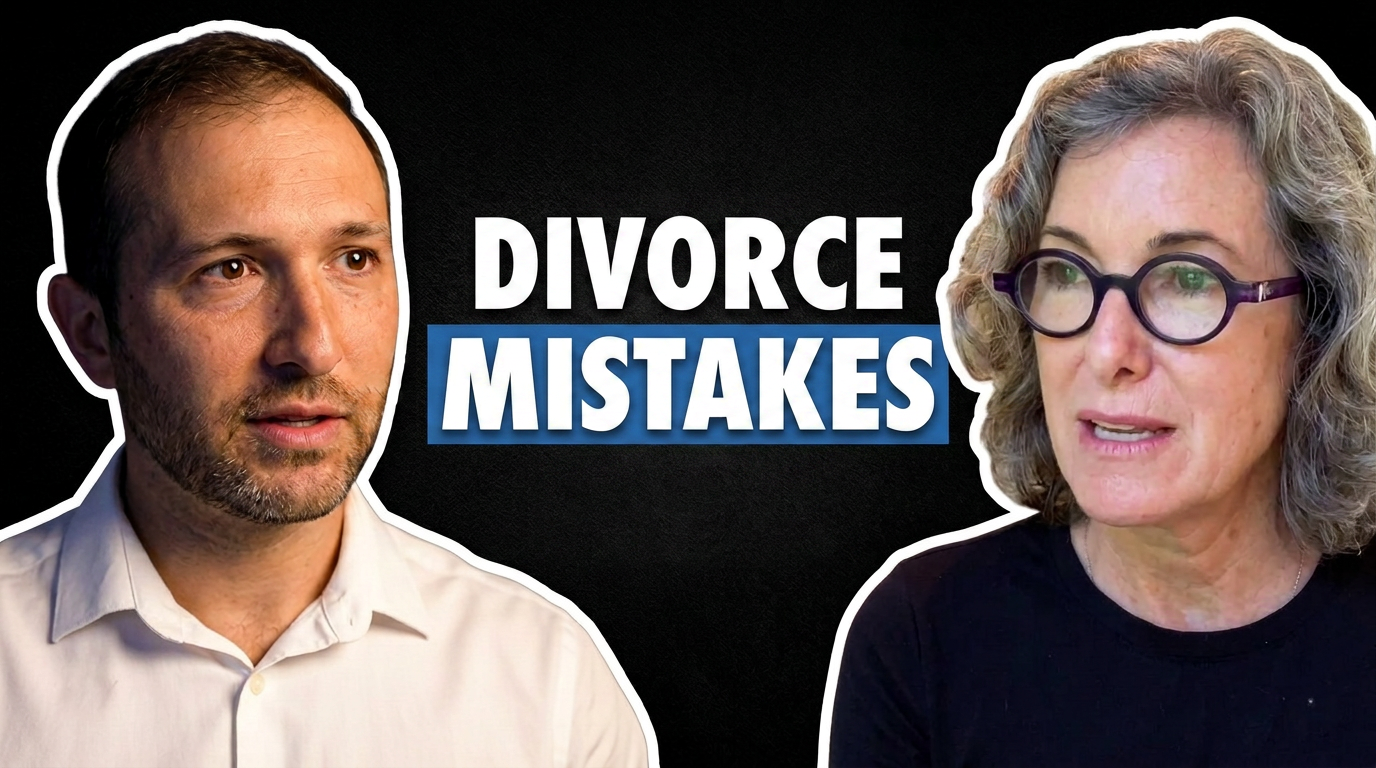
You’re the Third Parent: How to Break Free Without Hurting Your Siblings | Celeste: #172



At 14 or 15 years old, Celeste learned her parents’ marriage was unraveling.
Affairs.
Addiction.
Secrets.
Her siblings didn’t know.
But she did — because she was the oldest daughter.
And before long, she wasn’t just watching the marriage fall apart… she was managing it.
In this episode, Celeste shares what it was like to grow up as the “third parent” in a family where divorce was unthinkable — and what that responsibility did to her nervous system, her faith, and her ability to trust.
We talk about:
Carrying secrets to protect the family’s image
Panic attacks and anxiety that she didn’t know how to name
The guilt of moving away and “leaving siblings in a burning building”
Why even a “necessary” divorce still deeply wounds children
And why dating now triggers intense anxiety
Celeste’s story is honest, raw, and hopeful. Because while you can survive being the third parent… At some point, you have to stop carrying everyone else.
If you were the responsible one…
If you feel guilty for wanting your own life…
If anxiety follows you into relationships…
Or if you’re afraid you’ll repeat your parents’ marriage…
This episode is for you.
Suicide Hotline: Call or Text 988 (English or Spanish)
Get the Book or FREE chapters: It’s Not Your Fault
Get Dakota’s FREE Guide, The Biggest Fitness Mistakes to Avoid


Enjoy the show?
To be notified when new episodes go live, subscribe below.
As a bonus, you'll receive the first chapters from our book, It's Not Your Fault: A Practical Guide to Navigating the Pain and Problems from Your Parents' Divorce.
TRANSCRIPT
Transcript produced by artificial intelligence. Please pardon any errors!
Joey Pontarelli (00:54)
Welcome to the Restored Podcast. I'm Joey Pannarelli. If you come from a divorced or dysfunctional family, this show is for you. We mentor you through the pain and help you heal so you can avoid repeating your family's dysfunction and instead build strong, healthy relationships. Around 14 or 15 years old, Celeste learned her parents' marriage was falling apart. She'd even seen the signs earlier than that. Affairs and addiction, years of hidden betrayal. Most of her siblings did not know, but she did because she was the oldest daughter.
Now at one point in high school during a car ride, her dad asked her if they should get divorced. Imagine being in high school and being asked whether your parents should get divorced or not. But Celeste didn't just watch the marriage break down, she became the mediator. She became the third parent because she tried to keep her younger siblings in line so they wouldn't trigger anger. She tried to keep secrets so that everyone outside the home wouldn't know how broken things were inside the home. She would talk to her parents into seeing each other's side, trying to be their th-
marriage therapists of sorts. She basically held the family together so no one would fall apart. And at night though, she would have panic attacks and she felt almost constant anxiety, but she didn't even know what to call it at that point. So she couldn't sleep, her chest was tight, her body would shake, she would throw up, and she didn't tell anyone. And so this episode isn't only about your parents getting divorced, but it's also about what happens when a child becomes the emotional adult or the third parent in a dysfunctional home. We hit on a bunch of different topics, like what it felt like for Celeste to carry secrets that her siblings did not know,
The guilt that she still feels and extend for moving away and leaving her siblings in a burning building, an analogy she goes into which is really deep. We talk about why even though she believes the divorce might have been necessary, it still deeply wounded her. And we also hit on why dating now brings so much anxiety for her almost immediately and so many more topics. Celeste grew up in a family where divorce was the ultimate failure, image matters, secrecy mattered, control mattered. And it's the second oldest of eight kids, the oldest daughter.
She carried responsibility that no teenager should have to carry. But thankfully, now she's rebuilding. She's working with a mentor. She's relearning how to set boundaries and have healthy relationships. She's reconstructing her faith. She's rebuilding and deepening her relationship with her family and so much more. And she's honest about how hard it is for her to trust, especially in romantic relationships. And so if you were the responsible one, if you were the one who your parents leaned on, if you left home but still feel like you abandoned your siblings, or maybe if dating feels terrifying,
because you'll afraid you'll marry the wrong person or maybe you'll repeat your parents story. Celeste's story will feel painfully familiar, but also hopeful. And I think one of the takeaways is you can survive being that third parent. You can go through that stage and do some really good and necessary things to help your family. But at some point you have to put that role down and there is a life after that. There's a lot of hope and healing ahead of you.
A few things before we dive in, we do talk about God and faith in this episode. If you don't believe in God, you're totally welcome here. My challenge for you is this, just listen with an open mind. Even if you skip those parts, you're still gonna get something out of this episode. We do also talk about some mature topics like suicide. And so if that's triggering for you or if you have kids around, I either recommend not listening or putting some earphones in. And finally, Celeste just wanted everyone to know that thankfully her siblings are much older now and they're not in harm's way. Even if home life isn't perfectly functional, it's better now.
And so they're not suffering abuse or physical harm in any way. She felt that she needed to clarify that ⁓ based on some of the things we talked about in the episode. But with that, here's our conversation.
I'm really glad we could do this. As I was reading your story on our blog, I was really moved by it. Earlier today when I was preparing for this, it actually made me tear up because you've been through so much. And so I want to dive into all of it. And I think the maybe natural place to start would be your parents' marriage. And so curious, what was the start of the breakdown of your parents' marriage as much as you can remember?
Celeste (04:24)
Thank you, it's good to be here.
Yeah. ⁓ So my parents raised us very evangelical Christian, very conservative. Divorce was the big no-no sin, right? And we kind of carried that energy for a long time. And there were a lot of things that definitely contributed to my parents' marriage breaking down. I think we went into ministry when I was around 11, and we became very isolated from other churches and other families.
Part of this was because of my mom wanting to isolate us a little bit more and stay sheltered. And part of it was for religious reasons. ⁓ I think in that isolation, it became really difficult to actually work through the problems that my parents were having. And instead of reaching out to other people for help when they started experiencing conflict, they really internalized it and kept it a secret from others.
to avoid losing supporters or ministry credit and things like that. When I was 14 or 15, both my parents came to each other and told each other that they'd had either multiple affairs or marriage-long porn addiction. And that really started a huge breakdown in our marriage. Again, this was not being shared with any of our friends or family or churches and not with my other siblings either. This was mostly just shared with me as the oldest daughter.
And so when sometimes in your previous episodes you ask if it was a high conflict or low conflict situation and for the rest of my siblings I would say they definitely probably experienced it as low conflict and didn't know that it was going on. But for me it was pretty high conflict seeing everything that was going on between the two of them and the lack of respect they had for each other especially towards the end.
Joey Pontarelli (06:36)
Okay, no, that makes sense. And that's a really wise distinction because the researchers we quote who talk about high conflict and low conflict, they basically, from what I've gathered from them, they basically say it just matters what the child sees through their eyes. And so I think you could have a situation where it is kind of both one for you and different for your siblings. Did, without going too deep into it, how old were you when all of that came to light and you learned about the problems within your parents' marriage?
Celeste (07:05)
14. It's hard to get a good timeline in these situations. Totally. You can't really get a clear one from either parent. I'm not really sure they know anymore. So yeah, so I was probably about 14 to 16 when all these things started coming to light. Yeah.
Joey Pontarelli (07:19)
So yeah, just beginning of high school and man, what a tender time that it's lot to carry. know your parents tried different things to heal their marriage. What do you think kept them from actually fixing it and how did the kind of like failed attempts impact you?
Celeste (07:24)
Yes.
Obviously all this is from my perspective and I don't know their motives in the situation, what was really going on in their minds. But from my perspective, it seems like they kept doing all the right things to try to fix their marriage. Like, go to counseling. ⁓ do the love dare. Or let's go through this book. Or things like that. And I don't think either of them had a great willingness to change. I think, especially in my mom's case,
the ability to see what was really going on and understand what would be needed to rebuild trust. She just wasn't there. I think they also had different levels of willingness throughout those years to see the counselor. And so they're rarely on the same page with actually wanting to find help. And I think the counselor also sided more with my father, which made it more complicated. So.
whether or not they were right in doing it, I think it definitely pushed my mom away from wanting to pursue further counseling. is great, but if you're not actually going with the intention to change and improve, there's not really a point.
Joey Pontarelli (08:43)
Yeah, I would agree with that. One of the analogies that has always stuck with me is I hurt my shoulder, like, I don't know, a couple of years ago now, and I went to PT. And there were times in which I would like do the exercises and I would go consistently and it would feel better. And there were other times where I just like wouldn't really go or wouldn't do the exercises and I would feel worse. And I think that can be so true like within marriage when you're struggling, it's like, it's great if you like show up.
PT every once in a while. great if you go to the therapist's office like once a month or something. But if you're not actually doing what they tell you to do and like working through like the wounds and trying to build new habits, then you're right. It's just kind of going through the motions. And so what I see with a lot of marriages, and I'm not saying this was necessarily the case with your parents, but it sounds like it could have been, is where like we either don't try it all or we do try, but we don't really put our hearts in it or we try, but we do too little. Like we're, you know, doing like, I don't know, one rep almost the equivalent of that.
And again, I don't want to pass judgment, I think, yeah, I think that could be so true. so then because just looking from the, the lens of like the, marriage that the couple, because they're in such a place of hurt and woundedness and everything, can feel like, ⁓ I've tried everything. I've tried everything. When in reality, it's like, okay, you went to like two counseling sessions. You did this, you read this book and you did this like love dare thing. And that was about the extent of it, but it probably feels like,
You just ran a marathon because you're just so exhausted. Would you agree or disagree?
Celeste (10:12)
think so, yeah. And from my perspective, especially when they were in the midst of it, I don't think either of them had very good mental health. Also, one parent is highly manipulative and one parent is highly apathetic to doing anything to change. And so, it definitely didn't help the situation at all.
Joey Pontarelli (10:30)
dangerous
combo there yeah okay I definitely hear you was there anything else about kind of like watching that as a their kid how that impacted you I know you touched on that but I just want to see if there's anything else you'd say
Celeste (10:41)
Yeah,
I think we'll probably talk about it later, but I am the oldest daughter and so being in the position as more of a third parent and not necessarily as another child. I know, I think it was episode 140 where your brother was on the podcast. That was probably the best episode you guys have released in my opinion. I the That one was super helpful for me because just, I think this, you guys were talking about making the oldest child the extra parent.
and how that really negatively impacts relationships with your parents in the future. Seeing that when you're a kid, you really want to help your parents out and your parents want someone to talk to, but they're not going to talk to their friends because they don't want their friends to know. And they're not going to talk to their spouse because they're arguing with their spouse. So the oldest child is the next solution. I think that was really the position that I had in the situation and trying to make them see eye to eye and trying to keep my little siblings out of it, I think was
was a big part that I had to play in the whole situation. That's how I viewed it.
Joey Pontarelli (11:42)
sense. I want to get to that and I'm excited to talk there because I think a lot of people like us are in that exact situation where they're maybe even more concerned for their siblings than they are for themselves. I know I felt that way and I remember you saying that too. But before we get there, I knew you felt many different feelings, emotions toward your parents. You mentioned anger, outrage in your article. I'm curious, what are you feeling now?
Celeste (12:04)
These days when I'm not at home, I mainly feel disappointment with my parents and some grief and seeing still some major character flaws that are negatively impacting the family. usually only feel like genuinely angry or like really, really, really sad when I go home to visit because I live several states away. And so for that reason, the holidays are usually very emotional times, but yeah, that's generally what I feel now. think
At the end of the day, I can feel angry all the time and bitter, but once you've forgiven them or are working on forgiving them, the only thing left is just sadness and almost pity, like watching people destroy their lives. ⁓
Joey Pontarelli (12:45)
definitely felt that both toward my parents and some seasons and definitely like with a lot of the families that I'm interacting with it's it's just there's a sadness there I could totally agree with you. If you want to share we don't have to go into this too much like how is your relationship with them with your parents now I know you said you live out of state and so it's I'd imagine distant but yeah if you want to go into that.
Celeste (13:06)
so it is pretty distant. think I have, I have a relationship with both my parents still right now. It's very much small talk and sharing, you know, funny pictures or recipes and things like that. I think that's the only level that it can safely be at right now. ⁓ that might change in the future with my mom. That's probably where it's going to be for a long time. With my dad, things are kind of strained right now, but we're figuring some other things out. So it's always complicated, isn't it?
Joey Pontarelli (13:34)
Yeah, no, it definitely can be. I think it's naturally a little bit of a roller coaster where there's seasons where things are better and then there's times when they're not so good. I know I've gone through that ⁓ as well.
Celeste (13:47)
There's just drama that's introduced at various times and that changes everything.
Joey Pontarelli (13:52)
Yeah, but I totally got what you're saying about like the safe topics and I find myself like, like wanting to go into the deeper topics, but having to be careful and tactful and, you know, wise because sometimes it's not the smartest thing to kind of open those.
Celeste (14:05)
And for me, I still have younger siblings who are minors who are living at home. So I don't, I've decided not to go into super deep topics with my parents until my little siblings are no longer at home. That way I know even if my conversation goes poorly, their emotional reactivity is not going to be taken out on my little siblings.
Joey Pontarelli (14:22)
I get that. There's there's wisdom in that. You mentioned that you're the ⁓ second oldest of eight kids, if I got that right. You're the oldest daughter. Yeah. So you touched on this a little bit, but I want to go deeper into like, what was your role like in the family growing up? You said you were the third parent, but yeah, let's get into that a little bit more curious what that was like.
Celeste (14:40)
So I think my parents really wanted to avoid me becoming the third parent. They told me before that they didn't want me to be that position, but actions speak louder than words. And at the end of the day, I had a lot of responsibilities with taking care of siblings. Some of them were given to me and some of them I took upon myself. We were homeschooled and between being homeschooled and the situation at home,
It was a lot of responsibility put on me, sometimes explicitly, sometimes subtly, to keep these secrets in the family so that nobody would share them outside the house or we wouldn't get social services called on us, things like that. And so I really worked hard to keep my siblings in line. One of my parents has, at least at the time, had some anger issues and I would really try to keep my siblings from acting out or being, you know, acting like kids to...
prevent more physical forms of punishment from happening in my household. I love my siblings, but none of could lay low to save their lives. So that was kind of my job. And also in the middle of the divorce, ⁓ everybody was really struggling with depression. And so I felt the need to balance that out. I became insufferably joyful all the time just to try to balance out the depression that everybody was living in. So.
Joey Pontarelli (16:01)
It's heavy stuff to carry. ⁓
Celeste (16:03)
Yeah,
yeah, kids weren't meant to carry that. ⁓ But I hear a lot of the time that wasn't your responsibility. That's your parents responsibility to parent. And it's really tough to tell a kid in that situation that they shouldn't take that responsibility because if they don't do it, nobody's going to do it, even if their parents are responsible to be parents. So yeah.
Joey Pontarelli (16:23)
I would agree with that. It's ⁓ yeah, it's just the, it's a necessity. It's the, yeah, the best of like two really bad options. And I really wish it wasn't that way. But sometimes like when we live through that, we have to do the best we can with the hand that's been dealt to us.
Celeste (16:36)
Yes. So I got asked for parenting advice on a regular basis, sometimes marriage advice because, you know, a 14 year old has a lot of experience with marriage. ⁓ And so actually, when they were thinking about getting divorced, they asked me whether or not they should. ⁓ So I definitely was proud of the role that I had unknowingly. And I was really happy that I could talk people into agreeing with each other or seeing the same way.
and keeping my siblings from getting mad at my parents and keeping my parents from hurting my siblings. And upon reflection that was manipulative of me, but I did the best I could with what I had.
Joey Pontarelli (17:20)
Yeah, no, I mean, I get that and what an impossible position to be put in to give your parents marriage advice and be asked if they should get divorced. It's definitely, wow, it's a lot. You mentioned before the pressure you felt or the need to keep everything a secret from friends, from church people. That's a difficult burden to carry as well. What was that like for you? Why was there so much pressure there and what was that like for you?
Celeste (17:42)
⁓ Part of it was because we were in ministry and we were full-time supported by a bunch of churches and so there's a concern that if my parents got divorced then people would stop supporting us and so that was definitely part of the pressure. I think in the time when I grew up homeschooling was still not super popular and so there was concern that
we'd get taken away if somebody saw us outside during school hours, which sounds silly to say now, but I think part of it was just the fear mongering from my parents. ⁓ and it did contribute to keeping us isolated, whether it was intentional or not intentional. that's what happened. I think also we come from, my grandparents are both pastors and so trying to maintain that really good family image and
trying to keep up the good image of a homeschool girl and oldest daughter and Christian. Yeah, and not really understanding why my siblings couldn't see why they needed to work a little harder to keep up this image.
Joey Pontarelli (18:47)
Yeah, they probably are a little less, yeah, a little less judicious about that. It's so interesting because I remember feeling like similar pressure and I think it came from a place of like embarrassment too for us. It's like, just don't want people to know how broken things are and I don't want them to know that our family is not like their family because eventually we were surrounded by a lot of great families. And so there was that going on as well. But yeah, it is a lot to carry. It feels like you're living a lie to some extent. I mean, I guess, I guess it is.
Celeste (19:15)
Yeah,
but in that moment you don't think you're living a lie. You just think, well this is normal. I just can't tell anyone because they wouldn't understand. Like, I can't tell anyone about my mom's anger issues. They just wouldn't understand that it's just out of love and discipline, you know?
Joey Pontarelli (19:30)
Okay, real talk, if you've been trying to get in shape so you feel better physically and emotionally but nothing is working, you're not crazy. I've been there myself. I recently read a free guide by Dakota Lane, a certified personal trainer who we've partnered with that's helped about a thousand people and it was really helpful for me personally. In the guide, he breaks down the biggest fitness mistakes that we all make like under eating, over stressing, or focusing too much on the scale and he gives really simple practical tips that you could actually use that you can implement today.
And so if you're tired of feeling like you're never gonna get in shape, just click on the link in the show notes and grab the guide today. It's totally free and it might just be the thing you need to start feeling healthier physically and emotionally. Yeah, no, I get that. And I remember a friend of mine coming over and it was during a really tumultuous time in my family. My dad and my mom were separated and the police would often get involved because there was an order of protection and it get broken. And so I remember her being over and the cops show up and I'm like,
and I told her nothing about any of this and it was just so embarrassing. Then of course I would open up to her and be like, here's what's actually going on. I just didn't want to burden my friends with it as well. That was another consideration. like, I don't want, I don't know if I necessarily had situations like this in the past, but I've heard this from a lot of people where you maybe go to friends who haven't really suffered much in life and haven't been through anything like this, of course, and you tell them these things and they don't really know what to say. And sometimes you even get a bad reaction. So I think a of us, yeah, a lot of us kind of learn well.
I'm gonna keep it to myself. I don't wanna burden them with it. I'm embarrassed, all the things we said. Would you find that to be true?
Celeste (21:02)
Definitely. I didn't have any close friends growing up outside of my siblings and we hadn't reached the point yet where we would talk about our parents' issues. I don't think I told anybody about the problems until my parents were already pretty ready to get divorced and about to move out and I was probably 18 at that point. I remember thinking, you're just using this as an excuse.
Like I had told a friend on Sunday, because I was feeling tired and I didn't really want to talk to her very much and I said, I'm sorry, I'm just tired, my parents are going to get a divorce. And I was like, ⁓ like that was one of the first times I'd ever told anybody that this was going to happen. And I felt really guilty because I was just using it as an excuse that I didn't want to talk to her. I was really, really careful not to use my parents' divorce as an excuse for anything, for any negative feelings that I was experiencing.
And I would tell you probably throughout most of the time that any mental health problems I was having was not at all related to my parents' issues. Again, now as an adult I see that it definitely was and I needed to talk to people, but I just didn't.
Joey Pontarelli (22:07)
Why do you think you didn't see the connection between the two?
Celeste (22:10)
As an adult, now looking back, I would say that I was just really wanting to avoid the blame game and seeing how a lot of kids, once they grow up and leave the house, they say all kinds of terrible things about their parents and then they leave them. I didn't want to be that kind of person. And also my parents, you know, consistently played the blame game with each other and I didn't want to be like them at all. I wanted to take responsibility for anything in my life, which ended up in me blaming myself for pretty well everything. And so
I think that's, that's probably.
Joey Pontarelli (22:41)
sense. And what have you landed on now in terms of like that balance between taking ownership versus acknowledging maybe when someone played a role and causing harm?
Celeste (22:50)
You know, I can point to many, many things or character issues in my life that may have resulted from my parents getting divorced, but I might have struggled with them anyway, is part of it. And also, like, even if all of my character flaws came from my parents' marriage struggles or my parents' sin issues, I'm still responsible to change them. And that's one of the toughest truths I think kids of divorce have to have to come to terms with is that, yeah, it's not very fair that you have to...
be the person to do the work to break these cycles, but that's how it is. And I think the faster you can make your peace with that, the faster you can actually.
Joey Pontarelli (23:25)
I would agree with that the way I would like to think about it and you might have heard me say this before is that you might not have caused the problems But you're in charge of the solution Which stinks sometimes? But but but it's real and it's like if you I think the victim mentality victimhood thing comes in when we like you said continue to blame and we're waiting for someone else to solve the things that No one else is gonna solve we are the ones who have to solve it even if we didn't cause them
Celeste (23:50)
Yeah, yeah, definitely. And you just think of what life do I want? And, you know, I want a family and kids someday and I want it to be healthy and happy. And it's not going to happen if I keep martyring myself over the situation. And so it's important to grieve that and really lament that it happened and not just blame it all on yourself. But it is also important to take responsibility to break the cycle in yourself.
Joey Pontarelli (24:20)
Yeah, I'm with you there. I think that's really well said. I want to shift gears a little bit to kind of the emotional struggles that you've wrestled with. I've wrestled with them as well. So you mentioned that you would deal with nighttime panic attacks and anxiety. I'm curious, you know, what triggered the panic attacks and the anxiety from what you could tell.
Celeste (24:39)
So again, as an adult, I can look back and see that the major instability in my parents' relationship was affecting that. And having so much responsibility to take on at a young age really put me in a high state of stress all the time. And panic attacks would just be a natural expression of that. ⁓ at the time, because I was in such a religiously isolated household, I thought I was for sure demon possessed or something.
which is terrifying when you're 14 and don't have any context for mental health. So I didn't talk to anybody about it because I thought it was too big for any adults to handle normally. And so, yeah, I was just always afraid that I would do something that I didn't want to do. This sounds a little silly looking back, but it feels very real and very dark for a kid who's not sharing those thoughts with anybody.
Joey Pontarelli (25:10)
Yeah.
That's too much to carry, especially, yeah, just when there's like a, that spiritual misunderstanding of like what you said is a human experience of like, just really anxious. I'm in like fight or flight mode all the time. I'm like, yeah, the hyper arousal that we sometimes talk about of like just survival mode. It's a tough spot to be in. Okay. And do you remember, was there any particular focus of those panic attacks? Like, was it the kind of fear, the demonic fear, or was it something else or did it just kind of run the gamut of like.
different things that they would be focused on.
Celeste (25:58)
Yeah, I think the majority of the focus that I had would be religious in nature. Whether I was afraid that I had committed too great of a sin or something demonic or a big fear that I would kill myself, which again really goes to show how bad my mental health was at the time. But because I wasn't able to express that, I just kept waffling on it for years. And so it never really changed to
my parents are getting divorced and I'm scared about that. It was mostly still the religious stuff that I was spiraling about. Yeah. looking back at the time, I can see that that was mostly just the expression of the instability that I was already experiencing in the household. And because I thought that this parental's conflict was normal, I wouldn't have known to point to that as the problem.
Joey Pontarelli (26:50)
Yeah, no totally. How could you in the midst of it? It's really difficult to make sense of something when you're going through it, especially as a young person. I can't agree more. I want to talk about anxiety, but first I'm curious. You mentioned suicide. Was that ever a temptation for you? Was that ever seen as like a, like I'm done with this?
Celeste (27:08)
Yes, I think less in the sense that I wanted to die and more in the sense that I didn't want to live the way I was living anymore. Yeah.
Joey Pontarelli (27:16)
Totally makes sense. What would you say to someone maybe who's there right now? Like obviously you're in a better spot now than you were then, which is beautiful. So imagine someone's listening right now and they're like at that spot where they don't wanna take their own life, but they just don't wanna live with the pain.
Celeste (27:23)
Yes.
Yeah,
I would encourage them to talk to somebody about it, even if they're not wanting to go as deep as to say, I want to kill myself right now. ⁓ I really would like them to tell somebody that, but even just being able to express the emotions. I didn't know that anxiety was a thing. I just thought something was completely wrong with my body and I couldn't stop shaking and throwing up. But nothing's wrong with you.
You need to get it out and talk to somebody about it. And there are safe adults. And also, your situation may not going to be changing immediately, especially if you are stuck at home still. But your emotions about the situation can change. And there is something about that and about your mental health that you can always that can always get better. That's what I would encourage my past self with is that
know your whole life isn't going to be stuck in these panic attacks and your whole life isn't going to be spent trying to navigate between your parents and your siblings and there can be a happy future ahead and you just got to hang in there a little bit longer. I don't know if that's great advice if it's coming from a therapeutic perspective but that's what I would have told my past son.
Joey Pontarelli (28:45)
Yes, okay. No, you and I are not therapists. So we're just kind of speaking as ourselves like to the younger version of us and no I love that and we'll link to the suicide hotline as well That's like a great resource because sometimes people are just embarrassed to talk with someone they know and admit that they're thinking about that
Celeste (29:00)
It's really great to find someone who doesn't care or know your family at all to talk about them with it.
Joey Pontarelli (29:05)
Totally, like an outside perspective where there's, yeah, totally agree with that. So that's where that hotline could be good. And then I think ideally you would move ⁓ to someone who not necessarily is like involved in your family life, but someone maybe who's a little bit closer to where you are and not just something like stranger, because it's really good to have people who can walk with you through all that, like a therapist, but we'll at least link to that. And I'd recommend that. And one of the things that, you know, in my darkest times, like I would go back to, and that's just been helpful for other people is like,
Imagine a life if you could snap your fingers and imagine a life in which you weren't living with the pain that you're experiencing now. Would you want to live? And almost always the answer is like, yes, of course. So then the question becomes, how do we get to that place? And that's what you said, it might not happen right away, which is hard. That's not easy. I want to skip over that. But hopefully you and I even are proof that actually you can get through that. You're on your own now. You're not living at home.
Celeste (29:57)
Yeah.
Joey Pontarelli (30:02)
from, you I know there's still struggles in life, but life is better than it was then for you.
Celeste (30:06)
So
good. And it's not perfect. And there's days, you know, where I'm depressed or struggle with anxiety. But my life is so good right now. I just live a very boring normal life. But comparatively to my high school life, it's so good. I wish my high school and early college self would be able to know that it's going to be okay. And it was, it's so good now. Even just a boring normal life is so good.
Joey Pontarelli (30:32)
Yeah, I would echo that and just to kind of add my end of the proof to anyone listening who's maybe struggling in this area. like I was super afraid of relationships, which we're going to talk about a little bit later. I was afraid of marriage. I didn't really see that. I thought it was unattainable for me. Couldn't do it. Now I'm married. I've been married almost eight years now and I have three kids and I absolutely love it. It's great. Marriage is hard. I've said that a lot in the show. There's definitely been seasons where
It's been harder than others, but there's a lot of joy in it too. And being a dad, my gosh, it's so good. I just love it. There's something about having kids. It's hard to understand this when you don't have kids. Probably having siblings would be the closest approximation. Maybe if you have nieces and nephews, you can kind of get that feeling too. But man, something about having kids, it's just like, it's really, really beautiful. So if we got through it, you can too. And that's, think, the message of hope that we'd want to leave you with on that topic at least. Beautiful.
One of the things you said that really stuck out to me was that you said you didn't have a name for your anxiety. I think a lot of people have that same experience. I know I did in high school and even I think the beginning of college. So if you were to explain it without using the term anxiety, I'm curious, like how would you put it into words now, especially imagine that someone who's like experiencing that, but they also don't have the word anxiety. Like what would, what could they relate to? What was going on inside of you?
Celeste (31:53)
I just called it overthinking at the time. Interesting. I was just like, I'm such an over thinker or my parents would tell me I'm such an over thinker when it's like your thoughts are spiraling and you don't even realize that you're spiraling or feeling anxious because you think you're just thinking logically and trying like you owe it to yourself to think through the worst possible scenario and some people don't have a whole like
panic attack where their body just shuts down and starts shaking or they want to throw up. Like that's what happened to me, but that doesn't happen to everybody. Often it's just like that cold, hot feeling that goes all the way through you. Similar to guilt, honestly, or just not being able to stop thinking for any second of any day. I remember that was when it was really bad where just every second of every hour of every day, it was just constantly never being able to turn my brain off. ⁓ That's how I would describe it without actually saying the word anxiety.
Joey Pontarelli (32:52)
Yeah, okay, that's really good. What about like tightness in your chest? I can throw out a few things that I experienced.
Celeste (32:56)
That's
definitely a thing. Other people, like, I think they'll get like a tingling on their fingers and in their mouth and think they're dying because they can't catch their breath, but it's really because they're just breathing too fast. And that's actually a clinical thing. I think that's very common. I see that in other people a lot. Definitely tightness in your chest, like you can't get a full breath. I felt a lot of emotions in my stomach when I wasn't crying or processing when I needed to. And so it just feels like a stomach ache.
or like you constantly feel weighed down. remember there was a period of time where I was just always walking hunched over. There's nothing wrong with me physically. I just, couldn't bear it all.
Joey Pontarelli (33:36)
For countless teens and young adults, their parents' divorce is actually the most traumatic thing that they've experienced, but so many feel lost and alone in navigating the challenges. I've been there myself. It's really not easy and it shouldn't be this way. My book, It's Not Your Fault, guides them through those challenges by helping them put their pain into words and begin to heal, work through the emotional problems that they face, cope in healthy ways instead of falling into bad habits, improve their relationship with their parents, navigate the holidays and other life events, and build healthy relationships and so much more.
One Amazon review said this, this book is packed full of really practical help. If you come from a broken family, or even if you don't, but you love someone that does, this book is so helpful. I can't recommend this enough. By the way, it's a quick read and it doesn't need to be read cover to cover. Since it's in question and answer format, you can just read one of the questions and one of the answers. And so if you want to join the thousands of people who've gotten a copy, just go to www.resortministry.com slash books.
to get the book or download the free chapters. Again, that's restoredministry.com slash books or just click the link in the show notes. I mean, the emotional kind of manifests in the physical. It's wild. And anyone who's read The Body Keeps the Score, there's a lot of science behind it. It's not just a kind of woohoo thing. No, it's so interesting. What I would say on my end, like what I experienced was everything you said. Thankfully, it wasn't, I didn't have the panic attack, so I was definitely lucky. I've been with people who've had them.
at all. And I would think the overthinking thing is so interesting. That's what I would say too. Like my brain almost felt like it was on fire at times. Like I couldn't, like you said, shut it off. And it was like, yeah, just moving really quickly and not being able to sleep, I think is kind of a hallmark to at least what I experienced where you're just like laying there and your body's tired, but your brain just like will not shut off. I also, for me, there was like an aspect of like OCD too. Like there was like a perfectionism in me that kind of got worse when I was more anxious.
Celeste (35:23)
Yeah.
Joey Pontarelli (35:32)
So I don't know if that's a typical experience of people, just thinking through what I was experiencing. And then I think like the way I probably would have told you then in high school was like, I just felt like a total lack of peace. Like I didn't feel calmness. I just, knew that I didn't know exactly what I was experiencing, but I was like, I didn't, I don't feel peace. think I was able to put the word like worry to what I was feeling. ⁓ but, but that was probably the extent of it. I really didn't know much about anxiety or that that was a thing.
Celeste (36:00)
couple turning points when it started getting better. One of them was I was really scared about the fact that I wasn't sleeping through the night and one night I was just like, so what then I'll stay up all night. And actually that's a tool for defeating anxiety is just being like, so what then I'll do it deal with it anyway. I think a little bit of carelessness. I don't know if I just gotten so tired, I didn't care anymore. But I think that helped. ⁓ I did finally open up slightly, maybe not completely to my mom about the situation.
And just sharing it, I think, brought some light to it. And then once my parents actually signed the divorce papers a couple of years later, I think also my anxiety improved a lot. So I'm just not waiting for it to happen anymore. And it's done.
Joey Pontarelli (36:45)
Yeah, there's some level of closure. I can definitely see that. So there's a book I haven't read yet, but I trust the guy who wrote it. It's Dr. John Deloney. If you guys are familiar with Ramsey Solutions, he's like one of their personalities. And he wrote a book called Redefining Anxiety, I think it's this one. No, I'm sorry. There's two books. There's Redefining Anxiety, which is like a booklet. And then there's another one called Building a Non-Anxious Life, which is like a big full-size book. So.
I would recommend that if anyone's kind of in this anxiety trap and you're just wanting peace, which I think is what we all want in the midst of that situation. And again, I think when you're in it, it can feel like, how am I ever going to turn this off? But you can. And one of the things I think that was helpful for me, Sus, was just learning that it wasn't just like in my mind, it's actually like in your body. yeah, that was helpful. For some reason, I thought it was just like a mental thing, but there's physical aspects to it.
Celeste (37:39)
Doing cardio is really helpful for just a basic thing. not a big working out person by any stretch of the imagination, but going for a run or going up like this to your climber at the gym is really helpful when I'm dealing with anxiety or depression because if I'm really depressed, sometimes it'll give me a little bit of a boost and if I'm really anxious, it can burn off all that extra energy and I think it helps me sleep better at night. So that's something that's helped me as well.
Joey Pontarelli (38:05)
Yeah, it's been similar with me in terms of like exercise and yeah, I'm sure there's, know there's a lot of science behind it and probably has something to do with endorphins pumping into your body. But, but yeah, I found like the physical thing that there was this phrase a friend of mine told me in high school and she, said like, this is this idea of like, we have this idea of like mind over matter. But sometimes like we can get stuck in our minds and we can't really solve things like that, especially if we're stuck in an anxiety loop or OCD.
Celeste (38:32)
it's as bad as it is.
Joey Pontarelli (38:33)
Yeah, yeah, so this idea of like body over mind is really powerful. It's like get out of your head get into your body so to speak and move and that will help you ⁓ Change your emotional state and I think I don't know if there's another way like I think I think prayer can do that to some extent But so often when you're sucking an anxiety loop, especially if you're dealing with OCD It's actually not super helpful in the midst of it, which sounds kind of strange But but I think it there's a place for it, of course, but I think you kind of need to break the loop and get into a
place where you're like changing your physical state.
Celeste (39:04)
And you know, from my perspective, God created prayer to help us out and Bible verses, but he also created our bodies and knows what we need. And some people, it's helpful to recite a Bible verse when they're feeling anxious. But when I was so far down my anxiety, ⁓ I needed like therapy and mental help before I could even be in a healthy place to talk about God or have a healthy relationship with him. And that's not
I don't think that's on spiritual or on godly. I think it's just using other tools that God has given us.
Joey Pontarelli (39:35)
I would agree with that. sorry, I kind of made a generalization. I don't think it's never helpful for someone to do those things. Like sometimes prayer does actually bring a lot of peace and yeah, totally. But I think, think in this scenario we're describing is like when you're like at a really high edge of like you're a nine or a 10 or maybe even eight on that scale of like anxiety.
then it's like you need to kind of back down a little bit more before that some of those other things can be helpful if you're in that state. But it's different for everyone and I think if you're lower on the scale, then I think those other things do help right away. So sorry for making that generalization. Good deal. Yeah, hopefully that's helpful to anyone who's dealing with anxiety or panic attacks. You're not alone. We've been through it too and I think it is really helpful putting what you're feeling in towards as a research that says that will help you feel better faster.
Celeste (40:09)
Yeah, I get what you're saying.
Joey Pontarelli (40:24)
And yeah, like you said, so I'll like move your body and do some of the other things that you had mentioned. So, so good. I want to shift a little bit over to, yeah, just the divorce. So I'm curious, initially you agreed with the kind of conclusion your parents came to that they should get divorced. And then later you changed your perspective on that. I'm curious, like what caused you to change?
Celeste (40:50)
So, initially my dad presented all the facts to me ⁓ and I had only been hearing them from my mom's perspective up until that time about all the things that dad had done to contribute to the downfall of their marriage. But I think dad was driving me to some church conference and he just kind of laid out what everything was going on and the things that mom had done that had really contributed to the situation. And I was already at a point as a teenager where I was becoming disillusioned with
both parents anyway. But then during that card ride, he asked me like, Oh, what do you think we should do about it? And when somebody lays it out for you like that, there's really only one option. That's to say, yeah, I think you should get divorced. And so I think I would still say that my parents are better off. I don't know if this is a good thing to say or not, but I think it's probably better off separate. One could say that the best thing would have for them never to have gotten married in the first place, but that's not really an option. And I wouldn't be here.
So I think what changed was a couple years later when I was or maybe only one or two years later. Again, the timeline is a little sketchy. ⁓ When I got to college and I started talking with a older woman ⁓ in a kind of a counseling mentoring situation, ⁓ and she told me to write down every way that my parents divorce had actually affected me. And that's when I stopped blaming all of my anxiety and
family issues on myself and taking full responsibility for all of other people's issues and just honestly and respectfully saying, yeah, this really affected this. And this really contributed to why I think the way I do. I also was looking for resources for adult children of divorce, of which there are not a lot at the time. and I found this one book called Primal Loss and it's the now adult children of divorce speak and it's just people
compiled all of the stories of these adult children of divorce and put them in one place so the kids could actually have a voice. And reading through that made me see that even if divorce was the best option for your family, it still is not good and it really sucks. Even if, like in an abusive situation, there was some abuse with my household and different for different siblings.
Seeing that even with that going on, divorce still sucks and it might be the best option for a family, but it's really going to negatively impact you. And being honest about that, and I think that's what made me change my mind.
Joey Pontarelli (43:28)
Yeah, I love that you found Primal Loss. It's a tough read, but it's a good one.
Celeste (43:33)
I would not recommend going at it in one go.
Joey Pontarelli (43:38)
It's like chewing wood, it's hard. It's gonna take some time.
Celeste (43:40)
Yeah,
you kind of feel like your insides are all hollowed out like a pumpkin at Halloween after reading that, you know?
Joey Pontarelli (43:48)
great
description. Yeah, no, for sure. But I recommend it. We'll link to it in the show notes. There was an episode where the author, the one who compiled it, like edited it, Laila Miller came on the show. And so if you guys are interested in that, you can check it out. And I think if I'm remembering right, she's become a good friend. And so we've had a conversation, but I think she gives the book away for free now for on digital. So if you want, if you can't afford it, you can get the digital one at least for free. And then if you want the physical copy, of course, you can grab it on Amazon. But yeah,
That's a great recommendation. The other thing that you mentioned in your story is that you were at college when the divorce started and finished, I believe, unless I maybe got that wrong, please correct me. I'm curious what that experience was like for you and what I'm getting at there is I actually think it's really common for people to go off to college and their parents to start a divorce because sometimes the parents are like waiting for the kids to go to college or the first one or whatever. So I'm like, I know multiple people where that's happened. And so I'm curious, yeah, what was that experience like being at college, seeing it from afar?
Celeste (44:47)
think it's called gray divorce now because, you know, they have gray hair. But it is a lot more common these days. So I think for me, a lot of the hardships about my parents divorce all happened before they actually did get divorced because I was in that third parent role at home growing up. When I moved out, I had to get out. I was 18. I moved several states away. never seen, I didn't know a soul where I was moving to. I'd never even visited the college I was going to go to.
I just needed to get out and I knew that I was leaving my siblings behind in a rough spot. And in that moment, I didn't even care because I had to get out and I can get into that more later. But I think just witnessing it from afar, feeling like you can't get the whole story and you don't have as many opportunities to connect. And I definitely didn't talk to my family very much for probably the first two years that I moved away. I just needed space and I wish I would have called more.
⁓ Especially I wish I would have called my siblings more during that time, but I needed space to figure out what kind of person I needed to be, what it meant to be a Christian and who God actually was, and how to be healthy again.
Joey Pontarelli (46:01)
I'm excited to dive into this topic because there's such a tension there when we're presented with this option to leave home and be on our own and maybe get the space like you said we need, hopefully the healing that we need to be able to become our own person, like to grow all the things. But then we see our siblings and especially for those, I was number two in my family as well and yeah, our heart's kind of torn. So we're gonna get into that. Before we do, I want to go back to something you said before, because I didn't mean to gloss over it. You mentioned how your parents,
are seemingly better off now. And I wanted to touch on that because I think that sometimes maybe people misunderstand me. I think that's a common experience for parents who get divorced. Because imagine, depending on the scenario, they were maybe in this situation where there's a ton of conflict, maybe not, maybe it was just a little conflict situation, but the marriage was struggling and they didn't put the effort in that was needed, or whatever the case. I don't want to paint with too broad a brush. But I think that when a ⁓ problem
or trigger is like removed from your life, it's kind of natural that your life would get better. And so I've seen that with my parents too. I've seen it with others where it's like, no, there's actually like a step toward like some peace and maybe things improve. Now I will say this, what often happens is that people want to say that it's all happy and all good. And I know you're not saying that, but we got to be careful here because it's like, I now see how my parents are kind of lonely. And
There's a lot of other things that like definitely like breaks my heart for them too. So it's not all just like sunshine and rainbows. It's like that there's some definitely some downsides to that. And then without even mentioning, which is what you covered already so well, I don't feel the need to rehash it, the impact on the kids, which is the hardest part. And so even in those situations, like you said so well, where yes, maybe a divorce is.
necessity because there's abuse or other high conflict stuff going on, it can still have really detrimental effects even if some of the people involved are actually better off, it's still a difficult thing to go through.
Celeste (47:56)
I think, especially seeing its impact on my siblings. And one thing that I find super ironic about divorce when you have kids is that you get divorced so you don't have to spend time with this person and live with them anymore, but you have to communicate almost more than you did before because now you have
kids who have lives and activities that you have to coordinate and you have to figure out who's sitting where and then you bring more spouses into it and then it gets more complicated and divorce isn't going to solve all your problems either, especially if you have children, you're still going to have to see that person on regular basis unless they're in jail or something. So it's not an end-all solution to marriage problems and it might be the best solution in some situations, especially in some abusive situations, but again, it's going to hurt everybody.
Joey Pontarelli (48:41)
Yeah, yeah, totally. No, I've mentioned this before in the show, but the military, ⁓ I've heard the Rangers do this on the army Rangers. They put their people in what's called like a lose lose situation, especially they're like officers because they want them to, this is in training. They want them to learn what it's like to be faced with like two really bad options and then be forced to make a decision. And in so many ways, I think, you know, some, not all divorces, but some divorces are like that. It's like, no, it's like a really, really bad situation.
And I know we didn't really even touch on the religious aspect of like the belief that marriage is for life and the divorce is like breaking that deep, deep bond. and we don't need to necessarily need to hash that out here, but, but that's another thing I just wanted to kind of give a little bit of a footnote to, because it is a super important and big conversation there as well. This episode is sponsored by Blackstone Films. They just released a new documentary called Kenny. It's about an ordinary
Denver priest who lived like a true father and transformed families and inspired vocations. He would actually wake up at 430 every day to do an hour of adoration. His parishioners would ask him to pray for them and they actually got those prayers answered. Some even call them miracles. He had to shepherd his people through the Columbine shooting, if you guys remember that horrible, horrible event. He ate with the families in his parish every night of the week. He hiked with groups of young adults in the Rocky Mountains on Colorado.
and he sat with couples on the brink of divorce, even saving a marriage, which they talk about in the documentary. And so if you want a hopeful model of leadership and fatherhood, something worth watching with maybe your spouse or your small group, watch Kenny. The trailer and the full film are now streaming on formed.org. You could just tap the link in the show notes to watch the full documentary or just the trailer. Again, thanks to Blackstone Films for sponsoring this episode and for telling such an inspiring story that I myself watched and really appreciate it.
Shifting to your siblings now, this one's so near and to my heart, because I love my siblings. And in the same way that you kind of had to become that third parent, I definitely took, switched my younger siblings under my wing and basically became their dad for a season, right? And there was a lot of good that came from that. There was obviously some challenges and some detriment that came from it, but there was a lot of good that came from it. But you mentioned in your story that the hardest part for you,
What was not really the pain that your parents caused you, but rather the pain that caused your siblings and seeing that was just like so grueling. How does your sibling struggle to as much as you want to share? Yeah. And then we can go deeper into this.
Celeste (51:08)
Yeah, and the broadest generalizations. I think all of my siblings have struggled with mental health, especially depression, SI, as a result of the fallout. I think my siblings were pretty blindsided by it. Some of them didn't even know that my parents were struggling in their marriage until the week before my mom moved out. So that was tough for them, I think, because I was moving out.
about the same, I think the same month they got separated. My younger sister stepped up into that third parent role a lot of the time and being my parents' therapists and taking care of my little siblings because my parents were going through it and that's the big thing about divorce is like your kids need emotional care and support but you're going through it yourself and sometimes you don't have a lot of that emotional intelligence to give that or the emotional space to give it and my siblings didn't really receive the help that they needed, I felt. Another
odd thing is that my siblings don't really remember any of our childhoods. I would say I'm probably the sibling that remembers the most, if anything, and like I'll bring up a memory and none of them will remember anything. And so sometimes I wonder if my, if the whole situation was really as bad as I think it was and then I remember that none of my siblings remember anything and I think that's a sign. So also siblings definitely see things differently and have different struggles. I think that's
really important thing for older siblings who move out to remember is that you might have a problem with this parent, but your sibling might have a completely different experience. That parent might be a lifeline to them and the other parent is the one that they're really struggling with. So I think that's kind of kind of how I've noticed the struggle happening. There's also, I think, a complete lack of any respect left for my parents left at home because my siblings are all having to be adults, even at like 14, you know.
Joey Pontarelli (53:01)
Yeah, no, I'm tracking with you there. And no, I think everything he said is like my experience as well. So I'm with you. I'm curious, like, what was the experience you touched on this a little bit before? What was the experience like for you just watching your siblings struggle, watching them go through the things that you mentioned both when you were at home and then at college too, which brings on a different dimension.
Celeste (53:21)
At home, I could... I didn't know how to set boundaries or avoid codependency at that times. I definitely tried to dig them out of their own holes as much as possible when I lived at home still. But when I moved away to college, a lot of my siblings didn't have phones yet or any way of contacting them. So if I wanted to talk to a sibling, I had to call a parent. And so I definitely avoided talking to them for a long time. Even if your sibling hasn't done anything to hurt you.
still even just talking to them just just brings back everything from home and there's guilt that comes along with that so much guilt and not knowing if your siblings are okay or not and then every couple months you get an update this sibling has been making more dark jokes like maybe we should be worried about them or finally this sibling has therapy but none of the other siblings get therapy for some reason and so there are a lot of inconsistencies between how siblings received help and
wanting my siblings to see that there was hope and change like I was finally experiencing, but that's a long road ahead that they had, you know, and they weren't gonna get out anytime soon. So yeah, that's kind of what it was like watching from afar. I still only go home a couple times a year. Sometimes I'll invite my youngest siblings to come stay their spring break with me. And that's always a fun time and that's helpful, but.
I know my younger siblings have said like, ⁓ it's Christmas. That means the older siblings are home. We're to have to have deep conversations. And when you go home as an older sibling, you feel like you got to get all your deep conversations in now because this is the only face to face time you're going to have with them. And also I think I worried a lot. I still worry sometimes how my siblings may resent me for the choice I made to move away when they needed me most.
Joey Pontarelli (54:56)
I love that.
Celeste (55:07)
Because for me, it was bad for years and then I left home. But for them, the bad part really started when I left. so, you know, with parents of divorce, I feel like kids never are 100 % honest with their parents about how they actually feel because they don't want to their parents. And I feel like my siblings probably withhold a little bit of that as well.
But at the end of the day, it's not my job to project what I imagine they might be feeling about me. And having to move on from that is really a challenge.
Joey Pontarelli (55:40)
Let's get into that. But what you said, my goodness, it was hard for you leading up to the divorce or leading up to when you left. And then it was harder for them after you left. Wow. Yeah. So difficult. I think this whole question of like moving out or moving back in after school is a really, again, tough one for people like us because in so many ways, you know, I'm sure you can relate. I just like.
never wanted to abandon my siblings. That was something I felt very strongly about it because I had felt abandoned in so many ways. so going to college like was really hard for me. And then, eventually I did move home for a little bit and I was working and then eventually I moved close to where my now wife, Bridget was living. So I moved there, got an apartment and I was able to live like five minutes from her. So we were able to actually date and not just to the long distancing, but that, was a tough decision as well. So
So anyway, it's a tricky one. And I remember from your article, you said that you really felt helpless to really make an impact or a difference at home. You were obviously doing as much good as you could, but you knew that there was a limit to that. And so you made the decision that you needed to not move back home after college, even though, which was just like, honestly, I think this is the part that made me tear up, even though you were afraid that someone might kill themselves or something really bad would happen. So.
Talk me through that decision, what were you feeling when you were going through, like, what do I do, do I do this, do do that?
Celeste (57:06)
I think the decision not to move back to the state where my family lives is probably the hardest decision I've ever made. And it's not just a one-time decision either. There were times throughout college where I was like, maybe I should just move back to Texas and go to college there. Times after college, multiple times and through different career changes or anytime I changed churches or something like that, I would consider, maybe this is a sign that I need to move back to Texas. Anytime any of my siblings I heard
we're struggling with severe mental health problems, I would think maybe this is my sign to move back home, you know? ⁓ And so it's a decision I have to make on a very regular basis. Really, it's a decision I have to make any time I visit my family. I have to decide whether or not I'm going to move back home. Sometimes when I visit my family, I drive away and I can't drive away fast enough. And other times when I visit, it's really hard and
I start thinking of every way on the drive home that I can possibly change my career, uproot my life, leave my church, and move back to my family. And so, again, that's probably the toughest decision I will ever have to make. And I think only people who have been in a similar position can completely understand.
You get a lot of nice therapy advice that says you have to put your oxygen mask on before you put somebody else's on. But it doesn't feel like that. It feels like you're in the same burning building and you run out without waiting to see if your sibling makes it out. You know? And it feels like you're just leaving your sibling in this burning building and you're not going back in after them. And I don't know if that's a healthy way of thinking about it. It probably is not, but that's how it feels.
And you know, people will also say, ⁓ it's your parents responsibility to parent your siblings and you need to be a sister, but not a parent. And who's going to do it if I don't. And especially seeing how parentified my sisters were after I left home and watching them save my other siblings lives or struggle with it themselves. Yeah, it's really tough. Additionally, I've noticed that the sibling who moves out or speaks up often becomes the black sheep and the parent often
has some negative things to say about them. And sometimes that can really negatively impact your sibling relationships. Thankfully that's not been the case with me. But yeah, that's been really tough. Learning that siblings see things differently. My biggest point of conflict and struggle has been with my mom, but a lot of my siblings has been with my dad. And I didn't understand that as much until just this year when one of my siblings moved in with me. And so having to face, hey,
Sometimes there's not a good parent and a bad parent. Sometimes there's just two people who are really difficult to deal with. And so you just feel so obligated to throw out all that nice advice you receive in therapy and run back and take care of your siblings. And even if you do make the choice to move out and become a healthy person and get a nice foundation and get started, you can never stop thinking about the family you left behind. And that's a tough truth to swallow.
And that's the price you pay, I guess, for being able to be healthy and live and live, period.
Joey Pontarelli (1:00:22)
No, so good. I think the analogy of running out of the building makes a ton of sense. You know, I see what other people say about the oxygen mask and that makes sense too, but I think that is more accurate to what it actually feels like being in the building. And yeah, I think, you know, I definitely have been in that, those situations too, where it's like, things are so dire. If I don't take action right now, like, yeah, it's going to be really bad.
Celeste (1:00:41)
They're all gonna die.
No.
Joey Pontarelli (1:00:47)
I've been in that scenario too. And so it's like, you gotta do something. Like there's a cost of an action too. And yes, the idea would be to have, I don't know, relatives involved or a therapist or a pastor or something. And that's something I think that's good to work towards. I think sometimes we can maybe be so blinded or like our heads down in the, you know, the mess of it all that we don't actually maybe ask for help or know, no, we even know where to ask or who to ask for help.
And so I think that's something that is worth pursuing for sure. But I think when you're in the midst of it, you're not thinking of those things. And so you're just like in survival mode and you like want to take care of everyone and I get that as well. And yeah, no, it's definitely a difficult thing. was like a really grueling, I remember like pulling away for college that like definitely brought tears to my eyes and yeah, and even, you know, leaving afterward to like, not just kind of go in the next chapter of my life, but you know, ever to live at home again in a lot of ways. Yeah, it does kind of feels like you're battling on everyone.
Maybe a bad anger.
Celeste (1:01:43)
point because I had kind of a topsy-turvy college experience where I changed majors a lot of times and changed schools but still did not choose to move back home and I think the moment when I had been away for four years five years six years and my little siblings realized that they didn't have to keep asking me ⁓ are you almost done with college and gonna move home because I just wasn't gonna move home and
Again, upon reflection, probably could have communicated that to them a little bit better. But how do you tell your little baby siblings that, nope, sorry, you're still stuck and I'm still gonna go live my life. That's.
Joey Pontarelli (1:02:22)
Yeah. No, it is really hard. They might not be able to understand that. And yeah, and obviously, you know, we're not saying that there's some scenarios where you can move back home or live near your family and hopefully have good boundaries in place. But sometimes it does necessitate you being taken quite a bit of space, at least for a season. And hopefully getting to a better spot where you can maybe, you know, reenter things, but maybe not to.
Celeste (1:02:44)
And you know, you think about some of these things and it's not safe or good or healthy for you to stay in the place or stay at home. Or least that's how it was for me. So maybe you don't get to see your siblings very often, but you're just a baby adult and you don't even pay for your own phone plan. You don't even have a car. Okay, so just start small. Start with trying to get a job and saving up enough money so you can buy a car and go visit your siblings.
Or you can buy yourself a phone or even maybe in some cases your sibling a phone so you can contact them still. And being able to establish yourself as an adult. So when you have a place to live someday, you can get somewhere that has a spare bedroom. So one of them can come live with you or things like that. And I've heard of older siblings dropping everything and having all of their siblings move in with them and taking care of them in really serious situations. Obviously the state would have to get involved for that.
And I really admire and respect that. And sometimes in my peak of I'm going to save everybody, I just remember thinking like, oh, maybe I could do something like that. And it wasn't practical. And the truth of the matter is things weren't to a level where the state would take my siblings away or give them guardianship to me. The kind of abuse that happened in our household is not something you can put a finger down on. And they had food in the fridge and a roof over their heads. And so it's tough when it's
bad enough that it shouldn't stay the same, but it's not bad enough for anybody to intervene.
Joey Pontarelli (1:04:15)
That's a hard spot to be in. But I think, yeah, what you said makes a lot of sense. And I think like doing the little things to help your siblings, like you said, is so good. And even if that means buying them a phone or doing something like that, it's such a difficult topic. And I think one of the things you wrote, I want to read that now, really hits a nail in the head. It just kind of doubles down on what you just said. You said this, you said, if you're leaving little siblings behind, know that we don't get to choose when our chance for escape comes. We have to take it when it comes.
because you don't know if you'll get the chance to get out and heal again. Unfortunately, it rarely happens at the same time as your sibling's chance. This is awful. You can't change that. You can work hard to heal and establish yourself and thrive so that when your sibling's chance comes, you'll be waiting to help them, whether that's saving a room for them in your apartment or having a car to drive them away or learning how adult life works so you can teach them how to function. Still well said.
anything you would add to that?
Celeste (1:05:15)
Yeah, well, it's taken me like eight years and a lot of therapy to get to this point where I can say that. And there's not days where it's not still hard, but I think I've come to a place of more peace with it. One thing I would add is that it's really important for siblings who are children of divorce to unite and have that sibling loyalty that you can't have with anybody else instead of letting your parents manipulation or
trying to make you choose sides, break you apart. And I think something that me and all of my siblings have, or a lot of my siblings have had to deal with is when one of our parents starts bad mouthing a sibling or a sibling who's moved out of the house. And I think all of my siblings can agree with me. Like your parent can say anything bad that they want about you or they can say anything hurtful or do anything hurtful to you. But when it comes to your sibling, like you're gonna fight for them.
And there's obviously complications within sibling relationships, and it's not necessarily that way with all of my siblings, but with the majority of us, I think like finally we're at a place where we really want to stay in for each other. And regardless of what happens with our parents, they're going to keep screwing our relationships up. And we've noticed some manipulation happening that has intentionally tried to push the siblings apart and we don't want that to happen. And I would say one of my greatest joys in life, and I
I know this sounds cliche to say that, I don't, it's truly from my heart. I think my greatest joy is watching my siblings succeed and become the adults who would have kept us safe as kids. Watching my siblings actually have passions and watching them all come into their own and live and have good lives. Some of them even, you know, still living at home.
and have personalities and some of them, especially the younger ones, call things the way they are a lot more than us older siblings every day. Just seeing each sibling in our family exactly where they needed to be and seeing God take care of them when I didn't know if he would. just that's probably my greatest joy in life. And I really look forward to that as more of my siblings become adults. It's really weird now going home and they're all taller than me.
And that really always really hits it home for me like, whoa, you're a grown person now and you have a personality.
Joey Pontarelli (1:07:34)
Love it. Yeah, no, and it's just heartbreaking to hear that there's, you know, been so many rifts over the years and the complications with your parents. I definitely hope, and I want this for you and for everyone listening, that there may be a day, God willing, and I think God wills it, whether people cooperate is another question. That's so true. Yeah, where there can be healthier relationships between you guys and your parents and hopefully everyone.
as well and I really believe that it's possible that things can get better and improve and but at the same time like you said we really have to be honest and face reality as it is we can't pretend it's not there but I'm hopeful that one day I can get to that better spot.
Celeste (1:08:17)
Yep. And one of my siblings lives with me now and having to accept her graciousness and forgiveness has been really tough because I like being the perfect older sister and I like being able to be there for her and realizing the things, some of the things that I did in the past that negatively contributed to her, but that she's forgiven me for. Or the fact that she has grace for the fact that I moved away. And some of my siblings have said like, oh,
We didn't realize this from your perspective and giving me grace in that. I think you have to learn to listen to your sibling side of the story without being super emotionally reactive. And I think that helps so much when trying to reunify with siblings.
Joey Pontarelli (1:09:01)
So good, such good advice and I think it goes back to what you said before about like, they could have a totally different experience of your family life and of your parents. And so I think that empathy is huge, putting yourself in their shoes for sure. I want to, maybe we'll do a little bit of like a lightning round, because I know we're almost out of time here. Your relationship with God, let's talk about that for a second. So how has your relationship with God suffered because of everything you've been through?
Celeste (1:09:24)
Well, I am a Christian still. Some of my siblings have moved on from the faith, which knowing the example that they were given of Christianity, I understand. But I think it suffered because there were so many things that I was taught were religious in nature or about God or we do this because of God and it was actually because of manipulation from a controlling parent. And so it really sets you back having to weed all that out.
I know there's big feelings right now about the word deconstruction within faith, but I really had to kind of take it apart and rebuild it from the ground up and go back to scripture to understand who God actually says he is and that he's not an apathetic father figure. Or heard that if marriage is an example of Christ's love for the church, what does divorce say about Christ? That Christ is going to leave his church, that he doesn't care about his church, that his church can do something to push him away?
And I think having to defeat those subconscious beliefs about Christ that watching my parents divorce gave me, that has really been tough for my faith.
Joey Pontarelli (1:10:32)
No, can imagine. No, it equally pisses me off that people use faith or God to justify bad behavior or, like you said, manipulation. It's just like, it's so infuriating. And I get why people, you know, come to the conclusion that, I'm just going to reject God or God doesn't exist because it's just like too painful, like you said, to sift through all that. It's a hard spot to be. And gosh, that definitely gets me. But I think there's some beautiful, like you said, about rediscovering who God actually is. go ahead, sorry.
Celeste (1:11:01)
Sorry, I was just going to say that I think manipulative or abusive people are going to use whatever tools they have closest to them to gain control and sometimes the tool closest to them is religion and guilt and it's not religion's fault. I think it's definitely that person's fault. We have to put the credit there. That's my opinion on the situation.
Joey Pontarelli (1:11:20)
Yeah.
Yeah, no really well said and no, definitely I just have a heart for people like you described to you know are far from God and faith because of what they went through and definitely I get it like I get it. How have you found healing and growth? Through everything that you've been through like obviously there might be a long list, but I'm curious What are some of the things that has helped and how's it your relationship with God in a better spot, too?
Celeste (1:11:45)
Yes, it is significantly better now, mostly because, you know, I'm not worried every second of every day that I'm going to go to hell or something horrible. I think seeing Jesus for who He actually is and wants to be known as in Scripture has been super helpful for me. I reread through Exodus, which is one of the early books in the Bible, and it's where God is just initially introducing Himself to humans.
and showing who he actually is and taking care of them and seeing like this is who God is and this is how I can know him. Trying to make my faith more about actively knowing God in a very nitty-gritty daily basis has been super helpful. Instead of just trying to make a big checklist of things that I need to do or ways that I could be better. The church has been really helpful and healing for me. I am very privileged to have been able to choose my own church to go to as an adult. I found a really healthy one which doesn't have leadership that's always
suspicious or untrustworthy. And when I moved out, I knew I had to do different if I wanted a different life than what my parents had. And so I really reached out and searched for good female mentors. The lady who's been mentoring me now has been part of most of my adult life and she's incredible and has shown up for me in ways that my mother can't spiritually and emotionally. And she's just a sweet lady who's very faithful and
also can be very sassy times at times. And she's just incredible. And she grew a relationship with me. And in the space of having a healthy mother relationship, finally, I was able to accept more spiritual growth as well. And not having been able to trust my mother for the spiritual teaching that I need really created a vacuum. But this lady in my life has been able to both fill the relationship need and also
be trustworthy enough to fill a spiritual need as well. So that's been really helpful.
Joey Pontarelli (1:13:44)
I love that and mentorship, it's been so important for me and probably easily like the most healing thing, maybe aside from my relationship with God. And on that topic, I love what you said about like actually getting to know God for who He is. think there's a temptation with humans actually, like when we have people in our lives that we get to know that we hear things about people and or we learn things about them because we can look them up on social or whatever. So we're just like taking in some information, but it's very different to like sit down with the person.
and talk to them and ask them questions to get to know them. I think that's often what we do with God. It's like we learn about Him, but we never get to know the real Him. And I think what you said is really wise, that like one of the best ways you can get to know God is just reading scripture, reading the Bible. And so there's a podcast I'll recommend on that. It's called The Bible in a Year, and it's just a way to read the Bible in a year. And so it's really practical. It takes you maybe like 20 minutes a day. It's something you listen to, so you don't even have to like sit down for 20 minutes, which for a lot of people feels impossible. ⁓
But it's really beautiful. You can learn things you've never learned, even if you've been a person of faith, like you've been a Christian forever. It's wild. I feel like I've had really good formation and I'm reading this now as like a 33 year old and I'm like, wow, like I either totally forgot that or I just did not pay attention to this or that. And so I think there's a lot of good. So we'll link to that podcast if you guys want to check it out. I definitely recommend that. no, anything final you'd add about your relationship with God and then want to shift to romantic relationships.
Celeste (1:15:11)
Just the last thing that's been super helpful both in my relationship with God and with being an adult child divorce is the concept of lament within faith and I think telling God honestly what's not okay, what's going on I think is a very biblical concept you read the Psalms and I always used to skip the sad ones but now I read them and really getting into them and telling God this is not the way it's supposed to go this is not how you wanted things to be
understanding that God didn't want my parents to get divorced or be manipulative or anything any more than I did and being honest with God about the ways you want it to change and resting in Him despite it and Knowing that He's walking with you in it, even when it hasn't changed yet I think there's a big push in the church to be like, okay This is my testimony and this is how everything's fine now. This is how God worked it all for good I don't see that yet and you've got to be honest with yourself and with God with other believers about that and so
Lamenting it and just setting aside time to grieve I think has been super helpful in my spiritual walk with little things and big things like my family
Joey Pontarelli (1:16:16)
So good, I love that. And I know Brene Brown on the secular side, she talks a lot about that. If you guys are familiar with Brene Brown, psychologist, researcher, who talks a lot about shame and grief and things like that. And I think there's something like you said, so good to just being super real, because I don't think it helps anyone to pretend. So really good. All right, the last thing I wanted to talk to you about is romantic relationships. So you said dating is hard, it feels like hell, you mentioned. Why, talk me through that, why has it felt?
Celeste (1:16:45)
Yeah, I am single right now dating is really tough in this day and age to begin with but I think having the anxiety component Almost all the time I can really control and keep my anxiety managed But whenever I start dating or go out with a guy It gets triggered pretty quick and it gets back to that uncontrollable level really easily and I think that's why it feels like hell to me Maybe I was being a little overdramatic when I said that but it honestly does Yeah
Joey Pontarelli (1:17:12)
It's good writing,
Celeste (1:17:14)
And you don't know how early to share that struggle with whoever you're seeing because you don't even know if you're going to go on another date yet. I think most of the people I went to college with are married with kids or getting kids. Like, yes, it's sad to be single sometimes. Sometimes I really struggle with it. But I more struggle with the idea that I might get stuck in something that I chose because I was just lonely one day. And so, yeah, there's there's a tough balance to walk there.
Joey Pontarelli (1:17:41)
Yeah, it's a big, it's a big topic and you know, maybe we'll have to you come back another time to talk through it because it's the number one struggle for people like us and the anxiety you described. I hear it all the time. I experienced it myself and it's so interesting. Like you said, it's not like a generalized anxiety about life necessarily because we can, you know, with enough healing and growth, we can have that in check. We can learn how to like regulate our nervous system to where we're not always like,
on edge like we were talking about before. But then relationships come into the picture and there's just so much like, like you described it really well. There's just this anxiety, this worry, this uneasiness, whatever we're going to call it about love and it's hard. So I'm curious, do you feel like marriage is unattainable for you? Do feel like it's something that you can?
Celeste (1:18:23)
Do. ⁓
Joey Pontarelli (1:18:26)
a lot of the time you said it feels unattainable
Celeste (1:18:28)
It feels unattainable a lot of the time, less now than it did before. Just because I have seen so many people get married now, I'm like, well, if they can get married, surely. I think if I wanted it badly enough, I could be married by now, which might sound a little vain or prideful. But I think the idea of finding somebody who's emotionally intelligent enough to deal with my family and all their ups and downs and believe me when one of my parents is being manipulative.
or being willing to set boundaries with them or understanding what I've been through. I think one person I dated, I mentioned my mom's anger issues to them and he said, like, my mom sometimes yelled at us too. And I just remember going like, you don't understand what I'm saying here. So having somebody trying to find somebody who's emotionally intelligent enough to deal with such a situation and navigate it and still being willing to live our own life, I think.
It seems impossible a lot of the time.
Joey Pontarelli (1:19:28)
No, I get it. get why I can feel that way. What else is holding you back would you say? Is there, you mentioned, you know, maybe being afraid to pick wrong, but what else?
Celeste (1:19:38)
The anxiety in the situation makes me really avoidant of close relationships and it took long enough for me to get close female relationships, let alone like close guy relationships. When all this stuff was happening with my family, it was also the time when all the IVLP and gothic stuff and big Christian leaders were coming out with big sexual sin and assault and things like that. And so that was around the same time I was going through puberty. And so just this idea of men
Like, they might act nice on the outside, but deep down, they're this way. And so, having to find guys who are trustworthy now as an adult has been really healing, but the idea of marrying somebody and trusting them to contribute even just to the housework or want to be a parent, not just a father figure, or trusting somebody with my children in the future, it seems impossible that I will reach a place with a man where I can trust him enough to
be a good father to my kids. I think that's probably the biggest fear I have with it.
Joey Pontarelli (1:20:40)
Yeah, hey, that's honest. I appreciate you sharing that. I'm going to challenge you a little bit here, okay? Okay. Because I've been through what you're going through. Yeah. And I felt the same way and I've talked with lot of people who have and I just want to say, even if marriage feels unattainable for you now, it doesn't have to feel that way always. And I think there is this aspect of it being like this hard and you actually aren't fully prepared for it, at least not yet. I know I wasn't. And it's something that I think eventually over time, you kind of grow into that.
into that role. Just like anything, you're stretched and it's like, wow, okay, now I look back a year and it's like, okay, I'm a better person, husband, father, whatever, than I was a year ago. It works the same. It's the same with our bodies. Like if we train and eat well and sleep and everything, it's like, wow, I'm a healthier person today than I am in the past. So yeah, the fears are super real and I'm not trying to wash over that by any means, but I just, for you and for anyone listening, I just want you guys to know that, yeah, those are super real struggles, barriers, emotions, and.
Celeste (1:21:40)
I was wanting to ask you, I know a big thing for kids with divorce is this fear of becoming like their parents or having marriage behaviors or parenting behaviors that you see that are like something your parents would have done or something you regret. How do you, when you do those, cause they're inevitable, how do you cope with the guilt and restore relationship with your family member after?
Joey Pontarelli (1:22:02)
Yeah. So let's say the situation of like a child, like if you get angry at your kid and you yell at them and it was just like over the top. The key is just the repair. And it sounds kind of simplistic. You hear a lot of psychologists who talk about this stuff, but like there's in every relationship, there's going to be ruptures. And the key is to repair those relationships. What so often happened in our families of origin, in our parents' families, it's like, they just never did the repair part. There was plenty of rupture to go around.
There was not a lot of repair ⁓ if any and then that was the problem and so obviously you want to avoid Doing things that are gonna harm your kids, but you're not gonna be able to do that entirely because you're human You have emotions you had a long day, you know or something really bad maybe happens I remember there was a situation where one of the kids like knocked into the other kid and then there was like a bloody nose and it was just like for some inside me like maybe really angry and so I yelled because I was just like I see this kid bleeding and I'm like, no, like I don't
I'm super protective as a dad and I felt so bad. so like immediately, you know, not immediately I needed to cool down for second. I went to the other kid, my daughter and I was like, Hey, I'm so sorry. I should not have yelled like that. Like I know that was probably scary and it made you feel this and that I'm really, really sorry. I love you so much. And yeah, so you can do that and you don't have to be perfect. You can repair and you can then have a stronger, better relationship because of it. In terms of other qualities that may be come out,
that remind you of your parents, like yeah, for some reason that is inevitable. But I think the key is then, instead of just wallowing in that or getting caught in some unhealthy cycle, it's like, okay, is there a better way to do this? If I have this tendency, can I learn something new? It's like, yeah, you totally can. And I think the most helpful thing there is look at people who are doing it right. It's like if you wanna be a professional athlete, you watch other professional athletes who are doing that sport. You don't watch the high school kid who like,
doesn't know how to dribble. You watch the pros who are so good at what they do. And so that's the key. It's like you want to model after the people who are doing it really well, otherwise you're just going to default to doing it poorly. So those are a few things that have been helpful. And then like you said before, the mentorship piece is kind of a component of that, where you can have someone who can help you kind of work through some of those maybe unhealthy tendencies that you have. And then if you're in a good spot, like with your spouse too, it's really meant to be a team situation. You can kind of call each other on.
where it's like, you know, like my wife can say to me, you hey, like, you you reacted really strongly there. You know, I think like it would be really good for you to talk with Lucy. Then I can, if I'm humble in that moment, can be like, you know, you're totally right. Let me go do that. Or, you know, I can say to her like, hey, you know, I think like this and this is happening and I see you react in this way. And so, you know, I think this would be good for us to talk about or work through. So you have to use like influence tactics and everything like that on yourself and with other people.
But I think ⁓ you don't have to go down that same path, even if you feel some sort of magnetic pull in that direction. You can do it differently. And there's plenty of people who have, and that's what gives me a lot of hope. It's like, even if I screw up and maybe have those tendencies, I can rewire it and learn from people who've done it well. Does that help?
Celeste (1:25:12)
Yeah, that's really helpful. So the key is in the repair, not just necessarily the rupture. Yeah. It's really helpful.
Joey Pontarelli (1:25:20)
And one of the tests of a healthy marriage is that repair doesn't take forever. Because you could have a marriage, and we've been through seasons like this, where it's like it may take days for you to repair, or longer even. But in a healthy marriage, think it's like, yeah, you need time to cool down, maybe it's 30 minutes, maybe it's an hour, maybe it's overnight. But then as soon as you kind of regain like the, you're regulated again, you're in that state of like calm, then you can come back to each other, and it just requires a lot of humility.
And I have a whole talk, we can link to it on building a really healthy marriage, not just from my opinion, but what researchers have to say age-old wisdom and then really beautiful couples have built. And so we'll link to that in the show notes if you guys are interested. It really concisely, within 45 minutes, essentially brain dumps all the things that you could learn by reading all these different books and all these different psychologists and just makes it really practical for you.
We've gotten a lot of good feedback, I don't mean to take my own home, but we've gotten a lot of good feedback on that talk. And so we'll link to that in the show notes if you guys wanna check that out, but that can be a really helpful roadmap. And then going back to what I was saying before, think that content can be helpful with this whole fear that we feel of like, don't wanna repeat what my parents had. And I think there's a lot of hope in it that it's like, no, you don't have to. The fear is super understandable, but my main encouragement to you and everyone listening would be like, do it scared. You don't have to do it now, and maybe now's not the time.
you know, maybe it is going to take a while to find the right person. That's okay. Should not settle for just anyone. I agree. But when the time comes and if that's something you feel called to do, then you're going to have to push through that fear and you can cause you've done it in other areas of your life and you can do it here too. So I don't mean to coach you, but I just wanted to encourage you cause I would say just like marriage and family life and especially having kids, it's just been
greatest joy of my life and I'd hate for you or anyone else to miss out on that because of these these fears and these barriers that are very real and we have to work through I and I get it I get it I've been there yeah of course yeah and I'm just I'm excited to talk with you one day to see like okay I'm in a better spot now and maybe and not another that some people aren't you know called to marriage and that's okay like it's not like the I don't want to pretend like everyone has to go down this route but
Celeste (1:27:20)
Thank you. I appreciate that.
Joey Pontarelli (1:27:36)
But yeah, I think there's a lot of joy to be found. I think if nothing else, I think the tendency I would just like caution all of us, myself included, to be wary of is like that tendency to isolate, that tendency to think that love is not worth the risk because it's hurt us in the past. And there's truth to that. Love is gonna hurt you. Your heart is gonna be broken. You know, the whole C.S. Lewis quote, I'm sure you guys have heard it. And if you wanna make sure of not getting your heart broken, then you need to like lock it away and never love anything. But the danger of that is that your heart would just become hard. And I'm not such...
preaching this to you, but just to all of us, the dangers that our hearts would become hard and unchangeable, and that's actually, in the end, think, more painful. And so, anyway, yeah, I know you know this stuff, and I was asking the specific question about what's held you back, those other things, but maybe I'll throw that final question toward you of what have you learned then when it comes to love, relationships, marriage, what gives you hope?
And what makes you think that like, okay, you know, one day I can do this too.
Celeste (1:28:36)
I think right now I like to call it a supply chain demand issue for why I'm not married yet. ⁓ There's just not a lot of men that I know in my area that are somebody who I'm willing to spend the rest of my life with in that capacity. But I think the things that give me hope in marriage are friends who have gotten married and have really good healthy marriages and their marriages don't make their life harder. They make it better. Obviously there's different challenges, but
men who are genuinely just very good people ⁓ and who I'd be willing to have these couples babysit my kids someday because I trust them and Beautiful Seeing people that I'm relieved that they found this person and I am happy for them. ⁓ I think that's been really healing. I am now at a point where I actually desire to be married which is better than where I was when I moved away from home eight years ago. So get that. All that progress. Yeah, that's where I'm at.
Joey Pontarelli (1:29:36)
love it. That's an honest answer. And speaking of honesty, I think that's one of the qualities to avoid marrying someone who puts on a front of being this good, virtuous person who then later you learn is not that way. That's what we all fear, right? Even people who don't come from broken families, but especially those of us, because that's often what happens with our parents. But I think if there's someone who's humble and they're honest, like, yeah, you know, I do have these struggles or this struggle.
then I think there's a beauty in that, that it makes it at least more likely that they would be honest about other things going forward. So just wanted to mention that. And I think that's really beautiful of that shift toward it, toward marriage and love, because I think there's, it's a journey. I ⁓ went through all that too. But I'm really excited for you to see where it leads. And on the note of finding someone, I totally get that. And that is one of the biggest problems right now I see in the dating world. It's just the right person for you is difficult to find.
We had an, our last episode was on a new platform, a new app that is making that easier. It's not just another dating app. It's like a, I guess you could call it a platform, but it's a way, it's like an experience that's like way more human than, than a lot of the other options out there. So I'll leave it at that. You guys can go back to the previous episode, ⁓ with Emily Wilson, who's SIM and listen to, ⁓ to that and hopefully, you know, make use of what they're offering to potentially meet someone who could be a good fit for you. But.
The last thing I was just gonna ask you is if you can speak honestly to your parents just about everything you've been through, what would you want to say to them? What would you want them to know?
Celeste (1:31:09)
Boy. I think for the most part I have been pretty honest with them about what I want them to know. There's a point which you can't tell them everything, but I would wish that they... I would ask that they would be able to listen to their kids a little bit better. I understand that they've gone through a lot, both of them, and suffered a lot because of the other parent, but I want them to understand that sometimes when you...
victimize yourself too much that it doesn't give space for your kids to deal with their own issues. Yeah, I think I just asked them to listen, especially to my siblings, and see what their needs are right now, and not just write them off when they do share them.
Joey Pontarelli (1:31:53)
Thank you for being here. I'm really glad we did this and yeah, you have a lot of wisdom and your story is really moving and beautiful I would say just the way that where you are now compared to where you where you were It's really beautiful to see I admire you I am want to give you the last word what final encouragement final advice would you give to? That younger you listening right now who yeah, who's going through what you went through. What would you leave them with?
Celeste (1:32:18)
I would tell them it feels really dark right now and you might not be at a place where you have anyone to share this with or are willing to share it with anybody, but it can get better. For me did. Again, your situation might not change very fast, but your emotions can. You can do little things to take a little bit more control in your life. And I know you're afraid that God's just gonna let you slide on away from him, but he's more secure of a parent than that.
and he loves you and he actually wants you even though you can't understand that yet.
Joey Pontarelli (1:32:56)
Just a reminder, Celeste confirmed that her siblings are safe. They're much older now and they're much bigger now. There's no physical harm. There's no abuse that's happening, thankfully. But just in case anyone got the wrong impression, I just wanted to put you at ease. with that, that wraps up this episode. If this podcast has helped you, feel free to subscribe and rate or review the show. You'll avoid missing future episodes and help us reach more people too. In closing, always remember, you are not doomed to repeat your family's dysfunction. You can break that cycle and build a better life. And we're here to help. And keep in mind the words of C.S. Lewis who said,
You can't go back and change the beginning, but you can start where you are and change the ending.
You may have entered adulthood without ever seeing what healthy conflict looks like. But avoiding conflict isn’t the answer. In fact, healthy conflict can be one of the main ways couples build trust. Adam breaks down the practical relationship skills many people never learned growing up.