
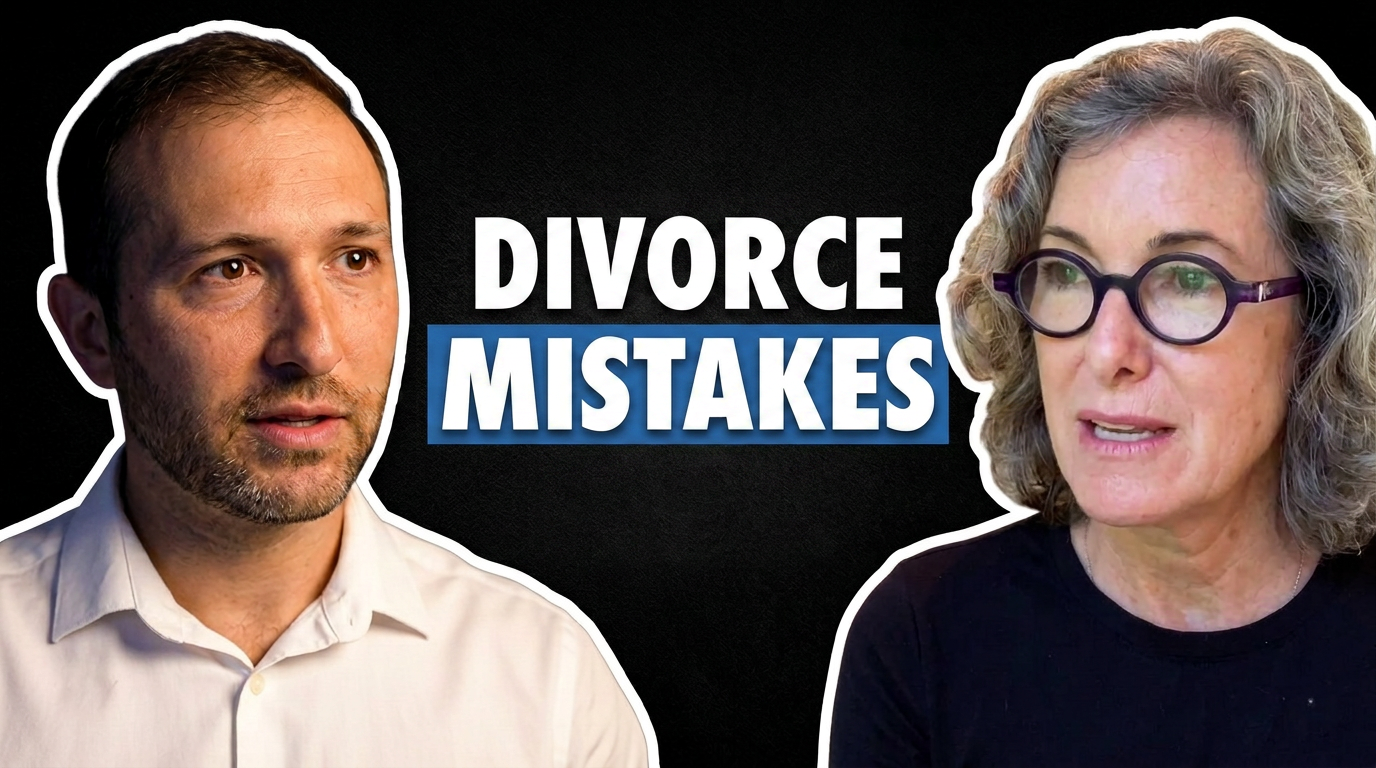
When Not to Listen to Your Parents About Love | 3 Callers from Broken Families #173


In this episode, I mentor three people LIVE through the problems they’re facing in their broken families:
One caller asks how to deal with a dad who avoids the reality of his divorce, and whether it’s his place to confront him or let that battle go.
Another asks a question people are afraid to say out loud: Can I actually heal? And if so, how does healing really happen?
And finally, a young woman opens up about starting her first relationship while watching her divorced parents repeat unhealthy patterns, and asks, “Who do I go to for relationship advice when my parents haven’t modeled a healthy relationship themselves?”
If you’ve ever felt torn, stuck, or unsure how to navigate the pain and dysfunction of your broken family, this episode is for you.
View details for Healing Retreat May 1-3 in Philly
Ask a question anonymously on the show
Get Dakota’s FREE Guide, The Biggest Fitness Mistakes to Avoid



Enjoy the show?
To be notified when new episodes go live, subscribe below.
As a bonus, you'll receive the first chapters from our book, It's Not Your Fault: A Practical Guide to Navigating the Pain and Problems from Your Parents' Divorce.
TRANSCRIPT
Transcript produced by artificial intelligence. Please pardon any errors!
speaker-0 (00:00)
Instead of an interview in this episode, I'll mentor three people live right here on the podcast who are facing problems that so many of us from broken families face. One caller asks how to deal with a dad who avoids the reality of his divorce and whether it's his place to confront him or maybe just let that battle go. Another asks a great question that so many of us are afraid to say out loud. Can I actually heal? And if so, how does healing really happen?
And finally, a young woman opens up about starting her first relationship while watching her divorced parents repeat the unhealthy patterns in their relationships. And she asks the question, like, who do I go to for relationship advice when my parents haven't been able to model a healthy relationship for me? And so if you've ever felt torn, stuck, or unsure how to navigate the pain and dysfunction of your broken family, this episode is for you. And with that, here's our first call.
Hey, welcome back. What, what can I help with?
speaker-1 (00:57)
Joey, it's good to see you again. I wanted to talk about my relationship with my dad and just kind of how to navigate living in reality with him. The fact that, yeah, my parents have been separated for five years. Legally, the divorce has been going on for five as well with no resolution quite yet. ⁓ And the previous time we talked, I mentioned my mom talks about it a lot, so I'm very aware on her end. But with my dad, it's the complete opposite. I don't ever hear.
anything about how the divorce is going for him. We don't use the word divorce. It's basically he's living his own life and my mom doesn't exist in it. And I think I just have a hard time navigating between these two extremes. Right one looping me in often and one pretending it's affecting the relationship. So yeah, with my dad, the things for contracts, like the things we talk about is like exercise, culture, reading, travel, work.
speaker-0 (01:50)
kind of surface level.
speaker-1 (01:51)
Yeah, very surface level. if that's the conversations we stick to, it's great. Like him and I get along well, we can engage in conversation. As soon as we go even one step deeper, it's just values are exploding and it doesn't go well, which is part of the reason I don't bring up this divorce in situation with mom and dad or anything familial. However, I'm finding it difficult in how that aligns with my values and how much I
emphasize the importance of having a healthy relationship with my parents, mom and dad. And so I don't want to be avoidant of the situation in the way my dad is being. So I just was curious what your take is on whether I would be in the right place to bring it up if I keep playing along with what my dad's doing. Yeah, I just don't have a lot of leeway or even foresight for that.
speaker-0 (02:40)
Yeah, no, it's a great question. And like I'd said before, it's man, it's so rough what you're going through. And I've been there and everyone listening, you know, has been through some sort of variation with us too. So we get you, you're not alone. I think it's a great question with, you know, a dad who, you know, maybe, yeah, just as ignoring kind of the reality of the problem of like your family falling apart and whatever role he played in it. Yeah, whatever behaviors that, you know, he's putting forth. And so I guess one of the questions is like, if things were to continue the way they are.
Like, why would that bother you? Is it just because he's being oblivious or is there something else to it?
speaker-1 (03:15)
I don't think he's being oblivious. think he, for as long as I've known him in my adult life, he avoids conflict. But I struggle with it because I hear so much from my mom's side of like what's said during the hearings or whatever legal terms actually happen in the court and all that. And yes, I hear like how he's treating my mom and kind of how he sounds like he really doesn't value time my mom spent.
to raise me and my brother. And so, yeah, just having that understanding, it really irritates me to think that he's living a certain lifestyle while not valuing my mom's time and sacrificing career in short and a livelihood for family. And then reach his out. Well, actually, he doesn't really reach out to me. I reach out to him. We have dinner and he's amiable and friendly and encouraging of my career and encouraging of my steps forward in life and whatnot. But inside I'm like, how can you?
Talk to me that way when you're mistreating my mom.
speaker-0 (04:13)
Got it. That makes sense. So you feel this need to stand up for your mom.
speaker-1 (04:17)
Yeah, that's a good way to put it.
speaker-0 (04:18)
Yeah. Which makes sense. Like you're defensive or especially cause you're hearing, know, what she's saying. and I get that. So I guess the question is like, is that your role? And if it is like, how do you go about doing it? ⁓ which, which is, I think a great question. I think one of the questions is important for you to think about. It's okay if you don't have an answer here is like, know, if you said something and if it went as perfectly well as you could imagine it would go, what would that look like? What would be the outcome? Like, what would be the result of that?
Have you thought about that at all?
speaker-1 (04:46)
Yeah, I mean, I daydream. The result of it is my dad taking ownership over his action to initiate the divorce and finalizing it. it's, from what I understand, the delays come from his end. it's both affecting, it's affecting them emotionally, but I'm also seeing it how it's affecting them physically, you know, as they age a little more. So for me, would just be maybe someone finally telling him what it is. I mean, the truth the situation and like, hey, you're not addressing need to finish this. Also, it's hurting everyone in the family.
maybe would lead to kicking him in the behind a little bit.
speaker-0 (05:18)
Everyone needs that from time to time. Okay. No, I totally am tracking with you. And I've been in these situations with my dad too, where we were kind of estranged from each other. Like we weren't talking and you know, where he was doing things I didn't agree with. And so I can share kind of what I did in that situation that we can maybe see if it's applicable here. So I remember at one point, I won't get into the specifics, but my dad was like acting out in a really horrible way during my parents divorce. And remember that even after divorce, and I remember.
feeling like if I were to continue my relationship with him like normal, you know, going out to eat like you had mentioned and seeing him here or there and of having normal conversations about like sports and life and whatever, I felt like I was kind of tacitly approving his behavior, kind of like pretending like it wasn't happening. And at one point, because it got so extreme, like it was pretty extreme, I felt that couldn't go on. And so what I decided to do was to write him a letter. in that letter, I said, you know, dad, I love you. I want a good relationship with you.
Here's what I've been observing that is a major problem for me. And because of that, like I can't keep going as long as you're acting this way. But as soon as I see that you've, you're changing, that you've changed, I'd be more than happy to restart or resume the relationship. I sent him that letter. didn't talk for a year and a half, but eventually his behavior did change. And once it changed, I was happy to start the relationship again, because I want a relationship with my dad.
And I think we all do at some level, even if our parents have hurt like we want a good relationship with them. And so that was my way of doing it. An ultimatum like that is Jocko Willink, the leadership expert Navy SEAL guy. He talks about it a lot and he says that an ultimatum is the last resort. It's something where a situation has gotten so you really have no other option but to do that so maybe it's not quite at that point in your situation, but that's what I had to do in that situation.
So I guess like in your situation, I totally get that the outcome is you want your dad to take ownership. You want the whole drama of this whole divorce legal proceeding, at least the legal proceeding side of it to be over with. And then there's also the side where you like want to kind of correct him for saying things about your mom that you feel aren't true based on what you've observed and everything, which I totally So I guess the one question I would ask is like, how do think he would react to you maybe having a conversation with him one or two, delivering that message in a more passive way, like a letter or an email?
Like what's his reaction?
speaker-1 (07:35)
The letter, I probably wouldn't get a response from him and it would just, I wouldn't know whether he wrote it or not. That's what I imagine. If I were to tell him in person, have had an ultimatum conversation with him before, not relating to my mom, just relating to him and I's relationship. think previously I mentioned if I went one step below or deeper than, know, everyday activities, no, he kept crossing that threshold. So essentially told him like, hey, if conversation leads past this.
type of conversation, I will end the call or like, I'm just going to create more distance. So I have told him this. So based on that data and how that went, my dad would play victim. He would pout about it then not talk to me for a long time.
speaker-0 (08:15)
Okay. So, so like, that's a likely outcome. And I think it's important to say that we hope our parents would act the way that we need them to, the way that maybe it would be virtuous and really wise, I think, to think back to like you just said, you know, what, what's the track record and what's the, and based on that, what's the likelihood. And I even like putting into percentage for myself of like, it's probably like a 5 % chance this goes well, or there's like, or in some, you know, better situations, like, yeah, there's like a 70 % chance that this is going to end.
pretty well. so you can kind of decide how you're going to act based on that. I think that's a reasonable thing to do. so him playing the victim, so again, like I know I said this in our last conversation, not your job to defend your mom in this sense. It's not your job to, know, kind of put your dad in his place. It's not your job to kind of convince him of how damaging the divorce is. Like I get why that's a desire. And I know you know this, I just want to remind you and everyone else listening that it's like, Hey,
This isn't your job. In fact, sometimes I think what can happen with us kids is like, we might even overestimate how much of an impact something we do will have. We think that, man, if I just said this thing or did this thing, it would fix the situation. When in reality, if you could, if you do that perfectly, like flawlessly, might not change much, unfortunately, because people have hard hearts. People don't want to change. People want to play the victim. even if you have the perfect solution, they might not do anything with it.
And so does that mean we should never try? No, I think we should, but I think it's more important to try to be and tactful and try to influence people as opposed to, you know, maybe trying, and then I'm not saying you're saying this, but sometimes our intuition is like that we want to like force people or get them to do what we want them to And so, yeah. So I think like, how do you go forward? So you mentioned a few different goals and all of this. And I would say one, showing him like how damaging it's been for you and you have siblings too, Okay. Yeah. So.
speaker-1 (09:59)
One brother, yeah.
speaker-0 (10:01)
showing him about that, like he can't really argue with your story. So if you haven't already, which it sounds like you might've, ⁓ you could convey like, Hey, here's why this has been so hard for me. And the thing that I would want at this is just for this to be over. That's one angle. And that's, and that's maybe like one battle and like, you don't fight the other battles right now. You just fight one battle at a Maybe that's the top priority battle. You go after that one and that's it.
Where it's more like, you know, do this for mom. He's not going to be motivated by that, unfortunately. Do this for yourself. Who knows. do it for me because this is hard. Maybe. I don't know. It seems like that might be more convincing. I'm a dad and if, you know, my kids told me something, I feel like, you know, I would at least take it to heart and consider it. So that's just one thought. And then, yeah. And then some of the other things where, yeah, just kind of, you know, it sounds like he's.
behaving a certain way that you don't agree with. think that's like, I'd mentioned them, the letter to my dad. think once you voice that and then you maybe cut them off, if it's so extreme or you limit and, you know, do what you've already done, which is saying like, if this happens, this consequence is going to go in place. And they're just doing that until you're nauseous, which is so annoying. I hate it. That's just of boundaries. And it comes to a point where if it continues on long enough, then it's like, okay.
Is it really wise for me to be investing in this relationship when it's maybe draining the life out of you, even if you want a good one? And then I think that's where, you like we were saying, an ultimatum might be appropriate. are a few things, but I would say I'd probably avoid, I know as hard as it is, cause I get that desire in you to like fight for your mom and defend her. I would probably avoid going down that would kind of let her do that. Let the attorneys do that. Let the court system do that.
They'll figure that out. It's not really your role. I remember talking with Father John Burns, who did his PhD on forgiveness. I'm like, what do you do with all the anger and hurt you feel? is there like scientific evidence that forgiveness is actually good for you? We talked about that in one of the episodes. We'll link to that in the show notes for everyone who's listening. Yeah. And one of the things that he says though is like, when it comes to situations of like injustice, typically it's best for a third party to bring about the justice.
Where it's like, if you were harmed, a third party, the police, the justice system will bring about the justice. It's not your role. It's not your job to do that. Now it doesn't mean you can't defend yourself. doesn't mean there might not be a situation where you like advocate for yourself. Different, not talking about that, but typically that third party I think is better. So that's kind of why I'm getting at what I'm getting at with like maybe let your mom fight that battle at her attorney's and all that kind of play out. Is that making sense so far?
speaker-1 (12:30)
Yes, it is. That's very helpful context. And I think just with self-reflection, know justice gets fired up in me pretty quickly.
speaker-0 (12:36)
Yeah, and that's a good thing. And again, it's more about like knowing which battles are yours to fight. then also when you know which battles are you're to fight, making sure you're winning the battle, but losing the war. Right? Where we're like putting everything in this one scenario, this one situation, just being right or convincing this person this or that, but then maybe like throwing everything else out the window, right? We're maybe betting too much. And I'm not saying you're doing that in this situation, but I think it's a helpful thing to kind of.
temper ourselves to think like, okay, I'm, you know, I want to win the war. I want to be prudent about which battles are mind defied. And I think this is probably not one of them. I, I know it's maybe a little bit of tough love, I just, I hear about you and I want to make sure that you're, you know, not spending yourself on something that maybe isn't yours to do.
speaker-1 (13:19)
Mm-hmm. No, that's helpful. And I mean, maybe at heart it's tough love, but it doesn't feel like that. I think it's affirming of what I've been doing, which is not doing what my natural inclination is, which is, you know, defend my mom for the sake of having a relationship with my dad that's more even keeled than previously.
speaker-0 (13:36)
Yeah, no, I get And, and, know, if you think it's appropriate, I know we talked about this idea of like conveying like your hurt and how it would be helpful to just finish this whole legal thing for you and for your brother, perhaps. one other thought is maybe offering like resources to your dad and perhaps you've done something like this, but the idea being that, um, if he's more responsive to emotion, to like stories, the book Primal Loss, which I think we've maybe talked about before, it just, features a 70 stories of.
adult children of divorce, really honestly and kind of it's a grueling book to get through. They just talk honestly about like, here's how my parents' divorce impacted me. Here's all the pain that I felt. Here's all the problems. Here are the problems that I faced. Here are the maybe good things that I didn't pursue or I gave up on in my life, whether it's a marriage or relationship or something because of a lot of the hurt that I experienced at home. so that's Primal Loss is a great book for that. And Leila Miller, we, who put the book together, she was the editor.
We interviewed her on it and we'll throw that link in the show notes if you guys want to check that out before perhaps diving into the book. That's one. The other one is if in the future where it's not ready yet, we finished the research on it, there's a book that we're putting together that's going to feature over a hundred peer reviewed studies. We're just going to summarize like over a hundred peer reviewed studies in like a one page format. So one page will say, this is the study on divorce and children of divorce. You know, here's the link. If you want to go look at it yourself, here are like the five to seven findings.
and things like that. You know, they studied this many people and this is what they found and all that. And that's more of a data-driven way. If he's more of like a numbers guy type that like that, then someone could see that and be like, man, there was a recent study that they did where they looked at children for 30 years. they found all these different things, children of divorce for 30 years, and they found all these different things. So sometimes people are more convinced by data than stories. So kind of knowing where he's at with that might be helpful to give him like this or that. So that book, unfortunately, is not out yet.
But there are some studies like the one I mentioned, which we'll link in the show notes as well, that could be helpful to kind of present as like, it's not just me, here's evidence, or it's not just me, here are other stories that are kind of heart wrenching that maybe would get him to think twice. But that might not just to be honest. And at the end of the day, you can only be responsible for yourself. And the only other book I'd mentioned, which I don't know if it would be appropriate or right for you to.
or smart to give it to him, but is Extreme Ownership by Jocko Willink. Have you read that book, Extreme Ownership? It's a great book. It's for anyone interested, it's written by two Navy SEALs, Jocko Willink and Leif Babin, who fought in the Middle East and their task unit, which is just like a, you know, a team of Navy SEALs was the most decorated task unit of the entire Iraqi operation over there.
And so, ⁓ they just share like leadership principles and the whole leadership principle. And it's not just for like people in business or in leadership positions, it's for all of us. The main thing they say that the characteristic, the virtue that is like most core to being a good leader is taking ownership, extreme ownership of yourself and everything in your environment. And so perhaps, especially if he's a business guy, that might encourage him to take more ownership in his own life. So that could be even a gift and you might not even like relate it to the situation. You might say, you know, here's a book that.
you know, I heard about or I read and I thought this might be helpful when it's a gift for your birthday, for Christmas, whatever.
speaker-1 (16:59)
Mm-hmm. Yeah, that might actually go over well.
speaker-0 (17:01)
Cool, yeah. And you're being more influential, you're being subtle, you're kind of trying to use those kind of diplomatic tactful tactics to get by maybe the heart exterior, which may or may not work. And it's a long game. That's the final thing I'll say is that with all of our parents, I think it's important that we remember that there's nothing we're going to do or say in one instant that's going to change them, change their hearts. It's over time. And by far, for those of us who are religious too, prayer and God's grace is the biggest thing that we can do.
it, you know, he can change them when we can. And we just don't have control over that or the timing of it. So that would be my last encouragement is just to be patient and don't be afraid to put those boundaries up and even take a step back if you need it.
speaker-1 (17:42)
Thank you so much for your time and advice. This is very helpful.
speaker-0 (17:45)
Yeah, no, I'm really glad and please keep me posted on how this plays out, okay?
If you're a young adult who comes from a divorced or broken family, I have a personal invitation for you. The Archdiocese of Philadelphia asked us to host a weekend healing retreat for young adults. That's anyone ages 18 to 39 who comes from a broken family, meaning your parents are divorced or separated.
Or maybe mom and dad stayed together, but they acted divorced. And so if that describes you and perhaps you experienced things like anxiety, habits, maybe that fear of repeating your parents' story, this retreat is for you. You're gonna walk away with really practical ways to heal, healthier ways to deal with your pain, and a real plan to build the kind of love and marriage that you did not see growing up. Everything that we'll be doing on the retreat is based on research, the church's wisdom, and expert...
built exercises. And so if that interests you, the retreat is May 1st through 3rd, that's Friday evening to Sunday morning. Instead of view details or register, just go to restoredministry.com slash affiliate or click the link in the show notes. We are almost out of seats. I think that's less than 10 seats at this recording. And so by the time you hear it, it might be even less. So the retreat center closes registration on Tuesday, April 28th. And so if you want to get in, just make sure to
grab your spot before they run out and before we hit that date. So hey, welcome to the show again. How can I help? How did you Because sometimes I feel like it is not possible to I'd to know from your experience, how did feel? It's a great question. And the first thing I would say is healing to me.
speaker-1 (19:05)
you here.
Maybe I will never
Do you?
speaker-0 (19:21)
is the process of becoming healthy and whole, to becoming functional. So I like to think of it in physical terms. I think of if I were to break my arm, right, I would go to the doctor, you I'd go to the hospital. They would maybe do an x-ray. They'd maybe give you some medicine for the pain. They would probably put a cast on my arm. And they do any number of actions that would help my arm to heal. And then eventually in time, my bone would heal, my, you know, arm would get healthier.
I would get the casts off, I would maybe do some therapy, I would regain strength, regain movement, regain function, and my arm would be healthy and whole again, at least to its fullest capacity. That's how I like to think of healing. The same needs to happen on an emotional level as well because these experiences we go through in our families that are wounding to us, they leave emotional wounds. They leave us feeling abandoned, they leave us feeling neglected, rejected, like all the things. And so when it comes to emotional healing, there's
there's any number of things you can do. And that's, think, the first principle is there's no silver bullet. There's no like, do this one thing and you will be healed. It's more like, do these series of things and you will become healthier and more whole. And so I love the quote, there's no silver bullet, there's only a hundred golden BBs, meaning there's a lot of little things you need to do. So I think starting out, one of the...
quotes that comes to mind is from Adam Young who hosts the awesome podcast, The Place We Find Ourselves. He says that when it comes to experiencing healing, naming how you've been harmed is about 70 % of the battle. So what is he saying? So essentially he means being able to reflect on your story, which he encourages people to do, to engage your story, he says, to think through what has happened in your life, all the people that have impacted you, all the different settings, the plot.
as if it were a story, as if it were a novel or a movie, we need to kind of think back in a constructive way on what happened. And when we do that, it's actually the start of healing because we put into words, oh, dad abandoned me here. He shouldn't have done that. It should have been different. He should have been present and loving and protective. He abandoned me. It should have been different. So we're putting language to it, or we can say, oh, my parents got divorced.
That was traumatic, that was hard, that overwhelmed me. And because of that, I suffered in this way and that way. And so we need to just start by being aware of it, by putting language to it, by putting into words, which sounds so simplistic, but that is the start of healing. from there, or one of the things I wanted to share, that act alone is healing. And that was helpful for me, by the way, you asked like, how have I found healing? That was helpful for me, just starting with like putting things into words.
In therapy, I did that with therapists over the years. I did that with friends. I did that with mentors who weren't technically therapists, in my case, spiritual directors. so what Adam Young says though, he quotes a neurobiologist who says that one measure of brain health is something called neural connectivity. So if you think of your brain as a web of neurons, the more connections between the webs, the healthier your brain is, the healthier you are.
Reflecting on your story, like I was saying, is actually healing on a neurobiological level because it neural connectivity, making your brain healthier, making you healthier. So that's one place to start. The second place that I would recommend that's was helpful for me is just sharing your story with someone else who could receive it with empathy. So you find someone who you trust, you find someone who you can share things with, who's not gonna judge you, who's not gonna dismiss you, who's not going to.
not really show any sort of empathy, but he's actually gonna listen. And that alone, again, according to this neurobiologist, is helpful and healing and makes your brain healthier because it increases neural connectivity. So that's one place to start. I've always found writing incredibly healing. There's a professor at University of Texas at Austin who wrote great books. His name's Professor James Pennbaker. He wrote books on how writing can be healing.
And so that was really helpful for me. I didn't follow his method originally because I didn't know about him, but we've done exercises with him and those are really helpful. They're like 20 minute exercises. You do four days in a row. So that's another healing tactic as well. But I think overall, the thing that's been most helpful and healing for me, in addition to some of these other things I mentioned, is just my mentor relationships. So my relationship with these mentors, whether they were just, usually it was a man, sometimes it was like a teacher or a coach or...
someone in my life who had some other role, but they were able to step into this role of being a mentor for me. in college, especially, had just amazing men come around me and guide me and give me advice and love me and just affirm me as a man. Because especially as a man, I needed to be affirmed in my masculinity. I needed to be told like, you're a man, you're good enough, you have what it takes, you're strong, all those things. Women need something similar. They need a good father figure in their life to love them and tell them they're beautiful and enough and all of that. And then, you know,
Women obviously need women in their life too to kind of show them how to be a full woman, a beautiful woman, a strong woman, all those good things. So anyway, I would say the mentors though have been like the most thing. And part of the reason for that is because when we're wounded, when we go through trauma in life, at the root of that is a deprivation or a distortion of love, a deprivation or distortion of love. And so naturally the antidote to our wounds is experiencing love, authentic love.
especially in these mentor relationships, but it can also be with your friends and other people like that. So those are a few things that have been really helpful in healing. And then, you know, for people who are religious, I would say, I know not everyone's maybe open to this, but it's been helpful for me, is just our relationship with God. Grace is God's life within you, within your soul, and grace helps you to do good and avoid evil. It helps you to heal on so many levels because it kind of helps you to take the things that are out of order within you and put them into right order.
And there's different ways to get grace. That's maybe another topic for another time, but just having that relationship with God can, you know, He gives you His life, He gives you His grace. And that for me has been incredibly helpful in healing, especially when I, you know, would kind of bring to Him all my pain and my brokenness. He was there for me as well. So those are a few things I would say, but it's certainly a big question, something that's worth, you exploring more. And I would say therapy or mentorship though is probably the biggest thing that I would recommend. And yeah, the, ⁓
the partnership that we have with the Catholic Psych, catholicsych.com slash apply. ⁓ you can get like 10 % off if you use the discount code restored 24 restored 24. And that's a great way to find someone who we trust, who's really well trained to walk with you. So is that helpful? So helpful. Awesome. Awesome. Well, it's good to talk with you and, I, yeah, you'll have to let me know how things are going, but it's a great question. Thank you. Okay. Real talk. If you've been trying to get in shape so you feel better physically and emotionally, but nothing is working, you're not.
speaker-1 (25:57)
Yeah, yeah, yeah.
speaker-0 (26:11)
I've been there myself. recently read a free guide by Dakota Lane, a certified personal trainer who we've partnered with that's helped about a thousand people. And it was really helpful for me personally. In the guide, he breaks down the biggest fitness mistakes that we all make like under eating, over stressing, or focusing too much on the scale. And he gives really simple practical tips that you could actually use that you can implement today.
And so if you're tired of feeling like you're never going to get in shape, just click on the link in the show notes and grab the guide today. It's totally free and it might just be the thing you need to start feeling healthier physically and emotionally. Hey, it's really good to be talking with you. How could I help today? Thanks.
speaker-1 (26:46)
So I'm in my late twenties and my parents got divorced in my late teens. They had been married all my life before then. They got remarried to other people about two years after they divorced. kind of throughout their marriages, I noticed kind of a lot of the dysfunctional patterns that they had in their first marriage with each other kind of continuing. A few months ago also, I just started my first relationship. So wondering.
I guess considering that I have concerns about, you know, how my parents are with their own relationships, how should I go about getting advice from them regarding my current relationship?
speaker-0 (27:24)
This is a tricky one. I think there's two ways to answer it. On one end, people have the perspective, like never take advice from someone who hasn't been where you want to go. So don't go to a poor person asking them how to be wealthy. Don't go to someone who's completely out of shape and ask them how to be fit. You want to go to people who've done what you want to do in order to like learn how they did it. So, you know, if you see someone
Anyone, even, you know, I know we're talking about your parents here who has like really unhealthy relationships and you want your romantic relationship now to be healthy. They might not be the best people to learn from. And I don't say that with harshness against them. In fact, they might even say that to you if you were to have like a really honest conversation with them. But, but that's one perspective. So the question becomes then who do you go to? And that's when I think it's really, really key. What I've found really helpful and a lot of people that I've talked with through Resort have found this helpful too.
Find a family that you admire, that you would want to emulate. You want your marriage to be like their marriage, spend time with them. Which sounds simple, but I think there's sometimes some struggles to get to that point. But that's what I would say. And for me, there were two couples, I just loved being with their family, I loved being with them. They really were an inspiration for me, because I really doubted that love could last. Especially after my parents' marriage ended, I was like this, even if marriage and love is good for a time.
I'm like, eventually it's going to fall apart. Like I do not want anything to do with that then. But in time, you know, when I saw these really beautiful couples who they didn't have perfect relationships, but they had really healthy relationships and they really happy relationships, happy marriages. I was like, man, I want that. And just by observing their, their marriage, the way they interacted, the way they disagree, the way that they, you know, would ask questions and just, you know, look at each other and like all the little things. It even kind of created a little bit of an example to follow.
It was almost like a little bit of an apprenticeship in love, which I think is really beautiful. So I think that's like really great. can be hard to find those families because there's not a ton of like really thriving, great, healthy families, depending on what circles you run in. But I found across the board, it's hard to find them. And so do you have anyone in mind who might be able to be kind of that mentor family for you?
speaker-1 (29:39)
I mean a few people. Up until now, while I might ask my parents some things, I do have some cousins that I might go to for advice about certain things. And then also because I'm living in a different city, same as my boyfriend who lives here, we do have like different maybe members at church who we can go to for advice or like things like that.
speaker-0 (30:00)
Great. I love that. And I love that you mentioned church. I think that's a great way to find these sort of mentors. I know for me too, I found them through different relationships. Like I remember some of my professors at school, I got along with them while I looked up to them. They seemed to have really good families. So would try to ask them advice. So I think, yeah, that's great. And one of the things I would advise there, and I'm glad you have people in your corner, but if there's a family who you maybe admire at church or somewhere else, start by getting to know them maybe at church.
you know, say hi to them, you know, ask obviously how they're doing, things like that. And then if you can, you know, there's a couple of ways to approach it. One is to like, maybe ask for you to ask like the mom, the woman to say, you know, Hey, I really admire you and your family. I'd love to get some advice for you. Would you be open to like, you know, sitting down and having coffee sometime? That's it. So you build that relationship with like the, the, the mom. And then maybe over time, you know, you kind of build a relationship with the family where you can go over.
And you can maybe help out with a project around the house. You can maybe babysit the kids or do something like that. Go over for dinner, maybe even bring dinner, something like that, where you kind of just spending time in their presence. And like, honestly, for me, that was just incredibly helpful and healing. I don't think I'd be married today for over seven years now, if it wasn't for those families that I mentioned. I really believe that. And so I think this is like, it can be so, so helpful, at least it was for me. And so that's it. it's, and you know, I think.
Finding out how to be helpful. Families have busy lives. They don't have a lot of time and space for like extra things, but people don't mind giving advice. People like giving advice. And so sitting down with someone like that, I think it'd be really good. And then maybe even, you know, trying to have a meal or something like that with them. and then in time, you know, once you get that level of comfort, perhaps I don't, you you don't have to go down this route. You can maybe even ask the married couple to like mentor you.
to kind of help you guys as a couple. Maybe you meet with them once a month or something like that. And you just bring to them like the reality of your relationships. Like, hey, you know, here's our relationship. Here's where we're strong. Here's where we're weak. You know, this is where we want to go and whatever, you know, this is maybe some of the things that are keeping us from getting, you know, getting married or whatever. And my wife and I did that and it was really helpful. We had a mentor who, you know, knew everything about our relationship and he was able to guide us and even help us kind of.
Um, figure out if we were the right fit to get married. And so I think, I think that's like really, really helpful. Now I know it's like a lot of steps to get to that point. So, you know, I would recommend if there's someone at church who you admire, you look up to, just try to get to know them more, grab coffee and see where it goes. What do you think about that?
speaker-1 (32:27)
I think that sounds helpful because I think up until now the issue that I've been running into is that I have people but I haven't had that level of closeness where I felt comfortable say going to them rather than going to my parents who I felt like were people who knew me quite well.
speaker-0 (32:44)
And there's nothing wrong with that. And that was the second part of the answer, which I want to get to in a second. But first, I totally get that. And I think it is a little bit of a leap because not everyone will be open to it. I don't think you're going to, especially if you're approaching someone at church, they're probably going to be cordial and likely going to be, you know, open to having a coffee and, having a chat. It takes a little bit of vulnerability. And I know for me growing up, vulnerability wasn't something that was like, you know, I could tell you, it seems like you're a vulnerable person, like you're able to open up to people and that's great.
For me, it wasn't like that. I felt like in my family, we kept things kind of safe and on the surface. And so having a conversations where you're kind of like opening your heart up was not a normal thing. Eventually it became more normal because my siblings and I would do it and it, you know, we had friends who kind of influenced that and it was really good, but it wasn't a normal thing. So I actually had to learn how to do that. I had to learn how to, you know, approach people and be like, Hey, I'd love to get your advice. And again, people love giving advice. So when you say that, use that word advice. There's actually research on this from.
Robert Cialdini, who's studied like influence. Um, he says, if you ask people for advice, like you actually will then have more influence over them, which is a really interesting thing. so anyway, people typically are really open to, giving advice. So I think that's a great starting point of like, you know, figuring out a time you can sit down and have coffee to get some advice. And then, you know, kind of like we're doing this conversation, you present, Hey, here's the situation. Here's the problem I'm facing. Um, I'm feeling a little lost and I'd love to get some of your guidance here and then, you know, let them go.
Let them see what they have to say and see if it's helpful. And if it is, then maybe you meet again. And if it's not, then that's okay. At least you had the practice of like opening up a little bit to someone and maybe you find another person who's a better fit for you. So yeah, so that's kind of one end of it is like learning how to be more vulnerable. And I think again, kind of like we were saying before, when it comes to that conversation ⁓ with your mom, you kind of got to risk it. You kind of have to put your neck out there.
And, you know, maybe be rejected. I don't think you'd be rejected in this situation, but maybe be rejected or maybe and not go perfectly like you want it to, but just realize like, Hey, that's just, this is just practice. Like I'm just learning how to do this thing. I'm not going to be perfect at it at first. And that's okay. ⁓ so, so that's kind of what I would say on that front, but I wanted to get to the second part of the answer, which is like approaching your parents for, ⁓ advice too, which I'm not against. I just wanted to give this first part. Is that helpful in any other questions on the first part? No.
speaker-1 (35:04)
think that makes sense with that first part.
speaker-0 (35:07)
Is there anyone you could think of in particular, even beyond just maybe generally like at church who you could maybe approach? And that's okay if not, I'm just curious.
speaker-1 (35:15)
I mean, I think between my family members and church, that's kind of the main ones that come to mind. Beyond that, it might take more looking into or maybe even asking my boyfriend, because I know he has connections and people he knows as well.
speaker-0 (35:28)
Great. I love that. That's really wise. And yeah, like I was saying before too, it might take some time of like getting to know people and that's okay. You know, a lot of times when it comes to like church or school or things, it just means spending more time around them. So it's like, you know, after church, having more conversations, putting yourself out there a little bit, going to other events, things like that. Then you get to know people a little bit more. And through that, maybe you'll find someone who can be a bit of a mentor. So that's that. Okay. The second part of the answer is, you know, the first part is kind of like,
don't necessarily go to your parents for advice because, know, unless you, I'm not saying you're going to end up getting divorced if you go to advice from divorced people, but it's kind of the whole idea of like, you want to go to people who've had success in the area that you're seeking for success. Sorry if that sounded harsh, genuine, that's not what I intended. The second part I'm saying is like, I think you can go to your mom or dad for advice and relationships. I think you need to be, you know, again, if they had kind of like a train wreck of a marriage and there weren't a lot of great examples.
You might learn more from their mistakes than you would from the things that you should be doing, if that makes sense, or the things that they did. And so I think there's, you know, like one of the lessons I've heard from a lot of parents is like, they say like, yeah, I really didn't discern well whether I should have married this person. You know, there were like all these red flags. I kind of kept them to myself. I didn't tell anyone about them. Or if anyone brought them up, I kind of brushed them off. didn't really give them the attention that they deserve. We ended up getting married and now we're divorced.
And so I think there's like some powerful lessons that can come from quote unquote failure or, you know, a bad relationship and unhealthy relationship. And so I think there is something to be said to, you know, going to mom or dad and seeking that advice. ⁓ When it comes, there's another component of it too, that I would say is healthy or is really helpful is that they know you so well. And so they can speak into a little bit at least about maybe how they think, you know, you guys are together.
I remember in some of my relationships in the past, I could tell my mom like didn't quite approve of the girl I was with. Not because she was like, wasn't a good girl, but because I just didn't think that we went well together. And then I remember once I started dating my wife, it was like a totally different tone with my mom. Like I noticed like she was, you know, just talked about her differently. She acted around her differently and it seemed to be like, okay, there's something here. She, she said it with words too, but there was something kind of like even nonverbal that I understood like, okay, she, she thinks this is the right fit.
And so, so I think there's a lot to be said on those two fronts, maybe learning from their mistakes and then also kind of pulling upon the wisdom that they have because they've known you your whole life. He's known you as long as you've had been you and no one else really knows you as long as you've been you. Is that ringing true? Is that helpful?
speaker-1 (38:07)
So I mean, I think kind of what I've been doing a bit already is whenever I do ask for advice or they do give me advice, I feel like I tend to just kind of, I don't know, take it with a grain of salt like filter. Like, what do I think is good from this apart from negative? And I think also they are aware of kind of their own mistakes in a sense. Like my mom will talk about things that she felt like could have gone better with my dad or, you know, like you said, red flags or.
My dad will talk about with his second marriage, things that, you know, he feels like if he hadn't known, maybe then he wouldn't have gone into that marriage.
speaker-0 (38:45)
That's super valuable. I love that. And I think you're wise to take anyone's, including mine, anyone's advice with a grain of salt and kind of filtering it through, you know, what you think is best.
speaker-1 (38:57)
Yes, thank you so much for, you know, taking the time to listen and talk through things.
speaker-0 (39:02)
Absolutely, my pleasure and yeah, definitely feel free to come back and let us know how it went.
speaker-1 (39:06)
sure thing.
speaker-0 (39:10)
That wraps up this episode. you'd like to call and ask a question on the show, just go to restoredministry.com slash ask or click the link in the show notes. How it works at the moment is that once you submit your question, we'll review it. And once my team approves, you'll get a link to schedule a time to do a call with me. We'll jump on that call for 15, 20 minutes. Your face and your name will not be shown. Only your voice will be heard. So you'll be anonymous. And again, you can ask your question by going to restoredministry.com slash ask or just by clicking the link.
Lastly, as you've heard, we wanted to invite you to our weekend retreat in Philly, May 1st to 3rd. Spots are limited, we're actually almost out of spots, but you can go to restoredministry.com slash Philly for details or click the link in the show notes, whether it's for you or someone you know. And if this podcast has helped you, feel free to rate or review the show and make sure to subscribe. You'll avoid missing future episodes and help us reach more people too. And in closing, always remember you are not doomed to repeat your family's dysfunction. You can break that cycle.
and build a better life and we are here to help and keep in mind the words of C.S. Lewis who said, you can't go back and change the beginning, but you can start where you are and change the ending.
You may have entered adulthood without ever seeing what healthy conflict looks like. But avoiding conflict isn’t the answer. In fact, healthy conflict can be one of the main ways couples build trust. Adam breaks down the practical relationship skills many people never learned growing up.