


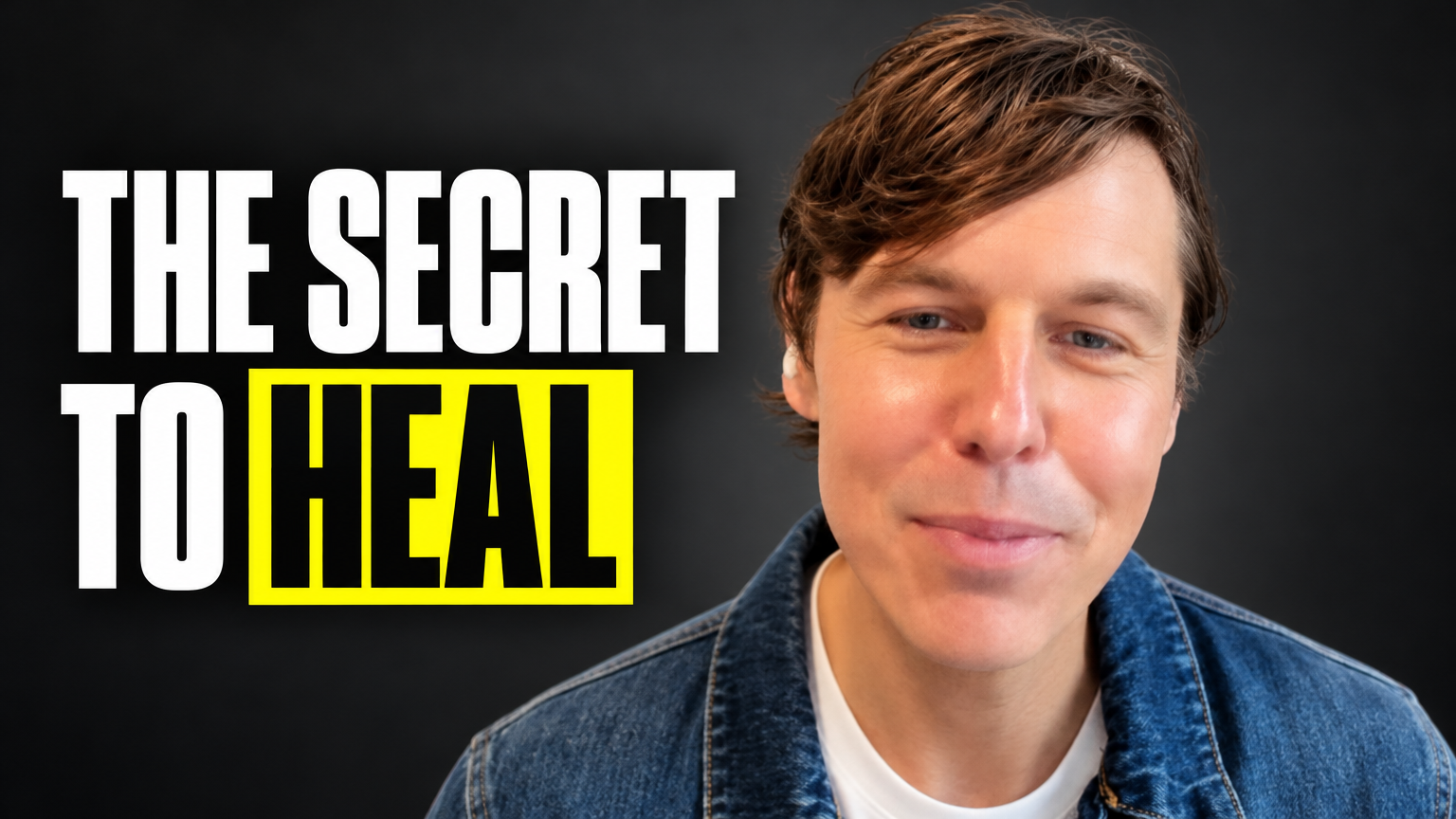
What if the secret to breaking bad habits isn't trying harder, but healing the pain underneath them?
Whether you're struggling with pornography, drinking, or other unwanted behaviors, you've probably tried to stop. But despite your best efforts, you keep falling into the same patterns. Why?
In this episode, psychotherapist and author Jay Stringer explains why willpower alone often isn't enough, how childhood wounds shape our behaviors, and why treating yourself with kindness may be the missing piece to lasting change.
You'll learn:
Why trying harder often doesn't work
What your bad habits might reveal about your past
How shame keeps you trapped in destructive patterns
Practical ways to handle difficult emotions without escaping them
How to heal your wounds and break the cycle of family dysfunction
Jay also shares how you can become a transitional character—someone who breaks destructive patterns inherited from their family and builds a healthier future for the next generation.
If you're tired of repeating the same mistakes, struggling with shame, or afraid of becoming like your parents, this episode is for you.
RESOURCES




Enjoy the show?
To be notified when new episodes go live, subscribe below.
As a bonus, you'll receive the first chapters from our book, It's Not Your Fault: A Practical Guide to Navigating the Pain and Problems from Your Parents' Divorce.
TRANSCRIPT
Transcript produced by artificial intelligence. Please pardon any errors!
Joey Pontarelli (00:00)
Jay, welcome to the show, man. Great to have you.
Jay Stringer (00:01)
Joey, it's good to be here. Thank you for having me.
Joey Pontarelli (00:04)
I was reading your book. One of things that hit me the most is that I think you put your finger on a problem that most people don't know that they have. And so what I want to do in this conversation is to illuminate the problems that people have as it relates to desire and then offer them a path to healing and freedom. And so my first question, what problems do most people face related to desire?
Jay Stringer (00:25)
Yeah. So part of what I started grappling with is just it my sense is that most of us are living in something of a civil war with our relationship to desire. So if we are talking about our lives, we will say, like, I love my kids, or I love my job, or I love my spouse, or I love this community that I'm part of. So on one hand, desire is responsible for all the most, you know.
Beautiful, best, remarkable things in our lives. And yet, if we are honest, desire is also responsible for all the worst things in our lives. And so, you know, desire can lead you to a particular partner that creates just madness and havoc in your life. It can lead you to a job that you feel like you are in a dead end with. Desire can lead you to alcoholism, to greed, to
porn to a lot of those types of unwanted behavior. So, you know, just think about that. Like, what do we do with the madness of on one hand, desire is the most beautiful aspect of my life. And at the same time, desire seems to be responsible for all the ill, all the misery, all the madness that I'm in. And then compounding all of that is you can grow up in a certain faith tradition that will tell you like your heart is deceitfully wicked.
Do not trust it. And then also this God of the universe wants to give you the desires of your heart. And so you're like, what am I supposed to do with these competing messages? And so then we become adults. And, you know, we may have grown up in families that said, don't trust your desire. Uh, that will, you know, set you up to be greedy or very selfish or God forbid, like sexual. And then
You know, a lot of, you know, the progressive sound bites are, you know, what is it that you want to do with this one wild and precious life that you've been given? And I love that quote from the poet Mary Oliver. It's a profound question. But no one is teaching us how to want, uh, to help us discern why do we want what we want to begin with. And so it's that sense of like I'm gonna eat, pray, love my way through life and try and like live my best life, but I'm not.
intentionally forming my desires. I'm not interrogating them in a healthy way. And I don't really have a sense of how to bring these desires and this mysterious force within me to a place of connection, purpose, and love. So that's a lot. But all that to say, that's what I kept finding is desire will turn you into the best version of yourself. Desire will also turn you into the worst version of yourself. And in response to that, we're like,
Ah, I don't want to let desire get too out of control that I fly to the sun and burn up. But I also, if I'm not engaging desire, something in my soul will become depressed. And so most of us live with that sense of I don't want this getting out of control. I also don't want to feel dead inside. I I'll pick a happy medium. No,
Joey Pontarelli (03:32)
Hmm.
Jay Stringer (03:33)
and then we end up calling that our lives. So
Joey Pontarelli (03:36)
Right, right. And it hit me as you were speaking and reading through the book is that like no one teaches us how to navigate desire. Like it's such a big topic. It's such a an obviously an emotional one, something like you said, it can lead to great good or great evil or bad. Um, and so yeah, we're like truly lost. Like I don't know about you, but like growing up, I didn't receive any sort of like training, formation, like guidance in this area.
Jay Stringer (03:58)
Zero. Yep. Yeah. And I I mean we internalize uh so much of just kind of like what can a family have, can it not have? So I grew up in a ministry family and my dad was a pastor. And you know, my parents never said we are in a lot of financial stress and therefore you should not pursue desires for different products or different meals. But I just intuitively knew.
Like when I would walk into a Chili's, that was like we okay, wow, we're going to a Chili's restaurant. Like there is a server. This is not Taco Bell. but I knew when I was looking at the menu, there was this, uh, maybe they still have it. It's been a while since I've been to a Chili's, but you know, there was the old timer. And then there was the old timer with cheese. And back in 1993, or when I was 10, I remember thinking that.
Old timer with cheese is an extra 25 cents or 30 cents. I'm not gonna order my burger with cheese to be able to save my family money. And so that sense of there was such a scarcity with regard to what I could order, what I could want even at a restaurant. And so that basically framed a lot of that sense of I can't really get what I want in public, but maybe I can get what I want kind of in a secretive way.
And so uh yeah, it sometimes we're not overtly taught. It's just kind of in the water. It's something of what's in the inheritance with regard to where all the stuff comes from.
Joey Pontarelli (05:35)
Yeah, no, I totally can see that. Like a lot of it's unspoken, what I hear you saying. And I remember that even especially as it relates to sexual desire, which I know we're gonna get into a little bit later, but there was kind of this dichotomy of like there was an openness in my family, at least with my mom, talking about sex and sexual desire. But there also was like this kind of level of maybe prudishness or like skepticism of sexual desire. And that was a lot for like a 10, 11 year old kid to wrestle with. And then, you know, you add in puberty through like
those later years and it it just it becomes a lot. So I think th this is a huge topic. It's a very important topic. But yeah, any thoughts on that before we move on about the the second
Jay Stringer (06:13)
I mean, my sense has always been like learning about sex in a Christian family or in the church is a little bit like going to a culinary school that will only teach you about salmonella and then they expect a masterpiece. So it's like, Yeah, we're gonna tell you what not to do and we're gonna kinda give you some warnings. But then like when you get married, sex is just gonna be incredible. And and it's like, Nope. Uh turns out
That is not true. And so, you know, one of the heartbreaking realities that we looked at in the latest round of research is we wanted to see like which people had the highest levels of sex education. Because if you knew how to talk about what you sexually enjoyed, like all of us have the sexual accelerator and a sexual break. So that sense of things that turn us on, things that are like, nope, that's repellent. I don't want more of that.
But all of us need some level of fluency with regard to what we enjoy sexually and also the things that uh we don't want. And so part of what we found is that the people who knew how to talk about what they enjoyed sexually with their spouses were about 19 times more likely to have a really good sex life just from being able to talk.
Effectively about this. But then we also looked at, you know, who were the people who had the highest levels of sex education by the time they graduated high school? And I was really intrigued as to what we might find. And here's what we found: those who had the highest levels of sexual abuse had the highest sex education scores. And to me, I just wanted to weep and rage at that finding of why is it?
that what should be one of the best places to learn about your body, to learn about sex, to learn about desire, which I would say is church, family, it is not the place that's discipling our kids. It's far more realities like childhood sexual abuse, realities like pornography are
Where people are learning about sex. And that is maddening to me. Uh, Harvard University did a study a couple of years ago just asking 18 to 25 year olds, like, do you wish you had more conversations with your parents, your mom and your dad about sex? And like 75% answered yes. So this is something that kids are longing for. They're wanting, but they're not getting. And so just that sense of learning about Salmonella.
Learning all the bad things that you're not supposed to do is just such a setup for sexual misery and dysfunction later on in life.
Joey Pontarelli (08:59)
Totally. And I've I've seen it with a lot of, you know, good Christian couples where they save sex for marriage, like maybe they, you know, made some mistakes or whatever. Um, but they were able to save sex for marriage and they get into marriage and they expect like a fli a switch to flip. And the wedding night is not the beautiful thing that they expected it to be. And then there's just a lot of struggle going forward, but then they feel ashamed and so they don't talk to anyone, they kinda hide it. And as a result, it just leads to a lot of like hidden struggle, which again, no one really sees. And so I think you put your finger on something that's
Just just so huge. And on the kind of topic of like sexual formation, I think some people hearing this will probably be tempted to think, so you're a proponent of promiscuity. And of course I laugh at that because it's like, no, no, those things are not the same. Like we can give someone a good sexual formation, teach them about their bodies, like about sex, without encourage them to go experiment. Any thoughts on that?
Jay Stringer (09:50)
Yeah, like one of the things that I learned from a sex therapist was, you know, when you are 13 years of age as an adolescent boy, you have something like think of like one of those miniature shot glasses worth of testosterone in your system. By the time you reach the age of 15, that's a pint glass. So there is a 20x increase in testosterone between the ages of 13 and 15. Now
When I was growing up, I went to a Southern Baptist high school in Virginia uh while going through puberty. It's not an experience that I would recommend. And so part of what happened in that particular Baptist school was sometime around the age of 14 or 15, all these adolescent boys started having unspoken prayer requests. And at my 20-year high school reunion, we were joking about like what was your unspoken prayer requests?
And virtually everybody, you know, uh at the guys at the table were like, yeah, it was all lust, it was all masturbation related. And again, part of what happened in at least the evangelical communities that I was part of was that men began to conflate sexual arousal with lust and sin. And this thing that this is gonna be a battle that I'm gonna have to be militant throughout my life. And then some of the best selling books in the space.
Well, actually tell wives, if your husband is struggling with porn, present your body as a merciful vial of methadone to him. And so you know, just the sense of so many men were conditioned to conflate arousal and sin together. Feel all the sense of I'm an addict and this is always going to be my struggle. And then as you put well, you get married. And if you've been struggling with porn.
How are you not going to relate to your spouse in a very pornified way? Which is, you need to be available for me, you need to help me fall asleep, you need to be there for me in sickness and in health. And it sets up so much abuse within a marriage. But then that same reality for women is they were conditioned to not just stay pure, but also keep.
People from lust. So you need to dress in a particular way, engage people in a particular way that you will not cause them to stumble. And then just that madness of now you need to go from being, you know, very sexually reserved to this sexual vixen and just be enticing and arousing. And it's like, how is that supposed to happen? And you're supposed to present your body as a uh methadone.
To your husband, lest he stumble. And so it's like, how are you not going to have massive desire problems in the midst of that as you just navigate so much of just kind of really harmful teachings that have been discipled into you? Uh, and so that's where I think just for you know, if you're in a marriage that is struggling.
Sometimes people feel like my marriage is just completely broken because we have low desire, high desire, desire discrepancies. We have all of this debris. And part of where I'm sitting as a psychotherapist is to say, yes, there's some marriages that seem really broken and are broken. It could be from domestic violence, it could be from some level of infidelity. But in most marriages with a baseline of safety,
When your marriage feels maddening, when your marriage feels broken, I would say your marriage is doing exactly what marriages are designed to do, which is to show you uh just all of the inheritance that you have been given that's not productive. Because a lot of times we think that we end up in our marriage as a blank slate. And it's like, nope, sorry. Uh the marriage bedroom is the noisiest room in the entire house. Like your porn history.
Your abuse history, your family dysfunction, divorce, separation, heartache, hopes, madness, all of that is going to be in the bedroom space. And we need to be able to say, like, when marriage feels really difficult and hard, your marriage is working by design to flush all that stuff that you likely haven't dealt with into the foreground so that you can actually begin to engage it.
So not saying it's easy by any stretch of the imagination, but the relationships and the sexual difficulties that we face are they're human-making machines. They expose, they reveal the things that we need to confront in our lives, in our past, in our relationship. And if you can allow the revelation of those difficulties to emerge without contempt or without shame, uh, you will put yourself and your marriage in a position.
To grow beyond anything that you thought possible
Joey Pontarelli (14:54)
Possible. Let's go deeper there. So people are hearing this and they're thinking, like, okay, I can recognize, especially in this sexual realm, how my relationship with desire, sexual desire is not healthy, is problematic. But they may be left thinking, like, it's feels so overwhelming. Like you said, there's so much to untangle. There's so many problems. I don't even know where to start. And so where do they start if they're kind of faced with this?
Again, tangled mess of desire. If your parents divorce and it's shattered your world, I have an invite for you. We're building a new healing program for young adults impacted by their parents' divorce or family dysfunction. In the program, you'll start healing those emotional wounds, practice healthier ways to deal with your difficult emotions, and learn how to build the happy, healthy marriage you never saw growing up. We're intentionally keeping it small so spots will be limited. Join the wait list or view the details now.
Jay Stringer (15:47)
So I mean, let's say there's this notion of a high desire partner and a low desire partner. Uh in every marriage, we'll have a high desire partner and a low desire partner. And the low desire partner determines the frequency of sex. That doesn't mean that it's dysfunctional. It just means that someone wants more, someone wants less. So if we were to take this to another category outside of sex, like just think about like social interaction.
In my marriage, I am the low desire uh social community partner. So when I was getting ordained as a minister, I had to go through this battery of tests with a with the denomination psychologist. So I get done with my testing and you know, a couple days later, it's you get the email like your results are in, you need to review these with the psychologist.
So he sits down and he says, Jay, we have one primary area of concern for you. And I said, Okay, just one. Uh what is this? And he said, I want you to take a look at this. Like you are literally off the charts. And I said, What am I looking at? And he said, You have the lowest need for socialization of
Any ministerial candidate that has ever come through this denomination. And so I was like, I actually feel so loved, so seen in this dynamic. Uh, and so it that that sense of it could be my trauma history, it could be from spending a lot of my time alone. Um, but I am an introvert, the chief among in introverts. That sense of renewal from me comes from.
Being alone, kind of feeling that sense of recharge. My wife, however, loves social interaction. Some of the latest neuroscience on introvert, extrovert is that it's much more like satiety levels, similar to hunger, that an extrovert needs more hits of social interaction to feel socially full. An introvert can kind of like I can have one good conversation with a dear friend, and I'm like,
I'm a camel in the desert for the next three months and I'm happy. Um, but my all that to say, I'm the low desire partner for friendships, for let's go out to dinner with these friends, let's get together with this couple, let's get together with this family. I'm like, nope, I'll go to Central Park with my own blanket, maybe with my family. And my wife wants like 10 blankets and lots of friends there.
So my low desire will determine the frequency of how long and how much time we spend with friends. Her high desire, like whenever I'm on the road traveling, speaking to, you know, a church, an archdiocese, a community, uh, I will call my wife and inevitably I'll be like, What are you up to tonight? And she's like, I'm cleaning the apartment. why? we're having people over.
And again, waiting for me to leave. So that sense of she's high desire, I'm low desire. And that we can go through that as long as I don't pathologize her high desire and she doesn't always pathologize my low desire. But there should be some sense of, yeah, each one has a shadow side to it. But
If we were to come back to that with sexually, everybody's going to have a high desire and a low desire. And the high desire can sometimes feel a level of entitlement. Their shadow side is that they can do things behind their spouse's back and they feel very justified because it's like, hey, if I'm not going to get this to the degree that I want.
The low desire partner uh can kind of just feel like they are always being badgered. They can be a little bit more hidden from time to time. But if you are in a marriage where someone is always, you know, what I say in my headship or what I want needs to be what you want. And I have the the tyrant rule with regard to what we do with our finances, what we do with our social life, what we do with every aspect of our life.
Sometimes that low desire is revealing like this is a level of protest. And if I can't say no, then I can't truly say yes. So if I can't say no without you turning to contempt or to shame, I'm not fully free to be able to say yes. And so that would just be one example of sometimes the sexual difficulty or the low desire is revelatory of.
A problem in the marriage, a problem in the other partner where they feel pretty entitled. And so that sense of low desire is not something pathological in that sense. It is the clarion call. It's making something known about the marriage system. Uh one last example would just be, you know, working with a client that had, you know, just more premature ejaculation. And part of what he was working through in clinical treatment was he just berates himself.
For the problems in his sexual life. And so not present to his spouse, just like always yelling at himself for like finishing too early, always upset with himself. And so as we started doing some story work, much longer of a story than I could get into in this podcast, but essentially his dad was always at his sporting events, yelling at him on the sidelines of basketball, like box out, protect the plate.
And if he did really well and hit like eight of ten free throws and didn't miss too many layups, his dad was there and supporting him, praising him. But then if he like struck out twice, he remembered his dad just leaving the field and he had to find his own way home. So unbeknownst to him, the athletic field just turned into the marital bedroom space. And so that sense of a father and a a man that was constantly berating him, yelling at him.
That became something of his inner voice. And so that sexual problem that was a real problem in his marriage highlighted for him all these themes in his life that he hadn't addressed. And so, in that respect, sex was doing exactly what sex does, which is to reveal your anxiety levels, your trauma history, some of the difficulties and knowing how to do intimacy or not. So
That's where I'm just always a big believer that whatever the symptom that you're facing is, whether it's like really mediocre sex, that you don't enjoy, a sexual dysfunction, depression, anxiety, like the symptoms of our lives are telling the truth about something. And we don't like symptoms. We always try and get like, you know, what's the men's health article that I need to read to be able to stop this thing? What's the
You know, medication that I need to be able to confront this thing. And again, medication has a time and a place, but we are always recruiting a third. We're always recruiting something on the outside to deal with what feels broken or disturbed inside of us. And we've got to start seeing that our symptoms are the profits. Our symptoms are the thing that are telling the truth about our lives.
Joey Pontarelli (23:14)
So good. And what I'm hearing you say is that there's this degree of honesty that we have to have. I think it's it is fascinating that so often when we're facing problems like you described, whether it's in our sexual life or or a non sexual area of our life related to desire where there's problems, because I know your book goes into far more than just the sexual realm. I think we're not very honest about it. It's kind of fascinating. Like we might somewhat face it or
see it, but we're not very honest about it. And so being honest about it, articulating it and clear words, I I see so much value in that from what you're saying too. And then like you said, seeing it as an opportunity uh for growth instead of like uh an inhibition to growth. Like it's actually a path that you can get better and stronger. And there's so many examples of that in other areas of life too. But so often I think we see it as like, nope, it's just a stumbling block. It's something that I won't be able to overcome. So on that note, I wanted to get your thoughts on this idea of like out
Growing problems with desire. I know there's there's this idea of healing. And then what I've heard you talk about, and please correct me if I'm wrong, is like this idea of outgrowing. So I found this quote from Carl Jung that goes like this. He said, All the greatest and most important problems of life are fundamentally insoluble, like can't be solved. They can never be solved, but only outgrown. What do you think? oh
Jay Stringer (24:29)
It. Yep. I mean, part of what I just went to was some of John and Julie Gottman's research on marriage, where it's like 69% of your marital problems are not solvable. maybe they're saying the traits in your partner that you are upset by just are not gonna change. So that there's going to be a sense of yeah, the these things can't necessarily be solved. I think part of what
I would say is yeah, these things need to be outgrown. So, I mean, if you think about, you know, there's this concept called a window of tolerance. And so it was framed by this brilliant man by the name of Dan Siegel. And so basically think about like a parallel uh lines, and in the middle would be what's called the green zone or the window of tolerance. And that's where the flex the self is flexible.
It's adaptive. It's kind of like, yes, this is such a beautiful fall day. I love my life. I like who I am. That's all green zone. Red zone is when you get fight or flight. It's when you get really irritable. Blood pressure goes up, heart rate goes up. Like you are ready to fight the tiger. You're ready to run away from it. And then we have something called the blue zone, which is hypoarousal. And that's the place of paralysis, depression, just kind of feeling stuck.
And so one of the things that often happens for people that are struggling with an unwanted behavior is that their window of tolerance for distress and anxiety is very small. So let's say you grew up in a very broken family and you were really stressed about algebra or you were really stressed about that bully at school, but you had a a mother that was working a second job and wasn't home.
When you got home and you had no one that could bear witness to that tension. Or worse, you had a mother or father that were the source of your dysregulation. Well, where are you going to go to be able to solve some of the problems of your life? Well, you're gonna recruit a substance, a screen, a another person, a hookup when you're in high school to be able to deal with something of that problem. But then the problem.
The solution to the problem becomes the problem that you deal with later on in life. And that's the madness of what we're dealing with. But part of what I would say is like your family of origin had a very narrow window of tolerance for distress. So every time you feel distressed, you fly to something else to rescue you. You get really irritable, you get really tense, you get really scared, or you get really depressed. And it's in the midst of that.
That you are doing a lot of what you're doing. So, you know, things like porn, things like alcoholism, things like screens, they appeal to people who have a very narrow window of tolerance, meaning when they hit difficulty, they don't know how to self-soothe. They don't know how to regulate themselves without an orgasm, without some.
you know, destructive behavior. And so one of the best gifts that you can give to yourself and to others is to learn how to increase that window of tolerance of I'm going through difficulty and I need to learn how to self-soothe. I've never had a good relationship to be able to teach me how to self-soothe.
And so, yes, we need to grieve the wounds of our past, but the way that those wounds are healed is through our adult commitment to tend and to care for our adult selves differently. And that's what I don't really see happening with maturity. But all that to say, that's how you outgrow it. You don't just try and stop doing something. You ask, how can I become the type of person that doesn't need to outsource a solution?
Because I actually enjoy being with myself. So one example of that would be, you know, had a client that if he would wake up alone in the middle of the night, that's when he would get looking at pornography or the 1-900 numbers historically. And so part of what he needed to do at two or three in the morning was to write poetry. And he started writing really crappy poetry. Um, but eventually.
As he stuck with it and he got more into his internal experience, he befriended that place of loneliness. And so some of the great Catholic writers, Rollheiser, will talk about how do we move from a place of loneliness to solitude? And that's what he was able to do. He woke up feeling alone. He woke up feeling disconnected. And that was always that window of tolerance shrank. He begot really anxious, went to porn.
But now he's waking up and he's creating a spaciousness of I want to see myself. I want to feel these feelings, but I also want to bring language to some of the heartache, to some of the separation. And I'm gonna attend to this reality differently. And over the course of about four or five months, he outgrew his need for porn. Why? Because he built a sense of self that was able to like.
bear witness to the pain, to the heartache, and not need to outsource that. So that movement from loneliness to solitude is how you outgrow so many patterns. uh But we are in a day and age where we're like, I don't want to be alone and I need community and I need this thing and I need distractions all the time. And we never learn how to really fully be with ourselves in a way that like I actually enjoy spending time alone.
This is where creativity comes from. This is where grief and tears come from. So uh outgrowing these difficulties, I would just say is so crucial and such a good framework, especially if you've just tried a lot of like, I'm gonna try and do this cold turkey, I'm gonna stop this thing. Uh, I bless that defiance, but as most people know all too well, saying you're just gonna stop it doesn't really work.
Joey Pontarelli (30:40)
Yeah, I remember in Unwanted, you said like it's like trying to dam the Mississippi. It's like good luck. Yeah. The dam might hold for a little bit, but it's not gonna hold for long. And no, so good. It that's such like an authentic. Like I love the line you said, he outgrew his need for porn. Beautiful. Like really beautiful. That's there there's so much hope in that. And I I like that better than like you said, the white knuckling. And I think um even I don't know, there's so much here I want to say, but when it comes to this window of tolerance.
kind of double clicking on that a little bit, it seems like the core skill there, I hear you saying, is like emotional regulation. So someone who didn't learn that growing up, like you mentioned one example of it. Like what are some ways, what are maybe like the best tip or a few tips that you can give that they can use today to start learning how to regulate their emotions better if they don't know how to do that. Mm-hmm
Jay Stringer (31:27)
Yeah, couple of things come to mind. So we have a region of our brain called the AMCC. It's the anterior mid cingulate cortex. And what we have found is that that grows every time you do something that you don't want to do. So if you enjoy cold plunging, it's not going to grow. But if you hate it, um, it will grow. Uh so you know, a lot of times in this day and age, we have a lot of desire for personal growth.
That's all about optimization. It's all about like, how do I get my sleep scores up? How do I get, you know, the perfect ratio of whatever that might be, macronutrients into my own body, like everything is optimization these days. But I think about doing things that you don't want to do, not just as like David Goggin's stuff where you're trying to run yourself into misery, but just also like this healing work.
can be really miserable, like to turn and face your past, to turn and confront the difficulties in your life. Like I don't like having to do it. Whenever I'm really cornered, it's usually against my will where it's like, fine, it's it's about time that I reconcile, you know, any number of difficulties that my life has known. I don't like doing it. But anytime I do that,
The AMCC grows. And what the neuroscientists are saying is that's probably where the will to live is located in the brain. Uh, who knows if that will continue to be true? But you've got to put yourself in a position where it's like, I don't wanna be doing this, meaning healing, growth, but I know that the cost of growth is gonna be some level of pain and difficulty. So, you know, a lot of people that are struggling with unwanted behaviors like alcoholism.
You name what it is, there's a lot of anxiety about moving into a new place in their career, having the conversation that they need to have with a loved one. And so if you're not embracing anxiety and tolerating anxiety, you're always going to find some way to relieve something of that tension. So do something you don't want to do.
But super practically, you know, University of Michigan did some really interesting tests on cortisol stress inside of your spit. And what they found was that people that went for a walk for 20 minutes in a green space in a town or a city had significantly less cortisol in their spit after 20 minutes. You definitely got more benefits if you were outside for like two or three hours, but the most significant
Significant benefits came from 20 minutes. And so that's just, you know, if you are out of your window of tolerance, stress, like go for a walk. I remember many times kind of coming into, you know, I might have a difficult day at work, a lot of stuff with clients, or just really like a crappy day internally where I don't enjoy myself, a lot of shame, a lot of contempt. And so if I am not.
aware of my window of tolerance, I'm gonna bring all of that in for my family to have to deal with or for my friends to have to deal with. So just being able to recognize I'm not in a good place right now. I I'm in a place of a lot of difficulty. I'm in a place of a lot of misery. And what would kindness look like? What would hospitality look like for me? So last story would just be it
It's hard to be able to know fully how to talk about this in a succinct way. It could be a whole episode, but I have been in my own kind of midlife chrysalis. I wouldn't say it's a crisis. I don't feel like I'm close to self-sabotage and blowing anything major up in my life, but there has just been I I've been in a season of heartache, a lot of pain, a lot of just feeling like there is death at work inside of me and not fully understanding where does all this come from.
have a a new book that was released and kind of all the creative hopes and all the creative disappointments of what a book project can be. And so during the midst of that time, just struggling a lot internally, and my brother in law uh got me a facial
at a very expensive spa in the upper west side in manhattan and i knew how much he had spent on it and it was well over 200 like and so for me as old timer with cheese like 30 cents extra like can't do it this was like i no i i cannot go into a spa and you know with a tip this thing's gonna be over three hundred dollars and i just was fighting it
But eventually, you know, submitted, knew that he had bought it for me. And I went in. And this woman you know, steams your face, asks you kind of some great questions. Uh, but then she begins to like make this like manuka honey mixture that's like warm, and she just starts covering my face in this mixture. And I just start sobbing, like tears that I have not.
Cried in that intensity for like years. And it was like the most kind, soothing thing that I could ever imagine undergoing at that particular point. So way too much backstory there. But I have lived in a civil war with my own shame in my own face and bringing my face to the world. And so when she brought kindness to my face.
It was like, I am unprepared for this. I fought it. I didn't want to receive it. But then when I actually allowed some level of kindness to come, something was restored. Something was changed inside of me. And so that was just be like an example of like, do you know how to restore your body and your soul? And maybe it's a really expensive massage or facial. It could also be like listening to Vivaldi Bach.
And just allowing your heart and your body to be present to the four seasons and just allowing your body to be calm. So that's really, you know, when you think about like a psalm like 131, the psalmist says, My eyes are not haughty. I don't concern myself with things too great or wonderful for me, but I have stilled and quieted my soul, like a wean child is my soul within me.
So what's he saying? I could go into the red zone, I could go into the blue zone, but I know how to wean my soul. Like a wean child is my soul within me. So psalmist in the midst of all the red, blue in the world knows how to find the green zone. And all of us have to be able to offer that to ourselves.
Joey Pontarelli (38:21)
If you know someone whose parents are separated or divorced, or maybe they're in the middle of the process right now, you probably want to help, but you're not quite sure what to do or say in order to help them. And if so, you're not alone. It's a really common struggle. That's why we created our free guide, 10 tips to help someone whose parents are separating or divorcing. It offers really practical, tactical things that you can do or say to help them and especially to help them feel less alone, the top things to avoid saying or doing that might cause harm, and then what they need the most from you.
During this time. But most of all, the guide helps you feel competent and confident in offering help. And so get the free guide at restoredministry.com slash ten tips, restored ministry.com slash ten tips, either the number or the letters, or just click on the link in the show notes. So good. I I've walked with people where, you know, at times they may feel intense desire to do s some behavior that they don't want, especially in the sexual realm. And one piece of advice that they've found helpful is like buy yourself a good meal.
Like if you're if you're really in a situation of temptation, like there's something going on within you that's causing you to, you know, want to act out in that way. And like, what if you just went and bought yourself a steak dinner? And like how how soothing and and it works. It's it was is the wild thing. Like what what I've heard what been reported back to me, and I've used that in certain situations too. And so there's something about that, like that idea of being hospitable to yourself as opposed to just like you said before with the a client that you had who would just beat the crap out of himself or even like wanting the thing. It's like, no, there's something
good underneath all of that. And that's one of the takeaways I've had from your book too. Is like even these like maybe dark desires that we have, there's something under them that that is good.
Jay Stringer (39:54)
Mm-hmm. Yeah. And I think, I mean, to that point, I think our deeper war is far more with beauty than it is with something of dark behavior. And that, you know, just it is so easy as a therapist to hear people bring in, here's where I'm failing my kids, here's where I'm failing at my job, here's where I have sexually failed, here's where I have failed in any category. But you ask them to encounter how lovely they are.
How beautiful they are, and they will run for the hills. They will come up with every excuse possible so that you will not see something good and beautiful about who they are. So, one of the things that I have loved from a dear friend of mine, mentor is a guy by the name of Dan Alender, uh, says this about repentance. He says, Repentance is turning to the party that God is throwing in your honor. So wow.
And it's what you just said with regard to that steak dinner. So, you know, part of Luke 15 is a cliffhanger. We don't know if the older brother is going to join the party or not. It's not just about these like premarital sex and difficulties that the prodigal son is doing. It's like it's it's not about that. It's it's far more about like what's gonna happen to this older brother? Will he join the party or not? But we're all invited.
To join a party. And we all have reasons to resist it, whether it's our own pride, whether it's our own past failures. But the God of the universe is throwing us a party. And you ask people to dance, to enjoy good food, good drink, and they will always come up with reasons for why they don't deserve it, why they shouldn't have it. And so, yeah, the more kindness, the more sense of like we
We need to embrace this party. We need to really grapple with, you know, it for me, it's that sense of I had such a hard time just having Manuka honey on my face. What is it gonna be like when Jesus wants to wash my feet, to restore my soul, to be able to see, like it's gonna be so unbelievably unnerving. Like the sinews inside of me are going to protest.
This is way too much. So, you know, just being able to anticipate goodness, being able to, you know, most people struggle with this seesaw between deprivation and entitlement. So you deprive yourself of good meals, of going to the doctor, of time, of Sabbath to restore yourself because you don't feel like you have the time. You need to prioritize your company, your family, other people. So you're on this deprivation seesaw. And then every once in a while it tips.
And you feel entitled because I've been so good, I've been sacrificial. And then you look at that behavior that you felt really entitled to. And then you're like, see, my desires are selfish, can't trust them. And then you go back to deprivation. And that's the seesaw that I see a lot of my clients on is deprivation is normal. And then every once in a while the entitlement proves that their desires can't be trusted. But back to your point like, what's your favorite stake? Um
Go and suffer a good stake when you're feeling like crap about yourself and allow it to be something of an appetizer for what you will one day experience when God throws you a party and says, Welcome home. It's it's it's unnerving.
Joey Pontarelli (43:30)
So good, so good. Yeah. And for the record, Longhorn has a decent stake that's not too expensive. So you don't have to go like top top end, like premium. But on that note, I know we're close to the end of our time. You just made me think of this beautiful quote by C. S. Lewis that I think hits on this idea that like, man, we're far more afraid of like encountering beauty and facing like maybe the greatness within us. He said this. He said, It would seem that our Lord finds our desires not too strong.
But too weak. We are half hearted creatures, fooling about with drink and sex and ambition when infinite joy is offered us, like an ignorant child who wants to go on making mud pies in a slum because he cannot imagine what is meant by the offer of a holiday at the sea. We are far too easily pleased.
Jay Stringer (44:16)
So good. Yeah. I mean, I've heard that line 30 times and it it's always so good. Like I remember, I forget which band was talking about it, but it's like, you know, when you go into a concert and you just hear the same song. And it's like that's what you're waiting for when you walk in, is like, yeah, I've heard it 20 times, 30 times, but it's always so good. And that quote from Lewis is like my going into a concert where it's like, I yeah, thank you for reading that. I could hear that all over again.
Because it's yeah, I I don't think we have a full sense of how much desire can bring us if we actually honored it. And I know it's not necessarily theologically accurate in terms of the exegesis, but you know, it that the notion of the parable, the talents. What are the master's harshest words to those that bury their talents? So for from where I'm sitting, God has put
Desires inside of our hearts for a holiday at sea, for beauty, for goodness, for creativity, for entrepreneurial risk, for baking, for artistry, to, you know, become something of what Dr. Broderick would refer to as a transitional character, which is, you know, someone who in a single generation changes the entire course of a lineage because they filter out all the
poison, all the destructiveness of their own family of origin so that their kids and future generations can be restored. There are desires inside of us for beauty, to be a transitional character, to be an artist, to be fully alive. And yet what do we do with a life? We bury them. We deprive them. And I think the master's harshest words are going to be to those of us who never really chose to cultivate
Our desires. So I think that's the big pivot that I would love to see people make is your desires are some of the most beautiful things about you, but you probably don't see it that way. And so this latest book, Desire, is a lot about sex, but it's I walk through these five desires, which is a desire for wholeness, which is all about uh, you know, developing a longing to heal your story, a desire for personal growth.
Which is all about, you know, how do you differentiate? How do you become a person that you actually respect yourself and enjoy? because if you get into intimacy and you don't like yourself and you're requiring your partner or your friends to like you and you hate yourself, they're in something of a hostage situation. So developing, you know.
Good growth, but then most of us never had a model for intimacy in our own family of origin. So we arrive at the stage of any relationship, friendship, marriage, colleagues, just underdevelop. So intimacy is a desire that we have to develop and learn the skill for. And then eventually sexual pleasure that we've talked a lot about on this episode. And then that sense of like what's the desire for meaning and purpose in your life?
And that's what we found in the research is the people who were flourishing in life, like that looked at their life, their relationships, their work, and they really enjoyed who they were and who they were part of and what organizations they were part of. They in some ways had all five of those desires. It wasn't like a la carte menu options where I'm gonna care a lot about, you know, meaning and purpose in my life and do great things for the kingdom or great things for our nation.
And then let my marriage implode. It was people that said, no, we're going to address all five of these desires. And you know, you can't do it necessarily all at once, but that you need to be thinking about them as like a five-course meal. That if you want to build a life that you don't need to escape from, but far more enjoy your life, you need to develop these five desires.
Joey Pontarelli (48:13)
So good. I love it. And yeah, I've really enjoyed the book. And so thank you for writing it. And again, I think it's a problem that everyone has, but we don't really know we have. And so you're helping us confront it, put language to it, like really understand it so that we can find freedom and just a a new horizon of like growth and joy and beauty like like you described. So we'll put the link in the show notes if you guys want to pick up the book. It's I I highly recommend it. And where else can people find follow you online? And then I had one final question.
Jay Stringer (48:42)
Yeah. you can find me at Jay Dash Stringer.com or Instagram is Jay underscore stringer underscore the reason why the hyphens and the dashes. There's another J Stringer that's a British crime fiction novelist that beat me to all the social handles.
but if you go to my website, I would start there. And you know, there's information about intensives. Uh we have turned in all the research into self-assessments. And so if you want to take like a desire self-assessment to see where am I over-indexed and where am I underdeveloped, it's a great instrument that will kind of tell you.
Like these are the desires that are really strong in your life. Let's build on them. But here's the desires that are weakest inside of you. And if you could strengthen these, you would be able to resolve some of the problems of your life. Uh and then we also have the SBSA, which is, you know, helps you to understand your own sexual mind. So instead of just saying no and stopping something, the sexual behavior self-assessment's gonna help you to understand like the key drivers of that behavior.
So that if you're really interested in renewing your mind and not just not being conformed to the patterns of this world, but really renewing your mind, it's gonna be a roadmap to how to do that. So, you know, there's books, there's resources, courses, intensive. So there's a feast there if you want it.
Joey Pontarelli (50:07)
So good. So good. Um, so good to have you on. I've benefited so much. Desire is like air. We don't talk about it or think about it, but it's very necessary. And we have to do that relation if we wanna if we wanna live life to the fullest. So I want to give you the final word. What final few words would you say to everyone listening, especially to a young person maybe who is afraid of repeating their parents' story because they came from a super broken family and they desire that love and marriage one day that maybe they didn't see growing up. Love it.
Jay Stringer (50:35)
I mean, let me I talked about this uh about the transitional character, but let me pull up the exact quote and read it.
Joey Pontarelli (50:42)
Alright.
Jay Stringer (50:43)
So this is from Dr. Broadrick on a transitional character, a person who, in a single generation, changes the entire course of a lineage, who somehow finds a way to metabolize the poison and refuse to pass it on to their children. They break the mold.
Their contribution to humanity is to filter the destructiveness out of their own lineage so that the generations downstream will have a supportive foundation upon which to build protective lives. And so to me, that's such a beautiful high calling of adulthood, is all of us have inherited certain poison, certain destructiveness from our own family of origin, from many generations before.
And so one of the reasons why we do this healing, why we do this work is not just for our own benefit. It's not just for our own sense of integrity and that our lives would go a little bit better. It's we are filtering out poison and destructiveness so that our kids, but also our cities have a better foundation upon which to build their lives. So I think we need to take seriously that, you know, this stuff of healing and growth.
can be profound. So I think far more to those people that we're speaking to right now, it's like kindness to you, courage to you as you become a transitional character in your lineage.
Joey Pontarelli (52:20)
That wraps up this episode. If this podcast has helped you, feel free to subscribe and rate or review the show. You'll avoid missing future episodes and help us reach more people. And in closing, always remember you are not doomed to repeat your family's dysfunction. You can break that cycle and build a better life. And we are here to help. And keep in mind the words of C.S. Lewis who said, You can't go back and change the beginning, but you can start where you are and change the ending.

If you grew up in a broken or dysfunctional family, you may have entered adulthood without ever seeing what healthy conflict looks like. But avoiding conflict isn’t the answer.