
His Mom Cheated. Here’s How He Forgave Her and His Stepdad | Michael Comstock #185


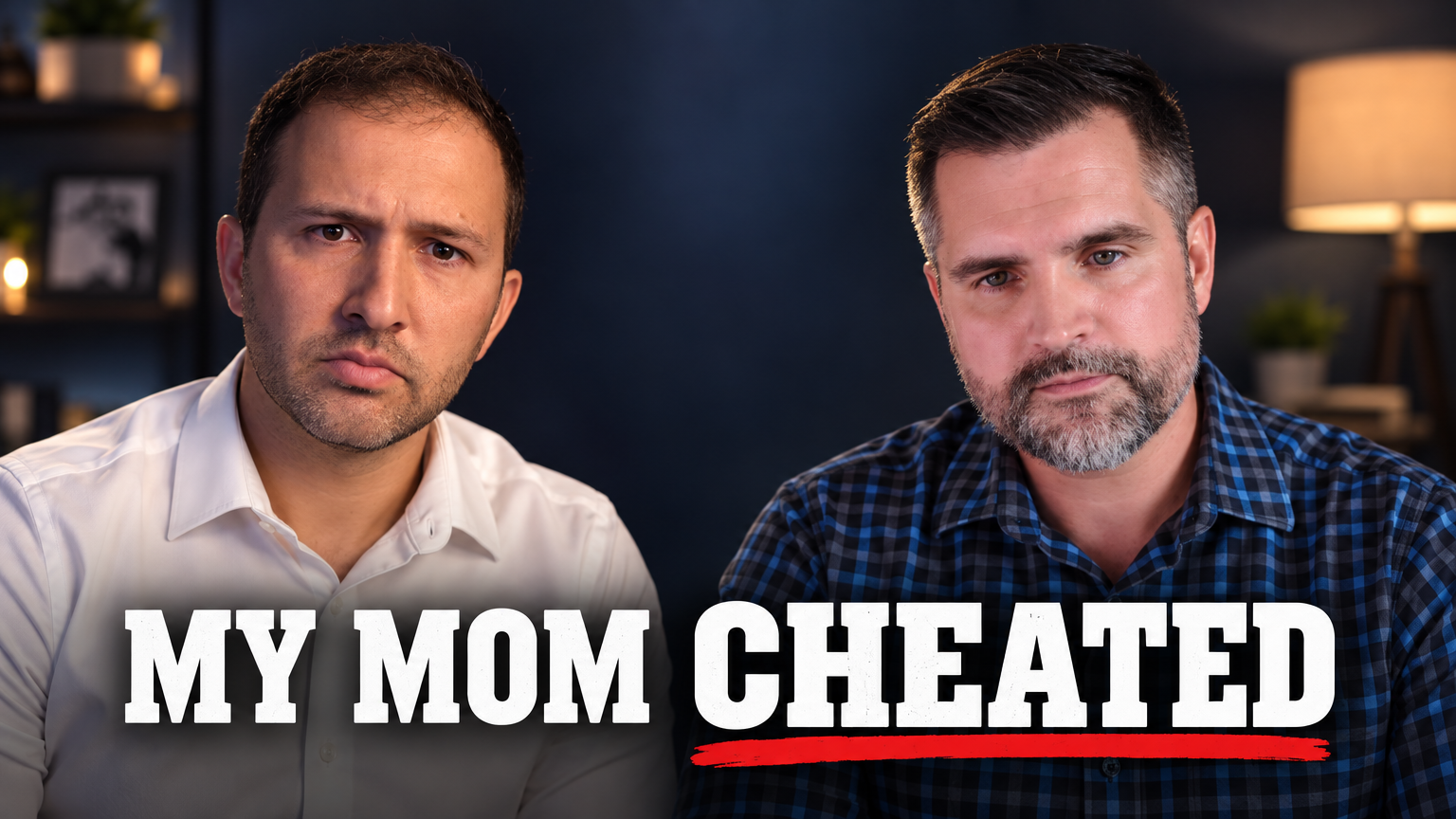
When Michael Comstock was 17, he discovered that his mom was having an affair. The betrayal didn’t just affect his parents’ marriage—it shattered his sense of safety, trust, and family.
Years later, Michael realized the fallout was still affecting him. He struggled to trust women, sabotaged relationships, feared marriage, and wondered if he was doomed to repeat his parents’ story.
In this episode, we talk about:
Why a parent’s affair can feel like a betrayal of the children too
How divorce wounds can surface years later in dating and relationships
Why Michael felt guilty building a relationship with his stepfather
What helped him forgive his mom and stepfather without excusing what happened
How he went from fearing marriage to becoming a husband and father
If your parent cheated, if you struggle with anger or trust because of what happened in your family, or if you’re afraid you’ll repeat your parents’ mistakes, this episode is for you.
Resources:
If your parents’ divorce or family dysfunction has hurt you and you want to build a healthier future, learn more about Restored’s healing program for young adults:
https://restoredministry.com/program
You can also anonymously share your story with Restored:
https://restoredministry.com/story


Enjoy the show?
To be notified when new episodes go live, subscribe below.
As a bonus, you'll receive the first chapters from our book, It's Not Your Fault: A Practical Guide to Navigating the Pain and Problems from Your Parents' Divorce.
TRANSCRIPT
Transcript produced by artificial intelligence. Please pardon any errors!
Joey (00:00)
Michael, so good to have you on the show, man. I've been looking forward to this.
Michael (00:02)
Hey Joey. Thanks for having me. It's great to be here.
Joey (00:04)
Yeah, no, it's it's been so cool to know you for so long and to see you transform and your story, you know, evolve. I know that things were not easy for you growing up and eventually got to the point, like so many people listening right now, where you learned that an affair had torn your family apart. And so if you would take me back to that Friday night when you were seventeen, what happened? Yeah.
Michael (00:25)
Absolutely. So it was really just like any other night, any other day in high school. I was a junior. I was at home by myself. My mom and dad were somewhere. They were out of the house. But randomly my sister and brother in law showed up. My sister is about twelve years older than me. So I was seventeen at the time. I was kind of living in my own bubble. I was oblivious to to anything going on. But my sister came over because she had some just some suspicions that my mom was acting funny.
And just some comments, I guess, that she was making that just seemed a little fishy. So they came over to kind of do some some digging. And, you know, what happened was they went downstairs and they went on my mom's work computer and found some emails that had been deleted. Basically found an email exchange between her and another man. And I was kind of outside the room. I was kind of peeking in. Once they realized the nature of the conversations
And how sensitive they were. My brother in law was like trying to get me out of the room. Once it once it hit me, once once I realized like this is not a normal conversation and it it's like it kinda hit me like a ten of ton of bricks. I remember I basically collapsed. I basically passed out on the ground right right there at the bottom of the stairs. It was kinda like one of those like out of body experiences where it just felt like time just stood still, like froze. And I just I guess I was a I was just in complete shock, right?
like type A trauma right then and there. And I just remember hearing screaming and the screaming was coming from me. But like I wasn't really I just I was so disembodied from like what was actually happening. But so then later that night, you know, my sister took me in that night. I stayed the night at her house. I remember crying myself to sleep. And it's also probably important to note that I was on the wrestling team
You know, and I had wrestled I think this was my eighth year of wrestling. So it was you know, I was pretty good at the time. the next morning I had a big tournament, so it was kind of getting close to the state tournament and I had high hopes of going far into the tournament, but because of what had happened that night and the current state I was in, I remember just calling the coach and basically calling in sick and saying, like, I can't I can't go. And that actually turned out to be the very last I would
I would never wrestle again after that. So that was really yeah, that it ended my season and then I remember like next year when I wrestling came around the corner, you know, my coaches were trying to get me to go out and I think just the connection to that night just really ruined that sport for me. So yeah. So that was really kind of that night, how it how it unfolded.
Joey (03:09)
So it totally hit you out of the blue, like you would know even though your sister had some in inkling that something was going on, you didn't have any at all. Is that right?
Michael (03:17)
Absolutely.
Yeah, completely blindsided. Completely blindsided. You know, my parents were very involved in the community, very involved with my high school. The house I grew up in, that was the house all my friends, you know, came over to hang out. so you know, if you were to ask, you know, my friends growing up, you know, my parents were the last parents they would think of, like something like this would happen. And at that point they had been married, you know, close to thirty seven, thirty eight years, so a long time.
Joey (03:44)
Men, so so devastating. And one of the things, Michael, we've heard a lot from people who've been in similar situations to you where, you know, mom or dad cheat on the other, is that obviously the other spouse feels betrayed, but the kids do too. It feels like very much so a betrayal, like you're cheating on the kid as well. d did you feel that? Did you have that experience?
Michael (04:04)
I did. I did. I felt so I had a very close relationship with my mom, you know, before all this happened. And the betrayal was felt not just by me, but by my brother, by my sister, by everyone in the family. And you know, our family was very, very close. We used to have these Sunday Sunday night gatherings. We would when my brother, my sister, their families would come over to my parents, we would have pizza, play cards, watch TV, watch movies, and took family vacations growing up. So
In a sense, it was like we had such a good family. We had such a good thing going. Why did you do this? Why did you do this to us? why did you introduce this this man into our lives that we didn't ask for? Why and why did you really intentionally break up the family, break up what we had? So it did s it did seem like a huge betrayal.
Joey (04:55)
and I I could see why. I definitely think anyone in your shoes would feel the exact same way. Those are incredible questions that you asked to whatever degree you're comfortable sharing. Have you had a chance to find any answers to those really difficult questions?
Michael (05:09)
Somewhat. you know, in the in the direct aftermath of, you know, that night, the months the months following, you know, I kept a lot of that hidden inside me. I never, you know, I never reached out to anybody. I never even spoke about it with my own brother and sister. It was something I just kept private. You know, looking back at their marriage and just, you know, looking back and finding out like what I observed. Like, yeah, there's definitely things that my dad probably could have done better as a husband.
I think there was maybe a lack of quality time there. And perhaps that was you know, my mom's number one love language, and maybe he just wasn't quite meeting that need. The way I understand it was that this man that was introduced, that this man that that my mom was having the affair with was a childhood friend of hers. And they grew up in the same same area, same town as as children. Somehow they reconnected later in life, and then one thing led to another. And so
Maybe my mom wasn't completely happy in the marriage leading up to this, but when she reconnected with this man, that was obviously the catalyst for for getting that ball rolling and, you know, everything else following after that.
Joey (06:17)
Yeah, man. So devastating. You said that after, you know, all this happened, you tried to keep your family together, you tried to reconcile even your parents. I'm curious, yeah, talk me through that a little bit. Like why did you feel a level of responsibility to keep the family together and help your parents?
Michael (06:35)
Yeah, I think it was because I had such a strong bond with my mother, a very strong relationship. And once I kind of came to grips of of what happened, I felt like, okay, this is just like a little bump in the road. This is something that we're gonna, you know, get through together. And my mom and my dad, I think they sh they went on a like a retreat, a marriage retreat afterwards to try to reconcile. So I was like, okay, like things are you know, she's aware of what she did. This was a mistake. And my dad at that point, like giving him all the credit here, like he
He wasn't like, like I'm out. Like he tried to do everything he could to reconcile with my mom and and he was really committed to that. And he was obviously devastated, of course, but he was he was still in the fight and he was willing to do whatever it took to work. So I give him a lot of credit for that. But I just felt like, you know, my my mom loved me and if she truly loved me, then then she was going to keep the family together. Like she was going to make it work with my dad and and we were gonna go back to how things were.
And I just never once imagined you know, it's funny, like you look back and when I was in high school and I would I would have friends or Sikhs, other kids that their parents were divorced and I just always thought to myself that there's no way that's ever going to happen to my parents. And I remember thinking that a lot. And then when it actually does happen, something like this, it it definitely, you know, it shook my world, obviously. But I felt like I had control over the situation and when in reality I didn't it.
Joey (07:59)
Was there a particular moment when you realized that you didn't have control, you couldn't fix it, this wasn't something that you could do?
Michael (08:07)
It took me a long time to get there. I think it was kind of a slow progression of things. Sure. I think it you know, one of those moments was like when my dad officially moved out, got his own apartment. So then I felt like, okay, that's that's not good. You know, that's more of like a permanent decision. And then obviously I think when I finally came to that resolute that that realization that, you know, this isn't just like a a temporary thing was like when they started like planning. So my mom and dad, I grew up Catholic, I am
Devout Catholic, so they they received an annulment from the church. And then when they started planning their own their own wedding, you know, getting remarried, I think is when I came to the realization like this is going to be a part of my life forever. And my dad's not coming back. This man is going to be a part of my life forever.
Joey (08:55)
both parents get remarried or was it just your mom?
Michael (08:57)
So my dad did eventually as well. I think he he got married afterwards, after my mom got remarried. And it was pretty quick. I I believe they got married when I was a freshman in college. And you know, and just to touch on that too, like a lot of that was happening when I when I moved away for the first time. So, like in a in a way it was a blessing to kind of start start my own life and move out of the house, start college. I was really away from like the marriage preparations and all of that. I didn't even go to the wedding.
And I remember one person I was working with, they thought it was she didn't understand why I didn't go. And I remember being upset, like, you have no idea, you know, what this was like. And there was no at that time there was no there was no way I was going to attend the wedding. I was completely against it. I was, you know, completely against this man, you know. And honestly, I was against my mom too at that time.
Joey (09:47)
Yeah, I mean, it's understandable, you know, given that yeah, you experienced so much pain in that relationship that you would be like, I don't want anything to to do with it. it's beautiful to hear that your relationship now is in a different spot, which we're gonna get to soon. but you mentioned so you know your dad moved out, eventually your mom marries the man who she had the affair with, and you know, then he's a part of your life more permanently. He's living in your house, even though you were in college at the time you you spent time around him.
Yeah, talk me through that. What was that like for you even after the wedding?
Michael (10:20)
Yeah, I remember the first official time I met him, he came over to the house and we were downstairs and I remember like he was trying to find ways to kind of warm up to me, establish a connection. He knew that I was really into the Lord of the Rings movies at the time. Nice. So he was like asking me questions about that. And I was never I mean, I'm not gonna lie, I I had a lot of pent up anger at him, maybe maybe even like hatred, you know, at that point. But I never let it
show. Like I never was outwardly aggressive towards him or my mom. I was more cold and distant. And I was really just not interested in any of his advances, like tr to try to establish a relationship with me. I remember he would always invite me. We would go out to Starbucks and we would have these coffee dates where he would, you know, try to start a conversation, connect with me, buy me a coffee. And I went and I very reluctantly. So that was really kind of our
the beginning stages of him trying to get to know me, which like looking back on it I I appreciated. but I also struggled tremendously during those early days of like feeling like I was betraying my father too. And I'm sure we'll get into that, but
Joey (11:34)
Yeah, no, that makes so much sense. Like I can't imagine. I think what I've seen, you know, gosh, there's been so many people who unfortunately have shared a similar story where it's like mom or dad cheated, came to light, blew up our family, really, really messy thing. But what I've seen oft often happen is that the affair kind of fizzes out, they go the separate way. And so there's like this, like you said, the anger and the hatred there, which totally makes sense to me by the way. I don't think it's weird to feel at all. is directed maybe at this kind of person who's
far out there, you don't really interact with or see. But in this situation, it's like, no, you're like faced with him on a constant basis. so I can imagine how difficult that would be. I want to go into that about you said mentioning like it felt like a betrayal to your father. So yeah, talk me through that a little bit. You you you felt like even building that relationship with him was like betraying death
Michael (12:24)
Yeah, absolutely. Like every single time, you know, just seeing what my dad went through during all that. And then my dad ended up going down a pretty dark path and getting into a very deep depression himself. And I remember going over to his apartment to hang out with him and we would like watch a show or something and you could tell like he was just, you know, super, super depressed. And then I remember like I would leave his apartment and just seeing the sadness in his eyes. And then I would just as soon as I got back to my car
just immediately break down and uncontrollable crying. And that was probably the first time in my life where I've felt like I'm feeling somebody else's pain so deeply, so intimately. And my dad, like so many kids at that age, like, you know, they're our heroes. And, you know, we look up to we look up to them. And my dad was is such a good dad. He still is a great dad. Like he was so involved in my sports growing up. And he was my coach. He was my Boy Scout leader. He was always there for me.
So for him to like leave the house and like and when it's completely out of your control and like this wasn't your decision to make and having to see him in the state was like so brutal, so brutal. And so so that was super hard. and even like today, you know, honestly, like it it's taken me a really long time to not feel that those feelings of betrayal, like we're at a family function, birthday party, and okay, they're they're both in the same room and you know, if I'm talking to my my now stepfather, you know
I feel like a little tinge of guilt. Like my dad's over there. I should you know, I'm on I don't want my dad to think that I'm on h I'm on my stepdad's side and this constant like tug of war, which is very exhausting. So it was it was this constant just feeling of like I I can't I felt guilty being in the same room as my stepdad, talking with my stepdad, especially if my dad w would ask me like where am I? And you know, if I told him like I'm I can't I can't go over to your house because I'm with him, like it was just it was terrible. So,
It took a long time for that to heal, but it finally did.
Joey (14:25)
If your parents divorce, it hurts you and you do not want to repeat their story, I have an invite for you. It's so common for young adults to feel hurt by their parents' divorce or family dysfunction. It's so common to turn to bad habits to numb your pain or struggle with emotions like loneliness, anger, anxiety, and depression due to the brokenness in your family. It's so common to want love and even marriage, but fear repeating your parents' story.
Now, if you can relate, we're building a new healing program for young adults from broken families. In the program, you'll start healing your family wounds, practice healthier ways to deal with your difficult emotions, and learn how to build the happy, healthy marriage you never saw growing up. We're intentionally keeping it small so spots will be limited. Join the wait list or view the details now. I'm not excited to get to that. Yeah. No, I can't imagine like how how difficult that must have felt. At one point I remember kind of
Maybe stepping a little bit of a different direction. You had told me actually that listening to, you know, this podcast, like the stories on it and everything kind of made you realize like the brokenness that you were carrying with you. May maybe more so than i ever before. And I'm curious, like before so before hearing that, before finding the podcast, did you think you were like okay or where were you at with with all of that? What was it like? And what was it like? Yeah, I'm curious, realizing that maybe I'm not as okay as I think I am.
Michael (15:50)
Yeah, that's you know, I right after right after the affair happened and then the divorce became final, the remarriage, when I was kinda going through this at the beginning of college, you know, I continued to get good grades, I stay away from drugs. I was drinking but not I wasn't drinking to escape the the pain of the divorce. So I was like doing o at least what I thought I was doing okay in some of in some of the things, but in other things they started kind of
coming out later. And I started developing, you know, worse habits and unhealthy coping mechanisms. Alcohol later became a problem. I started having several broken relationships, fleeting relationships. And I started kind of thinking to myself, like maybe in my late twenties, like, you know, why am I still single? You know, why why am I not able to have hold down a like a healthy relationship, you know, with a woman? And then I started
I pieced together like, okay, there's probably something there with what happened to my parents and how I interact in relationships and how I go about that. So that seemed pretty obvious. So I started kind of digging deeper and deeper and deeper. And then at some point f you know, several few years ago I discovered I discovered this podcast. And this was the true like aha moment, the real eye opener for me when learning about all the statistics and the consequences of a situation like this and how and how it can affect
know, an adult child of divorce and that's when I started like, Okay, I'm not alone, like this is not this is not me being crazy. There's maybe a reason why a lot of these things have happened in my life stemming from that moment, stemming from that trauma. So and I'm still learning, of course, but this was like honestly the first step for that.
Joey (17:35)
No, I think that I'm I'm and I'm really glad that we were able to play that role in your life. And sorry, this wasn't me fishing for compliments by any means, but really just understanding that I think a lot of us have this experience where it it kind of makes sense. You're going through life and you've been through some stuff. Life is not n life's not easy for anyone. But especially when you go through something so grueling like you went through, you kinda get used to it to some extent. And you're walking around and you're thinking like, Well, I guess I'm okay. Like you don't maybe even think about it much.
And then you have experiences like you mentioned where maybe there's some bad habits or maybe there's just a lot of like emotions that we don't quite know what to deal with, or maybe there's like you said, relationships that start feeling maybe way harder than they feel like they should feel or failing. I I've been through that all myself. And it kind of makes you scratch your head a little bit and like, yeah, is something wrong with me? And then yeah, there's there's a lot of freedom in finding out. No, actually you're it's kind of typical. It kinda is expected, but thankfully you don't have to stay there.
But yeah, everything you mentioned, whatever, you know, whether it's the struggles, you know, the habits, the emotions, the relationships. And so I'm curious, was there a realization that was maybe like the hardest for you? And maybe realization's not the right word, but was there a moment where kind of all of the the weight of like, yeah, the relationships or the habits or anything like that and this connection that you drew to your broken family hit you to a point where it felt maybe like despair? 'Cause I know sometimes people have that experience too. Was that a part of your story or maybe not?
Michael (19:01)
Well, I mean I've I've absolutely felt despair, you know, in my life and and also, you know, anxiety. There's been period seasons of depression as well after, you know, failed relationships. I think some of the despair, you know, h probably occurred just realizing like having, you know, a broken relationship after broken relationship and just, you know, coming to the point where like I don't know if marriage maybe is in the cards for me. Maybe I am doomed to repeat.
my parents' mistakes. Maybe there's something wrong with me. And I've had all of those thoughts at one point or another that that I'm almost like too damaged, too far gone. And who would want to be with me, you know, with my with my past? And so a lot of shame, a lot of guilt, you know, I I mentioned that I'm a Catholic and just like going to confession for the same sins over and over. Like you get to a point where it is hard to kind of keep hope and keep faith and you see your friends getting married and having kids and
You know, they post their happy pictures on social media. So it does get to you and you s you start to really just realize like, yeah, maybe maybe I'm you know, I I when I was younger I wanna get married, I wanna have kids, but maybe that's just not not the plan. And so it does creep up on you.
Joey (20:13)
And I think a lot of people are in that exact spot right now where they feel that despair. I'm excited to learn kind of what the in-between the transformation was for you, but just to give people a little bit of a taste, your life's very different now. So if you would paint a little bit of a picture of that, like how is life different now and then we'll go backward and kind of fill in the missing spot.
Michael (20:30)
Sure, absolutely. Yeah, I'd love to talk about like, you know, 'cause it was a huge shift of of mindset before and after, but my life is very different today than I ever imagined. So I'm, you know, married to an amazing woman. we've been married for just over two years now. We met online. We now have two beautiful boys, four months and a year and a half. So, you know, life is crazy. They're they're just like two little tornadoes. well, one's a tornado, one's going to be another tornado. So it's just it's wild.
But I absolutely love it. I love being d being a dad. There was a lot of maturity and growth that I had to experience in in the in our marriage, like especially in the early parts, like probably the first year, year and a half, where I really went through a lot of growing pains and I felt like there were there were still so many wounds in my life that kinda lay dormant until I was like living with a you know, in marriage and and learning to live together and do different personalities and working through a lot of those like, you know, inner demons that I think I I had not
still healed. But you know, marriage for me has been ultimately extremely healing. And yeah, and I'm just just super thankful for it.
Joey (21:38)
I love this. Let's stay here a bit. So that's a big jump to go from I don't know if I'm capable of building a healthy marriage and family to now being in it and yeah, like you, I don't do it perfectly, but we're trying and I'm a dad of three kids and
We've been married eight years now and man, it's like the hardest thing you've ever done and it's like the most amazing thing you've ever done. So I totally I totally get that. But yeah, talk to me a little bit about that shift that occurred. Like what was maybe let's start in the place of like healing, what was the most healing thing that got you to the point where you were even thinking it was possible for for you to build a happy and healthy marriage?
Michael (22:14)
Well, before I was like super, super against marriage. After after the divorce happened, I was very jaded towards the towards the institution, towards the sacrament. So at that point I actually I had no desire to get married. I felt like, okay, this happened to my dad, why would I why would I, you know, take that chance, take that risk? And it was, you know, not worth it. So I really built this steel wall around my heart. I would not let anyone get close to me. So none of my relationships were
They were just very superficial. And my thought was like, I'm gonna hurt them before they have a chance to hurt me. And I constantly sabotaged relationship after relationship because of that reason. And I think kind of going back to your earlier question, I think that's what made me realize like something's wrong here. Why am I sabotaging ruining a good relationship? But anyway, I still at the same time just had a had a this vendetta, I feel like, against against you know, women in general. I was very angry.
a lot of the time I would lash out. But then I at some point, probably in my late twenties, I'm thirty seven now, early thirties, I I did have a huge mindset shift where, okay, you know, marriage is hard, yes. And there's a lot of marriages that that are not successful. You know, divorce is very common in our society. So I just thought like, okay, well doesn't that make marriage even more special? Doesn't that make it even more sacred when you can actually have a good marriage and a holy marriage and
I just thought like, okay, yeah, it's it's hard, but it's meant to be hard. And I almost saw it like as a challenge. Like, okay, well, maybe I'm still called to be married, but if I do get married, I want to make sure that I'm gonna be the best husband that I possibly can. And I'm not gonna repeat the same mistakes that my mom or my dad made. And like I'm gonna rewrite that story for my own family. And so in a way, it became this new just motivating factor for me that I had, you know.
I I could do things differently. And I wanted that for myself. And also just like looking back on it too, and like I think our society paints this picture that, you know, you're single or, you know, you hear a lot about, you know, married couples, no kids. You can do whatever you want, you can travel, you have all this freedom. But at the end of the day, like I was very, very lonely. And I was really unhappy, to be honest. And I maybe
portrayed this picture to others like, I'm single where all my other friends are married and I could do what I want when I want, but I was very selfish and I still have work to do in that department and I still have selfishness inside me that I'm working on. But I didn't want to live my life like that for myself. I wanted it to live for others.
Joey (25:00)
So good. And it sounds like you found so much more meaning and joy in that than you did just focusing on yourself.
Michael (25:05)
Exactly. Absolutely. And in this vocation, you know, marriage, being a father, like it is the ultimate like dying to yourself and learning about that every single day.
Joey (25:15)
Yeah. And there's something beautiful and powerful in that in that we we also receive a ton too. I've you know, it's kind of a contradiction. It's like you have to sacrifice a ton, but there there's a lot of beauty and joy that comes out of it. It's it's kinda baffling.
Michael (25:29)
It is. It is. And you know, I wouldn't I'm I'm so blessed. Yeah, and you know, my wife has been extremely patient with me as I work through a lot of that. And, you know, she's been great. She's she's now tuning into the podcast so she can learn how, you know, what we kind of go through and how we operate sometimes and some of the the stuff that we bring into marriage. And I think it's just super helpful for yeah, for spouses just to learn about about it as well and how they can maybe like, okay, understand us a little bit better.
Why we do the things that we do.
Joey (26:00)
Yeah, no, couldn't agree more. You mentioned kind of having this anger jaded view towards women. I'm curious, yeah, maybe what was what were some of maybe the beliefs or assumptions, the ways in which you, yeah, looked at women because of what you experienced in your family?
Michael (26:16)
felt that women couldn't be trusted because of the the the nature of the affair and and you know my mom cheating all my dad so I just had this like this vendetta like you know women can't be trusted and you know they're gonna hurt you and I would say that love is very transactional. It can be taken away from you in a moment. And so to me it was just very scary to put your heart out there, to give someone your heart, to give someone your trust.
And at that point it was just a risk that, you know, I wasn't willing to take at that time. And it was much safer on the shores of, you know, like I said earlier, like s the selfishness and not getting too deep with somebody. So it it took me a long time to realize like, okay, and I think part of that was like my it was my mom. And it was my mom who I trusted fully and I loved with all my heart. And for her to do that, like it just shook my whole like belief in like what a relationship means, what a relationship is.
I felt like before that happened I was like living in this like bubble. I was very naive about how the world worked. Yeah. You know, we we had a very kind of not closed family, but like, you know, everything was pretty smooth. And then, you know, when that happened I felt like, okay, my innocence has has been lost now, you know, for the first time. Kind of see things through the veil a little bit, like how, you know, there's some bad stuff out there.
Joey (27:35)
Yeah, no a hundred percent. And I think your experience of like having this like deep wound from and anger toward women makes sense to me. I think there's this one psychologist I was talking to at one point and he was sharing that yeah, he's noticed this like trend of like there's kind of like these masculine wounds when fathers maybe do things or men do things that hurt us, and then there's these feminine wounds when mothers or women do things that hurt us and they they both have different effects.
Like they're they're not the same. And so it makes sense so much to me that you would go through that experience and then feel like, Well, women can't be trusted. Love is transactional, you know, I need to protect myself and maybe, you know, hurt them before they hurt me, sort of thing. It it just it makes sense. Like it it's not an odd thing to to me at all. Now, obviously not the healthiest thing, which is why you've, you know, found healing and transformed, which is beautiful and you're still on that path like me. But but it makes so much sense. I I'm curious if you've like have you
Given this idea of like these feminine wounds, much thought, like mother wounds.
Michael (28:34)
Yeah, I have. I've looked into, you know, the father wounds. I feel like you hear, you know, a lot about that. And then so some of the the mother wounds as well. not too deep, but it would definitely explain, yeah, some of the behaviors that I would display later for sure.
Joey (28:49)
Yeah. No, no, totally. And no, it's fascinating. I w I wanna eventually w I wanna put more content on on that topic 'cause I think that's something that yeah, I like you said, I've heard way more about like father wounds and mother ones and I think they're both like very real and I think they again they have very real effects and different ones and and so I remember interviewing Jay Stringer, the
Therapist who wrote the book Unwanted. people listening might recognize that. He it's all about finding freedom from unwanted sexual behavior. And yeah, it's really fascinating how they were able to predict the type of trauma someone endured based on the type of sexual fantasies and porn searches that they engaged in. And a lot of times it it came back to mom or dad wounding them, trauma, you know, in the family. And it's it's so wild. So it's literally like this this pattern like that emerged.
Almost like science, like a physics. It's really, really wild. Fascinating. And so so I think there's something to that. And so I think the encouragement here to everyone listening is like there's there's so much hope. It it can be kind of scary, but there's so much hope in like what you've done, Michael, where you just understand yourself on a deeper level. Like know thyself. Like n the knowledge of like, okay, these are this is what I've been through, these are my tendencies in relationships, like all of that can lead you to a place then you
you know, kind of own yourself more, you have more self possession, and then you're able to transform, grow, and then also love better, which is the whole point of this whole thing in my opinion. And so I think it's really beautiful. And I think so some people might look at this and think, well, there's not much value in kind of digging into these uncomfortable topics, which it they tr certainly can be. But I think there's a lot of hope in that you can transform in your life. It's a beautiful example of that.
Michael (30:28)
Absolutely. Yeah.
Joey (30:30)
I'm curious, you know, you mentioned a few things already, but what else helped you heal, especially heal
Maybe again that like feminine or mother wound and maybe a broken view of relationships and marriage. If you'd like to share your story with us, we'd love to share it. You can do that in three easy steps. But first, some of the benefits of sharing your story, reflecting on your story and sharing it with someone who can receive it with empathy is actually healing on a neurobiological level and makes your brain healthier according to neurobiologists. Writing your story is also healing. Studies have shown that people who write about emotionally significant events in their lives are less depressed, they're less anxious, they're healthier.
And they're happier. And finally, it can be really helpful to someone who's maybe on the same path that you're on, but a bit far behind you to just hear your advice and to hear your story since they're going through things that you've been through. And so if you want to share your story, just go to restored ministry.com. You can fill out the form on that page that will guide you in telling a short version of your story. And then we'll take that and turn it into an anonymous blog article. Again, if you want to share your story now, you can do so at restored ministry dot com slash story or just by clicking the link in the show notes.
Michael (31:33)
Yeah, absolutely. So, you know, first and foremost, it was it was God. You know, for me, God's grace to give me the forgiveness to forgive my mom and my stepfather was number one. And I'd love to talk about forgiveness here in a little bit too, but I also wanna say that, you know, that was number one for me was healing, was just being able to forgive. And I believe that for total forgiveness to happen it, you know, this was a it's a grace that's given, you know.
human strength alone, you know, can only go so far. So just having God give me that supernatural grace to forgive my mom and my stepdad. Besides that though, thanks. exercise. extra exercise to me was a lifesaver. Just getting in the gym, lifting weights, going for a run, getting that sweat going. Like really enjoyed the podcast. You know, your your friend Dakota Lane, you know, he talks about the physical benefits of of exercise, mental the mental benefits, the emotional benefits. And to me, exercise is just it's amazing. And I
continue to to exercise as like a form of like therapy even for me just to clear my head. I went for a run earlier today, you know, just to get ready for this.
Joey (32:40)
Love it.
Michael (32:40)
the therapy in itself too can be can be very helpful. One thing I wish I did at the very beginning was to talk to somebody, just not hold everything in. I didn't like I said, I didn't even talk to my family about what I was going through, what my what was going on in my head. And I think that was like a huge detriment to to my own healing at that time. So
Whether it's a therapist, a friend, a coach, a a counselor, you just gotta talk to somebody. And I also at some point just took it upon myself to learn more about learn about relationships, self improvement. I'm a big movie fan. I love movies and shows. So like seeing how forgiveness can play out in media, I think can be very helpful and then see kind of how how it can be portrayed. And so I always gravitate. I love movies that show like forgiveness is like a big theme.
you know, where there's like this great injustice that's been done, but then, you know, the person finds a way to like mend that and come back together. I think is just beautiful. So so you know, healing is not it's not linear, it's it's different for everybody, but those are some of the things that that were part of my healing journey.
Joey (33:44)
Okay. No, I I love that. And I want to talk about forgiveness, but since you brought up like movies and shows, I'm curious if there's any like on the top of your head that were examples of like that forgiveness that you you mentioned.
Michael (33:55)
Yeah, there's you know, there's a there's a good book out there, movie, I think, you know, very popular called The Shack. And it's a it's a great story about forgiveness, about a father. It's been a long time since I've read it, but I think his his daughter gets gets kidnapped and murdered. And he goes to the shack to basically get away and pray and like but he he's on this journey to like being able like, how can I f you know, forgive forgive this murderer, you know, of of his daughters. so that one resonates.
I also think about like just like the real life stories of people too. So, you know, you think about, you know, from a from like Christian perspective, like Maria Garetti, you know, forgiving, you know, her murderer or like, you know, Pope John Paul the second forgiving, you know, his would be assassin in prison. So like seeing seeing some of those like real life examples play out is pretty inspiring to me. Yeah. I know there's other movies out there that there's actually this one movie that came out recently, it's like the new Knives Out movie called
Joey (34:54)
It's like what the priest
Michael (34:56)
Yes, yes. And there's like a very str like it's a really good movie. Like I thought it was really well done and there's a big theme of forgiveness in that movie as well that definitely recommend people check out.
Joey (35:07)
Beautiful. No, no, I love that. I'm curious then on this topic of forgiveness, so how did you do that? Like you you get to the spot where you're able to forgive your mom and your your stepdad now and get to a spot where you have, you know, a better relationship now than you did with them. How did you go from that that anger, that betrayal you felt, which all of us can understand, to forgiveness? And and was there maybe a particular moment that was a big jump from to the before state to the afterstate?
Michael (35:33)
Yeah. It took a very long time for that for that process to really happen for me. So there was one situation. It was really an incident that happened about three or four years ago. My niece was having her bridal shower, and this was like outside in this park, like in this little building. And long story short, so everyone was there. My stepdad, my mom, my dad, my stepmom. There was a there was an incident where my my dad
basically got into a physical fight, an altercation with my stepdad at that party. And it was pretty bad. And they were fighting outside. And it was it started kind of like I brought my dad and my mom out to talk to them because there was like some drama. And I basically told them that, no, I'm here for my niece. I don't want to deal with this today. And then w everything happened so quickly, but one person thought, like my mom pushed somebody or my stepmom pushed somebody and then
All of a sudden my dad and my s my stepdad were g getting after it and they had to be pulled apart. It was very ugly, very ugly scene. I was very upset as well. My dad and my stepmom ended up leaving, going home, and then, you know, obviously the whole night, the whole day was was really ruined, marred by that, by that just terrible, terrible event. So which is funny because it turns out that this event was there was there's some good that really came out of this event.
Which is hard to think about when when it that was going on. But my dad would later tell me that in that moment, like all of his anger left him. And obviously like he he didn't it was not the right way to go about it, but my dad was holding on to a lot of anger as well, you know, towards my stepdad. And he told me afterwards, like he no longer felt angry towards him. Wow. It was gone. He was able to forgive my stepfather after that as well. And I feel like when I heard that from my dad, like he was able to forgive him.
That almost gave me permission in a way to forgive my stepfather fully as well. And I feel like it was that moment when I truly was able to I told him I f like I f I forgave him before, but this was the moment in my heart where I felt like this was the full conversion happening. And I think it was because of my dad being able to do it. I'm thinking, like, if my dad can forgive him, then who am I not to? And ever since then, you know, there was been
Because before that there was so much tension, Joey, you could cut it with a knife. You know, you could just be in the same room and it was just so uncomfortable and awkward. What's funny is that I you know, I wouldn't call them friends now, but they're able to sit down on the same couch. They can come over, watch a football game with me, they can be civil, talk to each other, share a laugh. And it's amazing how far they've come, how far my dad has come, you know, from from where he was before. But something happened that day, you know, in that terrible moment that
That I believe God used to bring that forgiveness from my father, that to release that anger that my dad was holding on to. And so something beautiful came out of something terrible.
Joey (38:33)
And you're the on an emotional level, let it go, not saying it didn't matter, not saying it didn't happen, but you were truly kind of releasing him of of that debt.
Michael (38:42)
Absolutely. Yeah. And that's that's a great definition of, you know, what what forgiveness truly is, just releasing him of of that debt. You know. I think it's important, you know, for for everyone to know too, like, you know, forgiveness it it doesn't doesn't mean that your your feelings vanish or your anger vanishes. You know, it's it doesn't excuse the behavior. It doesn't excuse what he did or what my mom did, but it is it is releasing that debt, that moral debt. And I will say it's it is so liberating, it's so freeing.
There's you could just feel the effects mentally, spiritually, physically. You're you're unburdening yourself. You just feel lighter. It is just an amazing feeling. Like and and and I would say too, like forgiveness, it it doesn't it doesn't happen right away and it's okay. And if you are a believer and you can tell God, like, hey, I I can't forgive him right now or I can't forgive her right now. That's okay. Like tell God that. And he will listen and he will work with you on that. And no, just because you can't forgive right away doesn't make you a bad person. Sometimes it could take years.
Yeah. That's okay.
Joey (39:42)
So good. So good. No, the the term that came to mind is like you kind of give up payback in a sense with forgiveness. Not to say that justice may not play a role, but you give up like the vengeance piece and yeah, there's a lot of freedom in that. And like you on the flip side, there's a lot of people have been ruined by that by not giving that up. And so yeah, so so wise so so good and man, I admire you for that. And so I'm curious, like how did you go from where you were to where you are today in your relationship with your mom and your stepdad?
Michael (40:11)
Yeah, my relationship with my stepdad and my mom has changed a lot over the years, you know, from the beginning of the affair. You know, I think I mentioned at the beginning, my stepdad was trying to connect with me, so he would schedule, you know, times for us to go to Starbucks and talk. And at that point I was very I was still very dismissive, I was very quiet, very standoffish. One thing that really bothered me in the early days was when my nieces and nephews, they were still young at that time, they would call
my stepfather grandpa. And I remember the first time I heard that, I it it just I felt like this pang of betrayal. Like, no, like my dad is your grandpa, not my not not this man. And it would just it would just make me cringe every time I would hear that. And I'll get I'll get back to that here in a second. But you know, I think it was just a slow process of of my stepdad, you know, continuing to make the effort to get to know me. And then just the healing journey, you know, that I mentioned
along the way, you know, realizing that he is he is human, of course, the forgiveness played a huge part. But, you know, I and then over time, you know, I just realized like, you know, this is a good man. This is a good man that made a very terrible mistake. My mom made a terrible mistake. You know, but she's my mom. And I think when I came to the realization and when I finally gave up the the notion that I had to pick between my stepdad and my dad and like this constant inner battle that it that it was okay to let this man in my life.
And to acknowledge that my dad is always going to be my dad. You know, and my dad is honestly the strongest man I know from everything that he's been through in his life. But it's not betraying my father by getting along with my stepfather and to laugh at a joke that he tells or going to get a Starbucks coffee with him. So it was a very gradual process and you know, and I am really happy now that I that I truly do have a great relationship with my stepdad.
And my mom. And I think it c it came a lot sooner for my mom to reestablish that that relationship with her, because she was my mom. and we had a very close relationship before. But you know, with my stepdad, you know, he's he's done a lot for me over the years. And yeah, it's just kind of funny how how it happened, you know, and I'm I guess living proof that you can rebuild, you can have a healthy you can even have a healthy relationship with someone that that broke your parents apart, that broke your your your parents' marriage apart. And
Now, you know, if you look at today, my my own kids will call him grandpa. And ten years ago, fifteen years ago, that would have, you know, repulsed me. And now it's and it's normal. I go to my when my stepdad comes over, I'll be like, Hey, grandpa's here. You know, they'll come running up to him. and they'll say the same thing with my dad, you know, and everything is okay now. And so today, Keith and I, my stepfather, we we get together often, we go over to their house, he comes over, watches the ball games with me.
we still go out for Starbucks every now and then. So I think it just took a lot of like inner healing, a lot of time, a lot of conversations, of course. But I think everything happened for a reason. And I'm and I'm really happy that I was able to have the relationship I do with him because I know it's not always the case. And I'm very blessed that I do have that kind of relationship with him. And I've learned a lot from him, to be honest. So so I just I'm just wanna say like it is possible to rebuild that, to heal from that, and you know.
for everyone to get along. Just this past past week, my dad and my stepfather and I, we all and my brother in law, we all got together for a drink, you know, at a at a local place here in town. And there was no tension, there was no drama. It was just the past was the past and and all moving forward. You know, my dad's never gonna be best friends with my stepfather, but they at least can talk about things and they can have conversation and be civil and you know there there's certain things they get along
With in particular, like politics or sports. So it's it is nice. But yeah, that's what I really wanted to kind of say about that.
Joey (44:09)
No, so good and yeah, what a tough thing to do to work through all that, you know, brokenness and anger and unforgiveness to get to the spot where you are today. But it sounds like there's a lot more peace and you're you're all in a better spot. If someone listening right now is maybe in the spot that you were in, you threw out a few lessons which I think are super valuable. but like let's say they're in that spot where they don't have a good relationship with mom or dad or a step parent, but they wanna maybe take that first step toward
mending that toward improving that. What what might you say is like the first step that they could could consider? Maybe it looks different in different situations, but I'm curious from your point of view, like what would be one of the first steps that they could do today to begin mending that relationship?
Michael (44:52)
Yeah, certainly I wouldn't force it 'cause then I think, you know, if you that puts a lot of pressure on yourself if you're if you try to force yourself to have a relationship and by no means, you know, you're obligated to to do that, you know. Yeah, everybody's situation, everybody's circumstances are so different from one family to the next. But, you know, I would sp I would say, you know, first of all, spend a lot of time, you know, if you're religious in prayer, I think forgiveness would probably need to come first before anything else. And again
I think I mentioned that like forgiveness is not something that is gonna maybe happen right away. it may take time. But I I feel like it's very difficult to move forward and have a healthy relationship if you don't release that person of that burden, of that offense that they committed against you and your family. And forgiveness looks different again for everybody else as well. But I would I would say like focus on that first, pray about the forgiveness and ask for that grace, that that strength.
release that person and and again it's you know forgiveness is I feel like you're just kind of releasing them of that debt, I think is how I've kind of heard it termed and I'll say it again like when you do that, when you're actually able to release that person of that debt, it's it's an extremely freeing feeling. And I think only then is when you can actually like move forward and and establish a a relationship. And I think when I found out my stepfather was willing like he was really wanting a relationship with me. He was invested in my life. He was interested in me.
And then seeing how he treats other people like he wasn't this monster that that I thought he was, that I thought this person could be. And it just it just really reminded me of the kind of the human condition that we're all capable of great good or and also great evil. And all of our hearts are divided. We all we're all sinners. And so it it kind of makes you also look in the mirror, you know, as well and see how I can improve as a person. But I feel like we're all kind of in this, you know.
This thing called life together. We're all trying to figure it out. We all make mistakes. You know, no one's better than the other person. And it definitely again, I think it happened for a reason and I think it expanded my ability to to be able to forgive somebody. You know, and I've taken that with me in in other situations where someone has done me wrong and I feel like I'm able to kind of forgive a little bit more easily because of what happened. Because of that life sc scenario.
Joey (47:17)
So good, man. No, I think that yeah, it I look up to you. I admire you for for all of that. Yeah, I wanna just in closing down the conversation. I'm curious if you were to go, you know, back in time or maybe speak to the younger you listening right now who just discovered that, you know, one of their parents is cheating on the other. What would you maybe tell them to do and what would you warn them to to not do in that situation?
Michael (47:42)
I would probably tell my younger version that first of all like seek like seek companionship. Seek someone like that you can speak to about it. To to have that outlet of of what's going on inside your head because, you know, you're gonna be filled with so many different emotions and so many different thoughts and I don't think it's very good to keep that all inside and like letting that fester. And so I think, you know, I wish I had spoken to just anyone about it, my family, my brother, my sister, my friends.
I was embarrassed by it. And that's something I too I I forgot to mention that I was very embarrassed that my parents were divorced and I carried it like a like a black mark, you know, like when I would be out in public in high school and like I could just feel like, you know, I'm one of those kids and, you know, like I'm my parents failed, you know, failed me and it just and I d still like trying to process like where did that where does that embarrassment come from? But like it was it was there. And so I just wish I had spoken more, you know
to people that loved me and cared about me and that I truly wasn't alone, knowing that I wasn't alone. And so that would be my probably my biggest advice just in that stance. And then, you know, to not not do would be just, you know, not just not lose hope. Like this is something that's truly something terrible that happened to you, happened to your family. but this is also not your fault. And, you know, if you blame yourself, you know, don't blame yourself, because this is not your fault. And I would also recommend just don't get in the middle of it.
For so many years, I was caught in the middle between my mom and my dad, sending messages back and forth. And you're like I said, you're constantly playing this tug of war and it was exhausting. Yeah. And because they wouldn't talk to each other. And so I would say at all costs, try to avoid being caught in the middle. No, they're grown adults. They need to talk to one another. They need to have those conversations. And I think placing, you know, putting the kids in the middle of something like this is very unfair to the kids. And that's what happened to me and my siblings.
Joey (49:41)
And no again, really wise. You're your wise dude.
Michael (49:45)
No I
Joey (49:46)
Yeah, no, no, for sure, for sure. No, I think I I man, I would have died to hear this conversation when I was like a freshman in high school. So a lot of a lot of good stuff, man. Yeah. So I appreciate you coming on, sharing so openly, so vulnerably, so that you know the younger versions of us could could benefit from it. So really, really appreciate it. And I I wanna give you the final word. What final advice, encouragement would you offer, especially to that, you know, seventeen year old Michael listening.
yeah, if you can maybe sit beside him on the floor, like what what was the what's the final thing that you would say?
Michael (50:14)
I would say that, you know, it's gonna be okay. Like it's gonna be okay. You're gonna get through this. It's gonna be tough, but you're gonna get through this. And that even though this was something that was terrible, you didn't ask for this, that God is gonna bring purpose and redemption to this pain, to the suffering. And he's gonna bring you through it.
Joey (50:35)
That wraps up this episode. By the way, if you want to share your story with us, we'd love to hear it. If you want, we can post your story as an anonymous blog article on our website. Just go to restored ministry.com/slash story or click the link in the show notes to share your story. And if this podcast has helped you, feel free to subscribe and rate or review the show. You'll avoid missing future episodes and help us reach more people. In closing, always remember you are not doomed to repeat your family's dysfunction. You can break that cycle.
and build a better life and we are here to help. And keep in mind the words of C. S. Lewis who said, You can't go back and change the beginning, but you can start where you are and change the ending.
You may have entered adulthood without ever seeing what healthy conflict looks like. But avoiding conflict isn’t the answer. In fact, healthy conflict can be one of the main ways couples build trust. Adam breaks down the practical relationship skills many people never learned growing up.