
How Confident People Handle Fear Differently | Trevor Ragan: #184


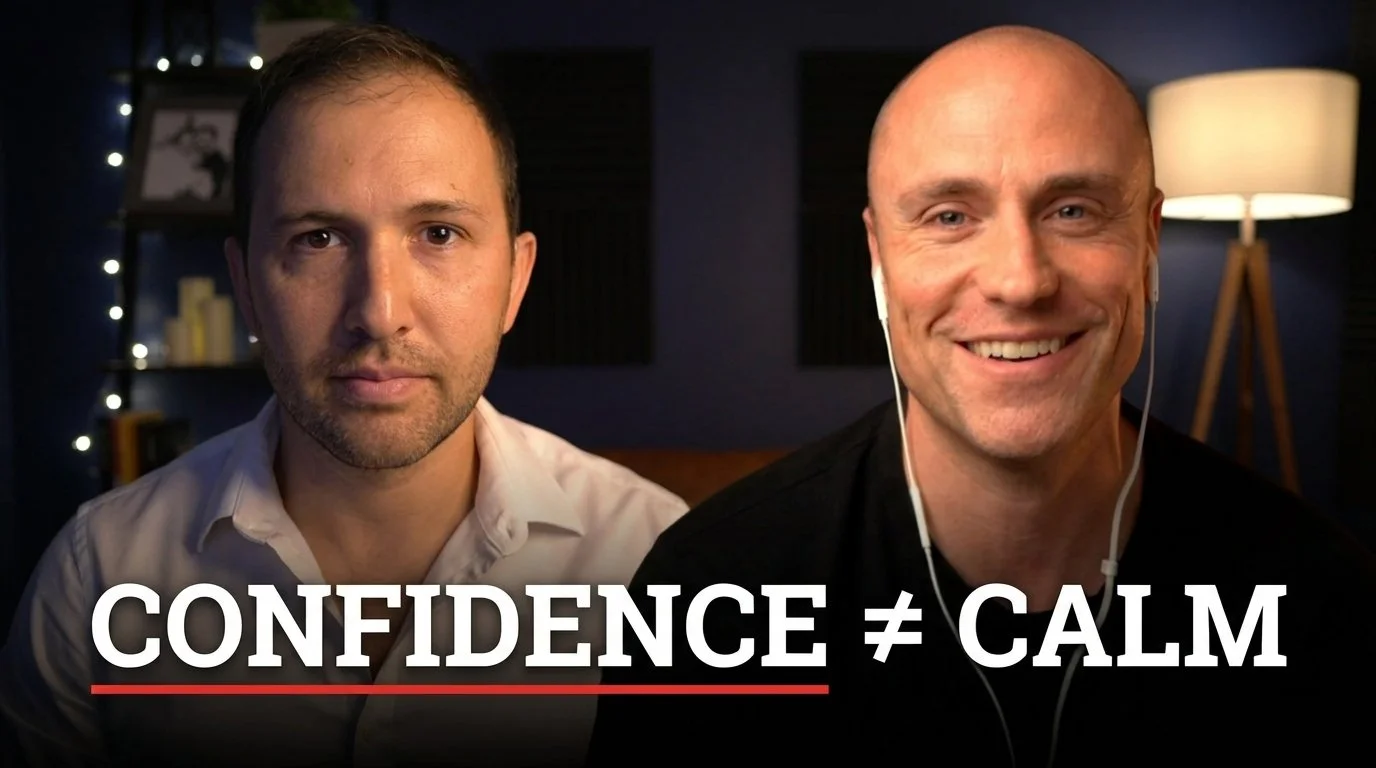
Confident people still feel fear. The difference is how they respond to it.
In this episode, Trevor Ragan explains why fear, anxiety, and discomfort don’t necessarily mean you’re weak, unprepared, or on the wrong path. In fact, trying to suppress those emotions can make them even stronger.
Trevor is the founder of The Learner Lab and has spent nearly a decade studying learning, performance, resilience, and difficult emotions. He’s worked with professional and Olympic athletes, Major League Baseball teams, and leaders at the United Nations.
In this episode, you’ll learn:
How confident people handle fear differently
Why trying to eliminate fear can backfire
How to move forward even when you don’t feel ready
Why confidence isn’t the absence of difficult emotions
How to build skills you may not have learned growing up
If fear keeps you from taking risks, having difficult conversations, pursuing relationships, or building the life you want, this episode is for you.
More resources:
Join our 6-week healing program
https://restoredministry.com/program
Free guide: 10 Tips to Help Someone Whose Parents Are Separating or Divorcing
https://restoredministry.com/10tips
Learn more about Trevor:
https://thelearnerlab.com



Enjoy the show?
To be notified when new episodes go live, subscribe below.
As a bonus, you'll receive the first chapters from our book, It's Not Your Fault: A Practical Guide to Navigating the Pain and Problems from Your Parents' Divorce.
TRANSCRIPT
Transcript produced by artificial intelligence. Please pardon any errors!
Joey Pontarelli (00:00)
Trevor, so good to have you on the show, man. Welcome. Thank you.
Trevor Ragan (00:02)
Thank you. I'm really excited about this.
Joey Pontarelli (00:04)
The story of Duke going to Duke is fascinating. So you got into Duke, it was your dream school. And then after doing that really difficult thing of getting into Duke, you didn't speak for an entire year in class because you were afraid that maybe people would realize you didn't belong. I'd love for you to take me back there. What was what was happening inside of you when you wanted to speak up in class, but you stayed quiet?
Trevor Ragan (00:25)
For me it was like I grew up in the middle of nowhere in Wyoming. So then going to Duke itself was like a big leap. I think there was only like one other person from the whole state at the school. And it was just like a different place than I had grown up. And so like people had more money than me. They had bigger vocabularies than me. They dressed better than me. And so there was a lot like stacking up of like, wow, I wanted to come here for a lot of reasons, and now I'm here and I just feel like I don't really belong. And
I think something funny and I and probably everyone listening can relate, which is we have those feelings in different contexts and situations, but more times than not we think we're the only one feeling like that when the truth is a lot of other people do. And so like especially after I started making friends and when people start being honest and opening up, like everyone when they go to school feels a little bit uncomfortable, but sometimes we feel like we're alone when we feel like that. so I think
There was a lot that made me feel like that. I think I'm naturally introverted, like shy person. And so the combo of all that is I'm sitting in class and like again, I'm being challenged. Like these these classes are more difficult than the ones I was taking in high school in Wyoming. And again, it's like, yeah, probably everyone else felt a little uncomfortable and they were challenged too. But I went internal, I
kinda just shut down. It's just like I don't like how this makes me feel. I'm going to play it safe. I don't want to ask a dumb question. I don't want to give the wrong answer. And so if I just sit here and don't talk, that's the safe the safe bet. So people don't realize I don't belong here.
Joey Pontarelli (02:01)
Yeah, no, it makes so much sense. And this whole idea of playing it safe when you're afraid, I think resonates so much with so many people, especially our audience. So many of us who come from broken families feel often controlled by fear. We're we're afraid to maybe ask the girl out. We're afraid to, you know, go for that career. We're afraid to whatever it might be. it's much more comfortable to just play it safe. I'm curious, why do we why do we kind of default to that as humans? Why why do we play it so safe?
Trevor Ragan (02:28)
So I think there's a lot here. And this is a topic I've been working on for almost a decade now. And like when I attack a topic like this, I go and try to find the researchers, I interview them and really try to understand like the nuance. I would say a few things. One is humans don't like to feel uncomfortable. And that doesn't mean that when we feel uncomfortable we're doing something wrong. Like that's a very universal thing. It in different scenarios we can overcome discomfort and stress and difficult emotions. But overall
Humans don't like feeling like that. And that's extremely normal. I think where we go wrong is usually it's how we interpret the difficult emotions that steer us in the wrong path. And so a common like domino effect, and this is I think one that everyone can relate to, and whether it's we're talking about learning, sports, school, dealing with a like a real setback in life, it's something happens, it creates an emotional response, like
Like this makes me stressed or anxious or nervous or afraid. And then sort of our default perception of those difficult emotions is it's bad to feel like this. Therefore, when I do feel this, that means I'm on the wrong path. I'm doing something wrong. Something's wrong with me. So you kind of see that like the downstream thoughts about our emotions are trickling down from this kind of broad mindset that.
All difficult emotions are bad, stress is bad, fear is bad, difficult emotions are bad. And then again, how I paint them and how I look at them is well, if it's bad to be nervous, then if I'm nervous, I'm doing something wrong and something's wrong with me. And the problem with that approach is it usually makes us feel worse. And like the it creates this whole other spiral that we could talk about. But if we go back to like, okay, if we think that it's bad to feel bad, well
There's a lot of things that you can do to avoid difficult emotions. One, don't do the thing. So, like, yeah, if you avoid the thing that's creating the discomfort, that's one way to not feel uncomfortable. Other times we might do something and we're we're like trying it and it's not going well, that creates discomfort and then we stop before we can figure the thing out.
So again, when this comes to learning or just life, if we avoid all discomfort or any time that the discomfort pops up, we just turn away. Obviously, that tactic is really good if we're talking about danger. Like dangerous situations can make you afraid and they can make you stressed and uncomfortable. And avoiding them or when they pop up, like turning the other way is great. But a lot of these situations we're talking about don't involve danger and this.
kind of broad approach, avoiding all discomfort, spills over and can rob us of great experiences that could help us grow, learn, or just like have a better life. And so you just kind of have to get into the weeds of just like understanding the system, kind of why we do these things, and then understanding how to like fight back a little bit is usually our best.
Joey Pontarelli (05:34)
Okay. No, that makes so much sense. And yeah, as you're saying that, anything in life that I've maybe been most proud of or felt most accomplished in attaining was always, almost always on the other side of fear. It was it was on the other side of doing something difficult, something hard. And so I'm curious, you mentioned talking to researchers and you know going deep into this topic of like fear and pushing through it. what does science have to say about this in addition to what you already shared? I think
Trevor Ragan (06:00)
the the the one clear result of a lot of the research around this that okay if we're talking about like what to do with the difficult emotions so we can handle the situation better. People, I guess we can just like take it from the top. A researcher from Harvard Business School kind of created a a question that asked people like, I think the scenario was like, okay, if you're presented a challenge in life that stresses you out, what's the best advice to give yourself? And
They collected all the responses and like I think it was like eighty-five percent of the responses said something like, Calm down, relax, be fearless, don't worry. And like there's like a bunch of ways of saying that, but by far and away, like that was the most popular type of response. And if you made it like a a category or label for those type of responses, it's basically like don't feel how you feel. It's like and that approach makes sense on paper. So like if we're working under the assumption that
All difficult emotions are bad. Well, when you feel them, what do you think the best response is? Get rid of them. Don't feel them. And that will be better. And okay, so that that's maybe the most popular response. But then when you get into the research, you realize in many ways that's kind of the exactly wrong approach. And so, like a lot of these studies aren't just about learning and performance, they're just like about life. And again, one of the patterns that pops up in these studies is.
One of the worst strategies to dealing with difficult emotions is to try to suppress them. So like they'll put people into stressful situations and then give them instructions telling them to like suppress those feelings. But then they can monitor like their brain activity and how they respond. And when people try to suppress like their brain activates even more. It's like the more you fight it and suppress it, the stronger the feeling gets. And then if you want to take it back to learning.
When you're actively trying to suppress, like the the memory centers of your brain shut down a little. So not only does suppression usually make you feel worse, it also like you're not gonna remember as much from the experience as you normally would. But then you go back to like when we say things like calm down, relax, be fearless, don't be afraid, we're coming from a good place. But the message under the message is don't feel how you feel. And so when we give ourselves those instructions or give other people those instructions,
We're essentially telling them to suppress, and that usually backfires. And so the research shows, okay, if suppression isn't the move, what is the move? And there's a lot of different tactics, but the big, the broad idea is called reappraisal, which is kind of just a fancy way of saying, change how you interpret the situation or change how you interpret the feelings themselves. Rather than trying to suppress them, try to reinterpret them, try to rethink them.
think differently about the emotions. Like that's usually gonna be a better
Joey Pontarelli (08:55)
Okay. No, that makes sense. Are you familiar with optimal work? It's from a Harvard professor. It's like a program to help people in work especially to perform at a really high level. So it would align a lot with what the work that you do. And one of the things they teach in that course is and in their program is like the idea of reframing, which is what I kinda hear you saying. Same idea. Yeah. Same idea. So you see a challenge and instead of seeing that as a challenge that you maybe shrink away from or try to, you know, shove your feelings down when you're maybe intimidated or afraid, you
see the opportunity through it, which sounds kind of like just mind games, but it's not. Yeah.
Trevor Ragan (09:29)
And so like the reframing research is good and that more looks at like the situation itself. Okay. And there's a lot of good research that supports it. This is a little different in reinterpreting the feeling. So the shift we're the the shift we're trying to make is moving away from all stress is bad, all difficult emotions are bad. Which again is kind of like our default lens. But we're not trying to shift all the way to
we were wrong. Stress is great and it's fun to be uncomfortable. Like that obviously that's not where we want to get to what we want the reframe that we're after when we're talking about emotions is sort of understanding and accepting them in a way. Understanding that difficult emotions are normal and human and expected. And that there's no good and bad emotions. Obviously, some are more fun to feel than others, but they're all there for a reason. And when we feel a difficult emotion,
More times than not, it doesn't mean we're doing something wrong or that we're weak or on the wrong path. It means we're a human. Like that's a human response to like a lot of these situations that stretch us a bit. And so this formula that I sort of created that that's a reminder for me that really helps. Caring plus uncertainty equals discomfort. So okay, this formula this formula seems simple, and I think we can learn a lot from it. Caring plus uncertainty equals discomfort.
First, that formula shows you how to never be uncomfortable in life. It's actually really simple. Don't care about anything at all and and just avoid all uncertainty and you're gonna feel awesome most of the time. Okay. Great. But if our goal is to connect and learn, create, be a good friend, parent, partner, you have to do things that involve uncertainty in life. Like that is a rule.
Like you have to do things that involve uncertainty. And they don't have to be big things, but just raising your hand and asking a question, asking someone out on a date, applying for a job, applying to get into a school. Like those are all examples of like venturing into this zone of uncertainty. And we're human, which means more times than not, if we're doing those things, we're gonna care, which means we're gonna feel all sorts of difficult emotions. So I think the annoying thing about this research is it clearly shows that you can't do meaningful work.
And feel perfect all the time. If you're gonna do things that matter that you care about, you're gonna feel difficult emotions. The great thing about the research is it shows that those difficult emotions don't always have to mess us up. And we achieve that not by removing them, but by kind of changing the way we think about them. So let's give some real world real world examples using this little equation that we just came up with. So let's say we'll go back, you you gave the example of like asking someone on a date.
So, okay, we're like out in the wild, we see someone, like we want to like approach them and like maybe try to like ask them on a date. That's uncomfortable. And there's probably not many people in the world who would feel perfect in that situation. Why? It's the equation. You probably care how this goes. Like if there's someone you want to ask out, you probably care about what their response is. And then think about the uncertainty. You don't know what they're gonna say or how they're gonna respond. So it's the perfect example of.
This is probably gonna make you uncomfortable. Now, there's not much you can do to feel perfect in that scenario. And I want to make the case that shouldn't even be the goal. Rather than trying to change how you feel, let's just change how we think about how we feel. So one interpretation is, this is making me uncomfortable. I better not do this. This means it's not gonna go well, or like I'm not prepared. And like, again, like
I'm interpreting the nerves as a sign of weakness or a sign that I'm doing something wrong or can't handle the situation. Another interpretation could be, yeah, of course I feel nervous right now. I care and there's uncertainty. That doesn't mean that this person's gonna say no, and this doesn't mean I'm like doing something wrong. This is how humans feel when they experience uncertainty and they care about what happens. So you see, with this different mindset, I'm not shaming myself as much.
I still feel the same, but I'm avoiding sort of the doubling down spiral effect of thinking it's bad to feel bad and then going internal and like exaggerating how I feel. And so you could even take it to like doing work. So like you probably give presentations and you you speak in front of others and I do that a lot too. I get nervous before almost every presentation. In the past, in the past, I
I thought that that was a sign of weakness or that I wasn't prepared or didn't belong. And now I've given over a thousand presentations. I still get nervous, but now I know because I understand this science that the nerves are because I care and because every talk is different. We don't know how it's gonna go. So then you kind of just go back to this like fork in the road of how I feel before a presentation is the same as I used to feel, but now I kind of frame it as, yeah, I care.
about how this goes. Yeah. Of course I'm gonna feel. And then compare that to the alternative, which is uh-oh, I'm nervous, I don't belong, I'm not good enough, I'm not ready. It's the same initial feeling, but that different interpretation sends me in different directions as far as how I deal with the situation. And I want to underline that. Like that's what we're really after here. It's we're not saying we want people to be stressed all the time or afraid all the time. Of course not.
We wanna like work through the situations in our life that create the difficult emotions. But the argument is we're in a better position to work through those situations when we're like understanding and accepting the difficult emotions versus fighting, suppressing, denying, making them worse. So like again, we wanna like deal with the emotion, deal with the situation, but we're probably gonna do that better when we're just taking the approach of reappraisal.
And understanding that the difficult emotions aren't fun, but very normal, especially in situations like this.
Joey Pontarelli (15:44)
And to like you said, to be expected too. That that was helpful. And I know not everyone can maybe relate to us talking about like the public speaking thing, because not everyone does that. But you can apply this to any area of life. Like you said, relationships work, the list goes on. But one of the things, one of the shifts that was really helpful for me, and I hope this will be helpful for others, is just kind of expecting it. And that's what I
Hear you saying too. It's like it's it's not this odd thing. It's something that is natural, it's normal, it's going to happen. And I think the more we, you know, like you said, push against it, fight against it, trying to tell ourselves to like chill out, maybe the worse we'll feel, or at least we'll kind of shame ourselves into thinking that we shouldn't actually feel that way.
Trevor Ragan (16:19)
Like imagine let's say we're parents and our kid is in high school and they're going through like a difficult breakup. It would be really easy for us to be like, Hey, you're fine because we know like with our perspective, like the high school breakup doesn't matter in the scheme of things. Very small speed bump. But but in their world at that time, it is a big deal and it hurts really bad. And if you could scan their brain, the pain centers are
really active. And so for us to say, it's no big deal, you're fine, is kind of denying how they actually feel. So again, the question is what would be better? You don't need to give like a 90 minute PowerPoint about emotional intelligence, but twenty-five seconds of kind of going back to that formula, twenty-five seconds of a little bit of that. You could say something like, Hey, how you're feeling right now is the worst. It's not fun to feel like this. It hurts really bad. But how you're feeling right now, it doesn't mean that you did something wrong or
that you're weak or that you're doing something wrong. This is what it feels like when you lose something you really care about. And I'm sorry you have to feel like this, but this is this is normal. Then you could kind of zoom them out and say, I promise as time goes by, things are going to feel better. But my case would be those 25 seconds where you're giving a little bit of permission to feel and you're explaining that it's normal. It's not fun, but it's normal when you face a loss or like when you lose something you care about versus the alternative, which is
It's no big deal, you're fine. You should just toughen up where we're like sort of denying or like leading them to suppression. And so what does that take? Twenty seconds? And that's just kind of embedding some of these lessons in that important conversation.
Joey Pontarelli (18:01)
Yeah, no, it makes so much sense. So, Trevor, imagine someone's listening right now and they haven't quite built that muscle of acting even when they feel the discomfort. Where would you advise that they start to begin building that muscle? Not not just of action, but also of the reappraisal that you're talking about. Yeah. If your parents divorce and it's shattered your world, I have an invite for you. We're building a new healing program for young adults impacted by their parents' divorce or family dysfunction.
In the program, you'll start healing those emotional wounds, practice healthier ways to deal with your difficult emotions, and learn how to build the happy, healthy marriage you never saw growing up. We're intentionally keeping it small so spots will be limited. Join the wait list or view the details now.
Trevor Ragan (18:46)
For almost anything that I dive into, all these topics and all this research about like learning and performance and leadership, one of the best bets for all of it is to treat it as a skill. Like this in and of itself is a skill. And okay, let's work backwards from that. When we're building a skill, it's good to start small. So we're not saying like, okay, go find the thing that makes you the most uncomfortable and then just do it tomorrow. It's like if you treat it as a skill, it's like, okay, I gotta
Get some practice here and and get some reps. And even if it's small, that can still be valuable. So maybe it's even as small as in a group setting, I feel uncomfortable, but I'm going to raise my hand anyways. I wish I heard this advice when I was in school. or okay, there's certain conversations that I know I need to have, they're gonna be difficult, they're making me uncomfortable, and rather than putting them off, I'm just gonna like do it. And
When you treat it as a skill of getting these reps of like feeling kind of weird, but I do the thing anyways, feeling kind of weird, but I did it anyways, you just get better at this skill and then you're more likely to use it. But I think what I w will make clear for everyone listening is no one's perfect with any of this stuff. Like I lose battles to my difficult emotions all the time, all the time. But the cool thing is when you're just aware of this system and this research.
You're going to win a few more battles. And I I don't even like that I use the word battle. It doesn't need to be like a war. You're not fighting your emotions. You're not beating them or overcoming them. You're just like kind of changing the way you think about them. And that is something that you can do more often. And it's really helpful, not just for learning, but just for life. Like like my parents got divorced when I was in high school. I wish I knew this. Like, because there's so many times when
those things happen and there's a big life shakeup and we experience this like wave of difficult emotions and then we just start thinking that we did something wrong or something's wrong with us or we're all alone. And like even in those big moments, just being aware of some of this research can be actually really helpful as far as how you like navigate that. It doesn't make it necessarily easier and it doesn't really make you feel better, but it just helps you like navigate it and stop like shaming yourself every time you feel a difficult emotion.
Joey Pontarelli (21:03)
Yeah, no, so good. And I think that's where this conversation kind of naturally goes with this bigger question, which you've been hitting on a lot of like emotion, not just fear, fear just being one of the emotions. Sure. Yeah. was there a particular moment where you started seeing maybe emotion as not this like bad thing that's kind of baggage you have to carry around where you actually saw No, it's actually can be useful, it can be helpful, there's some good in it. So
Trevor Ragan (21:28)
Honestly, like I can pinpoint the exact moment. So how old was I? I think I was like late twenties, maybe like er very early thirties, and I was like going through a difficult breakup. Like it was a a messy breakup. I was really hurting. I like was living in Denver at the time and like got up at five AM and like just drove to Omaha and was like so mad and so hurt. And I'm in all these difficult emotions and I did what most
guys would do in their late 20s, which is like, you just kind of like, you like want to fight them and then like then you just want to get rid of them. And so you're like trying to numb them. You're calling your best friend and like blaming your ex. It's like all her fault and she's the worst. And so there's all these tactics of basically try to stop feeling how you feel. And I used all of them on this like 10-hour drive to Omaha. Okay. So I get to Omaha, like whatever. None of those
strategies necessarily make made me a better person or like learn from the experience, but of course some of them made me feel better for the moment. Okay. So I spent a few days in Omaha doing some work stuff and then I have to drive back to Denver. And on the drive back, I'm still like hurting and stressing and freaking out, and shaming myself for feeling it and trying to put all the blame on her to make me feel better. I remembered a book that one of my sisters had
like gifted me like a few months before and it was called Rising Strong by Brene Brown. And I knew about Brene at the time. Like, she's like a a researcher. She talks about vulnerability. And I was, again, in my late twenties and a dude. And I was like, not for me. So that book just kind of like sat on my shelf unread. But I remembered like the title and I could remember my sister telling me a little bit about it. And I bought the audiobook on that drive.
and listen to it from the drive home from Omaha to Denver. And I think something with books, you've probably experienced it too. It's like the right message but at the right time, like really like has an i an impact. And that was like the perfect e example. It's like a whole book about how you would like bounce back from a big setback in life. But
A big part of her message, and there's more to it, but she started talking about like difficult emotions and how you have to be more open to them and willing to feel them to like actually process them and like understand and learn from a situation. And like looking back, I was like 29, 30, maybe. That was like the first time in my life that someone said it's okay to feel bad if I really think about it. Cause like I grew up in the in the sports world where it's like if you're nervous, it's like, nah.
Be fearless or if you're hurting, it's like don't be weak, just be tough. So like all the messaging that I'd received before that day was basically don't feel be tough, be happy, stay positive. And this was like the first time someone's like, Yeah, it's like not fun to feel like this, but it's normal. And in fact, not only is it normal, it's kind of necessary. You have to like kind of process this and be willing to feel it to actually navigate the situation and learn the most from it. And like
connect and and like actually like figure your figure it out. And so I like listened to the book and I would just keep pausing and like reflecting. And that drive was amazing for me. Like not only was she like the first person to tell me it's okay to feel bad, but then you start to pause and you're like, wait, like I played a big role in this relationship going south. It wasn't just her, like I played a role too. And
Basically by the end of the drive, like I had gathered all these insights about the relationship. And it wasn't me just taking all the blame, but it was me just understanding that I played a role. And looking back, it's like there's no way I would have piled up those lessons from the experience if I stuck with my original approach, which is just like refuse to feel, put all the blame on her and just try to like numb it and suppress it and fight it. The only way
that I got the lessons was being willing to feel a bit uncomfortable. And so like that moment of like listening to that book and like that was the like the again the first time I was exposed to that that idea. And then where my brain went was like, wow, is there something more to this? Is like, does does the science support it? And so that kind of started my journey of like, let's find the researchers, let's talk to them. Like this seems like an approach that doesn't work
just for breakups. Like this is a good way to navigate all difficult situations. And so like that was like the the start of the rabbit hole that I jumped down.
Joey Pontarelli (26:11)
So good. No. And thanks for sharing that, you know, c vulnerable story. And I think so many people can relate with you when it comes to the the relationship side of things. But I think that the whole point that you said that, you know, feeling bad like isn't bad i is really powerful. I remember there was a young woman who you know in her twenties who shared with me that after her parents got divorced, you know, it was a really dysfunctional thing leading up to it. They eventually split up and she said that everyone like at school
her you know her teachers, her friends kind of knew about it. They knew that was happening. It was kind of a public thing. And everyone kind of acted like it wasn't a big deal. And she was really going through a lot. Like she felt a ton of emotional pain going through this. And so she kind of got to this point where she's like, Man, maybe something's wrong with me for feeling bad about this thing. And so I think I think there the one th quote that came to mind is from Victor Franco who said, you know, an abnormal response
To an abnormal situation and normal behavior. In other words, basically what you're saying, Chubbers, like if there's something that goes on that makes you feel bad, it makes sense that you feel bad given the thing that you went through. Mm-hmm.
Trevor Ragan (27:18)
And just like allowing it to be that versus piling on, trying to suppress it, trying to fight it. And again, I'm not shaming anyone. It's like I tried all those things myself and then like the how the people treated like that person when her parents went through like the divorce, it it kind of makes sense of like no one likes to feel uncomfortable and no one likes to like like we don't just don't know how to navigate it. And so like we don't have anything else other than like try to ignore it, minimize it, and
Again, all of these strategies are kind of fall under that umbrella of like suppressing and denying. And I think a big idea is like there is actually a better, more effective strategy. It's a little more uncomfortable. Like it doesn't change how we feel, but it can just help us like navigate it a little bit better.
Joey Pontarelli (28:06)
Love it. What what about someone listening right now who's thinking, well, Trevor, this all sounds like fine and good, but I just get so overwhelmed by my emotions. Like I can't even seem to like sift my way through them. Like I feel bad, but it feels so heavy. I don't really know what what to do with that. What would your advice be to them? If you know someone whose parents are separated or divorced, or maybe they're in the middle of the process right now, you probably want to help, but you're not quite sure what to do or say in order to help them. And if so, you're not alone. It's a really common struggle. That's why we created our free guide.
10 tips to help someone whose parents are separating or divorcing. It offers really practical, tactical things that you can do or say to help them and especially to help them feel less alone, the top things to avoid saying or doing that might cause harm, and then what they need the most from you during this time. But most of all, the guide helps you feel competent and confident in offering help. And so get the free guide at restoredministry.com slash 10 tips, restored ministry.com slash 10 tips, either the number or the letters, or just click on the link in the show notes.
Trevor Ragan (29:03)
I think for me, none of this is like a race. So it's not just like, I feel weird, reappraisal, I'm good. It's like this could take days or weeks to like navigate through. And I think again, starting small and just being like kind to yourself. And a another strategy that I've been trying to use a lot is like just kind of changing the scoreboard and how I judge myself. Where in the past I was really judging myself about how I felt in a situation.
Was I nervous? Was I afraid? Was I this? Was I that? And like that's how I like scored myself and judged myself. And now I spend less time thinking about how I feel and more time thinking about like actions. So it's like, okay, I felt this way or that way or nervous, afraid, anxious, whatever it may be, but I did this small thing and like I'm counting that versus judging myself for how I feel. And so sometimes that can help us navigate where it's like, okay.
I felt really scared and really bad, but I did this one thing that was like a little step in the right direction. And like I should like celebrate that and like that should count for something versus like, but I still feel bad. And so again, spending less time and energy on like trying to feel perfect all the time, more time and energy on trying to do like the next best thing. And even if it's just like
being more willing to reach out and ask talk to a friend or ask someone for help. Like those are all actions. Those are all wins. And I think as you start to stack those up, you s just start to work your way through. And like again, none of this is a solution to pain. Like when something tough happens, like the truth is like it doesn't mat matter how you like navigate it or how much time passes, it can still hurt. What we're trying to do is like navigate it in a way where we can grow, we can learn and just
Deal with the situation. And more times than not, kind of rethinking the difficult emotions is gonna help us do that better versus just trying to push them down and deny and fight
Joey Pontarelli (31:06)
No, it makes so sense. Are there any other exercises, practices, routines that your maybe you or your audience have found really helpful when it comes to, you know, kind of dealing with difficult emotions or fear? I know some people really like writing, but I'm curious if there's anything like that that you'd recommend to everyone listening.
Trevor Ragan (31:21)
I think there's like there's all sorts of stuff that we could do. Like there's some good research around like breath work and mindfulness and and meditation, writing. But my I think overarching advice for any of these tactics is don't expect them to make you feel perfect. Because I think sometimes people package those strategies as like the solution to stress. And so then what happens is okay, it's like I assume that this exercise or this breath work
is designed to make me feel perfect. And then I'm doing the breath work and I still feel bad. Now what? Now I'm stressing about the stress and stressing that I'm breathing wrong. So it's like all of those things can help me to be more present and regulate a feeling and help me handle the situation. Like that's what they're meant to do. And I think that's what the original research shows. Yet sometimes people paint it out to be like this is the antidote, the solution, the way to remove when they're probably not gonna.
And so whatever tactic that you find most helpful, I'd recommend like experimenting with different things. Again, kind of changing the scoreboard from this tactic is designed to help you navigate this. It's not designed to make you feel perfect. There's pretty much no approach that's gonna make you feel perfect and
Joey Pontarelli (32:37)
moment. Yeah, no, like that. And I think like so much of life is about kind of having a tool belt, so to speak, and then taking out the proper tools given the situation. But not every situation requires a hammer.
Trevor Ragan (32:48)
100%. I interviewed this researcher named George Bonanno and he researches like resilience. And one of my favorite questions to ask researchers is like, what's the biggest gap between what your research says and then how like most people talk about this topic online? And I asked that to him and he just started laughing. He's like, the gap is so big for for resilience. He's like, if you go online, like everyone's making it out to be like this step-by-step, like
The three tools for resilience, the three keys to resilience. And he's like, I've researched this for so long, and I promise you there is not a secret to resilience or a three-step process. And he actually said literally what you just said. He goes, the one thing that I do see in the research is really what we want is just kind of flexibility and the willingness to experiment with different tools in different contexts. Because he's like
Every situation is the same. And maybe the tools that you use to move through this setback in life are effective, but they're not the same tools you need for a different setback, or the tools that I are the most helpful for me aren't the most helpful for you. And so it's not this like color by numbers, like, yep, the key to resilience is do this, this, and this. It's more about this idea of like flexibility, kind of experimenting with different tools and trying new things and working my way through the situation. Like that's real resilience.
But again, it's kind of exactly what you just said. just experimenting with different tools and working our way through a situation.
Joey Pontarelli (34:20)
Yeah, and finding what works for you. No, that's so good. You made me think of it kind of goes back to some of the things you were saying before about how we perceive the world a certain way. Like we might look at people like yourself who like kind of fearlessly go on stage and speak to, you know, hundreds or thousands of people. And we assume like, no, he's just like really brave. He doesn't feel fear. We might think the same about professional athletes, whatever. But I remember hearing I think it was a study on like grit.
And they were looking at, you know, talking with people who are really gritty. They had a lot of like perseverance above the push through hard things. And they asked them in they said, What does it feel like to be gritty? And the I'm kind of paraphrasing, but the the short of it was that it feels super frustrating to be gritty. Like because you're you're going after something that you haven't accomplished yet and you want to accomplish and you're not going to quit until you get it, but you don't have it yet. And so but I think when people think of gritty people
They probably think of people who are just like very tough. But but so what we see on the outside is not always what someone's experiencing on the inside. Yeah.
Trevor Ragan (35:19)
It's the carrying and uncertainty equation again. And a cool part about my job is I just get to work with all sorts of different people. So I've done presentations in prisons, I've done presentations for five year olds, I've done presentations for learning managers at the United Nations, major league baseball teams, Olympic athletes. So I get kind of like a backstage pass to a lot of different industries and a lot of different people. And you nailed it about the pro athletes, like on TV.
They look fearless, but when you actually meet and talk to almost all of them will it will say like, yeah, I'm nervous all the time. Like I I like really care about this and like I feel stressed and I feel anxious and I feel nervous just like anyone else. But they practice this skill of like dealing with those emotions, not fighting and suppressing and get getting rid of them. Like they're taught tools like this. And so
Yeah, it's like sometimes when we see a high performer, we assume they feel perfect. But the truth is, like they're very skilled in what they do and they've practiced and they prepared, but I guarantee if they really admitted it, they don't feel perfect in that moment. And my favorite is the athletes that will admit it, even in like the interviews and stuff. Like some of them are brave enough to admit, like you've seen like some of the interviews during the the last Olympics. Like some of the athletes like, Yeah, I'm nervous all the I'm nervous all the time because I I've
really care about how this goes. I love when they do that because it's just sending a better message to everyone watching. Like, yeah, we're human. Humans feel uncomfortable when they do things that involve uncertainty that they care about.
Joey Pontarelli (36:55)
Yeah, no, so good. I want to shift gears a little bit to this idea of confidence. I'm curious, do you have a similar formula for like confidence? Like what is confidence? Like what makes confidence? Because like we're saying, it's natural to fear uncertain. It's natural to be in a s situation where we don't totally know how what the outcome is going to be. But at the same time, we can prepare, like you said before, and we can feel a level of confidence, maybe because of our preparation. But I'm curious, how do you think about confidence? What what is it made of?
Trevor Ragan (37:20)
It it's tough. It's like to me, it's again, we're it's not I feel perfect. And I used to think it was. Cause then it's like, well, in most of these c scenarios I still don't feel perfect, but I am confident. So it's not just how I feel, it's not just the absence of difficult emotions. It's this feeling that I have done what I can to prepare for the situation the best that I can. So to me like that's that's what it is. But even
in how you get there, it gets messy. Confidence, it's like it's such a tough thing. Like, who was it? There is this a mental training coach for a major league baseball team I was working with. And she has this concept called junk food confidence. And so this is like doing things that we think make us feel confident, but actually don't prepare us at all. So it's like like so she was it it's like a sports example, but I think most people would get it. She's like,
There's a lot of research that shows like batting practice, like what like the major league baseball players do before a game. They get like really slow and easy pitches and it's like really easy to get a hit every time. And a lot of times you can just crank home runs. And the players love batting practice. Why? Because you get up there and you're just hitting home runs every time. It's not that hard at all. And then if you ask them like, well, what's the value of batting practice? They're like makes me feel prepared and confident for the game. But then the research
around it is like crystal clear that it would actually be more beneficial if they spent the same amount of time doing batting practice just looking at live pitches. Like if they had a real pitcher throwing them real like pitches that were game speed, where they didn't know the location, they wouldn't hit as many home runs in batting practice, but they would actually be more prepared for the actual game. And so so it's like again this junk food confidence which is like
We do this thing because it makes us feel good, but it actually doesn't prepare us. And then I'm getting kind of like nerdy here, but the the funny thing is sometimes what we think is the best approach actually isn't. So let's take it away from sports. There's this study that they did where they have people they give them like a bunch of paintings to look at. And one group looks at like six paintings by one painter.
Six by another, six by another. So six at a time, six at a time, six at a time. The other group, they take the same amount of paintings and just mix them up. And so, okay, you go through all these. And then after this little training period, they ask each group. They go, Okay, tomorrow we're going to show you one painting. And it's going to be by one of the people that you saw, but it's not going to be a painting that you saw. But your job is to guess the artist that created the painting. And they asked them, like,
How confident are you that you're like prepared to do this? Okay. So the group that saw six at a time, six at a time, six at a time, they I think their like score landed in like eighty-one percent. Like they felt very prepared and very confident in the task. And the group that saw them mixed up actually like felt less confident, less prepared. But then they ran the experiment on like day two, and the group that looked at a mixed up actually performed way better.
And you could get into the reasons why, but it's just an example of even though the first group felt more confident, they actually performed worse because what really mattered wasn't how they felt, it was how they were prepared. And there there's a lot of research that shows like this idea of like interleaving and mixing something up is harder during the learning stage, but more effective for a transfer. And so a kind of another rabbit hole there.
But so you kind of go back to confidence and you go, wow, there's junk food confidence that there are some scenarios where feeling confident was fine, but it actually didn't even help people perform. And so where I get back to is and is kind of what you said at the very start, which is it's this this feeling that I've done what I can to prepare for this moment. There are no guarantees in life in a lot of these situations, but I feel prepared. And then maybe it's I feel confident in my ability to figure stuff out.
It's like, I don't know how this is gonna shake down. It could be good, could be bad, it could be what I think is gonna happen, or it could be completely unexpected. But I feel confident in my ability to figure things out. Which takes us back to the resilience researcher George Bonanno. He like he studies like really intense stuff, like how people deal with like very intense things, not just learning. And his research shows that actually humans were super resilient. More times than not, if you
throw a human some of the most difficult at challenges, eventually we just like navigate it and work through it. And like that's without talking about any of the stuff. It's just like that doesn't mean we feel good about it. And it doesn't mean it it that it's easy, but just like given time, humans are incredibly resilient and resourceful. And especially when we have people around us to help us and we're not afraid to like reach out. Like when we do that, more times than not, we like work our way through these situations.
Doesn't mean they're easy. Doesn't mean it's like simple. But when he said that, it like kind of it it makes you feel good of like, yeah, this is something that we can do.
Joey Pontarelli (42:43)
Yeah, no, I love that. And it's wild how as humans, like we kind of figure things out even when our back is up against the wall, which is I know a whole maybe another topic for another time. But I want to shift gears to this idea of like maybe doing things like a relations building a relationship, maybe something that you've never quite done before. we talked a little bit about maybe like starting small, but I think what what we see, Trevor, is like the young people that we serve who come from broken families, they're really afraid of repeating like their parents' relationship.
They don't want that. I felt that myself. My parents split when I was like eleven. And so they don't they know they don't want that. they saw love go so poorly. The template they have for a relationship is so broken that they're like, I don't even know where to start. And so in that maybe scenario, how might we apply some of these tools to them saying like, Okay, I want a good marriage or I want a good relationship, but I feel maybe like inadequate. I feel like I'm not prepared for it. I I literally have zero confidence in doing it.
so so where do they start in that particular situation?
Trevor Ragan (43:42)
This might not help in every situation, but something that I tr try to do a lot of is I try to break things into or turn things into and then break it down to a skill. So I think about because I was older when my parents split. So I could kind of like see it crumbling and like I was like there. And you I think it's very normal to like experience something like that and then you
have some doubt in how you navigate a relationship. But if you if we're like, okay, let's turn something into and break it down into a skill. So you see things like, these were some issues that I saw in my parents. And what what I see in my work, and again, I focus on learning, not stuff like this, but I think there's a lot of overlap, is more things are learnable than you think. So more things are skills than you think. A lot of time when you say the word skill, people think of like a sport
Or a formula in math class or riding a bike. But we should broaden our definition. Friendliness is a skill. You can learn to be more friendly. Giving feedback is a skill. You can learn to give better feedback. Receiving feedback is a skill. You can learn to receive feedback better. Dealing with difficult emotions is a skill. You can learn to do that. That's what we just talked about for an hour. And so, like all these things.
Maybe on the surface, we don't usually think of as skills, but then they absolutely are. And when you turn it into a skill, that becomes something that it's like, okay, I can get better at this with a little bit of practice. And so then I kind of go back and think about like navigating something like this. It's like, okay, this was a pattern I saw in my parents. I do not want to repeat that, but like what were some of the root causes there? Could I turn that into a skill? It's like, people weren't willing to have difficult conversations.
Okay, like let what if we treated that as a skill? What if I decided I wanted to be better at having difficult conversations? Like that's something you could do. what if it's people really resisted like opening up and sharing like gratitude and like expressing love? Okay, that's a pattern that I recognize. That's really common. But like what if we treated that as a skill? What if I shrunk that down and was like, I want to get some practice in like expressing like love for the people around me?
Like what if I treated it as a skill and did a little more of that? And so when you do that, things become a little more actionable. And that doesn't mean like you're gonna guarantee any outcome here. But it's just like taking this big thing and then breaking it apart and finding at least something that can like help you like navigate in a better direction. And so it's like just because this is
what happened to my parents. And again, we're only seeing what's on the surface usually as like a younger kid, like and you're like remembering and like there's so much more happening that you don't even know about. But it's like just because that happened doesn't mean that needs to be a pattern that repeats itself. Especially if I'm like thinking about these sort of behaviors as skills and things that I could improve. Because they all are improvable things most of the time.
Joey Pontarelli (46:54)
So good. Yeah. And I I love that frame of like almost every action is a skill, right? Or maybe every action is a skill. And so that idea is so powerful because then it's not that I'm disabled, like you said, where I'm not capable of doing this thing because I'm just so broken that I can't. It's more like, no, no, I just have a skill deficiency. I just don't know how to do it.
Trevor Ragan (47:14)
I I haven't had very many reps yet, but I can get more.
Joey Pontarelli (47:17)
Hundred percent. And then like when you when we learn any skill, and I'd love maybe just to finish the conversation here, it's like obviously practicing, like we're talking about, but maybe more specifically, what else can you do to learn a skill? The one thing that comes to mind for me, it's been super helpful in so many areas of my life, is learning from people who do it really well. Learning from mentors, learning from people who like literally model that thing. What else would you say, especially when it comes to the skill of, you know, getting good at relationships, people can do to learn sure.
Trevor Ragan (47:44)
So it's like you want first you want to broaden that definition. So just realize there's more out there that's learnable than you think. But then you want to kind of like focus in on like one thing at a time, like one small thing at a time. I think all the conversation we had about difficult emotions is such a valuable tool here because when you're practicing something, especially if it's like a new thing, it's not gonna be super easy initially. Like there's gonna be some struggle and setbacks. But
Literally, that's a rule of learning. It doesn't matter if you're a pro athlete or a baby learning to walk. When you learn something new, you're gonna struggle. And so when you struggle, it's gonna create discomfort. And so we need that tool of reappraisal and just reminding ourselves that that's okay. I think another thing that we can do is just this is like I have this printed on my wall behind me, but it's kind it says kinda good. And kinda good is a reminder to me that.
You don't have to be an expert at something for it to matter and make a difference in your life. So sometimes, especially when you're talking about skills and learning, like you hear things like the 10,000-hour rule and like how much time it takes to become an expert. And it's like, sure, maybe there's a little truth to that. But the truth is, you don't have to be an expert for a skill to make a difference. You can learn enough to be dangerous. You can learn to be kind of good.
in a week, a weekend, a month, depending on what the skill is, like you can make some genuine progress. And so that just kind of gives you permission to start and to try. So it's like, okay, like my job is speaking now, but I wouldn't ever talk in college. So like there's a huge gap between where I started and where I am. But it didn't just happen in one day. It was just like little experiences trying to get a little bit better, a little bit better. And then over time, like that led to the big change. But like that's I think how
the best learning works. And so shifting the goal from I have to be the best at this to I just gotta get kind of good at it. And then the cool thing with that approach is you're more likely to start. And if you actually start, you do get better. And then you start to use the skill more and now you're like getting even better. And so that that kind of good framework is is really good. And then I think you nailed it, which is more times than not, there's someone out there who has navigated something like this before.
So usually we're not like the first person to like experience this thing. Like there's a lot of humans out there. And then even bigger than that, there's probably someone who's devoted most of their career to researching the thing that you're dealing with. And maybe having a little curiosity and doing some digging and thinking about like what are people saying about these type of experiences? What is the research saying? Like, is there someone out there who has like spent time studying this and
unpacking the most effective tools to help people do this. It's like usually that's the case. And like that's true for like relationships and heartbreak, but that's also true for like my faucets leaking. It's not the first faucet to ever leak. Someone has the solution. A little YouTubing is probably gonna get you there. And so it's like the same it's the same idea. It's just being willing and a little curious and open-minded to go explore and look for some tools.
Joey Pontarelli (50:56)
I love it. No, it's so good. I remember my T ball coach, he he was amazing. He would always tell us to watch the pros because we could see how you know, to do to hit, to field, to do all these things really well and it served me well. You know, ended up playing ball in college and things like that. So anyway, so good man. if people want to follow you and learn more about what you offer, where could they do that? And what what do you offer if they wanted to Yeah.
Trevor Ragan (51:17)
So my website is thelearnerlab dot com and I have all sorts of videos and articles and podcasts about a variety of different topics. I have a book coming out in May. A big chunk of it is about the difficult emotions. So it was fun to like get to like talk about those. And yeah, the website's the best place.
Joey Pontarelli (51:37)
Okay. Yeah, and they can find the book if they're maybe listening to this at a later date on the website, which is which is great. Awesome. Really appreciate you sharing all your wisdom and being vulnerable and everything. I've learned a lot from you and I'm really grateful for it. I want to give you the last word. what final maybe challenge would you offer to everyone, especially maybe someone who again they came from a family where mom and dad didn't end up working out and they feel fear very strongly and maybe that holds them back from things they want in life, whether it's a relationship or something else.
What's maybe one final encouragement or challenge you would offer to them?
Trevor Ragan (52:09)
I think it's just like be nice to yourself. Most people facing this situation would feel difficult emotions in the same way you are. This doesn't mean that you're doing something wrong or that you're weak. This is something that you're gonna figure out and navigate, but please be like nice to yourself. It's like it's okay to hurt really, really badly when stuff like this happens.
Joey Pontarelli (52:33)
That wraps up this episode of this podcast has helped you. Feel free to subscribe and rate or review the show. You'll avoid missing future episodes and help us reach more people. And in closing, always remember you are not doomed to repeat your family's dysfunction. You can break that cycle and build a better life. And we are here to help. And keep in mind the words of C.S. Lewis, who said, you can't go back and change the beginning, but you can start where you are and change the ending.

You may have entered adulthood without ever seeing what healthy conflict looks like. But avoiding conflict isn’t the answer. In fact, healthy conflict can be one of the main ways couples build trust. Adam breaks down the practical relationship skills many people never learned growing up.