
How To Avoid Falling In Love With A Jerk | Dr. John Van Epp : #174


What if the person you fall for isn’t just a choice, but a pattern?
Most people think love is about chemistry, attraction, or finding “the one.” But according to today’s guest, the heart alone is not enough.
If you come from a divorced or dysfunctional family, your wounds can shape who you trust, who you’re attracted to, and what feels “normal” in a relationship. Without realizing it, you might be drawn to someone familiar, not because they’re good for you, but because they feel like the past.
In this episode, we explore how to build love with both your heart and your head. We talk about repetition compulsion, red flags, rushing trust or physical intimacy, and how to tell whether someone is actually capable of healthy love.
My guest is Dr. John Van Epp, relationship expert, counselor, and author of How to Avoid Falling in Love with a Jerk.
If you’ve ever wondered, “Why am I attracted to people who aren’t good for me?” or “How do I avoid repeating my parents’ marriage?” this episode is for you.
Get our book: It’s Not Your Fault
How to Avoid Falling in Love with a Jerk by Dr. John Van Epp



Enjoy the show?
To be notified when new episodes go live, subscribe below.
As a bonus, you'll receive the first chapters from our book, It's Not Your Fault: A Practical Guide to Navigating the Pain and Problems from Your Parents' Divorce.
TRANSCRIPT
Transcript produced by artificial intelligence. Please pardon any errors!
John Van Epp (00:00)
Dr. John, so good to have you on the show. Glad you can make it. So great to be here, Joey. Your book is amazing. I'm excited to dive into it. Before I do, I'm so curious of the why behind the book. Take me, you would, to the moment where you just felt like you had to release this book. You had to put it in people's hands. Something that was becoming very apparent to me was that people that came in for counseling that had relationship problems, many of those struggles, regrets that drove them into counseling, when you looked
historically, if they had just done a few things differently, that they might have really ended up in a completely different type of relationship or maybe even with a different person. I found a lot of people said, if only I knew then what I know now. That was a phrase that just kept repeating, like certain things I didn't see or they said, I wish I would have paid more attention to what I saw. Those were the two regretting comments that I heard.
over and over and over. ⁓ I saw it, but I just didn't make a big deal out of it. I overlooked it. I minimized it. Or I just didn't know what to look for. And now three years in or 13 years in, you know, now I see things that never ever changed. It just kept repeating. And I saw the I saw a little bit of the red flags or I never looked in this direction. I never paid attention to it. And that's really I, you know, next time I'm to pay attention to those things. But it
That's after people have been really wounded and hurt. So I wanted to get them at that kind of critical time to then bring into their awareness, you have agency in how you do a relationship, how you bond to another person, and definitely you have agency in being able to figure out what that person would be like 10 years later in a relationship with you. There is a way to kind of look through that.
know, window to be able to think about what this person is going to be like for you. That is not just something that happens automatically. And even as a Christian, as a believer, this is not something that just the Lord is doing for you. The Lord wants to equip you to be discerning. It's a phenomenal kind of core scripture. And when Paul wrote to the Philippians in the Bible there, it says, I pray that your love may abound more and more.
in all knowledge and discernment. And love of the heart needs to be balanced by discernment of the mind that God has given us. And the head and the heart really are meant to work together. I love that. So the way I see you working is you're preventing the heartache, the pain, the cycle of dysfunction and brokenness that could happen if they don't take your advice. The biggest fear, Dr. John, that my audience feels is repeating their parents' marriage on their own. They are really afraid.
of that script following them into their own marriages. One of the ideas that stuck out in your book so much was the idea of repetition compulsion. For anyone unfamiliar, what is repetition compulsion? When we are growing up, we have experiences and some fill us up and some leave us vacant. Maybe it's a vacancy because we've been hurt. Maybe it's a vacancy because something we needed didn't get met, but-
There is kind of, if you just think of it like, you know, all children growing up from a newborn all the way to being launched by the home, you know, what we share in common is we need to be loved, we need to feel important, we need to be encouraged and validated. There's certain, I would call them human universal needs that we have growing up. So if I reach adulthood and I've got
some real vacancies or I have some real unfinished areas of a parent letting me know that I'm important and significant. You would think I'd be attracted to somebody that makes me feel important and significant, but I tend to go to either somebody that's gonna do that in a pretty demonstrative way or somebody that doesn't do it hoping to change the ending. I didn't get it from that parent.
So I want to find somebody that's kind of like the parent in some ways and finish what was unfinished, change the ending, get that vacancy filled. So people tend to be attracted. That's not the only driver, by the way. That's one driver, but it's not necessarily the driver for everybody. So the person that does that ends up getting involved with a partner that.
just seems to hold back. They don't really, I don't know, they have a hardness to them. So they're trying to soften that partner up to give them the love and the validation that they never got from their home. So they are composed to repeat the kind of the dynamic situation. And it could be, you know, a woman with her mother. It doesn't have to be the opposite sex parent, by the way, if we're talking about heterosexual relationships. So it doesn't really matter. is.
kind of the system, the dynamic that was going on with a parent or caregiver of significance. So it doesn't really matter. It could be a guy with his father. But the point being, because it's unfinished, because it didn't really fully meet the need, they want to recreate it, hoping that they can then change the ending. What sadly happens most times is they recreate it and it just ends up recreating over and over and over the painful dynamic.
that they experienced in childhood. So I'll give you a second, kind of like a swing to the opposite. Now I need to find somebody that really demonstrates love and significance of me, like validation of me in a pretty kind of extreme way. So now I am prone to love bombs, right? Love bomb is where they like go overboard and they just give it like, so repetition compulsion is where I recreate the same kind of deficiency
of what didn't happen for me, hoping to change it. Love bomb is where I find somebody that's like going overboard. Many of the people that do love bombs though have a lot of narcissism, I find. And so that ends up backfiring because now you're getting it, you know, in rather than in pints, you're getting it in gallons, but all of a sudden something about that person bothers you. You have a conflict or something and you notice that.
you know, love bomb people, people that really can turn it on have swings. And a lot of times now they swing to become really a pretty difficult person to be in a relationship with. So now you have your need getting met on the one hand, but as soon as you, you know, do something to upset them, offend them, bother them, you.
you get really shut down, maybe you get violence, maybe you get anger, maybe you get shouting, maybe you get the silent treatment, maybe you get like an absence of any affection and all of a sudden now, now you're back in, you know, kind of the same thing periodically swinging back and forth. So both those can be very problematic. That makes so much sense. I always baffled me growing up like.
Why does a girl who grew up with an abusive father end up with an abusive husband? But it makes so much sense how this kind of unresolved relationship, unresolved aspect of the life, that the needs that they never got filled, they'd be seeking to change the ending to that story by finding someone who looks and feels very similar. There's a bit of uncomfortability with what is healthy then too. I mean, and there's a number of things that go into this, not that complicated too much, like,
If it's a female, she was hurt by her father. He was rough, he was violent, he was abusive, but he was also the template for what masculinity is too. Now a guy that is soft and tender and able to be affectionate and transparent, now he looks wimpy and weak and effeminate. She may not be able to sort all that out in her mind, but there is that as well that's working against her. She has to reconstruct what
feminine and masculine looks like in healthy ways. And that's why I say just getting her act together as a woman doesn't automatically change her templates of what she's looking for and what she thinks of and what she finds attractive. Like she is more attractive maybe to the kind of masculinity in that template that actually was formed by an abuser, by somebody that was violent. So now her
her actual sexual attraction is now impacted as well. And so these are things that I say, hey, it's one thing to work on self and improve self, but you also have to improve what you're looking for and what you're attracted to. That becomes something that is equally important or you will find that the relationship with a unhealthy partner will undo all of your healthy gains as an individual. Wow.
I know if you heard what I just said, but this is, I found this over and over in counseling. I'd counsel somebody that came out of a bad relationship. They'd work on themselves for two years, get involved after two years, they're finally functioning well, feeling good. You know, they're not on any meds. They're doing great. They get involved with somebody. They do the relationship poorly. Don't use good discernment. The person they get involved with is unhealthy. And I watched two years of their personal healthy gains all unravel.
in just a matter of weeks and a few months. Wow, no, that's profound. And I love this focus you have on, you know, kind of the spouse selection idea. And I want to go deeper into all of this. I'll add one other thing that kind of frustrated me. So I told you in the very beginning, I pretty much entered into the divorce world. So I've not been divorced. My wife and I got married. She was 19 and I was 21. So like I told you, we were young. I was going into my senior year of college. So
⁓ What's my point is that I never really lived in that divorce world. Then when I had a counseling practice, obviously I worked with people that were going through divorce sometimes, people that had already been divorced and were on a new relationship. I had some of that. Well, I have this material and so I started doing these Saturday seminars. Well, who shows up? I have 50 people in a Saturday seminar and 40 of them are divorced. ⁓
I'm like, my gosh, when I got into that world, would say Joey went through divorce. He's going through a divorce or he's been through a divorce. He's had a heart and he goes to, you know, a local, a lot of times it's a ministry, a divorce recovery class. So now he's in the divorce group and then comes John and John says, Hey, I want to help you guys who've been divorced, learn a game plan of choosing the next partner and being ready to do it differently. I always say,
You know, we have that been there, done that. Knowing what wrong looks like doesn't automatically teach you what right looks like. Just because I know what wrong looks like. That's why you said the counterfeit is a perfect example. Just knowing one counterfeit doesn't tell you maybe another one or another one. And it definitely doesn't tell you what right. Teach them what right looks like. And then all the counterfeits start to be exposed. So I said, just because you were in a marriage relationship where there maybe was, you know, continual pattern of problems that
You know, you wish you want to have it differently in the future. And they all nod their heads, they get that. But this is what Joey says. Joey says, you know, I'm still kind of working on my pain. The last thing I want is another relationship. You know, I get what you're saying, but I'll take your class later. And Joey skips the class. I heard this over and over. When in pain or when wounded, they want to grieve the past. They want to rebuild the past. They want to get their act together.
And then someday they'll get ready for the next relationship, but not now. They don't want to do it at the same time. They don't want to overlap it. They want to, you know, rehabilitate self first. Okay. And then after six months, it might be a year, might be a year and a half, I go to the group meeting and, Hey, where's Joey? I haven't seen him for a couple of weeks. I don't know. Let's call him up. Hey Joey, man, what's going on? I haven't seen you in group, you know, and divorce. Oh, yeah. I'm not really feeling the need to do it. How come? Well, I met somebody.
So here's Joey, over and over these people that have been in wounded relationships try to heal from the wound, but they don't develop any kind of a different game plan of what to do in the next relationship. And before they ever can even be presented with there's something out there to do it differently, they think having done it wrong or having had the wounds automatically teach them how to do it right.
So they don't feel any need, they don't feel compelled or motivated. And next thing you know, blink their eyes, they're in a new relationship and maybe they have somebody that looks very different, but many of the same kind of like internal gears, kind of the same drive shaft that drove a lot of the problems in the past, that's still going on relationally for them. And next thing you know, maybe it's a different face.
but a lot of the same repeated problems and boom, they're back into the pain again. And that's where, you know, I do my best to try to convince people, hey, no matter how much pain you are in something of the past, this content will not only help you work through the past, while working through the past, it will also give you a completely different trajectory of what you want to do going into the future. That's so good. I wanted to transition into the RAM though.
So this is obviously what you teach. if you would, what is the Ram goes to 30,000 foot view and how maybe more specifically to my audience, like how might this help them avoid repeating, you know, the dysfunction that they saw in their parents' marriage. For countless teens and young adults, their parents' divorce is actually the most traumatic thing that they've experienced, but so many feel lost and alone in navigating the challenges. I've been there myself. It's really not easy and it shouldn't be this way. My book, It's Not Your Fault.
guides them through those challenges by helping them put their pain into words and begin to heal, work through the emotional problems that they face, cope in healthy ways instead of falling into bad habits, improve their relationship with their parents, navigate the holidays and other life events, and build healthy relationships and so much more. One Amazon review said this, this book is packed full of really practical help. If you come from a broken family, or even if you don't, but you love someone that does, this book is so helpful. I can't recommend this enough.
By the way, it's a quick read and it doesn't need to be read cover to cover. Since it's in question and answer format, you can just read one of the questions and one of the answers. And so if you want to join the thousands of people who've gotten a copy, just go to restoredministry.com slash books to get the book or download the free chapters. Again, that's restoredministry.com slash books, or just click the link in the show notes. When I started my counseling practice,
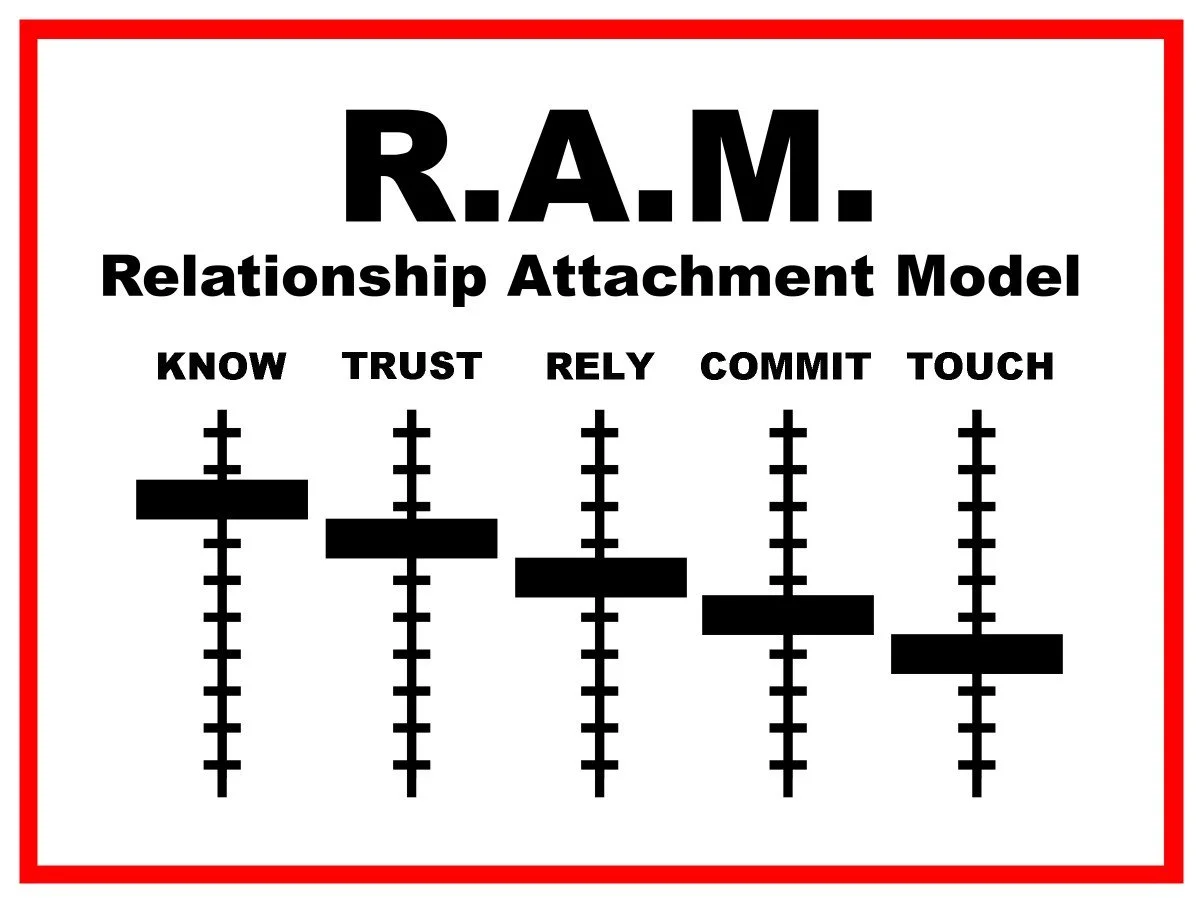
I was trying to talk to people about relationships and it's so confusing to be honest. So I began to put like on a sheet of paper when I'd be talking to them, like scales. And so we would talk about like, you know, where do think you are in knowing this person? Cause this is very bonding. This is part of how we connect, but knowing them and trusting them are very different. So.
Maybe you know them a little bit, but you trust them a lot. So all of a sudden I started to define what I call the universal connections in relationship. So if a relationship is a connection, what are the very specific bonds or connections that comprise a relationship? So I ended up putting it into a graphic.
Probably lot of your listeners and viewers don't remember the old graphic equalizer, but even on my car, I can open up the equalizer still on my little screen for my audio and move levels up and down. you had all kinds of, right? So it's like the equalizer of your relationship bond. You can have one be really strong, pretty intense, and another one be really weak. So you can have mixed feelings. It's like ⁓ the sound.
of the relationship comes out of all these levels and how they are moving up and down. So I do have a picture of it here that maybe your viewers can see. Can you see that okay? Is it blurry? Yeah, it's coming through. We'll show this in the show notes. We'll place it in the show notes so people want to pull it up while you're talking, they could look at it as well. So if I just start over here, just think of it from each one of these. How well I know you. So these can go up and down.
how much I trust you, these can go up and down, how much reliance has to do with, think of it like how you meet needs. So how do I meet your needs? How do you meet my needs? So these are two-way streets. can know you really well, but maybe you don't know me at all. So I can feel like you don't really know me very well, but I sure know you because you talk all the time and you tell me everything, but you never ask me any questions. So you don't really know me. So you can kind of use this to think of it like how I.
understand you and relate to you in a relationship, but I could also turn it around and talk about how you relate to me. So not to get too confusing, but each of these are kind of two-way streets. So how do I meet your needs might be very different than how you meet my needs. Maybe I do everything to meet your needs, but you don't do anything to meet my needs. So the way that I can rely on you to meet my needs is really low, but the way that you rely on me to meet your needs is really high. ⁓ commitment is how...
much of a priority, how invested, how much I kind of like put into this relationship. And then touch, touch could be just, you know, ⁓ a fist bump, affection, friendship, you know, it could be a parent and a child, you know, a hug. ⁓ It could be playful where you're wrestling around. mean, touch is touch, but because in some relationships they're sexual, touch can be sexual. What I found as I kind of came up with these five areas,
Each one of them, you might say, on their own had a whole litany, meaning a whole huge amount of support and research theory, all kinds of things, to say that this is a major source of how we bond or connect or feel close to another person. Trust. You can find whole books and research studies and go to a library and a university and you'll have shelves all on information about
the importance of trust. You can find that on need fulfillment. mean, there's whole theories about how, you know, a relationship is how I do for you and you do for me and need fulfillment. And then can find the same about commitment. I found all of these on their own were kind of positioned as a major source of bond, but nobody had put them all together. So I said, you know what? I get that they're all important on their own, but they're also interactive because they're
parts of a whole and the whole is a relationship. So a relationship is how I know, trust, rely, commit and touch another person. these are operating to create a feeling of connection or bond, okay? Almost like the ingredients of a relationship. They are the ingredients of a relationship. But sometimes when we think of an ingredient,
by the way, we think of like baking a cake and they're all independent, but they all are playing off each other's. If I know somebody a lot and trust them and rely on them and all of a sudden they break my trust and my trust goes down, that's going to interact the other ones. It's dynamic. Yeah. It's very dynamic, very interactive. So we got to keep that in mind when we talk about them. So I had developed this, I was using it in my counseling and when I decided to
develop a game plan for singles, there is an ⁓ application of this to building a new relationship. This application doesn't apply to your marriage necessarily because Joey, you're eight years into a marriage, you said, and that was probably a couple of years prior to that. This is a long-term relationship with your spouse that all these levels, you might say, you're just trying to keep them up. Because life is always like,
taking your attention and your commitment to other places. I got to do this, I got to do that. know, honey, what about me? You know, you're like, okay, we got to get back on bringing this back up and something's going to interrupt this area of your affection or your sex life. And this is going to go down. You'll be like, babe, we got to talk about our sex life because we've kind of like been, you know, missing each other. So you got to figure out. So long-term relationships, these levels are always what I call deflating and we have to have a way. It becomes a great
kind of ⁓ strategy to sit down with that person in a long-term relationship, like a spouse or like your kids even, and say, life is bringing these down, let's figure out a way to bring them back up, okay? That's very different than building a new relationship. And so we're gonna talk about dating. So here, let's move all these levels down. So now this is ⁓ more like ⁓ a short-term relationship now.
the beginnings of a relationship, like how do I get started? So I meet the person and right here, the no, it goes up a little bit. Well, what are we talking about? Well, I call it the three T's. We're talking, that's one thing. So I'm getting to know them by I share things, they share things and conversation. Well, nowadays we text, so we're texting. Maybe we're phone calls with.
kind of like FaceTime, so we're kind of looking at each other. But hopefully we're having some more in-depth conversations. But I think there's a lot of people that the no is pretty low in a dating relationship because if they're texting, they're just kind of texting the here and now. And they're not talking history, they're not talking like the last, they're not talking growing up and family stuff. It's a pretty kind of shallow talking. So let's just keep it real for a minute that the no,
When we say talking, it might not be as in depth of talking as what you'd really want so that the nose stays down even if the talking has been going on for a while. But that's not the only T, togetherness is another one. So you got to be with somebody and see different moods. So you got to see them in a happy mood and angry mood. You got to see them when they're pissed off at you, right? So I kind of joke with singles a lot of times when I'm teaching them.
You know, this is why you need to get somebody pissed off on the first date, right?
speaker-1 (23:24)
Yeah, you guys see how they're going to treat you when they're mad. Well, that doesn't work.
John Van Epp (23:29)
because you can't manufacture that kind of situ... You gotta wait for it. So the third T is time. So moods, situations, that's the togetherness. Talking, that's important. But you can't get around time. It has to happen to naturally, organically bring some of these things to the surface. So if I know them here, the simple kind of rule to follow, we call it the safe zone rule. It's what helps...
protect, we got to guard our hearts in a relationship and we have to also keep our eyes wide open and getting to know this person. So the safe zone rule simply says, when you're building a new relationship, don't let any of the levels get higher than one to the left. So don't get to know somebody here, but trust them way up here. Well, why would you ever do that? Well, because you get to know a few things. We talked about love bombs. Well, that can make me feel
really great and safe and good with the person. So all of a I trust them way up here. We talked about projecting onto them kind of a, wow, you have some of the qualities that idealize, but they are coming from an unhealthy dysfunctional parent and I'm projecting that on you or I'm going to try to finish the ending like we talked about the repetition. So all of a sudden, anytime you trust more than you know,
you create this great vulnerability. Does that make sense? 100%. We can do this as well. Now this would be where maybe I'm a caregiver. So I always step in to take care of somebody. So I get involved with somebody that's not the healthiest person in the world. They've got a lot of needs and they're not really doing a lot for me except giving me an opportunity to do a lot for them. So I don't know them real well. I don't even have the best of opinions of them, but I am like,
wholly invested in meeting needs and caring and giving. so again, what's going on? Anytime a level gets higher, if I keep moving over, higher than any to the left, I am creating a bond that actually is competing with what I know. So it's starting to create a bond of the heart that is shutting down the judgment of the mind. It's shutting it down. Well, look at it. I don't know if you can see the whole board.
because it keeps moving on me. You see the whole board. It's coming through, yeah. Trust and touch are high and that's, I would call that, that's mainstream dating culture today. Interesting. Everybody doesn't get to know very much about somebody, nothing deep, nothing historical, not a whole lot of good content to really construct an accurate understanding of the person. So they don't know the person deeply like that.
but their belief in that person goes way up and they become sexually involved with that person. And the trust and the touch create an intense bond that actually shuts down the getting to know process. So they don't really get to know, they don't even feel they need to get to know those things. They've got kind of the bond, but it's a weak bond in the long run of a relationship. And it creates tremendous vulnerability.
Time goes on, the three T's, they talk, they begin to realize they need to talk more, they run into barriers, they realize it doesn't, know, the conversations don't go the way they'd want them to go, but they're already sleeping with the person and they have this kind of like trust and the reliance now is getting pulled up as well. So the relationship ends up looking like that. And all of a sudden, as this keeps going up, they realize, wow, I don't even.
know who I'm involved with. And so they try to talk to them about something that they want the person to do differently. I wish you would do this for me or that for me, or I wish we could talk about that. And then they get all kinds of defensiveness and anger. And they're like, wow, where did all this come from? Or the person shuts down and withdraws. they're like, now I can't even, I'm trying to like reel them in like a fish. And they're just always swimming away and I can't reel them in. They've shut down on me and they're like, I didn't see this. And I'm now six months in.
And now I'm seeing things, but man, I've been sleeping with them for five of the six months or five and a half. You two weeks in we had sex and it was great. You know, I thought I felt loved. I felt close. This happens over and over and over. So then they get stuck and six months turns into two years and they're finally like, I'm done. I'm out of here. Now they are ⁓ bitter.
Inside, they're a bit cynical, they're jaded, they feel like, you know, I've been taken advantage of, they feel victimized, and now they're gonna go into a new relationship? And you multiply this by multiple relationships, and this is the world of dating that's going on. So we have a world of wounded people, not only from upbringing, because a lot of, you know, families have been broken families and have a lot of baggage. So it's a minority of families that are what I call high functioning.
in this culture that we live in. So you come into that and then you have, we're doing relationships poorly out of the safe zone. we're believing that that is the norm. This is how it's supposed to be done. Trust goes up high, sex happens right away, and everything else is gonna just slowly follow. But what happens is by doing it that way, we get ⁓ fooled.
It shuts down the discernment, I call it the discernment of the mind to judgment. know, the bond of the heart overrides the judgment of the mind and you don't get to know the right stuff. And as a result, the relationship goes on too long. You're not using discernment. And when you finally are done with it, it leaves you with all kinds of baggage that you're gonna bring into your next relationships. So, Roz, yeah, so just to repeat for everyone, I recommend in the show notes, we'll link to the chart.
that Dr. John is referencing so you can see what it looks like and it's basically a spectrum, like a high and low spectrum of no trust, reliance, commitment and touch. And so I'm sure there's so much more to this, but it's profound and it makes so much sense. And so, you know, I think a lot of our audience is probably in that first spot of like getting to know the person that they're with. And like you said, even throughout the relationship, you're always coming back to this and trying to inflate it. You mentioned ⁓ talk and togetherness. What was the third T? So I to make sure I had that.
Okay. So are there any, if there's like one piece of advice that you have for people, maybe in this stage. I'll add one more thing. When you look at this, getting to know if this is, if this is kind of like the ceiling setter. So as no goes up, it should allow these others to determine whether they go up or down, but you don't want any of them to go higher than any to the left. so if no is the furthest to the left.
It is the ceiling setter for everything else. So just think of a drop-down box. What are the content areas to get to know? If no is so important, tell me what to get to know about somebody. There are five areas to get to know, and I put them as a separate chapter in my book. So I have five chapters. Each chapter is on a major area that is important to get to know.
that is not only, I call it windows and mirrors. It's not only important to get to know about yourself, that's part of your own personal growth. But this is how you will learn discernment. You get to know this area about another person, you start mixing these five areas all together and you have a very well-rounded ability to discern what that person is like now, as well as where they're going. And what are the maybe potential pitfalls
that that person needs to deal with. Maybe they have some issues that they're not even dealing with. You will discern those more clearly with these five areas to get to know. So my book has five chapters, one on each of these areas of the RAM. So there is a chapter on know, there's a chapter on trust, a chapter on rely, touch, commit, right? But there is also five additional. So a total of 10 core chapters, five additional on the key areas to get to know.
And what you get to know is what I call using your head. Being able to build a relationship with actual agency. Hey, I'm not gonna let trust just move on its own. I am going to be involved in how much trust I give. I'm gonna be involved in how I meet a need or what I let that person do for me. I'm gonna have boundaries and parameters and I'm gonna have involvement. And so I am going to learn how to quote, run the relationship.
with some involvement with this model. And that's what the five chapters are. That's the heart. I'm going to have some involvement in the way that I bond in my heart and use my head. And that's why I say my book, you know, all of my material related to that book content is basically defining clearly what it means to have the head and the heart work together in a relationship so that they're not in competition, they're not one overriding the other.
They are in concert, they are in harmony, and that's how God made us. He made us a head and a heart to work together, especially in relationships. If you come from a divorced or broken family, or maybe you know someone who does, we offer more resources than just this podcast. Those resources include things like a book, free video courses, speaking engagements, a free assessment, online community, and much more. All of our resources are designed to help you heal from the trauma that you've endured and build virtue so you can break that cycle and build a better life. And so,
If you want to view those resources for yourself or someone that you know, just go to restoredministry.com slash resources or click on the link in the show notes. Beautiful. I love it. And ⁓ I know we don't have time to go into those five additional things, five ways to get to know people, but just to tease it for everyone so they can go more deeper into the book. What are those five ways that we can get to know someone? I never give them out because then they're like, I'll give you, I'll give you a two. So one is family stuff.
speaker-1 (33:44)
know it, I've heard it all, but...
John Van Epp (33:49)
So what I found is that people do tell a few stories about families, but they don't really know how to figure out what that person took out of the family. So I think any of the people you've worked with or the people that have been following you that had some real hardships in their family, they know it's not what happened to you, it's what you did with it. And of course, it's important what happened to you. I'm not saying that that's not valuable, not important, not meaningful, but what you do with it,
I mean, that's the ultimate determiner of who you are and where you're going in life. So how do I figure out not only what happened in this other person's, I mean, if that's so important for me, it's equally important for the person I'm dating. 100%. And getting to know them. So how can I figure out not only what happened to them, but I need to figure out what they're taking out of it because I might not be seeing what they're taking out of it right in this moment in our dating relationship.
But if I get to know the right stuff about them through talk, togetherness over time, I can really discern what they're taking out. And that will be strongly predictive of what they're gonna be like maybe in the future that doesn't show up right in the present. Okay, so family stuff, family background, what they took out of it needs to be way more than just telling a few stories about upbringing your childhood, okay? The second area.
And it's the fifth in my book, I go through them almost like how they are progressive in some ways. So they are like an onion, you have to keep peeling layer after layer after layer. So all five have different layers. You get them to know them on the surface and you go a little deeper, a little deeper. So it's not like one naturally leads the other, but the one that really, I would say, starts to pull it all together is getting to know somebody's conscience. And this is a term that
is interesting. We think of like getting to know their character, but I like the term the conscience. And the conscience is that very kind of like interactive part of your mind that observes you, observes other people. It's like the self observer. It's like, you know, you're not just looking through the window of your eyeballs and seeing the world. There's part of you that is watching yourself. So you walk into a situation and ⁓ somebody says something to you.
and you kind of react to them. You get a little bit like, ⁓ and then they react to you. And now, and all of a sudden there's part of you that steps out and is like, wow, John, looks like you're getting a little bit ticked off at this person. It's like my self observer. That's part of what the conscience does, but the conscience has some guidelines to how I ought to behave. And so it's like, John, you're getting a little bit angry with your boss.
over just what they told you about the weekend and what they watched on the news and you disagree with them and what they watched on the news and do you really want to argue with your boss? So my commentator, my self-observer has a value, an ethic, moral. It has like a code and it's observing me, but it's also pointing out you're kind of breaking your code right now by coming up against your boss in this, you're going to be in an argument.
Do you really want to have this argument with your boss? This is not about work. This is about what was on the news and what's happening in the world. And I don't think this is a good idea. And that's the conscience. Everybody has some form of that. Some people have a really strong observer where they're always like self-conscious. They're always like under the light bulb of, you know, analyzing and watching themselves. And some people have a really weak conscience and they act stupid.
And you're like, didn't you think about you're acting stupid? They don't have any kind of a self-observer. And some people have different kinds of codes. Some people have a code that is like the Christian code, like do unto others as you'd want them to do unto you. And other people have a code, get what you can get. And that's how they live. And so the moral code and the self-observer is part of the way that our minds function.
speaker-1 (37:43)
I didn't
John Van Epp (38:08)
And it is under that umbrella that it's called the conscience. Well, if you think about it, my conscience is pretty important to who I am and how I live life. Whether I'm a big risk taker, whether I am nice to people, whether I'm offensive, whether I apologize, whether I am forgiving of others, whether I am like, know, burn me once, shame on you, burn me twice and you're dead to me. You know, how do I function in life? What's my code? That's my conscience.
All that goes into my conscience. You better believe that's a major determiner, a major predictor of how I'm going to live my life. As I get to know this person and I'm dating them, I need to know how to figure out their conscience. Absolutely. Because their conscience is going to be one of the strongest predictors of how they're going to treat me. And if I'm aligning my life with them, where they go and what they do and how they handle things with their conscience,
I'm gonna be part of it. If they're unforgiving, then I'm gonna have to live with an unforgiving person. Maybe one of my parents is going to do something to them and they're like, I'm not gonna forgive them. Well, that's gonna be awkward. I guess I can't have a relationship with that parent anymore because now you wrote them off. so I can't view that their conscience is just their thing and has nothing to do with me. A relationship joins two people.
more and more into one. It's not just marriage, you become one. All relationships join you to some degree in a connection with that other person. The deeper you go in that relationship, when it's dating and then it's sexual and romantic, the deeper it goes, the more that oneness, that joining, that, think about the threads of the fabric of your life and the threads of the fabric are starting to get interwoven. And so how they function,
is in very many ways going to impact your life. And so the conscience, their family stuff, what they took out of it, what they wanted to change. I'll give you one more thing, the change factor. This is in the beginning of my book and it isn't one of the five, but it is an important area that predicts how those five areas of getting to know those five areas, that's a dropdown box under the note, how they're going to deal with it when there's something they need to improve on. So the change factor is
how motivated and willing and actually engaging are they in making a change in their life when it doesn't sit right with you? I'm not saying that I need to tell my wife, you've been married eight years, it's going to be 47 for me. We've been together a long time. I love it. I just had a birthday and turned 68. I see the big seven oak on the horizon. I'm not real happy with that one, but it's better than the alternative as they always say.
But here's the point is that, you I didn't marry my wife to change her. I actually, literally, as a 19 year old, I thought about this. She changes me and I like it. She makes me somebody different than I would have been on my own. I like what she brings out of me. But with that being said, I will tell you this. There are things that I've said to my wife that I wanted her to change. mean, little things like, you know, please don't do that that way or that bugs me or, know, or, and she said that to me. So.
Just think about what 46 years would be like with somebody that they're always defensive and blocking and they don't ever make a change that is important to you. Well, maybe if it's a little thing, that's one. You can live with it. I can overlook that. You're never gonna really change that about yourself. But there's some significant things that if they don't have the ability to change. So I actually, in the book, I'm not gonna take time to do this, but I say there are four
clear ingredients, all four are essential for somebody to be able to make changes in their life. And you need to be able to evaluate all four of these ingredients to determine the degree of change factor this person has. you need to look at, again, windows and mirrors. I need to look in the mirror and see, I have the change factor in these four areas? Because these four areas work together.
to really produce change. And if I look at major things that I've dealt with in my own life and changed, all four of these ingredients were part of it. So when I look at this person and I want to say, do they have the change factor? Because I want them to have that flexibility and openness to try to change just like I have. I want it to match. I want us both to be, hey, we're in this relationship to become better people than we could be on our own.
and you are open to me to working with the change factor as needed, and I'm open to you to working on change factor as needed. And together, that is going to give us kind of like the system of success in our relationship. It's going to be a system of success because you have that openness and I have that openness. But here are the actual ingredients to measure. It's not just what you say, it's whether you have these ingredients. So anyway, we deal with that in the first few chapters of book because
⁓ I define a jerk or a jerkette, male or female, doesn't matter, anybody, any type of person can be kind of labeled jerk when they really, no matter what they say, they don't have much of the change factor. It's the lack of change factor that you could be very reductionistic. know, whatever problems they have, if they're working through them and coming out on the other side and they're making changes.
They're not a jerk. They're a great person in progress. They're an unfinished human being, but they're working and you can see it going. But you know, it's when they don't have that change factor that sometimes, you know, that one thing that maybe it's a temper or maybe it's a bad attitude or maybe it's a lack of taking you into account when you wish that they would. But all of a sudden, you know, they didn't just do it once or twice. But now, as you look at the last two years, it is a regular reoccurring pattern.
And even though you brought it up to a half a dozen times in a nice way, it never really changes. And if it's a pretty significant issue and it's never changing, then you start to say to yourself, man, what a jerk, you know? And that's because they're missing the change factor. So fascinating, John. There's so much good in your book. I appreciate everything you've communicated here. If people want to dive in deeper and get the book and follow you, how do they do that?
Yeah, the book can get on Amazon. It's just how to avoid falling in love with a jerk. We always added jerkette to the program because I didn't want anybody to think I'm- Jerk is really generic for any human being, okay? It is not a gender-related term, but I think people tend to associate it with guys. So, you know, when the book first got published, I did get some hate mail from guy organizations that were very sensitive to nail bashing. And I'm like, you got to read at least-
the first four pages of the book to realize I'm not doing mail bashing. It's just being used in a very general way. But ⁓ on Amazon, how to avoid falling in love with a jerk. I actually have a website that has Head Meets Heart, which is kind of an online course I can do at home. And maybe we can figure out a discount code that you can put out on your site for anybody that might want to do that course, where it goes through the book content, but they kind of watch videos of myself and Dr. Morgan Cutlip, who's my oldest daughter.
So she's worked with me and kind of followed in my footsteps and is doing a tremendous ministry and work on her own now as well as ⁓ with me. So she's very much established herself in her own right with her own books getting published. But we do the videos together and kind of like talk through the course material that's basically paralleling the book. So reading the book, doing the course, Head Meets Heart, that's on a site called My Love Thinks.
So, Love Thinks is our primary website. My Love Thinks is a website with a blog and a podcast that we did and courses that they can purchase and things like that. Amazing. We'll link to all of that in the show notes. And yeah, we appreciate your offer for the discount code. So, we'll talk after and we'll throw that in the show notes for you guys as well. But Dr. John, so good to have you. We'll have to have your daughter as well. I learned a lot reading your book and I've read a lot of these type of books. So, there's a lot of value in it.
And I would say, yeah, especially if you're someone who, you know, you're afraid of maybe repeating what you saw in your parents' marriage. You know that it's not just about working on yourself that's part of the equation, but it's really important that you pick the right person. I couldn't recommend it more. So definitely go check out the book, How to Avoid Falling in Love with a Jerk. Doug, John, I want to give you the final word. So first off, really glad that you came on the show. I know we're all better for it.
But if you were to move all of our listeners, you know, think of the young men or the young women listening right now with a final word, what final advice or encouragement would you give to them, especially if they're maybe a little bit discouraged, intimidated by this idea of building love when they really didn't see that growing up? Well, I think the final word ⁓ is kind of like a two-prong. ⁓ The first is that relationships don't run themselves. They don't just happen. Love doesn't run itself. Love doesn't, like our relationship with the Lord, for those of you who are
walking with the Lord, it doesn't run itself. I have to carve out time to spend with the Lord. If I don't and I don't read the scriptures, I start to slowly trail away. And that just tells you that I have to have a plan. I have to have an involvement. I have to use what I call my agency in my relationship with God. And if it's true for my relationship with God, it is even more true for my relationship with friends. ⁓
maintain them. I've got to keep them up. I've got to decide who I want to be a friend with and who I think is probably not real great for me. And I've got a sense of boundaries on what we actually do together. my agency is so important in my involvement. But I want you to see that as opportunistic. Man, if everything was fatalism and determinism, if it was all determined for you and you had no involvement, you're just like you got nothing. You're powerless. But you are a powerful
human being is how God made you, how God wants to relate with you because God wants to empower you to be actively running your relationships. So regardless of what has happened in your past, that agency is renewed day by day, today and tomorrow will get renewed again for you to be able to make decisions in your relationships, to be involved in it, to rely on the Lord helping to guide you. There's a
Another verse in Philippians, I told you the prayer of, may your love abound all the more in knowledge and all discernment, right? But there's another one I would give you. It's interesting if you read chapter two verses one all the way to 12 and 13, maybe even 14, right around there. It's a very long passage and a lot of it sounds like it's all about, you know, what Jesus did on the cross. He came and He,
right on the cross and he is a phenomenal kind of passage. Probably some say it's the strongest passage about Jesus being God, you know, that he was in the form of God, but considered, you know, did not consider being equal with God something to be held onto, but put it aside to come to die on the cross. So we have this great passage. You say, well, what's that all about? If you read verses one and two, it starts by saying in your relationships,
with one another, have the same attitude that we saw in Christ Jesus. That whole wonderful passage about Jesus is giving us an example of how we should act in our relationship. This is how God acted in relationship with you. This is an example of how you should act in your relationships. And you get to verse 12 and it says, therefore, let me just give you a conclusion. And it's this really kind of crazy verse that people never really put in context.
of what it's about. says, therefore, work out your own salvation with fear and trembling for it is God who is at work in you both to will and to do of his good pleasure. And you say, ⁓ that's all about my salvation. The whole context is relationships, which is the core of working out our salvation. You could put the word relationship in there rather than salvation and it would make perfect sense in context.
Hey, you work out your relationships with a bit of fear and trembling, right? Be thoughtful, know how to do it, be planful, don't just take it for granted. But the word work is an interesting word. means carry it, you put in effort, dig in, exercise it. And then the word for it is God who works in you is in the language that Paul wrote in when he were way back 2000 years ago, it's
It's the word, ⁓ energase is how you pronounce it, from which we get energized. God's energizing you while you put in your effort and like put kind of like your hand on the steering wheel and your foot on the pedal and you're driving the vehicle, but God's providing the gas, the energy. And he's energizing your willpower, like your motivation and your performance, what you do. Work out your relationships.
for it is God who is energizing you to will and to do of his good pleasure. I would say, listen, regardless of whatever has happened to you or what you have done in the past, the decisions you make today with your agency to work out your relationships with the energizing of God, the decisions you make today can change the whole direction of your tomorrow. Regardless of what happened yesterday, today you have agency.
Today, you can work out your relationships. Today, you can make decisions and involvement with the strength and the Spirit of God differently than anything in the past that happened to you or that you did. And those acts of your obedience to Christ, your engagement in your relationships and seeing, I have an involvement in this. What you do there can change your tomorrow. And every day that it changes, where you end up is a totally different destination.
than where you would if you didn't make the changes.
That wraps up this episode. this podcast has helped you, feel free to subscribe and rate or review the show. You'll avoid missing future episodes and help us reach more people too. In closing, always remember you are not doomed to repeat your family's dysfunction. You can break that cycle and build a better life. And we are here to help and keep in mind the words of C.S. Lewis who said, you can't go back and change the beginning, but you can start where you are and change the ending.
You may have entered adulthood without ever seeing what healthy conflict looks like. But avoiding conflict isn’t the answer. In fact, healthy conflict can be one of the main ways couples build trust. Adam breaks down the practical relationship skills many people never learned growing up.